What Democratic Midterm Victories Mean for Pennsylvania’s Schools

We can breathe a sigh of relief.

Fascism was defeated at the polls.

Christian nationalism, snake oil salesmen and angertainment all fell to the power of the ballot at this week’s midterm election in Pennsylvania.

Democrat Josh Shapiro beat far right Republican Doug Mastriano for Governor.

John Fetterman beat reality TV star Dr. Mehmet Oz for Senator.

And a host of local grassroots progressives triumphed from Summer Lee becoming the first black woman ever elected from our state to the House to Lindsay Williams retaining her seat in the state legislature. Even Austin Davis (my state representative) will become the first black Lt. Governor in the Commonwealth.

And most surprising, the state house may have even flipped to Democratic control after decades in Republican hands. (There are still a few races that are too close to call.)

All-in-all, it was a good night. Especially in an election cycle where Republicans had every advantage. The President’s party usually loses seats during the midterms, and just last week it seemed that Joe Biden would be no exception. However, now that the dust has cleared, the losses seem to be minimal to nonexistent.

So what does it all mean for our state’s schools and the future of our kids’ educations?

First, we can expect far fewer insane policy proposals and those that are put forward will have next to zero chance of passing.

No more worries about our already meager education funding being cut in half.

No more fears of Florida’s regressive “Don’t Say Gay” law restricting free speech coming to the Keystone state.

The Critical Race Theory panic (A.K.A. – teaching actual history) will fade to just another wing nut conspiracy theory thrown to the Republican base to generate support instead of an actual policy proposal to restrict academic freedom.

I suspect a lot of the baseless hysteria Republicans had been shouting from the rafters will decrease as pollsters show them how ineffective it was in getting votes that weren’t already staunchly GOP.

For the first time in years, Republicans may have to push toward the center instead of constantly to the lunatic fringe. Otherwise, they’ll continue to lose.

Second, we may actually see some positive education policies make their way through the state legislature.

Shapiro has promised to increase education funding. That and the still pending court decision on a lawsuit against the state demanding adequate funding may be enough to turn the funding faucet on a few cranks. With Democrats holding an increasing share of seats, all it takes is a few moderate Republicans (are they out there?) to join them to get things done.

However, it isn’t all wine and roses.

During the general election, Shapiro came out in favor of some school voucher programs. This puts him to the right of our current Governor Tom Wolf. So we can look forward to our new Governor supporting an increase for tax credit scholarships and other de facto voucher plans that will drain public education coffers just as we’re working to increase them.

It is also anyone’s guess whether a pro-voucher Governor would support charter school reform – something we desperately need and that Wolf championed during his tenure.

And though both Wolf and Shapiro criticized standardized testing, it would take a mightily informed and courageous state politician to go up against the economic powerhouse of the testing industry.

In short, the election mostly means we don’t have to worry about as many flaming meteorites crashing down on our schools.

Things might even get better here and there – especially with additional funding.

However, we will have to monitor our representatives as if they were little kids sulking by the cookie jar. They will almost definitely try to sneak in some garbage legislation to hurt our students and enrich their corporate buddies.

When we look at the national situation, it appears much the same. Even with Fetterman going to the Senate, it’s unclear whether Democrats will have control of either legislative body. Even if they do, the majority will be razor thin.

A robust Democratic Party determined to enact progressive legislation could make much of such a situation, but as we’ve seen in the past, that is not the case with the current leadership.

The most we can realistically hope for is that they put a stop to insane GOP legislation.

The question is whether we can build on such Democratic gains at both the state and national level. Usually that doesn’t happen. But it will have to be the goal moving forward.

Stopping the worst is a worthy aim but it cannot be everything. We must continue to push our representatives to make actual progress and fix the slow and steady drip of fascism, corporatism and Christian nationalism that has dominated our politics for far too long.

So let us celebrate a worthy election cycle while we prepare for all the political battles still to come.

A sigh of relief, a renewed fighting stance and back into the fray.


Like this post?  You might want to consider becoming a Patreon subscriber. This helps me continue to keep the blog going and get on with this difficult and challenging work.

Plus you get subscriber only extras!

Just CLICK HERE.

Patreon+Circle

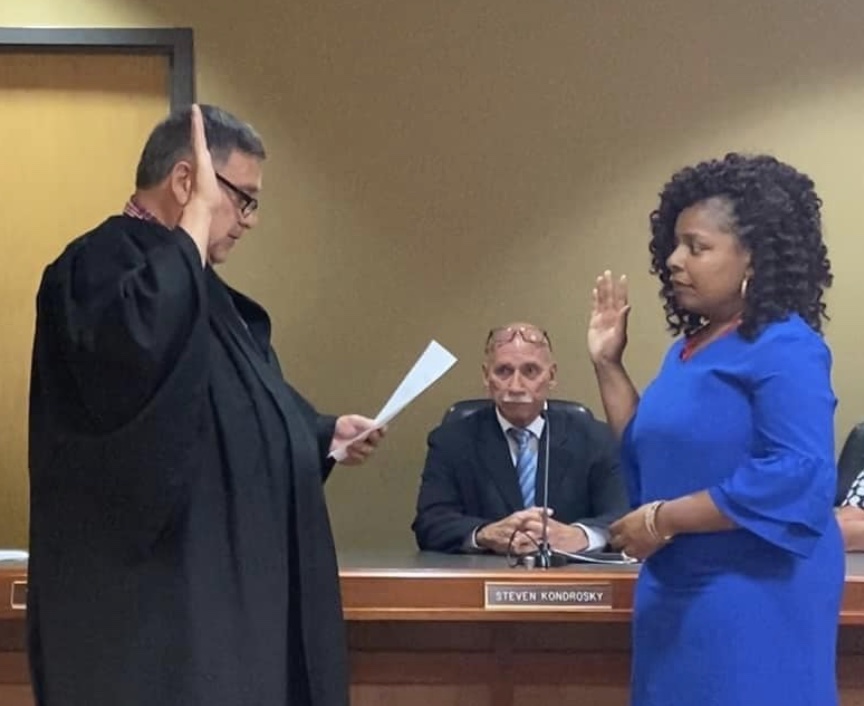
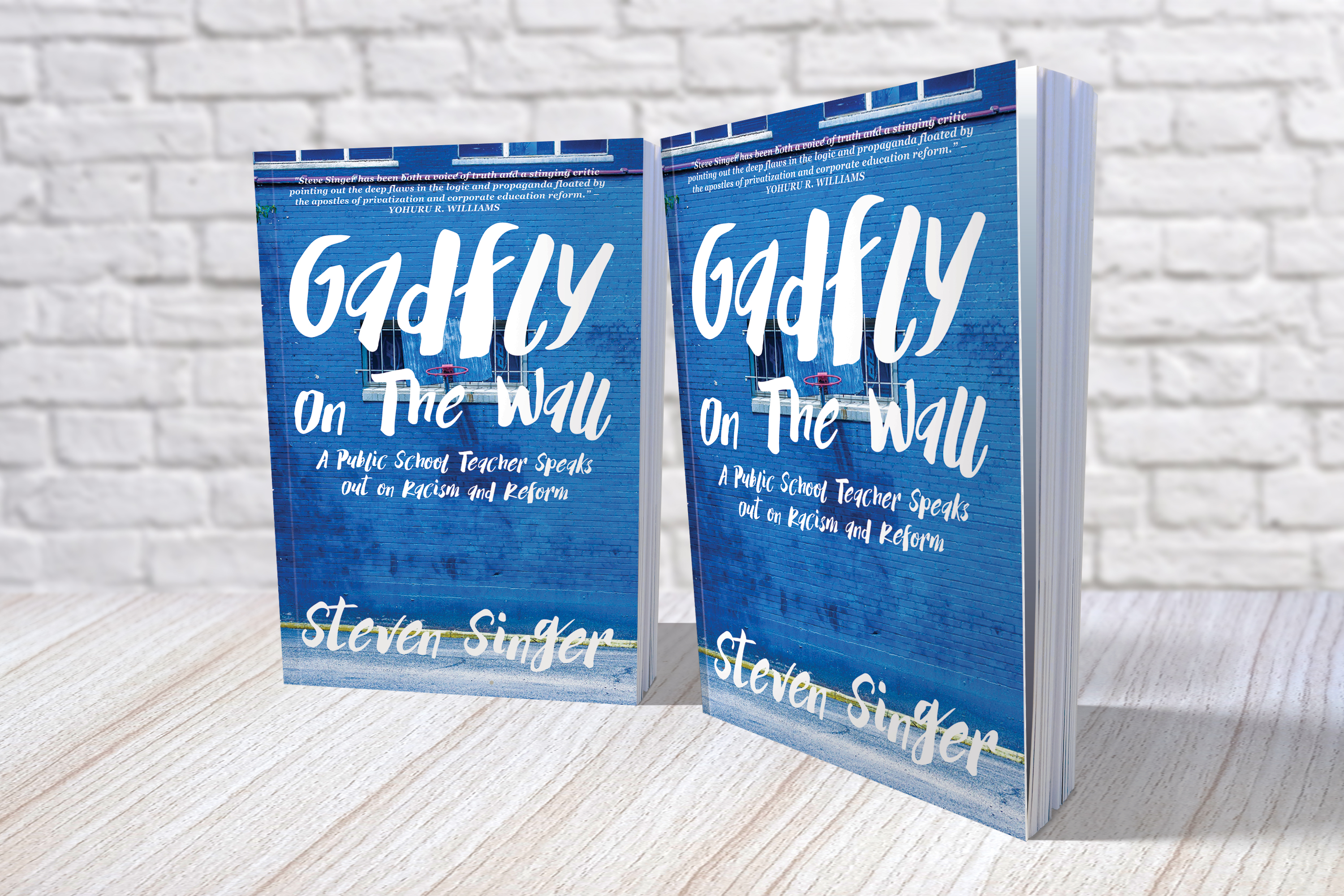
I’ve also written a book, “Gadfly on the Wall: A Public School Teacher Speaks Out on Racism and Reform,” now available from Garn Press. Ten percent of the proceeds go to the Badass Teachers Association. Check it out!


Will We Even Try to Keep Students and Teachers Safe from Gun Violence? Or Just Keep Preparing for the Worst?

“Teachers, we are operating on a lockdown. Please keep your doors locked until we tell you it has been lifted.”

Before me a sea of wide eyes and scared faces.

I slowly walked toward the door continuing the lesson I had been giving before the announcement. The door was already shut and secured but I nonchalantly turned the extra deadbolt.

“Click!” it sounded like a gunshot across the suddenly silent room.

I continued talking while making my way back to the blackboard pretending that nothing out of the ordinary was happening.

That’s just life in the classroom these days.

According to Eduction Week, there have been 38 school shootings in the US this year resulting in injuries or deaths. That’s up from 34 last year and the highest it’s been since the media source began tracking such things in 2018.

During the height of the Covid-19 pandemic, there were only 10 such shootings in 2020, and 24 each in 2019 and 2018.

That comes to a total of 130 school shootings in the last five years.

“Mr. Singer, can I go to the bathroom?” DeVon asked.

“I’m sorry,” I said. “We’re still under lockdown. I’ll write you a pass as soon as it’s lifted.”

It seems like nowhere is safe.

Three of this year’s shootings were in my home state of Pennsylvania.

The first was on January 19 at Pittsburgh’s Oliver Citywide Academy, a special education school.

A 15-year-old boy waiting in a van to go home was shot and killed after at least one person opened fire outside the school.


The second was on April 5 at Erie High School. A 16-year-old student was shot and injured at the school.

The third was on Sept 27 at Roxborough High School in Philadelphia.

A 14-year-old student was killed and four others wounded (ages 17, 15, 14, and 14) in a shooting near the high school athletic field after a football scrimmage.

“Mr. Singer, what’s happening?” Olivia asked.

I turned to her confused at first then I realized what she meant.

“The lockdown? Let me check my laptop. No…. Nothing. I really don’t know, Honey. But I’m sure whatever it is, it will be over soon. Why don’t you get back to the assignment?”

“Okay.”

Such violence isn’t limited to schools.

On Sept 24 three people were shot in Kennywood Park, a popular amusement park in West Mifflin.


Two years ago in September a 15-year-old boy was killed and another was wounded in a shooting at the Haunted Hills Hayride in North Versailles.

In 2020 a man was shot and killed at Monroeville Mall. In 2015, a 17-year-old entered the men’s department on the lower level of Macy’s department store in the evening and shot his intended target and two bystanders, leaving two with critical injuries.

Is there anywhere safe anymore?

You can’t go to the mall. You can’t go on a haunted hayride. You can’t go to an amusement park.

I had students who were hiding in the mall during the 2015 shooting. My daughter wasn’t involved in any shootings but she went to Kennywood this summer.

Where does it stop?

Why are we doing so little?

A few weeks ago my school had another active shooter training for teachers while the students, thankfully, had a day off.

Every few years we do this. Teachers huddle in classrooms and try to react to a shooting scenario. We either barricade ourselves in our classrooms or try to find an escape route. We help train police and local medical personnel.

At this years training, teachers were given a talk by a law enforcement “expert” who regaled us with his time working as a Blackwater mercenary in Afghanistan. He told us how difficult it was to make decisions under fire but that sometimes you had to make the hard decisions.

“Some of you teachers have kids in wheelchairs in your classrooms. You think you’re going to get your whole class out of the building and to safety!? You have to ask yourself, how are you going to get that kid in the wheelchair out? What are you going to do if a child flips out or is too scared to move? I know it’s not nice to think about, but sometimes you have to make decisions that will save the most people – not necessarily everyone.”

It made me want to vomit. But he wasn’t telling me anything I didn’t already know.

I like to believe I’d pick the child up out of his wheelchair, throw him over my shoulder and carry him to safety. I hope I could calm down a child having a panic attack and whisk her out of the building.

But could I really? Alone?

We do everything we can to prepare ourselves in case something like this happens – but as a society we do nothing – NOTHING – to prevent shootings from happening in the first place.

Where’s increased gun regulations to make sure these weapons aren’t getting into the hands of criminals or the mentally unstable?

Where are bans on assault weapons and other weapons of mass destruction and war?

Where is increased liability for those recklessly selling firearms?

Where is anything we could be doing to make our schools, malls and places of entertainment safer?

“Mr. Singer, I really have to go to the bathroom.”

“You can’t hold it just a little longer, DeVon?”

“No,” he said hoping from foot to foot.

“Number 1 or number 2?”

He giggled and held up one finger.

I reluctantly pointed to the trash can.

“Take it over there to the corner. I’ll stand in front of you so…”

“Attention teachers! The lockdown has now been lifted. You may continue as normal.”

I sighed, unlocked the door and wrote DeVon a bathroom pass.

We never did find out what triggered the lockdown. One time it was a gunshot in the surrounding neighborhood. Another time it was an unauthorized adult seeking access to the building.

It could be much worse. And it will happen again.

The chances of it being a school shooter are low.

The chances of myself or my students being hurt or killed is even lower.

But it’s still too high.

Living under the constant shadow of this threat is creating a trauma that we’ve given up trying to solve and just call normal.

It is unacceptable.

We need to do more.

Not just on the days when one of these tragedies strike – but every day.

It is not safe for students and teachers – it will NEVER be completely safe, but it can be safer.

That’s the point – how safe can we make it?

And why aren’t we doing anything to reach that goal other than preparing for the worst?


Like this post?  You might want to consider becoming a Patreon subscriber. This helps me continue to keep the blog going and get on with this difficult and challenging work.

Plus you get subscriber only extras!

Just CLICK HERE.

Patreon+Circle

I’ve also written a book, “Gadfly on the Wall: A Public School Teacher Speaks Out on Racism and Reform,” now available from Garn Press. Ten percent of the proceeds go to the Badass Teachers Association. Check it out!
An Open Letter to Josh Shapiro Asking Him to Reject School Vouchers 


Dear Josh Shapiro, 


Are you for public education or not?

I only ask because as the Democratic candidate for Governor in Pennsylvania, you come off as the savior of schools and children on the campaign trail.

You say you want to increase state funding to public schools. Wonderful!

You say you want to reduce standardized testing. Excellent!

You want to guarantee every student has access to technical and vocational courses and make sure every school building has at least one dedicated mental health counselor on staff. Outstanding!

But in interviews and on your campaign Website, you say you’re in favor of school vouchers!

Wha-Wha-What!?

Did Charles Koch just hack your election headquarters? Is Betsy DeVos impersonating you in the media?

Because supporting school vouchers does not fit in at all with someone who claims to champion public education.

Public education means public schools. It means tax dollars being used to fund public schools and those schools being run by elected school boards.

It does not mean tax dollars going to private and parochial schools. It does not mean our money going to institutions where we get no say in how it’s spent. It does not mean circumventing duly elected school boards. It does not mean the public paying for religious indoctrination or the kind of right wing biased education routinely provided at private schools.

But that’s what school vouchers do.

They steal taxpayer dollars from authentic public schools and allow them to be wasted on private and parochial schools. They destroy any accountability for how our collective money is spent and do serious harm to thousands of the most struggling authentic public school students while lining the pockets of private companies and religious institutions.

And the separation of church and state – forget about it!

This doesn’t sound like the candidate teachers like me have been backing since before this election cycle began. Frankly, it’s almost what your gubernatorial opponent, MAGA Republican Doug Mastriano, champions.

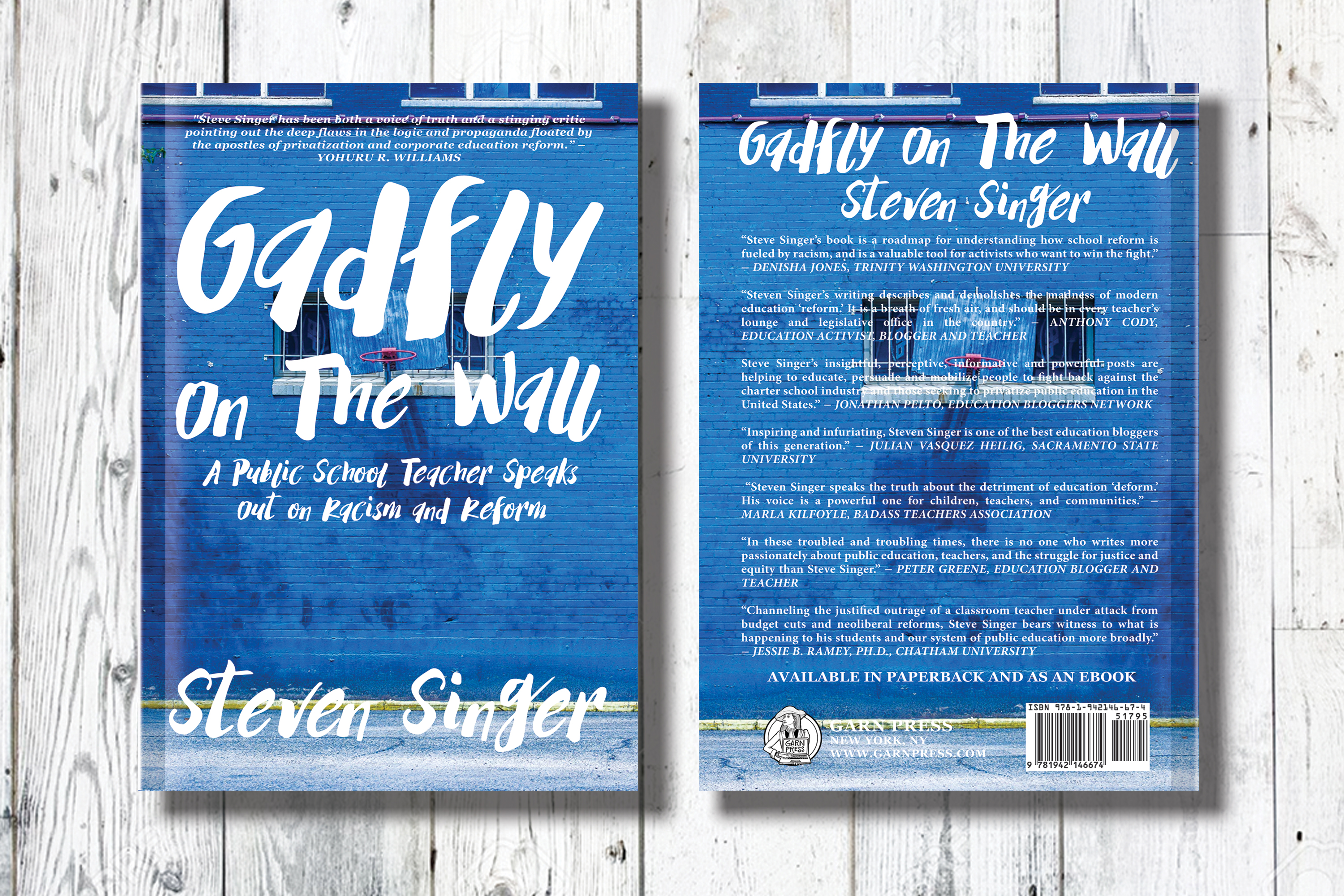
Mastriano – a Trump insurrectionist – says he wants to use state education funding to give EVERY student a school voucher they can use at almost any school in the Commonwealth – public, private or parochial.

You seem to want vouchers ONLY for students at the most underfunded and struggling schools.

Well that’s some distinction!

Instead of providing more support to the most inequitably funded schools, you want to slash their funding even more in the name of some old time Republican plan to let a few escape a bad situation while the rest all drown!?

That is repulsive!

On your your campaign Website it says


 Josh favors adding choices for parents and educational opportunity for students and funding lifeline scholarships like those approved in other states and introduced in Pennsylvania. 


In an interview in the Patriot News you say


 “And I’m for making sure we add scholarships like lifeline scholarships to make sure that that’s additive to their education. That it gives them other opportunities…to be able to help them achieve success”  

These so-called Lifeline Scholarships are a Republican lead measure to give direct-to-student tax-funded scholarships that parents and guardians in the state’s most neglected public schools could use for a variety of options including going toward tuition at a different school.

The GOP sponsored bill passed the state House of Representatives in April on a 104-98 vote and cleared the state Senate Education Committee in June. However, because of an amendment to protect low performing charter schools from losing their funding, it would still need final passage votes in both chambers before getting to current Gov. Tom Wolf’s desk where he would almost certainly veto it.

It would affect about 191,000 students in 382 schools, across 76 of the state’s 500 school districts. However, Two-thirds of the cost of the program (63.1%) is born by four districts – Philadelphia (43.9%), Reading (8.9%), Allentown (5.8%) and Pittsburgh (4.5%).

This would create another taxpayer funded system of education. Affected districts would lose so much funding it would ultimately force them to reduce programs, services, and staffing and/or raise property taxes to compensate.

Moreover, these would be the most neglected districts, and thus the least able to support the cost.

It’s a terrible idea, and I can’t understand why you would buck the overwhelming majority of your party and would-be constituents to support it.

Is it because you send your own kids to a faith-based private school, and that you are the product of just such an education, yourself?

This is how you lose votes, Sir.

Your opponent is perhaps the most odious person to ever run for Governor in the state. He looks to usher in an era of theocratic fascism, curtail human rights and take the Commonwealth back to the Middle Ages.

But that doesn’t mean you should run closer to his positions in the vain hope of stealing some of his base.

The MAGA Republicans will never vote for you. Dressing yourself up in their clothing will not help you do anything but disgust your own supporters until some can’t bring themselves to vote at all.

As election day nears, the polls get closer and closer between Mastriano and you.

Pennsylvanians can’t afford losing their only chance at self rule because of demoralization and despair at a candidate too weak to support the platform he began this campaign on – championing public education.

I urge you to reconsider this flirtation with Republican values and school vouchers.

I hope you are better than this.

We deserve a governor who is better than this.

Please have the courage to stand by authentic public schools.

Yours,

Steven Singer


Tell Josh Shapiro what you think. Email him here: contact@joshshapiro.org


Like this post?  You might want to consider becoming a Patreon subscriber. This helps me continue to keep the blog going and get on with this difficult and challenging work.

Plus you get subscriber only extras!

Just CLICK HERE.

Patreon+Circle

I’ve also written a book, “Gadfly on the Wall: A Public School Teacher Speaks Out on Racism and Reform,” now available from Garn Press. Ten percent of the proceeds go to the Badass Teachers Association. Check it out!
What my PA Public School Classroom Would Look Like under Gov. Doug Mastriano

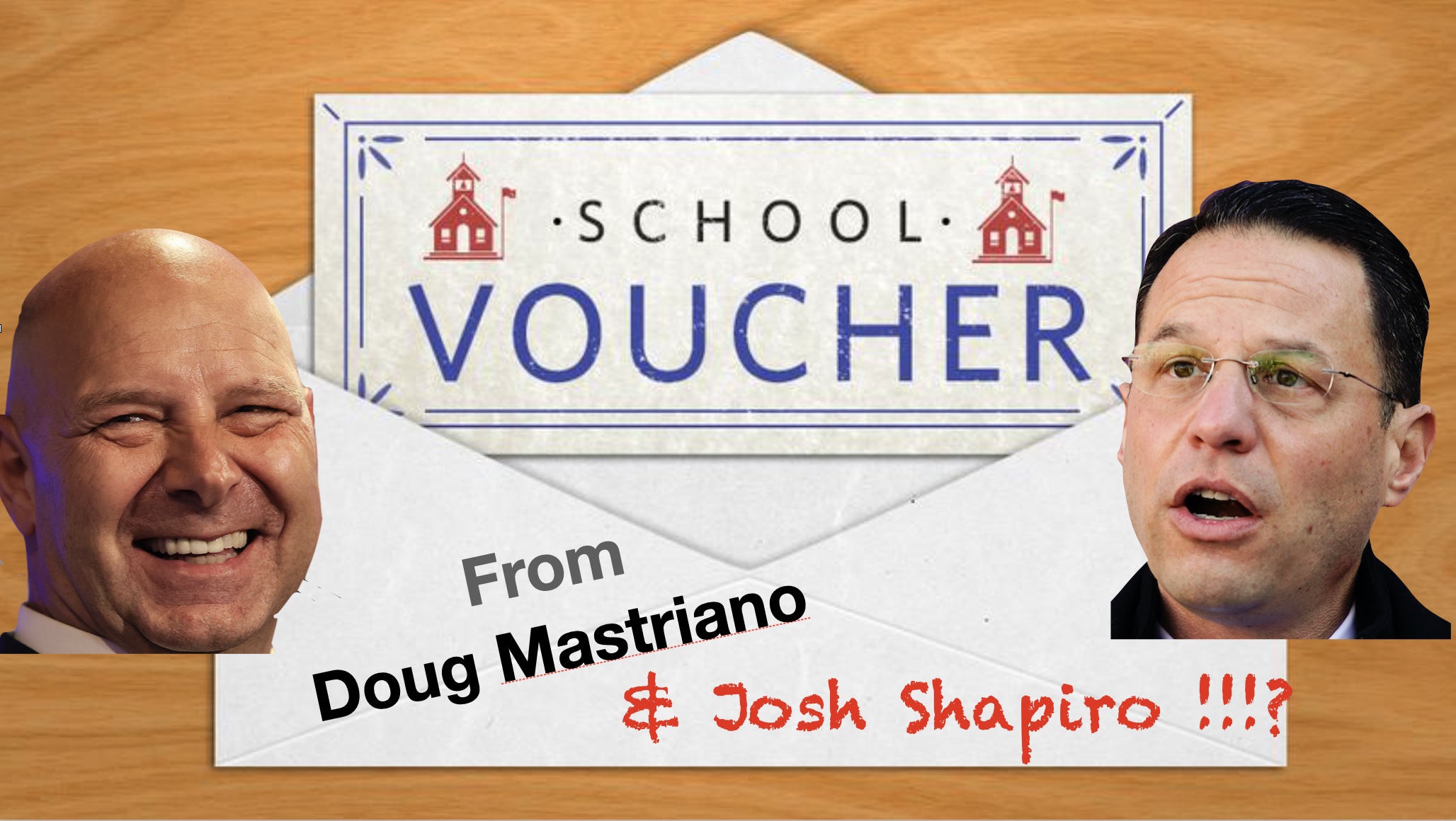
Just one teacher. And 33 kids.

That’s what my classroom would look like if Pennsylvanians vote for Doug Mastriano as our next governor.

The Republican state representative wants to slash education budgets in half – yes, IN HALF!

And that means doubling class size – at least.

Honestly, I don’t know how we’d cram all the desks in the room. I can barely fit 15 in there now.

Where would we put the books, computers and cabinets? The students, alone, would be wall-to-wall.

Just imagine that many middle school kids stuffed into the room arguing about who’s touching who and which classmate stole their pencil or book. Not to mention the children striving to get my attention to solve disputes, get help with classwork, ask permission to use the bathroom – and a thousand other issues!

I’d try my best to meet their needs but under Mastriano we just wouldn’t have the resources we used to have.

For example, there’s no way we could afford a school nurse at each building like we have today. We’d be lucky to have one nurse for all four buildings in the district – elementary schools, middle schools and the high school. If a student feels sick, there’s not much I could do except send the child to the office to try to call home and get a parent or guardian to pick the kid up early. And if the parents can’t make it, just let the kid put his or her head down?

What if the issue’s more psychological? There might be a school counselor somewhere in the district so a student can talk out an issue he or she is having – perhaps conflict resolution with a former friend, discuss peer pressure to try drugs or maybe deal with suicidal thoughts. But there’s probably a long waiting list to see this mythical counselor. Hopefully, the problem is not too urgent.

I feel especially bad for the special education students. Aides would be almost non-existent so many kids with special needs would have to struggle through issues with which we’d normally help them. All the individual Education Plans (IEPs) would have to be rewritten to take this new normal into account.

Even lunch would be disrupted. After all, there would be fewer cafeteria workers so it would be harder just to cook a hot meal and make sure it gets onto a tray in time for students to eat it.

There’s no doubt about it.

My classroom would be very different if Mastriano wins the gubernatorial election in November.

The former US Army Colonel who participated in the January 6 insurrection proposes slashing education funding from $19,000 on average, per student, to $9,000.

According to an analysis by the Pennsylvania State Education Association (PSEA), the plan would mean a 33 percent overall cut in public school revenue, or a $12.75 billion loss. It would require approximately 118,704 layoffs – 49 percent of all employees in schools around the state.

At my district of Steel Valley in Munhall on the western side of the Commonwealth, the situation probably would be much like I described.

I can’t imagine how any teacher could adequately tend to double the students, but I might not have to imagine it.

I’d probably be laid off.

More than half of Steel Valley’s staff would be out of a job – 92 of our current 172 school nurses, counselors, aides, cafeteria workers and teachers would be looking for work.

And that’s just where I’m employed.

Things would be even worse for my daughter where she attends McKeesport Area School District.

According to PSEA estimates, the nearby McKeesport district would lose 281 of 521 staff – a 54% reduction. Classes would go from an average of 17 students to an average of 46. That’s an increase of 29 students per class!

How can she learn in that kind of environment!? She isn’t in college yet. She isn’t in some University of Pittsburgh survey class that meets in an auditorium. She’s in middle school!

But it would be pretty similar at public schools, charter schools, career and technical centers and intermediate units across the state.

From one side of the Commonwealth to the other, we’d go from 239,902 staff to 121,198. Class size would go from an average of 16 students per class to 33. That’s an increase of 17 students per class or 109%.

However, the PSEA estimate is actually a best case scenario for Mastriano’s proposal.

Like so many wannabe big time policymakers, he is very light on the details of how we would educate the state’s 1.7 million students. This whole proposal was just something he blurted out during a March 2022 WRTA radio interview.

It’s his plan to completely eliminate local school property taxes. Funding would be provided directly to parents via “Education Opportunity Accounts,” and families could then decide whether they want a public, private, charter or home school option.

To go from a statewide average funding level of $19,000 a student to $9,000 a student requires a cut of $17.6 billion, or 53%.

But if the remainder isn’t being paid by property taxes, that’s a roughly $15.3 billion a year expenditure by the state that used to be paid by local property taxes. Where is he getting that money from? And if the state can afford to pay that much, why not just pay the full $19,000 per student and make none of these unnecessary cuts? Or why not just pay half and reduce property taxes by that much? Mastriano is not exactly forthcoming on any of this.

PSEA admits that to come up with its own estimates of the damage the organization filled in a few details. The union assumes the state would fully fund the $9,000-per-student voucher and leave other local non-property taxes and federal revenues untouched.

That might not happen. We could be looking at an even more draconian situation.

The biggest question the PSEA is sidestepping is the impact of allowing taxpayer dollars to fund so many different types of schooling.

Even under Mastriano’s plan, nontraditional educational providers like charter schools would suffer because like traditional public schools they would be receiving less funding from the state than they do now. And parents using their vouchers to pay for private schools for their children would still have to make up a pretty big gap between the amount of the voucher and the cost of private school tuition.

However, since traditional public schools serve the overwhelming majority of the state’s students, they would take the biggest hit financially. If more parents use their voucher to pay for private, charter or home schools, that’s less funding for our public school system. That means even greater cuts to student services and more staff layoffs.

Moreover, what if parents use the voucher for a fly-by-night educational option that doesn’t meet it’s obligations?

For example, according to reports by the Network for Public Education, about half of all charter schools close in 15 years. And 27% close in five years.

And when it comes to charter schools that took federal funding, 12% never even opened. They just gobbled up the cash with nothing to show for it.

What will happen to students whose parents lose their vouchers in schools like these? Who will pay for these kids to be educated? Or will they have to go without?

And when it comes to private schools, does Mastriano mean only secular private schools or does he include parochial schools? Will your tax dollars be used to pay for students religious education?

And what about the curriculum at these private schools or some home school programs? Many use texts published by Bob Jones University Press, Accelerated Christian Education, or A Beka.

The books are riddled with counter factual claims and political bias in every subject imaginable such as abortion, gay rights and the Endangered Species Act, which one labels a “radical social agenda.” They disparage religions other than Protestant Christianity and cultures other than those descended from White Europeans.

They teach that humans and dinosaurs lived at the same time, some dinosaurs survive into the present day (i.e. the Loch Ness monster), evolution is a myth disproved by REAL science and homosexuality is a choice.

Teaching these things in school is not just educational malpractice, it’s exactly the kind of indoctrination the right is claiming without evidence happens at public schools.

If someone wants to pay for such an education out of their own pocket, that’s one thing. But to ask taxpayers to fund such propaganda is something else entirely!

Thankfully, Pennsylvania voters don’t have to accept this. Not yet anyway.

There are still more than three months before the election. Voters can choose the Democratic gubernatorial candidate Josh Shapiro. He has promised to INCREASE education funding and not just blow up the whole system.

To see an interactive map of how Mastriano’s education cuts would affect your school district, click here.

For now this is only a bad dream. We still have time to wake up and vote accordingly.

Students should not have to submerge themselves in a sea of classmates and hope the teacher will have time to educate them.

We should cut class size, not increase it.

We should hire more teachers, not rely on a skeleton crew.

We should invest in education, not sell off our future for a fast buck today.


Like this post?  You might want to consider becoming a Patreon subscriber. This helps me continue to keep the blog going and get on with this difficult and challenging work.

Plus you get subscriber only extras!

Just CLICK HERE.

Patreon+Circle

I’ve also written a book, “Gadfly on the Wall: A Public School Teacher Speaks Out on Racism and Reform,” now available from Garn Press. Ten percent of the proceeds go to the Badass Teachers Association. Check it out!

The Guardian vs. the Goon: PA’s Most Important Governor’s Race

The choice for Pennsylvania Governor could not be more clear in November.

On the one hand, we have Josh Shapiro – an Attorney General who fought for Commonwealth citizens’ rights for six years.

On the other, we have Doug Mastriano, a former US Army Colonel and 3-year state representative who supported a literal coup against the United States government.

In any sane world, that would be all you’d need to know.

Shapiro, the state’s chief law enforcement officer, vs. Mastriano, a traitor who actively worked to overturn the votes of the very citizens who elected him to office.

This should not be an election – it should be a rout.

However, Commonwealth voters will need to come to the polls and make it clear that they reject Mastriano’s fascism and that they instead support their own right to determine who governs in Pennsylvania and beyond.

That sounds extreme. I wish it weren’t also true.

Following the last Presidential election when it became clear Donald Trump had lost the vote, Republican Mastriano helped organize large rallies pushing false claims of election fraud. He chartered buses to take protesters to the Capitol on January 6. He personally crossed police barricades at the Capitol during the riot, and attempted to submit “alternate” (i.e. fake) pro-Trump electors to the official count. And he even coordinated all this with Trump when he was invited to the White House to discuss the “stop the steal” strategy.

If Mastriano somehow wins the governors race, he will be in a position to basically call off Democratic rule in the state. As governor, he would choose the secretary of state — the official in charge of administering the 2024 presidential election. This would effectively allow him to pick the winner, himself.

This is not just conjecture. Mastriano has gone on record that as governor he would decertify voting machines in some precincts – making it hard to count votes there. He has even alluded to the independent state legislature doctrine, which holds that state legislatures can name whoever they want as the recipient of a state’s electoral votes, regardless of who voters select.

This is not conservatism. It is not protecting American values or law and order. It is the opposite.

By contrast, Shapiro, the Democrat in the race, is a model of exactly those qualities usually associated with sobriety and efficiency.

As Attorney General, he fought federal government overreach including Trump’s travel ban. He filed a lawsuit to stop religious organizations denying health coverage including contraceptives to employees. He joined a lawsuit against for profit colleges resulting in a $168 million settlement. He reached an agreement with federal officials to prevent the distribution of blueprints for 3D printed firearms. He launched an investigation of allegations of sexual abuse by members of the Catholic Church including a Grand Jury report alleging the sexual abuse of more than a thousand children at the hands of more than 300 priests.

In short, he worked hard to protect the people of this Commonwealth.

And the difference is stark on so many other issues when compared head-to-head.

Shapiro supports increasing public school funding. Mastriano wants to cut it in half.

Shapiro wants to increase security and gun regulations to prevent school shootings. Mastriano wants to give teachers guns and let them do the shooting.

Shapiro has fought to protect women’s reproductive rights against the state. Mastriano supports the state telling people what to do with their own bodies.

And on top of all that – Mastriano has ties to White Supremacists!

Until recently, his campaign paid consulting fees to Gab, a white nationalist social media site owned by anti-Semite Andrew Torba. Gab was the site that helped inspire the Pittsburgh Tree of Life Synagogue mass murder in 2018. Torba and others on the site that Mastriano was explicitly looking to for support commonly champion Great Replacement theory and support Vladimir Putin.

No skeletons of this type have been found in Shapiro’s closet.

The worst anyone has found so far is a $100,000 donation from Students First PA, a charter school advocacy group, which he took money from when he was running for Attorney General in 2016. However, Shapiro made no effort to hide the donation and his voting record when he was a state representative was not pro-charter. In 2011, for example, he voted against a measure to provide tuition vouchers of charter schools, and he has been a vocal critic of the industry for years. Moreover, neither Students First PA nor any other pro-education privatization organization that I can find has made any significant donations to him this election cycle so far.

The way I see it, this is a simple – if terrifying – election.

Shapiro is not perfect, but if elected, he would function similarly to current Governor Tom Wolf. He would be a guardian against the overreach and bad decisions of the gerrymandered Republican legislature.

One can hope voters throughout the Commonwealth would take back their individual voting districts from the extremists, but given the still uncompetitive lines of these districts, this seems unlikely.

So we need a Wolf, we need a Shapiro, standing on the battlements stopping the goons like Mastriano from taking advantage of the majority of us.

Shapiro would certainly do that. He might even go farther and fight to find ways to get real change through the legislature. But even if he can’t do that, voting for him is essential.

Mastriano may simply be the worst candidate for governor in the Commonwealth’s history – and that’s saying something!

We need Shapiro. We need Austin Davis as Lt. Governor. And we need John Fetterman as Senator.

That would make a huge difference both nationally and throughout the state.

It would set us up with a firm foundation and at least keep people safe from the worst.

I know it is depressing to be put in this situation constantly. Every election cycle seems to be the most important because the country is falling apart. Maybe we can find a way to turn things back and reach some level of sanity. But we can’t do anything unless we elect Shapiro, Davis and Fetterman.

We need the guardians against the goons.


Like this post?  You might want to consider becoming a Patreon subscriber. This helps me continue to keep the blog going and get on with this difficult and challenging work.

Plus you get subscriber only extras!

Just CLICK HERE.

Patreon+Circle

I’ve also written a book, “Gadfly on the Wall: A Public School Teacher Speaks Out on Racism and Reform,” now available from Garn Press. Ten percent of the proceeds go to the Badass Teachers Association. Check it out!
 

Why is a Gates-Funded, Anti-Union, Charter Advocacy Group Part of Pennsylvania’s New Plan to Stop the Teacher Exodus?

Teachers are fleeing the profession in droves.

So Pennsylvania has unveiled a new plan to stop the exodus with the help of an organization pushing the same policies that made teaching undesirable in the first place.

The state’s Department of Education (PDE) announced its plan to stop the state’s teacher exodus today.

One of the four people introducing the plan at the Harrisburg press conference was Laura Boyce, Pennsylvania executive director of Teach Plus.

Why is this surprising?

Teach Plus is a national 501(c)(3) nonprofit organization that works to select and train teachers to push its political agenda.

What is that agenda?

Teach Plus has embraced the practice of widespread staff firings as a strategy for school improvement.

Teach Plus mandates that test scores be a significant part of teacher evaluation.

Teach Plus advocates against seniority and claims that unions stifle innovation.

Teach Plus has received more than $27 million from the Gates Foundation and substantial donations from the Walton Family Foundation.

How can an organization dedicated to the same ideas that prompted the exodus turn around and stop the evacuation!?

That’s like hiring a pyromaniac as a fire fighter!

“Pennsylvania’s educator shortage is the biggest threat facing not only our educational system but our future prosperity as a commonwealth,” Boyce said at the press conference.

“If schools are engines of educational and economic opportunity, then educators are the conductors who keep the train moving forward. Teach Plus teachers have been sounding the alarm about this crisis and are eager to partner with the Department to enact ambitious and transformational changes to better recruit and retain educators in Pennsylvania.”

However, she’s already getting things wrong.

The importance of education is NOT as the “engine of economic opportunity.” Its importance is to help students become their best selves. It is creating critical thinkers who can navigate our modern world, become well-informed participants in our democratic system and live good lives.

Given the track record of Teach Plus, any well-informed individual should be wary of the how “eager [the organization is] to partner with the Department to enact ambitious and transformational changes.”

But what’s actually in the plan?

A lot of vague generalizations.

The plan (titled The Foundation of Our Economy: Pennsylvania Educator Workforce Strategy, 2022-2025) sets forth five focus areas:

1) Meeting the educator staffing needs of rural, suburban, and urban areas;

2) Building a diverse workforce representative of the students we serve;

3) Operating a rigorous, streamlined, and customer service-oriented certification process;

4) Ensuring high-quality preparation experiences for aspiring educators; and

5) Ensuring educator access to high-quality and relevant professional growth and leadership development opportunities.

As you can see, it is full of corporate education reform buzzwords like ‘rigorous” and “high quality” that neoliberals have used as code for their policies for decades.

There are 50 steps outlined in the report. While many seem important and well-intentioned, they lack any kind of urgency, and though organized under these five areas, still seem kind of scattershot.

For example, the number one most important thing any state has to do to retain current teachers and to attract new teachers is to increase wages.

Teachers make 14 percent less than those from professions that require similar levels of education, according to the Economic Policy Institute.

Teacher salary starts low, and grows even more slowly.

More than 16 percent of teachers have a second or third job outside of the school system. They simply can’t survive on the salary.

They can’t buy a home or even rent an apartment in most metropolitan areas. They can’t afford to marry, raise children, or eke out a middle class existence.

Yet increasing teacher salary is only briefly mentioned in step 13 of the first focus group as follows:

“13. Based on the resources that PDE develops on competitive compensation and incentives, advocate for and secure funding from the General Assembly that enables hiring entities to compete more effectively in the regional labor market.”

Talk about anemic language!

Imagine being on a sinking ship and someone only mentioning plugging the leak in such terms – if we can, based on our resources, yada, yada, yada.

Another point that jumped out to me was recruitment of new teachers.

Under focus two, the plan calls for:

“6. Partner with nonprofit organizations working to develop recruitment, training, and mentoring programs for middle and high school students from diverse backgrounds to identify and recruit future educators.”

Getting more people to become teachers sounds great, but why are we partnering with “nonprofit organizations” and which ones in particular do you have in mind?

There are plenty of neoliberal organizations of a similar type to Teach Plus that call themselves “nonprofit” – for example Teach for America.

Are we advocating for teacher temps with a few weeks crash course in education? It sure sounds like it to me.

Moreover, there’s the issue of charter schools. These are schools funded by tax dollars but often run by corporations or other organizations. Many of these consider themselves nonprofit.

So doesn’t this new plan help push more educators into the charter school network? Isn’t it open to funding more charter schools and calling it teacher retention?

Considering that charter schools are not subject to the same regulations as authentic public schools and allow all kinds of fiscal and student abuses, I’m not sure how encouraging such practices will help anyone but the profiteers behind these schools.

Then there’s the emphasis on building a diverse workforce.

In itself, that’s an excellent and necessary goal. However, if you aren’t going to make the profession more attractive, you aren’t going to increase diversity. Right now one of the major reasons our schools are full of mostly white, middle class teachers is because white, middle class people are the only ones who can afford to take the job.

Teaching often requires economic white privilege and often a second member of the household to earn the lion’s share of the income. Without addressing the pure dollars and cents of this issue – something Teach Plus is overjoyed to do when talking about the importance of education – all this talk of diversity is mere tokenism. It’s hiding behind a veneer of “wokeness” with no real intention of doing anything to help people of color as teachers or students.

Finally, let’s talk about the kinds of teacher preparation, professional development and leadership opportunities in this plan.

They are described as:

“high-quality preparation experiences for aspiring educators” and

“access to high-quality and relevant professional growth and leadership development opportunities”

But “high quality” by whose definition?

That’s the point here. Classroom teachers would consider classroom management, effective discipline and time for effective planning to be “high quality.” Educators would value more autonomy and less paperwork. But I’m willing to bet that isn’t what the authors of this plan think it means.

This is what Teach Plus does. It advocates for neoliberal disruptions in school management.

In the past, Teach Plus has insisted older more experienced educators be fired while shielding “promising young teachers” from the brunt of these firings. There is a great deal of evidence that teacher effectiveness, on a wide range of indicators – not just test scores – increases as teachers gain experience. However, new teachers are easier to brainwash into corporate education reform – to be driven by standardized test scores and data instead of the needs of the living, human beings in front of them in the classroom.

So this proposed teacher preparation and professional development is of what kind exactly? I’ll bet it’s mostly reeducation to accept corporate education reform. I’ll bet it’s focused on ways to increase student test scores which will then be used to evaluate teacher effectiveness – a program that has been roundly disproven for decades.

So where does that leave us?

A decades ago roughly 20,000 new teachers entered the workforce each year, while last year only 6,000 did so, according to PDE.

The minimum teacher salary in the Commonwealth stands at $18,500 — and has since 1989.

Meanwhile lawmakers – especially Republicans – push for bills to monitor teachers, restrict them from teaching an accurate history, and ban books from their libraries and curriculums.

Standardized tests are everywhere the main metric of success or failure, and school funding is determined by them. While authentic public schools serving the poor and middle class starve for funding, the legislature gives an increasing share of our tax dollars to charter and voucher schools without oversight on how that money is spent.

This new plan is not going to change any of that.

It is at best a Band-Aid – at worst a public relations stunt.

If we really wanted to stop the teacher exodus, we wouldn’t partner with one of the architects of the current crisis to do so.

We would roll up our sleeves and take the actions necessary for real change – and chief among these would be an increase in teacher salary, autonomy and prestige.


Like this post?  You might want to consider becoming a Patreon subscriber. This helps me continue to keep the blog going and get on with this difficult and challenging work.

Plus you get subscriber only extras!

Just CLICK HERE.

Patreon+Circle

I’ve also written a book, “Gadfly on the Wall: A Public School Teacher Speaks Out on Racism and Reform,” now available from Garn Press. Ten percent of the proceeds go to the Badass Teachers Association. Check it out!


Dr. Tia Wanzo is the First Black Superintendent at McKeesport Area School District

It only took 138 years, but McKeesport Area School District finally has a Black Superintendent.

Dr. Tia Wanzo was sworn in yesterday at a well attended special meeting of the board.

Dr. Wanzo had been Assistant Superintendent under outgoing Superintendent Dr. Mark Holtzman who left the district for a corresponding position at Beaver Area School District at the end of June.

The McKeesport district, established in 1884 and located just southeast of Pittsburgh, Pennsylvania, has had a sizable Black population for decades. According to the National Center of Education Statistics, the district is 71 percent white and 23 percent Black. It serves the City of McKeesport, and boroughs of Versailles, Dravosburg and White Oak as well as a small portion of South Versailles Township.

“It’s an honor to sit on the board at this time as history was made,” Board Member LaToya Wright Brown wrote on a Facebook post.

“Dr. Wanzo is the first African American to be appointed in the role of superintendent at MASD. I look forward to working in collaboration with our central administration teams, MASD staff and communities to give our students what they deserve.”

Dr. Wanzo will be paid $165,000 per year – $25,000 more than Dr. Holtzman had been paid in his original contract from March 29, 2017.

The board voted unanimously to hire Dr. Wanzo as Superintendent though School Director Matt Holtzman – the former Superintendent’s brother – was absent.

During the previous administration, Dr. Wanzo was often put in difficult positions.

In 2019 when the ACLU of Pennsylvania filed a federal civil rights lawsuit against the district on behalf of 11 district students, she had the difficult job of defending her boss, Dr. Holtzman, while still advocating for the students.

Dr. Holtzman, who was named in the suit, refused to let the students create a Black Student Union. He claimed his objection wasn’t due to the organization’s content but the participation of one of the student’s mothers – Fawn Montgomery Walker who was running for McKeesport Mayor at the time and who is lead organizer of Take Action Mon Valley, a community action group.

Dr. Wanzo was quoted in the Pittsburgh Tribune Review on the matter as follows:

“The frustrating part is the students clearly did not understand that they’re in the middle of this. And also, it’s frustrating that they feel that we are telling them they cannot do that, you’re not allowed to have this club, because that was never ever stated by any of us.”

The district eventually reached a settlement agreement with the American Civil Liberties Union and the students.

The students were allowed to create the club as long as no “non-school persons or entities” are named as advisors or participants of the club.

Dr. Wanzo was also put in a difficult position more recently when the previous school board voted to extend Dr. Holtzman’s contract two years before it expired – a potential violation of state law.

Dr. Holtzman resigned and was rehired at the same board meeting. When this proved contentious, the previous board did the same thing a month later for Dr. Wanzo and then claimed any criticism of what they did for Holtzman was either unfair for not including Wanzo or racially motivated because Dr. Wanzo is a person of color.

The matter concluded with Dr. Holtzman leaving the district.

Unlike her predecessor, Dr. Wanzo spent her entire career at MASD. She was a fifth grade teacher at Francis McClure Middle School, a second grade teacher at White Oak Elementary School, a fourth grade teacher at Cornell Intermediate School, Assistant Principal at Founders’ Hall Middle School, and ninth grade principal at the high school.

She graduated from the district and still lives in its borders. As a student, she attended Centennial Elementary, Cornell Middle School, and graduated from McKeesport High School in 1997. 

She has a BA in Elementary Education from Clarion University, a degree in Educational Leadership from Carlow University, and a Doctorate in Educational Leadership from Duquesne University.

Hopefully she will be able to lead the district to a brighter future.

To many students she may appear a beacon of representation as well as proof that a student from McKeesport can rise to the top.

WATCH DR. WANZO BEING SWORN IN:


Like this post?  You might want to consider becoming a Patreon subscriber. This helps me continue to keep the blog going and get on with this difficult and challenging work.

Plus you get subscriber only extras!

Just CLICK HERE.

Patreon+Circle

I’ve also written a book, “Gadfly on the Wall: A Public School Teacher Speaks Out on Racism and Reform,” now available from Garn Press. Ten percent of the proceeds go to the Badass Teachers Association. Check it out!

Federal or State Legislatures May Raise Teacher Salaries so Schools Have Enough Staff to Reopen

What will we do when schools reopen and there aren’t enough teachers to instruct our kids?

People complain when there aren’t enough servers at restaurants or baggers at the grocery store.

What will they say in August if school buildings in many districts remain closed or the only viable option is online remote schooling?

Lawmakers at the state and federal level are taking the matter seriously with measures to increase teacher salary or provide one-time bonuses.

Alabama, New Mexico, and Mississippi have already boosted teacher pay, with Florida, Iowa and Kentucky potentially set to do the same. Meanwhile, even US Congress could pass a nationwide measure to heighten teacher salary and encourage educators to stay in the classroom.

After decades of neglect only made worse by Covid-19, we’re missing almost a million teachers.

And we only have about 3.2 million teachers nationwide!

According to the Bureau of Labor Statistics, there are 567,000 fewer educators in our public schools today than there were before the pandemic. And that’s on top of already losing 250,000 school employees during the recession of 2008-09 most of whom were never replaced. All while enrollment increased by 800,000 students.

Meanwhile, finding replacements has been difficult. Across the country, an average of one educator is hired for every two jobs available.

So what are we doing about it?

Surprisingly, something!

Congress has at least one bill under consideration that would raise teacher salaries nationwide.

The Respect, Advancement, and Increasing Support for Educators (RAISE) Act would provide teachers with a minimum of $1,000 in refundable tax credits and as much as $15,000.

The more impoverished the school where teachers work, the higher the tax credit available to increase their salaries. The bill would also double the educator tax deduction to offset the cost of school supplies, and expand eligibility to early childhood educators.

The bill was introduced by Senator Cory Booker (D-NJ) and U.S. Representatives Adam Schiff (D-CA), Jahana Hayes (D-CT), John Larson (D-CT), and Mark Takano (D-CA). It is supported by a broad coalition of organizations including the American Federation of Teachers (AFT) and the National Education Association (NEA).

Such a measure is long overdue.

Teachers are paid 20% less than other college-educated workers with similar experience. A 2020 survey found that 67% of teachers have or had a second job to make ends meet.

Why would you go into debt earning a four year degree in education and serve an (often unpaid) internship in the classroom just to earn little more than a fry chef or Walmart greeter?

Why enter a field where you can’t buy a home or even rent an apartment in most metropolitan areas? Why volunteer for a job where you won’t be able to afford to marry, raise children, or eke out a middle class existence?

Thankfully, Congressional proposals aren’t the only attempt to make teaching more attractive.

Some states have already taken action.

The Alabama Senate passed a budget that would raise minimum salaries for teachers with nine or more years experience. The raises would range from 5% to nearly 21%, depending on years of experience.

A teacher with a bachelor’s degree and 20 years of experience would see their salary rise from $51,810 to $57,214. A teacher with a master’s degree and 25 years experience would see their pay rise from $61,987 to $69,151.

In New Mexico, Gov. Michelle Lujan Grisham signed a bill that would increase base salary levels by an average of 20 percent. This advances minimum salary tiers for educators by $10,000 to $50,000, $60,000 and $70,000. 

In Mississippi, Gov. Tate Reeves signed off on an average increase of $5,100 that will raise educator salaries by more than 10 percent.

According to Politico, both Republican and Democratic Governors are proposing teacher salary increases or one-time bonuses as part of budget proposals and legislative priorities.

Even Governors like Iowa’s Kim Reynolds and Florida’s Ron DeSantis are promoting teacher bonuses while also stoking classroom culture wars. On the other side of the aisle, Kentucky’s Democratic governor Andy Beshear is trying to push through a teacher pay plan through opposition by the state’s GOP-controlled legislature.

Such measures are even being proposed in Pennsylvania. Sen. Judith Schwank (D-Berks) recently introduced Senate Bill 1211 to boost starting pay for teachers from the current minimum of $18,500 listed in state law. She proposes increasing it to $45,000 a year. However, the bill sent to the Senate Education Committee has several Democratic co-sponsors but no Republicans, making it doubtful it will progress anytime soon.

The main factor behind these plans seems to be the $350 billion in state and local recovery funds under the American Rescue Plan. These federal dollars have few strings attached and only about half of the money has been spent so far.

After decades of neglect, these plans may not be enough and they may not even come to fruition. However, at least lawmakers seem to understand the problem exists.

It’s gratifying that politicians finally seem to feel a sense of urgency here.

Because this problem didn’t spring up overnight and it won’t go away in a flash.

If we don’t do something to make teaching more attractive, the problem will only be compounded in coming years.

Not only are we having a hard time keeping the teachers we have, few college students want to enter the field.

Over the past decade, there’s been a major decline in enrollment in bachelor’s degree programs in education.

Beginning in 2011, enrollment in such programs and new education certifications in Pennsylvania — my home state— started to decline. Today, only about a third as many students are enrolled in teacher prep programs in the Commonwealth as there were 10 years ago. And state records show new certifications are down by two-thirds over that period.

And it’s not just classroom teachers – substitutes are even harder to find.

The shortage of substitute teachers has gotten so bad in 2021-22, it forced some schools across the country to temporarily move to remote learning. Even Pittsburgh Public Schools was forced to go to cyber learning on Nov. 29 because of a staffing shortage and a lack of substitute teachers.

And it doesn’t look to get better next year.

Last June almost a third of working educators expressed a desire to leave the profession.

According to a survey in June of 2,690 members of the National Education Association, 32% said the pandemic was likely to make them leave the profession earlier than expected. So we don’t have enough teachers now and one in three educators we do have are ready to walk out the door.

What could we do about it?

In the long term, we need structural solutions to the problem:  

 Money

 Autonomy

 Respect.  

And in the short term we need: 

 Less Paperwork

 Reduced case load

 Dedicated planning periods

But don’t take my word for it.

A survey by the RAND Corp. reported that the pandemic has increased teacher attrition, burnout and stress. In fact, educators were almost twice as likely as other adult workers to have frequent job-related stress and almost three times more likely to experience depression.

The CDC Foundation in May released similar results – 27% of teachers reporting depression and 37% reporting anxiety.

However, the RAND survey went even deeper pinpointing several causes of stressful working conditions. These were (1) a mismatch between actual and preferred mode of instruction, (2) lack of administrator and technical support, (3) technical issues with remote teaching, and (4) lack of implementation of COVID-19 safety measures. 

It’s a problem of exploitation and normalization. 

 Exploitation is when you treat someone unfairly for your own benefit. 

 Our schools have been doing that to teachers for decades – underpaying them for the high responsibilities they have, expecting each individual to do the work of multiple people and when anything goes wrong, blaming them for it. 

 We piled on so many extra duties – online teaching, hybrid learning, ever changing safety precautions – these became the proverbial straw that broke educators’ backs.  

There are things we can do to alleviate this situation – reducing nonessential tasks, eliminating unnecessary paperwork, refraining from excess staff meetings, forgoing new initiatives, letting teachers work from home on professional development days – anything to give them a break and an opportunity to heal from the years of overburdening.

But we also have to start paying teachers more.

Thankfully our lawmakers are taking this matter to heart and actually getting some results.

Hopefully this trend will continue until every teacher in the nation is adequately, equitably and sustainably compensated for the work done in the classroom.


Like this post?  You might want to consider becoming a Patreon subscriber. This helps me continue to keep the blog going and get on with this difficult and challenging work.

Plus you get subscriber only extras!

Just CLICK HERE.

Patreon+Circle

I’ve also written a book, “Gadfly on the Wall: A Public School Teacher Speaks Out on Racism and Reform,” now available from Garn Press. Ten percent of the proceeds go to the Badass Teachers Association. Check it out!

Hope Grows as Argument Ends in PA School Funding Lawsuit 

Is it safe to hope?

That’s what I’m wondering as closing arguments are set to begin tomorrow in the historic Pennsylvania school funding lawsuit.

In my home state, public schools have had to band together and sue the legislature for adequate funding.

Though a final decision may not come until summer or fall, it actually seems possible that things could change for the better. 

I feel cautiously optimistic that Commonwealth Court will decide in favor of the state’s schools and not the legislature. 

But frankly I am also disgusted that it has even come to this.

The schools had to take our own government to court to force lawmakers to pay for kids to get an adequate education.

Can you imagine the kind of person who refuses to care about children?

As a public school teacher and father, I just can’t.

Pennsylvania is one of seven states with a Constitution that specifically requires the state to provide a sufficient education. Some of these other states – like New Jersey – have used similar Constitutional requirements to force their legislatures to increase state funding to public schools.

Specifically, our state Constitution says:

“The General Assembly shall provide for the maintenance and support of a thorough and efficient system of public education to serve the needs of the Commonwealth.” 

“Thorough and efficient.”

Not lavish. Not extravagant. Just complete and productive.

Yet for nearly 8 years getting to court and for three months, 13 weeks, 48 days in court, the state has argued that it already does that.

It’s one of the most absurd assertions I have ever heard. They might as well argue that water is not wet and fire is not hot.

Walk into any wealthy school in the Commonwealth and look around. You’ll see the equivalent of the Taj Mahal. Now walk into any poor district and look around. You’ll see the equivalent of a slum.

One has brand new facilities, marble columns, and wood paneling scrubbed to a shine with a bustling staff moving to-and-fro. 

The other has badly maintained structures, exposed insulation, dusty corners, leaky ceilings and animal droppings while a skeleton crew of adults try their all to do the impossible without the tools to get it done. 

The Pennsylvania legislature has been paying less and less of public schools’ budgets over the last four decades. The state used to contribute 54% of all public school costs in the early 1970s. Today it pays just 38% of the cost. Only five states cover a smaller share with the national average at 47%. This leaves local taxpayers to take up the slack. Since districts are not equally wealthy, that increases the disparity of resources between rich and poor districts.

During the trial, the state had tried to argue that money doesn’t matter. Yet poor schools can spend $4,800 less per student than wealthy districts. What’s worse, impoverished students have greater needs than rich ones. They often don’t have books in the home or access to Pre-kindergarten. Poor students often suffer from food insecurity, malnutrition, a lack of neonatal care, worse attendance, are less well rested and have greater special needs and suffer greater traumas than wealthier students. Yet we provide them with fewer resources!?

According to a benchmark written into state law, public schools need $4.6 billion in additional funding just to give students a shot. And 277 districts – whether they be in cities, small towns or suburbs – need $2,000 in additional funding per student to get up to snuff.

This affects the great majority of our children – 86% of students attend schools that don’t receive adequate resources.

But it’s even worse for children of color. Half of the state’s Black students and 40% of the state’s Latino students go to schools in the bottom 20% for local wealth.

John Krill, a lawyer for the state, sees no problem with this disparity. In fact, he argued in favor of it.

In perhaps the most revealing moment of the trial, Krill, who represents GOP Senate President Pro Tempore Jake Corman, asked:

 
“What use would a carpenter have for biology? […] What use would someone on the McDonald’s career track have for Algebra 1? […] The question in my mind is, thorough and efficient to what end? To serve the needs of the Commonwealth. Lest we forget, the Commonwealth has many needs. There’s a need for retail workers, for people who know how to flip a pizza crust.” 

So the Commonwealth actually argued that inequitable funding is okay because all kids don’t need a thorough education. Some just need the bare minimum to do whatever menial jobs they’re destined to have while the elite kids need more for the high skilled jobs they’re going to get.

I wonder which kids Krill and his defendants in the legislature think deserve less funding. I’ll bet it’s the black and brown kids already suffering most from this disparity.

Luckily, the school districts asking the courts to intervene feel differently.

Six school districts – William Penn, Lancaster, Panther Valley, Greater Johnstown, Shenandoah Valley, and Wilkes Barre Area – filed the suit along with the Pennsylvania Association of Rural and Small Schools, the NAACP PA State Conference, and families whose children attend under-resourced schools.

Essentially, they are asking for two things.

First, for the court to declare the current funding system unconstitutional.

Second, for the court to order the legislature to create and maintain a fair funding system.

You might say, wait. Didn’t the legislature adopt a new Basic Education Funding formula in 2016 that already provides a fairer way to allocate money based on need?

And the answer is – yes, it did, BUT this funding formula is hardly ever used. Lawmakers only apply it to distribute new money, and increases have been few and far between. So the lion’s share of education funding is still inequitably distributed. We need to change that, to make sure everyone is getting their fair share AND that the money is adequate for the task.

Gov. Tom Wolf’s 2022-23 budget proposal has already begun to address this.

He suggests a $1.75 billion down payment to schools on the $4.6 billion gap.

The state has the money to do this. It just needs to cut wasteful spending elsewhere and close tax loopholes.

For example, the state throws away $240 million a year to The Race Horse Development Fund. These are taxpayer funded subsidies to wealthy horse racing enthusiasts and hobbyists. Since 2004, the legislature has lavished $3 billion on the horse racing industry. Shouldn’t we prioritize school children over cash prizes and inflated pensions for wealthy horse owners, breeders, and trainers? Aren’t kids more important than paying to drug test horses and for racetrack marketing?

It’s these kind of shenanigans that forced 57% of school districts to increase taxes this year.

If the state was doing its job and looking after kids instead of giving handouts to wealthy oligarchs, you and I wouldn’t feel as much pain in our wallets.

Moreover, local school districts will pay $2.8 billion in charter school tuition this year. Why does the state keep opening these expensive privatized institutions that have less fiscal accountability than our authentic public schools? Again the ideology of far right lawmakers is funded by you and me with our tax dollars.

So what’s next after closing arguments this week?

Both parties in the case will file a series of post-trial briefs saying what they believe they proved during the testimony, the “conclusions of law” they are asking the judge to reach, and their analysis of the legal questions presented—such as the meaning of the state Constitution’s “thorough and efficient” education clause.

The final post-trial brief is due on July 6. Then — after oral argument on legal issues at a later date — the court will make its final decision weeks or months later.

In the meantime, the budget is supposed to have been approved by the legislature (one way or another) and signed by the Governor by June 30. If not, funding for some state programs may be delayed. But you never know. The legislature has been late on this before.

So what am I learning from all of this?

The value of hope?

The evil of lawmakers who want to continue shortchanging our children?

The bravery of public school districts that challenge the state to follow its own darn rules?

All of the above.


Like this post?  You might want to consider becoming a Patreon subscriber. This helps me continue to keep the blog going and get on with this difficult and challenging work.

Plus you get subscriber only extras!

Just CLICK HERE.

Patreon+Circle

I’ve also written a book, “Gadfly on the Wall: A Public School Teacher Speaks Out on Racism and Reform,” now available from Garn Press. Ten percent of the proceeds go to the Badass Teachers Association. Check it out!
 

WPIAL is Wrong! Racist Taunts at a Football Game are NOT a Matter of Both Sides

Don’t look for justice from the Western Pennsylvania Interscholastic Athletic League (WPIAL).

After a referee and a mostly white football team allegedly made racist taunts against a mostly black team, WPIAL decided BOTH teams will have to undergo mandatory sensitivity training.

Players from Steel Valley School District contend that during a November playoff game at their home field, rivals South Side Area School District called them the N-word and “monkeys” as well as purposefully incapacitated their star player.

WPIAL Executive Director Amy Scheuneman said her organization is refusing to take sides and students, coaches and administrators for both districts will have to undergo racial sensitivity training.

It is absurd. Imagine making a gunman and the person he shot go through firearms training.

Talk about false equivalency!

“We don’t want to walk away saying you’re right and you’re wrong, but we need to learn from this,” Scheuneman said. “We need to all work together to make that happen.”

Calls for unity are great but justice needs to come first. It’s nearly impossible for everyone to just get along when you don’t hold wrongdoers accountable for their actions – especially when the victims are mostly black and the perpetrators are mostly white.

Though Steel Valley went on to win the game, their star senior running back and linebacker Nijhay Burt suffered a season ending ankle injury which his family alleges was caused by South Side Players on purpose.

Burt’s mother Shunta Parms says, “…The two players that tackled him, they were pushing off his ankle. They were twisting it as they got up. After they got up they cheered in his face and said ‘Yeah! We got you now!’”

WPIAL board of directors and Diversity and Inclusion Council heard testimony for more than four hours on Wednesday.

The meeting was closed to the public at the request of the South Side District from Beaver County, and WPIAL officials have refused to give specific details of what was said behind closed doors.

However, Scheuneman was adamant that the board did not find any evidence the official used racial taunts.

“…The board did not find that to be accurate,” Scheuneman said.

I would love to know what evidence there was to so unequivocally clear the referee.

Especially since she noted the other allegations came down to a matter of he said-she said.

There were “conflicting reports” about what happened and “direct testimony against” the claims of Burt and the Steel Valley School District, Scheuneman said.

“Based on what we heard, I would say that, while there may be tendencies to lean one way or another, it was inconclusive, specifically, one way, as opposed to another.”

Ma’am, isn’t it your job to lean one way or another?

You need to be impartial at first but then you listen to the evidence and decide who was at fault.

Either South Side Beaver players used hate speech against Steel Valley players or not. Either they intentionally injured Steel Valley’s star player or not.

And if they did not, that means Steel Valley players made the whole thing up.

Do you really find that possibility credible?

“There was testimony on both sides, and there were missed opportunities by adults from both schools, so we do feel that it’s important for everybody to learn from the events that happened and take something positive from it,” Scheuneman said.

The most specific she’d get in terms of blame was to say that the South Side District did not properly handle a previous incident that could’ve prevented this one.

And Steel Valley’s coach did not report his player’s accusations to the head referee.

Therefore, they’re both to blame!?

What the heck are you smoking!?

Steel Valley Superintendent Ed Wehrer issued a statement that shed some light on the previous incident at South Side Beaver:

“The testimony by South Side Area confirmed that a month prior to the playoff game at issue a member of their team had behaved the same way in a game against Carlynton High School, as witnessed by the Athletic Director at Carlynton. Combined with our statements, that admission established a pattern of racist behavior by our opponent, which should have reinforced the trustworthiness of our complaint.”

The only specific mention of wrongdoing on Steel Valley’s part is neglecting to alert the head referee. But the district’s actions make perfect sense in context. Why would the district go to the referees after allegations that one of them was also guilty of making racial taunts!? Isn’t it logical that Steel Valley and Burt waited to file a report against the Beaver County District!?

South Side Beaver district is 96% white. There are so few black students, 2019 Census data puts the number at 0%.

Meanwhile, Steel Valley is 72% white and 23% black with a higher percentage of children of color on the football team than in the district as a whole.

Are you telling me it’s likely that a mostly black team who is already crushing their rivals (they won 20-12) would make up being the target of racism? Are you saying Burt would make up how his leg was manhandled by the opposing team?

And then we have the issue of socioeconomics.

South Side Beaver is a wealthier district than Steel Valley.

Median household income at the South Side district is $69,905. At Steel Valley it’s $42,661.

At the South Side, 7.7% of residents live below the poverty line. At Steel Valley it’s 17.4%.

These make a difference.

More privileged students are way more likely to think they deserve to win just because of who they are. Underprivileged kids have to work for everything they have.

And officials are way more likely to ignore poorer black kids in favor of richer white ones.

Scheuneman said, “Regardless if one side was more wrong than the other, it takes both parties to mend that bridge and get through anything. So we want those schools to work together in moving forward in cultural competency.”

This is a bad idea.

It won’t do anything to stem the increasing tide of racism from whiter, wealthier districts directed at poorer blacker ones.

The WPIAL in 2018 held a similar hearing that Connellsville’s boys soccer team had used racial slurs against the Penn Hills team. The organization required Connellsville to train its student-athletes in racial and cultural sensitivities. Then in 2019, WPIAL held another hearing for the same Connellsville boys soccer team and Allderdice. This time both teams admitted hurling racial and anti-gay slurs at each other. Both agreed to sensitivity training.

These sorts of trainings are not in themselves enough to stop hate speech.

It’s true that having South Side Beaver and Steel Valley go through racial sensitivity training won’t hurt anyone.

Steel Valley students won’t suffer being forced to undergo this measure.

But the fact that they HAVE TO do this will underscore the injustice of the systems they have to live under.

They were the victims, and they got the same punishment as the oppressor.

And at South Side Beaver we can HOPE the training will do some good.

But let’s be honest – this sort of thing is only effective when those attending the training are receptive to its message.

The fact that South Side got away with this will poison everything being taught.

WPIAL is supposed to be about fair play.

They got it really wrong here.

If anyone needs this training, it’s them.


Steel Valley’s Statement:


Like this post?  You might want to consider becoming a Patreon subscriber. This helps me continue to keep the blog going and get on with this difficult and challenging work.

Plus you get subscriber only extras!

Just CLICK HERE.

Patreon+Circle

I’ve also written a book, “Gadfly on the Wall: A Public School Teacher Speaks Out on Racism and Reform,” now available from Garn Press. Ten percent of the proceeds go to the Badass Teachers Association. Check it out!