Why a Public School Teacher is Running for Allegheny County Council

People seem surprised when I knock on their doors.

Perhaps it’s the fact that they weren’t expecting anyone to drop by.

Perhaps it’s because we’re still in a global pandemic.

But when they peek through their screens or poke their heads out with a quizzical look, the one thing that seems to put them at ease is when I tell them I’m a public school teacher.

It’s certainly not that I’m running for Allegheny County Council near Pittsburgh, Pa.

A teacher, they know and understand. Their kids had teachers. They had teachers when they were young.

But County Council?

Many of them seem to struggle with what that governmental body even is.

Municipal council, they know. School board, magistrate, even their local dog catcher.

But County Council is the kind of thing that falls through the cracks between state and local.

So why is a public school teacher like me trying to get their support on May 18 and get elected?

In truth, it’s been a long time coming.

I teach at Steel Valley Middle School in Munhall, just outside of District 9 where I’m running for office.

Being an educator is the greatest job I’ve ever had.

It’s challenging, time consuming, exhausting, but at the end of every day I go home with the feeling that I really did something worthwhile.

I help kids learn to read and write. I open them up to new possibilities and give them opportunities to express themselves.

Sure, I teach grammar and vocabulary, but we also read “The Diary of Anne Frank.” We read “The Outsiders” and “To Kill a Mockingbird.” We read authors from Edgar Allan Poe to Charles Dickens to Langston Hughes, Toni Cade Bambera and Gwendolyn Brooks.

We have heated discussions about race, class, gender, punishment, justice.

For 17 years I’ve watched my students learn and grow as the resources available to them withered and died. Privatization expanded like a new frontier as constraints upon what counts as learning became more rigid and reductive.

Class sizes got larger every year. Electives, extra curricular activities, tutoring all disappeared.

They were replaced with standardized testing, test prep for the standardized testing, testing before the testing, and workbooks about how to do the testing right.

Every year it got a little harder.

Then came Covid-19 and the response to it.

In one year the system nearly collapsed.

The only thing that kept us going was the tenacity of teachers.

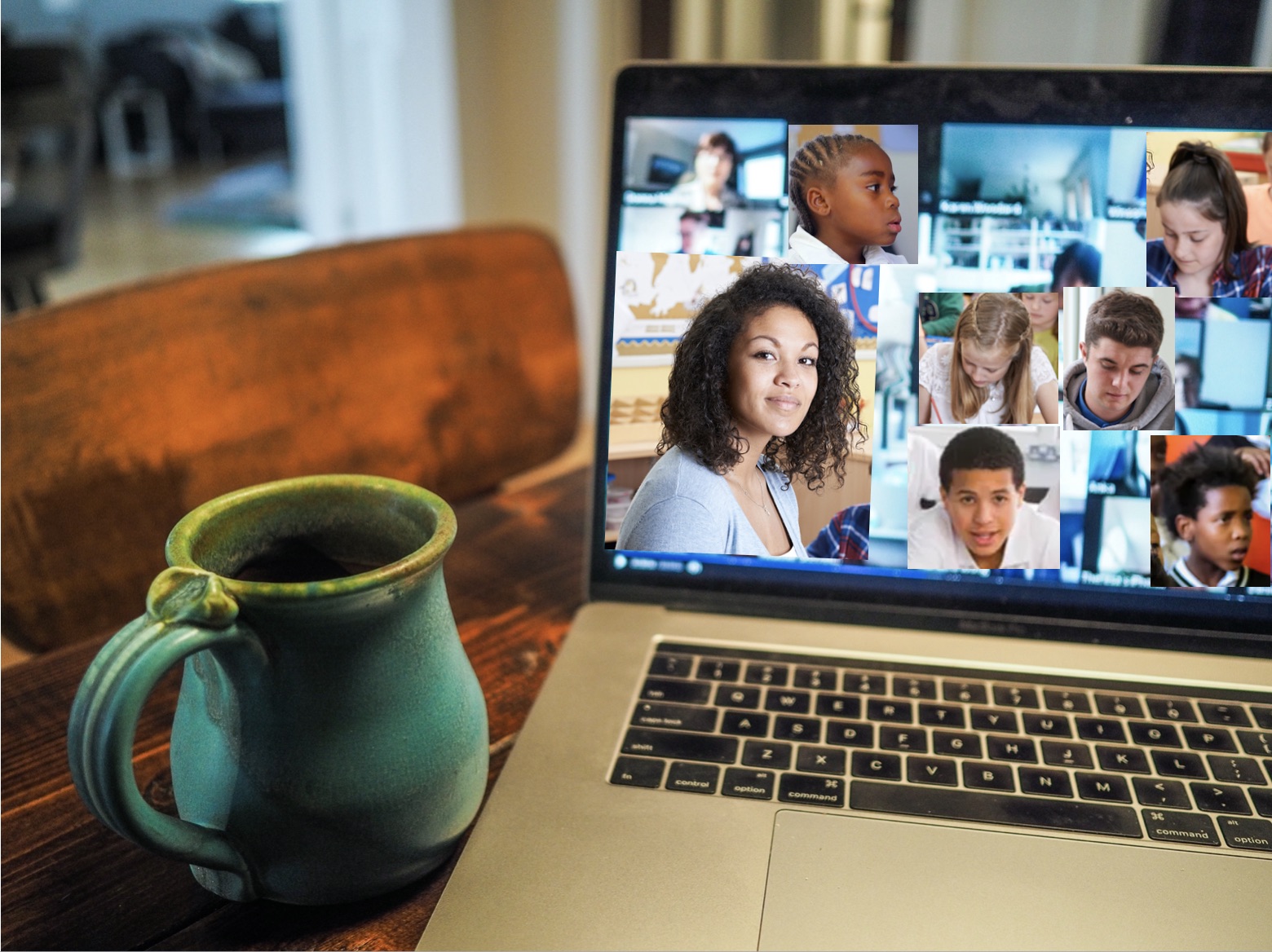
They closed our classrooms and we figured out how to do the job from home with our laptops and home computers. We became experts overnight in Zoom, Google Meets, Google Classroom and every other file sharing, digital conference software there is.

And that would have been okay I guess – if the rest of society had held up its side of the bargain.

Immunologists told us we had to shelter in place but our governments didn’t provide the means to do so.

The economy needed a kickstart. People just got a kick.

And schools were caught in the maelstrom.

Many schools reopened unsafely. Not only did people get sick, but the quality of education was subordinate to babysitting services so parents could get back to nonessential jobs that kept their bosses showered in profit.

Too many school directors became like the mayor in Jaws, proudly announcing the beaches were open, then trying desperately to find any excuse for the mangled bodies washing up on shore other than a hungry shark.

I will never forget the calm certainty with which policymakers announced schools were reopening without even mentioning the impact on the teachers who still had to staff these schools and put themselves and their families at increase risk of infection. Nor will I forget the CDC advising that vaccinating teachers first was nice but not necessary.

However, as bad as all of that was, it was the insurrection at the Capitol that pushed me over the edge.

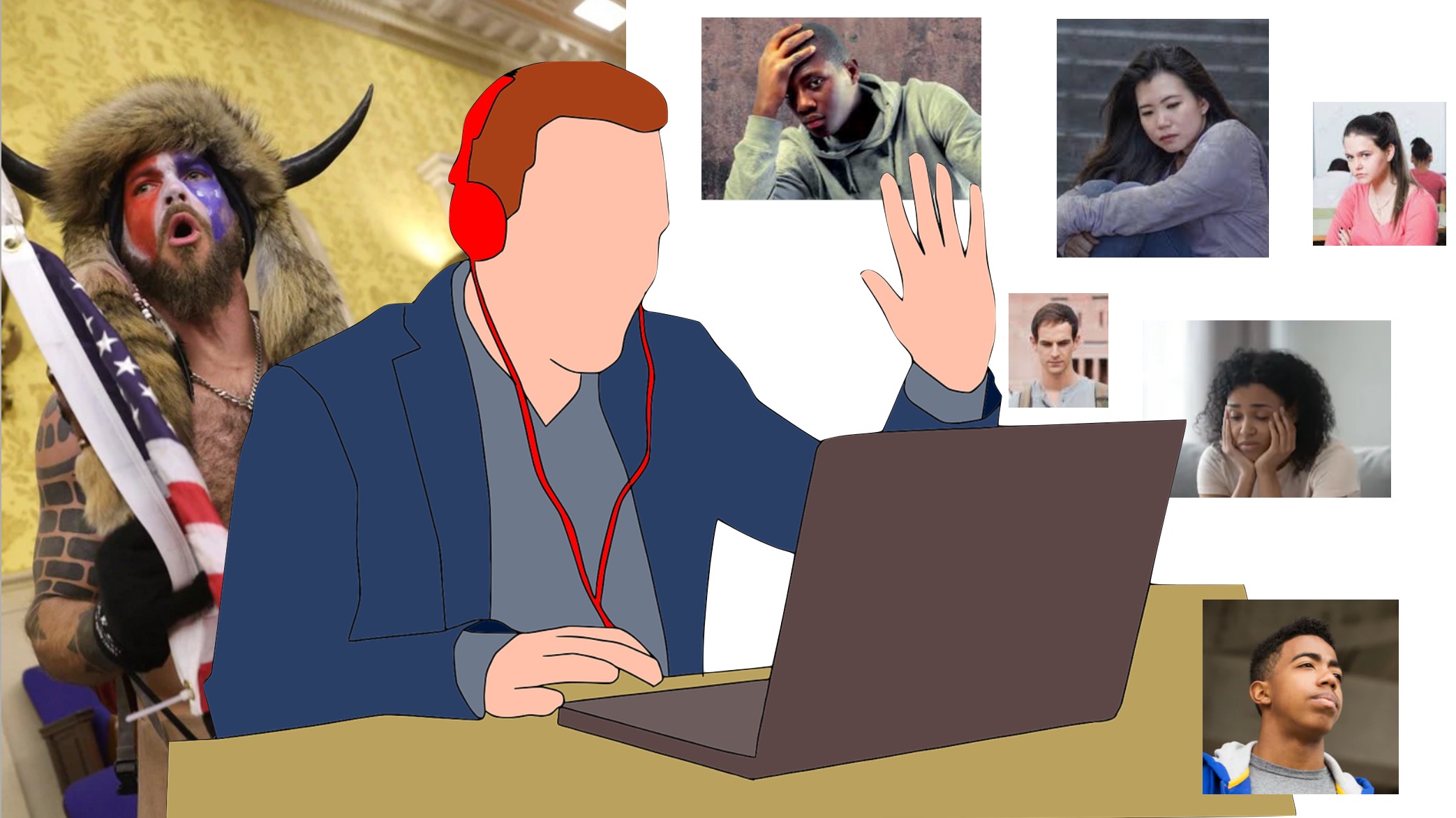
Here we had a group of white terrorists dressed up for comic-con proudly rushing our highest legislative body to kill lawmakers who wouldn’t perform a coup.

I had had enough.

Somewhere inside myself – as I tried to calm my students and explain the significance of what was happening – I promised that I would try to make a change.

If so few people tasked with making the important decisions couldn’t do it, I would offer to do it, myself.

If so many easily corrupted fools could cheer the destruction of democracy, I would do what I could to defend it.

So when the opportunity arose to run for County Council, I took it.

Like I said, it’s a strange position.

Allegheny County is one of the biggest counties in Pennsylvania second only to Philadelphia. Being on council would allow me to have a say in everything from transportation to law enforcement to business to – yes – education.

First, the area where I live – the Mon Valley – is made up of former steel towns left behind by the rest of the county. In most parts of the city, if you need to get somewhere, you can just take a bus. Not in the Mon Valley.

So many Port Authority routes have been cut that getting in to the city on public transportation is nearly an all day affair – if possible at all. I should know. My wife used to ride to work on the bus, but after the latest round of cuts, that become too hard to fathom.

On County Council, I could do something about that.

Then there’s our air quality – some of the worst in the state.

When the steel mills closed, we lost most of the smog and haze, but it didn’t last. With the fracking boom and well-meaning efforts to keep as many mills open as possible, the air became a thick, rusty tasting mess.

On County Council, I could do something about that.

Well-paying union jobs are harder to come by these days, and those that do exist shouldn’t require us to poison the environment. We have all these rivers, all these corridors free from trees or phone lines. We could build wind turbines on the shores and generate more power than we’d know what to do with. We could checker the rooftops with solar panels and not have to worry about the latest thunderstorm knocking out our power.

And doing so would require hiring people to build, maintain and improve this green infrastructure. No more sewage overflowing into the river during flood times. No more pollution from industries not required to monitor and regulate their output. No more lead from flaking paint getting into our food and water.

On County Council, I could do something about that.

Let’s not forget law enforcement.

The County Jail is located right in the middle of Pittsburgh, and the way it’s run is a disgrace.

About 80% of the people incarcerated there have not been convicted of any crime. They simply can’t afford cash bail, failed a drug test (often for something like marijuana) or violated our county’s inordinately long parole period. It’s ridiculously expensive not to mention inhumane. It costs $100 a day to keep someone in lockup. That’s $100 million a year or 27 cents from every dollar of county taxes collected.

We need to stop this madness, get civilian oversight of police and cut out the military style policing.

On County Council, I could do something about that.

And of course there’s education.

According to state law, community colleges are supposed to be bankrolled completely by the state, the county and student tuition. However, the state and the county have always shortchanged the college, only paying about 20% instead of the 33% they owe. The result has been an increased burden on students and families with rising tuition and fewer services. That’s appalling, especially in a county where one third of all residents have taken at least one class through Community College of Allegheny County (CCAC). I, myself, took a math course there when I was preparing to become a teacher. And my father-in-law was a teacher there until they cut his job.

Moreover, County Council plays a role in appointing people to boards and authorities including those that administer CCAC. Yet council has rarely appointed any educators or people who understand the profession.

On County Council, I could do something about that.

Which brings me to my final point.

What about public schools?

Does the county have any role to play in what happens to them?

At present, the answer is mostly no. But it doesn’t have to be.

In Pennsylvania, as in most states, public schools are primarily funded by local property taxes. So rich communities spend a boatload per student and poor communities scrape together whatever they can afford.

It’s a problem only the state and federal government can truly solve, but that doesn’t mean we’re helpless at the county level.

We have a $2 billion budget. We have an awful lot of big corporations that hide behind a non-profit status but act a lot more like for-profit companies.

We wouldn’t have to scrape together much to make a real difference in the lives of underserved students.

We could help them get pre-kindergarten services, decrease class size, increase arts and humanities, get more after-school tutoring

On County Council, I could do something about that, too.

So that’s why I’m running for office.

That’s why I’m willing to trade in a few nights from the classroom to the council chambers.

I’d still be a teacher. I wouldn’t be giving up my day job.

But if people see fit to support my candidacy, I could get a seat at the table, a chance to form coalitions to bring real change for the people of my district and the county as a whole.

That’s why I’m going door-to-door, introducing myself and asking for support.

I want to make a difference.

I want to be able to look my students in the eye with the full knowledge that I’m doing everything I can to ensure they have a future.

But I can’t do it alone.

We can only do it together.


Like this post?  You might want to consider becoming a Patreon subscriber. This helps me continue to keep the blog going and get on with this difficult and challenging work.

Plus you get subscriber only extras!

Just CLICK HERE.

Patreon+Circle

I’ve also written a book, “Gadfly on the Wall: A Public School Teacher Speaks Out on Racism and Reform,” now available from Garn Press. Ten percent of the proceeds go to the Badass Teachers Association. Check it out!

Hope During a Pandemic is Both Hard and Inescapable

I cried when I got my second Covid-19 shot.

Not a lot.

Just a few drops.

But the flood of emotions I felt that accompanied that tiny pinch in my arm was totally unexpected.

It was like I gasped for breath and hadn’t realized until then that I was suffocating.

I looked up at the volunteer who had injected me to see if she’d noticed, but it’s hard to read someone’s expression under a mask.

So I found myself shrugging the feeling off, giving her a brisk “Thank you” and heading off to file my paperwork, get another stamp on my vaccination card and plopping in a chair for 15 minutes of observation before heading on my way.

As I sat there, I started to feel this growing sense of excitement in my chest.

Two weeks, I thought.

In two weeks I will be fully vaccinated.

Moderna is 94.1% effective at preventing infection. That means I should be able to return to school and teach my students in-person. Safely.

Some of them have been back in the classroom for weeks now, but I’ve had to stay remote putting up assignments in Google Classroom for the sub to teach.

My pre-existing health conditions make me too susceptible to the virus to take chances with stuffy classrooms and interacting with tens of students for prolonged periods every day.

So instead I spend my daylight hours grading virtual papers and writing digital comments, but I only get to hear student voices on Fridays when all classes are conducted remotely.

Rarely do I get to see a face in one of those austere Zoom boxes.

It’s a lonely life being sidelined this way.

But there seems to be an end in sight.

I can actually plot it on the calendar.

THAT day I can return.

And I wonder, is this hope?

I haven’t really felt anything like it in quite a while.

The world has been such a mess for so long.

A global pandemic that’s infected nearly 29 million Americans and killed 523,000 is bad enough. But it’s the constant bungling of local, state and federal governments response to the virus that has been absolutely demoralizing.

In fact, my second shot was delayed a week because health officials accidentally gave out the dose that had been set aside for me to someone else.

Thankfully waiting an extra 7 days isn’t supposed to have any ill effects. But that’s a week more I have to be out of the classroom and burning my sick days, trying to do 40 hours worth of work in the handful of hours the district allows me.

It’s just that this isn’t an anomaly. All through this process those in charge have dropped the ball.

At every step – bungled, mismanaged, and carelessly misjudged.

The school board refused to value my health and reopened recklessly even putting the community’s own children in danger. The state refused to mandate almost anything to keep people safe, instead offering a truckload of take-it-or-leave-it suggestions.

Hope, I thought. Is it possible to believe in hope anymore?

Barack Obama made it a campaign slogan. Hope and change.

His book was “The Audacity of Hope.”

He wrote:

“Hope is not blind optimism. It’s not ignoring the enormity of the task ahead or the roadblocks that stand in our path. It’s not sitting on the sidelines or shirking from a fight. Hope is that thing inside us that insists, despite all evidence to the contrary, that something better awaits us if we have the courage to reach for it, and to work for it, and to fight for it. Hope is the belief that destiny will not be written for us, but by us, by the men and women who are not content to settle for the world as it is, who have the courage to remake the world as it should be.”

These words ring so empty today after a presidency full of promises and very little else.

True, much of his domestic agenda was blocked by Republicans. But even when they couldn’t stop him from getting things done, the results were often disappointing. His foreign policy was hawkish full of drone strikes, his immigration policy unduly cruel and his education programs were the fever dreams of Milton Friedman made real – charter schools, high stakes testing and ed tech handouts.

You think Trump was bad!? He was the logical consequence of dashed hopes and neoliberal triumphs. You can’t run, as Obama did, as a once-in-a-lifetime transformational candidate and then legislate to support a status quo that is destroying the majority of Americans.

If you do, you get Trump.

At least now the pendulum has swung back the other way. We’ve got Biden.

Cool, smooth, dependable Biden.

He’s slowly reversing the catastrophes of Trump while quietly committing a few of his own along the way. (Reopening school buildings without mandating the opportunity for teachers to be vaccinated first!? Requiring standardized testing to tell if students have been affected by the pandemic!?)

How does one continue to hope in the wake of such disappointment?

The fabric of our society and our governmental institutions are frayed to the breaking point. They could fall apart any day now.

How does one continue to hope in light of all this?

My phone buzzes. I shake my head to dispel all these gloomy thoughts.

Well! Here’s some good news. Apparently there are no ill effects from the shot. Time to go.

I stand up and look around at the busy vaccination center.

Volunteers continue to welcome patients. They’re much more organized than when I got my first shot only weeks earlier.

Everyone is friendly and there’s even a sparkle in their eyes.

What is that sparkle?

Why does everyone smile?


Why did I cry?

There’s only one possibility.

It’s hope.

Goddamit.

It’s hope.

The teardrop that escaped my eye wasn’t a response to any pain from the injection. It was pain at the possibility that all this would end.

It was the feeling – the certainty – that the pandemic was only temporary and that I would come out the other side. We all would.

Because in the part of our hearts where hope grows, the past doesn’t matter.

What’s happened is always past.

The only thing that counts is the future.

And when you have a future you have to hope.

It’s simply built in. There’s no way around it.

It would be easier not to hope. But the only way to do that is to die, and apparently I’m going to live.

So you pick yourself up, you dust off your knees and you get to the work ahead.

Because no matter how disappointing the past, how demoralizing the events you’ve lived through, there is always the possibility that things will be better tomorrow.

If only you work to make it so.


Like this post?  You might want to consider becoming a Patreon subscriber. This helps me continue to keep the blog going and get on with this difficult and challenging work.

Plus you get subscriber only extras!

Just CLICK HERE.

Patreon+Circle

I’ve also written a book, “Gadfly on the Wall: A Public School Teacher Speaks Out on Racism and Reform,” now available from Garn Press. Ten percent of the proceeds go to the Badass Teachers Association. Check it out!

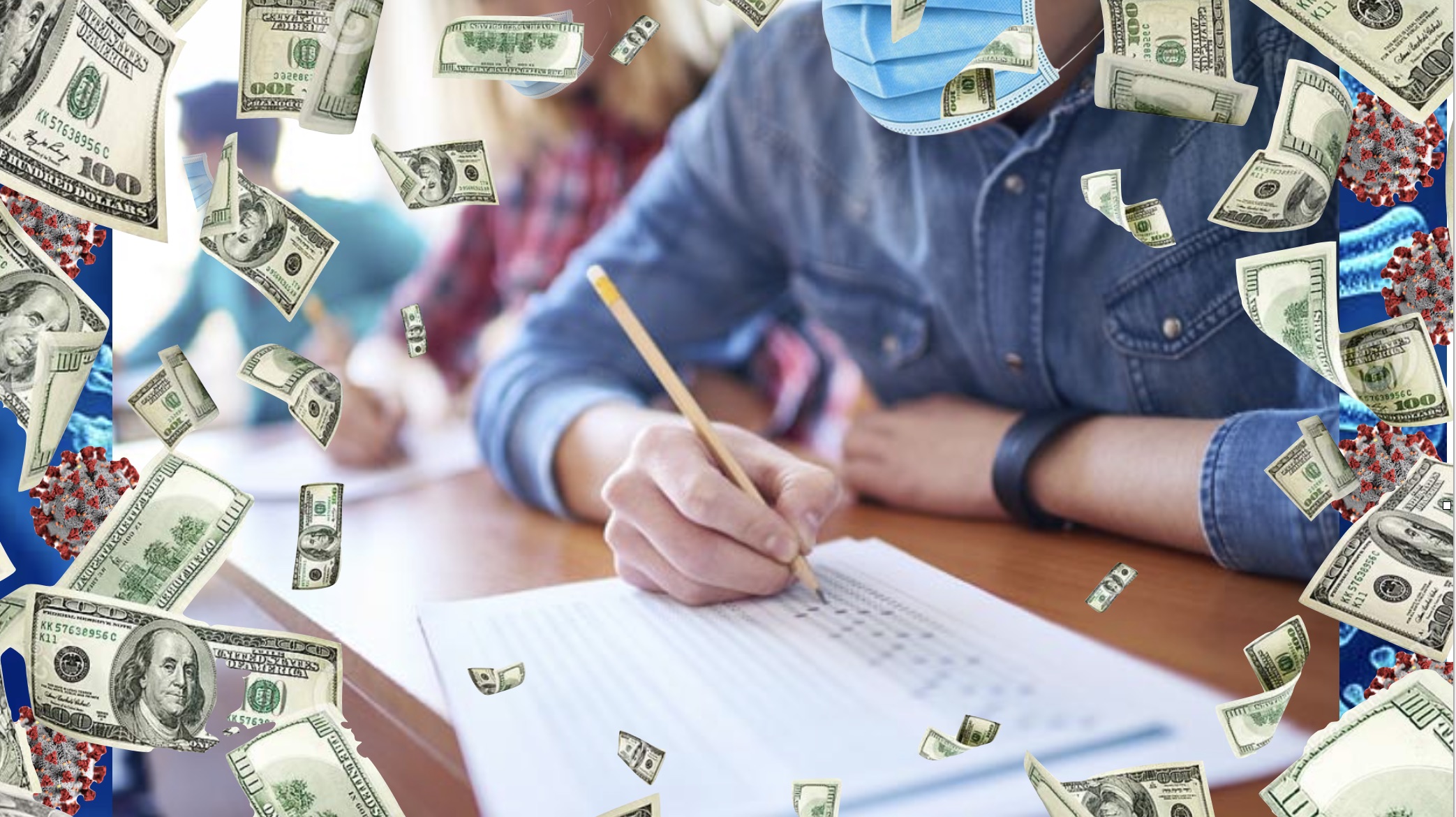
Standardized Testing During the Pandemic is Corporate Welfare Not Student Equity

We’ve got to be able to tell how badly the pandemic is affecting student learning.

So let’s give standardized tests.

That’s the rationale behind the Biden administration’s mandate that schools across the country still struggling just to keep buildings open somehow manage to proctor standardized assessments.

Nearly 29 million people have contracted Covid-19 in the United States. More than 514,000 people have died from the virus.

Only about half of the nation’s schools are open for in-person learning, and many of those are operating on a hybrid basis. The rest are completely virtual.

Children have lost parents, siblings, family members, friends, teachers. Families are struggling just to survive with some members still recovering from the longterm health consequences of contracting Covid.

It is absurd to claim that only standardized tests can show whether the pandemic has impacted student learning.

It has. Nearly everywhere.

Insisting on testing is like bringing a thermometer into a burning building to tell firefighters where to spray the hose.

But pay attention to the messenger.

In this case, it’s acting education secretary Ian Rosenblum, former executive director of pro-testing organization, the Education Trust.

He sent the letter to state superintendents on behalf of the Biden administration telling them that blanket waivers of the federal testing mandate would not be considered this year as they were in 2019-20.

Let’s be honest. Rosenblum is not an educator.

He is a corporate lobbyist given a government job where he has continued to lobby for his industry.

This has nothing to do with helping students overcome the problems of a pandemic.

It is corporate welfare. Plain and simple.

Standardized testing is a multi-million dollar business.

States spend more than $1.7 billion every year on testing. In 45 states, assessments at the primary level alone cost taxpayers $669 million.

This money isn’t going to mom and pop organizations. The four major testing companies are Wall Street heavy hitters – Harcourt Educational Measurement, CTB McGraw-Hill, Riverside Publishing (a Houghton Mifflin company), and NCS Pearson.

In 2001 the first three agencies accounted for 96% of the tests administered, while Pearson was the leading scoring agency of those tests. And since then the market has exploded.

In 1955 the industry was valued at only $7 million. By 1997 it had ballooned to $263 million. This is a 3ooo% increase. Today the estimated worth of the industry is $700 million.

However, that only takes into account actual assessment.

When you consider that many of these companies (or their parent conglomerates) also provide remedial materials for students who fail the tests, the profits really start rolling in. It’s no coincidence that McGraw-Hill, for example, also publishes books and other materials many of which are used by schools to remediate the same students who fail the company’s tests.

It’s a captive market. The testing company makes and distributes the test (for a fee), scores the test so that a majority fail (for another fee), and then sells schools the materials it claims will help students pass next time (for an even further fee).

However, for the first time in two decades, the pandemic threw a monkey wrench into the machine.

Last year, the Trump administration cancelled all standardized tests as schools were closed to protect students from Covid-19.

Former Education Secretary Betsy DeVos had already signaled that she would not cancel them again this year, but when Trump lost the election, many educators and families had hoped in-coming President Joe Biden would think differently.

He had, in fact, promised that if he were elected he would not continue forcing states to give standardized testing.

I was there at the Education Forum in Pittsburgh in 2020 when my friend Dr. Denisha Jones asked him about it point blank.

You can watch his full answer here, but the crux of it was “Teaching to a standardized test makes no sense.”

Unfortunately, caving to a powerful corporate lobby does. And that’s exactly what Biden has done here.

In fact, it goes a long way to explaining his perplexing rush to reopen schools in his first 100 days regardless of the level of community infection.

Biden, who ran on being friendly to teachers and that his wife Dr. Jill Biden was an educator, has pushed some extremely absurd education policies in his short time in office.

Not only has his administration decided to ignore community infections, he has insisted that schools can be opened safely if districts follow certain safety precautions like universal masking, contact tracing and social distancing.

However, many schools are not following these protocols and even more simply cannot because doing so would be exorbitantly expensive. For example, you can’t have all students return to a cramped school building AND have them be 6 feet apart. There simply isn’t the available space. Moreover, contact tracing doesn’t effectively track Covid cases since most students who contract the virus are asymptomatic.

Then there is the absurd prescription that schools don’t even have to prioritize teachers for the Covid vaccine before reopening. In many states educators aren’t even eligible yet to receive the vaccine. Yet the Biden administration expects them to enter the classroom without necessary protections to keep them, their families and students safe.

These are all perplexing policies until one looks at it from an economic vantage.

Waiting for all teachers to have the opportunity to take a two dose vaccine would take at least a month and a half – that’s if every teacher could start the process today.

In addition, if we wait for community infections of the virus to dissipate, testing season will be far from over. In fact, it’s likely the rest of the school year would be gone.

So if the Biden administration had prioritized safety, it would have been forced to cancel standardized tests again this year.

Instead, it has prioritized the testing-industrial complex.

The economy is more important to the powers that be once again.

As a compromise measure, Biden is allowing flexibility in just about every way the tests are given. They can be shortened. They can be given remotely. They don’t have to be given now – they can be given in the fall.

However, this completely erases any measure of standardization in the processes.

Standardization means conforming to a standard. It means sameness. A test taken by a student at home is not the same as one taken by a student in school. A short version of a test is not the same as a long one. A test taken with 180 days to prepare is not the same as one taken with 250.

And if standardization is not NECESSARY in this case, why can’t we rely on non-standardized assessments teachers are already giving to their students? For example, nearly every teacher gives her students a grade based on the work the child has done. Why isn’t that a good enough measure of student learning?

It’s based on a year’s worth of work, not just a snapshot. It’s in context. And it’s actually more standardized than the hodge podge of assessments the Biden administration is allowing this year.

Why isn’t that allowed?

Because the testing companies won’t make any money.

Moreover, it could ruin their future profits.

If student grades are enough to demonstrate student learning during a pandemic, why aren’t they enough at other times?

The very project of high stakes standardized testing is thrown into question – as it should be.

Educators across the country will tell you how worthless standardized tests are. They’ve been telling people that for decades but policymakers from Republicans to Democrats refuse to listen. It’s almost as if they’re distracted by another sound – the jingle of money perhaps?

Those who claim standardized testing is necessary to determine where students are struggling have the weight of history to overcome.

Standardized assessments were created as a justification of racism and eugenics. They have never shown learning gaps that couldn’t be explained by socio-economics. Impoverished and minority students score poorly on the tests while privileged and white students score well.

If one really wanted to invest more resources where these alleged deficiencies exist, one wouldn’t need standardized assessments. You could just look at the poverty level of the community and the percentage of minority students.

But even more telling is the fact that this has never happened. Testing has never resulted in more resources being provided to needy children other than providing more remedial test prep material purchased from – you guessed it – the testing industry.

Under normal circumstances standardized testing is a scam.

During a pandemic, it’s the most perverse kind of corruption imaginable.


Like this post?  You might want to consider becoming a Patreon subscriber. This helps me continue to keep the blog going and get on with this difficult and challenging work.

Plus you get subscriber only extras!

Just CLICK HERE.

Patreon+Circle

I’ve also written a book, “Gadfly on the Wall: A Public School Teacher Speaks Out on Racism and Reform,” now available from Garn Press. Ten percent of the proceeds go to the Badass Teachers Association. Check it out!

You’re Going to Miss Us When We’re Gone – What School May Look Like Once All the Teachers Quit

The alarm buzzed at 4:30 am. Time to get up.

DeShaun and his little brother Marco got out of bed and threw on their clothes.

Mom was in the other room hastily getting her work bag together.

“Are you two ready yet? We’ve got to go in 20 minutes.”

Marco just yawned, but Deshaun dared to complain about the hour.

“We didn’t used to have to get up so early,” he said.

“That was when you still had school. Now I’ve got to get you all to the daycare by 5 or they’ll be full up.”

DeShaun frowned but got ready anyway. He didn’t want to have to sit outside all day again. There were older kids in the park who got kids like him to run drugs during the day. He could make some money that way, but the only kids he knew who did that got hooked on their own supply. That or arrested.

Heck! He’d been arrested for loitering twice this year already.

“Hurry! Let’s go!” Mom shouted as she handed each child a yogurt and a bag of chips.

The bus was full even at this hour.


DeShaun recognized a bunch of kids who usually went to the daycare.

His best friend, Paul, used to ride the bus, but then his mom got him into the private school in the city. She and his dad had to cash in his entire school voucher AND pay an additional $10,000 a year, but they said it was worth it. Still, DeShaun missed his friend.

Octavia was standing a bit further down the aisle though. She was usually good for a trade. He guessed she’d take his yogurt for some Hot Cheetos.

When they got to the right stop, Mom gave his shoulder a squeeze and told him to watch out for his brother. She’d see him at the end of the day.

He and Marco made it just in time.


He saw Octavia get turned away at the door.

“Dang!” He said. He really wanted those Hot Cheetos.

He and Marco took their seats in the back of the room and got out their iPads.

He wanted to play with the toys in the Reward Room, but no one got in there before lunch.

Marco was crying.

“What’s wrong?” He said.

“I can’t find my iPad.”

“Didn’t you pack it?”

“I think I left it on the charger.”

“You dummy!” DeShaun said and handed Marco his own iPad.

“Take this,” he said. “I can use my phone.”

It had a huge crack on the screen but he could probably read through the jagged edges if he tried hard enough. That probably meant no Reward Room though.

First, he clicked on Edu-Mental. It wanted him to read through some stuff about math and do some problems. He couldn’t really see them but he could hear about them through his earbuds.

Then he did Lang-izzy. There was a fun game where you had to shoot all the verbs in these sentences that scrolled across the screen faster and faster. But DeShaun’s timing was off and even though he knew the answers, he couldn’t get a high enough score to get a badge.

He skipped to Sky-ba-Bomb. It had a lot of videos but it was his least favorite. He couldn’t tell which ones were about history and which were advertisements. Plus he got so many pop ups after just a few minutes, he often had to disconnect from the wi-fi or restart his phone.

Oh, what now?

“Miss Lady,” Marco was saying.

The blonde haired new girl came over to him.

“What is it, Sweetie?”

“Can I go to the bathroom?”

She checked her iPad.

“Oh, I’m sorry, Honey. You’ve only been logged on for half an hour. Answer a few more questions and then you can go.”

DeShaun grabbed his shoulder and shook him.

“Why didn’t you go before we left home?”

“I didn’t have-ta go then. I have-ta go NOW!”

He could leave the daycare and go outside. There was even a filthy bathroom at the gas station a few blocks away. But if he left now someone outside was bound to take his spot. And Mom wouldn’t get a refund or nothing.

The blonde was about to walk away when DeShaun stopped her.

“He can take my pass. I’ve been on long enough.”

“That means you won’t get to go until after lunch,” she reminded him.

“I won’t drink anything,” he said.

She shrugged. That seemed to be her main way of communicating with people. She looked barely old enough to be out of daycare, herself.

DeShaun gave Marco his phone and sat there waiting for him to come back.

He remembered what it used to be like.

Back before the pandemic, they used to go to school.

Now that had been SOMETHING!

They had real teachers, not just minimum wage babysitters.

He remembered back in Mrs. Lemon’s class he could go to the bathroom anytime he wanted. In fact, he’d often wait until her period everyday to go to the bathroom. That way he’d have time to walk halfway around the building and look in all the open doorways and see what everyone was doing.

There were groups of kids huddled around desks working on projects together. Other times kids would be sitting in their rows of desks with their hands raised asking questions – and actually getting ANSWERS!


Teachers would stand at the front of the room and talk to them – actually talk and wait to hear their answers!

And if you finished your work, you could draw or read…. Reading…. Yeah they had real books made of paper and everything!

He remembered sitting in a circle in Mr. Sicely’s class and discussing the book they’d read. “The Diary of Anne Frank.” And people got really into it and excited.

We used to complain about the homework, he thought stifling a laugh. What he wouldn’t give for one more day of that homework!

He wondered why they no longer did stuff like that. Why DID the schools close after Covid?

He picked up his iPad that his brother had abandoned on the seat beside him and asked Siri.

He got a bunch of articles about teachers being asked to work in unsafe conditions, getting sick and some even died. He read about the CDC saying that schools could reopen “at any level of community transmission” and that vaccinating teachers wasn’t even necessary.

The government – under both Republicans and Democrats – wouldn’t pay people to stay home so they had to keep working even at nonessential jobs, and doing so just spread the disease. And instead of blaming lawmakers, lots of folks blamed teachers for refusing to risk their lives to teach kids in-person.

Wasn’t that like today, DeShaun thought. But, no, he answered himself. They still taught kids on-line back then. Now there are hardly ever any real people on-line. Kids like him just went from app to app earning various badges in different subjects until they had enough to take the test. Those horrible multiple choice standardized tests!

He could email a question to someone but rarely got an answer back.

When he first started going to daycare, he asked one of the workers a question. There used to be this nice lady, Miss Weathers. She would at least try to answer the kids questions but he thought she got in trouble for doing it and he hadn’t seen her here since.

Now there was rarely the same adult here for more than a week or two. And they kept getting younger. Maybe HE could get a job here if he was good.

Marco came back, snatched the iPad and said “Thanks.”

DeShaun just sat there looking at his cracked phone.

Was this really all he had to look forward to, he thought.

He missed school.

He missed teachers.

He missed everything that used to be.


Like this post?  You might want to consider becoming a Patreon subscriber. This helps me continue to keep the blog going and get on with this difficult and challenging work.

Plus you get subscriber only extras!

Just CLICK HERE.

Patreon+Circle

I’ve also written a book, “Gadfly on the Wall: A Public School Teacher Speaks Out on Racism and Reform,” now available from Garn Press. Ten percent of the proceeds go to the Badass Teachers Association. Check it out!

How I Got the Covid Vaccine: an Immunization Odyssey

So there I was standing out in the cold – miserable but happy.

My jacket was buttoned up to my nose on top of my mask.

My hood was up and my glasses were becoming a white screen of fog where my hot breath escaped into the chill.

In my pocket, my left hand wiggled into a glove, then sneaked out to hold my glasses away from my face.

It was the only way I could see whether the line was moving.

And deep inside me, as I stood shivering through the gusts of bitter wind, somewhere I was happy.

Because I was in line to be vaccinated against Covid-19.

Despite it all, I knew I was one of the lucky ones.

It had been a long journey to this place, the Brentwood Volunteer Fire Department. And not just in miles.

I had spent the better part of a week trying to find a place here in Western Pennsylvania where I could even get the vaccine.

On Sunday, a teacher I’ve worked with for 15 years left me a message that she was going to Bloomfield with her husband. She had heard Wilson’s Pharmacy was giving out the vaccine. Like me, her husband has a heart condition and so qualified for the shot.

In the Keystone state, only medical personnel, people 65 and older or those with certain health conditions have been prioritized to get the vaccine so far.

Of course, UPMC, the healthcare agency distributing the injections in the Pittsburgh area, has taken this to mean all their employees – even those who don’t interact with patients.

They can cruise up to nearly any hospital and get a dose.

The rest of us have to make an appointment somewhere else – if we can find one.

I sat up in bed trying to decide if I wanted to drive all the way to Bloomfield on the off chance that they’d have a shot with my name on it. Considering that it was about an hour away if I left right then and the message from my co-worker was about a half hour old, I doubted my chances.

But as I showered and the sleep left me, I started to think I might roll the dice.

However, when I called the pharmacy on my way out the door, I was told they had run out of the medication.

And for most of that week, this was the closest I got.

I went on-line every day trying to find somewhere to get the vaccine. I tried Giant Eagle, Rite Aide, Allegheny County, various pharmacies, etc. All nada.

Sometimes I had to keep a browser window on my computer open for hours just to be turned down. Sometimes a hopeful page would pop up asking for information, and I’d fill it all in only to get the same negative message.

It was so discouraging.

So was my job.

The school district where I teach has been on remote learning since November when an outbreak in multiple schools (but most notably in an entire kindergarten class) closed us down.

Now – for no discernible reason – school directors wanted to open back up.

Infections are still high throughout the county and the state. There is no justifiable reason to reopen except that decision makers are bored. That and they are tired of hearing people complain that we are taking too many precautions to protect kids. And those darn teachers and their all-powerful unions!

I knew I couldn’t go back to the classroom.

I hadn’t been back since March when we closed down the first time.

I have both a heart condition and Crohns disease. Both my cardiologist and gastroenterologist told me that if I got Covid it could be a death sentence.

My only choice was to stay home using sick days or get fully vaccinated before returning to the classroom.

I wanted to do the later. I wanted to be there for my students. But that was looking like an impossibility.

Frankly, I don’t think it’s safe for the kids even if I am vaccinated. But after almost a year of fighting with school directors, administrators and some angry parents, I was willing to concede the point. These are their kids, after all. If parents think it’s safe, that’s their choice.

Mine is much different.

Even though my home district is open, my daughter has been learning at the dinning room table throughout the crisis. Her pap pap and I (but mostly her pap) help her make sense of a terrible cyber curriculum day-in-day-out. Most of the time, he takes math and science. I take English and social studies.

We don’t do this because we think it’s the best way to learn. We do it because we love her and don’t want to put her life in jeopardy.

I had about given up on ever getting back to the classroom, myself, when my cousin, Lora, texted me.

Her family and mine used to be fairly close when we were kids, but I hadn’t really talked to her much in recent years.

“Hi Steve. I wanted to see if you were able to get a vaccine appointment for yourself. My sister-in-law has been helping people in [group] 1A get appointments, and I know she wouldn’t mind looking for you… I’m worried about you with your heart condition…”

I was struck dumb.

I remembered Lora as this skinny little girl who tagged along after my brother and me. We used to put on little plays in my grandmother’s basement. I gave her some of my stuffed animals when I grew out of them.

When she was a teenager we didn’t get along very well. It was my fault. I was jealous of the time she took from my mom.

Frankly, I was a jerk to her. I know that now, and I’d felt terrible about it long before I got this text.

But here she was now – a researcher at the University of Pittsburgh. She was no longer that little girl. She was no longer that annoying teen. She’s a grown woman with command of her field and the respect of her colleagues.

I’d already known that. What I didn’t know was that she had such a big heart. Big enough to encompass an asshole like me.

We texted back and forth and she gave me so many more avenues to explore to find a site to be vaccinated.

I think it was only a day later, maybe that very night that I got the email from Spartan Pharmacy that I had an appointment for the following afternoon.

I had signed up for Spartan’s waiting list before Lora contacted me. But she and her sister-in-law, Caity, knew I had an appointment almost before I did.

Lora says Caity is her “vaccine Angel.” I don’t think I’ve ever met her, but the two of them helped me through every step of the way.

I had to fill out a form before going to my appointment and the Website simply wouldn’t load. Too many people were probably trying to access it at the same time. Someone told me the next day that 15,000 people had signed up.

Lora and Caity sent me a copy by email an hour later.

I don’t see how I could have done any of this without them.

So the next day when I got to the Brentwood VFD, found one of the few available parking spaces and got into the long line in the bitter cold, I couldn’t really be upset by the discomfort of the situation.

Even when it started to snow, and my glove felt like it was almost nonexistent, I couldn’t get too down.

In about an hour or so, I knew I’d have the vaccine.

I had hope again – something that had been missing for far too long.

It wasn’t trouble free for those in line. Most of the people there were elderly. Many were in wheelchairs or had walkers.

One gentlemen fell on the cracked pavement and people from the crowd helped him back up. I remember his daughter kept asking him if he’d cracked his head.

But I was at the front of the line and entered the building then.

It was warm at least.

And the people there were very friendly.

Once inside, it didn’t take long at all before I was taking off my coat and rolling up my sleeve.

There was a slight pinch and that was it.


I gave them my paperwork, they gave me an appointment a month hence for my second dose and I was told to sit and wait for 15 minutes before leaving.

I had no side effects.

The next morning the injection site was a little sore but I’ve had worse bug bites.

And so here I am.

Some people worry about the vaccine because of how quickly it was developed, but not me.

I’ve seen the pictures and videos of our lawmakers and celebrities getting the shot. Even the disingenuous Covid deniers who claim the pandemic is all a hoax don’t let their “conviction” stop them from getting a dose.

That more than anything proves the vaccine’s veracity for me.

I know that once I get the second dose, I can still bring Covid home to those I love. But from what I’ve read, even if that happened it would be a weakened form of it.

There’s a lot of uncertainty – new strains of the disease that the vaccine may or may not protect against.

In a perfect world, we’d wait until the majority of people were as safeguarded as I am before getting on with everything. But we don’t live in a perfect world.

If anything, the virus has shown us how imperfect it is.

But it has also shown us the exact opposite – the power of kindness and love.

I get down about all that’s messed up in this world. I get depressed about all the missteps people have made dealing with this crisis.

And when that happens now, I try to think about my cousin – my sweet cousin, Lora.

There are people like her all over this country looking out for others.

There are people who are caring and don’t condition that feeling on what someone has done for them lately.

They just do what they can because it’s the right thing to do. Because they see the good and want to increase it.

I am so grateful for having this second chance – and it does feel like a second chance.

I am thankful, thoughtful and hopeful.

If there are people like Lora in this world, maybe there’s hope for all of us.


Like this post?  You might want to consider becoming a Patreon subscriber. This helps me continue to keep the blog going and get on with this difficult and challenging work.

Plus you get subscriber only extras!

Just CLICK HERE.

Patreon+Circle

I’ve also written a book, “Gadfly on the Wall: A Public School Teacher Speaks Out on Racism and Reform,” now available from Garn Press. Ten percent of the proceeds go to the Badass Teachers Association. Check it out!

What I Told My Students About Yesterday’s Attempted Trump Coup

The moment I had been dreading happened.

Student names started popping up on my screen waiting to be admitted into this morning’s first Zoom meeting.

What was I going to say to them?

Yesterday in Washington, DC, thousands of Trump supporters charged into the Capitol Building at his urging in an attempt to stop Congress from certifying his Presidential defeat.

What would I tell my middle schoolers?

What COULD I say?

We can’t offer you equitable resources. We can’t stop judging you with biased standardized tests. We can’t desegregate your schools. We can’t protect you from gun violence. We can’t even give you in-person classes because of a global pandemic the government has given up even trying to control!

And now I’m supposed to say that even the semblance of our democracy is up for grabs?

I started clicking on their names.

I only had a few moments before I had to speak.

I cleared my throat and began welcoming them, one-by-one as always.

And then it was time.

I stared at all these empty black boxes, and began.

“We’ve got to talk about yesterday,” I said.

“Not yesterday in class. That was fine. Everyone did an outstanding job on yesterday’s assignment.

“We have to talk about what happened yesterday in Washington, DC. Does anyone know what that was?”

And I waited.

Eventually I saw a few messages that individuals had their hands raised.

A few kids said that people had charged the Capitol. But that they didn’t know why.

So I explained it to them.

I told them how Trump was refusing to accept the results of the election. That he had lost, but continued to challenge it in the courts. Both Republican and Democratic judges had turned him down saying that he had no proof. So Trump spoke outside of the White House yesterday telling his followers to march on the Capitol, which they did.

At this point I noticed something strange on my screen.

The rows of empty boxes had turned into windows. No more memes or messages or generic names. Most of my kids had turned on their cameras and were meeting my eyes – in some cases – for the first time.

So that’s what Kelsey looks like, I thought. Wow! Marquis is really built. Is that little kid in the grey hoodie really Caulin?

I got flustered and stopped talking, but the students took up the narrative for me.

Some of them mentioned watching videos on-line of the riot. They saw a guy with horns in the President’s chair?

“No, I said. “That was the Vice-President’s chair in the Senate.”

“Wasn’t there someone at someone’s desk?”

“Yes, that was Nancy Pelosi’s desk,” I said. “A rioter broke into her office and put his feet up. She’s the Speaker of the House.”

And so it went on for a few minutes. They brought up things they had seen and I either clarified or supported them.

As a whole, they were wealthy in details but poor in meaning.

Most of the white kids seemed to be taking it ironically. The black and brown kids were more quiet and subdued.

A white boy wrote in the chat that it was “Civil War 2: electric bugaloo.”

I said, “Yes, you’ve hit on an important point. Some of these folks may have been trying to start a new Civil War.”

I tried to put the event in historical context.

I told them how nothing like this had ever happened in my lifetime. That the last time people broke into the Capitol Building like this was during the War of 1812 when the British tried to force the US to become a colony again. However, that was a foreign power invading our country. Wednesday was our own citizens seeking to overturn the results of an election, trying to overwrite the will of the people.

That’s when the first black student spoke up.

“Mr. Singer, why were they waving Confederate flags?”

“Yes! That’s true, Jamal. Many of them DID have Confederate flags and that’s really important.”

Before I could say more I got a series of rapid-fire questions from the same group who had been silent up to this point.

“Why didn’t the police stop them?”

“Why’d they steal stuff? I saw some guy walking away with a podium.”

“Why they so mad?”

I smiled and said that these were all excellent questions.


I asked if any of them knew who George Floyd was.

No one responded.

I told them he was a black guy who was murdered by police when an officer knelt on his neck.

After that happened, there were protests by Black Lives Matter activists and others in several cities including Pittsburgh. The police showed up in riot gear. As these protestors demonstrated almost entirely peacefully – certainly more peacefully than what we saw in DC yesterday – more than 14,000 people were arrested.

“How many people do you think were arrested yesterday?” I asked.

“Didn’t someone die?”

“Yes, a woman was shot in the Capitol and three others died of medical emergencies. How many people were arrested?”

“None,” said a student of color who hadn’t participated before.

“Why none?” I asked.

“Because they was white.”

I told him that he right and wrong. Out of thousands of rioters who broke into the Capitol, thirteen people were arrested. And the reason there were only 13 was because they were white.

I told them that this whole affair needed to be investigated. That we needed to know how and why the police responded the way they did. That we needed to hold the rioters accountable. That we needed to make sure those who instigated this violence were made to pay for it, too.

“Is Trump still President?” Someone asked.

“Yes,” I said. “For about two more weeks. But there are a lot of people who think he should have to step down sooner.”

So we talked about how he could be removed from office. We talked about impeachment and the 25th Amendment. We even talked about how Trump was banned from Twitter and Facebook – how he couldn’t post or tweet but still could send a nuclear missile anywhere he wanted.

And then it quieted down.

I asked them if there was anything more they wanted to know or if there was anything else they wanted to say.

They were still.

A few cameras clicked off.

I told them that I was there if anyone needed anything, that their teachers were here if they were feeling anything and wanted someone to talk to.

And then that was it.

I made one of the most abrupt and inelegant transitions in my career and we returned to our normally scheduled lesson.

Did it help any?

I don’t know, but I told them what I could. I told them the truth as I saw it.

There was a time when I would have been more reticent about it.

But the day after domestic terrorists try to steal our system of government isn’t the time to hold back.

As a teacher, sometimes I feel so helpless.

There’s so much I’d like to do for my students.

I want them to get the resources they need. I want to stop the unfair testing, integrate their schools, keep them safe from gun violence and control Covid-19 so we can return to the classroom.

I want to live in a country where majority rule is cherished and protected, where no one thinks the collective will should be trumped by white privilege.

But when all those things are out of reach, I still have one thing left to give.

The truth.


Like this post?  You might want to consider becoming a Patreon subscriber. This helps me continue to keep the blog going and get on with this difficult and challenging work.

Plus you get subscriber only extras!

Just CLICK HERE.

Patreon+Circle

I’ve also written a book, “Gadfly on the Wall: A Public School Teacher Speaks Out on Racism and Reform,” now available from Garn Press. Ten percent of the proceeds go to the Badass Teachers Association. Check it out!

The Most Important Education Articles (By Me) That You Probably Missed in 2020

There were so many explosive stories in 2020.

From the never ending antics of our clown President to the Coronavirus to the continuing rise of White Supremacy, it seemed you couldn’t go more than a few days without some ridiculous headline assaulting your senses.

As a result, there were a lot of worthy, important articles that fell between the cracks – more so this year than any other.

Before we charge into the New Year, it might be a good idea to spare a look over our shoulders at these vital nuggets many of us may have missed.

On my blog, alone, I’ve found at least five posts that I thought were particularly important but that didn’t get the attention they deserved.

So come with me please through this survey of the top 5 education articles (by me) that you probably missed in 2020:

5) The Student-Teacher Relationship is One of the Most Misunderstood and Underrated Aspects of Education

Published: June 13 

Views: 940


 Description: Kids usually spend about 1,000 hours with their teachers in a single year. During that time we build strong relationships. And though just about everyone will tell you this is important, we’re often talking about different things. Some policymakers insist we prioritize an “instrumental focus” with students using their personal information to get them to behave and do their work. The goal is compliance not autonomy or problem solving. However, increasing evidence is showing the value of a more “reciprocal focus” where students and teachers exchanged information to come to a mutual understanding and shared knowledge. Here the goal is free thought, questioning, and engagement with authority figures. I provide my own personal experience to support the latter approach.


 Fun Fact: This post is full of letters my former students wrote to me during the pandemic. They highlight better than any study the value of authentic relationships to both students and their teachers.

4) Standardized Tests Increase School Segregation

Published: June 19 

Views: 690


 Description: The link between standardized testing and segregation is obvious but hardly ever discussed. In short, it goes like this. Even when students from different racial or ethnic groups aren’t physically separated by district boundaries or school buildings, the way we rate and sort these students within the same space causes segregation. This is because our manner of placing kids into classes, itself, is discriminatory, unfairly resulting in more children of color in lower academic tracks and more white kids in advanced placement. If segregation is an evil, so is the standardized testing often used to place kids in remedial, academic or advanced classes.


 Fun Fact: It seems to me this has immediate and important policy implications. There are so many reasons to end the failed regime of high stakes testing. This is just another one.

3) Virtual Instruction: Top 5 Pros & Top 5 Cons

Published: October 11


 Views: 622


 Description: Virtual instruction has been a hot button issue this year in the wake of school closings caused by the COVID-19 pandemic. The fact that in-person instruction is more effective has been used as an excuse to keep many schools open when logic, reason and facts would dictate otherwise. However, the kind of in-person instruction being offered in a pandemic is, itself, not as effective as the kind of in-person instruction offered under normal circumstances. Moreover, distance learning is not all bad. It does have some advantages such as it being generally low pressure, more difficult to disrupt class and easier to contact parents. At the same time, it presents unique challenges such as increased student absences, the problem of when and if to keep the camera on and difficulties with special needs students. 

Fun Fact: We desperately need an honest accounting of what is going on with real virtual classrooms around the country and how students and teachers are meeting these challenges. If there was more discussion about how to make distance learning better, the education being provided during the pandemic would be so much more effective than spending all our time and effort trying to reopen school buildings regardless of the risks of infection to all involved.

2) The Ongoing Study of How and When Teachers Should Praise Students

Published: February 2


 Views: 303


 Description: When should teachers praise students and when should they use reprimands? The research is all over the place. Some studies say praise is good but only so much and only in certain circumstances. Others say reprimands are more effective and still others caution against when and how to use them. My own experience has shown that honest praise and thoughtful reprimands are more effective than not.

 Fun Fact: This may seem like a simple issue but it highlights the complexities of teaching. Educators are not working with widgets. We’re working with real, live human beings. There is no simple solution that will work every time with every student. Effective teaching takes good judgement and experience. If we ever want to improve our school system, it is vital that we understand that moving forward.

1) Did Rosa Parks Really Support Charter Schools?

Published: January 29


 Views: 233


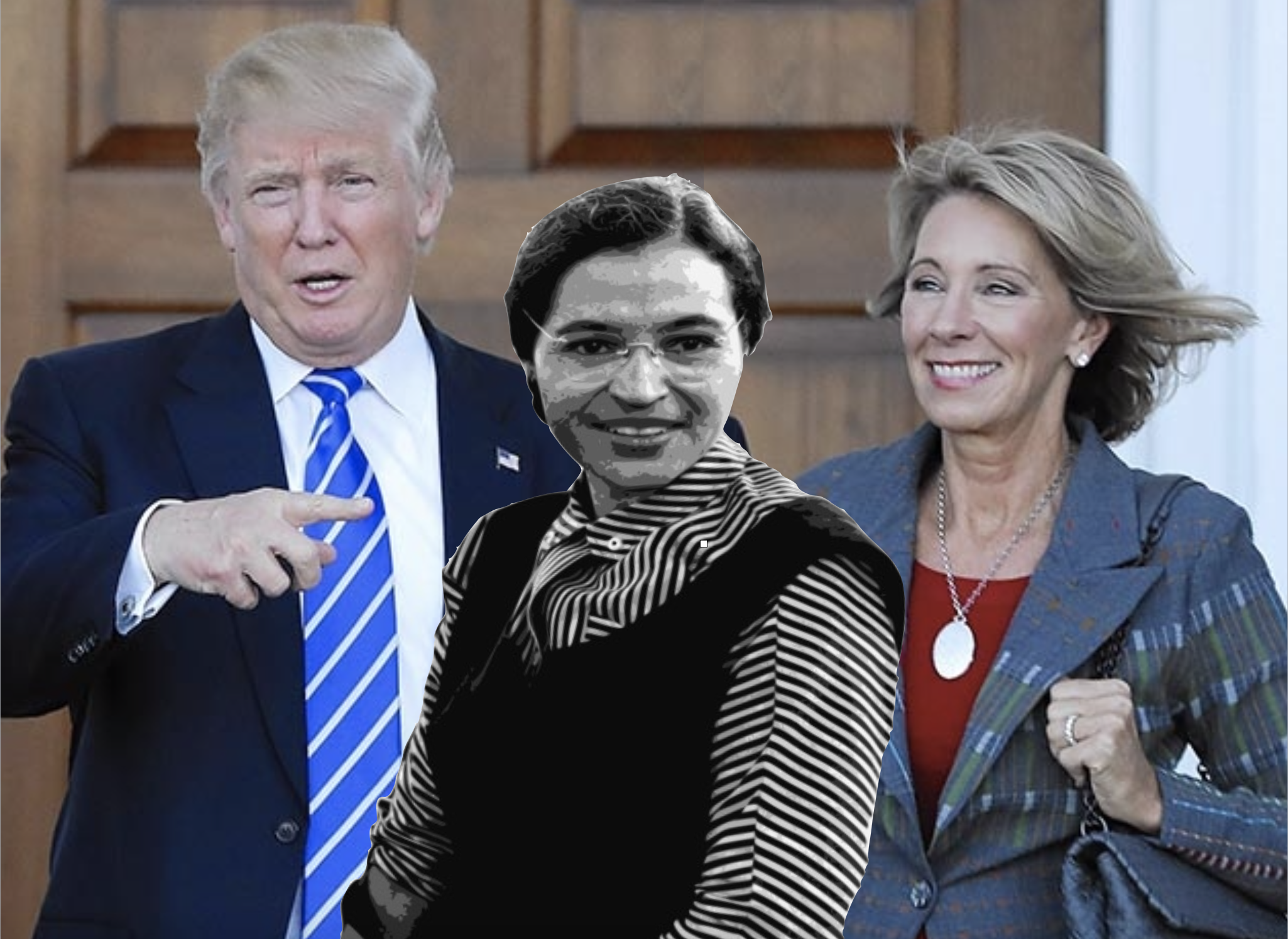
 Description: Forty years after the Montgomery bus boycott that was sparked by Rosa Park’s refusal to give up her seat to a white man, the civil rights icon lent her name to a charter school proposal in 1997. However, the Detroit school that would have been named for her and her late husband, the Raymond and Rosa Parks Academy for Self Development, was never approved. In any case, Charter school advocates like to pretend this mere proposal means Parks was an early champion of charter schools and thus that school privatization is an extension of the civil rights movement. Yet a closer look at the facts shows a sadder story. At the time of the proposal, Parks was suffering from dementia and under the sway of countless corporate consultants who used her name and clout to enact several projects. It ended in a protracted legal battle after her death between her family and the consultants to whom she willed a treasure trove of civil rights artifacts. 

Fun Fact: I think this is one of the most important articles I wrote in 2020. It’s not a pretty story, but it’s the truth. The school privatization movement likes to co-opt the language of the civil rights movement while violating the civil rights of students and families with substandard education and pocketing tax dollars as profit that were meant to educate children. The exploitation of Parks in this way is symptomatic of what you’ll see in any inner city charter school where entrepreneurs are getting rich off of the children of color whom they pretend to be serving.


Gadfly’s Other Year End Round Ups

This wasn’t the first year I’ve done a countdown of the year’s greatest hits. I usually write one counting down of my most popular articles and one listing articles that I thought deserved a second look (like this one). Here are all my end of the year articles since I began my blog in 2014:


2020:

Outrunning the Pandemic – Racing Through Gadfly’s Top 10 Stories of 2020


2019:

Sixteen Gadfly Articles That Made Betsy DeVos Itch in 2019


Screen Shot 2019-12-28 at 3.51.03 PM


2018:

A Gadfly’s Dozen: Top 13 Education Articles of 2018 (By Me)

thumbnail_IMG_8445


2017:


What’s the Buzz? A Crown of Gadflies! Top 10 Articles (by Me) in 2017


thumbnail_Screen shot 2017-12-26 at 3.44.17 PM


Hidden Gadfly – Top 5 Stories (By Me) You May Have Missed in 2017


7fd6a56c2ffc7a03c9fd2f431a543e92


2016

Worse Than Fake News – Ignored News. Top 5 Education Stories You May Have Missed in 2016


ignoring-wisdom


Goodbye, 2016, and Good Riddance – Top 10 Blog Post by Me From a Crappy Year


screen-shot-2016-12-27-at-3-29-49-am


2015


Gadfly’s Choice – Top 5 Blogs (By Me) You May Have Missed from 2015


Screen shot 2016-01-02 at 11.01.09 PM


Who’s Your Favorite Gadfly? Top 10 Blog Posts (By Me) That Enlightened, Entertained and Enraged in 2015


Screen shot 2015-12-30 at 12.57.49 AM


2014


Off the Beaten Gadfly – the Best Education Blog Pieces You Never Read in 2014


Wonderfull illusion art painting


Top 10 Education Blog Posts (By Me) You Should Be Reading Right Now!


computer-people-png-300x202


Like this post?  You might want to consider becoming a Patreon subscriber. This helps me continue to keep the blog going and get on with this difficult and challenging work.

Plus you get subscriber only extras!

Just CLICK HERE.

Patreon+Circle

I’ve also written a book, “Gadfly on the Wall: A Public School Teacher Speaks Out on Racism and Reform,” now available from Garn Press. Ten percent of the proceeds go to the Badass Teachers Association. Check it out!


Outrunning the Pandemic – Racing Through Gadfly’s Top 10 Stories of 2020

On most weekends back in the 1980s, you’d probably find me at TILT, the mall’s crowded video game arcade.

When I was about 12 – around ’86 or so – one of my favorite games was “Outrun” by Sega.

Ever play it?

In a cherry red Ferrari convertible with the wind blowing through my virtual hair, I’d race through various summer style environments from beach to forest, to mesa to mountains.

I even got to pick which song to play on the highway – something Latin, Caribbean, or just smooth and easy.

But the real kicker – the thing that really sold this wish fulfillment fantasy – wasn’t the cool car, clement weather or soundtrack.

It was the long haired swimsuit model sitting next to me in the passenger seat.

Not only was I a real badass racing through a summer dream, but I had someone by my side, reclining at ease, sharing the journey.

And if I crashed – which often happened cresting a hill – after the car flipped multiple times in the air – my digital 80s crush and I both ended up somehow unhurt on the road. She’d sit on the white lane marker staring at my dazed avatar with all the reproach that could be programmed into a mere 16 bits.

Sometimes I think that’s a good metaphor for blogging.

I’m still in the drivers seat, steering through the twists and turns of education, equity and politics. Yet sometimes I can’t help but hit an obstacle and go flying. Through it all there’s been one constant: you – my readers – relaxed and belted in for whatever may come.

I’ll admit, this year has been one heck of a bumpy ride.

From the global COVID-19 pandemic to the critical failure of government to deal with it at nearly every level, it’s been like some sort of science fiction fantasy more than anything else.

From the spectacular sore losership of Donald Trump to the science denial of his followers and the death cult of capitalism poisoning all in-between, it’s been a year to test the hopes of just about anyone.

So much pain, confusion and death. So much isolation, betrayal, bone deep exhaustion and depression.

I’d rather imagine myself parked on an overlook, leaning back in my red sports car watching the sun set with a good friend by my side.

Since we’re stopped for the moment waiting for the last zero on the dial to scroll up to a 1 and become that terrifying number of numbers, 2021, let’s take a look back at the year that was in blogging.

I’m not sure how to characterize it other than to say it must have been some kind of success.

About 49,000 more people read my articles this year than in 2019.

The site had around 347,700 hits this year – the most since 2017. My cumulative total in 5 and a half years even hit the 2 million mark (2,080,000 to be more precise).

Not bad for a school teacher, a laptop and a dream.

A lot of what I had to say in this year’s 72 posts focused on the pandemic and how our leaders were blowing it.

That sounds like rational criticism, but it was really just me pointing out what things looked like on the ground and begging the people in power not to put myself and the people I care about in jeopardy – with mixed results.

The other major theme was the Presidential election. The Democrats had their last chance to nominate and elect Bernie Sanders, the candidate best equipped to meet the times we live in. And they blew it again.

Neoliberalism triumphed. Only time will tell the price we’ll have to pay for that blunder. Will we destroy the neofacist architecture of the Trump years only to return to the corporatist utopia of Obama and George W Bush? And if so, will we still have any chance to tear that Hellscape down in favor of a world that actually values the people living in it more than the value they can create for the one percent?

On top of that were a smattering of articles about school issues, equity and how we might fix things.

Over all, I’d say I crashed the Ferrari more often than I navigated the hairpin turns. But every now and then I feel like I was heard, that I helped stop something even worse from coming our way.

And at the end of the day, we made it to the checkpoint.

We got an extended time bonus, and a chance to do it all over again next year.

Hopefully, it will be a more clear path.

Hopefully, we’ll still have a chance to cross the finish line.

And hopefully, you’ll still accept my invitation for another ride into the sunset.

Here are my top 10 articles of 2020 based on popularity:

10) Top 10 Reasons to Vote for Joe Biden in the 2020 General Election

Published: April 10


Views: 5,508


Description: When Bernie Sanders dropped out of the 2020 Democratic Primary, I could think of only these 10 reasons to vote for Joe Biden in the November general election: 1-10 were “He’s not Donald Trump.”


Fun Fact: Apparently, it was enough.

9) Public Schools Can Recover from the COVID-19 Quarantine by Skipping High Stakes Tests

Published: March 15


Views: 6,924


Description: When the COVID-19 pandemic first crashed down on us, I was one of many saying that high stakes testing made no sense as schools nationwide were closing. The best way to allow teachers to make up for lost time with their students was to prioritize learning over assessment.


Fun Fact: It worked. We actually cancelled the big standardized test in 2019-2020. And now here we are a year later in a similar position making similar arguments and the testing companies and their lackeys are fighting against us tooth and nail.


8) For Teachers, “Silence of Our Friends” May be Worst Part of Pandemic

Published: December 5


Views: 7,443


Description: The most depressing thing about the pandemic has been how uniform the attack has been on educators. Demanding a safe work environment for ourselves and our students has been seen as unreasonable by lawmakers, school directors, union leaders and even some public school advocates.

 
Fun Fact: If anything has the potential to unravel the ties made by pro-public school forces in the last few decades, it is this. I know people are scared that closing school buildings in favor of remote learning may give the upper hand to the ed tech industry when the pandemic is over. But if you can’t stand behind teachers’ right to life now, you cannot expect us to continue to fight for the profession, local control and your children later.

7) Covid-19 Has Eroded My Faith in Public Schools

Published: Nov. 14


Views: 7,763


Description: COVID-19 has shown a failure of leadership at every level – including our public schools. The damage has been enough to make anyone doubt everything – including the coherency of the public school project altogether.


Fun Fact: The biggest difference between this and the previous article is that this one is more a mark of despair. The other is more a mark of anger.

6) INCONVENIENT TRUTH: Remote Teaching is Better Than In-Person Instruction During a Pandemic

Published: Nov. 21


Views: 8,678


Description: When more than 19 million people have caught COVID-19 and 330,000 have died, it does not make sense to keep public schools open. This is an airborne virus that can cause life-long debilitating conditions even in those who survive or are asymptomatic. Yet you need a school teacher to explain to you why distance learning is better under these circumstances.


Fun Fact: Simple truths told simply. Ammunition to save lives. The fact that it’s necessary tells us more about human intelligence than any standardized test ever could.

5) There Are No Bernie Bros, Just Diverse Supporters Being Made Into What They’re Not

Published: February 8


Views: 11,775


Description: One of the major media criticisms of the Bernie movement was that it was racist, sexist and homophobic. Yet a substantial portion of supporters were female, racially diverse and/or LGBTQ. For example, women under 45 made up a larger share of Sanders’ base than men of the same age. Two women of color, Ohio state Sen. Nina Turner and San Juan, Puerto Rico Mayor Carmen Yulín Cruz, were co-chairs of the campaign, along with Indian-American Rep. Ro Khanna (D-CA) and Ben & Jerry’s co-founder Ben Cohen. Sanders’ campaign manager was longtime progressive activist Faiz Shakir.

 
Fun Fact: File this in the history books under Gas Lighting.

4) Bernie Sanders Supporters Have Every Right to Be Furious

Published: April 12


Views: 21,984


Description: Don’t tell me this primary was fair. When Bernie was winning state after state, the media acted like it was a literal invasion of brownshirts. Yet when Biden was winning, it was the best news since sliced bread. Bernie was running away with the primary until nearly all the other candidates mysteriously dropped out all at once right before Super Tuesday. And now we find out Barack Obama gave them each a call before hand – putting his finger on the scale. The Democratic National Committee literally pushed to continue primaries in Illinois, Florida and Arizona during the pandemic in case waiting might bolster Bernie – the candidate with policies tailor made to fight COVID-19. And the result was a flood of sick people and a nearly insurmountable delegate lead.


Fun Fact: Was this the moment my heart died? No, I think it was already on life support from 2016. And the subsequent response to the pandemic only took out another ventricle.

3) Trapped On a Runaway Train to a Public School Disaster

Published: June 30


Views: 24,185


Description: When the pandemic began, many of us didn’t expect it to last that long. Certainly we wouldn’t still be in the same situation as summer rapidly came to a close and school was about the begin again! Right? What would we do? What should we even hope for?

 
Fun Fact: Despite heavy doses of despair, I think I saw clearly what needed to be done even this far back. Many policymakers still don’t see it as a New Year is about to dawn.

2) You Can’t Have My Students’ Lives to Restart Your Economy

Published: April 18


Views: 25,003


Description: When the pandemic began, far right ideologues threatened to reopen schools to keep the economy going. Almost everyone jumped on them for being uncaring idiots willing to sacrifice children on the altar of commerce.

 
Fun Fact: What was an unpopular opinion in April became mainstream by the end of August as the media bombarded readers with unsubstantiated (and subsequently disproven) reports about how children couldn’t be hurt by the Coronavirus. Subtext: And who gives a crap about the teachers who would have to put their lives on the line to educate these children?

1) Mask-to-Mask Instruction May Be More Problematic Than Distance Learning

Published: July 11


Views: 33,446


Description: Everyone knows distance learning cannot equal in-person instruction. However, we often ignore the fact that in-person instruction is not the same during the pandemic as it was before COVID-19. Social distancing, limited mobility, plexiglass barriers, cleanliness protocols – all have an impact on academics. Reopening physical school buildings is not returning to the kind of face-to-face instruction students enjoyed as recently as January and February. It is a completely new dynamic that presents as many difficulties – if not maybe more – than learning on-line.

 
Fun Fact: More ammunition to explain the simple truths of this brave new world where we find ourselves these days. Sadly, it has been ignored as often as it has been heeded. Perhaps more.


Like this post?  You might want to consider becoming a Patreon subscriber. This helps me continue to keep the blog going and get on with this difficult and challenging work.

Plus you get subscriber only extras!

Just CLICK HERE.

Patreon+Circle

I’ve also written a book, “Gadfly on the Wall: A Public School Teacher Speaks Out on Racism and Reform,” now available from Garn Press. Ten percent of the proceeds go to the Badass Teachers Association. Check it out!
Five Reasons to be Cautiously Optimistic About the Biden Presidency

President-elect Joe Biden.

Go ahead and say that aloud once.

“President-elect Joe Biden.”

How does it feel?

If you’re like me, it feels pretty good.

And to be honest I never expected that it would.

Sure, I voted for Joe. I gave money to the campaign. I volunteered.

But Biden was far from my first choice. In fact, looking over the field of Democrats seeking the party’s nomination, he might have been my last pick.

I was a Bernie Sanders guy and probably will be until the day I die.

But damn if it doesn’t feel good to say “President-elect Joe Biden!”

Before today, I would have said the best thing about Joe was that he isn’t Trump. And, frankly, I think that is mainly the fact that won him the election.

It was a repudiation of Trump more than a celebration of Biden.

However, now that the dust has cleared and all the states but Georgia, Alaska and North Carolina have been called, I’m starting to have some thoughts about what a Biden administration might actually look like.

And it might not be too bad.

So here are what I see as the five main hurdles coming up for the Biden administration and why we might be cautiously optimistic about their outcomes:

1) Trump Will Fail to Successfully Challenge the Election Results

As of this writing, Biden has 290 electoral votes to Trump’s 214.

Alaska will probably go to Trump and North Carolina is a bit of a toss up. Georgia will almost certainly go to Biden.

It actually doesn’t really matter.


The world and the media have already accepted the results.

Biden has been elected the 46th President of the United States.

In the absence of solid evidence of massive voter fraud in multiple states – many of which are controlled by Republican governments – it is unlikely that these results can be successfully changed.

Many Republican leaders like Pat Toomey, Rick Santorum and Mitt Romney have already accepted this fact. Far right leaders of other countries like Boris Johnson and Benjamin Netanyahu have already congratulated Biden.

It’s over.

And if there were any doubt about it, the Trump administration accidentally booking a press conference at Four Seasons Total Landscaping in Philadelphia instead of the Four Seasons hotel – and then pretending that’s what they intended all along – should put the final nail in the coffin.

You don’t know Four Seasons Total Landscaping? It’s a landscape gardeners located between a crematorium and a dildo shop.

That is not the work of people capable of running an effective challenge to a national election.

Yes, there are enough far right justices on the Supreme Court to pull off this Coup d’état. But I don’t think even they would have the guts to do it in light of the world’s acceptance of Biden, the acceptance of many in the GOP and the blatant incompetence of the Trump administration.

I admit that I could be wrong. And I certainly don’t think we should underestimate these neofacists.

Trump is a cornered rat, and that is when rats are at their most dangerous.

However, I think there is good reason to think he will not be able to steal this election no matter how many tantrums he throws on the floor of the Oval Office or Mar-a-Lago.

2) Control of the Senate Rests on Georgia

It appears that the election will not, by itself, change the balance of power in Congress.

The Democrats have lost seats in the House but not enough to lose a majority. They do not appear to have picked up enough seats in the Senate to rest control away from the GOP.

However, on January 5th there will be runoff elections for both U.S. Senate seats in Georgia.

Yes, you read that right – Georgia!

If Democrats Raphael Warnock and Jon Osoff both win, Joe Biden will have a congressional majority to actually get his policies passed.

No more Mitch McConnell as Senate Majority Leader.

No more obstruction.

It would be HUGE.

And it is incredibly positive that this is taking place in Georgia where Stacey Abrams has done an amazing job organizing grassroots efforts to turn the state blue.

We have a real chance here.

No doubt Republicans will try to throw whatever they have left to stopping the Dems in these races. But how much do they really have after being beaten nationwide?

Will momentum and an existent grassroots network be enough to flip the script for Dems?

Chances are good. It all depends on what we do in the next few months.

3) Progressives Will Not Let Neoliberals Ignore Them

A huge hurdle for the Biden Administration and the Democratic Party will be how we try to move forward together.

Biden won a huge national majority of votes – 75 million – the most any candidate ever has received.

However, a similar record was true of Hillary Clinton in 2016 and she still lost because of the electoral college.

Thankfully things are not playing out that way in 2020. But they could have very easily.

Frankly, the fact that Biden didn’t beat Trump by an even greater margin is extremely troubling.

Almost half of the voting public – 71 million – support this racist, neofacist, incompetent fool. And only a slight majority oppose him.

I believe firmly that this is because of the Democrats’ strategy in this campaign.

Both this year and in 2016, there was very little positive policy being offered – very little popular positive policy positions that would have directly impacted the majority of Americans.

Many folks voted for Trump out of despair. They wanted a change – any change – burn it all down if necessary.

Had Medicare For All or the Green New Deal been on the ballot, things might have gone differently – or more emphatically – our way.

But, instead, it was all about getting rid of Trump.

Thankfully, that was enough. But had the party actually offered voters something more – things that are overwhelmingly popular with everyday people but unpopular with party elites and their wealthy backers – the results could have been a landslide in Biden’s favor.

Representative Alexandria Ocasio-Cortez spoke for many progressives in a New York Times interview.

She said that every candidate that co-sponsored Medicare for All in a swing district was reelected. Even Mike Levin, who many thought had committed political suicide by co-sponsoring the Green New Deal, kept his seat.

Supporting progressive policies did not sink anyone’s campaigns. In fact, that’s how insurgent Democrats have been unseating centrists across the nation.

“I’ve been unseating Democrats for two years,” Ocasio-Cortez said. “I have been defeating D.C.C.C.-run campaigns for two years. That’s how I got to Congress. That’s how we elected Ayanna Pressley. That’s how Jamaal Bowman won. That’s how Cori Bush won. And so we know about extreme vulnerabilities in how Democrats run campaigns.”

This is a fight for the heart and soul of the Democratic party.

We cannot continue to move to the right and expect the base – which are much further left – to continue to vote for increasingly conservative candidates.

There is already a party for that – it’s the Republicans.

“I need my colleagues to understand that we are not the enemy,” she said. “And that their base is not the enemy. That the Movement for Black Lives is not the enemy, that Medicare For All is not the enemy. This isn’t even just about winning an argument. It’s that if they keep going after the wrong thing, I mean, they’re just setting up their own obsolescence.”

We will see if the Biden administration learns these lessons or not.

I think there is good reason to be cautiously optimistic here. It is in the party’s own self interest.

But only the future will tell.

4) Biden will Take Steps to Control the Coronavirus

Unlike his predecessor, Biden has been a consistent voice of sanity on the COVID-19 pandemic.

Yesterday, he tweeted:

“We cannot repair the economy, restore our vitality, or relish life’s most precious moments — hugging a grandchild, birthdays, weddings, graduations, all the moments that matter most to us — until we get this virus under control.”

And true to his word, this appears to be the first thing on his agenda.

Tomorrow he is expected to name a group of leading scientists and experts as transition advisers so his administration can get started combating the virus on inauguration day, Jan. 20, 2021.

The Coronavirus Task Force is expected to be led by former Surgeon General Dr. Vivek Murthy and Dr. David Kessler, who led the Food and Drug Administration during the 1990s.

Specifically, Biden’s plan calls for empowering scientists at the Centers for Disease Control and Prevention (CDC) to help set national guidance based on evidence to stop outbreaks, work on a vaccine, testing, contact tracing and other services.

His administration would use the CDC to provide specific guidance — based on the degree of viral spread in a community — for how to open schools and businesses, when to impose restrictions on gathering sizes or when stay-at-home orders may be necessary.

He would create a national “pandemic dashboard” to share this information with the public.

He would work with every governor to make mask-wearing in public mandatory in their state – a measure that, alone, could save more than 100,000 lives.

He would make sure that everyone has access to regular, reliable, free testing.

He would hire 100,000 additional public health workers to coordinate with local organizations around the country to perform contact tracing and other health services. These people would help with everything from food insecurity and affordable housing to training school officials about when and how to make it safe to reopen buildings.

He proposes the federal government cover 100% of the cost of Consolidated Omnibus Budget Reconciliation Act (COBRA) coverage for the duration of the crisis for people who get sick from the virus. If someone loses employer-based health insurance, they would still have health insurance through this plan.

He also will push to strengthen the Affordable Care Act, expanding coverage by making more people eligible.

He’d use the Defense Production Act to increase production of masks, face shields and other personal protective equipment so that supply exceeds demand.

I don’t know about you, but to me this seems a breath of fresh air. It is what the federal government should do and what it hasn’t been doing under Trump.

And I see no reason why the Biden administration can’t get it done.

5) Biden Can’t Afford to Re-up Betsy DeVos’ Education Policies

When it comes to public education, neither party has really been an ally to teachers and students.

Betsy DeVos was worse than President Obama’s Education Secretaries – Arne Duncan and John King. But let’s not fool ourselves that these Democratic functionaries were any good, either.

They all supported charter schools, high stakes testing, increased segregation, the school-to-prison pipeline, evaluating teachers on student test scores, targeted disinvestment to schools in poor neighborhoods serving mostly students of color, and more.

Duncan and King were competent at destroying public education while hiding behind neoliberal rhetoric. DeVos was incompetent in every conceivable way and could barely hide her glee at the prospect of destroying public education.

Since Biden’s wife, Jill, was an actual teacher, he has more to lose than previous chief executives if he gets this wrong. He can’t take schools for granted and he can’t appear to be doubling down on the same policies of Trump and DeVos – which to be honest were mostly the same as those of Obama and Bush but on steroids.

Biden promised a public school teacher would be his next education secretary and Politico is already making predictions. The media outlet suggests ex-National Education Association (NEA) President Lily Eskelsen Garcia, American Federation of Teachers (AFT) President Randi Weingarten or Stanford Education Professor Linda Darling-Hammond.

Frankly, we could do much worse than any of these people. Hammond, in particular, was Obama’s education policy advisor UNTIL he was elected and changed courses to the neoliberal set.

Of all the hurdles coming his way, I have the least hope Biden will overcome this one.

Pressure will be huge for him to pick another supply side hack with little actual education experience.

But who knows? The stakes are high. Jill has his ear.

We can make our voices heard, cross our fingers and hope for the best.

At a time when teachers are struggling just to have a safe environment in which to work, actual education policy is almost a distant luxury.

For the meantime, I’ll give Joe a chance and remain cautiously optimistic.

The ball is in Biden’s hands. He deserves the right to make a shot.

And if he misses, at least we can celebrate the end of the Muslim ban, reinstating the DREAM Act, rejoining the Paris Climate Accords, rejoining the World Health Organization and the restoration of a functioning federal government to the USA.


Like this post?  You might want to consider becoming a Patreon subscriber. This helps me continue to keep the blog going and get on with this difficult and challenging work.

Plus you get subscriber only extras!

Just CLICK HERE.

Patreon+Circle

I’ve also written a book, “Gadfly on the Wall: A Public School Teacher Speaks Out on Racism and Reform,” now available from Garn Press. Ten percent of the proceeds go to the Badass Teachers Association. Check it out!
Why Is McKeesport Area School District Still Open After COVID-19 Outbreak?

At least six staff members and students at McKeesport Area School District (MASD) tested positive for COVID-19 in the last week alone.

According to the Pennsylvania Department of Education (PDE) Website, two or more cases in a school building within a 14-day period call for some sort of closure to ensure the safety of students and staff.

So why are none of the district buildings closed?

The western Pennsylvania district located southeast of Pittsburgh reopened on a hybrid schedule on Sept. 2 with about a third of parents opting to keep their children out of the buildings and in the district-run cyber program.

Since then, finding concrete information about Coronavirus infections at our public schools – MASD or others – has not been an easy task.

Local newspapers only occasionally report on them and rarely put single incidents in context. Nor is there any government or other comprehensive database that collects this information and disseminates it to the public.

MASD school district issues alerts on its Website, but they do not stay up for long.

On Sunday, the Website noted:

“Across two of our buildings, Twin Rivers Elementary and the High School, we have had three positive cases of COVID-19 in teachers, and two positive results in students.”

Today that message has been replaced by another:

“A Founders’ Hall staff member tested positive for COVID-19.”

So that’s one case at Founders Hall and five spread out between the High School and Twin Rivers Elementary School.

Though in both cases, the district Website claimed, “We have worked directly with the Allegheny County Health Department and consider this case to be contained,” it is telling that the district obfuscated about exactly how many cases were from each building.

According to PDE, this is a key factor in determining whether a building should remain open. In a county like Allegheny where infection rates are designated as moderate, if 2-4 students or staff in the same building test positive, the school should be closed for 5-7 days.

So either the high school, Twin Rivers or both should meet that criteria.

And if cases rise even slightly, the PDE Website recommends even longer closures – at least two weeks for five or more cases in a building.

Sunday’s alert noted: “You will be notified directly by the Allegheny County Health Department if there has been any close contact to your student!”

However, this is not even the first time district personnel have tested positive for the virus.

On September 15, a letter was sent home to parents saying that a Founders’ Hall Middle School student tested positive for COVID-19.

The letter further stated that the student would quarantine for two weeks.

District spokeswoman Kristen James said there would not be any closures of school facilities as a result of the incident.

“Our buildings are being deep cleaned each and every day and throughout each day,” she said.

COVID-19 has also plagued nearby Serra Catholic School.

The parochial school serving students from many of the same communities as MASD has suspended football practice and closed its doors twice before for COVID outbreaks.

On Oct. 12, a “person involved with the [football] team” tested positive, and 40 athletes and football staff were quarantined.

Just a month earlier, on Sept. 10, two Serra students tested positive, resulting in temporary suspension of the sports program and building closures.

McKeesport and Serra are far from unique in this.

Just last night, Baldwin-Whitehall school board voted to close three elementary schools for the rest of the week due to a substitute teacher who tested positive and worked in all the buildings.

“Over the last two weeks, we’ve reported 2,000 news cases of COVID-19 among school age children,” said Dr. Rachel Levine, state Department of Health secretary.

Gov. Tom Wolf cautioned, “The fall resurgence is here and now is really the time to double down.”

However, many decision makers don’t seem to be heeding these warnings.

And not just those in McKeesport.

At Steel Valley School District, buildings have been closed to students, and instruction has been 100% virtual.

However, buildings were opened just twice to students – both times for transition days. And both times, a staff member tested positive for COVID-19 soon after.

On Oct 7, a letter issued by Bryan Macuga, Secondary Campus Principal, said that a high school teacher tested positive. The day before, the district had students in grades 5 and 9 in the middle school-high school complex for a half day schedule to test the district’s wi-fi.

Though the teacher had participated in the program, he had not been within 6 feet of students for 15 minutes at a time – PDE’s definition of close contact.

On Sept 8, students in the same grades were in the same building for a half day transition program, and a middle school teacher who had participated in the program tested positive for COVID a day later.

School directors are actively considering moving from the virtual schedule – where no one has gotten sick – to a hybrid schedule in November.

No one said educating children during a global pandemic would be easy.

But shouldn’t we be making decisions with a priority on student and staff safety?

If people die or contract lingering life-long complications as a result of COVID-19, they will not thank you for keeping buildings open longer than was advisable.

It’s time for decision makers to take off the rose colored glasses and make the tough decisions in everybody’s interests.

While infection rates are moderate to high, school buildings should be closed and all instruction virtual but created by district teachers, not ed tech companies.

It’s something we can all accomplish if we and our representatives just have the courage to do it.


Like this post?  You might want to consider becoming a Patreon subscriber. This helps me continue to keep the blog going and get on with this difficult and challenging work.

Plus you get subscriber only extras!

Just CLICK HERE.

Patreon+Circle

I’ve also written a book, “Gadfly on the Wall: A Public School Teacher Speaks Out on Racism and Reform,” now available from Garn Press. Ten percent of the proceeds go to the Badass Teachers Association. Check it out!