I Used to be a Reporter. Now I’m a Teacher. I’ve Become What I Used to Observe

thumbnail_Screen Shot 2019-02-28 at 12.04.59 PM

A long time ago, in a newsroom far, far away; your humble narrator was a respected journalist.

Today I am a beloved school teacher in a suburban middle school.

Okay. That may be laying it on a bit thick.

Like any human being whose job it is to get children to do their best and learn something, I’m beloved by some and beloathed by others. And if I’m honest, when I was a reporter, I was never all that respected. But I did win several state journalism awards.

The point I’m trying to make is that like a caterpillar into a butterfly or a tadpole into a frog, I made a startling transformation in career paths that flies somewhat in the face of popular wisdom.

F. Scott Fitzgerald wrote, “There are no second acts in American Lives.” Well, I’m on my third or fourth act and nowhere near ready for the curtain to come down yet.

It’s shocking how far I’ve come, though there’s a surprising amount of overlap between my two professions. In fact, the biggest difference is one of orientation.

I used to get up at 4 a.m., weave into the newsroom and type away for a few hours about the previous night’s school board or city council meeting before my deadline came down, the presses rolled and the morning edition went on sale.

Now I get up at 5 a.m., hobble into the classroom and go to meetings, grade papers or otherwise get ready for a 7-hour invasion by 12- and 13-year-olds, followed by more meetings and papers and planning.

I used to go into the classroom to interview teachers and students about special lessons, state and federal programs or standardized tests.

Now I’m in the classroom questioning myself about my students and what works best to help them learn, trying to navigate the state and federal programs so they get the best return and bang my head against the wall about the constant standardized tests.

I used to independently bebop all over my coverage area, asking questions, doing research, discovering things that many people would rather remain secret.

Now I independently plan my lessons, ask my students questions, do research on best practices and discover things about my children and their lives that many people would rather remain secret.

You’ve heard the old chestnut about education being a career for those unable to act. I’m living proof that it’s a lie.

As a journalist, I reported on. As a teacher, I do.

In my former job, I told. In my current one I show.

Perhaps that’s why I now find it so strange that many of my former colleagues have gone into public relations, communications or have become policy analysts.

I’m not surprised. I can’t say I didn’t know that that door was always open. But it’s peculiar.

In the newsroom, we all heard the stories about grizzled newspapermen and women with shelves stuffed full of awards and prized Rolodexes bursting with hard-earned sources who gave it all up for a 9-5 desk job writing the very press releases we disdained.

We all had friends who were making bank managing people like us and trying to get us to write what the company wanted or spin the story in the direction the advertisers liked.

There is no scorn, no disgust, no derision to match that of a journalist for a corporate sellout, and that’s because in our hearts we all secretly wondered if it wasn’t the better deal.

Every good reporter – like every good teacher – is a radical at heart.

You don’t get into either field to support the status quo. You want to rock the boat. You want to shake things up. You want to change the world for the better – all from the comfort of your swivel chair behind your computer screen or from the well worn tread of your classroom carpet.

Journalists live for the scoop, the big story, the article that shouts off the front page above the fold and which has everyone talking. Teachers live for the student epiphany, the moment the light comes on behind a child’s eyes, the transformation from ignorance to knowledge and – dare I say – wisdom.

But being a press agent or policy hack has none of that splendor.

You have to give it up – all for the right to have a chance at a life.

I loved being a reporter. It was one of the best things I’ve ever done. I got to do things, see things, talk to people, be there for things that I never would have been able to access otherwise. But I could barely pay my bills.

I was dirt poor in the newsroom. We all were.

We worked 50-60 hours a week, had no time for a second job, no time for a social life, no time for a family or kids, and we wanted more.

So I understand the allure of the steady paycheck and becoming a housebroken professional communicator of someone else’s message.

But being a teacher is different.

You still don’t get paid much. You still work long hours – though maybe not quite as long. But you can get that second job – often in the school, itself, tutoring students or in a summer or after school program.

And you get union protections that I only dreamed about as a reporter. A safe workspace, clean and tidy, no outrageous demands (or at least an upper limit on them), and a schedule you can predict and plan a life around.

Best of all, you still get to keep your idealism intact. Or you can try to keep it as you dodge this directive and that unfunded mandate and that deeply racist policy passed down from above.

Don’t get me wrong. Becoming a teacher was hard work. I didn’t go about it the easy way – no Teach for America, one-foot-in/one-foot-out, cheating for me. I dove in head first.

I went back to college and took an intensive, accelerated masters program designed exactly for people changing careers. To get there, I had to swallow a few prerequisites I’d missed in college the first time. Then they placed me in a high school where I watched and then took over multiple classes – all while enrolled in education courses at night and in the summers.

By the time it was all over, I still had the most important things left to learn – (1) whether I could actually teach a full schedule, and (2) whether I liked doing so.

For me, the answers were unequivocally positive. I took to it like I’d taken to journalism. I needed lots of fine tuning, but the basics came naturally. And I loved every exhausting minute of it.

I regret nothing about becoming a teacher. It’s the best job I’ve ever had and am ever likely to have.

As a journalist, I got to rock whole communities with exposes about corruption. As an educator, I get to impact individuals.

I no longer get to be the talk of the town, but I get to change lives all the same – one person at a time.

And there’s something deeply satisfying about it – to look in another person’s eyes and see the need right there in front of you, and to be able to heal it even a fraction of the way well.

This world is hard. It takes people, chews them up and spits them out. There is so rarely a helping hand, a smile, understanding. But to be able to offer your hand, to be able to share a smile, to attempt to understand – that’s pure magic.

When the day is done, I know it was well spent.

I’ve come a long way from the newsroom. And in doing so, I’ve broken journalism’s number one rule – don’t become the story.

I no longer report on the action.

I participate in it.

What a way to make a living!


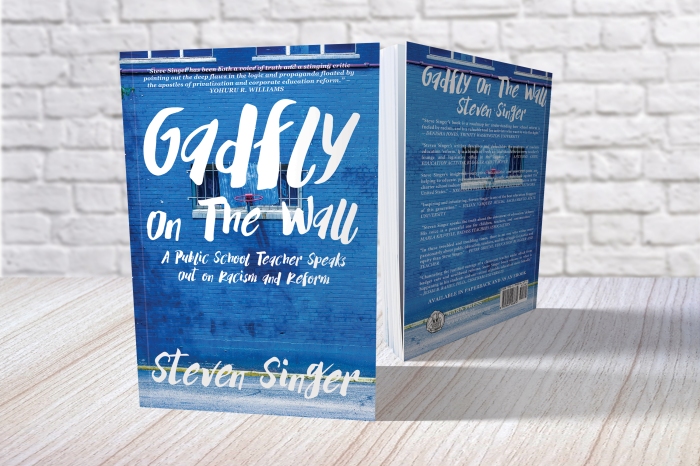
Still can’t get enough Gadfly? I’ve written a book, “Gadfly on the Wall: A Public School Teacher Speaks Out on Racism and Reform,” now available from Garn Press. Ten percent of the proceeds go to the Badass Teachers Association. Check it out!

cropped-book-1.jpg

Teaching Through Lockdown

gettyimages-88519594-640x640


“Excuse the interruption. We are under a lockdown.”


That was it.


Not an explanation of what caused it.


Not any idea of how much danger we were in.


Not any idea of how long it would last.


Just a vague warning that teachers knew meant to keep all their students in class until further notice.


As an educator, you’re expected to teach.


It doesn’t matter what’s happening around you. There can be yelling or screaming. There can be a scuffle in the next room. The lights may flicker off and on.


None of that matters.


If you have students and aren’t in immediate danger, you’re expected to teach them.


And that’s what I did. Even then.


I teach mostly poor and minority students in a western Pennsylvania school near Pittsburgh.


My 8th grade language arts class was in the middle of taking a final exam on The Outsiders by S. E. Hinton.


Most of my students were finished, but it was still quiet as two or three students struggled through their last responses.


Then the announcement came over the PA.


“…lockdown.”


The voice was the high school secretary. Since the middle and high school are connected, she rarely makes announcements in my building – only when something is important happening for both buildings.


The kids looked up at me with worried faces.


“What’s going on, Mr. Singer?” one of them asked.


I told them the truth – I really had no idea. There were no drills planned for today. In fact, it would have been a really poor time for one. We had just had ALICE training the day before where the resource officer and the principal had met with students to go over what to do in case of an active shooter. The program is named for the courses of actions it recommends – Alert, Lockdown, Inform, Counter, Evacuate.


So we were apparently in the L.


During the assembly, the resource officer had said quite bluntly that there would be no coded messages. If a school shooter entered the building, officials would tell us in plain language what was happening so we could make an informed decision what to do.


But there was no additional message over the PA. That was it.


I went over to my computer to see if there was an email. Nope. Nothing.


I pressed refresh a few times. Nothing.


I asked the students to hush and just listened.


It was extremely quiet. Even the hallway was silent and it’s never that silent except during standardized testing.


My room has no windows to the outside. It’s a brick box with one wooden door containing a sliver of window.


The door was already closed and locked. We’re told to keep it that way just in case. But there’s an additional deadbolt you can click to make it even harder to gain access to the room.


“It’s probably nothing,” I said as I walked over to the door and surreptitiously clicked the deadbolt.


I asked student to finish their tests.


It seemed the best course of action. We could either worry about an unknown that was extremely unlikely or else just take care of our business.


It was hard getting the students to calm down. They were scared, and, frankly, so was I.


But this seemed the best thing we could do – Seek normalcy but stay vigilant in case things changed.


“Mr. Singer, may I use the bathroom?” asked one child.


“I’m sorry, but no.” I said. “Not until the lockdown is over.”


Somehow I quieted them down and the remaining students finished their tests.


It seemed to take them forever.


I stood by those who were finalizing answers in the hope that my physical presence would get them to concentrate.


For the millionth time I pondered the wisdom of grouping kids into classes based on test scores. All you end up doing is sorting them by poverty, race, trauma and behavior problems.


But they were soon done.


So they handed in the tests and we went over the answers.


“May I use the bathroom?”


“No. Not yet. Sorry.”


For about five minutes things went as they would on any other day.


But as soon as there was a lull in the activity, the fear and worry returned.


Students wanted to take out their cell phones and call or text home.


I told them not to.


“Why?” asked a boy in the front.


I knew the answer. We had nothing we could tell parents other than that there was a lockdown. We didn’t know what caused it or what was happening. If there was something bad going on, having parents come to the school would only make things worse.


But I just told him to put it away. I didn’t want to debate the situation. I didn’t want them (or me) to think about what might be happening.


We hadn’t finished watching the movie version of “The Outsiders” so I quickly put that on.


We only had about 15 minutes to go. And watching Dally get shot down by police probably wasn’t the best choice under the circumstances.


Still, the kids were focused on the film and not the lockdown.


We discussed how the movie and the book differed for a few moments.


But inevitably there was a lull.


We all got quiet and just listened. Nothing.


No. Down the hall we could hear something. Maybe a scuffle. Voices. It was hard to tell.


I started thinking of options, what to do if someone tried to enter the room. But it got quiet again.


Still no email. No message. Nothing.


I could call the office on my school phone, but that just might make things worse.


“Mr. Singer, I’ve GOT to use the bathroom!”


I looked around. I wasn’t sure what to do. I couldn’t let him out there. It would literally be better if he peed his pants.


He must have seen my confusion. “Can I just pee in a bottle or something?”


“Do you have a bottle?”


“No.”


I was about to tell him to take the garbage can into the corner and pee into it but there was no empty corner in the room.


Before I could remark any further, he said, “It’s okay. I’ll just hold it.”


That’s when I noticed the time. We had already spent more than the 40 minutes in the allotted period. The bell should have rung to get students to move to another room. That meant the bells were off.


The students noticed, too.


I kept telling them that everything was probably fine and that I wouldn’t let anything happen to them.


Then we noticed something weird out of the window in the door.


One of the school custodians was standing right outside the room.


He didn’t seem alarmed. He appeared to be looking for something.


Then another custodian walked up to him and they conferred in the hall.


We heard talking. Perhaps the principal in the distance.


Whatever was happening they seemed to have it under control and didn’t appear worried.


I had nothing planned for my students to do. We were well off book here. I couldn’t just start a new unit. I had no idea how long we’d be here.


So I asked them to take out their self-selected books and read.


They groaned.


“How are we going to concentrate on that?” someone asked.


I didn’t really have an answer but it was better to try than to worry needlessly.


So after some cajoling, they dutifully took their books out. Most just stared around the room listening to every nonexistent sound. But some at least appeared to be reading.


“Mr. Singer…”


NO YOU CAN’T USE THE BATHROOM!


Then not long after, the announcement came that the lockdown was over and students could move to their next class.


There was no explanation. Kids just breathed a collective sigh and went to their classes.


I let anyone use the restroom who asked. And I tried to teach through another class.


I truly expected a printed letter from the superintendent to be hand delivered to the room so the kids could take it home. But no. Perhaps there hadn’t been enough time to write, print and disperse one.


After the students were dismissed, I expected administrators to announce a staff meeting to let the teachers know, at least, what had happened. But there was nothing.


I went into another teacher’s room and saw a group talking. THAT was when I found out about what had happened.


A group of students in the high school had been fighting.


Apparently it was pretty bad – almost a riot. One child had been knocked cold and taken out of the building on a stretcher. The others had been removed by police.


When teachers had broken it up, some of the kids had run and were hiding in the building. That’s why the lockdown.


There was more on the 11 O’clock News. Some of the kids had filmed the fight with their phones and put it up on Snapchat.


We eventually got a letter from the superintendent and an email from another administrator saying that it had just been a minor fight.


Parents were on the news saying that administration hadn’t handled it properly, but no one showed up at the next school board meeting to complain.


And so life goes on.


The threat of violence always hangs over our heads.


It probably won’t ever come down to the worst case scenario. Yet the fact that it might and that no one really seems to be doing much of anything to stop it from getting to that point – that changes what it means to be in school.


We live with this reality everyday now.


It’s not fair to students. It’s not fair to teachers or parents.


But when you live in a society so broken that it can’t even begin to address its own problems, this is what you get.


Still can’t get enough Gadfly? I’ve written a book, “Gadfly on the Wall: A Public School Teacher Speaks Out on Racism and Reform,” now available from Garn Press. Ten percent of the proceeds go to the Badass Teachers Association. Check it out!
book-3

Charter School Lobby Silent as Charter Teachers Continue Strike

www.usnews.com


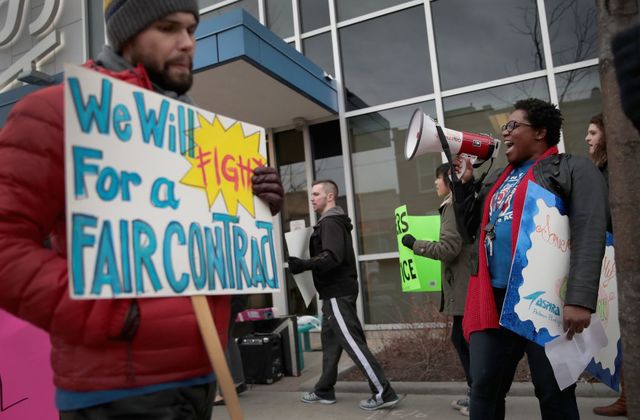
Charter school teachers in Chicago are in their fourth day of a strike.


Yet I wonder why the leaders of the charter movement are quiet.


Where is Peter Cunningham of the Education Post?


Where is Shaver Jeffries of Democrats for Education Reform?


Not a word from Campbell Brown or Michelle Rhee?


Nothing from Bill Gates, Cory Booker, Barack Obama or Hillary Clinton?


Not a peep from Betsy DeVos or Donald Trump?


This is a historic moment. Teachers at various charter schools have unionized before, but it has never come to an outright strikenot once since the federal charter school law was established in 1994.


You’d think the charter cheerleaders – the folks who lobby for this type of school above every other type – would have something to say.


But no.


They are conspicuously silent.


I wonder why.


Could it be that this is not what they imagined when they pushed for schools to be privately run but publicly financed?


Could it be that they never intended workers at these schools to have any rights?


Could it be that small class size – one of the main demands of teachers at the 15 Acero schools – was never something these policymakers intended?


It certainly seems so.


For decades we’ve been told that these types of schools were all about innovation. They were laboratories where teachers and administrators could be freed from the stifling regulations at traditional public schools.


Yet whenever wealthy operators stole money or cut services to maximize profits or engaged in shady real estate deals or collected money for ghost children or cherry picked the best students or fomented “no excuses” discipline policies or increased segregation or denied services to special education kids or a thousand other shady business practices – whenever any of that happened, we were told they were just unfortunate side effects. Malfeasance and fraud weren’t what charters were all about. They were about the children.


And now when charter teachers speak out and demand a better environment for themselves and their students, these ideologues have nothing to say.


Funny.


It’s not hard to figure out what’s going on here.


The latest audit of Acero shows they have $10 million a year in additional revenue that they aren’t spending on the students. Yet they’re cutting the budget by 6 percent annually. Meanwhile, Acero’s CEO Richard Rodriguez is taking home more than $260,000 for overseeing 15 schools while Chicago Public Schools CEO Janice Jackson makes slightly less money for managing more than 500 schools.


If the school privatization lobby cared about kids, it shouldn’t be hard to come out against Acero and in favor of these teachers and students.


But nothing.


Silence.


It seems to prove what charter critics have been saying all along – and how full of crap the privatization lobby has always been.


In short, the charter movement is all about the rich getting richer. It has never been about helping students and families.


Well, maybe it was once upon a time when union leader Albert Shanker backed the plan. But even he turned against it when he saw how it enriched the moneymen and corporations while doing very little for children.


The fact of the matter is that the only people at charters on the side of teachers, parents and students are the people generally associated with opposing them.


I, myself, am a huge foe of school privatization in all its forms – and that includes school vouchers and charter schools.


However, I have nothing against charter students, parents or teachers.


I know many educators who’ve worked at charters. In most cases they are dedicated, caring professionals who’d rather work at a traditional public school but had to settle for employment where they could find it even if that meant less pay, longer hours, and fewer rights.


I know many parents who sent their kids to charter schools because of funding inequalities or rampant high stakes testing at traditional public schools. In every case, they are doing the best they can for their children – navigating a system they hate looking for the best opportunities.


I’ve taught many students who’ve gone to charter schools and then returned to my traditional public school classroom disillusioned from their subpar experience in privatized education. Without exception they are great kids who try their hardest to succeed despite huge deficits from the years lost at charters.


These people are not our enemy. We are their allies.


We are pushing for a better education system for all of us. And this strike is part of that.


If the operators of Acero charter schools in Chicago (formerly UNO’s charter schools) agree to a living wage for teachers and lower class sizes, it sets a standard for the industry. It helps push other charters to do the same. It pushes charter schools to become more like traditional public schools. And that’s a good thing.


The amenities at traditional public schools should not be rarities.


Every school should have an elected school board. Every school should have public meetings, transparency and be accountable for how it spends tax dollars. Every school should have to accept the kids living in its borders and provide them the proper services and respect their rights. Every school should treat its employees like professionals and pay them a fair wage for a fair day’s work.


Ultimately, I think this means the end of the charter school concept. But that doesn’t have to mean the end of all these charter schools. Many of them that can operate effectively and efficiently should become traditional public schools. That may mean incorporation into existing districts or creations of new ones. It may mean additional funding from the state and federal government.


In the case of fly-by-night charters that do nothing but enrich their investors while cheating kids out of an education, they should be closed immediately and the persons responsible should be prosecuted to the full extent of the law (whatever that is, if at all possible).


I don’t have all the answers, and what’s right in one neighborhood may be wrong in another. However, I am confident that there is a solution.


No matter how this strike is resolved, the fact that it exists – and is probably a precursor to more such strikes – points the way to a brighter future for everyone.


It’s a victory for workers over wealth.


And that is a victory for students, too.


Like this post? I’ve written a book, “Gadfly on the Wall: A Public School Teacher Speaks Out on Racism and Reform,” now available from Garn Press. Ten percent of the proceeds go to the Badass Teachers Association. Check it out!
book-3

The Holiday Season Brings Fear and Resentment for Many Students

thumbnail_starr-main-blog2

“I hate Christmas.”


Teachers hear that with surprising regularity around this time of year.


I hate Christmas. I hate Thanksgiving. I hate every holiday.


America’s public school students are living under tremendous pressure.


The social safety net is full of holes. And our children are left to fall through the ripped and torn fabric.


The sad fact is that one in four students in America’s classrooms have experienced a traumatic event.


So if your classroom is typical, 25% of your students have witnessed violence or been subject to a deeply distressing experience.


That could be drug or alcohol abuse, food insecurity, severe beatings, absent caregivers or neglect.


These figures, provided by Neena McConnico, Director of Boston Medical Center’s Child Witness to Violence Project, are indicative of a truth about this country that we don’t want to see.


Our Darwinian public policies leave many children to suffer the effects of poverty – and our society doesn’t want to deal with it.


In impoverished communities, these percentages are even higher and the results more devastating.


The Center for Disease Control’s comprehensive Adverse Childhood Experiences study links the toxic stress of unaddressed trauma to heart disease, liver disease, and mental, emotional, and behavioral disorders.


Young children exposed to more than five adverse experiences in the first three years of life face a 75 percent likelihood of having delays in language, emotional, or brain development, according to McConnico.


This translates directly to negative behaviors in the classroom.


Children who witness violence often have trouble in school because they suffer from post-traumatic stress, which can manifest as inattention, distractibility, hyperactivity, insomnia, aggression, and emotional outbursts.


Or, alternately, these children can sometimes withdraw and appear to be unfazed by their experiences. In some ways, that’s even more dangerous because while they avoid negative attention, they often get no attention at all.


It’s bad enough in the everyday. But it gets worse around the holidays.


Some of it is due to the structure and safety of school being removed. During holiday breaks, children are left to the mercy of sometimes chaotic and uncertain home lives.


Some of it is due to unrealistic expectations inevitably conjured up by the holiday season, itself. Even grown adults have trouble with depression around this time of year. But when you’re a troubled child, the unrealistic expectations and disappointments can be doubly impactful.


Loved ones are missing due to incarceration, divorce, abandonment, health issues, or death. Talk of family gatherings or a special meal can trigger hurt feelings for children who know their caregivers can’t or won’t provide them.


And it’s not always neglect. Sometimes there just isn’t the money for these things. We live in a gig economy where many people work multiple jobs just to survive. All it takes is missing one paycheck or one illness to disrupt holiday celebrations.


Even when parents have enough money, some just don’t bother to buy their kids anything. Sometimes families get to a better financial point but children have had to live through a period of food insecurity and are haunted by it. So even though the household is stable now, kids eat all their treats on the way to school because they always are fearful that the food will run out.


When kids have these sorts of fears, the ubiquitous holiday movies, TV shows, Christmas songs and commercials can set them off further.


It’s the most wonderful time of year for some, but not for all. For many students, the holidays are a time of dread and resentment.


That’s why it’s so important for teachers to be aware of what’s happening to their students.


For the quarter of American children who experience trauma at home, school may be their only safe harbor in a world of storms. Teachers may be the only people they see all day who offer a safe place, a stable environment and a friendly word.


For some kids, teachers are the only adults in their lives who make them feel valuable and supported.


We offer our students so much more than reading, writing and math. We’re allies, mentors, protectors and role models.


I wish we could save them from all the terrors of this world, but we can’t.


Let me be clear – I am in no way a super teacher.


But here are a few things I do in my classroom to help alleviate some of the stresses of the season – and often year round.


1)  Prioritize Relationships


Let your kids know you care. The student-teacher relationship is sacred. Nourish it. Be reliable, honest, and dependable.


As Teddy Roosevelt famously said, “Nobody cares how much you know until they know how much you care.”


2)  Listen to Them

 
Sometimes the best thing a teacher can do is just listen to students’ problems. You don’t always have to offer a solution. Our kids are dealing with so many adult pressures. Offering them the ability to get it all out in the presence of a caring adult can be a treasured gift.


“It’s really that simple,” McConnico says. “Listen, reflect back to them that they have been heard, validate the child’s feelings without judgment, and thank the child for sharing with you.”


3)  Create Opportunities to be Successful

Some people see teaching as essentially an act of evaluation and assessment. We observe students and then tell them what they did wrong.

This is extremely narrow-minded. When you get to know your students, you can offer them tasks in which you expect they’ll succeed. It’s the kind of thing we do all the time – differentiating instruction and offering choice so that students can achieve the goal in the manner best suited to them.

Sometimes you really have to work at it. If a child has extreme behavior issues, you can observe closely to find the one thing he or she does right and then praise them for it. This doesn’t always work, but when it does, it pays off tremendously!

Positive experiences lead to more positive experiences. It’s like putting training wheels on a bike. It scaffolds learning by supporting kids emotional needs before their academic ones.

4)  Routines

I am a huge fan of routine. Kids know exactly what we’re going to do in my class everyday – or at least they have a clear conception of the normal outline of what happens there.

I try to have very clear expectations, timelines and consequences. For kids who live in chaotic homes, this is especially comforting. It’s just another way of creating a safe place where all can learn.


5)  There’s Nothing Wrong With Downtime

I know. Teachers are under enormous pressure from administrators to fill every second of the day. But sometimes the best use of class time is giving students a break.


Let students finish assignments in class, read for pleasure, draw, even just daydream and relax. You can overdo it, but everyone can benefit from a little R & R.


This is especially true for traumatized children. Give them time to regroup from the mental and emotional stress. I find that it actually helps motivate kids to work harder when assignments are given.


The holidays can be a stressful time in school.


Kids get overexcited, they can’t concentrate, they’re torn left and right by the various emotions of the season.


As teachers, it’s our job to understand the full scope of what’s going on with our kids and make our classes as nourishing and safe as possible.


Like this post? I’ve written a book, “Gadfly on the Wall: A Public School Teacher Speaks Out on Racism and Reform,” now available from Garn Press. Ten percent of the proceeds go to the Badass Teachers Association. Check it out!

book-4

Teachers, It’s Okay to Smile

shutterstock_303112742


I’m standing in front of my first period class after a long Thanksgiving break.


Papers are rustling.


Pencils are being sharpened.


Voices are lowering to a whisper.


And it occurs to me how glad I am to be here.


So I tell my students.


“We have a lot to go over today,” I begin and most of my middle school faces turn serious.


“But I just want to tell you all how happy I am to be here.”


Curiosity moves across those adolescent brows like a wave from one side of the room to the other.


Some even looked worried like they are afraid I am going to tell them I’m sick or dying.


“It’s true,” I continue. “I’m glad to be here this morning with all of you.


“I think teachers sometimes don’t say that enough.


“This is a great class. You’re all really good students, and I’ve watched you work hard and grow.


“For many of you this is the second year you’ve had me as your language arts teacher. For others, this is your first time with me. It doesn’t matter. I’m glad I can be with you and help get you ready for the challenges that you’ll face next year in high school.


“I’ve said this before and I’ll say it again – I am not just some guy who stands up here and gives you assignments. I’m your resource. If there’s anything I can do to make your year a better one, please ask.


“If you’re having trouble with the work or you’re confused about something, I’m here. If you need help with something – even if it’s not school related – I’m here. If you just want to talk or someone to listen – I’m here.”


I pause to see if there are any questions.


There aren’t, but neither is their any apparent doubt, bewilderment, perplexity.


The class looks back at me in silence with serene eyes and smiling lips.


And then we go on with our day.


Is it a big deal?


No.


But I think it’s worth noting.


Not that I’m some super teacher. I’m not.


I mess up all the time. But I feel like what I said this morning was right somehow.


It’s simple and easy and more of us should do it.


Kids can get the impression that teachers aren’t human. They’re these mysterious creatures who pass judgment on them — and where do they even go when class ends? Who knows?


I remember when I was a young educator one of my mentors told me the old chestnut “Don’t smile until Christmas.”


I saw where she was coming from. It’s easier to command firm discipline if students don’t think of you as anything but an educating machine. But I could never go through with it.


I smile on the first day – probably the first minute students walk into the room.


I greet them with a grin – every day.


And I think that’s right.


Discipline is a means to an end. You have to have some sort of order in your class so you can facilitate learning. But that doesn’t mean you should preside over prisoners locked in a penitentiary of their own education.


Learning should be about choice, fun and curiosity. It should be about expressing yourself as much as it is about finding details and forming grammatical sentences.


Everything we do should be in service to the student.


Reading comprehension is to help the student understand what is being said and then form an opinion about it.


Writing is to help the student express the maelstrom of their own thoughts in a way that can be understood by others.


I think we lose sight of that.


It’s okay to enjoy the work – for both students and teachers.


It’s okay to enjoy each other’s company.


In fact, you SHOULD do so if you can.


It does not somehow degrade the experience of learning. It enhances it.


When my classes are over, I always have several students gathering around my desk wanting to prolong our interaction even if it means they’ll be late to lunch or late going home.


Kids ask about my break and I ask about theirs. We talk about favorite TV shows, songs we like or even local news stories.


They share with me their middle school crushes and ask advice.


You have to draw a line between teacher and friend – and between teacher and parent. Because the kids are looking for you to be both.


But you can’t.


We walk a strange middle ground, but I think that’s necessary.


If I’m going to help students know things, I have to let them know me to a point, and I have to get to know them.


I can’t share everything with them, but they have to know I care.


As Theodore Roosevelt said:


“People don’t care how much you know until they know how much you care.”


So go ahead and smile, teachers.


Let your students know you care about them.


It will improve both your lives – and maybe even your teaching.


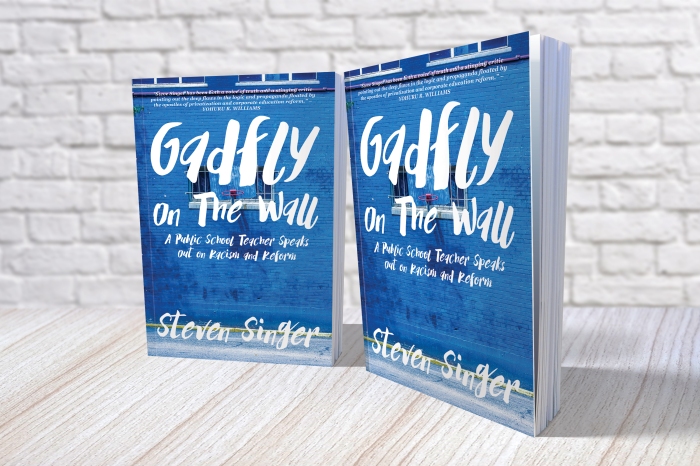
Like this post? I’ve written a book, “Gadfly on the Wall: A Public School Teacher Speaks Out on Racism and Reform,” now available from Garn Press. Ten percent of the proceeds go to the Badass Teachers Association. Check it out!
book-2

Grit is Sh!t – It’s Just an Excuse to do Nothing for Struggling Students

 Screen Shot 2018-11-08 at 3.29.01 PM


Let’s say you’re out in public and you see a crying child alone in the street.


What would you do?


Would you run up to her and help? Or would you just shrug, mutter some derisive comment about the brat and walk on?


Our public school policymakers want us to do the later. In fact, they have a whole pedagogical justification for ignoring the needs of children.


It’s called “academic tenacity,” a “growth mindset” or “grit.”


And it goes something like this:


That child isn’t learning? If she just worked harder, she would.


It’s the political equivalent of “pull yourself up by your own bootstraps” applied to the classroom.


And it’s super helpful for politicians reluctant to allocate tax dollars to actually help kids succeed.


The idea and the euphemisms used to describe it were coined by Carol Dweck as early as 1999. It was subsequently popularized by seventh-grade math teacher and psychologist Angela Duckworth.


In the early 2000s, Duckworth realized that IQ wasn’t the only thing separating successful students from those who struggled. There was also the tendency to overcome adversity or not.


Hey, Angela. Darwin called. He wants his Theory of Natural Selection back.


You know Survival of the Fittest was never meant to be prescriptive. As human beings, we’re supposed to be better than mere animals that typically leave the pack’s sick and injured behind to get eaten by predators.


But whatever.


The term “grit,” is defined as a “passion and perseverance for long-term goals,” according to Frontiers in Psychology. And it’s become one of the buzziest of buzzwords in academia.


So much so, that as you’re reading this, standardized test manufacturers are working to develop an assessment to find it in students.


The agencies that administer the National Assessment of Education Progress (NAEP) and the Program for International Student Assessment (PISA) are close to including character assessments as a measure of student performance.


Oh goody!


They foresee a brave new world where multiple-choice tests will determine not just the entire scope of human knowledge but character as well!


But what no one wants to admit is that grit is… well… shit.


It’s just an excuse for a society that refuses to help those most in need.


In our world, there are haves and have-nots. But if we stop there, we ignore how and why this situation came to be.


Who places kids into segregated schools? WE DO.


Who allocates funding based largely on parental income? US.


We set kids up to succeed or fail before they even enter the school system with an economy that rewards the already rich and punishes generational poverty.


Yet when anyone suggests offering help to even the playing field – to make things more fair – a plethora of policy wonks wag their fingers and say, “No way! They did it to themselves.”


It’s typical “blame the victim” pathology to say that some kids get all the love, time and resources they need while others can do without — they just need more “grit” and a “growth mindset.”


Life’s tough. Get over it.


That’s easy for YOU to say! Because it’s the have’s who make the rules, it’s the people at the top who are telling the people at the bottom they’re to blame for their own suffering.


So you forget all the ways society has helped you and yours. YOU deserve all the credit for your successes.


But for those people over there, let’s forget all the ways society has refused to help and instead blame THEM for not overcoming the obstacles (we put) in their path.


Don’t get me wrong. I’m not saying effort counts for nothing. But it’s part of a complicated matrix of nature and nurture.


Our environments shape us, but we have some control over what we do with what we’re given.


Yet as a society, we can’t simply ignore our responsibilities toward others and throw it all on the individual.


Good teachers know how to get the best out of their students. We know that most kids – if given a safe, encouraging environment – can succeed.


The key often is to scaffold that success. Give them something to do that they can actually master. Then give them something slightly more challenging.


You teach them that they have the ability to succeed and success becomes a self-fulfilling prophecy – and not the opposite.


However, the teacher – and even the school, itself – can only do so much.


As a society, we need to change the environment in which these kids grow up.


We need to fully fund our public schools to meet the needs of all students. That means more funding, services and opportunities for the underserved than for those who already have the best of everything and don’t need to rely as heavily on the school system for support.


We need wraparound services, counseling, tutoring, after school programs, community schools, jobs programs, continuing education for adults and other services to help heal the trauma of growing up poor in America.


But leaving it all to this magical thing called “grit” is just ignoring our responsibilities to our fellow human beings.


When you see someone suffering, you need to help them – not comfort yourself with excuses for ignoring them.


Like this post? I’ve written a book, “Gadfly on the Wall: A Public School Teacher Speaks Out on Racism and Reform,” now available from Garn Press. Ten percent of the proceeds go to the Badass Teachers Association. Check it out!

book-2

The World Mourns for Jews After Pittsburgh’s Synagogue Shooting. What About Other Targets of Hate?

Chin110118RallyAgainstAntisemitismMet5


When a white supremacist killed 11 people and wounded 6 others at a Pittsburgh synagogue last weekend, the world took notice.


Lights dimmed at the Eiffel Tower and Empire State building.


Candlelight vigils were held nationwide – including in Boston, Houston, Washington D.C., Philadelphia, New Orleans, Atlanta, Chicago, New York City and Los Angeles.


A host of international leaders from the Pope to Canadian Prime Minister Justin Trudeau to German Chancellor Angela Merkel expressed outrage, sadness and solidarity.


I’ll admit that as a native Pittsburgher and person of Jewish descent, it touched me deeply.


For a moment, it seemed like the whole world had stopped spinning and from every corner of the globe people were with us in our tragedy.


But at the same time, it was troubling.


After all, there were at least two other major hate crimes in the U.S. perpetrated within 72 hours of the shooting.


In Kentucky, a white man shot and killed two African-Americans at a Kroger grocery store following a failed attempt to break into a black church.


Only two days later, a deranged man who had railed against Democrats and minorities with hate-filled messages online was arrested for allegedly sending mail bombs to people who’d been criticized by President Donald Trump.


IMG_8311


Where were the candlelight vigils for those atrocities?


Where were the international landmarks going dark?


Where was the worldwide condemnation?


In the wake of Pittsburgh’s tragedy, these other violent acts have been almost forgotten.


Yet they’re all symptoms of the same disease – hate and bigotry.


Don’t get me wrong.


What happened in Pittsburgh was terrible.


The Anti-Defamation League estimates that the shooting at the Tree of Life Synagogue may be the most deadly attack on Jews on American Soil in our history.


694940094001_5854810496001_5854807723001-vs


But me and mine do not have a monopoly on sorrow.


We suffer, but we are not the only ones hurting.


This all happened not far from my home.


I’ll admit that I am having a really hard time dealing with it.


I am not sleeping well.


I find myself zoning out in the middle of everyday activities.


And I feel this constant anxiety like part of me is expecting to hear a gunshot ringing down the hall at any time.


When the alleged shooter entered the sanctuary armed to the teeth and shouted “All Jews must die!” before carrying out his plan, he included me in his declaration.


All Jews.


That’s me.


That’s my daughter. My parents. My family.


It means something to me that so many people have come together to repudiate this crime.


The Islamic Center of Pittsburgh and other U.S. based Muslim groups donated more than $200,000 for funeral expenses. An Iranian refugee (who hadn’t even been to the three rivers) started a GoFundMe that brought in $1 million for the victims and their families.


You can’t go anywhere in Pittsburgh without a memorial, a moment of silence, a shared statement of solidarity and love.


At the symphony, musicians read two statements from the stage against hate before playing a Hebrew melody with string quartet.


At my school – I’m a teacher – the union decided to collect money for the victims.


I saw a barge floating down one of the rivers that had the message “Stronger Than Hate” on the side next to the modified Steelers logo where the top star had been replaced by a Star of David.


IMG_8309


I even saw a similar message on a Wendy’s sign: “PittsburghStrong/ Stronger/ Than Hate”.


IMG_8312


The community has come together in a way I’ve never seen before.


But I can’t help wondering why.


Even after Richard Baumhammers went on a racially motivated killing spree in 2000 murdering five people including two Jews, the response wasn’t this overwhelming.


Perhaps it’s just that this latest shooting is the final straw.


Perhaps it is the moment when our nation finally pulls together and says that enough is enough – We won’t tolerate this kind of hate and violence.


I hope that’s it.


However, in the shadows of my mind I wonder if it might not be a reflection of the same beast that struck us last weekend.


Could it be that we’re willing to put up with violence against brown people, but only draw the line when those targeted have lighter skin?


I guess my point – if I have one – is this: Thank you, But.


On behalf of Pittsburgh’s Jews, thank you for having our back.


If we’re going to survive this, we’re going to need your continued support and solidarity.


But it’s not just us.


Hate crimes have jumped from about 70 incidents a year in the 1990s to more than 300 a year since 2001. And after Trump was elected, 900 bias-related incidents were reported against minorities within the first 10 days.


Our country was built on the genocide of over 110 million indigenous Americans and the enslavement of 30 million Africans.


The idea of concentration camps didn’t originate with the Nazis. Hitler got the idea from U.S. treatment of Native Americans.


Racism didn’t end with the Civil Rights Movement. It just changed shape and is hidden in the way we practice health care, education, and policing all the way to mass incarceration.


The shock and solidarity in the wake of the synagogue shooting is appreciated, but it’s not enough to mourn only when 11 Jews are murdered in cold blood.


It’s not enough to take a stand against anti-Semitism.


We need to join together to fight all of it.


We need to be unified against school segregation, police brutality, xenophobia and prejudice in all of its forms.


The white supremacist who killed my friends and neighbors targeted us because he thought we were helping brown-skinned immigrants into the country.


We can’t just stand for the helpers. We need to stand for those in need of that help.


It just won’t work any other way.


We can’t just be against violence to light skinned minorities. We have to empathize and protect our brown skinned brothers and sisters, too. We have to love and cherish our LGBTQ neighbors, as well.


IMG_8310


We have to realize that our freedom, our safety, our very lives depend not just on what rights we have – but on what rights we give to all.


That is the only way any of us will ever feel safe again.


Through love and solidarity for every. Single. Human. Being.


AR-181029559.jpg&MaxH=500&MaxW=900


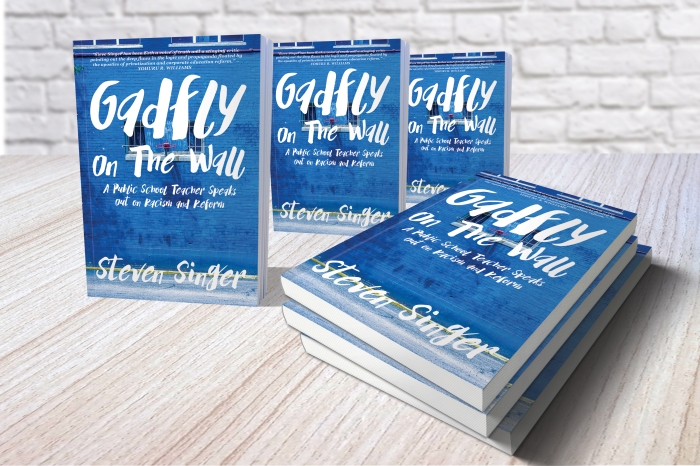
Like this post? I’ve written a book, “Gadfly on the Wall: A Public School Teacher Speaks Out on Racism and Reform,” now available from Garn Press. Ten percent of the proceeds go to the Badass Teachers Association. Check it out!
book-3

The Pittsburgh Community is Stronger Than the Synagogue Shooter’s Hate

43579727_10156281113318860_8423220729121603584_n


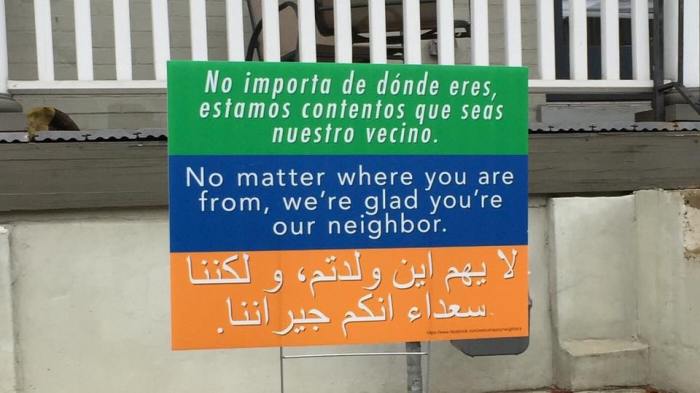
There’s a popular yard sign in the Squirrel Hill neighborhood of Pittsburgh.


In bands of green and blue and yellow, it projects the same message in Spanish, English and Arabic:


“No matter where you are from, we’re glad you’re our neighbor.”


If the community had a motto, I think that might be it.


Though known for its high concentration of Jewish residents, the Pennsylvania locale is a multicultural crossroads.


That may have made it a target today when a shooter entered the Tree of Life Synagogue.


Though the alleged culprit has been captured, details are still being uncovered. The death toll has yet to be tallied.


Unconfirmed reports state that he shouted “All Jews must die,” before opening fire.


But I don’t believe that the Jewish community was his only target.


Or more precisely – it wasn’t just the Jewish part – it was the community that had grown up around it.


I know Squirrel Hill well.


I live close by. I grew up on those streets. I’ve been to services at that synagogue. I have family who are members.


Thankfully it seems that no one related to me was there this morning. But when victims names are released, I probably will know who they are.


I know this community.


I am an extended part of it.


And that’s something of which I am proud.


Just walk along Murray Avenue and you’ll see Indian, Italian, Jewish, African, Chinese – every nationality imaginable – offering the fruits of their culture for friendly commerce.


You’ll see Hasidic Jews in dark hats and flowing tzitzit walking next to women in colorful saris next to trans and lesbians, kids with every color skin playing together in harmony.


Whenever I want a good corned beef sandwich or a quality lox and bagel, I go there. Whenever I want a spicy curry or the freshest sushi or an authentic macaroon, that’s the place. If I want to hear a string quartet or a lecture from a visiting dignitary or even if I want to swim in a public pool, membership to the Jewish Community Center is open to all.


It’s like a few blocks of cosmopolitan life tucked away in a city more known for segregation. We have many ethnic neighborhoods but few where one culture flows so easily into another.


Heck. Even the Tree of Life Synagogue, itself, doesn’t serve one congregation. It serves three who all had services going on at different parts of the building this morning.


There’s just something very special about this place.


It’s where you can go to be yourself – in fact, you’re encouraged to be who you are and not conform to any particular norm. Yet in doing so, you’re somehow demonstrating unity.


Paradoxically, being you makes you one of us.


It’s weird.


I think it may have been that sense of community that made Squirrel Hill, in general, and the Tree of Life Synagogue, in particular, a target.


The hate-filled person who attacked us today was terrified of that unity.


He was so frightened of disillusion, of losing his sense of self, that he had to end the lives of those who could do what he couldn’t.


It’s pathetic, really.


If your sense of self is only a negative, only opposition to someone else’s otherness, you really don’t have much self to lose.


If you define yourself by your hate, what are you?


Do you even really exist?


Most of us are very different.


We are complex assortments of personality – a family identity, a cultural heritage, a work persona, a spirituality, a sense of justice.


Communities like Squirrel Hill nurture this multifarious nature.


They welcome and celebrate difference.


I wish America was more like Squirrel Hill and not the other way around.


If this community’s normal was our national ideal, think of the country we would be living in!


Being different wouldn’t be an obstacle, it would be cherished.


When meeting someone with an unfamiliar name, a heritage of which you were ignorant, a sexuality or gender identity of which you had little knowledge – your response wouldn’t be fear or discomfort. It would be a thrill of excitement that you are lucky enough to broaden your understanding of the many ways there are to be human.


It would be a country where no one grew up so stunted and afraid that the only solution they could imagine would be the death of others.


That’s the America I want to live in.


Squirrel Hill is stronger than this synagogue shooters hate.


I hope our country is, too.


Like this post? I’ve written a book, “Gadfly on the Wall: A Public School Teacher Speaks Out on Racism and Reform,” now available from Garn Press. Ten percent of the proceeds go to the Badass Teachers Association. Check it out!
book-1

Five Reasons to Vote NO on the Allegheny County Children’s Fund

Screen Shot 2018-10-17 at 12.14.03 PM


You can’t raise taxes without a plan of how to spend the money.


But that’s exactly what voters in and around Pittsburgh, Pennsylvania, are being asked to approve this Nov. 6.


Come election day, all voters in Allegheny County will be confronted with what’s been called the Children’s Fund, a referendum asking for a voluntary 5% property tax hike that allegedly would go to pay for early learning, after-school programs and healthy meals for kids.


But there are no details about who will provide these services, who will be responsible for the money, exactly what else the money might be used for or almost anything substantive about it.


It’s just a check with “For Kids” scrawled in the Memo and everything else left blank.


The plan is highly controversial drawing criticism from across the Mon Valley including school directors, education advocates and even progressive groups like the Pennsylvania Interfaith Impact Network (PIIN).


Here are the top five reasons you should vote NO on the referendum:


1) It Raises Taxes Without Stipulating Where the Money Goes


Here’s what we do know.


The Children’s Fund would be financed by 0.25 mills of property tax — $25 on each $100,000 of assessed value, beginning Jan. 1.


That’s expected to generate roughly $18 million a year that would begin to be distributed in 2020.


If approved, it would change the county Home Rule Charter to establish the fund as part of county government. It would create a new office under the supervision of the county manager.

A Citizens’ Advisory Commission would “review and advise” the work of the new office, according to the proposed charter amendment.


However, County Council and County Executive Rich Fitzgerald would have to do the work of actually creating all this stuff. They’d have to pass an ordinance establishing how this all works, what powers the advisory commission has, etc. They would have to determine whether the money goes to existing programs or new ones. They’d have to set up audits of the money every five years, conduct a study to recommend goals and a focus for how the funding is spent.


That’s an awful lot left undecided.


It makes no sense for voters to hand over the money BEFORE we figure all this other stuff out.


It’s not at all how good government works.


You’re supposed to define a problem or need and then come up with a plan to meet that need. You prepare a budget that justifies raising taxes and then you vote on it.


This is exactly the opposite. We’re getting the money before the plan of how to spend it.


That’s a recipe for fraud and financial mismanagement.


2) It’s Unclear Who Would Be In Charge of the Money


Who would be accountable for this money?


We know who gets to decide this – County Council and the Chief Executive. But we don’t know who they will pick or what powers they’ll delegate to these people. Nor do we know what kind of oversight there will be or what kind of regulations will exist for how it can be spent.


This is a blind statement of trust.


It’s like saying – “Here’s $18 million. Go buy us something nice.”


What if they mismanage the money? And what would that even mean for money with so few strings attached? And how would we know? How transparent would this process be?


It’s kind of hard to approve such a plan with so many variables up in the air.


3) The Campaign was Not Grass Roots


To hear supporters talk, you’d think this was a bottom up crusade created by, organized by and conducted by everyday citizens from our communities.


It wasn’t.


Sure, volunteers for the Children’s Fund went door-to-door to collect more than 40,000 signatures from voters last summer.


But they weren’t all volunteers.


Financial documents show that the whole initiative has been funded by various nonprofit organizations that could, themselves, become beneficiaries of this same fund.


According to the Children’s Fund’s own campaign finance report, as of June there were three nonprofit corporations who donated $427,000 to the campaign: the Human Services Center of Turtle Creek gave $160,000, Pressley Ridge Foundation gave $150,000, and Allies for Children gave a donation of $45,000 and another for $72,000.


That’s like McDonalds spending a hundred thousand dollars to fix up the school cafeterias so it could land a multi-million dollar annual contract!


It’s a huge conflict of interest.


At very least, it’s purposefully misleading.


Many of those “volunteers” gathering signatures weren’t working for free. They were part of the $100,000 spent by the campaign to hire Vote Goal Organizing for paid signature collectors.


That doesn’t look like charity. It looks like philanthrocapitalism – when corporations try to disguise grabs for power and profit as philanthropy.


Corporations – even so-called nonprofit corporations – rarely do things out of sheer goodness. They’re acting in the best interest of the company.


I see no reason to think this “Children’s Fund” is any different.


4) It Works Around Instead of With Local Government


Though almost everyone agrees with the stated goals of the Children’s Fund, many organizations and government officials complained that they were not consulted and made a part of the process.


Two Pittsburgh Public School directors went on record in the Pittsburgh Post Gazette about a lack of communication.


“First and foremost, we have not had any conversations with the organizers of the referendum,” board president Regina Holley said. “There are lots of ifs and whats that have not been answered.”


Kevin Carter, another city school director added, “In my role as a school board member, they didn’t talk to us about this at all.”


“When you leave your largest school district in the region out of this conversation, are you doing this around children?” he asked, citing that the district serves 25,000 students daily.


This has been a common thread among officials. No one wants to say they’re against collecting money that’s ostensibly for the benefit of children, but it’s hard to manage the money if you’re not part of the process.


And it’s not just protocol. Many are worried that this lack of communication may be emblematic of how the fund will be run. If organizers aren’t willing to work with local governments to get the job done, how will they know what each community needs? How will they meet those needs? Is that even what the fund will really be about?


Richard Livingston, Clairton school board president, noted concern that the money collected might not be spent evenly throughout the county. For all he knows, it could just be spent in the city or in select areas.


Indeed, this is not the best way to start any endeavor funded by all, for the benefit of all children.


5) It’s Redundant


While it’s true that the county could use more funding to meet the needs of students, numerous organizations already exist that attempt to provide these services.


There are a plethora of Pre-K, after school tutoring and meal services in the Mon Valley. In fact, much of this is done at the county’s various neighborhood schools.


If organizers were only concerned with meeting these needs, why form an office within county government that would have an appointed advisory commission? Why not just increase the funding at the local schools and/or organizations already doing this work?


In fact, this is exactly the reason the Pennsylvania Interfaith Impact Network is against the initiative.


According to the organization’s statement:


“At PIIN, we believe that the faith community is a sacred partner with our public schools, and we have long been supportive of both the community schools model and increasing state funding to provide an excellent, high-quality education to every child in our region. We believe in funding for early childhood learning, after school programs, and nutritious meals. However, we cannot support a ballot initiative that creates an unnecessary entity, with an unknown advisory board, and an unclear process for directing our tax dollars.


This is why we are urging our membership to reject the Allegheny County Children’s Fund Initiative at the polls this November.”


Another related organization, Great Public Schools-Pittsburgh, also released a statement with “several specific concerns” about the potential fund. These include how the money would be distributed, which organizations would benefit from it, and questions about its redundancy.


Several pre-K programs already exist but are not fully funded, the organization noted. Why don’t we just fund them?


The group is a coalition of the Education Rights Network, One Pennsylvania, the Pittsburgh Federation of Teachers, PIIN, and the Service Employees International Union.


The group’s statement noted concerns but fell short of urging an outright NO vote.


The bottom line is that many people are concerned about inadequate funding for children’s programs.


But this “Children’s Fund” is not a solution to that problem.


This is the creation of another bureaucracy that can take our tax dollars and do almost whatever it wants with them.


There is no guarantee it will help kids.


In fact, it looks a lot more like a power and money grab by corporate interests, many of whom would prefer to privatize our school system.


This November, when you go to the polls, do the right thing for our kids.


Vote NO on the Allegheny County Children’s Fund.


IMG_8288


Like this post? I’ve written a book, “Gadfly on the Wall: A Public School Teacher Speaks Out on Racism and Reform,” now available from Garn Press. Ten percent of the proceeds go to the Badass Teachers Association. Check it out!

book-4

Want to Make a Difference? Canvass for Local Candidates You Believe In


door-to-door_small-500x300


Knock! Knock! Knock!


I stood there on the porch staring at my own knuckles in disbelief.


My 9-year-old daughter was looking up at me with a look like “What did you just do?”


But there was no time to say anything.


The door was opening.


An older gentleman stood in the entryway looking like he had just been stirred from sleep.


“Hello! Is this…” I began and Pam, who was standing next to me filled in the name.


“Yes,” he grumbled.


I introduced the three of us and told the man that we were canvassing his neighborhood for two local candidates running for state legislature.


And then I stopped because I wasn’t sure what to say next.


Luckily Pam jumped in and told him what our candidates stood for – education, healthcare and working families.


“Are these Democrats?” he groused. “I’m done with them. After what they did to that judge, I’m done.”


“You mean Kavanaugh?” I said.


He nodded.


My mouth opened to say something but what do you say?


Brett Kavanaugh was accused by multiple women of sexual assault but was saved from a thorough FBI investigation by his buddy, Donald Trump. He cried, whined and spouted partisan conspiracy theories yet still was confirmed to a lifetime appointment to the U.S. Supreme Court.


Really, what was this guy’s problem? Did he think we shouldn’t investigate Supreme Court Justices when credible accusers hurl accusation of abuse? Did he think Kavanaugh’s chief accuser – Dr. Christine Blasey Ford – made the whole thing up so that she could have her reputation forever tied to an attempted rape and her family displaced from their home and forced into hiding because of constant death threats? Did he think we should give privileged white guys lifetime judicial appointments based on what? Political affiliation? Skin tone?


Pam tried to bring up a few other topics – about how Republicans in our state of Pennsylvania are actively working to cut this man’s healthcare, calling this man’s generation “the greediest generation” and other topics.


But it did no good. Fox News had gotten there first.


So we handed him our campaign literature, thanked him and went on our way.


Sometimes that’s the best you can do.


And it’s not nothing.


IMG_8282


If you’re reading this blog, I’m assuming you’re a lot like me.


You see the madness of our modern age and wonder what the heck went wrong?


A reality TV show clown is President of the United States of America. And all over this country, the conservative clown car is spitting out candidates for major office.


Even here in the keystone state, we have Scott Wagner running for Governor on the leftover promises of our previous GOP Governorslashing education funding, firing teachers and lower taxes for the wealthy.


Meanwhile, the world is falling apart. The U.N. just released a major report finding that we have about a dozen years to make significant changes to our energy consumption or else global climate change will be irreversible. Yet our leaders complain there’s nothing they can do!


It’s enough to make one lose hope in the future.


As a father and a public school teacher, I can’t afford that despair.


There needs to be at least the slimmest glimmer of the possibility of a new day.


And I’m here to tell you, friends, it’s out there.


It starts with you.


If you want real progressive change, you have to go out there and make it – one day at a time.


We can turn back the tide of self-destruction. We can beat back the politics of bread and circuses. We can take back this country and build a better future.


But it will take more than one day.


It will take all of us, doing incremental good, every day we can.


So my suggestion is to make a commitment to voting this Nov. 6.


I know our electoral system is a mess. I know many people are being purged from the rolls and our districts are gerrymandered and the entire system is set up against us.


But if all of us try to vote, we can still win.


Find a candidate you can support and go out there and campaign for him or her.


I know there are a lot of phonies running for office. There are an awful lot of fake progressives who will talk nicely to your face and then sell you out to corporations and the wealthy at their first opportunity.


Just know that they’re not all like that.


Find yourself someone you can trust – probably someone new to the game coming on the scene to change things.


In the Pittsburgh area I found Lindsey Williams.


thumbnail_IMG_8273
Lindsey Williams and Me


She’s an amazing lady with real conviction running for State Senate in the 38th District – that’s most of Northern Allegheny County from Franklin Park eastward, as well as Highland Park and sections of East Liberty in Pittsburgh.


Her number one priority is the same as mine – education.


That should come as no surprise from a candidate who’s also the communications director for the Pittsburgh Federation of Teachers.


But Williams actually lives her values.


Before coming to Pittsburgh, she was fired for union organizing at the National Whistleblowers Center. Ironically, she was working there to tell the story of people who were retaliated against for reporting waste, fraud, and abuse, and found herself a target for attempting to organize a staff union. She eventually won the resulting case with the National Labor Relations Board.


When her campaign literature says she “won’t back down” fighting for working families. That’s what it means.


And her priorities – education, healthcare and labor – aren’t pie in the sky promises. She has a fiscally responsible plan to support them by creating a severance tax on natural-gas drilling and closing a loophole that allows businesses headquartered in other states to avoid state taxes. She wants to keep taxes low for homeowners while making sure the wealthy and corporations pay their fair share.


Perhaps that’s why a conservative dark money organization aligned with her Republican challenger, Jeremy Shaffer, has created knockoff campaign signs that look just like Williams with the word “Socialist” emblazoned on them.


It’s a desperation tactic.


Shaffer is down in the polls. The district – once a Republican stronghold – went to Hillary Clinton in the last election.


Even Shaffer, a Ross Township supervisor, is a throwback – he’s a far right extremist who primaried incumbent state Sen. Randy Vulakovich (R-Shaler) in May.


And his platform is nothing but tax cuts for the rich and school privatization for the rest of us. In effect, he’s a mini-Trump come to bring the circus to town.


So not only is Williams a candidate I can believe in, her race really matters to the overall state picture. If the Democrats only pick up her seat in November and don’t lose any others, we’ll crush the GOP’s veto-proof majority!


thumbnail_IMG_8275


But I didn’t come out this weekend just for Williams.


I also was there to canvass for Betsy Monroe, a Fox Chapel medical professional at Highmark running for State House in the same North Hills area.


She was inspired to get into politics after Trump’s election and the subsequent 2017 Women’s March.


She noticed that state Rep. Hal English (R-Hampton) had run unopposed in the last two elections, so she decided to run against him, herself.


Monroe was particularly angered by English’s vote to criminalize abortions after 20 weeks for all women in the Commonwealth. (The bill was vetoed by Democratic Gov. Tom Wolf back before the GOP had a veto proof majority.) She thought it was unfair for lawmakers to decide what adult women can do with their own bodies.


However, there was one other woman I was there to support – my own daughter.


For someone in elementary school, she is incredibly interested in politics. I caught her on Saturday literally writing political stump speeches for her stuffed animals. Let me tell you, Eeyore the donkey from the Hundred Acre Wood has some mighty progressive views on women’s rights!


I wanted my little one to see real women in politics, fighting to make a difference.

 
The news is always so grim. I wanted her to see that there are people out there fighting for the good.


And you know what? It helped me, too.


At this point I need to pause and give a huge “Thank You” to two people – Pamela Harbin and Jodi Hirsch.


IMG_8279
Me and Pamela Harbin


Jodi is an amazing organizer who put together the event in the first place.


I wanted to get more involved in the election and Jodi knew exactly how I could do that and which candidates I’d be most interested in.


Pam is a local activist I’ve known for years. I fought with her side-by-side against the statewide education budget cuts, charter schools, standardized testing and a host of Corporations Gone Wild shenanigans.


I was new to this whole canvassing thing, so she agreed to go with my daughter and me to show us the ropes.


I couldn’t have done it without her.


Thankfully, not every door we knocked on went like the grumpy gentlemen described above.


Frankly, most people weren’t home or didn’t answer the door.


Some people – especially young folks – proudly responded that they don’t vote or have no idea what’s going on.


Others were energized by what was happening and were looking forward to going to the polls and being heard.


“You know I’ll be there!” said one gentleman. “I’m straight Dem. Right on down the line. I’ve had enough of this Trump crap.”


But more people than I’d expected took pride in their nonpartisanship.


They wouldn’t commit to anything – just took our literature, heard us out and said they’d decide at the polls.


I always wondered what an undecided voter looked like. I saw a lot of them this weekend.


But that’s why we were there – to help nudge the uncommitted.


Hopefully on Nov. 6 they’ll think of Pam, my daughter and me.


Maybe even the Fox News fan who thought Kavanaugh got a raw deal will have his resolved softened.


Maybe he’ll think of my daughter’s chubby cheeks and innocent eyes as he considers voting for people who’d gladly steal her future for the prospect of more tax cuts for the rich.


Then again, maybe not. But who knows?


We tried.


If you live in Pennsylvania and want to get involved, click HERE.


Like this post? I’ve written a book, “Gadfly on the Wall: A Public School Teacher Speaks Out on Racism and Reform,” now available from Garn Press. Ten percent of the proceeds go to the Badass Teachers Association. Check it out!
thumbnail_IMG_8249