The Stink of Segregation Needs to End in Steel Valley Schools

ygateau_npred_borders1-c4f22c33fac1a9806e5df963b8b11ae67e707927-s800-c85

 
I am a teacher at Steel Valley Schools.


I am also an education blogger.


In order to belong to both worlds, I’ve had to abide by one ironclad rule that I’m about to break:


Never write about my home district.


Oh, I write about issues affecting my district. I write about charter schools, standardized testing, child poverty, etc. But I rarely mention how these things directly impact my school, my classroom, or my students.


I change the names to protect the innocent or gloss over the specifics with ambiguity.


In six years, it’s a maxim I’ve disregarded maybe once before – when writing specifically about how charter schools are gobbling up Steel Valley.


Today I’ll set it aside once more – specifically to talk about the insidious school segregation at work in Steel Valley elementary schools.

 
But let me be clear about one thing – I do this not because I want to needlessly agitate school board members, administrators or community members.


I do it because the district has specifically asked for input from stakeholders – and for the first time in years, teachers (even those living outside district boundaries) have been included in that designation.


School directors held a town hall meeting in October where 246 people crowded into the high school auditorium to present their views.


Last week there was a meeting with teachers and administrators to discuss the same matter.


I didn’t say anything at either gathering though I had many thoughts circling my head.


Instead I have decided to commit them here to my blog.


Maybe no one will read them.


Maybe that would even be best. I know that no matter what invitations are publicly presented, in private what I write could be used against me.


Yet I feel compelled to say it anyway.


So here goes.


Something stinks in Steel Valley School District.


It’s not the smell of excrement or body odor.


It’s a metaphysical stink like crime or poverty.


But it’s neither of those.


It’s school segregation.


To put it bluntly, we have two elementary schools – one mostly for white kids and one mostly for black kids.


Our district is located on a steep hill with Barrett Elementary at the bottom and the other schools – Park Elementary, the middle and high school – at the top.


The student population at Barrett Elementary in Homestead is 78% black. The student population at Park Elementary in Munhall is 84% white.


These schools serve students from K-4th grade. By 5th grade they are integrated once again when they all come to the middle school and then the high school. There the mix is about 40% black to 60% white.


But having each group start their education in distinctly segregated fashion has long lasting effects.


By and large, black students don’t do as well academically as white students. This is due partially to how we assess academic achievement – through flawed and biased standardized tests. But even if we look solely at classroom grades and graduation rates, black kids don’t do as well as the white ones.


Maybe it has something to do with the differences in services we provide at each elementary school. Maybe it has to do with the resources we allocate to each school. Maybe it has something to do with how modern each building is, how new the textbooks, the prevalence of extracurricular activities, tutoring and support each school provides.


But it also has to do with the communities these kids come from and the needs they bring with them to school. It has something to do with the increasing need for special education services especially for children growing up in poverty. It has something to do with the need for structure lacking in home environments, the need for safety, for counseling, for proper nutrition and medical services.


No one group has a monopoly on need. But one group has greater numbers in need and deeper hurts that require healing. And that group is the poor.


According to 2017 Census data, around 27% of our Steel Valley children live in poverty – much more than the Allegheny County average of 17% or the Pennsylvania average of 18%.


And of those poor children, many more are children of color.


Integrating our schools, alone, won’t solve this problem.


Putting children under one roof is an important step, but we have to ensure they get what they need under that roof. Money and resources that flow to white schools can almost as easily be diverted to white classes in the same building. Equity and need must be addressed together.


However, we must recognize that one of those things our children need is each other.


Integration isn’t good just because it raises test scores. It’s good because it teaches our children from an early age what the world really looks like. It teaches them that we’re all human. It teaches tolerance, acceptance and love of all people – and that’s a lesson the white kids need perhaps more than the black kids need help with academics.


I say this from experience.


I grew up in nearby McKeesport – a district very similar to Steel Valley economically, racially and culturally.


I am the product of integrated schools and have benefited greatly from that experience. My daughter goes to McKeesport and likewise benefits from growing up in that inclusive environment.


I could have enrolled her elsewhere. But I didn’t because I value integration.


So when Mary Niederberger wrote her bombshell article in Public Source about the segregated Steel Valley elementary schools, I was embarrassed like everyone else.


But I wasn’t shocked.

 
To be frank, none of us were shocked.


We all knew about the segregation problem at the elementaries. Anyone who had been to them and can see knew about it.


In fact, to the district’s credit, Steel Valley had already tried a partial remedy. The elementaries used to house K-5th grade. We moved the 5th grade students from each elementary up to the middle school thereby at least reducing the years in which our students were segregated.


The result was state penalty.


Moving Barrett kids who got low test scores up to the middle school – which had some of the best test scores in the district – tipped the scales. The state penalized both Barrett and the middle school for low test scores and required that students in each school be allowed to take their per pupil funding as a tax voucher and use it toward tuition at a private or parochial schoolas if there was any evidence doing so would help them academically.


Not exactly an encouragement to increase the program.


But school segregation has a certain smell that’s hard to ignore.


If you’ll allow me a brief diversion, it reminds me of a historical analogue of which you’ve probably never heard – the Great Stink of 1858.


Let me take you back to London, England, in Victorian times.


The British had been using the Thames River to wash away their garbage and sewage for centuries, but the river being a tidal body wasn’t able to keep up with the mess.


Moreover, getting your drinking water from the same place you use to wash away your sewage isn’t exactly a healthy way to live.


But people ignored it and went on with their lives as they always did (if they didn’t die of periodic cholera outbreaks) until 1858.


That year was a particularly dry and hot one and the Thames nearly evaporated into a dung-colored slime.


It stunk.


People from miles away could smell it.


There’s a funny story of Queen Victoria traveling by barge down the river with a bouquet of flowers shoved in her face so she could breathe. Charles Dickens and others made humorous remarks.


But the politicians of the time refused to do anything to fix the problem. They sprayed lime on the curtains. They even sprayed it onto the fecal water – all to no avail.


Finally, when they had exhausted every other option, they did what needed to be done. They spent 4.2 million pounds to build a more than 1,000 mile modern sewage system under London.


It took two decades but they did it right and almost immediately the cholera outbreaks stopped.


They calculated how big a sewage system would have to be constructed for the contemporary population and then made it twice as big. And the result is still working today!


Scientists estimate if they hadn’t doubled the size it would have given out by the 1950s.


This seems to be an especially important bit of history – even for Americans more than a continent and a century distant.


It seems to me an apt metaphor for what we’re experiencing here in Steel Valley.


Everyone knows what’s causing the stink in our district – school segregation.


Likewise, we know what needs to be done to fix it.


We need a new elementary complex for all students K-4. (I’d actually like to see 5th grade there, too.) And we need busing to get these kids to school regardless of where they live.


The excuse for having two segregated elementary schools has typically been our segregated communities and lack of adequate public transportation.


We’re just a school district. We can’t fix the complex web of economic, social and racial issues behind where people live (though these are matters our local, state and federal governments can and should address). However, we can take steps to minimize their impact at least so far as education is concerned.


But this requires busing – something leaders decades ago decided against in favor of additional funding in the classroom.


In short, our kids have always walked to school. Kids at the bottom of the hill in Homestead and West Homestead walk to Barrett. Kids at the top in Munhall walk to Park. But we never required elementary kids to traverse that hill up to the middle and high school until they were at least 10 years old.


We didn’t think it fair to ask young kids to walk all the way up the hill. Neighborhood schools reduced the distance – but kept the races mostly separate.


We need busing to remove this excuse.


I’ve heard many people deny both propositions. They say we can jury rig a solution where certain grades go to certain schools that already exist just not on a segregated basis. Maybe K-2 could go to Park and 3-4 could go to Barrett.


It wouldn’t work. The existent buildings will not accommodate all the children we have. Frankly, the facilities at Barrett just aren’t up to standard. Even Park has seen better days.


We could renovate and build new wings onto existing schools, but it just makes more sense to build a new school.


After all, we want a solution that will last for years to come. We don’t want a Band-Aid that only lasts for a few years.


Some complain that this is impossible – that there just isn’t enough money to get this done.


And I do sympathize with this position. After all, as Superintendent Ed Wehrer said, the district is still paying off construction of the high school, which was built in the 1970s.


But solutions do exist – even for financial problems.


My home district of McKeesport is very similar to Steel Valley and in the last decade has built a new 6th grade wing to Founders Hall Middle School and Twin Rivers, a new K-4 school on the old Cornell site.


I’m sure McKeesport administrators and school board members along with those at other neighboring districts could provide Steel Valley with the expertise we need to get this done. I’m sure we could find the political will to help us get this done.


And that’s really my point: our problem is less about what needs to happen than how to do it.


We should at least try to do this right!


We can’t just give up before we’ve even begun.


Debates can and should be had about where to build the new school, how extensive to have the busing and other details. But the main plan is obvious.


I truly believe this is doable.


I believe we can integrate Steel Valley elementary schools. And I believe we can – and MUST – do so without any staff furloughs.


We’re already running our classes with a skeleton crew. We can ensure the help and participation of teachers by making them this promise.


That’s what true leaders would do.


Sure, some fools will complain about sending their little white kids to class with black kids. We heard similar comments at the town hall meeting. But – frankly – who cares what people like that think? The best thing we could do for their children would be to integrate the schools so that parental prejudices come smack into conflict with the realities of life.


And if doing so makes them pull out of Steel Valley, good riddance. You never need to justify doing the right thing.


Again this will not solve all of our problems. We will still need to work to meet all student needs in their buildings. We will have to continue to fight the charter school parasites sucking at our district tax revenues.


But this is the right thing to do.


It is the only way to clear the air and remove the stink of decades of segregation.


So let’s do it.


Let’s join together and get it done.


Who’s with me?


Like this post? I’ve written a book, “Gadfly on the Wall: A Public School Teacher Speaks Out on Racism and Reform,” now available from Garn Press. Ten percent of the proceeds go to the Badass Teachers Association. Check it out!


thumbnail_IMG_8249

Charter Schools Cherry Pick Students & Call it Choice – PART 2: The “EVERYONE’S DOING IT!” Excuse

Screen Shot 2019-10-18 at 2.23.57 PM


“Got school choice?” asks a charter school supporter.


But who exactly is she addressing – families or charter school operators?


Because it is the later group who is offered choice by school privatization – not parents, families or students.

 
Billionaire investors and charter school managers answer, “Heck yeah – we’ve got school choice! We get to choose to take your tax dollars but not your child!”


As we’ve seen in Part 1 of this article, charter schools unequivocally cherry pick the children who get to enroll there.


These institutions are funded by tax dollars but privately managed – and the private interests who run them get to decide how to spend that money with little oversight or strings attached. As businesses, they can increase their bottom line by letting in only the easiest kids to teach.


This is not opinion. It is fact.


Admittedly, every single charter school in the country is not guilty of this crime. Yet the charter concept explicitly allows such unscrupulous behavior, and it is widespread.


It’s like permitting a bank to work on the honor system – the safe being unlocked, people could just walk in and make withdrawals and deposits on their own. Not everyone would cheat, but that doesn’t make this a good way to safeguard your finances.


And that’s the situation at charter schools. Operators can pick and choose which students to enroll – so many do.


Charter school supporters usually respond to this critique in one of two ways. They either deny it happens or admit the truth while deflecting its importance.


In Part 1, we saw how the denial (or the “I Didn’t Do It” Excuse”) flies in the face of facts.


In this article, we will be examining those who relent that charter school do, in fact, cherry pick students but claim there’s nothing wrong with that.


In particular, we will look at their claim that charter schools are doing nothing different than what authentic public schools do.


In sum, they’re claiming that “Everyone’s doing it!”


In truth, everyone is NOT doing it. School privatizers are doing it while the rest of us aren’t allowed to do it and actually try to equitably educate all the children in our neighborhoods.


THE “EVERYONE’S DOING IT!” EXCUSE

Some charter school apologists admit this much.


They see the mountain of evidence that cherry picking exists at their schools and concede the point.


However, they claim that this is a practice at authentic public schools as well. After all, public schools expel students for all sorts of reasons and even have special magnet schools that enroll only certain students.


MAGNET SCHOOLS


One of the most frequent criticisms of authentic public schools is that they don’t give students and families enough choice. But that’s exactly what magnet schools are – institutions WITHIN the district that cater to individual choice and needs.


Magnet schools came into existence in the late 1960slong before the first charter school law was passed in 1991. They were a method of encouraging voluntary desegregation by attracting diverse groups to enroll around specific academic specialties.


Magnet schools are organized around a theme. This could be STEM – science, technology, engineering and mathematics – or fine and performing arts. As such, they cater to students with an interest and ability in that theme. This is not true of most charter schools, which have no particular theme or specialty.


The goal in magnet schools is to attract so many applicants that the school can select a racially diverse student body. However, this is exactly the opposite of what we find at charter schools where racial integration is extremely rare. As we’ve seen, many charter schools have students of one-race or ethnicity. Charters increase – not decrease – segregation wherever they are located.


Moreover, though a particular magnet school DOES allow only certain students enrollment, the public district does not. The district accepts everyone at SOME school within its boundaries. By comparison, charter schools are usually just one building and even when they are chains of schools owned and operated by the same people, they generally make no effort to accept all who apply.


There are many other differences between charter schools and magnet schools not the least of which is who runs them. Charters are often managed by appointed bureaucrats. Magnet schools are still run by the elected school board of the district. As such, they are still subject to all the rules and regulations of authentic public school districts. As we’ve seen, this is not true of charters.


In addition, many charter schools are run for-profit. Even those not directly labeled as such often contract with a for-profit management company thereby avoiding the negative connotations of the name while still indulging in the money-making practices. However, no authentic public schools do this. None. That removes the motivation for selective enrollment. Authentic public schools would get no financial benefit from doing so – in fact just the opposite.

 
One similarity about the two types of school, at least superficially, is enrollment. At both magnets and charters, admission is often determined by the use of a lottery system, due to high demand for limited seats.


In the 2015-16 school year, more than 2.6 million students were enrolled in magnet schools nationwide, compared with more than 2.8 million in charters across 43 states and the District of Columbia, according to the National Center for Education Statistics.


Does this mean that BOTH charter and magnet schools cherry pick students?

 
No, because of the most distinguishing feature between charters and authentic public schools: transparency.


When a charter school conducts a lottery, it does so behind closed doors. There is no one watching over its shoulder to make sure it is doing so fairly. And as we’ve seen those charter school lotteries result in student bodies that could not come from chance.


However, magnets are fully authentic public schools, which means that everything has to happen out in the open and in the light of day. Not only that but all nonsensitive public school documents are a matter of public record. Anyone can see that these lotteries are being conducted fairly, and the results of these lotteries produce much more equitable student distributions than we find at charter schools.


Magnet schools are like first class restaurants where the health inspector comes in and writes a glowing report of the kitchens. Charter schools are shady dives where the health inspector is not allowed where the food is prepared – ever.


Where would you take your family for dinner?


DISCIPLINE AND EXPULSIONS


Putting aside the issue of magnet schools, some critics of authentic public schools claim that they still engage in selective enrollment through discipline and expulsion policies.


But there are big differences in the ways both types of school engage in disciplinary actions.


Charter schools are known for excessive discipline policies that encourage difficult children to go elsewhere. They also kick out kids with behavior problems.


Do authentic public schools do the same?


Yes and no.


It has been documented that all school types suspend and expel black students at a higher rate than white students. However, the most draconian discipline policies – such as those designated zero tolerance – are to be found at charter schools.


Authentic public schools are restrained by state and federal law in this regard coupled with increased transparency. There’s less they’re legally allowed to do and a greater chance they’d get caught if they tried to do it anyway.


However, the biggest difference is one of motivation.


Think about it.


Charter schools only gain by getting rid of difficult children. It costs them less money to educate more well-behaved students and increases academic outcomes that they can use as marketing materials to entice greater enrollment.


Authentic public school districts lose out when students go elsewhere because they still are responsible for those students.


Authentic public school districts must ensure that all children living in their communities get a Free and Appropriate Public Education (FAPE). This is true whether a child attends the district or not.


If a child goes to a neighborhood charter school, the public school district has to pay that charter school to educate him or her. If the child has such special needs that make it necessary for him or her to attend a school outside of the district that specializes in ways to meet those needs, the district is responsible for paying. And in this case the cost will almost definitely be greater than the district receives in tax revenue – by orders of magnitude.


It costs authentic public school districts much more money to expel or outsource services for a child than to keep him or her in the district. Public schools are encouraged to find ways to meet student needs WITHIN the district and to send them elsewhere only as a last resort.


Even a child who attacked classmates in school with a weapon and ended up in jail would be the district’s responsibility. The district would still have to pay to educate that child at an alternative sight – probably in the prison system.


Authentic public schools are even responsible for homeless students and undocumented children.


This is all in the best interests of the child and represents an inclusive ideal of education you won’t find in many other countries.


But it’s not present in charter schools.


Charter schools are there to make a buck. If administrators don’t see how to do that with a given child, it makes economic sense to get rid of that child.


Not so at your local, neighborhood authentic public school.


CONCLUSIONS

So we’ve seen that charter schools really do cherry pick which students to enroll.


It’s all about the Benjamins.


Families with the easiest kids to educate are encouraged to enroll and all others are dissuaded away. Charters pick and choose between applicants often relying on test scores and academic records. And they kick out or otherwise encourage difficult students to find an education elsewhere – usually the local neighborhood authentic public school.


Moreover, these practices are radically different than what you find at authentic public schools.


It’s true that public districts sometimes include magnet schools organized around a theme that use lotteries to determine which kids get enrolled there. However, the standards of transparency are so much higher at public schools and the results so much more equitable that any charge of unfairness is much harder to support.


In addition, it’s true that public schools also discipline and sometimes expel students. But the discipline policies at public schools are never as extreme as the zero tolerance policies you’ll find at many charter schools.


Finally, expelling a difficult student is all gain for a charter school and all cost at authentic public districts. No matter which school a student attends, the district where that child resides is still responsible for FAPE, and the cost of educating that child outside the district is nearly always greater than inside the district.


These are just some of the reasons why the charter school experiment should end.


No reform in the world can make equity out of schools that are by definition “separate but equal.”


Schools paid for with tax dollars need to be accountable and transparent. And the only way to do that is to rip up every bogus charter contract in the country and make them all abide by the same rules and regulations that ensure every child gets the high quality education he or she deserves.


In other words, reverse the privatization. Public-ize them all.


Like this post? I’ve written a book, “Gadfly on the Wall: A Public School Teacher Speaks Out on Racism and Reform,” now available from Garn Press. Ten percent of the proceeds go to the Badass Teachers Association. Check it out!

book-3

Racial Disparity in Student Discipline Isn’t All About Race

black-male-student_sm


Black students are suspended from school at substantially higher rates than white ones.


That’s indisputable.


When teachers send kids to the office, when principals issue detentions and suspensions, the faces of those students are disproportionately black or brown.


So what does that mean?


Are minority children more badly behaved than white ones?


Or is it an indication that our public schools are overrun with racist teachers and principals?


Those appear to be the only choices in Trump’s America.


There’s either something desperately wrong with children of color or the majority of white staff at public schools can’t handle them.


But the reality is far more complex, and no matter who you are, it will probably make you uncomfortable.


The problem is that there are variables the binary choice above doesn’t even begin to explain, and chief among them is child poverty.


In short, there are an awful lot of poor kids in America. And children living in poverty act out more than those living in middle or upper income brackets.


It’s not that these kids are inherently bad. They’re just coping with the stress of an impoverished life style by claiming whatever attention they can – even negative attention.


And since children of color are disproportionately more impoverished than white kids, it just makes sense that more of them would act up.


It should come as no surprise that living with economic deprivations translates into behavioral problems.


I’m not saying poverty is the only factor. I’m not saying that white teachers and administrators don’t engage in bias and racism. But it isn’t all one or the other.


Both are factors in this equation. And others variables as well.


To truly understand the problem, we have to give up the easy answers and the blame game and come together to find real, workable solutions.


SUSPENSIONS


About 15.5 percent of American school children are black, yet they make up 39 percent of students who are suspended from school, according to the Government Accountability Office’s (GAO) first study on the issue.


The study used data from 95,000 schools compiled from the federal Civil Rights Collection.


Particularly alarming is the fact that almost the same disparity exists in our prison system, where nearly 38 percent of inmates are black.


Researchers concluded that this disparity persists in both rich and poor schools, so the primary cause is racial bias.


However, the study was also used by the GAO as a means to put pressure on Education Secretary Betsy DeVos as she considered whether to rescind 2014 civil rights guidelines from the Obama Administration. The report was part of a political move to force DeVos to keep using guidelines meant to ensure that students are not discriminated against when punishments are handed out or schools would risk being found in violation of civil rights laws.


The problem is that the study is undeniably partisan and politically motivated.


Don’t get me wrong. I sympathize with its motivation. It’s just that we can’t let a single well-intentioned political action falsely impugn the nation’s teachers and public schools.


It IS important to keep the Obama era guidelines on civil rights violations. We DO need to be aware of possible incidents of discrimination against minorities in our schools and work to rectify these issues.


However, we can’t let this change the facts. The issue is whether poverty or race has a greater impact on racial discrepancies in student discipline. Are a greater percentage of black kids suspended mainly because of prejudice or is it more a symptom of their poverty?


And the answer can’t depend on whether it makes an odious person like DeVos squirm or smile.


POVERTY


The problem with answering this question comes from the various definitions of poverty we employ.


If we define poverty for students as those eligible for free or reduced lunch programs (a determination based on household income), then more than half – 51% – of public school children are poor.


But if we take the more conservative formula developed in the 1960s based on food expenses as a part of a family budget, poverty estimates shrink.


According to the Center for Children in Poverty (NCCP) which uses the more conservative definition, childhood poverty in the U.S. breaks down as follows: 10% of white kids (4.2 million), 27% of Latino children (4 million), 33% of Black students (3.6 million), 12% of Asian children (400,000) and 40% of Native American children (200,000).


And those figures are rising. There are 1.2 million more poor children in the U.S. today than there were in 2000.


However, there is real reason to assume these figures don’t capture the whole picture. After all, in just the last 30 years, food expenses (up 100%) have not risen as dramatically as other costs such as health care (up 500%), housing (up 250%) and college tuition (up 1,000%). So any real-world definition of poverty would include substantially more children than just those who qualify under these out-of-date federal guidelines.


A report by the Congressional Research Service (CRS) concludes, “If the same basic methodology developed in the early 1960s was applied today, the poverty thresholds would be over three times higher than the current thresholds.”


And the GAO study used the conservative 1960s threshold.


It underestimated how poor our nation, families and children have become.


Consider: in the past 20 years as wages have stagnated, median household expenses increased by 25 to 30 percent. As a result, 3 out of 5 Americans today spend more than they earn – not on useless frivolities – but on essential needs.


It’s estimated that over three-quarters of Americans are living paycheck to paycheck.


People are working more hours for decreasing wages and benefits. A Princeton study concluded that 94 percent of the nine million new jobs created in the past decade were temporary or contract-based instead of traditional full-time positions.


In 2016, the poorest 50% of American adults had an average net worth (home and financial assets minus debt) of just $7,500. To make matters worse, only a year previously it was $9,000. The difference all went to the top 1% who gained an average of $1.5 million during that same year.


These facts have real world consequences for every level of society – especially how our children behave in school.


CONSEQUENCES


It seems clear then that the scope and effects of poverty have been underestimated by the GAO report and others who wish to emphasize the effect of racism and bias.


Again this is not to say that racism and bias are misrepresented or unimportant. It’s a question of how much – not an either/or situation.


The fact of the matter is that poverty has a more pervasive impact on student discipline because students of color experience it at greater rates than white kids.


This is mainly because of the way poverty affects students’ home lives – an area that has a much greater influence on education than what goes on in the school, itself.


For instance, children who don’t know how to “play school” – to navigate the expectations, routines, social situations and academic demands – don’t learn as much as those who do. In fact, this may be a partial reason why children of color don’t do as well academically as kids from other groups. Certainly biased standardized assessments and the high stakes decisions made based on these tests play an even larger role. But at least some of the gap may be caused by lost opportunities due to behavioral issues.


Sadly, children who act out in class usually do the same at home. We must ask then: are parents present when this happens? Do they have similar standards of misbehavior? Do they know how to correct misbehavior when it happens?


Unfortunately, there is significant evidence that many parents aren’t able to be present for their kids.


They are working two or three jobs just to make ends meet and don’t have the time to do the groundwork necessary to eliminate behavior problems before their children go to class. They don’t have the time to set up routines, expectations, rewards and punishments, etc. And even when they do attempt to do these things, they have less ability to get it right because their attention is focused on putting food on the table, providing clothing and shelter, etc.


This is not because these people are bad parents. In fact, they are good parents who are doing the best they can. But this is a symptom of a deformed society that requires a disproportionate investment of time from the poor for the essentials that is not required of those in higher income brackets.


This is not something unique to black and brown families, either. It is a feature of millions of white households as well – but the demographics of poverty cluster these impacts disproportionately on children of color.


HOME LIFE


There is also a change in the sociological makeup and values of poor and minority families.


Some would put blame squarely on the increasing prevalence of one-parent households. I think this is deceptive, though, because many one-parent households are stronger and more stable than two parent ones. It really depends. But it makes sense that households with two parents – where one adult can lean on the other for support – are often more stable than those without this feature.


This may be an area where black children have a disadvantage since according to census data the percentage of white children under 18 who live with both parents almost doubles that of black children. While 74.3 percent of all white children below the age of 18 live with both parents, only 38.7 percent of African-American minors do the same.


There is also the issue of parents who aren’t just absent during the workday but absent altogether. People of color also are incarcerated at disproportionate rates to white people – even when convicted for the same crimes. This is not to say that black people commit more crimes, but that they are more harshly punished for them than whites – they have higher conviction rates and serve longer sentences.


This has consequences for children of color. It adds to the prevalence of grandparents and/or other siblings or foster caregivers filling that parental role. Again, these households can be exceptionally strong and stable. But there is less support, more struggles and the increased possibility that children’s behavioral home foundations may be less robust.


RACIAL TRAUMA


People of color also experience racial trauma compounded from our national history of slavery, racism and prejudice. Black and brown people today are still dealing with the effects of generational slavery. This is one of the reasons they are disproportionately poor – they did not have the chance to gather wealth over successive generations as white families did.


Moreover, the culture of black people was disrupted by the slave trade. Genealogies, legacies, traditions, faiths, etc. were stolen from them by the slave industry. Parenthood, as we know it today, was forbidden to black people. Is it any wonder that they have struggled to regain what was taken from them by white society?


Finally, there are the effects of Jim Crow and racial discrimination after the end of slavery. Black people have continually been told they had the same rights and opportunities as white people but when they went to claim these alleged boons, they were beaten back. This has had the effect of turning some of them against the very idea of many of the behaviors they see exemplified by white people.


Some students of color don’t want to behave like the white kids because they want to assert their blackness. There is among some of them an internalization of negative behaviors as black and positive ones as white. This misdirected self-determination results in racial pride for acting up regardless of the academic consequences.


RACISM AT SCHOOL


Of course by the same token there is certainly bias, prejudice and racism among white teachers, administrators, faculty and staff.


The fact that our public schools are mostly staffed with non-black and non-brown people, itself, ensures that bias will be prevalent in our schools. It is vital that we increase the percentage of black staff – especially teachers – in our classrooms. Though this will require the elevation of the profession of educator to attract teachers of all backgrounds.


The problem is that white people often don’t understand black culture or even recognize how much white people have been enculturated to accept stereotypes and bias as the norm.


This has a direct impact on school discipline. Many discipline policies are written to unduly target students of color. I’m not saying this is necessarily intentional – though it may be in some cases – but that these policies result in discipline discrepancies.


Many of these are dress code policies. How many schools criminalize the wearing of black hair in certain ways or the simple hooded sweatshirt? Hoodies, for example, are a preferred manner of dress for many students of color and really cause no harm to academics or social interactions. But administrators and/or school boards ban them – why? It’s just another way to police black bodies and minds.


These sorts of practices are everywhere in our schools and take reflection to undo. For instance, I found myself guilty of this same thing for years in my classroom when some of my black students started compulsively brushing their hair at their desks. These were mainly boys with short hair who were trying to get a wave effect their peers considered stylish.


At first, I found this incredibly annoying – the sound of constant brushing as students were doing their work. But then I realized that these students WERE doing their work. The brushing in no way interfered with academics. It didn’t bother anyone except for me and perhaps some of the white students.


Simply allowing cultures to express themselves should not result in disciplinary action. And since I’ve permitted the behavior, I’ve had less reason to discipline my students and no negative impact on academics.


SOLUTIONS


Most analyses of this problem stop with blame.


Who’s responsible for this? And once we have an answer – and it’s usually one very simple answer – then we’ve done all we set out to do.


In the case of the GAO report, once again the blame was put on everyone’s favorite scapegoat, public schools and teachers. But this is not earned given how much poverty was overlooked. The reality is that the responsibility for the problem is multifaceted with much of it stemming from cruel economics.


The solutions to the issue, if we are ever to really try to do more than just point fingers, must address a variety of ills.


First, we need to monitor and help public school staff to be less biased.


We need more teachers of color without a doubt, but this will never happen until all teachers are better paid, have stronger labor protections, autonomy and prestige. On top of that, there should be additional incentives to attract teachers of color. It’s hard for white teachers to notice their own biases unless there is someone in the building who can see them more clearly and offer advice. Just making the staff more multicultural will make white teachers more reflective of their own practices.


Of course actively pointing out prejudice is extremely difficult for co-workers to do by themselves. In addition, white teachers need cultural sensitivity training. And not just them. Since no educator comes from all cultures, everyone could use frequent reminders of how to be more inclusive, impartial and fair to students from various backgrounds.


Next, we need to broaden our idea of what discipline is. Every infraction doesn’t need a detention or suspension. We can enact interventions like restorative justice practices, conflict resolution and other positive procedures that actively teach kids how to deal with their emotions and better behave.


In short, we’re teaching kids what they should have learned at home, but like so many things in our society, it’s left to the schools to get it done. I bring this up not to shame anyone but to remind society that any expectation that schools can fix this problem by themselves is laughably naïve – but someone has to try.


At the macro level, we need to take steps to reduce and eliminate poverty.


This is one of the richest countries in the history of the world. Surely we can find ways to better share that wealth to the benefit of all. If parents don’t have to work multiple jobs to survive, they are more able to teach, model and discipline their own kids. And when parents are present in children’s lives, those kids don’t have as great a need for attention. It would certainly cut down on negative attention seeking behaviors.


In addition, with schools at the center of neighborhoods, we can have more adult education classes for parents. This would be not just courses on how to effectively raise children but on job skills and lifelong learning. After all, parents who value learning raise kids who do, too.


Finally, we need to enact antiracist policies at the local, state and federal level to reduce (and hopefully eliminate) prejudice of all kinds. We need integrated schools and neighborhoods. We need more antidiscrimination policies. We need to end mass incarceration and selective enforcement of the law. And we need some form of reparations to black people for the generations of racism they have had to endure.


I know these are big goals. But they are the only way to make a just society for everyone.


We cannot continue to blame our school system for reproducing the society that created it. Education is aspirational and strives to better itself. But it cannot reach that goal alone.


Like this post? I’ve written a book, “Gadfly on the Wall: A Public School Teacher Speaks Out on Racism and Reform,” now available from Garn Press. Ten percent of the proceeds go to the Badass Teachers Association. Check it out!

thumbnail_IMG_8249

Blaming Schools for Student Absences is Like Denouncing Doctors for Disease

12-22-18-Attendance-1-tle-1100x682

 
If something is wrong with children, it must be the school’s fault.


Right?


If kids can’t read, write and do ‘rithmetic, the teachers must not have taught ’em right.


It couldn’t have anything to do with home life, generational poverty, economic inequality and systemic racism.


Except that it almost always does.


Inextricably.

 
The fact is children who don’t live in safe, loving homes have much greater difficulty concentrating and caring about academics. Kids with impoverished parents are much more likely to go to underfunded schools and sit in classrooms that are racially segregated.


None of that is under the control of teachers or schools, but a focus on high stakes standardized testing, school privatization and dangerously unregulated ed tech hides the problem.

 
It’s not that teachers don’t teach. Inequality, prejudice and privatization – these are the root causes and the reason we do nothing about them generation after generation is that we have an easy scapegoat in the public schools in general and public school teachers in particular.

 
Take student absences.


It’s a huge problem.


When kids don’t show up to school, they learn less. It’s a simple concept.


Yet just four years ago when we had a chance to rewrite the federal law governing public education to actually DO SOMETHING about the problems we’re facing, we dropped the ball. Again!


The Every Student Succeeds Act (ESSA) requires states to include five indicators measuring school performance: four based on academic achievement, and a fifth, “non-academic” measure of student success.


Most states have adopted chronic student absenteeism as this “fifth indicator.”


So we take those five indicators, weight them and combine them together to get overall school scores that are used to sort and rank educational institutions. That way we can prioritize funding to the highest performers and withhold it from the lowest.


It’s the same supply side nonsense we’ve been doing for years with a few numbers moved around and given a different name.


Schools overflowing with resources serving rich white kids get a sticker. Schools starving for resources serving poor brown kids get a kick.


And somehow that’s supposed to help things get better.


Don’t get me wrong. Absenteeism is important.


Nearly 8 million students missed 15 or more days of school in 2015-16 — an increase from the 6.8 million who missed the same amount in 2013-14, when the federal Department of Education began tracking the data. And there’s a mountain of research that links chronic absenteeism with poor academic performance, delayed graduation, and increased dropout rates.


But putting it all on neighborhood schools and local districts is a huge abrogation of responsibility.


By and large, public schools do not cause students to be absent. Nor do they have the resources to ensure these students start attending.


But we’ve found someone to blame and that’s really all this whole exercise was about in the first place.


It’s like denouncing your doctor for your disease. It won’t cure you, but it might make you feel justified as you die.


The reasons students are chronically absent have little to do with individual schools.


According to Attendance Works, a non-profit focusing on ways to improve student attendance, the main causes of chronic absences are:


•Chronic disease or lack of health care and/or dental care.


•The need to care for siblings or other family members.


•Unmet basic needs: transportation, housing, food, clothing, etc.


•Trauma.


•Feeling unsafe getting to school.


•Academic or social struggles.


•Being teased or bullied.


•Poor school climate or unsafe schools.


•Parents had negative school experience.


•Lack of engaging and relevant instruction.


•Peer pressure to be with peers out of school vs. in school.


•No meaningful relationships with adults in school.


•High suspension rates and disproportionate school discipline.


Certainly some of these things are under the control of school directors, administrators, and teachers.


Schools can and should provide safe ways for students to get to and from school. They should work to reduce bullying and make school a welcoming place for all children. They should provide engaging instruction, fair discipline policies and reach out to parents and the community.


But most schools are already doing that – or certainly trying to do that within the confines of their budgets.


My own Western Pennsylvania district has been flagged by the Commonwealth for increasing chronic absences. In the state, this is defined as students with 10 or more unexcused absences. We’ve been put on an improvement plan – which basically means an employee at the state Department of Education wagging his finger and telling us to get better or else.


However, the overarching problem and solution are easy to see. We are a district without busing.


The high school and middle school sit on top of a hill. Students who live in the poorer sections of town at the bottom of the hill have to walk or take public transportation daily to get to school.


It’s no wonder that some of them don’t do that every day and stay home instead.


However, we serve a mostly impoverished population. Decades ago, school directors decided it would be more cost effective to save money on busing so they could provide greater services for students. Yet as the economy has continued to stagnate and funding has become even more hard to come by, attendance has worsened.


So what are we to do? Cut services and add buses?


Doing so would mean we’d have to bus students to local charter schools as well, increasing the burden on taxpayers and the amount of muscle and bone we’d have to cut from our own academic programs.


It’s all very well and good to have the federal government tell us that attendance is important – but where is the help to improve it?


As with everything else in education, we get threats and the promise of economic sanctions but nothing in the way of assistance, aide or intervention.


We could be working together to try to solve this and other social issues. We could pool resources and construct social programs to help parents get jobs, set up stable homes, fund robust systems of public transportation, and a host of social services for students and their families such as tutoring, counseling, child care, and continuing education classes. We could end discriminatory policies such as school segregation, school privatization and high stakes standardized testing.


But doing so would mean abandoning the blame game and nothing has worked better to shield the rich from paying their fair share than pointing fingers at the less privileged and those who dedicate their lives to help them.


In truth, the problems with public schools are rarely the teachers.


It’s that society has written them off and refuses to take responsibility for its own role in supporting the next generation.


Like this post? I’ve written a book, “Gadfly on the Wall: A Public School Teacher Speaks Out on Racism and Reform,” now available from Garn Press. Ten percent of the proceeds go to the Badass Teachers Association. Check it out!

book-4

Six Problems with a Growth Mindset in Education

Screen Shot 2019-08-12 at 1.34.29 AM


Sometimes the truth is not enough.


Especially if you misunderstand its meaning.


That seems to be the main problem with a growth mindset.


It’s one of the trendiest concepts in education today, and – though it’s based on an authentic insight into how kids learn – it’s been shackled and monetized into an excuse to support a sterile status quo.


The basic idea goes like this: academic ability isn’t something students have or do not have. It’s a skill that gets better depending on how hard they work at it.


And up to that point, it’s correct and valuable.


But when we try to take that insight and weave it into current education policies, it becomes a shadow of itself.


As a middle school language arts teacher, I’m confronted with this most often in the context of standardized test scores.

 
I am constantly being told not to pay attention to the scores. Instead, I’m told to pay attention to growth – how much this year’s scores have improved from last year’s scores. And the best way to do this, I’m told, is by paradoxically examining the scores in the most minute detail and using them to drive all instruction in the classroom.


To me that seems to misunderstand the essential psychological truth behind a growth mindset.


Instead of focusing on the individuality of real human students, we’re zeroing in on the relics of a fixed mindset – test scores – and relegating the growth mindset to happy talk and platitudes.


1*PQBc8JCD5yu4x2wxCCGU1g

 
B leads to A, and if we really want A, we just need to emphasize B.


To be clear, I don’t think there’s anything wrong with the idea that learning is a skill that can be strengthened with hard work. I do, however, take issue with how that observation has been used to support the status quo of test-and-punish and strategic disinvestment in public schools. I take issue with the idea that growth is the ONLY factor in student learning and how we are ignoring the multitudinous ways the human mind works and what that means for education.


In short, I think making the growth mindset a magic bullet has ended up shooting us in the foot.


Here are six problems I have with the growth mindset model:


1) It Has Not Been Proven to Make an Appreciable Difference in Student Academic Achievement.


How exactly do you use growth to drive achievement?


You make the concept of growth explicit by teaching it. You actively teach kids this idea that anyone can learn with hard work, and the theory goes that they’ll achieve more.


Does it actually work?


The results have been pretty inconclusive.


It’s been tested numerous times in various ways – some showing success, some showing nothing or even that it hurts learning.


The best success has come from Carol Dweck, a Stanford education professor who’s made a name for herself promoting the growth mindset model in books and TED talks.


Just this month, she co-authored the largest nationwide study concluding that a growth mindset can improve student results.


About 12,500 ninth grade students from 65 public and private schools were given an online training in the concept during the 2015-16 school year.


The study published in the journal Nature concluded that on average lower-achieving students who took the training earned statistically significant higher grades than those who did not.


However, results were “muted” when students were less encouraged to seek challenges – such as when they had fewer resources and support.


Despite this success, Dweck’s peers haven’t been able to reproduce her results.


A large-scale study of 36 schools in the United Kingdom published in July by the Education Endowment Foundation concluded that the impact on students directly receiving this kind of training did not have statistical significance. And when teachers were given the training, there were no gains at all.


In a 2017 study, researchers gave the training to university applicants in the Czech Republic and then compared their results on a scholastic aptitude test. They found that applicants who got the training did slightly worse than those who hadn’t received it at all.


In 2018, two meta-analyses conducted in the US found that claims for the growth mindset may have been overstated, and that there was “little to no effect of mindset interventions on academic achievement for typical students.”


A 2012 review looking at students attitudes toward education in the UK found “no clear evidence of association or sequence between pupils’ attitudes in general and educational outcomes, although there were several studies attempting to provide explanations for the link (if it exists)”.


In short, there is little evidence that any current approaches to turning the growth mindset into a series of practices that increase learning at scale has succeeded.


2) It Doesn’t Fit with Current Education Policies

 
We live in a fixed mindset world.


That’s how we define academic achievement – test scores, grades, projects, etc.


We tabulate data, compile numbers and information and pretend that draws an accurate picture of students.


It doesn’t.


But the concept that student achievement isn’t one of these things – is, in fact, something changeable with enough effort – runs counter to everything else in this world view.


If data points don’t tell us something essential about students but only their effort, connecting them with high stakes is incredibly unfair.


Moreover, it’s incoherent.


How can you convince a student that test scores, for example, don’t tell us something essential about her when we put so much emphasis on them?


It’s almost impossible for students in today’s schools to keep a belief in a growth mindset when test scores and our attitude toward them confirm their belief in a fixed mindset.


In a world of constant summative testing, analysis and ranking of students, it is nearly impossible to believe in a growth mindset. It’s merely a platitude between the fixed academic targets we demand students hit.


This doesn’t exactly take anything away from the concept, but it shows that it cannot be implemented within our current educational framework.


If we really believed in it, we’d throw away the testing and data-centricity and focus on the students, themselves.


3) It Ignores Student Needs and Resources


When we try to force the growth mindset onto our test-obsessed world, we end up with something very much like grit.


After all, if the only factor students need to succeed is effort, then those who don’t succeed must be responsible for their own failures because they didn’t try hard enough.


And while this is true in some instances, it is not true in all of them.


Effort may be a necessary component of academic success but it is not in itself sufficient. There are other factors that need to be present, too, such as the presence of proper resources and support.


And most – if not all – of these factors are outside of students’ control. They have no say whether they are well fed, live in safe homes, have their emotional needs met. Nor have they any say whether they go to a well-resourced school with a wide curriculum, extracurricular activities, school nurses, tutors, mentors, psychologists and a host of other services.


Putting everything on growth is extremely cruel to students – much like the phenomenon of grit.


Education policy should help raise up struggling students, not continue to support their marginalization through poverty, racism and/or socioeconomic disadvantages.


4) It Can Make Kids Feel Disrespected and Disparaged

 
No child wants to be remediated.


It makes them feel small, inadequate and broken. And if they’re already feeling that way, it reinforces that helplessness instead of helping.


Context is everything. Well-meaning educators may gather all the students with low test scores in one place to tell them the good news about how they can finally achieve if they put in enough effort. But students may recognize this for what it is and instinctively turn away.


The best way to teach someone is often not to lecture, not to even let on that you’re teaching at all.


David Yeager and Gregory Walton at Stanford claimed in 2011:


“…if adolescents perceive a teacher’s reinforcement of a psychological idea as conveying that they are seen as in need of help, teacher training or an extended workshop could undo the effects of the intervention, not increase its benefits.”


Teachers cannot set themselves up as saviors because that reinforces the idea that students are broken and thus need saved.


I don’t think this is an insurmountable goal, but many growth mindset interventions are planned and conceived by non-teachers. As such, they often walk right into this trap.


5) It is Not Suitable For All Kids

 
Everyone’s minds don’t work alike.


When you tell some kids that anyone can achieve with enough hard work, it makes them discouraged because they thought that their academic successes marked them as special.


According to a 2017 study published by the American Psychological Association, growth mindset training can backfire especially with high achieving students for exactly this reason.


Hard work just isn’t enough for some students. Their self-esteem relies on the idea that they are good at school because of fixed qualities about themselves.


When we take that belief away, we can damage their self esteem and thus their motivation to do well in school.


The point isn’t that a growth mindset is wrong, but that as an intervention it is not appropriate for all students. In fact, perhaps we shouldn’t be using it as an intervention at all.


6) It Should Not be a Student Intervention. It Should Be a Pedagogical Underpinning for Educators


We’ve got this growth mindset thing all wrong.


It’s not a tool to help students learn. It’s a tool for teachers to better understand their students and thus better help them learn. It’s a tool for administrators, parents and policymakers to better understand what grades and test scores mean.


If you want to teach a student any skill, let’s call it X, you shouldn’t begin by telling them that anyone can learn it with enough effort.


Just teach X. And when you succeed, that will become all the motivation students need to learn the next thing.


Education is an incremental process. Success breeds success just as failure breeds failure.


As every teacher knows, you start small, scaffold your lessons from point A to B to C and make whatever changes you need along the way.


If we really want to help students in this process, we can start by ridding ourselves of the fixed mindset that current education policy is rooted in.


Growth mindset is a psychological observation about how human minds work. It’s not pedagogy. It’s empiricism.


We can use it to help design policy, lessons and assessment. But it has limited value – if any – being taught directly to students.

 
The growth mindset model has value, but not in the way it has typically been used in our school system.


Instead of providing justification for equitable resources and tearing down the testocracy, it’s been used to gaslight educators into obeying the party line.


It is not a magic cure all, but one factor among many that provides insight into learning.


If we can disentangle it from the profit-driven mire of corporate education, perhaps it can help us achieve an authentic pedagogy that treats every student as an individual and not an economic incentive for billionaires to pocket more tax money.


Like this post? I’ve written a book, “Gadfly on the Wall: A Public School Teacher Speaks Out on Racism and Reform,” now available from Garn Press. Ten percent of the proceeds go to the Badass Teachers Association. Check it out!

book-1

America’s New School Lunch Policy: Punishing Hungry Students for Their Parents’ Poverty

170510-lunch-shaming

 
There are few things as bad as a hungry child.


Hunched over an aching stomach as the school day creeps toward its end, one in six children go hungry in America today.


It’s harder to learn when you’re malnourished and in pain – especially for children.


It should be harder for adults to let them go hungry.


Yet for many policymakers, nothing is as bad as feeding children and letting their parents avoid the bill.


About 75% of US school districts report students who end the year owing large sums for lunches, according to the School Nutrition Association. And of those districts, 40.2% said the number of students without adequate funds increased last school year.


In fact, that has become the central issue – not child hunger but lunch debt.


Policymakers at the federal, state and school district level are finding new ways to force impoverished parents to pay for their children’s meals even if doing so means penalizing the children.

 
Just yesterday the Trump administration announced a plan to tighten eligibility requirements for the Supplemental Nutrition Assistance Program (SNAP) that could result in hundreds of thousands of the poorest children losing automatic eligibility for free school lunches.


In my home state of Pennsylvania, a district made headlines by threatening to send kids to foster care if their parents didn’t pay up.


The state legislature even voted in June to reinstate lunch shaming – the practice of denying lunch or providing low-cost meals to students with unpaid lunch bills.

 
That is how America treats its children.


Progressive Approaches and Challenges


Throughout the country, students whose families meet federal income guidelines can receive free or discounted lunches. However, many families don’t know how to apply to the program or that they can do so at any point in the school year. Moreover, districts can minimize debt if they help families enroll.


Unfortunately, too many school administrators are opting on coercion and threats instead of help.


In the poorest districts, a federal program called community eligibility has been providing relief.


When 40 percent of children in a district or school qualify for free or reduced meals, the federal government steps in to provide free breakfasts and lunches to all students in the district or school regardless of parental income.


It’s an enormously successful program that avoids the pitfalls of penalizing or shaming students for their economic circumstances.


But it’s exactly what’s come under fire by the Trump administration.


The Department of Agriculture’s new proposed limits on which students should qualify for free meals could change the status of 265,000 children. This would cause a chain reaction at many districts making them unqualified for community eligibility.


It would literally take away free meals from whole neighborhoods of youngsters.


The Agriculture Department will accept public comments on the proposed rule, called revision of categorical eligibility in the SNAP, for 60 days.

 
This measure is exactly the opposite of what’s being proposed by the most progressive Democratic challenger to Trump – Vermont Senator Bernie Sanders.


Instead of reducing the numbers of children who can get free meals, Sanders wants to increase the numbers to include everyone.


As part of his Thurgood Marshall Plan, the lawmaker seeking the Democratic nomination for President promises to enact a federal program to feed all students year-round.


This means free breakfast, lunch and even snacks. The program would be open to every child, regardless of parental wealth.


No one would be shamed because they are the only ones eligible for these free meals, and we wouldn’t be stuck wondering why needy kids have difficulty learning on an empty stomach.


Providing school meals, even at cost, is a losing proposition. The price of unpaid lunches and the cost to complete mountains of paperwork involved in collecting the money is put on the backs of local taxpayers.

 
Sanders is offering a truly humane approach to the problem that would eliminate administrative threats and even bolster district budgets.


This is how good government responds to the needs of its citizens – not by terrifying and degrading parents and children due to economic hardships.


And it flies in the face of nearly every other measure offered to deal with the problem.


Regressive Policies


One of the worst offenders is Wyoming Valley West School District in Pennsylvania.


Though one of the poorest in the state as measured by per-pupil spending, administrators sent letters to dozens of families demanding they pay their children’s school lunch debt or their kids could be taken away on the basis of neglect.

 
The former coal mining community fed poor children but felt bad about it. School administrators were so incensed that these kids parents didn’t pay, they resorted to fear and intimidation to get the money owed.


Children can’t control whether their parents can pay their bills. But that didn’t stop administrators from taking out their disdain for impoverished parents on these youngsters.


In the Valley district, parents had run up approximately $22,000 in breakfast and lunch debt. This is a fraction of the school district’s $80 million annual budget and could have been reduced had administrators concentrated on helping parents navigate the system.


Instead they simply demanded parents pay – or else.


After sending mailers, robocalls, personal calls and letters to families, administrators took more drastic measures.


About 40 families whose children owed $10 or more were sent a letter signed by Joseph Muth, director of federal programs for the district, which said:


“Your child has been sent to school every day without money and without a breakfast and/or lunch. This is a failure to provide your child with proper nutrition and you can be sent to Dependency Court for neglecting your child’s right to food. If you are taken to Dependency court, the result may be your child being removed from your home and placed in foster care.”


When the story hit the national media, experts from across the country weighed in that this was a bogus claim. Parents cannot have their children taken away because they can’t pay for school lunches.


And district officials have apologized and vowed not to make these kinds of threats in the future.


Perhaps the best news is that the district’s increasing poverty has qualified it to take part in community eligibility in the Fall.


All students would get free meals regardless of their parents income – unless, of course, the Trump administration’s new SNAP eligibility goes into place.


In that case, the district could continue to twist parents arms in a futile attempt to get blood from a stone.


State Dysfunction

 
But don’t look for help from Harrisburg.

 
In June the state legislature voted on annual revisions to its school code which brought back lunch shaming.


Now districts that aren’t poor enough for community eligibility will be able to deny lunches to students who can’t pay or provide them a lower quality meal until parents settle any lunch debts.


It’s a surprising about-face from a legislature who only two years ago voted to end this policy. Now lawmakers are going back to it.


Why?


Republicans are claiming this is a solution to districts racking up thousands of dollars in lunch debt. Democrats are claiming ignorance.


Many state representatives and state senators are saying they didn’t read the full bill before voting on it.


Lawmakers are actually saying they were surprised that lunch shaming was back. Yet it was many of these same lawmakers who voted for the omnibus bill that reinstates it.

 
The only difference between the old lunch shaming bill and the new one is the threshold for inclusion. The old measure allowed schools to provide “alternative meals” to children with $25 or more in unpaid lunch bills. The new measure inserted into the school code allows alternative meals for students who owe $50 or more. Students could be fed these lower quality meals until the balance is paid or until their parents agree to a repayment plan.


The Shame of a Nation


Stories about student lunch debt have been all over the news.


Yogurt company Chobani paid off a large chunk of a Rhode Island districts $77,000 lunch debt in May after administrators threatened to feed kids sunflower seed butter and jelly sandwiches until their debt was paid.


The same month a New Hampshire lunchroom employee was fired for letting a student take food without paying. The employee said the student owed $8 and she was confident the child would eventually pay her back.


A Minnesota high school even tried to stop students with lunch debt from attending graduation.


Will America continue to prioritize late-stage capitalism over ethical treatment of children?


Or will we rise up to the level of our ideals?


That has been the challenge for this country since its founding.


And the answer is far from assured.


Like this post? I’ve written a book, “Gadfly on the Wall: A Public School Teacher Speaks Out on Racism and Reform,” now available from Garn Press. Ten percent of the proceeds go to the Badass Teachers Association. Check it out!
book-4

‘The Diary of Anne Frank’ Has Never Been More Important Than It is Today

thumbnail_maxresdefault


The biggest mistake people make about “The Diary of Anne Frank” is to assume it’s about a little dead girl.


It’s not.


Anne Frank is not dead.


Not in 1945. Not in 2019.


Anne was a Dutch Jew hiding from the Nazis with her family and four others in a loft above her father’s former factory in Amsterdam.


The teenager is the most famous victim of the Holocaust, but her story doesn’t end when she succumbed to typhus in the Bergen-Belsen concentration camp in the closing days of WWII.


Because it’s a story that never ends.


Her physical self may be gone, but her spirit remains.


In the 1990s, she was a Muslim Bosniak child killed by Christian Serbs in the former Yugoslavia.


In the 2000s, she was a Christian Darfuri in Western Sudan killed by Arab militias.


A decade ago, she was a Palestinian toddler torn to pieces on the West Bank – a victim of Israeli bombs.


And, yes, today she is a brown skinned Central American girl fleeing from violence to the United States only to be forcibly separated from her family and thrown in a cage.


Not only is Anne Frank not dead, she is more alive than most people who draw breath, whose hearts still pump blood, whose eyes shrink from the violence, prejudice and hatred all around them.


Perhaps that’s why it is so hard to teach her Diary in my 8th grade class.


It’s not a particularly difficult book.


Her prose is uncomplicated. Her ideas clear.


In fact, she jumps right off the page and into the classroom.


But that’s what makes her so difficult for me, the teacher.


Every year I help bring her to life for my students. And I suffer her loss all over again each time.


I think everyone sees something different in Anne.


My students see themselves in her. Or they see their friends or siblings.


Her problems are their problems. They, too, can feel closer to one parent than another.


They, too, can hate to be compared with a “perfect” sibling.


They, too, feel all the emotions and frustrations of growing up – the confusion, passion and hurt.


For me, though, it is different.


I don’t see Anne primarily as myself. I see her as my daughter. Or perhaps I see my daughter in her.


A precocious child hunched over a book scribbling away her deepest thoughts? Sounds like my precious 10-year-old drawing her comic books, or writing her stories, or acting out melodramas with her dolls and stuffed animals.


I want to take her somewhere safe, to keep her away from the Nazis, to conceal her from all the evil in the world.


After teaching the book for almost a decade and a half, it was only this year that I hit upon a new perspective. I realized that if Anne had survived, she would be almost the same age as my grandmother.


And for a moment, an image of her was almost superimposed over my Grandma Ce Ce. There she was – a physical Anne, a living person. But then it was gone.


When speaking about her to my students, I try to be extremely careful of their feelings. I make it exceedingly clear from the very beginning where her physical life ends.


She and her family are in hiding for 25 months before the Nazis find and send them to concentration camps. Only her father, Otto Frank, is left.


I don’t want any of that to be a surprise.


Yet it is.


Every time.


My classes stare back at me with shocked expressions when we reach the last page.


That can’t be the end. There has to be more.


So we read first hand accounts of Anne in the camp.


But that can’t be all, either. Can it?


So we learn about her legacy – about the Anne Frank House, the Academy Award winning film, and how her book is an international best seller.


Somehow her spirit still refuses to die.


I think it’s because she has become more than just a victim. More even than a single physical person.


We know that 6 million Jews died in the Holocaust. We know that 5 million non-Jews were also killed. But no matter how many documentaries we see, or how many pictures we look at – none of them come alive in quite the same way as Anne.


She is a face for these faceless.


She irreparably humanizes the other.


Once you read her Diary, you can’t forget that smiling little girl whose light was so suddenly snuffed out.


We can go numb at the numbers – the sheer scale of these atrocities.


But with Anne, it becomes something personal.


On Dec. 24, 1943, Anne wrote:


“I sometimes wonder if anyone will ever understand what I mean, if anyone will ever overlook my ingratitude and not worry about whether or not I’m Jewish and merely see me as a teenager badly in need of some good, plain fun.


We see you, Anne.


And because we do, we see beyond you, too.


We see you in the continuing horrors of our age.


Because your death is never in the past tense. It is always present.


Your eyes look out at us through the victims of our day, too.


And your words ring in our ears:


“What is done cannot be undone, but one can prevent it happening again.” (May 7, 1944)


We have not prevented it.


It continues.


Hatred and prejudice and murder echo through our human interactions.


All while the history fades.


According to a 2018 study, only 22 percent of millennials say they’ve even heard of the Holocaust.


I don’t think any of those young adults read your Diary, because my students remember you.


That’s why I’ll never stop teaching your story.


In the vain hope that by remembering you, they’ll see your eyes on the faces of all the future’s would-be victims.


In the vain hope that caring about you will help them care about the faceless strangers, the propagandized others.


In the vain hope that knowing your face will force their eyes to see – actually see – the faces of those who are demonized and dehumanized so someone will care when the boot comes down on their visage.


So that someone will stop the boot from ever coming down again.


In one of her last entries, on July 15, 1944, Anne wrote:


“I must uphold my ideals, for perhaps the time will come when I shall be able to carry them out.”


That time has come for us all.


Anne’s Diary remains to remind us – a clarion call to empathy and action.


Like this post? I’ve written a book, “Gadfly on the Wall: A Public School Teacher Speaks Out on Racism and Reform,” now available from Garn Press. Ten percent of the proceeds go to the Badass Teachers Association. Check it out!
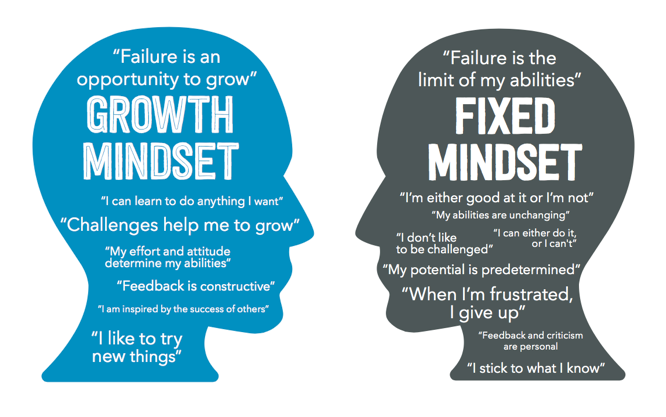
book-4


School Accountability Begins With the People Who Make the Rules: A Code of Conduct for Politicians and Test Makers

thumbnail_Screen Shot 2019-03-18 at 1.17.54 PM


Standardized testing is all about accountability.
 

We’ve got to keep schools accountable for teaching.
 

We’ve got to keep students accountable for learning.

 
It’s kind of a crazy idea when you stop to think about it – as if teachers wouldn’t teach and students wouldn’t learn unless someone was standing over them with a big stick. As if adults got into teaching because they didn’t want to educate kids or children went to school because they had no natural curiosity at all.
 

So we’ve got to threaten them into getting in linestudents, teachers: march!

 
But that’s not even the strangest part. It’s this idea that that is where accountability stops.

 
No one has to keep the state or federal government accountable for providing the proper resources.

 
No one has to keep the testing companies accountable for creating fair and accurate assessments.

 
It’s just teachers and students.
 

So I thought I’d fix that with a “Code of Conduct for Politicians and Test Makers.”

 
After all, that’s what we do when we want to ensure someone is being responsible – we remind them of their responsibilities.
 

You see, the state and federal government are very concerned about cheating.

 
Not the kind of cheating where the super rich pay off lawmakers to rig an accountability system against the poor and minorities. No. Just the kind of cheating where teachers or students try to untie their hands from behind their backs.

 
They’re very concerned about THAT.

 
When you threaten to take away a school’s funding and fire teachers based on test scores, you tend to create an environment that encourages rampant fraud and abuse.

 
So the government requires its public servants to take on-line courses in the ethics of giving standardized tests. We have to sit through canned demonstrations of what we’re allowed to do and what we aren’t allowed to do. And when it’s all over, we have to take a test certifying that we understand.
 

Then after we proctor an exam, we have to sign a statement swearing that we’re abiding by these rules to ensure “test security.”
 

This year, for the first time, I’m supposed to put my initials on the answer sheets of all of my students’ Pennsylvania System of School Assessment (PSSA) tests to prove….  I don’t know. That I was there and if anything went wrong, it’s my fault. Burn the witch. That sort of thing.

 
Even our students have to demonstrate that they’re abiding by the rules. Children as young as five have to mark a bubble on their test signifying that they’ve read and understood the Code of Conduct for Test Takers.
 

I still don’t understand how that’s Constitutional.

 
Forcing children to sign a legal document without representation or even without their parents or guardians present – it sure looks like a violation of their civil rights.
 

But that’s what accountability looks like when you only require certain people to be accountable.

 
So back to my crazy idea.
 

Perhaps the corporate flunkies actually designing and profiting off these tests should be held accountable, too. So should lawmakers requiring all this junk.
 

Maybe they should have to sign a “Code of Conduct for Politicians and Test Makers” modeled after the one the rest of us peons have to use to sign our lives away.
 

Here’s how it might look:


CODE OF CONDUCT FOR POLITICIANS AND TEST MAKERS:


Do…


-Listen to the complaints, concerns and criticisms of parents, teachers and students about the questions and assessments you’re creating.

 
Ask advice from education researchers and all stakeholders to ensure the questions you’re designing are backed up by psychological, neurological, sociological and all associated research on child development.

 
-Read each question you create carefully to ensure it is not simply multiple choice and instead assesses deeper understanding of concepts and skills. Also be sure that all open ended items and writing prompts allow for a multitude of answers and don’t simply ask the test taker to guess what the test maker is thinking.

-Be careful when writing your questions to make sure you have NOT left misspellings or grammatical mistakes in place that would unnecessarily increase confusion for test takers and thereby invalidate the results.

 
Check and double check to make sure you have created a fair and accurate assessment before giving it to students to evaluate their learning.

 
-Report any suspected cheating to a certified watchdog group and the media if you find any evidence or have any suspicion that anyone has created test items purely to enrich the corporation you work for or the privatization-testing-prison industrial complex.

 
-If you’re a lawmaker who’s voted for annual testing, take the assessment annually yourself to prove that it is an adequate test of basic student knowledge of which as a duly elected representative you should clearly pass. Publish your score prominently in the media to prove the test’s efficacy.
 

DO NOT…


-Have notes in your possession from special interests such as (but not limited to) the testing corporations, the publishing industry and/or the ed tech industry before, during or after voting for legislation that promotes the very same standardized testing and testing remediation on which these industries profit.
 

-Have any (approved or otherwise) electronic devises that tabulate previous test questions and prescribe reusing those that have resulted in answer curves consistent with previous tests thereby continuing the trend of selecting against students of color, the poor and other groups and/or subgroups.

 
-Share inside information about the test or previous test questions with anyone that you do not also make freely available to the public. It is not your job to create a remediation market and/or cash in on the testing apparatus you are creating.
 

-Dissuade students from talking with others about  questions after the test. They are human beings with rights. It is perfectly natural for them to talk and harmless for them to do so after a testing session is over.


-Take notes on individuals criticizing or opting out of testing with the purpose of punishing them for their dissent. This is a democratic process and you will welcome discussion, criticism and dissent.
 
-Use the bubbles in the answer booklet for anything at all. In fact, throw them away. It’s 2019. Surely we can find a better way to assess children than multiple choice questions answered by filling in bubbles on a sheet of paper with a number 2 pencil!

 
Conduct an online testing session unless you are 100% positive that the information input by the students and collected about the students is secure, will be secure and cannot be shared with advertisers, corporations or any other entity, and only with a certainty that this data will not be put in any database in a manner that could identify individual test takers or otherwise violate privacy laws.
 
-In fact, you know what? Don’t use standardized tests at all to assess student learning – especially not connected to high stakes. Instead rely on classroom grades and teacher observations for student assessment. Use indexes and audits of school resources to determine whether they are doing their best to teach students and whether lawmakers have done enough to ensure they are receiving fair and equitable resources.


What do you think? Would any of them sign off on this?


Like this post? I’ve written a book, “Gadfly on the Wall: A Public School Teacher Speaks Out on Racism and Reform,” now available from Garn Press. Ten percent of the proceeds go to the Badass Teachers Association. Check it out!
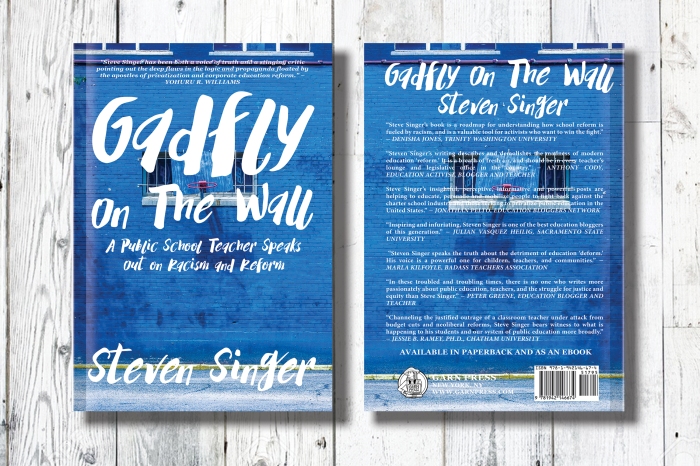
book-2

Pam Harbin Wants to Go From Pittsburgh School Board Watchdog to School Board Member

Screen Shot 2019-03-12 at 4.24.44 PM


My friend Pam Harbin is trying to undergo a startling metamorphosis.


She wants to transform from an education activist into a Pittsburgh School Director.


Now that Board President Lynda Wrenn is stepping down after 4 years, city voters in District 4 will have to decide whether Harbin can make the change. The election is on May 21.


Residents in parts of Squirrel Hill, Point Breeze, Shadyside and North Oakland already know Harbin as a fierce warrior for children’s civil rights, the plight of disabled kids and authentic public schools.

 
I’ve known Pam, personally, for years in my own role as an education activist. Though I don’t live in the city, I’ve participated in numerous collective actions to fight for the schools all our children deserve. And right beside me in every case – often in front of me – was Pam.


img_8279

 
I may not live in the district, but I wish I could vote for her. Harbin is an amazing leader with boundless energy, piercing intelligence, a deep knowledge of education policy, an advanced degree in finance and marketing, and an impressive track record of education justice achievements.

 
“I am deeply concerned for our system of public education,” she says. “The status quo isn’t working for all children. Thankfully, there are many people here in Pittsburgh and across the country who are fighting for investment in, and transformation of, our public schools. Unfortunately, their efforts are hindered by the well-funded organizations who fight for public school disinvestment, privatization, and for the elimination of teachers’ right to unionize.”


For the past 12 years, Harbin has been at the forefront of every major battle for the future of Pittsburgh’s public schools and the rights of its students.

 
Harbin was instrumental in pushing city school board directors to enact a suspension ban from Pk-2nd grade for minor non-violent conduct. She successfully fought to stop the district from implementing a physical restraint protocol that wasn’t trauma informed. She successfully fought against a policy that would have allowed school police officers to carry guns. She supported a successful Sanctuary Schools Policy for immigrant students. She also supported changes to the districts policies that would better welcome and include Pittsburgh’s LGBTQ students, including a change that allows students to use the bathroom that best fits their own gender identity.

 
Harbin and her coalition of local activists even made national news when they stopped the district from contracting with Teach for America, stopped the closing of 10 schools (after 23 were previously closed), pushed the board to hire a new Superintendent using an inclusive process that relied heavily on community input, and led the fight for a Community School Policy and the creation of 8 Community Schools.

 
Harbin has two challengers in the election: Anna Batista, a corporate consultant at Highstreet Consulting and Ashley Priore, a 19-year-old first year student at the University of Pittsburgh studying Business and English, who started a successful after school chess program for girls.

 
But despite facing a crowded field, Harbin has earned every organizational endorsement she has sought thus far, including the Allegheny County Democratic Committee, the Young Democrats of Allegheny County, the Stonewall Democrats and the Network for Public Education—an organization that frequently reposts my own writing as an education blogger and which is on the frontlines of education justice nationwide.


Pam-HarbinEndorsement-1


Harbin is one of the most experienced education leaders ever to run for school board in the city. She co-founded the Education Rights Network (ERN), a parent-led organization working for fully resourced, inclusive and quality education for students throughout Pennsylvania. The ERN is part of One Pennsylvania, an organization that unites low income and working class activists to tackle the fundamental economic justice and political problems of local communities.

 
“Our members are workers, students, parents, seniors, people with disabilities, and retirees who are excited to learn, collaborate, and build power,” she says. “We follow the money, confront the power, and make the change.”


ERN is a member of Great Public Schools Pittsburgh, a coalition of community, faith, and labor organizations working together to create sustainable public schools in Pittsburgh—an alliance which Harbin also helped to found in 2013. Great Public Schools is affiliated on the national level with the Journey for Justice Alliance, the Dignity in Schools Campaign, and the Alliance to Reclaim our Schools.

 
Harbin is also a member and past Co-Chair of the Pittsburgh Local Task Force on the Right to Education (LTF), a parent-majority organization that works with administrators of Pittsburgh Public Schools and community agencies to improve services for students with disabilities.

 
And she serves on the board of directors and was past President of Evolve Coaching (formerly Arts for Autism Foundation of Pittsburgh), supporting individuals with disabilities and their communities through education, employment, and the arts.

 
No one else in the race—and maybe in the whole city—has a resume like Harbin’s.

 
Harbin believes her years of leadership for and service to Pittsburgh students and families have provided her with the needed foundation for a transition from community leader to school board member. She has attended or streamed more than 2,000 hours of school board meetings. She has served on Pittsburgh Public Schools (PPS) district-wide advisory committees, including the Community Schools Steering Committee, Envisioning Educational Excellence Advisory Committee, Parental Involvement Policy Committee, Excellence for All Steering Committee, and the Special Education Delivery Model Advisory Committee. And through these many committees and organizations Harbin has helped more than 100 individual families secure an IEP or a 504 plan for their children—in part because she understands better than most the byzantine world of public school special education services.

 
No one is better suited to this position than Harbin. I literally wish we could clone her and have her fill every vacancy on the board. She is that qualified, that experienced, and that effective.

 
If this sounds a bit like a love letter, it kind of is.


Screen Shot 2019-03-12 at 4.23.29 PM

 
I have many fond memories of fighting the power alongside Pam Harbin. I remember organizing events through Yinzercation with Pam, even canvasing local candidates door-to-door with her and my (then) 9-year-old daughter. No matter what, you could always count on Pam to be there for children.

 
“When our public schools are strong, our children and community thrive,” she says. “We have many great Pittsburgh Public Schools, teachers, and programs. But, in each school, there are children who can’t excel because their individual needs have not been met. We must do better.”


“We must remove the barriers that keep all of our children from fulfilling their dreams. This requires transformational, sustainable change in policy and practice at the local, state, and national level.”


If anyone can make that change happen, it’s Harbin. As someone who has a degree in finance, who is an experienced negotiator and a proven coalition builder, she is uniquely qualified to do so from within the board as she has been successful doing so from outside of it.


She has an ambitious set of goals and priorities if elected:


-Strengthening relationships between all stake-holders with an emphasis on child wellness.


-Defining success beyond standardized test scores to include authentic education practices, addressing trauma, disengagement, hunger, the quality of school food programs, the condition of our buildings and bathrooms, and children’s need for exercise and play.


-Achieving smaller class sizes and a smaller ratio of kids to adults in each building with more teachers, counselors, social workers, paraprofessionals, nurses, librarians, and other staff that keeps the building functioning at its best.


-Restoring funding to art, music, physical education, and other programming that keep kids wanting to come to school.


-Stopping criminalization and over-policing of students, and stopping the use of ineffective punishments that keep children away from their learning and put them on the track to drop out, to jail, and to poverty.


-Intentionally recruiting, retaining, and supporting educators of color and those who identify as LGBTQ.


-Working to make teacher mentoring, new teacher induction, and professional development better to make the very best use of teachers’ time and address key gaps in preparation to teach the wide spectrum of students in the district.


-Making teacher evaluation fair and consistent, not based solely on test scores or value added models.


-Ensuring teachers (and all school staff) are well paid, treated fairly, and valued for the critical work they do for children every day.


-Protecting collective bargaining rights so teachers (and all staff) have a voice to improve their schools – because teaching conditions are students’ learning conditions.


-Investing in the proven Community Schools model and work collaboratively with community partners to bring resources to each school.


-Working at the state level to force our legislators to finally provide adequate, equitable, and sustainable funding for public education and stop efforts to dismantle public education through vouchers and other privatization schemes.


-Building coalitions to improve the flawed state Charter School Law – Charter Schools must have more accountability for the delivery of education to all students, including disabled children, English Language Learners, and kids who are homeless or who are in foster care.


angel and pam


I could literally go on about Pam for another 10,000 words. Easy.


But let me close with this.


Harbin began her journey as an education leader when she started advocating for her own children at their first elementary school—Liberty elementary in the Shadyside neighborhood of Pittsburgh. She found that she could make a difference for a few children at a time by throwing herself into volunteer work at the school.


But then she realized that if she wanted to make a difference for more than just a few children that she needed to work with others. Indeed, to do this work effectively Pam has had to work with people of different backgrounds, races, opinions and ideologies. She has had to listen to others, to compromise, to build bridges, and to prioritize common goals in each of her coalitions. In short, she gets things done.


And she’s been doing that for more than a dozen years.


Not because she has no choice. Not because anyone is paying her to do so. Not because doing so is bringing her any riches or fame.


But because it has been the right thing to do.


And that’s the best endorsement I can imagine.


NOTE: Special thanks to Professor Kathleen M. Newman who helped edit this article.


Click HERE to join Pam’s campaign!


Like this post? I’ve written a book, “Gadfly on the Wall: A Public School Teacher Speaks Out on Racism and Reform,” now available from Garn Press. Ten percent of the proceeds go to the Badass Teachers Association. Check it out!

thumbnail_IMG_8249

I Assign my Students Homework Despite Scant Research It Does Any Good

thumbnail_Homework_debate-e1445976586714

In academic circles the debate over homework rages on.

Does it actually help students learn or does it just cause undue stress and frustration for children and parents?

As a teacher and a parent, I see both sides of the issue.

In class, I assign my students homework every week – Monday through Thursday. Never on the weekends.

My daughter’s teacher does the same. So at home, I’m on the receiving end, spending hours with my little munchkin helping her get through mountains of assignments for her classes the next day.

Perhaps this is what they mean by the proverb – you reap what you sow. Except my daughter isn’t doing the homework I assigned. She isn’t in my class and we don’t even live in the district where I teach.

But it sometimes does feel like payback plodding through seemingly endless elementary worksheets, spelling words and vocabulary.

After a while, even I begin to question whether any of this junk does any good.

As a teacher, I know the research on the subject provides slim support at best.

In fact, the closest we have ever come to an answer is a reformulation of the question.

It really comes down to a matter of causality – a chicken and the egg conundrum with a side of sharpened pencil and crumpled paper.

If we look really hard, we can find a correlation between students who do their homework and those who get good grades.

The problem is we can’t PROVE it’s the homework that’s causing the grades.

It could just be that kids who excel academically also happen to do their homework. If we removed the homework, these kids might still get good grades.

So which comes first – the homework or the grades?

There has been surprisingly little research that goes this deep. And almost all of it is anecdotal.

Even the investigations that found a correlation did so in tight parameters – only in secondary grades and usually just for math.

Some wealthy districts have even reduced the amount of homework without seeing a subsequent drop in learning.

But nothing has been tested across socioeconomic divides or with any consistency and very little has been proven definitively.

This doesn’t mean that there’s no consensus on the matter.

Both the National Education Association (NEA) and the National Parent Teacher Association (NPTA) suggest educators assign no more than a standard of “10 minutes of homework per grade level” per night.

In other words, a first grader should have no more than 10 minutes of homework on a given evening, a second grader no more than 20 minutes, etc.

However, it appears that students – especially in the primary grades – are getting more work than these recommended maximums.

A 2015 study published in The American Journal of Family Therapy surveyed more than 1,100 Rhode Island parents with school age children.

Researchers found that first and second graders received 28 and 29 minutes of homework per night – almost double the recommended maximums. Even more shocking, Kindergarteners – who according to the guideline should receive no homework at all – actually were assigned an average of 25 minutes per night.

That’s a lot of extra time sitting and slogging through practice problems instead of spending time with friends or family.

Though I live in western Pennsylvania, this study is certainly consistent with what I see in my own home. My daughter is in 4th grade but has been assigned between 30 minutes and two hours of homework almost every weekday since she was in Kindergarten.

It’s one of the reasons I try to abide by the guidelines religiously in my own classroom. I give about an hours worth of homework every week – 15 minutes per day for four days. If you add in cumulative assignments like book reports, that number may go up slightly but not beyond the recommended maximums.

I teach 8th graders, so they should not be receiving more than 80 minutes of homework a night. If the teachers in the other three core classes give the same amount of homework as I do, we’d still be below the maximum.

I’m well aware that the consequences of giving too much homework can be severe.

A 2014 Stanford study published in the Journal of Experimental Education found that giving too much homework can have extremely damaging effects on children.

Still this isn’t exactly hard science.

The researchers used survey data to examine perceptions about homework, student well-being and behavioral engagement in a sample of 4,317 students from 10 high-performing high schools in upper-middle-class California neighborhoods. They also used open-ended answers to gauge the students’ views on homework.

They concluded that too much homework was associated with greater stress, reductions in health, and less quality time with friends and family.

So where does that leave us?

We have anecdotal evidence that excessive homework is harmful. And limited evidence that homework may increase academic outcomes in the higher grades in math.

Frankly, if that was all I had to go on, I would never assign another piece of homework ever again.

But I’m a classroom teacher. I don’t have to rely solely on psychological and sociological studies. Everyday in school is an opportunity for action research.

My classroom is a laboratory. I am a scientist. Nearly every decision I make is based on empiricism, hypothesis and testing the results.

Maybe X will help students understand Y – that sort of thing.

This applies to homework, too.

I’ve had more than 15 years to test what works with my students. I’m not saying my results would necessarily be reproducible everywhere, but they’re at least as scientific as the body of research we have on homework. In fact, within these parameters they’re even more rigorous.

So why do I give homework?

For several reasons:

1)  It prepares students for the higher grades.

Most of my career has been spent in the middle school teaching 7th and 8th grade. In my district, high school teachers give a lot of homework. I need my students to get used to that rhythm – homework being assigned and handed in – so that they’ll have a chance at being successful in the upper secondary grades. Too many students go no further academically than 9th grade. Giving homework is my way to help provide the skills necessary to avoid that pitfall.

However, this isn’t a sufficient reason to give homework all by itself. If high school teachers stopped assigning it – and maybe they should if we have no further reason to do so – then I’d have no reason to assign it either.

2)  It makes kids responsible.

There’s something to be said for getting kids used to deadlines. You need to know what work you’re responsible for turning in, getting it done on your own and then handing it in on time. This is an important skill that I won’t apologize for reinforcing. I’m well aware that some students have extended support systems at home that can help them get their assignments done and done correctly, but I design the work so that even if they aren’t so privileged, it should be easily accessible on an individual level. Plus I’m available, myself, as a resource if necessary.

3)  It’s good practice.

In school, we learn. At home, we practice. That pattern is necessary to reinforce almost any skill acquisition. I know it’s trendy to flip the classroom a la Khan Academy with learning done through videos watched on-line at home and practice done in school. But when Internet access in not guaranteed, and home environments often are the least stable places in my students’ lives, it makes little sense to try to move the most essential part of the lesson outside of the classroom. After all, it’s easier to find a place to do some low tech practice than it is to find space, silence and infrastructure for high tech learning.

Don’t get me wrong. We practice in school, too. But there’s only so many hours in the school day. I use homework in my language arts classes for a few select things: increased vocabulary, word manipulation, grammar, self-selected reading and the ability to do work on your own. I think it’s important for my students to increase their vocabularies. Having kids read a self-selected book (both inside and outside of class) helps do that. It’s also a benefit to be able to play with words and language, find words in a puzzle, recognize synonyms and antonyms, etc. Grammar may not be essential, but a rough knowledge of it is certainly useful to increase recognition of context clues and better writing skills. Finally, some students benefit from the simple opportunity to do an assignment by themselves without an adult or even a peer looking over their shoulder.

That being said, I think it is important that the homework I give be seen as something students can achieve.

I’ve had numerous co-workers tell me they don’t assign homework for the simple reason that their students won’t do it.

This isn’t a big problem in my class. Almost all of my students do the homework. Why? Because we go over it and they know it’s something they can do without too much difficulty.

I scaffold assignments building the difficulty progressively as we proceed through the year (or years). I make myself available for extra help. I accept late work (with a penalty).

And most of all – I stress that I’m not expecting anyone to be a genius. I’m looking for hard work.

I tell my students explicitly that anyone who puts in their best effort will pass my class – probably with a B or an A. And that’s exactly what happens.

Homework is a part of that equation. It demonstrates effort. And effort is the first step (the key, in fact) to accomplishment.

Do students complain about the homework?

Sure! They’re children!

I’d probably complain, too, if I were them. No one really wants to be given extra work to do. But it’s all part of the pattern of my classroom.

Students know what to expect and how to meet those expectations.

None of this makes me a super teacher. It certainly doesn’t put me on anyone’s cutting edge.

I’m just doing what educators have done for decades. I’m attempting to use best practices in my classroom with a full knowledge of the academic research and the pitfalls ahead.

I may assign homework, but I made sure to do my own before coming to that decision.


Still can’t get enough Gadfly? I’ve written a book, “Gadfly on the Wall: A Public School Teacher Speaks Out on Racism and Reform,” now available from Garn Press. Ten percent of the proceeds go to the Badass Teachers Association. Check it out!

book-3