Could This Be Gadfly’s End? Top 12 Articles From 2023 Read By Fewer Than Ever

Thank you, loyal readers, but this may be the end of Gadfly on the Wall.

Readership has fallen off to such a degree that I’m just not sure it’s worth continuing anymore.

That combined with increasing difficulties in my own life have made me truly question whether I should (or can) go on with it.

Don’t get me wrong. I will truly cherish every moment writing these articles, fighting for what I (still) think needs to happen in public education so that our children can be fairly treated and succeed.

There is so much I think most people don’t know about what happens in our schools and what could be done to make them better for children, families and the people who work there.

But after 9 years of pounding my head against the wall – well, it seems like the wall is winning.

This blog used to be read by at least half a million people each year. But social media – the prime distributor of this material – is not what it was a decade ago. In 2021, I had 222,414 hits. Last year it was 124,984. This year it was 73,121.

And much of those were for articles I’d written in years past. The highest three articles this year were not written in 2023. They were: The MAP Test – Selling Schools Unnecessary Junk at Student Expense ( 2,344) from Aug. 2022, When Good Students Get Bad Standardized Test Scores (1,775) from Oct. 2022, and Lesson Plans Are a Complete Waste of Time (1,544) from Sept. 2021.

Why keep putting out new content? It often feels like I’m saying the same thing over and over anyway – and not really being heard except by the same few people.

So I’m going to pause, take a moment and really think about things.

Heck! I might find out that I simply can’t quit because I’ve got too much to say. Then again, I may only write when something really important comes up that I absolutely have to let loose on.

Or this could be it.

I don’t know.

In any case, thank you so much for nearly 10 years of readership. I assume most people seeing this would have been here for the long haul.

It has been an amazing experience. I’m not sure what comes next, but for now I leave you with some outstanding moments from 2023.

All the best in the future!

-Steven Singer

The Gadfly on the Wall

12) Standardized Tests Hurt Asian-American Students, Too, Though Many Get High Scores

Published: March 27

Views: 243

Description: Asian-Americans – taken as a whole – score better on standardized tests than white Americans. But they are just as much victimized by testing as any other minority. The only difference is their success is held up as an excuse for upholding this deeply inequitable practice. It obscures that all Asians are not the same, certain types do not score as highly yet all are held to unfair expectations.

Fun Fact: This is a rarely explored or reported on aspect of the standardized testing phenomenon. I’m proud to have written on it despite its low readership.

11) Fact Checking Propel Charter Schools – Do They Live Up to Their Own Hype?

Published: Jan. 20

Views: 572

Description: The Propel Charter School network of 13 schools based in Pittsburgh, Pa, has advertisements everywhere proclaiming its virtues. However, this is just advertising. From test scores to safety to class size to teacher qualifications and many other factors, the charter chain comes up short again and again. Compared with authentic public schools in the same neighborhoods where these schools are located, Propel compares rather badly.

Fun Fact: I think this is incredibly important in the western Pennsylvania region. This information should be shared far and wide. It should at very least spark media investigations comparing Propel and authentic public schools so parents could make informed choices about where to send their children. But we never see that because Propel is a frequent advertiser. If the media provided this information – and didn’t just uncritically repeat propaganda – the media conglomerates would lose valuable advertising revenue. I am proud I could provide this public service.

10) Stay Woke, Public School Teachers

Published: March 12

Views: 588

Description: Being “woke” just means being alert to racial prejudice and discrimination – just knowing that these things exist and trying to recognize them when present. The way I see it, that’s well under a teacher’s job description. After all, who else will teach the true history that for more than 400 years in excess of 15 million men, women and children were the victims of the transatlantic slave trade? Who will teach the true history of the fight against human bondage and the struggle for equal rights? Who will teach about women’s fight for suffrage, equal pay, and reproductive freedom? Who will teach about the struggle of the individual to affirm their own gender identity and sexual expression? It’s up to us.

Fun Fact: Republicans are so anti-teacher, they’ve made the acquisition of knowledge part of the culture war and turned teachers into the enemy. This was just my way of pushing back a little.

9) Where Have School Libraries Gone?

Published: Aug. 25

Views: 681

Description: McKeesport Area School District – where I graduated and my daughter still attends classes – closed its high school public library for good. They gave away the books and turned it into a large group instruction room. And this kind of thing is happening all across the country. This is a problem because every book is not available on-line. In fact, the number and variety of books available digitally is much smaller than most public or school libraries typically have in their collections – if you’re not going to pay an additional fee. I can read most of the classics of world literature on the Internet, but anything that isn’t in the public domain is going to require me to pony up some dough. And the same goes for most respected resources.

Fun Fact: This was a truly depressing discovery but even more so was the response. Many people couldn’t grasp why libraries are even necessary today. Libraries used to be something society provided to every citizen just as a matter of course. Now our expectations are so low that we’ve nearly given up on this essential resource.

8) After School Satan Clubs Are Teaching Public School Districts an Important Lesson in Free Speech  

Published: May 17

Views: 691

Description: Thousands of districts in the US allow religious organizations and clubs to operate on public school property, especially after classes are over. So The Satanic Temple goes around proposing After-School Satan Clubs at the same districts – and all Hell breaks loose.  

Fun Fact: You want to let religion in the school house door, you have to let all of them in. You can’t pick and choose.

7) Congress May Raise Educators’ Minimum Salaries to Combat the Teacher Exodus

Published: Jan. 1

Views: 699

Description: A group of Congressional Democrats have proposed a national minimum salary for teachers. Rep. Frederica Wilson and Rep. Jamaal Bowman, (both former teachers) and six other members of the House have introduced The American Teacher Act establishing a minimum salary of $60,000 for all public school teachers working in the U.S. – the first legislation of its kind. The average starting salary of teachers nationwide was $41,770 in the 2020-21 school year, according to the National Education Association (which supports the bill).

Fun Fact: What a lovely thought! Still waiting on this to be approved. Any day now. Come on, Congress!

6) I am a Charter School Abolitionist, and You Should Be, Too 

Published: March 22

Views: 701

Description: Charter schools have been around since 1992. Though it seems like they’re everywhere these days, only 45 states and the District of Columbia allow these schools and even then they enroll just 6% of the students in the country – roughly three million children. The five states that do not have charter school laws are Montana, Nebraska, North Dakota, South Dakota, and Vermont. So after 32 years of trial and error, we’re left with a charter school system that does not get better academic results than authentic public schools (despite being given dramatic advantages in their charter agreements) and in many cases drastically fails by comparison. Not to mention all the fraud, malfeasance and ineptitude you get from removing regulations for any Tom, Dick or Harry who thinks he can open a school. Time to abolish these schools and end this failed experiment.

Fun Fact: This article really angered some folks. There are lots of people who hate the idea of charter schools in general but want to preserve anything that they think might give their own kids an advantage over others. Even if that is rarely the case! However, the gleam of the new has definitely worn off this concept and an increasing number of folks are open to limiting or ending this fiasco.


5) A Private Equity Firm, The Makers of the MAP Test, and an Ed Tech Publisher Join Forces

Published: Jan. 26

Views: 930

Description: A year after being gobbled up by private equity firm Veritas Capital, ed tech company Houghton Mifflin Harcourt (HMH) is acquiring K-12 assessment giant Northwest Evaluation Association (NWEA). Let me put that in perspective – a scandal-ridden investment firm that made billions in the wars in Iraq and Afghanistan bought one of standardized testing’s big four and then added the Measures of Academic Progress (MAP) test to its arsenal. This almost certainly means the cost of state testing is going to increase since the providers of the tests are shrinking. 

Fun Fact: This is the kind of story that will creep into our lives before we even realize what is happening. We’ll wonder why our districts and even entire states which rely heavily on the MAP test are buying as much HMH curriculum as possible. That way they can teach directly what is on their standardized tests. Bye, bye, tax dollars that could have been spent to educate kids!

4) Top 4 Things McKeesport Area School Directors Need to do to Extinguish the District Dumpster Fire

Published: Oct. 8

Views: 963

Description: My neighborhood district – McKeesport Area School District (MASD) – is going through tough times. School directors reneged on a teachers contract. Their business manager ran for the hills. And at a board meeting two school directors had their dirty laundry aired during public comments prompting one to call a White Oak Councilperson a homophobic slur. I had four suggestions to right the ship: (1) Pass a Code of Conduct for Board Members and Administrators, (2) Start Streaming Council Meetings Again, (3) Hire a New Reputable Business Manager, and (4) Pass a Teachers Contract with No Tax Increase.

Fun Fact: This article got a lot of notice in the neighborhood and some of my suggestions actually got done. The district hired a new business manager and will begin streaming new meetings. They’re also negotiating with teachers so fingers crossed.

3) Teach for America Promised to Fix the Teacher Exodus Before Anyone Even Noticed There Was One. Now It’s Choking on Its Own Failure

Published: Aug. 7

Views: 1,070

Description: Teach for America (TFA) was supposed to fix the teacher exodus by fast tracking non-education majors into the classroom where they would teach for a few years and then enter the private sector as “experts” to drive public policy. College graduates would take a five-week crash course in education and commit to at least two years in the classroom thereby filling any vacant teaching positions. Not only didn’t it work, it ended up making the situation worse. Now the organization created in 1990 is expecting its lowest enrollment in 15 years. TFA anticipates placing slightly less than 2,000 teachers in schools across the country this fall. I guess watering down what it means to be a teacher is even less popular than actually being an educator.

Fun Fact: People really hate TFA. The organization’s cred has gone down more than anything else in the education field – even more than charter schools. The fact that the emperor has no clothes here is painfully obvious.

2) Come Visit Your Wasted Tax Dollars at Commonwealth Charter Academy’s Waterfront Luxury Office Space

Published: Feb. 4

Views: 1,236

Description: If you go to the Waterfront in Homestead, PA, you’ll find the newest satellite office of Commonwealth Charter Academy (CCA) – the biggest cyber charter school network in the entire state. It’s one of 51 locations statewide. Only 27 states allow CYBER charters like this – schools that teach mostly (or entirely) distance learning through the Internet. Nationwide, Pennsylvania and Ohio have the largest cyber charter enrollment. In 2020-21, the Keystone State enrolled 61,000 students in 14 cyber charters – and roughly 21,000 attend CCA! There’s an authentic public school in this neighborhood, too – Steel Valley School District – right up the hill. It’s not located in nearly as trendy a spot though. Moreover, its four buildings were constructed around the 1970s and are crumbling down in places. But the new cyber charter school building looks like a palace!

Fun Fact: I don’t think most people who go to the Waterfront understand what the CCA location really is. To them it’s just another school, kind of sleek and modern looking. This article was my attempt to tell them. Thankfully it proved relatively popular, though the CCA people absolutely had a conniption. They couldn’t believe someone was criticizing their profitable business venture. This story brought the most trolls of any this year.

1) McKeesport Teachers Without a Contract Because of Bad Business Manager or Bad Faith School Board?

Published: Aug. 16

Views: 1,409

Description: McKeesport Area School District (MASD) botched a new teachers contract. So the question is – does it have a terrible business manager or a regressive school board? School directors and the teachers had agreed to a new contract, but the board tabled it in June after concerns that the western Pennsylvania district didn’t have the money to pay for moderate raises. Then the board skipped the entire month of July without a meeting as if the livelihoods of hundreds of employees don’t count. By the time classes were set to begin in August, the board was no closer to solving the problem. Board members mostly blamed the business manager who eventually quit. The situation still has not been resolved.

Fun Fact: This article hit the neighborhood like a nuclear blast. Everyone seemed to be talking about it. Someone in the neighborhood literally called me a “local legend” for having written it. I’m just glad it focused people’s attentions on the facts of the matter. If anything gets me to blog again, it will be writing more about the local stories that are so important but no one else is talking about.

Gadfly’s Other Year End Round Ups

This wasn’t the first year I’ve done a countdown of the year’s greatest hits. I usually write one counting down my most popular articles and one listing articles that I thought deserved a second look. Here are all my end of the year articles since I began my blog in 2014:


2022:

Top 11 Education Articles of 2022 Hidden by Facebook, Buried by Twitter, and Written by a Gadfly


2021:

Gadfly’s Most Outrageous Articles in 2021 That You May Have Missed or Been Too Polite to Share

Gadfly’s Top 10 Articles of 2021 – Shouts in the Dark

2020:

The Most Important Education Articles (By Me) That You Probably Missed in 2020

Outrunning the Pandemic – Racing Through Gadfly’s Top 10 Stories of 2020


2019:

Sixteen Gadfly Articles That Made Betsy DeVos Itch in 2019

Screen Shot 2019-12-28 at 3.51.03 PM


2018:

A Gadfly’s Dozen: Top 13 Education Articles of 2018 (By Me)

thumbnail_IMG_8445


2017:


What’s the Buzz? A Crown of Gadflies! Top 10 Articles (by Me) in 2017


thumbnail_Screen shot 2017-12-26 at 3.44.17 PM


Hidden Gadfly – Top 5 Stories (By Me) You May Have Missed in 2017
 

7fd6a56c2ffc7a03c9fd2f431a543e92


2016

Worse Than Fake News – Ignored News. Top 5 Education Stories You May Have Missed in 2016

 

ignoring-wisdom


Goodbye, 2016, and Good Riddance – Top 10 Blog Post by Me From a Crappy Year


screen-shot-2016-12-27-at-3-29-49-am


2015


Gadfly’s Choice – Top 5 Blogs (By Me) You May Have Missed from 2015


Screen shot 2016-01-02 at 11.01.09 PM


Who’s Your Favorite Gadfly? Top 10 Blog Posts (By Me) That Enlightened, Entertained and Enraged in 2015


Screen shot 2015-12-30 at 12.57.49 AM


2014


Off the Beaten Gadfly – the Best Education Blog Pieces You Never Read in 2014

 

Wonderfull illusion art painting


Top 10 Education Blog Posts (By Me) You Should Be Reading Right Now!

 

computer-people-png-300x202


Like this post?  You might want to consider becoming a Patreon subscriber. This helps me continue to keep the blog going and get on with this difficult and challenging work.

Plus you get subscriber only extras!

Just CLICK HERE.

Patreon+Circle

I’ve also written a book, “Gadfly on the Wall: A Public School Teacher Speaks Out on Racism and Reform,” now available from Garn Press. Ten percent of the proceeds go to the Badass Teachers Association. Check it out!

School Directors Shouldn’t Double Down on PA’s Keystone Exam Circus 

 
Ladies and Gentlemen, children of all ages, welcome to the Commonwealth of Pennsylvania’s Keystone Exam Circus! 


Here you will see children of 14 to 18-years-old perform death defying stunts just in order to graduate! 


They’ll jump through the flaming hoop of the Algebra I Exam! 


They’ll hop through the spiked hoop of the Literature Exam! 


And they’ll even bound through the nitroglycerine filled hoop of the Biology Exam! 


All this just so they can qualify for a diploma they’ve already earned by passing 12 years or more of coursework


Now isn’t that the greatest show on Earth!!!!!!? 


Apparently, some school directors must think so. Because they’ve decided to force all the students in their districts into the center ring.  


Because as stupid as the state law is – and it is very, very stupid – it doesn’t require all students to pass these tests to graduate. Kids don’t even have to take the tests if they don’t want.  


If they so choose, they may skip one or more of these ridiculous assessments in favor of an alternative


They can take a different test like the SAT, ACT, etc., achieve an industry-based competency certification, successfully complete a service-learning project, or finish an internship or cooperative education program, among other metrics.  


Sure! It’s a glorified fetch quest full of unnecessary complications and anxiety, but it’s better than being forced to pass a cockamamie fill-in-the-bubble corporate boondoggle


Unfortunately some school board members don’t see it that way.  


It’s not that they want to remove this senseless hurdle from students who have already proven they’ve learned the prerequisite skills to graduate. They still want kids to go on a wild goose chase, but they can’t stomach the idea of kids picking their own goose.  


To switch back to the metaphor with which I started this piece, they would rather students jump through the standardized testing hoop – the one made by Data Recognition Corp (DRC), the Minnesota corporation that writes the Keystone Exams and has been gorging on $533 million in Commonwealth tax dollars for the last decade. Not the hoop that pays the College Board or one that – God forbid – doesn’t make a huge corporation any richer.


Why?  


It’s beyond me.  


Maybe they think forcing students down the DRC path will help improve district academics.  


Maybe they love fill-in-the-bubble tests.  


Or maybe they just hate kids…  
 

I don’t know. 


But one thing is certain – the Keystone Exams are a costly mistake the state forces taxpayers to fund and kids to endure unnecessary gatekeeping and narrowed classroom curriculum.  


The whole mess started when the federal government reauthorized its education law formerly called No Child Left Behind (NClB). That law required kids to take standardized tests in middle school and once in high school. When Congress changed the name to the Every Student Succeeds Act (ESSA), it allowed more flexibility in the high school test. It didn’t just have to be a standardized test. The state could pick from all kinds of options. Pennsylvania chose one of almost everything including new standardized tests – the Keystones!

But the state legislature couldn’t decide whether to make it a graduation requirement until just last year.


Students who graduated in May (2023) were the first required to pass these exams or qualify with an alternate assessment, and the data is still out on its full impact. 


A report conducted by The Philadelphia Education Research Consortium estimated that only about one third of city students would meet graduation requirements by passing the Keystone Exams. Specifically, nearly 50 Philadelphia high schools had less than 25% of their students with Keystone proficiency rates sufficient to graduate. The report concluded that some additional percentage of students would graduate with alternate assessments but there was no way to estimate what percentage that would be. Would fewer graduate? The same? More? No one knows yet.  

Given this uncertainty, it’s difficult to fathom why school board members  would want to require tests that may stand in the way of students’ future success. 

This is especially true in districts serving poorer families. 

Kids in wealthier districts almost always do better on the Keystone Exams than those in poorer districts, according to a report by State Auditor General Eugene DePasquale and State Sen. Andy Dinniman

In fact, the report notes that of the 100 state schools with the highest scores, only five were located in impoverished districts —where the average household income is below $50,000. 


Why would any district – especially those serving students with lower socioeconomics – feed kids into such a system, especially when they don’t have to play that game? 


“The Department of Education itself said they [the Keystone Exams] are not an accurate or adequate indicator of career or academic readiness,” Dinniman said. “…These tests have faced opposition from almost every educational organization that exists.” 

He’s right. 

A 2019 report conducted by the state Legislative Budget and Finance Committee found that state educators (both principals and classroom teachers) overwhelmingly disapprove of the state’s standardized tests. That includes the Pennsylvania System of School Assessment (PSSA) tests given in grades 3-8 and Keystone Exams given in high school. Educators think these tests are ineffective, expensive and harmful to district curriculum and students. 

When it comes to the PSSAs, 76% of teachers and 67% of principals said the tests were bad assessments. 


For the Keystone Exams, 60% of teachers and 45% of principals said the tests were ineffective indicators of student achievement. 

 
Both principals and teachers said their curriculum had been narrowed to prepare students for PSSAs and Keystone Exams. Instead of going into more depth on regular classwork or learning new skills, the focus shifts to teaching to the tests. 


Taking the tests also eats up valuable class time. Administering the assessments takes between 5.7 to 8 days for each kind of test – the PSSA and the Keystone Exams, according to principals. 

In addition, the report details the cost of giving these tests. In fiscal year 2017-2018, the state Department of Education paid $42.17 million for these tests.  

This is part of a national trend

“Standardized tests and test preparation have subsequently become big business and that multibillion dollar business continued to grow since the enactment of NCLB and the subsequent enactment of ESSA. According to the Pew Center on the States, annual state spending on standardized tests increased from $423 million before the NCLB (enacted in 2002) to upwards of $1.1 billion in 2008 (to put this in perspective this reflects a 160 percent increase compared to a 19.22 percent increase in inflation during the same time period). A more recent study by the Brown Center on Education Policy at Brooking put the cost at upwards of $1.7 billion in 2011 related to state spending on standardized tests.” 


In just one year (2019) the state paid DRC $17.6 million to administer and score the Keystone Exams, said DePasquale. Between 2015 and 2021, the state spent nearly $100 million on the exams. And if we add in the PSSA, the corporation has collected $533 million from the Commonwealth over the last decade, DePasquale said


Why are some school board members so dead set on making sure we keep paying them?  


Federal law requires some kind of accountability measure before graduation whether it be a standardized test or something else. Why can’t the state simply use classroom grades for this measure? These are the daily assessment of student learning. How does it help students by inserting a corporation to make more money off of taxpayers?  


The whole process is a complicated, unnecessary circus with our kids in the role of trained monkeys spinning plates so big business can slurp up more of our money. 


I hope school directors will begin to understand this and not give in to the standardized testing spectacle. 


It’s time for someone to send the clowns back home. 


Like this post?  You might want to consider becoming a Patreon subscriber. This helps me continue to keep the blog going and get on with this difficult and challenging work.

Plus you get subscriber only extras!

Just CLICK HERE.

Patreon+Circle

I’ve also written a book, “Gadfly on the Wall: A Public School Teacher Speaks Out on Racism and Reform,” now available from Garn Press. Ten percent of the proceeds go to the Badass Teachers Association. Check it out!

Stop Trying to Hide S-E-X From Students in School – They Already Know All About It From the Internet 


“Mr. Singer, do you know what foot finder is?” 


“No,” I said to the 5th grade girl in the class where I was substitute teaching.  


Her friends and her giggled through an explanation of the Website where people post pictures of their feet for sexual gratification.  


*** 


Several days later, I tried to play a video on ancient Rome for my students, but before it even began the 8th grade class burst into laughter over the station identification. 


The video was produced by the British Broadcasting Company. The BBC.  


I looked at them in confusion until I heard some of them muttering about “Big Black Cock” – a class of porn video many of them had seen online identified with the same abbreviation. 


*** 


Yesterday I overheard some of the girls in my 7th grade homeroom talking. One girl was saying how she really liked a certain boy but wasn’t sure if she was ready.  


I smiled thinking about my first kiss. Then I heard her ask a friend, “Can you get pregnant from swallowing it?” 


This is middle school, people.  


Most of the kids here already know about sex. They know way more than I did at their age. But what they know is a jumble of images and details without the big picture.  


And here come Republicans with a bunch of copycat laws to make sure public schools do nothing to dispel children’s ignorance.  


In my home state of Pennsylvania, GOP lawmakers are taking action once again to hide any mention of S-E-X in schools throughout the Commonwealth. 


They’re sending Senate Bill 7 to Harrisburg, another piece of legislation pumped out by the American Legislation Exchange Council (ALEC) following in the fundamentalist footsteps of  fascist Florida.  


The latest bit of dark ages lawmaking would require parent authorization before schools from Pittsburgh to Philadelphia could provide students with materials that contain anything that might be considered sexually explicit.  
 
For kids in kindergarten through 8th grade, this even includes books with depictions of any kind of nudity.  


God forbid they saw a wee wee or a va-jay-jay! 


Fun fact: did you know that most public school students have genitals? 


It’s true.  


Many boys have access to a penis anytime they want – in their underwear. 


Many girls have access to even naughtier bits.  


And don’t even get me started on nipples! Under their shirts, the Devil’s raisins!  


Thankfully the GOP legislation only prohibits depictions of these things in books. Kids are still allowed to look at their own bodies.  


For now. 


The bill passed the Senate in a 29-21 vote nearly along party lines, with only one Democrat supporting the proposal. It faces an uncertain future in the House where Democrats hold a one seat majority and would also require the signature of Democratic Governor Josh Shapiro before becoming law. 


A similar measure was passed before Democrats took the House last year but was vetoed by the previous Democratic Governor Tom Wolf. 


If the new bill became law, districts would need to go through all books in their libraries and classrooms and list any that contain potentially sexual material. These would be books used in classroom instruction or available in the library that would then require parents to sign an opt-in form to grant permission for their children to access the books. 


The bill defines sexually explicit as showing “acts of masturbation, sexual intercourse, sexual bestiality or physical contact with a person’s clothed or unclothed genitals, pubic area, buttocks, or, if the person is a female, breast.” 


It is beyond ridiculous


Not only is it closing the stable door after the horse has bolted, but it’s a transparent attempt to quash any discussion of LGBTQ issues.  


What better way to discourage certain lifestyles than to legislate them out of existence?  


Schools can provide a safe place to discuss issues kids may be uncomfortable talking about with other adults. Books provide a safe way to mentally grapple with concepts and ideas of the adult world.  


For example, in my 7th grade classes, we read “Silent to the Bone” by E.L. Konigsburg. The book is about a middle school age boy who has gone mute after a questionable interaction with an adult.


There’s nothing very graphic in the text, but among other issues it does discuss physical attraction, sexual coercion and an erection.  


The book was approved by the school board and has helped foster many productive – if uncomfortable – conversations that help kids put their thoughts on these matters into words.  


In my daughter’s school, in 9th grade she read “Speak” by Laurie Halse Anderson. The book is about a high school girl dealing with being raped and the stigma of trying to talk about it.  


The text does a marvelous job of getting into the point of view of the girl and the trauma she endures while still being humorous, touching and empowering.  


Narratives like these are absolutely vital. They allow kids to relate to issues many of them have not directly experienced (but some have) and find a common language to discuss it. When we censor sex and sexuality and paint all of it as something dirty that can’t be talked about seriously, we do our children a major disservice.  


Conservatives complain that talking about these things grooms kids for greater sexual activity, but that’s nonsense. Kids grow into adults many of whom become sexually active. That’s positive and healthy. Meeting that in the safe places of the classroom and books helps kids prepare for adulthood without becoming victimized. 


But nothing grooms a victim more than the prohibition against talking about trauma.  


Finally, let’s consider the amount of ridiculous extra work this bill demands of schools and teachers. You really expect every educator with a classroom library to go through every book in it looking for anything that someone might consider sexually explicit!? Some people might think a book about a kid with two daddies is sexually explicit. You want teachers to become your perverted morality police!? Please! 


I dearly hope this bill has little chance of passing.  


It’s just another example of the Republican culture war against reality.  


It’s a way of insinuating that public schools are doing things they aren’t.  


No school is indoctrinating kids to be sexually active. But kids are coming into contact with sexually explicit material – usually on the Internet – and they have few tools to deal with it.  


Taking away public schools’ power to combat this ignorance is the worst way we could respond


Like this post?  You might want to consider becoming a Patreon subscriber. This helps me continue to keep the blog going and get on with this difficult and challenging work.

Plus you get subscriber only extras!

Just CLICK HERE.

Patreon+Circle

I’ve also written a book, “Gadfly on the Wall: A Public School Teacher Speaks Out on Racism and Reform,” now available from Garn Press. Ten percent of the proceeds go to the Badass Teachers Association. Check it out!

The Hidden Bias Against Male Teachers

No one wants to be the disciplinarian.

Not at the expense of being a teacher.

Often you need to do the one so you can do the other. After all, it’s difficult to teach a class that can’t listen or sit or refrain from arguing.

But that’s the role men are often given in the field of public education.

We’re the disciplinarians – especially of male students.

We’re consistently given more students with perceived behavioral issues, with more histories of suspensions, and we’re given less administrative support than female teachers.

It’s not fair at all.

Many of these kids are suffering from poverty, malnutrition and/or trauma. Putting them in a room with a male authority figure cannot solve all of their problems. Yet that’s what happens more often than not.

Male teachers are not seen as teachers first and foremost. We’re the enforcers of school rules. And it’s driving so many of us from the field or discouraging even more from entering it in the first place.

Consider this: teaching is a female dominated field.

According to the National Center for Education statistics, 77% of public school teachers were female and 23 percent were male in 2020–21 – the most recent year for which there is data.

It’s worse at the elementary school level where only about one in ten teachers (11 percent) are male. However, things are not much better at the secondary level where less than 4 out of 10 teachers (36 percent) are male.

And these statistics have remained roughly the same for at least a decade.

It’s not true just in the United States. Around the world men are underrepresented especially in the elementary school education workforce. So much so that a 2017 article in the Economics of Education Review wondered, “Are male teachers headed for extinction? The 50-year decline of male teachers in Australia.”

This has both an academic and social impact on male students who look to male teachers as role models. Without a positive male influence in the classroom, boys tend to see education as distinctly feminine and either out of reach for them or something that they should not even be trying to accomplish. Moreover, male teachers demonstrate ways that men can interact in a nonviolent way especially toward women. Their very presence can promote a new conception of masculinity that is gender equitable and solves problems through reason, agreement and team building.

Not to mention that the idea of male teachers as being primarily disciplinarians has no basis in fact. It is a gender stereotype as much as women being more nurturing and suited to childcare. In the field of education it only sets up expectations that men should be sent more students with behavioral issues and that their natural maleness will somehow bring about a solution.

Such attitudes are harmful to male teachers careers.


After all, too firm a focus on student discipline reduces teachers job satisfaction and the likelihood that educators will stay in the field until retirement.

Student misbehavior is a main source of teacher stress and burnout. When administrators give them fewer honors courses and/or fill their classes with more difficult students, it create a more hostile work environment for them and thus increases turnover.

Even expectations for male teachers’ own behaviors are different. While female teachers can be expected to have a variety of personas, men are expected to be strict, rule followers who will not let students get away with anything – and any deviation from this expectation can result in negative evaluations and lower administrative reviews.

The result is lower job satisfaction. Male teachers can feel frustrated due to so much of their time having to focus on discipline issues and so little of it being able to focus on actual instruction. This is especially true in districts where principals, deans and others do not properly support classroom disciplinary decisions.

When a classroom teacher sends a student to the office after numerous redirections and finds that the student is sent back almost immediately with only a warning, it can be incredibly demoralizing. As if the classroom teacher is incapable of a warning, himself!? Numerous steps have already been taken to correct the behavior before it was sent to the next step for higher order discipline of which the classroom teacher does not have the authority to conduct. When such support is lacking, the classroom teacher feels helpless and alone.

Then there’s the issue of being effective as a teacher. When there’s little time for anything but discipline, much instruction is lost. So many male teachers feel ineffective and are judged as being ineffective because of circumstances beyond their control. They were not set up for success but blamed for the situation they were given. And this results in higher turnover.

Corinne Moss-Racusin, an associate professor of psychology at Skidmore College and lead researcher, said: 

“There’s no evidence that men are biologically incapable of doing this work or that men and women are naturally oriented toward different careers. It’s a detriment to society if we keep slotting people into gendered roles and stay the course on gender-segregated career paths, regardless of whether those jobs are traditionally associated with women or men. That’s a powerful way of reinforcing the traditional gender status quo.”


In closing, I must admit this was a hard article for me to write.

Just broaching the subject feels like whining. Black teachers – especially black male teachers – experience the same problem to an even greater degree. And women teachers experience their own types of bias and sexism. However, none of that erases the unfairness male teachers endure often in silence until they’ve had enough and slink away from a career they once cherished like the sun, itself.


Like this post?  You might want to consider becoming a Patreon subscriber. This helps me continue to keep the blog going and get on with this difficult and challenging work.

Plus you get subscriber only extras!

Just CLICK HERE.

Patreon+Circle

I’ve also written a book, “Gadfly on the Wall: A Public School Teacher Speaks Out on Racism and Reform,” now available from Garn Press. Ten percent of the proceeds go to the Badass Teachers Association. Check it out!


Teach for America Promised to Fix the Teacher Exodus Before Anyone Even Noticed There Was One. Now It’s Choking on Its Own Failure

Teach for America (TFA) was a solution to a problem it helped create.

Educators have been leaving the profession for decades due to poor salary, poor working conditions, heavy expectations and lack of tools or respect.

So Wendy Kopp, when in Princeton, created a program to fast track non-education majors into the classroom where they would teach for a few years and then enter the private sector as “experts” to drive public policy.

These college graduates would take a five week crash course in education and commit to at least two years in the classroom thereby filling any vacant teaching positions.

Surprise! It didn’t work.

In fact, it made things worse. Apparently deprofessionalizing education isn’t an incentive to dive into the field.

That isn’t to say everyone who went through the program became a bad teacher. But the few good and committed educators that did come through the program could have done so even more successfully by graduating with a degree in education.

Now the organization created in 1990 is expecting its lowest enrollment in 15 years. TFA anticipates placing slightly less than 2,000 teachers in schools across the country this fall. That’s two-thirds of the number of first-year teachers TFA placed in schools in fall 2019, and just one-third of the number it sent into the field at its height in 2013.

Apparently fewer people than ever don’t want to train for four to five years to become lifelong teachers – and neither do they want to be lightly trained for a few years as TFA recruits, either – even if that means they can pass themselves off as education experts afterwards and get high paying policy positions at think tanks and government.

On the one hand, this is good news.

Watering down what it means to be a teacher is even less popular than actually being an educator.

On the other hand, we have a major crisis that few people are prepared to handle.

The US is losing teachers at an alarming rate.

After decades of neglect only made worse by the Covid-19 pandemic, we’re missing almost a million teachers.

Nationwide, we only have about 3.2 million teachers left!

According to the Bureau of Labor Statistics, there are 567,000 fewer educators in our public schools today than there were before the pandemic. And that’s on top of already losing 250,000 school employees during the recession of 2008-09 most of whom were never replaced. All while enrollment increased by 800,000 students.

Meanwhile, finding replacements has been difficult. Across the country, an average of one educator is hired for every two jobs available.

Not only are teachers paid 20% less than other college-educated workers with similar experience, but a 2020 survey found that 67% of teachers have or had a second job to make ends meet.

It’s no wonder then that few college students want to enter the profession.

Over the past decade, there’s been a major decline in enrollment in bachelor’s degree programs in education.

Beginning in 2011, enrollment in such programs and new education certifications in Pennsylvania — my home state— started to decline. Today, only about a third as many students are enrolled in teacher prep programs in the Commonwealth as there were 10 years ago. And state records show new certifications are down by two-thirds over that period.

To put that more concretely, a decade ago roughly 20,000 new teachers entered the workforce each year in the Commonwealth, while last year only 6,000 did so, according to the state Department of Education (PDE).

But don’t look to most of the so-called experts to solve the problem. A great deal of them are former TFA recruits!

Through programs like TFA’s Capitol Hill Fellows Program, alumni are placed in full-time, paid staff positions with legislators so they can “gain insights into the legislative process by working in a Congressional office” and work “on projects that impact education and opportunities for youth.”


Why do so many lawmakers hire them? Because they don’t cost anything.
 

Their salaries are paid in full by TFA through a fund established by Arthur Rock, a California tech billionaire who hands the organization bags of cash to pay these educational aides’ salaries. From 2006 to 2008, alone, Rock – who also sits on TFA’s board – contributed $16.5 million for this purpose.


This isn’t about helping lawmakers understand the issues. It’s about framing the issues to meet the policy initiatives of the elite and wealthy donors.


It’s about selling school privatization, high stakes testing and ed-tech solutions.


As US Rep. Alexandria Ocasio-Cortez (D-New York) said on a call with Justice Democrats:

“I don’t think people who are taking money from pharmaceutical companies should be drafting health care legislation. I don’t think people who are taking money from oil and gas companies should be drafting our climate legislation.”


I’d like to add the following: people taking money from the testing and school privatization industry shouldn’t be drafting education policy. People who worked as temps in order to give themselves a veneer of credibility should not be treated the same as bona fide experts who dedicate their lives to kids in the classroom.

 The whole point of this scam is to serve the needs of the privatization movement.

Investors want to change public education into a cash cow. They want to alter the rules so that corporations running districts as charter or voucher schools can cut services for children and use the extra cash for profits.

And that starts with teachers.

If we allow privatizers to replace well-prepared and trained teachers with lightly trained temps, we can reduce the salaries we pay instructors. We delegitimize the profession. We redefine the job “teacher.” It’s no longer a highly-trained professional. It’s something anyone can do from off the street – thus we can pay poverty wages.

And the savings from cutting salaries can all go into our corporate pockets!

This kind of flim-flam would never be allowed with our present crop of highly trained professionals because many of them belong to labor unions. We have to give them the boot so we can exterminate their unions and thus provide easy pickings for the profiteers.

This helps explain why so many plans to address the teacher exodus are focused almost exclusively on recruiting new hires while completely ignoring the much larger numbers of experienced teachers looking for the exits.

According to the National Education Association (NEA), it is teachers who are quitting that is driving a significant part of the current educator shortage. More teachers quit the job than those who retire, are laid off, are transferred to other locations, go on disability or die. And this has remained true almost every year for the last decade with few exceptions.

To put it another way, you can’t stop a ship from sinking if you don’t plug up the leak first!

But experienced teachers always have been the biggest obstacle to privatizing public schools and expanding standardized testing.

That’s why replacing them with new educators has been one of the highest priorities of corporate education reform.

After all, it’s much harder to try to indoctrinate seasoned educators with propaganda that goes against everything they learned to be true about their students and profession in a lifetime of classroom practice than to encourage those with no practical experience to just drink the Kool-Aid.

So it should come as no surprise that supply side policymakers are using the current teacher exodus as an excuse to remake the profession in their own image.

As Rahm Emanuel, Chief of Staff to President Barack Obama (Later Chicago Mayor) said:

“You never let a serious crisis go to waste. And what I mean by that [is] it’s an opportunity to do things you think you could not do before.”

If our policymakers really want to solve the problem, we’d spend at least as much time keeping the experienced teachers we have as trying to get new ones to join their ranks.

Research shows that teacher experience matters.

“The common refrain that teaching experience does not matter after the first few years in the classroom is no longer supported by the preponderance of the research,” Tara Kini and Anne Podolsky write in Does Teaching Experience Increase Teacher Effectiveness?

“We find that teaching experience is, on average, positively associated with student achievement gains throughout a teacher’s career.”

Their analysis is based on 30 studies published over the past 15 years and concludes:

1) Experienced teachers on average are more effective in raising student achievement (both test scores and classroom grades) than less experienced ones.

2) Teachers do better as they gain experience. Researchers have long documented that teachers improve dramatically during their first few years on the job. However, teachers make even further gains in subsequent years.

3) Experienced teachers also reduce student absences, encourage students to read for recreational purposes outside of the classroom, serve as mentors for young teachers and help to create and maintain a strong school community. 

The road to keeping experienced teachers isn’t exactly mysterious.

First, there must be an increase in salary. Teacher pay must at least be adequate including the expectation that as educators gain experience, their salaries will rise in line with what college graduates earn in comparable professions. This is not happening now.

In addition, something must be done to improve teachers working conditions. Lack of proper support and supportive administrators is one of the main reasons experienced teachers leave a building or the profession.

And perhaps most obviously, politicians have to stop scapegoating educators for all of society’s problems and even for all of the problems of the school system. Teachers don’t get to make policy. They are rarely even allowed a voice, but they are blamed for everything that happens in and around education.

If we want teachers to work with socially disadvantaged students, they must be provided with the institutional supports needed to be effective and steadily advance their skills. 

But this requires making education a priority and not a political football.

To do that, you would need to stop bankrolling organizations like TFA.

However, the billionaires funding school privatization and the standardized testing industry would never allow it.

So unlike our public schools, as fewer and fewer applicants come to TFA, there will always be money to keep it afloat.

Those who are causing the teacher exodus will never be the ones to fix it.


Like this post?  You might want to consider becoming a Patreon subscriber. This helps me continue to keep the blog going and get on with this difficult and challenging work.

Plus you get subscriber only extras!

Just CLICK HERE.

Patreon+Circle

I’ve also written a book, “Gadfly on the Wall: A Public School Teacher Speaks Out on Racism and Reform,” now available from Garn Press. Ten percent of the proceeds go to the Badass Teachers Association. Check it out!

Florida Attempting to Revive the “Happy Slave” Myth as Real History

Frederick Douglass was widely considered the most photographed American in the 19th century, though he never smiled in a single portrait.

He stares out of the frame with a look of quiet dignity, but never joviality or contentment.

The reason for this is simple – he didn’t want to perpetuate the myth of the “Happy Slave.”

Douglass was born into bondage until he fled to the North at age 20. He was considered a fugitive for nine more years until 1845 when English friends raised $711.66 to buy his freedom. He was already a famous orator, author and abolitionist.

But he knew the power of a picture and how a still image of him grinning ear-to-ear might be used by slaveholders to indicate that people of color enjoyed their own servitude.

Now 158 years after the Civil War, the Florida Department of Education is trying to perpetuate that same myth with its new guidelines for Black history curriculum in public schools.

Among other things, the guidelines suggest that American slavery was not all bad because enslaved people developed skills that “could be applied for their personal benefit.” 

The guidelines say that teachers’ lessons should “examine the various duties and trades performed by slaves (e.g., agricultural work, painting, carpentry, tailoring, domestic service, blacksmithing, transportation).”

This seems like a strange thing to emphasize about people who were engaged in back-breaking, life-shortening fieldwork on the cotton, rice and sugar cane plantations. Putting the focus on the various tasks they completed seems to make slavery little more than another type of “agricultural work” – just one of many “trades.”

But we’re losing sight of the fact that it was forced labor! That seems an essential feature – a defining characteristic!

So enslaved people might acquire skills in bondage that they did not previously possess. They could sometimes become expert artisans who might earn money to buy things.

But they did not own their own bodies! They were property! That limits your buying power in kind of a major way – not to mention your humanity!

No skills, nothing you could purchase could possibly make you cherish your lack of freedom.

In his autobiography, Douglass wrote:

“I have observed this in my experience of slavery, that whenever my condition was improved, instead of its increasing my contentment, it only increased my desire to be free, and set me to thinking of plans to gain my freedom.”

People like to tell stories of enslaved people singing on the plantations to ease their load and as proof of how much they enjoyed their work.

Of this, Douglass wrote:

“Every tone was testimony against slavery, and a prayer to God for deliverance from chains. The hearing of those wild notes always depressed my spirit, and filled me with ineffable sadness. . . . To those songs I trace my first glimmering conception of the dehumanizing character of slavery. . . . The songs of the slave represent the sorrows of his heart; and he is relieved by them, only as an aching heart is relieved by its tears.”

The new education guidelines in the Sunshine state are the latest since the Stop Woke Act was enacted in July 2022. The law says discussions about race must be taught in an “objective manner” and should not be “used to indoctrinate or persuade students to a particular point of view.” It also states that students should not feel guilty for actions taken in the past by people of their same race or origin.

Florida has taken broad measures to align its education standards with Gov. Ron DeSantis’s vision of a state “where woke goes to die,” which constrains teachers to discuss race, gender and sexuality, if at all, only in a way in which the Governor would approve.

The irony is that these guidelines show exactly why teachers need to discuss these subjects more openly and freely – why authentic history MUST be taughtnot some far right fairytale vision of the past.

Not only are these guidelines insensitive at best, state policymakers do not understand the actual record. They seem to believe in Rudyard Kipling’s “white man’s burden” to colonize, civilize, and Christianize non-Europeans – that slavery was a means of protecting and bringing Africans into the civilized era.

But this is pure nonsense – what’s worse it’s antiquated nonsense.

People who were kidnapped from Africa and forced into slavery across the Atlantic were not savages who were civilized by white slavers.

These were people with their own cultures, heritages and, yes, skills.

Most Africans who were abducted to North America were from West Africa and West Central Africa.

Each regional clan or group had professions or crafts such as weaving, basket making, potting, or iron working. They grew agricultural products, made textiles, manufactured goods, music and art. They made traditional foods and had unique customs.

These skills were used by enslaved people in the American South and beyond creating many industries in the US, but their contributions were most often erased.

Take Jack Daniel’s whiskey.

Around 1850, an enslaved man named Nathan “Nearest” Green taught a white man, Jack Daniel, the art of whiskey distillation – though it would take another 150 years before this would be publicly acknowledged.

Daniel was an orphan working as a day laborer on the farm of Dan Call, a Lynchburg preacher, grocer and distiller. Daniel took an interest in the distillery and pleaded to learn the trade. Call eventually introduced him to Green, who he called “the best whiskey maker that I know of,” according to a 1967 biography, Jack Daniel’s Legacy. He instructed the enslaved man to teach the young boy his distilling process.

Green taught Daniel “sugar maple charcoal filtering” (now called the Lincoln County Process), a universally accepted critical step in the making of Tennessee whiskey. This involves filtering the whiskey through wooden charcoal chips before being placed in casks for aging. Food historians believe this was inspired by similar charcoal filtering techniques used to purify water and foods in West Africa. The process imparts a unique flavor that set Jack Daniel’s whiskey apart from its competitors.

After the Emancipation Proclamation, Daniel bought Call’s distillery, renaming it after himself. More than seven generations of the Green family worked either for or with the Jack Daniel’s brand.

It’s important to note that these were skills Green already possessed. They were not learned in bondage. They were brought with him to this country.

Another example of this would be Black cowboys.

Despite the relative lack of Black faces in Hollywood Westerns, Black men made up about 1 in 4 cowboys in the old West.

Men of color handled cattle, tamed horses, worked ranches, encountered outlaws and starred in rodeos. It’s estimated that anywhere from 5,000 to 8,000 Black cowboys were part of the legendary cattle drives of the 1800s.

Many Black cowboys developed their skills in Africa – not America. People abducted from countries such as Ghana and Gambia were already experienced in managing large herds of cattle and their abilities with animals were highly desirable.

During the Civil War, some Texas ranchers who fought with the Confederacy left enslaved people behind to maintain their ranches.

Once again these were skills brought to this country just as the people possessing them were – by force.

The Cotton Gin offers a more contentious example.

Eli Whitney, a white man, is given credit for inventing the machine that revolutionized the production of cotton by greatly speeding up the process of removing seeds from cotton fiber.

However, there is much debate about where he got the idea.

Some historians believe Catherine Greene, a woman he was living with, devised the cotton gin and Whitney merely built it and applied for the patent, since at that time women were not allowed to do this. Others believe the idea was Whitney’s but Greene played an important role as both designer and financier.

However, according to the University of Houston’s College of Engineering, Whitney got the idea from an enslaved person known to history only as Sam. Sam’s father came up with a kind of comb to get the seeds out of a cotton boll. Whitney heard about the idea and simply mechanized it.

Whether Sam or his father were able to invent the cotton gin because of skills learned in America or Africa is hard to say, but they certainly didn’t profit off of them. If they were given any remuneration, it was nothing in comparison to Whitney.

Ironically, this device made the mass cultivation of cotton profitable. The result was that the enslaved population in the United States jumped from about 250,000 around the time of the Revolutionary War to around 4 million at the time of the Civil War.

Sadly, this is far from the only example of white people getting the credit for the intellectual work of enslaved people.

Jo Anderson came up with the idea or at least co-invented a reaping machine that revolutionized agriculture. But the credit went to Cyrus McCormick, the white man who owned him.

Cutting wheat in the early 1800s was slow, difficult and labor-intensive. Workers had to walk and cut the stalks with scythes, and laborers (also called “binders”) walking behind them gathered and tied the stalks into sheaves. The reaper was a device that sheared a wide path of grain. A worker would just need to rake the cut stalks off the machine’s bed onto the ground in ready-to-bind stacks.

In the 1850s, Benjamin Montgomery invented a steamboat propeller designed for shallow water. But since he was enslaved, his invention could not be patented in his name. His owners – future Confederate President Jefferson Davis and his brother Joseph – then tried to patent the propeller in their names but the request was denied since they were not the inventors. It went unpatented.

In 1831, a freed slave named Henry Boyd invented a “Tester Bed” that used wooden side rails. However, he had to let a white man, George Porter, patent his design for him since he could not do it, himself.

Free Black men were technically allowed to patent inventions but it could be incredibly difficult to do so. Often they ended up putting patents in the names of their white lawyers to give them a better shot at acceptance.

While some of these skills may have been learned in servitude, Black people rarely got to experience the rewards they deserved for using them.

It should be achingly obvious that being kidnapped and enslaved did not in the final analysis profit Black people even if they may have occasionally learned skills or earned a little money. Any suggestion otherwise is pure fantasy.

It is a political fiction that is being revived to stop any attempts at actual justice in this country.

Though they are no longer enslaved, African Americans still suffer from the after affects of our peculiar institution. Jim Crow laws continued until the 1960s and the Civil Rights Movement. Even then policies like red lining, discriminatory hiring practices, and over-policing of Black neighborhoods continued. Though progress has been made at each step along the way, Black people still suffer from institutional racism of which Florida’s new educational guidelines are a prime example.

Just in our public education system, children of color are more likely to find themselves in under-funded schools with fewer opportunities, narrowed curriculum and subjected to evaluation by biased standardized tests. They are targeted by fly-by-night charter schools which often have no elected school boards and worse academic records than neighborhood authentic public schools.

Florida’s new guidelines are another attempt to erase the problem without fixing it – to make even stating the racial realities impossible for teachers in the classroom and thus unlikely to be learned by anyone who doesn’t experience this type of inequity first hand.

As Douglass said in a speech in Cork, Ireland:

“The people of America deprive us [Black people] of every privilege—they turn round and taunt us with our inferiority!—they stand upon our necks, they impudently taunt us, and ask the question, why we don’t stand up erect? They tie our feet, and ask us why we don’t run? That is the position of America in the present time. The laws forbid education, the mother must not teach her child the letters of the Lord’s prayer; and then while this unfortunate state of things exist they turn round and ask, why we are not moral and intelligent; and tell us, because we are not, that they have the right to enslave [us].”

It’s no wonder he did not smile in his photographs.

I doubt his expression would change much, If he were alive today and presented with Florida’s idea of Black history.


Like this post?  You might want to consider becoming a Patreon subscriber. This helps me continue to keep the blog going and get on with this difficult and challenging work.

Plus you get subscriber only extras!

Just CLICK HERE.

Patreon+Circle

I’ve also written a book, “Gadfly on the Wall: A Public School Teacher Speaks Out on Racism and Reform,” now available from Garn Press. Ten percent of the proceeds go to the Badass Teachers Association. Check it out!

What Can Educators Learn from “Zelda: Tears of the Kingdom”?

So there I was, stranded at the bottom of a pit in the depths.

Shadows all around me, puddles of glowing purple gloom everywhere, the burbles of monsters slowly approaching…

No time to climb out – let’s build a hover bike!

And before you know it, I was zooming up and outta there!

Until I ran out of battery and went careening back to the ground. But I was out of the pit!

“The Legend of Zelda: Tears of the Kingdom” is a really great game – even for a nearly 50-year-old public school teacher like me.

As classes dwindled down in June and the summer approached, I noticed some of my students who had finished their work bringing the game in on their portable Nintendo Switch consoles.

Like me, they were enthralled by the level of choice the newly released game presents.

Rarely is there one answer to a problem.

The previous Zelda game in the series, “Breath of the Wild” (2017), threw the doors wide by giving players an open world to explore. No longer did you have to go down a linear path of which dungeons to complete in which order to defeat the bad guy. You could go in whatever direction you wanted, doing almost anything in whatever order you pleased.

The new game takes that even further. “Tears of the Kingdom” gives you three open worlds to explore and offers you the ability to build a wide range of contraptions to create your own solutions to problems.

For example, when I was stuck in that pit, I could have tried to climb out, I could have stood my ground, or I could have built almost anything imaginable that might help.

It’s that kind of increased choice that makes this game special and of particular interest to educators.

After all, this is something many of our students enjoy doing in their free time. The game sold 10 million copies in its first three days, becoming the fastest selling Nintendo game in history. That’s roughly $700 million and growing.

This doesn’t mean edtech companies should rush in to take over. Teachers and public schools are still the best way to educate students.

But the way I see it, if teachers can make learning more intrinsic and exciting, it’s a plus. These are my three major takeaways from the experience:

1) Power of the Sandbox

There are many types of video games.

Some are focused on action – such as shooting down the most enemies. Some focus more on puzzles to solve. Yet others are focused on building things like farms or homes or even civilizations.

Sandbox games are more self-directed. The idea is to create a space where gamers can do pretty much whatever they want. There’s no imposed objective. You’re given simple tools that you can easily see how to manipulate and you’re left to decide how to use them.

It’s based on the metaphor of leaving small children in a sandbox and just letting them play.

The most popular model is the game Minecraft. In it, players are thrust into a world made entirely of blocks that can be combined and recombined to build anything they want. It’s almost like a virtual world of LEGO bricks.

Players build structures like dream homes or space ships. Some tell stories. Some recreate real or imagined structures like the Eiffel Tower or the Death Star from “Star Wars.”

While there are also dungeons you can fight through to get more materials for your creations, the main emphasis seems to be on building.

Minecraft, in itself, is a very popular game and has been so since 2011.

However, “Tears of the Kingdom” takes this a step further by making the sandbox a tool in a world with a specific objective.

Like most Zelda games, you play as a character, Link, who has to save the princess, Zelda, and the kingdom of Hyrule from a bad guy, Gannondorf. The difference is that one of your tools to do that in this game is an ability to combine certain items together into structures.

These aren’t just blocks. They can be as complex as fans or lasers.

You can try to build a flying machine, but you have to make sure the fans or rockets or whether you’re using to propel them are pointing exactly where you want them, don’t consume too much battery, etc.

It takes design, testing, a knowledge of basic physics, etc.

For example, one of my first attempts at a plane kept flipping over. The reason – my fans were placed in opposite directions so that the lift given by one was counteracted by the other. Another device only went straight up. The reason – rockets only provide lift in one direction and quickly give out.

Players can easily get lost in building things. Sometimes that can seem way more interesting than the overall objective of beating the bad guy and winning the game.

However, there are certain game objectives that help you become a better builder – give you longer battery life, etc. So the game rewards you for progressing along each route – the story objective and the sandbox.

It’s a fascinating game loop that may keep this adventure fresh with replayability long after the main objective is complete.

So how does that impact education?

We know students like self-directed learning. If they are at all interested in the subject, giving them the power of following their natural curiosity can lead to amazing results.

This is often used in STEM lessons, where kids are given an objective and various tools and told to try to figure out how to achieve that objective. Who can build the highest tower that won’t fall over? Who can build the fastest race car on this track? Who can build a boat out of cardboard and duct tape that will float longest in a swimming pool? Etc.

However, it can also be done in other disciplines. You might study how the writer Langston Hughes communicates his message in a poem like “Mother to Son” and then ask students to do the same kind of thing in their own poem. You might read several stories and poems by a single author like Edgar Allan Poe and then ask students to find similarities between the author’s work and life.

In each instance, it’s not about just giving students tools and leaving them alone to discover what to do with them. It’s up to the teacher to provide a goal or a direction in which to go. The students take it from there.

The freedom of the sandbox by itself can be thrilling to some students in certain disciplines. But it can also be terrifying. Both aspects are necessary to reach the most students. When learning can be both intrinsic but directed, that’s when students get the greatest results.

We often pretend that students can do just as well without instruction – and there can be marvelous gains by some students in this way. However, teachers are there for a reason. We know the curriculum and many avenues to understanding it. We can point students many ways to understanding that they might not discover on their own.

Games like “Tears of the Kingdom” show the importance of both choice and direction.

2) Importance of a Learning Community

One of the things I was surprised about the most in “Breath of the Wild” and this new Zelda game is the way each created an online gaming community.

In particular with “Tears”, I found several YouTubers who focused on the game and made videos about nearly every aspect of it.

There were walk-throughs of various parts of the game: how to find different armor, defeat bosses and mini-bosses, build the best things, etc. However, there were also videos focused just on individual’s personal experiences with the game and even conjectures on the lore.

It is unclear how some of the elements from the first game impact the second that the developers kept intentionally vague. The community of players stepped in to fill in these gaps with theories that would put the best literary analysis to shame.

For example, the first game was full of Sheika Shrines. In the second game, the shrines were gone from most of the same locations. Instead there were new Zonai shrines in disparate locations. Why the discrepancy? There seems to be a growing consensus that the Sheika shrines were either dismantled by the Hyrulians and/or destroyed by Gannondorf when he reawakened to begin the current upheaval.

All of this really enhances the gaming experience. Not only do you feel less isolated, but you feel validated. You’re part of the act of making meaning out of the whole experience – listening to others, adding to the conversation, etc.

For example, there are certain enemies that just scared the heck out of me – chief among them were Gloom Hands. These are puddles of slime that come out of nowhere and shoot hands out at your character that can squeeze you to death in seconds.

Then I saw several videos where YouTubers explained how Gloom Hands freaked them out, too, (some complete with funny videos of them screaming when being ambushed by these creatures) and how to deal with them.

By watching these videos, I got to be much better at the game than I would have been otherwise. Some vloggers were so calm and reassuring when they said these sorts of creatures were easy to deal with and nothing to panic over that I felt way more confident. Moreover, if I did come across something that gave me trouble, I knew where to turn for help and guidance.

How important this is in the classroom!

Teachers often fill this role, but if we can create a community in the classroom, itself, that is even better. When students can discuss assignments and help each other through obstacles, that is so much better than the teacher being the only person in a position to help.

I try to foster as much discussion as possible in my classes through Socratic Seminars and informal groups. However, if you can get small group work to function while still being focused and productive, you can increase this aspect, too.

It’s all about the classroom you can create. You need shared values, empathy and students who understand how to best interact with each other. It’s easier said than done but a worthy goal for sure.

3) The Danger of Outside Assessment

This may be the most overlooked lesson from games to the classroom.

One of the biggest differences between the gaming and school experience is whether someone is looking over your shoulder or not.

In a video game, the player decides what he or she wants to get out of the experience. Do you want to simply beat the game? Or do you want to 100% it – achieve every goal the programmers put into it.

How long you take and how much you complete is up to you.

Sometimes the gaming community can contribute to this by giving opinions about which goals are worthy of completion, etc. However, whether you have achieved everything you want and the ultimate assessment of such things are really up to the individual.

Things are different in class.

On one level, students are assessed by their teachers. They grade assignments, give tests, etc. However, this is similar to the game, itself. When you fight Gannondorf, the game tells you whether you’ve beaten him and sometimes how well this is accomplished.

For example, there are a few different endings to the game that you can get depending on how well (or completely) you achieved certain objectives.

I think that’s similar to what the classroom teacher does. It’s part of the experience taken in context and (hopefully) well understood by the student.

The difference comes from forces outside the classroom.

Students don’t just achieve grades. They are also subject to standardized tests. These are assessments created out of context of the classroom, graded by hired hands, that are used to determine how well the curriculum has been learned.

They are artificial, biased and politically motivated.

Imagine if after playing a video game someone from the government had to come in and give you a score. Imagine if they made you play another (different) game to determine how well you did on this one. Maybe you feel like you aced “Tears of the Kingdom” but they said you didn’t do so well on “MarioKart” and thus failed the experience.

Outside assessment can kill intrinsic learning. It can make everything extrinsic – will this be on the test? What do I need to pass the test? Etc.

It would poison the video game experience as it poisons the classroom one.

We only allow it because of strange outdated ideas about learning and psychology. We pretend it’s all behaviorism – students given this stimuli should produce this response. We know that’s not how the human mind works, but politics and capitalism refuse to let us move beyond it.

Someone is making money off of this and we can’t disrupt that with real reform.

Perhaps if we looked more closely at how things function in the world of video games, we’d have a better idea of how to change things for the better in the classroom.

To better understand learning, we should look to the whole child – and the whole child’s experience outside of school.

This includes Zelda, Gannondorf and Link.


Like this post?  You might want to consider becoming a Patreon subscriber. This helps me continue to keep the blog going and get on with this difficult and challenging work.

Plus you get subscriber only extras!

Just CLICK HERE.

Patreon+Circle

I’ve also written a book, “Gadfly on the Wall: A Public School Teacher Speaks Out on Racism and Reform,” now available from Garn Press. Ten percent of the proceeds go to the Badass Teachers Association. Check it out!

Teaching Blind Obedience is Child Abuse

My daughter is not a little soldier.

She does not jump at my orders.

She can be rude, crude and badly behaved.

But I wouldn’t want her any other way – because the alternative is worse.

The same goes for my middle school students.

If you enter my classroom, you may find some children questioning my assignments.

“Mr. Singer, why can’t we chew gum in class?”

“Mr. Singer, why do you give so much homework?”

“Mr. Singer, why do we have to write a rough draft? Why can’t we just write a final copy?”

But you’ll notice my students almost always call me “Mr. Singer.” The reason is trust and respect.

Over time we’ve formed a relationship with each other where they’ve learned to respect me as their teacher and I have tried to earn that trust by treating them kindly and giving good reason for the things I tell them to do.

They are obedient (for the most part), but not BLINDLY obedient.

That may sound like splitting hairs but it’s one of the most important distinctions in education.

When someone knows WHY they’re doing something, they are an agent – they are responsible for their own actions. They are self-disciplined – not drones acting without thinking solely because they were told to do so.

That is incredibly important.

Think of what blind obedience does to adults.

American historian Howard Zinn famously put it this way:

“Civil disobedience is not our problem. Our problem is civil obedience. Our problem is that people all over the world have obeyed the dictates of leaders… and millions have been killed because of this obedience… Our problem is that people are obedient all over the world in the face of poverty and starvation and stupidity, and war, and cruelty. Our problem is that people are obedient while the jails are full of petty thieves… [and] the grand thieves are running the country. That’s our problem.”  

When I was a college undergraduate, I was unsure what to major in and I began my undergraduate work in psychology. Of all the things I learned in those early survey classes before changing course to writing, philosophy and (after a career in journalism) education, the lesson I’ll never forget is the groundbreaking 1961 study by Stanley Milgram, a Yale University psychologist.

Milford famously wondered how many people would willingly comply if a person in a position of authority told university students to deliver a 400-volt electrical shock to another person. His students predicted that no more than 3% of participants would deliver the maximum shocks. However, when he actually conducted the experiment, 65% delivered the maximum shocks.

During the experiment, each subject was asked to press a button that they believed gave increasingly high voltage electric shocks to the student on the other side of a wall if the student gave the wrong answer to a teacher’s questions. It should be noted that the students on the other side of the wall did not actually receive shocks, but the participants BELIEVED that they truly were shocking their fellow students by pressing the button.

Many of the subjects, while believing that the student was actually receiving shocks and hearing their protests and cries for mercy – including complaints of a heart condition – became increasingly agitated and even angry at the experimenter. Yet 36 out of 40 people, in turn, continued to do what they were instructed to do all the way to the end. Even when the student became silent when apparently receiving a shock from a switch labeled “danger: severe shock”, the subject continued based on the instruction that silence is to be read as a wrong answer.

This experiment (which would be highly unethical today) has become a classic in psychology, demonstrating the dangers of obedience.

Milgram wrote in 1974:

“Ordinary people, simply doing their jobs, and without any particular hostility on their part, can become agents in a terrible destructive process. Moreover, even when the destructive effects of their work become patently clear, and they are asked to carry out actions incompatible with fundamental standards of morality, relatively few people have the resources needed to resist authority.”

In fact, these experiments were inspired by history – specifically by the Nazi, Adolph Eichmann, who defended himself at the Nuremberg Trials by saying that he was simply following orders when he commanded the deaths of millions of Jews during the Holocaust.

This is what blind obedience gets us – a society of Nazis willing to do anything if told to do so by the proper authorities.

Parents and teachers are in a delicate situation then.

We’re responsible for guiding children into adulthood, and that often does require a measure of obedience. The question is how to get there without stripping away a child’s agency? How to get children to do generally what is necessary for their learning while still leaving their independence intact?

Let’s be honest – schools play an essential role in teaching obedience. It’s a critical life skill that helps children learn to follow rules and directions. Without obedience, adolescents would have difficulty following rules at home, at school, and in society.

One of the ways schools teach obedience is through rules and consequences. When children break rules, they face consequences such as being sent to the principal’s office, getting detention or being suspended. Such consequences help children learn that there are repercussions for their actions.

Schools also teach obedience through modeling. Teachers and administrators try to set good examples for children by obeying rules, themselves. When children see adults following the rules, they are more likely to do so themselves.

Finally, schools teach obedience through positive reinforcement. When children do the right thing, they are rewarded with praise, stickers, or other incentives. This positive reinforcement helps children learn that obedience is a good thing and that it is something that should be rewarded.

However, as children grow older, it is just as vital that teachers and parents not only foster obedience but also critical thinking about that obedience.

When a child questions a rule (and they will question it), we should not instantly meet that questioning with negativity or shock. We should calmly and rationally answer.

We should not get angry at questions, we should welcome them. Questioning should be a part of instruction because as educators and parents we should not want blind obedience. We should want trust and understanding.

As Albert Einstein said, “Peace cannot be kept by force. It can only be achieved by understanding.”

I was reminded of this when watching the recent documentary “Shiny Happy People” about the Duggar family. The brood of religious fundamentalist Christians made their TV debut in 2004, going on to become a household name with their TLC show “19 Kids and Counting,” presenting Jim Bob and Michelle Duggar and their ever-expanding household as a seemingly “perfect” family. 

However, behind the scenes, the family’s theocratic hierarchy led to sexual, emotional, and physical abuse, which was allegedly brushed aside by their church.

In 2015, it was revealed that the Duggars’ eldest son, Josh James, had molested numerous underage girls, including four of his siblings, when he was aged 14 to 15. These revelations led to the cancellation of “19 Kids and Counting.” In 2021, Josh was arrested after police discovered he had been receiving and was in possession of child pornography.

The family belongs to the Institute in Basic Life Principles (IBLP), a nondenominational Christian sect that serves as an umbrella organization for several ministries founded by minister Bill Gothard in 1961. 

According to the documentary, IBLP teachings require absolute obedience. Authority is distributed in various circles – God being the highest authority, followed by the family’s father, etc. Women are considered to be among the lowest forms of authority. In fact, two of Josh’s sisters who he had abused were even made to go on TV to speak in defense of their abuser. 

We hear a lot of propaganda from religious fundamentalists about how public schools groom students into being politically liberal. However, teaching blind obedience is the true grooming. It is setting people up to become victims of anyone who they perceive as having authority over them.

This is what made the Duggar children ready made victims for their own brother. It sets children up to be easily abused, gaslit, fooled and dominated.

And in doing research on this topic, I found many articles defending absolute obedience by reference to the Bible. The idea that authority is a hierarchy and we should simply follow the instructions of those above us in that hierarchy is as rampant as it is perverted.

Any discipline adults give to children should be in service of them eventually becoming independent and self-disciplined. That means being able to make independent choices about their own behavior without prompting from an adult.

There is a difference between being self-disciplined and being obedient.

A self-disciplined child will complete an action, regardless of who is watching. She will do the behavior because it is the right thing to do. In contrast, an obedient child may follow directions to please a parent, to avoid a consequence or to receive a reward. Being obedient is following directions or commands from an adult. It is exhibiting “good behavior” when an adult is present. Meanwhile, having self-discipline is making those choices without the presence or reminders from adults.

It may be tempting to see children marching in line or sitting calmly with their hands in their laps and consider that an ideal. But as children grow, we must learn to tolerate more frequent independence.

In fact, we must do more than tolerate it. We must cherish it.

The opposite is so much worse.


Like this post?  You might want to consider becoming a Patreon subscriber. This helps me continue to keep the blog going and get on with this difficult and challenging work.

Plus you get subscriber only extras!

Just CLICK HERE.

Patreon+Circle

I’ve also written a book, “Gadfly on the Wall: A Public School Teacher Speaks Out on Racism and Reform,” now available from Garn Press. Ten percent of the proceeds go to the Badass Teachers Association. Check it out!
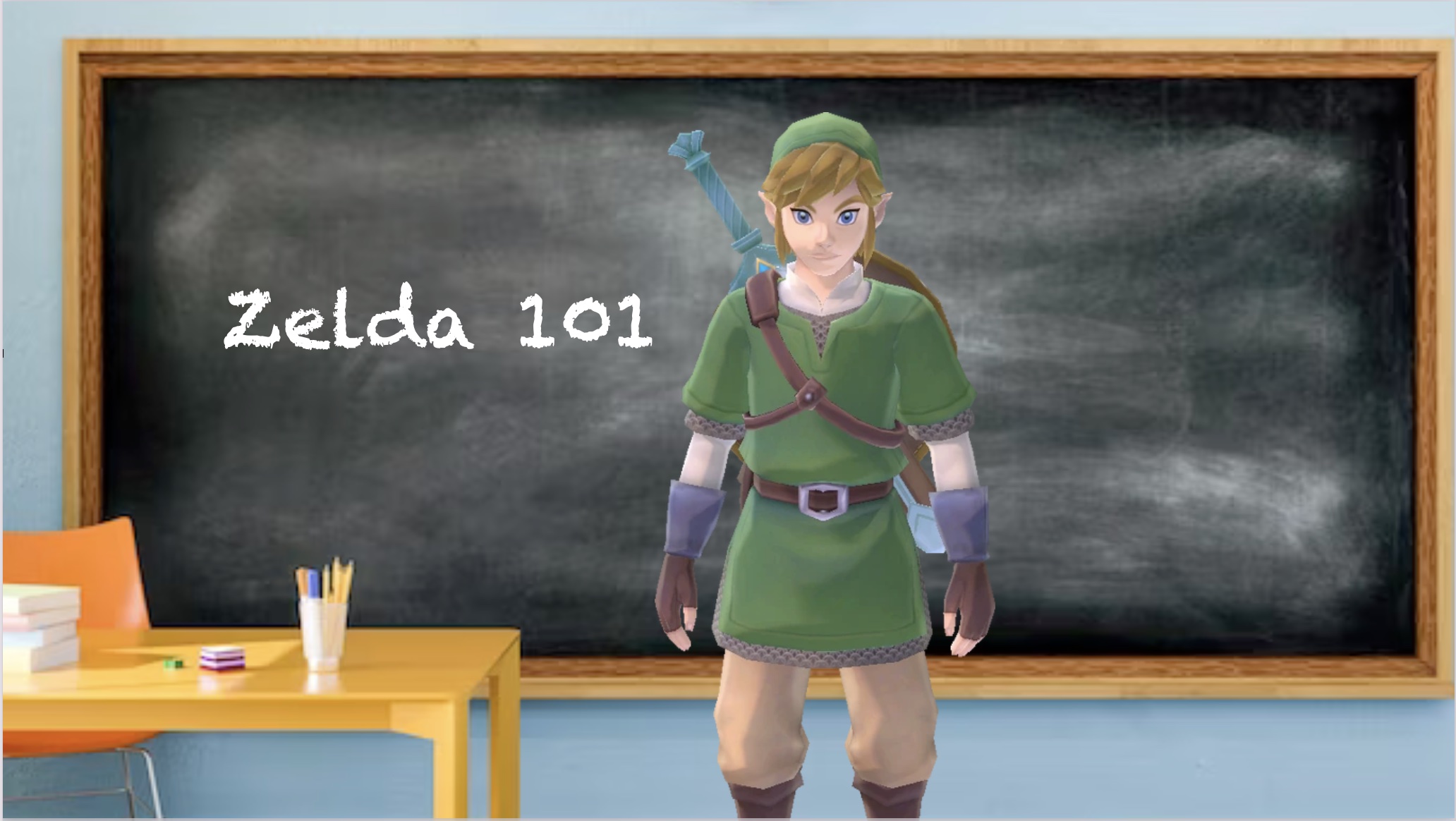
Efforts to Legalize Child Labor are the Next Logical Step After Corporate Education Reform

 
Standardized testing


Privatizing public schools. 


Defunding poor students.  


What’s next? 


Republicans across the United States have an answer – legalizing child labor


Since 1938 with the Fair Labor Standards Act, the Franklin D. Roosevelt administration restricted children younger than 14 from being employed, and put strict rules in place on when those younger than 18 may be employed, for how many hours and in what fields. 


Today Republicans across the country seem poised to repeal those protections. 


In Wisconsin, Republicans want to allow 14-year-olds to work in bars and restaurants serving alcohol. These kids aren’t legally allowed to drink the beverages they’re pouring but I’m sure that won’t cause any problems. Nooooo! 


In Ohio, the GOP majority legislature is trying to allow kids ages 14 and 15 to work until 9 p.m. during the school year with their parents’ permission. Those teens better make sure their homework is done before their work-WORK because there won’t be anytime before bed. (No matter that this is illegal under federal law. I guess the rest of the country will have to change to accommodate the Buckeye State.) 


Donald Trump’s former press secretary, nepo baby, and current Arkansas Gov. Sarah Huckabee Sanders signed a law in March eliminating permits that employers used to have to check to verify a child’s age and their parent’s consent before hiring a minor. Without this, it’s much easier for companies caught violating child labor laws to claim ignorance. But, hey, freedom. Right? 


And that’s not even counting measures to loosen child labor laws that have been passed in New Jersey, New Hampshire and Iowa. (Iowa Republicans were even going to let 14- and 15-year-olds work in dangerous fields including mining, logging and meatpacking, before coming to their senses!) In the last two years, GOP Lawmakers have proposed loosening child labor laws in at least 10 states, according to a report published last month by the Economic Policy Institute. Some of these bills became law and others were withdrawn or vetoed. 


Make no mistake. These are not aberrations. This is the thrust of the mainstream Republican party today. 


National business lobbyists, chambers of commerce and well-funded conservative groups such as Americans for Prosperity – a conservative political network – and the National Federation of Independent Business – an organization that typically aligns with Republicans – are backing the state bills to increase teen participation in the workforce.  


Meanwhile, child labor violations have increased by almost 70% since 2018, according to The Department of Labor. The agency is increasing enforcement and asking Congress to allow larger fines against violators. 


How did we get here? 


Corporate education reform. 


It’s like the old adage: if a frog is suddenly dropped into a pot of boiling water, it will jump out and save itself from impending death. But, if the frog is gently placed in lukewarm water, with the temperature rising slowly, it will not perceive any danger to itself and will be cooked to death. 


That’s what our national education policy has been for the last two decades. Lawmakers on both sides of the aisle have been slowly raising the temperature and now the water is boiling over. 


We’ve been increasingly treating children less as individual humans who are ends in themselves and instead as cogs in the machine, widgets, things to be molded and manipulated for the good of the economy. 


Here we have an entire industry of standardized testing that makes its money as a parasite on the public school system. The same multi-billion dollar corporations design the tests, grade the tests and then offer remediation when kids don’t pass the tests. It’s a classic captive market where the provider has no incentive but to perpetuate the conditions that increase its bottom line. Students aren’t the consumers of this product – school districts are – and they have no choice but participate. It’s encoded in federal and state law. They have to play along and are, themselves, judged by the results of that compliance. 


Then we have privatization – charter and voucher schools. These are institutions ostensibly set up to educate students, but unlike authentic public schools, these organizations are allowed to turn a profit. Some of them get to hide behind the label “non-profit” but the result is the same. And once you allow financial gain of this sort into the system, that’s what it’s all about. Kids become a means to an end, not an end in themselves.  


And let’s not forget how all of this enters into the finances of public schools. Unlike most countries across the globe, education in the US is supported primarily by local taxes. So rich neighborhoods invariably have robust public schools that provide students with all the resources they need. And poor communities have impoverished schools where students get only whatever parents and teachers can scrounge together. In this country, children are not a worthy cause all by themselves – we only care about them if they’re OURS


The entire apparatus of corporate education reform is focused around jobs. In this ideology, the function of school is to prepare students for employment – that is all. It is not to make students good citizens, knowledgeable voters or even fully realized human beings. Rich kids are prepared for the jobs that will keep them rich. Poor kids are prepared for the service industry – so the rich have someone to wait on them in restaurants and stock grocery store shelves. 


The fact that the Covid pandemic has reduced adults willing to continue working in these fields for such low wages has only motivated the wealthy and powerful to fill those vacancies with younger-and-younger people who won’t understand how much they’re being taken advantage of and won’t complain. 


For example, take this quote from Rex Tillerson, former ExxonMobil CEO

“I’m not sure public schools understand that we’re their customer—that we, the business community, are your customer. What they don’t understand is they are producing a product at the end of that high school graduation. Now is that product in a form that we, the customer, can use it? Or is it defective, and we’re not interested? American schools have got to step up the performance level—or they’re basically turning out defective products that have no future. Unfortunately, the defective products are human beings. So it’s really serious. It’s tragic. But that’s where we find ourselves today.” 


We find the same rhetoric on the left as well as the right. 


The Center for American Progress (CAP) – a so-called liberal Washington think tank lead by Barack Obama  and Hillary Clinton minions like John Podesta – repeat the same conservative talking points. For example, CAP published and article called “Preparing American Students for the Workforce of the Future” which read like a companion piece to Tillerson’s diatribe. They did concede that being ready for “civic life” is important as well as being “career ready,” though. 

So far, few Democrats have taken the next logical step along with their Republican colleagues.

And they ARE colleagues. Don’t let the hyped up media culture war distract you. When you take out social issues, America’s two parties are as different as milk chocolate and dark chocolate. They’re the same basic thing separated only by intensity and bitterness.

Republicans are ready to undo child labor protections. Democrats will only take away kids’ rights at school.


This is what you get when you dehumanize students. This is what you get when you signal it is okay to be a predator on student needs to help fulfill the needs of the economy. 


Money comes first. Students – children – are a distant second.  


So finally the chickens of corporate education reform are coming home to roost. I don’t think we’re going to like the eggs. 


Like this post?  You might want to consider becoming a Patreon subscriber. This helps me continue to keep the blog going and get on with this difficult and challenging work.

Plus you get subscriber only extras!

Just CLICK HERE.

Patreon+Circle

I’ve also written a book, “Gadfly on the Wall: A Public School Teacher Speaks Out on Racism and Reform,” now available from Garn Press. Ten percent of the proceeds go to the Badass Teachers Association. Check it out!
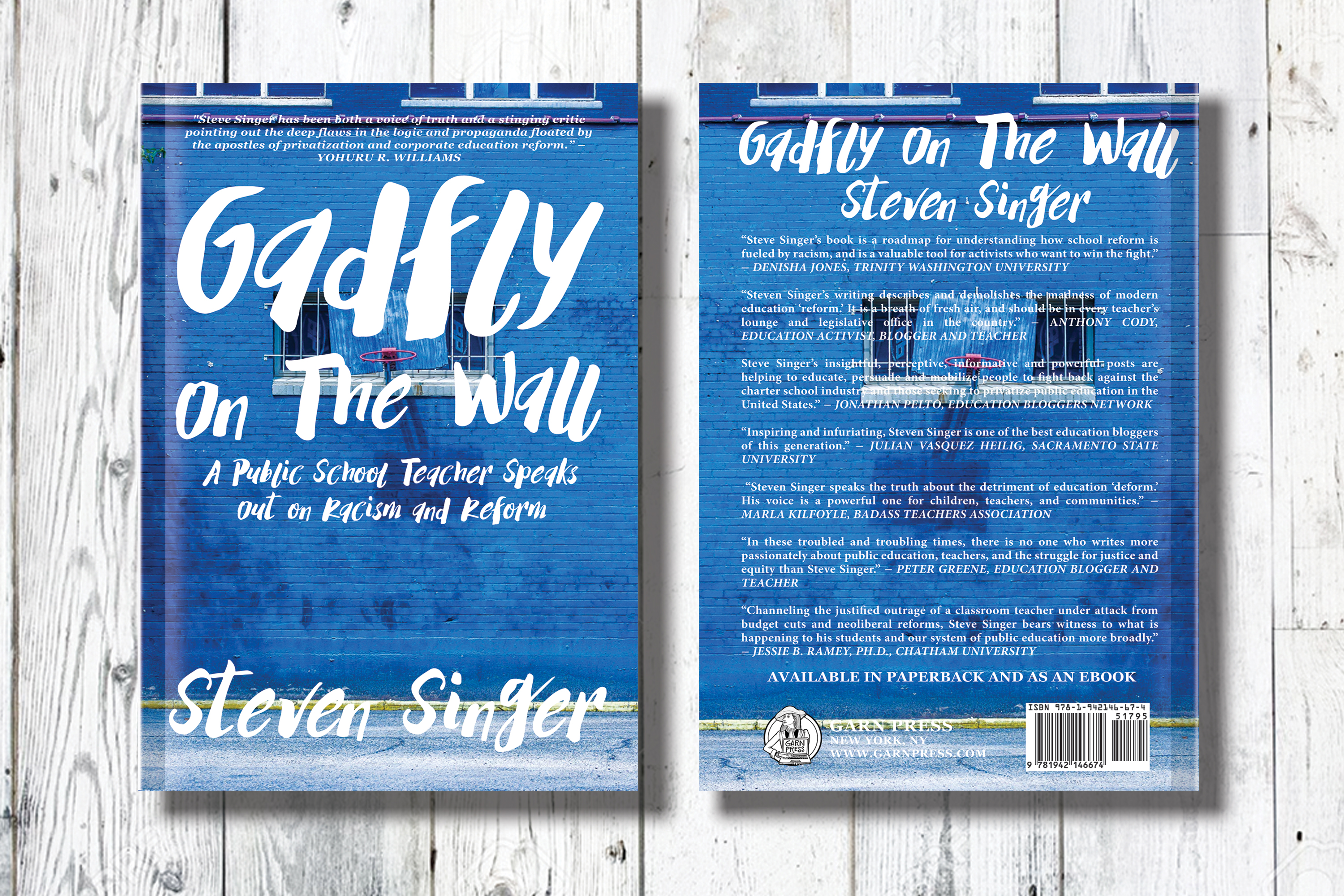
Student Projects are Better Than Tests 


The class was silent. 


Students were hunched over their desks writing on paper, looking in books, consulting planners.  


I stood among them ready to help but surprised at the change that had overcome them.  


Maybe 10 minutes before I had heard groans, complaints and the kind of whining you only get from students at the end of the year.  


“Do we have to keep doing work!?” 


“Can’t we just watch a movie!?” 


“Ms. X- isn’t doing anything with her students!” 


And then I dropped the bomb on them.  


We had less than 3 weeks left in the school year. We had just finished our last text. In 8th grade that was “To Kill a Mockingbird” by Harper Lee. In 7th grade it was “Silent to the Bone” by E.L. Konigsburg.  


Now was the time for the infamous final project.  


Some kids asked me about it at the beginning of the year having heard about it from a brother or sister who had already graduated from my class. 


“Mr. Singer,” they’d say, “Is it true you give a 1,000 point project at the end of the year?” 


I’d laugh and ask who told them that, or if that sounded credible.  


“Do you really think I’d give a 1,000 point project!?” I’d say in my most incredulous voice, and they’d usually laugh along with me.  


But some of them still believed it.  


That was nearly 9 months ago. Yet it all came flooding back when I passed out the assignment sheet.  


In the world of education there are few truths more self-evident than this


Projects are better than tests. 


Just think about it for a minute. 


On the one hand you have a project – an extended group of related assignments demonstrating learning and culminating in a product of some sort – a paper, a poster, a movie, a presentation or some mix of these. 


On the other hand you have a test – a quick snapshot of skills taken out of context.  


Which do you think is the better assessment? 


Imagine a musician.  


You could have her answers questions about notation, rhythm and theory…. Or you could just have her play music.  


Which would best demonstrate that she can play? 


It’s the same with other subjects.  


Take a test on reading – or actually read.  


Take a test on writing – or actually write.  


Take a test on math – or actually….  


You get the picture.  


And so did my students.  


I place a huge emphasis on writing in my English Language Arts classes. In 8th grade, my students have already written at least a dozen single paragraph and two multi-paragraph essays. So they’re pretty familiar with the format. I try to get them to internalize it so that it’s almost second nature.  


So when the final project comes along, it’s really a culmination of everything we’ve done.  


In Harper Lee’s book, there is the symbol of the mockingbird: 


“Your father’s right,” she said. “Mockingbirds don’t do one thing but make music for us to enjoy. They don’t eat up people’s gardens, don’t nest in corncribs, they don’t do one thing but sing their hearts out for us. That’s why it’s a sin to kill a mockingbird.” 


We already discussed how several characters in the book could count as mockingbirds – Tom Robinson, Atticus Finch, Boo Radley, etc.  


So I have students write about mockingbirds in all of the texts we’ve read this year. That includes “The Outsiders” by S. E. Hinton, “The Diary of Anne Frank” and several short stories.  


In 7th grade, we’re at a slightly different place. 


At the end of the year, students have written nearly as many single paragraph essays but no multi-paragraph ones yet. I use the final project to introduce them to the concept and explain how it’s the culmination of what we’ve done before.  


Students write about characters that they like from all the stories we’ve read throughout the year. These would be characters from texts as diverse as the one by Konigsburg, “The Giver” by Lois Lowery, “A Christmas Carol” by Charles Dickens and several short stories.  


As projects go, it’s kind of narrow.  


In the past, I’ve had students make movies together interviewing various characters from their texts. I’ve had them design posters extolling various aspects of the Civil Rights movement. I’ve had them design graphics explaining the difference between internal and external conflict.  


But this is the end of the year – time to keep it simple.  


There’s actually a lot of research supporting this kind of assessment. 


Two separate studies were published by Lucas Education Research with Michigan State University (MSU), the University of Southern California (USC), and the University of Michigan. Researchers took either high school students or third graders and put them through a Project Based Learning (PBL) curriculum. 


The high school experiment conducted by MSU and USC involved 6,000 students in science and humanities from 114 schools about half of which were from low-income households. Students who were taught Advanced Placement (AP) U.S. Government and Politics and AP Environmental Science with a PBL approach outperformed their peers on AP exams by 8 percentage points in the first year and were more likely to earn a passing score of 3 or above, giving them a chance to receive college credit. In the second year, the gap widened to 10 percentage points. One key finding of the study, which included large urban school districts, was that the higher scores were seen among both students of color and those from lower-income households. 


The experiment with third-graders produced similar results. Students from a variety of backgrounds in PBL classrooms scored 8 percentage points higher than peers on a state science test. These results held regardless of a student’s reading level. 


In some ways, this should be obvious.  


When you put assessment in context it is more accurate. When you divorce it from its academic context (as you do with tests) it’s more abstract and less accurate. 


The problem is one of time and ease of execution. 


Put simply – tests are easy to give and grade. Projects are difficult.  


Even designing a good project can take lots of trial and error. Tests are often prepackaged and easy to design – you just have questions clustered around whatever skills you were hoping students would learn. 


It is very difficult for teachers to design entire courses with projects at every step of the way. Some might say it isn’t even desirable since such a course would probably not be able to cover as much material as traditional curriculum and it is generally preferable to use different modes of assessment in a single course. Let’s not forget that some students excel at tests and would suffer academically if the only kind of assessments were project based.  


My personal philosophy is one of moderation. Use projects when you can and when appropriate – but not always. And if you’re going to test, a teacher created assessment is orders of magnitude more valuable than a standardized one. 


And in terms of projects, the best is at the end. What better way to demonstrate the cumulative learning of a course than through a cumulative project?  


My students seem to agree. 


After the initial anxiety of such a hefty project, my kids in both grades settle down pretty quickly and get to work. I think they find the project comfortable because they’ve been exposed to almost every part of it before. This just brings it all together under one project.  


It’s the opposite of learned helplessness. Students already know they can do it. All they have to do is step up and get it done. 


That’s also why I make the project worth such a huge amount of points.  


I already double points for the last grading period. Doing that and having such a hefty final project sends the message to kids that they can’t slack off now. The work they do in the closing days of school will have an outsized impact on their grade. If kids care at all about that – and most still do in middle school – they’ll make the effort.  


It also helps fill the last few days and weeks with a focus on process. Nothing has to be memorized. Nothing is beyond anyone’s ability. We’re going to work together – each student and me – to make sure the final project gets done.  


Usually they accomplish it with flying colors.  


It’s something they often remember and pass on in legend to their younger siblings who bring it up in hushed tones when they enter my classroom for the first time. 


Like this post?  You might want to consider becoming a Patreon subscriber. This helps me continue to keep the blog going and get on with this difficult and challenging work.

Plus you get subscriber only extras!

Just CLICK HERE.

Patreon+Circle

I’ve also written a book, “Gadfly on the Wall: A Public School Teacher Speaks Out on Racism and Reform,” now available from Garn Press. Ten percent of the proceeds go to the Badass Teachers Association. Check it out!