Charter School Cheerleaders Elected to Leadership with PA House Dems

img_4466-1484759518-4360


Democratic gains in the midterm elections were a repudiation of the policies of Donald Trump.


Yet holding nearly the same views as Trump’s Education Secretary Betsy DeVos earned two Pennsylvania state representatives high leadership positions with House Democrats.


Rep. Jordan Harris, D-Philadelphia, was elected minority whip – the second highest position after floor leader. Rep. Joanna McClinton, another Philadelphia Democrat, was selected chair of the Democratic Caucus.


Even after making gains in the election, Democrats did not get control of either the state House or Senate from Republicans, but kept control of the Governor’s mansion.


New leadership positions will last for two years, but have many scratching their heads.


Both Harris and McClinton are staunch supporters of charter schools over and above traditional public schools just like DeVos, a Republican megadonor before being selected for Trump’s cabinet.


Harris and McClinton support school vouchers – just like DeVos – if labeled opportunity scholarships. In their relatively short time in Harrisburg they’ve pushed for charter school expansion and even state takeovers of struggling schools serving mostly children of color.


Such strong neoconservative values might make it hard to tell which party the two belong to if it weren’t for one thing – the color of their skin.


Both Harris and McClinton are African American.


In fact, McClinton will make state history as the first woman of color in her leadership position. Harris will be the first black whip since Rep. K. Leroy Irvis in the 1970s.


Even so, their views put them in direct opposition with many civil rights leaders.


The National Association for the Advancement of Colored People (NAACP) and Black Lives Matter have called for a moratorium on new charter schools. Journey for Justice (J4J), a nationwide civil rights collective made up of more than of 38 organizations of Black and Brown parents and students in several cities including Philadelphia and Pittsburgh, has gone even further demanding more community based traditional public schools.


Jitu Brown, national director of J4J, put it this way:


“Who are these bankers and why are they concerned about my school? Isolation is defeat. Privatizers are not reformers. They are colonizers and settlers. We do not negotiate with our executioner. We need to kill the privatization movement. We have worked in silos and adopted the values of our oppressors. You want a seat at the table, but you are on the menu too. We have more in common with each other than any of us do with our oppressors. People will vote against their interest with hatred that they learned centuries ago – but we need to be different. We cannot adopt the language of our oppressors. We don’t have failing schools, we have been failed.”


Perhaps Harris and McClinton’s support has something to do with campaign finance. Both have accepted large sums from the charter school industry.


Harris’s 2012 campaign was funded 58% by school privation business interests – Students First PAC and its associates. That breaks down to $37,295 from Make a Difference PAC, $30,000 directly from Students First PAC and $2,000 from Economic Development PAC.


And he’s still bankrolled mostly by that industry. More recently, he has taken $25,000 from Excellent Schools Pa and $11,500 from Students First Pa PAC.


McClinton has taken $5,250 from Excellent Schools PA and $1,000 from Students First PAC. However, she also received $3,000 from the public school friendly Pennsylvania Federation of Teachers.


Students First PA and Students First PAC are Pennsylvania political action committees associated with the national school privatization lobbying firm American Federation for Children (AFC) which is chaired by DeVos.


What are Democratic House leaders doing taking large campaign contributions from Trump’s Education Secretary?


Moreover, both Harris and McClinton got their start in politics working for state Sen. Anthony “Tony” Williams, D-Philadelphia, the biggest recipient of school privatization money in the entire state. He took at least $5 million from the industry during his failed bid for governor in 2010, and an additional $7 million for a failed run at Philly Mayor in 2015.


Harris was an intern for Williams and McClinton was Williams’ chief counsel.


Even in Harrisburg, some question the two state reps ties to the far right billionaires bankrolling the school privatization industry. After all, these are the same people whose candidates just lost the midterms – and now fresh from an electoral victory Dems are elevating those of their own who are taking money from the same well!?


Student First PAC wasn’t just a main contributor to Harris and McClinton. It contributed $1 million to Republican gubernatorial candidate Scott Wagner before he was defeated by Democrat Tom Wolf. It also contributed boatloads of money to numerous GOP candidates in the Commonwealth running against Democrats just this last election cycle.


So why would the Democratic caucus vote for Harris and McClinton as new faces of party leadership?


Part of the reason seems to be a power struggle inside the party between the two halves of the state.


Leadership had been over-represented by lawmakers from the west – the Pittsburgh region and thereabouts. Harris and McClinton’s new positions go further to balancing the power with the east – the Philadelphia region.


Moreover, there was a legitimate concern that party leadership was too white and male.


However, there were other eastern Democrats, other women and people of color in the chamber who didn’t come with the baggage of Harris and McClinton.


Harris was asked point blank if he’d stop taking charter school money if elected to a leadership position, according to anonymous sources. He gave no indication that he would.


In his role as whip, Harris will have the greater opportunity to work for the charter school industry.


The whip is responsible for making sure that Democratic members attend sessions and generally understand the specifics of legislation and procedural votes in the House.


However, his comments on education policy are extremely biased.


For instance, he took exception when a report by the nonprofit Public Citizens for Children and Youth concluded that Pennsylvania’s charter schools are not outperforming traditional public schools, and the state’s 20-year-old charter law needs to be reformed.


The report says only 21 percent of Pennsylvania’s charters made the grade on the state School Performance Profile versus 54 percent of traditional district schools.


Harris response?


“I think it’s unfair to take all of the traditional public schools in the state and all of the charter schools in the state and compare them to each other.”


Really? Yet you propose we increase the number of charter schools BECAUSE they allegedly produce better academic outcomes. How can you know that if you’re unwilling to compare them? Or are you only unwilling to compare them when the results don’t support the policy positions you’re being paid to promote?


Harris also joined with Republican state Rep. John Taylor (another Philadelphia politician) to allow the state to takeover the lowest performing districts and give them over to charter school operators on the model of New Orleans after Hurricane Katrina.


Almost a third of the state’s most struggling schools — 95, according to PA Department of Education — are located in Philadelphia. Taylor and Harris’s proposal was called the Educational Opportunity and Accountability Act.


Harris and McClinton, who represent adjacent areas of south Philadelphia, have rallied for charter schools and de facto school vouchers together.


“People have told me that I’ve been trying to dismantle public education,” said Harris. “No! I just know what it’s like to grow up in a neighborhood without options.”


The options he’s pushing for will greatly help corporations accepting public tax dollars to run schools at a profit, cherry pick enrollment, cut services and otherwise spend that money behind closed doors without accountability.


Payments to charter schools represent one of the fastest growing portions of the School District of Philadelphia’s budget. These costs are pushing the district toward fiscal uncertainty. Yet Harris and McClinton are pushing for a similar model throughout the Commonwealth.


Harris calls the push for more charter schools a “righteous movement.”


I’m sure Betsy DeVos would agree.


Education advocates in the Keystone state find themselves in a precarious position.


Though many of our candidates won in this midterm election, we will have to keep a close eye on Harrisburg.


Where will Harris and McClinton lead the party?


Will they encourage their colleagues to take money from the school privatization industry – the same industry bankrolling their opponents?


Or will they keep their biases to themselves and work for the betterment of the party and the communities it is sworn to represent?


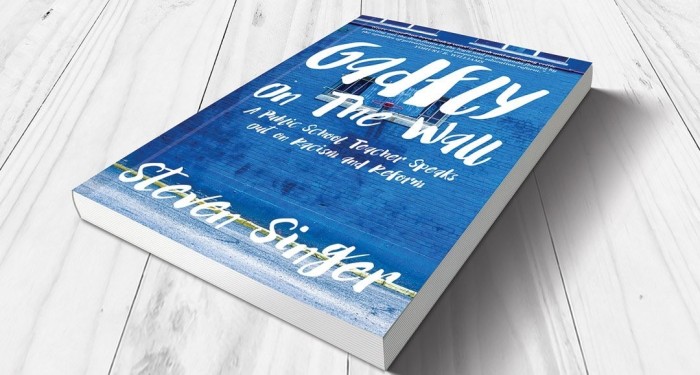
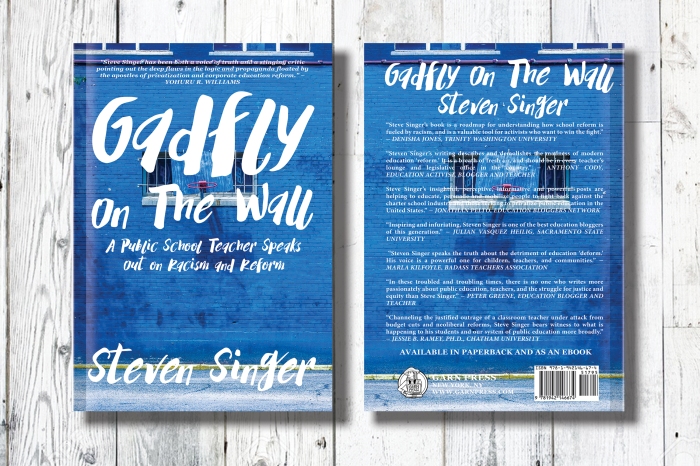
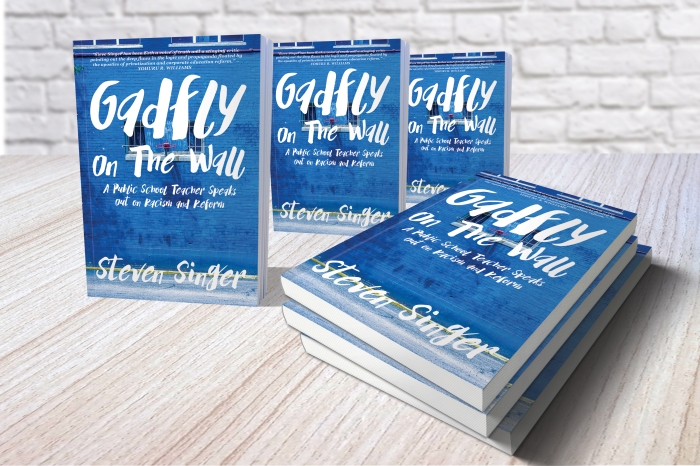
Like this post? I’ve written a book, “Gadfly on the Wall: A Public School Teacher Speaks Out on Racism and Reform,” now available from Garn Press. Ten percent of the proceeds go to the Badass Teachers Association. Check it out!
book-2

Want to Make a Difference? Canvass for Local Candidates You Believe In


door-to-door_small-500x300


Knock! Knock! Knock!


I stood there on the porch staring at my own knuckles in disbelief.


My 9-year-old daughter was looking up at me with a look like “What did you just do?”


But there was no time to say anything.


The door was opening.


An older gentleman stood in the entryway looking like he had just been stirred from sleep.


“Hello! Is this…” I began and Pam, who was standing next to me filled in the name.


“Yes,” he grumbled.


I introduced the three of us and told the man that we were canvassing his neighborhood for two local candidates running for state legislature.


And then I stopped because I wasn’t sure what to say next.


Luckily Pam jumped in and told him what our candidates stood for – education, healthcare and working families.


“Are these Democrats?” he groused. “I’m done with them. After what they did to that judge, I’m done.”


“You mean Kavanaugh?” I said.


He nodded.


My mouth opened to say something but what do you say?


Brett Kavanaugh was accused by multiple women of sexual assault but was saved from a thorough FBI investigation by his buddy, Donald Trump. He cried, whined and spouted partisan conspiracy theories yet still was confirmed to a lifetime appointment to the U.S. Supreme Court.


Really, what was this guy’s problem? Did he think we shouldn’t investigate Supreme Court Justices when credible accusers hurl accusation of abuse? Did he think Kavanaugh’s chief accuser – Dr. Christine Blasey Ford – made the whole thing up so that she could have her reputation forever tied to an attempted rape and her family displaced from their home and forced into hiding because of constant death threats? Did he think we should give privileged white guys lifetime judicial appointments based on what? Political affiliation? Skin tone?


Pam tried to bring up a few other topics – about how Republicans in our state of Pennsylvania are actively working to cut this man’s healthcare, calling this man’s generation “the greediest generation” and other topics.


But it did no good. Fox News had gotten there first.


So we handed him our campaign literature, thanked him and went on our way.


Sometimes that’s the best you can do.


And it’s not nothing.


IMG_8282


If you’re reading this blog, I’m assuming you’re a lot like me.


You see the madness of our modern age and wonder what the heck went wrong?


A reality TV show clown is President of the United States of America. And all over this country, the conservative clown car is spitting out candidates for major office.


Even here in the keystone state, we have Scott Wagner running for Governor on the leftover promises of our previous GOP Governorslashing education funding, firing teachers and lower taxes for the wealthy.


Meanwhile, the world is falling apart. The U.N. just released a major report finding that we have about a dozen years to make significant changes to our energy consumption or else global climate change will be irreversible. Yet our leaders complain there’s nothing they can do!


It’s enough to make one lose hope in the future.


As a father and a public school teacher, I can’t afford that despair.


There needs to be at least the slimmest glimmer of the possibility of a new day.


And I’m here to tell you, friends, it’s out there.


It starts with you.


If you want real progressive change, you have to go out there and make it – one day at a time.


We can turn back the tide of self-destruction. We can beat back the politics of bread and circuses. We can take back this country and build a better future.


But it will take more than one day.


It will take all of us, doing incremental good, every day we can.


So my suggestion is to make a commitment to voting this Nov. 6.


I know our electoral system is a mess. I know many people are being purged from the rolls and our districts are gerrymandered and the entire system is set up against us.


But if all of us try to vote, we can still win.


Find a candidate you can support and go out there and campaign for him or her.


I know there are a lot of phonies running for office. There are an awful lot of fake progressives who will talk nicely to your face and then sell you out to corporations and the wealthy at their first opportunity.


Just know that they’re not all like that.


Find yourself someone you can trust – probably someone new to the game coming on the scene to change things.


In the Pittsburgh area I found Lindsey Williams.


thumbnail_IMG_8273
Lindsey Williams and Me


She’s an amazing lady with real conviction running for State Senate in the 38th District – that’s most of Northern Allegheny County from Franklin Park eastward, as well as Highland Park and sections of East Liberty in Pittsburgh.


Her number one priority is the same as mine – education.


That should come as no surprise from a candidate who’s also the communications director for the Pittsburgh Federation of Teachers.


But Williams actually lives her values.


Before coming to Pittsburgh, she was fired for union organizing at the National Whistleblowers Center. Ironically, she was working there to tell the story of people who were retaliated against for reporting waste, fraud, and abuse, and found herself a target for attempting to organize a staff union. She eventually won the resulting case with the National Labor Relations Board.


When her campaign literature says she “won’t back down” fighting for working families. That’s what it means.


And her priorities – education, healthcare and labor – aren’t pie in the sky promises. She has a fiscally responsible plan to support them by creating a severance tax on natural-gas drilling and closing a loophole that allows businesses headquartered in other states to avoid state taxes. She wants to keep taxes low for homeowners while making sure the wealthy and corporations pay their fair share.


Perhaps that’s why a conservative dark money organization aligned with her Republican challenger, Jeremy Shaffer, has created knockoff campaign signs that look just like Williams with the word “Socialist” emblazoned on them.


It’s a desperation tactic.


Shaffer is down in the polls. The district – once a Republican stronghold – went to Hillary Clinton in the last election.


Even Shaffer, a Ross Township supervisor, is a throwback – he’s a far right extremist who primaried incumbent state Sen. Randy Vulakovich (R-Shaler) in May.


And his platform is nothing but tax cuts for the rich and school privatization for the rest of us. In effect, he’s a mini-Trump come to bring the circus to town.


So not only is Williams a candidate I can believe in, her race really matters to the overall state picture. If the Democrats only pick up her seat in November and don’t lose any others, we’ll crush the GOP’s veto-proof majority!


thumbnail_IMG_8275


But I didn’t come out this weekend just for Williams.


I also was there to canvass for Betsy Monroe, a Fox Chapel medical professional at Highmark running for State House in the same North Hills area.


She was inspired to get into politics after Trump’s election and the subsequent 2017 Women’s March.


She noticed that state Rep. Hal English (R-Hampton) had run unopposed in the last two elections, so she decided to run against him, herself.


Monroe was particularly angered by English’s vote to criminalize abortions after 20 weeks for all women in the Commonwealth. (The bill was vetoed by Democratic Gov. Tom Wolf back before the GOP had a veto proof majority.) She thought it was unfair for lawmakers to decide what adult women can do with their own bodies.


However, there was one other woman I was there to support – my own daughter.


For someone in elementary school, she is incredibly interested in politics. I caught her on Saturday literally writing political stump speeches for her stuffed animals. Let me tell you, Eeyore the donkey from the Hundred Acre Wood has some mighty progressive views on women’s rights!


I wanted my little one to see real women in politics, fighting to make a difference.

 
The news is always so grim. I wanted her to see that there are people out there fighting for the good.


And you know what? It helped me, too.


At this point I need to pause and give a huge “Thank You” to two people – Pamela Harbin and Jodi Hirsch.


IMG_8279
Me and Pamela Harbin


Jodi is an amazing organizer who put together the event in the first place.


I wanted to get more involved in the election and Jodi knew exactly how I could do that and which candidates I’d be most interested in.


Pam is a local activist I’ve known for years. I fought with her side-by-side against the statewide education budget cuts, charter schools, standardized testing and a host of Corporations Gone Wild shenanigans.


I was new to this whole canvassing thing, so she agreed to go with my daughter and me to show us the ropes.


I couldn’t have done it without her.


Thankfully, not every door we knocked on went like the grumpy gentlemen described above.


Frankly, most people weren’t home or didn’t answer the door.


Some people – especially young folks – proudly responded that they don’t vote or have no idea what’s going on.


Others were energized by what was happening and were looking forward to going to the polls and being heard.


“You know I’ll be there!” said one gentleman. “I’m straight Dem. Right on down the line. I’ve had enough of this Trump crap.”


But more people than I’d expected took pride in their nonpartisanship.


They wouldn’t commit to anything – just took our literature, heard us out and said they’d decide at the polls.


I always wondered what an undecided voter looked like. I saw a lot of them this weekend.


But that’s why we were there – to help nudge the uncommitted.


Hopefully on Nov. 6 they’ll think of Pam, my daughter and me.


Maybe even the Fox News fan who thought Kavanaugh got a raw deal will have his resolved softened.


Maybe he’ll think of my daughter’s chubby cheeks and innocent eyes as he considers voting for people who’d gladly steal her future for the prospect of more tax cuts for the rich.


Then again, maybe not. But who knows?


We tried.


If you live in Pennsylvania and want to get involved, click HERE.


Like this post? I’ve written a book, “Gadfly on the Wall: A Public School Teacher Speaks Out on Racism and Reform,” now available from Garn Press. Ten percent of the proceeds go to the Badass Teachers Association. Check it out!

thumbnail_IMG_8249

Meet the Test Before the Test – Pennsylvania’s Classroom Diagnostic Tools (CDT)

BoredStudentIPad_iStock_monkeybusinessimages


It’s test time.


My students are dutifully pecking answers onto their iPads before a hand goes up.


“Mr. Singer, I can’t log in to the server.”


Another hand.


“It keeps kicking me out.”


Another.


“Mr. Singer, what does this question mean?”


Then every single hand in the room pops up all at once.


“What’s the matter!?” I say, trying not to let the frustration into my voice.


A lone student in the front offers to speak for the group.


“The Website just kicked us all off.”


If that sounds like the optimum environment to assess student learning, then you must work for Data Recognition Corp (DRC).


It is typical of the company’s Classroom Diagnostic Tools (CDT) test in Pennsylvania.


The assessment, which cannot be taken with pencil and paper but must instead be taken on a computer or personal device, has always been glitchy.


You type in a response and what you typed only appears after a delay.


When moving from one screen to another, you have to wait through a seemingly endless interval until the next screen loads.


And during this year’s first sessions, multiple teachers told me of students whose tests cycled through all the questions without input from the students and then gave them an unalterable grade.


This is not the best way to diagnose students’ abilities in reading, math and science.


Yet that’s what the state Department of Education strongly encourages we use it for – three to five times a year!


This is not a mandatory test.


It’s strongly suggested by administrators in Harrisburg. And that’s enough to make some local principals march wherever they’re told.


Ironically, Gov. Tom Wolf proudly proclaimed that he was reducing the amount of time students in the Keystone state would take standardized tests. But he’s only talking about the federally mandated Pennsylvania System of School Assessment (PSSA) and Keystone Exams which he’s cut by a total of almost 2 hours a year.


There are still a battery of suggested pretests on the state’s wish list – tests that are supposed to predict success on the PSSA or Keystone Exams – tests used to show whether kids are getting the skills they need.


Do you understand it now?


No.


Do you understand it Now?


No.


Do you understand it NOW!!!!!!!?


Of these, the most common is the CDT.


If schools follow the state’s instructions and give students this exam in reading, math and science 3 to 5 times a year, that’s an additional 50-90 minutes per test. That comes to 22.5 hours of additional testing!


So 22.5 hours minus 2 hours equals… NOT A REDUCATION IN TESTING!


Moreover, the CDT test is cumbersome to proctor.


I’ve given my students this test for about seven years now and it never fails to be anywhere from tricky to an outright disaster.


This week, I had a class of students on their iPads unable to log on to their accounts at DRC headquarters. In another group, five students were dropped from the server without warning and couldn’t finish.


Defective software and having to repeatedly log back in to the system are hallmarks of even the most successful CDT session.
Even if you like standardized tests and think they are the best way to assess students, the product and service provided by DRC is extremely low quality.


But keep in mind – you’re paying for it, folks! In the last 8 years alone, taxpayers forked over more than $1 billion for this service and the PSSA and Keystone tests, which DRC also produces.


It’s incredibly frustrating, a waste of classroom time and taxpayer money.


No one does their best when they’re exasperated, and this test is almost designed to make students feel that way.


Yet some local administrators are trying to use the assessment as part of a high stakes matrix to determine classroom placement.


Whether your child is registered in the remedial, general or advanced class could be determined by this shoddy excuse for an assessment. Whether your son or daughter has the advantages and esteem of the advanced class could rest on a malfunctioning data system. Whether he or she has to settle for months of mind numbing test prep instead of authentic education could be decided by defective software.


No matter how you look at it, this doesn’t help the teacher diagnose academic deficiencies and remediate them. That is, unless your idea of remediation is printing out a worksheet of test look-a-like questions based on the ones the student got wrong on the CDT.


This is bad assessment supporting bad pedagogy forced on us by bad policy.


But that’s not even the worst part.


Why are we doing this in the first place?


Have standardized tests ever been proven accurate assessments of student learning? Moreover, has it ever been proven useful to give pre-test after pre-test before we even give the ultimate high-stakes test?


Answer: No.


Most countries don’t test their students nearly as much as we do in the United States. Finland, which has students who routinely return some of the highest scores among developed nations, only makes its children take one standardized test.


One test from K-12!


In addition, countries like those in Scandinavia don’t have nearly the child poverty rate we do. Nor do they fund their schools based on local property taxes. They provide more funding and resources for needy students than rich ones – we do just the opposite.


Numerous studies have shown a strong correlation between parental income and the test scores of their children. In short, kids from wealthy families who go to schools with the best of everything generally score very well on standardized tests. Students from poor homes who go to underprivileged schools do much worse.


So all this testing does nothing to help students learn. It simply reinforces the inequality already in place. And then it’s used as a justification for that same inequality.


High stakes standardized testing is not about increasing student outcomes. It’s about boosting corporate incomes – corporations like Data Recognition Corp.


Finally, there’s another danger we haven’t even hinted at involved with the CDT.


As an on-line test, it collects an awful lot of data about the children taking it. This information is kept in a database for students entire academic career so that it can be compared with subsequent results.


This is private student data in the hands of a private company.


The chances that this information and thus students’ privacy will be violated are extremely high.


We are putting our children’s futures in the hands of a for-profit company with little to no assurance that it is safe. There is little oversight, accountability or even awareness of the issue.


Therefore, any knowledgeable parent would be entirely within his or her rights by refusing to let their child take any of these tests.


Yes, you can refuse to let your child participate in test prep the same way you can opt out of the PSSA and Keystone Exams.


You need refer to the same part of the law:


“PA School Code Chapter 4.4(d)(1)(2)(3):

(d) School entities shall adopt policies to assure that parents or guardians have the following:

(1) Access to information about the curriculum, including academic standards to be achieved, instructional materials and assessment techniques.

(2) A process for the review of instructional materials.

(3) The right to have their children excused from specific instruction that conflicts with their religious beliefs, upon receipt by the school entity of a written request from the parent or guardians.”


That includes the CDT.


Opt Out PA has provided this helpful form letter you can use and modify to meet your needs before sending it to your local principal:


“Dear Principal/Teacher(s):

Pursuant to Pennsylvania Code Title 22 Chapter 4, section 4.4 (d)(1)(2)(3) I am hereby exercising my right as a parent to have my child, [NAME], excused from PSSA test prep, including (but not limited to) CDT’s and Study Island because of religious beliefs.

Sincerely,”


So while Pennsylvania’s lawmakers dither back and forth about the political realities of standardized testing as an accountability measure and as they blithely ignore the threat posed to student privacy by on-line testing, parents can take matters into their own hands.


Your child’s teacher would like nothing better!


Imagine being able to actually teach and not have to spend days of instruction time troubleshooting a Website while corporate lackies cash our check!


Imagine students in school to actually learn something – instead of testing them into oblivion.


Imagine a student raising her hand to ask a question about the curriculum and not the software!


Like this post? I’ve written a book, “Gadfly on the Wall: A Public School Teacher Speaks Out on Racism and Reform,” now available from Garn Press. Ten percent of the proceeds go to the Badass Teachers Association. Check it out!

WANT A SIGNED COPY?

Click here to order one directly from me to your door!

cropped-book-1.jpg

Scott Wagner Wants to be Pa.’s Anti-Education Governor. Will We Let Him?

39408873_306034386897393_1481697570328674304_n
Art by Sue Goncarovs


If there’s one thing Scott Wagner hates, it’s education.


He hates science. He hates schools. He hates teachers. And if students get in the way, he’ll hate them, too.


These are the qualities he thinks Pennsylvanians are looking for in their next governor.


The York Township Republican will challenge incumbent Democrat Tom Wolf on Nov. 6, 2018.


So who is this guy?


Wagner’s a college dropout who made a fortune starting a garbage hauling firm. He became a state senator four years ago after winning a write in campaign during a special election where only 17% of the electorate could be bothered to vote.


And ever since, he’s been consistent about one thing: he really, Really, REALLY hates teachers.


“We have 180,000 teachers in the state of Pennsylvania,” Wagner said in 2015. “If we laid off 10 percent of the teachers in the state of Pennsylvania, we’d never miss them.”


Let’s be clear.


Scott wouldn’t miss them. But the 1.75 million Commonwealth school children would.


Ever since the last Republican Governor, Tom Corbett, slashed funding by almost $1 billion a year to the poorest schools with the full help of a state legislature that is even now still under GOP control, our institutions of learning have been reeling.


We lost 27,000 education jobs, most of which were teaching positions.


That’s a deficit we still haven’t recovered from. Even today, state schools are staffed at a 10-year low. Class sizes are at an all time high.


Yet Wagner wants to fire even more teachers!?


That’s not the policy of a man who wants to help improve life throughout the state for all. That’s not the policy of a man who wants to help kids learn.


It’s the policy of a man who has a personal grudge against educators.


And his other legislative objectives?


Wagner wants to further slash education funding. He wants to spend whatever is left inequitably. And he really wants to help his heroes Donald Trump and Betsy DeVos enact school vouchers so business people like him can continue to cash in on children from Pittsburgh to Philadelphia and all places between.


By contrast, in his four years in office, Gov. Wolf has pushed to increase education funding, pushed to spend it more fairly, and even cut the time it takes for students to take high stakes standardized tests.


The good news: voters throughout the Commonwealth have never had a clearer choice for governor.


The bad news: when has that ever stopped them from getting it wrong?


Here’s a couple of Wagner’s other big ideas cribbed from the American Legislative Exchange Council (ALEC) and his buddies the Koch Brothers.


He Thinks Teachers Make Too Much Money


“We have created a special class in this state and the special class is the public sector union employee,” Wagner told Keystone Crossroads in a 2015 interview.


“Teachers are doing very well in this state,” he said. “People would be appalled if they knew what their teachers made, in certain areas.”


Unfortunately, Wagner has no idea, himself.


He keeps quoting a bogus salary figure that I’m not going to repeat. It’s not true statewide, it’s not an average, nor is it true in his home district.


In truth, the low end for teachers entering the field nationwide is around $30,000, according to the National Association of Colleges and Employers (NACE). So go to college, get a four – sometimes five – year degree including a rigorous internship of student teaching and you make a mere $10,000 above the most generous minimum wage!?


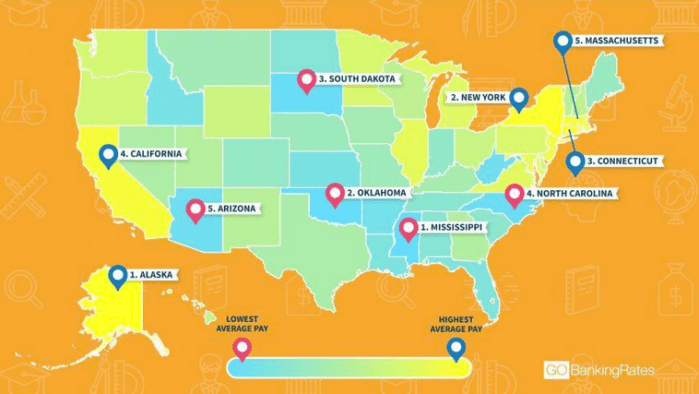
However, Pennsylvania pays its teachers better than average. We have the 12th highest pay in the country, according to financial services outlet GOBankingRates which compiled average teacher salaries by state using 2015 federal data.


According to that data, Pennsylvania teachers make on average $63,063 per year. Of neighboring states, teachers in Maryland ($65,247) and New Jersey ($71,687) make more. Teachers in Ohio (59,063) and Delaware ($59,853) make less.


Screen Shot 2018-08-16 at 2.11.40 PM
Highest and Lowest Teacher Salaries – Source: GoBankingRates


But those numbers are deceiving. They’re averages. Districts serving the wealthy pay their teachers much better than those serving the poor. Actual pay ranges from $99,253 in the affluent Philadelphia district of Lower Merion to $27,592 at Wonderland Charter School in Centre Country.


As everywhere else, many teachers struggle to make ends meet working multiple jobs while others are well compensated.


No matter how you slice it, nationwide teachers’ salaries are 14% less than those from professions that require similar levels of education, according to the Economic Policy Institute.


In other words, if prospective teachers want to make more money, all they have to do is switch majors.


That may be part of the reason for our national teachers shortage. Not only have states like ours laid off tens of thousands of educators, many don’t stay in the field if given the chance. Across the country , 46 percent of educators quit before reaching the five year mark. And it’s worse in urban districts, where 20 percent quit every single year!


We could take steps to ensure all teachers earned a living wage and even encouraged our best and brightest to enter the field. But, nah, Wagner thinks Pennsylvania already spends “enough” money on public schools.


As Governor, he would do whatever he could to win his personal crusade against teachers even if Pennsylvania’s school children were collateral damage.


He Wants to Eliminate Teachers Sick Days


Wagner has been vocal about eliminating benefits that educators earn, including sick days. He introduced a bill that’s still floating around in the state senate to strip sick days from the school code and make teachers bargain for them with their districts.


So forcing sick teachers to come to school and spread the germs to children is fine with Wagner as long as it hurts his nemesis – those evil teachers.


He Wants to Cut Teachers Pensions


He also plans to end pensions for working educators, and even wants retired educators to give back 10% of the retirement they earned.


He’s right to want reform to the state pension system but disingenuous or misinformed about the cause.


Pennsylvania pension costs have increased primarily because our legislature made bad plans and bad investments that were upended by the crash of 2008. You don’t fix that by stiffing your employees. If you do that, no one will believe any promises the state makes and no one of any substance will want to work for the state.


He Wants To Pay Teachers Based on Student Test Scores


No kidding:


“There are teachers that will exceed expectations while teaching a classroom of 100 of the toughest-to-teach students. There are also teachers that would struggle to teach just one student at a time. I want the first teacher to make a small fortune, and I want the second teacher to find a new career that is better suited for him or her.”


So if you teach the best students, you should make the most money? And if you teach struggling students, you should be fired?


But It’s Not Just Teachers. He Hates Other Working People, Too


If there is a corner to cut, he wants to take it – especially if it screws a working person. As a state senator, Wagner even introduced a bill that would exempt school districts from paying laborers the “prevailing wage” on construction projects.


Cheaper labor, shoddier work. That’s surely a recipe for success in buildings housing school children!


He Wants to Disband Unions


Oh, but he’s not done.


The man who once compared the tactics of public employee unions – including those representing teachers – to those of Adolf Hitler and Vladimir Putin also wants to end tenure end tenure, seniority, and disband unions.


I’m sure reducing teaching to a career without benefits, workers rights or protections will do wonders for the educational quality students receive.


Teachers working conditions are students learning conditions. Putting children in a building that has fewer safety precautions because there’s no union to collectively bargain for them is a great way to cut costs. But parents aren’t thrilled about having their kids try to learn in a sweat shop filled with Trump brand Russian asbestos.


He Loves School Vouchers and Charter Schools


Call them education saving accounts, education tax credits, personalized learning accounts or opportunity scholarships. It doesn’t matter. Wagner loves them all.


“I support all school choice,” he said in an interview.


Charter schools, funding private and parochial schools with public tax dollars. He’s in for all of it.


So long as it hurts public schools and enriches private businesses without helping students learn at all.


Go ahead! Take scarce funding from public schools and divert it to programs with little to no accountability. Let private school operators fraudulently misrepresent enrollment data. Let them fail to provide safe and academically appropriate learning environments. Let them game the system in any and every way.


That’s what Wagner calls fiscal accountability.


It doesn’t matter that these schools don’t improve student achievement. Evaluations of voucher programs in Milwaukee, Cleveland, and Washington, D.C., have all found no statistically significant differences in the academic achievement of voucher students compared to public school students. And recent evaluations of programs in Ohio, Indiana, and Louisiana revealed that voucher students scored lower than their peers attending public school.


But who cares about facts? This is all ideology for Wagner.


Vouchers have a record of undermining student’s civil rights – especially students with disabilities. Private school students give up due process and other rights guaranteed in public schools. Private schools are allowed to discriminate by denying admission based on religion, sexual orientation, citizenship status, English language proficiency and disability. Private schools that enroll students with disabilities may decide not to provide the services or accommodations guaranteed to such students in public schools. Or they may charge parents extra for them. Moreover, there is nothing to stop them from segregating these kids from other children. And, finally, private schools often suspend or expel students without due process.


This may be Trump and Wagner’s ideal. But it is certainly not what Commonwealth voters want for their children.


He Wants to Get Rid of Many State Colleges


Wagner caused an uproar when he said the state’s 14 state colleges will not be around in four years. “So, for those of you who think your school’s going to be around four years from now, it isn’t going to be around,” Wagner said.


Fewer institutions of higher learning. Fewer opportunities to get a college degree. That sounds like the policy of a college dropout.


He Wants to Slash School Funding


Wagner has made no bones about this from day one.


This is a guy who took a television reporter on a helicopter tour of schools in his district in 2015 to highlight the fact that “we spend a lot of money on schools.”


“They think the solution is more money,” he said of Wolf and the Democrats. “Every time you do that the money disappears and the problem is still there.”


It’s like taking a bath, Scott. You can’t just do it once and be clean for the rest of your life. You need to bathe every day. One-time funding windfalls don’t work. You need equitable and sustainable funding revenues.


But that’s either too complicated for Wagner or he just doesn’t care.


He supported Gov. Corbett’s plan to decimate Pennsylvania’s schools. And he doesn’t think the culling should be over.


When asked point blank about Corbett’s cuts in 2011, he said, “Yes, I believe that Governor Corbett needs to stick to his plan.”


He’s said repeatedly that we spend “enough money” on public schools, while stressing the need for frugality and fewer regulations.


He Wants to Play with How Schools Are Funded


He’s an advocate for legislation that would eliminate school property taxes and replace them with increased state sales and income taxes.


True we need a better funding mechanism than local property taxes. But you can bet Wagner’s plan is worse than the current system.


It would lock funding inequities among Pennsylvania’s 500 school districts into place.


He Thinks Global Warming is Caused by the Earth Getting Closer to the Sun


Wagner is an incredibly stupid man who thinks he’s rather intelligent.


But of all the dumb or evil things that come spewing out of his mouth, this one has to be my favorite.


When asked about global climate change, he didn’t simply deny that it was happening. He had an alternative theory to why it was taking place.


It’s not business and industry or fossil fuels that is causing global temperatures to rise. He actually said that it’s because the earth is getting closer to the sun every year. Another cause? Human bodies on the planet are giving off enough heat to raise the global temperature.


Perhaps it shouldn’t be surprising that a person who hates schools and teachers so much knows very little, himself.


These comments made him a national laughing stock.


His words were repeated on every late night comedy show across the country for giggles and guffaws.


The question is “Will the joke be on us come Election Day?”


It’s not “How dumb is Scott Wagner?”


It’s “Is Pennsylvania dumb enough to vote for him?”


NOTE: Special Thank you to Sue Goncarovs for the Wagner cartoon with which I began this piece. I love your work!


Like this post? I’ve written a book, “Gadfly on the Wall: A Public School Teacher Speaks Out on Racism and Reform,” now available from Garn Press. Ten percent of the proceeds go to the Badass Teachers Association. Check it out!

WANT A SIGNED COPY?

Click here to order one directly from me to your door!

book-1

Pennsylvania’s Broken Testing Promise – We Don’t Assess Students Less If We Demand Constant Diagnostic Tests

Jelani Guzman

Downcast faces, dropping eyes, desperate boredom.


That’s not what I’m used to seeing from my students.


But today they were all slumped over their iPads in misery taking their Classroom Diagnostics Tools (CDT) test.


It’s at times such as these that I’m reminded of the promise made by Pennsylvania’s Governor, Tom Wolf.


He pledged that this year we’d reduce the amount of time public school students spend taking standardized assessments.


“Students, parents, teachers and others have told us that too much time in the classroom is used for test taking,” he said.


“We want to put the focus back on learning in the classroom, not teaching to a test. Standardized testing can provide a useful data point for a student’s performance, but our focus should be on teaching students for future success, not just the test in front of them.”


So at his urging we made slight cuts to our Pennsylvania System of School Assessment (PSSA) tests – the assessment for grade 3-8 students.


We removed two sections of the PSSA – one in math, one in reading – and reduced the number of science questions.


This can cut testing by as much as 48 minutes in math, 45 minutes in reading, and 22 minutes in science.


And that’s good news.


But it’s not exactly the kind of sea change the state claims, given the Department of Education’s recommendations for additional tests on top of the PSSA.


That’s right. The state wants schools to give the CDT assessment an additional 3 to 5 times a year in reading, math and science.


Unlike the PSSA, this is a voluntary assessment. Districts can decide against it, but the department’s flunkies are crisscrossing the Commonwealth advising we all give the CDT as much as possible.


So that’s between 50-90 minutes for each assessment. A district that follows the state’s guidelines would be adding as much as 270 minutes of testing every seven weeks. In a given year, that’s 1,350 minutes (or 22.5 hours) of additional testing!


Pop quiz, Governor Wolf. Cutting testing by 115 minutes while adding 1,350 minutes results in a net loss or a net gain?


The answer is an increase of 1,235 minutes (or more than 20 hours) of standardized testing.


In my classroom, that means students coming in excited to learn, but being told to put away their books, pocket their pencils and put their curiosity on standby.


The folks who work at the Department of Education instead of in the classroom with living, breathing children, will tell you that these CDT tests are a vital tool to help students learn.


They provide detailed information about which skills individual students need remediation on.


But who teaches that way?


Billy, you are having trouble with this kind of multiple-choice question, so here are 100 of them.


We don’t do that. We read. We write. We think. We communicate.


And if somewhere along the way, we struggle, we work to improve that while involved in a larger project that has intrinsic value – such as a high interest book or a report on a hero of the civil rights movement.


When learning to walk, no one concentrates on just bending your knees. Even if you have stiff joints, you work them out while trying to get from point A to point B.


Otherwise, you reduce the exercise to boring tedium.


That’s what the state is suggesting we do.


Make something essentially interesting into humdrum monotony.


Teachers don’t need these diagnostics. We are deeply invested in the act of learning every day.


I know if my students can read by observing them in that act. I know if they can write by observing them doing it. I know if they can communicate by listening to them arguing in Socratic seminar. I read their poems, essays and short stories. I watch their iMovies and Keynote projects.


I’m a teacher. I am present in the classroom.


That tells me more than any standardized diagnostic test ever will.


It’s ironic that on a Department of Education “CDT Frequently Asked Questions” sheet, the assessment is described as “minimizing testing time.”


That’s just bad math.


And my student’s know it.


The district just sent out a letter telling parents and students they could take advantage of a school voucher to go to a local parochial school at public expense.


When presented with the prospect of another day of CDT testing in my room, one of my brightest students raised his hand and asked if kids in the local Catholic school took the test.


I told him I didn’t know – though I doubt it. They COULD take the test. It is available to nonpublic schools, but do you really think they’re going to waste that much instruction time?


Heck! They don’t even take the same MANDATORY standardized testing! Why would they bother with the optional kind!?


It is the public schools that are hopelessly tangled in the industrial testing complex. That’s how the moneyed interests “prove” the public schools are deficient and need to be replaced by privatized ones.


It’s an act of sabotage – and with the CDT it’s an act of self-sabotage.


School directors and administrators need to be smarter. The only way to beat a rigged game is not to play.


And the only way to reduce testing is to TAKE FEWER TESTS!


Like this post? I’ve written a book, “Gadfly on the Wall: A Public School Teacher Speaks Out on Racism and Reform,” now available from Garn Press. Ten percent of the proceeds go to the Badass Teachers Association. Check it out!

ebook-1

Rick Saccone Hopes to Become Trump’s New Bobble Head in Western Pennsylvania


IMG_9488
Rick Saccone hard at work for the taxpayers of Pennsylvania.

Rick Saccone’s signature achievement in the Pennsylvania House was to get “In God We Trust” posted in every public school.


Actually, he didn’t even get that.


He wrote a successful bill that merely allowed public schools to post that – if they wanted.


To my knowledge not a single school in the Commonwealth has taken him up on it.


His second greatest hit was to authorize a state day of fasting.


I’m not kidding. And it’s all down hill from there.


Now he’s running for U.S. Senate!


Oh. Wait. His fundraising was terrible.


Excuse me. He’s running for U.S. House – because that’s an easier win!


Whatever. So long as he can get to Washington, DC. He’s had enough of this small potatoes Pennsylvania politics – even though he’s one of the smallest potatoes in the patch.


If you know what I mean.


He’s running against Democrat Conor Lamb in a special election to be held March 13 to fill Republican Tim Murphy’s seat.


You may recall Murphy. He made his name voting for anti-abortion legislation until his alleged mistress got pregnant and then he allegedly pushed for her to abort their love child.


You know. Family values stuff.


Is Saccone up to that level of hypocrisy?


Donald Trump thinks he is.


The least popular President in U.S. history with only a year under his bulging golf shorts thinks Saccone is his kind of guy.


Trump even came to western Pennsylvania to support Saccone tweeting:

Screen Shot 2018-01-29 at 3.13.20 PM

“Will be going to Pennsylvania today in order to give my total support to RICK SACCONE, running for Congress in a Special Election (March 13). Rick is a great guy. We need more Republicans to continue our already successful agenda!”


Of course, Trump immediately had to walk back this comment because his trip to the keystone state was being paid for with public tax dollars. He had to say that it was an official White House event and not (as he indicated in the tweet) that it was a campaign event.


You know, for once I agree with Trump.


Rick Saccone IS Trump’s kind of guy.

20180118smsTrump02-1

He has lots of experience as a Yes Man. That’s really all he’s done in Harrisburg.


We used to have our own version of Trump – a Republican Governor who had no idea how to do his job – Tom Corbett.


Of course, Corbett’s reign was short lived. Like the President, his popularity plummeted and he was voted out of office like yesterday’s garbage.


But he had his loyal bobble head Saccone backing him every step of the way.


In fact, he voted for Corbett’s initiatives 95% of the time giving him the nickname of Corbett’s “Mini-me.”


Even when Corbett proposed something deeply unpopular, like cutting almost $1 billion from the state’s poorest public schools, Saccone went out there to explain why our children, our future, just weren’t worth the investment.


The Swamp recognizes Saccone as one of their own.


That’s why big moneyed interests are pouring cash on the sycophantic lawmaker. That and the fact that the district in question went for Trump in the last election by 20 points.


The National Republican Congressional Committee has spent at least $1 million on ads for broadcast and cable TV stations to boost Saccone’s candidacy.


And that’s not all.


Congressional Leadership Fund has put aside at least $1.6 million for ads, not to mention funding from outsiders like the 45Committee and Ending Spending – a group founded by the mega-donor Ricketts family.


All this money just to serve out the remainder of Murphy’s term!


Whoever wins would be up for re-election in November to secure a full two-year term.


Moreover, now that the state Supreme Court has overturned the Commonwealth’s gerrymandered districts that unfairly favor Republicans, that November race is likely to include newly drawn legislative lines.


So this GOP wonderland that boosted Trump and Mitt Romney in 2012 will likely become more competitive.


In fact, it may already be.

SacconeFlagShirt
Saccone disrespecting the flag by wearing it as a shirt.

Some polls have Saccone up over Lamb by only a 3 point lead. This may be in part because of Trump’s steadily deflating support – even among Republicans. The President’s approval rating in the district has dropped to 49 percent – not far from the national picture where 47 percent disapprove of his job performance.


This is not good news for Saccone.


The SuperPACS supporting him are trying to paint Lamb, a former federal prosecutor, as a Nancy Pelosi puppet.


But Lamb has repeatedly criticized Pelosi, telling The Pittsburgh Post-Gazette that he would not support Pelosi as the Democratic leader. There is a “need [for] new leadership on both sides,” Lamb said.


Yet Saccone has done everything in his power to suck up to Trump.


Taking his cue from the Commander in Chief, Saccone took to twitter to express his feelings:

Screen Shot 2018-01-29 at 4.27.01 PM

“I’m humbled that @realDonaldTrump for President, Inc, has officially endorsed my campaign for Congress!”


I’m not sure why he wrote “President, Inc.”


Perhaps Saccone thinks the office belongs to a private company.


Perhaps he doesn’t understand that a politician’s job is to serve the needs of his or her constituents.


Judging by his less than stellar performance in state government, this would seem to be the case.


He’s come a long way from earnestly trying to legislate past the establishment clause of the first amendment to fighting to starve our schools to running for a position as Trump’s favorite puppet.


Or not.


That depends on voters this March.


Full Disclosure: I am not a Saccone fan. Along with teachers, parents and students from across western Pennsylvania, I’ve picketed outside of his offices demanding he do his job and provide for students. He was deaf to our cries. Do you hear me now, Rick?

062411_TEACH_4

2011-06-23_11-00-52_113

PA High Court Says, “Yes, Schools CAN Sue State Over Unfair Funding, After All!”

rrxfund14-d


It’s back on!

Two years ago a group of plucky Pennsylvania public schools took the state legislature to court because the body wasn’t allocating funding to all districts fairly – some got too much, many got too little.

A lower court threw the challenge out saying it wasn’t the court’s job to tell the legislature how to legislate. But now the state Supreme Court has overturned that lower court decision.

In effect, justices are sayingHell, yes, that is the court’s job! That’s why it’s called a system of checks and balances, Baby!

Or something like that.

Before going any further, there are a few pertinent facts you have to understand about the Commonwealth.

1) No other state in the country has a bigger gap between what it spends on rich vs. poor students than Pennsylvania, according to the U.S. Department of Education.

untitled

2) The Pennsylvania legislature has been paying less and less of public schools’ budgets over the last four decades. The state used to contribute 54% of all public school costs in the early 1970s. Today it pays only 35% of the costs, leaving local taxpayers to take up the slack. Since districts are not equally wealthy, that increases the disparity of resources between rich and poor districts.


3) The state has only had a funding formula specifically legislating how to allocate money to its more than 500 districts for two years. Two years! For more than 15 years previous, the legislature just handed out money willy nilly based on political backroom deals that favored already rich districts and hurt the most impoverished ones.

4) The new funding formula still is not fair. Though it does take into account the poverty of a district, it doesn’t account for the years of systematic disinvestment the district suffered through previously. That’s like giving new sneakers to a racer who hasn’t been able to get out of the starting gate while others are already halfway to the finish line.

5) The legislature STILL hasn’t healed almost $1 billion in education cuts made under previous Republican Gov. Tom Corbett. Instead, under current Democratic Gov. Tom Wolf, it has reluctantly increased funding a bit at a time but failed to bring spending up to what it was four years ago. And even once the cuts are healed, spending will be behind inflationary and cost of business increases. Meanwhile the Republican controlled legislature plays games approving the state budget separately from allocating money to the programs – including schools – that it already approved!


6) Pennsylvania is one of seven states with a Constitution that specifically requires the state provide a “thorough and efficient” system of education. Some of these other states – like New Jersey – have used similar Constitutional requirements to force their legislatures to increase state funding to public schools.

So there you are.

Pennsylvania’s legislature is an absolute mess.

Hopelessly gerrymandered, controlled by the radical right, and opposed by a Democratic party nearly as beholden to big donors as their GOP counterparts and desperate for any area of bipartisanship so as to be able to claim they got anything done other than stop Republicans from burning the whole place to the ground.

That’s why today’s 5-2 Supreme Court ruling is a breath of fresh air.

It’s like someone finally called Mom and Dad to tell our bratty lawmakers to get back to work.

The case will now go back to Commonwealth Court.

Supreme Court Justice David Wecht wrote that the courts do have a responsibility to check the power of the legislature – both in regard to the requirements of the state Constitution and that poorer districts are being discriminated against.

“It remains for (the) petitioners to substantiate and elucidate the classification at issue and to establish the nature of the right to education, if any, to determine what standard of review the lower court must employ to evaluate their challenge,” Wecht wrote. “But (the) petitioners are entitled to do so.”

This may be a Herculean task for those suing the state. And it seems unlikely that Commonwealth Court will hear their arguments favorably.

Justices rarely have the courage to challenge other branches, and the history of Pennsylvania’s courts shows multiple times when the courts have simply refused to assert such power.

This is what happened back in the 1990s when the Philadelphia School District sued the state over the same issue – unfair funding.

Time and again, poor districts have asked for help from the courts when the legislature refused to do its job. And time and again the courts have refused.

But at least this ruling gets things moving again. It’s like a dose of Kaopectate for a constipated political system.

Another possible bit of good news comes from Common Core and high stakes standardized testing. Yes, that crap!

When Philadelphia sued the state, the courts refused to rule in the schools favor because it had no way of proving the state was hurting the quality of education students were receiving there through lack of funding. But that was before Pennsylvania adopted its new Common Core look-a-like standards, PA Core, and initiated aligned tests including the souped up Pennsylvania System of School Assessments (PSSA) and Keystone Exams.

Ironically, the same “accountability” measures used to “demonstrate” poor schools are failing could be used to prove the common sense notion that unfairly funding schools leads to poor academic results.

In any case, far right demagogues like House Speaker Mike Turzai, R-Allegheny, are already whining that the Supreme Court is legislating from the bench. However, as a defendant in the case, and one of the most partisan hacks in Harrisburg, that’s exactly what the Koch Brothers probably told him to say.

Unfortunately, Gov. Wolf seems to kinda agree with him. Though he has yet to make a statement about today’s ruling, he was against the suit when it was originally brought up in 2015. Though he supports increasing education funding and has consistently pushed for it with every budget proposal, he is leery of the courts butting in.

Sadly, his strategy of incremental education budget increases has been failing. Or, to be fair, it’s succeeding at such a slow rate that it would take decades for it to catch up.

The fact of the matter is that it is patently unfair for rich districts to spend $10,000 to $20,000 on each student, while poorer districts can barely pull together $5,000-$6,000.

In addition, impoverished students have greater needs than rich ones. They often don’t have books in the home or access to Pre-kindergarten. Poor students often suffer from food insecurity, malnutrition, a lack of neonatal care, worse attendance, are less well rested and have greater special needs and suffer greater traumas than wealthier students. Moreover, it is no accident that the group being privileged here is made up mostly of white students and those being underprivileged are mostly students of color.

The time is here when Pennsylvanians have to decide where they stand. Are they for a state that offers all children an equal start or do they prefer one where poor brown kids suffer so rich white ones can get ahead?

Today, the matter is in the court’s hands.

Pennsylvania Proposes Smaller Tests, Same High Stakes

Screen Shot 2017-08-14 at 4.04.51 PM


It’s not the size of the tests, it’s how you use them.


And that’s kind of the problem with Gov. Tom Wolf’s new proposal for Pennsylvania public schools.


Wolf wants to reduce the amount of time students are taking standardized tests, but he seems to have little problem using those tests to hold schools accountable for all kinds of things that are beyond their control.


The proposal released today applies only to the Pennsylvania System of School Assessment (PSSA) tests – those taken by students in grades 3-8. Keystone Exams taken by high school students are unaffected.


It would cut one of three reading sections and one of three math sections – two total. Wolf also wants to cut some questions from one of the science sections.


Such a move is estimated to eliminate 48 minutes from the math test, 45 minutes from the reading test and 22 minutes from the science test. However, judging from my own students, these times vary considerably depending on the individual taking the tests. I’ve had 8th grade students finish a PSSA section in as little as 5 minutes or as much as two hours.


Most schools give either a section a day or two in one day. Therefore, this proposal probably translates to 1 to 2 fewer days testing in most districts.


Um. Thanks?


Look I don’t want to seem ungrateful here, but these suggested modifications are little more than fiddling around the edges of a massive problem.


Yes, it will be helpful to reduce testing times, but this does very little to address the fundamental problems with test-based accountability in the Commonwealth.


At best, this proposal will allow students to spend two more days a year learning. Assuming most districts don’t use that extra time for test prep, that IS a good thing.


But tacitly committing students throughout the state to taking these tests almost guarantees that test prep is exactly how these additional days will be used.


The problem with standardized testing isn’t just the number of raw days it takes students to complete the tests. It is how the tests deform the entire year-long curriculum. Students don’t just learn anymore. They learn what’s on the test – and anything else is purely optional.


Regardless of the size of the assessments, they are still being used to sort and judge students, teachers and schools. Shortening their length does nothing to address the fundamental unfairness of the evaluations. Rich white kids still tend to have high scores and poor minority kids still tend to have low ones.


At best, they reveal structural funding disparities between poor and wealthy districts. At worst, the cultural bias inherent in the questions favor those from dominant, privileged ethnicities while punishing those who don’t fit the standard.


That’s what “standardized test” means after all – defining normal and punishing those who don’t fit the definition. Most questions don’t assess universals like the value of 2 and 2. They evaluate cultural and social norms required to understand the questions and easily find an answer that another “normal” student would choose. (Don’t believe me? Watch “Black Jeopardy” on Saturday Night Live.)


This is true whether the test takes one day or 100 days.


We should not be using standardized testing to meet federal accountability standards. Period.


The federal Every Student Succeeds Act (ESSA) contains provisions to circumvent them. States are supposed to be given leeway about testing. They may even be able to replace them with projects or other non-standardized assessments. THAT’S what Wolf and the Pennsylvania Department of Education should be exploring – not half measures.


To be fair, the state Department of Education is attempting reform based on the ESSA. This year, the department introduced Future Ready PA, a new way of using test scores and other measures to assess school success. To its credit, The Index does place additional emphasis on academic growth, evaluation of school climate, attendance, graduation rates, etc. However, for my money it still gives far too much importance to standardized testing and test prep.


Like reducing the size of the PSSAs, it’s a positive step but won’t do much to get us to our destination.


Neither measure will have much impact on the day-to-day operations of our public schools. Districts will still be pressured to emphasize test prep, test taking strategies, approaches to answering multiple choice questions, etc. Meanwhile, critical thinking, problem solving, and creativity will still be pushed to the side.


Moreover, since schools and teachers will be assessed as successful or not based largely on these test scores, districts will be under tremendous pressure to give countless practice tests throughout the year to gauge how well students are prepared for the PSSAs. The state will still be providing and encouraging the optional Classroom Diagnostics Tools (CDT) tests be taken several times in reading and math throughout the year. Trimming off two days from the PSSA will affect that not at all.


In addition, today’s proposal only applies to the PSSA. While that assessment is important, the Keystone Exams given to high school students are even more so. According to existing state law, passing the Keystones in Algebra I, Literature and Biology are required in order to qualify for a diploma. However, that condition has yet to go live. So far the legislature has continuously pushed back the date when passing scores become graduation requirements. The Governor and Department of Education should be proposing the elimination of this prerequisite before anything else. Other than education funding and perhaps charter school accountability, it is the most important education issue before Commonwealth lawmakers today.


Don’t get me wrong. The Democratic Governor is somewhat hamstrung by the Republican-controlled legislature. Partisan politics has stopped lawmakers from accepting Wolf’s more progressive education measures.


Though Wolf has gotten Republicans to increase education funding by hundreds of millions of dollars during his term, K-12 schools still receive less than they did before the previous GOP governor’s administration. Moreover, there have been absolutely zero inflationary increases to keep up with the rising cost of doing business. Pennsylvania schools receive less funding – whether you adjust for inflation or not – than they should, and that has a real world impact on our public schools. Moreover, how that money has been allocated by the legislature still – even with our new better funding formula in place – benefits wealthy districts more than poor ones.


If you want to talk about accountability, that’s where the majority of the issue belongs.


And primarily it’s out of Wolf’s hands. One can understand why he is proposing changes where he can and trying to do whatever good is possible given the political climate.


Shortening the PSSA tests would benefit our students. It is a step in a positive direction.


However, it is far from solving our many education problems.


The biggest roadblock to authentic school reform is a legislature that refuses to do anything but the absolute minimum for our neediest students.

Bring Your Gun to School – Courtesy of the Pennsylvania Senate


AB17380

Next school year, I may be able to bring my gun to class.


The Pennsylvania state Senate voted 28-22 today to allow school employees like me to start packing heat.


Hooray!


My class sizes will be larger because of almost $1 billion in budget cuts the legislature couldn’t be bothered to heal over the last seven years. I’ll have to teach more sections because my district is bleeding money from charter school vampires that the legislature couldn’t be bothered to regulate.


But now I can be fully armed.


Priorities.


Bullets over books, I guess.


As a more than 15 year veteran of the public school system, I can’t wait to get back in the classroom wondering which of my fellow teachers, principals, custodians or rent-a-cop security guards is fully locked and loaded. I can’t wait until my elementary school daughter is finally protected by being in an adult’s daily line of fire.


This is going to make us much safer.


At my school, we fired a security guard for slamming a student’s head into the table. I’m sure having these folks armed will have no negative effects at all.


And the extra stress from added responsibilities being piled on my back will just make me more vigilant in case I need to take out my piece in class and chase away Black Bart with my Red Ryder, carbine action, two-hundred shot range model… uh… rifle.


Maybe I can get one with a compass in the stock and a thingie that really tells time, too!


Seriously, it’s hard to believe that grown adults actually voted on this ridiculous farce of a law. The only positive thing is that it still needs to be passed by the House and signed by the Governor.


Bad news: state Representatives just might be as stupid as their Senate colleagues. Good news: the Governor isn’t. There is less than a snowball’s chance in Hell that Gov. Tom Wolf is going to sign this piece of crap.


This is what happens when you have a Republican-controlled legislature and a Democratic Governor. The kids say they want nothing but candy for dinner and Dad says “No.”


Now, with a reality TV star con man in our highest national office, GOP-controlled state legislatures like mine all over the country have become emboldened to pass even worse excrement knowing full well that it has zero chance of ever becoming law. But at least they’ll prove to their gerrymandered Republican voting districts not to primary them with even further right leaning Tea Party mental defectives.


It’s a game of chicken with our most vulnerable residents held hostage in the middle.


You know, if lawmakers think that guns are such a great idea in schools, why don’t they make them legal at the state capital?


You can’t go in that building without passing through a metal detector. If you try to bring a gun in there, the best thing you can hope for is to be refused entry.


The same thing at Commonwealth courts, military bases, mental hospitals, prisons and even the security checkpoint at the airport.


And it’s pretty similar in most states. Certainly at federal institutions. You can’t take a firearm with you to visit your Congressperson – or on a tour of the White House.


Heck! Guns aren’t even welcome at Donald Trump’s political rallies, or most of his hotels, golf courses or other properties. Same at conventions held by the National Rifle Association and the Conservative Political Action Conference.


Gee. Why are so-called conservatives so darn concerned with making sure teachers are armed, but they don’t want to offer the same “protection” to themselves in government, at their businesses, rallies and places of leisure?


Why? Because it’s bullshit.


That’s why.


Most of them don’t really want guns in schools. They know it’s a terrible idea. They just want to look like they support it. Their propaganda networks spew out all this nonsense that they have to pretend to believe.


When they let protesters enter the capital building open carrying automatic weapons, THEN I won’t doubt their sincerity.


When they let Black Lives Matter activists strapping rifles across their shoulders into their rallies among the angry and confused hillbillies, THEN I’ll know how serious they are.


And when the upper crust private and parochial schools where they send their own children start arming their teachers, THEN I’ll believe them.


Until that day, I call bullshit on this whole ridiculous endeavor.

Report: Charter School Vampires Drain Traditional PA Districts Dry

o-VAMPIRE-FANGS-facebook

If you ever needed proof that charter schools harm traditional public school districts, look no further.

A new report by Pennsylvania’s Legislative Budget and Finance Committee concludes that these privately run but publicly financed schools often drain traditional public districts of funding.

The report conducted at the behest of the state House and Senate found that charter schools have attached themselves in some way to almost every district in the Commonwealth, but not equally. Half of the state’s traditional public schools suffer from 80% of the state’s charter parasites.

Moreover, 40% of traditional districts with “significant” charter enrollment are struggling to make ends meet. The reason: unfair state mandates about how traditional districts must pay their charter school hangers-on.

The report is based on interviews with 36 superintendents. A total of 29 of these leaders said charter schools hurt their districts. Only four superintendents mentioned any positive impacts at all.

Much of the damage comes from Pennsylvania’s insistence on funding charter schools out of traditional public school budgets. Instead of charter school money coming directly from the state, much of it comes from the traditional district where it has set up shop.

In effect, it’s like a leach sucking away money that could be going to traditional public school students. We’re one of only 13 states that does this.

It leads to many problems.

Chief among them are the state’s special education laws. Local districts are required to pay their charters extra money for special education students. But this additional funding isn’t based on the number of special needs students actually present in the charter school. It’s based on an arbitrary 16%. Local districts pay charters as if these schools had 16% special education students whether they do or not. This incentivizes charters to enroll less than 16% and pocket the difference.

It’s a system so corrupt that only one other state – Massachusetts – uses it.

We’ve always known the system allows for fraud. We just couldn’t prove it was actually taking place – until now. According to the Pennsylvania Department of Education (PDE), in the 2014-2015 school year alone, local districts gave roughly $294.8 million in special ed supplements to charter schools. However, actual charter expenditures on special ed were only $193.1 million.

That’s $101.7 million in profit for charter operators! Ca-ching!

It’s also more than $100 million set aside to educate children that’s not being used for that purpose!

But that’s not the only way charter schools are sucking out local districts’ finances.
Times are tough. Money is hard to come by. If a district struggles to pay its charter schools, the state steps in and withholds the amount of money due to the charter schools from the state funding it would normally send the district – and sends that money directly to the charters instead.

In effect, the state ensures charters are fully funded, while local districts are left to struggle.

And to make matters worse, when charters file a complaint, the state doesn’t even verify if it’s true. The state doesn’t check to see if the district actually did pay its charters or not. It just withholds whatever money charter operators say they’re owed.

Local districts can appeal overpayments to charters. Right now there are 317 general appeals pending for a total of nearly $30 million in disputed funding – half of which is from Philadelphia, alone!

Nor is this the only area where charters are given preferential treatment. When a charter school attaches itself to a traditional public school, that traditional district must pay to transport kids to the charter school – but it is not required to provide transportation to its own students.

Pennsylvania is one of only 11 states to require transportation to charter schools.

But that’s not the worst of it.

PA charter report

Now we come to cyber charter schools – the Count Draculas of the charter world.

The report estimates an additional $100 million in overpayments to cyber charters because of state law that overestimates their expenses. They are collecting much more money than they need to operate. They don’t have the same costs as brick-and-mortar institutions.

Cyber charter school students are given a computer and internet access. That’s about it. No costly building to run. Students usually do their lessons at home. Even when taking into account cyber charter staff, expenses are much lower than at other kinds of schools yet they are calculated without consideration of these differences.

Once again, state tax dollars that could be used to educate students become pure profit for charter operators. It is businessmen who win and students who lose.

The legislature used to acknowledge the burden charter schools put on local districts. The state budget used to include a line item reimbursing local districts for a percentage of their payments to charters. In 2010-11, that was $225 million. However, this money disappeared during the Gov. Tom Corbett administration when Republicans gained control of the legislature and prioritized tax cuts over charter school relief.

Though Corbett was defeated by Democrat Tom Wolf for the governorship, the legislature is still controlled by Republicans and the charter school reimbursement remains a distant memory.

But perhaps this new report signals a change in policy.

It contains several suggestions to fix Pennsylvania’s broken charter school laws. These include:

  • Permitting school districts to negotiate charter per pupil payment rates and methods.
  • Eliminating mandates for transportation that are inconsistent with services offered for district-operated schools.
  • Requiring the state to check with local districts when charter schools complain of underpayment.
  • Requiring greater transparency and fiscal accountability addressing problems like shell ownership, leasing, state payments, and conflict of interest policies.
  • Allowing audits of charter school funds.
  • Prohibiting the guaranteeing of loans where there is no direct school involvement.
  • Requiring charters to submit financial records for the district to review.
  • Requiring parents who place students in charters to first register with the local school district and then notify the district of changes in status.
  • Eliminating public school districts’ responsibility for charter school compliance with compulsory attendance requirements.

However, perhaps the biggest game changer is how charters set up shop in the first place.

Right now when charter operators want to open a school in a local district, the local school board gets to say yea or nay. However, school directors aren’t allowed to consider how this will financially impact the district. The report suggests this be changed; Districts should be allowed to approve or deny charters based on dollars and cents.

Currently local school directors are forced to approve charters that they know will hurt their students. This change would require charters to be equal partners with traditional districts or else be blocked. In effect, it would transform them from parasites to symbiotic organisms.

And as luck would have it, there are already two separate but similar bills that have been introduced that propose many of these changes.

One (Senate Bill 670) was introduced by Sen. Jim Brewster (D-McKeesport). The other (Senate Bill 198) was introduced by Sen. Vincent Hughes (D-Philadelphia). Brewster’s bill would “realign and redefine how local school districts, charter schools, students and taxpayers interact.” Hughes’ legislation would “provide local school boards with the tools to better oversee charter schools in their school districts.”

Charter school reform is something that members of both parties have expressed interest in. However, until recently Republican efforts at it have been light on reform and heavy on destructive means to further deregulate an already dangerously unregulated industry, thus worsening the problem.

Charter support has been strongly bipartisan. Champions of this new report claim that these suggested reforms aren’t anti-charter. They’re an effort to make both charters and traditional public schools work together instead of against each other.

Time will tell whether lawmakers are willing to do so.

Given the large donations received from the charter industry to lawmakers on both sides of the aisle, true reform may be difficult.

But at least we now have a state-sanctioned report to point to when referencing the multitude of problems associated with the industry.

Charters have been officially recognized by the state as parasites.

Will lawmakers do something to stop that unending sucking sound?