Gadfly’s Top 10 Articles of 2021 – Shouts in the Dark

I work very hard on this blog.

It’s not exactly easy to fit in so many articles – 53 so far this year – between teaching full time.

And I’ve been doing it for 8 years – since July 2014.

In that time, this site has earned 2.3 million hits – 218,603 just this year.

I’m proud of the work I’ve done here.

I haven’t changed the world, but I’ve been heard. Occasionally.

As a classroom teacher, that’s really what I’m trying to do. In my everyday work, few people whose grade I’m not calculating actually listen to me. And even then it’s not always a given.

I want to believe my words have an impact – that policymakers read what I write and consider it before offering new measures and revising old ones.

But as time goes on, I wonder if any of that actually happens. These days my writing feels more like a shout in the dark than anything else.

At best, from the comments I often get on my articles (and the fact that 14,887 people have signed up to follow my work), it seems at least that I am not shouting alone.

We are all yearning to be heard.

These are the cries that most of us seemed to have in common this year:


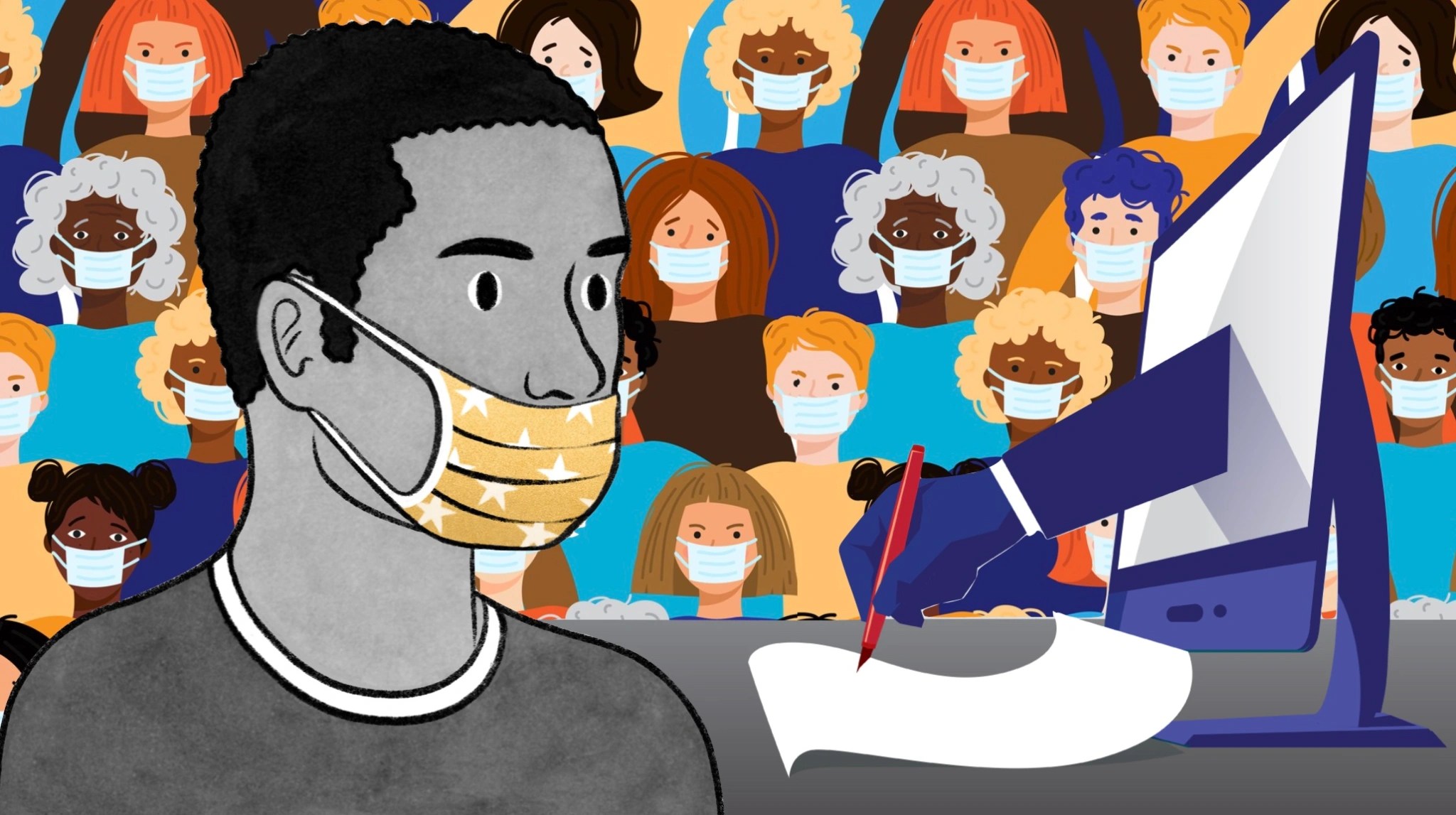
10) Top 6 Administrative Failures of the Pandemic Classroom
Published: May 22


 Views: 3,014


 Description: This is a postmortem on the 2020-21 school year. Here are the six policies that really weren’t working from social distancing, to cyber school, hybrid models, and more.


 Fun Fact: I had hoped that laying out last year’s failures might stop them from being tried again this year or at least we might revise them into policies that worked. In some instances – like cyber school – there seems to have been an attempt to accomplish this. In others – like standardized testing – we just can’t seem to stop ourselves from repeating the same old mistakes.

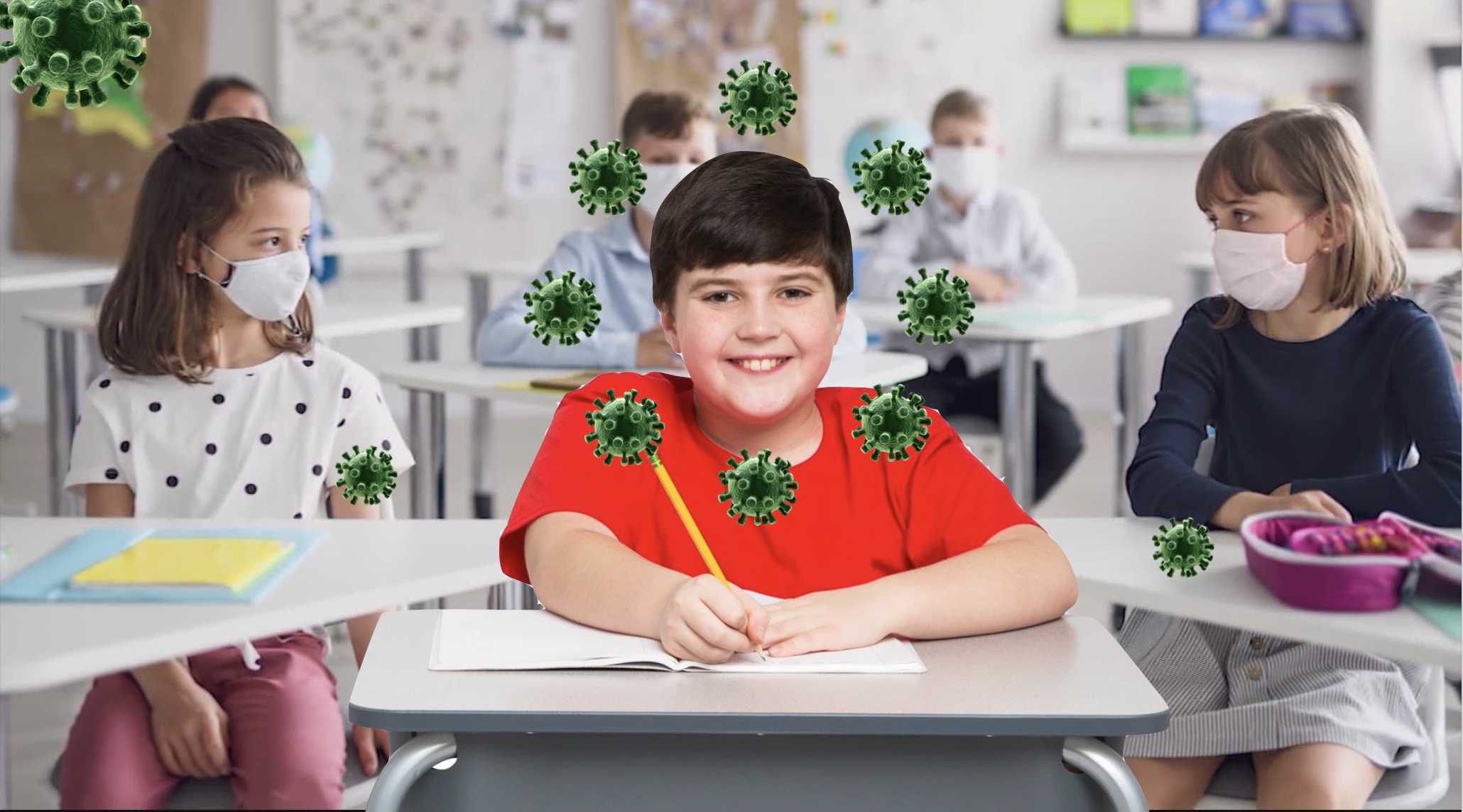
9) Why Does Your Right to Unmask Usurp My Child’s Right to a Safe School?
Published: Aug 17


 Views: 3,151


 Description: It seemed like a pretty easy concept when I first learned it back in civics class. Your right to freedom ends when it comes into conflict with mine. But in 2021, that’s all out the window. Certain people’s rights to comfort (i.e. being unmasked) are more important than other people’s right to life (i.e. being free from your potential Covid).


 Fun Fact: This was republished in CommonDreams.org and discussed on Diane Ravitch’s blog.

8) Stop Normalizing the Exploitation of Teachers 


Published: Nov. 26


 Views: 3,716


 Description: Demands on teachers are out of control – everything from new scattershot initiatives to more paperwork to having to forgo our planning periods and sub for missing staff nearly every day. And the worse part is that each time it’s done, it becomes the new normal. Teaching should not be death by a million cuts.


 Fun Fact: This was another in what seemed to be a series of articles about how teaching has gotten more intolerable this year. If anyone ever wonders what happened to all the teachers once we all leave, refer to this series.

7) Top Five Actions to Stop the Teacher Exodus During COVID and Beyond


Published: Oct. 7


 Views: 5,112


 Description: Teachers are leaving the profession at an unprecedented rate this year. So what do we do about it? Here are five simple things any district can do that don’t require a lot of money or political will. They just require wanting to fix the problem. These are things like eliminating unnecessary tasks and forgoing formal lesson plans while increasing planning time.


 Fun Fact: Few districts seems to be doing any of this. It shows that they really don’t care.


6) I Love Teaching, But…


Published: Dec. 20


 Views: 5,380


 Description: This is almost a poem. It’s just a description of many of the things I love about teaching and many of the things I don’t. It’s an attempt to show how the negatives are overwhelming the positives.


 Fun Fact: This started as a Facebook post: “I love teaching. I don’t love the exhaustion, the lack of planning & grading time, the impossibly high expectations & low pay, the lack of autonomy, the gaslighting, the disrespect, being used as a political football and the death threats.”

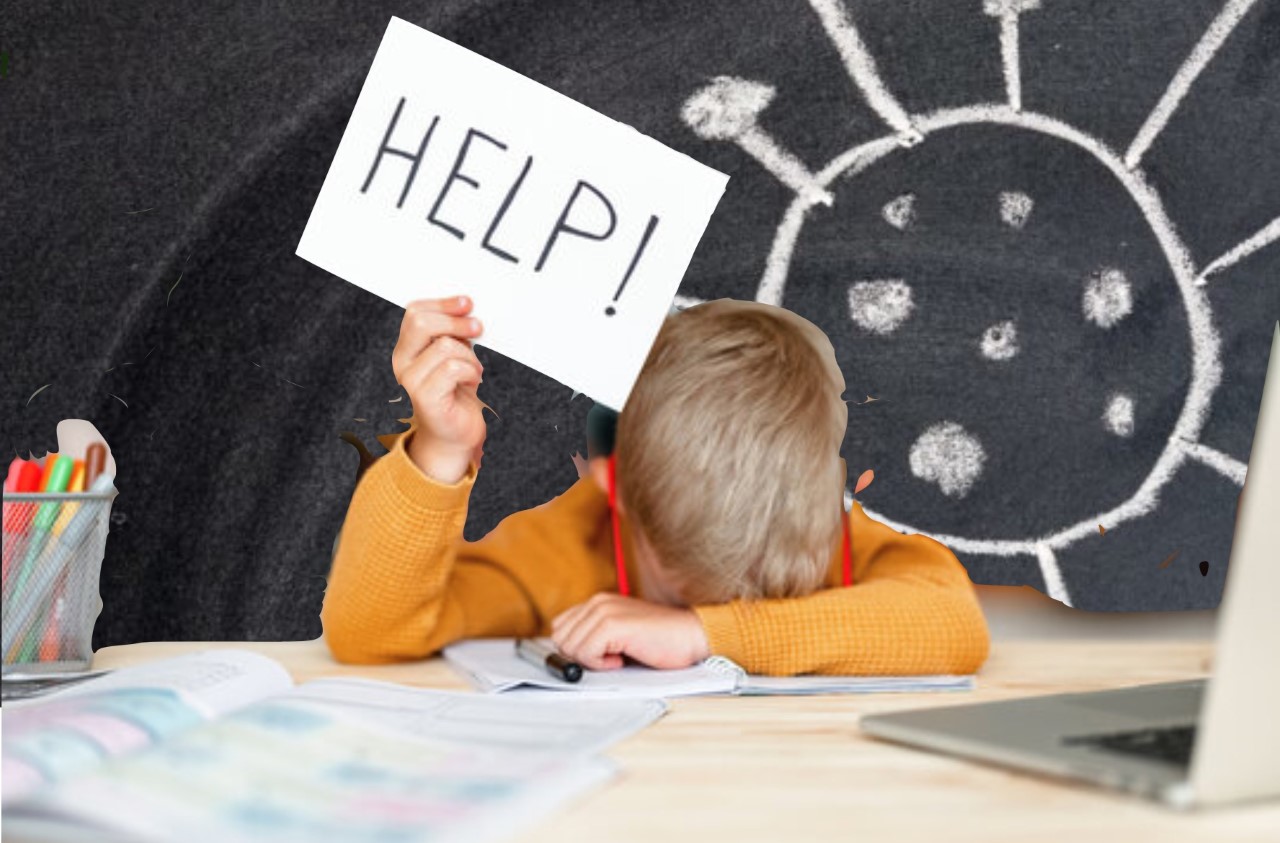
5) My Students Haven’t Lost Learning. They’ve Lost Social and Emotional Development  

Published: Sept. 30


 Views: 6,422


 Description: Policymakers and pundits keep saying students are suffering learning loss from last year and the interrupted and online classes required during the pandemic. It’s total nonsense. Students are suffering from a lack of social skills. They don’t know how to interact with each other and how to emotionally process what’s been going on. 

Fun Fact: This idea is so obvious to anyone who’s actually in school buildings that it has gotten through somewhat to the mass media. However, the drum of bogus learning loss is still being beaten by powerful companies determined to make money off of this catastrophe.

4) You’re Going to Miss Us When We’re Gone – What School May Look Like Once All the Teachers Quit


Published: Feb. 20


 Views: 9,385


 Description: Imagine a world without teachers. You don’t have to. I’ve done it for you. This is a fictional story of two kids, DeShaun and Marco, and what their educational experience may well be like once we’ve chased away all the education professionals. 

Fun Fact: This is one of my own favorite pieces of the year, and it is based on what the ed tech companies have already proposed.

3) The Teacher Trauma of Repeatedly Justifying Your Right To Life During Covid


Published: Jan 16


 Views: 9,794


 Description: How many times have teachers had to go to their administrators and school directors asking for policies that will keep them and their students safe? How many times have we been turned down? How many times can we keep repeating this cycle? It’s like something out of Kafka or Gogol. 

Fun Fact: It may not be over.

2) Teachers Are Not Okay


Published: Sept. 23


 Views: 14,592


 Description: This was my first attempt to discuss how much worse 2021-2022 is starting than the previous school year. Teachers are struggling with doing their jobs and staying healthy. And no one seems to care. 

Fun Fact: My own health was extremely poor when I wrote this. I was in and out of the hospital. Though I feel somewhat better now, not much has changed. This article was republished in the Washington Post, on CommonDreams.org, and discussed on Diane Ravitch’s blog.

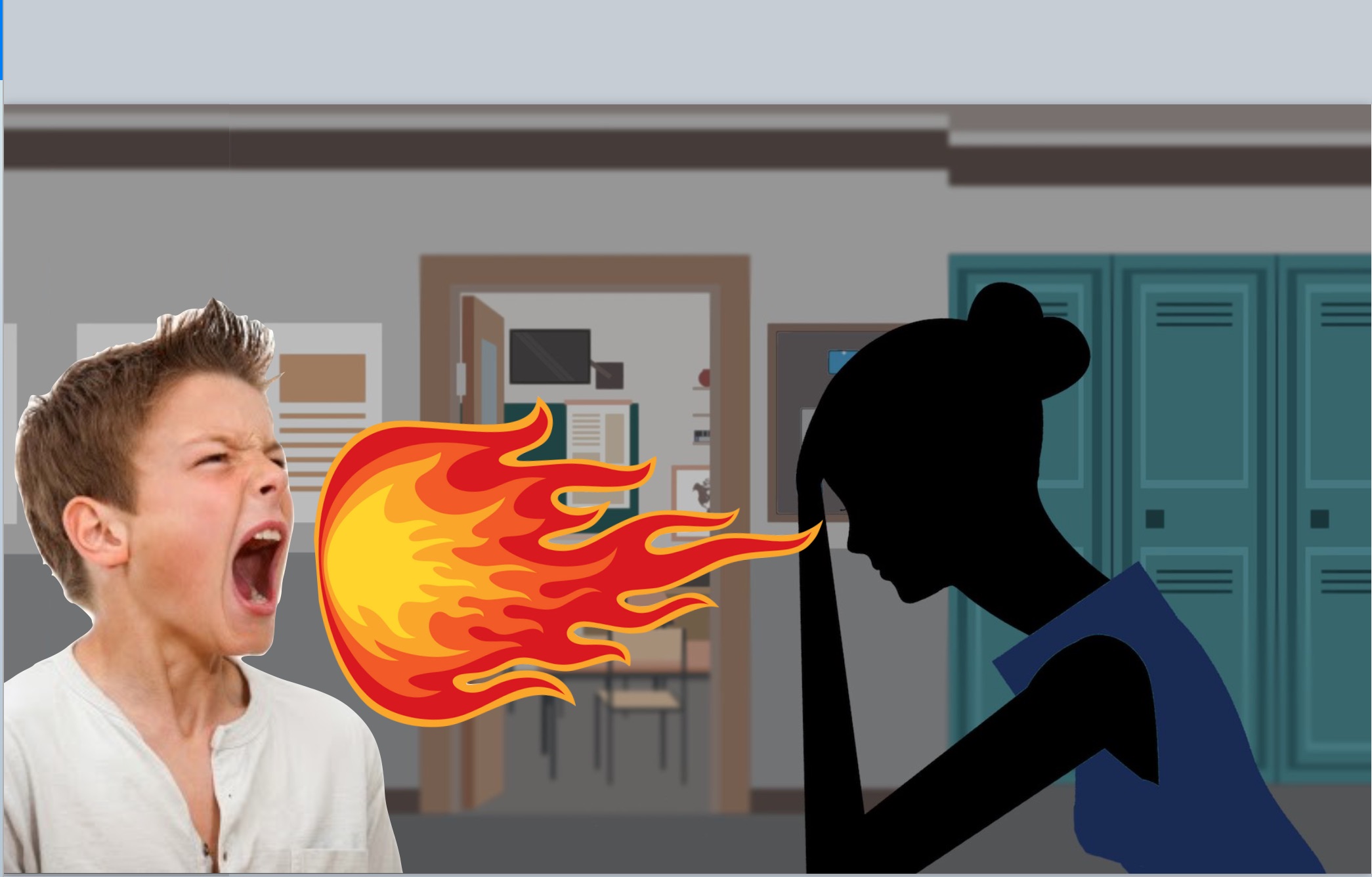
1) Teachers Absorb Student Trauma But Don’t Know How to Get Rid of the Pain

Published: Nov. 10


 Views: 40,853


 Description: Being there for students who are traumatized by the pandemic makes teachers subject to vicarious trauma, ourselves. We are subject to verbal and physical abuse in the classroom. It is one of the major factors wearing us down, and there appears to be no help in site – nor does anyone even seem to acknowledge what is happening.


 Fun Fact: This one really seemed to strike a nerve with my fellow teachers. I heard so many similar stories from educators across the country who are going through these same things.


Like this post?  You might want to consider becoming a Patreon subscriber. This helps me continue to keep the blog going and get on with this difficult and challenging work.

Plus you get subscriber only extras!

Just CLICK HERE.

Patreon+Circle

I’ve also written a book, “Gadfly on the Wall: A Public School Teacher Speaks Out on Racism and Reform,” now available from Garn Press. Ten percent of the proceeds go to the Badass Teachers Association. Check it out!
Stop Normalizing the Exploitation of Teachers 


Nearly everyday I get to school only to be confronted by the call-off sheets


Pages and pages of people who aren’t coming in to work – and the substitute teachers assigned to take over their classes.


Yikes, it’s a long list today.

I see Mrs. K is still out. She was sobbing in the faculty room last week. Wonder what that was about.

Rumor has it Mr. C was rushed to the nurse to have his blood pressure taken after his face turned beet red in the middle of his last class yesterday. Not a shock that he’s missing.

And Ms. P’s out again. I can’t blame her. If one of my students attacked me, I’d have trouble coming back, too.

My eyes pour down the names of absent teachers and present substitutes only to find the one I’m dreading – my own.

I’m expected to sub for Mrs. D’s 8th period – again.

Great.


Too many kids I barely know stuffed into a tiny room. Last time there was almost a fight. Will they even listen to me this time?

I have my own classes. I shouldn’t have to do this.


But that’s exactly what’s expected of teachers these days.  


If your colleagues are absent and there aren’t enough subs, you have no choice. You have to fill in somewhere.  


Normally, I wouldn’t mind all that much. After all, I AM being paid for doing the extra work. But day-after-day, week-after-week, for months on end – it’s exhausting.  

It’s not my responsibility to make sure every room in the building is covered.  


I never applied to fix the district’s supply and demand issues. 


It makes it harder to do my own work. Beyond the increased stress of being plopped into a situation you know nothing about, subbing means losing my daily 40-minute planning period.  


Grading student work, crafting lessons, reading IEPs, doing paperwork, making copies, filling out behavior sheets, contacting parents, keeping up with Google Classroom and other technologies and multi-media – one period a day is not nearly enough time for it all.

Not to mention it’s my only chance outside of lunch that I can go to the bathroom.  


And now I don’t even get that! If I’m going to do even the most basic things to keep my head above water, I have to find the time somewhere – usually by stealing it from my own family


Even under normal circumstances I routinely have to do that just to get the job done. But now I have to sacrifice even more!  


I’ll be honest. I often end up just putting off the most nonessential things until I get around to them. 


This month, alone, I’ve only had four days I didn’t have to sub. That’s just four planning periods to get all the groundwork done – about one period a week. Not even enough time to just email parents an update on their children’s grades. So little time that yesterday when I actually had a plan, there was so much to do I nearly fell over.  


When I frantically ran to the copier and miraculously found no one using it, I breathed a sigh of relief. But it turned into a cry of pain when the thing ran out of staples and jammed almost immediately.  


I didn’t have time for this.  


I don’t have time for things to work out perfectly! 


So like most teachers after being confronted with the call-off sheet for long enough, that, itself, becomes a reason for me to call off. 

I am only human.


I figure that I might be able to do my own work today, but I’m just too beat to take on anyone else’s, too.

Some days I get home from work and I have to spend an hour or two in bed before I can even move.

And my health is suffering.  

I’ve had more trips to the emergency room, doctor’s visits, medical procedures and new prescriptions the beginning of this year than any other time I’ve been teaching.


It’s a problem of exploitation and normalization. 


Exploitation is when you treat someone unfairly for your own benefit. 


Our schools have been doing that to teachers for decades – underpaying them for the high responsibilities they have, expecting each individual to do the work of multiple people and when anything goes wrong, blaming them for it. 


The way we mishandle call-offs is a case in point. 


When so many educators are absent each day, that’s not an accident. It’s the symptom of a problem – burn out.  


We’ve relied on teachers to keep the system running for so many years, it’s about to collapse. And the pandemic has only made things worse.  


We piled on so many extra duties – online teaching, hybrid learning, ever changing safety precautions – these became the proverbial straw that broke educators’ backs.  


And now we’re screaming in pain and frustration that we can’t go on like this anymore. That’s what the call-off sheet means. It’s a message – a cry for help. But few administrators allow themselves to see it. 


They won’t even admit there is a problem.  


I can’t tell you how many times I’ve heard principals and administrators talk about the call-off sheet like it’s an act of God or a force of nature like a flood or a tornado.  


No! This wasn’t unpredictable! This didn’t just happen! It’s your fault!  


If there have been a high number of call-offs nearly every day for the past few weeks, it’s not a freak of nature when it happens again today! Administrators are responsible for anticipating that and finding a solution. 


This is not a situation where our school leaders are helpless. 


There are things they can do to alleviate this situation – reducing nonessential tasks, eliminating unnecessary paperwork, refraining from excess staff meetings, forgoing new initiatives, letting teachers work from home on professional development days – anything to give us a break and an opportunity to heal from the years of overburdening.

These are just the short term solutions – the things that don’t require money or political will


However, most administrators refuse to do any of it! They refuse to even admit there is a problem.  


They’re happy to just let teachers keep picking up the slack


That’s what I mean by normalization.  


It’s taking a bad situation and redefining it as usual, typical and expected. 


It’s like saying “This is the way things are now. This is school. This is our new baseline.”  


However, it is not sustainable! 


We cannot continue to apply the old model of public schooling to the problems we have today. It didn’t work before the pandemic and now it is frayed to the breaking point.  


When the first wave of Covid-19 washed over us and many schools went to online learning, leaders promised we’d rebuild back better when they finally reopened. 


This was the perfect chance, they said, to change, to reform the things that weren’t working and do all the positive things we’d wanted to do for years.  


Even at the time I thought it was rather optimistic to the point of naivety. Time has proven me correct.


Since schools have reopened, there has been no rebuilding back better. We’ve been forced to accept things worse.  


Teachers were already trickling away from the profession before Covid-19 was even discovered. Now they’re running away in droves.  

Standardized tests were always poor assessments of student learning. Now we’re encouraged to spend every minute teaching to those tests to overcome the bogeyman of “learning loss.”

Poor and minority students often suffered more traumas and insecurities than their wealthier and more privileged peers. Now after as much as two years of online learning, student trauma is the norm. Kids lack the basic social skills needed to communicate without fighting and they’re taking out their frustration on their teachers.

It’s a raging dumpster fire. And few people in a position to take action have the courage to do so.

Few are even brave enough to admit the dumpster is on fire.

Teachers cannot be exploited forever.

Even we have our limits.

We want to be there for students and their families, but we can’t do that if we’re sick and suffering.

We are a renewable resource but we need renewed.

If society is not willing to do that, there will be none of us left.

The call-off sheet will stretch to the horizon and there will be no one there to take our place.


Like this post?  You might want to consider becoming a Patreon subscriber. This helps me continue to keep the blog going and get on with this difficult and challenging work.

Plus you get subscriber only extras!

Just CLICK HERE.

Patreon+Circle

I’ve also written a book, “Gadfly on the Wall: A Public School Teacher Speaks Out on Racism and Reform,” now available from Garn Press. Ten percent of the proceeds go to the Badass Teachers Association. Check it out!
Where Are the Parents? The School Shortage We Ignore 

Our public schools are suffering from crippling shortages. 


Classroom teachers, substitute teachers, special education aides, even bus drivers are hard to find. 


But of all the essential personnel who have gone missing, the group with the largest impact is the one we least want to mention – parents. 


I’m a middle school Language Arts teacher.  


Every year I look forward to parent-teacher conferences.  


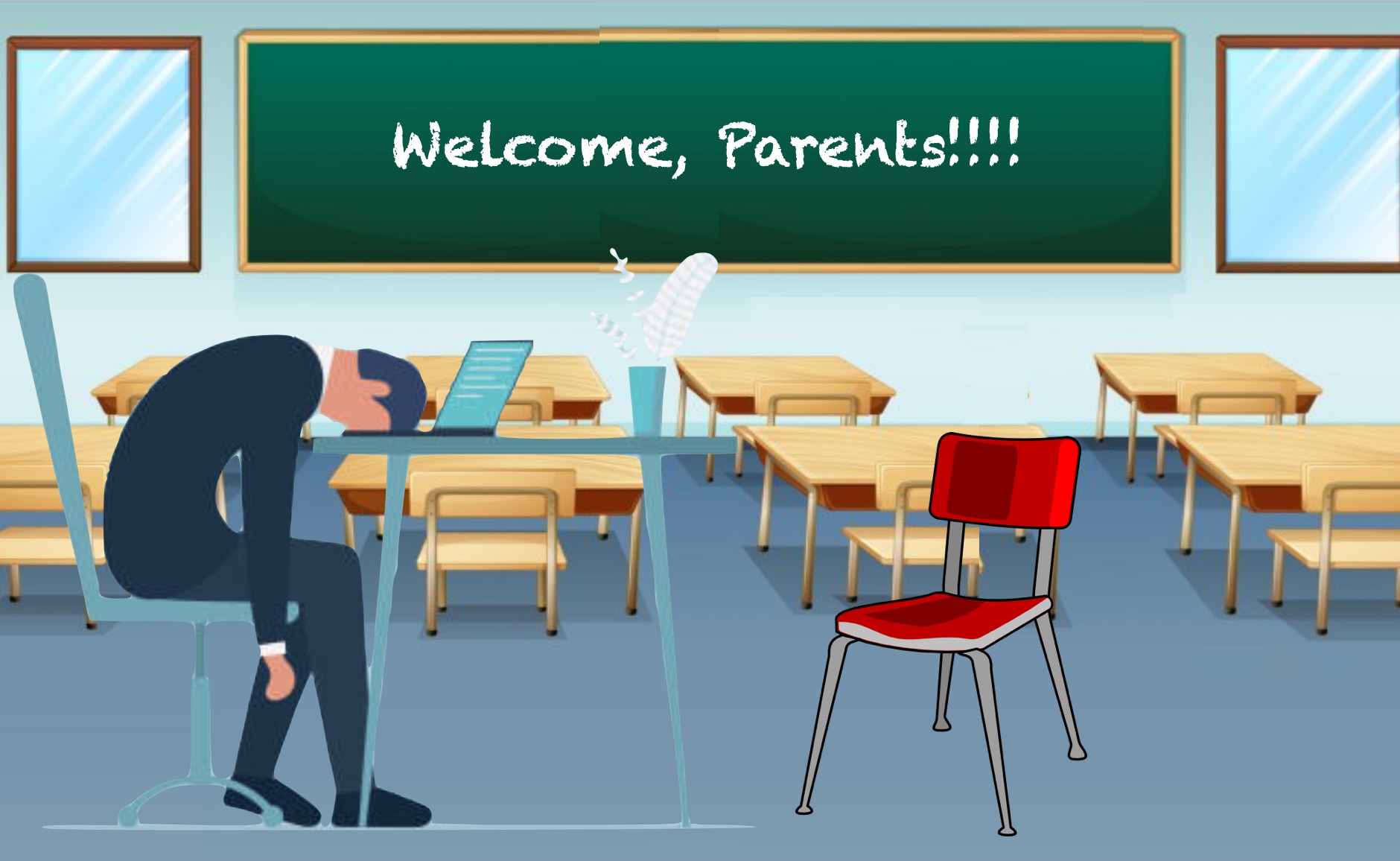
I gather samples of student work, journal entries, drawings and grade reports. I put out a row of chairs in the hall so people have a place to sit if they have to wait for one group to finish before they can see me. And I write in big, bold, colorful chalk on the board, “Welcome, Parents!” 


Then I sit at my desk trying to stay awake as the hours creep by in my empty classroom. 


Where are all the parents?  


Seriously. Where did the moms and dads go? Where are the grandparents, the older siblings, the guardians, the primary or even secondary caregivers? 


On Parent-Teacher Day, they must be somewhere, but they’re not here.  


We typically have a section from noon to 3 and one from 5 to 8 pm so that people with various schedules can come in.  


And every year it’s the same. Only about 20-30% of my students’ parent or guardians usually visit me on these days – and that’s after the promise of bonus points if they come in! 


Even then it’s most often the parents of the kids with the best grades who show up. It’s the parents of kids who say “Please” and “Thank you,” the kids who smile when you walk in the room, the kids who want you to hang up their drawings on the bulletin board.  


The children who are struggling, the ones who don’t know how to behave and look at you out of the corner of their eyes expecting pain and negativity – their parents rarely show up.  


And it’s these bruised and battered kids who are in the majority. 


Where are their parents? 


They’re missing. Gone. Poof. 


We saw this when schools went to on-line learning at the beginning of the Covid-19 pandemic.  


Teachers would turn on their Zoom links to give lessons to their students only to find many of the kids vanished.  


These kids usually were there when school was in-person. But on-line they were MIA. And even if they were technically present, they often hid behind a turned off camera and didn’t hand in their work


Why?  


At school, the teacher was there to make sure these kids took care of business. But at home there simply was no one to hold them accountable. No one to get them up, feed them, and make sure they were online when classes began, ensure they paid attention and did their work.  


That’s why so many kids were absent or otherwise failed the online experience.  


Granted this kind of cyber learning is developmentally inappropriate for most K-12 students – certainly those up through middle school. But with the proper parental support, most children would have done much better.  


It just wasn’t there.  


Now let me be clear about one thing – I am not blaming anybody here.  


It is not my intention to pass judgment on anyone.  


As a parent, myself, I know from experience how difficult the job is – especially during a global pandemic.  


But we have to face the facts. As a whole, parents were the weak link in the chain. And it didn’t start with Covid – they have been the weak link for decades. 


Teachers can’t go to every student’s home and be caregiver as well as educator. The fact that so many children are struggling with basic socialization skills after as much as two years of online schooling goes to show how much of the responsibility for raising children has rested on schools and teachers.  


This year many students don’t know how to talk with each other without instigating a fight. They constantly pick on each other, demand respect they aren’t giving and are starving for any kind of attention they can get.  


Without daily in-person contact with teachers, many children have become socially awkward and need to relearn the basics of interpersonal interaction. That’s how much we’ve come to expect teachers to be co-parents from year-to-year. 


Let me stop again and clarify that I am not talking about all parents.  


Many parents go out of their way to be present in their children’s lives.  


They get their kids up for school, make sure they eat a nutritious breakfast, ensure they catch the bus or get a ride to school, make sure they do their homework after the day is over and establish a healthy bedtime.  


But this should be the norm, not the exception.  


I know how hard it is to do. Waking my daughter up every morning often takes a stick of dynamite. And getting that girl to eat a healthy breakfast is a battle I often lose. But her mother and I make darn sure she does her homework and we even sit down with her to help it get done. And weekday bedtimes are religiously adhered to – no one wants a cranky, fussy child the next morning. 


However, it’s easier for us because we have certain advantages.  


Class, privilege, wealth, upbringing, social status all conspire to give us a boost.  


My wife and I don’t have to work more than one job to make ends meet, for example. It would probably help if we did, but neither of us has the wherewithal, and we get by.  


But many folks are not so lucky.  


They DO have to work multiple jobs. They have work schedules that are less in tune with the school day. They can’t be home to wake up their kids and send them off. They can’t be home when kids are dismissed and don’t have the time to help with homework. Some barely have the education, themselves, to be of much assistance.  


Disadvantaged parents often had bad experiences with school when they were students. So they don’t instill the importance of education to their kids. Nor do they prove good role models since they often don’t read for pleasure, speak in the dominant vernacular or respect teachers.  


All this has tremendous effects on the education children receive. 


In fact, many academic studies have shown that the most important factor in the education process isn’t the school or teachers – it’s the parents. 


Roughly 60% of academic achievement can be explained by family background – things like income and poverty level. School factors only account for 20% – and of that, teachers account for 15%. (see Hanushek et al. 1998; Rockoff 2003; Goldhaber et al. 1999; Rowan et al. 2002; Nye et al. 2004). 


Estimates vary somewhat from study to study, but the basic structure holds. The vast majority of impact on learning comes from the home and out-of-school factors. Teachers are just a small part of the picture. They are the largest single factor in the school building, but the school, itself, is only one of many components. 


Study after study conclude that students with involved parents are more likely to earn higher grades and test scores, have better attendance and social skills, and adapt well to school.  


According to the National Parent Teacher Association (PTA), the most accurate predictors of student achievement in school are the extent to which families create home environments that encourage learning, communicate high yet reasonable expectations, and become involved in the children’s education at school.  


Moreover, when parents are involved, the performance of all the children at school tends to improve – not just the academics of kids with involved parents. The more comprehensive the partnership between school and home, the higher the student achievement.  


Put simply – parents are vital to good learning.  


But our society doesn’t do much to allow parents to parent. 


To some extent, the pandemic is making things worse. 


More than 750,000 Americans have died from COVID-19.   


 According to the CDC, more than 140,000 children in the U.S. have lost a primary or secondary caregiver such as a live-in grandparent or another family member to the virus.   


This is wreaking havoc on kids support systems.  


But an even larger problem is economics.  


When schools went online, employers could have allowed more parents to work from home so they could be there for their children. However, profits were more important.  


Even in non-pandemic times, employers need to provide more time and resources for parent
s. There is too much demand for overtime hours, increased productivity and very little family leave or other such services.  


I truly believe that most parents want to be there for their children but feel like they can’t due to the stresses and strains of work
.  


We live in one of the richest countries in the world. Much of the labor we force people to do is strictly unnecessary. It’s there just to justify our economic system. If we reordered things around people instead of capital, parents could more easily be involved in their children’s educations.  


This is fundamentally the problem with all the educational shortages we’re seeing.  


These are symptoms of an economic failure
. We can continue to prop up this faded machine or create a world that values life over profit.  


But we pretend this isn’t true. 


We’ve been trying to run our schools as if parents weren’t that important and then throwing all the blame on teachers when parents don’t show up.  


This has to stop. 


It’s time to admit how important parents are to their children’s educations and then provide them with the tools necessary to be parents. 


It’s time to include parents in the circle.  


It’s time to expect them to show up. 


Because we can’t continue educating their children without them. 


Like this post?  You might want to consider becoming a Patreon subscriber. This helps me continue to keep the blog going and get on with this difficult and challenging work.

Plus you get subscriber only extras!

Just CLICK HERE.

Patreon+Circle

I’ve also written a book, “Gadfly on the Wall: A Public School Teacher Speaks Out on Racism and Reform,” now available from Garn Press. Ten percent of the proceeds go to the Badass Teachers Association. Check it out!

Teachers Absorb Student Trauma But Don’t Know How to Get Rid of the Pain


Today a middle school student said he hated me.  


He told me to go F- myself.  


He wrote all over his desk.  


He shouted insults at the other students. 


He asked to be sent home.  


He said he wished he was dead.  


He asked to see the school counselor.  


I let him. 


And this was all in one 42 minute period. 


By the time the bell rang for the next class, I was exhausted.  


I was worried about my student. I wondered how I could help


But I could barely stand up. 


I wiped at my eyes. They were unaccountably filled with tears. My hands were shaking.  


I didn’t have time for this now. I had to put on a smile and welcome in the next class. 


Perhaps there would be time to feel all this later. 


Incidents like this take a tremendous toll on educators. 


We’re highly trained adults, but people forget – we’re human, too.  


When someone unexpectedly yells at you or gets in your face, you feel it. 


This is especially true when it’s a child. 


When a student is crying out in pain and that pain manifests itself as negative and violent behavior, it impacts you. 


We end up absorbing it all like a sponge.  


But what do we do with all that poison once it’s over? 


Psychologists call this experience vicarious trauma


According to the American Counseling Association, this is sometimes called the “cost of caring” and can result from “hearing [people’s] trauma stories and becom[ing] witnesses to the pain, fear, and terror that trauma survivors have endured.” 


Vicarious trauma affects teachers the same way it does students


The brain emits a fear response releasing cortisol and adrenaline which, in turn, increases heart rate, blood pressure, and respiration, followed by a rush of emotions.  


The biological response can display itself in mental symptoms such as anger, headaches, or even physical ones like missing staff meetings, lateness to work or avoiding certain students or situations. 

You want to know why classroom teachers are taking an increasing number of sick days lately? Dealing with vicarious trauma is a big part of it.


“Being a teacher is a stressful enough job, but teachers are now responsible for a lot more things than just providing education,” says LeAnn Keck, a manager at Trauma Smart, an organization that helps children and adults navigate trauma.  


“It seems like teachers have in some ways become case workers. They get to know about their students’ lives and the needs of their families, and with that can come secondary trauma.” 


This is an aspect of the job for which most teachers are unprepared.  


According to a 2020 survey by the New York Life Foundation and American Federation of Teachers, only 15% of teachers felt comfortable addressing grief or trauma.  


When I first entered the field two decades ago, I was taught how to design lessons, sequence curriculum, manage classes, calculate grades, etc. Never once did anyone mention that I would be standing between a hurting child and a world he is desperately trying to lash out against. 


Most teachers aren’t taught how to help students who have experienced trauma. Nor are we taught how to handle the toll it takes on our own health and personal lives.  


And unfortunately things are getting much worse. 


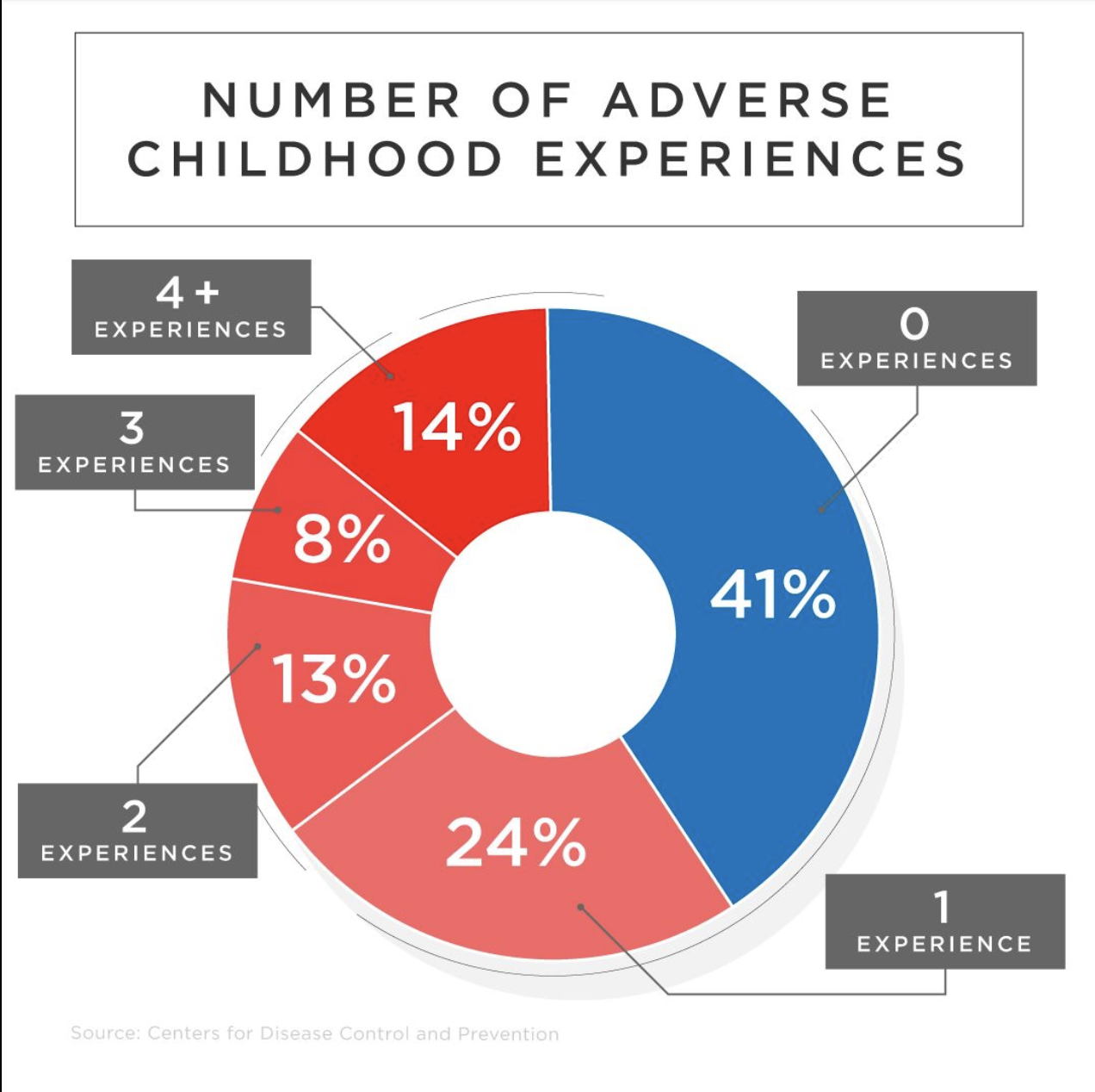
According to the Centers for Disease Control and Prevention (CDC), more than half of all U.S. children have experienced some kind of trauma. This includes abuse, neglect, violence, or challenging household circumstances. And 35 percent of kids have experienced more than one type of traumatic event. 


In class, these traumas can manifest in many ways such as acting out. However, they can also be more subtle such as failure to make eye contact, repeated foot tapping, etc. 


Childhood trauma was not unknown before the pandemic, but it was much less frequent.  


Since returning to the physical classroom after months or more of on-line learning, many students are having a difficult time readjusting. And some show signs of compounded emotional trauma. 


The student who exploded today is a prime example. 


Clearly something may have happened to him. 


A few years ago he had been an A student. He was academically gifted. But when we went to on-line classes to protect against Covid-19, he disappeared.  


Only to come back like this. 


As a classroom teacher with two decades of experience, I know that when a student acts this way, punishing him won’t help. He needs support coping, but that’s easier said than done. 


I need help coping with HIM! 


These adverse childhood experiences (ACEs) can impact kids well into adulthood with higher risks for alcoholism, liver disease, suicide, and other health problems. 


And it affects their teachers, too. 


Since schools have reopened, many kids don’t seem to know how to interact without teasing, goading or tormenting each other. We’re seeing children scream at each other in class over things as simple as finding a pencil. There are more frequent fights, vandalism, bullying, cyber bullying and even attacks against teachers.


Last week at my school, a student in the hall pushed another student into a teacher’s back. The first student was trying to fulfill the infamous TikTok challenge of hitting a teacher, but he wanted to avoid punishment by being able to claim it was an accident. 


This increase in negative behaviors can be directly attributed to the pandemic. 


More than 750,000 Americans have died from COVID.  


According to the CDC, more than 140,000 children in the U.S. have lost a primary or secondary caregiver such as a live-in grandparent or another family member to the virus.  


No wonder kids are having trouble with self-control! Their support systems are in tatters!  


With fewer role models at home and less time in the classroom over the last year and a half, kids are suffering. And that’s not just anecdotal. The facts back it up. 


The CDC reports that children between the ages of 5 and 11 visiting an emergency department because of a mental health crisis increased 24 percent from April through October of 2020 compared to the previous year. Among 12- to 17-year-olds, the number increased by 31 percent.   


Suicide attempts among 12- to 17-year-old girls increased by about 50 percent over winter 2019, according to the CDC.  


And these numbers are probably under reported since these increases took place at the height of the pandemic when many people were hesitant to seek medical attention.   


The increase in student trauma and the lack of additional supports is undoubtedly contributing to the speed at which teachers are leaving the profession. 


We want to help our students but many of us feel ill-equipped to do so. And it’s negatively affecting our own health.  


As we are constantly attacked in the media for everything from teaching an accurate history of America to failing to meet every need our students have, many educators are throwing up their hands and moving on. 


It is vital that people stop hurling stones and understand the increased burden placed on teachers’ shoulders. Not only that, but it’s well past time for people to get off the side lines and actually support educators.  


We can’t do it all alone.  


For example, one of the most important things teachers need is time.  


This is time untethered to students, time without classes to teach or papers to grade or paperwork to fill out or even duties to perform.  


We need time to talk with our colleagues about what we’re experiencing. 


That’s not just gossiping or socializing. It’s necessary to function. 


Educators need the ability to talk through what they’re experiencing and what they’re feeling with other teachers coping with secondary trauma, according to Micere Keels, an associate professor at the University of Chicago and founder of the TREP Project, a trauma-informed curriculum for urban teachers. 


“Reducing professional isolation is critical,” said Keels. “It allows educators to see that others are struggling with the same issues, prevents the feeling that one’s struggles are due to incompetence, and makes one aware of alternative strategies for working with students exhibiting challenging behavior.” 


However, this can’t be something teaches do on their own. This is an essential part of the job.  


Part of our profession has become being put in harm’s way. We need the time to cope with that on the job with our colleagues.


In addition, this allows teachers to work together to develop coping strategies.  


For instance, it’s never good to meet a student’s anger with yelling or fury of your own. Educators need to find ways to de-escalate and bring the tension down in the classroom.  


However, there’s no need to reinvent the wheel, either. Investing in high quality professional development for trauma-informed practices and enacting them school-wide would also be incredibly helpful. As would an influx of professional counselors, social workers and psychologists who are actually trained to deal with these situations.


Finally, it is essential that teachers are allowed the latitude to go home from their jobs. 


By that, I don’t mean that teachers are held hostage, that any district forces their staff to stay in the building 24/7. I mean that many teachers find it difficult to go home and stop being teachers. We’re always on. We need time to turn off and tune out. 


Educators often take mountains of work home, grade papers, call parents, etc. All on their own time. 


There needs to be a demarcating line between our professional and personal lives. And the district, administrators, school directors and parents need to respect that line. 


Teachers cannot be there for children if they do not have time for themselves and their families. 


And these are really just the tip of the iceberg.  


Teachers need higher salaries, lower class sizes, and above all – RESPECT.  


Accomplishing all of this will not be easy. But I’ll bet every district can accomplish SOME of it.  


Every district can accomplish some of it TOMORROW.  


If we want to continue having teachers – I mean flesh-and-blood teachers with college degrees and hard won experience, not just technology, apps or a rotating cast of minders and babysitters – we have to take care of them.  


They take care of our children.  


It’s time we gave back what they need to get the job done. 


It’s time we gave back the respect they deserve. 


It’s time we gave them the opportunity to heal from the trauma of coping with our children. 


Like this post?  You might want to consider becoming a Patreon subscriber. This helps me continue to keep the blog going and get on with this difficult and challenging work.

Plus you get subscriber only extras!

Just CLICK HERE.

Patreon+Circle

I’ve also written a book, “Gadfly on the Wall: A Public School Teacher Speaks Out on Racism and Reform,” now available from Garn Press. Ten percent of the proceeds go to the Badass Teachers Association. Check it out!
Top Five Actions to Stop the Teacher Exodus During COVID and Beyond


As the COVID-19 pandemic drags on, schools across the United States are on the brink of collapse
 
There is a classroom teacher shortage. 
 
There is a substitute teacher shortage.  
 
There is a bus driver shortage
 
There is a special education aide shortage.  
 
The people we depend on to staff our public schools are running away in droves.  
 
It’s a clear supply and demand issue that calls for deep structural changes.  
 
However, it’s not really new. We’ve needed better compensation and treatment of school employees for decades, but our policymakers have been extremely resistant to do anything about it.   
 
Instead, they’ve given away our tax dollars to corporations through charter and voucher school initiatives. They’ve siphoned funding to pay for more standardized testing, teaching to the test, and ed tech software.  
 
But the people who actually do the work of educating our youth. We’ve left them out in the cold.  
 
Now with the smoldering pandemic and increased impacts on the health, safety and well-being of teachers and other staff, the exodus has merely intensified.  
 
Frankly, I’m not holding my breath for lawmakers to finally get off their collective asses.  
 
We need a popular, national movement demanding action from our state and federal governments. However, in the meantime, there are several things our local school districts can do to stem the tide of educators fleeing the profession.
 
These are simple, cheap and common sense methods to encourage teachers to stay in the classroom and weather the storm.  
 
However, let me be clear. None of these can solve the problem, alone. And even ALL of these will not stop the long-term flight of educators from our schools without better salaries and treatment.  


1)    Eliminate Unnecessary Tasks 


The list of tasks an average teacher is expected to accomplish every day is completely unrealistic.  
 
Think about it. Just to get through a normal day teachers need to provide instruction, discipline students, grade papers, facilitate classwork, troubleshoot technology, provide written and verbal feedback, counsel disputes, role model correct behavior, monitor the halls, lunches, breakfasts and unstructured time, meet with co-workers, follow Individual Education Plans, scaffold lessons for different learners and learning styles…  
 
The list is truly staggering. 
 
And it never stops. 
 
Researchers have estimated that on average teachers make at least 1,500 decisions a day. That’s about 4 decisions a minute. 
 
No one can keep up that pace, day-in, day-out, without strain. No one can do it without their work suffering.  
 
If we truly want to help teachers feel empowered to stay in the profession, we need to reduce the burden. And the best way to do that is to eliminate everything unnecessary from their plates. 

That means no staff meeting just to have a staff meeting. No shotgun scattered initiatives that teachers are expected to execute and we’ll see what will stick. No reams of paperwork. No professional development that wasn’t specifically requested by teachers or is demonstrably useful.

Nothing that isn’t absolutely necessary.

 
2) No Formal Lesson Plans

The number one offender is formal lesson plans.  
 
I’m not saying we should tell teachers they don’t have to plan what they’re doing in their classes. I’m not sure how an educator could realistically enter a classroom of students and just wing it.  
 
However, the process of writing and handing in formal lesson plans is absolutely unnecessary. 
 
Teachers gain nothing from writing detailed plans about what they expect to do in their classes complete with reference to Common Core Academic Standards. They gain nothing from acting as subordinates to an all knowing administrator who probably has not been trained in their curriculum nor has their classroom experience teaching it.  
 
For educators with at least 3-5 years under their belts, formal lesson plans are nothing but an invitation to micromanagement.  
 
Should administrators monitor what their teachers are doing? Absolutely. But the best way to do that is to actually observe the teacher in the classroom doing the work. And to conference with the teacher before and after the observation with the goal of understanding what they’re doing and how to best help them improve.  
 
Forcing teachers to set aside time from their already overburdened schedules to fill out lesson plans that administrators don’t have time to read and (frankly) probably don’t have the training or experience to fully comprehend is top down managerial madness.  


3)    More Planning Time 

Teachers need time to plan.  

It’s pathetic that I actually have to explain this.  

Education doesn’t just happen.

Parents need called. Papers need graded. Lessons need strategized. IEP’s need to be read, understood and put into practice.

All this can only happen within a temporal framework. If you don’t give teachers that framework – those minutes and hours – you’re just expecting they’ll do it at home, after school or some other time that will have to be stolen from their own families, robbed from their own needs and down time.

Every administrator on the planet preaches the need for self-care, but few actually offer the time to make it a reality.

Even if we could discover exactly how much time was necessary for every teacher to get everything done in a given day – that wouldn’t be enough time. Because teachers are human beings. We need time to process, to evaluate, to think and, yes, to rest.

I know sometimes I have to stop wrestling with a problem I’m having in class because I’m getting nowhere. After two decades in the classroom I’ve learned that sometimes you have to give your brain a rest and approach a problem again later from a different vantage point.

I need to read a scholarly article or even for pleasure. I need to watch YouTube videos that may be helpful to my students. I need to get up and go for a walk, perhaps even just socialize for a moment with my coworkers.

None of that is time wasted because my brain is still working. My unconscious is still trying untie the Gordian knot of my workday and when I finally sit down to revisit the issue, I often find it looser and more easily handled.

Administrators must prioritize teacher planning time.

There is no simpler way to put it.

Do not ask your teacher to sub. Do not ask them to attend meetings. Do not ask them to help you plan building wide initiatives – UNLESS you can guarantee it won’t interfere with their plans.


I know this is difficult right now with so many staff falling ill or being so plowed under that they simply can’t make it to work.

However, the more you push them to give up their plans, the more you diminish returns.

Not only will their work suffer but so will their health and willingness to continue on the job.

Some districts are finding creative ways to increase planning time such as releasing students early one day a week. We did that at my district last year and it was extremely helpful to meet all the additional duties required just to keep our building open. However, as the new school year dawned and decision makers decided to simply ignore continuing pandemic issues, this time went away.

Most teachers are in the profession because it’s a calling. They care about doing the best job they can for their students.

If you take away their ability to do that, why would they stay?


4) Better Communication/ Better COVID Safety  

Communication is a two way street.

You can’t have one person telling everyone else what to do and expect to have a good working relationship.

Administrators may get to make the final decision, but they need to listen to what their teachers tell them and take that into account before doing so.

This means setting aside the proper time to hear what your staff has to say.

Many administrators don’t want to do that because things can devolve into a series of complaints. But you know what? TOUGH.

It is your job to listen to those complaints and take them seriously.

Sometimes just allowing your staff to voice their concerns is helpful all in itself. Sometimes offering them space to speak sparks solutions to problems – and a whole room full of experienced, dedicated educators can solve any problem better than one or two managers locked away in the office.

However, not only do administrators need to listen, they need to speak.

When issues crop up, they need to make sure the staff is aware of what is happening.

This is especially true during the pandemic.

We are so sick of half truths about who has Covid, who is quarantined, what is being done to keep us safe, etc.

No child should return to the classroom after a negative COVID test without the teacher already being appraised.

No child should be placed in quarantine without the teachers knowledge.

No teacher with a prior medical condition should have to serve lunch duty while students eat unmasked.

Safety protocols should be the product of the entire staff’s input. If everyone doesn’t feel safe, no one feels safe.


5) Respect 


 This is really the bottom line.

Teachers need to feel respected.

We need to know that administrators and school board members understand our struggles and are on our side.

I don’t mean taking a day or even one week out of the year to celebrate Teacher Appreciation. I don’t mean free donuts or coupons to Sam’s Club. I don’t even mean a mug with an inspirational message.

I’m talking about every day – day-in, day-out – respect for teachers.

No union bashing.

No snide comments at school board meetings.

No gossipy whispering in the community.

Being a teacher should mean something to district leaders. And they should prove it in every thing they do.

The items I mentioned here go some ways to showing that respect.

Eliminating unnecessary tasks, not requiring formal lesson plans, respecting our planning time, better communicating and safety measures are all necessary to keeping your teachers in the classroom.

But they are not sufficient.

As a nation we need to change our attitude and treatment of teachers.

No profession exists without them. They create every other job that exists.

We need to start paying them accordingly. We need to start treating them as important as they are. We need to ensure that they have the time, tools and satisfaction necessary to be the best they can be.

No district can do that alone. No school director or administrator can do that.

But these are some ways you can start.


Like this post?  You might want to consider becoming a Patreon subscriber. This helps me continue to keep the blog going and get on with this difficult and challenging work.

Plus you get subscriber only extras!

Just CLICK HERE.

Patreon+Circle

I’ve also written a book, “Gadfly on the Wall: A Public School Teacher Speaks Out on Racism and Reform,” now available from Garn Press. Ten percent of the proceeds go to the Badass Teachers Association. Check it out!

My Favorite Teacher in a Pandemic

Mr. Singer, you are the best ELA teacher I’ve ever had. I’ve always loved ELA but for years now I started not enjoying [it] anymore mostly because of the teachers. But you changed my whole view about ELA. You made me enjoy these classes, the books, and even the Zooms. You taught me that teachers can have fun in classes, too. Thank you for not giving up on me, for always trying to help me, for showing me the books at school are interesting. THANK YOU FOR TEACHING ME!”

These words were written on a folded up piece of paper handed to me by an 8th grade English Language Arts (ELA) student the day before school let out this year.

It means a lot.

Especially this year.

Teaching is always challenging. That’s part of its appeal. But teaching through a global pandemic was like nothing I’ve ever experienced before.

We were on-line, in-person, BOTH at the same time.

We were wearing masks, ensconced behind plexiglass, wiping down surfaces with cleanser between classes.

We were praised then blamed, deified, demonized, vaccinated.

Nearly every week – sometimes every few days – someone (adult or child) came down with COVID-19.

Yet through it all we somehow managed to teach.

Now that the school year is over for me, I’m left here cleaning up the mess looking back on everything.

One thing I keep hearing from policymakers, pundits and other people with no teaching experience is a frantic concern abut learning loss.

They’ve spent decades looking at spreadsheets attempting to quantify learning, and turn it into a commodity – but they have no idea what it really is.

I’m not sure I do either.

But I know this much: Learning is never lost. It’s never late or early. It’s always right there when the circumstances allow.

On the last day of class, I invariably give my students a survey about how things went. I tell them I’ve graded them all year. This is their chance to grade me.

I tell them the surveys are not part of their grade and they can even turn them in anonymously if they choose – or not at all.

But most turn them in – many with their names clearly visible.

After a year like this one, you might expect the comments to be more variable than usual. You might expect them to go on about the difficulties, the problems, all the things they didn’t learn but hoped they would.

Instead, I got mostly gratitude.

And if you haven’t taught middle school, let me tell you, that can be rare for teenagers:

“He was the best ELA teacher I’ve ever had… [He} Never stopped helping me [on] every assignment I didn’t do. He would comment on it. He would always try to help me on it.’

And:

“I think you are a kind teacher and you should keep it up so more kids can like you like me :)… When I didn’t catch on to something and I asked what we’re doing, you didn’t get upset. Instead you announced politely what we had to do and I liked that about you because most teachers would yell at me for not paying attention.”

And:

“You actually want to teach the class!”

The biggest thing they singled out about my teaching was the way I interacted with them:

“My teacher helped me with something that helped me succeed this year, and that was patience. Mr. Singer was patient with me this year and worked through what I didn’t understand.”

And:

“He helped with turning in assignments late and explaining how it works. He also explains when and what everyone needs to do it on time.”

I even had students who were thankful for the difficulty of the work:

“I liked how we did essays to get us ready for next year. I also liked how we did essays along with the short stories.”

And far from low academic scores, I had students who earned better grades than ever before:

“This is my first class in ELA when I have gotten a C or higher [in] the past 9 years.”

All of those comments were from my regular language arts students. However, I also taught two sections of a creative writing class for the same age group.

They particularly liked my comments on their written work:

“[You] gave descriptive details on what I was doing right and wrong in my writing. It helped me understand and then improve my writing skills.”

And:

“[You did well] With helping people and not being mean about what we got wrong. That actually helps by telling us the mistakes that we did. I think that helps us get better.”

They also singled out my interactions:

“You’re nice and don’t harshly judge us or yell. You’re always willing to help.”

And:

“Our teacher helped us understand that there are many ways to improve writing.”

Of course, more of them had ideas for ways I could improve:

“…I actually like your class. It’s just sometimes there could be hand injuries [from overwriting]. Also, you can sometimes [let us] make up our own [prompts].”

And this from an honors student:

“The writing prompts were good and challenging. I like how unique they were. Overall, the instruction was good, but after I finished writing my journal, I found myself sitting around with nothing to do for about 15 minutes. Maybe provide extra assignments to keep us busy.”

And that about wraps up another year.

I hope things will be different at the end of August when we return to class.

This 2020-21 has been a year like no other. But reading through these comments it’s clear it wasn’t a waste.

My students learned something.

They learned a lot of somethings.

Like every year, I gave them my all.

And like every year, it was worth it.

And to prove it, here’s one more student response from a child I had in 7th grade and in this year’s 8th grade. He also was in my creative writing class where responses had to be a minimum of 5 sentences:

Dear Mr. Singer,

I never liked reading class. I have had you for two years now and you have made me like it. You helped me to write even though I don’t like it. You push me to write when I didn’t give details to my stories. You made me read books and I enjoyed them. Every book you picked this year I liked. I even would tell my parents and my sister about them. And since she read them we could talk about them. I enjoyed watching the movies, too. I even did well with you with Zoom classes and that wasn’t easy at times. Thanks for being my favorite teacher in middle school. by the way, I wrote more than 5 sentences.”


Like this post?  You might want to consider becoming a Patreon subscriber. This helps me continue to keep the blog going and get on with this difficult and challenging work.

Plus you get subscriber only extras!

Just CLICK HERE.

Patreon+Circle

I’ve also written a book, “Gadfly on the Wall: A Public School Teacher Speaks Out on Racism and Reform,” now available from Garn Press. Ten percent of the proceeds go to the Badass Teachers Association. Check it out!

Top 6 Administrative Failures of the Pandemic Classroom

This school year has been a failure in so many ways.

But don’t get me wrong.

I’m not going to sit here and point fingers.

The Covid-19 pandemic has tested the public school system like never before.

Teachers, administrators and school directors have been under tremendous pressure and I believe most really tried their best in good faith to make things work as well as possible.

But as the year comes to a blessed close, we need to examine some of the practices common at many of our schools during this disaster and honestly evaluate their success or failure.

Some things worked well. Many made the best of a bad situation. But even more were blatant failures.

We need to know which was which.

As a classroom teacher with 17 years experience who worked through these times, let me clarify one thing.

I am not talking about things that were specific to individual classrooms.

Teachers struggled and stretched and worked miracles to make things run. We built the plane as we were flying it. As usual, this is where policy meets execution and that can differ tremendously from place-to-place.

What I’m talking about for the most part is policy. Which policies were most unsuccessful regardless of whether some super teachers were able to improve on them or not in their classrooms.

Here are my top six administrative failures of this pandemic school year:

1) SOCIAL DISTANCING

Health officials were clear on one point – keeping space between individuals helps stop the spread of Covid-19.

Exactly how much space we need to keep between people has varied over time.

At first, we were told to keep 6 feet apart. Then as health officials realized there wasn’t enough physical space in school buildings to keep students that far apart AND still have in-person school, they changed it to 3 feet.

The same happened with violating social distancing.

At first, you were considered a close contact only if you were within the designated space for 15 consecutive minutes. Then that was changed to 15 minutes in total even if that time was unconsecutive.

In any case, classes were held in physical spaces. Many schools at least tried to make an effort.

Was it successful? Did we actually keep students socially distanced all day?

Absolutely not.

Walk into nearly any school during a class change and you will see the same crowded halls as you would have seen pre-pandemic. Observe a fire drill, and you’ll see the same students right next to each other, skin against skin as they try to quickly find an exit.

These times generally aren’t 15 minutes consecutively, but think about how many class changes there are a day. If you have 8 or 9 classes, with each class change averaging 3 minutes, that’s 24 to 27 minutes of exposure a day.

If it weren’t for the fact that most children are asymptomatic, what would the result of this have been? How many kids did we expose to Covid-19 because of the sheer difficulty of administering social distancing protocols?

2) MASKING

Health officials told us it was important to wear masks on our faces to stop the spread of respiratory droplets that contain the virus. True there was some discrepancy on this issue at the beginning of the pandemic, but over time it became an agreed upon precaution.

There was also some discrepancy about what kinds of masks to wear and whether one should double mask.

However, putting all that aside, did schools that had in-person classes abide by this policy?

It actually depends on what part of the country you’re in. Some schools were directed to do so and others were not.

However, even in districts where it was an official policy, it rarely worked well.

Not only is it difficult to teach when the most expressive parts of your face are covered, it’s difficult to be heard. And for students, it’s even worse. They are still adolescents, after all. They abided by mask mandates with various degrees of success.

In my own classes, about a quarter of my students could never get their masks over their noses. No matter how many times I reminded them, no matter how often I spoke up, the masks always slipped below their noses – sometimes moments after I made a remark. Sometimes three, four or more times in succession to the point that I gave up.

Administration didn’t seem to take the matter as seriously as the school board written dress code policy, and teachers (including me) didn’t want to come down too hard on kids for neglecting to do something that many of them seemed incapable of doing.

Were we all exposed to respiratory droplets? Definitely. Without a doubt. Especially during lunch periods which were almost exclusively conducted in doors without even the possibility of opening a window.

Did partial masking have some positive effect? Probably. But I do not think we can call this policy a success.

3) CONTACT TRACING

How do you tell if someone has been exposed to Covid-19?

Health officials advised contact tracing. In other words, when someone exhibits symptoms and then tests positive for the virus, you identify people who came into close contact (within 3 feet for 15 minutes total).

However, this was conducted entirely on the honor system. So it was only as accurate as those reporting it were perceptive or honest. If someone was a close contact but didn’t want the hassle of quarantine, they could usually just refrain from reporting themselves.

Even worse was the fact that most children are asymptomatic when infected with Covid-19. Hundreds or thousands of kids could be walking around the school as carriers of the virus and you’d never know with contact tracing.

Random blood tests for Covid-19 and Covid-19 antibodies would have actually solved this problem, but it was never even recommended. This may have been because of costs or fears of inconveniencing students. However, it demonstrates perhaps the worst failure of the entire pandemic.

Any sense of security was completely false. Every week – often every few days – I’d get phone calls and emails from my district about students and staff testing positive for Covid-19 but miraculously there were no close contacts. Districts, administrators, school directors, health officials have lost a tremendous amount of credibility from this which may damage our society much worse than Covid-19 ever did.

4) STANDARDIZED TESTING

We threw caution to the wind and reopened in-person classrooms so children could have live instruction. Then the Biden administration mandated standardized testing which would eat up much of that time.

It’s nonsensical.

My last month of school is divided up almost equally in half between teaching and testing.

I’ve had to cut my curriculum to ribbons just to get a semblance of instruction done by the last day.

And it serves no purpose.

We all know students haven’t had the kind of robust instruction time they normally would. Why do we need tests to show that? It’s like looking at a person bleeding from an open wound and then testing to see if there was blood loss.

Not to mention the fact that these standardized tests have been shown to be bad assessments long before Covid-19 came on the scene.

This is a total policy failure that the kids are paying for with less time to learn.

But at least the testing corporations will get paid.

5) CYBER SCHOOL

Many students spent some or all of the last year on-line. The reasons why are clear and even potentially sound.

Their parents wanted to mitigate infection, and going cyber certainly did that.

However, the quality of instruction provided was variable to say the least.

At best, classroom teachers provided lessons through distance learning platforms like Zoom using accessories like Google Classroom.

At worst, prepackaged cyber curriculum based on credit recovery programs was used as the main provider of curriculum.

Platforms like Edmentum – which my daughter had to use – provided material that was not developmentally appropriate, assessed unfairly, and full of typos.

This just demonstrates the inferiority of cyber programs in general. The more interaction possible between teachers and students, the better. However, even at its best this is not as effective as live instruction.

Those districts that simply gave up and threw students onto fully cyber programs almost abrogated their responsibilities to educate at all.

However, I can certainly see why parents may have chosen this option for their children. After all, I made such a choice for my own daughter.

The best result though would be safety from Covid but somewhat less instructional quality. Either way, it’s a failure, but the degree will vary.

6) HYBRID MODELS

Many districts choose a hybrid education model combining some cyber and some in-person learning.

This tried to strike a balance between keeping children safe and providing the best possible education. However, both models were flawed and thus the hybrid model combines these flaws.

The worst part of this type though was how it often forced educators to educate.

Teachers usually had to instruct both live students in the classroom and cyber students on-line at the same time.

This is nearly impossible to do well. It’s like trying to perform a play to two different audiences at the same time. What works in-person does not work as well on-line and vice versa.

I found myself catering to one group and then another. Often it lead to the on-line students being left more to their own devices. Since most of them had their cameras off and rarely responded to questions, I fear they got an even worse education than under fully cyber circumstances.

In-person students also had to exercise patience as the teacher divided his or her attention to the on-line group.

And the degree of technical wizardry expected of teachers was astronomical.

In every class I was required to post material to a central in class TV screen so my in-person students could see it, while also making sure it was displayed on-line for my cyber kids. Sometimes it wouldn’t work for one group and I’d have to trouble shoot the problem in real time.

There were often instructional videos or examples I wanted to show where the volume or video wouldn’t display for one group or another. And sometimes on-line students couldn’t hear the teacher or their classmates.

Then we had Internet connection issues where cyber students were inexplicably dropped or in-person students couldn’t access materials on Google Classroom.

It was a nightmare – an every day, every period, never ending nightmare.

But teachers just got on with it and achieved amazing things despite all the issues.

CONCLUSIONS

This pandemic year can be characterized by epic failures at all levels.

But each failure contains within it a success.

In short, things could have been much worse.

At each level, these failures were mitigated by everyday classroom teachers who made the best of it.

The school year was not a complete waste academically for most students.

It would have been better under normal circumstances, but these were not normal circumstances.

Likewise, students, their families and educators were put at unnecessary risk of infection. And many paid the price for that with long illnesses, lingering symptoms and even death.

However, it could have been worse. Safety efforts – though insufficient – did protect people and fewer people were infected than might have been otherwise.

As more people are vaccinated against the virus and we move forward with vaccinating those 12 and older, risk should become even less prominent.

I dearly hope infection levels will be legitimately low enough in August that we can dispense with social distancing and masking, that we can have universal in-person classes.

However, we probably will do away with these measures WHETHER IT’S SAFE TO DO SO OR NOT!

And that is the worst problem!

Throughout the Covid pandemic, our policies have demonstrated a blatant disregard for human life and safety. Instead we have prioritized economics and capitalistic pragmatism.

Don’t let anyone tell you “Safety was our number one priority.”

It wasn’t. And it isn’t.

In America, the almighty dollar reigns supreme and your life and the lives of your children come in a distant second.


Like this post?  You might want to consider becoming a Patreon subscriber. This helps me continue to keep the blog going and get on with this difficult and challenging work.

Plus you get subscriber only extras!

Just CLICK HERE.

Patreon+Circle

I’ve also written a book, “Gadfly on the Wall: A Public School Teacher Speaks Out on Racism and Reform,” now available from Garn Press. Ten percent of the proceeds go to the Badass Teachers Association. Check it out!

Let the Children Play – My Prescription for Covid “Learning Loss”

Things are different in school these days.

The classes are smaller.

The kids are more subdued.

The teachers are exhausted.

But that’s life as we try to overcome the Covid-19 pandemic and somehow get back to normal.

I come into the room every day and sit behind a glass barrier.

My kids either stumble in from the hall wearing masks (often below their noses) or they log in to Zoom and participate on-line.


It’s far from ideal, but we get things done.

Right now we’re reading the play version of “The Diary of Anne Frank.”

The kids were reticent at first.

With the unreliable schedules of in-person vs remote learning, it took us months to get through our last text, “The Outsiders.”

Now we’re speeding through scenes of the play with each person required to read a part aloud.

The results have been amazing.

In any normal year, I have to stop the class at various points to discuss what’s happening in the play.

This week, the students, themselves, stop us with questions, comments, and more curiosity than I’ve seen since the pandemic hit last year.

It’s as if they’re starving to learn something, and this play is nourishing their hearts and minds.

I laugh because my first thought was to come down on the shouting out and side commenting until a deeper part of me realized this was all okay. They were on-task, if unrestrained.

It’s something, going from the near silence of a Zoom chat room with its black boxes instead of student faces to a classroom full of rambunctious teenagers getting excited by the lesson.

We’re having a great time as we discuss WWII, parental relationships, racism, dating etiquette, and Hitler’s genitalia.


(Hey! They brought it up!)

We only have about a month or so left of actual instruction time because the Biden administration is demanding we take standardized tests.

That’s weeks of class I could be teaching and they could be learning.

But whatever.

I’m tired of fighting for things that make sense in the classroom.

No one listens to teachers. That’s why I’m running for office.

I figure as a member of Allegheny County Council, people will have to listen to me. And I’ll bring all of the concerns of those around me out in the open, too.

But that brings me to the title of this piece:

Let the Children Play – My Prescription for Covid “Learning Loss”

As my students and I are racing to learn something in the classroom, the same folks who demand we waste that precious time on high stakes tests are also bemoaning kids learning loss.

“Oh, woe are the children!” They cry.

“How many years and months are they getting behind because of this pandemic!?”

It’s like a flat Earther complaining that we need to build a fence around the planet’s edges so no one can fall off.

What these fools fail to understand is that there is no learning loss.

Comprehension is not a race. There is no one ahead or behind. Everyone goes at their own pace. And if you try to force someone to go more quickly than is best for them, they’ll stumble and fall.

Or they’ll refuse to go forward at all.

These folks pretend that learning is all about numbers – test scores, specifically.

You need to hit this score before you’re ready for the next grade. That score’s required before high school. This one before college.

It’s all nonsense, and I can prove it with one question:

What do these numbers represent?

What are they measuring?

What is the basic unit of comprehension?

Okay. I lied. That was three questions. But you get the point.

Learning is not quantifiable in the way they pretend it is and teaching is not the hard science they want it to be.

You can’t look into someone’s mind and see what they’ve learned and what they still need to know.

You can give a test that tries to assess understanding of certain subjects. But the more complex the knowledge you’re testing for, the more tenuous the results of that test will be.

And an assessment made by someone miles away who never met the person taking it is less accurate – not more accurate.

But let’s be honest, these learning loss champions are not really worried about children. They’re representatives of the standardized testing industry.

They have a vested interest in selling tests, selling test prep materials, software, etc. It’s just a pity that so many of our lawmakers on both sides of the aisle are persuaded by their arguments (or the hefty campaign contributions that come with that persuasion).

So as the school year rapidly comes to a close, I have a suggestion to make.

I know I’m not qualified to do so.

I’m just a public school teacher with 17 years experience. I’ve never sat on any think tank boards. No testing corporation has ever paid me a dime to hawk one of their high quality remediation products.

But being in the classroom with kids day-in, day-out for all that time, I have observed some things about children and how they learn.

Most importantly – children are people.

I know that’s controversial, but I believe it to be true.

As such, they need down time.

They need time to regroup and recharge.

This pandemic has been hard on everyone.

As of April 1, nearly 3.47 million children have tested positive for COVID-19, most with mild symptoms, according to the American Academy of Pediatrics. A few hundred have died, mostly children of color. Many more kids probably contracted the virus but were asymptomatic spreaders of the disease to adults.

As a result, between 37,000 and 43,000 children in the United States have lost at least one parent to COVID-19, according to USC research.

They have suffered through changes in routine, disruptions in learning, breaks in the continuity of their healthcare, missed significant life events like birthday parties, vacations and graduations. But worst of all they have suffered the loss of safety and security.

We should not be demanding they work harder at a time like this.

We should be providing them with kindness, empathy and love.

In the classroom, I no longer have a thing called “Late Work.”

If a student hands in an assignment passed the due date, there is no penalty. I just grade it. And if it isn’t done correctly, I give them a chance to redo it.

As many chances as they need.

I remediate. I tutor. I offer advice, counseling, a sympathetic ear.

It’s not that much different than any other year, except in how often children need it now.

Kids AND their parents.

I can’t tell you how many adults I’ve counseled in the last several months.

So when the last day of school arrives, I will close my books.

There will be no assignments over the summer from me.

No homework. No requirements. No demands.

The best things kids can do is go out and play.

Have fun.

Recharge.

The corporate testing drones will tell you that’s a waste of time. Our kids are getting behind doing things like that.

Nonsense.

Play is the best kind of learning kids can do.

It is an independent study in whatever they are curious to discover.

Play is the mind’s way of finding out how things work, what a person can do, how it feels to do this or that.

Honestly, there is not a second wasted in play.

Taken moment-by-moment, there is more learning done during play than in any classroom. Because play is self-directed and driven entirely by curiosity.

I want all of my students to go play this summer.

And I want the children who will be in my class next year to have had a fantastic summer of fun and excitement.

That way they’ll come into the classroom energized and ready to learn what I have to show them.

They won’t be ahead. They won’t be behind.

They’ll just be.

And that’s my prescription for a productive 2021-22.


Like this post?  You might want to consider becoming a Patreon subscriber. This helps me continue to keep the blog going and get on with this difficult and challenging work.

Plus you get subscriber only extras!

Just CLICK HERE.

Patreon+Circle

I’ve also written a book, “Gadfly on the Wall: A Public School Teacher Speaks Out on Racism and Reform,” now available from Garn Press. Ten percent of the proceeds go to the Badass Teachers Association. Check it out!
The Year Without Standardized Testing

Last year was the first in nearly two decades that the US did not give standardized tests to virtually every student in public school.

Think about that.

Since 2001 almost every child took the tests unless their parents explicitly demanded they be opted out.

For 19 years almost every child in grades 3-8 and once in high school took standardized assessments.

And then came 2019-20 and – nothing.

No multiple guess fill-in the bubble questions.

No sorting students into classes based on the results.

No evaluating teachers and schools based on the poverty, race and ethnicities of the children they serve.

And all it took to make us stop was a global pandemic.

What are the results of that discontinuity?

We may never really know.

There are so many variables at play.

The Covid-19 pandemic closed school rooms across the nation for various lengths of time. Some are still closed. Some are beginning to close again.

Many classes were conducted remotely through conferencing software like Zoom and file sharing programs like Google Classroom. Others were conducted through a hybrid model combining in-person instruction and cyber instruction. While still others met in-person with numerous mitigation efforts like masks, social distancing and air purifiers.

Many students were absent, struggled to learn and experienced countless traumas due to the isolation, sickness and deaths.

About 561,000 people are dead in the United States because of Covid-19.

That’s more than Americans who died in the attack on Pear Harbor (2,403), the 9/11 terrorists attacks (3,000), WWI (116,000) or WWII (405,000).

Only the Civil War (600,000 – 850,000) has a larger death toll. For now.

As of April 1, nearly 3.47 million children have tested positive for COVID-19, most with mild symptoms, according to the American Academy of Pediatrics. A few hundred have died, mostly children of color. Many more kids probably contracted the virus but were asymptomatic spreaders of the disease to adults.

As a result, between 37,000 and 43,000 children in the United States have lost at least one parent to COVID-19, according to USC research.

How do you sort through all these tragedies and traumas and say THIS was caused by a lack of standardized testing?

You probably can’t.

But you can ask questions.

For example, how many teachers really missed the data the standardized tests would have shown?

How many students and parents agonized over what last year’s test scores would have been?

How many government agencies really wanted to provide resources to schools but couldn’t figure out where they should go because they didn’t have test scores to guide them?

I’m not sure exactly how we could find answers.

We could survey teachers and staff about it.

We could survey parents and students.

We could even subpoena Congresspeople and ask them under oath if a lack of test scores determined their legislative priorities.

But we’re not really doing any of that.

It’s a prime opportunity to find out something valuable about standardized tests – mainly if people really think they’re valuable.

But we’re not going to stop and do it.

Instead we’re rushing back onto the testing treadmill this year while the Coronavirus pandemic still rages.

Is that logical behavior?

Not really.

We already have almost 20 years of data showing that annual testing did not improve student learning nationally. US kids were no better off from 2001-2019 having yearly tests than students in Scandinavia who were tested much less frequently. In fact, the countries with the highest academic achievement give far fewer assessments.

The effectiveness and fairness of standardized testing have come into question since before George W. Bush’s No Child Left Behind legislation enshrined them into law.

They were designed by eugenicists to justify racism and prejudice. Their partiality for wealthier whiter students and discrimination against poorer browner students has been demonstrated time and again.

But in 2001 we created an industry. Huge corporations write the tests, grade the tests and provide the remediation for the tests. Billions of dollars in taxes are funneled into this captive market which creates monetary incentives for our lawmakers to keep the system going.

Yes, some civil rights organizations have waffled back and forth over this as big donors who value the tests make or withhold contributions. Meanwhile, many other more grassroots civil rights organizations such as Journey for Justice Alliance (JJA), a group made up of 38 organizations of Black and Brown parents and students in 23 states, have continuously called for the abolition of high stakes testing.

It should be no surprise then that President Joe Biden – though as a candidate he promised to stop standardized testing if he were elected – did an immediate about face this year and insisted we reinstate the assessments.

A scientific mind would be empirical about this. It would examine the results as much as possible and determine whether moving forward made any sense.

This is especially true as the pandemic health crisis continues to make the act of giving the tests difficult at best and dangerous at worst.


There is no way a logical mind can look at the situation and not come to the conclusion that the status quo on testing is a triumph of capitalism over science and reason.

In a month or so, the year without testing will be just that – a single year.

To paraphrase Winston Churchill:

We shall go on to the end. We shall test during Covid, we shall test in the classes and on-line, we shall test with growing confidence and growing strength wearing masks, we shall defend our industry, whatever the cost may be. We shall test in the homes, we shall fill in bubbles on sanitized desks, we shall test in the fields and in the streets, we shall test in the hospitals; we shall never surrender!


Like this post?  You might want to consider becoming a Patreon subscriber. This helps me continue to keep the blog going and get on with this difficult and challenging work.

Plus you get subscriber only extras!

Just CLICK HERE.

Patreon+Circle

I’ve also written a book, “Gadfly on the Wall: A Public School Teacher Speaks Out on Racism and Reform,” now available from Garn Press. Ten percent of the proceeds go to the Badass Teachers Association. Check it out!

A New Children’s Fund – Reducing Student Inequality Through Allegheny County Council

Public schools are not funded fairly.

Every child does not receive equitable resources or even close to what they need.

The state and federal government provide some funding, but they leave it up to each neighborhood to take the brunt of the burden.

So the majority of funding comes from local tax revenues – rich communities give their kids more than enough and poor ones struggle to give them enough to even get by.

This means things like class size, access to tutoring and remediation, extracurricular activities, advanced placement courses, field trips, counseling, even access to a school nurse often depends on how rich of a community kids live in.

It’s a backward and barbaric way of supporting children – a kind of economic Darwinism that gives the richest kids the most advantages from the very start while holding back everyone else.

It doesn’t have to be this way, but don’t look to the state or federal government to fix it.

No matter who has been in power in the Oval Office or held majorities in Congress, national lawmakers don’t seem to care much about public schools unless it has to do with standardized testing or school privatization – policies that only make things worse.

In Pennsylvania, Gov. Tom Wolf has been working his entire tenure to make the system more fair, but the Republican controlled legislature has blocked him at nearly every turn. And given our hopeless gerrymandered legislative districts, this isn’t about to be rectified anytime soon.

So what are we to do? Give up?

No.

In the Pittsburgh area, we have a solution ready at hand to at least reduce the inequality among rich and poor kids. All we have to do is reach into the trash.

Three years ago we had a ballot initiative called The Children’s Fund. It would have created a voluntary 5% property tax hike to pay for early learning, after-school programs and healthy meals for kids. It was defeated by voters.

And for good reason.

The proposal was an absolute mess.

As a local teacher, education activist and blogger, I advised against the plan because it raised taxes without stipulating where the money would go, it was unclear who would have been in charge of the money and other reasons.

But that doesn’t mean there was nothing of value there.

The idea of county tax revenues being used to help balance the scales of public school funding is not a bad one.

We could fix the problems with the original children’s fund and create a new one.

In fact, that’s one of the reasons I’m running for county council. I want to increase our local investment in children and the future.

Here’s how we do it.

The 2018 Children’s Fund would have raised taxes by 0.25 mills of property tax — $25 on each $100,000 of assessed value. This would have generated an estimate $18 million a year and gone to a newly created government office under the supervision of the county manager. There would have been an advisory commission but it was really left under the discretion of the County Executive to figure out how all this would work. He’d get to pick who was in charge of the money and where it went.

This was a terrible idea.

We don’t need a big pot of money that a king gets to dole out as he chooses. Nor do we need to created unnecessary bureaucracy.

All we need is a funding formula. Collect X amount of tax revenues and send it to Y schools according to these guidelines prioritizing Title I schools and other institutions serving needy children.

Moreover, the fund doesn’t even need to include a tax increase. Council should first look to cut wasteful spending already in the budget to generate the money needed.

We already have a $2 billion budget. We spend $100 million of it to keep people locked up in the county jail, and 80 percent of them are nonviolent offenders who haven’t been convicted of anything. Many simply can’t pay cash bail, failed a drug test for something like marijuana or violated our ridiculously long parole period.

Finding $18 million might not be too difficult if we took a hard look at our finances and our priorities. And even if we couldn’t find the full amount, we could propose a lower tax increase. And if we do have to increase revenues, we can look to do so by making corporations and the wealthy pay their fair share before putting more burden on residents.

We should at least explore these options before jumping on another across the board tax increase even if the cause is a good one.

Another problem with the 2018 proposal was that it was too broad. For instance, it suggested some of this money be used to offer meals to children in school. However, much of that need has been met by a program called the Community Eligibility Provision which is available nationwide as part of the Healthy, Hunger-Free Kids Act passed in 2010.

While food insecurity remains a problem for low income students and their families, I think there are better solutions such as increasing the minimum wage and creating more well-paying union jobs.

We should limit the new children’s fund to increasing pre-K access to needy children, offering funding to school districts to create or fund existent after school tutoring programs, reduce class size and increase teacher salaries at low income schools.

Another problem with the 2018 proposal was that it worked around instead of with local government.

Though almost everyone agreed with the stated goals of the proposal, many organizations and government officials complained that they were not consulted and made a part of the process.

There’s an easy fix for that.

Before enacting any new legislation, County Council should seek input from school districts and pre-K programs. That way, the legislation can be best crafted to meet need.

I care about schools, students and families, but I don’t know everything and neither does County Council or the County Executive. We should be humble enough to listen to what stakeholders tell us they need and then find a way to meet it.

Finally, there’s the question of fraud and mismanagement of funds.

One of the biggest red flags around the 2018 campaign is that it was not grass roots.

Financial documents show that the whole initiative had been funded by various nonprofit organizations that could, themselves, become beneficiaries of this same fund.

We have to make sure that the money is going to help children, not corporate raiders or profit-obsessed philanthrocapitalists.


To ensure this does not happen, we should put some restrictions on how the money can be used.

For example, the federal government is infamous for offering money to schools with strings attached. President Barack Obama’s Race to the Top, for example, was a huge corporate welfare scheme to enrich standardized testing and school privatization corporations. Schools could compete for limited funds by increasing test scores, and then if they won, they’d have to spend that money on test prep or privatization.

We don’t need any of those shenanigans in Allegheny County.

The new Children’s Fund should be barred from use in standardized testing preparation programs, it should not be available to buy new technologies or apps, and it should be used at the K-12 level ONLY at strictly public schools.

County residents cannot afford to bankroll people’s kids to private schools.

This money should not be available at any private schools even if those schools use school vouchers, Educational Improvement Tax Credit (EITC), Opportunity Scholarship Tax Credit (OSTC) programs or other tax scholarship programs that function like school vouchers.

Moreover, county residents shouldn’t be pouring our tax dollars into schools that don’t have the same high fiscal accountability requirements as our fully public schools even if these schools claim to be fully public.

Unlike public institutions, charter schools do not have to be run by elected school boards, do not have to have school board meetings open to the public or even open their budgets to annual public review.

That’s why this new funding should be available at charter schools ONLY if those schools charters are in good standing AND if the charter schools will admit to a yearly public audit of how the money has been spent. Any misappropriation or unaccounted for funding would disqualify the charter school from further funding and prompt an immediate full state audit.

I think if we enacted legislation along those lines, we could really make a difference for the children of our county.

We have to face the facts.

Pennsylvania is one of the worst states in the country when it comes to educational equity for poor and non-white students.

The commonwealth ranks 47th in the nation for the share of K-12 public education funding that comes from the state.

The state ranks 48th nationally in opportunity gaps for high school students of color compared with white students and 47th for Hispanic students, according to a 2018 report from the Philadelphia-based nonprofit Research for Action.

A separate 2016 study found that Pennsylvania has one of the widest gaps between students along racial and socioeconomic divides in the country.

And the list goes on and on.

Only the federal and state government can truly fix the problem long term. But that’s not going to happen anytime soon.

We can sit idly by as our children get left behind or we can stand up and do something about it.

If elected to county council, I will do everything in my power to right this wrong.

Our kids deserve more than governmental dysfunction, class warfare and de facto racism.

Please stand with me to enact a new children’s fund that helps support our kids.

Please help me gain a seat on Allegheny County Council.


Like this post?  You might want to consider becoming a Patreon subscriber. This helps me continue to keep the blog going and get on with this difficult and challenging work.

Plus you get subscriber only extras!

Just CLICK HERE.

Patreon+Circle

I’ve also written a book, “Gadfly on the Wall: A Public School Teacher Speaks Out on Racism and Reform,” now available from Garn Press. Ten percent of the proceeds go to the Badass Teachers Association. Check it out!