The school board will review the plan at its work session meeting on Monday in the high school auditorium at 7:30 pm. The meeting also will be live streamed on YouTube.
The board is expected to vote on the plan at its regularly scheduled meeting on Thursday, Oct. 29, at 7 pm.
I don’t want to have to contradict the school board and my administrators.
I don’t want to have to insert myself into this debate.
But I feel like I have no other choice.
Since I don’t live in the district, I can’t go to the school board meeting and speak.
And when I have expressed my concerns to those in charge, they have been repeatedly brushed aside.
So I am putting them out there in the public space.
This is what a Steel Valley teacher really thinks about this proposed plan.
This is what I feel I must say even at the risk of my job and future in this district – the proposed plan should not be adopted. We should continue with virtual instruction until infection rates in the county are extremely low.
The proposed plan would have students dividing into two groups – one would attend in the mornings and the other in the afternoons.
Both groups would have all of their classes for 20 minutes each for four days a week – Monday – Thursday. Friday would be a half day virtual learning day.
Consider that students currently have their full classes on-line for four days a week. Wednesday is an asynchronous learning day.
So the new plan would cut instruction time by half.
And this is true even for double period classes. Two 20 minute in-person classes is better than one, but not as good as two 40 minute virtual classes.
Just imagine it.
If this plan is approved, students and staff would be rushing here-and-there for the tiniest fraction of possible instruction in-person, and then rush home to do the mountains of classwork that would be necessary to move forward at all.
But parents will be given a choice whether to subject their children to this schedule or not.
Parents will have to decide whether they want their children to attend in-person or receive virtual instruction.
However, the virtual instruction being offered under this new model is not in many cases the same as what children receive now.
Remote students in K-5 would still meet with a classroom teacher on video platforms.
However, remote students in 6-12 would have to enroll in the district cyber program. This is a canned ed tech initiative modeled on credit recovery. They will have minimal to no interactions with classroom teachers or lessons taught by district educators.
This would replace an exemplary district-designed curriculum with a subpar service to parents and students in the hope that they will opt for in-person instruction instead.
No matter which option you choose for your child, from an academic standpoint, this new proposal is a step backward.
Most students would receive less instruction from classroom teachers – either half of what they’re receiving now (but in-person) or next to nothing on-line in grades 6-12.
And that will continue to happen until we work together to provide a coordinated defense against the pandemic.
You can’t have half of the schools close their doors and the other half keep them open and expect the virus to just stop. You can’t have some people wear facial masks in public and others go without and expect the virus to disappear.
We need to work together or else prepare ourselves to hunker down for a very long COVID season. Or – even worse – a very short one.
If you are a resident of Munhall, Homestead or West Homestead and you feel the same way I do, I am begging you to go to the school board meetings.
Please tell the board not to proceed with this plan.
It will result in many, many people getting sick.
Some may die. Others may have life-long debilitating complications as a result of the virus.
That’s just not worth it.
That’s just not worth a little more in-person instruction and a little less out-of-pocket childcare costs.
Healthcare, hospital stays and funeral preparations are much more expensive.
Thank you for hearing me out.
Like this post? You might want to consider becoming a Patreon subscriber. This helps me continue to keep the blog going and get on with this difficult and challenging work.
“Oh yes it is, Sir. You ordered the meat sandwich. Enjoy your fresh hay and oats.”
In everyday life, you wouldn’t put up with that kind of nonsense.
But for some reason, far right ideologues think it’s exactly the right way to interpret the U.S. Constitution.
The meanings of words change over time.
But ignoring that fact allows disingenuous crackpots to sweep over centuries of judicial precedent in favor of what they pretend to THINK the words meant at the time the law was written.
It’s not even about what the writers of the law SAID it meant. It’s about what today’s justices decide some hypothetical average Joe of the distant past would take certain words to mean.
Before this ruling, the Second Amendment was interpreted to be referring only to service in the militia. The Militia Act of 1792 required each able-bodied male citizen to obtain a firearm (“a good musket or firelock”) so he can participate in the “well regulated militia” the Amendment describes.
It was about the obligation to serve your country, not the right to own a gun. However, Supreme Court Justice Antonin Scalia – the most infamous proponent of judicial originalism – orchestrated the majority opinion in this case changing all that. By doing a thought experiment about what words might have meant in the 1700s, he papered over two centuries of established law. He was so proud of it that he even described it as “my masterpiece.”
Academics didn’t become something schools were responsible for until the mid-1800s. And even then, how they went about achieving it differed greatly from region to region of the country.
In fact, it wasn’t until the Civil War ended and the Reconstruction era began when public schooling really became a thing in the South.
And even when it did, it didn’t look much like our schools of today. These were often one-room schoolhouses where a single teacher tried to educate children of various ages, grades and abilities.
Moreover, these schools weren’t solely supported by taxes – if at all. These Common Schools were more like private or parochial schools of today. Parents paid tuition, provided housing for the teacher, or contributed other commodities in exchange for their children’s education.
Only 31 states passed laws requiring children to go to school by 1900, and kids only went from age 8-14. It wasn’t until 1918 that every state even required elementary school.
But let’s not forget segregation.
It was the law of the land until Brown vs. Board in 1954, and even then it took until the late 1970s to become even moderately enforced.
Just imagine if Barrett gets together with the wingnut Republican majority on the court to reevaluate that ruling!
Imagine how many centuries of slow progress she could overturn by appealing to the common man – of 1776.
Imagine if she and the regressive right examined free speech cases! After all, many of these laws were written during the time of the Adams Administration’s Alien and Sedition Acts which radically cracked down on free expression.
We could expect a rush to return to the mire and muck that many of our enlightenment heroes were trying to escape in the first place.
But originalists like Barrett claim only they can interpret what the language in these laws originally meant. Yet their training is in law, not literacy or antiquity. They’re not linguists or historians. They don’t have some shortcut to what people used to mean by these words. They’re just playing with the language to make it mean what they want it to mean so they can rule however they so choose.
Even if they could figure out the original meaning of the words in these laws, that doesn’t guarantee it would make sense in today’s world. How, for example, do the founding fathers views on medicine have anything to do with today’s healthcare system that didn’t exist in the 1700s and that the founders couldn’t even comprehend? How do the founders views on gun rights relate to today’s firearms when they knew only of muskets and not automatic weapons?
Finally, why should we give preference to antiquated ideas over modern concepts? The laws of yesteryear may have been suited to the days in which they were written. However, if a law cannot grow to encompass the world as it exists, it has no right to continue to exist.
Judges are not supposed to overturn precedent based on lingual folderol. They’re supposed to uphold the law based on logic, reason and sound judgement.
Any judge that disagrees has no place in our courts.
It’s ironic that such degeneration would come from the Republican Party.
If anything were to revert back to its original meaning, I wish it were the Grand Old Party, which is now neither grand, barely a party and merely old.
Like this post? You might want to consider becoming a Patreon subscriber. This helps me continue to keep the blog going and get on with this difficult and challenging work.
Only in the most sparsely populated, secluded or reckless areas have schools been allowed to reopen 100% without safety precautions.
For many districts trying to juggle both in-person and virtual classes, the online component has been left to ed tech companies like Edmentum often specializing in credit recovery.
Along with students whose input and experiences should not be ignored, it is our collective educator core who have been thrust into this strange experiment. But unlike children, they have the knowledge, maturity, skills and life experience to evaluate it best. And being one of those intrepid individuals, I here offer my thoughts.
After more than four months teaching this way, I’d say these are the top 5 pros and cons of virtual instruction:
Pros
1) There is Less Pressure Day-to-Day
Right off the bat there is something to be said for virtual instruction – it feels more low stakes.
You sleep longer, can more easily access amenities, the bathroom, food and drink.
For one, you sure can’t beat the commute.
Some students admit that they roll out of bed each morning and onto the computer. This is not always optimal for learning in that the mind needs time to wake up and focus itself. However, the fact that one has more choice over how to prepare for school, what to wear, more leeway about breaks and whether to eat or drink in class – all that leads to an increased casual feeling to the day.
Though I certainly don’t roll from my bed to class, the extra sleep I get from not having to drive to the building and the reduced stress of forgoing a commute, traffic, bad weather, etc. are extremely positive.
It helps me be more relaxed and ready to meet my students needs. It makes me a better teacher.
True, a dedicated disruptor can find a way to cause a ruckus. He or she can try to use the chat or even the video camera. They may even have each others cell phone numbers and communicate back and forth that way.
However, few students are aggravated enough to take such measures. I haven’t noticed much beyond simple teasing.
Some of my students put pictures of each other as the backgrounds on their camera screens – but these have always been friends trying to get a laugh. A comment from me and it stops.
If worse comes to worse, I can still remove them from the Zoom meeting and alert the principal or dean of students for disciplinary action.
But I haven’t had to do that yet. I’ll bet disciplinary referrals have dropped to record lows. And without them, virtual learning may have all but dismantled the school-to-prison pipeline.
3) It’s Easier to Communicate with Parents and Students Individually
There are many reasons for this.
In the physical classroom, the most common form of communication is verbal. But digital spaces allow for several other methods.
You can email individual students messages, work, assignments, grades, etc. You can utilize the chat feature to send a private message. You can simply talk to them in the Zoom meeting. You can set up an individual Zoom meeting like office hours to answer questions. You can ask or answer questions about assignments in the stream function of Google Classroom.
All these options allow for students to talk with their teacher one-on-one more easily than in the physical classroom.
Consider this: let’s say a student has a question about the homework after class. In the physical classroom environment, there may be little they can do but wait until the next day. Before last March, I’d had students send me emails, but I never checked them as regularly as I need to now.
In the digital world, students can easily send a message through email or stream at any time. This certainly puts a strain on educators but most questions I receive are during school hours and easily answerable in a timely fashion.
I find that in the virtual classroom, I have the time to communicate with every parent at least once a week – or at least I try. Even in the digital world, some parents are incommunicado.
4) It’s Easier to Read a Text Together
As a language arts teacher, this is really important to me.
For more than 15 years, I’ve read texts aloud with my students and asked them to follow along. I tell them to take their index fingers, put them in the text and move along with where we are in the passage.
Few actually do it, and there’s really nothing I can do to make them. Except beg.
In the virtual classroom, I can easily put the text on all their screens, place the cursor under the words and follow with the reader or the audio recording.
Students can try to ignore it, but that’s harder than just following along. It also allows me to point to specific parts of the text.
If a student is reading and struggling with a word, I can point to prefixes, suffixes, roots, etc. to help them. And I’ve honestly seen improvements in some struggling readers fluency.
5) It’s Easier for Students to Work at Their Own Pace
This isn’t really a core value of the physical classroom.
Teachers give assignments, set due dates and students have to get things done in the time frame.
Online it isn’t such a straight line.
Teachers instruct in a Zoom meeting, but students are not required to attend. They can catch up with a video of the meeting if they need or prefer.
And since we all anticipate students may have issues throughout the day with connectivity, the technology, home responsibilities, distractions, etc. teachers haven’t been so firm on those due dates.
I freely give extensions and tell my students that assignments can still be made up for full credit well past the deadline. It’s about getting the work done, not so much about when.
I find myself explaining assignments more often than usual, but it’s somehow not as annoying as it sometimes is in the physical classroom.
We’ve created a culture of care and understanding. I think that’s a positive thing even if it doesn’t emphasize due dates and time frames as much.
Cons
1) Student Absences
No matter how you look at it, there are an alarming number of students absent throughout the day.
For my own classes, this was much worse in the spring when we first went online. Starting in September, more students have been attending regularly.
However, there are two important points to be made.
First, there are some students who do not attend the live Zoom meetings but instead watch the videos and do the assignments. Their work is not worse than those who attend – in fact, it is sometimes much better.
I suppose it’s possible students in the Zoom meetings could feed information to those not attending, but with the videos and the ability to communicate with me at will, it’s almost more work to cheat.
In my classes, about 20% are regularly absent. Of those, 10-15% are not participating much at all.
That’s about the same as I would expect to see in the physical classroom.
We need to identify these students and provide them with the resources necessary to succeed. But that’s always been true.
2) The Camera Conundrum
To turn your camera off or not? That is the question.
Zoom meetings can be an awfully lonely place for teachers when every student has their camera off.
The general consensus is that we should allow them this freedom. It encourages them to attend the Zoom meetings on their own terms and avoid the stress of seeing themselves constantly on their own screens. It allows them to avoid the fear of being judged for their surroundings.
Allowing them this latitude certainly does increase attendance and create a more positive attitude. But the teacher is in a worse position to monitor student engagement.
Most days I feel like a medium at a seance asking if so-and-so is here. Give me a sign.
I try to pose questions to get students involved – even more than I would in the physical classroom – and sometimes it works and sometimes it doesn’t.
There are times when I yearn just to be able to look at my students again and see what they’re doing. Because I know some of them are not paying attention.
Some are texting on their cell phones. Some are playing video games on another screen. Some are talking with brothers, sisters, friends or parents in their house.
There’s not much I can do except try to keep my classes as engaging as possible. Most of the time, I think it works.
But not always.
3) It’s Harder to Monitor/Push Students with Special Needs
This is nearly impossible for a student with his or her camera off. I can try verbal queues, but students don’t always answer. I can ask them to turn on their cameras if that has been added to their IEPs, but they rarely comply. And if they do, they just point the camera at the ceiling or otherwise away from their faces.
The human contact of actually being present in a physical space has many advantages – especially for students with special needs.
I try my hardest and do everything I can to help them. But I feel that some of them are falling through the cracks – at least more than they would be in a physical classroom.
4) Technological Issues
Even under the best of circumstances, there are always technological issues.
Students do their assignments and their devices don’t save the work. Their batteries run low. They haven’t downloaded the proper apps. They’re using the wrong emails to access a google form.
The list is endless.
Thankfully, my district has a help desk students can access. But teachers need to be aware and permissive about technology issues. We have to air on the side of letting them get away with something rather than being too strict.
And the technology issues aren’t limited to the students.
One Friday I found the wi/fi in my home was down. I had class in 30 minutes and had to find someway to connect online to teach.
For whatever reason my Mac laptop could not connect to the Internet. I had a barely functional PC that for reasons I cannot explain was able to connect.
So that’s what I did. I connected with the PC and taught my classes. The connection was still spotty and I got kicked out of my own Zoom meeting once.
When I got back on moments later, the students were terrified. But we got on with it and managed.
I don’t know why, but the issue seemed to fix itself about 2 hours later and I was able to get onto my laptop and experienced no further problems.
I suppose the point is that we have to realize technology issues will crop up. We need contingency plans. Lots and lots of contingency plans. For ourselves, as teachers, and for our students.
Charter and private schools are packed with students these days. This is partially because their smaller size and greater resources allows them to more easily meet in-person safety standards. Where public schools have recklessly reopened, cyber schools have swooped in to provide a safer option, too.
It’s the wild west out there and no one can really tell how this will all affect what the future of education will be.
If the pandemic ended tomorrow, I would like to return to the physical classroom. But I can’t say I’d willingly leave every innovation of virtual instruction on the cutting room floor.
I like giving tests through Google Forms.
I like giving paperless assignments on Google Classroom.
I like being free to contact parents and students easily and not being tied to duties more suited to school security officers.
I like being able to pee whenever I need.
But I don’t want to lose the best aspects of the physical classroom.
I don’t want ridiculously large class sizes justified by a digital space.
I don’t want to have to teach live on-line and in-person at the same time, curating and managing the virtual space and the physical classroom.
I don’t want to be under constant digital surveillance.
These are all dangers of the new normal.
I don’t know what the future will be, but I know it will not be what it was before all this started.
That’s equal parts scary and exciting.
But right now teachers really can’t afford to worry about it too much.
We’re too busy trying to get through the current crisis.
Like this post? You might want to consider becoming a Patreon subscriber. This helps me continue to keep the blog going and get on with this difficult and challenging work.
And while there is a certain poetic justice in this buffoon getting a taste of his own medicine, its ramifications for our country will be dire indeed.
With only four weeks before the election, no one can predict what the outcome will be politically.
Will he live? Will he die? Will this mean a boost for his opponent Joe Biden? Or will people wrap themselves in the flag and come to his side?
No one knows.
But one thing is undeniable – we cannot continue to live this way.
The reality tv rollercoaster must stop, its constant flood of outrages, disasters and season finale moments!
Long before Trump went from being a clown to a contender, policymakers tried reforming our schools with only wishful thinking and a marketing plan.
High stakes testing, charter schools, voucher plans, value added measures, Teach for America – whether proposed by Democrats or Republicans, it is all nothing but science denial wrapped in a stock portfolio.
Now that her spray tanned master has – through inaction and ineptitude – unleashed a plague upon the nation, our students are suffering worse than ever.
Instead, leaders deify choice – letting us decide between these different models – without a basic understanding of citizenship, governance or economics.
That, I think, is what must change.
After all, if the virus can reach the most powerful person in the world if he doesn’t take adequate precautions, it can get your kids, too.
Your choice not to wear a mask in public increases the infection rate in my community. Your decision to eat in a restaurant, go to a bar or spend a weekend at an amusement park puts not just you and your family at risk, but me and mine as well.
Economics is about how to best divide resources for the survival of communities. In times of scarcity, there are certain best ways and in times of abundance there are others.
However, we live in a time of abundance but continue to use the rules for scarcity. In fact, we create scarcity just to ensure an antiquated and ineffective distribution of resources.
A new world is possible. In fact, it is inevitable.
We will either all die on a scorched wreck of a planet that we have systematically destroyed so that a few will live longer and in more luxury than the rest.
Or we will all move forward into a new, better world together.
But this is what I see in the light shinning through the crack in the maelstrom of nonsense we have been living in lately.
We can all come together and create schools that serve everyone regardless of race, religion, creed, sexuality, gender or difference. We can teach facts, thought, history, science, arts and humanities.
And armed with such tools, we can recreate society in that image.
That is the lesson of Trump’s diagnosis.
You can lie and cheat and steal.
You can fool people into believing that you’re not a liar and a cheat and a thief.
However, reality exists independent of our ability to recognize it.
If we stumble forward blindly for long enough, we will fall into the pit before us – irrespective of whether we recognize it is there or not.
How much better to open our eyes!
Like this post? You might want to consider becoming a Patreon subscriber. This helps me continue to keep the blog going and get on with this difficult and challenging work.
After all, there is more than one way to do remote learning.
We could ask the district’s classroom teachers to design instruction tailor made to their students but merely delivered online.
Or we could use a prepackaged platform to deliver that instruction.
To me, it’s obvious which is better.
One maximizes academic outcomes by making the virtual experience as much like the in-person experience as possible with multiple daily interactions between teachers and students. The other delegates the responsibility of educating to a corporation with minimal social interaction between students and educators.
The teacher led option is the way to go, but it only works at most districts if they give up the myth that they can make in-person instruction feasible during a pandemic that has already infected more than 7 million people in this country and killed 200,000 and counting.
So they’re committed to giving people a choice – just not THAT choice.
If they can only choose between canned cyber curriculum or fresh but dangerous in-person models, they’re betting parents will choose the latter.
And in many cases they are. But a significant number are not.
In the McKeesport Area School District (MASD), where I’ve lived most of my life, nearly a third of the parents have chosen distance learning for their children instead of a half day hybrid model. One would think that would free up enough classroom teachers to offer synchronous, authentic instruction. Students could have lessons from a certified district employee with years of experience instructing children of that age, grade and subject matter. Kids and teachers could develop trusting and caring relationships and work together to create the best possible learning environment.
The platform is Calvert Learning, a product of the ed tech giant Edmentum.
This multi-million dollar global company (it was sold for $143 million in 2010) is best known for creating Study Island and other standardized test prep based learning platforms.
The problem is it was never meant to be used as the sole provider of coursework for thousands of students in a single district.
It was created for K-8th grade, but when added to Edmentum’s Coursework platform, the company claims to be able to offer credit recovery – I mean academic classes – for K-12 and beyond.
As a parent who has spent countless hours helping his daughter navigate it, let me tell you – it’s a mess.
The instruction and assignments it provides are developmentally inappropriate, assesses things it hasn’t taught, and are filled with grammatical and spelling errors. Moreover, the pace it prescribes violates the guidelines Edmentum gives to parents about how much time students should spend on-line.
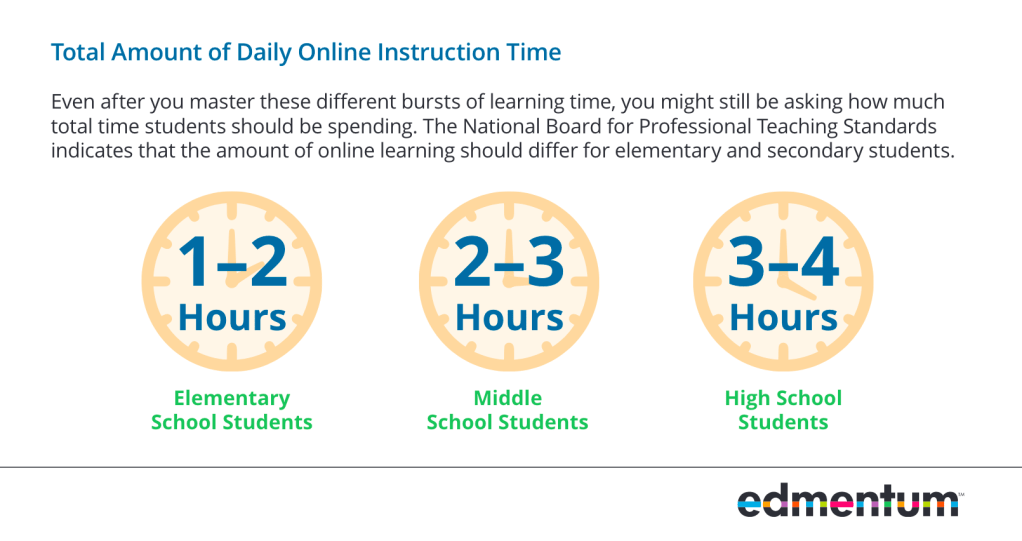
According to “A Parent Guide: Supporting Your Child During Virtual Learning,” provided by Edmentum, cyber students should limit their time online. Elementary students should spend not more than 1-2 hours a day, middle school students 2-3 hours, and high school students 3-4 hours.
My 6th grade daughter typically spends 7-8 hours a day just to barely get things done – and that’s not counting 2-3 hours on the weekends.
I’ve seen her struggle through passages that are written far above her reading level.
For example, she completed a unit on characterization where she was required to read O. Henry’s “The Ransom of Red Chief.”
I know the story well, because as a middle school teacher, I’ve taught it to my 7th grade students from time-to-time. However, the version I’ve used is not the original that O. Henry wrote. It is brought down to the level of a middle schooler and unnecessary attitudes of the time are downplayed.
In the original, one of the characters, Sam, uses big words to show how smart he is. The version I use still has him do that but reduces its frequency so that middle schoolers can understand him. After all, 6th graders shouldn’t have to wrestle with “philoprogenitiveness,” “chawbacon” and “whiskerando” just to grasp a pretty basic plot.
Moreover, the story was published in 1907. The original text throws out numerous instances of casual racism against Native Americans that serve no point in the story. Does my daughter really need to be subjected to dehumanizing native peoples as mere “red skins” just to get a lesson on characterization?
Clearly this unit was not developed with child psychologists, practicing middle school Language Arts teachers or even people of color in the room.
If that weren’t bad enough, the questions are full of grammatical errors and typos.
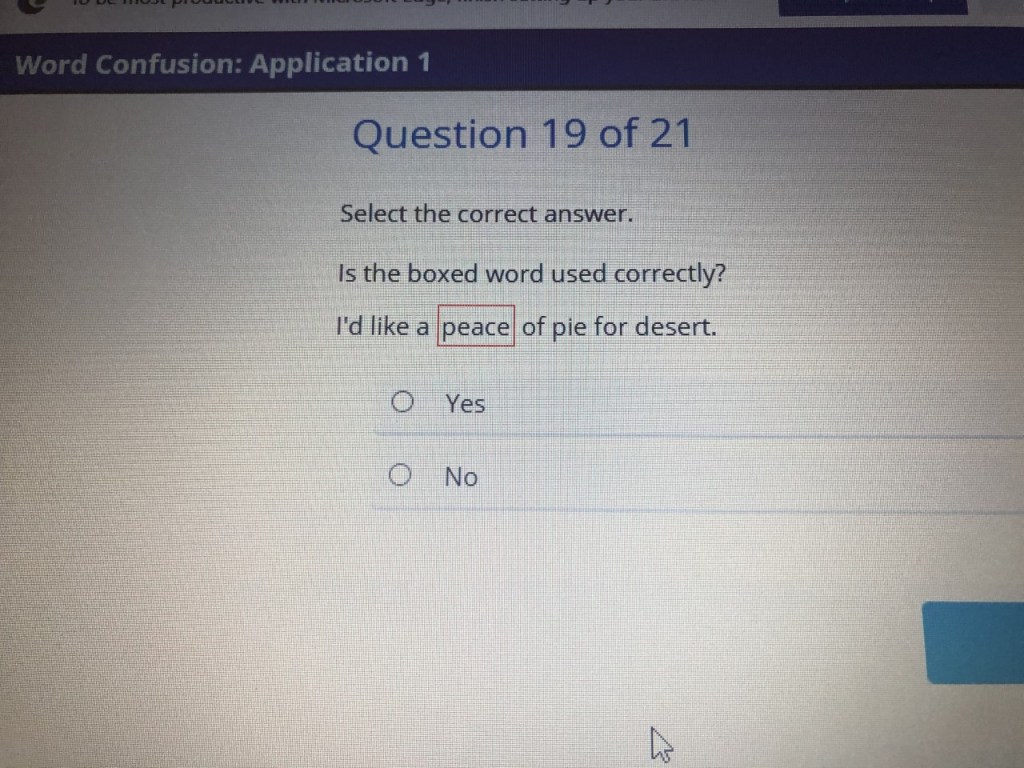
One question about homophones asks students to consider this sentence:
“Select the correct answer.
Is the boxed word used correctly?
I’d like a PEACE of pie for desert?”
Students were asked if “PEACE” is correct – Yes or No. They should know that PIECE is actually the right word.
However, the question made no mention of the misuse of “desert” when the authors clearly meant “dessert.”
That’s the kind of thing that really confuses a student trying to make her way through a program all by herself.
On many assessments, she is asked things that were never taught in the section that was meant to be assessed. I know this is status quo on standardized tests, but is it fair to ask this of a child navigating an online program without even a living teacher to offer support and guidance?
In a social studies assessment on Neolithic peoples, many of the questions had nothing to do with the subject matter. They asked students to infer something based on a passage and none of the multiple choices were entirely correct. You had to pick the option that was least incorrect.
This is some crappy academics being pawned off on parents and students.
And it’s not cheap.
MASD paid $146,302.25 for 40 licenses to Calvert, Exact Path K-5, Courseware for 6-12 and other online services. When hundreds of additional parents asked for their students to be put on the cyber program, the district purchased 500 more licenses from Calvert for a bundled rate of $112,500. That’s $225 per license. Normally they are $450 per license.
Imagine if we put our tax dollars and our teachers to educating these students instead of seeding our responsibility to a corporation for hire.
And we could do it, too.
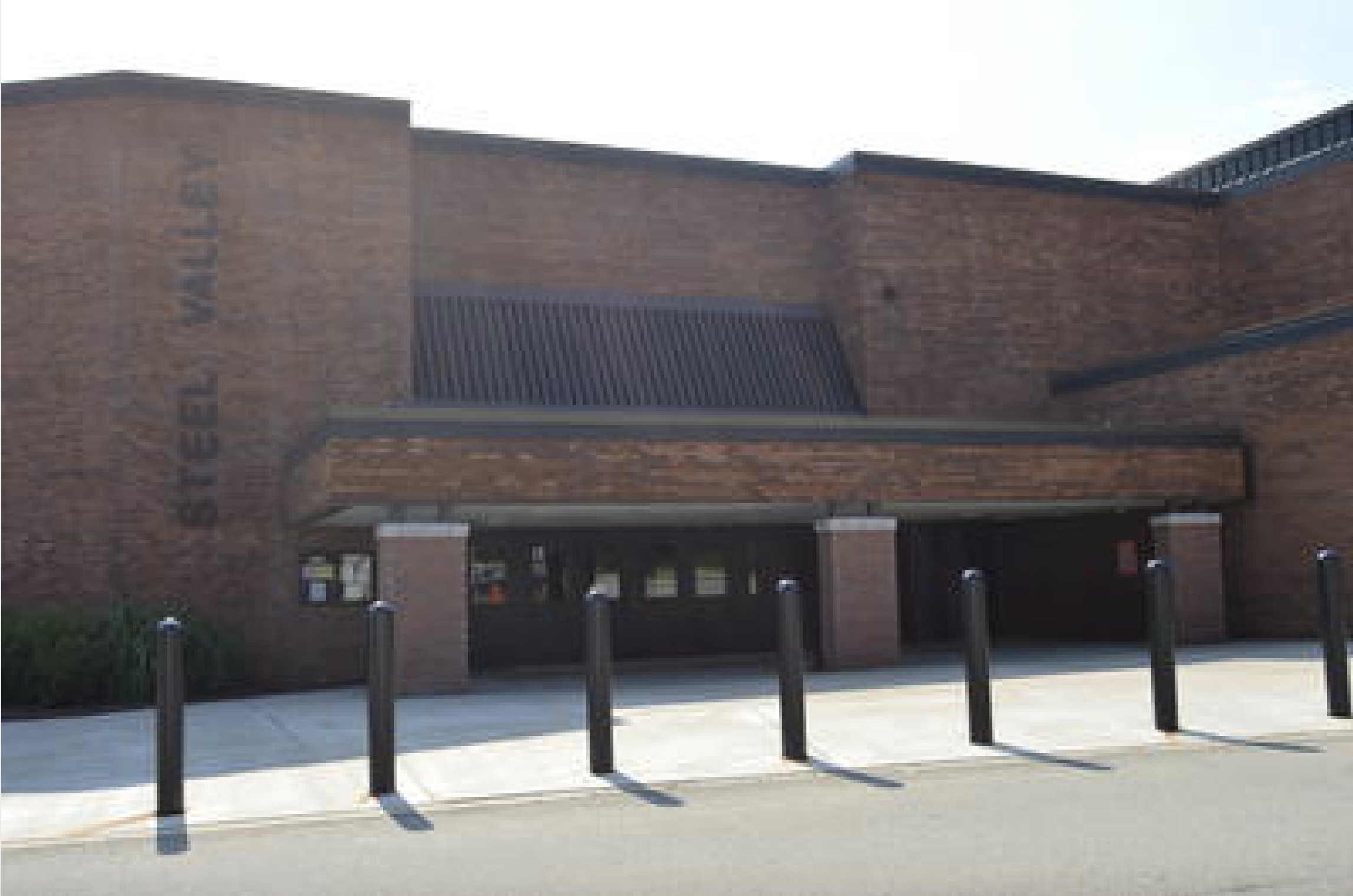
I work at Steel Valley School District.
Unlike MASD, we began the year with a 100% virtual program for all students. We conduct fully synchronous classes online designed entirely by the classroom teachers. And we post materials on Google Classroom so that students who miss the live Zoom meetings can watch videos of the lesson and do the work.
I’m not saying it hasn’t been difficult or that it’s without problems. Nor is such an endeavor better than in-person learning in a safe environment.
But the teacher-led remote model is the best that can be provided under the circumstances.
They should face the realities of the world we live in.
If Coronavirus infections are significant in your county, you should not be offering in-person schooling. You should be offering the best remote option available – and that’s the teacher-led cyber option.
If only my home district knew it.
Meanwhile, my daughter has to struggle through with the cold comfort that at least she won’t get sick jumping through the hoops her school board is too partisan to eliminate for her.
I’m right next to her at the dining room table feeling guilty for putting her through this.
But what else could I do?
Like this post? You might want to consider becoming a Patreon subscriber. This helps me continue to keep the blog going and get on with this difficult and challenging work.
The west is on fire. Storms are threatening our southern coasts. Police brutality is out of control and bands of neofascist thugs are given free rein to beat and murder protesters. We’ve separated immigrant families and put their kids in cages. The President has lied to us, disparaged our troops, bragged about breaking countless laws and the government is powerless to stop him. Our political system and social fabric is coming apart at the seams. And everyone from the average Joe to the lawmakers who represent him can’t get up the gumption to take precautions against the killer virus that has already put more Americans in their graves than every war since WWII.
You look at the raging dumpster fire around you and wonder – how do we invest in the future when we aren’t sure there will be one?
I’ve had students in my on-line class for only two days so far.
And it’s been great.
They show up in record numbers smiling and ready to learn.
I’m not saying it was all me that did it, but I fought and worried and cajoled and wrote and begged and did everything I could think to do. And it very nearly didn’t happen.
But 2020-21 has already promised to be much more challenging.
After all, when you have to fight just for the safety of your children and yourself as a prerequisite to everything that happens in your class, how much strength is there left for actual teaching?
Where are the local newspapers that would have reported on each school district as people test positive for the virus and others are contact traced? We closed most of them and downsized the newsrooms of others to make up lost advertising revenue.
If you’re not a supersized district serving millions, they only report on bed bugs, poorly trained security guards or whatever public relations statement the superintendent released today.
So we trudge on in silence just hoping to get through the day.
You’ve got to plan for just about everything. You put the assignments on Google Classroom and set up the Zoom meetings and make your handouts into PDFs and try to digitize your books and figure out how classroom policies designed around a physical space can be revised for cyber space. You answer countless questions and concerns, videotaping your lessons for those who can’t be there in person. You try to make things interesting with new apps, new software, new grading systems, new approaches to the same material you’ve been teaching for over a decade.
And it never ends.
By the time the day is supposed to be over, the emails are still rolling in, the assignments are still being submitted, administrators are making pronouncements, and you haven’t even finished all the things you have to do to get ready for tomorrow yet.
When is there time for my family? When do I have time to make dinner or check on my own child’s progress in her own online experience?
What’s worse is that when things go wrong, I’m afraid to bring them up for fear that some decision maker long removed from the classroom will simply shoot from the hip and end on-line instruction.
Now – as usual – it’s all in the hands of everyday classroom teachers. We’re left to just figure it out.
And we do!
Part of me really enjoys it!
I love finding new ways of doing things and seeing if they’ll work out better. I’m excited about seeing how my students will react to a Bitmoji classroom or a new Kahoot or this video or not being hassled if they keep their cameras off in Zoom.
Biden is not great on education. Trump is worse. So we have to support Biden while we prepare to fight him in January. And that’s IF we can both defeat Trump at the polls and somehow avoid a constitutional crisis if he refuses to leave the Oval Office willingly.
Everything is one fight after another. We have to win this battle before we can wage the next one.
No wonder we’re so exhausted.
Everyone is worn out, but no one more so than classroom teachers.
I sit here on a Sunday afternoon and my bones feel like boulders under my skin.
I sleep like a beaten boxer – all bruises under the sheets.
But I’ll wake up on Monday, make myself a cup of tea and trudge back to my computer screen ready to begin again.
Because despite it all, there is a core part of me that still believes.
I still believe in the future.
I still believe in teaching.
I still believe my students are worth it.
Like this post? You might want to consider becoming a Patreon subscriber. This helps me continue to keep the blog going and get on with this difficult and challenging work.
In his infamous Fox News interview with Chris Wallace, he seemed to be saying that the U.S. had just as many new cases now as it did in May. However, since there were fewer tests done in May and more are being done now, it only appears that the infection is spreading when it actually is not.
It’s pure bullshit.
How would he know how many cases existed in May other than through testing?
He is simply trying to gas light the nation into believing that his abysmal job as Commander-in-Chief has nothing to do with the pandemic raging out of control on our shores.
“If we fail to assess students, it will have a lasting effect for years to come. Not only will vulnerable students fall behind, but we will be abandoning the important, bipartisan reforms of the past two decades at a critical moment.”
However, this is a rather strange thing to say if you think about it.
But since students are tested all year long by their teachers, they earn end of the year marks, pass on to the next grade or are held back, graduate or not – there are a multitude of measures of student learning – measures that take in an entire year of academic progress in context.
Waiving standardized testing would not make it impossible to tell who learned what. In fact, waiving the tests in the spring did not leave teachers clueless about the students in their classes today.
We still know which students are falling behind because we interact with them, give them assignments, teacher created assessments, etc. And when it comes to vulnerability, standardized tests show us nothing unless we read between the lines.
Students from poorer households tend to score lower on standardized tests. Kids who attend schools with fewer resources and larger class sizes tend to score lower. Minority children tend to score lower.
We don’t need any tests to tell us who these kids are. It’s obvious! Just look at who qualifies for free or reduced meals. Look at school budgets. Look at student ethnographic data. Look at seating charts. Look at classroom grades.
Standardized testing does nothing to achieve this goal nor is there much help from the “bipartisan reforms of the past two decades.”
After all, which reforms exactly do you think DeVos is referring to?
It’s not hard to imagine since her letter was endorsed by far right and neoliberal organizations such as the Center for American Progress, the National Urban League, the Education Trust and the U.S. Chamber of Commerce.
It’s not about academia or helping vulnerable children.
It’s pure politics. The shock doctrine. Disaster capitalism.
This is another way the Trump administration is trying to rob the American public blind and get away with it.
When it comes to Coronavirus, there are a limited number of tests for infection. Trump is against all of them. He just wants to hide his head in the sand and pretend it will all go away.
But if we put the spotlight squarely on standardized test scores, we can spin the narrative that it is the public school system, itself, that is at fault and thus we can better sell the need for privatization in all its profit-driven forms.
That’s the whole reason DeVos took this job in the first place.
Scott, who serves as chair of the House Education and Labor Committee, said in a statement:
“There is no question that the COVID-19 pandemic is having severe consequences for students’ growth and achievement, particularly for our most vulnerable students. We cannot begin to address these consequences, unless we fully understand them.”’
Murray, the highest ranking Democrat on the Senate education committee, said:
“Especially when it comes to the disparities that harm so many students of color, students with disabilities and students whose families have low incomes, we’ve got to have data that shows us where we’re falling short so we can better support those students.”
How does a single test score from a corporation like Pearson show you more than a year’s worth of academic assessments from a school?
In short, Trump and DeVos are two peas in a pod committed to avoiding accountability for themselves but determined to destroy public services like public schools based on bogus accountability measures like standardized testing.
Hopefully the American public will boot them both out on their asses in November so that rational leadership in the Department of Education and elsewhere will do what should have been done years ago – waive standardized testing for this year and every year that follows – Coronavirus or not.
Like this post? You might want to consider becoming a Patreon subscriber. This helps me continue to keep the blog going and get on with this difficult and challenging work.
Your parents dress you in your best new outfit – maybe a nice pink jumper with a unicorn on it.
They help you tie your new sneakers – that’s right, two loops and a knot.
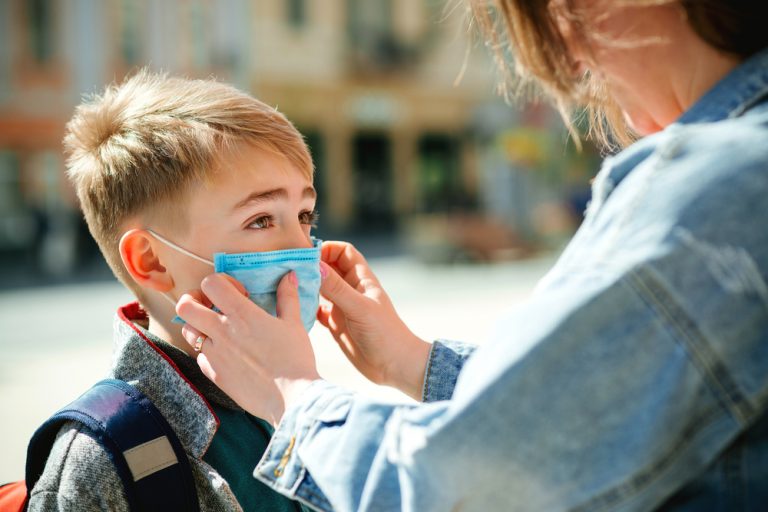
Then they put a surgical mask snugly over your mouth and nose, adhere a clear plastic face shield from your forehead down and snap some latex gloves on your hands.
“Off to school, Honey!”
“Don’t forget your antibacterial soap and Clorox wipes!”
What do you suppose would be going through your mind?
Would you feel safe? Would you feel loved? Would you feel valued?
Or maybe they do care enough but have no other choice. They’re “essential workers” and have to go to a series of minimum wage jobs to keep you fed, clothed and sheltered.
How would you feel about the people who own those jobs? The society that prioritizes keeping those jobs going instead of paying your parents to stay home with you?
Isn’t it just a big game of Monopoly? Players keep rolling the dice and landing on each others’ properties and having to pay rent. Hoping this turn you’ll make it past GO and collect $200.
With the exception of food, there’s nothing you really need outside of your home. If your parents didn’t have to worry about rent or utilities, they wouldn’t have to work. Yes, they’d need to go out to get food but the government could pay them to do that, too.
After all, it’s just Monopoly money. It’s just decorated pieces of paper. It has no inherent value… not like human lives.
I mean we’re living through a pandemic here. Leaving the house means exposure to the virus, and the longer you have to go out, the more people you’re exposed to, the greater the chances that you’ll get sick and/or bring the thing back home with you.
How would you feel about the school board members who compromise and say you only have to be put at risk for half the day or just so many days a week? Would that make it all better?
How would you feel when time-after-time the grown ups show you exactly how they feel about you, how little you actually matter, how much everything else is worth and how little they really care about you?
How would you feel if you were a little school kid getting ready for her first day of class this morning?
Would you feel safe, valued, loved?
What lesson would you take from everything happening all around you?
Some people are very worried that you won’t learn anything much this school year.
I’m afraid you’ll learn far too much.
Like this post? You might want to consider becoming a Patreon subscriber. This helps me continue to keep the blog going and get on with this difficult and challenging work.
On the other hand, they don’t want to be sued by children, families or staff who get sick or die as a result of reckless reopening plans.
The National School Boards Association (NSBA) is behind a push at both the state and federal level for temporary, limited liability protections in case students or staff become infected with Covid-19.
The organization is asking state legislatures and US Congress to pass bills including such protections.
At the same time, the organization is pushing state governors and the President to pass the plan through executive orders.
None of which should fill residents with confidence.
After all, would you want to eat at a restaurant where the chef refuses responsibility if diners get sick?
Would you want to fly on an airline that doesn’t guarantee you’ll make it to your destination in one piece?
In Pennsylvania, this has lead to discussions of the reopening guidelines issued by Gov. Wolf.
“I keep hearing the expression, ‘We are simply giving guidance or recommendations,” state Sen. Andy Dinniman, D-Chester, said. “In the end, is it not true that what you say is a recommendation, ends up being a mandate because school districts are afraid of being sued and taxpayers losing millions of dollars?”
Dinniman – who I often agree with – seems to be saying that districts should be free to ignore safety guidelines. And they are.
But doing so should come with a price.
The guidelines – which are too lenient in my opinion – at least set up some benchmarks.
However, these guidelines miss a vital component of epidemiology. One week’s worth of data is insufficient to get an accurate picture of viral spread. Covid-19 symptoms take up to two weeks to show up.
You could have low numbers this week and decide to reopen school buildings to a hybrid model, but then next week have a surge. And those people would have been sick when you reopened – you just didn’t know because it took another week for their symptoms to develop.
We are acting like spoiled children who want to do what they want and refuse to be held accountable for their actions.
Sadly it is our children who will most often pay the price for adult recklessness.
Like this post? You might want to consider becoming a Patreon subscriber. This helps me continue to keep the blog going and get on with this difficult and challenging work.
So it’s back to school time, and – let me tell you – am I ready to return to the classroom! Actually, I’m just bursting to pop onto campuses for the FIRSTtime this year.
When I came to these shores way back in March, some spoil sports decided to shut down the schools before I could really get in there.
You locked up your kids tight at home and did this distance learning thing online instead.
That really sucked. All I had was full grown bodies to infect.
I mean I wanted some nice young things to cuddle up to and bust my viral proteins through their ACE2 receptors. You know what I mean?
Kids are great! They’re not as fanatical about washing their hands as adults; if they get a runny nose, they wipe the mess on the back of their fingers; and they touch EVERYTHING!
Right now in most places I’m swirling around in aerosol plumes of nasal droplets in the occasional home, bar, and restaurant, but I’m kinda stuck.
There are only so many times I can infect the same people. And if they’re wearing masks properly and washing their hands, it’s just too much hassle.
If I really want to up my contagion game – and I do – I need someplace where I can mix with new hosts and then travel back to their cribs and just snuggle in.
No crowds at concerts or big sporting events – even the amusement parks and political rallies are drying up.
But now that you’re reopening schools, I can go exponential, baby!
Mark my words – September is going to be the season of the Coronavirus! We’re going to make the spring look like a mere dry run!
Second wave, third wave – and I have you to thank for it.
There are so many people out there I’m indebted to.
First of all, I’ve gotta acknowledge all the anti-science folks. If it weren’t for you guys, more playas might actually be taking precautions against me.
And the libertarian crowd! Wow! You guys are working overtime! No one can tell you to put human lives before a stunted adolescent definition of absolute freedom!
But of course, the first prize has to go to President Trump! He’s the trifecta! Science denial, me first, class warfare zealot! Not only did he disband the government’s pandemic task force, but he advised people to drink bleach – I mean BLEACH!– as a remedy to infection!
Sir, you truly deserve the title “honorary pathogen.” If we ever meet, I’m not sure if I’d infect you or you’d infect me.
Of course, it’s the everyday folks who really make the most difference.
The anti-maskers, the people holding house parties and cook outs, the families throwing care to the wind and going to amusement parks, the people who recklessly eat at crowded restaurants… and school board members opening up their buildings…
School directors, I would be no where without you.
Your steadfast determination to keep school buildings open despite any niggling facts or science or news… I just can’t tell you how much it means to me.
It doesn’t matter whether you’re opening up for full days or half days or alternate days. You’re giving me the chance to shine. I won’t forget it.
Where else in the animal kingdom would potential hosts try to shop their way out of an epidemic? I’ll tell ya, bats don’t act this way. Believe me. I know.
And, hey, that’s fine with me. If black lives don’t matter to you, I’ll take ‘em! I’ll burrow into the mucous membranes of anyone’s throat. It all kinda tastes like chicken.
Once your classrooms are splattered with respiratory droplets from ill-fitting, shared or discarded masks, once your hallways are infested with my slime and contagion, once your athletic fields and band rooms and teachers lounges are dripping with my love – just know this: I won’t ever forget you.
You have been truly great. Really.
Infectiously yours,
Coronavirus
Like this post? You might want to consider becoming a Patreon subscriber. This helps me continue to keep the blog going and get on with this difficult and challenging work.










 gadflyonthewallblog