My opponent took majorities in nearly every community, nearly every ward or precinct. However, it was close in many of them. I even whipped him in a few places – mostly in White Oak and West Mifflin – my home town and his respectively.
But 41% to 58% just wasn’t enough to carry the day.
And if you’re wondering why that doesn’t equal 100%, there were about 1% write in voters, many of whom scribbled my opponent’s name so he could launch a Republican write-in challenge in the general election should he lose the primary.
That’s politics, I guess.
It wouldn’t be so bad if I hadn’t worked so hard.
Or if I had seen him getting out there, too, and actively fighting for votes.
However, other than a single mailer, some signs and a few ads, he didn’t seem to do much more than he does on council – which is to say nothing.
I definitely outworked him.
I knocked on more than a thousand doors. During Covid. With a pre-existing health condition. I’d be surprised if he knocked on one.
I sent out several mailers, posted signs all over, made more than 1,600 texts, hundreds of phone calls. And I went to more events, rallies and Meet the Candidate Forums.
At the closest thing we had to a debate, the Take Action Mon-Valley Candidate’s Forum – one of only two events he even attended – I mopped the floor with him. I’m not bragging about it. Watch the video. It is an objective fact.
He couldn’t get his camera to work in the Zoom meeting, when he finally got his audio to work, he couldn’t finish his sentences and when he did, he invariably stuck his foot in his mouth.
He literally told an audience of black voters that all lives matter.
That on top of his whining about not having the power to do anything in office so please vote for him.
I actually felt embarrassed for him.
That anyone could watch that forum and choose him is stupefying.
But only a few hundred voters saw it just days before the election.
I offered hope and change. He offered what? A familiar name and incompetence?
When it was all over, he called me.
Actually he returned my call when I offered my concession.
He was still complaining about someone he heard was passing out my cards on election day who he thought should have been committed to him. As if I knew what all of my supporters were doing and ruled them with an iron fist.
They were just a loose confederation of people who wanted more from county government. I wasn’t telling them what to do. Actually it was just the opposite.
But I’ll give him this – he’s a friendly cuss, the kind of guy with whom you’d probably enjoy having a beer.
Just not a person who should be representing people’s interests on council.
And he’s not representing voters’ interests. Not really.
County Council is supposed to be the legislative arm of county government. It’s supposed to be a check and balance on the County Executive.
Seems to me there’s a conflict of interest when year-after-year County Executive Rich Fitzgerald is your biggest donor.
But that’s just how we roll here.
Bias and impropriety grease the wheels of government.
Speaking of which, wasn’t this supposed to be a Democratic Primary?
My opponent and I were both seeking the party’s nomination.
We have closed primaries, which means only party members get to vote on each ticket.
So why are there Donald Trump supporters on the county Democratic Committee?
Really! According to an expose by the Washington Post, Allegheny County’s Democratic Committee is full of countless members in good standing whose social media accounts are full of right wing Trump memes and slanders on prominent Democrats. This includes the chair of the committee, herself.
There are 2,400 elected members – more than my opponent’s 1,800 margin of victory.
Sure, our district was the only part of the county that went to Trump in the last two Presidential elections – though just slightly.
However, nearly every elected official is a Democrat. Has been for as long as I can recall.
That doesn’t make sense.
Democrats don’t fill every legislative seat in districts that lean Republican…
Unless they’re not really Democrats.
Do right wing Democrats thrive here and Progressives like me face an uphill battle because the Democratic Committee has been compromised?
I don’t know.
I really don’t.
But I guess most people don’t seem to mind it much.
If they did, they missed their chance to do something about it.
For now…
Like this post? You might want to consider becoming a Patreon subscriber. This helps me continue to keep the blog going and get on with this difficult and challenging work.
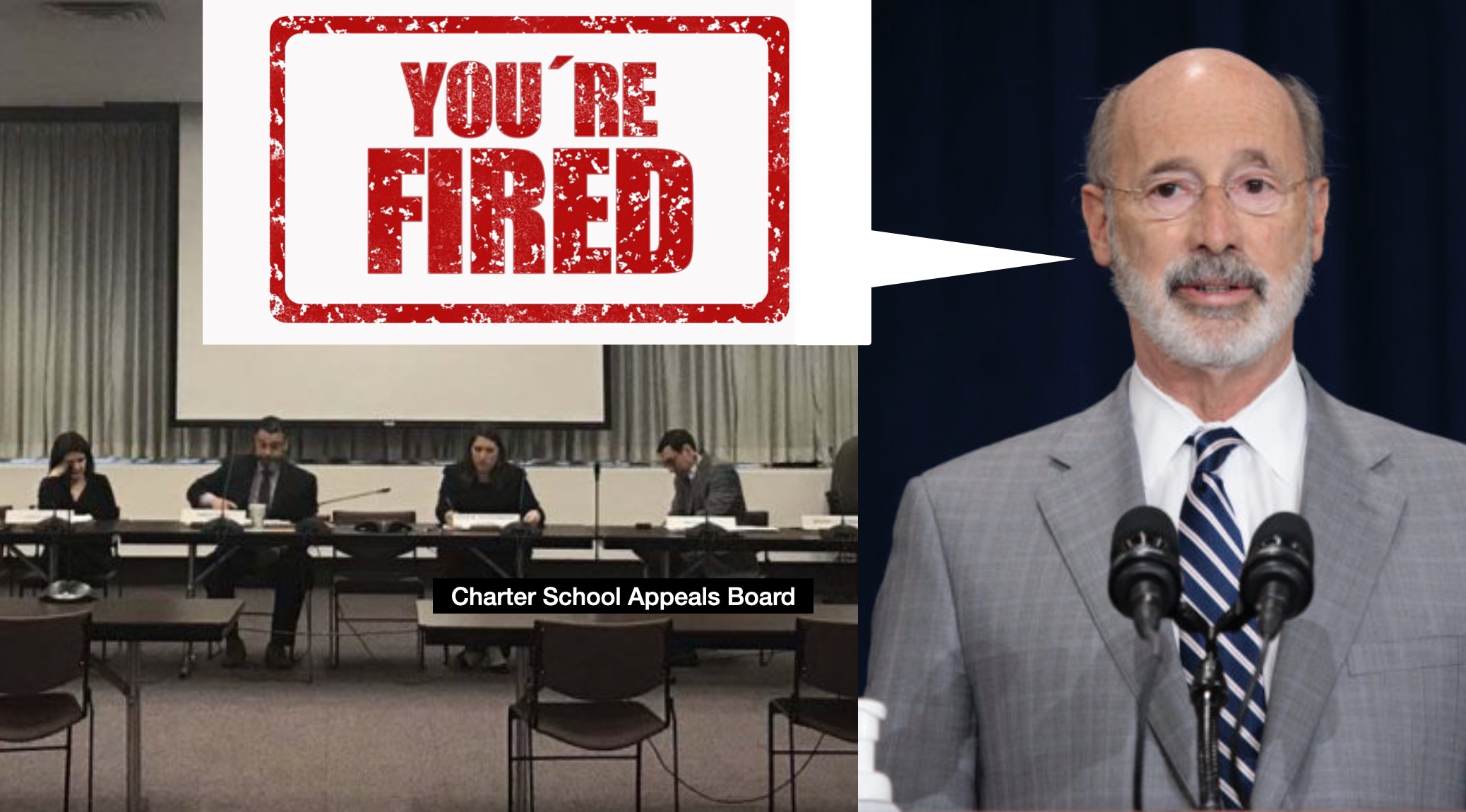
Being Governor of Pennsylvania must be one of the most thankless but important jobs ever.
With a hopelessly gerrymandered legislature, a majority of Republican lawmakers representing a minority of voters stops nearly anything from getting done for the rest of us.
If it weren’t for a Democratic Governor to act as a check and balance on this lunatic fringe, the state would devolve into chaos.
Case in point: the Charter School Appeals Board (CAB).
After all, why would Republicans work with Wolf? What incentive did they have to do so?
Refusing to work with the Democratic Governor kept the previous Republican Governor’s appointees in place long after their tenure should have expired.
This kept the CAB ideologically right wing so the members could rubber stamp charter schools left and right bypassing the will of duly elected school boards all over the Commonwealth.
She literally sat on the board and worked with several sitting members of CAB when she was part of the Corbett administration. Now all these years later she appears before CAB for a hearing asking them to overrule the Harrisburg School Board that had originally denied her charter school’s application.
Guess who won?
The CAB unanimously sided with Dumaresq over elected members of the local community.
So Wolf finally gave these privatization zealots their walking papers.
It’s a pattern we’ve become sickeningly familiar with in Pennsylvania.
Previous CAB members have refused to let school boards consider the financial impact of opening a new charter school. However, the state constitution requires public schools to provide a quality education to students in their district. Therefore, if opening a new charter school would adversely affect a districts finances, doesn’t the constitutional necessity to provide a quality education take precedence?
Many school privatization critics think it does. Will Wolf’s nominees?
Unfortunately, they have several hurdles to clear before the senate would vote on them and we’d find out.
How dare he endanger short term fossil fuel profits just to provide a cleaner environment for our kids and grandkids!
As a result, they’ve vowed to block the Governor’s appointment to a state utility commission. It’s doubtful they’d let CAB nominees through while blocking Wolf’s other appointment.
Moreover, there will doubtless be legal challenges to the Governor’s firing of previous CAB members.
In the meantime, there are at least nine cases scheduled to be decided by CAB from Souderton, Southeast Delco, Pittsburgh, Harrisburg and Philadelphia. And that’s not even counting a recent pair of charter schools in Philadelphia where backers said they would appeal the local school board’s decision to deny their request to open.
Republicans may find themselves forced to choose between waiting out protracted legal challenges while their pet charters languish in appeals limbo or swallowing their pride, doing their damn jobs and voting on Wolf’s nominees!
Do you live in Allegheny County, Pennsylvania? I’m running for County Council in District 9
Like this post? You might want to consider becoming a Patreon subscriber. This helps me continue to keep the blog going and get on with this difficult and challenging work.
If you’re like me, you don’t want these questions to come as a surprise on May 18 or before (if you’re casting a mail in ballot).
These queries can change the state for better or worse in dramatic ways, yet for some reason, they don’t write these things in the way everyday people talk.
This is lawyer speak. You have to wear a long black robe and put on a white haired wig (called a peruke) just to understand these things.
But don’t get your gavel in a tizzy.
As a public service, I’m going to translate each question and make a suggestion on how you should vote.
QUESTION 1:
“Shall the Pennsylvania Constitution be amended to change existing law and increase the power of the General Assembly to unilaterally terminate or extend a disaster emergency declaration—and the powers of Commonwealth agencies to address the disaster regardless of its severity pursuant to that declaration—through passing a concurrent resolution by simple majority, thereby removing the existing check and balance of presenting a resolution to the Governor for approval or disapproval?”
Translation:Allow the legislature to second guess the governor and terminate an emergency disaster declaration without just cause
We have three branches of government for a reason – checks and balances. Robbing the executive to boost a dysfunctional legislature would make the declaration of emergencies and natural disasters a matter or politics not facts.
Emergencies could be terminated at a moment’s notice without cause sending our first responders into chaos. Emergency managers could lose precious time and resources, communities could lose relief and recovery funding from the state and federal governments, all while our chuckleheaded legislature debates reality.
The Covid-19 pandemic may not be over yet. We’re working overtime to distribute vaccines and combat threats from emerging variants. The last thing we need is a political show prematurely eliminating masking, social distancing and other safety precautions so performative ideologues can win points on Fox News.
QUESTION 2:
“Shall the Pennsylvania Constitution be amended to change existing law so that: a disaster emergency declaration will expire automatically after 21 days, regardless of the severity of the emergency, unless the General Assembly takes action to extend the disaster emergency; the Governor may not declare a new disaster emergency to respond to the dangers facing the Commonwealth unless the General Assembly passes a concurrent resolution; the General Assembly enacts new laws for disaster management?”
Translation:Limit an emergency disaster declaration to 21 days regardless of the severity of the emergency
Suggestion: VOTE NO
Disasters do not come with time limits. But randomly limiting them all to 21 days again takes power away from the Governor and gives it to the legislature. The only way to extend emergency declarations would be passage of a resolution by the state House and Senate.
Do we really want our emergency responses tied to the endless back and forth of legislators who rarely even pass their annual budgets on time? This is unnecessary bureaucracy so politicians can grandstand while emergency personnel wait for the go ahead to save lives.
QUESTION 3:
“Shall the Pennsylvania Constitution be amended by adding a new section providing that equality of rights under the law shall not be denied or abridged because of an individual’s race or ethnicity?”
Translation: Make it illegal to deny or cut short anyone’s rights because of race or ethnicity
Suggestion: VOTE YES
This should be a no brainer. No one should be able to deny a person’s civil rights because of race or ethnicity. Or any other reason!
However, we just lived through four years of a reality TV show President who packed the federal courts with dozens of questionable and unqualified judges who made their careers discriminating against people of color, people of different creeds, religions, etc.
So it makes sense to enshrine equal protection for all at the state level and protect Commonwealth residents from federally sanctioned prejudice especially focused around workers’ rights, criminal justice reform, housing and healthcare.
Moreover, as a part of the state Constitution, this amendment would stop even our own state legislature from passing any laws inconsistent with it.
QUESTION 4:
“Do you favor expanding the use of the indebtedness authorized under the referendum for loans to volunteer fire companies, volunteer ambulance services and volunteer rescue squads under 35 PA.C.S. §7378.1 (related to referendum for additional indebtedness) to include loans to municipal fire departments or companies that provide services through paid personnel and emergency medical services companies for the purpose of establishing and modernizing facilities to house apparatus equipment, ambulances and rescue vehicles, and for purchasing apparatus equipment, ambulances and rescue vehicles, protective and communications equipment and any other accessory equipment necessary for the proper performance of the duties of the fire companies and emergency medical services companies?”
Translation: Allow municipal fire departments and EMS companies to apply for state loans to modernize critical safety equipment
Suggestion: VOTE YES
Both municipal fire departments and EMS companies with paid employees and volunteer departments and companies would be able to apply for state loans.
This vital funding could be used to modernize or purchase necessary safety equipment for first responders. It would keep fire fighters up to date and able to serve residents – especially those in rural areas. It would make sure every fire department could have up to date equipment.
Question 5 (Allegheny County Only):
“Shall the Allegheny County Code, Chapter 205. Allegheny County Jail, be amended and supplemented to include a new Article III, as set forth below, which shall set forth standards governing conditions of confinement in the Allegheny County Jail?”
Translation: Should we prohibit solitary confinement at Allegheny County Jail except in extreme emergencies?
Suggestion: VOTE YES!
Solitary confinement is cruel and unusual punishment. A lawsuit filed in September by ACJ inmates alleges that solitary confinement was being used as a punishment against inmates seeking mental health care. Recent research from Cornell University demonstrates that even a short amount of time in solitary confinement can increase recidivism rates, as well as unemployment rates.
Question 6 (Pittsburgh residents only):
“Shall the Pittsburgh Home Rule Charter be amended and supplemented by adding a new Article 10: Powers of the Pittsburgh Police, containing Section 1001, which shall bar employees of the Pittsburgh Bureau of Police from executing warrants at any residence without knocking and announcing themselves?”
Translation: Should we eliminate no-knock warrants?
Suggestion: VOTE YES!
This would require all Pittsburgh Police to physically knock and announce themselves before gaining entry to execute a warrant.
No knock warrants are dangerous and often a component of racial discrimination in law enforcement.
Briana Taylor’s death in Louisville, KY, during the execution of a “no knock” warrant clearly shows how this practice recklessly endangers human life. Many municipalities now have banned no-knock warrants including Louisville, KY. Pittsburgh City Council also introduced legislation to ban the use of no-knock warrants by Pittsburgh Police officers.
So those are my suggestions for this race’s ballot initiatives.
NO. NO.YES. YES. YES.
And if you happen to be a Democrat living in Allegheny County’s District 9, please vote for me for County Council.
Together we can build a better world.
Do you live in Allegheny County, Pennsylvania? I’m running for County Council in District 9
Like this post? You might want to consider becoming a Patreon subscriber. This helps me continue to keep the blog going and get on with this difficult and challenging work.
The Covid-19 pandemic closed school rooms across the nation for various lengths of time. Some are still closed. Some are beginning to close again.
Many classes were conducted remotely through conferencing software like Zoom and file sharing programs like Google Classroom. Others were conducted through a hybrid model combining in-person instruction and cyber instruction. While still others met in-person with numerous mitigation efforts like masks, social distancing and air purifiers.
Many students were absent, struggled to learn and experienced countless traumas due to the isolation, sickness and deaths.
That’s more than Americans who died in the attack on Pear Harbor (2,403), the 9/11 terrorists attacks (3,000), WWI (116,000) or WWII (405,000).
Only the Civil War (600,000 – 850,000) has a larger death toll. For now.
As of April 1, nearly 3.47 million children have tested positive for COVID-19, most with mild symptoms, according to the American Academy of Pediatrics. A few hundred have died, mostly children of color. Many more kids probably contracted the virus but were asymptomatic spreaders of the disease to adults.
As a result, between 37,000 and 43,000 children in the United States have lost at least one parent to COVID-19, according to USC research.
How do you sort through all these tragedies and traumas and say THIS was caused by a lack of standardized testing?
But in 2001 we created an industry. Huge corporations write the tests, grade the tests and provide the remediation for the tests. Billions of dollars in taxes are funneled into this captive market which creates monetary incentives for our lawmakers to keep the system going.
Yes, some civil rights organizations have waffled back and forth over this as big donors who value the tests make or withhold contributions. Meanwhile, many other more grassroots civil rights organizations such as Journey for Justice Alliance (JJA), a group made up of 38 organizations of Black and Brown parents and students in 23 states, have continuously called for the abolition of high stakes testing.
A scientific mind would be empirical about this. It would examine the results as much as possible and determine whether moving forward made any sense.
This is especially true as the pandemic health crisis continues to make the act of giving the tests difficult at best and dangerous at worst.
There is no way a logical mind can look at the situation and not come to the conclusion that the status quo on testing is a triumph of capitalism over science and reason.
In a month or so, the year without testing will be just that – a single year.
We shall go on to the end. We shall test during Covid, we shall test in the classes and on-line, we shall test with growing confidence and growing strength wearing masks, we shall defend our industry, whatever the cost may be. We shall test in the homes, we shall fill in bubbles on sanitized desks, we shall test in the fields and in the streets, we shall test in the hospitals; we shall never surrender!
Do you live in Allegheny County, Pennsylvania? I’m running for County Council in District 9
Like this post? You might want to consider becoming a Patreon subscriber. This helps me continue to keep the blog going and get on with this difficult and challenging work.
This means things like class size, access to tutoring and remediation, extracurricular activities, advanced placement courses, field trips, counseling, even access to a school nurse often depends on how rich of a community kids live in.
It’s a backward and barbaric way of supporting children – a kind of economic Darwinism that gives the richest kids the most advantages from the very start while holding back everyone else.
No matter who has been in power in the Oval Office or held majorities in Congress, national lawmakers don’t seem to care much about public schools unless it has to do with standardized testing or school privatization – policies that only make things worse.
In the Pittsburgh area, we have a solution ready at hand to at least reduce the inequality among rich and poor kids. All we have to do is reach into the trash.
Three years ago we had a ballot initiative called The Children’s Fund. It would have created a voluntary 5% property tax hike to pay for early learning, after-school programs and healthy meals for kids. It was defeated by voters.
And for good reason.
The proposal was an absolute mess.
As a local teacher, education activist and blogger, I advised against the plan because it raised taxes without stipulating where the money would go, it was unclear who would have been in charge of the money and other reasons.
But that doesn’t mean there was nothing of value there.
The idea of county tax revenues being used to help balance the scales of public school funding is not a bad one.
We could fix the problems with the original children’s fund and create a new one.
The 2018 Children’s Fund would have raised taxes by 0.25 mills of property tax — $25 on each $100,000 of assessed value. This would have generated an estimate $18 million a year and gone to a newly created government office under the supervision of the county manager. There would have been an advisory commission but it was really left under the discretion of the County Executive to figure out how all this would work. He’d get to pick who was in charge of the money and where it went.
This was a terrible idea.
We don’t need a big pot of money that a king gets to dole out as he chooses. Nor do we need to created unnecessary bureaucracy.
All we need is a funding formula. Collect X amount of tax revenues and send it to Y schools according to these guidelines prioritizing Title I schools and other institutions serving needy children.
Moreover, the fund doesn’t even need to include a tax increase. Council should first look to cut wasteful spending already in the budget to generate the money needed.
We already have a $2 billion budget. We spend $100 million of it to keep people locked up in the county jail, and 80 percent of them are nonviolent offenders who haven’t been convicted of anything. Many simply can’t pay cash bail, failed a drug test for something like marijuana or violated our ridiculously long parole period.
Finding $18 million might not be too difficult if we took a hard look at our finances and our priorities. And even if we couldn’t find the full amount, we could propose a lower tax increase. And if we do have to increase revenues, we can look to do so by making corporations and the wealthy pay their fair share before putting more burden on residents.
We should at least explore these options before jumping on another across the board tax increase even if the cause is a good one.
Another problem with the 2018 proposal was that it was too broad. For instance, it suggested some of this money be used to offer meals to children in school. However, much of that need has been met by a program called the Community Eligibility Provision which is available nationwide as part of the Healthy, Hunger-Free Kids Act passed in 2010.
We should limit the new children’s fund to increasing pre-K access to needy children, offering funding to school districts to create or fund existent after school tutoring programs, reduce class size and increase teacher salaries at low income schools.
Another problem with the 2018 proposal was that it worked around instead of with local government.
Before enacting any new legislation, County Council should seek input from school districts and pre-K programs. That way, the legislation can be best crafted to meet need.
I care about schools, students and families, but I don’t know everything and neither does County Council or the County Executive. We should be humble enough to listen to what stakeholders tell us they need and then find a way to meet it.
Finally, there’s the question of fraud and mismanagement of funds.
One of the biggest red flags around the 2018 campaign is that it was not grass roots.
Financial documents show that the whole initiative had been funded by various nonprofit organizations that could, themselves, become beneficiaries of this same fund.
We have to make sure that the money is going to help children, not corporate raiders or profit-obsessed philanthrocapitalists.
To ensure this does not happen, we should put some restrictions on how the money can be used.
For example, the federal government is infamous for offering money to schools with strings attached. President Barack Obama’s Race to the Top, for example, was a huge corporate welfare scheme to enrich standardized testing and school privatization corporations. Schools could compete for limited funds by increasing test scores, and then if they won, they’d have to spend that money on test prep or privatization.
We don’t need any of those shenanigans in Allegheny County.
That’s why this new funding should be available at charter schools ONLYif those schools charters are in good standingAND if the charter schools will admit to a yearly public audit of how the money has been spent. Any misappropriation or unaccounted for funding would disqualify the charter school from further funding and prompt an immediate full state audit.
I think if we enacted legislation along those lines, we could really make a difference for the children of our county.
The commonwealth ranks 47th in the nation for the share of K-12 public education funding that comes from the state.
The state ranks 48th nationally in opportunity gaps for high school students of color compared with white students and 47th for Hispanic students, according to a 2018 report from the Philadelphia-based nonprofit Research for Action.
A separate 2016 study found that Pennsylvania has one of the widest gaps between students along racial and socioeconomic divides in the country.
Like this post? You might want to consider becoming a Patreon subscriber. This helps me continue to keep the blog going and get on with this difficult and challenging work.
It’s absurd, like paramedics arriving at a car crash, finding one person in a pool of blood and another completely unscathed – but before they know which person needs first aid, they have to take everyone’s blood pressure.
If the only logical way to make decisions is based on test scores, you should provide those scores to the greatest decision-making body in the country: voters.
After all, student tests are designed to favor answers from privileged white people. Most of these lawmakers are the target demographic already. They passed a standardized test (or paid someone to pass the test for them) as a smokescreen getting into whichever prep school or ivy league college where they were legacy enrollments, anyway.
I’m talking about a new series of standardized tests designed to show how much these lawmakers adhere to the principles of their respective political parties.
So there’d be two versions – one for Republicans and one for Democrats.
A high score means the test taker is a bona fide example of their party’s ideals. A low score means they should probably be booted out on their butts.
For example, a question for Democrats might be:
Which policy is progressive?
A) School privatization B) Fracking on native lands C) Drone strikes D) Universal healthcare
And an example for Republicans:
Which policy is fiscally responsible?
A) School privatization B) Tax cuts for billionaires C) More unnecessary wars D) Investing in infrastructure
The answers are both D and that’s because this test would be in high De-mand! Get it?
They could say, “Vote for Sam Smith. He got an Advanced Score on the Democratic System of Statesperson Assessments (DSSA).”
Or “Don’t vote for Megan Mission. She only scored a Satisfactory on the Partnership for Assessment of Republicanism for Congress or Klan (PARCK).”
What an improvement that would be!
Finally, we wouldn’t have to rely on a politician’s voting record or campaign contributions or platform…. We could just look at the score and vote accordingly.
But who would we get to make and grade the tests?
It couldn’t be the politicians, themselves, or even their respective political parties. That wouldn’t be standardized somehow.
If we can’t let teachers create tests for their own students, we certainly can’t trust politicians to do the same for their fellow campaigners.
I guess we could task the testing corporations with making these assessments, but that’s a conflict of interests. We should instead rely on the educational experts, people with the credentials and the most experience actually giving standardized tests.
And since the teachers would get to grade the assessments, they could make sure the scores are curved so only a very limited number pass each year. We can’t have grade inflation, after all.
What would the teachers do with this money, I wonder?
And all of this just because of standardized testing!
Maybe the lawmakers have the right idea in prioritizing high stakes testing!
Or maybe they understand the value of benefiting from the testing industrial complex and not being subjected to it.
Like this post? You might want to consider becoming a Patreon subscriber. This helps me continue to keep the blog going and get on with this difficult and challenging work.
But the flood of emotions I felt that accompanied that tiny pinch in my arm was totally unexpected.
It was like I gasped for breath and hadn’t realized until then that I was suffocating.
I looked up at the volunteer who had injected me to see if she’d noticed, but it’s hard to read someone’s expression under a mask.
So I found myself shrugging the feeling off, giving her a brisk “Thank you” and heading off to file my paperwork, get another stamp on my vaccination card and plopping in a chair for 15 minutes of observation before heading on my way.
As I sat there, I started to feel this growing sense of excitement in my chest.
Some of them have been back in the classroom for weeks now, but I’ve had to stay remote putting up assignments in Google Classroom for the sub to teach.
So instead I spend my daylight hours grading virtual papers and writing digital comments, but I only get to hear student voices on Fridays when all classes are conducted remotely.
Thankfully waiting an extra 7 days isn’t supposed to have any ill effects. But that’s a week more I have to be out of the classroom and burning my sick days, trying to do 40 hours worth of work in the handful of hours the district allows me.
It’s just that this isn’t an anomaly. All through this process those in charge have dropped the ball.
At every step – bungled, mismanaged, and carelessly misjudged.
“Hope is not blind optimism. It’s not ignoring the enormity of the task ahead or the roadblocks that stand in our path. It’s not sitting on the sidelines or shirking from a fight. Hope is that thing inside us that insists, despite all evidence to the contrary, that something better awaits us if we have the courage to reach for it, and to work for it, and to fight for it. Hope is the belief that destiny will not be written for us, but by us, by the men and women who are not content to settle for the world as it is, who have the courage to remake the world as it should be.”
True, much of his domestic agenda was blocked by Republicans. But even when they couldn’t stop him from getting things done, the results were often disappointing. His foreign policy was hawkish full of drone strikes, his immigration policy unduly cruel and his education programs were the fever dreams of Milton Friedman made real – charter schools, high stakes testing and ed tech handouts.
You think Trump was bad!? He was the logical consequence of dashed hopes and neoliberal triumphs. You can’t run, as Obama did, as a once-in-a-lifetime transformational candidate and then legislate to support a status quo that is destroying the majority of Americans.
Everyone is friendly and there’s even a sparkle in their eyes.
What is that sparkle?
Why does everyone smile?
Why did I cry?
There’s only one possibility.
It’s hope.
Goddamit.
It’s hope.
The teardrop that escaped my eye wasn’t a response to any pain from the injection. It was pain at the possibility that all this would end.
It was the feeling – the certainty – that the pandemic was only temporary and that I would come out the other side. We all would.
Because in the part of our hearts where hope grows, the past doesn’t matter.
What’s happened is always past.
The only thing that counts is the future.
And when you have a future you have to hope.
It’s simply built in. There’s no way around it.
It would be easier not to hope. But the only way to do that is to die, and apparently I’m going to live.
So you pick yourself up, you dust off your knees and you get to the work ahead.
Because no matter how disappointing the past, how demoralizing the events you’ve lived through, there is always the possibility that things will be better tomorrow.
If only you work to make it so.
Like this post? You might want to consider becoming a Patreon subscriber. This helps me continue to keep the blog going and get on with this difficult and challenging work.
That’s the rationale behind the Biden administration’s mandate that schools across the country still struggling just to keep buildings open somehow manage to proctor standardized assessments.
Children have lost parents, siblings, family members, friends, teachers. Families are struggling just to survive with some members still recovering from the longterm health consequences of contracting Covid.
He sent the letter to state superintendents on behalf of the Biden administration telling them that blanket waivers of the federal testing mandate would not be considered this year as they were in 2019-20.
States spend more than $1.7 billion every year on testing. In 45 states, assessments at the primary level alone cost taxpayers $669 million.
This money isn’t going to mom and pop organizations. The four major testing companies are Wall Street heavy hitters – Harcourt Educational Measurement, CTB McGraw-Hill, Riverside Publishing (a Houghton Mifflin company), and NCS Pearson.
In 2001 the first three agencies accounted for 96% of the tests administered, while Pearson was the leading scoring agency of those tests. And since then the market has exploded.
In 1955 the industry was valued at only $7 million. By 1997 it had ballooned to $263 million. This is a 3ooo% increase. Today the estimated worth of the industry is $700 million.
However, that only takes into account actual assessment.
When you consider that many of these companies (or their parent conglomerates) also provide remedial materials for students who fail the tests, the profits really start rolling in. It’s no coincidence that McGraw-Hill, for example, also publishes books and other materials many of which are used by schools to remediate the same students who fail the company’s tests.
It’s a captive market. The testing company makes and distributes the test (for a fee), scores the test so that a majority fail (for another fee), and then sells schools the materials it claims will help students pass next time (for an even further fee).
However, for the first time in two decades, the pandemic threw a monkey wrench into the machine.
Biden, who ran on being friendly to teachers and that his wife Dr. Jill Biden was an educator, has pushed some extremely absurd education policies in his short time in office.
Not only has his administration decided to ignore community infections, he has insisted that schools can be opened safely if districts follow certain safety precautions like universal masking, contact tracing and social distancing.
However, many schools are not following these protocols and even more simply cannot because doing so would be exorbitantly expensive. For example, you can’t have all students return to a cramped school building AND have them be 6 feet apart. There simply isn’t the available space. Moreover, contact tracing doesn’t effectively track Covid cases since most students who contract the virus are asymptomatic.
Then there is the absurd prescription that schools don’t even have to prioritize teachers for the Covid vaccine before reopening. In many states educators aren’t even eligible yet to receive the vaccine. Yet the Biden administration expects them to enter the classroom without necessary protections to keep them, their families and students safe.
These are all perplexing policies until one looks at it from an economic vantage.
Waiting for all teachers to have the opportunity to take a two dose vaccine would take at least a month and a half – that’s if every teacher could start the process today.
In addition, if we wait for community infections of the virus to dissipate, testing season will be far from over. In fact, it’s likely the rest of the school year would be gone.
So if the Biden administration had prioritized safety, it would have been forced to cancel standardized tests again this year.
As a compromise measure, Biden is allowing flexibility in just about every way the tests are given. They can be shortened. They can be given remotely. They don’t have to be given now – they can be given in the fall.
Standardization means conforming to a standard. It means sameness. A test taken by a student at home is not the same as one taken by a student in school. A short version of a test is not the same as a long one. A test taken with 180 days to prepare is not the same as one taken with 250.
And if standardization is not NECESSARY in this case, why can’t we rely on non-standardized assessments teachers are already giving to their students? For example, nearly every teacher gives her students a grade based on the work the child has done. Why isn’t that a good enough measure of student learning?
It’s based on a year’s worth of work, not just a snapshot. It’s in context. And it’s actually more standardized than the hodge podge of assessments the Biden administration is allowing this year.
If one really wanted to invest more resources where these alleged deficiencies exist, one wouldn’t need standardized assessments. You could just look at the poverty level of the community and the percentage of minority students.
But even more telling is the fact that this has never happened. Testing has never resulted in more resources being provided to needy children other than providing more remedial test prep material purchased from – you guessed it – the testing industry.
Under normal circumstances standardized testing is a scam.
During a pandemic, it’s the most perverse kind of corruption imaginable.
Like this post? You might want to consider becoming a Patreon subscriber. This helps me continue to keep the blog going and get on with this difficult and challenging work.
DeShaun and his little brother Marco got out of bed and threw on their clothes.
Mom was in the other room hastily getting her work bag together.
“Are you two ready yet? We’ve got to go in 20 minutes.”
Marco just yawned, but Deshaun dared to complain about the hour.
“We didn’t used to have to get up so early,” he said.
“That was when you still had school. Now I’ve got to get you all to the daycare by 5 or they’ll be full up.”
DeShaun frowned but got ready anyway. He didn’t want to have to sit outside all day again. There were older kids in the park who got kids like him to run drugs during the day. He could make some money that way, but the only kids he knew who did that got hooked on their own supply. That or arrested.
Heck! He’d been arrested for loitering twice this year already.
“Hurry! Let’s go!” Mom shouted as she handed each child a yogurt and a bag of chips.
The bus was full even at this hour.
DeShaun recognized a bunch of kids who usually went to the daycare.
His best friend, Paul, used to ride the bus, but then his mom got him into the private school in the city. She and his dad had to cash in his entire school voucherAND pay an additional $10,000 a year, but they said it was worth it. Still, DeShaun missed his friend.
Octavia was standing a bit further down the aisle though. She was usually good for a trade. He guessed she’d take his yogurt for some Hot Cheetos.
When they got to the right stop, Mom gave his shoulder a squeeze and told him to watch out for his brother. She’d see him at the end of the day.
He and Marco made it just in time.
He saw Octavia get turned away at the door.
“Dang!” He said. He really wanted those Hot Cheetos.
He and Marco took their seats in the back of the room and got out their iPads.
He wanted to play with the toys in the Reward Room, but no one got in there before lunch.
Marco was crying.
“What’s wrong?” He said.
“I can’t find my iPad.”
“Didn’t you pack it?”
“I think I left it on the charger.”
“You dummy!” DeShaun said and handed Marco his own iPad.
“Take this,” he said. “I can use my phone.”
It had a huge crack on the screen but he could probably read through the jagged edges if he tried hard enough. That probably meant no Reward Room though.
First, he clicked on Edu-Mental. It wanted him to read through some stuff about math and do some problems. He couldn’t really see them but he could hear about them through his earbuds.
Then he didLang-izzy. There was a fun game where you had to shoot all the verbs in these sentences that scrolled across the screen faster and faster. But DeShaun’s timing was off and even though he knew the answers, he couldn’t get a high enough score to get a badge.
He skipped to Sky-ba-Bomb. It had a lot of videos but it was his least favorite. He couldn’t tell which ones were about history and which were advertisements. Plus he got so many pop ups after just a few minutes, he often had to disconnect from the wi-fi or restart his phone.
Oh, what now?
“Miss Lady,” Marco was saying.
The blonde haired new girl came over to him.
“What is it, Sweetie?”
“Can I go to the bathroom?”
She checked her iPad.
“Oh, I’m sorry, Honey. You’ve only been logged on for half an hour. Answer a few more questions and then you can go.”
DeShaun grabbed his shoulder and shook him.
“Why didn’t you go before we left home?”
“I didn’t have-ta go then. I have-ta go NOW!”
He could leave the daycare and go outside. There was even a filthy bathroom at the gas station a few blocks away. But if he left now someone outside was bound to take his spot. And Mom wouldn’t get a refund or nothing.
The blonde was about to walk away when DeShaun stopped her.
“He can take my pass. I’ve been on long enough.”
“That means you won’t get to go until after lunch,” she reminded him.
“I won’t drink anything,” he said.
She shrugged. That seemed to be her main way of communicating with people. She looked barely old enough to be out of daycare, herself.
DeShaun gave Marco his phone and sat there waiting for him to come back.
He remembered back in Mrs. Lemon’s class he could go to the bathroom anytime he wanted. In fact, he’d often wait until her period everyday to go to the bathroom. That way he’d have time to walk halfway around the building and look in all the open doorways and see what everyone was doing.
And if you finished your work, you could draw or read…. Reading…. Yeah they had real books made of paper and everything!
He remembered sitting in a circle in Mr. Sicely’s class and discussing the book they’d read. “The Diary of Anne Frank.” And people got really into it and excited.
We used to complain about the homework, he thought stifling a laugh. What he wouldn’t give for one more day of that homework!
He wondered why they no longer did stuff like that. Why DID the schools close after Covid?
He picked up his iPad that his brother had abandoned on the seat beside him and asked Siri.
Wasn’t that like today, DeShaun thought. But, no, he answered himself. They still taught kids on-line back then. Now there are hardly ever any real people on-line. Kids like him just went from app to app earning various badges in different subjects until they had enough to take the test. Those horrible multiple choice standardized tests!
He could email a question to someone but rarely got an answer back.
When he first started going to daycare, he asked one of the workers a question. There used to be this nice lady, Miss Weathers. She would at least try to answer the kids questions but he thought she got in trouble for doing it and he hadn’t seen her here since.
Marco came back, snatched the iPad and said “Thanks.”
DeShaun just sat there looking at his cracked phone.
Was this really all he had to look forward to, he thought.
He missed school.
He missed teachers.
He missed everything that used to be.
Like this post? You might want to consider becoming a Patreon subscriber. This helps me continue to keep the blog going and get on with this difficult and challenging work.
It didn’t have to be this way. We could have put humanity first. We could have taken every step possible to protect our children from a deadly virus whose full effects on the human body are unknown. We could have protected their teachers and teachers families who by all accounts are even more susceptible.
But that would mean socialism – giving everyday people survival checks so they can stay home and not go into unsafe work environments. That would mean providing money to parents so they could stay home with their own kids and ensure they were doing their best academically in remote learning.
At so many levels, rushed, unsafe reopenings have already caused long-term academic deficits that will haunt our school system for decades if not longer.
In the short term, most academic programs being practiced during the pandemic are not as effective as alternative plans that would also safeguard student health and safety.
Instead, about 47% of students attend schools providing some kind of in-person instruction, according to a poll by Education Next. That’s about 19% of the districts in the country providing some kind of substandard hybrid program and 28% trying to run blindly as if the pandemic wasn’t happening. Moreover, those open to in-person instruction are most often located in communities with the highest Covid infection rates!
Let’s start with hybrid models. Most involve some kind of in-person instruction combined with remote learning. Partial groups of students come to the buildings certain days and stay remote on others. Meanwhile, a significant percentage of the student body refuses to participate and remains remote entirely.
The result is inconsistent programs. Students switch from one method to another – either because of changes at home or schools rapidly going from one model to another. Kids get used to learning one way and then have to change to another. They have to keep track of elaborate schedules and often fall through the cracks.
No wonder grades are tanking. We’re asking students to do things that are simply too complicated for their ages. And parents who are struggling with their own Covid-inspired juggling acts are often just as confused.
As a parent, it’s hard to make sure your child attends in-person or remote learning sessions when you aren’t even sure when these sessions are. The result is a spike in student absences which can come as a surprise to both parents and students.
Critics of remote instruction complain that it exacerbates existent inequalities. However, the hybrid model does so to an even greater degree – all with the sanction of the school board. And once inequalities are no longer the result of federal or state legislators or lack of resources but come directly from decision makers in your hometown refusing to care about all students, you have a deep systemic problem that no amount of moving students around from place-to-place can fix.
Even when everyone is on the same page and in the school building for instruction, the normal benefits of having students in-person are outweighed by necessary mitigation factors in schools.
Teachers help students by observing their work and stepping in if students are making mistakes or need help. However, teachers who are attempting to stay outside of 6 feet of their students cannot help because they cannot adequately see what their students are doing.
Moreover, kids benefit by working with each other in small groups. But this cannot be easily accomplished when they have to stay 6 feet apart.
In fact, both situations are best remedied by some kind of remote instruction. Students can share work through devices with both teachers and other students. They can collaborate virtually and get help. Being in-person gives no benefit. In fact, it just obscures the real solution.
Either teachers burn themselves out trying to address the needs of two different groups with two different styles of instruction simultaneously, or they teach the entire group as if it were meeting remotely.
This results in one of two possibilities. One, teachers pay more attention to those in-person and mostly ignore those on-line. Two, they have to spend so much time dealing with technological issues that crop up or that they didn’t have time or training to anticipate that they end up ignoring in-person students.
This is a method that looks good on paper. It makes school boards seem like they are trying to meet the needs of all learners. But what they’re really doing is meeting the needs of none.
In the time of high infections, it’s best to keep all students remote. Not only is this the safest option for the health of everyone involved, it provides the best available education.
Academics can be consistent and schedules predictable. Problems can be anticipated, planned for and best solved. And the needs of the most students can be met. Districts can ensure everyone has the necessary technology and wi-fi. They can make sure teachers are trained and have help.
But too many decision makers see this as a defeat. We’re giving in to the virus instead of molding it to our will.
The sad fact is, if we want to defeat Covid, we need to defeat THE VIRUS. Pretending it doesn’t exist will not help anyone.
LONG-TERM EFFECTS
The short-sightedness of current academic plans that try to circumvent remote learning when infections are high will have lasting consequences on American education for years to come.
The same goes for larger government institutions like the President, Congress, the CDC and state legislatures. The Trump administration was a never ending dumpster fire. The hope was that a new administration would be better – and the Biden administration has been more efficient in many ways.
First, it’s not a shortage. It’s an exodus. Highly trained professionals refuse to submit to ill treatment, loss of autonomy and lack of adequate wages and benefits.
This is not a new problem. Educators have been leaving the profession in droves long before Trump or Biden.
Few people are going to want to be teachers when they’re treated like this. Their health and safety is taken completely for granted. It isn’t even considered part of the equation or a certain amount of educator deaths are considered acceptable.
And finally, there’s the lingering health issues caused by ignoring safety protocols for students and staff.
The problem with Covid isn’t just the possibility that you’ll die. Even if you survive, the most common long term effects are fatigue, shortness of breath, cough, joint pain, and chest pain.
However, other reported long-term symptoms include difficulty with thinking and concentration, depression, muscle pain, headache, intermittent fever and heart palpitations.
We don’t know how serious or widespread these issues will be. However, we could be dooming a generation of children to increased depression, anxiety, changes in mood, smell and taste problems, sleep issues, difficulty with concentration, or memory problems.
There could be thousands of Covid’s Kids who have to pay the rest of their lives for the recklessness of adults today.
Not to mention adults suffering from these conditions and having to leave the workforce immediately.
So rushing to reopen schools is a bad idea.
It robs kids of the best possible education given pandemic conditions. It increases racial and economic inequality. It erodes faith in government at all levels. And it gambles with the health and safety of everyone – adults and children – caught in the middle.
The best way to promote student learning isn’t to attack the very system providing it. Nor is it to endanger the lives of those who do the work and provide instruction.
The current crisis can be a temporary situation to survive with a minimum of risk and a maximum of support and caution.
Or we can recklessly pretend it isn’t happening and put the future of our children and the nation at large in unnecessary jeopardy.
Like this post? You might want to consider becoming a Patreon subscriber. This helps me continue to keep the blog going and get on with this difficult and challenging work.







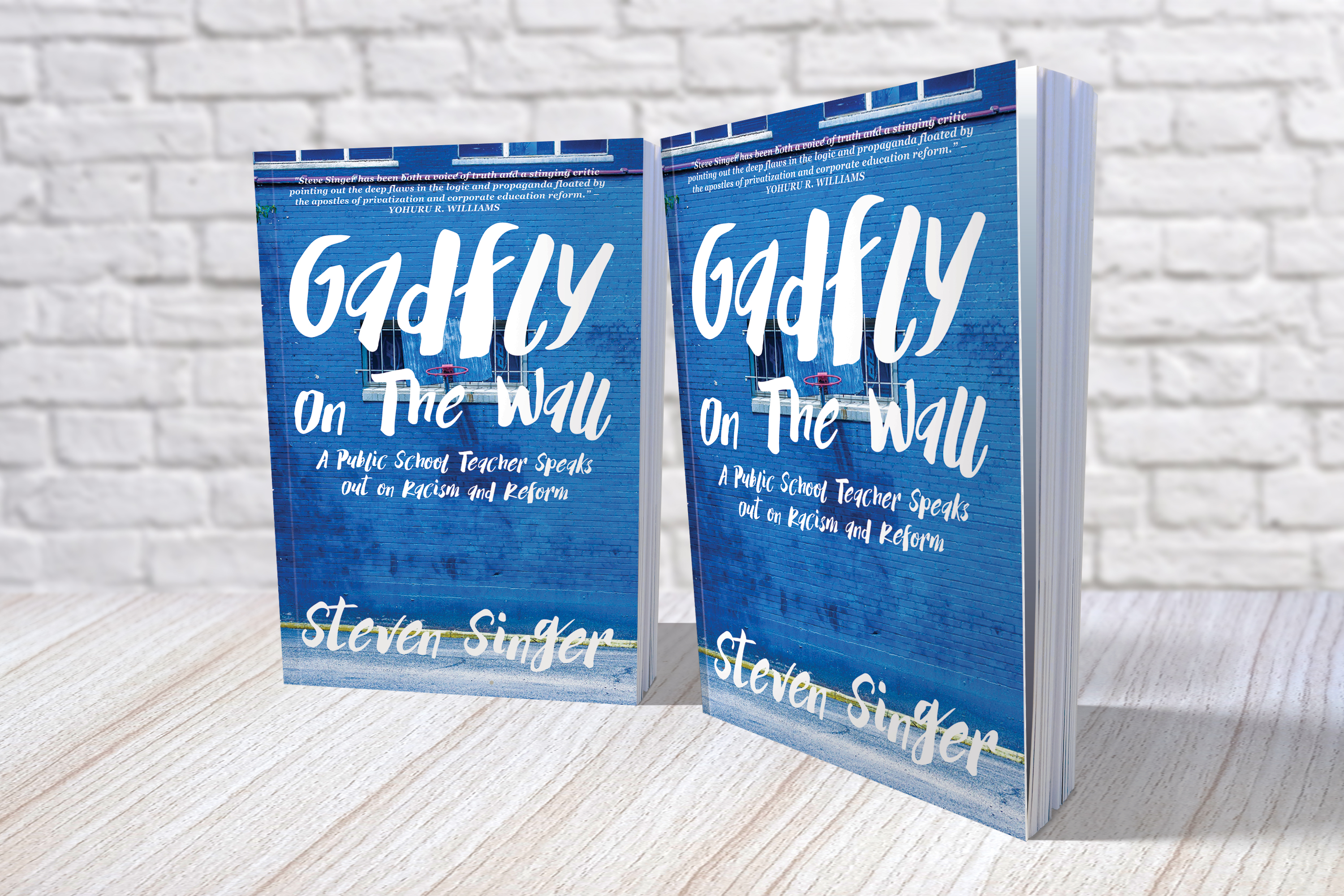


 gadflyonthewallblog