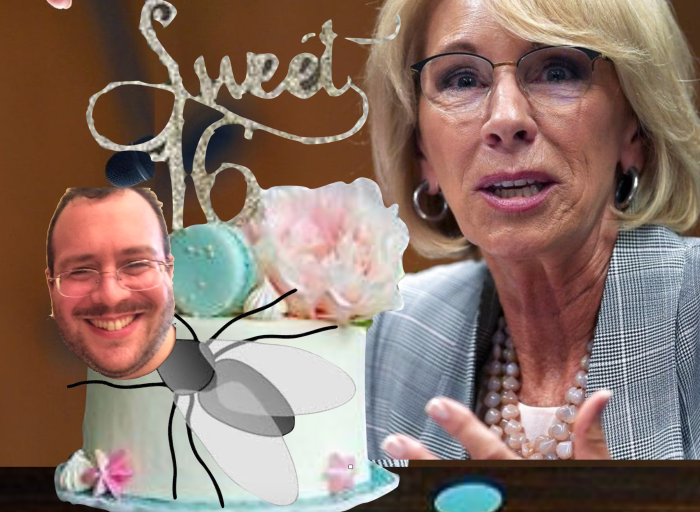
Sixteen Gadfly Articles That Made Betsy DeVos Itch in 2019


Screen Shot 2019-12-28 at 3.51.03 PM


“Life can only be understood backwards,” wrote Søren Kierkegaard, “but it must be lived forwards.”

 
I remember reading the Danish philosopher’s “Fear and Trembling” in my philosophy of religion class back in college.


To be honest I was never a big fan of his work – I thought if the only way to truth was taking a leap of faith, how many madmen have already reached enlightenment?


But he had a point when he wrote about the backwards order of perspective – that we can only understand the meaning of our lives once those moments have passed. How cruel that we must live our lives without knowing the importance of those moments until later.


The only times I remember knowing – really knowing – that I was living through an important moment were when I was married and when my daughter was born.


Other than those few instants of my life, I’ve wandered forward like an infant – unaware of whether this would really leave an indelible mark on the fabric of my reality or not.


And that’s not even mentioning what I’ve done – if anything – that has had an effect – any effect – on our larger shared reality.


It’s the same with writing a blog. I wrote 77 posts in 2019 – a full 32 less than last year. Yet my blog got 297,000 hits – 82,000 more than the year before.


However, which articles – if any – will have any staying power?


Will anything I wrote this year still be read in the days to come? Has any of it made a difference?


Maybe it’s foolish but that is what I’m trying to do.


I sit at my laptop pounding away at the keys as if any of it has an impact on the world.


A few weeks ago at the Education 
Forum in Pittsburgh – when the leading Democratic candidates for President actually seemed to have heard the education activist community’s concerns – it felt like what I had been writing really HAD made some sort of mark.


Then a week later when the Pittsburgh School Board decided to make cuts to services for students instead of raising taxes to meet costs beyond the district’s control, it felt like nothing I wrote really mattered. Really, Pittsburgh? You have the lowest millage in Allegheny County, but you can’t get the gumption to fund your schools? You’re beset by charter schools, pension costs and a mayor who refuses to put back tax revenue he was perfectly willing to use to help the city when it was in dire straights.


Does no one care about school children – if they’re poor and black?


Anyway, to the best of my knowledge, if anything I’ve written this year has made a difference, it was probably one of these articles.


I’ll include the usual top 10 list – a countdown of my most popular works this year – but I’ll end with six honorable mentions. These are articles that I feel personally proud of that wouldn’t qualify based just on sheer numbers alone.


I hope you enjoy this stroll down memory lane, and here’s hoping 2020 will leave the negativity behind while still continuing the positive change that may have crept in this year that was.


10) Standardized Testing is a Tool of White Supremacy


Screen Shot 2019-04-03 at 8.35.24 PM


Published: April 5


Views: 4,389


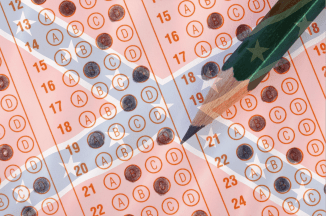
Description: Here’s the story of how standardized testing went from the eugenicist movement to the Barack Obama administration to continually enforce white power. High stakes testing is an instance of being color blind – when “post racial” just means racist and ignorant.


Fun Fact: I think the title really captured people’s attention. Black people have been saying this for decades, but the so-called mainstream has refused to listen. This article still gets a lot of readers in its incarnation on commondreams.org. I hope it provides easy proof of this point to stop the constant gas lighting from naysayers in every walk of life who can’t seem to grasp how something so pervasive can be so pernicious to people of color.


9) Six Problems with a Growth Mindset in Education


Screen Shot 2019-08-12 at 1.34.29 AM

 
Published: Aug. 12


Views: 4,678


Description: One of the most frequent excuses given for high stakes testing is that we can substitute growth for achievement. However, that idea has its own problems.


Fun Fact: A lot of folks have guzzled so much of the testing Kool-Aid that they simply refuse to accept the facts about cognition and development here. Growth has its place – but it doesn’t fit at all in a pedagogy based on standardized testing.


8) Standardized Tests Are Not Objective Measures of Anything


Screen Shot 2019-06-29 at 12.27.12 AM


Published: June 29


Views: 5,290


Description: Question – If standardized testing doesn’t assess student learning, what does it assess?Answer – not much. And certainly not what you thought it did.


Fun Fact: There will come a day when standardized tests are rightly considered pseudoscientific. This is my attempt to get this idea across to a larger audience. Audience reactions have ranged from giving me looks like I’m deranged to sighs at how obvious this is.


7) Every Charter School Must Be Closed Down – Every. Single. One.
 

Screen Shot 2019-09-07 at 11.17.21 PM

 
Published: Sept. 8


Views: 6,869


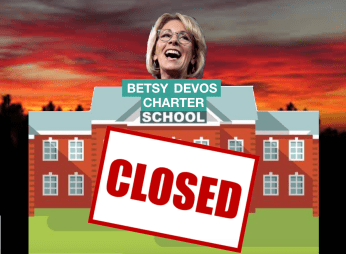
Description: The world finally seems to be realizing that charter schools are deeply problematic. But what to do with them? My answer is to shut them all down and any that actually provide value to their students should be transitioned to becoming authentic public schools.


Fun Fact: This article was partially in response to charter school critics who would say things on Twitter like “No one wants to shut down all charter schools, but…” No. I really do want to shut them all down. I think their time is up. We need to abolish this failed concept and move on to real education policies that actually have a chance at helping students.


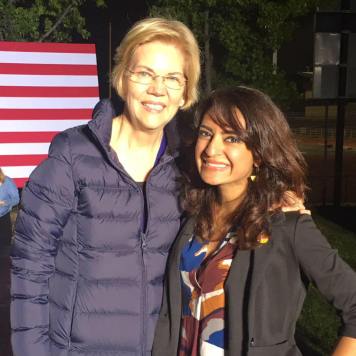
6) Charter School Teacher Introduces Elizabeth Warren at Rally
 

61665090_10109374029691176_8067465538567143424_n

 
Published: June 4


Views: 9,761


Description: Before Elizabeth Warren introduced her education policy, no one really knew where she stood on the issue. So many of us in the education activist community became worried when she had former charter school teacher Sonya Mehta introduce her at a California Rally.


Fun Fact: This article drudged up huge controversy over my characterization of Mehta. At first, I called her a “Charter school lobbyist.” This was unfair and I changed the article to reflect that. However, I was dragged in the media as an anti-Warren troll and Russian bot. Since Warren has released her education policy, I have written extensively about how really comprehensive it is. I think Warren is second only to Bernie Sanders in this race and even exceeds him in some areas of policy. But no one has yet to apologize to me for daring to question a political figure.


5) Teachers Are Not Responsible for Student Growth or Achievement


thumbnail_Screen Shot 2019-11-21 at 8.55.01 AM

 
Published: Nov. 29


Views: 11,188


Description: Teachers can’t make students learn. We can’t even make them grow. We can do lots of things to optimize the conditions for growth, but we are not ultimately responsible for the result. We’re only responsible for what we do to help bring it about.


Fun Fact: Lots of folks hate me for writing this article. Lots of folks love me for writing it. However, it was past time someone said it. Teachers make a huge impact on their students, but we are not magical. When you expect us to be wizards, you end up destroying our ability to do our jobs and you enable all the corporate testing and privatization hacks who build themselves up by tearing down our profession because we’re not magic.


4) Charter Schools Were Never a Good Idea. They Were a Corporate Plot All Along


Screen Shot 2019-09-14 at 6.02.02 PM

 
Published: Sept. 15


Views: 13,153


Description: Where did charter schools come from and what was their original purpose? Read here to find the facts.


Fun Fact: I wrote this article because of the common lie that charter schools were created by union president Albert Shanker to empower teachers. WRONG. They were created by Minnesota “policy entrepreneur” Ted Kolderie and privatization cheerleader Joe Nathan. This is an attempt to get the record straight. I hope it succeeds.


3) Are Teachers Allowed to Think for Themselves?



thumbnail_Screen Shot 2019-10-30 at 3.35.07 PM

 
Published: Nov. 7


Views: 22,041


Description: It’s kind of a simple question. Many administrators and school boards treat teachers like robots to be programmed and do what they’re told. But we’re also expected to display a large degree of autonomy. Which one is the real expectation because we can’t ultimately be both.


Fun Fact: This article was republished in the Washington Post and continues to be hugely popular. I think that’s partially because it calls out the elephant in the room in every faculty meeting, school board meeting and education policy session at local, state and the federal government. Maybe allow teachers to be part of the conversation if you really want to bring about positive change.


2) How Many Decisions Do Teachers Make Every Day?


94b755b2-ad1400b671f8ad28440f6a7067004614


Published: Jan. 5


Views: 27,286


Description: Answer – on average, teachers make at least 1,500 decisions a day. That comes out to about 4 decisions a minute given six hours of class time.


Fun Fact: This fact has been around since at least the 1980s. It represents the kinds of things we were interested in education before standardized testing and school privatization took over. And it has implications that go on for miles and miles and miles…


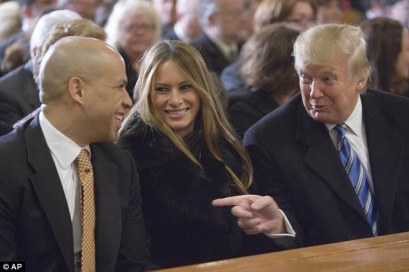
1) As LA Teachers Strike Over Charter Schools, Democrat Cory Booker Speaks at Pro-Charter Rally
 

thumbnail_corydonaldtrump


Published: Jan. 18


Views: 37,652


Description: In California, 30,000 Los Angeles teachers were on strike because charter schools are gobbling up their funding without providing the same level of quality services or accountability. Meanwhile in New Orleans, Sen. Cory Booker was giving the keynote address at a charter school rally.


Fun Fact: This raised the question of where the Democrats stand on education policy. And thankfully the Booker branch of neoliberals has been overpowered by the Sanders-Warren wing. We’ll see if this continues through the Presidential nomination and (hopefully) the next administration. Could it be a sea change in Democratic support for real, authentic education policy and away from standardization and privatization? Time will tell.


Honorable Mentions


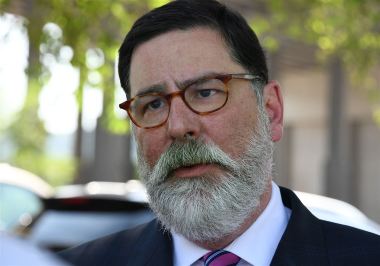
6) Pittsburgh Mayor’s Tantrum About School Finances Proves He Doesn’t Understand Education or Equity


20190805dsPedutoLocal01-1567025449


Published: Nov. 17

 
Views: 3,237


Description: Mayor Bill Peduto refuses to give back millions of dollars in tax revenue to city schools that could help close budget gaps and provide the services students need. The money was given to the city when it was in financial distress, but now that the city situation has improved, the schools are calling for that money to be returned. Just simple fairness.


Fun Fact: This was one of the first times I really addressed Pittsburgh politics especially as it branches out from the schools. Readers were extremely interested and I seemed to have tapped into a real conversation about the mayor’s role in school politics.


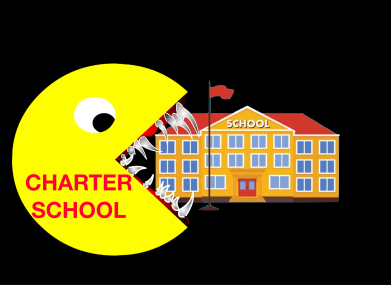
5) Charter Schools Are Quietly Gobbling Up My Public School District

 
Screen Shot 2019-05-19 at 7.49.57 PM

 
Published: May 20


Views: 2,919


Description: The Propel charter school chain keeps getting more and more of Steel Valley Schools budget despite enrolling around the same number of kids. It is expected to get away with 16% of Steel Valley Schools’ entire $37 million yearly budget in the coming year. How is that fair?


Fun Fact: This is one of the first times I have written so openly about the district where I teach. The result was extremely positive. It really got people talking and put together a lot of information that – sadly – our local media has failed to compile. With the loss of neighborhood papers and the consolidation of newspaper budgets, it’s left to bloggers like me to do actual journalism.


4) Greater Test Scores Often Mean Less Authentic Learning

 
Screen Shot 2019-10-04 at 4.25.32 PM

 
Published: Oct. 5


Views: 2,580


Description: Standardized tests only assess ability at taking standardized tests. So if we misconstrue test scores for learning, we’re leaving out the entire universe of concepts and skills that are not and cannot be captured by those tests.


Fun Fact: I think this is an important point that can’t be emphasized enough. It frustrated some readers because they wanted the easy conflation between test scores and learning. But few things in education are that easy. This article outlines exactly where the tests go wrong. It’s a tour of the sausage factory that will leave anyone less hungry for standardization.


3) Top 7 Ways Technology Stifles Student Learning in My Classroom

 
Screen Shot 2019-07-30 at 9.25.31 PM


Published: July 31


Views: 1,991


Description: We have become too reliant on technology in schools. We’ve welcomed and incorporated it without testing it, or even reflecting upon whether it promises to offer better pathways toward student comprehension and discovery or whether it merely offers flash and novelty devoid of substance. And perhaps even more frightening, we have not investigated the ways in which using these technologies actually puts student privacy and intellectual growth at risk.


Fun Fact: It is essential we question our assumptions – especially about technology. Many teachers fund this article a breath of fresh air. Others condemned me as a technophobe. You be the judge.


2) The Last Day of School


thumbnail_IMG_8831


Views: 1,271


Description: I had a stronger connection with last year’s students than any group I’ve ever taught. I was their Language Arts teacher for two consecutive years – 7th and 8th grade. When our time ended, they even re-enacted the closing scene of “The Dead Poet’s Society” – a movie we had watched together in class.


Fun Fact: I will always treasure the two years I had with these children. They changed my life for the better and made me a better teacher. I am honored by their reviews of my teaching.


1) The Stink of Segregation Needs to End in Steel Valley Schools

 
ygateau_npred_borders1-c4f22c33fac1a9806e5df963b8b11ae67e707927-s800-c85

 
Published: Nov. 12


Views: 988


Description: The dark secret of my district is how deeply segregated our elementary schools are. I wrote about what the problem is and how I think we can solve it. This is about as real and raw as policy making gets.


Fun Fact: Again this was one of the first times I let myself talk so openly about my district and what I thought needed to be done to improve it. Community members have come forward to talk with me about it but the response from anyone in the district has been total silence. I hope we’re actually serious about making a change here. The community is crying out for it. Teachers want to help. Where we go in the future is anyone’s guess.


Like this post? I’ve written a book, “Gadfly on the Wall: A Public School Teacher Speaks Out on Racism and Reform,” now available from Garn Press. Ten percent of the proceeds go to the Badass Teachers Association. Check it out!
 

book-2

Charter Schools, Harrisburg & Mayor Peduto Created Pittsburgh Public Schools’ Budget Deficit

Screen Shot 2019-12-23 at 12.28.52 AM

 
Where did all the money go?


Pittsburgh Public Schools will start 2020 with a $25.1 million budget deficit.


Superintendent Dr. Anthony Hamlet has asked for a 2.3% tax increase to cover the shortfall, but school directors ended up approving his spending plan without approving the tax increase.


The school board will meet on Friday to decide whether to ultimately raise taxes or make cuts including possible staff furloughs.


But in the meantime, city residents are left wondering why the measure was necessary in the first place.


After all, student enrollment has gone down at the second biggest district in the state after Philadelphia, yet spending is up 2.4% from 2019.


It really all comes down to three things: charter schools, retirement costs and tax revenue differed to the city.


CHARTER SCHOOLS


Screen Shot 2019-12-23 at 12.37.32 AM


Charter schools are funded with tax dollars but often privately run. As such, any student living within district boundaries takes funding away from the district.


And the amount of money keeps rising even though enrollment has not increased at these charter schools.


Since 2014, the amount the district has sent to these privatized schools has gone up by 88%.


In 2019, the district paid $95,129,023 to charter schools. In the proposed 2020 budget, new district projections put the expenditure at $102,150,444. That’s an increase of $7,021,421 in a single year.


So the cost of charter schools is 15% of the entire proposed budget. If it were eliminated, the district wouldn’t have a budget deficit at all – it would be running with a dramatic surplus.


And this is money that need not be spent.


Only about 6% of public school students state-wide are enrolled in these schools, and they duplicate services students are already receiving. Yet charter schools provide little value for students.


Nearly every study has found that charter schools do not produce better academic results than authentic public schools – in fact, many drastically underperform their public school counterparts.


For instance, a recent study of charter school students in Pennsylvania conducted by the school privatization friendly Center for Research on EDucation Outcomes (CREDO), found that charter students do about the same on reading exams but score worse in math than students in authentic public schools. The study also found major disparities between charter schools – with cyber charters performing especially poorly.


In addition they have been found to increase racial segregation, cherrypick students, increase administrative overhead and discriminate against students with special needs.


But the state passed a law in 1997 allowing charter schools and there is nothing Pittsburgh Public Schools can do but continue to pay for them.


School directors, administrators, teachers, students, parents and concerned citizens can lobby their representatives in Harrisburg to fix these problems, but until they do there is little local districts can do.


However, the fact that charter schools increase local taxes is beyond doubt.


According to a recent report by the Pennsylvania Association of School Business Officials (PASBO), state charter schools are growing at a rate of 10 percent a year. The PASBO calculates at least 37 cents of every new dollar of property taxes in the fiscal year 2017-2018 went right to charters. And that percentage is only expected to grow.


RETIREMENT COSTS


Screen Shot 2019-12-23 at 12.38.25 AM


Another large expenditure beyond the district’s control is retirement costs.


In 2019, the district spent $73,769,809 on contributions to the Public School Employees’ Retirement System (PSERS). In 2020, that number is expected to increase to $76,770,577. That’s an increase of $3,000,768.


Why the increase?


Because our state lawmakers were fiscally irresponsible.


Basically, the legislature stopped paying the bills for nearly two decades.


pa_required_vs_actual_contributions_pew_600


The state government, local school districts and commonwealth employees are responsible for paying into the pension system. Districts and state workers made all their payments. Employees put aside 7.5% of their salaries every year to pay for their retirement.


But the legislature didn’t make its payments. It pushed them off to the future, and now that the future’s here, a larger percentage of the cost has fallen on local school districts.


It’s a problem of Harrisburg’s making and – frankly – the legislature should be buckling down to find a solution.


But instead they’re planning on the cynical assumption that voters are too stupid to understand it all and will just blame public school employees for demanding what we promised them when they were hired. The legislature has continuously reduced benefits for future employees and tried to illegally cut benefits for current ones.


What they should do is increase taxes on the wealthy and pay their damn bills.


We had a contract with employees when they were hired. We can’t renege on it now that they’ve retired.


Once again this is something Pittsburgh Public school directors and administrators have no control over. It will take a combined effort by local communities across the Commonwealth to lobby Harrisburg to get off its ass and fix the problem it made.


MAYOR PEDUTO


Screen Shot 2019-12-23 at 12.38.56 AM


The final factor behind the proposed tax increase is Pittsburgh Mayor Bill Peduto.


When the city was on the verge of financial collapse 15 years ago, the school district agreed to help by diverting a portion of its tax revenue to the city.


Now that the city is out of financial distress (and has been since 2018), Dr. Hamlet has suggested the city should return that money – not back payments, just stop taking the additional tax revenue. Administrators estimate that would bring in another $20 million for the city school district.


It wouldn’t heal the budget shortfall all by itself, but it would certainly help.


However, Peduto has furiously raged that he would not support such a measure and would fight it in Harrisburg.


Frankly, it’s a real dick move.


When asked about it he deflects to criticisms of the Hamlet administration that really have nothing to do with anything.


It’s really a simple matter. The schools lent the city money when it was in distress. The city is no longer in distress, so it should stop taking that additional money.


SOLUTIONS


Screen Shot 2019-12-23 at 12.28.52 AM


The first thing that has to be done is for Pittsburgh Public School directors to put on their grown up pants and raise taxes.


Look, I get it. No one wants to raise millage. But sometimes being an adult means doing things you don’t want to do.


And frankly, it’s not really that hard a call.


Pittsburgh Public Schools has the lowest tax rate in Allegheny County at only 9.84 mills. Most suburban districts range from 12 to 31 mils.


The proposed tax increase would mean paying an additional $23 for a property valued at $100,000.


This is not an unbearable burden.
Some complain that it would push city residents to move – but really anywhere else you move will have higher taxes! Anyone who packs up and moves away will not be doing it for financial reasons.


According to the district’s own Website, 67% of its students are non-white. Only 33% are white, with 53% African American and 14% other races.


Anyone complaining about money being spent on district students is upset about money being spent on THOSE KIDS. Just as so many of the criticisms of Dr. Hamlet, who is black, come down to an inability to accept a person of color in a position of power – especially if he isn’t going to simply give in to corporate interests looking to pick the district dry.


The fact is the majority of district students live in poverty. Though enrollment has gone down, that has allowed per pupil expenditures to increase and help heal the trauma of penury.


These kids need smaller class sizes, more tutoring, librarians, counselors, wider curriculum, etc. The money being spent on them is not wasted. In fact, in a perfect world it would be increased. We need to spend MORE on our poorest students than our most privileged ones to help them catch up.


I am thankful that board members Veronica Edwards, Pam Harbin, Devon Taliaferro, and Sylvia Wilson understood that by voting for both the proposed budget and the tax increase.


Kevin Carter, at least approved the spending plan, but he abstained from voting on whether the district should raise taxes, explaining later that he promised his constituents that was something he wouldn’t do.


Board members Cindy Falls, Bill Gallagher, Terry Kennedy, and Sala Udin voted against both measures.


Here’s hoping they find the courage to do what’s right after the holidays.


But even if they do, there is much more we must accomplish – and it requires everyone.


City residents need to rise up and demand their representatives put out the raging dumpster fires they keep lighting.


We need a state legislature willing to take on the charter school industry and at very least stop making it compete with authentic public schools for funding.


We need lawmakers willing to make the wealthy pay their fair share so the rest of us get the civil society we deserve – and that includes paying for the pension obligations we’ve already incurred.


And Pittsburgh needs a mayor who isn’t going to rage and foam at the prospect of FairPlay and will return the money Pittsburgh Public lent to the city.


Like this post? I’ve written a book, “Gadfly on the Wall: A Public School Teacher Speaks Out on Racism and Reform,” now available from Garn Press. Ten percent of the proceeds go to the Badass Teachers Association. Check it out!


book-3

Why is Accountability Too Much to Ask of Charter Schools?

Screen Shot 2019-12-19 at 11.23.34 PM
NOTE: Not an exact quote but Allen wrote a book “Charting a New Course The Case for Freedom, Flexibility & Opportunity Through Charter Schools” that proposes just this idea.

 
If you hire someone to buy your groceries, you’ll probably ask for a receipt.


That’s really all education advocates want from the charter school industry.


Charter schools are bankrolled with tax dollars but often run by private businesses.


Is it too much to ask these businesses to account for how they spend the money?


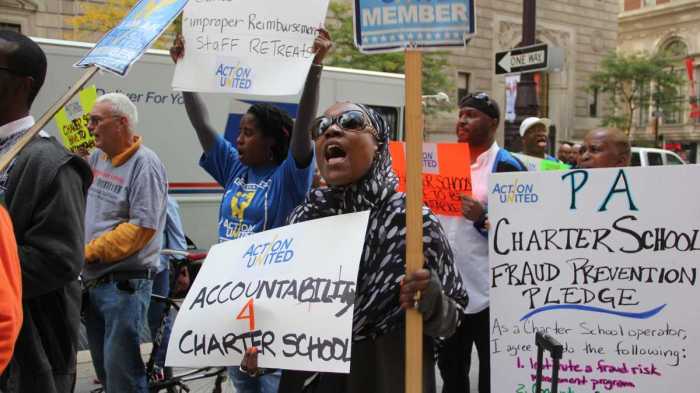
Apparently it is because Jeanne Allen has been sending her representatives all over the country to harass Elizabeth Warren, Bernie Sanders and any other candidate with the audacity to demand charter schools be transparent and accountable.


Yesterday she wrote another blistering press release with the title:

“Democratic Candidates Asked to Listen to Voices of Struggling Parents Following Them Across Nation”


Allen is CEO and Founder of the Center for Education Reform – a billionaire backed lobbying firm for school privatization.


Not exactly a “struggling parent” or anyone who speaks for them. But she is a former member of the Heritage Foundation and current member of the American Legislative Exchange Council (ALEC).


She doesn’t speak for parents. She speaks for the billionaires who pay her salary.


Armed with bundles of cash from the Walton Family and others, Allen has been organizing functionaries to disrupt Democratic rallies across the country including a speech by Warren in Atlanta last month. I wonder how she’s moving her protestors around – perhaps utilizing $2 million a year private jets like the one leased by Texas-based charter chain IDEA.


Oh! Wait! The Texas branch of the American Federation of Teachers made such a stink about that use of public dollars, the charter chain had to give up its lease.


States shouldn’t have to rely on teachers unions and the media to shame charters into being accountable. That should be the price of accepting public money.


But Allen doesn’t want to hear it. Back in 2016, she wrote a book called “Charting a New Course The Case for Freedom, Flexibility & Opportunity Through Charter Schools” that put forward the libertarian idea that charter schools need not be held accountable by anything other than the invisible hand of the market.


Unsurprisingly, such far right radicalism didn’t result in an invitation to last weekend’s Education Forum in Pittsburgh for candidates seeking the Democratic 2020 Presidential nomination.


Instead the room was full of public school parents, students, teachers, advocates and civil rights leaders.


Allen was furious. How dare they leave out charter school flunkies!?


It wasn’t so long ago that Democrats like Barack Obama and Bill Clinton were staunch supporters of school privatization. But many in this new batch of progressives typified by Sanders and Warren are demanding real reform.

 
According to reports by the Network for Public Education “Asleep at the Wheel” and “Still Asleep at the Wheel,” more than $1 billion in federal funds were wasted on charters that either never opened or closed not long after opening. And now Congress has appropriated $440 million more dollars for the federal Charter School Program, a slush fund to open even more charter schools across the country even in states like New Hampshire that don’t want them.

 
Isn’t it fair to demand a few receipts?

 
Thank goodness there’s Republicans like Betsy DeVos who make no such demands. Allen has the entire Trump administration willing to listen to her anytime she wants. But ironically for someone who champions schools be run like businesses, she wants to corner the market and eliminate any political choice or competition.


In yesterday’s press release, Allen demanded the seven leading Democratic candidates at last night’s Los Angeles debate sit down and listen to her particular special interest group.


And – make no mistake – it is a special interest group.


Charter schools are the very definition of special interest.


According to the Oxford Dictionary, Special Interests are:


“A group of people or an organization seeking or receiving special advantages, typically through political lobbying.”


That’s exactly what Allen is trying to do.


She is challenging the request that charter schools meet the same accountability standards as authentic public schools.


She wants charter schools to be held to a lower standard – that they can enroll just the students they choose instead of having to accept everyone in their coverage areas like authentic public schools are required to do. She wants charter schools to be able to narrow the curriculum and get rid of extraneous classes and student services so that the business folks running the place can take the money that had funded these things home as a bonus. She wants to ensure charter schools can continue to operate with appointed bureaucrats and not be required to be managed by elected school boards drawn from everyday citizens in the community.


Authentic public schools aren’t allowed to skirt these rules. Why should charter schools? If they’re public schools, shouldn’t they have to abide by the same safeguards?

Allen claims she’s just looking out for children of color.


Yet the overwhelming majority of black students enrolled in authentic public schools – 7 million strong – would probably disagree with her. She certainly isn’t speaking for THEM.


Here’s this white woman telling the black community she knows what’s best.


Only about 800,000 black kids are enrolled in charter schools nationwide and that number is dropping.


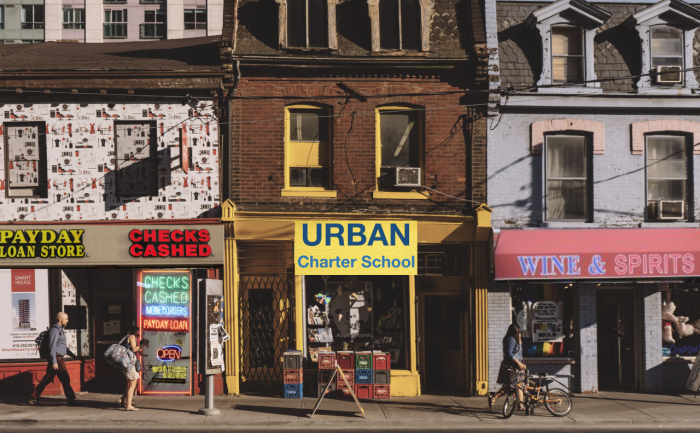
Black people know how charter schools disproportionately locate in the inner cities to target them – just like those other markers of the predatory economy: takeout liquor stores and payday lenders.


Ex-journalist Roland Martin, who at least is black, held a streaming event a few days ago to reiterate his support for charter schools.


He used to be backed by the billionaire funded Black Alliance for Education Outcomes (BAEO) which praised DeVos to the heavens when she was chosen as Education Secretary.


In a press release, the organization enthused:


“BAEO congratulates Betsy DeVos on becoming our next Secretary of Education. She is a very gifted and well-respected education leader with a proven track record of advancing excellence and equity for students. She has been a strong advocate of parental choice, ensuring that all children regardless of race or economic status have access to excellent schools.


“DeVos has spent much of her life working on behalf of low-income and working class Black families who just want access to better educational options for their children. She will be a strong supporter of parental choice policies and education reform initiatives that we believe will help close the academic achievement gap.”


However, after DeVos championed cutting civil rights guidelines for students, slashing funding for everything other than school vouchers and advised teachers to report their undocumented students to ICE, the civil rights community revolted.


Both the NAACP and Black Lives Matter have condemned DeVos and demanded a moratorium on new charter schools. These huge people powered groups represent the will of the black and brown community – not Allen, Martin and their billionaire backers.


BAEO was so overcome with negative publicity, the group disbanded.


Allen claims charter schools are necessary because of low standardized test scores at public schools.

However, she’s just parroting the same school privatization talking points of the past three decades. Increasing charter schools didn’t raise test scores in the 90s, the 00s or the 10s.


Moreover, the test scores she’s referring to are international comparisons between the US and other industrialized countries that don’t take many relevant factors into account. Most importantly, the US is committed to educating all of its students while many of these other nations are not. They weed out the lower achieving students by middle and high school. They don’t educate all of their students with special needs. And they don’t have the same level or scale of poverty. In short, these are not apples to apples comparisons and have little to tell us about the quality of the American system unless it’s that our ideals are better than most international systems.


Finally, Allen neglects to mention that charter schools have never outperformed authentic public schools. They are not a solution to falling test scores, because charter school kids get the same scores or often worse ones. Cyber charter schools in particular are notorious for achieving worse academic outcomes for students than literally not going to school at all!


The fact that many of the current Democrats have embraced charter school criticism may be a sign of real reform on the horizon.

And that’s what terrifies Allen and her rich backers.


The school privatization industry relies on being held to a lower standard than authentic public schools. That’s all a charter is, anyway – an agreement NOT to hold the business running a taxpayer funded school to the same standards as the authentic public ones.


It’s time those charter agreements were ripped to pieces.


All public schools should have to reach the same standards.


If there are charters that can do so, we should allow them to continue running as public schools. But those who cannot should be closed.


That’s just fiscal responsibility.

I say it is NOT too much to ask of any public school – including charter schools.


Like authentic public schools, charter schools should be required to show us the money, present the receipts and be accountable for their actions.


Like this post? I’ve written a book, “Gadfly on the Wall: A Public School Teacher Speaks Out on Racism and Reform,” now available from Garn Press. Ten percent of the proceeds go to the Badass Teachers Association. Check it out!
book-4

Charter Schools Exploit Children of Color

thumbnail_Screen Shot 2019-12-01 at 7.13.25 PM


Go to most impoverished black neighborhoods and you’re bound to find three things in abundance.


Liquor stores, payday lenders and charter schools.


It is no accident.


In the inner city, the underemployed compete for a shortage of minimum wage jobs, healthcare is minimal, public transportation inadequate and the schools are underfunded and short staffed.


But that doesn’t mean money isn’t being made.


In capitalist America, we make sure to turn a profit off of everything – including our peculiar institutions of racial inequality.


Businesses are on every corner, but they aren’t set up for the convenience of those living there.


Ethnic isolation – whether caused by poverty, legal coercion, safety in numbers or white flight – often puts the segregated at a disadvantage. It creates a quarantined economy set up for profiteers and carpetbaggers to get rich off the misery of the poor.


The system is set up to wring as much blood as it can from people forced to live as stones.


Families struggle to survive in a community where they are exploited by grasping landlords and greedy grocers. And the system is kept in check by law enforcement officers who are either disposed to turn the other way or so overzealous as to shoot first and ask questions later.


As W.E.B. DuBois described it nearly a century ago, “Murder sat on our doorstep, police were our government, and philanthropy dropped in with periodic advice.”


The economy is glutted with enterprises offering cheap promises of relief but which actually reinforce the status quo.


Predominantly black, low-income neighborhoods are eight times more likely to have carry-out liquor stores than white or racially integrated neighborhoods, according to researchers at the Johns Hopkins School of Public Health.


Yet in higher income black neighborhoods in the same cities, you don’t find these same liquor stores.


They are established in the poorest neighborhoods to offer cheap, temporary respite from the trauma of living in poverty. Yet they increase the likelihood of alcoholism, addiction and violence.


The same goes for payday lenders.


These are basically legal loan sharks who offer ready cash at exorbitant interest rates.  Typically these payday loans are meant to last the length between paychecks – approximately two weeks. However, they come with extremely high interest rates. For instance, the average $375 loan ends up costing $520 (139%) in interest.


These businesses aren’t located in the suburbs or wealthy parts of town. You find them typically in the inner cities and poor black neighborhoods. They promise temporary help with one-time purchases and unexpected expenses, but in truth most are used to pay for necessities like rent or food.


They end up trapping users in a debt spiral where they have to take out payday loans to pay off previous payday loans. This is mostly because these loans are made based on the lender’s ability to collect, not the borrower’s ability to repay while meeting other financial obligations.


And these are just two of the most common features of this predatory economy – capitalist enterprises designed to enrich businesses for exploiting consumers beyond their ability to cope.


Others include high priced but limited stock grocery markets, fast food restaurants, gun stores, inner city rental properties and charter schools.


That last one may seem out of place.


Most descriptions of urban neighborhoods neglect to mention charter schools, but in the last few decades they have become an increasingly common part of the landscape. And this is no wonder. They fit the same pattern of exploitation as the other establishments mentioned above.


Think about it: (1) charter schools disproportionately locate in poor black communities, (2) offer the promise of relief from inequality but end up recreating or worsening the same unjust circumstances and (3) they are often owned by rich white folks from outside the neighborhood who profit off the venture.


1) LOCATION


Who attends charter schools and where are they located?


The charter sector represents only a tiny fraction of students attending public school.


Of the 50.4 million students in the public school system in 2015, only about 3.2 million students were enrolled in roughly 7,000 privately-operated charter schools across the country.


To put that in context, that means just a little more than 6% of all public school students are enrolled in charter schools.


According to 2016 data from the National Center for Education Statistics, only 26% of all charter school students are black (832,000) compared with 33% of Hispanics (1,056,000) and 32% of whites (1,024,000).


Screen Shot 2019-12-02 at 11.56.47 AM
Source: NCES


This doesn’t come close to a majority for any racial group. Consider the fact that authentic public schools enroll approximately:


•7 million black students (14% of the total)


•12 million Hispanic students (24% of the total)


•24 million white students (48% of the total)


Screen Shot 2019-12-02 at 11.40.38 AM
NOTE: These figures include charter school students. To get the totals of authentic public school students (above) I subtracted the charter students out. SOURCE: NCES


More students of all ethnicities attend authentic public schools than charter schools – by orders of magnitude. However, those that are enrolled at charter schools are not distributed evenly. Charter schools do educate a disproportionate percentage of students of color – especially among Hispanic students.


Why? Do black and brown families seek them out or is it just the opposite – charters seek out melanin abundant children.


Approximately 57% of charter schools are located in cities, according to 2017 data from the National Center for Education Statistics. That’s comparable with only 25% of authentic public schools.


Screen Shot 2019-12-02 at 12.44.05 PM


So like liquor stores and payday lenders, charter schools are disproportionately located in highly segregated, urban communities often with a majority black and Hispanic population. And since they are businesses (unlike their authentic public school counterparts), they literally target this demographic because it fits their profit model.


These are the people they think they can sell on the charter model. And they often do.


2) EXPLOITATION


How do charter schools disadvantage the students enrolled there?


Like other vulture capitalist enterprises, they exploit the students they purport to serve by convincing people of color to accept fewer services than they already get at authentic public schools.


Authentic public schools invariably are run by school directors elected from the community who have to make all possible decisions in public and present their records for review.


Charter schools are permitted to run without elected school boards. Decisions are often made by appointed bureaucrats behind closed doors. They are not required to hold public meetings or present school documents as public records. Parents have no way of having their voices heard except that they can take it or leave it.


Authentic public schools have to use all their funding for the benefit of the students.


Charter schools can cut student services and pocket the savings. This is true regardless of whether they are designated for-profit or non-profit. It’s just a matter of which loopholes you have to go through. In both circumstances there are ways for the business people running charter schools to make financial gains at the expense of the community and its children. And the result is larger class sizes, narrower curriculum, fewer field trips and extra-curricular activities – but also larger salaries and perks for administrators and investors.


Authentic public schools have to accept all students who live within their boundaries.


Charter schools are not required to accept all students who live in their coverage areas or even all who apply for enrollment. They can and often do cherry pick the easiest students to educate. The can dissuade special needs students or students with less stable families from applying by forgoing special services and/or requiring prerequisites like costly uniforms and parental voluntarism. Or they can simply choose whomever they wish from the applicant pool and claim the decision was based on a lottery that never needs to be audited for fairness.


Despite a lack of adequate funding and an abundance of high needs students, authentic public schools provide the best academic outcomes possible given their limitations.


Despite having every advantage, charter schools get the same or worse academic outcomes as authentic public schools.


Charters market themselves as providing a superior education, but this is not supported by the facts.


Nearly every study conducted on the matter has found that charter schools do NOT outperform authentic public schools. In fact, many charters get much worse results – especially cyber charter schools.


Moreover, according to the Department of Education’s National Assessment of Educational Progress (NAEP), authentic public school students in fourth, eighth and 12th grades outperform charter school students in math, reading and science. 
In addition, no other high performing nation even has charter schools.


But that’s just academics. There are even clearer economic indications of how charter schools squander the tax dollars that fund them while authentic public schools are more stable and provide better value for the money.


Authentic public schools don’t have nearly the same amount or degree of financial scandals because they are required to be much more transparent and their budgets are subject to frequent audits. By contrast, in many cases charter schools take public tax dollars and provide literally nothing in return.


According to a 2015 report by Wisconsin-based Center for Media and Democracy, dozens of charter schools that have accepted federal funding closed without even opening in the first place! The federal government has spent $3.7 billion to boost the charter sector only to have these “ghost schools” pop up and spirit away our tax dollars.


This includes:


•In 2011 and 2012, the federal government gave $3.7 million in taxpayer dollars to 25 Michigan “ghost” schools that never even opened to students.


•In California, more than $4.7 million in federal taxpayer money was handed out to create charter schools that subsequently closed within a few years.


•In Ohio, out of the 88 schools created by planning and implementation grants under the federal “Charter School Program” (CSP) for state education agencies between 2008 and 2013, at least 15 closed within a few years; a further seven schools never even opened. These charters received more than $4 million in federal taxpayer dollars.


There is even more evidence that charter schools are not nearly as stable as authentic public schools.


According to the National Center for Education Statistics, one in ten charter schools have closed over a three year period. That’s more than 765 charter schools that have been shuttered between 2014-15 and 2016-17.


This leaves thousands of families scrambling to find an education for their children.


Such scandals simply do not happen at authentic public schools.


So charter schools provide fewer services, worse results, and a greater chance of closure or wasting limited funding without even opening at all – not a good return on investment for students of color.


3) OWNERSHIP


And who owns and operates these charter schools?


There has been very little research on this topic.


The most detailed information I could find comes from the charter school industry, itself, specifically the National Alliance for Public Charter Schools (NAPCS), a nonprofit that describes itself as “committed to advancing the public charter school movement.”


According to the NAPCS, about one-third of charter schools in 2016-17 were operated by management organizations that run multiple schools. This includes KIPP, Success Academy, Green Dot Charter Schools, Uncommon Schools and Rocketship Charter Schools.


The remainder (57%) are owned by what they call freestanding charter schools – which just means organizations that run only one school.


These institutions can be run by a wide range of groups including religious organizations and local business organizations such as chambers of commerce or economic development authorities.


While it’s true that community groups also sometimes run charter schools, they are invariably funded by huge foundations such as the Bill and Melinda Gates Foundation, the Dick and Betsy DeVos Family Foundation, or the Walton Family Fund – all of whom profit off the industry.


Are these community groups authentic representations of an abiding belief in the power of school privatization to achieve equity or are they mere fronts for the big money behind them? Even when individuals approach the matter with an open mind, is it fair to say they’ve independently reached a decision when there is a huge paycheck from a prestigious name behind one option and nothing but logic and history behind the other? Billionaires are literally paying you to favor solutions that help their bottom line. Is it any wonder some folks can’t see past all that green?


Even with a lack of good data, it seems clear that the overwhelming majority of the industry is owned, operated and/or supported by rich white people from outside of the black and Hispanic community.


CONCLUSIONS


Charter schools are not a grassroots response to the problems of educating the urban poor.


They are not an authentic expression of what the majority of people of color want for their children.


They are a kind of “false consciousness,” an extension of the segregation economy exploiting black and brown children.


They are disproportionately located in poor and minority neighborhoods because operators think they can sell their educational model to people of color fed up with the inequality of their neighborhoods.


Yet they provide fewer services at greater cost to black communities – they convince impoverished minorities to give up the few educational guarantees they already have in favor of a worse situation. And the result is a continuation or worsening of the status quo while enriching vulture capitalists.


It’s a scam, a flimflam ripoff, a bamboozling hoax.


Like the liquor stores and payday lenders that dot the inner city landscape, charter schools are yet another way to exploit black people for the crime of putting their faith once again in capitalism to break their chains.


The only truly effective way to achieve equity is with collective action against white supremacy.


We need to tear down the systems of inequality that privilege some at the expense of others – and doing that requires a robust system of public education for all.


It is not only a prerequisite for social justice but it is one of the central facets of the fight, itself.


You can’t use capitalism – a system that relies on inequality – as a method to assure equity.


Justice requires fairness. And the road to fairness can only be discerned by enlightenment.


Education is both the path and the goal.


It’s passed time we stop exploiting those who wish to walk that path by convincing them to go another way.


Like this post? I’ve written a book, “Gadfly on the Wall: A Public School Teacher Speaks Out on Racism and Reform,” now available from Garn Press. Ten percent of the proceeds go to the Badass Teachers Association. Check it out!

book-4

Demand Reform to Pennsylvania’s Charter School Law – Before It’s Too Late

l_charter-protest
 

If no one answers a question, was it even asked?

 
Way back on August 24, 2019, the Pennsylvania Department of Education (PDE) quietly posted a little notice on the PA Bulletin Website asking for public comment on the state’s charter school law.


This is not exactly a high traffic site.


It’s a state-run page that includes proposed rules, notices, proclamations, court rulings, actions and executive orders.

 
Unless you work for the state, are a journalist or a policy wonk, you probably didn’t see it.


Since then, there has been little fanfare, no hoopla, nothing much in the media about the notice at all.


But this is a huge opportunity for residents fed up with the nonsense the school privatization industry has been getting away with in the Commonwealth for decades.


Pennsylvania has one of the worst charter school laws in the nation.


Charter schools are taxpayer-funded but privately operated.


Though there are about 180 of these privatized institutions throughout the state with more than 137,000 students, that represents only about 6 percent of the kids enrolled in public school.

 
Yet the state funding system pits authentic public schools against charter schools for the financing needed to stay open.


Charter schools siphon money from authentic public schools serving the neediest students creating a deficit spiral. Money gushes out of public districts which have to cut teachers and programs to patch budget gaps which in turn result in even more parents pulling their children out of the public schools and trying to enroll them in charters.


Though the legislature used to help authentic public schools by reimbursing them for 30% of the charter school costs, that funding has been eliminated.


Meanwhile, the charter school law has barely changed at all since it was enacted in 1997.


Gov. Tom Wolf has promised to correct that with sweeping reforms in 2020 – even if it means bypassing the gerrymandered and gridlocked legislature with executive orders.


But before he can begin, he needs to hear from commonwealth voters.


Charter schools are backed by billionaires like Betsy DeVos, Bill Gates and the Walton Family. To hold these privatized schools accountable, he needs tangible proof that he has voter support.

 
So the more comments he receives demanding action, the better the chances that gets done.


PDE has set no deadline for comments, but to make the most difference, we have until the end of the year – Dec. 31, 2019 – to make our voices heard.


There are two ways to do it. You can:


1) Write a letter to Secretary of Education Pedro Rivera at:


Pedro A. Rivera
Office of the Secretary
Pennsylvania Department of Education
333 Market St.
Harrisburg, PA 17120


2) Email your letter to Special Assistant to the Secretary Adam Schott at:


adschott@pa.gov


Comments can be as long or short as you want, but here are some suggestions to keep in mind when writing.


1) Begin by telling who you are.

 
2) Explain the problem with charter schools briefly. Use real world examples if you can. There’s nothing wrong with referring to a newspaper article or blog. And if you can mention specifics from your school district, all the better.

 
3) Make suggestions for reform. You can address anything, but PDE is specifically looking for comments on these topics:


· Charter school applications: Strong regulations would require the application be comprehensive, set high standards, ensure only operators with needed skills are approved and maintain maximum local control.


  · Admissions policies: Strong regulations would ensure charters conduct fair lotteries that don’t allow cherry picking. Schools should be located in areas that are accessible to poor students and those relying on public transportation. Charters should be required to create recruitment plans for specific groups of vulnerable students including EL students, students with disabilities, economically disadvantaged students and students in foster care.


     · Accountability for boards of trustees: Strong regulations would aim to prevent financial wrongdoing, eliminate conflicts of interest, and impose stronger penalties for the misuse of public funds.


  · Information on charter management companies: Strong regulations would end high fees paid to charter management companies and increase transparency of boards, budgets, costs and contracts.


· Insurance, financial and accounting standards: Strong regulations would ensure there were independent auditors and accountants as well as increased transparency.


  · Funding: This is about the subsidy redirection process that forces PDE to pay charters directly when they dispute a bill with a school district. Strong regulations would ensure all disputed funds go into an escrow account rather than just being paid.

 
   · Academic accountability: Strong regulations would ensure all charters should be part of a performance system that is used in renewal and revocation decisions. The lowest performing charter schools should be subject to closure without appeal.


Education Voters of Pennsylvania, a non-profit organization working to promote public education throughout the Commonwealth, published this suggestion:


“We are recommending that your comments include the following:


1. We strongly support the Pennsylvania Department of Education’s decision to develop these regulations.


2. The regulations must end the conflicts of interest, financial self-dealing and lack of transparency that occur in the charter sector today. Charters must be held accountable for their performance in operations, finance and academics.


3. We strongly support local control over charter school opening and closing. Elected school boards know the needs of the community the best and are responsible to taxpayers and families.


4. The charter school law acknowledges that charter schools have an impact on the finances of school districts. The districts should be able to consider that impact when making decisions to open or renew a charter.”


Here is the letter I will be sending:


Dear Pedro A. Rivera:


Thank you for seeking comments from Pennsylvania residents about our 22-year-old charter school law.


I live in the Pittsburgh area and am both a public school teacher and the father of a public school student.

 
I have seen the damage charter schools can do in my career at the Steel Valley School District in Munhall. We have a Propel charter school in our community. Just three years ago, the Propel franchise siphoned away $3.5 million from our district annually. This year, they took $5 million, and next year they’re projected to get away with $6 million. That’s about 16% of our entire $37 million yearly budget.


Meanwhile, enrollment at Propel has stayed constant at about 260-270 students a year since 2015-16. It’s only the amount of money that we have to pay them that has increased.


The state funding formula is a mess. It gives charter schools almost the same amount per regular education student that my district spends but doesn’t require that all of that money actually be used to educate these children.


In the 2015-16 school year, Steel Valley paid the 19th highest amount of its budget to charter schools in the state (9%) and that number is growing.


According to the state Department of Education, here’s how our charter school spending has increased:


Steel Valley Per Student Charter School Tuition:

2000-01 – 2012-13
Non-Special Ed: $9,321
Special Ed: $16,903

2013-14
Non-Special Ed: $9,731
Special Ed: $16,803

2014-15
Non-special Ed: $10,340
Special Ed $20,112

2015-16
Non-Special Ed: $12,326
Special Ed: $25,634

2016-17
Non-Special Ed: $13,879
Special Ed: $29,441

2017-18
Non-Special Ed: $13,484
Special Ed: $25,601

2018-19
Non-special ed: $14,965
Special ed: $32,809

 
All of this has real world consequences in the classroom. It means fewer teachers and larger class sizes. It means narrowed curriculum and fewer extracurricular activities. It means reduced options and opportunities for all children – just so a new business can duplicate the services already being offered but skim tax dollars off the top.


So here are the reforms I think we need to make.

 
There is zero reason why there should be charter schools at all. We do not need to spend public tax dollars on schools that are privately operated. If a school takes public money, it should be run by the public – specifically an elected school board. So we should repeal the charter school law in its entirety. We should be like Montana, North and South Dakota, Nebraska, Kentucky and West Virginia and have zero charter schools.


Of course, that leaves us with the question of what to do with the charter schools that already exist here. First, we have to commit to a complete moratorium on any new charter schools – ever. Then we need to decide what to do with those that already exist.


I think we should do a thorough audit of each of them. Any charter school that fails the audit, closes. They should have to prove they haven’t been wasting taxpayer funds and are providing a real service to students and families. They also should not be drawing any kind of profit from their efforts.


If we have any charter schools that meet these stipulations, we should reform them into fully authentic public schools. They should have to be run by elected school boards. They should have to abide by every rule authentic public schools already do – fully transparent, public meetings, accept all students in their coverage areas, etc.


Finally, any funding shortfall caused by keeping these schools in existence would have to be subsidized by the state. They would not get any funding that goes to the existing authentic public school. The charter schools that we are transforming into authentic public schools would have to be funded by an additional revenue stream from the state – and this may require an increase in state taxes. No one wants that but it’s the only fair way and will help reduce the number of ex-charter schools we rehabilitate.


I realize my suggestion goes against what we have always done and may provoke heated opposition. But I think it is what is best.


Moreover, if we have to find a compromise position, this is where we start from. If we must keep charter schools in Pennsylvania, they should be as transparent as authentic public schools, they should have to be run by elected school boards, they should not be able to make a profit (regardless of their tax status), they should have to accept all students in their coverage areas, and they should be fully funded by the state and not as parasites to authentic public schools.


Thank you for considering my position. There are thousands of parents, teachers, students and community members who feel as I do and we will work to support your efforts and/or push you to do right thing.


Thanks again.


Yours,


Steven Singer


If you live in Pennsylvania, I strongly encourage you to send a letter (whether by email or snail mail) today. Feel free to borrow as much as you like from what I have here.


Together we can make a difference for our children and our communities. Please share widely and encourage your commonwealth friends and family to raise their voices as well.


From Pittsburgh to Philadelphia and all places in between, it’s time we were heard.


Like this post? I’ve written a book, “Gadfly on the Wall: A Public School Teacher Speaks Out on Racism and Reform,” now available from Garn Press. Ten percent of the proceeds go to the Badass Teachers Association. Check it out!

book-4

White Billionaires Cannot Buy the Charter School Debate

Screen Shot 2019-11-23 at 12.37.53 AM


Betsy DeVos is not woke.

 
Bill Gates has not been to the mountaintop.

 
Nor is the Walton Family Foundation concerned with promoting civil rights.

 
So when white billionaires pour cash to charter school lobbying groups – as the Walton’s did Thursday for charter school protestors at an Elizabeth Warren rally – it isn’t exactly convincing.

 
Speaking at the historically black college Clark Atlanta University, Warren, who is seeking the Democratic nomination for President in 2020, was interrupted by audience members chanting charter school slogans.


She eventually met with the protestors after the rally.


Strangely enough, Warren hasn’t suggested any policy position that would adversely affect the charter schools from which the protestors hail.


Along with Presidential candidate Bernie Sanders, Warren has a progressive charter school platform calling for increased transparency and an end to federal funding of charters, which are paid for with tax dollars but privately run.


The Intercept journalist Rachel Cohen noted:


“Frankly suggesting that stronger transparency standards for publicly-funded charter schools would ‘limit parental choice’ is an incoherent talking point that really should not be taken seriously. Increased transparency only ‘limits choice’ if the charter schools themselves refuse to accept higher transparency standards.”


Intercept journalist Ryan Grim, who was present at the rally, noted that the group of protestors was funded by the Waltons.


The group was from Memphis Lift Parent Institute which bused in people from around the country. It was supported by a GoFundMe page showing numerous $1,000 donations from anonymous sources.


Published financial reports clearly show the Waltons backing Memphis Lift to the tune of $1.5 million since 2015. And since then, their 2017 filing shows $375,200 more, with a mere $200 coming from other public contributions. That’s pretty close to 100%. The Walton’s Website makes the connection even more undeniable.


Support also came from Nashville education consulting firm Strategy Redefined, the Tennessee’s chapter of Democrats for Education Reform and Chris Barbic, the original head of Tennessee’s disastrous Achievement School District.


That is not grassroots.


That is astroturf.


Both the NAACP and Black Lives Matter have called for a moratorium on new charter schools primarily because of how they increase school segregation and adversely affect children of color.


These are huge national organizations making decisions based on democratic input of their members. They are not solely representative of the tiny fraction of parents (6%) who send their kids to charter schools nationwide, nor are they funded primarily by corporations and billionaire investors who, in turn, make a profit off of the school privatization industry.


While it’s true that you’ll find polls showing strong support for charters among people of color, the overwhelming majority of these polls are conducted by pro-charter groups. They’re like the American Apple Foundation finding high support for U.S. apples – little more than paid advertising.


However, even a poll conducted by charter school lobbying organization Democrats for Education Reform found that both black and white respondents support a moratorium on new charter schools.


Billionaires like DeVos, Bill Gates and the Waltons have spent incredible amounts of money to convince the public that school privatization is grassroots, but we have the receipts.


The Walton foundation has promised $1 billion since 2018 to expanding charter schools.


Andre Perry, an education policy expert at the Brookings Institution, describes the Walton foundation as hiding behind black faces to obscure who’s really in charge – they’re exploiting black people for a “white agenda.”


“It’s a sad thing that education reform is about how much money you have and not about what connection you have with black communities,” Perry said.


The Walton Foundation gave $9 million to the United Negro College Fund for a scholarship to the organization’s fellowship program for students interested in education reform. They are literally paying to indoctrinate black people to the ideology that school privatization is in their best interests.


This also includes $530,000 to the Congressional Black Caucus Foundation to sponsor an affiliated education policy advocacy and campaign training workshop and an additional $170,000 to sponsor events.

 
Walton money has also gone to two other pro-charter groups – nearly $2 million to the 100 Black Men of America campaign and $7.3 million to the National Urban League.


And this is just the tip of the iceberg.


Charter schools are not required to provide the same basic services that authentic public schools must.


To suggest that providing fewer services to black and brown children is somehow in their best interest should insult Americans of every race.


Black children – just like white children – deserve schools run by elected school boards.


Black children – just like white children – deserve schools that accept all comers, not institutions that cherry pick which kids to enroll and which to counsel out to other institutions.


Black children – just like white children – deserve schools that will provide them with robust services and don’t try to cut programs and pocket the savings as profit.


None of this is controversial.


It is common sense.


The problem is that after decades of misinformation, people are becoming ever more aware of how charter schools are scamming the public in general and black communities in particular.


The billionaires funding this industry are using their vast wealth to try and buy the debate.


It is up to every thinking American to look at the facts and understand the extent to which we are being bamboozled by white elites at the expense of our black and brown brothers and sisters.


Like this post? I’ve written a book, “Gadfly on the Wall: A Public School Teacher Speaks Out on Racism and Reform,” now available from Garn Press. Ten percent of the proceeds go to the Badass Teachers Association. Check it out!
thumbnail_IMG_8249

GUEST POST: How Charter Schools Trick Parents into Thinking They are Private Schools

GuestPost

thumbnail_charter school marketing tricks


By Lisa Lightner


If you take a walk through any Costco on a weekend afternoon, you can see that Americans LOVE to get free stuff, no matter how small it is. Why else would we wait in line for a morsel of food that likely has lots of germs on it?


Because, it’s FREE.


So, what if I offered you the chance to send your child to private school, for free? You’d likely jump at the chance, right? After all, our perception is that private schools are exclusive. Private schools are much better than public schools, right?


You must pay for private schools, which puts them out of reach for many families. So, the chance to attend one for free? Sure!


But much like you might regret eating that bite of bacteria-laden food from the sample lady at Costco, you might want to really examine that “free” private school before you send your child.


Because that “private” school is not a private school at all. It’s a charter school. And charter schools are public schools. Besides, except for a few exceptions (that charter supporters never miss an opportunity to point out), they do not perform as well as traditional public schools. In fact, right here in Pennsylvania, we do not have one cyber charter school that is performing at an acceptable level per our own Pennsylvania Department of Education (PDE) reports.


First, let me be clear. I have never once heard a charter school say that they are a private school. However, they use smoke and mirrors to trick parents into thinking that they are a private school. And, they usually refer to themselves as “charter schools” instead of “public charter schools” and many taxpayers do not even know what a charter school is.


So, the lack of the word “public” combined with a few tricks leads parents to believe that they are getting something special, something exclusive, when in fact they are not.


School Uniforms: Now, mind you, I’m not against the idea of school uniforms. There certainly is a lot of value in the concept. But I think we’d all agree that school uniforms are not a public school kinda thing. Right? If I say the words “school uniform” my guess is that the first vision that pops into your brain is dark blue, dark green, maybe even plaid….but the vision of a Catholic/private school uniform.


“Tuition Free”: Look at any magazine or TV advertisements for charter schools, and you’re likely to see the phrase “tuition free.” Wow! Free! I love free! But guess what? It’s a public school. There never was any tuition. Again, another trick to make parents think that they are getting a private school for free.


Advertising: When was the last time you saw a television commercial for your local elementary school? Yeah, me neither. The very fact that they advertise on TV, billboards and magazines leads you to believe that they are private schools. After all, a public school wouldn’t spend millions of dollars on advertising, would they? No, traditional public schools wouldn’t, as the community likely would have a meltdown over it. But it’s standard practice with the public charter schools. Millions of taxpayer dollars are spent on advertising, much of it deceitful to attract students. And take note: one thing that is absent from the advertising is mention of how well that charter school is performing. Because it’s nothing to brag about!


Tricky Words: In their advertising and promotions, charter schools use tricky words to persuade parents into believing something, without outright saying it. Here are a few examples.


The most obvious is the lack of the word “school” in many of the names. I perused a list of all the charter schools in Pennsylvania. Almost a third of them contain the words “preparatory,” “academy,” “institute” or “center” in their name. When you see or hear those words, you don’t think about public education, do you?


“Specialized” or “tailored” curriculum are a few others. The words are actually pretty meaningless, but lead parents to believe that this school must be better than a public school, right?


Wrong.


Admissions Process: When you want to put your child in your local public school, it usually is called enrollment or registration. Charter schools call it an “admissions” process, which gives it an air of exclusivity about it. Truth is, they do get to pick their students. The lottery admissions process they use are not transparent, and they’re not accountable to telling anyone how they enroll students. But using the word ‘admissions’ is very much a loaded and slanted word, compared to enroll or register.


Marketing Exclusivity: Some charters like to promote themselves as exclusive or only being for a select group of students. Again, these are public charter schools using taxpayer dollars to operate. Allowing taxpayer money to promote exclusivity in our schools is a dangerous path to go down, in my opinion. After all, minorities and disabled children have only been in public schools for a few decades. Excluding groups of children, or insinuating that you do, is backwards progress.


Charter schools are public schools. Many parents and taxpayers do not know this due to deceptive marketing tactics. Charters in PA have been allowed to play by their own set of rules, and that has to stop.


I’ll be the first to stand up and say that our traditional public schools need some assistance. But diverting funds away from them and to charters with little accountability is not the way to improve our schools.


Lisa Lightner is a Special Education Advocate who lives in southeastern PA with her family. Her blog, A Day in our Shoes, offers free (yes really, free) IEP advice for parents.


Pittsburgh Mayor’s Tantrum About School Finances Proves He Doesn’t Understand Education or Equity

20190805dsPedutoLocal01-1567025449


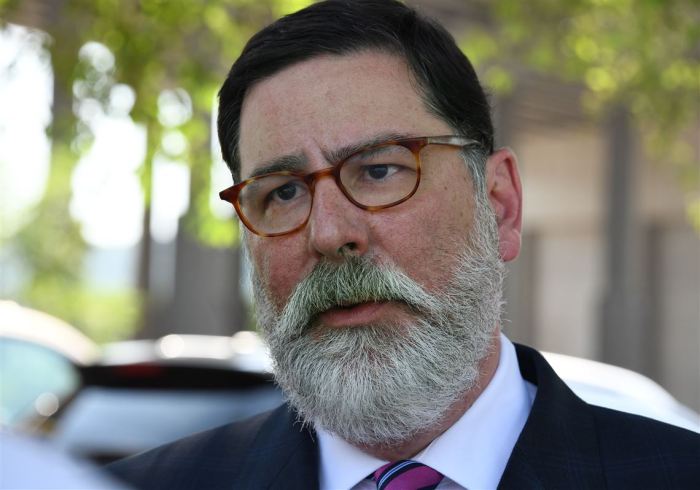
Pittsburgh Mayor Bill Peduto is steaming mad and he doesn’t care who knows it.


On Tuesday he raved that Pittsburgh Public Schools’ finances should be taken over by the state – the same fate the city had suffered during its own economic troubles from 2004-18.


The reason Peduto thinks the school should submit to a financial recovery plan overseen by a state appointed board? School Superintendent Dr. Anthony Hamlet is proposing a 2.3% tax increase in 2020 for a reserve fund while Peduto’s municipal government allegedly is managing with a surplus.


If the city can manage its finances without a tax increase, wonders Peduto, why can’t the school district?


However, the Mayor’s narrative conveniently leaves out a few pertinent facts.


Most importantly – during the city’s economic trouble 14 years ago, Pittsburgh Public Schools gave a portion of their tax revenue to the municipal government to help it pay the bills.


Now that the city is doing better, school officials are suggesting Peduto should give that tax revenue back to the schools. And that suggestion infuriates the mayor.


In addition, it’s not true that Pittsburgh’s 2020 budget includes no tax increase.


The city is raising taxes by about 6% to pay for upkeep at its parks. However, since this tax is the result of a referendum approved by the voters, it is being spun as a “no new taxes” budget.


The city has a surplus due to construction of new high-end apartments. City Council could have budgeted some of this money to pay for the parks. Instead, leaders like Peduto were too cowardly to take the blame, themselves, and put it out as a question to voters.


It is entirely unfair to criticize Pittsburgh Public Schools for raising taxes a smaller degree (2.3%) than the city is (6%).


Both entities spend about the same amount annually. In 2020, the city has a proposed $608 million budget, and the schools have a proposed $665.6 million budget.


Moreover, there is nothing unfair about school officials asking for the tax revenue back from the city that they generously offered it when the municipality was in need.


Now that the city is out of peril (and has been since 2018), it should pay back that money. To be honest, it should do so with 14 years worth of interest – but no one is suggesting that.


At least it is time for Pittsburgh to stop leeching off its schools and give this revenue back.


The fact that Peduto is whining about something so obviously fair and equitable makes him look like a spoiled child.


The same goes for his suggestion of state takeover of district finances.


Pittsburgh Public Schools already is audited by the state every year. It is not on the state watchlist for districts in financial distress.


District spokeswoman Ebony Pugh said, “There have been no significant issues raised related to how the district conducts its finances.”


Peduto just wants the schools to have to endure the same indignity the city did thereby putting municipal leaders in a better light.


After all, it was the school district which helped the city – not the other way round. And it was the city that needed the state to take over its finances, not the schools.


It was Pittsburgh Public School’s Chief Financial Officer Ronald Joseph who explicitly proposed a take-back of wage tax revenue that was diverted to the city in 2005.


City residents pay a 3% wage tax. Of this money, originally 2% went to the schools and 1% to the city.


When the city was placed under Act 47 state oversight, the formula was changed to give a quarter percent more to the city from the school’s allotment – thus 1.75% went to the schools and 1.25% went to the city.


Pittsburgh left Act 47 in 2018 but the wage tax distribution has remained the same.


“Why in the heck can’t the school board balance their budget?” Peduto said. “Where is all this money going?”


Answer: Some of it is still going unnecessarily to fill your municipal coffers.


Peduto added:


“If they are looking to have part of the city’s wage tax, then they should be willing to open the books and let the state come in and do exactly what we had to do through Act 47, which was difficult restructuring for the future. If we didn’t have that, the city would be bankrupt.”


So let me get this straight. In order to give back the revenue the schools generously loaned the city, you need a look at their finances? I sure wouldn’t lend you a dollar or else I’d have to show you my tax returns and checking account just to get the loan repaid.


Peduto went on:


“If they simply say, ‘We’re going to take your revenue to fix our hole,’ and not be the leaders that they were elected to be in making tough decisions like raising taxes, then I have no time for that, absolutely none, and I will fight them in Harrisburg.”


How generous! That’s like threatening to go to Mom and Dad to settle your dispute. A real leader would know he was in the wrong and just pay up.


This isn’t the first time Peduto has clashed with city schools.


He seems to think his role as mayor supersedes that of the school district which operates independently through an elected nine-member board.

 
He said as much in 2018 when district negotiations with the Pittsburgh Federation of Teachers (PFT) threatened to spill over into the first teachers strike in more than 40 years.


Peduto wanted to mediate between the teachers and school administrators – a measure Dr. Hamlet patently refused.


Peduto said:


“They have to remember they’re a board. They’re not a government. They’re no different than the water board or the Port Authority board or the airport board. They’re a board of education. Their job should be solely making sure that kids are getting a good education. When there becomes labor strife in the city, labor strife that could affect the economic development of the city for years to come, they need to move out of the way and let [elected] leaders lead.”


Dr, Hamlet said this was a “bargaining process, not a political” one, and that Peduto needed to let administration continue the process of bargaining with the teachers – a process that resulted in a new contract without a strike.


The relationship has been chilly even before Hamlet was hired in 2016.


In a community where district funding is constantly at risk from unregulated and unaccountable charter schools, Peduto actually presided over a 2014 ribbon cutting ceremony at the Hill House Passport Academy Charter School.


Charter school costs are one of the largest expenses the district pays annually.


According to PennLive.com, the district paid $79 million (or about 12% of its budget) in 2017-18 to these institutions which are funded with public tax dollars but privately run.

 
Like many charter schools, the Hill District institution is incredibly segregated. According to ProPublica, 96% of students are children of color. It has no gifted program, offers no AP courses, has no students taking the SAT or ACT test, no calculus classes, no advanced math, no physics, geometry, chemistry or 8th grade algebra courses.


In short, this is not the type of school the mayor of a major metropolitan center should be promoting.


And Peduto would know that if he had any knowledge of how school systems actually work. Before entering city politics, the Democrat ran a consulting business and served as Chief of Staff to City Councilman Dan Cohen.


Since his first successful campaign for mayor in 2013, Peduto has had a history of making bold promises to the Pittsburgh Public Schools that have not always come to fruition.


Peduto said he would lobby for additional funding for city schools in Harrisburg but district solicitor Ira Weiss said the mayor never followed through.


Peduto proposed increasing school revenue by helping to rent out unused school space. That hasn’t happened, either, said Weiss.


Peduto suggested increasing student after school programs by working together with the district and others like the YMCA and the Student Conservation Association. While a few such programs do exist, there is no broad collaboration, said Errika Fearby Jones, the executive director of Dr. Hamlet’s office.


Peduto’s summer reading program with the city and the Carnegie Library of Pittsburgh likewise never materialized – though the library runs its own program.


Moreover, Peduto’s plan to restart the Generations Together program with the University of Pittsburgh to promote cross-generational learning never happened either. Pitt shut down the program in 2002.


Curtiss Porter, who served as Peduto’s chief education and neighborhood reinvestment officer during the first year of his administration, blames the problem on a disagreement about who should be in charge.


The city and school district had a good working relationship when he was there, he said, but there was “a clear demarcation” between the two bodies, which made it difficult to implement some of Peduto’s ideas.

 
“At critical junctures…the school district made it clear that they were willing partners but that they did not have to bow to the city,” he said. “[They] made it clear the city had no jurisdiction over education.”


And that disconnect appears to continue today.


Peduto is engaged in an ignorant and arrogant power struggle with city schools that helps no one.


Like this post? I’ve written a book, “Gadfly on the Wall: A Public School Teacher Speaks Out on Racism and Reform,” now available from Garn Press. Ten percent of the proceeds go to the Badass Teachers Association. Check it out!
book-1

Charter Schools Cherry Pick Students & Call it Choice – PART 2: The “EVERYONE’S DOING IT!” Excuse

Screen Shot 2019-10-18 at 2.23.57 PM


“Got school choice?” asks a charter school supporter.


But who exactly is she addressing – families or charter school operators?


Because it is the later group who is offered choice by school privatization – not parents, families or students.

 
Billionaire investors and charter school managers answer, “Heck yeah – we’ve got school choice! We get to choose to take your tax dollars but not your child!”


As we’ve seen in Part 1 of this article, charter schools unequivocally cherry pick the children who get to enroll there.


These institutions are funded by tax dollars but privately managed – and the private interests who run them get to decide how to spend that money with little oversight or strings attached. As businesses, they can increase their bottom line by letting in only the easiest kids to teach.


This is not opinion. It is fact.


Admittedly, every single charter school in the country is not guilty of this crime. Yet the charter concept explicitly allows such unscrupulous behavior, and it is widespread.


It’s like permitting a bank to work on the honor system – the safe being unlocked, people could just walk in and make withdrawals and deposits on their own. Not everyone would cheat, but that doesn’t make this a good way to safeguard your finances.


And that’s the situation at charter schools. Operators can pick and choose which students to enroll – so many do.


Charter school supporters usually respond to this critique in one of two ways. They either deny it happens or admit the truth while deflecting its importance.


In Part 1, we saw how the denial (or the “I Didn’t Do It” Excuse”) flies in the face of facts.


In this article, we will be examining those who relent that charter school do, in fact, cherry pick students but claim there’s nothing wrong with that.


In particular, we will look at their claim that charter schools are doing nothing different than what authentic public schools do.


In sum, they’re claiming that “Everyone’s doing it!”


In truth, everyone is NOT doing it. School privatizers are doing it while the rest of us aren’t allowed to do it and actually try to equitably educate all the children in our neighborhoods.


THE “EVERYONE’S DOING IT!” EXCUSE

Some charter school apologists admit this much.


They see the mountain of evidence that cherry picking exists at their schools and concede the point.


However, they claim that this is a practice at authentic public schools as well. After all, public schools expel students for all sorts of reasons and even have special magnet schools that enroll only certain students.


MAGNET SCHOOLS


One of the most frequent criticisms of authentic public schools is that they don’t give students and families enough choice. But that’s exactly what magnet schools are – institutions WITHIN the district that cater to individual choice and needs.


Magnet schools came into existence in the late 1960slong before the first charter school law was passed in 1991. They were a method of encouraging voluntary desegregation by attracting diverse groups to enroll around specific academic specialties.


Magnet schools are organized around a theme. This could be STEM – science, technology, engineering and mathematics – or fine and performing arts. As such, they cater to students with an interest and ability in that theme. This is not true of most charter schools, which have no particular theme or specialty.


The goal in magnet schools is to attract so many applicants that the school can select a racially diverse student body. However, this is exactly the opposite of what we find at charter schools where racial integration is extremely rare. As we’ve seen, many charter schools have students of one-race or ethnicity. Charters increase – not decrease – segregation wherever they are located.


Moreover, though a particular magnet school DOES allow only certain students enrollment, the public district does not. The district accepts everyone at SOME school within its boundaries. By comparison, charter schools are usually just one building and even when they are chains of schools owned and operated by the same people, they generally make no effort to accept all who apply.


There are many other differences between charter schools and magnet schools not the least of which is who runs them. Charters are often managed by appointed bureaucrats. Magnet schools are still run by the elected school board of the district. As such, they are still subject to all the rules and regulations of authentic public school districts. As we’ve seen, this is not true of charters.


In addition, many charter schools are run for-profit. Even those not directly labeled as such often contract with a for-profit management company thereby avoiding the negative connotations of the name while still indulging in the money-making practices. However, no authentic public schools do this. None. That removes the motivation for selective enrollment. Authentic public schools would get no financial benefit from doing so – in fact just the opposite.

 
One similarity about the two types of school, at least superficially, is enrollment. At both magnets and charters, admission is often determined by the use of a lottery system, due to high demand for limited seats.


In the 2015-16 school year, more than 2.6 million students were enrolled in magnet schools nationwide, compared with more than 2.8 million in charters across 43 states and the District of Columbia, according to the National Center for Education Statistics.


Does this mean that BOTH charter and magnet schools cherry pick students?

 
No, because of the most distinguishing feature between charters and authentic public schools: transparency.


When a charter school conducts a lottery, it does so behind closed doors. There is no one watching over its shoulder to make sure it is doing so fairly. And as we’ve seen those charter school lotteries result in student bodies that could not come from chance.


However, magnets are fully authentic public schools, which means that everything has to happen out in the open and in the light of day. Not only that but all nonsensitive public school documents are a matter of public record. Anyone can see that these lotteries are being conducted fairly, and the results of these lotteries produce much more equitable student distributions than we find at charter schools.


Magnet schools are like first class restaurants where the health inspector comes in and writes a glowing report of the kitchens. Charter schools are shady dives where the health inspector is not allowed where the food is prepared – ever.


Where would you take your family for dinner?


DISCIPLINE AND EXPULSIONS


Putting aside the issue of magnet schools, some critics of authentic public schools claim that they still engage in selective enrollment through discipline and expulsion policies.


But there are big differences in the ways both types of school engage in disciplinary actions.


Charter schools are known for excessive discipline policies that encourage difficult children to go elsewhere. They also kick out kids with behavior problems.


Do authentic public schools do the same?


Yes and no.


It has been documented that all school types suspend and expel black students at a higher rate than white students. However, the most draconian discipline policies – such as those designated zero tolerance – are to be found at charter schools.


Authentic public schools are restrained by state and federal law in this regard coupled with increased transparency. There’s less they’re legally allowed to do and a greater chance they’d get caught if they tried to do it anyway.


However, the biggest difference is one of motivation.


Think about it.


Charter schools only gain by getting rid of difficult children. It costs them less money to educate more well-behaved students and increases academic outcomes that they can use as marketing materials to entice greater enrollment.


Authentic public school districts lose out when students go elsewhere because they still are responsible for those students.


Authentic public school districts must ensure that all children living in their communities get a Free and Appropriate Public Education (FAPE). This is true whether a child attends the district or not.


If a child goes to a neighborhood charter school, the public school district has to pay that charter school to educate him or her. If the child has such special needs that make it necessary for him or her to attend a school outside of the district that specializes in ways to meet those needs, the district is responsible for paying. And in this case the cost will almost definitely be greater than the district receives in tax revenue – by orders of magnitude.


It costs authentic public school districts much more money to expel or outsource services for a child than to keep him or her in the district. Public schools are encouraged to find ways to meet student needs WITHIN the district and to send them elsewhere only as a last resort.


Even a child who attacked classmates in school with a weapon and ended up in jail would be the district’s responsibility. The district would still have to pay to educate that child at an alternative sight – probably in the prison system.


Authentic public schools are even responsible for homeless students and undocumented children.


This is all in the best interests of the child and represents an inclusive ideal of education you won’t find in many other countries.


But it’s not present in charter schools.


Charter schools are there to make a buck. If administrators don’t see how to do that with a given child, it makes economic sense to get rid of that child.


Not so at your local, neighborhood authentic public school.


CONCLUSIONS

So we’ve seen that charter schools really do cherry pick which students to enroll.


It’s all about the Benjamins.


Families with the easiest kids to educate are encouraged to enroll and all others are dissuaded away. Charters pick and choose between applicants often relying on test scores and academic records. And they kick out or otherwise encourage difficult students to find an education elsewhere – usually the local neighborhood authentic public school.


Moreover, these practices are radically different than what you find at authentic public schools.


It’s true that public districts sometimes include magnet schools organized around a theme that use lotteries to determine which kids get enrolled there. However, the standards of transparency are so much higher at public schools and the results so much more equitable that any charge of unfairness is much harder to support.


In addition, it’s true that public schools also discipline and sometimes expel students. But the discipline policies at public schools are never as extreme as the zero tolerance policies you’ll find at many charter schools.


Finally, expelling a difficult student is all gain for a charter school and all cost at authentic public districts. No matter which school a student attends, the district where that child resides is still responsible for FAPE, and the cost of educating that child outside the district is nearly always greater than inside the district.


These are just some of the reasons why the charter school experiment should end.


No reform in the world can make equity out of schools that are by definition “separate but equal.”


Schools paid for with tax dollars need to be accountable and transparent. And the only way to do that is to rip up every bogus charter contract in the country and make them all abide by the same rules and regulations that ensure every child gets the high quality education he or she deserves.


In other words, reverse the privatization. Public-ize them all.


Like this post? I’ve written a book, “Gadfly on the Wall: A Public School Teacher Speaks Out on Racism and Reform,” now available from Garn Press. Ten percent of the proceeds go to the Badass Teachers Association. Check it out!

book-3

Eight Things I Love About Elizabeth Warren’s Education Plan – And One I Don’t

105863950-1555953359609senatorelizabethwarren

 
My daughter had bad news for me yesterday at dinner.


She turned to me with all the seriousness her 10-year-old self could muster and said, “Daddy, I know you love Bernie but I’m voting for Elizabeth.”

 
“Elizabeth Warren?” I said choking back a laugh.


Her pronouncement had come out of nowhere. We had just been discussing how disgusting the pierogies were in the cafeteria for lunch.

 
And she nodded with the kind of earnestness you can only have in middle school.


So I tried to match the sobriety on her face and remarked, “That’s okay, Honey. You support whomever you want. You could certainly do worse than Elizabeth Warren.”


And you know what? She’s right.


Warren has a lot of things to offer – especially now that her education plan has dropped.


In the 15 years or so that I’ve been a public school teacher, there have been few candidates who even understand the issues we are facing less than any who actually promote positive education policy.


But then Bernie Sanders came out with his amazing Thurgood Marshall plan and I thought, “This is it! The policy platform I’ve been waiting for!”

 
I knew Warren was progressive on certain issues but I never expected her to in some ways match and even surpass Bernie on education.


What times we live in! There are two major political candidates for the Democratic nomination for President who don’t want to privatize every public school in sight! There are two candidates who are against standardized testing!


It’s beyond amazing!


Before we gripe and pick at loose ends in both platforms, we should pause and acknowledge this.


Woo-hoo!


Both Sanders AND Warren are excellent choices for President. And Biden might even do in a pinch.


So in honor of my precocious political princess backing Elizabeth Warren – I THINK she knows she doesn’t actually get to vote, herself, yet! – I give you eight things I love and one I don’t in Warren’s education plan.


Things I like:


1)       IT INVESTS IN PUBLIC SCHOOLS.


WARREN’S PROPOSAL:  Quadrupling Title I funding — an additional $450 billion over the next 10 years for the neediest children and their schools. Finally have the federal government pay 40% of all special education costs – a promise lawmakers made years ago but never kept. Invest an additional $100 billion over ten years in “Excellence Grants” to any public school. That’s roughly $1 million for every public school in the country to buy state-of-the art labs, restore afterschool arts programs, implement school-based student mentoring programs, etc. By 2030, she’ll help 25,000 public schools become community schools. Invest at least an additional $50 billion in school infrastructure — targeted at the schools most in need.

 
WHAT I LIKE: Everything! Our public schools are crumbling under decades of neglect and targeted disinvestment – especially those serving the poor and minorities. This could be a game changer for the entire country!


2)       IT ACTIVELY WORKS TO INTEGRATE PUBLIC SCHOOLS.


WARREN’S PROPOSAL: Spend billions of dollars annually that states can use to promote residential and public school integration. This includes infrastructure like magnet schools but also integrating communities. Support strengthening and robust enforcement of Title VI of the Civil Rights Act of 1964. This prohibits discrimination on the basis of race in any program receiving federal funding.

 
WHAT I LIKE: Segregation is the elephant in the room in our nation. We can’t be a single country pursuing liberty and justice for all when we keep our people “separate but equal.” If you want to undo our history of racism, prejudice and xenophobia, we must get to know and appreciate each other from a young age. Plus it’s harder to horde resources for one group or another when all children are in one place.


3)       IT SUPPORTS ALL OUR STUDENTS.


WARREN PROPOSES: Protecting the rights of LGBTQ+ students, immigrant students and their families, English Language Learners, students of color, etc.

 
WHY I LIKE IT: I love my students – all of my students. It breaks my heart that the same system that’s supposed to provide them an education oftentimes allows them to be discriminated against.


4)       IT ELIMINATES HIGH-STAKES TESTING.


WARREN PROPOSES: In particular:

“The push toward high-stakes standardized testing has hurt both students and teachers. Schools have eliminated critical courses that are not subject to federally mandated testing, like social studies and the arts. They can exclude students who don’t perform well on tests. Teachers feel pressured to teach to the test, rather than ensuring that students have a rich learning experience. I oppose high-stakes testing, and I co-sponsored successful legislation in Congress to eliminate unnecessary and low-quality standardized tests. As president, I’ll push to prohibit the use of standardized testing as a primary or significant factor in closing a school, firing a teacher, or making any other high-stakes decisions, and encourage schools to use authentic assessments that allow students to demonstrate learning in multiple ways.”


WHY I LIKE IT: High stakes testing is a curse on the education field. It warps nearly every aspect of our school system with biased and inappropriate assessments. Good riddance!


5)       IT SUPPORTS FEEDING ALL STUDENTS – NOT SHAMING THEM FOR THEIR POVERTY.


WARREN PROPOSES: Canceling student breakfast and lunch debt. In particular:

“I will also push to cancel all existing student meal debt and increase federal funding to school meals programs so that students everywhere get free breakfast and lunch.”


WHY I LIKE IT: No child should have to go hungry – especially at school. No child should have to feel guilty for their parent’s economic situation. And feeding all children removes any stigma and helps create community.


6)       IT SUPPORTS TEACHERS.

 
WARREN PROPOSES: Providing funding for schools to increase pay and support for all public school educators, strengthen the ability of teachers, paraprofessionals, and staff to organize and bargain. In particular:


“I pledged to enact the Public Service Freedom to Negotiate Act, which ensures that public employees like teachers can organize and bargain collectively in each state, and authorizes voluntary deduction of fees to support a union.”

 
WHY I LIKE IT: A robust system of public education needs teachers who are respected and appreciated. You cannot have this when salary is based on the wealth of the community you serve. The only choice as far as I see it is to have the spender of last resort (the federal government) take up the slack. I know some of my fellow bloggers are nervous about this because these funds could come with strings attached. Pay could be contingent on teachers increasing student test scores or using certain corporate curriculum, etc. However, any tool can be misused. I don’t see this as necessarily being a backdoor for corporate shenanigans, but we certainly must be cautious.


7)       IT FIGHTS THE CORRUPT SCHOOL PRIVATIZATION INDUSTRY.


WARREN PROPOSES: Ensuring charter schools are subject to at least the same level of transparency and accountability as traditional public schools. In particular:


“…I support the NAACP’s recommendations to only allow school districts to serve as charter authorizers, and to empower school districts to reject applications that do not meet transparency and accountability standards, consider the fiscal impact and strain on district resources, and establish policies for aggressive oversight of charter schools.”


Ending federal funding for the expansion of charter schools. Banning for-profit charter schools including non-profit charter schools that outsource their operations to for-profit companies. Directing the Internal Revenue Service (IRS) to investigate “so-called nonprofit schools that are violating the statutory requirements for nonprofits.”

 
WHAT I LIKE ABOUT IT: Everything! This is where Warren’s proposal really shines! She is even more comprehensive than Sanders’! She doesn’t stop with just “for-profit” charter schools but understands that many of these institutions circumvent the rules even without that tax status.


8)       IT PROTECTS STUDENT DATA FROM ED TECH COMPANIES AND BEYOND.


WARREN PROPOSES: Banning the sharing, storing, and sale of student data. In particular:


“My plan would extend the Family Educational Rights and Privacy Act (FERPA) to ban the sharing, storing, and sale of student data that includes names or other information that can identify individual students. Violations should be punishable by civil and criminal penalties.”

 
WHAT I LIKE ABOUT IT: Ed tech companies are seen for the danger they bring to education. Students are protected from having their entire lives impacted by the choices of ignorant school administrators or school directors. The road to the replacement of public school with digital alternatives is recognized and blocked.


And this just scratches the surface. These are just the points that jumped out at me on a first read.


I’m sure there is more policy gold in here we’ll find as the election season progresses.


However, there was one thing that jumped out at me in a less positive light.
 
One thing I did not like:


1)      WARREN’S EMPHASIS ON “CAREER AND COLLEGE READINESS” SOUNDS TOO MUCH LIKE THE WORST OF BARACK OBAMA’S EDUCATION POLICY.


On the one hand, Warren says unequivocally that she’s against high stakes testing. Then on the other she writes:


“We must also ensure that students are able to take advantage of those opportunities and that high schools are funded and designed to prepare students for careers, college, and life…

…I’ll work with states to align high school graduation requirements with their public college admission requirements. And I’ll also direct the Department of Education to issue guidance on how schools can leverage existing federal programs to facilitate education-to-workforce preparedness.”


This sounds an awful lot like Race to the Top and Common Core.


Is she really proposing all public schools have the same top-down academic standards? Is she proposing states force corporate-created academic standards on their schools? And is she threatening to use the power of the federal government – possibly the power of the purse – to make states and schools fall into line?


Warren needs to understand that Common Core cannot be separated into curriculum and testing. The testing drives the curriculum. You can’t say you’re against testing being used to make high stakes decisions and then have that same testing determine what is taught in schools.


Perhaps this isn’t her intention at all. But she needs to be asked and she needs to give a definitive answer.


Obama was all about teacher autonomy, too, before he got into office.


And that’s really the biggest issue for most education advocates like me.


We’ve been burned so many times before by politicians, it’s hard to accept that any of them might actually be serious about doing something positive for children’s educations.


I’m still a Bernie Sanders supporter. I’ll admit that.


But Warren has gone a long way with this proposal to getting me into her corner, too.


In the primary, I’ll probably continue to feel the Bern.


But who knows? In the general election, perhaps my daughter and I will get to root for the same candidate.


I’m extremely thankful to Warren and her team for coming up with such a thoughtful and detailed education plan. It couldn’t have been easy – either to draft or politically.


It really does appear to be an attempt not just to sway voters but to actually get things right.


Here’s hoping that voters do the same in about a year.


Like this post? I’ve written a book, “Gadfly on the Wall: A Public School Teacher Speaks Out on Racism and Reform,” now available from Garn Press. Ten percent of the proceeds go to the Badass Teachers Association. Check it out!
book-4