
Reading for Pleasure – One of The Most Important Lessons in School

“Children should learn that reading is pleasure, not just something that teachers make you do in school.”

― Beverly Cleary

If you ask most middle school children whether they like to read, the answer is usually no.

However, for the last few weeks, my 7th graders have been coming into my class and remarking about the 8th grade books they find left on their desks.

“Oh! The Outsiders! I hear that’s a really good book!”

“When are we going to read this, Mr. Singer?”

“Can I take this home?”

That’s what you get when you pique a student’s interest – even a reluctant reader.

The problem is one of speed and instant gratification.

Today’s children have a multitude competing for their attention.

Video games, social media, TikTok videos – they haven’t the time to sit down with a book.

Doing so seems like something an old person would do or at least something too hard for them to enjoy.

I remember when I was growing up, my father always read Stephen King paperbacks. I still remember the covers of some of those books. The snarling Saint Bernard of “Cujo.” The empty boy’s face of “The Shining.” And “Night Shift” with its creepy bandaged hand slowly coming unraveled to reveal eyes growing under a knuckle…

I wanted nothing more than to read these books and understand what it was that lurked inside the covers.

But today a lot of novels are eBooks. If they have covers, they aren’t visible in the hands of those reading them. They aren’t left on display on a shelf. They’re nearly invisible.

The very idea of books seems like something beyond the reach of many adolescents.

That’s where teachers come in.

We need to dispel these myths, to help our students overcome them.

That means (1) reading books together in class, and (2) allowing kids self-selected reading.

First, we have to actively show kids that reading can be fun.

This means picking the right books to read as a class and trying to make the experience pleasurable.

Luckily there are some classics of young adult literature that rarely disappoint – S. E. Hinton’s “The Outsiders”, Lois Lowery’s “The Giver”, Ellen Raskin’s “The Westing Game”, Louis Sachar’s “Holes”, etc.

If you can catch a child’s imagination and place it in a community of learners, the result is both an individual and a social phenomenon.

Each child has his or her own experience, but it is enhanced by the thoughts and comments of others. Trying to solve the secrets of the society in “The Giver” isn’t just something you do alone – it’s a shared endeavor with your peers. Trying to decide what you’d do in the place of Ponyboy from “The Outsiders” isn’t just an academic thought experiment – it’s a way of expressing your thoughts and values and seeing them reflected, absorbed or enhanced by those around you.

However, this can’t always be done in a group setting. And the teacher can’t be the only person guiding the experience.

You have to give students the respect to make their own choices about what they read, too.

Let them choose books from the library and read them silently in class. There can be a culminating assignment like a book report or a book circle at the end of the month, but it has to be driven by individual curiosity.

This is all easier said than done.

Some years the books I pick for my students are a hit. Some years they aren’t.

Things are especially difficult now as we’re just healing from the Covid-19 pandemic. Students are just starting to get back on track and relearn all the social and academic skills they lost in years of quarantine and uncertainty.

I’m finding “The Giver” to be a harder sell this year than in most previous years. Many students want a more immediate and personal story. But some are entranced by the mystery and way the society deals with budding adolescence.

“The Outsiders”, though, is a raging success. My students don’t want to put it down or stop discussing the story. In fact, their enthusiasm is turning into rumors that have spread from grade-to-grade. However, they also aren’t as interested in racing through it toward the end as students from others years have been.

The biggest challenge is always silent reading.

The very idea of sitting down with a book and quietly reading it is entirely alien to some kids. They look around the room or try to sneak their cell phones out of their pockets – anything but turn their eyes to the pages in front of them.

It comes down to (1) finding a book that will interest the individual, and (2) one that they can easily read.

Unless you’re a librarian, it can be really hard to match students and books. As a classroom teacher I know some books that other students have enjoyed in the past and even have a few handy. For example, “Tears of a Tiger” by Sharon Draper is a story a lot of my more mature readers have gotten into – especially children of color. It tells the story of a boy who is dealing with the death of a friend who was riding in the boy’s car while he was driving drunk.

However, I don’t know the entire spectrum of children’s literature as well as a dedicated middle school librarian would. My school used to have one of those and she was brilliant at accomplishing the goal of suggesting books to students. These days, though, we have one librarian for the middle school and high school. That’s just too much ground to cover for any individual. Moreover, when you don’t dedicate your library to reading or research, you lose an incredible resource. There is far too much time when the library is closed for standardized testing or the librarian is asked to teach a class or proctor a study hall.

When it comes to matching a student to a book with a proper reading level, there are tools like Accelerated Reader which gives each book a level and tests students to find out their ability. However, the last thing we need is more standardized testing and computer software. An actual living, breathing librarian who has the time to know students and the literature is better than any technology in the world.

The point, though, is that no matter the challenges, we, as teachers, have to try.

It isn’t our job to simply teach children HOW to read. We have to encourage them TO read. We have to SHOW them that reading can be one of the most enjoyable pastimes in the world.

It may be out of touch with our modern society, but that is why it is so valuable.

Through books we can access any place – even places that never existed. Through books, we can talk with anyone in the entire history of time – even people who were never born.

And in doing so we gain access to that secret part of our own mind – our imagination – and build it into something strong and vibrant.

Few things are more important.

Creating lifelong readers – not a bad way to spend a teaching career.

“One child, one teacher, one pen, and one book can change the world.”

-Malala Yousafzai


Like this post?  You might want to consider becoming a Patreon subscriber. This helps me continue to keep the blog going and get on with this difficult and challenging work.

Plus you get subscriber only extras!

Just CLICK HERE.

Patreon+Circle

I’ve also written a book, “Gadfly on the Wall: A Public School Teacher Speaks Out on Racism and Reform,” now available from Garn Press. Ten percent of the proceeds go to the Badass Teachers Association. Check it out!

No, Public School Teachers are Not Turning Their Students into Communists

Have you heard the latest Republican lie?

There are so many it’s hard to keep track, but here’s the newest one.

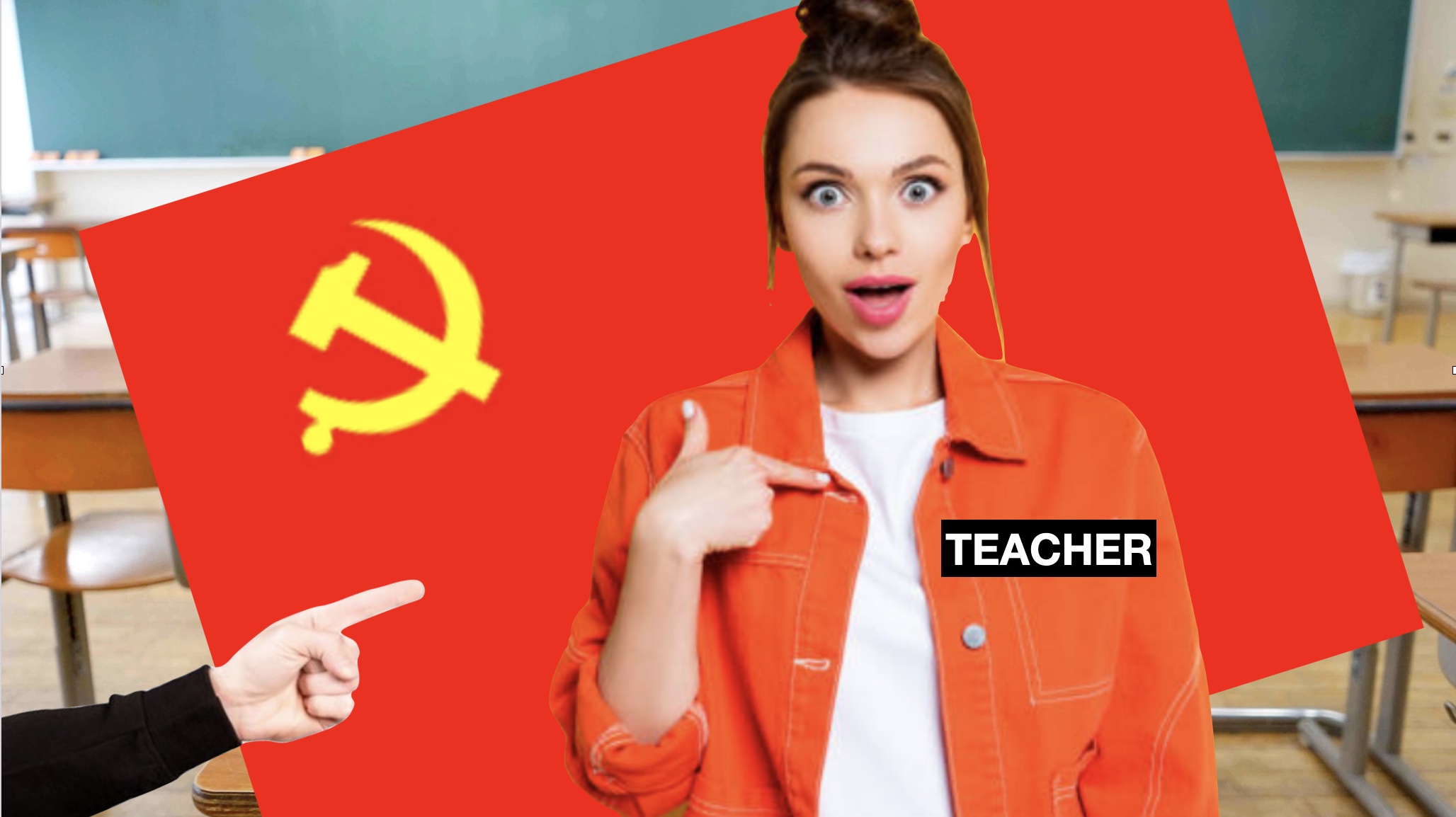
Public school teachers are turning their students into communists.

I’m not kidding.

That’s what they’re saying on far right blogs, podcasts and TV shows.

Everyone from Betsy DeVos to Ron DeSantis and the sober fellows of the Heritage Foundation are up in arms.

All because Mr. Singer wore a red sweater vest one day to class.

Not really, but that might have been a better provocation than the reality – which is all in far right pundits’ heads.

So for the GOP, it’s all about fear – what can you scare voters to believe that will shepherd them to support your agenda?

So to start with, Republicans want you to be terrified of public schools.

The reason?

They want you to have to pay to get your kids educated – but public schools give learning away for free to everyone – just for paying taxes.

Right-wingers would much rather make it all a business where the more you pay, the better the education your kids get. There’d be poor quality charter schools for those who can’t afford the entry fee, but the best of everything would be reserved for the kids of the rich and powerful whose parents would use school vouchers to offset some of their tuition at private institutions.

Public schools would undo all that – especially if they were adequately funded.

Can you imagine a country where EVERYONE was fully educated!?

People might become informed voters and demand freedom and justice for all!

Lawmakers might have to create real policies, a platform, solutions – to actually govern!

So GOP operatives spread hysterical lies about public schools. They call them “government schools” as if that meant some imposed bureaucracy of outsiders and not what it actually does – schools governed by elected members of the community.

The lies and innuendo are never ending. Public school educators teach fake history where the civil rights movement was a good thing. They refuse to instill the truth of Creationism over fake Evolution. Teachers are pedophile groomers – never mind the actual Republican lawmakers charged with pedophilia and rape. And on and on and on.

Which brings us to the latest one – the new red scare that public school teachers are raising the next generation to hate Adam Smith and love Karl Marx.

The whole idea seems to have started with DeVos, the billionaire heiress and former Secretary of Education under President Donald Trump.

Robert Bluey, vice president of publishing for the Heritage Foundation, asked her a question on The Daily Signal Podcast (a Heritage Foundation mouthpiece) about the growing popularity of socialism among young people.

And it’s true, according to a 2018 Gallup poll, Americans aged 18 to 29 are almost as positive about socialism (51%) as they are about capitalism (45%).

So on behalf of the right-wing think tank behind the critical race theory brouhaha, transphobic legislation, climate change denial and a host of other regressive causes, Bluey asked DeVos why young people aren’t as firmly championing capitalism as previous generations.

DeVos, of course, blamed teachers. She responded:

“I recall visiting a classroom not too long ago where one of the teachers was wearing a shirt that said “Find Your Truth,” suggesting that, of course, truth is a very fungible and mutable thing instead of focusing on the fact that there is objective truth and part of learning is actually pursuing that truth.”

This is a rather strange answer. It may be the case that there are absolute truths in the world, but economic theories certainly don’t qualify. In matters of opinion, isn’t it better to tell students the facts and let them think for themselves about their relative virtues?

Not for DeVos. Indoctrination apparently is just fine so long as you’re indoctrinating kids into the right things.

Tell them capitalism is great. Tell them socialism is terrible. Screw critical thinking.

The Heritage Foundation, at least, liked her answer, using it as a template to fund a plethora of stories about public schools – not just leaving the matter up to students to decide – but actually bullying kids into championing communism.

Douglas Blair, a Daily Signal producer, codified the idea in his article “I’m a Former Teacher. Here’s How Your Children Are Getting Indoctrinated in Leftist Ideology.”

In the text of article, Blair admits he was only “in education” for 4 years, but it seems he was not a full-time classroom teacher for most of that time. According to his Linked-In account, he was a French teacher for 9 months in a school in Portland, Oregon. Before that he was an Extracurricular Aide, an English Language Assistant and Language Immersion Counselor at various schools in the US and France.

His evidence of indoctrination reads like “Kids Say the Darndest Things – Republican Edition.”

For example, he says he asked an elementary school girl if she liked Winston Churchill, and she frowned calling Churchill racist.

I’m not sure why that’s so upsetting. Churchill led Great Britain through WWII, but he undeniably WAS a racist, too. Churchill said that he hated people with “slit eyes and pig tails.” To him, people from India were “the beastliest people in the world next to the Germans.” He admitted that he “did not really think that black people were as capable or as efficient as white people.”

So Blair’s examples of indoctrination come out to complaining that kids learned accurate history.

If only the GOP could use history and education to change minds instead of decrying them.

Florida Gov. DeSantis is giving it a try. In 2022, he signed a law requiring schools in the sunshine state to actively teach about the horrors of communism.

That’s right. Whether teachers need to or not, they have to spend at least 45 minutes on it every November.

“We want to make sure that every year folks in Florida, but particularly our students, will learn about the evils of communism. The dictators that have led communist regimes and the hundreds of millions of individuals who suffered and continue to suffer under the weight of this discredited ideology,” DeSantis said, adding that “a lot of young people don’t really know that much” about the political ideology.

At first blush, this may sound like a good idea. More historical knowledge is a good thing, but it’s the context that makes this troubling.

Florida Republicans already have passed a battalion of laws telling educators what they CANNOT teach.

So you can’t teach about racial issues including the history of slavery if it makes any student “feel uncomfortable.” Math books are censored from depicting “prohibited topics.” You can’t talk about a wide range of human sexuality including LGBTQ people because of the infamous “Don’t Say Gay” bill.

But you’d better teach about how bad communism is! Or else!

First, this is the very definition of a GOVERNMENT SCHOOL the legislature dictating what teachers teach on a given day and not trusting them to do their own jobs.

Second, why single out communism? Certainly it has lead to horrors and misery, but so has capitalism. Are we to teach about the terrors of rampant greed, sweatshops, wars for oil, runaway inequality? After all, students in impoverished neighborhoods going to underfunded schools are actual victims of free enterprise, not collectivism. The free hand of the market is soaked in blood, too.

Third, there’s the subtext. This sounds to me like an invitation to conflate communism with socialism (which are two different ideas with different histories) and to champion one ideology over another.

Finally, let’s not forget this all comes from state law. It’s politics, not pedagogy, and in politics it’s only indoctrination when someone else does it.

So are public school teachers really molding their students into young Bolsheviks?

I seriously doubt it.

Economic theory rarely comes up in math, reading or science. Maybe it comes up occasionally in social studies.

In my middle school language arts classes, we discuss all kinds of things that come out of the books we’re reading.

Sometimes economic inequality comes out of S. E. Hinton’s “The Outsiders” or Harper Lee’s “To Kill a Mockingbird.” When we read Lois Lowry’s “The Giver” the concept of distribution of resources is broached.

In each case, I encourage my students to think about the problems from the stories, the solutions offered in the narratives and to discuss the matter with classmates. We hold Socratic Seminars and write critical essays. For “The Giver,” students work in groups to create their own utopias – you’d be surprised how many are socialist, though there are also a number of capitalist republics, dictatorships and anarchies. Kids love anarchy.

And I admit it – I encourage my students to think for themselves. I try not to give them my answers – my truths.

Facts are facts and opinions are opinions.

I would be a bad teacher if I forced my conclusions on my students.

So why ARE young people increasingly more critical of capitalism these days and more friendly toward socialism?

I’d say it’s because of the income inequality they see in the world around them.

Despite Republican’s claims, capitalism is not a perfect system. To be fair, no system is. But criticizing capitalism is not a bad thing, and finding value in aspects of socialism is no crime.

To achieve a better world, we have to do more than simply recreate the one in which we live.

That’s why education is so important. It is one of the chief engines of change, and nothing can truly stop that.

If Republicans think they can, they’re in for a shock.

Perhaps they should have paid more attention in school.

Or exposed their opinions to more rigorous critical thinking…

Nah!

I wonder what lie about public school they’ll try next.


Like this post?  You might want to consider becoming a Patreon subscriber. This helps me continue to keep the blog going and get on with this difficult and challenging work.

Plus you get subscriber only extras!

Just CLICK HERE.

Patreon+Circle

I’ve also written a book, “Gadfly on the Wall: A Public School Teacher Speaks Out on Racism and Reform,” now available from Garn Press. Ten percent of the proceeds go to the Badass Teachers Association. Check it out!
Who is Education For?

Everyday we send our children to school.

Why?

In whose interest are we sending our kids to school?

Is it for businesses so that they’ll have the kinds of workers they need?

Is it so that our students’ educations will align with the demands of industry?

Or is it for the children? So they’ll become mature, intelligent adults capable of independent thought and making rational decisions?

Who, after all, is this education for?

I mean our society has jobs that need doing and people need to do those jobs or we won’t survive – but is that really the overriding, predominant impetus behind school? Survival?

Are we primarily helping the economy by subjecting our kids to the classroom? Or are we doing something to benefit THEM?

Is there a value in being educated? A value to the person who has become educated?

Does it provide any advantage to a person to know things? To be able to think about things? To be able to express oneself in writing? To be able to make calculations? To use logic and reason? To know history? To be able to read and comprehend what one’s read? To form an educated opinion on what one’s read? To know and practice the scientific method? To express one’s creativity? To do any of a hundred other things kids learn in school?

Or are we just filling the factories with button pushers to keep smoke spilling out of the chimneys?

It’s more than two decades past the millennium, and I can’t believe I still have to ask such questions.

But I do. Because nearly every day some policymaker, pundit, billionaire or other over-privileged talking head feels free to answer these questions wrong.

Five minutes alone in the dark and the answers are inescapable. But these guys (and it’s usually men) don’t have that kind of time or integrity.

It could be the CEO of the world’s largest petroleum company. Or the President of the United States. Or the Secretary of Education.

In what they say, what they do, what they promise, what they ponder in earshot of the press, they show a persistent ignorance of what education is and who it is for.

They think it’s something that can be adequately measured by standardized tests. Something that can be improved by competition. Something that is supposed to earn them money.

So they get the answer wrong. Every time.

I’m tired of telling them the truth. I’m tired of correcting them. Because they don’t care to be corrected. They have a fixed conception of the world, and understanding the truth about education might make that all come tumbling down.

“The unexamined life is not worth living.”

Socrates is purported to have said that 2,400 years ago.

It’s not exactly news.

What’s the purpose of life if you don’t think about things?

But no matter how much money they have, the plutocrats can’t afford to think about things. And they certainly can’t afford for YOU or your children to think about things.

What would happen if we all went around examining our lives? Would we still submit to being cogs in an economy designed to benefit them and not us?

Would we still show up everyday to jobs we hate for salaries incapable of paying the bills?

Would we still shop constantly to fill the aching void in our hearts, not thinking but just re-enacting the American mantra of consume, Consume, CONSUME!?

Would we still worship the rich like gods regardless of the reality – their immature actions, their crude posturing, their obvious amoral banality?

Would we still pretend that skin color determines character, that nationality determines morality, that sex determines temperament, that biology determines gender, that rationality determines politics?

Would we still vote for one of two prepackaged, preconceived, preprocessed options neither of which will actually do what we know needs done but one of which will hurt us and the other of which will hurt others more or not hurt us worse than we already are?

The answers are obvious. We all know. You don’t need me to tell you.

Just like the purpose of education.

It is the most dangerous thing in the world to the status quo.

Education, learning, thought is a cocoon. And no one knows what will come crawling out after the metamorphosis.

No one controls education. Not even the educator.

So how can we let anyone truly be educated? They might end up different – different from their parents, different from their congregations, their friends, neighbors, society.

Who is education for?

For whom would we risk all this?

Who is worth such danger, such terror, such uncertainty?

You know who.


Like this post?  You might want to consider becoming a Patreon subscriber. This helps me continue to keep the blog going and get on with this difficult and challenging work.

Plus you get subscriber only extras!

Just CLICK HERE.

Patreon+Circle

I’ve also written a book, “Gadfly on the Wall: A Public School Teacher Speaks Out on Racism and Reform,” now available from Garn Press. Ten percent of the proceeds go to the Badass Teachers Association. Check it out!
 

When Good Students Get Bad Standardized Test Scores 


Ameer is a good student.  


He takes notes in class, does all his homework and participates in discussions.  


He writes insightful essays and demonstrates a mastery of spelling and grammar.  


He reads aloud with fluency and inflection. He asks deep questions about the literature and aces nearly all of his classroom reading comprehension tests. 


However, when it is standardized test time, things are very different.  


He still arrives early, takes his time with the questions and reviews his work when he’s done – but the results are not the same.  


His grades are A’s. His test scores are Below Basic. 


How is that?  


How can a student demonstrate mastery of a subject in class but fail to do the same on a standardized test?  


And which assessment should I, his teacher, take seriously?  


After all, they can’t BOTH be correct. 


This is a problem with which most classroom teachers are forced to contend.  


Bureaucrats at the administrative or state level demand teachers assess students with standardized tests but the results often contradict a year or more of observation. 


Take the Measures of Academic Progress (MAP) test.  


This year at my Western Pennsylvania district, administration decided to use this computer-based standardized assessment as a pre-test or practice assessment before the state mandated Pennsylvania System of School Assessment (PSSA). 


I’ve already written about what a waste of time and money this is. A test before the test!? 


But after reluctantly subjecting my classes to the MAP and being instructed to analyze the results with my colleagues, we noticed this contradiction. 


In many cases, scores did not match up with teacher expectations for our students.  


In about 60-80% of cases, students who had demonstrated high skills in the subject were given scores below the 50th percentile – many below the 25th percentile.  


These were kids with average to high grades who the MAP scored as if they were in the bottom half of their peers across the state. 


 Heck! A third of my students are in the advanced class this year – but the MAP test would tell me most of them need remediation! 


If we look at that data dispassionately, there are possible explanations. For one, students may not have taken the test seriously. 


And to some degree this is certainly the case. The MAP times student responses and when they are input fast and furious, it stops the test taker until the teacher can unlock the test after warning them against rapid guessing. 


However, the sheer number of mislabeled students is far too great to be accounted for in this way. Maybe five of my students got the slow down sloth graphic. Yet so many more were mislabeled as failures despite strong classroom academics. 


The other possibility – and one that media doom-mongers love to repeat – is that districts like mine routinely inflate mediocre achievement so that bad students look like good ones.  


In other words, they resolve the contradiction by throwing away the work of classroom teachers and prioritizing what standardized tests say


Nice for them. However, I am not some rube reading this in the paper. I am not examining some spreadsheet for which I have no other data. I am IN the classroom every day observing these very same kids. I’ve been right there for almost an entire grading period of lessons and assessments – formative and summative. I have many strong indications of what these kids can do, what they know and what they don’t know.  


Valuing the MAP scores over weeks of empirical classroom data is absurd.  


I am a Nationally Board Certified Teacher with more than two decades experience. But Northwest Evaluation Association (NWEA), a testing company out of Portland, Oregon, wants me to believe that after 90 minutes it knows my students better than I do after six weeks! 


Time to admit the MAP is a faulty product. 


But it’s not just that one standardized test. We find the same disparity with the PSSA and other like assessments.  


Nationally, classroom grades are better than these test scores.  


In the media, pundits tell us this means our public school system is faulty. Yet that conclusion is merely an advertisement for these testing companies and a host of school privatization enterprises offering profit-making alternatives predicated on that exact premise.  


So how to resolve the contradiction? 


The only logical conclusion one can draw is that standardized assessments are bad at determining student learning.  


In fact, that is not their primary function. First and foremost, they are designed to compare students with each other. How they make that comparison – based on what data – is secondary.  


The MAP, PSSA and other standardized tests are primarily concerned with sorting and ranking students – determining which are best, second best and so on. 


By contrast, teacher-created tests are just the opposite. They are designed almost exclusively to assess whether learning has taken place and to what degree. Comparability isn’t really something we do. That’s the province of administrators and other support staff.  


The primary job of teaching is just that – the transfer of knowledge, offering opportunities and a conducive environment for students to learn.  


That is why standardized tests fail so miserably most of the time. They are not designed for the same function. They are about competition, not acquisition of knowledge or skill. 


That’s why so many teachers have been calling for the elimination of standardized testing for decades. It isn’t just inaccurate and a waste of time and money. It gets in the way of real learning.  


You can’t give a person a blood transfusion if you can’t accurately measure how much blood you’re giving her. And comparing how much blood was given to a national average of transfusions is not helpful. 


You need to know how much THIS PERSON needs. You need to know what would help her particular needs.  


When good students get bad test scores, it invariably means you have a bad test.  


An entire year of daily data points is not invalidated by one mark to the contrary.  


Until society accepts this obvious truth, we will never be able to provide our students with the education they deserve.  

Good students will continue to be mislabeled for the sake of a standardized testing industry that is too big to fail.


Like this post?  You might want to consider becoming a Patreon subscriber. This helps me continue to keep the blog going and get on with this difficult and challenging work.

Plus you get subscriber only extras!

Just CLICK HERE.

Patreon+Circle

I’ve also written a book, “Gadfly on the Wall: A Public School Teacher Speaks Out on Racism and Reform,” now available from Garn Press. Ten percent of the proceeds go to the Badass Teachers Association. Check it out!


Classroom Grades Show Learning Better than Standardized Test Scores

“Not everything that counts can be counted, and not everything that can be counted counts.”

William Bruce Cameron

This summer my family suffered a tremendous blow.

My grandmother, Ce Ce, died.

She was in her 90s and had been unwell since before COVID. But she was also our matriarch, the point around which so much of our interrelations orbited and met.

After the funeral, I found myself at my uncle’s house somehow tasked with watching over several young cousins who had had just about enough of sitting around quietly in itchy suits and dresses.

To get a moment to myself, I set them a task: go downstairs among the assorted relatives and ask them to tell you a story about Ce Ce. Best story wins.

They went off like an explosion. And when they came back, they each had a touching tale about Ce Ce.

One was about how she defended a niece who wanted to marry someone of another faith. Another story was a fond recollection of the sweet and sour spaghetti sauce she used to make, the recipe of which is lost forever.

I was even surprised to hear some stories I had never known like that after my grandfather died, a semi-famous painter had asked Ce Ce on a date!

When my little cousins’ recitations were done, they were united in one thing – wanting to know who won.

I stumbled. I stammered.

I really had no way of judging such a thing.

They had all brought back such wonderful stories. Who won? We were ALL enriched by hearing them.

And that’s kind of how I feel about learning.

It is a fool’s errand to try and compare one person’s acquisition of knowledge with another. But that’s exactly what our current education system is built on.

Unless opted out by a parent or guardian, every public school child in America is required to take standardized tests in grades 3-8 and once in high school.

And the results of these tests are used to make high stakes decisions about which classes the students can enroll in, which enrichments, field trips or remediation they require, and even how much funding will be given or withheld from the schools and districts where they attend.

As a result, the social effects of poverty and racial discrimination end up being transformed into numbers. Thus, instead of being seen as indictments of the economic and racist status quo, they are viewed as the problem of schools and the individual students, themselves.

Standardized tests purport to show that poor children and/or children of color aren’t learning at the same rate as other children. So by the end of 12th grade they have learned less. When they are discriminated against in the job market then, that discrimination is justified – because it is not based on economics or race; it is based on numbers.

However, to perform this alchemy, we have to ignore the fact that standardized assessments are not the only way to determine whether students have learned anything. In fact, for the majority of students’ school experience that learning is assessed by something else entirely – classroom grades.

What if we took classroom grades as seriously as we take standardized test scores?

What if we valued them MORE?

The world would be a very different place.

The entire narrative of failing students and failing schools would turn on its head. After all, graduation rates have steadily increased over the last decade.

Students are completing more courses and more difficult courses. And students are even getting higher grades in these classes!

Yet at the same time, standardized test scores on national exams have remained at about the same level or gone down.

How is that possible?

The new analysis comes from the U.S. Department of Education, and tracks transcripts of a representative sample of high school graduates in 1990, 2000, 2009, and 2019.

It does not include scores from 2020 and 2022 when both classroom grades and national test scores fell. But that’s clearly because of the pandemic and the fact that most students educations and testing schedules were disrupted.

Before COVID, students increasingly were taking higher-level courses, and their Grade Point Averages (GPAs) were steadily rising — from an average of 2.68 in 1990 to 2.94 in 2000, 3.0 in 2009, and 3.11 in 2019. 

This is true of students from all backgrounds, but disparities still existed. On average, white and Asian students had higher GPAs than Black and Hispanic students. Though girls, overall, had higher GPAs than boys.

However, on the National Assessment of Educational Progress (NAEP), given to a sample of students across the country, test scores during the same period did not show a similar increase. Math and reading scores in 2019 were slightly lower than in 2009 and unchanged from 2005. Science scores haven’t budged since 2009. 

Why the disparity?

It seems that either teachers are making it too easy to get good classroom grades or standardized testing does not assess student learning accurately.

Scholars, teachers, parents and students have been complaining about the validity of standardized testing for more than a century. But business interests make billions of dollars off the industry it creates. Guess which group policymakers continue to heed over the other.

It doesn’t take much to show why classroom grades are better at assessing student learning. Compare them with standardized test scores.

Students earn grades based on a wide range of assessments, activities, and behaviors – quizzes, class participation, oral and written reports, group assignments, homework, and in-class work.

Standardized tests, on the other hand, are not assigned on such a multifaceted range of factors. Instead, they are designed to obtain a measure of student proficiency on a specified set of knowledge and skills within limited academic areas, such as mathematics or reading.

Classroom grades are tapestries sown from many patches showing a year’s worth of progress. Standardized tests are at best snapshots of a moment in time.

In class, students can speak with teachers about grades to get a better sense of how and why they earned the marks they did. They can then use this explanation to guide them in the future thus tailoring the classroom experience to individuals.

The value seen in standardized test is its apparent comparability. Scores are supposed to reflect student performance under roughly the same conditions, so the results can be equated and analyzed.

So the biggest difference isn’t a matter of validity, it is pragmatism. Test scores can be used to rate students from all over the country or the world. They can be used to sort kids into a hierarchy of best to worst. Though why anyone would want to do that is beyond me. The purpose of education is not like the National Football League (NFL). It’s to encourage learning, not competition based on a simulation of learning.

And there is evidence that classroom grades are more valid than standardized test scores.

After all, high stakes assessments like the Scholastic Aptitude Test (SAT) do NOT accurately predict future academic success as classroom grades, in fact, do.


Kids with perfect scores on the SAT or American College Testing (ACT) tests don’t achieve more than kids who received lower scores or never took the tests in the first place.


Numerous studies have shown this to be true. The most recent one I’ve seen was from 2014.


Researchers followed more than 123,000 students who attended universities that don’t require applicants to take these tests as a prerequisite for admission. They concluded that SAT and ACT test scores do not correlate with how well a student does in college.


However, classroom grades do have predictive value – especially when compared to standardized tests. Students with high grades in high school but middling test scores do better in college than students with higher test scores and lower grades.

Why? Because grades are based on something other than the ability to take one test. They demonstrate a daily commitment to work hard. They are based on 180 days (in Pennsylvania) of classroom endeavors, whereas standardized tests are based on the labor of an afternoon or a few days.

Classroom grades would not have such consistent predictive value if they were nothing but the result of grade inflation or lenient teachers.

In fact, of the two assessments – classroom grades and standardized tests – one is far more essential to the daily learning of students than the other.

We could abolish all standardized testing without any damage to student learning. In fact, the vacuum created by the loss of these high stakes tests would probably result in much less teaching to the test. Days, weeks, months of additional class time would suddenly appear and much more learning would probably take place.

Academic decisions about which classes students can enroll in or what remediation is necessary could just as easily be made based on classroom grades and teacher observations. And funding decisions for schools and districts could be made based on need and equity – not the political football of standardized testing.

However, getting rid of classroom grades would be much more disruptive. Parents and students would have few measures by which to determine if students had learned the material. Teachers would have fewer tools to encourage children to complete assignments. And if only test scores remained, the curriculum would narrow to a degree unheard of – constant, daily test prep with no engagement to ones life, critical thinking or creativity.

To be fair, there are mastery-based learning programs that try to do without grades, but they are much more experimental and require a complete shift in how we view learning. This is a more holistic system that requires students to demonstrate learning at one level before moving ahead to the next. However, it is incredibly labor intensive for teachers and often relies heavily on edtech solutions to make it viable.

I’m not saying this is an impossible system or even taking a stance on its value. But a large scale shift away from classroom grades would be chaotic, confusing and probably a failure without serious support, scaffolding and parental, teacher and student buy-in.

At the end of the day, classroom grades are the best tool we have to determine whether learning has taken place and to what degree. We should do everything we can to change the way policymakers prefer the standardized approach to the personalized one.

To return to a fuller quote by sociology professor Cameron with which I began this article:

‘It would be nice if all of the data which sociologists require could be enumerated because then we could run them through IBM machines and draw charts as the economists do. However, not everything that can be counted counts, and not everything that counts can be counted.”

Thus, the urge to quantify student learning seems predicated on the popular maxim: If you can’t measure it, you can’t manage it.

Standardized testing is about managing students – sorting them into valuable and disposable for the workforce.

Classroom grades are actually concerned with the project at hand – assessment of learning.

Which brings me back to my little cousins.

When I told them I couldn’t possibly pick a winner between them based on their stories, there were lots of groans of annoyance.

They viewed the whole project as a competition and they wanted to win.

I hope on reflection they’ll see that we all won.

Everything isn’t a contest. We are not all opponents.

If they can grasp that, it would be the greatest lesson I could teach.


Like this post?  You might want to consider becoming a Patreon subscriber. This helps me continue to keep the blog going and get on with this difficult and challenging work.

Plus you get subscriber only extras!

Just CLICK HERE.

Patreon+Circle

I’ve also written a book, “Gadfly on the Wall: A Public School Teacher Speaks Out on Racism and Reform,” now available from Garn Press. Ten percent of the proceeds go to the Badass Teachers Association. Check it out!

I Will NOT Lead My Students in Prayer and Neither Should You

As a public school teacher, I have a responsibility not to bully my students into believing as I do.

In fact, I go out of my way to respect their right to form their own opinions – to think, not just to accept what they’re told.

The US Supreme Court apparently has no idea how this works.

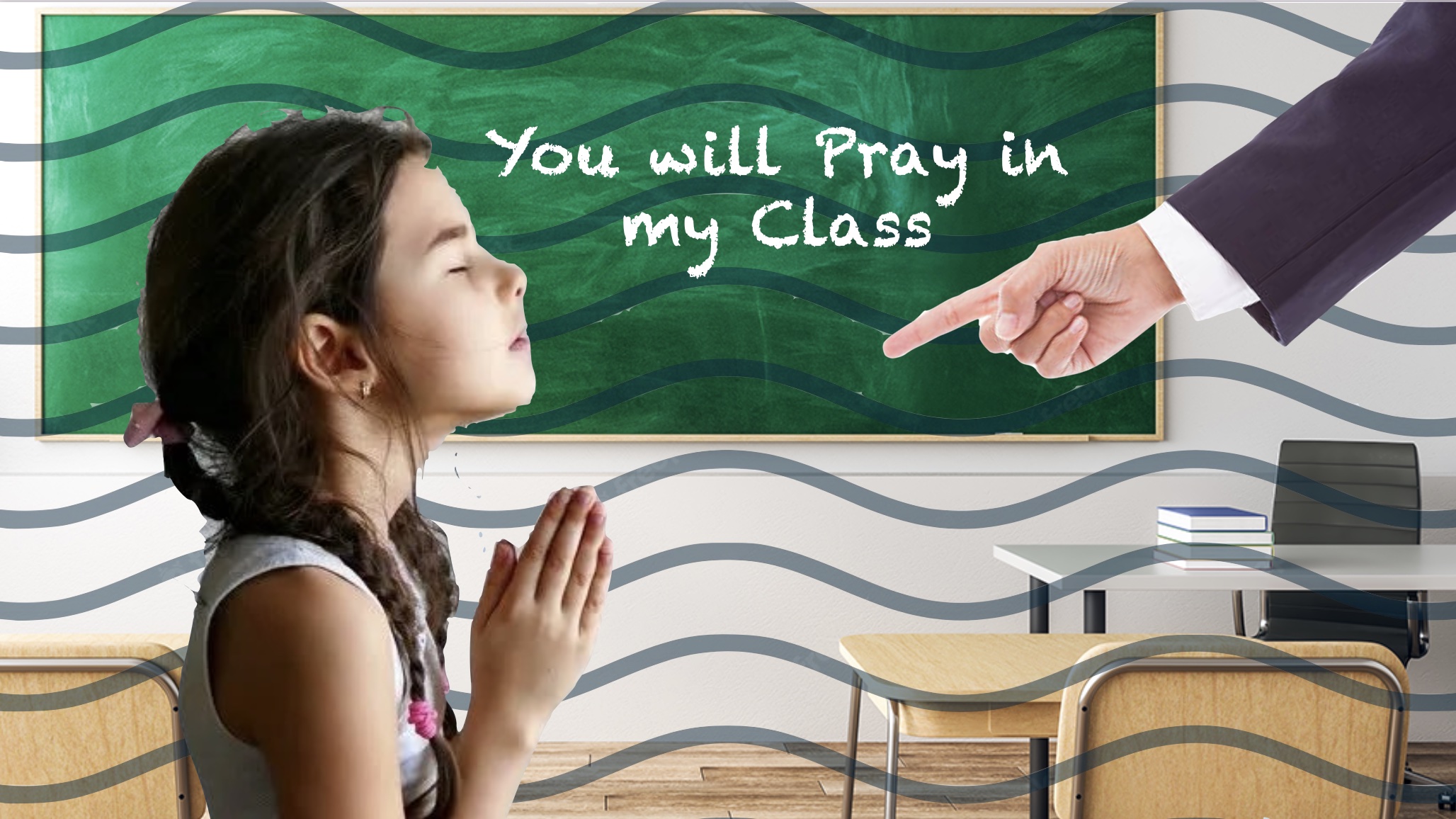
The six Republican members (I refuse to call them justices) paved the way for organized prayer in public schools by ruling this week in support of a high school football coach who lead his team in prayer on the field.

Anyone who has ever been in the minority knows that when an authority figure leads students in an activity, it is not optional – no matter what they say.

I know this from personal experience.

When I was in elementary school, I was one of a handful of Jewish kids in a building of mostly Catholics, Methodists, Presbyterians, etc.

In December, the kids were preparing for a choral concert where we’d sing a slew of holiday songs.

I loved to sing and enjoyed Frosty the Snowman, Jingle Bells and all the other classics…

Except one – Silent Night.

I just didn’t feel right singing things like “Round yon virgin mother and child” and “Christ the savior is born.”

So when we practiced that song, I’d stop singing.

I’d enthusiastically belt out all the other tunes, but I just stood there when it was time for Silent Night.

I didn’t think it would make a difference. There were hundreds of others kids. No one would notice me.

But the choral teacher did.

She pulled me out of line and demanded to know why I wasn’t singing. I told her I was Jewish and didn’t want to sing that song.

She chided me for making everyone else look bad and told me to just move my mouth during the song so it looked like I was singing.

I didn’t want to do that. I didn’t want people to even THINK I was singing things I didn’t believe.

It’s not that I really accepted Santa and his reindeer, either, but this was somehow different. I didn’t want my parents to go to the concert and see me participating in this farce. I didn’t want to be forced to go onstage and before everyone profess the opposite of all I had been taught – to declare myself other than what I really was.

But the other kids were right there listening to this whole conversation and giggling. It was yet another way I was being marked as an outsider, as different – so I gave in and did what she demanded.

In retrospect, I now know I could have complained to my parents and gone to the principal and we could have even taken the matter to court like the aforementioned coach.

However, when you’re a little kid in elementary school you usually just listen to what the adults tell you to do. At least I did.

It took me decades to get over it. Really.

Whenever that song would come on the radio or I’d hear it in a department store, I’d get all tense and upset. Like something had been stolen from me.

So it was with some trepidation many years later that I attended my daughter’s first winter concert when she was in elementary school.

It was with some relief that I noticed no holiday songs like Silent Night. They were all pretty secular and even multicultural.

And my daughter goes to the same district I went to as a child.

We’ve come a long way in the past three decades.

By and large, public school teachers today make an effort not to force their ways onto their students.

It’s a lesson I take to heart, myself, in my middle school classes.

When we discuss things – as you must in Language Arts – I encourage students to agree OR disagree with me or anyone else. Either option is okay so long as they try to explain why they think the way they do.

Moreover, I encourage them not to just speak but to also listen to what their classmates have to say and even be open to revising their original thoughts based on what they’ve heard.

And this includes discussions of religion.

When something Biblical or theological comes out of a book like “To Kill a Mockingbird” or “The Outsiders,” we give it our full attention.

I tell my kids that they can say or think whatever they want about it. If they want to talk about God or religion, that is fine. It’s just me who is constrained. I am not allowed to give them my own opinion on these matters.

Often I tell them that this isn’t necessarily what I believe, but I’ll propose one idea or another to get them thinking.

I remember one year my students were particularly interested in religion, and they complained that they couldn’t pin me down on anything – they couldn’t tell if I was religious or an atheist.

And that’s how it should be.

Kids have never been forbidden from talking about God or praying in school.

It’s just that teachers have been forbidden from telling them what to think or leading them in prayer.

Until now.

However just because an increasingly illegitimate Supreme Court makes a regressive ruling doesn’t mean teachers have to change.

Even if we CAN lead kids in prayer, that doesn’t mean we SHOULD.

I don’t plan on altering a single thing in my classroom, and I don’t think my colleagues should, either.

But there are 3.2 million teachers in public schools. There are bound to be some who will use this ruling as an excuse to give in to their worst tendencies.

So here’s what I suggest we do.

We should not coerce our students to do anything, but we damn well can and SHOULD pressure our colleagues not to indoctrinate their students.

Principals should give crappy assignments to teachers who break this taboo. Keep them away from students if at all possible. After all, they don’t belong in the classroom if they’re going to misuse the trust students have in them.

Teachers should give them the cold shoulder in the faculty room and at the copier.

Want to borrow my grammar unit? Not if you’re going to subject your classes to your faith and encourage them to follow along.

Consenting adults can do what they like on their own time, but this is public school.

When it comes to undue influence, inculcation and alienation of kids who are different, we cannot be bystanders.

We may not have dark money and Christian Nationalists behind us, but until we have a rational Supreme Court to overturn this decision or a Congress with enough guts to codify freedom from religion into law, teachers still have some modicum of power.

We should use it to protect our children.


Like this post?  You might want to consider becoming a Patreon subscriber. This helps me continue to keep the blog going and get on with this difficult and challenging work.

Plus you get subscriber only extras!

Just CLICK HERE.

Patreon+Circle

I’ve also written a book, “Gadfly on the Wall: A Public School Teacher Speaks Out on Racism and Reform,” now available from Garn Press. Ten percent of the proceeds go to the Badass Teachers Association. Check it out!

Doug Mastriano’s Rootin’ Tootin’ School Shootin’ Prevention Plan in PA

A teenage boy in a black trench coat walks down a school hallway.

A young girl abruptly turns a corner and is about to walk past when she stops and notices an oblong shape in his coat.

He pulls out an AR-15 and points it at her head.

She gasps. He smiles.

“Hold it right there, Patrick.” Says a voice behind him.

“Mr. Callahan?” The boy says starting to bring the barrel around.

‘Uh-uh. Stop right there,” says the voice shoving something in the boy’s back.

“I know what you’re thinking,” the teacher continues. “My homeroom teacher, Mr. Callahan, has a gun in his desk. Did he remember to bring it with him to hall duty? Well to tell you the truth in all this excitement I kinda lost track myself. But being it’s a 500 S&W Magnum, the most powerful handgun in the world and would blow your head clean off, you’ve gotta ask yourself one question: “Do I feel lucky?” Well, do ya, punk?”

Apparently this is how Doug Mastriano thinks school shootings can best be prevented.

The Pennsylvania State Senator and Republican candidate for governor plans to introduce a bill allowing school employees to arm themselves while on school property if they have a concealed carry permit and pass a firearms course.

Not gun control. Not stopping teens from buying assault weapons. Not keeping guns out of the hands of the mentally ill.

Instead, arm the teachers. Arm the principals. Put a piece in the hands of Lunch Lady Doris. Maybe even the custodians will be packing heat with a bucket and mop.

This is not the kind of serious proposal Commonwealth residents deserve from a representative of the legislature or executive branch. It’s not the kind of serious proposal you’d expect from a grown adult. Heck. It’s not what you’d expect from a small child still unable to tie his own shoes.

School shootings are not action movie scenarios. They’re not run-and-gun video games. They’re not cops and robbers. They’re real life.

They’re the cause of elementary kids being decapitated by assault weapons fire.

They’re the cause of fifth grade bodies so unrecognizable they have to be identified by their green Converse sneakers.

They’re the cause of child sized coffins adorned with cartoon doggies and kitties – brightly colored friends to accompany little kids to their final resting places.

Mastriano’s suggestion would be pathetic if it weren’t so dangerous.

He thinks school shooters are attracted to places where they know people aren’t armed.

However, history proves him wrong.

The overwhelming majority of school shootings either involved armed police stationed at the school or police responding quickly thereafter.

Lest we forget, there were police officers on both the campuses of Robb Elementary School in Texas and Stoneman Douglas High School in Parkland, Florida, where shootings cumulatively took the lives of more than 30 students.

According to a 2021 JAMA Network study that looked at 133 school shootings from 1980 to 2019, armed guards did not significantly reduce injuries or deaths during school mass shootings.

In fact, when researchers controlled for location and school characteristic factors, “the rate of deaths was 2.83 times greater in schools with an armed guard present.”

Put simply, school shootings are not rational activities subject to cost benefit analysis from the people contemplating doing them. Would-be shooters do not expect to come out alive. They don’t care if there is armed resistance or not. In fact, the presence of armed resistance only encourages them to bring deadlier weaponry – especially semi-automatic guns.

That’s why police in Uvalde, Texas, were too scared to go into Robb Elementary School and stop the perpetrator armed with an AR-15 – perhaps the most common weapon used in school shootings.

And when trained police are afraid, Mastriano expects better from school staff – teachers, secretaries, aides, and nurses!!!?

A similar proposal permitting the arming of school employees passed the state Senate in June 2017 but it died in a House committee. In the district where I work as a middle school teacher, we talked about the issue at a staff meeting.

The few people who thought it was a good idea and said they would gladly bring a gun with them to school are nice people – but they’re the last ones you’d want armed.

Moreover, we have a school resource officer who said he was not in favor of the measure because it would make things tougher for law enforcement responding to a shooting. It would make it that much more unclear who the shooter was and increase the chances of friendly fire.

It’s hardly surprising Mastriano is making such boneheaded proposals.

If elected governor, he also promises to cut public school funding IN HALF and make it harder for educators to collectively bargain for better salaries, benefits, and working conditions.

He is an extremist who wants to destroy public education in favor or charter and voucher schools, take away people’s freedom to choose what to do with their own bodies, discriminate against anyone with a different sexuality or religious belief and give away as much tax money as possible to private businesses.

Mastriano is either a fool who does not understand the issues or a patsy of the lunatic fringe of his party or both.

He wouldn’t arm teachers with books, funding or resources to teach – just guns.

He is an embarrassment to the people of Franklin County who elected him to the legislature and the Republican base who chose him to represent them in the governor’s race.

I know it’s trendy for the GOP to pick the candidate most likely to piss off the people across the aisle, but this isn’t a game.

Fools like Mastriano are going to get innocent people and their children killed – not to mention the suffering thousands will have to endure if his policies ever see the light of day.

He thinks the answer to school shootings is to turn the school librarian into Yosemite Sam.

If you vote for him in the general election, you will reap what you sow – misery and death.


Like this post?  You might want to consider becoming a Patreon subscriber. This helps me continue to keep the blog going and get on with this difficult and challenging work.

Plus you get subscriber only extras!

Just CLICK HERE.

Patreon+Circle

I’ve also written a book, “Gadfly on the Wall: A Public School Teacher Speaks Out on Racism and Reform,” now available from Garn Press. Ten percent of the proceeds go to the Badass Teachers Association. Check it out!

How Teachers Like Me Can Renew Ourselves This Summer

This school year was perhaps the most difficult one I’ve experienced in two decades in the classroom.

From constantly having to cover for sick or otherwise absent staff, to absorbing student traumas suffered in years of a pandemic, to increased student fights, social awkwardness and administrators demanding more paperwork and untried initiatives that get dropped for another fad next week…

It’s been rough!

Now that most K-12 schools have begun or are about to begin summer break, it can be hard to rest and renew yourself for the coming year.

To be honest, many teachers have already decided to leave.

At my district, more teachers have retired this year than at any time since I was hired – about 10% of the staff.

And some even quit in the middle of the year – something that hardly ever happens.

If things don’t change this year, it will be worse next year.

But for those like me planning on returning in the Fall, congratulations. You made it through.

Now what?

I don’t know about you, but I often find myself nibbled by stress and anxiety.

I try to sleep, I try to rest, but worry and hopelessness settle down on me like a shroud.

If you’re like me, you may need some help getting through it all.

So here’s a list of five things we can do – not just you, but me, too – that hopefully will help us rejuvenate ourselves somewhat in the next few months and set us up for a successful year with our students.

1) Be Present with Friends and Family

Teachers often live in their heads.

We’re always planning a new lesson or thinking about how to help a student or improve something from the year before.

But this is summer break.

It’s time to tune out and turn off.

You’re home and hopefully you can find some time to spend with friends and family.

Just remember to try to be there. Actually be there.

Don’t live in your head. Live in the moment.

Let the present open up in front of you and actually enjoy the things you’re doing.

Our professional lives often demand we sacrifice so much time with our significant others, our kids, and the people we care about. Now is the time to balance the scales and enjoy their company. And nothing else.

This can be easier said than done, but it’s worth a try.

2) Don’t Focus on Things You Can’t Change

There is so much going on in the world, and we’re teachers. We’re problem solvers.

We want to fix broken things, and there is so much broken out there. The news is often not our friend.

I’m not saying to ignore what’s going on. We do so at our peril. But we have to try to put it all in context.

We’re just people – individuals caught in nets of complexity. We can’t solve all these problems ourselves.

A horrible regressive monster is running for Governor in the Fall who would destroy your profession and endanger your child’s future. Got it.

The government still hasn’t passed any meaningful measures to keep guns out of the hands of school shooters. Got it.

Politicians are still attacking your profession, history, science, math and enlightenment values. Argh!

And they’ll still be doing it at the end of August.

Take a break from it all.

Worrying will not change anything. And it will all be there for you later.

Just try to focus your mind elsewhere – for a little while.

3) Let Go of Resentments

This can be really hard but important.

There are a lot of people who have probably said or done things that made your life difficult this year.

It could be that parent who screamed at you on the phone over an assignment their child didn’t turn in.

It could be an administrator who made another stupid initiative that makes him/her look good while increasing your work load but does nothing to help the students.

It could be a sincerely stupid politician accused with pedophilia and insurrection who thinks taking pot shots at teachers will win him votes from the lowest common denominator.

It could be… so many people.

Take a deep breath and let it go.

You don’t need that baggage weighing you down.

As Nelson Mandela is supposed to have said:

“Having resentment against someone is like drinking poison and thinking it will kill your enemy.”

Leave that behind.

There will be plenty more next year.

4) Don’t Expect Too Much of Yourself

Often our harshest critic is ourselves.

We try so hard to be kind to everyone all year. This summer, be kind to yourself.

It’s break time. You don’t have to clean the whole house top to bottom. You don’t have to finally rearrange the utility drawer or any of a million other things that have been waiting around for you to get to them.

By all means, make those doctor’s appointments you’ve been waiting on. Buy a new pair of shoes. Cut the grass.

But if something doesn’t get done, don’t feel like it’s a failure.

You are allowed to simply do nothing.

Sometimes that’s the best thing we can do.

Be as productive as you want. Sometimes that helps alleviate stress, too – the satisfaction of getting things accomplished.

However, this break is not all about crossing things off your TO DO list.

It’s about rest and renewal.

Cut yourself some slack.

No one else will.

5) Remember Why You Got into Teaching

When you feel ready to turn your mind back to the job, try not to think of all the negative things waiting for you.

Don’t even let your mind rest on the uncertainties and anxieties ahead.

Focus on why you’re still a teacher.

You’re not chained to this profession. You probably had the chance to leave if you’d wanted.

Why did you get into education in the first place?

What are the things about it that you still love and enjoy?

For me, it’s nearly everything in the classroom, itself.

It’s interacting with students.

It’s helping them succeed and then seeing the look of joy on their faces when they do.

I love everything about my job – the subject I teach, the students, being there when there’s no one else.

It’s just all the stuff outside the classroom that I can’t stand.

I make a file during the year full of Christmas cards, goodbye messages from parents and students, positive emails, etc. During the summer is a perfect time to read through them and remember the good things.

At least, that’s what I try to do anyway.

So there’s my list. I hope you found it helpful.

Health, relaxation, calm. Be warned – I’m certainly no expert on the subject.

Remember the words of author Nakeia Homer:

“You are not lazy, unmotivated, or stuck. After years of living your life in survival mode, you are exhausted.”

Finding ways to recharge and renew is something I know I desperately need – maybe as you do, too.

Here’s hoping we can find the peace we need this summer.

The new academic year will be here before we know it.


Like this post?  You might want to consider becoming a Patreon subscriber. This helps me continue to keep the blog going and get on with this difficult and challenging work.

Plus you get subscriber only extras!

Just CLICK HERE.

Patreon+Circle

I’ve also written a book, “Gadfly on the Wall: A Public School Teacher Speaks Out on Racism and Reform,” now available from Garn Press. Ten percent of the proceeds go to the Badass Teachers Association. Check it out!
‘To Kill a Mockingbird’ is Still Relevant Because it Forces Us to Confront Ourselves 


Parris is peering into a crumpled paperback with a huge smile on his face. 


“Mr. Singer, I love this book…” he says.  


He stops, pauses and adds, “I hate what’s happening, but I love the book.” 


In my middle school classroom, that’s a pretty routine reaction to Harper Lee’s classic, “To Kill a Mockingbird.” 


My 8th grade students approach the climax and resolution with equal parts dread and delight.  


But it doesn’t always start that way. 


No book I teach has gone through a greater change in cultural opinion than “Mockingbird.” 


It used to be considered a bastion of anti-racism. Now some folks actually consider it to be racist. 


The story is about Scout and her brother Jem as they grow up in Alabama during the Great Depression. Most of the drama centers on their father, Atticus, who defends a black man, Tom Robinson, in court against trumped up charges of raping a white woman.  


Ever since its publication in 1960, people have tried to ban the book from school libraries and from school curriculum.  


And that’s still true today. However, this used to be the work of the far right. Today there are almost as many objections from the far left – though for very different reasons. 


For 50 years, the biggest complaints came from conservatives about the book’s strong language, discussion of sexuality, rape, and use of the n-word. Though today you’ll find almost as many on the left proclaiming that the book actually perpetuates the racial intolerance it purports to be against. 


Republicans have become more extreme than ever. They see any discussion of race as “Critical Race Theory” – a conflation of a legal framework not actually taught in K-12 schools with any substantive discussion of racial inequality. It’s really just a simple dog whistle to try and shut down any discussion of the racial status quo. 


Teachers have become accustomed to conservatives hyperventilating that discussing racism and prejudice might mean having to admit these things still exist and therefore requiring us to do something about them. They’re terrified their kids might come to different conclusions about the world than their parents, and instead of confronting their own views with the facts, they prefer to sweep reality under the rug to preserve the fictions underlying their ideologies. 


These sort of complaints are typified by the Biloxi Public School Board in Mississippi which in 2017 removed Lee’s Pulitzer Prize-winning novel from its curriculum because, “It makes people uncomfortable.” 


What they don’t seem to realize is that the discomfort is part of the point. 


On the other side of the coin are people on the other pole of the political spectrum. Writers like Kristian Wilson Colyard don’t object to a discussion of racism and prejudice. They think “Mockingbird” doesn’t go far enough – or at least that the discussion it has is framed incorrectly. 


Colyard doesn’t think the book should be banned or removed from libraries, but instead insists it isn’t a good teaching tool.  


She writes


“Lee’s is not the best book to teach white kids about racism, because it grounds its narrative in the experiences of a white narrator and presents her father as the white savior.” 


While I think Colyard has a fair point of literary analysis, I don’t agree with her conclusion.  


At first glance, there is something strange about approaching racism through the lens of white people, but that doesn’t make it invalid. In fact, racism is a product of whiteness. In this country, white people are the ones doing it. Therefore, it makes sense to speak directly to and from the experience of white people. 


 Oppression, after all, is relational. It takes both the experience of the oppressed and the oppressor to fully understand it. And if we want to help end the cycle, it makes sense to show the oppressor how to bring that about. 


Moreover, the book sneaks up on its themes. There’s very little about outright intolerance on the first page or even the first few chapters. The idea creeps up on you as the narrator slowly becomes aware of the prejudices around her and the trial comes deeper into focus. 


As to the question of white saviorism, I think this is more often a buzzword than a legitimate criticism. White people are not heroes for attempting to put right something they put wrong. It is their responsibility, and seeing someone do that in fiction is a really powerful thing.  


Atticus doesn’t think he’s saving his client Tom Robinson. He doesn’t think he’s special for doing so. He’s doing what he thinks is right. Now Scout certainly views this through rose-colored glasses and lionizes him for it, but that’s a character’s point of view. It’s up to the reader to look at all this critically and come to your own judgement about it.  


Frankly, I think that’s one of the real values of the book. It provides a deep narrative, well told, for readers to examine and discuss very complex issues.  


If you think Atticus is given too much credit for what he does, that’s something you can discuss with other readers. I don’t see how doing so cheapens or hurts the cause of antiracism.  


In addition, the problem of centering the story on the white people is rectified by reading more widely in the literature. “Mockingbird” shouldn’t be the only book on the topic you read. To be well-rounded, you should read more from the point of view of people of color subjected to white people’s intolerance. And there are so many wonderful books to choose from – Toni Morrison’s “Beloved,” Ralph Ellison’s “The Invisible Man,” Alice Walker’s “The Color Purple,” etc.  


However, teachers shouldn’t be made to feel like they’ve wasted an opportunity by using “Mockingbird” in the classroom – even if it’s the only book that year they read on this topic. There must be more opportunities in years to come. Racism and prejudice should not be a one-and-done topic in US schools. It is too important for that. 


In my classroom, this book is far from our first discussion of the issue.  


We talk about Fred Hampton and the Black Panther Party. We talk about the 1968 Olympics Black power fist. We talk about Black cowboys like Bass Reeves. We talk about Bessie Coleman, Angela Davis, James Baldwin, and so many others.  


When we read S.E. Hinton’s “The Outsiders,” – a book that almost entirely eschews the topic – I make sure to point out that the narrative takes place in and around Tulsa, Oklahoma, and we discuss Black Wall Street and the massacre of Black people perpetrated by their White neighbors.  


And so when we get to “Mockingbird,” the discussions we have of the text is rich and deep. Students of color feel seen because of the book’s portrayal of the kind of racial injustice they experience in their own lives. Likewise, white students feel empowered to join in the struggle against it. 


When the verdict of the trial comes down, there are real tears and stares of disbelief.  


One of my students this year, Mya said, “I shouldn’t be surprised, but I thought it was going to turn out differently.” 


Me, too. Every time I read it. 


The book confronts students with the world as it is and challenges them to do something about it.  


White or Black, it holds up the reality of injustice and demands we take a side.  


And that’s why this book remains relevant and just as important today as it ever was. 


Like this post?  You might want to consider becoming a Patreon subscriber. This helps me continue to keep the blog going and get on with this difficult and challenging work.

Plus you get subscriber only extras!

Just CLICK HERE.

Patreon+Circle

I’ve also written a book, “Gadfly on the Wall: A Public School Teacher Speaks Out on Racism and Reform,” now available from Garn Press. Ten percent of the proceeds go to the Badass Teachers Association. Check it out!

Social-Emotional Learning vs. Classroom Culture 


A student accidentally drops her books in the hall.  


Another student stops and helps her pick them up.  


Then a teacher homes in on the two and gives the helper a little yellow card which can be redeemed for candy.  


This is what social-emotional learning (SEL) looks like in my school. 


Teachers instruct on proper behaviors and then reward students they see going above and beyond to achieve them.  


Here’s another example. 


A student at his lunch table is yelling and throwing food. Nearby another student is sitting quietly and reading a book.  


Then a teacher walks over and gives the quiet child a yellow card which can be used to enter a raffle for a special prize. He might win an Oculus VR game system or tickets to a baseball game.  


That’s social-emotion learning, too.  


Instead of just cracking down on the negative behaviors, we try to reward the positive ones.  


To be fair, it works to a degree.  


But most of the time, it doesn’t. 


The same kids end up with huge stacks of yellow cards and the rest get just one or two. Few students actually change their behavior. They just become virtue signalers whenever an adult is present.  


Moreover, there’s an incredible amount of pressure on teachers to not just instruct but to closely observe every student’s behavior and constantly give positive reinforcement to those doing what should be the norm.  


And that’s not even mentioning the frequent disruptions necessary to reward those children who can best navigate the system. 


But that’s only one way of addressing the problem of bad behavior.  


Especially now (most student’s first full year of in-person classes after the worst of the Covid-19 pandemic), students don’t seem to know how to interact.  


Snubs, insults and instigation seem to be their defaults ways of relating to each other. Some definitely need explicit boundaries and reinforcement.  


But it only goes so far in the halls, the cafeteria and during unstructured times.  


Inside the classroom is another beast altogether – as it always has been. 


Ever since I first started teaching more than two decades ago, it’s been necessary to work to achieve a classroom culture. 


The teacher has to expend significant time and energy with the students as a whole and each student individually to set up a mini-society where each member gets respect by giving respect. 


We try to set up the environment so everyone feels safe and involved, everyone is accepted for who they are, comfortable to be themselves and feels empowered to take the chances necessary to learn. 


It’s not easy, but it’s more about relationships than behaviorism. The reward isn’t something extrinsic – it’s participation in the classroom culture, itself.  


Both approaches attempt to do the same thing – create an environment in which learning is possible.


It reminds me of the famous quote by conductor Leopold Stokowski


“A painter paints pictures on canvas. But musicians paint their pictures on silence.” 


In the same way, you might say that learning in a group requires a canvass of positive behaviors or beneficial social interaction.  


This has always been the case, though today the concept has become elevated to buzzword status – SEL. 


It’s not so much a single program but a loose conglomeration of ideas that have been around forever. 


However, like so much about school these days, the work of teachers and students has become both monetized and demonized. 


For those on the far right, SEL is code for teaching kids how to think and feel.  


They fear leftwing teachers will instill the values of accepting LGBTQ people, different races and cultures.  Why that’s something to be avoided, I don’t know. Perhaps if you want your child to share your own bigotries, public school isn’t for you, no matter what you call the offending programs.  


However, for me the worst part is monetization.  


An army of corporate education consultants are looking for ways to give shallow professional development to teachers (at a cost to the district) and then run complicated programs from afar.  


This means: (1) testing students’ abilities in SEL, (2) holding teachers accountable for student behaviors, and (3) pretending educators are developmental psychologists.  


The problem with testing is multifaceted. First, it almost always comes down to more standardized assessments. Nothing is easier to measure but less accurate than multiple choice assessment created by psychometricians far removed from the reality of the classroom. Kids hate it, this wastes class time and makes the entire educational experience sterile and bland. 


Holding teachers responsible for the way 20 or more kids act at one time is ridiculous. Even parents with one or two children can’t control how they act – nor should that be the ultimate goal. School isn’t the military. It shouldn’t be about obedience. It should be about critical thinking and cognitive growth.


Finally, there is something incredibly unfair about expecting teachers who are already overloaded with jobs and responsibilities to suddenly become psychologists, too. Sure, we have some training in childhood psychology as part of our coursework to get our degrees, but we aren’t experts. We’re practitioners. We’re like auto-mechanics at your local garage. We can fix your car if something’s busted, but we can’t rewire the whole thing for greater efficiency. 


So when it comes to SEL, educators role should be focused and limited.  


We should be fully engaged in the creation of classroom culture.  


That is where we can have the greatest impact in the construction of our own interpersonal relationships with classes and students.  


When it comes to the way students interact outside of the class, teachers should be part of the planning process but the main responsibility of conducting it should be with administrators.  


And, finally, we mustn’t ignore the responsibility of parents and guardians.  


Roughly 60% of academic achievement can be explained by family background – things like income and poverty level. School factors only account for 20% – and of that, teachers account for 15%.  


We must free parents from overwork and professional pressures so they can do more to teach their children how to interact with others.  


It takes a village to raise a child – a village that knows how to communicate with each other and respect each member’s role. 


Like this post?  You might want to consider becoming a Patreon subscriber. This helps me continue to keep the blog going and get on with this difficult and challenging work.

Plus you get subscriber only extras!

Just CLICK HERE.

Patreon+Circle

I’ve also written a book, “Gadfly on the Wall: A Public School Teacher Speaks Out on Racism and Reform,” now available from Garn Press. Ten percent of the proceeds go to the Badass Teachers Association. Check it out!