
What’s the Buzz? A Crown of Gadflies! Top 10 Articles (by Me) in 2017

thumbnail_Screen shot 2017-12-26 at 3.44.17 PM


We made it, Readers.


Somehow we survived 2017 – the first year of the Trump Presidency.


What a monstrosity that has been so far!


Republicans have stolen more than $1 trillion from our pockets to give to their mega-wealthy donors in the form of tax cuts. A 3-2 GOP majority on the Federal Communications Commission (FCC) repealed Net Neutrality. And the party of Lincoln endorsed and funded a child molester for US Senate – though he thankfully lost.


We’re in new territory. Politics has always appealed to the best and worst of our natures: Good people who really want to make a difference and sniveling cowards willing to do whatever their sugar daddies tell them. But unfortunately our world has increasingly rewarded the latter and almost extinguished the former.


However, don’t lose heart. The cockroaches are all out in the open. They’ve become so emboldened by the words “President” and “Trump” voiced together that they no longer feel the need to hug a wall.


All it would take is a good boot and a series of stomps to crush them forever.


Someone get me my shoes.


In the meantime, I sit here at my kitchen table recovering from a turkey coma preparing for a nostalgic look back at everything that’s happened here at Gadfly on the Wall in the past year.


It was quite a 365 days! Most amazing was the publication of my book, “Gadfly on the Wall: A Public School Teacher Speaks Out on Racism and Reform” from Garn Press. It’s a thorough reworking and “Best Of” this blog over the last three years.


Sales have been strong and reviews are starting to come in. I am absolutely floored when I get messages from people I admire telling me they got the book and appreciate this or that. It’s been my lifelong dream to publish a book, and now I’ve done it. The New Year will involve lots of promotion – hopefully I can get decision makers to read it!


Other than that, it’s been a busy year blogging. I wrote 118 articles! That’s about one every three days!


And people have been reading them.


I’ve had more than 364,000 hits – about the same as in 2016. This puts the total views over the 1 million mark at more than 1,216,000! That’s quite a landmark for a blog that’s only been around since July, 2014. And it doesn’t count all the readers I get from articles reposted on the Badass Teachers Association Blog, Huffington Post, Commondreams.org, the LA Progressive, Alternet, BillMoyers.com or other sites.


I’ve also gotten 1,510 more people to follow me for a total of 12,845.


I’m so honored that readers still like coming to this site for news and commentary. As long as you care to enter those virtual doors, I’ll be here, hunched over my computer, pounding away at the keys.


So without further ado, let’s take a look back at the top 10 articles from this blog that got the Inter-webs humming:


10) Teacher Appreciation Week is a Pathetic Joke!

Published: May 10, 2017 Screen Shot 2017-05-10 at 3.38.28 PM


Views: 4,320


Description: At the end of every school year we get Teacher Appreciation Week. It’s nice. Educators get free donuts and cookies, a pat on the head and then the rest of the year we get all the blame for society’s problems without any additional funding, repealing terrible policies or even acknowledgement of what the real issues are in our schools. It’s a sham. Someone had to say it, so I did. Thanks for the snack, but it takes a village, folks! Get off your butts and take some responsibility!


Fun Fact: Some people, even teachers, were really upset by this article. They thought it was ungrateful. Don’t get me wrong, I am truly appreciative for any crumb the public wants to give us, teachers, but I’m not going to let it pass as if that counts as true support. Salving your conscience isn’t enough. We need true allies to get down in the mud and fight with us. Otherwise, it’s just an empty gesture.


9) White Privilege, Public Schools and Ugly Christmas Sweaters


Published: Dec 22 Screen Shot 2017-12-22 at 1.02.56 PM


Views: 4,324


Description: This one’s hot off the press! It describes a situation at one of the schools were I’ve taught over the years and how dress code policies can support white privilege. They’re the broken windows policing of academia, and we need to put much more thought into them before laying down blanket restrictions.


Fun Fact: Some readers took exception to this piece because they thought I didn’t do enough to stop a wayward administrator despite the fact that I never said what I did or didn’t do. Some even complained that it was dumb to simply acknowledge racism and racist policies and actions. I don’t know what world they’re living in. White folks voted for Donald J. Trump to be President. We’ve got a long way to go, and acknowledging everyday prejudice seems a worthy goal to me.


8) America’s Founding Fathers Were Against School Choice

Published: Feb 16 3551131_f520



Views: 4,483


Description: The entire premise of school privatization goes against the founding principles of our nation. We were born out of the Enlightenment, not the profit motive. Our founders would look on in horror at charter and voucher schools. Though they aren’t perfect, only truly public schools embody the ideals of the Revolution. True conservatives and true patriots would support that system, not strive to blow it up for personal financial gain.


Fun Fact: Some people took issue with an appeal to the founders who were not exactly perfect. It’s true. In practice many of them did not live up to their own high ideals. However, who does? It is the ideal that matters, not the clay feet of our forebears.


7) Middle School Suicides Double As Common Core Testing Intensifies


Published: July 24 Screen Shot 2017-07-24 at 10.35.30 AM


Views: 5,800


Description: Teen suicides are up – especially among middle school age children. At the same time, we’ve been testing these kids into the ground. More standardized assessments – and these are unnecessarily more difficult to pass Common Core assessments. This is exactly what happens in countries that put such emphasis on testing – they have a higher suicide rate. It’s no wonder that this is happening here, too. Policymakers want us to be more like Asian countries? Be careful what you wish for!


Fun Fact: This article infuriated the good folks at the Education Post. Peter Cunningham had his flunkies attack me on Twitter complaining that I was an angry white dude making undue correlations. Yet every other explanation for the fact of increased middle school suicides was merely a correlation, too. Proving causation is almost impossible. It is just as reasonable – even more so – to conclude that testing is having an impact on the suicide rate as to intuit the cause being increased reliance on social media. The big money folks don’t want us making the connection I made here. All the more reason to believe there is truth behind it.


6) School Choice is a Lie. It Does Not Mean More Options. It Means Less.


Published: Oct. 6 fake1


Views: 7,880


Description: School choice is a misnomer. It’s school privatization. It has very little to do with providing more options for parents or students. It’s about allowing big corporations to avoid public school regulations and profit off your child swiping your tax dollars. School choice is merely a marketing term.


Fun Fact: I must have really pissed someone off when I wrote this one because it caused Facebook to block me for a week. No matter. Readers liked this one so much they shared it for me all over. Why was I targeted? It could be personal since charter school cheerleader Campbell Brown is literally the arbiter of truth at Facebook. Or it could be the social media site’s attempt to bully me into spending money on advertising. Either way, their attempted censorship didn’t work.


5) Dear Teachers, Don’t Be Good Soldiers for the EdTech Industry


Published: Sept 3 FullSizeRender


Views: 8,358


Description: As teachers, we’re often expected to use new technology in our classrooms. However, we’re rarely involved in the decision making process. We’re rarely allowed to decide which technology to use and sometimes even how to use it. Software packages are just handed down from administration or school board. However, the EdTech Industry is not our friend. More often than not it is unscrupulous in the ways it is willing to profit off of our students through data mining, competency based learning and a variety of privacy threatening schemes. It’s up to us to be brave enough to say, “No.”


Fun Fact: I was surprised by how much the piece resonated with readers. So many other educators said they felt they were being bullied into using apps or programs that they thought were of low quality or downright harmful. Sure, there were some who called me a luddite, but the fact remains: we shouldn’t be using technology for technology’s sake. We should be doing so only to help students learn. That requires us to use our best judgment, not follow orders like good soldiers.


4) Teachers Don’t Want All This Useless Data


Published: June 23 26948475_l-too-much-data


Views: 12,459


Description: Administrators love to gift teachers with tons and tons of data. They bury us under reams of standardized test results and expect us to somehow use that nonsense to inform our teaching. It’s crazy. We already collect authentic data on our students for 180 days a year in the classroom in the course of our teaching. Yet they think these mass produced corporate evaluated snap shots are going to somehow change everything? That’s not how you help educators. It’s how you abdicate any responsibility yourself.


Fun Fact: This one really took off especially on the Huffington Post. Many readers seemed to be truly surprised that teachers felt this way. No authentic educator gives in to being data driven. We’re data informed but student driven. And if you want us to do something else, you don’t have the best interests of the kids at heart.


3) PA Legislature Plans Taking Away Teachers’ Sick Days


Published: Feb 2 thumbnail_teachers-sick-719435



Views: 17,702


Description: This was another tone deaf proclamation from the Republican majority in Harrisburg. It was pure meat for the regressive base in gerrymandered districts that if passed they knew would never be signed by our Democratic Governor Tom Wolf. It turns out the backlash was such that they didn’t even have the courage to put it to a vote.


Fun Fact: I never expected this one to be nearly as popular as it was. Usually articles about Pennsylvania get a few hundred local readers and that’s it. But this one infuriated everyone. How dare lawmakers propose this! Don’t they know how many bacteria teachers are exposed to!? Do they want us to come to school sick and spread the disease to our students!? I’d like to think that the article had something to do with this terrible piece of legislation disappearing, but I have no evidence to support it. However, I can say that it will probably be back when they think no one is looking, and it will still make me sick.


2) U.S. Public Schools Are NOT Failing. They’re Among the Best in the World


Published: Jan 29 surprised-kid-investor-050213



Views: 23,841


Description: Everyone says public schools are failing. I call bullshit. It depends on how you’re evaluating them, and – frankly – we’re not being fair to our American education system. Sure. There are plenty of ways we can improve, but there’s a lot we’re doing right, too. In fact, many of the things we get right, few other systems do around the world. We excel in our ideals. If we just had the courage of our convictions, our system would be beyond the moon! Even as it is, we have much to celebrate. And other nations would do well to emulate us in these ways.


Fun Fact: I’m quite proud of this one. It’s the only article in the Top 10 here that was included in my book. For the definitive version, you’ll have to go there. Some sections received major rewrites and clarifications. I think the published version is much better. But no matter which version you choose, I’m proud to have an answer for all those out there spreading the myth that our education system is an irredeemable mess. They want us to get rid of the good and replace it with more bad. I say we keep the good and build on it.


1) Ignorance and Arrogance – the Defining Characteristics of the Betsy DeVos Hearing


Published: Jan 18 betsydevos-png-crop-cq5dam_web_1280_1280_png



Views: 28,670


Description: Betsy DeVos’ confirmation hearing was an absolute horror show. It’s even worse when you consider she was confirmed by the Republican majority in a tie vote that was broken by Vice President Mike Pence (that still sends shivers down my spine). Here was someone who knows next to nothing about public education except that she wants to destroy it. She wouldn’t commit to protecting students rights even those under the umbrella of special education. There’s more I could say but I just threw up in my mouth a little bit. Excuse me.


Fun Fact: I’m honored that so many readers turned to my blog for commentary about this. It was a moment of shared horror that hasn’t weakened much in the subsequent months. We’re all just waiting for sanity to return but at least we can do so together. We’re all in this side-by-side and hand-in-hand. We can defeat the Betsy DeVos’ and the Donald Trump’s of the world if we stay strong. It could happen any day now.


Gadfly’s Other Year End Round Ups

This wasn’t the first year I’ve done a countdown of the year’s greatest hits. I usually write one counting down my most popular articles (like the one you just read from 2017) and one listing articles that I thought deserved a second look. Here are all my end of the year articles since I began this crazy journey in 2014:


2016

Worse Than Fake News – Ignored News. Top 5 Education Stories You May Have Missed in 2016

ignoring-wisdom


Goodbye, 2016, and Good Riddance – Top 10 Blog Post by Me From a Crappy Year
screen-shot-2016-12-27-at-3-29-49-am


 2015

Gadfly’s Choice – Top 5 Blogs (By Me) You May Have Missed from 2015
 

Screen shot 2016-01-02 at 11.01.09 PM


Who’s Your Favorite Gadfly? Top 10 Blog Posts (By Me) That Enlightened, Entertained and Enraged in 2015

Screen shot 2015-12-30 at 12.57.49 AM


2014

Off the Beaten Gadfly – the Best Education Blog Pieces You Never Read in 2014

Wonderfull illusion art painting


Top 10 Education Blog Posts (By Me) You Should Be Reading Right Now!

computer-people-png-300x202


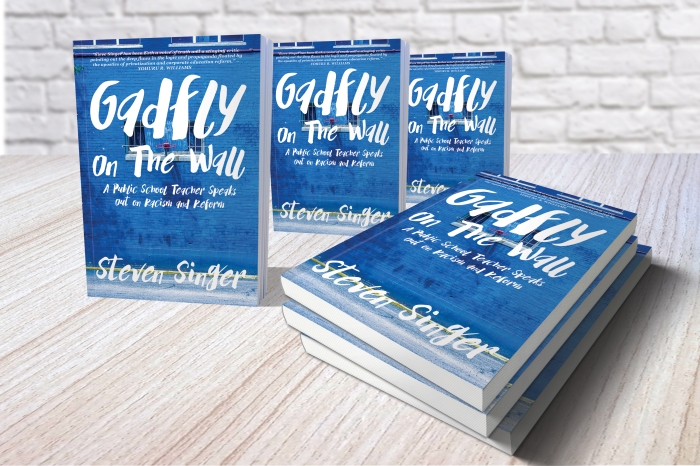
Still can’t get enough Gadfly? I’ve written a book, “Gadfly on the Wall: A Public School Teacher Speaks Out on Racism and Reform,” now available from Garn Press. Ten percent of the proceeds go to the Badass Teachers Association. Check it out!
book-2

Will the U.S. Follow New Zealand’s Lead and Repeal National Academic Standards?


I-am-more-than-just-a-test-score-1024x683


Kiwis don’t like corporations telling them what to do.


Especially when it comes to educating their children.


That’s why this week, New Zealand’s Education Minister Chris Hipkins announced that schools in the pacific island nation would no longer need to use the national academic standards mandated by the government for the last decade.


“I don’t think anyone will be surprised that we are ditching a failed experiment,” he said.


“We want teachers focused on less testing and more teaching because that’s the way we’re going to improve students’ progress.”


I pause at this point for American readers to catch their breath.


Yes, a national government just reversed course on standardized, canned, one-size-fits-all academic standards for all students in its public schools.


Yes, they had spent millions of dollars to create, roll out and enforce the standards.


But now they see the results have been less than expected and they’re changing their collective minds.


Shocking, I know.


If only we still did things like that in THIS country.


But wait, there’s more.


Why exactly did New Zealand turn against its national standards?


Did parents hate them?


Yes.


Did kids hate them?


Yes.


Did teachers hate them?


Yes.


All things that could be said of our own Common Core. But was there more to it?


Yes.


In short, New Zealand’s national standards weren’t helping kids learn. In fact, they appeared to have the exact opposite effect.


New Zealand children’s performance on international tests dropped significantly since the standards were introduced in 2010.


And publication of these results showing 10-year-old’s reading achievement taking a nosedive since the standards adoption ignited an already smoldering public outcry.


New Zealand’s average score on the Progress in International Reading Literacy Study (PIRLS) had been steady for 15 years, but fell dramatically at the end of 2015. In short, New Zealand went from 23rd to 33rd out of 50 countries.


Funny.


The US has had a strikingly similar result on the same test with the same age children since the mandate to use the Common Core.


The PIRLS is an assessment given to fourth-graders in schools around the world every five years. In 2016, the average score for US students dropped from fifth in the world in 2011 to 13th. And the drop wasn’t merely perfunctory. It was “statistically significant” according to test organizers.


The biggest drop was for the lowest-performing students, what the organizers considered a sign that we’re providing much greater support for economically advantaged children than for underprivileged ones.


Why is this important?


Because Common Core was introduced across the nation in 2010-11. These fourth grade students were the first to be educated using the Core since Kindergarten, and far from creating a boost in achievement, it opened a chasm.


Reading scores went down just as they consistently have done time-and-time-again since we started using the standards.


Scores go down on state tests. National tests. International tests.


Meanwhile the test makers and their proxies keep telling us the problem is that the standards are simply more rigorous and it just will take time for our children to get up to speed. Meanwhile their publishing and software subsidiaries sell us hundreds of millions of dollars worth of new text books, new computer programs, new devices, new apps, new “specialists” and consultants offering professional developments, etc.


Choo! Choo! The gravy train is rolling. We can’t let something like international test scores derail the money train!


Keep in mind, this is the same international test and the same age group of children that caused a revolution in New Zealand.


Will our response be the same?


Probably not.


New Zealand’s authentic reform resulted from a political change. The National Party was replaced by the Labour Party, and repealing national academic standards was part of their platform.


It marked a sharp divide between the philosophies of both groups.


The National Party wanted more testing, more data, more standardization, more holding funding hostage to test scores – just like both Republicans and Democrats in the US.


However, the New Zealand Labour Party ran on significant reductions to standardized education, substantial cuts to standardized testing, repealing national standards and considerable investment in students, schools and teachers.


We in the US simply have no political equivalent.


There is no political party – right, left or centrist – that puts the needs of children, parents, teachers and working people at the center of its platform.


Both the left and right take billions of dollars in campaign contributions from the testing and privatization industries and thus support policies that serve the interest of their donors over their constituents.


There is a tremendous political opportunity here for one party to change course and support a winning strategy.


Republicans tried it in 2016 by lambasting Common Core and then quietly forgetting they could do a thing about it at the state level every day since.


Including today.


Admittedly their education policy is incoherent since they support every standardization and privatization initiative on record so long as a black President didn’t touch it. And even then their opposition melts away when they have the power to do something about it but no one’s looking because the President is too busy playing nuclear chicken with North Korea on Twitter.


Imagine if politicians promised to fix something and then had the courage to actually do it!


It worked in New Zealand.


It’s worked in many places all over the world.


Why can’t it work here?


Killing Net Neutrality Would Muzzle Many Teacher-Activists 

thumbnail_c7tcqv4e6khwocrbse2l

As a blogger, I’m a big fan of net neutrality.

If the communications giants get to favor or block particular Websites, people-powered blogs like this one probably would become isolated and irrelevant.

As it stands, the Federal Communications Commission (FCC) is expected to vote Dec. 14 to undo strict regulations on Internet service providers like Comcast and Verizon that stops them from slowing down or blocking any sites, apps, or otherwise deciding which content gets to users faster.

If the Republican controlled five-member committee votes as expected, it would muzzle free speech.

It would effectively stifle hundreds, thousands of grassroots activists who’ve taken to the Web to educate and protest against the plutocracy strangling our democratic freedoms.

Think about it.

Close your eyes and imagine a United States where you couldn’t access your favorite Websites without paying a fee or – as in China – maybe even at all.

Want to know why standardized testing is harming our children and their schools? Sorry. That costs extra.

Want to know why Betsy Devos’ latest plan to give your tax dollars to Roy Moore’s Christian Fundamentalist Middle School and Dating Center endangers child welfare? Sorry. That information is no longer available.

Sure, you could probably look it up in the library and find it in a book, but that requires a complete change in how we consume media.

Most of us get our news on-line. We don’t read paper newspapers or glossy photo-print magazines. Books, when we read them, are often occasional pleasures or e-texts.

Searching out such material would take a paradigm shift back to the way we used to do things 10 or 20 years ago. It wouldn’t be impossible, but it would be onerous.

Remember traveling everywhere with a pile of books weighing down your bag, or a newspaper and magazines folded under your arm? People seeking such information would really need to want it.

Moreover, articles published in this way would almost surely become out of date quickly at least in regards to particulars. You can easily write something about the evils of charter and voucher schools in general that will be true for years if not decades, but it won’t as easily apply to individual charter and voucher schools by the time it’s published and been on the shelf for a while.

Additionally, writing and publishing such articles would become increasingly more difficult. Unless individuals or groups of activists bought up archaic printing presses or somehow funded mass media campaigns at Kinko’s and there were likewise an as yet undiscovered distribution engine that could disperse such periodicals across the country and the world – unless all of that, the resistance would be relegated to mostly scholarly tomes.

Take it from me: writing a book is not easy.

I just published my first volume of some of my best blog articles for Garn Press called “Gadfly on the Wall: A Public School Teacher Speaks Out on Racism and Reform.”

I am embarrassingly proud of it, but this would not work for everyday activism.

Even though most of the articles were already written, it took a team of us months to revise them, insert end notes, edit, format, design a cover, market and all the other multidinous things that go into the process.

Whereas, with a blog, I can just write it and press “publish.”

The result isn’t as neat. It isn’t as error-proof. There’s bound to be spelling and grammar problems. It doesn’t pack nearly the authoritative punch. —But it’s so topical and subversive that it can slice through steel.

Campbell Brown can’t publish a billionaire-funded diatribe against those greedy teachers and their damn unions and their precious tenure without an army of teachers taking to the Web and showing her the error of her ways.

Bill Gates can’t send his well-paid trolls off to write op-eds praising Common Core without a grassroots tsunami of educators, parents and students responding with scores of counternarratives throughout the blogosphere.

And it’s net neutrality that allows us to do it.

The democratization of information made possible by the free Internet has greatly empowered the voices of the wise but penurious.

You no longer need a printing press or a think tank or a media empire to get information before the public.

Sure this means that even the lunatic fringe gets a voice in the conversation that is American culture, but it also allows ideas to win or lose based more on merit than money.

If enough people share an article on-line, it gets read. People see it. They know it.

False information is eventually found out, disproven and neutralized. But a factually-based critique of bad policy? That can move mountains. It can change the world.

And it has!

Think of how even neoliberal policymakers have rushed to claim they’re in favor of reducing standardized testing. Longtime standardization supporters like former President Barack Obama had to distance themselves from their own policies or face the torches and pitchforks of moms and dads everywhere.

Think of how Democratic and Republican partisans clamored over each other to denounce Common Core. Heck! The movement was so successful President Donald Trump even jumped on the bandwagon and used it as a rallying cry to help install himself in office.

And think of how the reaction to Trump’s dismal and dimwitted Education Secretary, Devos, caused a stampede away from school vouchers and even to some extent charter schools. Even longtime champions of privatization like Jeb Bush and Cory Booker are afraid to offer even a tentative thumbs up for fear of the Web’s blitzkrieg of Tweets, Facebook posts, blogs and other shade.

None of this would be possible without the Internet and the blogosphere.

None of this would be possible without net neutrality.

It’s no wonder Trump and his cronies want to destroy it. The open communication and debate on the Internet is a clear and present danger to his policies.

It is dangerous to the neoliberals and conservative fascists alike.

Though the movement fighting against corporate education reform has been rightly critical of unlimited technology for technology’s sake in our classrooms, that same confederation owes a great debt to technology for its current power.

We meet on Facebook and plan actions to be conducted IRL – In Real Life. Groups like the Badass Teachers Association, the Network for Public Education and United Opt Out use the technology to spread truth and question authority.

If the life line of net neutrality is severed, so will much of our activist networks.

I know we’re all concerned about competency based education, Teach for America and toxic testing, but we have to make room for net neutrality, too.

The 99% rely on it for the free exchange of ideas and the unhindered expression of our speech.

If the Trump administration crushes that venue, it will seriously weaken our ability to resist.

So before that day comes, exercise your rights.

Raise your voice for net neutrality – before it’s too late.


Please go to www.gofccyourself.com and urge the FCC to keep Net Neutrality.

The Staggering Naivety of Those Criticizing Public Schools as Out-of-Date

naive

There is a popular idea going around that public schools need to change because they’re outmoded, obsolete and passé.

While public schools certainly could do with a great deal of change to improve, this criticism is incredibly naïve.

It’s the intellectual equivalent of displaying a copy of James Joyce’s Ulysses prominently on your bookshelf without actually having read it.

It’s like demanding everything you eat be gluten free without actually having celiac disease or a wheat allergy.

It’s the conceptual analogue to learning a trendy “word of the day” and trying desperately to fit it into your every conversation regardless of need or propriety.

America’s public school system is incredibly complex. And like most complex things, any criticism of it is at least partially correct.

There are ways in which the system is antiquated and could use updating. But to claim that the entire system should be scrapped in favor of a largely untested, disproven and – frankly – profit-driven model is supremely stupid.

The criticism seems to be well encapsulated in a flashy animated video from Big Picture Learning, a Rhode Island-based charter school network operating 165 schools in 25 states and nine countries. The organization has been heavily praised by the likes of former President Barack Obama and philanthrocapitalist Bill Gates.

Let’s examine the six main components of the video explaining why the charter operators think public schools are out of date and should be replaced:

1) Public Schools are Relics of the Industrial Age 

The criticism goes like this. The public school model was created in the Industrial Age and thus prepares students to be factory workers. All day long in public schools students follow orders and do exactly what they’re told. Today’s workers need different skills. They need creativity, the ability to communicate ideas and collaborate.

First, while it is true that the American public school system was created during the Industrial Revolution, the same thing can be said for the United States, itself. Beginning in 1760 and going until 1840, manufacturing began to dominate the western economy. Does that mean the U.S. Constitution should be scrapped? Clearly our form of government could do with a few renovations, but not by appeal to its temporal genesis, to when it was created.

Second, IS it true that America’s public schools expect students to do nothing but listen to orders and follow them to the letter?

Absolutely not.

In fact, this is exactly what teachers across the country DON’T want their students to do. We work very hard to make sure students have as much choice and ownership of lessons as possible.

We often begin by assessing what they know and what they’d like to know on a given subject. We try to connect it to their lives and experiences. We try to bring it alive and show them how vital and important it is.

Do we exclude creativity, communication and collaboration from our lessons?

Absolutely not.

In my class, creativity is a must. Students are required to write journals, creative fiction, and poetry. They draw pictures, maps, posters, advertisements. They make Keynote presentations, iMovies, audio recordings using Garage Band, create quizzes on Kahoot, etc. And they often do so in small groups where they are required to collaborate.

The idea that students are somehow all sitting in rigid rows while the teacher blabs on and on is pure fantasy. It betrays a complete ignorance of what really goes on in public schools.

2) Lack of Autonomy

The criticism goes that students in public school have no choices. Every minute of the day is controlled by the teacher, principals or other adults. However, in today’s world we need workers who can manage their own time and make their own decisions about what to do and when to do it.

Once again we see a complete ignorance of what goes on in public schools.

Today’s students are not only expected to make decisions and manage their time, they could not pass their classes without doing so.

Teachers often go to great lengths to give students choices. Would you like to read this story or that one? Would you like to demonstrate your learning through a test, a paper, an art project or through a digital medium?

For instance, my students are required to read silently for 15-minutes every other day. But they get to select which books to read. Eventually, they have to complete a project using their self-selected book, but they are in charge of ensuring the book they pick meets the requirements, how much they read each day in class and outside of class, and whether they should complete a given book or pick a new one.

Even when it comes to something as mundane as homework, students have to develop time management. I give my students the homework for the entire week on Monday, and it’s due on Friday. This means they have to decide how much to do each night and make sure it gets done on time.

Today’s students have much more ownership of their learning then I did when I went to school. Those throwing stones at our public school system would know that, if they actually talked to someone in it.

3) Inauthentic Learning

Critics say most of the learning in public schools is inauthentic because it relies on memorization and/or rote learning. It relies on a generic set of knowledge that all children must know and then we measure it with standardized tests. Learning should be deeper and its subjects should be something students intrinsically care about.

Once again…

Actually this one is kind of spot on.

Or at least, it’s partially true.

It accurately represents one kind of curriculum being mandated on public schools from the state and federal government. It’s called corporate education reform, and as pervasive as it is, you’ll also find the overwhelming majority of school teachers and community members against it.

This is why Common Core is so unpopular – especially among teachers. This is why almost everyone wants to reduce standardized testing and the kind of narrowing of the curriculum and teach-to-the-test practices it brings.

However, there’s something incredibly disingenuous about this criticism coming from a charter network chain. The educational practices these critics of public schools often propose replacing this standardization with are often just a rehash of that same standardization using more modern technology.

Business interests, like Big Picture Learning, often propose using competency based education or personalized education programs on computers or devices. These are extremely standardized. They follow the same Common Core standards and use computerized stealth assessments to determine whether students have learned the prescribed standard or not.

In short, yes, corporate education reform should be challenged and defeated. However, as in this instance, often the same people criticizing public schools for these practices don’t want to undo them – they just want to expand them so they can be more effectively monetized by big businesses like them!

4) No Room for Student Interests

Critics say the standardized public school system requires each child to learn the same things in the same ways at the same times. However, each of us are different and have individual interests and passions. The current system has no room for self-discovery, finding out what children enjoy doing, what they’re good at and where they fit in.

Once again, there is some truth to these criticisms.

The corporate education model is guilty of exactly these things. However, teachers have been pushing to include an increasing amount of individualization in lessons.

This struggle is inherent in the essential dichotomy of what it means to be an educator today. We’re told we must individualize our lessons for each student but standardize our assessments. This is fundamentally impossible and betrays a lack of vision from those making policy.

If the lawmakers and policy wonks who made the rules only listened to teachers, child psychologists and other experts, we would not be in this predicament.

As it is, many teachers do what they can to ensure students interests are part of the lesson. They gauge student interest before beginning a lesson and let it guide their instruction. For instance, if students want to know more about the weaponry used by the two sides in the Trojan War, that can become part of the unit. If, instead, they wonder about the role of women in both societies, that can also become part of the curriculum. Just because the higher ups demand students learn about the Trojan War doesn’t mean student interest must be ignored. In fact, it is vital that it be a component.

Moreover, creative writing, journaling and class discussion can help students grow as learners and engage in authentic self-discovery. Two weeks don’t go by in my class without a Socratic Seminar group discussion where students debate thematic and textual questions about literature that often spark dialogues on life issues. When students hear what their peers have to say about a given subject, it often results in them changing their own opinions and rethinking unquestioned beliefs and values.

In short, less corporate education reform means room for more student passion, interest and self-discovery.

But these critics don’t want less. They want more!

5) They Don’t Respect How We Learn

Critics say that each student is different in terms of how they learn best and in how much time it takes to learn. As a result, students who comprehend something at a slower rate than others are considered failures by the current system.

In the corporate model, this is true. However, most districts take great pains to give students multiple chances to learn a given concept or skill.

The fact that not all students will know the same things at the same times is built in to the curriculum. Teachers are familiar with their students and know which children need more help with which skills. Concepts are reviewed and retaught – sometimes through copious mini-lessons, sometimes with one-on-one instruction, sometimes with exercises for the whole class.

The further one gets from standardized tests and Common Core, the more individual student needs are respected and met.

But again that’s not the goal of these critics. They blame public schools for what they only wish to continue at higher intensity.

6) Too Much Lecturing

Critics say that under the current system, students are lectured to for more than 5 hours a day. However, this requires students to be unable to interact with each other for long periods of time. Students are at different levels of understanding and nothing can be done to help them until the lecture is over. Wouldn’t it be better to let students pursue their own education through computers and the internet so they could proceed at their own pace like at the Khan Academy?

And here we have the real pitch at the heart of the criticism.

People who wish to tear down public schools are not agnostic about what should replace them. They often prefer privatized and computerized alternatives – like the Big Picture charter chain model!

However, these are not entirely novel and new approaches. We’ve tried them, though on a smaller scale than the traditional public school model, and unlike that traditional system, they’re an abject failure.

Giving students a computer and letting them explore to their hearts content is the core of cyber charter schools – perhaps the most ineffective academic system in existence today. In my state of Pennsylvania, it was actually determined that students would learn more having no formal schooling at all than to go to cyber charter schools.

The reason? It is beyond naïve to expect children to be mature enough to control every aspect of their learning. Yes, they should have choice. Yes, they should be able to explore and develop as individuals at their own pace. But if you just let children go, most will choose something more immediately gratifying than learning. Most children would rather sit around all day playing Grand Theft Auto or Call of Duty than watch even the most interesting educational video about math or science.

Adolescents need structure. They need motivation. In short, they need a teacher – a human authority figure in the same room with them who can help guide their learning and hold them accountable for their actions.

The mere presence of information on the Internet will not make children smarter just as the mere presence of a book won’t increase their knowledge. Certainly some children are self-motivated enough and may benefit from this approach, but the overwhelming majority will not and do not.

Our public schools do need a reformation, but this edtech-biased criticism only hits part of the mark.

The major problems are corporate education reform and standardization. And unfortunately edtech plans like privatization and competency based schemes only seek to increase these pedagogies.

Public schools are not outdated. They have changed and evolved to meet the needs of the students attending them. The fact that they serve every student in a given community without weeding out the less motivated or those with special needs as charter chains like Big Picture do, demonstrates this very flexibility and daily innovation.

They can be robust systems fostering self-discovery, autonomy and deep student learning. We just need to have the courage to support them, strengthen their autonomy and avoid trendy, shallow and self-centered criticisms from charter chains hoping we’ll buy what they’re selling.

Mr. and Mrs. Public School Sabotage


Screen Shot 2017-10-27 at 1.35.14 PM


America’s public schools are in crisis.


Because people make money when America’s public schools are in crisis.


And who sits atop this mountain of bribery and malfeasance?


Who gives the money that buys the politicians who make the laws that hurt the kids and profits the donors?


It’s none other than Mr. and Mrs. Public School Sabotage!


Systemic underfunding, laissez-faire segregation and privileging privatization – this is what our children face every day.


It’s time we as a nation stop, take a moment – and offer our hearty congratulations to this years most pernicious saboteurs.


And what a year it was for disrupting education!


Charter schools, voucher schools – no one has benefited more from chucking the public school model in the trash in favor of control by corporations and bureaucrats than Betsy DeVos.


Because she’s both a dark money influence peddler AND a government flunky!


A two-for!


She turned complete ignorance and animosity toward public schools into the highest federal government job overseeing education! Her only qualification? CA-CHING!


But coming up right behind Ms. DeVos is this year’s crowned king.


He certainly knows a thing or two about CA-CHING!


It’s Bill Gates!


Progressive philanthropist by day, by night he transforms into the largest single purveyor of palm grease in the nation. No one has turned tax avoidance into influence more than Gates, the money behind the Common Core, evaluating teachers on student test scores and a plethora of irrational, untested ideas that are only considered mainstream because they have literally trillions of dollars behind them.


So there you have it, America! Your Mr. and Mrs. Public School Sabotage!


Let’s take a closer look at these… winners.


DEVOS


As U.S. Secretary of Education, she’s proposed cutting $10 billion in public school funding, announced changes to make it harder for college students to report sexual assaults, and put struggling university students at risk of higher debt payments with changes to student loans.


But that’s child’s play for the billionaire heiress who married into even more money.


Now she’s planning to weaken the rights of students with disabilities.


That’s right – Jason Vorhees, Michael Myers, Freddy Kruger, they all went after those pesky post-graduate teenagers. But none of them had the audacity to go after kids with learning disabilities!


It’s not that DeVos is undoing any laws. She’s erasing decades of government guidance about how the laws are to be interpreted. And though she claims these 72 directives are simply “outdated unnecessary or ineffective,” she’s not replacing them with anything else. They’re just – gone.


Of the 72 guidelines, 63 affect special education and 9 affect student rehabilitation. And these aren’t simply undoing the work of the Obama administration. Some of these regulations have been in place since the 1980s.


The rescinded policies include “Satellite Centers for Independent Living,” “Nondiscrimination on the Basis of Handicap in Programs and Activities Receiving or Benefiting From Federal Financial Assistance,” and “Information on the Provision of Vocational Rehabilitation Services to Individuals With Hearing Loss (Deaf and Hard of Hearing).”


Bah! Who needs all this paperwork?


Parents and students. That’s who.


These guidelines have helped parents of disabled and special education children advocate for their young ones’ rights. Without them, it may be more difficult for parents and teachers to ensure all children are receiving a free and appropriate education.


That’s some seriously stone cold sabotage, Ms. DeVos!


But at least her motivation is obvious to anyone with eyes.


She’s not purposefully making the lives of K-12, special education and college kids more difficult. Well, she is, but she’s not doing it out of spite. She’s doing it because it helps her investment portfolio.


How can she continue to promote charter and voucher schools that don’t provide the same kinds of quality services for special education and disable students as public schools do? She needs to degrade what the public schools provide, thereby making the privatized alternatives more marketable.


How can she keep making money off predatory lenders unless she loosens the rules to allow them more freedom to gorge on student debt? And how can she keep her lucrative job bending the rules in her favor unless she throws some red meat to the racists, misogynists and anti-Semites who helped elect her boss into the Oval Office?


And if kids get hurt, well those aren’t the people she’s looking out for, are they?


She’s only out for the other rich elites like herself making a mint off of our public tax dollars!


It’s almost enough to make you miss Arne Duncan.


Almost…


(Nah. Not really.)


GATES


Bill Gates, on the other hand, is more contrite.


His Common Core initiative has kind of exploded in his face.


No one likes it. NO ONE.


In fact, it was one of the key talking points President Trump used to garner support. The public’s hatred of Democratic plutocracy made them suckers for the Republican variety.


The problem isn’t so much political. It’s economic.


It’s rich people who think they can do whatever they want with the rest of us and our children.


More than anyone else, Gates is guilty of that kind of unexamined, unrepentant hubris.


Yet to hear him talk, after a string of education policy disasters, he’s learned his lesson.


He’s sorry – like a crack addict is after hitting rock bottom. But he’ll somehow find the courage to light up again.


Gates now admits that the approximate $2 billion he spent pushing us to break up large high schools into smaller schools was a bust.


Then he spent $100 million on inBloom, a corporation he financed that would quietly steal student data and sell it to the corporate world. However, that blew up when parents found out and demanded their children be protected.


Oops. His bad?


He also quietly admits that the $80 million he spent pushing for teachers to be evaluated on student test scores was a mistake. However, state, federal and local governments often still insist on enacting it despite all the evidence against it. Teachers have literally committed suicide over these unfair evaluations, but whatever. Bill learned a lesson.


When it comes to Common Core, though, Bill refuses to take his medicine – even to mouth the words.


By any metric, these poor quality uniform academic standards are an abject failure. He spent hundreds of millions of dollars for development and promotion. He influenced trillions of taxpayer dollars to be poured down the drain on it. All to no avail.


Instead, he’s quietly backing away. No explanation. No apology. Just on to something new.


Kind of like: “That didn’t work. Let’s try something else!”


His new plan – spend $1.7 billion over five years to develop new curriculums and networks of schools, use data to drive continuous improvement, and give out grants to high needs schools to do whatever he says.


What’s so frustrating is that Gates shows glimmers of self-awareness.


“It would be great if our education stuff worked, but that we won’t know for probably a decade,” he said during a speech at Harvard in 2014.


But then when he sees it isn’t working, he just doubles down on the same crap.


While he may not be committed to any one policy, Gates is committed to the idea that he knows best. Whatever nonsense bull crap that floats through his mind deserves to be tried out on a national scale.


No asking experts. No asking teachers, parents or students. Just listen to me, Bill Gates, because I’m rich and that makes me better than you.


No, it doesn’t Bill. It makes you just like Betsy DeVos.


So there they are. Mr. and Mrs. Public School Sabotage.


Short may their reign be.


“They were careless people, Tom and Daisy – they smashed up things and creatures and then retreated back into their money or their vast carelessness or whatever it was that kept them together, and let other people clean up the mess they made.”

-F. Scott Fitzgerald, The Great Gatsby

PA High Court Says, “Yes, Schools CAN Sue State Over Unfair Funding, After All!”

rrxfund14-d


It’s back on!

Two years ago a group of plucky Pennsylvania public schools took the state legislature to court because the body wasn’t allocating funding to all districts fairly – some got too much, many got too little.

A lower court threw the challenge out saying it wasn’t the court’s job to tell the legislature how to legislate. But now the state Supreme Court has overturned that lower court decision.

In effect, justices are sayingHell, yes, that is the court’s job! That’s why it’s called a system of checks and balances, Baby!

Or something like that.

Before going any further, there are a few pertinent facts you have to understand about the Commonwealth.

1) No other state in the country has a bigger gap between what it spends on rich vs. poor students than Pennsylvania, according to the U.S. Department of Education.

untitled

2) The Pennsylvania legislature has been paying less and less of public schools’ budgets over the last four decades. The state used to contribute 54% of all public school costs in the early 1970s. Today it pays only 35% of the costs, leaving local taxpayers to take up the slack. Since districts are not equally wealthy, that increases the disparity of resources between rich and poor districts.


3) The state has only had a funding formula specifically legislating how to allocate money to its more than 500 districts for two years. Two years! For more than 15 years previous, the legislature just handed out money willy nilly based on political backroom deals that favored already rich districts and hurt the most impoverished ones.

4) The new funding formula still is not fair. Though it does take into account the poverty of a district, it doesn’t account for the years of systematic disinvestment the district suffered through previously. That’s like giving new sneakers to a racer who hasn’t been able to get out of the starting gate while others are already halfway to the finish line.

5) The legislature STILL hasn’t healed almost $1 billion in education cuts made under previous Republican Gov. Tom Corbett. Instead, under current Democratic Gov. Tom Wolf, it has reluctantly increased funding a bit at a time but failed to bring spending up to what it was four years ago. And even once the cuts are healed, spending will be behind inflationary and cost of business increases. Meanwhile the Republican controlled legislature plays games approving the state budget separately from allocating money to the programs – including schools – that it already approved!


6) Pennsylvania is one of seven states with a Constitution that specifically requires the state provide a “thorough and efficient” system of education. Some of these other states – like New Jersey – have used similar Constitutional requirements to force their legislatures to increase state funding to public schools.

So there you are.

Pennsylvania’s legislature is an absolute mess.

Hopelessly gerrymandered, controlled by the radical right, and opposed by a Democratic party nearly as beholden to big donors as their GOP counterparts and desperate for any area of bipartisanship so as to be able to claim they got anything done other than stop Republicans from burning the whole place to the ground.

That’s why today’s 5-2 Supreme Court ruling is a breath of fresh air.

It’s like someone finally called Mom and Dad to tell our bratty lawmakers to get back to work.

The case will now go back to Commonwealth Court.

Supreme Court Justice David Wecht wrote that the courts do have a responsibility to check the power of the legislature – both in regard to the requirements of the state Constitution and that poorer districts are being discriminated against.

“It remains for (the) petitioners to substantiate and elucidate the classification at issue and to establish the nature of the right to education, if any, to determine what standard of review the lower court must employ to evaluate their challenge,” Wecht wrote. “But (the) petitioners are entitled to do so.”

This may be a Herculean task for those suing the state. And it seems unlikely that Commonwealth Court will hear their arguments favorably.

Justices rarely have the courage to challenge other branches, and the history of Pennsylvania’s courts shows multiple times when the courts have simply refused to assert such power.

This is what happened back in the 1990s when the Philadelphia School District sued the state over the same issue – unfair funding.

Time and again, poor districts have asked for help from the courts when the legislature refused to do its job. And time and again the courts have refused.

But at least this ruling gets things moving again. It’s like a dose of Kaopectate for a constipated political system.

Another possible bit of good news comes from Common Core and high stakes standardized testing. Yes, that crap!

When Philadelphia sued the state, the courts refused to rule in the schools favor because it had no way of proving the state was hurting the quality of education students were receiving there through lack of funding. But that was before Pennsylvania adopted its new Common Core look-a-like standards, PA Core, and initiated aligned tests including the souped up Pennsylvania System of School Assessments (PSSA) and Keystone Exams.

Ironically, the same “accountability” measures used to “demonstrate” poor schools are failing could be used to prove the common sense notion that unfairly funding schools leads to poor academic results.

In any case, far right demagogues like House Speaker Mike Turzai, R-Allegheny, are already whining that the Supreme Court is legislating from the bench. However, as a defendant in the case, and one of the most partisan hacks in Harrisburg, that’s exactly what the Koch Brothers probably told him to say.

Unfortunately, Gov. Wolf seems to kinda agree with him. Though he has yet to make a statement about today’s ruling, he was against the suit when it was originally brought up in 2015. Though he supports increasing education funding and has consistently pushed for it with every budget proposal, he is leery of the courts butting in.

Sadly, his strategy of incremental education budget increases has been failing. Or, to be fair, it’s succeeding at such a slow rate that it would take decades for it to catch up.

The fact of the matter is that it is patently unfair for rich districts to spend $10,000 to $20,000 on each student, while poorer districts can barely pull together $5,000-$6,000.

In addition, impoverished students have greater needs than rich ones. They often don’t have books in the home or access to Pre-kindergarten. Poor students often suffer from food insecurity, malnutrition, a lack of neonatal care, worse attendance, are less well rested and have greater special needs and suffer greater traumas than wealthier students. Moreover, it is no accident that the group being privileged here is made up mostly of white students and those being underprivileged are mostly students of color.

The time is here when Pennsylvanians have to decide where they stand. Are they for a state that offers all children an equal start or do they prefer one where poor brown kids suffer so rich white ones can get ahead?

Today, the matter is in the court’s hands.

‘Schools of the Future’ And Other Scams to Monetize Your Child

1963-jetsons-school


Do you feel it?

The future is coming.

There it is hovering just over the horizon.

You squint your eyes trying to get a quick peak before it arrives. But that rarely works. By the time it’s here, it’s never quite in the shape you expected.

Yet we always stop and listen to the prophets and prognosticators. Those google eyed figures, wearing trench coats and sandwich boards standing proudly on milk crates and cracking open their mouths to vociferously voice their “visions.”

They smell like B.O. There are insects in their hair. And their mouths spray halitosis as much as haloes.

Under normal circumstances, we wouldn’t trust them to park our cars, to give us directions, to do just about anything. But when it comes to “The Future” somehow we swallow their swill with conviction.

Through sheer force of charisma they convince us that their predictions will come to pass and if we’re smart we’ll invest in their brand of patented polished snake oil.

So we’ll be ready.

Just once I wish people would heed the skepticisms of the doubting Cassandras. But so it goes.

This week it’s “Schools of the Future.”

Everywhere you look it seems you’ll find some slickly produced inducement to “Rethink schools.” Some admonition to completely change public schools. Some empty promise in naked technology to save us all.

They’ll tell you that our public schools haven’t changed in a century. They’re set up for the agricultural past. Or schools are great for creating assembly line workers for the industrial revolution, but times have changed. And education needs to change with them.

Never mind that schools were never designed to supply any workforce. Their goal was – and is – to help the next generation become citizens capable of free thought.

But whatever.

This sales pitch about outmoded schools sounds really nice.

It resonates.

It makes us feel good.

Yes, I KNEW there was something wrong with my public school. That explains my own failures. I mean, I went through 12 plus years of public schooling and look at me! I’m not one of the handful of billionaires who own the world. It MUST have been the school’s fault!

Forget economic inequality, money in politics or any of that progressive crap! I could be sitting on top of the world with my boot firmly planted on the neck of everyone else – if only the public school had taught me right.

PLEASE!

But this is the comforting lie many folks tell themselves and one of the major reasons corporate school reformers get away with raiding public education. Their lies flatter white people’s vanity.

So billionaire Laurene Powell Jobs’ bought a four-network propaganda hour telling us to “rethink” high school while Education Secretary Betsy DeVos’ began her “Rethink Schools” publicity tour days later.

As if the thought never occurred to anyone else.

Rethink schools? What do you think classroom teachers do? We rethink every lesson every day!

It’s standard practice. We call it reflection. Some of us even keep reflection journals where we jot down things that worked and things that didn’t.

Haven’t these privileged fools ever logged on to the blogosphere? The Internet is fit to bursting with teacher blogs overflowing with ideas about how to change things up. This very blog has been pushing authentic reform after authentic reform – but the powers that be – people like DeVos and her billionaire philanthrocapitalist peers – aren’t listening.

You want to rethink schools? How about sitting down and shutting up?

Seriously.

Let the experts have a say for once.

Classroom teachers have much more experience than you do. We’re there every single day engaged in the actual practice of teaching children. You learn something about it by doing it for at least 180 days a year, for decades. And that’s not even counting the years of college preparation before even entering the classroom, the pedagogy, debate, and hard won wisdom of generations of teachers before us.

Meanwhile, all you have is a bank account.

You’ve hardly stepped foot in a public school to do more than spit on it. Nor did you likely experience it as a student or parent of students who go there.

You know nothing. And that’s no sin in itself.

Many people are ignorant of a great many things. I, for one, am completely ignorant of how to fly an airplane. That’s why I’d never dream of busting open the cockpit and preceding to tell the captain how to land the plane!

But you are not humble enough to admit your own ignorance. You think your money gives you the ability to do anything. After all, you DESERVE all those billions. It’s not an accident of birth or circumstances. You’re just that good, that special, that much better than the rest of us.

And what kind of brilliance do we get from these pampered prophets?

Here’s DeVos remarks to faculty and students at Woods Learning Center in Casper, Wyoming, from Sept. 12:

“…I’m issuing a bold challenge this week: it’s time to rethink school.

For far too many kids, this year’s first day back to school looks and feels a lot like last year’s first day back to school. And the year before that. And the generation before that. And the generation before that!

That means your parent’s parent’s parents!

Most students are starting a new school year that is all too familiar. Desks lined up in rows. Their teacher standing in front of the room, framed by a blackboard. They dive into a curriculum written for the “average” student. They follow the same schedule, the same routine—just waiting to be saved by the bell.”

All that money and the best you can come up with are that we should rearrange the desks!?

It just goes to show that you don’t know what goes on in real public schools.

My middle school classroom doesn’t have desks. We have tables that seat four.

Yes, those seats typically begin the day with students facing the teacher and the board. But you could say the same of seats at any auditorium since Plato’s day. I don’t hear anyone talking about rethinking that!

In any case, seats are mobile. I direct my students to move their seats all around the room. Just yesterday we had them in a circle. The day before, they were in small groups. And many days my students aren’t even in their seats – they’re wandering around the room doing some sort of task or project.

None of this is that revolutionary. Most middle school teachers do the same thing. You have to. Kids that age don’t have the attention span to sit in their seats in the same position for 40 plus minutes at a time.

Seats are often more stationary at the high school level, and they’re probably even less fixed at the elementary.

You would know this if you ever talked to a public school teacher. But, no. You know best because of your net worth.

Let me tell you something. Public schools today are much different than they were in the past.

For example, the way we teach special needs children is light years away from what it was just a few decades ago. We used to send these children to specialized facilities or classrooms in the basement well away from other students. Now, they’re mainstreamed and their educations are dramatically tailored to meet each student’s individual needs.

Schools used to just be about the three R’s – reading, writing and ‘rtithmetic. Today at wealthier districts, students have a wide range of courses to choose from. They have arts, music, foreign languages, vo-tech, extra-curriculars, computer science, robotics, drama, almost anything you can think of! I wish this were true at all schools, but that’s a funding issue, not a lack of innovation.

Many schools are less segregated today than they were before Brown v. Board. The courts have let us down in supporting this Supreme Court decision, instead permitting an awful lot of regression in some districts. But even at the most resegregated schools, they are rarely100% one race or another. We should do something to increase integration, but don’t tell me we haven’t made progress.

Let’s get one thing straight.

People like DeVos and Jobs only care about “rethinking” schools because they have a product to sell.

They’re promoting a problem so they can sell us the solution. They want us to buy more charter and voucher schools, more edutech competency based education B.S., more testing, more publisher and computer boondoggles.

You want real innovative reforms in our public schools?

Here’s what you do.

First step, give the reigns to public school teachers. We’ll tell you what needs to be done.

Here’s a short list:

-Stop privatizing and start supporting public schools.

-Give us equitable funding so that poor and minority students have the funding they need to learn.

Integrate schools again – both racially and economically – no more schools for rich white kids and schools for poor black kids.

Get rid of high stakes testing use funding allocation, spending decisions, principal classroom observations and student projects for accountability purposes, not scores on a limited and biased multiple choice test.

Repeal Common Core and let teachers write their own academic standards instead of being beholden to goals written by corporations to sell their own products and tests.

-Make a national commitment to reducing class size across the board, hire more teachers, increase their autonomy and salary.

Examine very closely every use of technology in the classroom to make sure student data isn’t being stolen by corporations, devices aren’t used for test prep or babysitting, and beware Trojan horse edutech applications like so-called personalized learning and competency based education.

Those are the kinds of reforms that would actually help improve our public schools.

But you can only learn that if you have the humility to listen to the experts – classroom teachers.

And people like DeVos and Jobs have proven they don’t have an ounce of humility.

Perhaps we don’t need to rethink schools. We just need to rethink our standards of expertise.

Small Class Size – A Reform We’re Just Too Cheap To Try

dreamstime_xl_38917155

Taken as a whole, the American people are an awfully cheap bunch.

We’ll spend trillions of dollars on guns and tanks to fight an overseas war, but if someone suggest we build a bridge or conduct a social program or anything that would help people actually live longer, happier lives, well, F- ‘em.

Tax cuts for the rich – WONDERFUL!

Feed the hungry – NOT ON MY DIME!

And it’s true even of our attitude toward little children.

Don’t believe me? Just look at our public schools.

Pristine Taj Mahal-like buildings for rich kids with broad curriculums and plenty of teachers to instruct privileged progeny one-on-one, and then across town on the other side of the tracks you’ll find dilapidated shacks for the poor forced to put up with narrow curriculums focused on standardized test prep and as many underprivileged children as they can fit in the room with one beleaguered teacher.

It doesn’t have to be this way.

We’re one of the richest countries in the world, yet we treat our own children – especially if they’re poor and brown – as if they were refugees from the third world.

Well, perhaps marginally better. To my knowledge no one is suggesting we send the unwashed masses back to Africa, Europe or wherever else they originally came from – at least those who can prove they were born here.

But we certainly aren’t bothering ourselves too much about taking care of them.

What would that look like? Nothing all that radical.

Imagine a classroom where students have the space to be individuals and not nameless cogs in the system.

Imagine ensuring students get consistent, individual feedback from the teacher on a minute-by-minute basis.

Imagine increasing the ability for the teacher to focus on learning and not on policing behaviors.

Imagine allowing students to concentrate on education and not various adolescent social issues?

All of these things are accomplished through reducing class size.

In education circles, small class size is the one universal constant. There is some debate about exactly how small classes should be (at least less than 20, maybe even closer to 10 or 15 students) and for which student groups it is most important, but the consensus in favor of small class size is overwhelming.

Study after study concludes that small class size increases academic performance. When compared with peers in larger classes, those in small settings end up being months ahead. They cover more material, with greater depth and achieve better comprehension in less time.

This is partly due to increased student engagement. Children are more interested in what’s being taught when they have a more personal relationship to it. In smaller classes, students are able to express themselves and participate more. Even children who don’t normally engage in such activities find themselves forced to do so. They can no longer hide behind the greater numbers of their peers. Everyone is visible, seen and heard.

As a result, students have better relationships with their peers and teachers. These better social interactions and trust often results in academic gains. This also can lead to less disruptive behaviors – even for students who typically act out in larger classroom environments. Previously troubled students end up spending less time in detention or suspension and more time in class learning.

As such, teachers are better able to see students as individuals and determine how best to differentiate instruction to meet every child’s needs.

The benefits go far beyond the classroom. Numerous studies concluded that reducing class size has long lasting effects on students throughout their lives. It increases earning potential, and citizenship while decreasing the likelihood students will need welfare assistance as adults or enter the criminal justice system. In short, cutting class size puts a stop to the school-to-prison pipeline.

It shouldn’t be surprising, then, that those students who benefit the most from this reform are the young, the poor and minorities.

Small class sizes in the elementary grades have long lasting effects even if class sizes increase in middle and high school. However, minority and impoverished students (child groups often experiencing significant overlap) benefit regardless of age. Small class sizes help combat the trauma and deprivations of living below the poverty line. Moreover, while small class size has a varying effect on different disciplines, it invariably helps increase writing instruction – even up to the college level. Schools that put a premium on writing would do best to reduce class sizes in all language arts classes, for instance.

However, students aren’t the only ones positively affected by small class size.

This also has an impact on teachers. Reducing class size increases teacher job satisfaction and retention. This is pretty important in a profession bleeding away practitioners. Fewer college students are entering education programs every year. Salaries are falling even as responsibilities and paperwork are increasing. A reform that helps counteract that while also helping students would appear to be just what the doctor ordered.

Unfortunately, administrators don’t seem to be getting the message. Instead of reducing class size for the most effective teachers, they often increase it. The main reason – test scores. Number crunching administrators think giving the best teachers more students means helping the most students. However, they aren’t taking into account the law of diminishing returns.

The biggest obstacle to reducing class size is financial.

Cutting class size often means hiring more staff. In the absence of state and federal legislators offering to fund such initiatives, district school directors invariably think it’s beyond them. They don’t want to do anything that might result in a tax increase.

However, in today’s dog-eat-dog public school environment, you either pay a little now or a lot later. Right or wrong, competition is our overarching education policy. Public schools have to fight for education dollars with charter and voucher schools. And smaller class size is the number one selling point for so-called choice schools over their traditional public school counterparts.

Sure, it’s expensive to cut class size, but it’s also expensive to continue funding the district when students leave due to smaller classes at the local charter school. Though the media over-reports the value of high test scores, parents rarely decide where to send their children on that basis. Class size is often their number one consideration. They don’t want their children to be lost in the crowd. They want their children to be valued as individuals and their education to be properly personalized.

According to “More Than Scores: An Analysis of How and Why Parents Choose Schools,” two of the top five reasons parents who choose private schools over public institutions specifically reference class size – 48.9% cite class size out right and 39.3% cite “more individual attention for my child.” And the other three reasons – better student discipline, better learning environment, and improved student safety – are all dramatically influenced by class size.

If public schools want to continue to compete, school directors may have to commit to investing in class size reduction.

Yet the trend of the last decade has been in exactly the opposite direction.

Today public schools employ 250,000 fewer people than before the recession of 2008–09. Meanwhile enrollment has increased by 800,000 students. Unsurprisingly, class sizes in many schools are at record highs.

Is this something we could really change?

Of course! It really wouldn’t be that hard.

We’ve accomplished much more difficult tasks as a nation. We beat back Hitler, became a global superpower and even put people on the moon!

After all that, we can’t find the will to hire more teachers and properly educate all of our native sons and daughters?

Yes, there are plenty of competing ideas for how to improve our schools. And most of them come from corporate think tanks and big business lobbyists more interested in enriching themselves on the public dime than helping students.
Corporate education reformers want us to pay private companies to educate the poor. They want us to invest in privatized schools and standardized test conglomerates. They want us to subsidize publishers and tech corporations with new, untried, unnecessary academic standards that require us to buy boatloads of crap that don’t help and we don’t need.

But the answer isn’t to hand over boatloads of additional monies to private industry. In large part it’s to hire an increased workforce to actually get in there and do the job of educating.

And before you cry about the cost, imagine the savings of cutting all the corporate education reform garbage! If we weren’t committed to corporate handouts as education reform, we might be able to increase the quality of our public education system and still save some money!

You see the answer to improving education for the poor isn’t corporate welfare. It starts with equitably funding schools dedicated to the poor and minorities. It starts with providing them with the money required to meet student needs. And a large part of that includes cutting class size.

There is a significant consensus behind it. Moreover, it has parental, student and teacher support.

It’s a no brainer.

All it takes is a change in priorities and the will to actually get up off our collective asses and do something to help America’s children.

Let’s cut the crap. Cut class size.

XQ Live – Desperate School Choice Rebrand After Trump Touched It

IMG_8016

What do you do when your corporate brand has become repugnant to consumers?

You REBRAND, of course! And that’s exactly what uber-rich widow, Laurene Powell Jobs, paid a boatload of celebrities to do last night all over your TV.

The program was called XQ Superschools Live, and it took over four major networks.

It’s ironic really. Using an almost 100 year old medium to push “schools of the future.” They tweeted and Facebooked all over it, but the focus was on the old boob tube.

Why? Because the audience they wanted wasn’t so much the young. They wanted the old – those deep pocketed investors who might be startled by all the flash and bombast and ask their grandkids if this was “cool.”

It was the most pathetic display of desperation I have ever seen in my life.

If there is any justice, Tom Hanks, Yo-Yo Ma, Samuel L. Jackson, Jennifer Hudson and Common will have to spend the rest of their lives to regain even a fraction of street cred.


IMG_8017


They were nothing but a series of singing and dancing sell outs. This was a modern day minstrel show. A bunch of highly paid shills pretending to represent the common folk.

I’m talking raised fists at the end of dance numbers meant to evoke all the power of authentic activists like Black Lives Matter without really having any grassroots support or message.

To be honest, my overwhelming response was pity.

Did anyone really think this was going to connect with an audience?

And speaking of that audience, if you had no idea who XQ or corporate education reform was, you probably watched the screen in bemused confusion. What the heck was this crap? It was platitudes about improving high schools broken up by song and dance numbers. It made the MTV Video Music Awards seem like a college dissertation.

Yet, to the initiated, you could see the subtle nods to privatization and charter schools, the shade thrown on traditional public schools.

Rethink high school?

Sure! Let’s do that! Let’s rethink inequitably funding it. Let’s rethink high stakes standardized testing. Let’s rethink Common Core, stealing local control, teacher autonomy and a host of the kinds of top down bull crap XQ tried obscure while selling  an issue of Tiger Beat.

So now that it’s over, what have we learned?

1) Corporate education reformers are THAT desperate to distance themselves from Donald Trump.

His wholehearted endorsement of their agenda has done them serious life threatening damage. He has exposed their racist, privileged, corporatist policies for exactly what they are. No amount of celebrities will replace that in the public consciousness.

2) Rich people cannot set education policy.

Steve Jobs widow may be a very nice lady. But she has no freaking clue about public education. Nor is she honest enough to engage actual classroom teachers in the discussion to find out.

Instead of relying on the billionaires of the world, we should tax them. Then we can afford to fully fund our schools and let the people actually in the classroom decide what’s best for the students in their care. Let parents decide. Let school boards decide. Not a privileged tech philanthrocapitalist.

3) Celebrities will do anything for money.

The things these Hollywood elite prostitutes did last night to sell snake oil would make porn stars blush. I will never look at any of these people the same. Some of them I knew were true believers because of other projects. Heck! As much as I love Common’s new album, he does rap about Corey Booker – so warning there. Viola Davis is an amazing actress but she was in the parent trigger propaganda film “Won’t Back Down.”

Being famous doesn’t mean you know a damn thing. We recognize their faces. We associate them with past roles and characters we loved. We think their political stands are authentic when they are often just a pose. We’ve got to stop respecting these people just because they’re celebrities.

What will the long-term effect of last night’s propaganda be?

I don’t know.

I seriously doubt anyone really bought that. But you know what they say – no one ever went broke betting on the stupidity of the public.

And that’s what this was – a high stakes wager on American gullibility.

A Teacher’s Dilemma: Take a Stand Against Testing or Keep Abusing Children

 AJGE5E_2026469c

What am I?


Seriously. What is it I do for a living?


When I wake up to go to work in the morning, am I preparing to be a teacher or a test proctor?


Am I engaged in the practice of nurturing young minds or am I a tool of the establishment?


Should I be held accountable to the dozens of students in my classroom, their parents and the community – or to my administrators, the bureaucrats and moneyed interests ordering us around?


I ask these questions not as a rhetorical device. I really don’t know the answers. Because the solution begins with me.


Today was not a banner day in my classroom, and I can honestly say it was not my fault.


I had to give my 7th grade students the Classroom Diagnostic Tools assessment in Reading/Lit for grades 6-high school.


If you’re not familiar with the CDT, this is an optional test offered by Data Recognition Corporation for students in Pennsylvania’s public schools. It’s a way to assess student learning to predict whether they’ll pass there annual federally mandated standardized tests (also created by Data Recognition Corp. in the Keystone State). In addition, it offers example questions of the type that students struggled to answer correctly on the diagnostic.


It’s very helpful if you want to print out a buttload of test prep, give it to students and then read the paper quietly at your desk – something I never do.


For the second straight year, I’ve been forced to give it to my students three times annually – twice before the Pennsylvania System of School Assessment (PSSA) tests and once after.


I am not a fan.


Students hate it. It does not return valuable data. And it takes precious time that I could be using to actually teach something.


When I told my kids they were going to have to take the assessment this morning, one girl said, “I hate the CDTs. It stands for I Can’t Do This.”


Another girl had a more visceral reaction. When she saw the letters “CDT” on the board, she literally began rolling around on the floor and groaning.


These are the kinds of students I have – victims of generational poverty, malnutrition, childhood trauma, violence, drug abuse and systemic racism and prejudice. Strong-arming them into another standardized test isn’t doing them any favors.


Compare their reaction this morning to yesterday’s lesson.


We had just finished a unit on plot using Dr. Seuss stories and cartoons to illustrate complex concepts like exposition, conflict, rising action, climax, resolution, theme, etc.


I made a competitive review game through a program called Kahoot, and kids were out of their seats, jumping around, squealing with delight as they demonstrated their knowledge of what they’d learned. It got so loud one of the principals came running over from the office to make sure things weren’t getting out of hand. But what he found were students so engaged by the work they could barely contain themselves.


Heck! I even gave them a test of my own creation right afterward. There were no groans. There were no protests.


They sat at their seats like grown adults, concentrated and answered the questions to the best of their abilities.


Compare that with today’s assessment.


Behaviors off the hook. Sullen looks. Demands to use the restroom, go to their lockers, visit the nurse – ANYTHING but be here in class and do this test.


Why the difference?


Because they knew what was expected on MY test, and they knew they could meet my expectations. I was there for the lesson. I made the test. I would grade it. I have a relationship with these kids and they know I will assess them fairly.


But not on this standardized CDT nonsense!


Data Recognition Corp isn’t there for the lesson. It has no rapport with students. Kids don’t know what the expectations are and don’t think they can meet them. And they have no sense that this multi-billion dollar corporation will grade them fairly for their efforts.


So they act out.


They throw wads of paper or airdrop pictures to each others’ iPads.


And here I am in front of this room of unruly children forced to have to defend the bullcrap garbage that I’m being coerced to do to them.


I want to apologize. I want to tell them this is not my idea. And after a while, I even DID that. But it’s no use.


It matters little whether the executioner does his job with reluctance or not. He’s still here to end your life. And I was still cast in the role of ending their education for the day and replacing it with “proof” that they aren’t good enough.


When the test was over, so many children showed me their scores with hurt faces.


“Mr. Singer, I really tried!” one boy said.


“This is rigged!” another said.


And what am I supposed to say to that? Should I explain how they’re right – how standardized tests have always been culturally and economically biased? Why would they care!? What kind of teacher would that make me!?


I know this is wrong, but I still do it!?


What use am I?


What purpose do I serve enforcing policies I know to be detrimental?


I went through five years of college to become a teacher – not a prison guard. But on days like today that’s what I am. I’ve devoted over a decade of my life to nourishing children, not ordering them all to march in line single file.


But here I am, a paid thug who browbeats and coerces innocents into doing things they don’t want to do for purposes that won’t benefit them and will in fact be used against them.


I wonder what the school board would say if I had the guts to stand in front of them at a public meeting and tell them.


I guess I’ll just have to keep wondering because the last time I tried to address that august body without an explicit invitation, I was told I wasn’t allowed to do so since I don’t live in the district where I teach.


But sometimes I question whether the elected representatives of my district even understand what I’m being bulldozed into doing in their name.


Do you know I am abusing your children? I am crushing their creativity, their self-respect, their curiosity. Is that really what you want of me? Is that what you hired me for?


Don’t get me wrong.


It’s not really anything new. I’ve been doing this for almost 15 years. It’s just harder every year.


I heap on justifications – you have to do the bad stuff so you can do the good stuff. You have to enforce the testing so you can do authentic teaching.


And every year the mandates get more restrictive, the teaching gets a little less and the testing a bit more.


Meanwhile, politicians pretend like they’re doing something to fix it. Gov. Tom Wolf (whom I generally like) cuts off a few days from the PSSA tests this year. But he keeps the recommendation that we take the CDTs. He keeps the entire test-and-punish framework in place. Like most Democrats, he’s willing to twiddle around the edges but has no guts to do away with what’s wrong and replace it with what’s right.


Meanwhile, parents in my state are generally clueless.


You have some strong advocates here and there. Some moms and dads who understand what’s going on. But most are either oblivious, too busy putting food on the table, in jail or dead.


I used to send home a letter to parents reminding them of their right to opt out of standardized tests. It almost got me fired.


And for my efforts, I think maybe one or two parents over five years actually took me up on it.


I go to my local union and tell them my concerns. They nod and ask for more information and then quietly forget it.


Meanwhile, the national unions are behind the testocracy 100%. They’ll wag their fingers and complain about testing, but they’re too busy making sure the teaching profession even exists tomorrow to stop for small potatoes like bad practices.


I feel so alone here.


I’m pulling my hair out and the only response I get is from the choir (Hallelujah!) and the corporate education reformers (How dare you!?).


The majority stays silent. And complicit.


I’m just not sure I can do it anymore.


I’ve thought about calling in sick whenever I have to give a standardized test. It would be a lot of days, but I could do it.


That might be safe, but it would be cowardly.


I’d just be saving myself the pain and humiliation of giving the tests. My students would still be forced to take them.


So what do I do?


I write.


I write blogs like this one.


I pound out my cares and reservations, put them in a virtual bottle and set it adrift on the seas of the Internet.


It’s a constant gamble.


Someday someone may read them who can end my career.


Or maybe someone with the power to make a difference will read them.


Maybe that’s you.


Maybe it’s all of us.


I don’t know.


I have no solutions today. Just shame and regrets.


A dilemma that I cannot solve.