Four Practical and Four Moral Reasons to Make Your City a Sanctuary City

140702141351-immigration-boy-american-flag-story-top

There’s an entire underclass of people living among us.

These are people like you or me who have no choice but to do the most menial jobs for meager pay under the table. And when reality-TV-stars-turned-politicians like Donald Trump come around offering to solve all our problems with magic, you know who they blame for everything? THEM!

They’re illegal immigrants. They had the gumption to flee countries with worse economies than ours for the privilege of being our construction workers, housekeepers, gardeners and janitors. They are the fruit and vegetable pickers and the restaurant workers putting food on our tables.

They don’t collect social security, they don’t have health benefits or retirement plans and employers can pay them less than minimum wage. Heck! We can do almost whatever we want to them because who are they going to complain to – the police? If they do anything to get noticed by the law, they could be deported. So they keep a low profile doing the work no one else wants while the rest of us allow ourselves to be fooled into accepting them as easy scapegoats for all our ills.

What we need are sensible immigration laws that offer these people a path to citizenship, a way for them to climb out of perpetual servitude and fear. But that would cost us too much money, so it will never happen.

The least we can do – literally the least – is allow them some moderate amount of safety. We can let them partake in the minimum advantages of our society – protection from crime, a safe place to live, schools for their children, and an end to the fear that at any moment they could be kidnapped and taken away.

It’s called being a sanctuary city and more than 300 urban centers across the country have officially or unofficially adopted it as their local policy.

Though there’s no clear legal definition of sanctuary cities, in places like New York, Philadelphia, San Francisco and Houston, it goes something like this – if someone questions a person’s immigration status, local police don’t investigate it. You arrest someone for a non-violent crime, he does his time, then you let him free. If he has a long rap sheet, all bets are off, but in general you don’t hold him past his sentence for the feds to come and drag him away unless he’s got a substantial criminal record.

These sanctuary policies came under fire after the July 2015 death of Kate Steinle, a woman who was shot and killed in San Francisco, allegedly by an undocumented immigrant and repeat felon who had been deported five times to Mexico. He was being held by police but was released when drug charges were dropped. Police clearly made a mistake. Most law enforcement – even in sanctuary cities – would have contacted Homeland Security about someone like Lopez Sanchez. Moreover, deportation isn’t an answer either because Sanchez had already been given the boot multiple times. Unfortunately, the case has become the poster child for everything that’s supposedly wrong with these policies.

Trump became President on the backs of a promise to deport up to 3 million illegal immigrants because he said they are more violent and sanctuary cities result in increased crime. However, as are most things that come out of his mouth, it’s simply not true. These people are less likely to commit serious crimes than those born in the U.S. They can’t attract attention to themselves. Even in sanctuary cities, going on a crime spree is a sure way to get yourself deported.

On average, between 2011 and 2013 immigration courts ordered about 414,650 people removed from the country. Adding to those numbers won’t solve the problem, but there is something we can do.

If you live in a sanctuary city, protect that status. If you don’t, lobby to make your city a place of sanctuary. There are plenty of good reasons to do this – some practical, some moral. Here are four examples of each:


Practical

1) Holding Suspected Illegal Immigrants Drains Resources

Local and state police departments are not made of money. Like most public services these days, law enforcement agencies are cash-strapped. They only have so much funding to spend protecting and serving communities. Holding people in jail who are suspected of being in the country illegally costs money -money we don’t have to waste.

Moreover, the Department of Homeland Security has refused to even prioritize deporting convicted illegal immigrants. Suspects can spend days, weeks or longer in lock up waiting for the feds to get in gear.

It has become increasingly common for law enforcement to let these people go instead of taking responsibility for what is, after all, a federal job. Between January 2014 and September 2015, local and state law enforcement agencies declined 18,646 Immigration and Customs Enforcement (ICE) detainers, the Texas Tribune found. The majority were from California, where the notion of sanctuary cities first took root.


2) Holding Suspects Without a Warrant Can Get Your City Sued

Not all sanctuary cities lean left like Los Angeles. Many are deep in the red states and deeply conservative. In 2014, sheriff’s departments across the country announced that they would no longer honor detainer requests from the federal government. Instead, they would require ICE to get a formal warrant or court order before they would jail someone longer than they would otherwise.

The reason explicitly laid out in policy memos and press releases in places like rural Oregon, eastern Washington, and Kansas was to avoid expensive lawsuits. Federal courts in Pennsylvania and Oregon ruled in 2014 that detainer requests are not legally binding. In other words, counties jailing people based solely on those detainers could be violating individuals’ rights.

So these cities are trying to shield taxpayers from potential lawsuits. Residents may not consider themselves to be in sanctuary cities. Officials and sheriffs in these areas may even object to the label, but they are effectively doing the same thing.


3) Complying with the Feds Infringes on Local Autonomy

No one likes to be told how to do their job – especially police. Some law enforcement experts claim that the federal government is overstepping its authority by demanding state and local police to comply with requests for detention.

When Louisiana was considering a state law banning sanctuary cities, Jefferson Parish Sheriff Newell Normand, a Republican, gave legislators an earful at a senate hearing on the matter: “Don’t come down here with some overarching bullshit Republican philosophy from Washington, DC…. and tell me how to do my business!” he said. “This bill goes down to discretion of a frontline officer and usurps my authority as a manager in how I’m going to deal with my officers… Give me a break!”


4) Holding Detainees Makes Law Enforcement’s Job Harder

Being a police officer is hard enough. If the people in the community you’re trying to protect and serve are afraid you’ll detain them for suspicion about their immigration status, they’ll be less likely to co-operate in the everyday business of policing.

People will flee from police on sight because they’re afraid some minor incident is going to get them deported. This is exactly what happened in North Carolina after the state passed a law requiring officers to fully comply with ICE, according to Jose Lopez, the Durham police chief.

Some agencies say it leads to mistrust between the community and the police, because victims and potential witnesses don’t come forward to report crimes. The fear of being deported is too strong. That is a real threat to public safety.


Moral

1) Violations of Human Rights/Unconstitutional

Detaining a person in jail for unspecified periods of time simply on suspicion of being an illegal immigrant is certainly of dubious legality, but it may also be immoral.

It certainly creates a situation ripe for corruption and graft. From 2004 – 2012, it was common for law enforcement agencies to enter into agreements to help federal authorities with immigration enforcement. These agreements allowed local jails to house undocumented immigrants after they had served time on state charges and then bill the federal government for this service.

Unfortunately, this turned detainees from suspects into sources of revenue and profit. The program was widely criticized because it incentivized detentions in the same way that for-profit prisons incentivize convictions. Local jails made money from detaining suspected illegal immigrants, so detentions skyrocketed. Suddenly every brown skinned person walking the streets was a potential payday.

People disappeared without warning, explanation or recourse. Inmates sometimes were passed along to jails in other municipalities without any formal notice to family members, then into the immigration court system for an expedited removal hearing. In some cases, people were returned to their home countries in weeks. Detainees were unable to communicate with embassy officials from their countries of origin or notify family members of their arrests. They were simply gone.

At very least, it was a potential violation of international human rights accords. Civil liberties groups called it a vehicle for racial and ethnic profiling. One Tennessee sheriff said it allowed him to “stack these violators like cordwood.” The system was out of control. More than one analysis of who was deported and what happened during that process showed that most were people initially arrested for minor traffic violations and who had no criminal record.

This is not how you should treat people no matter how they may or may not have entered the country. Disappearing people is the mark of a fascist state, not the land of the free, home of the brave.


2) Historical/ Biblical Precedent

Offering sanctuary has a long and respected history.

The concept derives from the ancient imperative to provide hospitality to strangers. In Greek cities, slaves and thieves took sanctuary at the shrines of the gods. In Biblical times, people who committed accidental murder could escape to sanctuary cities where they could remain in safety. These cities of refuge were places for wrongdoers who did not merit the fullest sanction of the law but were instead supposed to be kept separate from the community for a certain period.

In the Middle Ages, accused felons were allowed to seek sanctuary in any church. They could stay there, fed by neighbors for up to 40 days. When they emerged, they could confess, give up all their belongings and go into exile. This delayed prosecution so the community could cool off and not make judgements in haste. It gave the community time to determine the facts and come to a fair sentence.

Even in America, sanctuary is not a new concept. Though we have been criticized for not doing more, we have continually offered safe harbor to thousands of refugees fleeing violence in other parts of the world from Central America to Africa to central Europe. This is why some municipalities use the term “sanctuary city,” – to connect with this long history. Their morality demands they protect immigrants.


3) Immigration Law is Broken, Unfair and Unjust

Sanctuary cities aren’t the problem. Our immigration laws are. Allowing rampant deportation does nothing to solve the very real issues we have with citizenship. We are, after all, a country of immigrants. It makes little sense to kick out people many of whom have longer ancestral ties to these shores than the white majority. This is our land? Actually, many illegal immigrants could make a stronger case for ownership.

In addition, illegal immigration is a breach of civil law, not criminal. Therefore, violators don’t deserve to be deported. They deserve a chance to make things right, to become full citizens. Our laws don’t adequately protect the needs of the strangers who, for the most part, have crossed the border to take work that is eagerly offered them. Deportation is purely a bureaucratic enforcement system, which can include long detainment and judgment without judge or jury. It’s an arbitrary prejudicial policy, not just law.


4) Deportation can be a Death Sentence

Some asylum seekers don’t come to this country just to find work. They’re fleeing incredible violence in their home countries. If we simply deport them, we may be sending them to their deaths.

Officially, asylum is limited to individuals who can provide evidence that they have faced persecution or might be killed if they return to their home country. And U.S. law says that most people caught inside the United States should be given a chance to prove those claims in an immigration court. However, there are more than 445,000 people awaiting immigration hearings. Most of these people cannot make a successful asylum claim but might have some other legal defense such as proof of a U.S. citizen parent or grandparent.

Even so, mistakes have been made. Expediting deportation, holding hearings in secret, etc. increase the potential that we’ll have blood on our hands. Many would rather err on the side of caution especially when the stakes are this high.


As we see, there are many reasons to make your city a sanctuary city. It’s a bipartisan decision that’s being politicized. The Trump administration is using the worst kind of racist dog whistles and proto-facist propaganda to convince the public that deportations must increase and sanctuary cities must be abolished.

However, there are plenty of practical and moral reasons to think otherwise.

The best argument against sanctuary cities is Trump’s threats to use the federal government against states and local municipalities.


Losing Federal Funding?

Trump has threatened to take away federal tax dollars from sanctuary cities. Last year, a proposal to defund sanctuary cities, introduced by Sen. Pat Toomey (R-PA), was blocked by Senate Democrats. Yet at least 18 states, including Iowa, Kansas, New Jersey, Oklahoma, and Pennsylvania, have considered comparable bills.

If these measures pass, they could cost municipalities billions of dollars.

But doing so would have drastic consequences for the federal government as well. It would be tantamount to declaring war on states and local governments. These monies that they’re threatening to withhold come from taxes. It’s our money!

The political fallout of such a decision would be disastrous for any administration foolhardy enough to go through with it. At very least it would destroy the Republican brand as being against federal intrusion and for states rights. Libertarians, alone, could flee the party in droves. And when the next election cycle came, the administration would find itself quickly out of office.


Becoming a sanctuary city is not without risk. However, it is the right thing to do. It protects your community financially, legally and morally. And it forces us to confront the real issue that no one wants to face – we need rational immigration policy. We can’t continue to live as a society with an underclass.

If we really want to make America great, that may be the first thing to do.
State Senator To Propose Rewriting PA Charter School Law To Hold the Industry Accountable

screen-shot-2016-10-12-at-4-50-04-pm


Pennsylvania’s charter school law is a national disgrace.


It allows charters to defraud the public and provide a substandard education to our children.


Charter school managers pay themselves with taxpayer money for leases on properties they already own. They funnel money through shell companies into their own pockets. Academic achievement at many charters is far below par.


And it’s all legal.


That’s why state Auditor General Eugene DePasquale has long called it the “worst charter school law” in the country. But his call for sweeping reforms from the legislature has fallen on mostly deaf ears.


Until now.


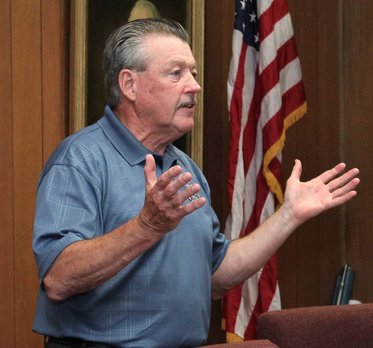
State Sen. Jim Brewster (D-45) is in the early stages of proposing legislation that would ensure charter schools are held as accountable as other public schools.


Specifically it would require these types of schools, which are ostensibly public but privately managed, to be transparent, fiscally solvent and responsible to taxpayers.


“It has become abundantly clear that systemic changes are needed in how brick and mortar and cyber charters operate in Pennsylvania,” Brewster says.  “There is a growing frustration that charters are unaccountable.”


The bill doesn’t have a Senate number yet, nor has its specific language been made available. However, the State Senator from McKeesport announced plans to formally propose it in Harrisburg within the next several weeks.


Brewster’s bill would:

  • Require local school boards to sign off on any new charter construction project costing more than $1 million. The project would have to be backed by a financing arrangement with a local industrial development authority or other government entity. This way charters would have to prove that new construction projects are fiscally sound and won’t be abandoned after wasting millions of taxpayer dollars.


  • Compel charter schools to prove they have the funds to keep running for the entire school year. They would have to post a bond, other type of surety, or agree to a payment escrow arrangement. This would ensure charters don’t close suddenly leaving students and parents in the lurch.


  • Limit the scope of the state Charter School Appeal Board to solely determining whether the local school board acted appropriately in reviewing charter school applications. The state should not be approving new charter schools. That power should remain at the local district level, though the state can determine if local school boards are acting within the bounds of the law.


  • Require officials from the state Department of Education (PDE) to visit the proposed site of a charter school to ascertain the condition of its physical building. Their report will then be made a part of the charter application. This way charters can’t get away with paying themselves for properties they already own and they won’t be able to open with substandard buildings.


  • Mandate that a charter school applicant obtain approval from multiple school districts if the charter school draws more than 25 students from a specific district. Every district impacted by the opening of a new charter should have a say whether it can open.


  • Upgrade accountability by requiring a quarterly report on the operations of the charter school to the local school board – with the report delivered in person by a charter school official. While traditional public schools report on operations monthly, reporting four times annually would greatly increase charter school transparency. At present charters don’t have to provide such reports sometimes for years after opening. Moreover, having a flesh and blood representative of the charter school at these meetings would allow for the public to ask questions about how their money is being spent.


  • Make a structured financial impact statement part of the charter school application. This would include an estimation of enrollment multiplied by tuition payments. The impact statement may serve as the justification for denial of a charter application. This would be huge. Traditional public schools can be sucked dry of funding from fly-by-night charters without their record of proven success. Necessitating an impact statement of this kind would truly make the local district and the charter school educational partners and not competing foes.


  • Increase the percentage of certified teachers at charters from 75 percent to 90 percent of faculty, though current faculty would be grandfathered in. Except under extreme circumstances, all teachers at traditional public schools are certified. Making charters raise the bar close to that of traditional public schools is an improvement – though Brewster has in the past proposed legislation to require 100 percent of charter teachers to be certified. It’s unclear why he’s settled on 90 percent here.


  • Prohibit charter board members from receiving payments for school lease arrangements.  This issue was highlighted in August in the auditor general’s report where he found $2.5 million tax dollars being defrauded in this way. Charter operators have complained that nothing they did was illegal. This measure would ensure that in the future such moves would be explicit violations of the law.


  • Impose a moratorium on the approval of new cyber-charter schools since their academic performance has been so consistently below that of traditional public schools and brick-and-mortar charters. In fact, A recent nationwide study found that cyber charters provide 180 days less of math instruction and 72 days less of reading than traditional public schools. (By the way, there are only 180 days in an average school year.)


Brewster said these reforms offer a place to begin real robust regulation of the charter industry. However, he is open to adding others.


“The auditor general has made a number of worthwhile recommendations and I’ve combined some of these ideas with other features to produce what I believe is an excellent starting point for comprehensive reform,” he says.


“We need to dig deep and look critically at the charter law to make sweeping changes. In this year alone, the auditor general has pointed out that the reimbursement process is flawed, that there were too many reimbursement appeals and that the cyber charter law reeked with ethical issues, poor oversight and a lack of transparency.


“It is clear that the charter law is not helping schools, charters themselves or the taxpayers.”


There are more than 150 charter schools statewide enrolling more than 128,000 students, according to state data. Nearly half of these schools are in the Philadelphia area.

Two years ago, DePasquale released a set of specific recommendations to improve the charter law, which Brewster drew upon when writing his proposed legislation. DePasquale’s suggestions called for an independent board to oversee charter school processes and functions — including lease reimbursements and student enrollment. He also suggested public hearings involving charter changes, limits on fund balances and guidelines on calculating teacher certification benchmarks.


Brewster said he is not unduly singling out the charter school industry. He says he is confident making these changes will help charter schools by ensuring only high quality institutions are allowed in the Commonwealth.


The Democrat Representing the 45th legislative District says he realizes that October is late in the year to be proposing such sweeping changes. He is doing so now to raise awareness of the issue, though he doesn’t expect it to come to a vote until the next legislative session at the earliest.


He hopes to bring up many of these issues tomorrow (Oct. 13) at a Senate Democratic Policy Committee hearing at the Monroeville Municipal Building in Monroeville in his district.


The legislature tried to pass a charter school reform bill (House Bill 530 ) this summer but it had been rewritten into more giveaways to the industry than regulations. For instance, it would have allowed charters to open almost anywhere in the state without approval from local school districts. As such, it lost support.


Government watchers cautioned that this charter Trojan Horse bill might rear its ugly head again in Harrisburg. Here’s hoping that Brewster’s bill has more success and isn’t likewise bastardized into a piece of legislation that gives away the store.


If there’s one thing most people agree about in the Keystone state, it’s that we need charter school reform. Brewster’s Bill may be the answer to our prayers.

The Measure of Citizenship isn’t an Exit Exam – It’s Participating in Our Democracy

screen-shot-2016-09-28-at-10-08-57-pm

Pennsylvania legislators just flunked civics – big time.

Once again, instead of offering real solutions to eradicate the ignorance of the coming generation, they clothed themselves in their own.

A bi-partisan group of 47 state lawmakers is proposing forcing all public school students to pass a test on citizenship in order to qualify for a diploma.

House Bill 1858 would require all K-12 schools receiving tax dollars — including charters schools and cybercharters — to give their students the same 100-question test that immigrants seeking U.S. citizenship will have to pass starting in 2020. Any student who doesn’t get a sufficient score will not receive a diploma or GED equivalency.

While it is admirable that legislators are concerned that high school students don’t know enough about civics, it’s unfortunate that they think the solution is another standardized test.

After all, what does being a good citizen have to do with a multiple choice exam?

Citizenship is about political independence. It’s about exercising your rights, not memorizing them. It’s about engaging in the political process, not spitting back facts about what kind of tree George Washington chopped down. It’s about using the principals of self-determination to rise up to the level of personal and community involvement, of individual sovereignty and home rule.

This involves actually teaching civics, a subject that has been cut to the quick in our schools to make room for an increasing amount of test-prep in math and reading. It used to be common for American high schools to offer three civics and government courses. Two of them – “Civics” and “Problems of Democracy” – defined the role of a citizen in relation to current events and issues. However, in most districts now these have been condensed into one “American Government” course that spends hardly any time on how students can and should participate in their government. Moreover, this course isn’t even offered until junior or senior year – far too late to make much of a difference.

Maybe instead of  putting a metaphorical gun to kids heads and demanding they care about civics, you could actually provide some resources so teachers could… I don’t know… teach it!

How about actually funding our public schools? You well-meaning dunderheads slashed school budgets by almost $1 billion a year for the last six years, and your only solution to helping kids learn has been to put more hurdles in their way without offering anything to help them achieve.

That is a losing strategy. If you want to have a winning race horse, at some point you have to feed the freakin’ horse!

If lawmakers really want kids in the Keystone state to know something about civics, why not start by making it easier for schools to broaden the curriculum to include robust civics courses?

This means REDUCING the number of standardized tests, not increasing them. Inject some money into the system so schools can hire back some of the 25,000 teachers who have been furloughed. You want kids to learn how to be citizens? Provide them with excellent teachers who actually get to experience some meaningful professional development, teachers not overburdened with meaningless paperwork to justify their jobs at every turn, teachers encouraged with rewards for seeking National Board Certification, etc. And let’s reduce class size so kids actually have the chance to be heard by their teachers and might actually learn something.

Moreover, if you really want to assess if these lessons have been learned, assess whether students are actually participating in their Democracy.

That’s the thing about citizenship. It looks like a noun, but it’s really a verb. It only has meaning if you do it.

Have high school kids registered to vote? Have they volunteered to take part in the political process, to canvass or phone bank for a candidate they believe in? Have they attended a session of the state House or Senate? (Have you provided the funding for appropriate field trips?) Have they attended a rally or protest for a cause close to their hearts?

THESE are the measures of true citizenship. And there are things you can do to make it easier for students to take part.

But no one really wants that. Come on. This is still essentially the same legislature that passed a Voter ID bill a few years back to make it harder for people to participate in our Democracy. And it would still be on the books if the state Supreme Court hadn’t struck it down as Unconstitutional.

Citizenship!? This is the same legislature that redrew state districts to be so incredibly gerrymandered that the most radical factions of both parties are unchallenged each election cycle!

You know why children don’t know more about civics? Because they’re so disgusted and demoralized by the example you’ve shown them. When politics is nothing but a show, when hardly anything ever changes or actually gets accomplished in Harrisburg, you expect kids to get excited by citizenship!? HA!

All you know how to do is pretend. That’s what this is. Just throw another standardized test on the fire of our children’s education and you can act like you’ve done something.

May I remind you we’re still dealing with the last smoldering exit exam disaster you fostered on us – the Keystone Exams?

You spent $1.1 billion on these tests since 2008, and they’re a statewide joke! You required all students to pass these assessments in Literature, Algebra and Biology, but they’re so poorly constructed and confusing that only half of our students can pass all three. So you put them on hold for two years until you could decide what to do.

And before you even fix that mess, you actually have the gall to say, “Hey! Let’s make kids take ANOTHER test!?”

I know some of you mean well, but this suggestion is a disgrace.

It’s style over substance.

This isn’t a measure to reduce ignorance. It’s a measure conceived in ignorance that’s guaranteed to proliferate it.

Paying Back School Kids on the Installment Plan – PA Budget Shenanigans

allowance2

Hey, Kids!


We’re your Pennsylvania Legislature, and we’re here to help!


We just passed a new state budget that puts $200 million more in your classrooms! Isn’t that great!?


Yeah. We know. Your public schools are crumbling to dust, and your school books are falling apart, and you’re stuffed into overcrowded classrooms, and…


But here’s some more money so it’s all better now!


Um. No. It actually doesn’t heal that huge chunk of cash we slashed from public schools six years ago. We’ve been giving you back about $100-200 million a year for a while now, so with this new budget… uh… We’re actually about $150 million short. But we’re good for it!


No, that doesn’t take into account inflation. Or compounding costs. Or the billions you should have had but did without in the intervening years. Or the loans you had to take out to stay operational while we argued over all this.


Jeez. I guess that means your schools are still deep in the hole, huh?


Well, don’t you worry. Next year we’re bound to give you just a little bit more. At this rate, we should have paid you back all that money we took in about 20 years!


You’re welcome!


The 2016-17 budget was passed in two motions. A spending plan was ratified at the end of June, and a revenue package to pay for it was passed on Wednesday. That’s only 13 days beyond the state-mandated deadline for doing so. It’s a huge improvement over last year’s budget, which was 9 months late!


One of the largest sticking points was an initiative to allow charter schools to proliferate exponentially without oversight or state control. It was tabled until a later date. Legislators now go on summer break.


What’s that, sonny boy?


You wonder how Pennsylvania stacks up to other states in terms of education funding? Well according to federal education data, we’re number one!


No. Not number one as in the best. Number one as in the worst. Our state has the worst funding inequality in the nation!


You see, even though we’ve been adding more money into classrooms, it hasn’t been done equitably.


When our previous Governor, Corbett, and the Republican-controlled legislature slashed almost $1 billion annually in education funding back in 2011, we didn’t take it away from all schools equally. We took the lion’s share from the poorest schools. But when we started putting it back piece-by-piece, we didn’t give it all back to those impoverished districts.


It’s all kind of complicated, but since you asked…


We used to do something called the charter school reimbursement.


This was money set aside to help schools deal with the extra cost of having a charter school pop up in their neighborhood. Charter schools siphon off loads of funding so they can operate without actually reducing the operating expenses of traditional public schools all that much. So when a charter school opens, it usually means kids left in the traditional public school suffer.


When the Corbett cuts went through, we got rid of that charter school reimbursement all together. Now those schools – most of them in impoverished areas – have to make up that money some other way.


The funding formula? Yes, the legislature did create a new funding formula – a more fair way to distribute education monies across the Commonwealth. However, it’s got some kinks in it.


First, we didn’t want to take away any extra money rich schools were getting that they don’t need, so we made sure to grandfather that money in. I know it means less for schools that really need it, but… you know… rich people.


Second, the funding formula only adds $150 million for the poorest districts. Our current Governor, the guy who was elected after Corbett was kicked out of Harrisburg for shortchanging school children, Gov. Wolf, he wanted to include more. But the Republican controlled legislature wouldn’t allow it. They said it would send too much money to Philadelphia and Pittsburgh and you know what kind of kids go there? Right? Blac… I mean, poor ones.


You know, the only way we get away with this is because Pennsylvanians aren’t very good at math.


You see, we’ve been playing a shell game with numbers. We add fixed costs like pensions into the mix to make it look like we’re spending more than ever on public schools. But when it comes to money that actually goes to the classroom, nope!


It’s like replacing your tires and wondering why you have no money for gas.


Specifically, you kids lost $841 million for your classrooms between 2010-11 and 2011-12. That’s why you lost 30,000 teachers, guidance counselors, nurses and other school staff. That’s why you lost extra-curriculars, arts and music, foreign language, field trips and why class size exploded. Heck! Several kids died for lack of having a full-time school nurse!


By the time voters booted Corbett, he and the Republican legislature were spending $579 million less in 2014-15 as opposed to 2010-11. And now with Gov. Wolf and the threat of voters booting lawmakers who thought they were safe even in their highly gerrymandered districts, we’ve got that gap down to about $150 million.


How are we paying for this? Uh. We’re taxing the poor and using one-time funding streams.


We’ve raised a $1 per pack tax on cigarettes. We’ve got liquor privatization, internet gaming, a licensing fee for a second Philadelphia casino, and a tax amnesty program.


More than half is made up of one-time sources. That means next year we’re going to have another budget deficit to fix just like we did this year. But our fiscal conservatives will just do the same thing and put it on the credit card. That’s what it means right? Fiscal conservative?


The good news is we didn’t have to raise taxes on rich people. We’re one of the “terrible ten” states that relies on the poor to pay a larger percentage of the tax burden than the rich, and we’re darn proud of it!


Sure we could have instituting a severance tax on natural gas; closed the Delaware tax loophole; and slightly increased taxes on those who are making bank, but those are our real constituents. Those are the ones who pay us the big bucks. You expect us to inconvenience them for you poor people!?


Ha!


Consider that a lesson, kiddos. We aren’t here for you or your parents. Now take this measly bit of education funding we owe you and be happy with it. If you’re lucky, next year we might give you back the last few hundred million we took. Then you’ll only be down due to rising costs, inflation and seven years of neglect!


Pennsylvania Legislators Want You to Foot the Bill for Unimpeded Charter School Growth With Little Accountability

Screen shot 2016-07-04 at 10.12.28 PM

Fund my charter school.

Come on, Pennsylvania.

Let me just swipe tax dollars you set aside to educate your children and put them into my personal bank account as profit.

Please!

I’ll be your best friend. Or at least I’ll be your legislator’s best friend.

Chances are, I already am.

That’s why lawmakers in Harrisburg are once again looking to pass a school code bill (House Bill 530) that would let charter schools expand exponentially almost completely unchecked and without having to do any of that nasty, sticky accountability stuff you demand of your traditional public schools.

Sure there are a few provisions in there to make charters fill out more paperwork, but the benefits for privatization and profitization of your child’s education are huge!

For me, that is. For your child, not so much.

For instance, the proposed legislation would set up a charter school funding advisory commission. This august body would have many duties including the ability to authorize charter schools in your local school district.

No longer would prospective charter operators have to come before your duly-elected board members and plead and beg to set up shop and suck away hard to come by education funding. They could just appear before the commission and sidestep your local democracy completely.

Who will be on this commission? I’m glad you asked.

We’ve got eight legislators. Got to give THEM a voice. But they’re usually pretty cheap. A few bucks in the re-election campaign and we’ll be golden. We’ll also have the state secretary of education and the chairman of the state board. We’ve got to make the thing look legit, right?

But here’s the best part! We’ll have four public education representatives and FIVE representatives of the charter school industry!

Isn’t that great!? There are significantly more traditional public schools throughout the state, but they’ll have less representation on the commission! It’s stacked with charter friendly votes! The forces of privatization have a built-in majority! Ring the dinner bell, Baby! Once this bill gets passed, it’s charter school time all across the Commonwealth!

Okay. There is a downside. Commissioners can’t be outright voting members of charter boards or their families. And if they’re being paid by charters they have to sign a sworn statement admitting that fact. Also, no criminals – no one convicted of fraud, theft, malfeasance.

Sucks, I know, but we’ll find a way around it. Don’t you worry.

However, the best is yet to come. Once a charter school has been given the go-ahead to exist, the proposed bill allows it to expand without getting permission from anyone!

That’s right! No commission, no local school board, nobody.

If there are children on the waiting list to get in, we have to take them first, but then we can start enrolling kids from outside the district!

Yes! Outside the district!

Here’s what the bill actually says:

“If a charter school or regional charter school and the school district from which it is authorized have voluntarily capped enrollment or the district attempts to involuntarily cap enrollment of resident students and the charter school or regional charter school has enrolled the maximum number of resident students, the charter school or regional charter school may enroll students residing outside of the district.”

This would appear to allow charters to enroll kids outside of the district and still charge the district to pay for them!

But wait, there’s more! If charter operators want to expand in any way, they can – unless they agree not to. If operators want to add more grades, they can. If we want to consolidate one charter school with another, we can! Meanwhile all this expansion sucks away local tax dollars to pay for students that don’t even live there!

I drink your milkshake,” traditional public schools!

So while public schools are shrinking due to loss of funds to unchecked charter expansion, this proposed bill adds insult to injury. If a traditional public school has to close a building or even has a few empty classrooms, charter schools get the right to buy or rent them out before anyone else!

I see you’ve got 7 empty class rooms in your school building. Charter School X will rent those from you. Maybe next year, we can rent out the rest of the floor once we’re done slurping up all your funding!

But wait! There’s more!

We now get to my favorite part of the proposed bill. (Do I keep saying that? It’s just such a gorgeous piece of legislation. ALEC has really outdone themselves writing it!)

We get educational tax credits. That’s school vouchers, folks!

I know, I know. The state legislature tried to pass a voucher system (Senate Bill 1) in 2011, and it was soundly defeated because it was so unpopular.

Three out of Four Pennsylvanians didn’t like that it gave state tax dollars to charters, private and parochial schools without any accountability. Well, guess what folks!? There’s hardly any accountability in this here bill, too!

Here’s how it works. You donate $X to a voucher school and we just take that off of your taxes. And if that’s the same or more than you’d normally pay for, let’s say, public school taxes, then all of your money goes to voucher schools.

It’s not really new. We’ve been quietly encouraging this kind of thing for a while now. This bill just expands it.

It allows public tax dollars to be used by religious schools – a clear violation of the Separation of Church and State. But who cares? Let’s leave that up to the courts. How dare they try to violate state’s rights. And all that. Etc. Etc.

But it’s not all robbing public schools and enriching corporate charter school operators. There are a few sticking points.

For the first time, the proposed bill allows local school boards access to charter financial and personnel records. We even have to submit to full audits. And our teachers will be subject to the same pseudo-scientific evaluations as traditional public school teachers.

In addition, charter schools will have to undergo a whole new evaluation “matrix” to show that they’re doing a good job.

I know. It sounds a lot like what traditional public schools have to undergo right now. It sounds absolutely untenable.

But here’s the difference. This new evaluation system for charters carries absolutely no consequences!

Tee-Hee!

That’s right! Even if charters fail these evaluations, the state can’t do diddley squat to them! Not so with traditional public schools. If THEY fail to show progress, they can be closed down and turned into… charter schools!

Oh! It is a beautiful time to be alive!

If this bill passes, charter school operators will have it made in the shade.

Cut student services and increase corporate profits? Check!

Kick out special education and other hard to teach students? Check!

Escape almost any kind of accountability for our actions? YOU BET!

Pennsylvania lawmakers could bring this bill to the floor anytime now.

It’s up to you, lawmakers. Do you want to keep getting tons of campaign cash from our industry or do you represent those – yuck – voters?

Do the right thing. Or should I say, do the right cha-ching!

Did you see that? Did you see what I just did there?

I am a cad. I mean… card.


In all seriousness, if you live in Pennsylvania, please, contact your legislators and ask them to oppose this terrible bill. The Network for Public Education has made it very easy. Just click HERE and you can shoot off a letter to your representatives in moments.

Oppose HB 530. Fight for public education.

Big Money Fails to Oust In-Coming Pittsburgh Schools Superintendent

DSC-4973-1

Democracy 1, Oligarchy 0.

That might be the score in the latest contest between corporate education reformers and the Pittsburgh Public School Board.

Special interest groups and the media had stirred up controversy for months over one line in newly hired superintendent Anthony Hamlet’s resume.

Last night the board voted to let the 46-year-old African American start his job as planned Friday morning.

The board voted 7-2 not to cancel his contract. He will be sworn in tomorrow to start a 5-year commitment in the city.

He had been unanimously hired May 18 from the Palm Beach County district in Florida where he had distinguished himself with an excellent record of leadership and enacting authentic reforms.

Though critics cited one line in his resume as too similar to a statement in a Washington Post article, the real reasons for the dispute are ideological.

Put simply, Hamlet favors reforms that have nothing to do with teaching to the test, charter school expansion, closing schools and other market driven policies.

This put him at odds with the usual gang of corporate sycophants:

1) The Campaign for Quality Schools Pittsburgh – a PAC recently formed to Make City Schools Great Again by promoting charter schools and other failed neoliberal reforms.

2) A+ Schools, an advocacy organization that used to champion the same kinds of authentic reforms school directors are trying to enact with Dr. Hamlet’s help. However, after getting a fat check from the Gates Foundation, the group has became a cheerleader for privatization and disaster capitalism.

3) Various foundations who immediately offered to pay for a new superintendent search if the district dismissed Dr. Hamlet – a measure that probably would have meant paying him at least a year’s salary to sit at home.

Why?

In short, they want a superintendent who thinks like them who they can control. They want to undermine our elected school board and community input process. They want to further THEIR agenda – not the education of our children.

Pittsburgh school directors are to be congratulated for not giving in to the monied interests.

Even the two directors who voted to remove Hamlet did so for good reasons. Though I thoroughly disagree with them, I think Terry Kennedy and Lynda Wrenn truly have the best interests of students at heart. They have always voted that way before.

It’s easy to write a blog about a district where you don’t live, as I do. They, however, are accountable to their constituents. I’m just a doofus with a WordPress account. They had a lot of information to process and made a tough decision. Thankfully, the other seven board members didn’t see it their way.

But that’s the beauty of it. This was democracy at work! At so many other urban districts throughout the country – even in similarly troubled Philadelphia – decision making “by and for the people” has become disbarred.

Many schools like Pittsburgh’s with a shrinking tax base, large pockets of crippling poverty and a history of state disinvestment are taken over by the state. Bureaucrats and flunkies make these decisions not members of a duly elected school board held accountable by the voters.

In fact, many calling for Hamlet’s dismissal were surely cheerleading just such a move in Pittsburgh. They were hoping to show that democracy doesn’t work in the Three Rivers community and must be replaced with … THEMSELVES.

The defeat of that position is the biggest victory here.

Now Hamlet and the board will get a chance to enact authentic reforms to help the children of Pittsburgh get the best possible education.

Now Hamlet will get to strengthen the restorative justice project already under way at 20 city schools. Instead of simply assigning detention or suspension for student misbehavior, administrators are encouraged to make students set things right after doing wrong.

In Florida Hamlet made a name for himself partnering with the criminology department at Florida Atlantic University on this same project.

It’s widely acknowledged in education circles that suspensions can have lasting impacts especially on black students making them more likely to enter the school-to-prison pipeline. Finding an approach to increase discipline without adversely affecting students’ prospects is imperative. This is especially true since Pittsburgh Public Schools have been known to suspend black students at a rate four times higher than white students.

Hamlet also will get to enact measures to transform Pittsburgh’s schools into a central part of the community and not apart from it. Like many on the board, he is an advocate for community schools. That means pushing for social services to help students and the community to make the schools the center of the neighborhood.

Hamlet has received support from all over the city including from the Pittsburgh Federation of Teachers.

However, in an unexpected move, some educators came out individually in favor of Dr. Hamlet even though doing so might mean putting targets of their backs from corporate forces.

High School teacher Jon Parker even wrote a blog about the issue where he pulled no punches:

“While the [Pittsburgh] Post-Gazette is complicit in this scheme to defame and destroy Dr. Hamlet, the real enemy here, as always, is A+ Schools. They simply cannot pursue their Gatesian agenda with a superintendent who believes in community schools. They need one who believes in firing teachers. They can’t pursue their agenda if the superintendent believes in collaboration rather than stacked ranking. And they can’t pursue their agenda of closing schools and turning them into charter profit factories if the narrative in our schools shifts away from “achievement” being measured by high stakes tests. Simply put, Anthony Hamlet is not their style, and they can’t stand that Pittsburgh’s community, through real grassroots activism and real community empowerment, elected a school board which genuinely engaged its community in a selection process that produced a once-in-a-lifetime superintendent selection.”


Erin P. Breault, a district teacher with three children who graduated from Pittsburgh Public, wrote to the Post Gazette to praise Dr. Hamlet:

“First, he will be a fine superintendent who will work to foster community schools, increase student learning outcomes and graduation rates. He will be an especially welcome breath of fresh air, not beholden to corporate “reformers” agenda. Second, I am especially alarmed about growing calls for his contract to be dissolved and if it is not, that our democratically elected school board be replaced by an appointed system.

This is outrageous. These attacks on Mr. Hamlet and on the process of the search need to be viewed in context. There are powerful interests including the Pittsburgh foundations, A+ Schools and Students First who are upset that their vision of privatization of our public schools has been challenged by our school district.

They have leapt into action, using their money, and political clout to engage into what amounts to character assassination.”


Kathy M. Newman, an associate professor of English at Carnegie Mellon University, wrote to the Post Gazette to school them on the definition of plagiarism:

“Mr. Hamlet’s resume is not a copyrighted work of art or nonfiction, such as a novel or a work of history. Nor is it a work of journalism. He was not trying to “pass off” (a legal term) the work of another artist or historian or journalist as his own.

…the outrage over Mr. Hamlet’s resume doesn’t acknowledge why it is that we demand citations from students and historians, or why artists might sue those who have appropriated their work. As the scholar Steven Dutch has argued, in an article called “Sense and Nonsense about Plagiarism,” citations “allow readers to check the accuracy of facts, gauge the credibility of the ideas being presented, know whether an idea is solidly established, controversial or hypothetical, and find further information.” When Mr. Hamlet borrowed a sentence from a Washington Post editorial to express his educational philosophy he did not, to use another phrase from Mr. Dutch, diminish the “credibility of the ideas being presented.”

Finally, the furor over Mr. Hamlet’s resume has had a tone of moral outrage so hysterical that I have been concerned about the toxic mixture of sanctimony and glee expressed by many people I otherwise like and respect. Again, according to Mr. Dutch, “the institutional hysteria over plagiarism [can become] a ‘witch-hunt.’ … Charges of plagiarism are fast becoming the blood sport of choice among academic bottom-feeders.”

Ouch. But perhaps the most incendiary remarks came from Churchill resident Lorraine Turner. In the Post Gazette, she accused the paper of outright racism in its criticism of Dr. Hamlet:

“As an African-American, we are taught this particular lesson many moons ago (along with the talk about police) growing up in, “Pittsburgh, Mississippi.” That lesson is: Black people must run twice as fast and jump twice as high as their white competitors. Black people must be exceptional with every “i” dotted and every “t” crossed. The comparison of President Barack Obama and Donald Trump will highlight this lesson…

…The editorial goes on using language to highlight nearly every antiquated, racist stereotype referencing black men: Mr. Hamlet made a “perfunctory apology” (he didn’t bow his head and say, “I’se so sorry), Mr. Hamlet “sounded like a nervous student” (just call him boy), then “a bad superintendent” (black is bad), “a good superintendent” (one approved by someone white), Mr. Hamlet “prefers recalcitrance to transparency’ (recalcitrance is when one is stubbornly resistant to authority or guidance — he thinks he’s actually going to have the power of the superintendent!)…

… I hope the board quotes a line from “The Wizard of Oz,” and tells your good ol’ boy editorial staff what the Good Witch of the East told the Bad Witch of West: “Go away, you have no power here!”

In the end, the power of the monied elites evaporated against the power of good ol’ fashioned democracy.

Because the fight against corporate education reform is a fight for representative government.

And the winners of today’s battle are as always our children, our grandchildren, our posterity.

PA House: Online Courses for the Poor. Teachers for the Rich.

Screen shot 2016-06-22 at 3.51.56 PM

Pennsylvania has a long history of under-resourcing its public schools.

State Rep. Jason Ortitay has a solution.

The Republican representing Washington and Allegheny Counties envisions a world where poor kids learn from computers and rich kids learn from flesh-and-blood teachers.

It’s all in his proposed legislation, H.B. 1915, passed by the state House on Monday. It now moves on to the Senate.

The legislation would assign the Department of Education the task of organizing a collection of online courses for use by students in grades 6-12. Some classes might be created by the state and others would be made by third parties with approval for state use. If anyone so desired, the courses could be utilized by anyone in public school, private school, homeschool and beyond. The online learning clearinghouse thus created would be called the “Supplemental Online Course Initiative.”

But what does this have to do with impoverished schools?

According to the bill, itself, state education officials would:

“Upon request, provide assistance to school districts which have been declared to be in financial recovery status or identified for financial watch status under Article VI-A by facilitating the school districts’ search for low-cost or no-cost online course options.”

In other words, this bill provides an alternative for schools where the local tax base isn’t enough to fund traditional classes presided over by living, breathing teachers.

In the distant past, the state used to made up some of the slack to level the playing field for students born into poverty. However, for the last five years, the legislature has forced the poor to make due with almost $1 billion less in annual state education funds. This has resulted in narrowing the curriculum, the loss of extra-curriculars, increased class size, and plummeting academic achievement.

While the majority of voters are crying out for the legislature to fix this blatant inequality and disregard for students’ civil rights, Ortitay’s proposed bill lets lawmakers off the hook. It allows legislators to provide a low quality alternative for the poor without necessitating any substantial influx of funds.

Here, Jaquan and Carlos. You can learn from this YouTube video. Billy and Betty will be in the classroom learning from a trained professional with an advanced degree in the subject.

None of this bodes well for state budget negotiations going on right now to finalize a Commonwealth spending plan by the end of June. Those expecting a proposal to heal the funding cuts most likely will be disappointed – AGAIN.

Nevertheless, the bill still needs to clear the Senate and a signature from Gov. Tom Wolf before it can become law.

In the House, the bill passed 128-66 with 8 abstentions. Though lawmakers on both sides of the aisle supported the measure, it was opposed only by Democrats.

If the clearinghouse becomes a reality, it would be implemented in two phases. In the 2017-18 school year, it would only offer courses on subjects tested by state Keystone Exams at no cost to local districts. Then in the following year, it would expand to include courses not tested on state mandated exams that can be purchased by local districts.

If the Keystone-aligned courses are free to local districts, who pays for them? Certainly these online classes aren’t being constructed, monitored and graded as a public charity.

According to the bill, the Department of Education should:

“Explore the possibility for Federal and private funding to support the clearinghouse.”

However, if the state can’t find someone else to foot the bill, the cost will be born by Pennsylvania taxpayers.

Specifically:

“There is hereby established a restricted revenue account in the General Fund to be known as the Online Course Clearinghouse Restricted Account…”

“The funds in the account are hereby appropriated to the department on a continuing basis for the purposes of paying expenses incurred by the department in carrying out its duties relating to the administration of the clearinghouse under this article.”

How much taxpayer money will be allocated to this initiative? It doesn’t say. Will this money come from an increase in education spending or will it cannibalize other education line items? Again, it doesn’t say. Apparently such decisions would be made while drafting the state budget – presumably not the one being hashed out now, but the 2017-18 spending plan.

“This initiative will give public schools, which might not otherwise be able to afford similar educational opportunities, the flexibility and ability to make use of online learning [for] the betterment of their students,” Ortitay said in a press release.

However, online courses have an infamous history throughout the Commonwealth, and, indeed, the nation.

All courses collected in the clearinghouse would be subject to approval by the state Department of Education. But cyber charter schools fall under the same jurisdiction often with disastrous results.

Internet-based classwork – like that which would be collected in the clearinghouse – makes up the curriculum at cyber charter schools. Moreover, these online schools have a proven track record of failure and fraud.

A recent nationwide study found that cyber charters provide 180 days less of math instruction than traditional public schools and 72 days less of reading instruction.

In addition, researchers found that 88 percent of cyber charter schools have weaker academic growth than similar brick and mortar schools.

They have an “overwhelming negative impact” on students, according to researchers.

And THAT kind of curriculum is what the state House voted to increase using public money!

One of the biggest problem with online courses is the low quality of what’s being offered. Here’s how a cyber charter teacher describes the reading curriculum at his school:

“Most cyber schools get their curriculum from K12, a company started by William Bennett, a former federal Secretary of Education. My school gets the majority of its high school material from a mail order company called Aventa.

When Aventa creates a course it is fairly bare bones. They choose a textbook from one of the major textbook companies, and cut it up into lessons. The lesson will contain a few paragraphs introducing the topic, they will have the students read a section of a chapter, they will ask the student to do a few problems from the book, and lastly, there will be some form of graded assessment, taken from textbook review problems. That is all.”

This is like giving out nothing but worksheets and expecting high academic performance. Here. Read the book, answer the questions at the back, and call it a day.

Another problem is high turnover for students taking online classes. Though learning exclusively through the Internet seems novel at first, few students continue taking these courses more than a year or two.

This is especially true for younger students. It’s hard to imagine many 6th graders with the tenacity to persevere without anything but the most limited human interaction and adult supervision.

Advocates claim this is healthy experimentation. Students are trying out different means to accommodate their learning styles.

However, when students invariably fail at online education and return to their traditional public school hopelessly behind their peers, taxpayers bear the cost of remediating them. And their low academic performance becomes a reflection on the public school system where it is used as an excuse to denigrate teachers and close more brick and mortar buildings.

The online educational clearinghouse is supposed to be monitored and regulated by the state Department of Education – just as it does for state cyber schools.

Unfortunately, state budget cuts in K-12 education have left the department seriously understaffed and unable to do this job effectively.
Just look at the almost weekly news reports of fraud at state cyber schools.

For instance, PA Cyber Charter founder Nicholas Trombetta allegedly stole at least $8 million in public dollars only a few years ago. Federal investigators filed 11 fraud and tax conspiracy charges against him and indicted others in the case.

Another cyber charter founder, June Brown, was also indicted for theft of $6.5 million. Brown and her executives were indicted on 62 counts of wire fraud, obstruction of justice and witness tampering. She ran the Agora Cyber Charter School, which was part of the K12 Inc. empire of virtual charters.

Why would we want to increase the opportunities for such fraud by encouraging students to take more online classes?

This bill is at best a distraction.

It’s a Band Aid for the fiscal irresponsibility of our lawmakers toward our public schools. It’s an excuse so that we’ll let them continue short changing our children for at least another year with yet another budget lacking in education funding.

This does not compute.

Witch Hunt Against Incoming Pittsburgh Public Schools Superintendent Escalates

Screen shot 2016-06-17 at 1.17.51 PM

To be or not to be.

That is the question for incoming Pittsburgh Public Schools Superintendent Anthony Hamlet.

He is set to takeover the district on July 1, but a well financed public smear campaign is trying to stop him before he even begins.

Big money interests oppose him. The public supports him.

Meanwhile the media helps fuel corporate attacks on the 47-year-old African American because of criticisms leveled by a Political Action Committee (PAC) formed to disband the duly-elected school board.

It’s ironic.

Corporate school reformers criticize Hamlet for allegedly plagiarizing a single statement in his resume. Meanwhile they have plagiarized their entire educational platform!

Mayoral or state takeover of the district? Check!

Close struggling schools? Check!

Open new charter schools to gobble up public tax dollars as profit? Check!

Hamlet represents a new direction away from corporate education reforms. The new school board who hired him has soundly rejected these policies of the old guard. Many of the same members are still on the board who first changed course in 2013 by tearing up a contract with Teach for America.

But the Empire strikes back with allegations of plagiarism and resume padding.

Yes, Hamlet used some of the same words from a Washington Post editorial in his resume. He wrote:

“A successful superintendent has to satisfy many constituencies, keeping high achievers in the system while devoting resources to those who need them most.”

The Post wrote:

“A successful superintendent has to satisfy many constituencies, keeping high achievers in the system even while devoting resources to those who need them most.” (Emphasis added)

These aren’t exactly the same words used by the Post. They don’t rise to the level of plagiarism, but he certainly should have attributed them or reworded the ideas.
On the other hand, his critics want to use the same policies that have failed again-and-again in Philadelphia, Newark, Little Rock, Memphis and elsewhere. They want to steal control of the district and give it to bureaucrats who will do what THEY say. They want to take money set aside to help all students and use it to enrich their friends and associates.

Sure, Hamlet used someone else’s words to describe a good idea of leadership. But his critics are using their own words to describe someone else’s terrible, failing educational platform.

Hamlet made a small forgivable error. His critics are seizing upon it to turn the tide in their favor and take away the community’s right to representative democracy.

Make no mistake. This is a witch hunt.

Critics are splitting hairs, disputing statistics and calling it fact.

Hamlet has a proven record as a principal in Palm Beach, Fl.

He says the schools he administered improved academically for various reasons. Critics point to Florida state records that show those improvements to be less dramatic.

So both sides agree those schools did well under Hamlet. What’s in dispute is the degree.

Hamlet counters that state data is inaccurate. He was there on the ground. He lists several factors not accounted for by the state that fully justify his statements.

For example, when he talks about school improvements, he counts the total number of student suspensions – if a student is suspended twice, he counts that as two suspensions. The state, however, ignores multiple suspensions. In this and other ways, Hamlet shows his data is more accurate than the state’s.

National data backs up Hamlet. Florida is infamous for being backward, regressive and untrustworthy in education circles, often spearheading some of the worst abuses of policy in recent history.

“This has been a hoopla,” said Valerie Allman, a Troy Hill parent and activist interviewed in the Pittsburgh Post Gazette. “And it’s taken the focus off what’s important: these kids. … We’re expecting him to climb this huge mountain at the same time we cut his legs out from under him.”

One of the reasons the board originally hired Hamlet is his background in “restorative justice.

Instead of simply punishing or suspending students who misbehave, the program calls for making students set things right.

At Palm Beach County Schools, Hamlet implemented this approach with help from Mara Schiff, a criminology professor from Florida Atlantic University. It’s “far tougher than sitting in detention,” Schiff said in the Post Gazette.

“You have to acknowledge what you’ve done … and take responsibility for the harm you’ve caused. It’s not a kumbaya approach.”

It’s widely acknowledged in education circles that suspensions can have lasting impacts especially on black students making them more likely to enter the school-to-prison pipeline. Finding an approach to increase discipline without adversely affecting students’ prospects is imperative. This is especially true since Pittsburgh Public Schools have been known to suspend black students at a rate four times higher than white students.

In fact, the district has already launched a restorative justice program at 20 schools.

“I have nothing but good things to say about Dr. Hamlet,” said Schiff. “He had a [restorative-justice] coordinator who was fabulous, and who Dr. Hamlet completely empowered.”

Another reason for Hamlet’s hire is his advocacy for community schools. Like many on the school board and in the district, he has pushed for social services to help students and the community to make the schools the center of the neighborhood.

“You can have the best teachers, the best curriculum, the best classrooms,” said Rev. Rodney Lyde, a Homewood pastor and president of the Pennsylvania Interfaith Impact Network. “But we need a place on-site that can comprehensively address the other impediments — like kids coming hungry, or from abusive situations.”

Despite community support, several well-financed organizations oppose Hamlet and the board’s authentic reforms.

Foremost among them is Campaign for Quality Schools Pittsburgh, a new PAC formed recently to make city schools great again – by doing the same failed crap that didn’t work before.

Also on the side of corporate education reform are the Pittsburgh Foundation and the Heinz Endowments. Representatives for both organizations have offered to pay for a new superintendent search if the district gives Hamlet his walking papers – a measure that probably would mean paying him at least a years salary without having him on the job.

This would also result in weakening the district’s ability to hire a new superintendent and increasing public mistrust of the electoral process. Such a move would pave the way for disbanding local control.

How generous of these philanthropies! I remember a time when giving meant providing the resources for organizations like public schools to fix themselves – not having the right to set public policy as a precondition for the donation. But in the age of Bill Gates and the philanthro-capitalists, this is what we’ve come to expect.

Even the editorial board of the Pittsburgh Post Gazette has drunk the Kool-aid. In a June 10 editorial, the paper published the following statement:

“The (school) board’s failure at this essential task calls its leadership into question, and will renew calls for legislation to dissolve the elected school board and move to an appointed system.”

Finally, we have A+ Schools – an advocacy organization that at one time championed the same kinds of reforms school directors are trying to enact. However, after a $1 million grant from the Gates Foundation, the group has become a cheerleader for weakening teachers unions, privatization and standardized testing.

Against these special interests stands a public school board and a community at the crossroads. Will they give in to public pressure and big money? Or will they allow Hamlet to do the job he was hired for and attempt to improve an urban district suffering from crippling poverty and state disinvestment?

This particularly tragedy has yet to find an ending.

To be or not to be?

The Charter School Swindle – Selling Segregation to Blacks and Latinos

Screen Shot 2016-05-31 at 4.22.46 PM


Segregation now!


Higher suspension rates for black students!


Lower quality schools for Latinos!


These may sound like the campaign cries of George Wallace or Ross Barnett. But this isn’t the 1960s and it isn’t Alabama or Mississippi.


These are the cries of modern day charter school advocates – or they could be.


School choice boosters rarely if ever couch their support in these terms, but when touting charter schools over traditional public schools, this is exactly what they’re advocating.


According to the Civil Right Project at UCLA, “The charter school movement has been a major political success, but it has been a civil rights failure.”


It’s choice over equity.


Advocates have become so blinded by the idea of choice that they can’t see the poor quality of what’s being offered.


Because charter schools DO increase segregation. They DO suspend children of color at higher rates than traditional public schools. And they DO achieve academic outcomes for their students that are generally either comparable to traditional public schools or – in many cases – much worse.


In Brown vs. Board of Education, the U.S. Supreme Court ruled that it is Unconstitutional to have “separate but equal” schools because when they’re separate, they’re rarely equal. Having two parallel systems of education makes it too easy to provide more resources to some kids and less to others.


Who would have ever thought that some minority parents would actually choose this outcome, themselves, for their own children!?


After Bloody Sunday, Freedom Rides, bus boycotts and countless other battles, a portion of minority people today somehow want more segregation!?


It’s hard to determine the extent of this odd phenomena. Charter advocates flood money into traditional civil rights organizations that until yesterday opposed school privatization. Meanwhile they hold up any examples of minority support as if it were the whole story. However, it is undeniable that large minority populations still oppose their school systems being charterized.


It’s especially troubling for civil rights advocates because black and brown charter supporters have been sold on an idea that could accurately be labeled Jim Crow. And they don’t even seem to know it.


The reason is two-fold: (1) the success of privatization propaganda and (2) the erosion of our public school system.


Charter schools are big business. Many of them are managed by huge corporations for a profit. They are run at taxpayer expense with little to no oversight. As you might expect, this often results in multi-million dollar financial scandals and worse outcomes for students. But these facts have not fazed some of the public. Propagandists know how to sell people on things that are bad for them: Fast food, miracle cures and charter schools.


They’ve marketed corporate McSchools as if these were mostly charitable institutions founded for the sole purpose of making children’s lives better. Meanwhile, funds that might actually help kids learn are funneled to hedge fund mangers and investors: Schools don’t open yet tax money disappears. Student services are reduced below that offered at comparable neighborhood public schools. Charter students are expelled for low test scores or special needs. Yet the public still buys the glossy full-color advertisement without bothering about the small print.


One thing corporate education reformers have over advocates of traditional public schools is their willingness to talk about race. They clothe their arguments in the terms of the Civil Rights movement. They talk about having high expectations for children of color. They talk about closing the achievement gap. They talk about understanding the needs of minority children.


It’s all bullshit.


Their “high expectations” are really just an excuse for treating brown and black kids as if they weren’t human. They put these children under intense pressure, berating them for wrong answers and kicking them out if they don’t perform.


Yet the academic results produced at charter schools are often less than stellar. Sometimes they’re downright abysmal. Instead of addressing the fundamental inequalities inherent in the achievement gap – economically and culturally biased high stakes testing, shoddy and developmentally inappropriate academic standards, etc. – they reinforce that status quo. It’s like instead of fighting a prohibition against sitting in the back of the bus, they berate black folks for not enjoying the ride.


I’m sorry. But when it comes to understanding the needs of black and Latino kids, I refuse to believe children of color need a second-class education system. (Just as I refuse to believe Teach for America’s claim that all black kids really need are less experienced, less educated and less committed teacher trainees.)


Perhaps if traditional public schools actually addressed these issues head on, privatizers wouldn’t appear to be saviors. There are real problems faced by children of color in our school systems. They have real needs that most of our schools – charter, traditional, private or parochial – just are not meeting. But while charter schools pay lip service to the problems without fixing them and in fact often making them worse, public schools pretend these problems don’t exist in the first place.


No wonder some minority parents choose charter schools. At least there they get the illusion that someone cares about their needs.


In fact, privatizers couldn’t sell their substandard products if it weren’t for what we’ve allowed to happen to our traditional public schools. Segregation is made worse in charter schools, but it is also prevalent at our traditional public schools – though often to a lesser degree.


We have allowed traditional public schools to be largely segregated based on parental income. We have schools for poor kids and schools for rich kids. Thus, we have schools for black kids and schools for white kids. And guess which ones are well-funded and which go lacking?


This is what people are really talking about when they mention “failing schools.” They pretend as if the teachers are failing, the principals are failing, the democratic process, itself, is failing. In reality, it is our state and federal lawmakers who are failing. They have failed to provide equitable resources that our nation’s children need.


Schools cost money. If you don’t provide the funding necessary to properly educate children, you will get an inferior result. Meanwhile, pundits play with numbers and make false comparisons to hide this basic fact – we aren’t providing all kids with the resources they need to succeed. Rich kids have enough. Poor kids don’t. But we look at national averages, add in unfunded legal mandates and pretend that tells the whole story.


How does this happen? Segregation. In fact, we’re allowing segregation of place to determine segregation of school. Instead of counteracting an unfair status quo, we’re letting the way things are today determine how things will be tomorrow.


Fact: people of different ethnicities tend to cluster together, like with like. Part of this is because people tend to self-segregate with people around whom they feel most comfortable. However, this is also a function of social planning. Banks tend to shy away from giving loans to families of color who want to move into white neighborhoods. Moreover, white homeowners are often reluctant to sell to families of color. The result is an America made up of black neighborhoods and white neighborhoods.


In organizing our public schools we could try to overcome these differences, but instead we amplify them. In many states we insist that schools be funded based on local property taxes. So poor brown and black people who happen to live clustered together get poorly funded schools for their kids. And rich white folks who live together in their gated communities get well-funded schools for their progeny.


Is it any wonder then that some people of color buy into the charter school lie? They’re offered the choice between an obviously under-resourced public school or a glossy new charter school that actually offers them less. But they don’t see that far. They’re tired of the indifference behind traditional public school funding and opt to try something different. Unfortunately, it’s just another lie and a more pernicious one for several reasons.


First, charter schools take an already segregated population and make it worse. Second, they weaken the already stumbling traditional public schools by siphoning off their dwindling funding. And finally, they obscure the fact that it’s often the same policymakers who champion charters that are responsible for eroding public schools in the first place.


People of color would be much better served by sticking with their traditional public schools and fighting to make them better. For all their faults, traditional public schools often provide a better quality education. They have more resources and less flexibility to take away those resources. They have more well-trained and experienced staff. And since they serve a more diverse population, they offer the chance for people of similar economic backgrounds but diverse cultures to join together in common cause.


Dividing people makes them weaker politically. When people band together, they have power. They can fight more effectively for what they deserve. Perhaps this is the greatest problem with charter schools – they destroy communities and rob neighborhoods of the collective power that is their due.


In many areas of the country, communities of color know this. Ask them in New Orleans what they think of their all-charter school district. Ask them in Chicago what they think of the city’s plan to close public schools and turn them into charters. Ask them in Philadelphia or any urban district taken over by the state.


They’ll tell you straight out how privatized education is cultural sabotage. They’ll tell you how it’s the new colonialism, another element of the new Jim Crow. They’ll tell you how important it is to fight for our system of public schools.


And when privatizers and propagandists try to paint all communities of color as if they support charter schools, these folks will loudly cry foul.


They aren’t buying the snake oil. The rest of us need to step up and help those who have been swindled to see the truth. Likewise we need to recognize their truth – that the struggle for civil rights is ongoing.


Because we can’t win the fight against privatization without them. And they can’t win the fight for equality without us.


We need each other.


Public school advocates need to recognize it’s not all about testing, Common Core and privatization. We can’t be so afraid to talk about race. We need to recognize that racism is not an unnecessary distraction, it’s at the center of our struggle.


We need communities of color.


We need our black and brown brothers and sisters.


Because only together shall we all overcome this madness.

Unwilling to Help Schools, PA Legislature Attacks Teachers

Screen shot 2016-05-13 at 10.48.35 PM
If you live in Pennsylvania, as I do, you must be shaking your head at the shenanigans of our state legislature.

Faced with a school funding crisis of their own making, lawmakers voted this week to make it easier to fire school teachers.

Monday the state Senate passed their version of an anti-seniority bill that was given the thumbs up by the House last summer.

Thankfully, Gov. Tom Wolf is expected to veto it.

As usual, lawmakers (or more accurately their surrogates at the American Legislative Exchange Council (ALEC) who actually wrote the bill) spent more time on branding the legislation than appealing to logic, sense or reason. The bill called HB 805 was given the euphemistic title “The Protecting Excellent Teachers Act.”

Yes, this is exactly how you protect excellent teachers – by making it easier to fire them.

Currently, if teachers are furloughed, those with least seniority go first. Under this new law, teachers would be let go based on their academic rating. Teachers can have one of four ratings: Distinguished, Proficient, Needs Improvement and Failing. Under the new legislation, teachers rated Failing would be furloughed first, followed by those under Needs Improvement, etc. Within those categories decisions would be made based on seniority.

It sounds great – if you know absolutely nothing about Pennsylvania public schools.

First off, in 2015 our rating system found 98.2% of state teachers to be in the highest two rating categories. So at best this bill is next to meaningless.

Second, like virtually all value added rating systems across the country, our rating system is pure bull crap. It’s a complicated measure of meaningless statistics, student test scores and mumbo jumbo that can be twisted one way or another depending on the whims of administrators, dumb luck and the phases of the moon.

A New York Supreme Court judge just ruled this week that the Empire state’s similar teacher rating system is “arbitrary” and “capricious.” But in Pennsylvania our legislators want to make it the axe that slices away teachers from the profession.

Third, the bill isn’t really about seniority at all. It’s about making it easier to fire teachers no matter how good they are at their jobs. Currently, state school districts are not allowed to furlough teachers based on lack of funds. This new legislation aims to remove that impediment.

It makes sense in a way. Pennsylvania lawmakers refuse to properly fund public schools so they have to make it easier to downsize. You’re welcome, taxpayers!

If this bill becomes law, school directors could fire whomever administrators want for whatever reason.

Admin: Mr. Smith, you’re fired.

Smith: Why?

Admin: Um. Financial reasons.

Smith: But I’m rated as Distinguished.

Admin: Not after we adjust the formula, mess with your class rosters and all around juke the stats to show you’re Failing.

Seniority is not perfect, but it avoids all these high jinks. It leaves no questions, nothing that can be easily altered. Either you have seniority or not. And if administrators have been doing their jobs by making sure good teachers stay and bad teachers are trained or let go, seniority correlates with good teaching. If you’ve been in the classroom for a long while, you’re probably a pretty descent teacher. Like anything else, practice makes perfect.

The public has to realize something about teaching at a public school. It is a deeply political job. You are subject to the whims of school directors, administrators, parents or anyone in the community with an axe to grind. You simply can’t do the job without some protections. How else can you fairly grade the school director’s child? How else can you exercise academic freedom to do what you think best if every decision is subject to committee?

This doesn’t mean teachers can’t be fired. They are fired every day. But administrators have to be able to make a valid case. They have to gather evidence to prove you deserve to be fired first.

It is highly ironic that Pennsylvania lawmakers are pursuing this legislation when they have done everything in their power to protect their own jobs first.

You want to talk seniority? Look to the legislature.

Incumbents are almost always re-elected. Why? Not because they do such a great job. They’ve made sure to gerrymander the state. Republicans reside in overwhelmingly Republican districts, Democrats in overwhelmingly Democratic ones.

This is no accident. A few years back, legislators redrew district borders to make sure they’d keep their jobs no matter how crappy they were at governance. It is deeply unfair and undemocratic. The majority of voters do not get a say. Instead, we cater to special interests and protect terrible legislators so they can pass crap like this bill without fear of repercussions during election season.

Do you think lawmakers would have refused to pass a state budget this year until 9 months after the deadline if they thought voters could actually hold them accountable? No way!

Do you think they’d withhold fair funding to the majority of public schools in the state if they thought the majority of voters had a say whether these knuckleheads stayed in power? Absolutely not!

And worst of all, even with Gov. Wolf’s promised veto, the crisis is far from over. When next year’s budget comes up for a vote in June and the Governor again asks for equitable funding for schools, legislators are bound to use HB 805 as a bargaining chip.

“You want some money for our kids’ schools? Then you’d better make it easier to fire teachers,” they’ll say.

Protect excellent teachers? Ha! They’re protecting terrible legislators.

We’ll never have good governance in this state again unless we find a way to redraw our gerrymandered districts. We need a voter referendum, a nonpartisan committee or – here’s a long shot – we need for extremist residents of these gerrymandered districts to revolt against the politicians hiding behind them.

Until then, we will be forever cursed with terrible lawmakers, execrable laws, under-resourced schools and a crumbling state.


Click HERE to find out how your representatives voted on HB 805.