Social-Emotional Learning vs. Classroom Culture 


A student accidentally drops her books in the hall.  


Another student stops and helps her pick them up.  


Then a teacher homes in on the two and gives the helper a little yellow card which can be redeemed for candy.  


This is what social-emotional learning (SEL) looks like in my school. 


Teachers instruct on proper behaviors and then reward students they see going above and beyond to achieve them.  


Here’s another example. 


A student at his lunch table is yelling and throwing food. Nearby another student is sitting quietly and reading a book.  


Then a teacher walks over and gives the quiet child a yellow card which can be used to enter a raffle for a special prize. He might win an Oculus VR game system or tickets to a baseball game.  


That’s social-emotion learning, too.  


Instead of just cracking down on the negative behaviors, we try to reward the positive ones.  


To be fair, it works to a degree.  


But most of the time, it doesn’t. 


The same kids end up with huge stacks of yellow cards and the rest get just one or two. Few students actually change their behavior. They just become virtue signalers whenever an adult is present.  


Moreover, there’s an incredible amount of pressure on teachers to not just instruct but to closely observe every student’s behavior and constantly give positive reinforcement to those doing what should be the norm.  


And that’s not even mentioning the frequent disruptions necessary to reward those children who can best navigate the system. 


But that’s only one way of addressing the problem of bad behavior.  


Especially now (most student’s first full year of in-person classes after the worst of the Covid-19 pandemic), students don’t seem to know how to interact.  


Snubs, insults and instigation seem to be their defaults ways of relating to each other. Some definitely need explicit boundaries and reinforcement.  


But it only goes so far in the halls, the cafeteria and during unstructured times.  


Inside the classroom is another beast altogether – as it always has been. 


Ever since I first started teaching more than two decades ago, it’s been necessary to work to achieve a classroom culture. 


The teacher has to expend significant time and energy with the students as a whole and each student individually to set up a mini-society where each member gets respect by giving respect. 


We try to set up the environment so everyone feels safe and involved, everyone is accepted for who they are, comfortable to be themselves and feels empowered to take the chances necessary to learn. 


It’s not easy, but it’s more about relationships than behaviorism. The reward isn’t something extrinsic – it’s participation in the classroom culture, itself.  


Both approaches attempt to do the same thing – create an environment in which learning is possible.


It reminds me of the famous quote by conductor Leopold Stokowski


“A painter paints pictures on canvas. But musicians paint their pictures on silence.” 


In the same way, you might say that learning in a group requires a canvass of positive behaviors or beneficial social interaction.  


This has always been the case, though today the concept has become elevated to buzzword status – SEL. 


It’s not so much a single program but a loose conglomeration of ideas that have been around forever. 


However, like so much about school these days, the work of teachers and students has become both monetized and demonized. 


For those on the far right, SEL is code for teaching kids how to think and feel.  


They fear leftwing teachers will instill the values of accepting LGBTQ people, different races and cultures.  Why that’s something to be avoided, I don’t know. Perhaps if you want your child to share your own bigotries, public school isn’t for you, no matter what you call the offending programs.  


However, for me the worst part is monetization.  


An army of corporate education consultants are looking for ways to give shallow professional development to teachers (at a cost to the district) and then run complicated programs from afar.  


This means: (1) testing students’ abilities in SEL, (2) holding teachers accountable for student behaviors, and (3) pretending educators are developmental psychologists.  


The problem with testing is multifaceted. First, it almost always comes down to more standardized assessments. Nothing is easier to measure but less accurate than multiple choice assessment created by psychometricians far removed from the reality of the classroom. Kids hate it, this wastes class time and makes the entire educational experience sterile and bland. 


Holding teachers responsible for the way 20 or more kids act at one time is ridiculous. Even parents with one or two children can’t control how they act – nor should that be the ultimate goal. School isn’t the military. It shouldn’t be about obedience. It should be about critical thinking and cognitive growth.


Finally, there is something incredibly unfair about expecting teachers who are already overloaded with jobs and responsibilities to suddenly become psychologists, too. Sure, we have some training in childhood psychology as part of our coursework to get our degrees, but we aren’t experts. We’re practitioners. We’re like auto-mechanics at your local garage. We can fix your car if something’s busted, but we can’t rewire the whole thing for greater efficiency. 


So when it comes to SEL, educators role should be focused and limited.  


We should be fully engaged in the creation of classroom culture.  


That is where we can have the greatest impact in the construction of our own interpersonal relationships with classes and students.  


When it comes to the way students interact outside of the class, teachers should be part of the planning process but the main responsibility of conducting it should be with administrators.  


And, finally, we mustn’t ignore the responsibility of parents and guardians.  


Roughly 60% of academic achievement can be explained by family background – things like income and poverty level. School factors only account for 20% – and of that, teachers account for 15%.  


We must free parents from overwork and professional pressures so they can do more to teach their children how to interact with others.  


It takes a village to raise a child – a village that knows how to communicate with each other and respect each member’s role. 


Like this post?  You might want to consider becoming a Patreon subscriber. This helps me continue to keep the blog going and get on with this difficult and challenging work.

Plus you get subscriber only extras!

Just CLICK HERE.

Patreon+Circle

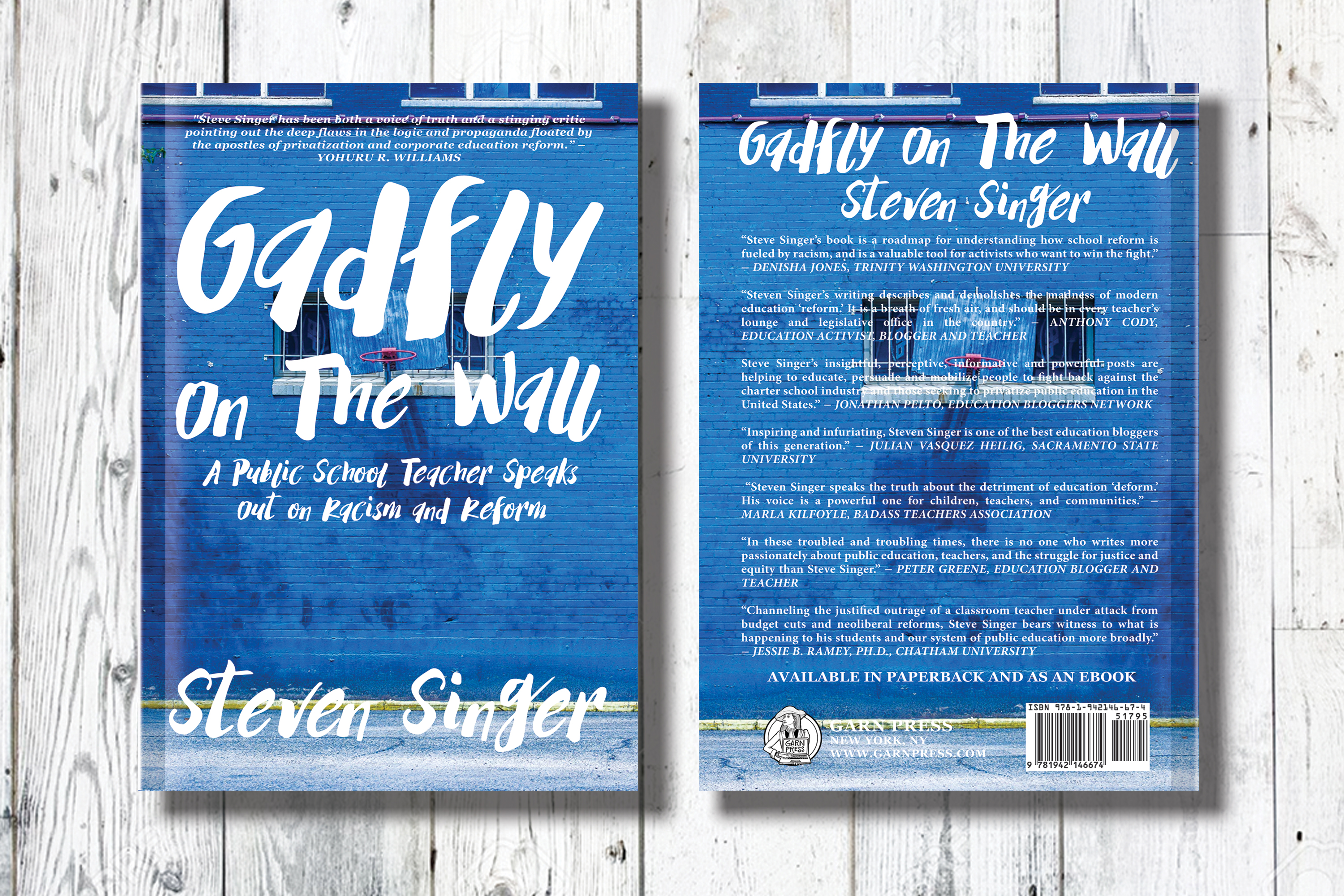
I’ve also written a book, “Gadfly on the Wall: A Public School Teacher Speaks Out on Racism and Reform,” now available from Garn Press. Ten percent of the proceeds go to the Badass Teachers Association. Check it out!

We Say “Gay” in My Classroom


There are some giggles you dread as a middle school teacher.  


Like when one of your students loses all control over a line of poetry. 


It happened most recently over these lines of Dylan Thomas


“Grave men, near death, who see with blinding sight

Blind eyes could blaze like meteors and be gay,

Rage, rage against the dying of the light.”


There it was. The G-A-Y word. The one thing with which adolescent boys and Florida Governors cannot contend. 

One of my 8th graders thought it was the height of hilarity. 


“You know that word here just means ‘Happy,” I said.  


And he lost it some more.  


I tried logic. 


“I’m gay. You’re gay. Sometimes we’re all gay.” 


A renewed outburst.  


“You’re probably the gayest student in my class.” 


And the laughter stopped.  


“No, you come in here laughing and gay just about every day,” I said.  


The frown on his face was serious.  


“Me, too. I’m hoping to have a really gay weekend.”  


Which seemed to break him. He got up, walked to the other side of the room and sat silently in the corner.  


Not exactly the reaction I was hoping for


Some people just can’t take the truth. 


Like the fact that there are gay kids in middle school.  


And, no, I don’t just mean “Happy.” 


There are gay kids. 


 And straight kids. 


 And trans kids


 And all kinds of kids.  


There are black kids and white kids, Muslim kids and Christian kids, Latinos and Lithuanians, Italians and Iranians, girls, boys and all genders in between.  


There are tall kids and short kids. Fat kids and thin kids. And, yes, some kids who like other kids in ways which all adults might not approve. 


However, some people are too juvenile to deal with it – they can’t even say the word or can’t even endure someone else saying it!  


That’s not so bad when you’re 13 and terrified of your own sexuality, anxious that anyone might question your cis privilege.  


 You still have time to grow out of such sophomoric hijinks.  


But it’s worse when you’re a counterfactual zealot like Ron DeSantis passing laws like the “Don’t Say Gay Bill.” 

I’m glad I don’t live in the Sunshine state, but you know ALEC will bring their own copycat version of this fascism to the rest of us sooner or later.


Forbid teachers from talking about gender identity and sexual orientation?  


Allow parents to sue schools for any comment they take offense to? 


Things are tough enough in middle school simply because we’re not such cowards. 


We say “gay” and embrace all its multiple meanings – often at once.  


 “We Don’t Talk About Bruno” but we talk about everything else.  


And we have to! 


It is incumbent on teachers to acknowledge the reality before them.  


We have to recognize our students for who they are.  


That doesn’t mean labeling them. It doesn’t mean trying to convince them of anything in particular about their identities.  


But it does mean admitting that identity exists. And it means refusing to accept the intolerance of those who refuse to accept others for who they are. 


When a student tells you their pronouns, you listen


When a student draws a pride flag on their notebook, you tell them it’s beautiful.

When a student tells you in confidence that they feel ugly, hurt or broken because of what their pastor or parent or classmate said, you tell them they’re marvelous and not to change a thing!

Because we don’t have the luxury to be judgmental. 

It’s not in our job description.

We teach our kids no matter who they are. We love them for who they are. And if DeSantis or any other adult has a problem with that, they can just fuck off! 


Silencing the grown-ups in school won’t change who the kids are. It will just forbid us from mentioning reality. It will permit us to recognize only the tiniest fraction of who our students are and leave a de facto shroud over the rest.   


I refuse to turn my classroom into a closet.  


It might make the most bigoted adults feel better. It might relieve grown-up fears that just talking about other ways to live is enough to mold someone into something against their nature.  


As if such a thing were possible.  

But it won’t help the kids.


People don’t become their sexuality. They discover who they were all along – and ultimately no piece of legislation can stop that. It can make that search more difficult, painful and riddled with guilt. But you are who you are.   


It’s regressive shame-based norms like these that encourage little boys to bash those who are different.


That make them feel the only safety lies in violence against the other so no one questions who they are, themselves.  


That scares them enough to giggle at a three-letter word embedded in a poem.


And speaking of my giggle goose, eventually he got himself under control.  


Before the end of the period he came back to the table.

Silently, swiftly, and soberly, he sat down with the rest of us ready to continue discussing “Do Not Go Gentle Into That Goodnight.” 

Not a titter or laugh. 


It wasn’t until a week later that he turned to me with a smile and asked: 


“Mr. Singer, did you have a gay weekend?” 


I did, Buddy. I did. 


Like this post?  You might want to consider becoming a Patreon subscriber. This helps me continue to keep the blog going and get on with this difficult and challenging work.

Plus you get subscriber only extras!

Just CLICK HERE.

Patreon+Circle

I’ve also written a book, “Gadfly on the Wall: A Public School Teacher Speaks Out on Racism and Reform,” now available from Garn Press. Ten percent of the proceeds go to the Badass Teachers Association. Check it out!

Teaching the War in Ukraine is Fighting the War at Home 


How does one teach about war?  


With pictures or words? 


With speeches or documentation? 


With prayers or curses? 


With laughter or tears? 


I began my class like I always do – with a question


“Has anyone heard about what’s happening in Ukraine?” I asked.  


A few hands, but they had only heard the words. They didn’t know what was happening.  


So I showed my 8th graders a short video that summarized events so far. I drew a map of Europe and Asia on the board. I outlined Ukraine, Russia and the European union. I explained about the Soviet Union and its collapse. I explained about NATO and the struggle for power and prestige.  


When I was done, there was a moment of silence. They were all staring up at me. It was one of those rare moments of stillness, a pregnant pause before the questions started raining down.  


A patter at first, then a storm. 


They asked about what they were hearing at home. They searched for corroboration, explanation and/or other viewpoints. 


One child asked if this was NATO’s fault. If it was President Biden’s doing. 


Another asked how it would affect us and why we should care. 


And yet another asked about nuclear proliferation and whether this war meant the end of the world.  


I couldn’t answer all of their questions, though I tried. When there was something I couldn’t say or didn’t know, I pointed them in a direction where they might find some answers.  


But it led to some interesting discussion.  


Then I asked them if they had talked about any of this in their other classes – perhaps in social studies. They all said no, that a few teachers had promised to get to it after finishing the 13 colonies or another piece of mandated curriculum.  


I was surprised but not shocked. I know the tyranny of the curriculum.  


I was only able to talk about this, myself, because of the scope and sequence of Language Arts. You see, it was poetry time and I was about to introduce my students to Alfred Lord Tennyson and “The Charge of the Light Brigade.” 


For those who don’t recall, the poem tells the true story of the battle of Balaclava during the Crimean War. A cavalry regiment of British troops charged Russian gunners and were mostly shot to pieces.  


It’s a pillar of English poetry and a perfect opportunity to talk about warfare in general and Ukraine in particular since the battle took place in the same general area of the world. 


In the poem, a general mistakenly orders the soldiers on horseback armed only with swords to charge the enemy armed with cannons and guns.  


Tennyson writes


“Theirs not to make reply, 
   Theirs not to reason why, 
   Theirs but to do and die.” 


And after the result is graphically portrayed, the speaker extols their virtue: 


“When can their glory fade? 
O the wild charge they made! 
   All the world wondered. 
Honour the charge they made! 
Honour the Light Brigade, 
   Noble six hundred!” 


So I ask my students what they think about it. Is it a soldier’s duty to follow orders no matter what? Should they question those orders?  


Typically, most of them back up Tennyson.  


And then I present them with an 80s heavy metal video by Iron Maiden of the song “The Trooper.”


The video uses images from a silent movie version of the Tennyson poem while singer Bruce Dickinson wails the story of a single soldier of the Light Brigade being senselessly gunned down and dying alone, forgotten on the battle field. 


It certainly gives them something to think about as they watch black and white horses flung in the air and our spandex clad narrator commenting on the situation with hairspray piled locks.  


Students end up leaving the class continuing the debate with each other about heroism and the waste of war.  


I certainly have my own opinions on the matter, but I keep them to myself.  


The way I see it, this isn’t the time for me to insert my opinion into the class. It’s an opportunity for my students to think through the problem, themselves.  


And, frankly, that’s really the point of most of school.  


It’s not the transmission of knowledge. Teachers can’t magic information into children’s heads.  


Instead, we provide opportunities to learn. We encourage students to think. We’re more like gardeners than anything else. We water, we weed, we make sure the soil is fertile. But it is up to the child to grow and in which direction to strive.  


That’s why far right scare mongers are so ignorant and absurd when they try to constrain teachers from teaching about history or racism.  


These campaigns are not aimed at educators. They are aimed at students.  


The goal is to offer children only one path in which to grow.  


They want to stifle thought, stifle free expression, stifle intellectual freedom by removing the option to think.  


They want to remove the opportunity.  


It may not be as dramatic as Putin invading. “Shot and shell” may not be flying. But the forces of fascism are equally at work on the minds of our children.  


In teaching about the war in Europe, educators are waging a battle against the war at home. 

Zhyvitʹ revolyutsiyeyu!

 
Viva la revolución! 

Long live the revolution!


Like this post?  You might want to consider becoming a Patreon subscriber. This helps me continue to keep the blog going and get on with this difficult and challenging work.

Plus you get subscriber only extras!

Just CLICK HERE.

Patreon+Circle

I’ve also written a book, “Gadfly on the Wall: A Public School Teacher Speaks Out on Racism and Reform,” now available from Garn Press. Ten percent of the proceeds go to the Badass Teachers Association. Check it out!

Remote Teaching is Much Different This Year 

  
I couldn’t believe what was happening.   


It was 8:30 am and nearly all of my students were in class.   


Or technically none of them were.   


It all depends on how you look at it.   


This was a remote teaching day, after all, and the classROOM was empty somewhere across town.  


My middle schoolers and I were all snug in our various homes communicating with each other via Zoom. But through the magic of the Internet, we were all together in one place and ready to get started.   


It was surprising because on most days of in-person learning it takes at least 30 to 40 minutes in the morning for students to stumble in. 


But today it just took a click of the mouse.  


Not only that but we were awake, and chatting, and happy to be together!  


“Hey, Rian! Nice to see you!” I said as I clicked in a student.   


“Morning, Mr. Singer. Did you have a nice weekend?” she responded.  


“You bet. You all staying warm out there?”  


“Nah. I made a snowman with my little brothers. But it was fun.”  


“I’m so excited!” another student offered.  “My mom just had an ultrasound of her new baby. She says its nose looks just like mine.”  


“That’s fantastic,” I said.   


“Yeah. I’m going to be the oldest. There will be 12 years between us.”  


Who were these children and what had they done with my students?  


This is not what I had come to expect of students on-line. 


Through the pandemic, the last two years of on-and-off remote learning were a slog. Most days getting students to respond verbally was like pulling teeth. They’d hide behind screensavers, their cameras off and for all I knew they could be on Mars. 


Admittedly today the screensavers were still in place, but the ebullient chatter was like something you’d hear… well… in school!  


In the physical classroom some of my kids might engage in this kind of banter. But not before 9 or 10 am!  


My language arts students and I went over the homework and the kids even volunteered to read the directions and attempted the questions about prepositional phrases and appositives.   


They wrote in depth answers to thematic questions about the book we’d been reading together, S.E. Hinton’s “The Outsiders.”   


And then we discussed those questions together in a virtual Socratic Seminar.   


These are all things I’d done before in previous years with remote students. But it never came off like today.   


They put up hand raising emojis to indicate they wanted to speak and gave some of the most thoughtful comments I’d heard from them all year.   


They talked about the main character, Ponyboy, and his responsibility to save some kids from a burning church. And others argued that he had no responsibility – it was the adults who should have watched the kids more closely. Or they argued that Ponyboy losing his life wouldn’t have helped the trapped kids any. Or they argued that it didn’t matter whether they saved the kids but whether they were willing to put more good into the world by trying…  


I was astonished. We laughed. We pondered. It was a lot of fun.   


How did this happen on-line?  


I think it was a combination of several factors.  


First, this was a high interest lesson of a high interest text.  


Give kids something meaningful to do and they’ll exceed your expectations more often than not


But even more than that – and this may come as a shock – I think they were actually grateful to be learning on remote. 


That’s not to say they just naturally love the cyber school experience. But it’s been a scary few months in the school building. 


We’d all watched in fear as COVID-19 spread through the district like wildfire. 


All last week students and staff had steadily been going missing.  


We got phone messages daily telling us how many people had tested positive but not who they were or how many additional folks had been quarantined because of close contacts.  


Even several administrators and our building principal mysteriously vanished, and with them so did some of the secrecy.   


One of my students was removed from class with an apparent positive test and the next day students were called to the office in ones and twos not to be seen again. Until the rooms were nearly empty.  


On Friday, my last class of usually 20 had been whittled down to four. 


And of those left was a child who sniffled and coughed  complaining that his mom wouldn’t let him go anywhere after school until he had a negative COVID test.   


So when they finally announced we were going to remote this week, the dominant feeling I had was relief.  


I just wasn’t the only one. 


No one wants to catch this thing.  


You don’t know whether it’s going to manifest as a week-long cold, symptoms that last for months, a stay at the hospital or worse.  


And don’t tell me kids aren’t affected. They may not often get as sick as adults, but they’ve seen the impact of this disease on others.  


They know catching COVID is taking a chance. 


That’s why most of them still wear face masks at school – even after the state Supreme Court overturned the Governor’s mask mandate. Even after school directors chose not to require masks on their own.  


Policymakers roll the dice but it’s the rest of us who pay the tab


I think my students were grateful that for once their safety and that of their families was being put first.


Or there just wasn’t enough staff available to keep the schools open. And not enough students left to teach in-person. 


Don’t get me wrong. Today wasn’t perfect.  


There were a few absent students – though much fewer than on any regular day. 


There were a few who hid behind their screensavers – though less than those who checkout in the classroom. 


Nor do I think remote learning is the best way to teach. Under normal circumstances, in-person is much more effective.  


But these aren’t normal circumstances. And until cases come under control and we take adequate precautions to ensure everyone’s safety, they won’t be normal circumstances. 


My students get that.  


I hope their parents do, too.  


I hope the administrators who’ve been out sick understand it.  


Because they’re going to be back soon, and then it won’t just be a battle with COVID.  


It will be a battle of egos, too.


Like this post?  You might want to consider becoming a Patreon subscriber. This helps me continue to keep the blog going and get on with this difficult and challenging work.

Plus you get subscriber only extras!

Just CLICK HERE.

Patreon+Circle

I’ve also written a book, “Gadfly on the Wall: A Public School Teacher Speaks Out on Racism and Reform,” now available from Garn Press. Ten percent of the proceeds go to the Badass Teachers Association. Check it out!
thumbnail_IMG_8249


Gadfly’s Top 10 Articles of 2021 – Shouts in the Dark

I work very hard on this blog.

It’s not exactly easy to fit in so many articles – 53 so far this year – between teaching full time.

And I’ve been doing it for 8 years – since July 2014.

In that time, this site has earned 2.3 million hits – 218,603 just this year.

I’m proud of the work I’ve done here.

I haven’t changed the world, but I’ve been heard. Occasionally.

As a classroom teacher, that’s really what I’m trying to do. In my everyday work, few people whose grade I’m not calculating actually listen to me. And even then it’s not always a given.

I want to believe my words have an impact – that policymakers read what I write and consider it before offering new measures and revising old ones.

But as time goes on, I wonder if any of that actually happens. These days my writing feels more like a shout in the dark than anything else.

At best, from the comments I often get on my articles (and the fact that 14,887 people have signed up to follow my work), it seems at least that I am not shouting alone.

We are all yearning to be heard.

These are the cries that most of us seemed to have in common this year:


10) Top 6 Administrative Failures of the Pandemic Classroom

Published: May 22


 Views: 3,014


 Description: This is a postmortem on the 2020-21 school year. Here are the six policies that really weren’t working from social distancing, to cyber school, hybrid models, and more.


 Fun Fact: I had hoped that laying out last year’s failures might stop them from being tried again this year or at least we might revise them into policies that worked. In some instances – like cyber school – there seems to have been an attempt to accomplish this. In others – like standardized testing – we just can’t seem to stop ourselves from repeating the same old mistakes.

9) Why Does Your Right to Unmask Usurp My Child’s Right to a Safe School?

Published: Aug 17


 Views: 3,151


 Description: It seemed like a pretty easy concept when I first learned it back in civics class. Your right to freedom ends when it comes into conflict with mine. But in 2021, that’s all out the window. Certain people’s rights to comfort (i.e. being unmasked) are more important than other people’s right to life (i.e. being free from your potential Covid).


 Fun Fact: This was republished in CommonDreams.org and discussed on Diane Ravitch’s blog.

8) Stop Normalizing the Exploitation of Teachers 


Published: Nov. 26


 Views: 3,716


 Description: Demands on teachers are out of control – everything from new scattershot initiatives to more paperwork to having to forgo our planning periods and sub for missing staff nearly every day. And the worse part is that each time it’s done, it becomes the new normal. Teaching should not be death by a million cuts.


 Fun Fact: This was another in what seemed to be a series of articles about how teaching has gotten more intolerable this year. If anyone ever wonders what happened to all the teachers once we all leave, refer to this series.

7) Top Five Actions to Stop the Teacher Exodus During COVID and Beyond


Published: Oct. 7


 Views: 5,112


 Description: Teachers are leaving the profession at an unprecedented rate this year. So what do we do about it? Here are five simple things any district can do that don’t require a lot of money or political will. They just require wanting to fix the problem. These are things like eliminating unnecessary tasks and forgoing formal lesson plans while increasing planning time.


 Fun Fact: Few districts seems to be doing any of this. It shows that they really don’t care.


6) I Love Teaching, But…


Published: Dec. 20


 Views: 5,380


 Description: This is almost a poem. It’s just a description of many of the things I love about teaching and many of the things I don’t. It’s an attempt to show how the negatives are overwhelming the positives.


 Fun Fact: This started as a Facebook post: “I love teaching. I don’t love the exhaustion, the lack of planning & grading time, the impossibly high expectations & low pay, the lack of autonomy, the gaslighting, the disrespect, being used as a political football and the death threats.”

5) My Students Haven’t Lost Learning. They’ve Lost Social and Emotional Development  


Published: Sept. 30


 Views: 6,422


 Description: Policymakers and pundits keep saying students are suffering learning loss from last year and the interrupted and online classes required during the pandemic. It’s total nonsense. Students are suffering from a lack of social skills. They don’t know how to interact with each other and how to emotionally process what’s been going on. 

Fun Fact: This idea is so obvious to anyone who’s actually in school buildings that it has gotten through somewhat to the mass media. However, the drum of bogus learning loss is still being beaten by powerful companies determined to make money off of this catastrophe.

4) You’re Going to Miss Us When We’re Gone – What School May Look Like Once All the Teachers Quit


Published: Feb. 20


 Views: 9,385


 Description: Imagine a world without teachers. You don’t have to. I’ve done it for you. This is a fictional story of two kids, DeShaun and Marco, and what their educational experience may well be like once we’ve chased away all the education professionals. 

Fun Fact: This is one of my own favorite pieces of the year, and it is based on what the ed tech companies have already proposed.

3) The Teacher Trauma of Repeatedly Justifying Your Right To Life During Covid


Published: Jan 16


 Views: 9,794


 Description: How many times have teachers had to go to their administrators and school directors asking for policies that will keep them and their students safe? How many times have we been turned down? How many times can we keep repeating this cycle? It’s like something out of Kafka or Gogol. 

Fun Fact: It may not be over.

2) Teachers Are Not Okay


Published: Sept. 23


 Views: 14,592


 Description: This was my first attempt to discuss how much worse 2021-2022 is starting than the previous school year. Teachers are struggling with doing their jobs and staying healthy. And no one seems to care. 

Fun Fact: My own health was extremely poor when I wrote this. I was in and out of the hospital. Though I feel somewhat better now, not much has changed. This article was republished in the Washington Post, on CommonDreams.org, and discussed on Diane Ravitch’s blog.

1) Teachers Absorb Student Trauma But Don’t Know How to Get Rid of the Pain


Published: Nov. 10


 Views: 40,853


 Description: Being there for students who are traumatized by the pandemic makes teachers subject to vicarious trauma, ourselves. We are subject to verbal and physical abuse in the classroom. It is one of the major factors wearing us down, and there appears to be no help in site – nor does anyone even seem to acknowledge what is happening.


 Fun Fact: This one really seemed to strike a nerve with my fellow teachers. I heard so many similar stories from educators across the country who are going through these same things.


Like this post?  You might want to consider becoming a Patreon subscriber. This helps me continue to keep the blog going and get on with this difficult and challenging work.

Plus you get subscriber only extras!

Just CLICK HERE.

Patreon+Circle

I’ve also written a book, “Gadfly on the Wall: A Public School Teacher Speaks Out on Racism and Reform,” now available from Garn Press. Ten percent of the proceeds go to the Badass Teachers Association. Check it out!

I Teach Banned Books   


If you want people to do something, forbid them from doing it.  


As a middle school language arts teacher, that’s always worked for me.   


Many of my students are reluctant readers.  


If a text is longer than a Tweet or a YouTube description, most of them would rather skip it.  


And when it comes to books, many of them wouldn’t intentionally crack one open under any circumstances.  


Unless you tell them not to.   


Unless you point out a specific book on the shelf and say it’s off limits.   


Unless you open it up right in front of them before quickly snatching it away and saying, “Oops! I forgot! We can’t read that one!”  


So most of my curriculum is made up of banned books.  


The Giver, Silent to the Bone, The Diary of Anne Frank, To Kill a Mockingbird – all forbidden in one place or another.   


Just not in my district.   


In fact, my school board has included each of these books on the approved reading list.


That doesn’t mean I have to use them.  


Language Arts teachers like me have a few different options at each grade level. And some of us actively avoid the more controversial texts to keep out of trouble.   


But not me.   


I go right for these taboo, prohibited, and oh so naughty books – for very good reasons


The Giver

  
Take “The Giver” by Lois Lowry.  


It’s almost the poster child for why we shouldn’t ban books in the first place. The story is set in a dystopian society where everyone is raised to be the same and people are discouraged from questioning things or having deep feelings.  


The book is most often challenged because parents don’t want their children to have to wrestle with its deep social criticism.  


When it first came under fire, Lowry responded thusly


”Submitting to censorship is to enter the seductive world of ‘The Giver’: the world where there are no bad words and no bad deeds. But it is also the world where choice has been taken away and reality distorted. And that is the most dangerous world of all.”  


However, not everyone is willing to let children think through these issues themselves – and what a bundle of issues Lowry presents! 


In the plot, she mentions sex, infanticide, suicide, starvation, and euthanasia.   


Nothing is graphic or developmentally inappropriate for middle schoolers, but the very idea of children thinking about S-E-X and challenging authority is enough to put it afoul of some censors.  


Which is exactly why my students love it.   


Too often teachers give students short passages taken from standardized tests where the only reason to read is to hunt for multiple choice answers. It’s dry, boring and meaningless to their everyday lives. 


That’s why they enjoy books like “The Giver” so much. This isn’t just for a grade. It’s reading something worth taking the time to consider, something that gets under their skin and makes them want to think.  


They’re at an age (12-14) when they’re starting to find their own place in society and struggling to understand adult issues like reproduction and romantic attachment. Making these topics explicit and being able to talk through them in the safety of the classroom can be liberating – and worth the effort to decode.   


That is – if you accept that children are little human beings who deserve the chance to consider these things aloud.  

Silent to the Bone

  
And speaking of adult issues, there’s the other comprehensive novel I teach in 7th grade – “Silent to the Bone” by E. L. Konigsburg.  


It’s a classic detective story where the characters try to discover why a young teen, Branwell, refuses to speak after his baby sister suffers a potentially life threatening injury.   


The plot grabs readers from the beginning and students find themselves really invested in unraveling the mystery. But to do so they come face-to-face with topics ranging from family, divorce, death, bigotry, sexuality and exploitation.   


It’s not about finding textual details to satisfy the number crunchers at Data Recognition Corp. or NCS Pearson Inc. It’s about getting textual to better understand what happened in the plot and why. 


Again the narrative is written for middle school readers but the concepts get them thinking and enthusiastic.  


As we come to the big reveal, I’ve had students turn to me with huge smiles saying they can’t believe we’re actually reading about this stuff in school.  


In an age where they usually communicate with emojis, I’m just glad that they’re reading. 


It can get uncomfortable, but by the end I definitely feel like I’ve reached them.

The Diary of Anne Frank


Speaking of uncomfortable, one of the hardest books I teach in 8th grade is “The Diary of Anne Frank.”


It’s not that the text is so difficult, but as a person of Jewish ancestry, I find it personally harrowing to relive this story every year.  


The plot centers on Anne, a historical Jewish girl in 1940s Amsterdam who with her family and others hid from the Nazis before eventually being captured and dying in a concentration camp. 


Like most teachers, I eschew the actual diary for the play version by Frances Goodrich and Albert Hackett.  


At first glance, it’s hard to imagine why this book would be banned. After all, it’s a true story of the Holocaust written by one of the people who lived it.   


However, there are an increasing number of people in this country these days who want to deny that the Holocaust even happened or claim that it was exaggerated. It’s hard to do that with a witness staring you in the face – even if that witness is just the book she left behind.  


Usually the text is challenged not on the basis of its plot so much as its sexual frankness. Not that there is much sex going on with people hiding above a factory in WWII. But the character of Anne is so real, she writes about everything including what it’s like to become a mature woman.   


For example, in Act II, scene 1, she mentions getting her period for the first time:  


“There is one great change, however. A change within myself. I read somewhere that girls of my age don’t feel quite certain of themselves. That they become quiet within and begin to think of the miracle that is taking place in their bodies. I think what is happening to me is so wonderful… not only what can be seen, but what is taking place inside. Each time it has happened I have the feeling that I have a sweet secret… and in spite of any pain, I long for that time when I shall feel that secret within me again.” 


My students often read over this passage without comment. I usually have to draw their attention to it and ask them what Anne is talking about before someone gets it.   


You might be surprised at how freeing this kind of discourse is. Menstruation is a natural part of life for nearly half the population, but it’s something we don’t often talk about.   


It’s not central to the story and Anne certainly goes into greater detail in her actual diary. However, even this little digression goes to further humanize her and make her relatable, especially to people like my students who are nearly the same age she was when she wrote it. 


She becomes so much more than a victim. She’s someone we know – inside and out.


To Kill a Mockingbird

 
The most challenged book I teach is “To Kill a Mockingbird” by Harper Lee.  


It tells the story of Atticus Finch, a white lawyer in the 1930s Alabama who defends Tom Robinson, a black man, of a crime he did not commit. The story is told from the point of view of the lawyer’s children who go from blissful naivety to uncomfortable understanding. 


In the past, people used to object most often to the book’s language since it makes liberal use of the N-word.  


It’s still an issue, and I make sure not to have myself or any of the students read these parts aloud. We only hear it on an audiobook as we follow along in the text. And even this only comes after we discuss how hurtful that word is. 


However, the language isn’t the book’s biggest sticking point today. It’s more often objected to these days on the basis of white saviorism. Critics complain that the narrative should be centered on Tom, the black man accused of the crime, and not Atticus, the defense attorney and his children.  


What makes this particularly troubling is the critics have a point. If the story is about racism, wouldn’t it be better to focus on the target of that racism?  


They suggest the book be replaced by more modern novels that center such a narrative appropriately – something like “The Hate U Give” by Angie Thomas (itself, a frequently challenged book). 


However, in the final analysis, I disagree.  


As good a book as Thomas’s is, it just isn’t as well-written or multifarious as Lee’s.  


Thomas reveals a lot about racism and the fight against it in today’s world, and her book is certainly worth reading. But it is a mistake to think that racism is only about people of color. White people are the cause of racism. White people have a responsibility to tear down the systems of white supremacy.

By the end of the book, my whole class – regardless of race – is devastated by what happens to Tom and furious at the injustice he experiences. To be honest, that might not happen to the same degree in a book that signals its message right from the beginning.  


“Mockingbird” starts quietly. It doesn’t even appear to have anything to do with racism at the beginning. We slowly get acclimated to this world, this time and place before prejudice creeps into view and surprises us. 


In my classroom, the book allows us to discuss so many intersectional issues – gender, economics, belief systems, etc. Plus it gives my students more cultural capital than other texts would. Having read “Mockingbird” allows them to understand more and talk to more people than other more modern books. 


If they haven’t already, when they go to the high school, they’ll read novels centered on blackness. Their education and discussion of this issue would be incomplete without them. But I don’t think we need to stop reading such a classic as “Mockingbird” that was, itself, part of the civil rights movement.  


In any case, the school board has not approved any similar texts at that grade level. If I put aside “Mockingbird,” it would mean not discussing the issue at all. I think that would be much worse. 


Conclusions

So this is how I teach. 


I know there are some adults out there who would rather my students not read these books.  


I know some grownups would rather my kids not think about these things and not come to their own conclusions.  


They’d rather children be seen and not heard – like furniture.  


But my students know it, too. And they’d rather be treated like actual human beings – even if that means… yuck… reading.

Now don’t get me wrong. I’d much rather decision makers put no restrictions on which books students can and cannot read. Even trash like Hitler’s “Mein Kampf” shouldn’t be forbidden. I make sure to tell my students that it’s readily available in the library but not recommended.  

Children should not be restricted to only some ideas. They will come into contact with all kinds as they grow older. They need the skill to sort through them and decide for themselves their value.  

In my experience the bigger threat isn’t prohibition, it’s indifference. 

 
As Ray Bradbury famously said, “You don’t have to burn books to destroy a culture. Just get people to stop reading them.” 


Focusing on banned books helps me keep reading real and relevant in my classroom.  


Like this post?  You might want to consider becoming a Patreon subscriber. This helps me continue to keep the blog going and get on with this difficult and challenging work.

Plus you get subscriber only extras!

Just CLICK HERE.

Patreon+Circle

I’ve also written a book, “Gadfly on the Wall: A Public School Teacher Speaks Out on Racism and Reform,” now available from Garn Press. Ten percent of the proceeds go to the Badass Teachers Association. Check it out!

Teachers Absorb Student Trauma But Don’t Know How to Get Rid of the Pain


Today a middle school student said he hated me.  


He told me to go F- myself.  


He wrote all over his desk.  


He shouted insults at the other students. 


He asked to be sent home.  


He said he wished he was dead.  


He asked to see the school counselor.  


I let him. 


And this was all in one 42 minute period. 


By the time the bell rang for the next class, I was exhausted.  


I was worried about my student. I wondered how I could help


But I could barely stand up. 


I wiped at my eyes. They were unaccountably filled with tears. My hands were shaking.  


I didn’t have time for this now. I had to put on a smile and welcome in the next class. 


Perhaps there would be time to feel all this later. 


Incidents like this take a tremendous toll on educators. 


We’re highly trained adults, but people forget – we’re human, too.  


When someone unexpectedly yells at you or gets in your face, you feel it. 


This is especially true when it’s a child. 


When a student is crying out in pain and that pain manifests itself as negative and violent behavior, it impacts you. 


We end up absorbing it all like a sponge.  


But what do we do with all that poison once it’s over? 


Psychologists call this experience vicarious trauma


According to the American Counseling Association, this is sometimes called the “cost of caring” and can result from “hearing [people’s] trauma stories and becom[ing] witnesses to the pain, fear, and terror that trauma survivors have endured.” 


Vicarious trauma affects teachers the same way it does students


The brain emits a fear response releasing cortisol and adrenaline which, in turn, increases heart rate, blood pressure, and respiration, followed by a rush of emotions.  


The biological response can display itself in mental symptoms such as anger, headaches, or even physical ones like missing staff meetings, lateness to work or avoiding certain students or situations. 

You want to know why classroom teachers are taking an increasing number of sick days lately? Dealing with vicarious trauma is a big part of it.


“Being a teacher is a stressful enough job, but teachers are now responsible for a lot more things than just providing education,” says LeAnn Keck, a manager at Trauma Smart, an organization that helps children and adults navigate trauma.  


“It seems like teachers have in some ways become case workers. They get to know about their students’ lives and the needs of their families, and with that can come secondary trauma.” 


This is an aspect of the job for which most teachers are unprepared.  


According to a 2020 survey by the New York Life Foundation and American Federation of Teachers, only 15% of teachers felt comfortable addressing grief or trauma.  


When I first entered the field two decades ago, I was taught how to design lessons, sequence curriculum, manage classes, calculate grades, etc. Never once did anyone mention that I would be standing between a hurting child and a world he is desperately trying to lash out against. 


Most teachers aren’t taught how to help students who have experienced trauma. Nor are we taught how to handle the toll it takes on our own health and personal lives.  


And unfortunately things are getting much worse. 


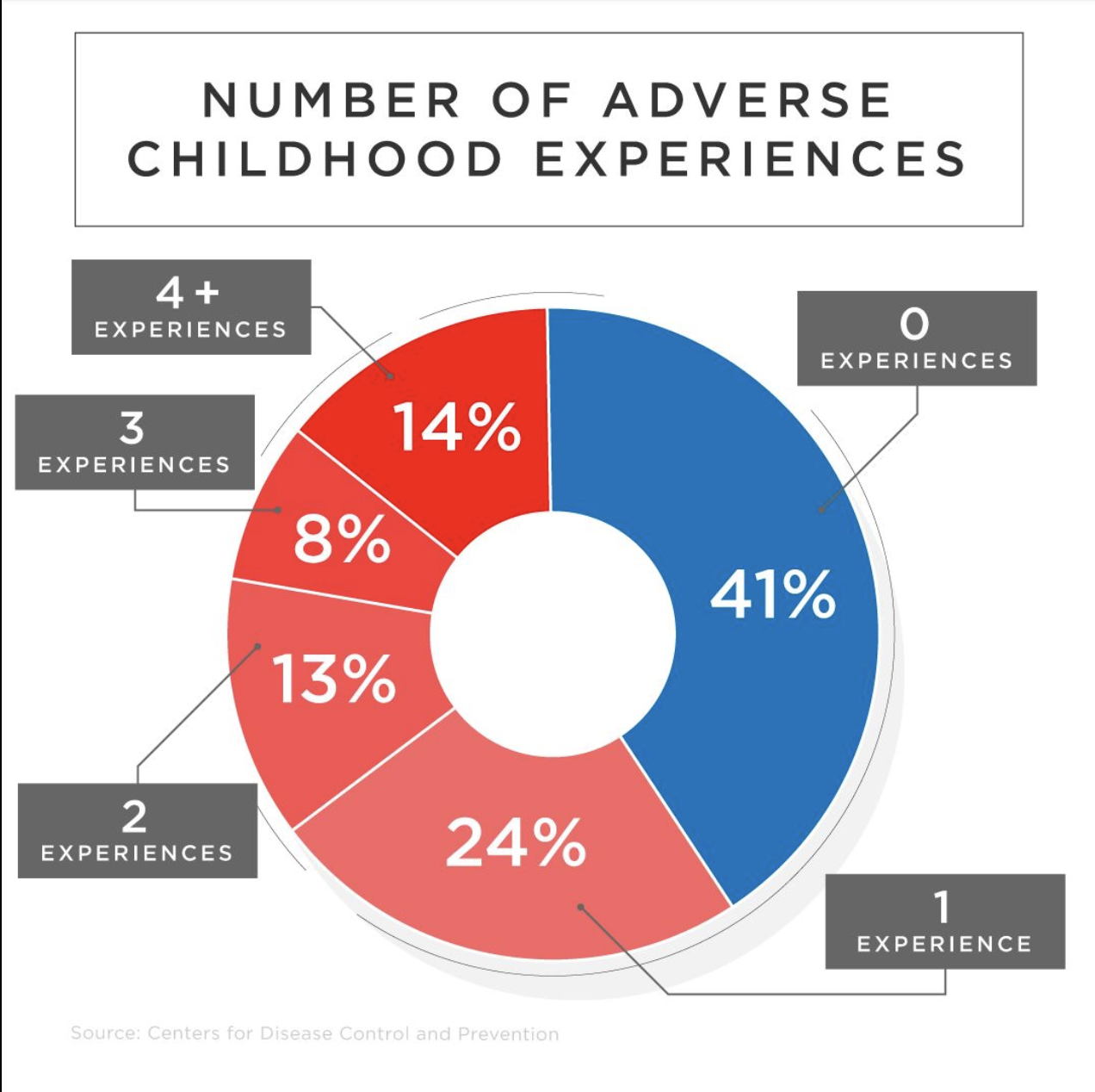
According to the Centers for Disease Control and Prevention (CDC), more than half of all U.S. children have experienced some kind of trauma. This includes abuse, neglect, violence, or challenging household circumstances. And 35 percent of kids have experienced more than one type of traumatic event. 


In class, these traumas can manifest in many ways such as acting out. However, they can also be more subtle such as failure to make eye contact, repeated foot tapping, etc. 


Childhood trauma was not unknown before the pandemic, but it was much less frequent.  


Since returning to the physical classroom after months or more of on-line learning, many students are having a difficult time readjusting. And some show signs of compounded emotional trauma. 


The student who exploded today is a prime example. 


Clearly something may have happened to him. 


A few years ago he had been an A student. He was academically gifted. But when we went to on-line classes to protect against Covid-19, he disappeared.  


Only to come back like this. 


As a classroom teacher with two decades of experience, I know that when a student acts this way, punishing him won’t help. He needs support coping, but that’s easier said than done. 


I need help coping with HIM! 


These adverse childhood experiences (ACEs) can impact kids well into adulthood with higher risks for alcoholism, liver disease, suicide, and other health problems. 


And it affects their teachers, too. 


Since schools have reopened, many kids don’t seem to know how to interact without teasing, goading or tormenting each other. We’re seeing children scream at each other in class over things as simple as finding a pencil. There are more frequent fights, vandalism, bullying, cyber bullying and even attacks against teachers.


Last week at my school, a student in the hall pushed another student into a teacher’s back. The first student was trying to fulfill the infamous TikTok challenge of hitting a teacher, but he wanted to avoid punishment by being able to claim it was an accident. 


This increase in negative behaviors can be directly attributed to the pandemic. 


More than 750,000 Americans have died from COVID.  


According to the CDC, more than 140,000 children in the U.S. have lost a primary or secondary caregiver such as a live-in grandparent or another family member to the virus.  


No wonder kids are having trouble with self-control! Their support systems are in tatters!  


With fewer role models at home and less time in the classroom over the last year and a half, kids are suffering. And that’s not just anecdotal. The facts back it up. 


The CDC reports that children between the ages of 5 and 11 visiting an emergency department because of a mental health crisis increased 24 percent from April through October of 2020 compared to the previous year. Among 12- to 17-year-olds, the number increased by 31 percent.   


Suicide attempts among 12- to 17-year-old girls increased by about 50 percent over winter 2019, according to the CDC.  


And these numbers are probably under reported since these increases took place at the height of the pandemic when many people were hesitant to seek medical attention.   


The increase in student trauma and the lack of additional supports is undoubtedly contributing to the speed at which teachers are leaving the profession. 


We want to help our students but many of us feel ill-equipped to do so. And it’s negatively affecting our own health.  


As we are constantly attacked in the media for everything from teaching an accurate history of America to failing to meet every need our students have, many educators are throwing up their hands and moving on. 


It is vital that people stop hurling stones and understand the increased burden placed on teachers’ shoulders. Not only that, but it’s well past time for people to get off the side lines and actually support educators.  


We can’t do it all alone.  


For example, one of the most important things teachers need is time.  


This is time untethered to students, time without classes to teach or papers to grade or paperwork to fill out or even duties to perform.  


We need time to talk with our colleagues about what we’re experiencing. 


That’s not just gossiping or socializing. It’s necessary to function. 


Educators need the ability to talk through what they’re experiencing and what they’re feeling with other teachers coping with secondary trauma, according to Micere Keels, an associate professor at the University of Chicago and founder of the TREP Project, a trauma-informed curriculum for urban teachers. 


“Reducing professional isolation is critical,” said Keels. “It allows educators to see that others are struggling with the same issues, prevents the feeling that one’s struggles are due to incompetence, and makes one aware of alternative strategies for working with students exhibiting challenging behavior.” 


However, this can’t be something teaches do on their own. This is an essential part of the job.  


Part of our profession has become being put in harm’s way. We need the time to cope with that on the job with our colleagues.


In addition, this allows teachers to work together to develop coping strategies.  


For instance, it’s never good to meet a student’s anger with yelling or fury of your own. Educators need to find ways to de-escalate and bring the tension down in the classroom.  


However, there’s no need to reinvent the wheel, either. Investing in high quality professional development for trauma-informed practices and enacting them school-wide would also be incredibly helpful. As would an influx of professional counselors, social workers and psychologists who are actually trained to deal with these situations.


Finally, it is essential that teachers are allowed the latitude to go home from their jobs. 


By that, I don’t mean that teachers are held hostage, that any district forces their staff to stay in the building 24/7. I mean that many teachers find it difficult to go home and stop being teachers. We’re always on. We need time to turn off and tune out. 


Educators often take mountains of work home, grade papers, call parents, etc. All on their own time. 


There needs to be a demarcating line between our professional and personal lives. And the district, administrators, school directors and parents need to respect that line. 


Teachers cannot be there for children if they do not have time for themselves and their families. 


And these are really just the tip of the iceberg.  


Teachers need higher salaries, lower class sizes, and above all – RESPECT.  


Accomplishing all of this will not be easy. But I’ll bet every district can accomplish SOME of it.  


Every district can accomplish some of it TOMORROW.  


If we want to continue having teachers – I mean flesh-and-blood teachers with college degrees and hard won experience, not just technology, apps or a rotating cast of minders and babysitters – we have to take care of them.  


They take care of our children.  


It’s time we gave back what they need to get the job done. 


It’s time we gave back the respect they deserve. 


It’s time we gave them the opportunity to heal from the trauma of coping with our children. 


Like this post?  You might want to consider becoming a Patreon subscriber. This helps me continue to keep the blog going and get on with this difficult and challenging work.

Plus you get subscriber only extras!

Just CLICK HERE.

Patreon+Circle

I’ve also written a book, “Gadfly on the Wall: A Public School Teacher Speaks Out on Racism and Reform,” now available from Garn Press. Ten percent of the proceeds go to the Badass Teachers Association. Check it out!
Lesson Plans Are a Complete Waste of Time     

Lesson plans are a complete waste of time. 

There. I said it.   

Few demands get under the skin of classroom teachers more than being told to hand in detailed lesson plans.  

It’s not that teachers don’t need to plan.  

Planning is an essential part of the job. 

Every day before students come in, you decide which activities, assignments and discussions would be effective for you and your students.   

However, that’s personal, idiosyncratic and informal. It’s the FORMAL lesson plans that have next to nothing to do with what goes on in the classroom.

I’m talking about the kind with detailed objectives often written in behavioral terms (i.e. Students Will Be Able To…), essential questions that are supposed to link your units into cohesive blocks, explicit reference to the formative and summative assessments you plan to give and exhaustive reference to every Common Core Academic Standard non-educators ever wrote to sell text books, workbooks, software and other boondoggles.


They are simply busy work – useless paper that is often filed away in the office and never seen again.  


Certain kinds of principals – and we know who you are – have checklists of every teacher in the building and simply mark off your name to designate that you turned in your lesson plans like a good doggie. 


But even worse are administrators who read every word and send you pages of comments asking you to change this or that so it more closely adheres to the Common Core Academic Standards. As if parroting a bunch of shoddy benchmarks made by standardized testing companies is going to have any real effect on classroom practices. 


Either way it’s an exercise in futility. 


Whether administrators pour over these plans or just file them away, making teachers hand them in every week has nothing to do with improving teacher effectiveness or even making us more reflective and adventurous educators. It’s about administrators justifying their own jobs.  


It’s like saying, “Look what a tough principal I am! I make my teachers hand in their lesson plans. I don’t let them get away with anything!” 


And perhaps that’s one of the things that really irritates educators – this idea that we need taskmasters set over us to ensure we’re actually teaching. 

If principals were really worried about that, it would be better for all involved if they just poked their heads into our classrooms more often and actually observed what we are doing.


Here’s a dirty little secret about education – No one gets into this profession to sit behind a desk with their feet up. 


If they do, they soon realize that teaching isn’t the place for them. There is so much we have to do everyday – from grading papers, to counseling students, to calling parents, to scaffolding group work, tutoring, mentoring, modeling, lunch duty, hall duty, in-school suspension – and that’s before we even begin to talk about teaching and planning! 


We don’t have time to write up a detailed plan of what we think we’ll be doing in class every single day with an equally detailed justification for everything we’ll do! 


Because we know we’ll never actually use it in the classroom! 


The very idea of lesson plans is antithetical to 90% of classroom practice. 


Teaching isn’t something you can sit back and plan and then recreate with 100% fidelity day-in, day-out.


When you’re there in front of students, you need to use your natural empiricism to tell what the needs are of your students on a given day at a given time.  


Today we may need to go back and reteach yesterday’s lesson. Or we may have to jump right back into a discussion we were having last week. Or we may need to switch tacks and focus on something else so students can calm down or won’t get frustrated.  


The reality of the classroom determines what a good educator does inside it. And this cannot accurately be guessed at from a distance of time and/or space.  


Sure, as a language arts teacher I may know I want to teach vocabulary skills, or complete sentence construction, reading comprehension or anything else. I can pick out my texts and my assignments, figure out which activities would best get across the idea, what kind of practice could be useful, etc. But HOW all that comes together is more of an art than a science.  


And the more experienced you are as a teacher and the better you know your students, the more effectively you’ll be able to meet the needs of a class of students on a given day.  


Because you aren’t teaching widgets. You’re teaching people. And people resist the most rigid of plans.  


Moreover, the need to justify every move you make has a chilling effect on what you’re willing to do.  


Teachers need the freedom to experiment – to try new things and see how they work.  


If you have to stop and justify every action for an authority figure, you’ll only do the things you already know will work – or at least the things you feel most confident that you can explain. 


Teachers need to be free to try something and not be able to codify why they’re doing it at the moment. Only later, perhaps at the end of the day, can it be helpful to sit back and reflect on what you did and judge for yourself whether it was effective and worth repeating.  


But that’s where the emphasis needs to be – on you as the teacher and your students as a class.  


YOU get to decide the effectiveness of your teaching – not your principal, not an administrator in central office or the superintendent. YOU. 

That’s because you’re the expert here.


Your administrator may not even be trained in your discipline. How’s a gym teacher going to evaluate language arts? How’s an elementary special education teacher going to evaluate calculus?  


And it’s even worse when compounded by experience – or perhaps I should say inexperience.  


Most principals only taught for a handful of years before becoming administrators. And many of them haven’t even had much time to figure out how best to BE administrators.  


Yet our warped work culture puts them in charge of the actual professionals in the classroom – the classroom teachers – and encourages them to disrupt the normal flow of things in the name of what? School improvement? Or parasitical management?  


Principals should be focused on two things – (1) providing the best work environment for students and teachers; and (2) advocating for teachers and students. They should make sure teachers have what they need to get their jobs done effectively. And that means listening to exactly what those needs are. If those needs aren’t being met inside the district, the principal should go outside and work to get those resources brought in. 


Educators don’t need you to stand in judgement of them and then brag to your superiors about being a hard ass. They need you to get them the resources necessary – time, salary, lower class size, counselors, anything really that reduces the unnecessary from a teacher’s day so she can focus on her students.  


But demanding educators hand in lesson plans is just the opposite. You’re ADDING to the unnecessary work load, not reducing it.  


So lesson plans are an antiquated notion that need to go the way of mimeographs, transparencies and overhead projectors.   


Stop torturing educators with mindless busy work when there are so many mindful tasks begging to be done.  


Let teachers teach.  


And if you can’t figure that out, at least get out of the way. 


Like this post?  You might want to consider becoming a Patreon subscriber. This helps me continue to keep the blog going and get on with this difficult and challenging work.

Plus you get subscriber only extras!

Just CLICK HERE.

Patreon+Circle

I’ve also written a book, “Gadfly on the Wall: A Public School Teacher Speaks Out on Racism and Reform,” now available from Garn Press. Ten percent of the proceeds go to the Badass Teachers Association. Check it out!
Stop Transforming US Schools into Prisons in the Name of Security

You probably heard about the Texas mom who became Internet famous for posing as her daughter in school last week.

Casey Garcia, 30, was arrested after she was caught attending her 7th grade daughter’s classes while disguised in a hoodie, a mask and thick black glasses.

In a viral video she posted to YouTube, she said the stunt was a “social experiment” to “prove a point.”

“We need better security at our schools,” Garcia said. “I kind of feel that I proved it.”

“There have been one too many mass shootings,” she added, arguing that schools should have metal detectors and possibly ban backpacks.

However, most schools already DO have metal detectors, and the presence of these devices won’t stop a parent like Garcia from posing as a teen during a pandemic when students are often required to cover their faces behind masks.

Hopefully sometime next school year when more teens are vaccinated and mask restrictions disappear, no one will be able to take advantage of pandemic safety precautions to sneak into classes.

Don’t get me wrong, teachers should have caught Garcia last week long before the end of the day, but the El Paso parent did more to prove the necessity of smaller class sizes than additional security.

You can pay millions of dollars on new complicated and time wasting screening processes to enter the building, or you can simply have teachers responsible for fewer kids so they can actually give them all more attention. It’s less costly and would reap educational benefits along with improving safety.

The fact is, we already spend an awful lot on school security. And often those measures and the costs to enact them directly impede teachers ability to teach and students willingness to learn.

Let’s start with cost.

The United States is one of the richest countries in the world. You’d expect that we could afford to buy BOTH security AND education for our students.

However, in practice, it doesn’t work that way.

To put it bluntly – we’re cheap. Especially when it comes to children.

Correction: Especially when it comes to OTHER PEOPLE’S children.

Right wing pundits love to quote exorbitant figures of how much the US spends per student as compared with the rest of the world.

However, they neglect to mention (1) this money is spent unevenly so that we spend much more on rich kids versus poor kids, and (2) we spend that money on services in this country that most other nations do not.

One of those things is security.

It’s not that schools in Europe and other comparable nations don’t concern themselves with keeping students safe. But they typically don’t have metal detectors, armed police, and high tech security systems. While secondary entrances and exits tend to be locked, main entrances usually remain open and unmonitored throughout the day.

Nor do they have the same dangers as we do. In the US, there are more firearms – roughly 400 million – than people. Not true in other countries.

Moreover, even in other nations like Switzerland where gun ownership is high, they have comprehensive background checks that make it much more difficult for criminals or the mentally ill to get a hold of a gun.

In the US, we have a large population that is racially diverse, a history of social strife, runaway income inequality, and a crumbling social safety net. All of which, when mixed together, are a recipe for conflict.

Not so in most other countries.

Moreover, the way most European nations, for example, have addressed safety is completely opposite to the way we do it in the US.

School shootings were on the rise in Europe in the early 2000s, but instead of buying security systems to stop shooters from entering the building, most schools focused on prevention. They realized that the overwhelming majority of shooters were not interlopers from outside but were disgruntled students. So these schools invested in more psychologists, social workers and resources to help children navigate the turmoil of growing up. The result was an almost complete disappearance of shootings.

If you ask me, a similar investment in the US would have similar success. However, given the differences in our societies, I don’t expect it would solve all of our problems.

In fact, emphasis on security certainly hasn’t.

Since 2012, US schools spending on high tech security programs has increased by at least $3 billion – not counting the billions more spent on armed campus police officers — with very little research proving these measures are at all effective, according to the Washington Post.

In fact, there is evidence that these measures don’t work. A federally funded 2016 study by Johns Hopkins University, for instance, concluded there was “limited and conflicting evidence in the literature on the short- and long-term effectiveness of school safety technology.”

But in the United States, when there’s an entire industry lobbying to take advantage of a crisis, that industry will likely be seen as the solution. It might not actually work, but at least huge corporations are making a profit. That’s often enough to justify spending more and more.

Security firms tout their products as the solution just as hammers scream we need more nails. Never mind that buying them will impede our progress and bankrupt us in the process.

Which brings me to education.

Even if heightened security was 100% effective against violence, it has a negative impact on learning.

No one wants to go to a prison for school.

Prisons are not welcoming environments. Children don’t want armed guards watching their every move. They want empathetic teachers and adults to help them understand their world.

This is especially true for low income and students of color. There is already a tendency among white faculty (and others) to criminalize their behaviors. In a punitive environment, this is even more so. Children become not something precious to be protected but the inmates, themselves, whose adolescent behaviors become the excuse for treating them like suspects and criminals.

Even preparing for violent situations can have negative impacts.

Active shooter drills – especially those from the ALICE Training Institute — do more to traumatize students than make them safer. The increasingly popular ALICE program teaches kids to physically confront gunmen under any circumstances. Consultants, school psychologists, safety experts and parents say this is dangerous and irresponsible.

“There is no research/evidence . . . that teaching students to attack a shooter is either effective or safe,” Katherine C. Cowan, spokeswoman for the National Association of School Psychologists, says. “It presumes an ability to transform psychologically from a frightened kid to an attacker in the moment of crisis, the ability to successfully execute the attack on the shooter (e.g., hit the shooter with the book or rock, knock them down, etc.) again in a crisis situation, the ability to not accidentally hurt a classmate, the reality that unsuccessfully going on the attack might make that student a more likely target of the shooter.”

However, the feeling that we are doing SOMETHING that we are at least preparing for a crisis is what keeps programs like this viable.

It’s also why Home Depot and Walmart market $150 bulletproof backpacks to parents. They may not actually help in a real life emergency, but they give the illusion of safety.

That’s what most of this really is – an illusion.

The fact is that the risk of being the victim of gun violence is low.  There are more credible risks traveling to and from school, catching a potentially deadly disease or suffering a life-threatening injury playing interscholastic sports. But we rarely worry about those.

Moreover, the risk of being a victim of gun violence is the same in the US whether you’re in school or not. And it’s higher in this country than in most others. A 2016 study in the American Journal of Medicine found that, among high-income nations, 91 percent of children younger than 15 who were killed by guns lived in the United States. Schools cannot solve that problem. We need sensible gun regulations and background checks in combination with measures for universal healthcare, racial equity and a reduction in income inequality.

However, our public schools are so often left to solve the problems our policymakers refuse to tackle.

If our teachers and administrators weren’t tasked with such a heavy burden and were actually given the funding and support they needed, perhaps they could better do the job of educating students.

That is the central purpose of public schools, after all.

Not gratifying parents to make points on the internet.

Not even security or profiting huge corporations.

It’s to teach kids.

We’d do best to remember that.


Like this post?  You might want to consider becoming a Patreon subscriber. This helps me continue to keep the blog going and get on with this difficult and challenging work.

Plus you get subscriber only extras!

Just CLICK HERE.

Patreon+Circle

I’ve also written a book, “Gadfly on the Wall: A Public School Teacher Speaks Out on Racism and Reform,” now available from Garn Press. Ten percent of the proceeds go to the Badass Teachers Association. Check it out!

Let the Children Play – My Prescription for Covid “Learning Loss”

Things are different in school these days.

The classes are smaller.

The kids are more subdued.

The teachers are exhausted.

But that’s life as we try to overcome the Covid-19 pandemic and somehow get back to normal.

I come into the room every day and sit behind a glass barrier.

My kids either stumble in from the hall wearing masks (often below their noses) or they log in to Zoom and participate on-line.


It’s far from ideal, but we get things done.

Right now we’re reading the play version of “The Diary of Anne Frank.”

The kids were reticent at first.

With the unreliable schedules of in-person vs remote learning, it took us months to get through our last text, “The Outsiders.”

Now we’re speeding through scenes of the play with each person required to read a part aloud.

The results have been amazing.

In any normal year, I have to stop the class at various points to discuss what’s happening in the play.

This week, the students, themselves, stop us with questions, comments, and more curiosity than I’ve seen since the pandemic hit last year.

It’s as if they’re starving to learn something, and this play is nourishing their hearts and minds.

I laugh because my first thought was to come down on the shouting out and side commenting until a deeper part of me realized this was all okay. They were on-task, if unrestrained.

It’s something, going from the near silence of a Zoom chat room with its black boxes instead of student faces to a classroom full of rambunctious teenagers getting excited by the lesson.

We’re having a great time as we discuss WWII, parental relationships, racism, dating etiquette, and Hitler’s genitalia.


(Hey! They brought it up!)

We only have about a month or so left of actual instruction time because the Biden administration is demanding we take standardized tests.

That’s weeks of class I could be teaching and they could be learning.

But whatever.

I’m tired of fighting for things that make sense in the classroom.

No one listens to teachers. That’s why I’m running for office.

I figure as a member of Allegheny County Council, people will have to listen to me. And I’ll bring all of the concerns of those around me out in the open, too.

But that brings me to the title of this piece:

Let the Children Play – My Prescription for Covid “Learning Loss”

As my students and I are racing to learn something in the classroom, the same folks who demand we waste that precious time on high stakes tests are also bemoaning kids learning loss.

“Oh, woe are the children!” They cry.

“How many years and months are they getting behind because of this pandemic!?”

It’s like a flat Earther complaining that we need to build a fence around the planet’s edges so no one can fall off.

What these fools fail to understand is that there is no learning loss.

Comprehension is not a race. There is no one ahead or behind. Everyone goes at their own pace. And if you try to force someone to go more quickly than is best for them, they’ll stumble and fall.

Or they’ll refuse to go forward at all.

These folks pretend that learning is all about numbers – test scores, specifically.

You need to hit this score before you’re ready for the next grade. That score’s required before high school. This one before college.

It’s all nonsense, and I can prove it with one question:

What do these numbers represent?

What are they measuring?

What is the basic unit of comprehension?

Okay. I lied. That was three questions. But you get the point.

Learning is not quantifiable in the way they pretend it is and teaching is not the hard science they want it to be.

You can’t look into someone’s mind and see what they’ve learned and what they still need to know.

You can give a test that tries to assess understanding of certain subjects. But the more complex the knowledge you’re testing for, the more tenuous the results of that test will be.

And an assessment made by someone miles away who never met the person taking it is less accurate – not more accurate.

But let’s be honest, these learning loss champions are not really worried about children. They’re representatives of the standardized testing industry.

They have a vested interest in selling tests, selling test prep materials, software, etc. It’s just a pity that so many of our lawmakers on both sides of the aisle are persuaded by their arguments (or the hefty campaign contributions that come with that persuasion).

So as the school year rapidly comes to a close, I have a suggestion to make.

I know I’m not qualified to do so.

I’m just a public school teacher with 17 years experience. I’ve never sat on any think tank boards. No testing corporation has ever paid me a dime to hawk one of their high quality remediation products.

But being in the classroom with kids day-in, day-out for all that time, I have observed some things about children and how they learn.

Most importantly – children are people.

I know that’s controversial, but I believe it to be true.

As such, they need down time.

They need time to regroup and recharge.

This pandemic has been hard on everyone.

As of April 1, nearly 3.47 million children have tested positive for COVID-19, most with mild symptoms, according to the American Academy of Pediatrics. A few hundred have died, mostly children of color. Many more kids probably contracted the virus but were asymptomatic spreaders of the disease to adults.

As a result, between 37,000 and 43,000 children in the United States have lost at least one parent to COVID-19, according to USC research.

They have suffered through changes in routine, disruptions in learning, breaks in the continuity of their healthcare, missed significant life events like birthday parties, vacations and graduations. But worst of all they have suffered the loss of safety and security.

We should not be demanding they work harder at a time like this.

We should be providing them with kindness, empathy and love.

In the classroom, I no longer have a thing called “Late Work.”

If a student hands in an assignment passed the due date, there is no penalty. I just grade it. And if it isn’t done correctly, I give them a chance to redo it.

As many chances as they need.

I remediate. I tutor. I offer advice, counseling, a sympathetic ear.

It’s not that much different than any other year, except in how often children need it now.

Kids AND their parents.

I can’t tell you how many adults I’ve counseled in the last several months.

So when the last day of school arrives, I will close my books.

There will be no assignments over the summer from me.

No homework. No requirements. No demands.

The best things kids can do is go out and play.

Have fun.

Recharge.

The corporate testing drones will tell you that’s a waste of time. Our kids are getting behind doing things like that.

Nonsense.

Play is the best kind of learning kids can do.

It is an independent study in whatever they are curious to discover.

Play is the mind’s way of finding out how things work, what a person can do, how it feels to do this or that.

Honestly, there is not a second wasted in play.

Taken moment-by-moment, there is more learning done during play than in any classroom. Because play is self-directed and driven entirely by curiosity.

I want all of my students to go play this summer.

And I want the children who will be in my class next year to have had a fantastic summer of fun and excitement.

That way they’ll come into the classroom energized and ready to learn what I have to show them.

They won’t be ahead. They won’t be behind.

They’ll just be.

And that’s my prescription for a productive 2021-22.


Like this post?  You might want to consider becoming a Patreon subscriber. This helps me continue to keep the blog going and get on with this difficult and challenging work.

Plus you get subscriber only extras!

Just CLICK HERE.

Patreon+Circle

I’ve also written a book, “Gadfly on the Wall: A Public School Teacher Speaks Out on Racism and Reform,” now available from Garn Press. Ten percent of the proceeds go to the Badass Teachers Association. Check it out!