Federally mandated assessments like the Pennsylvania System of School Assessments (PSSA) and Keystone Exams – which are made by DRC – were cancelled.
And local districts weren’t even making students take assessments like the Classroom Diagnostic Tools (CDT) – an optional test to determine if kids were ready to take the mandatory tests.
So someone had to figure out a way to keep children testing even though they were currently at home sheltering in place.
But that’s it!
Tests like the CDTs are taken online anyway. Theoretically, kids could access them in their own homes, they just need someone to help them sign in, navigate the Web portal and make sure they aren’t cheating.
During the pandemic with most schools shuttered, teachers only communicate with students remotely – through applications like video conferencing sites such as Zoom. If teachers proctored the tests, too, that would require students to take the tests on one Web accessible device and have the teachers communicate with them on another.
Can you imagine a child taking a test on her iPad while participating in a Zoom meeting on her cell phone? If she even had both devices? And the bandwidth to run both simultaneously?
That’s where parents come in.
Students can test on their computers or devices with their parents, in-person, troubleshooting and monitoring their behavior.
Thus, a truly stupid idea was born.
To my knowledge, not a single district in the Keystone state has yet taken advantage of this scheme.
And why would they?
Even the most data driven local administrator or test obsessed school director knows that a sure way to infuriate parents is to ask them to do something that is essentially the school’s job.
Moreover, in these difficult times, parents have their hands full just keeping food on the table. If they can somehow get their kids to log in to their online classes every day, that’s a plus. If they can get their kids to actually turn in the assignments, it’s a miracle.
But to add proctoring a test on top of everything else!? Districts would have to be nuts to even try!
As an increasing number of schools go on-line, the state extended the program through the 2020-21 school year, and some districts are actively considering it.
Here’s how it’s supposed to work.
Classroom teachers would provide parents with testing materials including a log-in ticket for each child in the home taking the test. Students would have to access the test online through the Chrome Internet browser. Then they’d have to copy and past the URL into the browser (which would be provided in the testing materials), and input their usernames and passwords.
Normally, the test is given in writing, science and math, has 50-60 questions and can last between 50 and 90 minutes. However, DRC is recommending districts give a new shorter version of the assessment that has 15-18 questions and can last between 20-30 minutes (10-20 minutes longer for the reading test).
And if you have any technical issues, DRC wants you to know the company has your back. Meaning that they can’t and won’t help – call your local school district.
“If technical issues arise during testing, parents/guardians are asked to contact the student’s teacher and/or the student’s school office for technical support. DRC customer service staff cannot directly support issues related to each home’s technology configurations.” [Emphasis mine.]
And this is true even if the test, itself, directs parents to contact the corporation:
“If a student receives an error message during the test administration that includes instructions to contact DRC for technical support, the parent or guardian who is assisting with the test administration should contact the student’s teacher or school office for additional instructions. Parents or students should not attempt to contact DRC’s customer service directly for technical assistance.
Teachers and/or a school’s technology staff will have the information needed to provide parents/guardians with the level of support to resolve most technology issues. If additional support is required, a school or district representative will reach out to DRC to determine a resolution.”
However, technical problems are never much of an issue with the CDT – and by “never” I mean ALWAYS.
Taking this test remotely is certain to put quite a strain on districts since these technological problems will occur not as they normally do within school buildings but potentially miles away in students’ homes.
Let’s be honest – this plan will not work well.
Few students will be able to take the tests and finish.
Of those that do somehow manage to finish and score well, there will be no certainty that they didn’t cheat.
Many of my students have secondary electronic devices like cell phones that they use in addition to their iPads. In fact, that’s a part of my remote classes.
A significant percentage of students will inevitably use these secondary devices to define unknown vocabulary, Google facts and anything else to get the right answers – if they care enough about the results.
In my own remote classes, tests are designed to either assess student skills or access information they already compiled in-class on several study guides which they are encouraged to use during the test. In short, cheating is more work than paying attention in class.
These CDTs will not be like that at all. The scores will be completely worthless – more so than usual.
And few parental proctors will be able to fully comprehend, control or participate in the process.
So why not just skip parents and have classroom teachers proctor the tests through Zoom?
Why take these tests at all? Especially during a global pandemic?
We already know students are struggling.
Many are checked out and don’t participate in the remote instruction being offered. And many of those who do participate are having a hard time learning without as much social interaction and hands on activities.
We should be focusing on ways to improve remote instruction. We don’t need a standardized test to tell us that. We certainly don’t need a test before the test.
In fact, not only should the CDTs not be given this year – they should not be given at all – any year. They’re a total waste of time that dampen kids curiosity and drive to learn.
This is another reason why corporate education reformers have been so adamant that schools remain open during the pandemic. Remote learning means increased difficulty in giving standardized assessments. It’s not that pro-testing fanatics value schooling so much – they don’t want to have to go another year without testing companies making huge profits giving these assessments.
Like this post? You might want to consider becoming a Patreon subscriber. This helps me continue to keep the blog going and get on with this difficult and challenging work.
But the idea that public schools are fundamentally better – that idea has suffered tremendously.
I used to believe that local control was something to cherish, that a board made up of neighbors duly elected by the community would more often than not have the best interests of that neighborhood at heart when making decisions.
Yes, the board decided to make students and teachers guinea pigs in an experiment to see if they could somehow avoid getting sick while cases surged throughout the country and state.
Will Western Pennsylvania schools do the right thing and go to remote learning? Will Steel Valley finally give up this in-person experiment? Will McKeesport?
They keep blaming everything on academics, saying they have provide what is best to help students learn – never mind the dangers to child, parent and teachers’ bodies. But even more hypocritically they ignore the well being of huge swaths of their students who refuse to take part in their in-person experiment.
In both districts, about 60% of parents favor in-person schooling and 40% prefer remote.
So the boards are doing what the majority wants, but it’s a slim majority.
There is a significant portion of parents who feel these in-person plans are unsafe and very little is being done to educate their children.
They are actually betting that the poor quality of the cyber program will increase the number of parents sending their kids to in-person instruction.
And I’ve heard similar comments among administration at Steel Valley.
There at least we don’t force kids into our (likewise crappy) cyber program. We just have classroom teachers post assignments on-line.
Remote students in K-5 get live teachers instructing on-line. But remote students in 6-12 only get one half day of synchronous instruction on-line a week. The rest is asynchronous worksheets, etc. And somehow that’s supposed to be enough.
We have enough teachers that we could provide more, but why encourage remote learning? Might as well let them eat asynchronous and hope their parents will lose hope and just make them come to school during a global pandemic.
I have zero respect for administrators who think this way. I have zero respect for school board members who vote for it.
So how do I keep my respect for local control and the school board system?
But my district has refused to allow me a safe work environment.
I am not allowed to teach remotely.
I have to burn my sick days so I can stay safe at home. But at the same time, I’m encouraged to take overtime hours to put up remote lessons, grade papers and contact parents.
I’m ready to do that as part of my job, but they won’t let me. They’d rather pay me and a sub who babysits my students in-person while I do what I’m allowed to do remotely at the same time.
So how do you look an administrator in the eye who refuses to lookout for his own employee’s safety?
Because the leadership is perfectly fine with agreeing for the staff to work in unsafe conditions and no special protections for those like me who are more likely to contract the disease.
Leaders throw up their hands and say “We’re an association not a union,” and “If the boss says you come back to work, you have to come back to work.”
And what is PSEA threatening if districts don’t comply?
Nothing…. So far.
But I guess saying something about it is better than what they were doing before.
The national unions – the National Education Association (NEA) and American Federation of Teachers (AFT) – certainly haven’t taken any hardline stances.
The technology should be merely a tool to connect students and teachers not as a provider of that learning.
The backlash against ed tech has been far greater than any embrace.
Yet some education activists decry how public schools going remote makes privatized schools who don’t look good.
That’s nonsense, too.
Teaching recklessly is bad – no matter who does it. If parents want to endanger their own kids, that’s their prerogative, but in the long run no one will earn brownie points for enabling such negligence.
However, where privatized schools will earn points with parents is for providing high quality remote learning when public schools refuse to do so.
I know all of them aren’t doing that. But some of them are.
And, frankly, they deserve any praise they get for it.
Look, I love public schools, too. But when public schools abandon their duties to their students as so many have done during this crisis, they deserve to have their students stolen. Even if these privatized schools often have more money to work with in the first place.
CONCLUSIONS
Bottom line: This is a crisis the school board system should have been able to overcome.
It’s a crisis the unions should have been able to battle.
It’s a crisis the activist community should have been able to see clearly.
That’s why the schools are open. School boards are afraid keeping them closed will hurt business in the community.
That’s why administrators make such reckless reopening plans. They’re afraid that if we stay on remote it will become obvious how irrelevant they are to the running of a virtual school.
That’s why union leaders put up next to no resistance. They’re more afraid of furloughs than death or lifelong health consequences.
That’s why some parents support reopening schools – so they have someone to watch their kids while they’re at work. They never spare a moment for how the government is cheating them out of stimulus checks, mortgage relief, rent forgiveness, free testing, hazard pay and healthcare so they don’t have to put their own lives on the line working during a pandemic.
In all honesty, we were a sick country long before COVID-19 hit our shores.
When you look across the ocean at the more socialist countries, you see much better plans to deal with the pandemic. Not perfect, but better.
When everything isn’t dependent on money changing hands, you can more easily prioritize human life.
So, yes, my faith has been shaken in our public schools.
I still think the idea of a public school is one to be cherished and fought to protect.
But the leaders we have – nearly all of them – should be rejected.
We need an army of citizen activists, parents and teachers to come forward at the first opportunity to replace them.
Anyone in a leadership role this year should have to explain themselves – what did you do to protect students and staff during the pandemic?
If they can’t prove they took real steps to keep people safe and not sacrifice the people they were charged to protect on the altar of capitalism – if they can’t do that they should step down.
They should step down with tears in their eyes and forever have their names sullied by their cowardice and stupidity.
They have failed us all.
Like this post? You might want to consider becoming a Patreon subscriber. This helps me continue to keep the blog going and get on with this difficult and challenging work.
My doctors tell me that I am more susceptible to contracting the virus because my medications suppress my immune system. And that also means that if I do contract the disease, I will be more likely to have severe, life-threatening complications from it.
However, starting Wednesday, about 60% of parents in my district have chosen to send their kids back to the buildings.
Of these, half the students will come in during the morning and half in the afternoon. Each will go through all their classes in 20 minute periods. On Fridays, the buildings will be closed and teachers will instruct virtually for half the day and plan during the other half.
The new reopening plan cuts instruction time by half and doesn’t meet parents need for childcare or certainly student safety. But it is better than being open 5-days a week and it provides the possibility of social distancing.
So I went to my principal asking if I could continue to teach online.
I documented my conditions, gave him doctors’ notes, and had my doctors fill out pages and pages of questions from the district’s lawyers.
In the end, my principal told me the district could not meet my request.
Administrators could provide some protections like a plexiglass barrier and take me off hall duty, but they couldn’t let me continue to teach remotely.
Certain teachers in grades K-5 have been given this option, but not secondary teachers like me. Elementary students whose parents don’t want them to return to the building will get full synchronous virtual instruction with a teacher through a video conferencing site like Zoom. Secondary students who do not return to the buildings will only get asynchronous assignments most of the week posted by their classroom teachers.
He suggested I look into taking a leave of absence.
And I guess I can see where he’s coming from.
If administrators let me teach remotely, it’s possible enough students would return to the classroom that the teachers willing to return wouldn’t be enough to meet the load. My absence from the building might necessitate a substitute teacher to be in the physical classroom with students.
Why pay for two teachers when you only need one?
Except…
…I’LL STILL BE PAID WHEN I’M ON LEAVE.
It’s just that then I’d have to sit at home instead of teach my students.
So benching me doesn’t save the district any money.
In fact, it will cost the district MORE money for me to stay home, because I could still do everything they expect of me and more for the sizable number of students whose parents say they aren’t returning.
So I brought this up to my principal figuring he must have overlooked it.
But no. He said he knew all about it.
He said this is what the district’s lawyers were telling him to do so that’s what he was going to do.
I couldn’t believe it.
I went to school board directors I had developed a relationship with teaching their children, going on field trips with them, working with their spouses.
I got the same answer.
So here I am – being asked to choose between my life and my livelihood.
Go to work and risk everything – or sit at home burning my sick days and still collecting a paycheck.
This is not what I want.
It’s not good for anyone.
I teach 8th grade Language Arts. Last year I also taught 7th grade.
So many of my students this year were in my class in the spring. We already know each other.
But more than that, I know what they like and dislike. I know their hopes and fears. I know what motivates them and what supports their individual learning.
I’ve seen tremendous growth the first 9-weeks of school and could really help them overcome the gargantuan hurdles that will be inevitable the rest of the year.
And that’s what I’d really like to do.
I don’t want to sit home collecting the taxpayer’s money when I could be making a difference in these young people’s lives. I don’t want to have to wait for an outbreak to allow me to continue my work.
Being benched like this makes me feel so worthless, and I’m not.
Wouldn’t everyone be better served with me instructing my students rather than being thrown to the side?
That can’t happen without help.
I’m just a human being like anyone else.
I have people who care about me and whom I care about.
I have a wife and daughter.
I can’t roll the dice with my life or chance taking an infection home to my loved ones.
Is a safe work environment really too much to ask?
I don’t want to sit at home.
I want to teach.
Like this post? You might want to consider becoming a Patreon subscriber. This helps me continue to keep the blog going and get on with this difficult and challenging work.
Superintendent Dr. Mark Holtzman says the district ignored these guidelines on the recommendation of the Allegheny County Health Department.
“The County Health Department is the local governmental agency responsible for the school districts in [the] County,” Holtzman said at last night’s school board open agenda meeting.
“So their determination of what next steps to take is their primary responsibility. So at this particular time, they have recommended to us that we not follow the CDC guidelines because those guidelines have been created before the start of school and are outdated. So they’re currently working on new guidelines to direct schools.”
The response was in answer to citizens comments.
‘
Greg Kristen and I went to the board meeting hoping to get answers – and we did.
“Those decisions that are being made by the McKeesport Area School District are recommendations by the County Health Department,” Holtzman said.
“They’re not our recommendations. They’re not anyone’s recommendations in this room. Now our school board does have the determination if they so choose to not follow those recommendations and close the McKeesport Area School District. Up until today at this particular time we’re not aware of any school district in Allegheny County being recommended to close no matter how many cases that are involved.”
“I am in a large public school system… I am hearing and seeing two different approaches. I am very appreciative of what the board’s efforts in Pittsburgh have been to keep us safe and keep our students safe. I just want to be an advocate that we are doing everything we can even if it’s erring on the side of caution.”
District Solicitor Gary Matta was concerned about the issue as well.
“We’re getting some mixed signals between the state and the county,” he said.
“The state is directing us to deal with the county health department if we have one.”
He suggested the district get recommendations in writing from the county health department before following any of its advice.
In addition to questions about whether it was safe to keep district buildings open during a COVID-19 outbreak, Holtzman addressed district transparency.
I asked him to compile a dashboard on the district Website with the following information:
“1) How many people have tested positive in total since the school year began?
2) How many are students? How many staff?
3) How many are located at each school building?
4) And please give us a timeline of when each positive test result was returned.”
He could not give me all I asked for at the meeting.
Holtzman said that 10 people have tested positive in the district since school opened – 9 of them recently. He said there have been cases at all four buildings – the high school, Founders Hall, Twin Rivers and Francis McClure elementary schools.
He was able to break down 8 of the 10 cases.
He said:
“In the last 7 days…. We’ve had 5 adults and 3 students. From Wednesday to Wednesday. Two employees (teachers) from Francis McClure, one teacher at Twin Rivers, 1 support staff at Founders Hall, 3 high school students, and one maintenance/support employee.”
Holtzman admitted that having a dashboard on the district Website was a good idea but fell short of committing to providing that ongoing data.
“A dashboard is a pretty good suggestion,” he said.
“It might help people have a better understanding this isn’t a secret – it’s a challenging situation… A lot of districts are considering it, but there are some drawbacks, too. But that’s something we’re going to take into consideration.”
Kristen brought up the issues of contact tracing and increasing class sizes at Twin Rivers that may make it difficult for students to engage in social distancing.
“Two days ago, my daughter told me she was getting six more kids in her class starting Nov. 2,” he said.
“They would be sharing desks. How is that possible during a pandemic? We’re just getting a spike in cases here and now we’re going to add more students to the schools in the classrooms? How is that safe? According to the guidelines, kids have to be AT LEAST 6 feet apart. That will not happen with more students.”
Holtzman said some students whose parents had chosen remote learning had decided to return them to the physical classroom at the start of the new grading period. However, others had decided to remove their children from the physical buildings and put them on remote.
“We will have students return to the classroom after the first 9-weeks. That’s inevitable. The numbers that we anticipate returning, we’re able to accommodate based on the space in those rooms. We do have some relatively low numbers – like less than 10 – in those classrooms.”
About a third of district students have been doing remote lessons since the year began.
Kristen said his daughter told him the new students added to her class would put the kids closer than 6 feet. Her teacher said they would be within 3 feet.
Holtzman disputed this:
“That’s a little difficult to determine. From the center of the child to the center of the child, there must be 6 feet. Six feet is a recommendation. Right? Just like the masking order and the gathering order is a mandate. So recommendations to space kids 6 feet apart is truly what it is – a recommendation. So we’re doing our very best.”
Kristen asked about contact tracing at Twin Rivers where teachers had tested positive.
He wanted to know if students had been tested, and Holtzman responded that they had not.
“Right now the McKeesport Area’s percentage is a little over 5% but it’s trending up as far as the rate of positivity. So people are concerned with watching that number.” He said.
“At this particular time, the Allegheny County Health Department is very satisfied with the contract tracing efforts they’ve made around our current cases. There is no longer any backlog, and there are none waiting to be addressed…
“When we do interviewing – when Allegheny County Health Department does interviewing – we ask them, ‘Where you in somebody’s personal space 6 feet apart for more than 15 minutes during your school day?’ If the answer is yes, Johnny, Susie, Mrs. So-and-So, then that information is provided to the health department and they’re asked to quarantine. If in fact that teacher says ‘I wear a mask every single day, all day, and I’ve never been in anybody’s personal space within 6 feet for 15 minutes consecutively, then the contact tracing ends at that point.”
He admitted that the effectiveness of this process depends on how honest and detailed those testing positive are when listing the people they have come into contact with while contagious.
Below is a transcript of our public comments and Dr. Holtzman’s responses:
Kristen:
“Dear school board members. Thank you for letting me speak here tonight. As a resident of this district for 15 years, as well as having a daughter a Twin Rivers Elementary School, I am deeply, deeply concerned with the lack of transparency about the Coronavirus infections. As of today, MASD has 9 positive cases… We have a right to know [who they are] not their names but their positions. According to CDC guidelines if there are two cases within a school, it is to be shut down for 5-7 days. For 5 or more cases, the building should be shut down for up to 14 days. Why is that not happening? Is the health and safety of the students, teachers, administrators, staff and maintenance not important to you? When positive cases happen in the building, who was in charge for contract tracing and notifying the Allegheny County Health Department? If they did not notify the health department, are they being held accountable? And I mean terminated. Were the parents of the students notified of the teachers and staff who were affected in the schools? Were the students tested? Is there any contract tracing with them? Also why is there not a healthcare professional a part of the Coronavirus task force?
Two days ago, my daughter told me she was getting six more kids in her class starting Nov.2. They would be sharing desks. How is that possible during a pandemic? We’re just getting a spike in cases here and now we’re going to add more students to the schools in the classrooms? How is that safe? According to the guidelines, kids have to be AT LEAST 6 feet apart. That will not happen with more students.
This Coronavirus is not a hoax. People are dying every day. As of today, 222,000 people have died, and people like myself who have an underlying health condition are concerned about people transferring the virus to me or to someone close to me. In this county alone there 14,396 cases and 416 deaths. On Oct 14 which was just a week ago Rachel Levine, the state health secretary announced a second wave of Coronavirus has arrived here. Now that the flu season has arrived, what is MASD doing? Does a student, teacher, administrator, staff or maintenance person have to die for someone to take this serious? Thank you very much.”
Dr. Mark Holtzman:
“Mr. Kristen, I’m happy to address a couple of your concerns. A few things.
We’ve had 8 positive tests in the last 7 days. So that is correct. The CDC guidelines are recommendations by the CDC and Pennsylvania Department of Education and state health department. (muffled) The Alleghney County Health Department is the local governmental agency responsible for the school districts in Allegheny County. So their determination of what next steps to take is their primary responsibility. So at this particular time, they have recommended to us that we not follow the CDC guidelines because those guidelines have been created before the start of school and are outdated. So they’re currently working on new guidelines to direct schools. I will ensure to tell you positively I have spoke to the Alleghney County Health Department probably just this week once a day. The head epidemeologisr Dr. Luann Brink and the director of the health department Dr. [Debra] Bogen and I have conference calls with her every Tuesday at 2 o’clock. Those decisions that are being made by the McKeesport Area School District are recommendations by the Allegheny County Health Department. They’re not our recommendations. They’re not anyone’s recommendations in this room. Now our school board does have the determination if they so choose to not follow those recommendations and close the McKeesport Area School District. Up until today at this particular time we’re not aware of any school district in Allegheny County being recommended to close no matter how many cases that are involved.
The concerns are the issues with Allegheny County Health Department are the rate of positivity here in the city of McKeesport and the surrounding communities. That’s number 1. Transmission is a huge piece of it. Is it being transmitted in the schools? Is it being brought into the schools from the outside? Contract tracing does occur on each and every case. All that information is submitted to the Allegheny County Health Department with details, time stamped, dates, everything we could possibly provide to those individuals. Fortunately or unfortunately we have to rely on that individual. For example, if you’re an employee that tests positive for COVID, we have to interview you. The information that you share with us, we have to then share with the Allegheny County Health Department. Whether you’re honest, dishonest , whether you’re detailed, whether you forgot someone, you didn’t include anyone as part of your contact tracing, that becomes your prerogative. We as a district just have to report that information to the health department and they make a final determination.
So at this particular time unfortunately we’re at the bottom of the document that’s been referenced many, many times, it states that when an entire school is recommended to be closed, closure time will vary depending on level of community transmission, and number of cases. Right now the McKeesport Area’s percentage is a little over 5% but it’s trending up as far as the rate of positivity. So people are concerned with watching that number. ‘This allows public health staff the necessary time to complete case investigation and contact tracing and to provide schools with other appropriate public health advice like cleaning and disinfecting.’ At this particular time, the Allegheny County Health Department is very satisfied with the contract tracing efforts they’ve made around our current cases. There is no longer any backlog, and there are none waiting to be addressed.
So at this particular time, I know there is frustration, I know there’s contradictory information out there, but we are working closely with the health department and they have done an outstanding job guiding us and every school district has a tough decision to make. So I appreciate you expressing your concerns this afternoon, this evening, later than it should be we appreciate it and if there’s anything we can do moving forward, we’d be happy to help.”
[Holtzamn said three teachers tested positive at Twin rivers Elementary. All students in those classes were not tested. Each student Is placed 6 feet apart. A close contact has to be within 6 feet for 15 consecutive minutes.]
Holtzman: “When we do interviewing, when Allegheny County Health Department does interviewing, we ask them ‘[Where you in somebody’s person space 6 feet apart for more than 15 minutes during your school day?’ If the answer is yes, Johnny, Susie, Mrs. so-and-so then that information is provided to the health department and they’re asked to quarantine. If in fact that teacher says ‘I wear a mask every single day, all day, and I’ve never been in anybody’s personal space within 6 feet for 15 minutes consecutively, then the contact tracing ends at that point.
Now we could absorb those things. As Superintendent I’m in the schools daily, and I’m able to see some of the teachers and [their actions]. The students are already placed 6 feet apart, so therefore they are already socially distanced. We will have students return to the classroom after the first 9-weeks. That’s inevitable. The numbers that we anticipate returning, we’re able to accommodate based on the space in those rooms. We do have some relatively low numbers – like less than 10 – in those classrooms.
[Kristen says his daughter told him the new students added to her class would put the kids closer than 6 feet. Her teacher said they would be 3 feet.]
Holtzman: “That’s a little difficult to determine. From the center of the child to the center of the child, there must be 6 feet. Six feet is a recommendation. Right? Just like the masking order and the gathering order is a mandate. So recommendations to space kids 6 feet apart is truly what it is – a recommendation. So we’re doing our very best and will hold all those expectations considering the fact that we have to educate the children that are interested in returning to school. We can’t just turn them away…. As many kids that are coming in, many are leaving for online learning for many reasons.”
MY COMMENTS:
“Thank you for letting me address the board this evening.
As a lifelong resident and the father of a child who attends the district, I am alarmed by news about an outbreak of COVID-19 at our school buildings, a lack of transparency about that information and a lack of proper safety response to the outbreak.
First, when I am finished with my comments, I ask that you clarify for me some facts about the outbreak.
1) How many people have tested positive in total since the school year began?
2) How many are students? How many staff?
3) How many are located at each school building?
4) And please give us a timeline of when each positive test result was returned.
That information should be constantly available on the district Website throughout the pandemic. It should not just be on alerts that come and go, robocalls or emails.
Every taxpayer has the right to that information – which is easy to compile – and necessary so parents and community members can make smart decisions about how to keep ourselves and our families safe in the McKeesport Area.
Next, I am concerned about the district’s blasé response to these life threatening conditions.
According to the state Department of Education Website, in a county like Allegheny where infection rates are designated as moderate, if 2-4 students or staff in the same building test positive, the school should be closed for 5-7 days.
Haven’t we met this threshold?
According to your recent alerts, at least 9 people have tested positive in the district in the last week – 3 students and 6 teachers. And this is spread throughout all district buildings.
There is no way to divide that up without at least one of our four buildings in the danger zone.
Doesn’t that mean that at least at some buildings – probably Twin Rivers, Francis McClure and/or the the High School – we have met this benchmark? Don’t each of those schools have two or more cases?
Why haven’t these buildings been closed?
Moreover, according to the PDE Website, if there are multiple cases at multiple schools where the infected are not household contacts, the schools are supposed to be closed not just for 5-7 days but a full two weeks.
Have we met that threshold? And if so, why are the buildings not closed?
I do not understand what precautions you are taking to keep students and staff safe.
I understand that PDE defines “Close Contact” as being within 6 feet for at least 15 consecutive minutes of a person who has tested positive. However, the Website cautions that this should not be taken as the ONLY definition of such contact: “In some school situations, it might be difficult to determine whether individuals are contacts or whether an entire cohort, classroom, or other group (extracurricular activity members) might need to be considered exposed, particularly if people have spent time together indoors.”
You say these cases have all been contained. But you have done very little to assure the public of this and could be taking much greater precautions on our behalf.
We’re talking about children here. We’re talking about our staff – people who have served generations of families and who often have families of their own.
Can’t you do better for the people in this district?
I would suggest that you at least follow PDE recommendations in the effected buildings.
Furthermore, I think you should cancel all in-person classes and go to a fully remote education plan until the infection rate in the county and the community is designated as low.
Have the classroom teachers make the online curriculum and let students and families choose whether they wish to go through that curriculum synchronously or asynchronously. And do not outsource the virtual program to ed tech companies looking to cash in on their credit recovery programs – as you are currently doing with Edmentum.
Going to a fully virtual plan would be in the best interests of students, families and the community.
Please do your duty.”
Holtzman:
“Mr. Singer, Thank you. I appreciate you spending some time with us again today. I don’t know, Dr. (muffled) do you have the numbers he’s requesting off hand? I only have the last seven days in front of me. If not, I’ll make sure you get them.
Voice: I don’t have them with me.
Holtzman: Prior to this situation we’ve had very few so… the difference between staff and students, we currently have in the last 7 days… we’ve had 5 adults and 3 students. From Wednesday to Wednesday. Two employees (teachers) from Francis McClure, one teacher at Twin Rivers, 1 support staff at Founders Hall, 3 high school students, and one mainatance/support employee. Furthermore, I feel that we’ll agree to disagree that instruction in person is the priority for engaging children. Our students have received progress reports. You as an educator I’m sure are quite aware that the online learning platform is not engaging all children. Many children are struggling and failing courses, here ate McKeesport and all over the Commonwealth. I think it’s a big issue for all school leadership trying to find new creative ways to engage children whether it’s synchronous or asynchronous. So for us here at McKeesport we’re very fortunate to have had this huge donation of devices. We are going to consider doing some flexible instruction in the very near future to kind of make sure we have all of the pieces in place to provide synchronous instruction affectively. But sadly a lot of our students have chosen either to not log in or not be consistent in the work they’re trying to perform online. So we’ll continue to encourage our children to be in schools, we’ll continue to do our very best
ME: Would you commit to putting the information I asked for before onto the district Website?
Holtzman: You bring a good point because you know there are some districts using… a ticker to keep track. To be honest I didn’t know it would be necessary so that’s something we need to consider. A dashboard is a better description. It might help people have a better understanding this isn’t a secret it’s a challenging situation… Also to answer your question, we’ve had a total of 10 cases since the start of the school year. We’re still waiting for confirmation on two of those but we’re pretty confident. A dashboard is a pretty good suggestion. A lot of districts are considering it, but there are some drawbacks, too. But that’something we’re going to take into consideration.
[Holtzman admitted there was at least one case at every building but not elementary students.]
Like this post? You might want to consider becoming a Patreon subscriber. This helps me continue to keep the blog going and get on with this difficult and challenging work.
Only in the most sparsely populated, secluded or reckless areas have schools been allowed to reopen 100% without safety precautions.
For many districts trying to juggle both in-person and virtual classes, the online component has been left to ed tech companies like Edmentum often specializing in credit recovery.
Along with students whose input and experiences should not be ignored, it is our collective educator core who have been thrust into this strange experiment. But unlike children, they have the knowledge, maturity, skills and life experience to evaluate it best. And being one of those intrepid individuals, I here offer my thoughts.
After more than four months teaching this way, I’d say these are the top 5 pros and cons of virtual instruction:
Pros
1) There is Less Pressure Day-to-Day
Right off the bat there is something to be said for virtual instruction – it feels more low stakes.
You sleep longer, can more easily access amenities, the bathroom, food and drink.
For one, you sure can’t beat the commute.
Some students admit that they roll out of bed each morning and onto the computer. This is not always optimal for learning in that the mind needs time to wake up and focus itself. However, the fact that one has more choice over how to prepare for school, what to wear, more leeway about breaks and whether to eat or drink in class – all that leads to an increased casual feeling to the day.
Though I certainly don’t roll from my bed to class, the extra sleep I get from not having to drive to the building and the reduced stress of forgoing a commute, traffic, bad weather, etc. are extremely positive.
It helps me be more relaxed and ready to meet my students needs. It makes me a better teacher.
True, a dedicated disruptor can find a way to cause a ruckus. He or she can try to use the chat or even the video camera. They may even have each others cell phone numbers and communicate back and forth that way.
However, few students are aggravated enough to take such measures. I haven’t noticed much beyond simple teasing.
Some of my students put pictures of each other as the backgrounds on their camera screens – but these have always been friends trying to get a laugh. A comment from me and it stops.
If worse comes to worse, I can still remove them from the Zoom meeting and alert the principal or dean of students for disciplinary action.
But I haven’t had to do that yet. I’ll bet disciplinary referrals have dropped to record lows. And without them, virtual learning may have all but dismantled the school-to-prison pipeline.
3) It’s Easier to Communicate with Parents and Students Individually
There are many reasons for this.
In the physical classroom, the most common form of communication is verbal. But digital spaces allow for several other methods.
You can email individual students messages, work, assignments, grades, etc. You can utilize the chat feature to send a private message. You can simply talk to them in the Zoom meeting. You can set up an individual Zoom meeting like office hours to answer questions. You can ask or answer questions about assignments in the stream function of Google Classroom.
All these options allow for students to talk with their teacher one-on-one more easily than in the physical classroom.
Consider this: let’s say a student has a question about the homework after class. In the physical classroom environment, there may be little they can do but wait until the next day. Before last March, I’d had students send me emails, but I never checked them as regularly as I need to now.
In the digital world, students can easily send a message through email or stream at any time. This certainly puts a strain on educators but most questions I receive are during school hours and easily answerable in a timely fashion.
I find that in the virtual classroom, I have the time to communicate with every parent at least once a week – or at least I try. Even in the digital world, some parents are incommunicado.
4) It’s Easier to Read a Text Together
As a language arts teacher, this is really important to me.
For more than 15 years, I’ve read texts aloud with my students and asked them to follow along. I tell them to take their index fingers, put them in the text and move along with where we are in the passage.
Few actually do it, and there’s really nothing I can do to make them. Except beg.
In the virtual classroom, I can easily put the text on all their screens, place the cursor under the words and follow with the reader or the audio recording.
Students can try to ignore it, but that’s harder than just following along. It also allows me to point to specific parts of the text.
If a student is reading and struggling with a word, I can point to prefixes, suffixes, roots, etc. to help them. And I’ve honestly seen improvements in some struggling readers fluency.
5) It’s Easier for Students to Work at Their Own Pace
This isn’t really a core value of the physical classroom.
Teachers give assignments, set due dates and students have to get things done in the time frame.
Online it isn’t such a straight line.
Teachers instruct in a Zoom meeting, but students are not required to attend. They can catch up with a video of the meeting if they need or prefer.
And since we all anticipate students may have issues throughout the day with connectivity, the technology, home responsibilities, distractions, etc. teachers haven’t been so firm on those due dates.
I freely give extensions and tell my students that assignments can still be made up for full credit well past the deadline. It’s about getting the work done, not so much about when.
I find myself explaining assignments more often than usual, but it’s somehow not as annoying as it sometimes is in the physical classroom.
We’ve created a culture of care and understanding. I think that’s a positive thing even if it doesn’t emphasize due dates and time frames as much.
Cons
1) Student Absences
No matter how you look at it, there are an alarming number of students absent throughout the day.
For my own classes, this was much worse in the spring when we first went online. Starting in September, more students have been attending regularly.
However, there are two important points to be made.
First, there are some students who do not attend the live Zoom meetings but instead watch the videos and do the assignments. Their work is not worse than those who attend – in fact, it is sometimes much better.
I suppose it’s possible students in the Zoom meetings could feed information to those not attending, but with the videos and the ability to communicate with me at will, it’s almost more work to cheat.
In my classes, about 20% are regularly absent. Of those, 10-15% are not participating much at all.
That’s about the same as I would expect to see in the physical classroom.
We need to identify these students and provide them with the resources necessary to succeed. But that’s always been true.
2) The Camera Conundrum
To turn your camera off or not? That is the question.
Zoom meetings can be an awfully lonely place for teachers when every student has their camera off.
The general consensus is that we should allow them this freedom. It encourages them to attend the Zoom meetings on their own terms and avoid the stress of seeing themselves constantly on their own screens. It allows them to avoid the fear of being judged for their surroundings.
Allowing them this latitude certainly does increase attendance and create a more positive attitude. But the teacher is in a worse position to monitor student engagement.
Most days I feel like a medium at a seance asking if so-and-so is here. Give me a sign.
I try to pose questions to get students involved – even more than I would in the physical classroom – and sometimes it works and sometimes it doesn’t.
There are times when I yearn just to be able to look at my students again and see what they’re doing. Because I know some of them are not paying attention.
Some are texting on their cell phones. Some are playing video games on another screen. Some are talking with brothers, sisters, friends or parents in their house.
There’s not much I can do except try to keep my classes as engaging as possible. Most of the time, I think it works.
But not always.
3) It’s Harder to Monitor/Push Students with Special Needs
This is nearly impossible for a student with his or her camera off. I can try verbal queues, but students don’t always answer. I can ask them to turn on their cameras if that has been added to their IEPs, but they rarely comply. And if they do, they just point the camera at the ceiling or otherwise away from their faces.
The human contact of actually being present in a physical space has many advantages – especially for students with special needs.
I try my hardest and do everything I can to help them. But I feel that some of them are falling through the cracks – at least more than they would be in a physical classroom.
4) Technological Issues
Even under the best of circumstances, there are always technological issues.
Students do their assignments and their devices don’t save the work. Their batteries run low. They haven’t downloaded the proper apps. They’re using the wrong emails to access a google form.
The list is endless.
Thankfully, my district has a help desk students can access. But teachers need to be aware and permissive about technology issues. We have to air on the side of letting them get away with something rather than being too strict.
And the technology issues aren’t limited to the students.
One Friday I found the wi/fi in my home was down. I had class in 30 minutes and had to find someway to connect online to teach.
For whatever reason my Mac laptop could not connect to the Internet. I had a barely functional PC that for reasons I cannot explain was able to connect.
So that’s what I did. I connected with the PC and taught my classes. The connection was still spotty and I got kicked out of my own Zoom meeting once.
When I got back on moments later, the students were terrified. But we got on with it and managed.
I don’t know why, but the issue seemed to fix itself about 2 hours later and I was able to get onto my laptop and experienced no further problems.
I suppose the point is that we have to realize technology issues will crop up. We need contingency plans. Lots and lots of contingency plans. For ourselves, as teachers, and for our students.
Charter and private schools are packed with students these days. This is partially because their smaller size and greater resources allows them to more easily meet in-person safety standards. Where public schools have recklessly reopened, cyber schools have swooped in to provide a safer option, too.
It’s the wild west out there and no one can really tell how this will all affect what the future of education will be.
If the pandemic ended tomorrow, I would like to return to the physical classroom. But I can’t say I’d willingly leave every innovation of virtual instruction on the cutting room floor.
I like giving tests through Google Forms.
I like giving paperless assignments on Google Classroom.
I like being free to contact parents and students easily and not being tied to duties more suited to school security officers.
I like being able to pee whenever I need.
But I don’t want to lose the best aspects of the physical classroom.
I don’t want ridiculously large class sizes justified by a digital space.
I don’t want to have to teach live on-line and in-person at the same time, curating and managing the virtual space and the physical classroom.
I don’t want to be under constant digital surveillance.
These are all dangers of the new normal.
I don’t know what the future will be, but I know it will not be what it was before all this started.
That’s equal parts scary and exciting.
But right now teachers really can’t afford to worry about it too much.
We’re too busy trying to get through the current crisis.
Like this post? You might want to consider becoming a Patreon subscriber. This helps me continue to keep the blog going and get on with this difficult and challenging work.
After all, there is more than one way to do remote learning.
We could ask the district’s classroom teachers to design instruction tailor made to their students but merely delivered online.
Or we could use a prepackaged platform to deliver that instruction.
To me, it’s obvious which is better.
One maximizes academic outcomes by making the virtual experience as much like the in-person experience as possible with multiple daily interactions between teachers and students. The other delegates the responsibility of educating to a corporation with minimal social interaction between students and educators.
The teacher led option is the way to go, but it only works at most districts if they give up the myth that they can make in-person instruction feasible during a pandemic that has already infected more than 7 million people in this country and killed 200,000 and counting.
So they’re committed to giving people a choice – just not THAT choice.
If they can only choose between canned cyber curriculum or fresh but dangerous in-person models, they’re betting parents will choose the latter.
And in many cases they are. But a significant number are not.
In the McKeesport Area School District (MASD), where I’ve lived most of my life, nearly a third of the parents have chosen distance learning for their children instead of a half day hybrid model. One would think that would free up enough classroom teachers to offer synchronous, authentic instruction. Students could have lessons from a certified district employee with years of experience instructing children of that age, grade and subject matter. Kids and teachers could develop trusting and caring relationships and work together to create the best possible learning environment.
The platform is Calvert Learning, a product of the ed tech giant Edmentum.
This multi-million dollar global company (it was sold for $143 million in 2010) is best known for creating Study Island and other standardized test prep based learning platforms.
The problem is it was never meant to be used as the sole provider of coursework for thousands of students in a single district.
It was created for K-8th grade, but when added to Edmentum’s Coursework platform, the company claims to be able to offer credit recovery – I mean academic classes – for K-12 and beyond.
As a parent who has spent countless hours helping his daughter navigate it, let me tell you – it’s a mess.
The instruction and assignments it provides are developmentally inappropriate, assesses things it hasn’t taught, and are filled with grammatical and spelling errors. Moreover, the pace it prescribes violates the guidelines Edmentum gives to parents about how much time students should spend on-line.
According to “A Parent Guide: Supporting Your Child During Virtual Learning,” provided by Edmentum, cyber students should limit their time online. Elementary students should spend not more than 1-2 hours a day, middle school students 2-3 hours, and high school students 3-4 hours.
My 6th grade daughter typically spends 7-8 hours a day just to barely get things done – and that’s not counting 2-3 hours on the weekends.
I’ve seen her struggle through passages that are written far above her reading level.
For example, she completed a unit on characterization where she was required to read O. Henry’s “The Ransom of Red Chief.”
I know the story well, because as a middle school teacher, I’ve taught it to my 7th grade students from time-to-time. However, the version I’ve used is not the original that O. Henry wrote. It is brought down to the level of a middle schooler and unnecessary attitudes of the time are downplayed.
In the original, one of the characters, Sam, uses big words to show how smart he is. The version I use still has him do that but reduces its frequency so that middle schoolers can understand him. After all, 6th graders shouldn’t have to wrestle with “philoprogenitiveness,” “chawbacon” and “whiskerando” just to grasp a pretty basic plot.
Moreover, the story was published in 1907. The original text throws out numerous instances of casual racism against Native Americans that serve no point in the story. Does my daughter really need to be subjected to dehumanizing native peoples as mere “red skins” just to get a lesson on characterization?
Clearly this unit was not developed with child psychologists, practicing middle school Language Arts teachers or even people of color in the room.
If that weren’t bad enough, the questions are full of grammatical errors and typos.
One question about homophones asks students to consider this sentence:
“Select the correct answer.
Is the boxed word used correctly?
I’d like a PEACE of pie for desert?”
Students were asked if “PEACE” is correct – Yes or No. They should know that PIECE is actually the right word.
However, the question made no mention of the misuse of “desert” when the authors clearly meant “dessert.”
That’s the kind of thing that really confuses a student trying to make her way through a program all by herself.
On many assessments, she is asked things that were never taught in the section that was meant to be assessed. I know this is status quo on standardized tests, but is it fair to ask this of a child navigating an online program without even a living teacher to offer support and guidance?
In a social studies assessment on Neolithic peoples, many of the questions had nothing to do with the subject matter. They asked students to infer something based on a passage and none of the multiple choices were entirely correct. You had to pick the option that was least incorrect.
This is some crappy academics being pawned off on parents and students.
And it’s not cheap.
MASD paid $146,302.25 for 40 licenses to Calvert, Exact Path K-5, Courseware for 6-12 and other online services. When hundreds of additional parents asked for their students to be put on the cyber program, the district purchased 500 more licenses from Calvert for a bundled rate of $112,500. That’s $225 per license. Normally they are $450 per license.
Imagine if we put our tax dollars and our teachers to educating these students instead of seeding our responsibility to a corporation for hire.
And we could do it, too.
I work at Steel Valley School District.
Unlike MASD, we began the year with a 100% virtual program for all students. We conduct fully synchronous classes online designed entirely by the classroom teachers. And we post materials on Google Classroom so that students who miss the live Zoom meetings can watch videos of the lesson and do the work.
I’m not saying it hasn’t been difficult or that it’s without problems. Nor is such an endeavor better than in-person learning in a safe environment.
But the teacher-led remote model is the best that can be provided under the circumstances.
They should face the realities of the world we live in.
If Coronavirus infections are significant in your county, you should not be offering in-person schooling. You should be offering the best remote option available – and that’s the teacher-led cyber option.
If only my home district knew it.
Meanwhile, my daughter has to struggle through with the cold comfort that at least she won’t get sick jumping through the hoops her school board is too partisan to eliminate for her.
I’m right next to her at the dining room table feeling guilty for putting her through this.
But what else could I do?
Like this post? You might want to consider becoming a Patreon subscriber. This helps me continue to keep the blog going and get on with this difficult and challenging work.
Thursday would have been the first day of in-person classes for hundreds of students at Steel Valley Schools.
But instead, district buildings will be closed and classes will be 100% virtual for all students.
The Western Pennsylvania district just south of Pittsburgh had planned to reopen with a hybrid model during the COVID-19 pandemic.
However, as the start date rapidly approached, it became clear that the district would not have the safety supplies necessary to protect students and staff. So administrators and school directors agreed to start the year with fully remote classes for at least the first month.
“…due to factors beyond the district’s control, efforts to upgrade systems at our buildings are not yet complete. In an effort to ensure we are proving the safest possible learning environment for students and staff, the administration – in consultation with the district’s board of directors – has decided to begin the school year with four full weeks of remote synchronous instruction. Students will still begin on schedule, but all classes for students will be held virtually for the first four weeks of the school year until October 5th.”
The original plan had students attending classes in one of three ways: enrolled in the district’s existent cyber program, doing 100% virtual assignments from the regular classroom teacher or a mixture of both virtual and in-person instruction.
Those who would have attended in-person were further divided into two groups – one of which would have attended in-person on Mondays and Tuesdays, and the other on Thursdays and Fridays. Students would have done virtual lessons when not in the classroom and on Wednesdays while buildings were being deep cleaned.
And this is the plan administrators hope to return to in October if they can install plexiglass barriers, fine tune a new HVAC system to better circulate airflow and other safety measures.
“The choice to move all classes fully online was a very difficult decision to make, and we sincerely apologize for any inconvenience this change may cause,” Macuga wrote in his letter to parents.
“The safety of our students and staff is our highest priority, and we make this decision out of an abundance of caution.”
The institute, whose previous forecasts have been cited by the White House and state officials, estimates the best case death toll with universal masking and tight safety precautions at more than 288,000, and a worst case death toll throwing care to the wind at more than 620,000.
People of color are most at risk of becoming part of that statistic.
At a meeting of the Allegheny County Health Department on Wednesday, board member Joylette Portlock noted this susceptibility gap between Black and White residents throughout the Pittsburgh region. During the last two major spikes in COVID-19 cases, Black residents were much more susceptible than White residents. In April, local Black residents tested positive for the virus twice as often as White residents. But the July outbreak was even worse. Black residents tested positive three times more for the disease than White residents.
West Homestead is populated by mostly white people, but the neighborhood has a high incidence of poverty – another factor linked to susceptibility. Munhall has the highest socioeconomic status and lowest minority population, thus the lowest infection rate.
County Health Department Director Dr. Debra Bogen cautioned how quickly the virus can be spread – especially by children. The health department had been tracking an infection from a teenager who spread COVID-19 to family members, who subsequently spread it to coworkers, who spread it to other teens, etc.
“It spread to over 40 people from this one outbreak in just two weeks,” Dr. Bogen said.
Some try to downplay the danger, likening it to the flu.
But there have been 22 times as many COVID-19 deaths this year in Allegheny County, compared to the flu.
Dr. Bogen broke it down like this: There were 330 deaths in Allegheny County from COVID-19 compared to about 15 typically experienced because of influenza. Statewide, there were 7,673 deaths from COVID compared to 102 typical from the flu. Nationwide, there were 183,563 COVID deaths, and between 24,000 – 62,000 from the flu.
And it’s not just restaurants. Several board members complained that they had seen mask infractions at healthcare organizations, salons and other retail establishments.
Though Wolf does not exclude a hybrid model as possible with this level of infection, it seems to me that “an effort to ensure we are proving the safest possible learning environment for students and staff” would be to go with the more cautious approach prescribed by Wolf – to remain in fully remote instruction until county infections decrease to a low level for at least two consecutive weeks.
However, I am thankful that district administrators and school directors have remained consistent in their plans and seem to be doing what they believe is in the best interests of everyone involved.
Hopefully when safety measures are ready to be implemented district wide, the level of infection throughout the county will have decreased as well.
But I’d rather none of us get sick or die even more.
Macuga will be conducting a community Zoom meeting on Wednesday, Sept. 9, at 6 pm to answer questions about the change from hybrid to full remote learning.
Like this post? You might want to consider becoming a Patreon subscriber. This helps me continue to keep the blog going and get on with this difficult and challenging work.
At McKeesport Area School District (MASD), Dr. Mark Holtzman and administration propose unlocking the doors for half day in-person classes Mondays through Fridays.
Kids would be split into two groups – one attending in the mornings, the other in the afternoons. That way, with buildings at half capacity, there would be enough physical space for social distancing. The remainder of the time, kids would be learning online.
However, if you don’t approve, you can opt out.
Any parent who is uncomfortable with this plan could keep his or her children home and have them participate in the district’s existent cyber program.
The board hasn’t voted on the proposal yet. It won’t do so until Wednesday.
Which brings up the question – is parental choice enough?
Is the fact that I can choose for my daughter the only concern I should have?
Thankfully, no one is forcing me to subject my child to in-person classes. If I don’t think they’re safe, I can keep her away and still have access to an education for her through the Internet.
What else do I want?
Plenty.
First of all, the quality of education offered by the district cyber program is not the same as the district could provide if all students were enrolled in virtual classes.
Dr. Holtzman has outlined what that would look like if school buildings were shut down by the governor or the district were overcome with sick students, teachers and/or family.
Teachers would provide synchronous classes online through video platforms like Zoom. Students would get to interact virtually with each other and their teachers.
By contrast, the existent cyber program is asychronous. Students watch videos and do assignments at their own pace, but human contact and social interaction – even via the Internet – is much harder to come by.
Both cyber options are preferable because they avoid these problems. But one of them – the synchronous option with a dedicated class and a teacher behind the curriculum – is superior to the one being offered.
Is it selfish to want the better plan for my daughter?
Should I just be glad I have a choice at all? Should I put the individual good of my child aside for the good of others?
No. Because administration’s plan is not in the best interests of other children, either.
If we reopen schools to in-person classes, chances are good that kids will get sick.
Children typically had low infection rates because schools were closed in March and kids were quarantined before the virus had spread through most of the country.
If the virus is present in the community – as county health department data shows – opening the schools to students also opens them to Coronavirus.
But with the schools open, the virus will no longer be confined to just a few homes. It will come with kids to class and spread among students and staff before it’s brought to their homes as well.
That’s how epidemics work. Opening the schools will spread the virus throughout the entire community.
And that will affect me, too, regardless of whether I choose a cyber option for my daughter or not.
When I go to the local grocery store, gas up my car, even go for a walk – I will be more likely to come into contact with someone infected with the virus and get sick.
I can make the safe decision for my family but still suffer the consequences of the irresponsible decisions of others – especially school directors.
In fact, it doesn’t even have to be my own local school board. The decisions of school directors in neighboring districts affects me, too.
After all, in my part of the state, school districts are pretty small geographically – not nearly as large as most counties. There are 42 public districts in Allegheny County, alone. So it should be no surprise that I routinely travel through several different districts just running day-to-day errands.
MASD school directors can decide to keep buildings closed (and I hope they will) but if a district just one township or borough over decides differently, we will suffer the consequences in McKeesport, too.
Since I don’t live in more than one district, I don’t get a say in what school directors at neighboring districts decide. I just have a say in what happens in my tiny portion of the world. But the consequences are not nearly as respectful of our man-made borders.
For instance, I work as a teacher at a neighboring district. But since I do not live there, I am barred from speaking at the board meetings unless I am invited to speak as an employee of the district.
I can give a report as part of the safety commission if invited by administrators, but I can’t otherwise sign up to speak as an employee concerned about how district policies affects me, my students or their families.
I’m a believer in local control, but sometimes control can be too localized.
This is why you haven’t heard much from many educators. If they’re allowed to speak, they’re often afraid of how doing so will make them a target for reprisals. If they can get their union to back them, they can speak collectively that way, but otherwise, they have no pathway to being heard at all.
As a parent, I get a choice for my child in my district.
But what choice do teachers have – especially if they don’t live where they teach?
That concerns me even with my choices as a parent.
I’ve had some outstanding teachers. My daughter loves her teachers. Is it okay if I don’t want to see them get sick and their lives cut short? If I worry about my own chances of surviving the pandemic and the demands of my employer?
I think their lives matter. But as minorities and people subjected to systemic inequalities, they get less of a say in policy. Should decisions that disproportionately impact their health really be up to a committee? Doesn’t their right to life surpass the decisions making abilities of a handful of elected officials or even middle and upper class parents?
Don’t get me wrong. I’m thankful I have choices as a parent for how my daughter is educated.
School directors need to make reopening decisions that are in the best interests of everyone because we’re all in this together.
That’s what so many folks seem to be forgetting.
Yes, even from a completely selfish point of view, unsafe school reopening will affect each of us.
But epidemics spread through communities. Only communities can effectively combat them.
Dividing ourselves into smaller and smaller fiefdoms only empowers the virus. If we all try to fight Covid-19 individually, we will lose.
We have to understand that what’s good for our friends and neighbors is in our individual interest, too.
We have to care about our fellow human beings.
That’s why I will continue to fight these unsafe plans and ask school directors to reopen schools virtually.
That’s the path I’ve chosen.
Like this post? You might want to consider becoming a Patreon subscriber. This helps me continue to keep the blog going and get on with this difficult and challenging work.
If we reopen schools, we invite COVID-19 into the classroom just as well as students.
So far as we know, the virus doesn’t care what your motivations are. It only infects as many people as it can leaving us to deal with the consequences.
Consider what the virus does to the human body.
According to the Center for Disease Control (CDC), exposure to the virus can result in mild symptoms to severe illness up to two weeks later. These include fever or chills, cough, shortness of breath or difficulty breathing, fatigue, muscle or body aches, loss of taste or smell, sore throat, nausea or vomiting and/or diarrhea.
People who are sick should stay home, monitor their symptoms and separate themselves from other members of the household.
You should seek immediate medical care if you experience trouble breathing, persistent pain or pressure in the chest, confusion, inability to stay awake and/or bluish lips or face.
Severe illness often requires hospitalization that attempts to relieve the most common complications. These are things like pneumonia, hypoxemic respiratory failure/ARDS, sepsis and septic shock, cardiomyopathy and arrhythmia, and acute kidney injury.
However, you also have to beware additional complications from prolonged hospitalization. These can include secondary bacterial infections, thromboembolism, gastrointestinal bleeding, and critical illness polyneuropathy/myopathy.
Managing blocked airways is a particular concern. This can be done in less severe cases with simple nasal cannula or oxygen rebreather masks. However, in more extreme cases, you may need continuous airway pressure provided through a machine or even invasive mechanical ventilation.
The chances of this happening to you or a loved one because your neighborhood school building was reopened and children were exposed to potentially sick classmates and staff is far from negligible.
These include inflammation of the heart, cardiovascular disease and strokes; lung inflammation including persistent shortness of breath; and neurological issues such as headaches, dizziness, trouble concentrating or recalling things and even hallucinations.
Teachers and classrooms provide necessary services way beyond simple education.
I’m talking about food, nutrition, healthcare, childcare, counseling, tutoring, socialization, self esteem, meeting special needs, protection from abuse and a whole lot more.
If we keep school buildings closed and go to distance learning as we did in March, many of these services will continue to be disrupted or completely severed.
While reopening school buildings is NOT a viable solution, there are other things we can do.
Food, nutrition and healthcare can all be met while conducting distance learning. In fact, most schools provided these services from March through June as classrooms across the country were closed.
Likewise, counseling, tutoring, socialization, and self esteem can be provided on-line. In most cases they won’t be as effective as they would be in a physical setting. However, given the precautions necessary to meet in-person – face masks, social distancing, etc. – they may be more effective screen-to-screen than they would be mask-to-mask.
Which brings me to the most difficult considerations – meeting special needs, protection from abuse, and childcare.
Special arrangements could be made for these students to come into the physical classroom on a part-time or full-time basis. This isn’t as safe as complete on-line learning, but if the numbers of students are small enough, precautions such a temperature screenings and social distancing were in place and exposure mitigated, this could be a viable option.
The same goes for protection from abuse. Some students live in unsafe home environments. It is observation by responsible adults who are mandated reporters like teachers that reduce the likelihood these children will be mistreated and provide a solution when abuse is reported. However, noticing the telltale signs of such mistreatment or even communicating with a teacher privately outside of the hearing of an adult in the home is more difficult on-line.
Special arrangements could be made for students who have already been identified as at risk. They could meet with counselors and psychologists in the school every week or so. Safety precautions would be necessary but the risk could be reduced enough to make it worth taking.
The biggest problem is probably the most widespread – childcare.
Having children at home to do their schoolwork on-line puts additional pressure on parents.
In short, the economy requires some kind of daycare for these children.
Many European countries that have best managed the Coronavirus have paid workers to stay home. This allows them to take care of their own children and reduce their own exposure to the virus.
However, our government has almost completely abrogated its responsibilities to working class people.
Parents with similar age children can create childcare networks where the same families take turns watching each others’ children. This reduces exposure to some degree.
Childcare centers also have been kept open in many communities to meet this need. However,there have been massive outbreaks at such centersacross the country that would only be worsened if we rely on them more. Any sane country would close them just as it closed schools.
Until our lawmakers get off their butts and do their jobs, we will have no good solution to this problem.
Reopening school buildings to serve as childcare centers certainly won’t solve anything except put a premium on respirators, coffins and graveyard plots.
We need to make it possible for parents to stay home with their children.
And we need to do it now.
Like this post? You might want to consider becoming a Patreon subscriber. This helps me continue to keep the blog going and get on with this difficult and challenging work.
I am extremely concerned about the reopening plan for the McKeesport Area School District you offered on video Tuesday.
As a parent of a child in the district and a teacher in a neighboring district, I find the plan you put forward to be absolutely terrifying. It is badly reasoned, based on unproven facts, and takes unnecessary risks with students and staff.
In short, you propose reducing social distancing by half, requiring students to wear masks only occasionally, having zero temperature screenings and keeping schools open when students, staff and/or family get sick.
This is unacceptable.
And given that you said all superintendents in Allegheny County are meeting weekly to discuss reopening, my concern about McKeesport’s plan extends to all other local districts working under similar miscalculations.
Be assured I will send my concerns to the email hotline you provided because it was impossible to have public meetings to discuss this matter. Which brings me to my first concern – how can it be unsafe to meet in-person with the public to discuss reopening schools yet still be safe to open them for our kids?
I am an alumni of McKeesport. So is my wife, my brother and most of the people in my family. I’ve lived here my whole life.
My daughter is set to enter 6th grade this year. Up to this point I have been extremely happy with the education she has received in the district.
I am thankful that you’ve decided to give parents the option of virtual learning for their kids if they do not feel it is safe for them to return to school buildings, but your reopening plan will have impacts far beyond our individual households. A spike in COVID-19 throughout the community due to a bad school reopening plan will not be in anyone’s interests.
You say you’re relying on facts as provided by the the Center for Disease Control (CDC), and health departments of Allegheny, Chester and Bucks County. However, almost everything you cite on the video is from one source – Bucks County.
Frankly, I do not feel comfortable basing almost our entire reopening plan on data provided by one county in the Commonwealth that may or may not have done a good job handling this pandemic.
We need to base our plan on county specific data from Western Pennsylvania and guidelines for the entire state.
In short, the plans provided by Bucks County are reckless and based on sketchy facts.
For instance, in the video you said people only get COVID-19 if they have been within 6 feet of someone not wearing a mask for 15 minutes consecutively. That or there has to be an exchange of fluid – someone sneezing, spraying spittle, etc.
I am extremely upset that you plan to reduce social distancing in district schools from 6 feet to between 3 and 4 feet.
You again cite Bucks County to justify the position.
“…SARS-CoV-2 is spread most commonly through large respiratory droplets when someone coughs or sneezes. A minimum three-foot distance is clearly associated with significant reductions in infection via respiratory droplets, as most droplets do not travel more than 3 feet due to gravity. This is the current standard used by the World Health Organization (WHO) successfully in many countries throughout the world today.”
While it is nice to be assured that respiratory droplets don’t travel beyond three feet, experience tells us otherwise. It shouldn’t take much imagination or memory to recall a time when one of your own droplets traveled further in a moment of excitement. As a classroom teacher, I can tell you this happens often. When kids get excited, teachers better back up.
Be honest. This has nothing to do with Bucks County. You let slip the real reason here:
“Our classrooms are not very large – to put children 6 feet apart in school buses, classrooms, hallways, cafeterias, will be next to impossible with the overall square footage of those particular areas.”
I get it. You’re probably right. But that’s not a reason to skimp on safety. There are other alternatives to in-person classes.
Then we get to temperature screenings – a precaution you say will not be taken when students enter our buildings at the beginning of the day.
This is highly imprudent.
It takes seconds to gauge someone’s temperature with an infrared thermometer – significantly less than getting through a metal detector – something we do routinely everyday at all district schools.
Yes, there is the problem of kids getting backed up in long lines, but that is not insurmountable. Staff can at least try to keep kids separated – perhaps having a staggered start for each grade would help.
Yes, I know the absence of a temperature does not guarantee someone is not infected. But any sense of safety is good. You know the metal detectors are not 100% accurate either.
You say it is up to the parents to make sure their kids don’t come to school with a raised temperature. Now that IS unreasonable. It is unfair to put the health concerns of an entire population on one or two parents who may not comply with the expectation.
I think the bigger concern is something you didn’t mention. What do you do with a child who has a temperature? How will you send him home? Who will see to him until a parent can come and get him? And will that person be at risk of getting sick?
These are hard questions to answer, but going in ignorance of a symptomatic student is worse.
Your position on masks is one of the most problematic in your entire reopening plan.
You propose to have children wear masks on buses but not in their classes. And the reason – because it’s just too hard to make kids wear them.
This is unfair to district children and the staff who serve them.
Look. I understand it would be incredibly difficult to get kids to wear masks. But if you cannot do it, pursue a different kind of schooling. Do not have in-person classes if you cannot do so safely.
Then we come to your position on what to do if someone gets sick.
First, it is telling that both you and your advisors in Bucks County are pretty sure this WILL eventually happen.
You do not think the precautions you’re taking will stop people from getting sick. You simply find it acceptable if the number of sick people is low.
“As COVID-19 will likely be with us for an extended period of time, and given that all school districts will almost certainly have cases, we want school districts to begin treating it similarly to the way we have successfully handled other communicable diseases in our schools, including pertussis (whooping cough), measles, strep throat, mumps, influenza, and meningitis. It is our strong intention to keep all classrooms, schools, and districts open, in the event of confirmed cases of COVID-19. One closure decision can lead to a potential crippling, and precedent setting domino effect of closures…”
Moreover, we cannot prioritize keeping schools open over public health and safety concerns. But that is what you are proposing here.
You said:
“We won’t close schools if someone gets infected. It takes 6-8 days to get an accurate result from a COVID test. So that disease will have passed through and will no longer exist on any surfaces, classroom areas, people, etc. in the school by the time the COVID is confirmed. Therefore, there’s no reason to close schools. We’ll clean every inch of our classrooms on a daily basis.”
This does not mean that the danger is any less. It means that the danger may have passed by the time we know about it. How many people may be sick by then?
Mark, this is a bad plan. Let me give you a better one.
Start school this year with universal distance learning.
You already mentioned how the district will make sure all students have a one-to-one iPad initiative. You mentioned how virtual learning will be revamped to include face-to-face instruction.
Take it a step further.
Have all teachers develop their own unique distance learning initiatives.
Kids will not learn to the best of their ability under the shadow of COVID-19. They will be scared and on edge – if they even show up.
We can go back and fix any academic deficits in the years to come. But no one can bring the dead back to life.
It’s much better to err on the side of safety.
I hope you’ll do that.
Our families deserve to be healthy. Your staff deserves to work without having to risk their lives. Our children deserve the chance at a future.
Yours,
Steven Singer
Dr. Holtzman’s full video:
Dr. Holtzman’s Slides on Reopening:
Like this post? You might want to consider becoming a Patreon subscriber. This helps me continue to keep the blog going and get on with this difficult and challenging work.







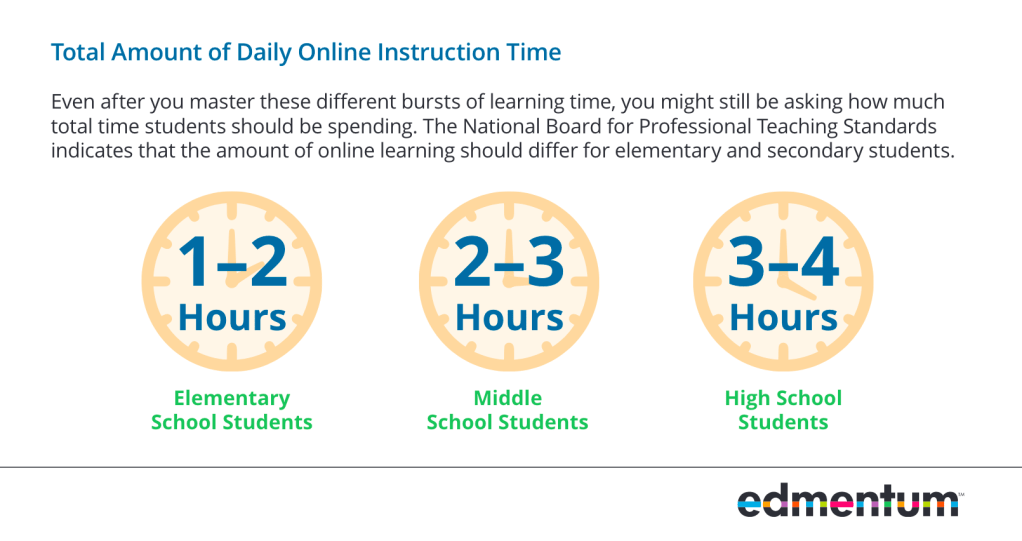
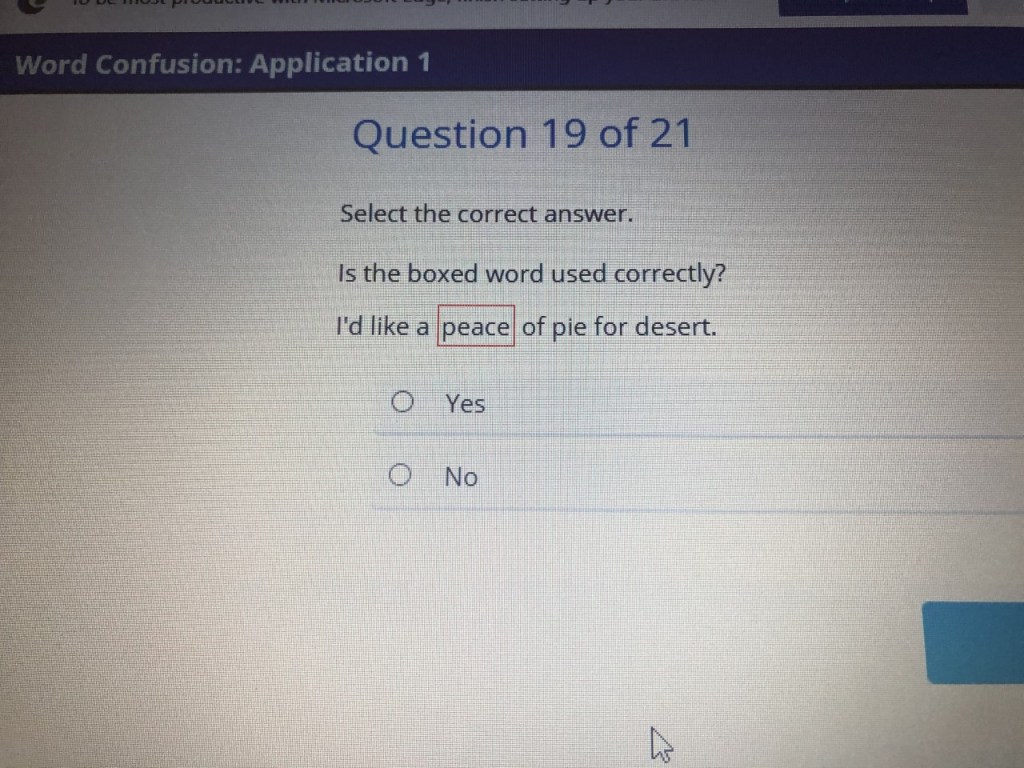




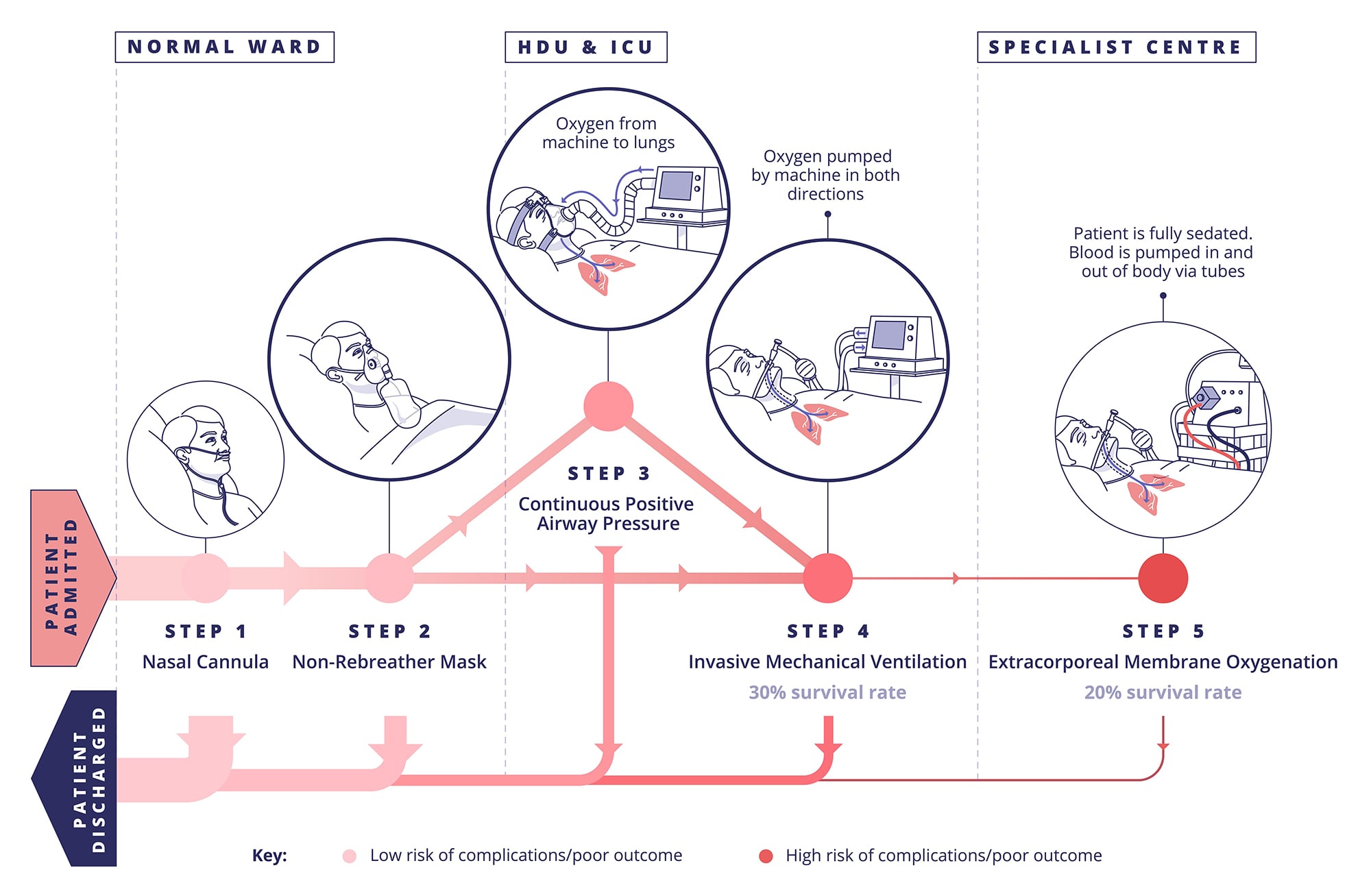


 gadflyonthewallblog