If You Don’t Want Teachers to be Saviors, Don’t Put Them on a Cross 


At the end of the school year, I like to show my 8th grade students the movie “Freedom Writers.” 


It’s a good culminating film for the class because many of the subjects and texts we read are mentioned by the characters – “The Diary of Anne Frank,” “To Kill a Mockingbird,” the civil rights movement, journal writing, etc.  


It reinforces the relationship between historical narratives and the fight for human rights as well as underlines the importance of raising your own voice


However, it is also a movie that has come under fire for perpetuating the white savior trope.  


The film is based on the true story of Erin Gruwell, a white middle class woman, who taught inner city children to find their own voices by writing about their lives in Freedom Writer journals. 


The biggest problem seems to be that in the film the teacher takes on more jobs to afford supplies, spends time putting together field trips, and even ends up losing her marriage so her students’ needs will be met in the classroom. 


Is she a white savior transforming, saving and redeeming the lives of her students through her own personal sacrifices?  


Is this essentially a feel good story about a white person saving otherwise irredeemable brown skinned children?  


Honestly, I don’t think so. I suppose the answer depends on how much the students’ success should be attributed to the sacrifices of their teacher, and how uncomfortable we should be by the fact that she’s white while her students are predominately children of color. 


Is there something wrong with these kids? Absolutely not. Stereotypes aside, their problems arise from the circumstances in which they live more than anything else. 


But if I’m being truthful, I have to admit these are tough questions, even more so when we’re asking them about real teachers and students. After all, I show the movie to my students because we’re in a somewhat similar relationship. They have many analogous experiences and I try to teach them using some corresponding texts and methods.  


And am I not also a white teacher with a class of mostly black and brown children? 


How often are people in my own position labelled white saviors? And what part of that label is denigration and what part valid criticism? 


On the one hand, there are legitimate challenges born out of this situation. 


About eight-in-ten U.S. public school teachers (79%) identified as White (non-Hispanic) during the 2017-18 school year, according to the National Center for Education Statistics (NCES). Fewer than one-in-ten teachers were Black (7%), Hispanic (9%) or Asian American (2%). So this situation is pretty much the norm – most students of color have white teachers. 


This is challenging because study after study shows white teachers bring their biases with them to the classroom. They often have lower expectations for students of color, which greatly affects their students’ motivation and achievement. This may even impact expulsion and discipline rates as well as other facets of students’ academic experiences. 


With the constant emphasis on standardized test scores and the testing gap, it is easy to fall into the trap of seeing students of color as less than. After all, children of color in general do not score as well as richer whiter kids. So teachers are encouraged to look at the situation as one in which they can act on their students and MAKE them have higher scores simply by giving the right test prep and forcing their students to do these boring and extrinsic assignments by using increasingly punitive inducements.  


However, I do not think it is correct to characterize this as being a white savior. I think it is being a colonizer, and I have seen the same kinds of attitudes and actions from people of various races and ethnicities.  


In my own admittedly limited experience, the most test obsessed teachers and administrators I have ever know have been people of color – almost as if they were trying to make a point about their own racial identity by raising test scores of the children in their charge.  


The problem is that the testing gap has nothing to do with any deficiency in black and brown students. It comes from biased and unfair questions which are based more on privilege and culture than authentic academic ability.  


The problem with being a colonizer is that it enforces a prejudicial status quo. So raising test scores (even if you’re successful) does little to help people of color. It simply justifies making them jump through biased and unfair hoops in the first place with the excuse, “See? They did it. Why can’t you?” 


In this way, I agree with, Dr. Christopher Emdin, an associate professor at Columbia University’s Teachers College, who advised educators in his book “For White Folks Who Teach in the Hood…and the Rest of Y’all Too”: 


“You are there not as a savior, but as a revolutionary.” 


Teachers should be openly antiracist – especially white teachers. As difficult as it can be sometimes, we must not allow racism to become a taboo topic – something to be whispered about but never spoken of by name. We need to have the uncomfortable conversations. We need to read texts by people of color and honor every student’s race and culture. We need to prize difference and examine our own reactions to it. 


However, as I said I do not think the issue here is saviorism.  


That is something completely different though just as harmful. 


Regardless of race or ethnicity, teachers are forced to be martyrs .  


You can criticize Gruwell’s story because of all she gives up for her students, but that is kind of what teachers are obliged to do if they want to accomplish even a smidgen of their responsibilities.  


In fact, it is almost impossible to be a teacher – especially a teacher of predominantly black and brown students – and not be viciously coerced to sacrifice yourself.  


For example, more than 90 percent of educators use their own money to buy school supplies for their students, according to a survey from the National Education Association (NEA).
 
An analysis from My eLearning World showed teachers for the 2022-2023 school year spent an average of $820.14 on classroom supplies.  


However, educators cannot deduct even half of that cost from their taxes.  


Why do teachers do this? Because schools don’t purchase what kids need. So – especially in impoverished areas – educators are left with the choice of watching students do without or simply meeting that need, themselves.  


Almost every aspect of teaching involves some kind of sacrificial trade off like this.  

You can have a classroom with bare walls or you can buy and put up your own decorations to make it a welcoming environment for students. You can try to get kids up to your school’s meager library (assuming one even exists with a full-time librarian to keep books in stock) or you can just purchase your own classroom library.


Heck! There are only about 40 minutes or so in most teachers’ day to plan their lessons and grade student work. That’s not nearly enough time. Just to get the bare minimum done, educators have to spend hours and hours extra daily without pay.  


Moreover, teachers salaries are not commensurate with other professionals. They are paid 20% less than other college-educated workers with similar experience, and a 2020 survey found that 67% of teachers have or had a second job to make ends meet

You want more teachers of color to enter the profession? Then stop making privilege a prerequisite to apply!


This is why so many teachers are leaving the profession. They don’t want to be sacrificial offerings anymore.


The entire country is in the midst of a national educator walk out. Teachers are refusing to stay in the classroom due to poor salary, poor working conditions, heavy expectations and lack of tools or respect. 
After decades of neglect only made worse by the Covid-19 pandemic, we’re missing almost a million teachers. 


Nationwide, we only have about 3.2 million teachers left


Finding replacements has been difficult. Across the country, an average of one educator is hired for every two jobs available. 


And you want to complain that teachers are acting like saviors!?  


Fine! Stop giving us two pieces of wood and some nails!  


While there is a legitimate caution behind the white savior teacher trope, it is mischaracterized and misused in order to gaslight educators to simply take the abuse and be quiet.  


Yes, educators need to stop defending the status quo. We need to examine our biases and embrace racial and cultural differences. We need to actively work to tear down systems of oppression even in our educational system. 


But we also need to reform those systems so they don’t require us to self immolate. We need an education system that actually provides enough resources to students so that their teachers don’t need to jump on the pyre to keep them warm. 


These are two sides of the same coin. The same system that oppresses children of color by withholding enough compels teachers to become saviors. The one is built upon the other.  


Civil rights activists need to do a better job recognizing this and speaking out against it.


As activist Lilla Watson famously said: 


“If you have come here to help me, you are wasting your time. But if you have come because your liberation is bound up with mine, then let us work together.” 


Like this post?  You might want to consider becoming a Patreon subscriber. This helps me continue to keep the blog going and get on with this difficult and challenging work.

Plus you get subscriber only extras!

Just CLICK HERE.

Patreon+Circle

I’ve also written a book, “Gadfly on the Wall: A Public School Teacher Speaks Out on Racism and Reform,” now available from Garn Press. Ten percent of the proceeds go to the Badass Teachers Association. Check it out!

When Our Students Leave Us

Being a teacher is kind of like being a time traveler.  


So much of what you do and say changes those around you, and the effects can shoot off into the distant horizon far beyond your line of sight. 


I sometimes wonder what happened to certain students, if they continued to become the people they wanted to be or if time and circumstance caught up to them. 


As a public school teacher with more than two decades experience, sometimes the years sneak up on me. 


Students whom I remember as little children in middle school desks have grown into adults since they left.  


Not that I usually get to see their grown-up faces. Often times their lives never intersect with mine again and I never know what become of them.  


But occasionally an invitation, a chance encounter or an article in the local news gives a glimpse of who they are or where they end up. 


For example, a few months ago I was invited to a ceremony where one of my former students was being awarded the rank of Eagle Scout. He was getting ready to graduate high school now, and in the picture on the invitation he looked about ready to burst out of his scouting uniform – but he had the same smile, the same glimmer of mischief in the eye. 


At first, I wasn’t sure if I should attend – if after four years the student – let’s call him Doug – really wanted me to be there. But then he stopped by my classroom after school one day. He must have remembered that I’d still be there grading papers, rewriting lessons, making myself available if needed.  


“Are you going to come to the ceremony, Mr. Singer?” he asked in a way that left no doubt how important this was to him.  


I remembered Doug in class. He was always such a prankster. He was the first person to crack a joke – even reciting some classic but inappropriate standup routines as if they were his own. I’d shared with him some old Doctor Demento tapes and we’d had a few laughs.  


“I asked Mr. Kimble to come, too, but he said he was busy. He’s dead to me now,” he said with a smirk.  


It was a joke, but it struck me hard. Did it still matter to me whether I disappointed this child? The answer came back immediately – it still did. 


So I ventured out of the house on the weekend dressed as my weekday self. I sat through the speeches and solemn rites. I listened to his speech and finally understood why he wanted me there.  


He wanted me to see how far he’d come – that as dedicated to humor and jollity as he was, Doug could be serious as stone when need be. He had led his fellow scouts in refurbishing a local veterans memorial and showed himself to be a real leader. If he wanted the world to laugh, it was only in service of making it a better place.  


Several weeks later I found myself in a similar situation with another former student. 


Unlike the scenario with Doug, I wasn’t expecting anything. In fact, it took me a few moments to even recognize the boy through the man he had become.  


I was at a local movie theater with a section of my school’s Dungeons and Dragons club. I started the extracurricular club and am lead sponsor. During the week, we get together and play the tabletop role playing game. I try to have them both organize the adventures and play through them. Some kids function as Dungeon Masters and others have characters like warriors, wizards, elves, orcs and dragon-borns.  


On this weekend, one of our local families had paid for the group to see the “Dungeons and Dragons: Honor Among Thieves” movie. I was herding the kids together in front of the movie poster to take a picture of the event when this full-grown man walks up to me and says, “Hey! Mr. Singer!” 


I squinted at him, but he had a huge grin on his face and seemed happy to see me. Then I noticed that one of my club members was at his waist pulling on his sleeve asking for some popcorn.  


We shook hands and he introduced himself as Jamal’s big brother. Then he asked if his brother was good in class or bad like he had been.  


That’s when it came together. I saw through the adult and to the kid he had been – a kid pretty similar to his brother Jamal. 


It must have been 10 years ago. He had been a diminutive boy in a class of kids who had hit puberty a few months before him. He had been shy and often got picked on. He tried hard on his assignments – at least the ones he turned in.  


The adult version chatted with me as his brother went to the concessions stand with the money he had given him. Though he lived a few neighborhoods away these days, he tried his best to come back to the district to look out for his brother.  


He didn’t go into many details, but it was obvious he had gone through a lot in the intervening years. He had a limp and smelled of musty pine trees. But he was clearly there for Jamal when no one else was.  


Before the movie, there was a preview for a documentary about Malala Yousafzai, a Pakistani education advocate and winner of the Noble Peace Prize. Several students, including Jamal, turned to me in my corner in the back and chanted her name because we had talked about her in class. 


Jamal’s big brother was still smiling, proud that his little brother knew who this brave woman is before the film had explained it. 


If you saw him on the street, you might not think him a success story. He seemed an average person just doing what he could to get by. But I knew (at least some) of the journey he had taken to get there. I knew how hard won his peace was. And I recognized that smile still on his face – so rare when he had been in class but now a permanent feature. I think that is success, too. 


But the last former student I want to talk about is Marquis.  


He was in one of my first classes. I remember him as a gawky middle schooler with string bean arms and legs below a sullen face.  


When I started, if there was one student sent to the office that day – it was him. If there was one kid shouting out a swear word or picking a fight, it was Marquis. This was an angry kid who demanded attention – positive, negative, it didn’t matter. 


I used to make badly behaved students stay 15 minutes after school for detention. It’s not something I do so much these days but I was a new teacher then – strict and consumed with reciprocal justice. In fact, students had to WORK during my detentions. No sleeping or even doing homework. They had to copy definitions out of the dictionary for the full time. If they slacked off, I added more time. Some days a 15-minute detention could last an hour, because if I reported that they hadn’t satisfied me, the principal would keep them on the weekend or in a longer detention during the week with an administrator. 


I remember Marquis whining and complaining as he copied definitions. He’d spend more time whining than working – but eventually he learned.  


Eventually he’d come in, sit up straight in his seat and copy those definitions from start to finish like a machine. He did it so well, his scores on my vocabulary quizzes started to improve. But he still ended up getting detentions – at least twice a week.  


One day he finished the definitions and I told him he could go. “Can I stay?” he said.  


“What?” 


“Can I stay and copy definitions a little longer?” 


I almost started to cry – right then and there. 


So THAT’S why he always got detentions. He wanted somewhere to go after school. He wanted someone to talk to, someplace safe to wait so he could walk home unmolested by the other kids.  


He never got detention again because I told him he could stay with me any day he wanted after school for as long as he wanted. And he did. Sometimes we’d talk. Sometimes he’d do work. It didn’t matter, but his behavior in my class improved.  


At the end of the year, when he passed English Language Arts – one of very few classes he managed to get a C or better in that year and the first time he had passed ELA in middle school – I told him how proud I was of him. And he smiled the biggest smile I’ve ever seen.  


He continued building on that success, too. He went up to the high school and got better and better grades. He kept out of trouble and became one of those kids everyone seems to know and most people seem to like. He was the kind of kid that every teacher had an anecdote about.  


I hadn’t thought about him in some time, but then an item appeared in the local news.  


Drive-by Shooting Kills Area Man. It was Marquis.  


He had just been walking along the street helping some younger kids to the basketball courts. By all accounts he has straightened up his life, got a college degree and was just starting on a career as a social worker in the same community where he grew up.  


It was a shock.  


I turned to my files and I saw I still had a folder with his name on it – back when I used to collect such things. Inside were a few old write ups, and pages and pages of vocabulary words in his childish handwriting.  


We never know what will happen to the kids in our classrooms.  


We never know who will be successful, who will be happy, who will live fulfilling lives.  


But we try – we try SO HARD – to give our kids everything we can. 


Doug had a straight path, and so far he’s walked it without incident.  


Jamal’s brother had a lot of bumps on the road, but he’s still walking it.  


And poor Marquis. He walked as far as he could. I wish we could have made for him an easier road – and a longer one. 


“Count no man happy until the end is known,” wrote the ancient Greek story-teller Herodotus


Known as the father of history, he meant that you never know if someone is truly happy until their death, because even a seemingly happy person today could have a tragedy befall them tomorrow taking away everything that made them happy. 


I think about that sometimes when considering the fate of my former students. 


After more than two decades in the classroom, it seems to me that the quality of the journey is more important than whether it may all disappear tomorrow. 


After all, knowing the fate of any of our students wouldn’t really change what we do for them. We’re teachers – will give them our all no matter what.  


Because that’s the road we’ve chosen to walk


Like this post? I’ve written a book, “Gadfly on the Wall: A Public School Teacher Speaks Out on Racism and Reform,” now available from Garn Press. Ten percent of the proceeds go to the Badass Teachers Association. Check it out!

book-2

Lobbyists Congratulate Themselves for 20 Years of NCLB Standardized Testing

It’s hard to learn your lesson – especially if doing so costs you money.

Case in point: the U.S. Chamber of Commerce Foundation, the largest lobbying organization in the country, issued a new report examining the impact of No Child Left Behind (NCLB), the George W. Bush era law making standardized testing the centerpiece of K-12 education.

So an organization representing oil companies, pharmaceutical giants and automakers just opined on public school policy as if it were made up of experts.

And guess what?

Business folks don’t know what the heck they’re talking about in education.

Because after sorting through 20 years of NCLB controversy, political shenanigans and factual mistakes, the supply side cabal thinks the law is just fine.

It’s kind of like a judge watching a driver plow his car into a brick wall repeatedly and then instead of taking away his license, awarding him a safe driver certificate.

It doesn’t take a political scientist to figure out why.

Think about it. These are supply side cultists. If our education policy is working just fine as is, then there’s no need to raise taxes on all the business interests the free market fan club represents to fix the problem.

And, moreover, we can keep funneling the education dollars we do spend to corporations (many of whom are represented by the U.S. Chamber of Commerce Foundation) who profit off the law by making tests, grading tests and selling test prep material.

The only thing shocking here (maybe) is the way the media publishes the Foundation’s results as if they were truths handed down from on high.

What’s the matter, journalists? You’ve never heard of a conflict of interest?

An organization like the U.S. Chamber of Commerce Foundation with proven ties to the Koch Brothers and the American Legislative Exchange Council (ALEC) is somehow the epitome of unbiased advocacy!?

The organization’s own report describes the Foundation as “tireless advocates for high-quality academic standards, assessments, and accountability as tools for educational equity.”

By its own admission, then, this is the testing industry evaluating itself. And – surprise – it gave itself a high score!

The report was written by Dan Goldhaber and Michael DeArmond of the Center for the Analysis of Longitudinal Data in Education Research (CALDER) at the American Institutes for Research with a qualitative analysis by Brightbeam CEO Chris Stewart and his staff.

CALDER is a federally-funded nonprofit organization with several testing industry-funded and conservative think-tank members in management, on the advisory board, and working as independent researchers – in case, you thought anything they produced might be fair and balanced.

Brightbeam is a corporate education reform think tank financed by the usual billionaires such as Michael Bloomberg, Alice Walton, Jim Walton, Laurene Jobs Powell and Mark Zuckerberg. And Stewart is a long-time standardized testing and school privatization cheerleader – not exactly the kind of people who can afford to find much fault in NCLB because doing so would put them out of work.

The report highlights eight key findings – four positive and four negative.

First, the authors of the report pat each other on the back because NCLB collected so much yummy data that had been unavailable previously. In particular, the law extracted data from the nation’s schools based on race, socioeconomics and special needs. “No longer were school districts able to hide the performance of some students behind an average,” the report states.

It’s certainly true that NCLB collected a mountain of data. However, such information conceivably could have been gathered without making standardized testing the fulcrum around which schools turn. It could just as easily have been collected based entirely on classroom grades. It’s just that doing so might have been considered invasive and a violation of privacy. You might have had to explain why you wanted such data first – but why explain when you can just take?

Moreover, it’s strange to celebrate NCLB for disallowing hiding student performance behind an average when that’s exactly what it does. Everything is an average now! Average test scores, aggregate passing scores, whether your school made adequate yearly progress… it’s all averages! Oh to go back to the times when you could look at a single student’s academic record without having to compare it to anyone else!

Second, the authors claim student test scores increased because of NCLB especially among Black, Hispanic, and low-income students. However, this depends on how you massage the data.

Test scores have stayed relatively the same throughout the last 20 years with dips here and rises there. No matter the test, the overall trajectory has been pretty flat. You can focus here or focus there to create a picture that supports whatever narrative you want, but taken as a whole, there has not been any significant progress as shown by test scores.

But even if there had been, let’s not forget that no one has ever proven standardized test scores actually have anything to do with real academic progress. Just because you get a good score on a multiple choice test, it doesn’t mean you’ve actually learned to do anything but take a very limited and artificial test that is far removed from the circumstances where anyone actually uses the skills the test purports to be assessing.

Third, the report celebrates the production of “more reliable, comparable education data.” This is a suspect claim.

Are test scores more reliable than classroom grades? That has never been proven. In fact, when it comes to predicting future success in college or careers, there is plenty of evidence that classroom grades do a better job than test scores. After all, tests are based on work done over a relatively few number of days. Grades are based on an entire year’s worth of work.

However, it is true that test scores are more easily comparable because they come from the same assessments. Why this is so important is unclear. Learning is not the same as sports statistics. It is not a competition. Students learn when they’re ready to learn – not based on anyone’s schedule. What matters is if they learn at all.

Fourth, the authors admit “Reforms in teacher evaluation and school turnaround initiatives did not consistently improve student outcomes at scale, in part due to significant variation in quality of implementation.”

It is interesting that even the U.S. Chamber of Commerce can’t spin NCLB into an unquestionable success. But it is almost a cliche among the standardized testing industry that any failures of the big tests are always excused as failures solely of “implementation.” If teachers and districts just tried harder to put the testing industry’s plans into effect, everything would be working perfectly. It’s these darn teachers and schools! Whine! Cry! Sob!

For the negative findings, the report concluded there were unknowns about the impact of NCLB that should be further studied.

First, they were unsure if schools serving minorities and the poor ended up getting more money to improve than they otherwise would have done. SPOILER ALERT: they did not.

The original Elementary and Secondary Education Act passed under Lyndon B. Johnson was focused on equity – the exact concern the authors of the report pretend to be all about. However, when the law was reauthorized as NCLB in 2002 (and reauthorized again in 2015 as the Every Student Succeeds Act) it focused instead on test scores as a gatekeeper to equity. Instead of looking at needs, you had to pass the tests to get the money to meet your needs. And if you had needs, that meant your district and teachers were failing so they had to lose funding to punish them, first. Somehow you were supposed to end up with more funding after all that nonsense.

Second, if schools did get more funding because of test scores, the authors of the report were unsure what schools did with it. SPOILER ALERT: It went to test prep and charter school expansion.

NCLB refocused education on test scores, so if students did badly on the assessments, they needed test prep material. And if the teachers and districts weren’t miraculously overcoming social, economic and special needs of students in impoverished areas, money was given to open competing charter schools.

Did this help? Just the opposite. Now you have two schools vying for an even smaller pot of funding but one of these schools (the charter) doesn’t have to follow the regulations the others school must. So anyone with no background in education can open a school, hire uncertified teachers, make decisions on how to spend tax dollars without an elected school board, etc. Not helpful.

Third, the authors of the report were unsure how many struggling schools became successful under NCLB. SPOILER ALERT: Not many.

You don’t help a malnourished person by starving him even further or making him compete for food. The same with school districts. In almost every case where a school miracle is proposed in which kids simply pull themselves up by their own bootstraps, the reality turns out to be a byproduct of creative accounting or selective data.

That was the entire foundation of NCLB – George W. Bush’s fairy tale about Texas schools during his time as Governor which miraculously improved when you tested the heck out of them. That never happened, and neither did it happen when his dream became national policy.

Take New Orleans, a district often held up by the testing and privatization industry as a success. This is the only all-charter school district in the country. After 2005 and Hurricane Katrina, a predominantly white Republican legislature forced the district’s public schools to become charters – outright experimenting on a majority African American city. The result? School enrollment declined from 65,000 before the hurricane to 48,000 a dozen years later. The most recent state scores rated 49% of the city’s charter schools as D or F, based on their academic performance. The New Orleans district scores are below the state average, and that’s saying something since Louisiana is one of the lowest performing states in the nation.

Not exactly an overwhelming success.

Fourth, the authors wondered if NCLB might have resulted in non-academic improvements – things like a reduction in chronic absences, school climate, etc. SPOILER ALERT: Nope.

A focus on standardized testing does not convince more kids to come to school. Few kids get excited about taking tests. They get excited about broad academic curriculum, arts and extra curricular activities – the kinds of things districts had to cut back on because of NCLB.

So there you have it. The U.S. Chamber of Commerce Foundation is proud of their little report about the impact of NCLB. They give themselves a gold star.

The reality though is much different than what you’ll find on this bit of propaganda.

Any reasonable examination of the last 20 years in education would show this policy is ripe for repeal. We need to forgo standardized testing entirely in our public schools – not double down on them for yet another decade of failure.

Not only should it not be required to determine which schools need what funds, it should be kicked out of our schools like foxes from the henhouse.

And charter schools should be abolished in all 45 states plus the District of Columbia that have been duped into passing laws allowing them.

We need to put the focus back on equity, back on student need.

Let’s get real. Poverty and wealth are the most important factors determining test scores. This shows up on every standardized test. In fact, that’s what the name means – STANDARDIZED test – these assessments are normed on a bell curve reflecting family income and education. Kids from families from higher socioeconomic brackets are at the top of the curve and poor kids are on the bottom.

And consider this: nearly half the students in the U.S. now qualify for free or reduced lunches – the federal measure of poverty. So if we really want to help kids achieve academically, we need to first reduce the impact of poverty on children and families by making sure that they have access to nutrition, medical care, and good housing. Ensure pregnant women get medical care so their children are born healthy.

That’s how you improve education. The federal government should fully fund the schooling of students with disabilities and at least triple the funding for low-income schools. Pay teachers the kinds of wages that will keep them on the job and stop the steady stream of educators out of the field. Teachers should be treated like professionals and never have to work at second or third jobs to make ends meet. Assessment should be a teacher’s job – they should write their own tests as we trusted them to do for generations. And we can use the billions in savings now wasted on standardized testing instead to reduce class sizes so children can get individualized help from their teacher.

In short, don’t give students corporate canned tests. Give them well-maintained schools with nurses, counselors, and libraries with flesh-and-blood librarians. These are just some of the ways we could actually make things better.

It’s been two decades already. People know high stakes testing has failed despite whatever public relations reports are issued by lobbyist organizations. It’s time we had the courage to admit NCLB was a mistake and acted to finally put things right.

It may hurt some businesses that rely on testing to make a buck. It may require big corporations to pay their fair share of taxes. But that is the only way to improve education.

We must put our money where our mouths are – or else be quiet.


Like this post?  You might want to consider becoming a Patreon subscriber. This helps me continue to keep the blog going and get on with this difficult and challenging work.

Plus you get subscriber only extras!

Just CLICK HERE.

Patreon+Circle

I’ve also written a book, “Gadfly on the Wall: A Public School Teacher Speaks Out on Racism and Reform,” now available from Garn Press. Ten percent of the proceeds go to the Badass Teachers Association. Check it out!


Forget About Quality Instruction When You Take Away Teachers’ Planning Time

Dear Principal, 


You talk a lot about quality instruction.  


We need to do THIS to give students the best quality instruction.  


We can’t do THAT because it will reduce the quality of instruction.  


Yet once again today I have to give up my planning period to sub for an absent teacher! 


Doesn’t THAT impact quality of instruction!? 


We closed the entire district last week because COVID-19 cases were out of control. Then we reopened this week to preserve – say it with me – quality of instruction. 


There has not been a single week so far this school year when I have not had to lose my planning period and sub.  


Not one single week.  


EXCEPT when we were on remote.  


I’m not saying that’s the best model to teach, but at least I get to stop and think about what I’m going to do with my students.  


At least I have time to grade some papers and call some parents and plan out how my next few lessons will fit into each other to form a coherent whole.  


At least I’m not flying by the seat of my pants.  


Which seems to be the norm in the physical school building these days. 


You need to understand something.  


Every time you take away a teacher’s planning period – whether it be to cover an IEP meeting, use a teacher as a security guard in the cafeteria, sending someone to a training or otherwise – you are reducing the quality of instruction that teacher is able to provide that day.  


And if you do it for long enough, you can no longer fairly judge that teacher’s annual performance by the same expectations you would have under normal conditions. 


You need to put an asterisk next to her name for the year.  


Meaning this isn’t the best she could do, but this is the best she could do WITHOUT HER PLAN. 


Imagine an actor going on stage without having the chance to practice the play? Imagine an athlete playing in the championship game without having the chance to warm up or watch tape. Imagine a pilot flying your plane without being able to contact the air traffic controller or plan the route from one airport to another. 


The results would not be ideal.  


You would expect them to be sloppy, haphazard and possibly disastrous.  


In fact, if most other professionals working under these conditions were able to pull out something even passable, we’d celebrate them as prodigies.  


Wow! Did you see Denzel in Hamlet? He didn’t even have a chance to practice! He just did the whole play from memory!  


Oh! And when Brady threw that touchdown pass! He wasn’t even warmed up! He rushed right from his car to the field – and he wasn’t even at training camp all week!  


You should have the same reverence for your teachers who perform miracles every day in the classroom without having the time to plan. 


That’s how amazing this should be.  


It should not be accepted as the status quo.  


But I know what the excuse will be: this is unavoidable.  


There are just too many absences and not enough subs. And to an extent that’s true.  


However, what are you doing to alleviate that situation?  


Have you reached out to local colleges to find teaching students who would relish the experience of subbing? Have you reached out to retired teachers looking for extra pay? Have you lobbied the school board and the legislature for more money to pay subs and teachers? 


Have you done everything you can to support the health and well-being of your staff so that fewer need to take off? Have you cut all unnecessary tasks like formal lesson plans, stopped holding staff meetings unless an urgent need presents itself, refrained from new and unproven initiatives, cut duties where possible to increase teacher planning time? 


If not, then don’t talk to me about inevitability. You have contributed to it.  


What’s happening in education has been a long time coming. Low pay, lack of respect, gas lighting, scapegoating, micromanaging – no wonder so few people want to be an educator anymore.


The people who are left want to be in the classroom because we love teaching. However, with all the nonsense heaped on our shoulders, the job has become less-and-less about that and more preoccupied with ancillary concerns – paperwork, endless meetings where nothing gets done, useless trainings so some corporation can get paid, and outright babysitting.  


When you take away our planning periods, we can’t do our best for our students. And that’s why we’re here! To give our best!  


When you take that away from us, you take away a lot of the satisfaction of the job.  


No one devotes their life to something to do it half-assed.  


Quality of instruction is not an excuse for us. It’s not a cudgel or a catchphrase or a policy decision.  


It is the core of our jobs.  


It is the essence of our calling.  


Don’t take that away from us. 


Like this post?  You might want to consider becoming a Patreon subscriber. This helps me continue to keep the blog going and get on with this difficult and challenging work.

Plus you get subscriber only extras!

Just CLICK HERE.

Patreon+Circle

I’ve also written a book, “Gadfly on the Wall: A Public School Teacher Speaks Out on Racism and Reform,” now available from Garn Press. Ten percent of the proceeds go to the Badass Teachers Association. Check it out!

Don’t Blame Teachers for Covid Quarantines and Closures

 
This week the US reported more than a million Covid-19 cases in one day – a new global record! 


As this latest surge in the pandemic hits, schools all over the nation are closing up again and returning to on-line classes.  


People everywhere are wondering if teachers are to blame


Here are some things for school directors and administrators to consider:  


If you don’t require all students and staff to wear masks – don’t blame teachers. 

If you don’t regularly test students and staff for Covid – don’t blame teachers. 


If you don’t require all students and staff to be vaccinated – don’t blame teachers.  


If your classrooms are not well ventilated – don’t blame teachers. 

If you force staff to come into the building for professional development and don’t allow them to attend remotely – don’t blame teachers.


If you don’t provide K95 masks to all students and staff – don’t blame teachers. 


If you didn’t devise a schedule to keep students socially distanced – don’t blame teachers. 


If you don’t deep clean each classroom and other student spaces between classes – don’t blame teachers.  


If you don’t have lunches outdoors or in some other extremely well-ventilated space – don’t blame teachers. 


If you don’t require a negative Covid test before sick students or staff can return to school – don’t blame teachers. 


If students and staff have steadily been getting sick for weeks and you’ve done nothing to prepare – Don’t Blame Teachers. 


In short, if you haven’t done everything you can do to prevent an outbreak sweeping through your school and your community – DON’T. BLAME. TEACHERS.  


BLAME YOURSELF. 


Like this post?  You might want to consider becoming a Patreon subscriber. This helps me continue to keep the blog going and get on with this difficult and challenging work.

Plus you get subscriber only extras!

Just CLICK HERE.

Patreon+Circle

I’ve also written a book, “Gadfly on the Wall: A Public School Teacher Speaks Out on Racism and Reform,” now available from Garn Press. Ten percent of the proceeds go to the Badass Teachers Association. Check it out!



 

Stop Normalizing the Exploitation of Teachers 


Nearly everyday I get to school only to be confronted by the call-off sheets


Pages and pages of people who aren’t coming in to work – and the substitute teachers assigned to take over their classes.


Yikes, it’s a long list today.

I see Mrs. K is still out. She was sobbing in the faculty room last week. Wonder what that was about.

Rumor has it Mr. C was rushed to the nurse to have his blood pressure taken after his face turned beet red in the middle of his last class yesterday. Not a shock that he’s missing.

And Ms. P’s out again. I can’t blame her. If one of my students attacked me, I’d have trouble coming back, too.

My eyes pour down the names of absent teachers and present substitutes only to find the one I’m dreading – my own.

I’m expected to sub for Mrs. D’s 8th period – again.

Great.


Too many kids I barely know stuffed into a tiny room. Last time there was almost a fight. Will they even listen to me this time?

I have my own classes. I shouldn’t have to do this.


But that’s exactly what’s expected of teachers these days.  


If your colleagues are absent and there aren’t enough subs, you have no choice. You have to fill in somewhere.  


Normally, I wouldn’t mind all that much. After all, I AM being paid for doing the extra work. But day-after-day, week-after-week, for months on end – it’s exhausting.  

It’s not my responsibility to make sure every room in the building is covered.  


I never applied to fix the district’s supply and demand issues. 


It makes it harder to do my own work. Beyond the increased stress of being plopped into a situation you know nothing about, subbing means losing my daily 40-minute planning period.  


Grading student work, crafting lessons, reading IEPs, doing paperwork, making copies, filling out behavior sheets, contacting parents, keeping up with Google Classroom and other technologies and multi-media – one period a day is not nearly enough time for it all.

Not to mention it’s my only chance outside of lunch that I can go to the bathroom.  


And now I don’t even get that! If I’m going to do even the most basic things to keep my head above water, I have to find the time somewhere – usually by stealing it from my own family


Even under normal circumstances I routinely have to do that just to get the job done. But now I have to sacrifice even more!  


I’ll be honest. I often end up just putting off the most nonessential things until I get around to them. 


This month, alone, I’ve only had four days I didn’t have to sub. That’s just four planning periods to get all the groundwork done – about one period a week. Not even enough time to just email parents an update on their children’s grades. So little time that yesterday when I actually had a plan, there was so much to do I nearly fell over.  


When I frantically ran to the copier and miraculously found no one using it, I breathed a sigh of relief. But it turned into a cry of pain when the thing ran out of staples and jammed almost immediately.  


I didn’t have time for this.  


I don’t have time for things to work out perfectly! 


So like most teachers after being confronted with the call-off sheet for long enough, that, itself, becomes a reason for me to call off. 

I am only human.


I figure that I might be able to do my own work today, but I’m just too beat to take on anyone else’s, too.

Some days I get home from work and I have to spend an hour or two in bed before I can even move.

And my health is suffering.  

I’ve had more trips to the emergency room, doctor’s visits, medical procedures and new prescriptions the beginning of this year than any other time I’ve been teaching.


It’s a problem of exploitation and normalization. 


Exploitation is when you treat someone unfairly for your own benefit. 


Our schools have been doing that to teachers for decades – underpaying them for the high responsibilities they have, expecting each individual to do the work of multiple people and when anything goes wrong, blaming them for it. 


The way we mishandle call-offs is a case in point. 


When so many educators are absent each day, that’s not an accident. It’s the symptom of a problem – burn out.  


We’ve relied on teachers to keep the system running for so many years, it’s about to collapse. And the pandemic has only made things worse.  


We piled on so many extra duties – online teaching, hybrid learning, ever changing safety precautions – these became the proverbial straw that broke educators’ backs.  


And now we’re screaming in pain and frustration that we can’t go on like this anymore. That’s what the call-off sheet means. It’s a message – a cry for help. But few administrators allow themselves to see it. 


They won’t even admit there is a problem.  


I can’t tell you how many times I’ve heard principals and administrators talk about the call-off sheet like it’s an act of God or a force of nature like a flood or a tornado.  


No! This wasn’t unpredictable! This didn’t just happen! It’s your fault!  


If there have been a high number of call-offs nearly every day for the past few weeks, it’s not a freak of nature when it happens again today! Administrators are responsible for anticipating that and finding a solution. 


This is not a situation where our school leaders are helpless. 


There are things they can do to alleviate this situation – reducing nonessential tasks, eliminating unnecessary paperwork, refraining from excess staff meetings, forgoing new initiatives, letting teachers work from home on professional development days – anything to give us a break and an opportunity to heal from the years of overburdening.

These are just the short term solutions – the things that don’t require money or political will


However, most administrators refuse to do any of it! They refuse to even admit there is a problem.  


They’re happy to just let teachers keep picking up the slack


That’s what I mean by normalization.  


It’s taking a bad situation and redefining it as usual, typical and expected. 


It’s like saying “This is the way things are now. This is school. This is our new baseline.”  


However, it is not sustainable! 


We cannot continue to apply the old model of public schooling to the problems we have today. It didn’t work before the pandemic and now it is frayed to the breaking point.  


When the first wave of Covid-19 washed over us and many schools went to online learning, leaders promised we’d rebuild back better when they finally reopened. 


This was the perfect chance, they said, to change, to reform the things that weren’t working and do all the positive things we’d wanted to do for years.  


Even at the time I thought it was rather optimistic to the point of naivety. Time has proven me correct.


Since schools have reopened, there has been no rebuilding back better. We’ve been forced to accept things worse.  


Teachers were already trickling away from the profession before Covid-19 was even discovered. Now they’re running away in droves.  

Standardized tests were always poor assessments of student learning. Now we’re encouraged to spend every minute teaching to those tests to overcome the bogeyman of “learning loss.”

Poor and minority students often suffered more traumas and insecurities than their wealthier and more privileged peers. Now after as much as two years of online learning, student trauma is the norm. Kids lack the basic social skills needed to communicate without fighting and they’re taking out their frustration on their teachers.

It’s a raging dumpster fire. And few people in a position to take action have the courage to do so.

Few are even brave enough to admit the dumpster is on fire.

Teachers cannot be exploited forever.

Even we have our limits.

We want to be there for students and their families, but we can’t do that if we’re sick and suffering.

We are a renewable resource but we need renewed.

If society is not willing to do that, there will be none of us left.

The call-off sheet will stretch to the horizon and there will be no one there to take our place.


Like this post?  You might want to consider becoming a Patreon subscriber. This helps me continue to keep the blog going and get on with this difficult and challenging work.

Plus you get subscriber only extras!

Just CLICK HERE.

Patreon+Circle

I’ve also written a book, “Gadfly on the Wall: A Public School Teacher Speaks Out on Racism and Reform,” now available from Garn Press. Ten percent of the proceeds go to the Badass Teachers Association. Check it out!

Where Are the Parents? The School Shortage We Ignore 

Our public schools are suffering from crippling shortages. 


Classroom teachers, substitute teachers, special education aides, even bus drivers are hard to find. 


But of all the essential personnel who have gone missing, the group with the largest impact is the one we least want to mention – parents. 


I’m a middle school Language Arts teacher.  


Every year I look forward to parent-teacher conferences.  


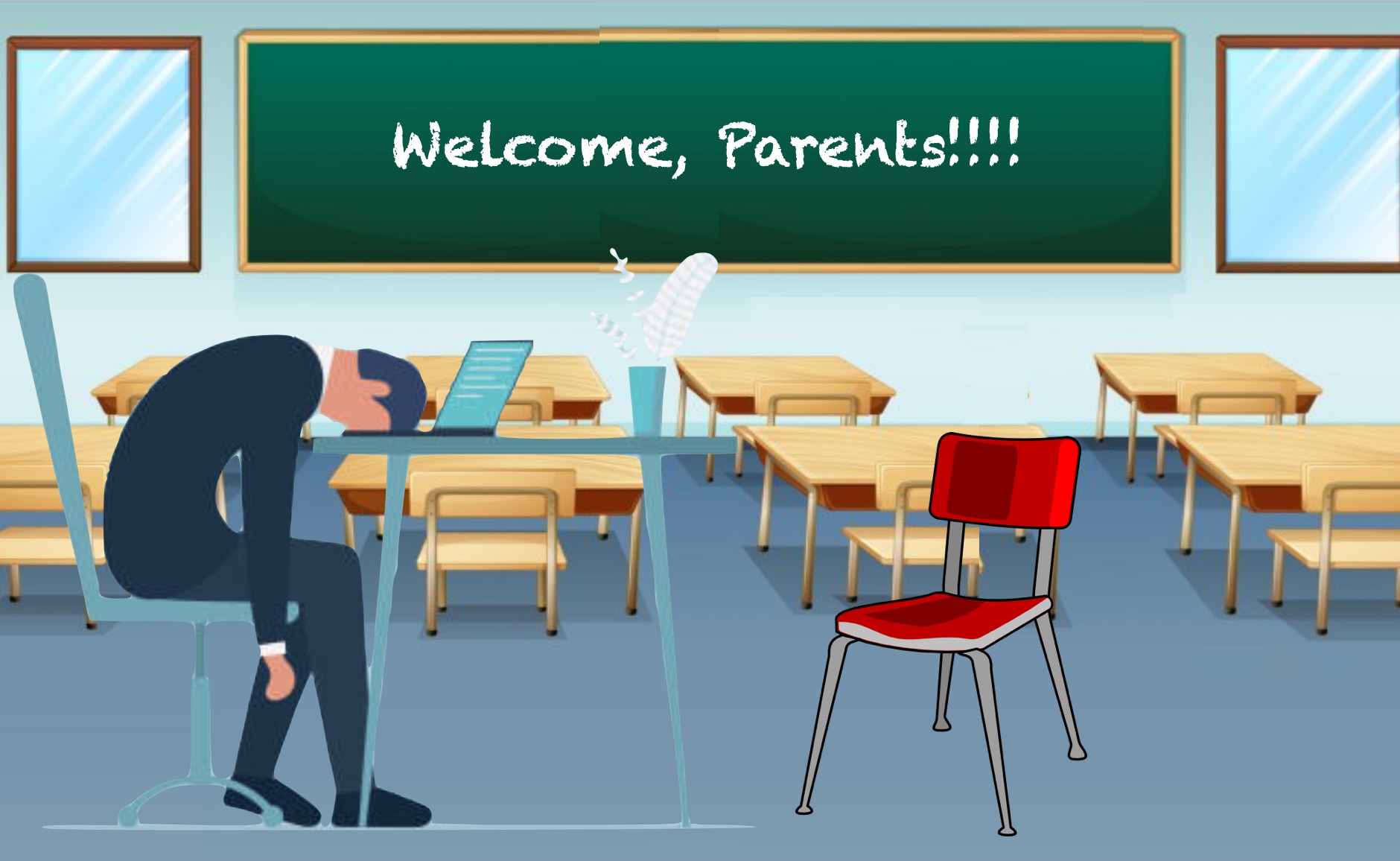
I gather samples of student work, journal entries, drawings and grade reports. I put out a row of chairs in the hall so people have a place to sit if they have to wait for one group to finish before they can see me. And I write in big, bold, colorful chalk on the board, “Welcome, Parents!” 


Then I sit at my desk trying to stay awake as the hours creep by in my empty classroom. 


Where are all the parents?  


Seriously. Where did the moms and dads go? Where are the grandparents, the older siblings, the guardians, the primary or even secondary caregivers? 


On Parent-Teacher Day, they must be somewhere, but they’re not here.  


We typically have a section from noon to 3 and one from 5 to 8 pm so that people with various schedules can come in.  


And every year it’s the same. Only about 20-30% of my students’ parent or guardians usually visit me on these days – and that’s after the promise of bonus points if they come in! 


Even then it’s most often the parents of the kids with the best grades who show up. It’s the parents of kids who say “Please” and “Thank you,” the kids who smile when you walk in the room, the kids who want you to hang up their drawings on the bulletin board.  


The children who are struggling, the ones who don’t know how to behave and look at you out of the corner of their eyes expecting pain and negativity – their parents rarely show up.  


And it’s these bruised and battered kids who are in the majority. 


Where are their parents? 


They’re missing. Gone. Poof. 


We saw this when schools went to on-line learning at the beginning of the Covid-19 pandemic.  


Teachers would turn on their Zoom links to give lessons to their students only to find many of the kids vanished.  


These kids usually were there when school was in-person. But on-line they were MIA. And even if they were technically present, they often hid behind a turned off camera and didn’t hand in their work


Why?  


At school, the teacher was there to make sure these kids took care of business. But at home there simply was no one to hold them accountable. No one to get them up, feed them, and make sure they were online when classes began, ensure they paid attention and did their work.  


That’s why so many kids were absent or otherwise failed the online experience.  


Granted this kind of cyber learning is developmentally inappropriate for most K-12 students – certainly those up through middle school. But with the proper parental support, most children would have done much better.  


It just wasn’t there.  


Now let me be clear about one thing – I am not blaming anybody here.  


It is not my intention to pass judgment on anyone.  


As a parent, myself, I know from experience how difficult the job is – especially during a global pandemic.  


But we have to face the facts. As a whole, parents were the weak link in the chain. And it didn’t start with Covid – they have been the weak link for decades. 


Teachers can’t go to every student’s home and be caregiver as well as educator. The fact that so many children are struggling with basic socialization skills after as much as two years of online schooling goes to show how much of the responsibility for raising children has rested on schools and teachers.  


This year many students don’t know how to talk with each other without instigating a fight. They constantly pick on each other, demand respect they aren’t giving and are starving for any kind of attention they can get.  


Without daily in-person contact with teachers, many children have become socially awkward and need to relearn the basics of interpersonal interaction. That’s how much we’ve come to expect teachers to be co-parents from year-to-year. 


Let me stop again and clarify that I am not talking about all parents.  


Many parents go out of their way to be present in their children’s lives.  


They get their kids up for school, make sure they eat a nutritious breakfast, ensure they catch the bus or get a ride to school, make sure they do their homework after the day is over and establish a healthy bedtime.  


But this should be the norm, not the exception.  


I know how hard it is to do. Waking my daughter up every morning often takes a stick of dynamite. And getting that girl to eat a healthy breakfast is a battle I often lose. But her mother and I make darn sure she does her homework and we even sit down with her to help it get done. And weekday bedtimes are religiously adhered to – no one wants a cranky, fussy child the next morning. 


However, it’s easier for us because we have certain advantages.  


Class, privilege, wealth, upbringing, social status all conspire to give us a boost.  


My wife and I don’t have to work more than one job to make ends meet, for example. It would probably help if we did, but neither of us has the wherewithal, and we get by.  


But many folks are not so lucky.  


They DO have to work multiple jobs. They have work schedules that are less in tune with the school day. They can’t be home to wake up their kids and send them off. They can’t be home when kids are dismissed and don’t have the time to help with homework. Some barely have the education, themselves, to be of much assistance.  


Disadvantaged parents often had bad experiences with school when they were students. So they don’t instill the importance of education to their kids. Nor do they prove good role models since they often don’t read for pleasure, speak in the dominant vernacular or respect teachers.  


All this has tremendous effects on the education children receive. 


In fact, many academic studies have shown that the most important factor in the education process isn’t the school or teachers – it’s the parents. 


Roughly 60% of academic achievement can be explained by family background – things like income and poverty level. School factors only account for 20% – and of that, teachers account for 15%. (see Hanushek et al. 1998; Rockoff 2003; Goldhaber et al. 1999; Rowan et al. 2002; Nye et al. 2004). 


Estimates vary somewhat from study to study, but the basic structure holds. The vast majority of impact on learning comes from the home and out-of-school factors. Teachers are just a small part of the picture. They are the largest single factor in the school building, but the school, itself, is only one of many components. 


Study after study conclude that students with involved parents are more likely to earn higher grades and test scores, have better attendance and social skills, and adapt well to school.  


According to the National Parent Teacher Association (PTA), the most accurate predictors of student achievement in school are the extent to which families create home environments that encourage learning, communicate high yet reasonable expectations, and become involved in the children’s education at school.  


Moreover, when parents are involved, the performance of all the children at school tends to improve – not just the academics of kids with involved parents. The more comprehensive the partnership between school and home, the higher the student achievement.  


Put simply – parents are vital to good learning.  


But our society doesn’t do much to allow parents to parent. 


To some extent, the pandemic is making things worse. 


More than 750,000 Americans have died from COVID-19.   


 According to the CDC, more than 140,000 children in the U.S. have lost a primary or secondary caregiver such as a live-in grandparent or another family member to the virus.   


This is wreaking havoc on kids support systems.  


But an even larger problem is economics.  


When schools went online, employers could have allowed more parents to work from home so they could be there for their children. However, profits were more important.  


Even in non-pandemic times, employers need to provide more time and resources for parent
s. There is too much demand for overtime hours, increased productivity and very little family leave or other such services.  


I truly believe that most parents want to be there for their children but feel like they can’t due to the stresses and strains of work
.  


We live in one of the richest countries in the world. Much of the labor we force people to do is strictly unnecessary. It’s there just to justify our economic system. If we reordered things around people instead of capital, parents could more easily be involved in their children’s educations.  


This is fundamentally the problem with all the educational shortages we’re seeing.  


These are symptoms of an economic failure
. We can continue to prop up this faded machine or create a world that values life over profit.  


But we pretend this isn’t true. 


We’ve been trying to run our schools as if parents weren’t that important and then throwing all the blame on teachers when parents don’t show up.  


This has to stop. 


It’s time to admit how important parents are to their children’s educations and then provide them with the tools necessary to be parents. 


It’s time to include parents in the circle.  


It’s time to expect them to show up. 


Because we can’t continue educating their children without them. 


Like this post?  You might want to consider becoming a Patreon subscriber. This helps me continue to keep the blog going and get on with this difficult and challenging work.

Plus you get subscriber only extras!

Just CLICK HERE.

Patreon+Circle

I’ve also written a book, “Gadfly on the Wall: A Public School Teacher Speaks Out on Racism and Reform,” now available from Garn Press. Ten percent of the proceeds go to the Badass Teachers Association. Check it out!

Teachers Absorb Student Trauma But Don’t Know How to Get Rid of the Pain


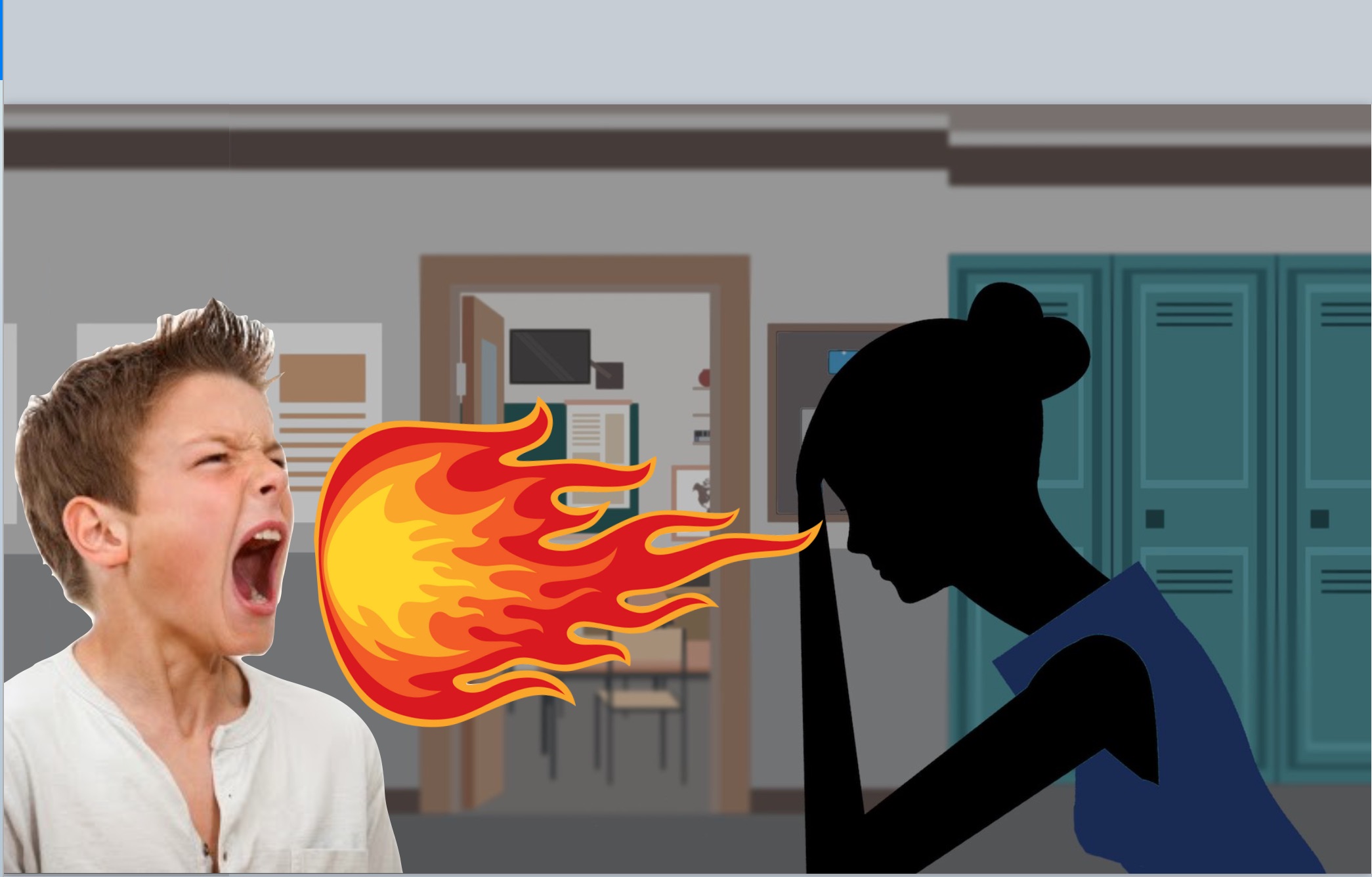
Today a middle school student said he hated me.  


He told me to go F- myself.  


He wrote all over his desk.  


He shouted insults at the other students. 


He asked to be sent home.  


He said he wished he was dead.  


He asked to see the school counselor.  


I let him. 


And this was all in one 42 minute period. 


By the time the bell rang for the next class, I was exhausted.  


I was worried about my student. I wondered how I could help


But I could barely stand up. 


I wiped at my eyes. They were unaccountably filled with tears. My hands were shaking.  


I didn’t have time for this now. I had to put on a smile and welcome in the next class. 


Perhaps there would be time to feel all this later. 


Incidents like this take a tremendous toll on educators. 


We’re highly trained adults, but people forget – we’re human, too.  


When someone unexpectedly yells at you or gets in your face, you feel it. 


This is especially true when it’s a child. 


When a student is crying out in pain and that pain manifests itself as negative and violent behavior, it impacts you. 


We end up absorbing it all like a sponge.  


But what do we do with all that poison once it’s over? 


Psychologists call this experience vicarious trauma


According to the American Counseling Association, this is sometimes called the “cost of caring” and can result from “hearing [people’s] trauma stories and becom[ing] witnesses to the pain, fear, and terror that trauma survivors have endured.” 


Vicarious trauma affects teachers the same way it does students


The brain emits a fear response releasing cortisol and adrenaline which, in turn, increases heart rate, blood pressure, and respiration, followed by a rush of emotions.  


The biological response can display itself in mental symptoms such as anger, headaches, or even physical ones like missing staff meetings, lateness to work or avoiding certain students or situations. 

You want to know why classroom teachers are taking an increasing number of sick days lately? Dealing with vicarious trauma is a big part of it.


“Being a teacher is a stressful enough job, but teachers are now responsible for a lot more things than just providing education,” says LeAnn Keck, a manager at Trauma Smart, an organization that helps children and adults navigate trauma.  


“It seems like teachers have in some ways become case workers. They get to know about their students’ lives and the needs of their families, and with that can come secondary trauma.” 


This is an aspect of the job for which most teachers are unprepared.  


According to a 2020 survey by the New York Life Foundation and American Federation of Teachers, only 15% of teachers felt comfortable addressing grief or trauma.  


When I first entered the field two decades ago, I was taught how to design lessons, sequence curriculum, manage classes, calculate grades, etc. Never once did anyone mention that I would be standing between a hurting child and a world he is desperately trying to lash out against. 


Most teachers aren’t taught how to help students who have experienced trauma. Nor are we taught how to handle the toll it takes on our own health and personal lives.  


And unfortunately things are getting much worse. 


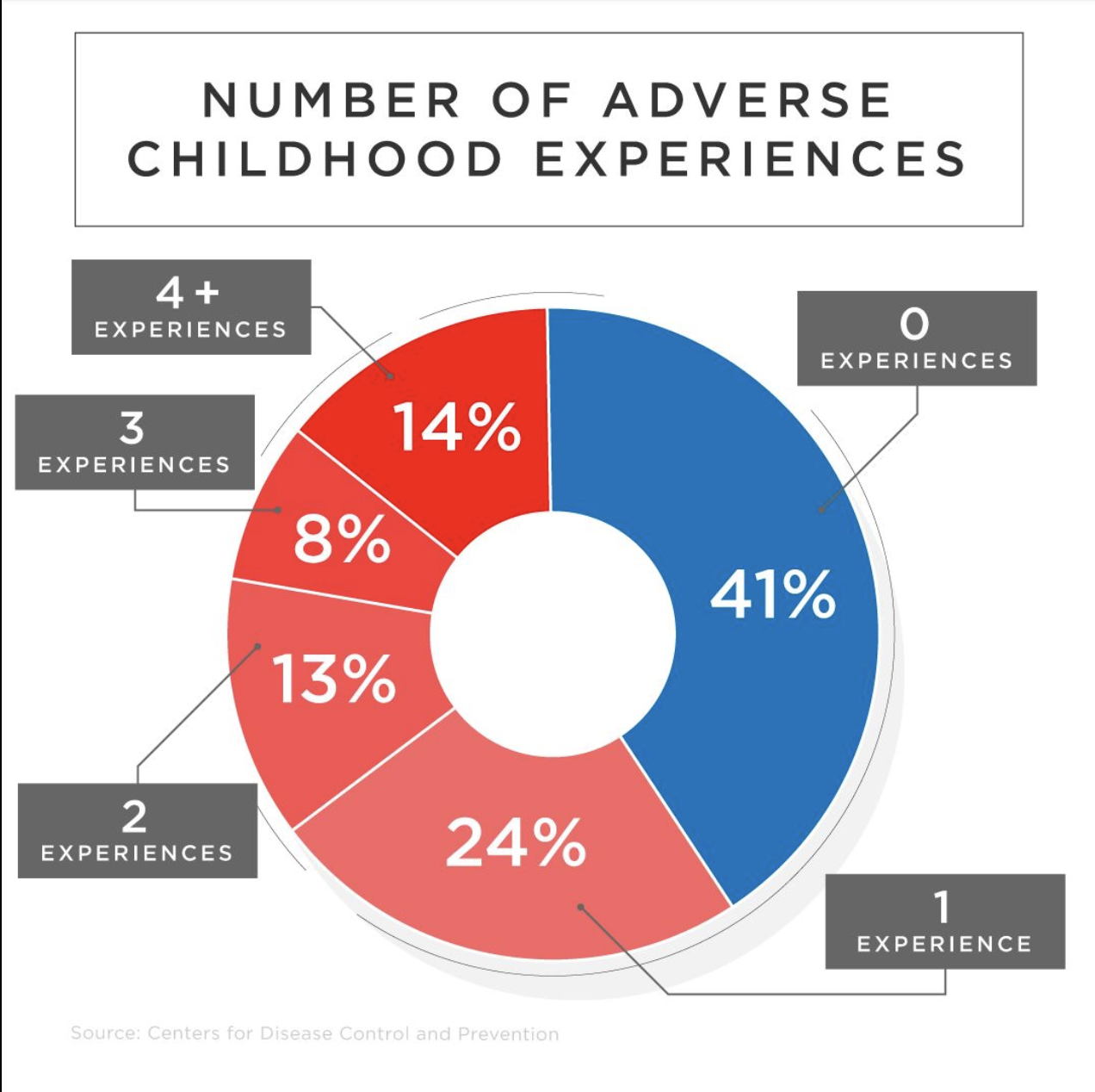
According to the Centers for Disease Control and Prevention (CDC), more than half of all U.S. children have experienced some kind of trauma. This includes abuse, neglect, violence, or challenging household circumstances. And 35 percent of kids have experienced more than one type of traumatic event. 


In class, these traumas can manifest in many ways such as acting out. However, they can also be more subtle such as failure to make eye contact, repeated foot tapping, etc. 


Childhood trauma was not unknown before the pandemic, but it was much less frequent.  


Since returning to the physical classroom after months or more of on-line learning, many students are having a difficult time readjusting. And some show signs of compounded emotional trauma. 


The student who exploded today is a prime example. 


Clearly something may have happened to him. 


A few years ago he had been an A student. He was academically gifted. But when we went to on-line classes to protect against Covid-19, he disappeared.  


Only to come back like this. 


As a classroom teacher with two decades of experience, I know that when a student acts this way, punishing him won’t help. He needs support coping, but that’s easier said than done. 


I need help coping with HIM! 


These adverse childhood experiences (ACEs) can impact kids well into adulthood with higher risks for alcoholism, liver disease, suicide, and other health problems. 


And it affects their teachers, too. 


Since schools have reopened, many kids don’t seem to know how to interact without teasing, goading or tormenting each other. We’re seeing children scream at each other in class over things as simple as finding a pencil. There are more frequent fights, vandalism, bullying, cyber bullying and even attacks against teachers.


Last week at my school, a student in the hall pushed another student into a teacher’s back. The first student was trying to fulfill the infamous TikTok challenge of hitting a teacher, but he wanted to avoid punishment by being able to claim it was an accident. 


This increase in negative behaviors can be directly attributed to the pandemic. 


More than 750,000 Americans have died from COVID.  


According to the CDC, more than 140,000 children in the U.S. have lost a primary or secondary caregiver such as a live-in grandparent or another family member to the virus.  


No wonder kids are having trouble with self-control! Their support systems are in tatters!  


With fewer role models at home and less time in the classroom over the last year and a half, kids are suffering. And that’s not just anecdotal. The facts back it up. 


The CDC reports that children between the ages of 5 and 11 visiting an emergency department because of a mental health crisis increased 24 percent from April through October of 2020 compared to the previous year. Among 12- to 17-year-olds, the number increased by 31 percent.   


Suicide attempts among 12- to 17-year-old girls increased by about 50 percent over winter 2019, according to the CDC.  


And these numbers are probably under reported since these increases took place at the height of the pandemic when many people were hesitant to seek medical attention.   


The increase in student trauma and the lack of additional supports is undoubtedly contributing to the speed at which teachers are leaving the profession. 


We want to help our students but many of us feel ill-equipped to do so. And it’s negatively affecting our own health.  


As we are constantly attacked in the media for everything from teaching an accurate history of America to failing to meet every need our students have, many educators are throwing up their hands and moving on. 


It is vital that people stop hurling stones and understand the increased burden placed on teachers’ shoulders. Not only that, but it’s well past time for people to get off the side lines and actually support educators.  


We can’t do it all alone.  


For example, one of the most important things teachers need is time.  


This is time untethered to students, time without classes to teach or papers to grade or paperwork to fill out or even duties to perform.  


We need time to talk with our colleagues about what we’re experiencing. 


That’s not just gossiping or socializing. It’s necessary to function. 


Educators need the ability to talk through what they’re experiencing and what they’re feeling with other teachers coping with secondary trauma, according to Micere Keels, an associate professor at the University of Chicago and founder of the TREP Project, a trauma-informed curriculum for urban teachers. 


“Reducing professional isolation is critical,” said Keels. “It allows educators to see that others are struggling with the same issues, prevents the feeling that one’s struggles are due to incompetence, and makes one aware of alternative strategies for working with students exhibiting challenging behavior.” 


However, this can’t be something teaches do on their own. This is an essential part of the job.  


Part of our profession has become being put in harm’s way. We need the time to cope with that on the job with our colleagues.


In addition, this allows teachers to work together to develop coping strategies.  


For instance, it’s never good to meet a student’s anger with yelling or fury of your own. Educators need to find ways to de-escalate and bring the tension down in the classroom.  


However, there’s no need to reinvent the wheel, either. Investing in high quality professional development for trauma-informed practices and enacting them school-wide would also be incredibly helpful. As would an influx of professional counselors, social workers and psychologists who are actually trained to deal with these situations.


Finally, it is essential that teachers are allowed the latitude to go home from their jobs. 


By that, I don’t mean that teachers are held hostage, that any district forces their staff to stay in the building 24/7. I mean that many teachers find it difficult to go home and stop being teachers. We’re always on. We need time to turn off and tune out. 


Educators often take mountains of work home, grade papers, call parents, etc. All on their own time. 


There needs to be a demarcating line between our professional and personal lives. And the district, administrators, school directors and parents need to respect that line. 


Teachers cannot be there for children if they do not have time for themselves and their families. 


And these are really just the tip of the iceberg.  


Teachers need higher salaries, lower class sizes, and above all – RESPECT.  


Accomplishing all of this will not be easy. But I’ll bet every district can accomplish SOME of it.  


Every district can accomplish some of it TOMORROW.  


If we want to continue having teachers – I mean flesh-and-blood teachers with college degrees and hard won experience, not just technology, apps or a rotating cast of minders and babysitters – we have to take care of them.  


They take care of our children.  


It’s time we gave back what they need to get the job done. 


It’s time we gave back the respect they deserve. 


It’s time we gave them the opportunity to heal from the trauma of coping with our children. 


Like this post?  You might want to consider becoming a Patreon subscriber. This helps me continue to keep the blog going and get on with this difficult and challenging work.

Plus you get subscriber only extras!

Just CLICK HERE.

Patreon+Circle

I’ve also written a book, “Gadfly on the Wall: A Public School Teacher Speaks Out on Racism and Reform,” now available from Garn Press. Ten percent of the proceeds go to the Badass Teachers Association. Check it out!

Reducing Students to Their Test Scores Will Only Increase Their Pandemic Wounds 


Read the following as quickly and accurately as you can:

‘I know I withought all by he middle on, ” said a between he name a buzzing, he for began open he the only reason for making.”

Very good, you’re told as your teacher clicks a stopwatch and writes on a piece of paper.

Now try this one:

“Twas brillig, and the slithy toves, Did gyre and gimble in the wabe:

All mimsy were the borogoves, And the mome raths outgrabe.”

The teacher frowns and writes for a minute straight without comment.

Okay. Give this one a shot:

“Lorem ipsum dolor sit amet, consectetur adipiscing elity, sed do eiusmod tempor incididunt ut labore et dolore magna aliqua.”

No, this isn’t a crash course in some foreign language.

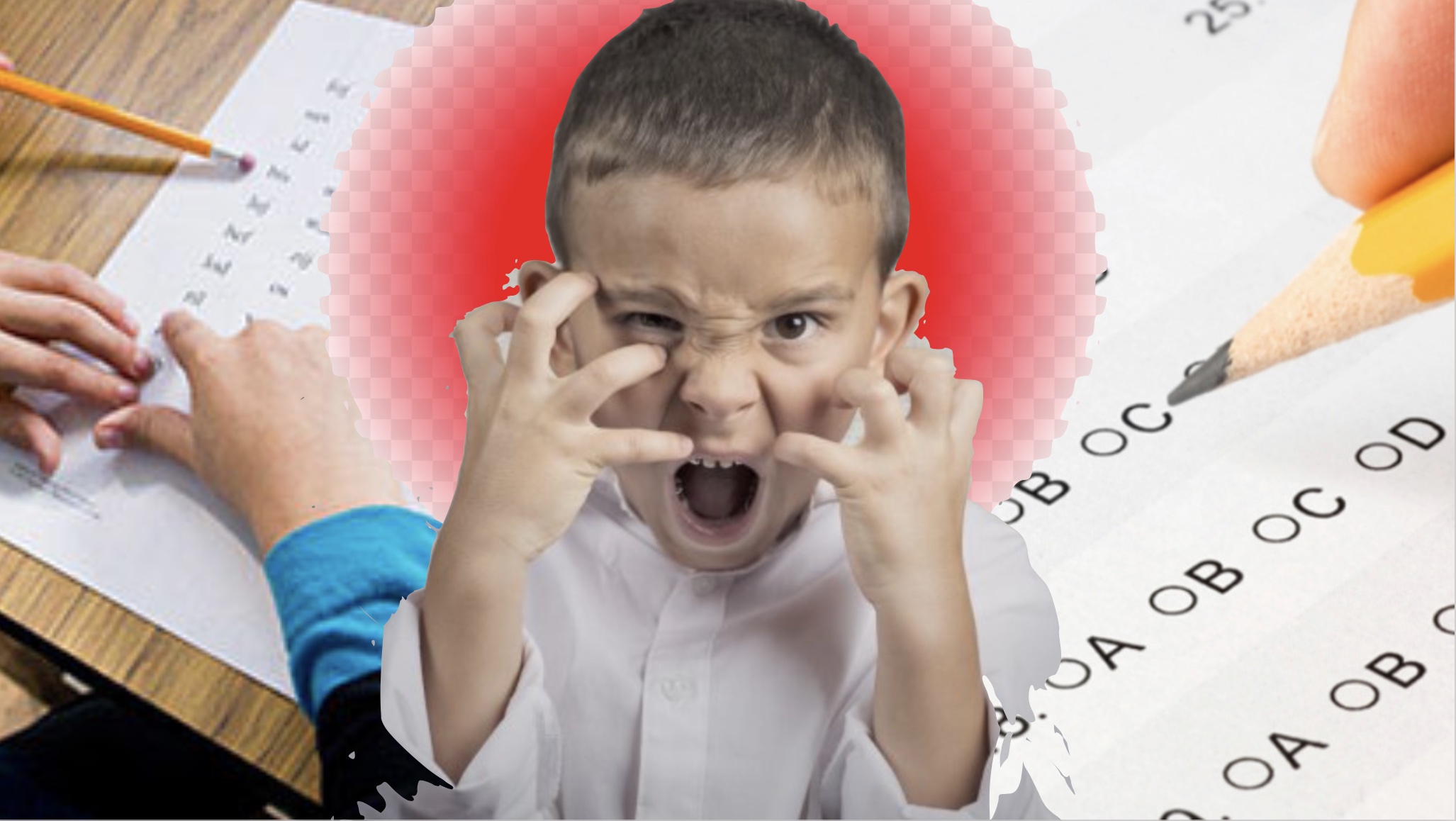
It’s the DIBELS test.

Students as young as Kindergarten (and sometimes younger) are asked to read a text aloud in a given time and each mispronunciation is recorded and marked against them.

And, yes, the texts are often pure nonsense.


My first example was from a nonsense generator of Winnie the Pooh, the second was from “Jabberwocky” by Lewis Carroll and the last an example of Lorem ipsum, a placeholder text commonly used in the graphic, print, and publishing industries.

To my knowledge none are actually used on the DIBELS test but they give you an idea of what an adult version might be like if given to people our age and not just the littles.

Can you imagine being a child, feeling the pressure of a test and being presented with something that looked like those passages!?

The fear! The sense of urgency to say something before the time runs out! The feeling of inadequacy and confusion as you finished knowing you got it wrong!

And the assurance that this meant there was something wrong with YOU!

That’s reading assessment in the standardized testing age.

Decoding – or working out the actual pronunciation of words – is given primacy over actual comprehension.

Why? Because that way we can break reading down into simple, quantifiable tasks that can be used to sort and rank children.

You know. The goal of standardized testing.

It’s highly controversial among people who study reading acquisition, but extremely common in elementary and middle schools.

And extremely lucrative for the makers of the DIBELS test.

Today I was forced to leave my class of 8th grade students with a sub so an “expert”from the Allegheny Intermediate Unit could lecture me and the rest of my school’s English department in using DIBELS as a gatekeeper assessment for all students.

That way we can group the students more easily based on their reading deficiencies.

I literally had to stop teaching for THAT.

I was bopping around the classroom, reading students’ writing, helping them organize it, helping them fix their explanations and craft sophisticated essays on a short story.

But I had to STOP, so an outside contractor could explain to ME how to teach.

ME, a Nationally Board certified teacher with two decades of classroom experience.

And the rest of the department with similar experience and education. In the group was also the holder of a doctorate in education. Almost all of us at least held a masters degree.

It boggles the mind.

In this time of pandemic stress when just keeping enough teachers in the building to staff our classrooms is a challenge, administration is wasting our time with this.

Before Covid-19, I could almost imagine it.

We did a lot of stupid things back then. But now a deadly virus rages across the country. Several students and staff get sick every week.  


There is a shortage of teachers, aides, subs, bus drivers, and other staff. 


And even though most school buildings are open, most students are still suffering from the social and emotional effects of the never-ending disaster.  


Yet the people who set school policy refuse to see any of it.  


They’re like ostriches – in suits – with their heads planted firmly in the ground. 


Covid safety protocols, reducing teacher workload, providing counselors for students – none of that is even on their radar.  


All they want to do is reinstitute the policies that weren’t working well before the pandemic hit.  


The only difference is their sense of urgency.  


In fact, the only impact they even recognize of the last year and a half is the dreaded LEARNING LOSS.  


Kids weren’t in class consistently. They were in on-line classes, or hybrid classes or maybe they didn’t even show up to class at all.  


That means they don’t know as much today as they would have known had the pandemic not happened.  


So – we’re told – they’ve lost learning. 


Oh no!  


But what these decision makers don’t seem to understand is that this whole concept is kind of meaningless.  


All people learn at different rates. If you don’t know something today, that doesn’t mean you can’t learn it tomorrow.  


There’s no time table for understanding. It’s not a race. It doesn’t matter when you learn something only that you continue making progress. 


However, you’d need a classroom teacher to explain that to you. And these are more business types. Administrators and number crunchers who may have stood in front of a classroom a long time ago but escaped at the first opportunity. 


They look at a class full of students and don’t see human children. They see numbers, data.  


And they are just itching to get back to sorting and ranking students based on standardized test scores.  


After all – say it with me – LEARNING LOSS!!!! 


Unfortunately there’s a whole world of reality up here above ground that they’re ignoring. And up here continuing with their willful fantasy is doing real harm.  


When I look at my classes of students, I don’t see overwhelming academic deficiencies.  

Even their test scores don’t justify that myth.


According to the Pennsylvania System of School Assessments (PSSA), they’re pretty much where I’d expect them any other year.


But their behaviors are off the hook


They simply don’t know how to interact with each other without conflict.  


My students are desperate for attention – any kind of attention – and will do almost anything to get it.  


They’d prefer to be respected, but they don’t understand how to treat each other respectfully. So they aim for any kind of response.


To a large extent this is due to a disruption in the social and emotional development they would have received at school. But robbed of good role models and adequate consequences, they’re somewhat at sea.  


Moreover, the pandemic has had a devastating effect on their support systems at home. Parents, family members and guardians have lost jobs, become sick and some have even died.


They don’t know who to trust and who they can rely on.  


So when they get to school, we’re going to meet their needs with more standardized tests!?  


That’s one of the worst things we could do. 

Take a child who already has trust issues and force them to read nonsense sentences while we judge them with a stopwatch?


Erase their individual identities and try to see them primarily as their scores?


These are in the low group. These are in the middle group. These are in the high group.  


Instead of giving them robust pieces of literature to read, they’ll get nonfiction scraps devoid of any connection to their lives, interests or aptitudes.  


We’ll drill and kill them, make every day about teaching to the test instead of teaching to the student.  


We’ll let data drive the instruction instead driving it based on the actual living, breathing, human beings we’re supposed to be serving.  


And instead of relying on teachers – highly trained people with decades of experience in how children learn effectively – we’ll put our trust in mega corporations that make more money the less effective their materials are.  


Prepare for a test – they make money. 


Take a test – they make money. 


Fail the test and have to remediate – they make money.  


It’s a scam – an endless cycle – and administrators and policy makers keep falling for it.  


Will this help meet kids social needs?  


Absolutely not. They’ll be segregated by ability and forced to repeat confusing and mind numbing tasks as if that’s what education was.  


Will it help meet kids emotional needs?  


No way! Being forced to do the same thing over and over and continually told you’re a failure won’t teach anything except a kind of learned helplessness.  


Kids will learn “I’m bad at math” or “I’m bad at reading” rather than the joy that can be found in both activities.  


They’ll learn to give up.  


And they’ll take out the negative feelings all this generates on each other and their teachers.  


It doesn’t have to be this way.  


A new world is possible.  


The pandemic offers us a chance to stop repeating the same mistakes of the past.  


We can scrap standardized testing and focus on authentic assessments – teacher constructed assessments the are suited to the individual context, the individual students.  


We can focus on lessons that engage students and encourage them to learn intrinsically.


We can focus on what students know instead of what they don’t so they learn that they are capable, that they have the power to do the lesson.  


We could help students understand how to interact with each other and heal some of the social and emotional wounds of the past year and a half.  


But we can’t do that if we’re forced to continue with the same mistakes of the past. 

We have to recognize the reality teachers, students and parents are living through.

And we have to make decisions based on that reality, not the same old preconceptions that have never gotten us anywhere.


Like this post?  You might want to consider becoming a Patreon subscriber. This helps me continue to keep the blog going and get on with this difficult and challenging work.

Plus you get subscriber only extras!

Just CLICK HERE.

Patreon+Circle

I’ve also written a book, “Gadfly on the Wall: A Public School Teacher Speaks Out on Racism and Reform,” now available from Garn Press. Ten percent of the proceeds go to the Badass Teachers Association. Check it out!
What is Taught in Public Schools? Volunteer as a Substitute Teacher and See for Yourself! 

Some lawmakers want more transparency in public schools.

Meanwhile, there’s a nationwide substitute teacher shortage.

It seems to me we can solve both problems at once.

PROBLEM 1: BOGUS LEGISLATION

Pennsylvania state Representative Andrew Lewis is terrified that students are being taught things in school.

Things like history and science and – oh my word! – socialism.

To make sure this doesn’t happen, the Republican businessman is sponsoring a bill requiring public schools to post curriculum materials online.

This would include a course syllabus or written summary of every class, the state academic standards for each course, and a link or title for every textbook used.

It sets up a mountain of paperwork for the state’s already overburdened teachers to repeat information that’s readily available elsewhere.

Moreover, the whole thing is really just a political sham to stoke the radical Republican base. The measure has little chance of actually being implemented.

The bill (HB 1332) passed the House largely along party lines last week with a few Republicans joining Democrats against it.

Now it is set for a full vote by the Senate where it will probably sail through with GOP support after which Democratic Governor Tom Wolf has already promised to veto it.

So why is Lewis putting on this dog and pony show?

In a now deleted Facebook post, the 33-year-old Dauphin County man wrote:

“Parents need to be in the driver’s seat when it comes to education, not some out-of-state textbook publisher teaching heaven knows what (hint: anti-American socialism) to our students.”

Apparently Lewis doesn’t understand that parents vote and serve on school boards that, in fact, pick the textbooks which are used in public schools.

Moreover, I guess no one told him that state law already requires that public schools give parents and guardians access to information about instructional materials.

Or that Medicare, Social Security, Minimum Wage and Child Labor Laws are all examples of – GASP! – socialism.

Lewis and other Republicans continue to spread the insinuation that something nefarious is happening behind the closed doors of our public schools.

Well guess what, fellas! Those doors aren’t closed at all.

PROBLEM 2: SUB SHORTAGE

Nationwide there’s a substitute teacher shortage. And you can apply!

Even schools in the Keystone state are scrambling to find enough subs.

If you want to know what happens in public schools, you can do better than clicking on some Website. You can actually volunteer to come in and cover an absent teacher’s class!

“Substitute lists are very small in most districts,” says Mark DicRocco, Executive Director of Pennsylvania Association of School Administrators (PASA).

The organization reports that the Commonwealth is experiencing a dramatic decline in the supply of new teachers. 

The number of state Instructional I licenses granted for all subject areas in grades K-12 has decreased by at least 49% from 2011 to 2018. 

About eight years ago, 40,000 teachers were graduating from Pennsylvania colleges a year. This past year, it was only 14,000. 

That means not only fewer classroom teachers to replace those who retire, but fewer substitute teachers to take over for professional absences.

The situation has gotten so bad that the legislature (on which Lewis serves) had to pass a new measure allowing college students who are studying education to fill in as substitutes.

Many districts such as Erie, Greater Latrobe and State College have increased substitute pay to entice more people to apply for the job.

And, frankly, almost anyone can do it.

Even folks like Lewis and his Republican buddies! Heck! The legislature is only in session a few weeks every month! They have plenty of time to moonlight as substitute teachers and get the low down about what’s really happening in our public schools!

To be a sub in most public school districts in Pennsylvania, essentially all you need is a bachelors degree (it doesn’t even have to be in education) and pass criminal background checks.

Districts that aren’t experiencing a shortage may require a teaching certificate as well, but beggars can’t be choosers. In districts where it is hard to get subs (i.e. those serving poor and minority kids) you can get emergency certified for a year.

And many states are lowering the bar even further!

In Oregon, where the shortage of subs is even worse, the state is even temporarily waiving the need to have a bachelor’s degree!

SOLUTION: VOLUNTEER AS A SUB

Just imagine!

Republicans uneasy about public school can get in there and see it all first hand.

And they’ll even get paid to do it!

Not as much as they make as lawmakers. Pennsylvania’s legislature is paid the third highest salary in the country! Way more than classroom teachers or certainly substitutes. But they’d get remunerated for their time.

All they’d have to do is watch over classes of 30 or more real, live students!

Not only would lawmakers have a chance to look over teacher’s lesson plans, but they’d get detailed instructions from the absent teacher about how to actually teach the lesson!

They’d get to interact with principals as they’re told which additional classes they have to cover in their planning periods and which extra duties they’d be responsible for performing.

They’d get to do things like monitor the halls, breakfast and lunch duty, watch over in-school suspension, and – if they’re lucky – they might even get to attend a staff meeting and be front row center for all the educational initiatives being conducted in the school!

If our representatives took this opportunity, they would learn so much!

They might even understand that this critical race theory thing they’re being warned about on Fox News and on talk radio isn’t actually taught in public schools. It’s a legal framework you only find in colleges and universities, and even there it’s mostly in the law department.

They’d see that indoctrination isn’t really something we do in public schools.

I mean, sure, we encourage kids to stand for the pledge to the flag and things like that but when it comes to telling them how to think – that’s not a public school thing. That’s a private and parochial school thing.

They’d see that public school lessons give students information on a subject but then ask them to come to their own conclusions about it.

They’d see our students struggle with large class sizes, crumbling infrastructure and facilities, and an overabundance of standardized tests.

They’d see kids grappling with social and emotional needs caused by the Covid-19 pandemic, generational poverty, and systemic racism.

They’d see the scarcity of resources available to classroom teachers to meet those needs and the profusion of expectations heaped on them. (For example, the expectation of bills like HB 1332 that they post all their curriculum and daily lessons on-line in addition to everything else they have to do on a daily basis.)

They’d see the dangers of putting themselves on the front line of a global pandemic and in the line of fire of potential school shooters without adequate gun safety laws.

In fact, this would be such an educational experience, I think legislators on both sides of the aisle should take advantage of this unique opportunity.

And not even just those in Harrisburg. What better way for school directors to understand the institutions they’re overseeing than to volunteer as subs? What better way for the mayor and city council to understand the needs of children than putting themselves in the classroom when the teacher can’t be there?

Instead of pontificating about the culture wars, class grievances, business interests or innuendos, lawmakers might actually learn what the real problems are in our public schools and what needs to be done about them.

It could make them better public servants who craft legislation that would actually do some good in this world and not – like Lewis – just showboat to enrage partisans and stoke them to vote for people willing to feed their fears and prejudices.

Any takers?


Like this post?  You might want to consider becoming a Patreon subscriber. This helps me continue to keep the blog going and get on with this difficult and challenging work.

Plus you get subscriber only extras!

Just CLICK HERE.

Patreon+Circle

I’ve also written a book, “Gadfly on the Wall: A Public School Teacher Speaks Out on Racism and Reform,” now available from Garn Press. Ten percent of the proceeds go to the Badass Teachers Association. Check it out!