Could This Be Gadfly’s End? Top 12 Articles From 2023 Read By Fewer Than Ever

Thank you, loyal readers, but this may be the end of Gadfly on the Wall.

Readership has fallen off to such a degree that I’m just not sure it’s worth continuing anymore.

That combined with increasing difficulties in my own life have made me truly question whether I should (or can) go on with it.

Don’t get me wrong. I will truly cherish every moment writing these articles, fighting for what I (still) think needs to happen in public education so that our children can be fairly treated and succeed.

There is so much I think most people don’t know about what happens in our schools and what could be done to make them better for children, families and the people who work there.

But after 9 years of pounding my head against the wall – well, it seems like the wall is winning.

This blog used to be read by at least half a million people each year. But social media – the prime distributor of this material – is not what it was a decade ago. In 2021, I had 222,414 hits. Last year it was 124,984. This year it was 73,121.

And much of those were for articles I’d written in years past. The highest three articles this year were not written in 2023. They were: The MAP Test – Selling Schools Unnecessary Junk at Student Expense ( 2,344) from Aug. 2022, When Good Students Get Bad Standardized Test Scores (1,775) from Oct. 2022, and Lesson Plans Are a Complete Waste of Time (1,544) from Sept. 2021.

Why keep putting out new content? It often feels like I’m saying the same thing over and over anyway – and not really being heard except by the same few people.

So I’m going to pause, take a moment and really think about things.

Heck! I might find out that I simply can’t quit because I’ve got too much to say. Then again, I may only write when something really important comes up that I absolutely have to let loose on.

Or this could be it.

I don’t know.

In any case, thank you so much for nearly 10 years of readership. I assume most people seeing this would have been here for the long haul.

It has been an amazing experience. I’m not sure what comes next, but for now I leave you with some outstanding moments from 2023.

All the best in the future!

-Steven Singer

The Gadfly on the Wall

12) Standardized Tests Hurt Asian-American Students, Too, Though Many Get High Scores

Published: March 27

Views: 243

Description: Asian-Americans – taken as a whole – score better on standardized tests than white Americans. But they are just as much victimized by testing as any other minority. The only difference is their success is held up as an excuse for upholding this deeply inequitable practice. It obscures that all Asians are not the same, certain types do not score as highly yet all are held to unfair expectations.

Fun Fact: This is a rarely explored or reported on aspect of the standardized testing phenomenon. I’m proud to have written on it despite its low readership.

11) Fact Checking Propel Charter Schools – Do They Live Up to Their Own Hype?

Published: Jan. 20

Views: 572

Description: The Propel Charter School network of 13 schools based in Pittsburgh, Pa, has advertisements everywhere proclaiming its virtues. However, this is just advertising. From test scores to safety to class size to teacher qualifications and many other factors, the charter chain comes up short again and again. Compared with authentic public schools in the same neighborhoods where these schools are located, Propel compares rather badly.

Fun Fact: I think this is incredibly important in the western Pennsylvania region. This information should be shared far and wide. It should at very least spark media investigations comparing Propel and authentic public schools so parents could make informed choices about where to send their children. But we never see that because Propel is a frequent advertiser. If the media provided this information – and didn’t just uncritically repeat propaganda – the media conglomerates would lose valuable advertising revenue. I am proud I could provide this public service.

10) Stay Woke, Public School Teachers

Published: March 12

Views: 588

Description: Being “woke” just means being alert to racial prejudice and discrimination – just knowing that these things exist and trying to recognize them when present. The way I see it, that’s well under a teacher’s job description. After all, who else will teach the true history that for more than 400 years in excess of 15 million men, women and children were the victims of the transatlantic slave trade? Who will teach the true history of the fight against human bondage and the struggle for equal rights? Who will teach about women’s fight for suffrage, equal pay, and reproductive freedom? Who will teach about the struggle of the individual to affirm their own gender identity and sexual expression? It’s up to us.

Fun Fact: Republicans are so anti-teacher, they’ve made the acquisition of knowledge part of the culture war and turned teachers into the enemy. This was just my way of pushing back a little.

9) Where Have School Libraries Gone?

Published: Aug. 25

Views: 681

Description: McKeesport Area School District – where I graduated and my daughter still attends classes – closed its high school public library for good. They gave away the books and turned it into a large group instruction room. And this kind of thing is happening all across the country. This is a problem because every book is not available on-line. In fact, the number and variety of books available digitally is much smaller than most public or school libraries typically have in their collections – if you’re not going to pay an additional fee. I can read most of the classics of world literature on the Internet, but anything that isn’t in the public domain is going to require me to pony up some dough. And the same goes for most respected resources.

Fun Fact: This was a truly depressing discovery but even more so was the response. Many people couldn’t grasp why libraries are even necessary today. Libraries used to be something society provided to every citizen just as a matter of course. Now our expectations are so low that we’ve nearly given up on this essential resource.

8) After School Satan Clubs Are Teaching Public School Districts an Important Lesson in Free Speech  

Published: May 17

Views: 691

Description: Thousands of districts in the US allow religious organizations and clubs to operate on public school property, especially after classes are over. So The Satanic Temple goes around proposing After-School Satan Clubs at the same districts – and all Hell breaks loose.  

Fun Fact: You want to let religion in the school house door, you have to let all of them in. You can’t pick and choose.

7) Congress May Raise Educators’ Minimum Salaries to Combat the Teacher Exodus

Published: Jan. 1

Views: 699

Description: A group of Congressional Democrats have proposed a national minimum salary for teachers. Rep. Frederica Wilson and Rep. Jamaal Bowman, (both former teachers) and six other members of the House have introduced The American Teacher Act establishing a minimum salary of $60,000 for all public school teachers working in the U.S. – the first legislation of its kind. The average starting salary of teachers nationwide was $41,770 in the 2020-21 school year, according to the National Education Association (which supports the bill).

Fun Fact: What a lovely thought! Still waiting on this to be approved. Any day now. Come on, Congress!

6) I am a Charter School Abolitionist, and You Should Be, Too 

Published: March 22

Views: 701

Description: Charter schools have been around since 1992. Though it seems like they’re everywhere these days, only 45 states and the District of Columbia allow these schools and even then they enroll just 6% of the students in the country – roughly three million children. The five states that do not have charter school laws are Montana, Nebraska, North Dakota, South Dakota, and Vermont. So after 32 years of trial and error, we’re left with a charter school system that does not get better academic results than authentic public schools (despite being given dramatic advantages in their charter agreements) and in many cases drastically fails by comparison. Not to mention all the fraud, malfeasance and ineptitude you get from removing regulations for any Tom, Dick or Harry who thinks he can open a school. Time to abolish these schools and end this failed experiment.

Fun Fact: This article really angered some folks. There are lots of people who hate the idea of charter schools in general but want to preserve anything that they think might give their own kids an advantage over others. Even if that is rarely the case! However, the gleam of the new has definitely worn off this concept and an increasing number of folks are open to limiting or ending this fiasco.


5) A Private Equity Firm, The Makers of the MAP Test, and an Ed Tech Publisher Join Forces

Published: Jan. 26

Views: 930

Description: A year after being gobbled up by private equity firm Veritas Capital, ed tech company Houghton Mifflin Harcourt (HMH) is acquiring K-12 assessment giant Northwest Evaluation Association (NWEA). Let me put that in perspective – a scandal-ridden investment firm that made billions in the wars in Iraq and Afghanistan bought one of standardized testing’s big four and then added the Measures of Academic Progress (MAP) test to its arsenal. This almost certainly means the cost of state testing is going to increase since the providers of the tests are shrinking. 

Fun Fact: This is the kind of story that will creep into our lives before we even realize what is happening. We’ll wonder why our districts and even entire states which rely heavily on the MAP test are buying as much HMH curriculum as possible. That way they can teach directly what is on their standardized tests. Bye, bye, tax dollars that could have been spent to educate kids!

4) Top 4 Things McKeesport Area School Directors Need to do to Extinguish the District Dumpster Fire

Published: Oct. 8

Views: 963

Description: My neighborhood district – McKeesport Area School District (MASD) – is going through tough times. School directors reneged on a teachers contract. Their business manager ran for the hills. And at a board meeting two school directors had their dirty laundry aired during public comments prompting one to call a White Oak Councilperson a homophobic slur. I had four suggestions to right the ship: (1) Pass a Code of Conduct for Board Members and Administrators, (2) Start Streaming Council Meetings Again, (3) Hire a New Reputable Business Manager, and (4) Pass a Teachers Contract with No Tax Increase.

Fun Fact: This article got a lot of notice in the neighborhood and some of my suggestions actually got done. The district hired a new business manager and will begin streaming new meetings. They’re also negotiating with teachers so fingers crossed.

3) Teach for America Promised to Fix the Teacher Exodus Before Anyone Even Noticed There Was One. Now It’s Choking on Its Own Failure

Published: Aug. 7

Views: 1,070

Description: Teach for America (TFA) was supposed to fix the teacher exodus by fast tracking non-education majors into the classroom where they would teach for a few years and then enter the private sector as “experts” to drive public policy. College graduates would take a five-week crash course in education and commit to at least two years in the classroom thereby filling any vacant teaching positions. Not only didn’t it work, it ended up making the situation worse. Now the organization created in 1990 is expecting its lowest enrollment in 15 years. TFA anticipates placing slightly less than 2,000 teachers in schools across the country this fall. I guess watering down what it means to be a teacher is even less popular than actually being an educator.

Fun Fact: People really hate TFA. The organization’s cred has gone down more than anything else in the education field – even more than charter schools. The fact that the emperor has no clothes here is painfully obvious.

2) Come Visit Your Wasted Tax Dollars at Commonwealth Charter Academy’s Waterfront Luxury Office Space

Published: Feb. 4

Views: 1,236

Description: If you go to the Waterfront in Homestead, PA, you’ll find the newest satellite office of Commonwealth Charter Academy (CCA) – the biggest cyber charter school network in the entire state. It’s one of 51 locations statewide. Only 27 states allow CYBER charters like this – schools that teach mostly (or entirely) distance learning through the Internet. Nationwide, Pennsylvania and Ohio have the largest cyber charter enrollment. In 2020-21, the Keystone State enrolled 61,000 students in 14 cyber charters – and roughly 21,000 attend CCA! There’s an authentic public school in this neighborhood, too – Steel Valley School District – right up the hill. It’s not located in nearly as trendy a spot though. Moreover, its four buildings were constructed around the 1970s and are crumbling down in places. But the new cyber charter school building looks like a palace!

Fun Fact: I don’t think most people who go to the Waterfront understand what the CCA location really is. To them it’s just another school, kind of sleek and modern looking. This article was my attempt to tell them. Thankfully it proved relatively popular, though the CCA people absolutely had a conniption. They couldn’t believe someone was criticizing their profitable business venture. This story brought the most trolls of any this year.

1) McKeesport Teachers Without a Contract Because of Bad Business Manager or Bad Faith School Board?

Published: Aug. 16

Views: 1,409

Description: McKeesport Area School District (MASD) botched a new teachers contract. So the question is – does it have a terrible business manager or a regressive school board? School directors and the teachers had agreed to a new contract, but the board tabled it in June after concerns that the western Pennsylvania district didn’t have the money to pay for moderate raises. Then the board skipped the entire month of July without a meeting as if the livelihoods of hundreds of employees don’t count. By the time classes were set to begin in August, the board was no closer to solving the problem. Board members mostly blamed the business manager who eventually quit. The situation still has not been resolved.

Fun Fact: This article hit the neighborhood like a nuclear blast. Everyone seemed to be talking about it. Someone in the neighborhood literally called me a “local legend” for having written it. I’m just glad it focused people’s attentions on the facts of the matter. If anything gets me to blog again, it will be writing more about the local stories that are so important but no one else is talking about.

Gadfly’s Other Year End Round Ups

This wasn’t the first year I’ve done a countdown of the year’s greatest hits. I usually write one counting down my most popular articles and one listing articles that I thought deserved a second look. Here are all my end of the year articles since I began my blog in 2014:


2022:

Top 11 Education Articles of 2022 Hidden by Facebook, Buried by Twitter, and Written by a Gadfly


2021:

Gadfly’s Most Outrageous Articles in 2021 That You May Have Missed or Been Too Polite to Share

Gadfly’s Top 10 Articles of 2021 – Shouts in the Dark

2020:

The Most Important Education Articles (By Me) That You Probably Missed in 2020

Outrunning the Pandemic – Racing Through Gadfly’s Top 10 Stories of 2020


2019:

Sixteen Gadfly Articles That Made Betsy DeVos Itch in 2019


Screen Shot 2019-12-28 at 3.51.03 PM


2018:

A Gadfly’s Dozen: Top 13 Education Articles of 2018 (By Me)

thumbnail_IMG_8445


2017:


What’s the Buzz? A Crown of Gadflies! Top 10 Articles (by Me) in 2017


thumbnail_Screen shot 2017-12-26 at 3.44.17 PM


Hidden Gadfly – Top 5 Stories (By Me) You May Have Missed in 2017

 

7fd6a56c2ffc7a03c9fd2f431a543e92


2016

Worse Than Fake News – Ignored News. Top 5 Education Stories You May Have Missed in 2016

 

ignoring-wisdom


Goodbye, 2016, and Good Riddance – Top 10 Blog Post by Me From a Crappy Year


screen-shot-2016-12-27-at-3-29-49-am


2015


Gadfly’s Choice – Top 5 Blogs (By Me) You May Have Missed from 2015


Screen shot 2016-01-02 at 11.01.09 PM


Who’s Your Favorite Gadfly? Top 10 Blog Posts (By Me) That Enlightened, Entertained and Enraged in 2015


Screen shot 2015-12-30 at 12.57.49 AM


2014


Off the Beaten Gadfly – the Best Education Blog Pieces You Never Read in 2014

 

Wonderfull illusion art painting


Top 10 Education Blog Posts (By Me) You Should Be Reading Right Now!

 

computer-people-png-300x202


Like this post?  You might want to consider becoming a Patreon subscriber. This helps me continue to keep the blog going and get on with this difficult and challenging work.

Plus you get subscriber only extras!

Just CLICK HERE.

Patreon+Circle

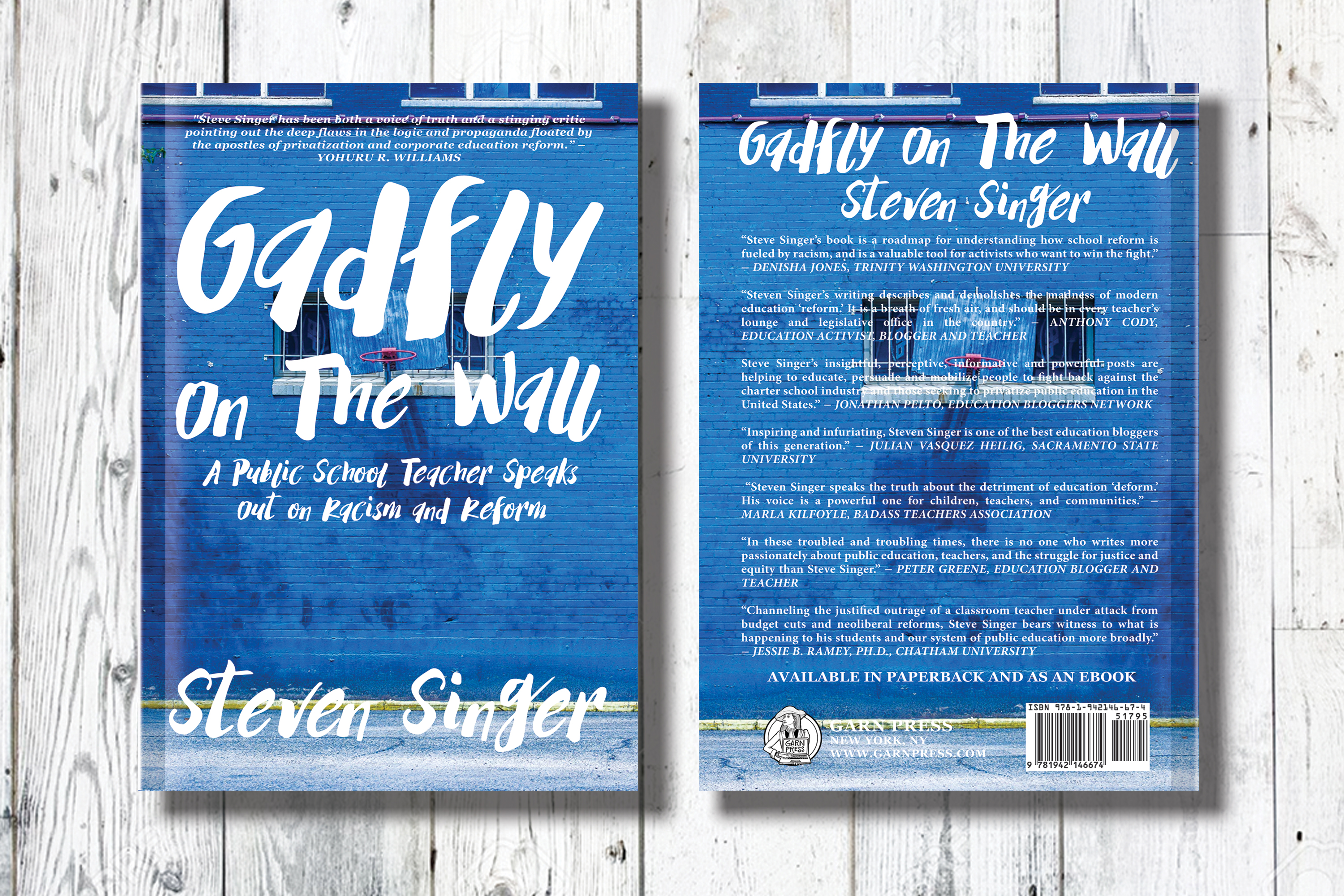
I’ve also written a book, “Gadfly on the Wall: A Public School Teacher Speaks Out on Racism and Reform,” now available from Garn Press. Ten percent of the proceeds go to the Badass Teachers Association. Check it out!

A Private Equity Firm, The Makers of the MAP Test, and an Ed Tech Publisher Join Forces


Prepare to watch more of your tax dollars spiral down the drain of standardized testing. 


A year after being gobbled up by private equity firm Veritas Capital, ed tech company Houghton Mifflin Harcourt (HMH) is acquiring K-12 assessment giant Northwest Evaluation Association (NWEA). 

Let me put that in perspective – a scandal-ridden investment firm that made billions in the wars in Iraq and Afghanistan bought one of standardized testing’s big four and then added the Measures of Academic Progress (MAP) test to its arsenal.

This almost certainly means the cost of state testing is going to increase since the providers of the tests are shrinking. 

“It used to be if you put out a [Request for Proposal] RFP for state assessment, you get five, six, 10 bidders,” said Scott Marion, executive director of the Center for Assessment. “Now you’re lucky to get three. When you’re doing that, there’s maybe not as much expertise and certainly the cost will go up” (emphasis mine).

Under the proposed deal announced in January, the testing company’s assessments and the ed tech company’s test prep materials will become intimately entwined. 

NWEA, best known for its MAP assessment, will operate as a division of HMH. And NWEA’s tests will be aligned with HMH’s curriculum.

You can just imagine how this will affect the marketplace. 

NWEA serves about 10,000 school districts and HMH estimates it works with more than 50 million students and 4 million educators in 150 countries, according to a press release about the proposed acquisition. 

So we can expect districts and even entire states which rely heavily on the MAP test to be encouraged to buy as much HMH curriculum as possible. That way they can teach directly what is on their standardized tests.

That is assuming, of course, the acquisition agreement is approved after a 90-day regulatory review period. 

To be honest, I would be surprised if there are any objections. 


Such cozy relationships already exist with other education companies. For example, Curriculum Associates provides the aforementioned curriculum for its own i-Ready assessment.

It’s ironic that an industry built on standardization – one size fits all – continues to take steps to create books, software and courses aligned with specific tests. It’s almost like individuating information to specific student’s needs is beneficial or something. Weird!

After all, if these sorts of assessments can be gamed by increased access to materials created by the same corporate entities that create and grade the tests, are we really assessing knowledge? Aren’t we just giving students a score based on how many books and software packages their districts bought from the parent company? Is that really education

I remember a time when curriculum was determined by classroom teachers – you know, experts in their fields, not experts in the corporate entity’s test du jour. 

But I guess no one was getting rich that way…

NWEA used to be focused more on formative assessments – tests that you took several times a year before and sometimes even after the big summative state assessment to determine if you were progressing toward passing the high stakes goal. However, in 2021, the company acquired assessment-related technology from Educational Testing Service (ETS) and took over several state contracts from Questar Assessments. This includes contracts for New York, Georgia, Mississippi, and Missouri.

This made NWEA attractive to HMH which had, itself, consolidated into mostly educational technologies and sold off most of its interests in book publishing and assessments. In fact, various versions of the company from Harcourt to Houghton Mifflin Harcourt used to be considered one of the big 4 standardized testing companies until only a decade ago. With revenues of $1.37 billion in fiscal year 2014, for example, the company held a 44% market share including Common Core instructional resources.


However, in 2018 it divested its Riverside clinical and standardized testing (Riverside) portfolio to Alpine Investors, a private equity firm based in San Francisco, for a purchase price of $140 million, and then sold its publishing assets in 2021 to HarperCollins.


Then in February of 2022, New York-based private-equity firm Veritas Capital acquired HMH at a price of $21 per share, or about $2.8 Billion. And under Veritas, HMH acquired NWEA and the two companies will work together to do many of the things that HMH used to do by itself – like a golden dragon perched atop the standardized testing treasure trove.

All for the benefit of Veritas Capital.

Make no mistake, the investment firm wouldn’t have become involved if it couldn’t make a profit off the situation. That’s what it does – through scandal after scandal.

Founded in 1992 by the late investment banker Robert McKeon (who died by suicide after mounting improprieties came to light), Veritas Capital began its life buying up government contractors and forming close ties with former senior government officials. Of the company’s many defense-related investments, the most infamous was its 2005 purchase of DynCorp International, a shady company involved in the US’s Iraq and Afghanistan wars.


Under Veritas ownership, DynCorp benefited from lax oversightfrequently billed the government for work that was never requested, and was embroiled in a sex-trafficking scheme, according to reports. 

Veritas also made headlines when a company it bought in 2008, Global Tel-Link, a telecommunications company that provides telephone services for prison systems, racked up exorbitant fees on calls to inmates

In 2006, the firm acquired MZM Inc., an intelligence contractor, which was investigated for providing bribes to Rep. Duke Cunningham, R-Calif., in exchange for help obtaining Pentagon contracts. 

Throughout its history, Veritas has fostered close ties to government officials. Campaign finance records show executives at the investment firm have given over $100,000 to various politicians, mostly Republicans. In 2014, Veritas paid Bill Clinton $250,000 for a speech.

The New York Times reported in 2001 that numerous retired generals were on Veritas’ payroll and the company used such ties to the Pentagon and frequent appearances in the media to boost Veritas-owned military contractors, including DynCorp.

And now the little investment firm that could has its sights on the standardized testing game.

Why?  

Because there’s gold in them thar tests!

Taxpayer money, that is.

Current Veritas’ CEO and Managing Partner Ramzi Musallam has taken the firm from $2 billion in investments in 2012 to $36 billion in 2021 doing things just like this.

Musallam focuses on technology companies like HMH that operate in sectors dominated by the US federal government such as standardized testing. After all, the only reason public schools throughout the country have to give these assessments is federal law. It’s a captive market paid for by tax dollars.  

We could just let teachers teach and then assess their students in whatever ways seem most accurate and fair. Or we could continue to rely on corporations to do it for us without any real proof that their products are better or even as good as what your local neighborhood educator could provide.

Veritas is banking on the latter.


America spends $6.8 trillion a year on defense, health care and education – markets dominated by the government. 


“These are government-influenced markets, no doubt about it, and being close to how the government thinks about those markets enables us to understand how we can best invest,” Musallam said. 


So this merger of two of the most influential education companies in the US is great news for investors – and terrible news for taxpayers who will be paying the bill. 


For students and teachers – it’s more of the same


Like this post?  You might want to consider becoming a Patreon subscriber. This helps me continue to keep the blog going and get on with this difficult and challenging work.

Plus you get subscriber only extras!

Just CLICK HERE.

Patreon+Circle

I’ve also written a book, “Gadfly on the Wall: A Public School Teacher Speaks Out on Racism and Reform,” now available from Garn Press. Ten percent of the proceeds go to the Badass Teachers Association. Check it out!


Top 11 Education Articles of 2022 Hidden by Facebook, Buried by Twitter, and Written by a Gadfly

If you’ve stumbled across this article on social media, congratulations!

You’re one of the few people allowed to read it!

This blog, Gadfly on the Wall, used to be read by at least half a million people each year. Now it’s seen by barely 100,000.

The reason? Poor writing? Flagging interest in the subject?

I don’t think so.

Education is still as important today as it was in 2014 when I started this venture. And as to my writing ability, it’s no worse now than it was 8 years ago.

The difference it seems to me is the rise of social media censorship – not in the name of fact checking or peer review. After all, I’m a nationally board certified classroom teacher with a masters in education writing about the field where I’ve been employed for two decades.

However, the tech bros who gate keep what could have been the free exchange of information on the Internet insist they get paid for access.

You want your voice to be heard? You’ve got to pay like any other advertiser – even if your product is simply your opinion backed by facts.

So this year, my blog had the fewest hits since I started – 124,984 in 2022. By comparison, last year I had 222,414.

I’d write an article, post it on social media and see it reposted again and again. You’d think that would mean it was popular, but no. The people who saw it liked it enough to suggest it to others, but it went little further. With each share, fewer people saw it. Like someone put up a wall in front of it.

In truth, I’m lucky as many people had the opportunity to read my work as did.

The question is where do I go from here?

Should I continue, knowing only a select few will get to hear me? Should I try paying the billionaire tech bros to let more readers in?

My work isn’t a product and no one is paying me to do it.

Oh well…

In any case, here’s a look back at my most popular articles from the year that was and one honorable mention:

HONORABLE MENTION

11) WPIAL is Wrong! Racist Taunts at a Football Game are NOT a Matter of Both Sides

Published: Feb. 4

Views: 301

Description: My school’s football team is mostly black. They played a mostly white football team and were greeted by racial slurs and an allegedly intentional injury to one of our players. However, the Western Pennsylvania Interscholastic Athletic League (WPIAL) blamed both sides for the incident.

Fun Fact: It’s one of those decidedly local stories that community newspapers used to cover before almost all went bankrupt or were sold to the media giants. Having this platform allowed me to call out an injustice when most voices were silenced. The injured player’s mother thanked me for doing so. Stories like this keep me going.

10) Federal or State Legislature May Raise Teacher Salaries so Schools Have Enough Staff to Reopen

Published: June 8

 Views: 1,468

 Description: At the beginning of the summer, governments were so shaken by the exodus of teachers from the classroom that they were discussing raising our salaries or giving us bonuses. Parents were so adamantly against distance learning they demanding in-person classes with real, live human teachers. What a shock to the super elite education “experts” who had been pushing ways to eliminate teachers for decades and ignoring our consistent march out of the field under these conditions.

 Fun Fact: The federal government is still discussing pay raises with a bill to increase the minimum salary nationwide. Will this lead to any action? Who knows? It’s actually surprising that legislators even recognize the issue exists.

9) Why Even the Best Charter Schools are Fundamentally Inequitable

Published: Sept. 17

 Views: 1,514

 Description: Charter schools are inequitable because they have charters. These are special agreements that they don’t have to follow all the rules other authentic public schools funded by tax dollars must follow. That’s unfair and it applies to EVERY charter school because every one has a charter. Hence, the name.


 Fun Fact: Criticism of charter schools in general usually degrades to defense of individual charter schools avoiding whatever general criticism is leveled against the industry. The argument in this article has the benefit of avoiding any such evasion. All charter schools are guilty of this (and many are guilty of much more). All of them.

8) Every Teacher Knows

Published: March 17

 Views: 1,675

 Description: Just a list of many things classroom teachers know about schools and education but that the general public often ignores. These are the kinds of things missing from the education debate because we rarely include teachers in the discussion about the field where they are the experts.


 Fun Fact: For a few hours people were talking about this article far and wide. And then – boom – it got shut down with a bang. This one was so universal it should have been popular for weeks. But it just disappeared.

7) With the Death of Queen Elizabeth II, the US Should End Its Biggest Colonial Enterprise – Charter Schools

Published: Sept. 10

 Views: 1,817

 Description: Charter schools are colonial enterprises. They loot and pillage the local tax base but without having to be governed by school boards made up of community members – otherwise known as local taxpayers. They can be run by appointed boards often made up of people who do not come from the community in question. They are outsiders come merely for personal profit. These invaders are quite literally taking local, community resources and liquidating them for their own use – the maximization of personal profit. The public is removed from the decision-making process about how its own resources are utilized and/or spent.

 Fun Fact: It’s an argument from consistency. If we’re against the colonial enterprise, we must be against charter schools, too. I’m particularly proud of the graphic (above) I created to go with this article.

6) Holtzman Resigns as MASD Superintendent After Questions Over Contract Shenanigans

Published: May 26

 Views: 1,933

 Description: Dr. Mark Holtzman, the Superintendent from the district where I live, left under strange circumstances. He resigned and took a new contract in a matter of hours so he could get a raise from a lame duck school board without having to wait for the people the community elected to decide the matter to take office first. Then when it all came to light, he left the district for greener pastures.


 Fun Fact: More than any other news source, I documented what happened in detail. Without a series of articles I wrote on this, most people would have had very little idea what happened. It would have just been rumors. This is why we need local journalism. It shouldn’t be left to bloggers like me.

5) Silencing School Whistleblowers Through Social Media 

Published: Feb. 12

 Views: 2,065

 Description: This was social media’s latest crackdown on edu-bloggers and other truth tellers. I used to get 1,000 readers a week. Now I’m lucky to get a few hundred. There’s a strict algorithm that determines what people get to see on their Facebook pages. And if it says you’re invisible, then POOF! You’re gone and the people who would most enjoy your writing and want to pass it on don’t get the chance. It’s undemocratic in the extreme but totally legal because Facebook is a for-profit company, not a public service. Money wins over free exchange of ideas. 

 Fun Fact: There used to be so many other education bloggers like me out there. Now there are just a handful. This is why.

4) If Standardized Tests Were Going to Succeed, They Would Have Done So By Now

Published: April 7

 Views: 2,478

 Description: Standardized tests were supposed to improve our public schools. They were supposed to ensure all students were getting the proper resources. They were supposed to ensure all teachers were doing their best for their students. But after more than four decades, these assessments have not fulfilled a single one of these promises. In fact, all they’ve done is make things worse at public schools while creating a lucrative market for testing companies and school privatization concerns.  

 Fun Fact: Pundits still talk about standardized testing as if it were innovative. It’s not. It’s the status quo. Time to end this failed experiment.

3) Top 5 Charter School Myths Debunked 

Published: April 15

 Views: 3,604

 Description: Let’s examine some charter school propaganda – one piece at a time – and see if there’s any truth to these marketing claims. Charter schools are actually not public schools in the same way as other taxpayer funded schools. They do not save money – they waste it. Their students do not outperform authentic public school students. They are not innovative – they are regressive. They do not protect children’s civil rights – they violate them.


 Fun Fact: I designed the title and picture to trick readers into thinking this was a pro-charter school article. So many people were butt hurt when they read it! I just hope it helped clarify the matter to those who were undecided.

2) The MAP Test – Selling Schools Unnecessary Junk at Student Expense

Published: Aug 27

 Views: 3,937

 Description: The Measures of Academic Progress (MAP) test is an assessment made by Northwest Evaluation Association (NWEA), a so-called non-profit organization out of Portland, Oregon. Some states require the MAP as part of their standardized testing machinery. However, in my home state of Pennsylvania, the MAP is used as a pre-test or practice assessment by districts that elect to pay for it. What a waste! Why do we need a test BEFORE the test? The assessment’s job is to show how our students are doing in Reading, Math and Science compared with an average test taker. How does that help? I don’t teach average test takers. I teach human beings. Students learn at their own rates – sometimes faster, sometimes slower. We don’t quicken the timescale with needless comparisons.

 Fun Fact: I think this article was as popular as it was because people could relate. So many teachers told me how relieved they were to hear someone else expressing all the frustrations they were experiencing in their own districts with the MAP and other tests like it. If administrators and school boards would just listen to teachers! If they’d even bother asking them!

1) Posting Learning Objectives in the Classroom is Still a Dumb Idea

Published: Nov. 25

 Views: 7,285

 Description: When it comes to dumb ideas that just won’t go away, there is a special place in the underworld for the demand that teachers post their learning objectives prominently in the classroom. It presupposes that teachers control everything their students learn in the classroom and can offer it to them on a silver platter. It’s not just a useless waste of time but a dangerous misunderstanding of what actually happens in the learning process.


 Fun Fact: This isn’t exactly news, but teachers were relieved to hear their truth finally given voice. So many of us still have to abide by this nonsense when we could be doing something that actually makes a difference. It’s nice to have your sanity and frustration confirmed. If only administrators could admit they were wrong and stop demanding this crap!


Gadfly’s Other Year End Round Ups

This wasn’t the first year I’ve done a countdown of the year’s greatest hits. I usually write one counting down my most popular articles and one listing articles that I thought deserved a second look. Here are all my end of the year articles since I began my blog in 2014:


2021:

Gadfly’s Most Outrageous Articles in 2021 That You May Have Missed or Been Too Polite to Share

Gadfly’s Top 10 Articles of 2021 – Shouts in the Dark

2020:

The Most Important Education Articles (By Me) That You Probably Missed in 2020

Outrunning the Pandemic – Racing Through Gadfly’s Top 10 Stories of 2020


2019:

Sixteen Gadfly Articles That Made Betsy DeVos Itch in 2019


Screen Shot 2019-12-28 at 3.51.03 PM


2018:

A Gadfly’s Dozen: Top 13 Education Articles of 2018 (By Me)

thumbnail_IMG_8445


2017:


What’s the Buzz? A Crown of Gadflies! Top 10 Articles (by Me) in 2017


thumbnail_Screen shot 2017-12-26 at 3.44.17 PM


Hidden Gadfly – Top 5 Stories (By Me) You May Have Missed in 2017


7fd6a56c2ffc7a03c9fd2f431a543e92


2016

Worse Than Fake News – Ignored News. Top 5 Education Stories You May Have Missed in 2016


ignoring-wisdom


Goodbye, 2016, and Good Riddance – Top 10 Blog Post by Me From a Crappy Year


screen-shot-2016-12-27-at-3-29-49-am


2015


Gadfly’s Choice – Top 5 Blogs (By Me) You May Have Missed from 2015


Screen shot 2016-01-02 at 11.01.09 PM


Who’s Your Favorite Gadfly? Top 10 Blog Posts (By Me) That Enlightened, Entertained and Enraged in 2015


Screen shot 2015-12-30 at 12.57.49 AM


2014


Off the Beaten Gadfly – the Best Education Blog Pieces You Never Read in 2014


Wonderfull illusion art painting


Top 10 Education Blog Posts (By Me) You Should Be Reading Right Now!


computer-people-png-300x202


Like this post?  You might want to consider becoming a Patreon subscriber. This helps me continue to keep the blog going and get on with this difficult and challenging work.

Plus you get subscriber only extras!

Just CLICK HERE.

Patreon+Circle

I’ve also written a book, “Gadfly on the Wall: A Public School Teacher Speaks Out on Racism and Reform,” now available from Garn Press. Ten percent of the proceeds go to the Badass Teachers Association. Check it out!


Standardized Test Scores are Incompatible with Your School’s Equity Plan  


The primary goal of public education is to teach all children fairly.  


But since its inception, the system has never been set up to actually accomplish this.  


So these days you hear a lot of talk about fixing the problem – of how we can ensure students of color and other historically underserved children get the same high-quality education racially and economically privileged kids always have received.


This almost always concludes with two types of plan.  


First, there is the serious venture made up of things like increasing spending to meet student need, wraparound services, early intervention, reducing class size, redistributive justice and cultural competence – a plan that looks the reality in the face and makes bold attempts to come to terms with it. 


Then there is the cheap knockoff proposition – a buzzword-laden scheme where someone is trying to convince you their half hearted proposal is actually a solution to the very real problem of educational inequality. 


And the number one thing you can use to tell the difference between the two is this – standardized test scores


The first plan that is centered around actually fixing disparities makes no mention of test scores – or at least relegates them to obstacles. The second is built all around them – as an essential component of the overall scheme. 


This is because the second feel-good-accomplish-nothing plan is essentially performative.  


Therefore, it is constructed around standardized test scores as a metric of success.  


Planners think: We’re going to do A, B and C to make our schools more equitable. And how will we know we’re doing it right? We’ll use our standardized test scores! 


That’s not accuracy. It’s ostentation. These scores don’t demonstrate anything at all about equity. True, they purport to show readily apparent increases or decreases in academics.  


However, even this is an illusion.  


A rise or fall in test scores is not, in fact, based on authentic academic success but merely success at taking standardized tests designed for very different purposes.  


And anyone who understands the history of these types of assessments and how they still work will know that this mirage is built at the cost of genuine equity.  


In fact, the inequalities plaguing our public school system are due in large part to our national insistence that standardized test scores be the ultimate measure of success.  


So constructing your plan to fix this problem around one of its root causes is like claiming you can fix a sinking ship by drilling more holes in its hull.  


At best, it’s naive. At worst, it’s self-defeating and disingenuous.  


The problem centers around the difference between standardized tests and assessments created by classroom teachers. 


Both types of assessment are supposed to measure what students have learned. But not all learning is equal


For example, a beginning chef needs to know how to use the stove, have good knife skills and how to chop an onion. But if you give her a standardized test, it instead might focus on how to make foie gras – something that would only come in handy at a high end French restaurant.


That’s not as important in your everyday life, but the tests make it important by focusing on it.  


The fact of the matter is that standardized tests do NOT necessarily focus on the most important aspects of a given task. They focus on obscurities – things that most students don’t know.  


This is implicit in the design of these exams and is very different from the kinds of tests designed by classroom teachers.  


When a teacher makes a test for her students, she’s focused on the individuals in her classes. She asks primarily about the most essential aspects of the subject and in such a way that her students will best understand. There may be a few obscure questions, but the focus is on whether the test takers have learned the material or not.  


When psychometricians design a standardized test, on the other hand, they aren’t centered on the student. They aren’t trying to find out if the test taker knows the most important facts or has the most essential skills in each field. Instead, there is a tendency to eliminate the most important test questions so that the test – not the student – will be better equipped to make comparisons between students based on a small set of questions. After all, a standardize test isn’t designed for a few classes – it is one size fits all.  


New questions are field tested. They are placed randomly on an active test but don’t count toward the final score. Test takers aren’t told which questions they’ll be graded on and which are just practice questions being tried out on students for the first time. So students presumably give their best effort to both types. Then when the test is scored, the results of the field test questions determine if they’ll be used again as graded questions on a subsequent test.  


According to W. James Popham, professor emeritus at the University of California and a former president of the American Educational Research Association, standardized test makers take pains to spread out the scores. Questions answered correctly by too many students – regardless of their importance or quality – are often left off the test.  


If 40 to 60 percent of test takers answer the question correctly, it might make it onto the test. But questions that are answered correctly by 80 percent or more of test takers are usually jettisoned.  


He writes:  

   “As a consequence of the quest for score variance in a standardized achievement test, items on which students perform well are often excluded. However, items on which students perform well often cover the content that, because of its importance, teachers stress. Thus, the better the job that teachers do in teaching important knowledge and/or skills, the less likely it is that there will be items on a standardized achievement test measuring such knowledge and/or skills.”  


Think about what this means.  


We are engaged in a system of assessment that isn’t concerned with learning so much as weeding people out. It’s not about who knows what, but about which questions to ask that will achieve the predetermined bell curve.  


This is important when it comes to equity.  


If we are guided in large part by standardized test scores, we aren’t guided by authentic learning. We’re guided by a false picture of learning. Therefore, the most effective way – perhaps the only practical way – of raising test scores is to teach directly to a specific test. And not only the test, but the specific version of the test being given that year.

So if we do somehow manage to raise test scores, we haven’t improved academics at all but a mere semblance of it. And thus the equity we might celebrate in such a situation would be just as false. 


You got a good score on the MAP test. Hurrah! But that doesn’t mean you know anything of real value except how to take this particular MAP test which, itself, will change after the next round of questions are field tested.


This has huge implications for the quality of education being provided at our schools. Since most administrators have drunk deep of the testing Kool-Aid, they now force teachers to educate in just this manner – to use test scores to drive instruction. So since the tests doesn’t focus on the most essential parts of Reading, Writing, Math, and Science, neither does much of our instruction. 

And if we insist on evaluating the equity of our schools on these test scores, we will only make things that much worse. 


We end up chasing the psychometricians. We try to guess which aspects of a subject they think most students don’t know and then we teach our students that to the exclusion of more important information. And since what students don’t know changes, we end up having to change our instructional focus every few years based on the few bread crumbs surreptitiously left for us by the state and the testing corporations.  


That is not a good way to teach someone anything. It’s like teaching your child how to ride a bike based on what the neighbor kid doesn’t know.  


It’s an endless game of catch up that only benefits the testing industry because they cash in at every level. They get paid to give the tests, to grade the tests and when students fail, they get paid to sell us this year’s remediation material before kids take the test again, and – you guessed it – the testing companies get another check!  


It’s a dangerous feedback loop, a cycle that promotes artificially prized snippets of knowledge over constructive wholes. 


And let’s not forget where these tests come from


They were created in the 1910s and 20s by eugenicists to prove the supremacy of white Europeans over other racial and ethnic groups.  


While these original tests are no longer in circulation, the assumptions behind them are an essential part of our modern day standardized tests. 


The very method of question selection in today’s tests builds economic and racial bias into the very fabric of the enterprise.  


According to Prof. Martin Shapiro of Emory University, when test makers select questions with the greatest gaps between high and low scorers, they are selecting against minorities. Think about it – if they pick questions based on the majority getting it right, which minority got it wrong? In many cases, it’s a racial or ethnic minority. In fact, this may explain why white students historically do better on standardized tests than black and Hispanic students.  


This process may factor non-school learning and social background into the questions. They are based on the experiences of white middle-to-upper class children.  


So when we continually push for higher test scores, not only are we ultimately dumbing down the quality of education in our schools, but we’re also explicitly lobbying for greater economic and racial bias in our curriculum trickling down from our assessments.  


As Ibram X. Kendi, author of “How to be an Antiracist” puts it:  


“Standardized tests have become the most effective racist weapon ever devised to objectively degrade Black minds and legally exclude their bodies.”  


This is incompatible with any enterprise aimed at increasing equity.  


You are engaged in a never-ending cycle of teaching to the test at the expense of authentic learning. You’re engaged in making minorities think like their privileged peers – of overcoming who they are just to be accepted into a game.


This is not education. It is assimilation, and it will always put the assimilated at a disadvantage to the majority – those they are being forced to imitate.  


Equity and standardized testing do not go together.  


They CANNOT go together. They are anathema.  


Those who suggest otherwise are either well-meaning fools or duplicitous malefactors.  


There is a multi-billion dollar standardized testing industry dependent on keeping us testing our kids.  


But we can no longer continue feeding that beast and pretending that we can somehow provide equity to our underserved children, too.  


We have to choose – equity or testing.  Fairness or unrestrained capitalism.


Do not believe anyone who tells you to support a plan built on both. 

It does not exist.


Like this post?  You might want to consider becoming a Patreon subscriber. This helps me continue to keep the blog going and get on with this difficult and challenging work.

Plus you get subscriber only extras!

Just CLICK HERE.

Patreon+Circle

I’ve also written a book, “Gadfly on the Wall: A Public School Teacher Speaks Out on Racism and Reform,” now available from Garn Press. Ten percent of the proceeds go to the Badass Teachers Association. Check it out!


When Good Students Get Bad Standardized Test Scores 


Ameer is a good student.  


He takes notes in class, does all his homework and participates in discussions.  


He writes insightful essays and demonstrates a mastery of spelling and grammar.  


He reads aloud with fluency and inflection. He asks deep questions about the literature and aces nearly all of his classroom reading comprehension tests. 


However, when it is standardized test time, things are very different.  


He still arrives early, takes his time with the questions and reviews his work when he’s done – but the results are not the same.  


His grades are A’s. His test scores are Below Basic. 


How is that?  


How can a student demonstrate mastery of a subject in class but fail to do the same on a standardized test?  


And which assessment should I, his teacher, take seriously?  


After all, they can’t BOTH be correct. 


This is a problem with which most classroom teachers are forced to contend.  


Bureaucrats at the administrative or state level demand teachers assess students with standardized tests but the results often contradict a year or more of observation. 


Take the Measures of Academic Progress (MAP) test.  


This year at my Western Pennsylvania district, administration decided to use this computer-based standardized assessment as a pre-test or practice assessment before the state mandated Pennsylvania System of School Assessment (PSSA). 


I’ve already written about what a waste of time and money this is. A test before the test!? 


But after reluctantly subjecting my classes to the MAP and being instructed to analyze the results with my colleagues, we noticed this contradiction. 


In many cases, scores did not match up with teacher expectations for our students.  


In about 60-80% of cases, students who had demonstrated high skills in the subject were given scores below the 50th percentile – many below the 25th percentile.  


These were kids with average to high grades who the MAP scored as if they were in the bottom half of their peers across the state. 


 Heck! A third of my students are in the advanced class this year – but the MAP test would tell me most of them need remediation! 


If we look at that data dispassionately, there are possible explanations. For one, students may not have taken the test seriously. 


And to some degree this is certainly the case. The MAP times student responses and when they are input fast and furious, it stops the test taker until the teacher can unlock the test after warning them against rapid guessing. 


However, the sheer number of mislabeled students is far too great to be accounted for in this way. Maybe five of my students got the slow down sloth graphic. Yet so many more were mislabeled as failures despite strong classroom academics. 


The other possibility – and one that media doom-mongers love to repeat – is that districts like mine routinely inflate mediocre achievement so that bad students look like good ones.  


In other words, they resolve the contradiction by throwing away the work of classroom teachers and prioritizing what standardized tests say


Nice for them. However, I am not some rube reading this in the paper. I am not examining some spreadsheet for which I have no other data. I am IN the classroom every day observing these very same kids. I’ve been right there for almost an entire grading period of lessons and assessments – formative and summative. I have many strong indications of what these kids can do, what they know and what they don’t know.  


Valuing the MAP scores over weeks of empirical classroom data is absurd.  


I am a Nationally Board Certified Teacher with more than two decades experience. But Northwest Evaluation Association (NWEA), a testing company out of Portland, Oregon, wants me to believe that after 90 minutes it knows my students better than I do after six weeks! 


Time to admit the MAP is a faulty product. 


But it’s not just that one standardized test. We find the same disparity with the PSSA and other like assessments.  


Nationally, classroom grades are better than these test scores.  


In the media, pundits tell us this means our public school system is faulty. Yet that conclusion is merely an advertisement for these testing companies and a host of school privatization enterprises offering profit-making alternatives predicated on that exact premise.  


So how to resolve the contradiction? 


The only logical conclusion one can draw is that standardized assessments are bad at determining student learning.  


In fact, that is not their primary function. First and foremost, they are designed to compare students with each other. How they make that comparison – based on what data – is secondary.  


The MAP, PSSA and other standardized tests are primarily concerned with sorting and ranking students – determining which are best, second best and so on. 


By contrast, teacher-created tests are just the opposite. They are designed almost exclusively to assess whether learning has taken place and to what degree. Comparability isn’t really something we do. That’s the province of administrators and other support staff.  


The primary job of teaching is just that – the transfer of knowledge, offering opportunities and a conducive environment for students to learn.  


That is why standardized tests fail so miserably most of the time. They are not designed for the same function. They are about competition, not acquisition of knowledge or skill. 


That’s why so many teachers have been calling for the elimination of standardized testing for decades. It isn’t just inaccurate and a waste of time and money. It gets in the way of real learning.  


You can’t give a person a blood transfusion if you can’t accurately measure how much blood you’re giving her. And comparing how much blood was given to a national average of transfusions is not helpful. 


You need to know how much THIS PERSON needs. You need to know what would help her particular needs.  


When good students get bad test scores, it invariably means you have a bad test.  


An entire year of daily data points is not invalidated by one mark to the contrary.  


Until society accepts this obvious truth, we will never be able to provide our students with the education they deserve.  

Good students will continue to be mislabeled for the sake of a standardized testing industry that is too big to fail.


Like this post?  You might want to consider becoming a Patreon subscriber. This helps me continue to keep the blog going and get on with this difficult and challenging work.

Plus you get subscriber only extras!

Just CLICK HERE.

Patreon+Circle

I’ve also written a book, “Gadfly on the Wall: A Public School Teacher Speaks Out on Racism and Reform,” now available from Garn Press. Ten percent of the proceeds go to the Badass Teachers Association. Check it out!


The MAP Test – Selling Schools Unnecessary Junk at Student Expense

School districts are easy targets for grifters.

Corporations everywhere are trying to sell them unnecessary junk and pocket wads of taxpayer cash.

The Measures of Academic Progress (MAP) test is a particularly egregious example of this, but let me begin with a more everyday example.

I’m a public school teacher in western Pennsylvania, and when I returned to school this week before classes started, I noticed my stapler was irreparably jammed from last year.

Normally, I’d just go out and buy another one. But I was running out of time to get things done, so I went to the office and asked if they had any staplers.

As luck would have it, they did.

The secretary lead me to a closet full of brand new Swingline staplers.

I thanked her, took one back to my room and started stapling.

Three staples in, it was irreparably jammed.

When I returned home that evening and complained to my family about the woes of the day, my sweet 13-year-old daughter offered me a stapler we had around the house.

When I brought it to school, it worked like a dream.

It wasn’t some top of the line model. It was another basic Swingline stapler. It was slightly less boxy and more modern than the kind I got from the office. But it worked. That’s the important difference.

So why did the office have a closet full of faulty staplers?

Because most teachers – unlike me – know the staplers the district buys are crap. You have to purchase your own supplies.

But think of the money wasted here!

The basic model sells for almost $14 on amazon.com.

Those staplers – that many staplers – probably add up to hundreds of dollars.

And they don’t even work!

Sadly, the full extent of the waste district-wide is much farther reaching than just the staplers.

Later that very day, teachers in my building were forced to sit through a virtual training on the MAP test.

This is an assessment made by Northwest Evaluation Association (NWEA), a so-called non-profit organization out of Portland, Oregon.

The company claims its assessments are used by over 9,500 schools and districts in 145 countries – but none is more popular than the MAP.

Some states even require the MAP as part of their standardized testing machinery. However, in the Commonwealth, the MAP is used as a pre-test or practice assessment by districts that elect to pay for it.

My building – the middle school – used a variety of different assessments throughout the years for this purpose – IXL, CDT, etc.

However, things are changing this year. No, we’re not getting rid of these pretests altogether – why enact sane policy now after a decade of wrongheadedness!?

My district had used the MAP consistently for years at the elementary schools, so someone in administration thought it made sense to bring it to the middle school now and eventually institute it in the high school, as well.

Do we really need an assessment BEFORE the state mandated assessments?

Heck no!

Classroom teachers give enough assignments and tests of their own to know where their students are academically throughout the year. We grade them after all. What do you think that’s based on – guessing?

But certain administrators just love these pre-tests. They love looking at spreadsheets of student data and comparing one grading period to another. They think if the numbers go higher, it will be proof they’re good principals and functionaries.

It’s pathetic to be honest. What a waste of taxpayer dollars that could be used for actual learning! What a waste of class time that could be used for actual teaching!

And what a negative impact these assessment actually have on students and their learning!

For instance, at the MAP training, teachers were told the assessment’s job was to show how our students were doing in Reading, Math and Science compared with an average test taker.

How is that useful?

I don’t teach average test takers. I don’t even teach average students.

How is constantly comparing them to a norm going to help them improve?

If I went on a diet and stepped on the scale, learning that my weight loss wasn’t as high as an average dieter would not help me stay away from sweets. If anything, it would inspire me to go on a binge in the snack drawer.

It’s the same with my students. Constantly pounding into them how below average their scores are does not inspire them to do better. It teaches them that they cannot do what is being asked of them so they stop trying.

When learning a skill, it doesn’t help to know how well others are or are not learning that same skill. It matters how much you are learning in comparison to yourself. Yesterday I knew THIS. Today I know a bit MORE. Who cares what the so-called average learner can do!?

Students learn at their own rates – sometimes faster, sometimes slower. We don’t quicken the timescale with needless comparisons.

But no matter how many times I say such things to administrators or paid trainers from NWEA, they just don’t get it.

At this training, the instructor actually wanted to know what “elevator speech” teachers were going to give to parents about why the MAP was important!

It’s bad enough we’re being forced to give this crappy assessment, but now you want us to spout propaganda to the very people paying our salaries!?

Why not invite us to the school board meeting and ask us what we really think of this initiative? Why not have us submit comments anonymously and have them read publicly to the school board?

But of course not! That would be actually valuing the opinion of the people you’ve hired to teach!

It’s no wonder the trainer was anticipating blow back. Many parent and teacher groups across the country have opposed the MAP test. Most famously in 2013, teachers at several Seattle schools lead by Garfield High School actually refused to give the MAP test.

Having trusted teachers sooth community worry with corporate propaganda would be a big win for the testing company.

However, I’ll give the trainer one thing – she understood that the MAP assessment scores would not be useful unless students could be encouraged to take the test seriously. Nobody tries their best at something they think is unimportant.

Her solution was two-fold. First, NWEA has produced several propaganda videos to show students why the test is important.

I can imagine how much they’ll love that!

Second, the MAP is an adaptive test taken on a computer or iPad. And it actively monitors the students taking the test.

If its algorithm determines that students are answering questions too quickly or “rapid guessing,” the program pauses the student test.

Teachers are supposed to monitor all this on a screen and intervene when it occurs. We’re supposed to counsel kids not to just guess and then allow them back on the test. If the algorithm still thinks students are guessing, we’re supposed to suspend their test and make them take it all over again.

You know, I did not get a masters in education to become a policeman for a standardized testing organization.

Moreover, this is exactly the kind of test proctoring that would get me fired if I tried it during the state mandated Pennsylvania System of School Assessment (PSSA). I would be guilty of violating test security.

Teachers throughout the state have to take on-line classes every year about what we are and are not allowed to do during the PSSA test. Stopping students who seem to be guessing, is not allowed. I’m not even allowed to point out if a student skipped a question on the test!

I certainly can’t scrap a PSSA test that I think a student didn’t give his best effort on and make him do it again!

So how exactly is this MAP test a practice for the real thing!?

Even under the best of circumstances, it’s an artificial environment where scores are massaged to give an unrealistic picture of how students will do on the PSSA.

Of course, administration at my school has one more trick up its sleeve to get students to take the MAP test seriously.

Like the CDT, IXL and other assessments before it, administrators plan to use MAP scores to make decisions about which classes students can take in the next grade. Students in the advanced classes must test well on the MAP or be denied access to this class in subsequent years. Students who score badly on the MAP may have to take the remedial class.

And unlike the PSSA or Keystone Exams – assessments required by the state – administrators are trying to forbid parents from opting their children out of the MAP test.

State test – you can opt out.

Local assessment – you have to take it. Or else!

I wonder if enough parents will complain to the school board about such behavior or just give up and enroll their kids in the local charter school or the private parochial school located RIGHT NEXT DOOR!

As if this all wasn’t counterproductive enough, it’s also a huge waste of money.

Though NWEA claims to be a non-profit, the company posted $166,775,470 in revenue in 2020 – the most recent year available. Its CEO Chris Minnich made $397,582.

These people are making lots of money off this standardized testing baloney!

According to a 2015 brochure from NWEA about the MAP test, it costs $13.50 per student to take the test every year. And that’s just for the Reading and Math. It costs an additional $2.50 per pupil for the Science test.

So if we estimate 1000 students at the elementary and middle school level, that’s roughly $16,000 a year to take the test.

And that doesn’t include the price of trainings like the one I had to sit through this week.

According to that same brochure, the cost for a single days training is $4,000, though sometimes it can be reduced to $3,500 if you buy the right package.

Trainings can go up to $40,000 for multiple days and an in-person trainer.

I wonder how much money my district flushed down the toilet on this garbage.

I look in my classroom closet at the crumbling books, and wonder.

I look at my steadily increasing class sizes and wonder.

My district doesn’t need the MAP test.

We need a test of basic decency for decision makers.


Like this post?  You might want to consider becoming a Patreon subscriber. This helps me continue to keep the blog going and get on with this difficult and challenging work.

Plus you get subscriber only extras!

Just CLICK HERE.

Patreon+Circle

I’ve also written a book, “Gadfly on the Wall: A Public School Teacher Speaks Out on Racism and Reform,” now available from Garn Press. Ten percent of the proceeds go to the Badass Teachers Association. Check it out!