A truckload of taxpayer wealth would be redistributed away from the public school and into the religious one.
And this is for children who weren’t attending public school in the first place.
Imagine what an impact that would have on the two schools. At the Catholic middle school, not much would change. At most a few more kids might enroll. And wealthy parents would get to pay less in tuition.
At the public middle school, however, the results would be disastrous. It would have to survive on much less funding than it was already receiving. Services for the majority of students in the district would be degraded. Class sizes would balloon. Educational quality would take a nose dive.
So why wouldn’t more kids from the public school move to the Catholic one?
Well, first of all, few kids in the district are Catholic. Should they be forced to be indoctrinated in a faith in which they don’t believe?
Second, tuition at the Catholic school costs more than the price of the voucher. Parents would have to pay above and beyond what they’re paying now to make tuition at the Catholic school. And this is a mostly poor neighborhood. Parents simply can’t afford it.
They designate some group of at risk students and say, “Hey, you know what they need? School vouchers!”
Well, my goodness. I’m sure glad DiSanto didn’t stress himself out writing something new. I’m certain his constituents wanted him to plagiarize someone else’s bill and pretend like it was his own.
And how exactly will spending public tax dollars on non-public schools help these kids succeed? That’s never explained.
Fools like DiSanto just pretend that it will help as a matter of faith. And since the overwhelming majority of school vouchers go to religious school coffers, this makes sense.
SB 2 would target students living in districts with the most underfunded schools serving the most impoverished populations. You know – “failing schools.”
If passed, kids living in these neighborhoods would have whatever the district sets aside for each student put in a savings account to be spent in almost any way parents see fit so long as they could somehow justify it as educational.
Send your kids to a private or parochial school?
Sure!
Homeschool your child?
Yep!
Go on a trip to the life-sized replica of Noah’s Ark in Williamstown, Kentucky?
You betcha!
And the best part is there is hardly any accountability built in to the law, so we probably wouldn’t even know how this money was spent.
Your tax dollars at work. Somehow. Somewhere. Out of sight.
I guess that’s what Pennsylvania Republicans like DiSanto call fiscal conservatism.
If passed, the bill would affect 800 schools – the 15% lowest performing in the state – including mine.
Every school serves mostly poor students. Every school is severely underfunded.
Pennsylvania ranks 45th out of 50 for school funding. There are only five states in the country where the state government pays less of the cost of educating students. The Commonwealth relies on local municipalities to make up the difference. That means local property taxes, so the richer an area you live in, the more money it can afford to pay to educate children. The poorer an area where you live, the less it can pay.
One group has barrels full of cash. The other has numbers. However, our laws are written to obscure exactly how much money any one side has. And if you have money, you can use it to buy bodies to line up on your side and “prove” you have numbers.
So when it comes to the American education system, which side truly represents the grassroots – those supporting privatized schools like charter and voucher institutions or those supporting public schools?
It’s kind of a ridiculous question to ask, when you come to think of it.
One side demands taxpayer dollars be available as profit that they can pocket and spend on mansions, yachts and jewelry. The other fights for transparency and for all taxpayer funds to be used in the service of educating children.
Which side do you THINK represents the little guy and which represents Goliath? Which side do you THINK represents the Rebel Alliance and which the Galactic Empire?
People get kind of upset when you try to do that. So when the villagers show up with torches and pitchforks, it does little good to argue that money equals speech. Better for the aristocrats to disguise themselves in peasant garb.
Enter Jeanne Allen.
She wants to convince you she’s the real underdog grassroots champion.
As Chief Executive Officer and Founder of the Center for Education Reform, she’s spent most of her career lobbying for public schools to be gobbled up by private enterprise.
So when the folks behind a new documentary about school privatization, “Backpack Full of Cash,” had the gall to cast her and her organization as the bad guy, she did what any grassroots activist would – she called the Hollywood Reporter.
I can’t imagine why anyone is calling her out. Can you?
But perhaps the most pernicious aspect of her argument is monetary.
Allen, the Center for Education Reform and the entire corporate education reform movement are the real grassroots, she says, because they are outspent by the opposition.
“The people praised in the film” (i.e. public school teachers) “get paid from taxpayer dollars,” Allen told the Hollywood Reporter, as if the people the film criticizes (charter and voucher operators) don’t also get paid from the same pot.
“The teachers unions spend $300 million a year on political races. We don’t have that kind of money.”
Is that true?
Are those pushing for corporate control of our schools really unable to match the monetary might of the big bad teachers unions?
Well, first let’s examine the number Allen bandies about as if it were fact.
$300 million. Do teachers unions actually spend that much annually on political races?
It’s doubtful. The entire operating budget for the National Education Association (NEA), the largest teachers union in the country, is only $367 million. And the union does an awful lot besides lobby lawmakers for pro-education public policy. It raises funds for scholarships, conducts professional development workshops, bargains contracts for school employees, files legal action on behalf of teachers to protect their rights, and partners with other education organizations to promote sound educational practices. Political lobbying is an important part of what unions do, but if they spent what they’re accused of spending on it – even if you include other unions like the American Federation of Teachers (AFT) – they couldn’t do the rest of what they do.
It’s based on a funding target the unions had for the 2008 election of which the unions fell short by almost a third. But now right-wingers and anti-labor trolls everywhere are married to that number and quote it as if it were fact.
And speaking of those who fight on behalf of poor beleaguered corporate America, how much do THEY have to spend fighting public schools?
Well, let’s just take two of their most famous backers – Charles and David Koch.
This duo runs one of the largest privately held companies in the United States: Koch Industries. It is involved in petroleum, chemicals, natural gas, plastics, paper and ranching. In 2013, Forbes said it had an annual revenue of $115 billion.
That’s an incredible amount of resources they can draw on every year when compared to teachers unions. The NEA would have to bring in more than three times its annual revenue to even come close to matching 1% of the Koch’s annual pay.
And do the Kochs spend on politics? You BET they do!
In 2012, alone, they spent at least $407 million on Mitt Romeny’s Presidential campaign! Yes, just that one campaign! They spent more on others! But even if we limit it there, that’s more than even the most absurd estimates of teacher’s unions political spending.
And they’re only two people!
We’re comparing about 3 million members of the NEA, and 1.5 million members of the AFT with two individual human beings.
Even if teachers unions spent $300 million, that only comes to less than $67 per member.
But you must realize, the super wealthy don’t want that. More than anything else it would exponentially increase the power of the unions and the middle class from which they come. Not to mention their allies – the parents, students, child advocates, etc.
You really don’t need a detailed analysis of each group’s relative financial worth. You just have to look at who is in each group.
“Journalism is printing what someone else does not want printed: everything else is public relations.” -George Orwell
I have had many strange experiences as an education blogger.
People have adapted my writing into a play.
People have written to express a sincere desire for my death.
I’ve had a teacher send me pictures of essays his composition students wrote in response to one of my articles.
And I’ve had people email my workplace demanding I be fired.
I guess Internet fame is a mixed bag.
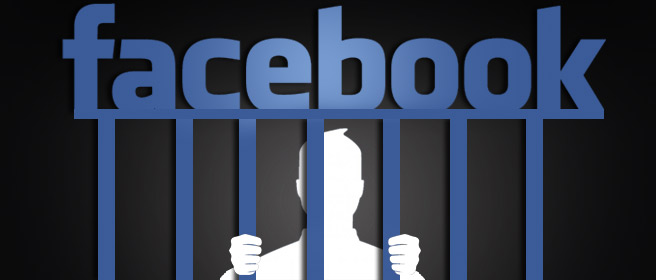
But after more than three years of blogging about education and social justice issues while teaching in the public school system, there’s one thing I’ve never experienced before: censorship.
This is social media, after all.
I’ve got no advertisers to please, no editor breathing down my neck. I can write whatever I want.
For the first time in my blogging career, I was blocked from Mark Zuckerberg’s social networking platform because I had the audacity to post my blog to it.
Now keep in mind I’ve been doing just that every week since July, 2014.
Moreover, the article I posted was in no way different from my previous work.
My article contains no hate speech. For once I even managed to control my own potty mouth.
This is just an examination of why charter and voucher schools reduce options for parents and students – not increase them.
It’s an argument. I lay out my reasons with reference to facts and make numerous connections to other people’s work and articles.
I don’t understand how that “violates community standards.”
A blogger friend of mine tells me that someone probably saw my article and reported it to Facebook as spam. That’s happened to him multiple times, he says, especially when he criticizes groups like Teach for America.
Perhaps that’s what’s happened here.
Some folks get so furious when I criticize their charter and voucher schools.
Maybe they saw my latest piece and just wanted to silence me.
I don’t know.
I suppose another option is that it came from Zuckerberg, himself.
He’s a big fan of school privatization. Perhaps he changed Facebook guidelines to crack down on people like me who throw shade on his pet school reforms.
Or maybe my work was targeted because I’m critical of President Donald Trump. I did, after all, write an article this week called “Donald Trump is a Pathetic Excuse For a Human Being” that includes a picture of the chief executive as a poop emoji.
Who knows? I’ve pissed off a lot of people in three years.
But I find it hard to believe I was actively targeted. I mean, this is still America, right?
Right?
Another option might be a rogue algorithm.
Facebook is known to use various processes or sets of rules to govern calculations about what should and should not be allowed on the site. After all, they can’t leave all these decisions to living, breathing, human beings. That would cost too much money. Better to leave it to bots and computers.
Perhaps something in my article tripped their robotic alarm bells. (ROBOT VOICE: He’s against Competency Based Education!EXTERMINATE!)
I guess I’ll probably never know.
In the meantime, Twitter is still open for my business. I can still share links in 140 characters or less – with hastags. And, the best part is that Trump might see it!
But what about friends not on the Twitterverse?
How do I even let people know what happened to me? Send a million separate emails!? Pick up the phone and – yuck – talk to people!?
I sent a note to friends through Facebook Messenger about what happened, but that soon stopped working on me. I can’t message anyone else now. Still, the story seems to have leaked.
People who know what’s happened have been kind enough to share the article. It’s being read and appreciated.
I don’t know if my Facebook imprisonment has had a major effect on its distribution. But it’s probably had some dampening effect.
I have to admit, it’s kind of frustrating.
After all this time, many of us rely on Facebook for so much. I’m a member of the Badass Teachers Association, a group of more than 64,000 members who use the social media platform to discuss, plan and engage in various actions against corporate school reform. I’m also in United Opt Out National. It’s increasingly difficult for me to help plan our protest in Washington, DC, without Facebook.
It never really hit me before how much of our lives flow through this one network.
If someone wanted to disrupt political organizations dedicated to reforming the status quo, censoring people and posts on Facebook could be very effective.
I haven’t been silenced, but I’ve been effectively muted. Most of my readers see my work through Facebook. Without it, my writing is out there, but much fewer people probably are in contact with it.
So I suppose that brings me to you, intrepid reader.
Somehow you found this article.
Assuming Zuckerberg and his bots don’t change their minds, I probably won’t be able to post this article to Facebook. So if you saw it, you found it somewhere else. Or perhaps a friendly radical took a chance and posted it on Facebook, themselves, defiant in the possibility that the social media gestapo might crash down on them.
Will you please do the same?
Share my story.
Let the world know what happened to me today.
It’s not the most important thing that’s happened this week. And hopefully it will all be settled in seven interminable days. 168 hours. 10,080 minutes. But who’s counting?
Or – who knows – perhaps I’ll be cleared of all charges, write a new article and the same thing will happen when I try to post it.
I don’t know.
In the meantime, I’m going to spend some time off the computer.
Maybe I’ll open the doors and windows, let in some natural light and see what this “outside world” is like that people used to talk about.
Certainly each state has different laws and different legal definitions of these terms so there is some variability of what these schools are in practice. However, the general description holds in most cases. Voucher schools are privately run at (at least partial) public expense. Charter schools are privately run but pretend to be public. In both cases, they’re private – no matter what their lobbyists or marketing campaigns say to the contrary.
Despite these facts, when we talk about privatized schools, we ignore the real distinctions and focus on the fake ones. We overlook the salient features and instead describe privatized schools as vehicles for choice.
They’re not.
FAKE CHOICE
School choice.
Got choice?
Parents should have the freedom to choose the school their children attend.
But using “choice” as the ultimate descriptor of what privatized schools are and what they offer is at best misleading and at worst an outright lie.
They are essentially private businesses existing for the sole purpose of making a profit.
Critics say the public school option is not a choice because there is only one public school district in a given neighborhood. Yet isn’t it the parents who decide the neighborhood where they live? In most cases, even the wealthiest district has rental properties where people can move to take advantage of an exceptional school system.
If a student lives in a public school’s service area, the district must accept that student. It doesn’t matter if educating that child will cost more than the average per pupil expenditure. It doesn’t matter if she is easy or difficult to educate, if she has a record of behavior or discipline problems, if she has special needs, if she has low test scores. The public school must accept her and give her the best education possible.
Privatized schools are legally allowed to be selective. They can deny enrollment based on whatever reasons they choose. Charter schools may have to be more careful about their explicit reasoning than voucher schools, but that’s just a restriction on what they say, not on what they do. The results are the same. If they want to deny your child entry because of her race, ethnicity, religion, sexual orientation, whatever – they can. They just have to put something more creative down as the reason why.
Vouchers schools don’t even have to give you a reason at all.
And charters have a multitude of ways to avoid accountability. They can simply pretend to have conducted a lottery. Or they can include an onerous series of demands for enrollment such as expensive uniforms, school supplies and parental volunteering at the school, to discourage difficult students from applying.
Critics will argue that these problems are a feature of the limited scope of so-called school choice programs. If there were more of them, the market would self-correct and many of these irresponsible practices would disappear.
Yet such a belief shows a complete ignorance of how business works in America.
Let’s say you have three districts in your part of the state, one of which is exceptional and the other two struggle. If we allow students at the struggling districts to attend the exceptional one, what happens? You have a mass exodus to the exceptional district while the other two close due to lack of funding.
Moreover, it ignores the realities on the ground. Why were there two struggling districts and one exceptional one? Almost always this is because of the wealth disparity between the three districts. The exceptional district probably serviced wealthier children. They have fewer needs than poor children. They have books in the home, less food uncertainty, less exposure to violence, racism and trauma.
Yet the rich district has an overabundance of resources to meet whatever needs its students have. It can levy higher taxes and thus spend more per pupil than the other struggling districts.
So when you combine the three districts, you end up being unable to continue spending the same amount per pupil. You probably have to decrease that spending and thus all students receive fewer services. However, at the same time, student needs for services increase because now you’re also trying to educate the more impoverished and racially diverse students from the two previously struggling districts.
No, even this kind of school choice doesn’t improve the quality of education. It degrades it.
Taken as a whole, the American people are an awfully cheap bunch.
We’ll spend trillions of dollars on guns and tanks to fight an overseas war, but if someone suggest we build a bridge or conduct a social program or anything that would help people actually live longer, happier lives, well, F- ‘em.
Tax cuts for the rich – WONDERFUL!
Feed the hungry – NOT ON MY DIME!
And it’s true even of our attitude toward little children.
Don’t believe me? Just look at our public schools.
Pristine Taj Mahal-like buildings for rich kids with broad curriculums and plenty of teachers to instruct privileged progeny one-on-one, and then across town on the other side of the tracks you’ll find dilapidated shacks for the poor forced to put up with narrow curriculums focused on standardized test prep and as many underprivileged children as they can fit in the room with one beleaguered teacher.
It doesn’t have to be this way.
We’re one of the richest countries in the world, yet we treat our own children – especially if they’re poor and brown – as if they were refugees from the third world.
Well, perhaps marginally better. To my knowledge no one is suggesting we send the unwashed masses back to Africa, Europe or wherever else they originally came from – at least those who can prove they were born here.
In education circles, small class size is the one universal constant. There is some debate about exactly how small classes should be (at least less than 20, maybe even closer to 10 or 15 students) and for which student groups it is most important, but the consensus in favor of small class size is overwhelming.
Study after study concludes that small class size increases academic performance. When compared with peers in larger classes, those in small settings end up being months ahead. They cover more material, with greater depth and achieve better comprehension in less time.
This is partly due to increased student engagement. Children are more interested in what’s being taught when they have a more personal relationship to it. In smaller classes, students are able to express themselves and participate more. Even children who don’t normally engage in such activities find themselves forced to do so. They can no longer hide behind the greater numbers of their peers. Everyone is visible, seen and heard.
As a result, students have better relationships with their peers and teachers. These better social interactions and trust often results in academic gains. This also can lead to less disruptive behaviors – even for students who typically act out in larger classroom environments. Previously troubled students end up spending less time in detention or suspension and more time in class learning.
As such, teachers are better able to see students as individuals and determine how best to differentiate instruction to meet every child’s needs.
Small class sizes in the elementary grades have long lasting effects even if class sizes increase in middle and high school. However, minority and impoverished students (child groups often experiencing significant overlap) benefit regardless of age. Small class sizes help combat the trauma and deprivations of living below the poverty line. Moreover, while small class size has a varying effect on different disciplines, it invariably helps increase writing instruction – even up to the college level. Schools that put a premium on writing would do best to reduce class sizes in all language arts classes, for instance.
However, students aren’t the only ones positively affected by small class size.
This also has an impact on teachers. Reducing class size increases teacher job satisfaction and retention. This is pretty important in a profession bleeding away practitioners. Fewer college students are entering education programs every year. Salaries are falling even as responsibilities and paperwork are increasing. A reform that helps counteract that while also helping students would appear to be just what the doctor ordered.
Unfortunately, administrators don’t seem to be getting the message. Instead of reducing class size for the most effective teachers, they often increase it. The main reason – test scores. Number crunching administrators think giving the best teachers more students means helping the most students. However, they aren’t taking into account the law of diminishing returns.
However, in today’s dog-eat-dog public school environment, you either pay a little now or a lot later. Right or wrong, competition is our overarching education policy. Public schools have to fight for education dollars with charter and voucher schools. And smaller class size is the number one selling point for so-called choice schools over their traditional public school counterparts.
Sure, it’s expensive to cut class size, but it’s also expensive to continue funding the district when students leave due to smaller classes at the local charter school. Though the media over-reports the value of high test scores, parents rarely decide where to send their children on that basis. Class size is often their number one consideration. They don’t want their children to be lost in the crowd. They want their children to be valued as individuals and their education to be properly personalized.
According to “More Than Scores: An Analysis of How and Why Parents Choose Schools,” two of the top five reasons parents who choose private schools over public institutions specifically reference class size – 48.9% cite class size out right and 39.3% cite “more individual attention for my child.” And the other three reasons – better student discipline, better learning environment, and improved student safety – are all dramatically influenced by class size.
If public schools want to continue to compete, school directors may have to commit to investing in class size reduction.
Yet the trend of the last decade has been in exactly the opposite direction.
Yes, there are plenty of competing ideas for how to improve our schools. And most of them come from corporate think tanks and big business lobbyists more interested in enriching themselves on the public dime than helping students.
Corporate education reformers want us to pay private companies to educate the poor. They want us to invest in privatized schools and standardized test conglomerates. They want us to subsidize publishers and tech corporations with new, untried, unnecessary academic standards that require us to buy boatloads of crap that don’t help and we don’t need.
You see the answer to improving education for the poor isn’t corporate welfare. It starts with equitably funding schools dedicated to the poor and minorities. It starts with providing them with the money required to meet student needs. And a large part of that includes cutting class size.
There is a significant consensus behind it. Moreover, it has parental, student and teacher support.
It’s a no brainer.
All it takes is a change in priorities and the will to actually get up off our collective asses and do something to help America’s children.
Clearly we’re speaking in generalities here. Every school – public or privatized – is different. But there is enough commonality to identify certain trends between each type of school to make general conclusions about each category. In short, despite any media or political propaganda to the contrary, public schools come out on top.
Here are the top 10 reasons public schools are the best choice for children, families and communities
1) Public Schools Attract the Best Teachers
When choosing a school for your children, you want them to have the best teachers possible. You want life-long, committed educators – people who entered the profession as a calling, who dedicate their lives to young people.
This is not the case at many charter or private schools. Their teachers often don’t have the same high level of education, experience, or commitment. In many states, they aren’t required to earn a 4-year degree from an accredited college, they routinely have less experience and higher turnover.
Think about it. If you were one of the best teachers in the country, wouldn’t you want to work where you get the highest salary and benefits? Of course!
2) Public Schools Have a Greater Sense of Community
Most public schools have been around for a long time. They are the heart of the communities they serve. They do so much more than just teach children. They host continuing education courses for adults, extracurricular activities, sporting events, academic clubs, public swimming pools, open libraries, and invite the community for local events, concerts, seminars, etc.
This is rarely the case at privatized schools. Charters and private institutions are often fledgling startups. They’re located in rented office spaces, renovated store fronts and other locations chosen more for their cost benefits to investors and not for their efficacy as places of education or community outreach.
Public schools have histories that go back generations. Everyone in the community knows the teachers who work there. Parents often send their kids to the same educators who taught them when they were young. Sometimes this goes back to grandparents and even great grandparents. Older brothers can advise younger sisters what it was like to have this teacher or that principal. The kinds of relationships you get at public school just aren’t there at institutions that model themselves on big box stores like WalMart and Target.
3) Public Schools Increase Educational Choice
Privatizers often talk about charters and voucher schools as if they are the only places that offer parents and students choice. It’s simply untrue. Many public school districts offer a tremendous amount of alternatives for students living in their neighborhoods. Larger urban districts often have magnet or theme schools. But even beyond that, most schools offer a wide variety of classes and curriculum. Students can take foreign languages, vo-tech, arts and humanities, independent studies, and advanced placement or college credit courses. Students can take advantage of a plethora of services designed to personalize their academic experience to meet their individual needs with special and gifted education, even choosing which teachers are the best fit for their learning styles.
Obviously, these options increase with the degree of wealth in a community, but they prove that increasing choice doesn’t have to mean privatization. It means equitable funding.
4) Public Schools Have Greater Diversity
Students learn a lot more than reading, writing and arithmetic in school. They also learn how to deal with different kinds of people – they learn to share this world with other humans from various racial, ethnic, religious, and sexual backgrounds. The more diverse an environment they grow up in, the more well-adjusted they will be for the adult world, and the less racist, sexist and prejudiced they’ll probably become.
Public schools are often a sea of diversity. They are the best place to meet the entire spectrum of humanity. On the other hand, charter and voucher schools are routinely segregated and homogenous. Sometimes privatized schools make efforts to fight against this, but you can’t make much headway when your entire system is based on sorting out the underprivileged in favor of white, affluent children whose parents can afford tuition (private schools) or poor black but high achieving children (charter schools).
Privatized schools rarely do this, and if they do, it’s by choice not necessity. They could close their books any day, make whatever decisions they like behind closed doors and layout bundles of cash for their CEOs or investors. Privatized schools are for-profit. Even when they aren’t explicitly labeled as such, they usually operate in the same way – cut student services to increase the bottom line. Their explicit goal is to make money off your child – not simply earn a middle class income like public schools. No, they want to get rich off of your dime.
Privatizers buy mansions and yachts with your money. Public school teachers pay off their mortgages. And in the rare instances where public school employees break the law and try to embezzle funds, they are much more likely to be caught because the books are right there for all to see.
If there’s one thing you can be reasonably sure of, it’s that your neighborhood public school will still be there. It’s been there for decades, sometimes hundreds of years. Charter and voucher schools are often fly-by-night affairs. Public schools are solid bedrock. If public schools close, it’s only after considerable public comment and a protracted political process. No one ever shows up to find the local public school chained shut. Not the same at charters or private schools.
7) Public Schools Have Greater Commitment to Students
When you enroll in a privatized school, the choice is all up to administrators. Is your child a safe bet? Can they let your little one in without breaking the bank? Will he or she make the school look good with better test scores? Will he or she be easy to educate?
Public schools, on the other hand, have a commitment to educating every child who lives in the district. They even take homeless children. Only under the most extreme circumstances would they expel a young person. No matter who your offspring is, no matter how good or bad a student, public school operators have faith they can help the youngster succeed.
8) You Have Ownership of Public Schools
With privatized schools, you’re paying for a business to provide services. Public schools belong to you. In fact, you’re the boss.
Public schools are run by your friends, neighbors and co-workers. Privatized schools are most often run by appointed boards of directors who are not beholden to you but to the investors. As education blogger Peter Greene puts it, “The charter is a business, run by people who don’t ever have to let you into their board room.”
In addition, many public schools go beyond even this level of parental involvement. They more often have PTAs or PTOs. They have advisory councils where elected parents, teachers and community members can work together to advise the school board on important maters like hiring superintendents. If parents and the community want a voice, the public school system is overflowing with options. Ironically, the community rarely has any say over privatized schools and parents can only vote with their feet.
9) Public Schools Provide More Amenities
Public schools routinely offer so much more than privatized schools. At many charter and voucher schools, parents are required to buy supplies for the whole institution. Public schools accept donations and sometimes teachers ask for help, but if parents can’t (or won’t) send in pencils or tissues, the school provides it gratis. And even when the district is cheap in this regard, teachers often make up the difference from their own pockets. It’s not right that they have to do so, but they constantly step up for your children.
Moreover, public schools offer a much expanded range of services for your children than privatized schools. Special education and gifted programs are first rate at public schools while often intermittent or nonexistent at privatized schools. And the requirements put on parents at public schools are much lower – less restrictive dress codes, fewer demands on parents’ time and they take a greater responsibility for your children.
Heck, private schools rarely even pay for transportation. Public schools offer a free ride via the school bus from home and back again.
10) Public Schools Match or Outperform Privatized Schools
When it comes to academic performance, comparisons all come down to what data you think is indicative of student learning and which factors you exclude. You can find plenty of studies funded by privatizers that unsurprisingly conclude their backers business model is the best. However, when you look at peer reviewed and nonpartisan studies, the story changes.
The Lubienskis, in particular, paint an extremely compelling picture of public school superiority based on numerous complex statistical models including hierarchical linear modeling and multivariate regression. In short, the authors conclude that after accounting for the demographic differences among various school sector populations, traditional public school students outperform those at private schools over time. Students typically enter public schools with much greater degrees of poverty than those entering private schools. As such, public school students start with greater academic deficiencies. Even so, public schools are able to make up for these deficiencies over time more easily than privatized schools. And by fourth grade, public school students actually have greater academic success than their demographically similar peers at private or charter schools. The Lubienskis call it “The Public School Effect.”
With all these benefits, you’d think we’d be cheering on our public school system, not denigrating it. However, the failing schools narrative sells a lot of people on privatized alternatives. But it’s not fact. It’s marketing.
Republicans have been arguing for years that the federal government can’t tell the states what they should be teaching. That’s the crux of opposition, and the newly reauthorized federal law governing K-12 schools, the Every Student Succeeds Act (ESSA), underlines it.
The power is unequivocally in the hands of governors and state legislatures.
The states control which academic standards their public schools are supposed to subscribe to or not. And since the beginning of 2017, the states are overwhelmingly in Republican control.
There are 98 partisan state legislative chambers in the United States. Republicans dominate 67 of them. In fact, the GOP controls both legislative chambers in 32 states – the most it has in the party’s history! And in 24 of those states, Republicans also run the show in the Governor’s mansion – the trifecta!
In short, despite any limits on Presidential power, the GOP has never been in a better position to get rid of Common Core.
If Republicans truly wanted to repeal it, they could do so tomorrow, and there’s zero Democrats could do about it in almost half of the country.
Yet, Republicans don’t.
They haven’t.
And they don’t seem in any rush to put it on their agenda in the future.
Which brings me to a serious question any critic of Common Core has to answer: WHY!?
Republicans say they hate Common Core.
They have the power to get rid of it.
Why don’t they do it?
THE STATE OF COMMON CORE
Despite any comments to the contrary, any blathering talking head nonsense from media pundits, the facts remain the same.
Sure, some legislatures have changed the name and made nominal revisions (Hello, Pennsylvania!) but they’re still essentially the same standards applied in the same way. The Common Core’s own Website doesn’t distinguish between states that have the standards outright and those where they have been slightly revised or renamed.
Specifically, nine states have announced plans to rewrite or replace the standards, but in the majority of these cases, they have resulted merely in slight revisions. Only Missouri, Oklahoma, and Tennessee appear to have created significantly different standards, according to Education Week.
So what’s the hold up?
MAIN OBJECTIONS TO THE CORE
Full disclosure: I am not a Republican. I am the farthest thing you could find to a Republican. But on this one issue we agree.
No, I don’t think Common Core will make your child gay or indoctrinate kids into a far left worldview or any of a number of bizarre, crackpot criticisms you might hear from mentally ill pundits being exploited by far right media conglomerates. Nor am I opposed simply to undo any signature legislative achievements of our first black President.
Even if people like Glenn Beck and I disagree on the reasons why, we both agree on the course of action – repeal Common Core.
Yet the incumbent batch of GOP lawmakers across the country are letting us both down.
If one has to be beaten by Republicans, at least let them accomplish the things that have bipartisan support. That includes repealing Common Core.
Though the media likes to characterize this as a conservative issue, it’s not just Republicans who want to get rid of the Core. Regardless of politics, most people dislike the standards. They aren’t popular with adults. They aren’t popular with children. And most tellingly, they aren’t popular with classroom teachers.
According to the most recent Education Next poll, less than half of all Americans, 49%, favor the policy. In partisan terms, that’s 37% of Republicans and 57% of Democrats. And that support has been steadily dropping every year – by 20 points for Republicans and seven for Democrats since 2013.
And among teachers, the drop is even more dramatic. Only 40% now favor the Core. That’s a drop of 36 points among those who know the standards best!
POLITICAL PARALLELS
So let’s get rid of them.
For once I’m with Trump.
But the legislatures just won’t do it.
In some ways, this shares parallels with the healthcare debate.
Before going forward, let me just say that I am NOT in favor of repealing Obamacare and going back to the previous system. Nor am I in favor of repealing without a replacement or any of the so-called “skinny” plans put forth by the GOP.
All the legislatures would have to do is reinstate them.
Pennsylvania’s standards were particularly reasonable, flexible yet grade appropriate and comprehensive.
We could go back to them tomorrow.
But we don’t.
Why?
It’s that same question again.
What is holding us back?
STANDARDIZED TESTING
Here’s my theory: it’s the testing.
One of the most frustrating things for Common Core critics is when apologists say they hate standardized testing but love Common Core.
The two are inextricably interlinked. You can’t have Common Core without the testing. That is the whole point of the standards – to tell districts what to focus on because those things will be on the federally mandated high stakes standardized tests.
If states repeal Common Core, what happens to these tests?
Before adopting the Core, each state had a test aligned to its own specific standards. Even where some states had the same tests, their standards were significantly similar to allow this. In any case, most states that have adopted the Core have had to buy new, more difficult tests.
Sure, we could all go back to the tests we used to give, but this would present certain problems.
First, many states were taking tests that were already being aligned with Common Core before they officially adopted it. If they got rid of the standards, they couldn’t go back to the old tests because they’re already Common Core specific.
In theory, they could ask to reinstate older versions of the test that aren’t Common Core aligned. However, in practice for some states, this might necessitate the creation of yet another batch of new tests.
However, in many states like Pennsylvania, this wouldn’t be an issue. Before the Core, they had their own tests based on state specific standards. There’s really no reason why they couldn’t dust off these old tests and put them back into circulation.
The problem is that this would require politicians to justify the millions of dollars (at least $7 billion nationally) they wasted on the new tests, new workbooks, new textbooks, etc.
Lawmakers would have to own their mistakes.
They’d have to say, “My bad!”
And most of them aren’t about to do that.
Of course, there is a third option: they could undo the high stakes testing altogether. They could characterize this not as a misstep but a reform.
According to the ESSA, all states have to give federally mandated standardized tests from grades 3-8 and once in high school.
But what exactly those tests look like is debatable.
The federal government is supposed to give them leeway in this matter. What better way for the Trump administration and Betsy DeVos to demonstrate their commitment to local control than by approving accountability plans that don’t include standardized testing?
I’m sure if lawmakers were really serious about getting rid of Common Core, they could figure out a way to make this work. It would just require a commitment to patching up the massive hole in our school funding system where the standardized testing industry has been sucking away tax dollars that could be better used elsewhere – like in the actual act of teaching students!
THE CYNICAL INTERPRETATION
Which brings me to perhaps the most cynical interpretation of the data.
Republicans may be avoiding the Common Core issue because their opposition up to now was simply disingenuous partisan infighting. They could be craven servants to the testing industry. Or – and this is the worst case scenario – they could have another endgame in mind entirely.
For instance, here’s Trump adviser Kellyanne Conway during an interview with Jake Tapper on CNN.
Education Secretary Betsy DeVos “will get on with the business of executing on the president’s vision for education,” Conway said. “He’s made very clear all throughout the campaign and as president he wants to repeal Common Core, he doesn’t think that federal standards are better than local and parental control…And that children should not be restricted in terms of education opportunities just by their ZIP code, just by where they live. We’ve got to look at homeschooling, and charter schools, and school choice and other alternatives for certain students.”
It’s possible that today’s Republicans at both the state and federal level aren’t concerned with repealing Common Core because it’s irrelevant to their ultimate goal – repealing the very notion of public education.
If every school or almost every school was a charter, voucher or homeschool, Common Core would be a moot point.
After all, choice schools don’t have to follow most regulations. That could include using the Core.
On the other hand, charter schools often allegedly do use Common Core, but regulations are so lax with so few measures to hold them accountable for anything in most states that whether they’re actually using the standards and to what extent is anyone’s guess. Unscrupulous charter operators could conceivably forgo the standards regardless of state mandates with little fear of being found out or contradicted.
This may be the ultimate selling point for school choice. Almost anything goes. It could certainly allow schools to circumvent Common Core, just as it allows them to circumvent civil rights protections, fiscal responsibility, democratic local control – really any kind of protections to ensure taxpayer money is being spent responsibly and kids are actually being educated.
In short, it hammers a nail with a bazooka. Yet conservative lawmakers may only be concerned with who’s selling the bazooka and not who gets hit by the shrapnel.
It will become just another revenue stream in a multitudinous school system where education only has meaning in how much it can profitize students and enrich investors.
That may be the true endgame for policymakers.
Common Core is just one of a number of schemes they’re pushing to take advantage of the country’s fastest growing revenue stream: our children.
CONCLUSIONS
THIS is why lawmakers – both Republican and Democrat – won’t get rid of Common Core.
They are bought and sold employees of Wall Street and Corporate America.
Too many people are making a fortune off the backs of our children – charter and voucher school investors, book publishers, software companies, test manufacturers, private prison corporations! They aren’t about to let their profits take a nosedive by allowing their paid agents in the legislature to turn off the gravy train.
Even when he lies – which is often – he’s no good at it. His real motives are plain as the weave on his head.
Under Obama, they could do almost the same things, but at least Barack would apologize for it. He’d clothe it in the language of civil rights and make it sound all noble. He’d excuse systemic inequality as the deserved results of competition.
Imagine sincerely believing that poor black kids deserve to go to schools that aren’t controlled by school boards but instead by unelected bureaucrats. Imagine thinking the color of your skin should determine whether you have a say in your child’s education. White folks get to elect the people running their schools, but not black folks. And you know what, it’s for their own good, say the reformers!
Imagine thinking that the amount of melanin in your skin should determine whether your schools are transparent or not – whether they’re required to have open records, open meetings, even whether they have to follow the same safety protocols and regulations as traditional public schools!
WHITE SCHOOLS – not for profit, spend the budget all on the students. BLACK SCHOOLS – CA-CHING! CA-CHING!
And when it comes to voucher schools, imagine selling a tax cut to a wealthy family as if it somehow benefited poor folks. Letting the Walton’s pocket a few thousand from their kids exclusive private school tuition doesn’t help Ma and Pa Six Pack. Nor does offering a discount to the kind of parochial schools that brainwash kids into thinking that evolution is evil, climate change is a Chinese conspiracy, and slavery was just God’s will.
Imagine pushing standardized tests as if they were a technological breakthrough. They’ve been around since at least China’s Han Dynasty (206 BC – 220 AD). If that’s cutting edge, I think you’ll like my new APP. It’s called The Wheel!
I couldn’t do it with a straight face. But they did!
And it worked! For a little while.
Now their whole pyramid scheme is just too damn clear. Make the kids take unfair, biased tests that will show how few resources poor black kids get and then use that as a justification for giving them fewer resources, closing their schools and privatizing them. No one’s even tried a scam that blatant since Bernie Madoff went to prison!
Racism pays, folks! Prejudice pays! Because the majority doesn’t mind so much when you take advantage of the underprivileged. That’s why they’re underprivileged in the first place!
And when people like me speak out against them, the best they can do are Ad hominem attacks – you’re too white to question policy affecting black people, or your friends are black but (somehow) not black enough. Today I actually read a response to an article I wrote that came down to these insightful criticisms – Nu-uh! And How dare you! Which we can add to their response to criticisms that charter schools increase segregation – I know you are but what am I?
The folks at the Education Post, a propaganda network passing off most of this nonsense as if it were legitimate news and funded by $12 million from the Broads, the Waltons and other usual suspects, they must really be desperate.
They’ve sold their souls to the Devil and may not even get a good return on the investment.
You see, they’re betting that by the time the Trump zeppelin explodes, their policies will be irreversible.
The problem is that he’s been extremely ineffective. He’s pushing their agenda, but isn’t getting much done.
White America has a history of freaking out at perfectly reasonable suggestions by the black community.
Hey, maybe black people shouldn’t be slaves.
SOUTHERN STATES SECEDE! THE CIVIL WAR BEGINS!
Hey, maybe black lives should matter as much as white ones.
BLUE LIVES MATTER! MAGA! TRUMP!
Hey, maybe we shouldn’t be making money off of children’s educations?
PANIC!
That’s what seems to be happening at think tanks and school privatization lobbying firms across the country after a new report by the National Association for the Advancement of Colored People (NAACP) this week.
Some news sources are characterizing the report as “radical” or “controversial.”
“Public schools must be public,” the report states. “They must serve all children equitably and well. To the extent that they are part of our public education system, charter schools must be designed to serve these ends.”
And why shouldn’t they?
More than 3 million students attend charter schools across the country. Approximately 837,000 of them are black. Don’t they deserve the same kinds of democratically controlled schools and fiscal responsibility as their counterparts in traditional public schools?
“No federal, state, or local taxpayer dollars should be used to fund for-profit charter schools, nor should public funding be sent from nonprofit charters to for-profit charter management companies.”
But that’s not all.
The author’s also call out charters infamous enrollment and hiring practices. Specifically, these kinds of privatized schools are known to cherry pick the best and brightest students during admissions, and to kick out those who are difficult to teach or with learning disabilities before standardized testing season. The report called for charters to admit all students who apply and to work harder to keep difficult students – both hallmarks of traditional public schools.
In addition, the report suggests charters no longer try to save money by hiring uncertified teachers. If charters are going to accept public money, they should provide the same kind of qualified educators as their traditional public school counterparts.
However, even if such reforms are made, the report is doubtful that privatized education could ever be as effective and equitable as traditional public schools. In perhaps the most damning statement in the report, the authors wrote:
“While high-quality, accountable, and accessible charters can contribute to educational opportunity, by themselves, even the best charters are not a substitute for more stable, adequate and equitable investments in public education.”
The report was written by the 12-member NAACP Task Force on Quality Education after a set of intensive hearings or “listening sessions” across the country in cities such as New Haven, Memphis, Orlando, Los Angeles, Detroit, New Orleans and New York. The final product is the result of the input they received during these meetings.
This is only the latest in a growing movement of skepticism toward privatized education of all sorts – especially in relation to its impact on students of color.
Despite a truly controversial record, over the past decade, the number of students in charter schools has nearly tripled. In terms of pure numbers, black students only make up more than a quarter of charter school enrollment. However, that’s a disproportionately high number since they make up only 15 percent of total public school enrollment. To put it another way, one in eight black students in the United States today attends a charter school.
The NAACP isn’t the only civil rights organization critical of charter schools. Groups such as the Journey for Justice Alliance, a coalition of grassroots community, youth, and parent-led organizations, and the Movement for Black Lives, a conglomeration of the nation’s youngest national civil rights organizations, have also expressed concern over the uses and abuses of students of color in charter schools.
The report identifies severe inequalities between rich vs. poor communities as the cause of so-called failing schools. The report argues that “to solve the quality education problems that are at the root of many of the issues, school finance reform is essential to ensure that resources are allocated according to student needs.”
Corporate reformers are running scared with their hair on fire as someone finally has the guts to point out that the emperor is walking around stark naked!
In what must count as another new low in American discourse, the school voucher industry is striking back against claims that their products lead to greater segregation of students.
Randi Weingarten, President of the American Federation of Teachers (AFT), had the audacity to voice the truth:
“Make no mistake: This use of privatization, coupled with disinvestment are only slightly more polite cousins of segregation,” she said a week ago during a speech at the AFT’s yearly convention.
To which school privatization mouthpieces quickly countered with the truth:
“If vouchers are the polite cousins of segregation, then most urban school districts are segregation’s direct descendants. The vast majority of our urban public school districts are segregated because of white flight and neighborhood neglect.”
This was from a statement by Kevin Chavous, founding board member of the American Federation for Children, the school privatization advocacy group that Secretary of Education Betsy DeVos used to lead.
So there you have it.
A nation of more than 325 million people, with a more than 241-year history reduced to – I Know You Are But What Am I?
Does that mean that both systems – privatized and public – are equally at fault? Does it mean that both somehow get a pass for reprehensible behavior?
No and no.
First, we must explain why segregation is bad.
Peter Cunningham, former assistant secretary for communications and outreach at the Education Department under Obama, wagged his finger at Weingarten on the privatization propaganda Website, the 74.
He called out Weingarten’s hypocrisy, which takes some cojones for a man who only last year pondered aloud and in public whether segregation was really such a bad thing.
“Maybe the fight’s not worth it. It’s a good thing; we all think integration is good. But it’s been a long fight, we’ve had middling success. At the same time, we have lots and lots of schools filled with kids of one race, one background, that are doing great. It’s a good question.”
Funny, isn’t it?
He calls out Weingarten because of public school segregation but defends charter schools because their segregation is somehow just swell.
Keep in mind. Cunningham is the executive director of the Education Post, a well-funded charter school public relations firm that packages its advertisements, propaganda and apologias as journalism. And he’s not about to poop where he eats.
So, yes, Mr. Cunningham, segregation is worth fighting.
That’s why in Brown v. Board the U.S. Supreme Court struck down “Separate but Equal” – because when races are kept separate, their schools are rarely equal.
This game of excusing one system based on the deficiencies of the other is pure sophistry.
To be fair, Weingarten seems to tacitly admit this about public schools.
She acknowledges the disinvestment in public education, how public schools have been systemically undermined by politicians and lobbyists, many of them advocating for privatized schools, so that they could use this disinvestment as an excuse for their own for-profit education schemes.
“…no amount of facts or evidence will sway voucher proponents from their agenda to starve public schools to the breaking point, then criticize their deficiencies and let the market handle the rest, all in the name of choice,” she said in a statement.
Schools serving poor and minority students aren’t getting the proper resources. So they propose further segregating them.
That’s a terrible idea. It’s like escaping from a leaky cruise ship by jumping into a leaky lifeboat. You’ll sink in both, but the lifeboat will sink quicker.
Yes, our public schools are segregated by race and class and therefore poor and minority students receive inequitable funding and resources. Charters and vouchers cannot possibly remedy that. They will always make it worse. Only a robust and integrated public school system can be truly equitable. A system that deifies choice cannot combat racism if it is freely chosen.
We have let the wolf write our education policy. It should be no shock that his solution isn’t to build more houses of bricks but to process our little piggies into bacon.
Full disclosure: I am no fan of Weingarten.
I recently called for both her and National Education Association (NEA) President Lily Eskelsen Garcia to voluntarily step down because of undemocratic practices and mismanagement in both teachers unions.
However, I’ll stand up for her when she’s right, and in this instance, she is.
Frankly, it makes her ineffective in speaking out on this matter. I have nothing against charter school teachers. I know, personally, several very good educators who work at charter schools. In this job market, sometimes you have to take what you can get. However, the sad fact of the matter is that by their very structure, charter schools are inferior to public schools. They are less democratic, less transparent, less accountable and more easily subject to fraud and abuse of children. That’s not to say all charters are guilty of this, but just by being a charter school and being subject to the deregulated rules governing them, they are more susceptible to these errors than their traditional public school brethren.
Perhaps the biggest mistake Weingarten made was in glossing over the worst abuses of public schools. If she was going to call out the segregation at voucher schools, she also should have explicitly called it out at public schools.





 gadflyonthewallblog