I Used to be a Reporter. Now I’m a Teacher. I’ve Become What I Used to Observe

thumbnail_Screen Shot 2019-02-28 at 12.04.59 PM

A long time ago, in a newsroom far, far away; your humble narrator was a respected journalist.

Today I am a beloved school teacher in a suburban middle school.

Okay. That may be laying it on a bit thick.

Like any human being whose job it is to get children to do their best and learn something, I’m beloved by some and beloathed by others. And if I’m honest, when I was a reporter, I was never all that respected. But I did win several state journalism awards.

The point I’m trying to make is that like a caterpillar into a butterfly or a tadpole into a frog, I made a startling transformation in career paths that flies somewhat in the face of popular wisdom.

F. Scott Fitzgerald wrote, “There are no second acts in American Lives.” Well, I’m on my third or fourth act and nowhere near ready for the curtain to come down yet.

It’s shocking how far I’ve come, though there’s a surprising amount of overlap between my two professions. In fact, the biggest difference is one of orientation.

I used to get up at 4 a.m., weave into the newsroom and type away for a few hours about the previous night’s school board or city council meeting before my deadline came down, the presses rolled and the morning edition went on sale.

Now I get up at 5 a.m., hobble into the classroom and go to meetings, grade papers or otherwise get ready for a 7-hour invasion by 12- and 13-year-olds, followed by more meetings and papers and planning.

I used to go into the classroom to interview teachers and students about special lessons, state and federal programs or standardized tests.

Now I’m in the classroom questioning myself about my students and what works best to help them learn, trying to navigate the state and federal programs so they get the best return and bang my head against the wall about the constant standardized tests.

I used to independently bebop all over my coverage area, asking questions, doing research, discovering things that many people would rather remain secret.

Now I independently plan my lessons, ask my students questions, do research on best practices and discover things about my children and their lives that many people would rather remain secret.

You’ve heard the old chestnut about education being a career for those unable to act. I’m living proof that it’s a lie.

As a journalist, I reported on. As a teacher, I do.

In my former job, I told. In my current one I show.

Perhaps that’s why I now find it so strange that many of my former colleagues have gone into public relations, communications or have become policy analysts.

I’m not surprised. I can’t say I didn’t know that that door was always open. But it’s peculiar.

In the newsroom, we all heard the stories about grizzled newspapermen and women with shelves stuffed full of awards and prized Rolodexes bursting with hard-earned sources who gave it all up for a 9-5 desk job writing the very press releases we disdained.

We all had friends who were making bank managing people like us and trying to get us to write what the company wanted or spin the story in the direction the advertisers liked.

There is no scorn, no disgust, no derision to match that of a journalist for a corporate sellout, and that’s because in our hearts we all secretly wondered if it wasn’t the better deal.

Every good reporter – like every good teacher – is a radical at heart.

You don’t get into either field to support the status quo. You want to rock the boat. You want to shake things up. You want to change the world for the better – all from the comfort of your swivel chair behind your computer screen or from the well worn tread of your classroom carpet.

Journalists live for the scoop, the big story, the article that shouts off the front page above the fold and which has everyone talking. Teachers live for the student epiphany, the moment the light comes on behind a child’s eyes, the transformation from ignorance to knowledge and – dare I say – wisdom.

But being a press agent or policy hack has none of that splendor.

You have to give it up – all for the right to have a chance at a life.

I loved being a reporter. It was one of the best things I’ve ever done. I got to do things, see things, talk to people, be there for things that I never would have been able to access otherwise. But I could barely pay my bills.

I was dirt poor in the newsroom. We all were.

We worked 50-60 hours a week, had no time for a second job, no time for a social life, no time for a family or kids, and we wanted more.

So I understand the allure of the steady paycheck and becoming a housebroken professional communicator of someone else’s message.

But being a teacher is different.

You still don’t get paid much. You still work long hours – though maybe not quite as long. But you can get that second job – often in the school, itself, tutoring students or in a summer or after school program.

And you get union protections that I only dreamed about as a reporter. A safe workspace, clean and tidy, no outrageous demands (or at least an upper limit on them), and a schedule you can predict and plan a life around.

Best of all, you still get to keep your idealism intact. Or you can try to keep it as you dodge this directive and that unfunded mandate and that deeply racist policy passed down from above.

Don’t get me wrong. Becoming a teacher was hard work. I didn’t go about it the easy way – no Teach for America, one-foot-in/one-foot-out, cheating for me. I dove in head first.

I went back to college and took an intensive, accelerated masters program designed exactly for people changing careers. To get there, I had to swallow a few prerequisites I’d missed in college the first time. Then they placed me in a high school where I watched and then took over multiple classes – all while enrolled in education courses at night and in the summers.

By the time it was all over, I still had the most important things left to learn – (1) whether I could actually teach a full schedule, and (2) whether I liked doing so.

For me, the answers were unequivocally positive. I took to it like I’d taken to journalism. I needed lots of fine tuning, but the basics came naturally. And I loved every exhausting minute of it.

I regret nothing about becoming a teacher. It’s the best job I’ve ever had and am ever likely to have.

As a journalist, I got to rock whole communities with exposes about corruption. As an educator, I get to impact individuals.

I no longer get to be the talk of the town, but I get to change lives all the same – one person at a time.

And there’s something deeply satisfying about it – to look in another person’s eyes and see the need right there in front of you, and to be able to heal it even a fraction of the way well.

This world is hard. It takes people, chews them up and spits them out. There is so rarely a helping hand, a smile, understanding. But to be able to offer your hand, to be able to share a smile, to attempt to understand – that’s pure magic.

When the day is done, I know it was well spent.

I’ve come a long way from the newsroom. And in doing so, I’ve broken journalism’s number one rule – don’t become the story.

I no longer report on the action.

I participate in it.

What a way to make a living!


Still can’t get enough Gadfly? I’ve written a book, “Gadfly on the Wall: A Public School Teacher Speaks Out on Racism and Reform,” now available from Garn Press. Ten percent of the proceeds go to the Badass Teachers Association. Check it out!

cropped-book-1.jpg

Dear Lawmakers, Please Hire Teachers as Education Aides – Not TFA Alumni

thumbnail_IMG_8375


Dear freshmen lawmakers,


We did it!


After a fiercely contested election, we have finally begun to turn the tide back toward progressive politics.


Midterms usually are sparsely attended, but this year we had an unprecedented turnout.  A total of 23 states had double-digit percentage-point increases compared with their 1982-2014 midterm election averages.


And the result is one of the largest and most diverse groups of freshman Congresspeople ever!


We got rid of a ton of incumbents – 104 lawmakers won’t be returning to Washington, DC, in January, making this the third-highest turnover since 1974.


And those taking their place will be largely female. Out of 256 women who ran for U.S. House or Senate seats, 114 have won so far (Some races are still too close to call), according to the Center for American Women and Politics at Rutgers University. That makes the 116th Congress the largest class of female lawmakers ever.


Moreover, this incoming group will be incredibly diverse.


We have Jahana Hayes, a nationally-recognized teacher, who will be the first Black Congresswoman from Connecticut. Ayanna Presley, the first black Congresswoman from Massachusetts.


Angie Craig will be the first out LGBTQ Congresswoman from Minnesota. Chris Pappas, the first openly gay Congressman from New Hampshire.


Sharice Davids and Deb Haaland from Kansas and New Mexico will be the first Native American women elected to Congress – ever. And Davids will also be the first openly LGBTQ Congresswoman from the Sunflower State.


Ilhan Omar and Rashida Tlaib will be the first-ever Muslim women in Congress. Omar, a former refugee, will also be the first Somali-American and Tlaib will be the first Palestinian-American woman in Congress. This is especially noteworthy because there have only been two other Muslims to serve in the legislative branch, both men: Rep. Keith Ellison and Rep. André Carson.


And let’s not forget New York’s Alexandria Ocasio-Cortez. Not only is she a Democratic Socialist, but the 29-year-old will be the youngest woman ever elected to Congress!


With so many new faces and so much more representation, is it too much to ask for a change in the way things are done in Washington?


Many progressives are hoping not.


After all, it was people power that propelled these new lawmakers into government.


We marched in the rain, licked envelopes, made phone calls, wrote letters, and knocked on doors. We went to rallies and bake sales and stood by the polls with our little signs and fliers.


And we did it, because we wanted a change.


So, incoming lawmakers, that’s why I’m writing to you.


As a public school teacher, a father of a school-age child, an education activist and a concerned citizen, it really matters to me what happens to our schools.


Yet so many politicians – Republicans and Democrats – have turned a blind eye to our concerns for years.


No matter their party affiliation, they’ve pushed for increasing school privatization – charter and voucher schools. They’ve hammered us with biased and unscientific standardized tests and used the results to justify any number of atrocities including school closures, withholding funding and even stealing the democratic process from taxpayers. Instead of listening to the concerns of teachers and parents, they’ve followed the caprice of every bored billionaire who thinks they know how to better our schools with halfcocked schemes that cost us billions in taxpayer dollars while wasting children’s time and depriving them of an authentic education.


They’ve chased every new technological fad without regard to how it affects students or their privacy. They’ve let our schools become increasingly more segregated and made deals with private prison companies and unscrupulous security and business interests that made our schools a gateway to incarceration as much as they are to college or careers. They’ve actively engaged or silently stood by as classroom teachers lost autonomy, rights and professionalism. And finally, though many of them talk a good game, they haven’t done nearly enough to ensure that every student gets the same opportunities, resources and equitable funding.


Why?


Often the answer is ignorance.


They don’t properly understand the issues facing our schools. They don’t hear from parents, teachers and students – the rank and file. They only hear from the wealthy businesses and philanthrocapitalists preying on our schools like vultures over road kill.


In many cases this is because of the poor quality of education aides on Capital Hill.


Several years ago, I went to DC with other education advocates to ask our representatives to change course. Though we made reservations to speak with our duly-elected lawmakers months in advance, very few of them had the guts to see us face-to-face. We were almost always sent to education aides – well meaning and fresh faced kids only a few years out of college – who wrote down our concerns and sent us on our way with rarely any follow up from the people we’d come to see.


And more often than not, these eager young go-getters were Teach for America (TFA) alumni.


I’m not sure if you know what that means.


TFA is a nefarious neoliberal organization more interested in busting unions and influencing policy than helping kids learn.


They recruit people in college who didn’t major in education to become teachers for a few years before moving on to bigger and better things.


Often these rookies have only a few weeks training and just hours of experience before taking over their own classrooms. And unlike education majors, they only need to commit to the job for two years.


This not only does our children a disservice, it does very little to make these former teaching temps into education experts.


But that’s how they’re treated on Capital Hill.


Through programs like TFA’s Capitol Hill Fellows Program, alumni are placed in full-time, paid staff positions with legislators so they can “gain insights into the legislative process by working in a Congressional office” and work “on projects that impact education and opportunities for youth.”


Why do so many lawmakers hire them? Because they don’t cost anything.


Their salaries are paid in full by TFA through a fund established by Arthur Rock, a California tech billionaire who hands the organization bags of cash to pay these educational aides’ salaries. From 2006 to 2008, alone, Rock – who also sits on TFA’s board – contributed $16.5 million for this purpose.


This isn’t about helping lawmakers understand the issues. It’s about framing the issues to meet the policy initiatives of the elite and wealthy donors.


It’s about selling school privatization, high stakes testing and ed-tech solutions.


As Ocasio-Cortez said on a recent call with Justice Democrats, “I don’t think people who are taking money from pharmaceutical companies should be drafting health care legislation. I don’t think people who are taking money from oil and gas companies should be drafting our climate legislation.”


I’d like to add the following: people taking money from the testing and school privatization industry shouldn’t be drafting education policy. People who worked as temps in order to give themselves a veneer of credibility should not be treated the same as bona fide experts who dedicate their lives to kids in the classroom.


But that’s what many lawmakers of both parties have been enabling.


It’s not hard to find authentic experts on education.


There are 3.2 million public school teachers working in this country.


There are still 116,000 fewer public education jobs than there were before the recession of 2007, according to a report by the Economic Policy Institute, a progressive nonprofit think tank.


If we add the number of teaching jobs needed to keep up with growing enrollment, we’re missing 389,000 educators.


So that’s hundreds of thousands of laid off and retired teachers out there – a huge brain trust, a plethora of professionals who know – really know – what goes on in our schools, what they need to succeed and what policies could fix them.


THAT’S where you should go to find your educational aides – not TFA.


And these experts are not hard to find. You can contact the teachers unions – the National Education Association and American Federation of Teachers. Or, better yet, contact the various education activist groups focused on policy – the Badass Teachers Association or the Network for Public Education. And if you want experts at the crossroads of education and equity, you can contact civil rights groups who focus on our schools like Journey for Justice, a nationwide collective of more than 38 organizations of Black and Brown parents and students in several cities.


Or you can give education bloggers (many of whom are teachers or former teachers) a call – people like Peter Greene, Mercedes Schneider, Nancy Flanagan, Jose Luis Vilson, Julian Vasquez-Helig, and others.


Heck! You can give me a shout out.


We’re here.


We want to help.


So congratulations on your election victories. Let’s work together to transform them into intelligent policies for all our children everywhere.


Like this post? I’ve written a book, “Gadfly on the Wall: A Public School Teacher Speaks Out on Racism and Reform,” now available from Garn Press. Ten percent of the proceeds go to the Badass Teachers Association. Check it out!

book-3

The NAACP Once Again Opposes High Stakes Standardized Testing!

cps_teaching_not_over_testing_sarah_ji


The nation’s oldest and largest civil rights organization has come out against high stakes standardized testing.


The National Association for the Advancement of Colored People (NAACP) distributed an issue brief yesterday at its national convention in San Antonio, Texas, titled “NAACP OPPOSES HIGH-STAKES EDUCATIONAL TESTING.”


The brief stated that the organization has concerns about using a single standardized test as a graduation requirement, as a prerequisite for advancement to the next grade or otherwise blocking students from receiving various educational opportunities. In its place, the organization favors the use of multiple measures, which may include standardized testing but should also include other assessments such as student grades and teacher evaluations.


In short, the brief concluded:


“Using a single standardized test as the sole determinant for promotion, tracking, ability grouping and graduation is not fair and does not foster equality or opportunity for students regardless of race, income, or gender.”


This is a huge policy shift from where the organization was just three years ago.


In 2015, the NAACP along with several other larger and older civil rights groups changed its position against testing to one in favor of it.


At the time, Congress was getting ready to pass a new education law, the Every Student Succeeds Act (ESSA). The civil rights organizations – many of whom had just asked Congress a year earlier to reduce standardized testing – suddenly demanded it be kept a federal accountability standard and that taking these tests was, itself, a civil right.


At the time, many education activists were shocked by the turnaround obviously coerced by the standardized testing and school privatization industry. For instance, see this email from Teach for America alum Liz King giving organizations an ultimatum to sign.


The new issue brief is more in-line with the NAACP’s history of opposition and activism against corporate education reform.


Once again we have the NAACP that advocated against standardized testing in the Debra P v. Turlington case (1981), where the Florida legislature made passing a single standardized test a graduation requirement. The NAACP supported black students who had a disproportionate failing rate on the test and claimed the Florida legislature was violating the Fourteenth Amendment. The courts eventually ruled against the plaintiffs but the issue has remained contentious to this day.


The new issue brief isn’t just a return to form. It builds on concerns that are still plaguing our schools.


Of particular note in the new issue brief is the caution that, “…when standardized tests are used by schools and school districts, that the tests be valid and reliable, measure what the student was taught and provide appropriate accommodations for disabled children.”


Many would argue that the new batch of Common Core aligned tests being used by states do not meet this requirement. They do not test what students have been taught – they test students’ ability to spit back the same kind of thinking of the person who wrote the test. Moreover, special needs students are rarely afforded the same accommodations on federally mandated standardized test day that they are allowed during every other assessment they take during the school year.


The brief continues:


“Furthermore, the NAACP is opposed to individual students being unfairly denied critical educational opportunities because of their performance on a single, standardized test.


This, itself, is a nationwide problem. Administrators are pressured to make district policies “data-driven” and thus deny students the chance to take advanced classes or go on special field trips because of performance on one multiple choice test.


The NAACP certainly could go farther in its criticism of high stakes testing.


Organizations like the Journey for Justice Alliance (JJA), a group made up of 38 organizations of Black and Brown parents and students in 23 states, have never wavered in their opposition to high stakes standardized testing. In 2015 while the NAACP and other well established groups defended testing, JJA was joined by 175 other national and local grassroots community, youth and civil rights organizations asking Congress to stop requiring standardized tests at all.


Standardized testing violates students civil rights – especially the poor and students of color.


It is nice to see the NAACP returning to the activism on which it built its justly deserved reputation.


What follows is the full text of the new NAACP issue brief:


“ISSUE BRIEF


Date: Summer, 2018


To: Concerned Parties


From: Hilary O. Shelton, Director, Washington Bureau


NAACP OPPOSES HIGH-STAKES EDUCATIONAL TESTING


THE ISSUE


Many states are relying on a single examination to determine decisions (such as graduating from high school or promoting students to the next grade), despite the fact that leading education experts nationwide recommend multiple measures of student performance for such decisions. While these “high-stakes” tests serve an important role in education settings, they are not perfect and when used improperly can create real barriers to educational opportunity and progress. Furthermore, one-time, standardized tests may have a disparate impact on students of color, many of whom have not had the benefit of high quality teaching staff (urban school districts have the greatest challenge in attracting and keeping high qualified teachers), adequate classroom resources, or instruction on the content and skills being tested by the standardized tests. Considering additional measures of student achievement, such as grades and teacher evaluations, adds not only to the fairness of a decision with major consequences for students but also increases the validity of such high stakes decisions.


Due to our concerns about the fairness of such testing, as well as the potential impact these tests have on the lives of our children, the NAACP has supported legislation in the past that would require that States follow the recommendation of the National Academy of Sciences and the National Research Council of the National Academy of Sciences. Specifically, the bills require that High Stakes decisions be based upon multiple measures of student performance and, when standardized tests are used by schools and school districts, that the tests be valid and reliable, measure what the student was taught and provide appropriate accommodations for disabled children. Furthermore, the NAACP is opposed to individual students being unfairly denied critical educational opportunities because of their performance on a single, standardized test.


The NAACP will continue to promote the initiatives that ensure equal opportunity, fairness, and accuracy in education by coupling standardized tests with other measures of academic achievement. Using a single standardized test as the sole determinant for promotion, tracking, ability grouping and graduation is not fair and does not foster equality or opportunity for students regardless of race, income, or gender.”


img_3315


Special thanks to Dr. Julian Vasquez Heilig who first released the issue brief on his education blog.


Like this post? I’ve written a book, “Gadfly on the Wall: A Public School Teacher Speaks Out on Racism and Reform,” now available from Garn Press. Ten percent of the proceeds go to the Badass Teachers Association. Check it out!

WANT A SIGNED COPY?

Click here to order one directly from me to your door!


book-2

Kiss My Assessment – A High Stakes Testing Poem

1*ek7Qa4T4-jUcRA2QOZG8Xg


Double, Double, test and trouble;

Standards stern so fill in that bubble.


Little Laquan, Empty belly

Reading passages by Maichiavelli

Does he know what the author thinks

Last night did he get forty winks

Drive-by shooting in his neighborhood

Answer questions that he should

Interrogated by the cops

Took away and locked his pops

Now he sits slumped in school

Testing, testing, it’s a rule

Will he – this time – make the grade

A debt to society he has paid


For being poor and his black skin

Success and riches, let me in!

But not unless you answer right

Like wealthy kids whose hue is white

Not two plus two or three and four

Context implied when you ask for

European culture and white society

If you know it, you’re in propriety

If not, take a longer road

Hurdles to jump and words to decode


But do not label the test unfair

Rich folks will blast you with hot air

Testing makes them bundles of billions

Leaching off of us civilians

Test prep, grading and remediation

Never mind that it keeps you in your station

Need new books, here’s Common Core

So big corporations can make some more

Money off your starving schools

The funding is drying up in pools


As politicians vote to gut

So they can give bankers another tax cut

Hotels and yachts and Maltese vacations

Touring havens in other nations

To hide their money and avoid paying

Anything to keep preying

On little kids and their moms

So long as they aren’t forced to pay alms


No nurses, no librarians, no psychologists

Nothing to feed a tummy or an esophagus

No fancy buildings, no small class sizes

Nothing to match the suburban enterprises

Fewer resources, fewer tutors,

Crumbling classrooms, archaic computers

Just give them tests as charity

And pretend it means populace parity

When he fails, we’ll blame Laquan

Fire his teacher and make her move on


Close his school and open a charter

And then his services we can barter

To turn his funding into profit

Democracy melts like warm chocolate

Private boards get public voice

Deciding who to enroll and calling it choice

Spending tax money behind closed doors

Filling classrooms with Americorps

Instructors who never earned a degree

But cheap trumps any pedigree

For teachers to teach the darkest of humans

As long as they don’t form any pesky unions

Reformers they’re called, really just hypocrites

Wolves with sheep skin in their identity kits


They might refuse to come out of the closet

But don’t burn this humble prophet

Who tells you the truth about high stakes tests

About the school system and the unholy mess

We’ve made for kids so hedge funders

Can bark and rave and push for blunders

To make money off of kids misery

And a better world – not for you, not for me.

Am I obsessed and distressed by oppressive divestment?

Oh who cares? Kiss my assessment!


Double, Double, test and trouble;

Standards stern so fill in that bubble.


NOTE: I wrote this poem during and after proctoring this year’s PSSA test for my 7th grade students. Can’t imagine where the inspiration came from! I’ll just say that the opposite of standardized testing has always seemed to be poetry. I hope you enjoyed my verses.  It was either that or spit curses!


Like this post? I’ve written a book, “Gadfly on the Wall: A Public School Teacher Speaks Out on Racism and Reform,” now available from Garn Press. Ten percent of the proceeds go to the Badass Teachers Association. Check it out!

book-2

Would Democrats Really Do Better Than Betsy DeVos on Education?

Screen Shot 2018-03-28 at 4.32.52 PM


Everybody hates Betsy DeVos.


As Donald Trump’s Secretary of Education, she’s ignorant, unqualified and insincere.


But would the Democrats really do much better if they had control of the Executive Branch?


The Center for American Progress (CAP), a left leaning think tank, wants you to believe that they would.


The organization founded by John Podesta and deeply tied to both the Clinton and Obama administrations has come out with a list of seven policy goals if Democrats take back the House and/or Senate in the midterm elections this November.


On the face of it, many of these goals are smart and worthy ends to pursue.


But this is the Center for American Progress, after all! These are the same people who pushed charter schools down our throats, the same people who never met a standardized test they didn’t love, the same people who think Teach for America temps are just as good – if not better – than fully licensed, fully trained teachers with 4 or 5 year education degrees.


Frankly, I don’t trust a thing they say.


The last two Democratic administrations pushed almost the same education policies as the last three Republican ones. They often use different rhetoric and pretend to dislike policies that BOTH parties have championed for decades.


So when an organization with a history like CAP offers school policy proposals – even if they’re innocuous on the surface – a closer look often reveals something disturbing hiding just under the skin.


In any case, it’s worth taking a look at this new report to examine what’s helpful in these think tank proposals and in what ways they might hide dangers for students, teachers, parents and society.


THE BAD


Screen Shot 2018-03-29 at 1.45.45 PM


CAP proposes we:


  1. Provide a tutor for all students who are below grade level:


This includes both academic and emotional support. And it sounds great! Imagine what struggling students could do with more one-on-one help!


However, according to the report, CAP’s major problem with previous tutoring initiatives like those provided under the No Child Left Behind Act was that they weren’t “high-quality.” Moreover, “tutoring could grow at the local level, helped along by things like an AmeriCorps expansion.”


Oh great! “high-quality” is often used by think tanks as a euphemism for standardized testing. And AmeriCorp has helped push more Teach for America temps into positions that should be held by teaching professionals.


I would love for struggling students to have extra help, but this sounds too much like sending Teach for America to give poor and minority students test prep and skill drills for hours and hours after school.


2) Go to a 9-to-5 school day:


Child psychologists have been suggesting we start school later in the day for at least a decade to better suit growing bodies and brains. Students would be able to get more sleep and come to school more rested and ready to learn. It would also help parents if students didn’t get out of school up to two hours before most adults are home.


In addition, CAP is cognizant that this would have to be a local decision – it couldn’t be handed down at the federal level. They suggest encouraging the move with more Title I funding and other sweeteners.


However, this ignores the fact that U.S. kids already spend more time in class than their international peers. Few countries make their children suffer through an 8-hour day. In Finland, for example, where kids start later and are released earlier than U.S. children, students get a 15-minute break for every 45 minutes of class work.


This suggestion, coming as it does from test-obsessed partisans, could be just another way to try to increase the amount of work piled on students in order to raise test scores. I advise caution.


3) Pay teachers more


I’m certainly not against this one. CAP notes that teachers only take home about 60 percent of the salaries that employees with similar levels of education earn. They suggest a base salary of $50,000 – up from the current average of $38,000 for incoming educators.


“More-experienced educators with a track record of success should make at least $100,000,” the report suggests (emphasis mine). And THAT’S where I start to feel queasy. What exactly do they mean “track record of success”? Well, this is CAP, so that probably means teachers whose students score well on standardized tests.


So I’m guessing it’s a back door merit pay policy. In other words, they want to offer more money to teachers who clobber their students with the test prep club so they’ll magically score Advanced on high stakes tests. This is yet another attempt to bribe educators to narrow the curriculum, avoid collaboration and sideline students who don’t traditionally score well on these kinds of assessments – the poor and minorities.


I want a raise, believe me. I DESERVE a raise! But not if you’re going to make me sign a Faustian bargain first.


THE GOOD


Screen Shot 2018-03-29 at 1.46.06 PM


CAP proposes we:


4) Offer free breakfast and lunch to all students, no matter what their parents income:


We have this at both my daughter’s school and the district where I teach in western Pennsylvania. It is a tremendous success. Making it a nationwide initiative is an excellent idea.


It’s hard to argue with this, even if the main justification is that better nutrition will lead to better academic outcomes (read: test scores). Plus this removes the stigma of a free meal because all students receive it, and once initiated it would be harder to take away.


5) Provide more opportunity for students going to college to get technical workplace experience:


Students should be able to get real world experience to help them decide if certain careers are for them. I’m struggling to see a downside.


6) Hire more social workers, counselors and school psychologists:


Heck to the yeah. I see no downside there.


 7) Initiate a national infrastructure program to fix crumbling school facilities:


It’s about time! Schools in impoverished neighborhoods are falling apart. We need to bring them up to the same level as those in the upper middle class and wealthy communities. Obviously, we’ll need to audit these programs and make sure money isn’t being wasted or embezzled, but this is a worthy goal well past due.


AND THE OTHER SHOE DROPS


shoe_drop_small


And that’s it.


Not a bad list, over all.


I do have some reservations as noted above. However, many of these proposals would be really positive…


…until the other shoe drops.


Queue Lisette Partelow, CAP’s director of K-12 Strategic Initiatives and the lead author of the report. Pay careful attention to her remarks about the report in Education Week.


The think tank doesn’t expect these policies to be introduced or enacted anytime soon, she says. And even if they were, Partelow understands they would probably go under significant legislative changes before becoming law.


“We’re really excited about this as a counter balance, as an answer to the ideas we’re seeing put forward by [U.S. Secretary of Education] Betsy DeVos and the Trump administration,” Partelow says.


So THAT’S their game!


CAP is playing the long con here. They are putting forward a bunch of puppy dog and teddy bear proposals to contrast with Trump and DeVos.


These aren’t policies as much as they are advertisements for the Democratic party. It’s the equivalent of saying, “We promise we’ll do good things like THESE if you elect Democrats – despite the fact that we mainly focused on standardization and privatization when we were in power.”


Look. Maybe I’m being too cynical.


Maybe the Democrats really, really are going to do a better job this time, cross their hearts and hope to die, if we give them just one more chance.


But words aren’t nearly enough.


I like many of these policy suggestions. But I just don’t trust the Democrats.


The brand has been tainted for me by the Clinton and Obama administrations – by leadership from the same people who are making these suggestions.


In short – I’ll believe it when I see it.


Perhaps the greatest lesson organizations like CAP have taught is not to trust organizations like CAP and the faux progressives they’re selling.

6a00d8341d368753ef01b8d2bc84a9970c

For more, Read CAP’s Full report: HERE.


Like this post? I’ve written a book, “Gadfly on the Wall: A Public School Teacher Speaks Out on Racism and Reform,” now available from Garn Press. Ten percent of the proceeds go to the Badass Teachers Association. Check it out!
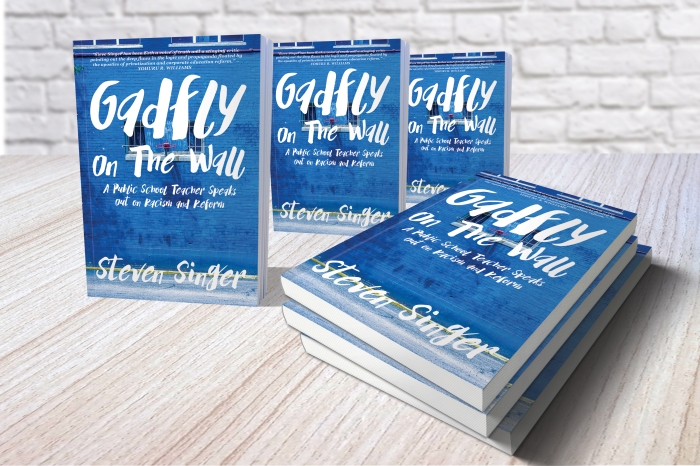
book-3

Killing Net Neutrality Would Muzzle Many Teacher-Activists 

thumbnail_c7tcqv4e6khwocrbse2l

As a blogger, I’m a big fan of net neutrality.

If the communications giants get to favor or block particular Websites, people-powered blogs like this one probably would become isolated and irrelevant.

As it stands, the Federal Communications Commission (FCC) is expected to vote Dec. 14 to undo strict regulations on Internet service providers like Comcast and Verizon that stops them from slowing down or blocking any sites, apps, or otherwise deciding which content gets to users faster.

If the Republican controlled five-member committee votes as expected, it would muzzle free speech.

It would effectively stifle hundreds, thousands of grassroots activists who’ve taken to the Web to educate and protest against the plutocracy strangling our democratic freedoms.

Think about it.

Close your eyes and imagine a United States where you couldn’t access your favorite Websites without paying a fee or – as in China – maybe even at all.

Want to know why standardized testing is harming our children and their schools? Sorry. That costs extra.

Want to know why Betsy Devos’ latest plan to give your tax dollars to Roy Moore’s Christian Fundamentalist Middle School and Dating Center endangers child welfare? Sorry. That information is no longer available.

Sure, you could probably look it up in the library and find it in a book, but that requires a complete change in how we consume media.

Most of us get our news on-line. We don’t read paper newspapers or glossy photo-print magazines. Books, when we read them, are often occasional pleasures or e-texts.

Searching out such material would take a paradigm shift back to the way we used to do things 10 or 20 years ago. It wouldn’t be impossible, but it would be onerous.

Remember traveling everywhere with a pile of books weighing down your bag, or a newspaper and magazines folded under your arm? People seeking such information would really need to want it.

Moreover, articles published in this way would almost surely become out of date quickly at least in regards to particulars. You can easily write something about the evils of charter and voucher schools in general that will be true for years if not decades, but it won’t as easily apply to individual charter and voucher schools by the time it’s published and been on the shelf for a while.

Additionally, writing and publishing such articles would become increasingly more difficult. Unless individuals or groups of activists bought up archaic printing presses or somehow funded mass media campaigns at Kinko’s and there were likewise an as yet undiscovered distribution engine that could disperse such periodicals across the country and the world – unless all of that, the resistance would be relegated to mostly scholarly tomes.

Take it from me: writing a book is not easy.

I just published my first volume of some of my best blog articles for Garn Press called “Gadfly on the Wall: A Public School Teacher Speaks Out on Racism and Reform.”

I am embarrassingly proud of it, but this would not work for everyday activism.

Even though most of the articles were already written, it took a team of us months to revise them, insert end notes, edit, format, design a cover, market and all the other multidinous things that go into the process.

Whereas, with a blog, I can just write it and press “publish.”

The result isn’t as neat. It isn’t as error-proof. There’s bound to be spelling and grammar problems. It doesn’t pack nearly the authoritative punch. —But it’s so topical and subversive that it can slice through steel.

Campbell Brown can’t publish a billionaire-funded diatribe against those greedy teachers and their damn unions and their precious tenure without an army of teachers taking to the Web and showing her the error of her ways.

Bill Gates can’t send his well-paid trolls off to write op-eds praising Common Core without a grassroots tsunami of educators, parents and students responding with scores of counternarratives throughout the blogosphere.

And it’s net neutrality that allows us to do it.

The democratization of information made possible by the free Internet has greatly empowered the voices of the wise but penurious.

You no longer need a printing press or a think tank or a media empire to get information before the public.

Sure this means that even the lunatic fringe gets a voice in the conversation that is American culture, but it also allows ideas to win or lose based more on merit than money.

If enough people share an article on-line, it gets read. People see it. They know it.

False information is eventually found out, disproven and neutralized. But a factually-based critique of bad policy? That can move mountains. It can change the world.

And it has!

Think of how even neoliberal policymakers have rushed to claim they’re in favor of reducing standardized testing. Longtime standardization supporters like former President Barack Obama had to distance themselves from their own policies or face the torches and pitchforks of moms and dads everywhere.

Think of how Democratic and Republican partisans clamored over each other to denounce Common Core. Heck! The movement was so successful President Donald Trump even jumped on the bandwagon and used it as a rallying cry to help install himself in office.

And think of how the reaction to Trump’s dismal and dimwitted Education Secretary, Devos, caused a stampede away from school vouchers and even to some extent charter schools. Even longtime champions of privatization like Jeb Bush and Cory Booker are afraid to offer even a tentative thumbs up for fear of the Web’s blitzkrieg of Tweets, Facebook posts, blogs and other shade.

None of this would be possible without the Internet and the blogosphere.

None of this would be possible without net neutrality.

It’s no wonder Trump and his cronies want to destroy it. The open communication and debate on the Internet is a clear and present danger to his policies.

It is dangerous to the neoliberals and conservative fascists alike.

Though the movement fighting against corporate education reform has been rightly critical of unlimited technology for technology’s sake in our classrooms, that same confederation owes a great debt to technology for its current power.

We meet on Facebook and plan actions to be conducted IRL – In Real Life. Groups like the Badass Teachers Association, the Network for Public Education and United Opt Out use the technology to spread truth and question authority.

If the life line of net neutrality is severed, so will much of our activist networks.

I know we’re all concerned about competency based education, Teach for America and toxic testing, but we have to make room for net neutrality, too.

The 99% rely on it for the free exchange of ideas and the unhindered expression of our speech.

If the Trump administration crushes that venue, it will seriously weaken our ability to resist.

So before that day comes, exercise your rights.

Raise your voice for net neutrality – before it’s too late.


Please go to www.gofccyourself.com and urge the FCC to keep Net Neutrality.

Teacher Seniority – the Seat Belts of the Education Profession

Lady-Seatbelt(1)

You wouldn’t travel a long distance in your car without strapping on a seatbelt.

So why do you think teachers should spend 30 plus years in the classroom without seniority?

Everywhere you look, billionaires are paying millionaires in government to pass laws to cut taxes, slash funding and find cheaper ways to run public schools for pleb kids like yours and mine. And that often means finding ways to weaken protections for teachers, fire those with the most experience and replace them with glorified WalMart greeters.

“Hello. Welcome to SchoolMart. Please plug into your iPad and begin today’s lesson.”

This is class warfare cloaked as a coupon. It’s sabotage described as savings.

And the only way they get away with it is because reasonable people buy the steaming load of manure they’re selling.

MYTH: Seniority with Tenure means a Job for Life

Tell that to the hundreds of thousands of teachers out of work.

Tell that to all the optimistic go getters who prance out of college ready to change the world as teachers and fizzle out during the first five years.

Tell it to the handful of truly terrible teachers who for reasons only they can explain stay in a job they hate through countless interventions and retrainings until the principal has no choice but to give them their walking papers.

Oh, yes. Teachers DO get fired. I’ve seen it with my own eyes numerous times. And in each case, they truly deserved it.

(Any “bad teachers” still on the job mean there’s a worse administrator somewhere neglecting to do his or her duty.)

So what does “Seniority” and “Tenure” even mean for teachers?

Basically, it means two things:

(1) If you want to fire a teacher, you have to prove he or she deserves it. That’s Tenure.

(2) When public school districts downsize, they can’t just lay off people based on their salaries. That’s Seniority.

If you think about it, both of these are good things.

It is not a good work environment for teachers or students when educators can be fired without cause at the whim of incoming administration or radical, newly-elected school board members. Teaching is one of the most political professions we have. Tenure shields educators from the winds of partisanship. It allows them to grade children fairly whose parents have connections on the school board, it allows them to speak honestly and openly about school policy, and it empowers them to act in the best interests of their students – all things that otherwise could jeopardize their jobs.

Likewise, seniority stops the budget butchers from making experience and stability a liability.

It stops number crunchers from saying:

Hey, Mrs. Wilson has been here for 25 years. She’s got a shelf full of teaching awards. Parents and students love her. But she’s at the top of the salary scale so she’s gotta’ go.

I know what you’re going to say: Aren’t there younger teachers who are also outstanding?

Yes. There are.

However, if you put all the best teachers in one group, most of them will be more experienced.

It just makes sense. You get better at something – anything – the more you do it. This could be baking pies, building houses or teaching children how to read and write.

So why don’t we keep the best teachers and get rid of those who aren’t up to their level?

Because determining who’s the best is subjective. And if you let the moneymen decide – POOF! – suddenly the teachers who make the most money will disappear and only the cheapest ones will be left.

Couldn’t you base it on something more universal like student test scores?

Yes, you could, but student test scores are a terrible way to evaluate teachers. If you wanted to get rid of the highest paid employees, all you’d have to do is give them the most struggling students. Suddenly, their students have the worst test scores, and they’re packing up their stuff in little cardboard boxes.

Almost any stat can be gamed.

The only one that is solidly unbiased? Seniority.

You’ve either been here 15 years or you haven’t. There’s not much anyone can do to change that fact.

That’s why it prevents the kind of creative accounting you see from penny pinching number crunchers.

Along with Tenure, Seniority is a safety net. Pure and simple. It helps keep the most qualified teachers in the room with kids. Period.

But look. It’s not perfect.

Neither are seat belts.

If you’re in a car crash on a bridge where it’s necessary to get out of your vehicle quickly before it plunges into the water below, it’s possible your seat belt may make it more difficult to reach safety. This is rather rare, and it doesn’t stop most people from buckling up.

I’ve known excellent teachers who were furloughed while less creative ones were kept on. It does happen.

But if we got rid of seniority, it would happen way more often.

That’s the bottom line.

Instead of finding more leeway to fire more teachers, we should be finding ways to increase school funding – especially at the most under-resourced schools – which, by the way, are the ones where lawmakers most want to eliminate seniority. We should be looking for ways to make downsizing unnecessary. We should be investing in our children and our future.

We’ll never improve the quality of the public school system by firing our way to the bottom. That’s like trying to lose weight by hacking at yourself with a straight razor. It just won’t work.

We need to commit to public schools. We need to commit to public school students. And the best way to do that is to support the teachers who devote their lives showing up every day to help them learn.

I Was Blocked From Facebook for Criticizing School Privatization

facebook


“Journalism is printing what someone else does not want printed: everything else is public relations.”
-George Orwell


I have had many strange experiences as an education blogger.

People have adapted my writing into a play.

People have written to express a sincere desire for my death.

I’ve had a teacher send me pictures of essays his composition students wrote in response to one of my articles.

 
And I’ve had people email my workplace demanding I be fired.

I guess Internet fame is a mixed bag.

But after more than three years of blogging about education and social justice issues while teaching in the public school system, there’s one thing I’ve never experienced before: censorship.

This is social media, after all.

I’ve got no advertisers to please, no editor breathing down my neck. I can write whatever I want.

That’s the benefit of being a blogger. No one can stop you from telling the truth.

Well, no one except Facebook, apparently.

For the first time in my blogging career, I was blocked from Mark Zuckerberg’s social networking platform because I had the audacity to post my blog to it.

Now keep in mind I’ve been doing just that every week since July, 2014.

Moreover, the article I posted was in no way different from my previous work.

The article is called “School Choice is a Lie. It Does Not Mean More Options. It Means Less.” You can read it HERE

But almost as soon as I posted it to the Facebook page I keep for my blog, Gadfly on the Wall, I got a message saying I was blocked for a week for “violating community standards.”

What community, exactly, is that?

My article contains no hate speech. For once I even managed to control my own potty mouth.

This is just an examination of why charter and voucher schools reduce options for parents and students – not increase them.

It’s an argument. I lay out my reasons with reference to facts and make numerous connections to other people’s work and articles.

I don’t understand how that “violates community standards.”

A blogger friend of mine tells me that someone probably saw my article and reported it to Facebook as spam. That’s happened to him multiple times, he says, especially when he criticizes groups like Teach for America.

Perhaps that’s what’s happened here.

Some folks get so furious when I criticize their charter and voucher schools.

Maybe they saw my latest piece and just wanted to silence me.

I don’t know.

I suppose another option is that it came from Zuckerberg, himself.

He’s a big fan of school privatization. Perhaps he changed Facebook guidelines to crack down on people like me who throw shade on his pet school reforms.
Or maybe my work was targeted because I’m critical of President Donald Trump. I did, after all, write an article this week called “Donald Trump is a Pathetic Excuse For a Human Being” that includes a picture of the chief executive as a poop emoji.


Or maybe it was the National Rifle Association (NRA). The article before the school privatization piece was called “Guns and Profit – Why We’ll Do Absolutely Nothing New After This Las Vegas Shooting.” It was picked up by Commondreams.org, the LA Progressive and other left-leaning sites. Perhaps the firearms lobby had had enough.

Who knows? I’ve pissed off a lot of people in three years.

But I find it hard to believe I was actively targeted. I mean, this is still America, right?

Right?

Another option might be a rogue algorithm.

Facebook is known to use various processes or sets of rules to govern calculations about what should and should not be allowed on the site. After all, they can’t leave all these decisions to living, breathing, human beings. That would cost too much money. Better to leave it to bots and computers.

Perhaps something in my article tripped their robotic alarm bells. (ROBOT VOICE: He’s against Competency Based Education! EXTERMINATE!)

I guess I’ll probably never know.

In the meantime, Twitter is still open for my business. I can still share links in 140 characters or less – with hastags. And, the best part is that Trump might see it!

But what about friends not on the Twitterverse?

How do I even let people know what happened to me? Send a million separate emails!? Pick up the phone and – yuck – talk to people!?

I sent a note to friends through Facebook Messenger about what happened, but that soon stopped working on me. I can’t message anyone else now. Still, the story seems to have leaked.

People who know what’s happened have been kind enough to share the article. It’s being read and appreciated.

I don’t know if my Facebook imprisonment has had a major effect on its distribution. But it’s probably had some dampening effect.

I have to admit, it’s kind of frustrating.

After all this time, many of us rely on Facebook for so much. I’m a member of the Badass Teachers Association, a group of more than 64,000 members who use the social media platform to discuss, plan and engage in various actions against corporate school reform. I’m also in United Opt Out National. It’s increasingly difficult for me to help plan our protest in Washington, DC, without Facebook.

It never really hit me before how much of our lives flow through this one network.

If someone wanted to disrupt political organizations dedicated to reforming the status quo, censoring people and posts on Facebook could be very effective.

I haven’t been silenced, but I’ve been effectively muted. Most of my readers see my work through Facebook. Without it, my writing is out there, but much fewer people probably are in contact with it.

So I suppose that brings me to you, intrepid reader.

Somehow you found this article.

Assuming Zuckerberg and his bots don’t change their minds, I probably won’t be able to post this article to Facebook. So if you saw it, you found it somewhere else. Or perhaps a friendly radical took a chance and posted it on Facebook, themselves, defiant in the possibility that the social media gestapo might crash down on them.

Will you please do the same?

Share my story.

Let the world know what happened to me today.

It’s not the most important thing that’s happened this week. And hopefully it will all be settled in seven interminable days. 168 hours. 10,080 minutes. But who’s counting?

Or – who knows – perhaps I’ll be cleared of all charges, write a new article and the same thing will happen when I try to post it.

I don’t know.

In the meantime, I’m going to spend some time off the computer.

Maybe I’ll open the doors and windows, let in some natural light and see what this “outside world” is like that people used to talk about.

See you in a week.

Live from Facebook Jail,

The Gadfly on the Wall

#FreeGadfly

Dear Teachers, Don’t Be Good Soldiers for the EdTech Industry

FullSizeRender

Dear fellow teachers,

Thank you for coming to this meeting on such short notice.

I know you have plenty more important matters to attend to this morning. I, myself, left a pile of ungraded papers on my desk so I could get here. Not to mention I urgently need to fix my seating charts now that I’ve finally met my students and know who can sit with whom. And I’ve got to track down phone numbers for my kids’ parents and go through a  mountain of Individual Education Plans, and… Well, I just want you to know that I get it.

There are a lot of seemingly more pressing concerns than listening to a teacher-blogger jabber about the intersection of politics and our profession.

Is that all of us? Okay, would someone please close the door?

Good. No administrators in here, right? Just classroom teachers? Excellent.

Let’s speak openly. There’s something very important we need to talk about.

There is a force out there that’s working to destroy our profession.

Yes, ANOTHER one!

We’ve got lawmakers beholden to the corporate education reform industry on the right and media pundits spewing Wall Street propaganda on the left. The last thing we need is yet another group dedicated to tearing down our public schools.

But there is. And it is us.

You heard me right.

It’s us.

There is an entire parasitic industry making billions of dollars selling us things we don’t need – standardized tests, Common Core workbook drivel, software test prep THIS, and computer test crap THAT.

We didn’t decide to use it. We didn’t buy it. But who is it who actually introduces most of this garbage in the classroom?

That’s right. US.

We do it. Often willingly.

We need to stop.

And before someone calls me a luddite, let me explain. I’m not saying technology is bad. It’s a tool like anything else. There are plenty of ways to use it to advance student learning. But the things we’re being asked to do… You know in your heart that they aren’t in the best interests of children.

I know. Some of you have no choice. You live in a state or district where teacher autonomy is a pathetic joke. There are ways to fight that, but they’re probably not in the classroom.

It’s not you who I’m talking to. I’m addressing everyone else. I’m talking to all the teachers out there who DO have some modicum of control over their own classrooms and who are told by their administrators to do things that they honestly disagree with – but they do it anyway.

We’ve got to stop doing it.

Corporations want to replace us with software packages. They want to create a world where kids sit in front of computers or iPads or some other devices for hours at a time doing endless test prep. You know it’s true because your administrator probably is telling you to proctor such rubbish in your own classroom so many hours a week. I know MINE is.

Listen, there are several reasons why we should refuse.

First, there’s simple job security. If your principal brought in a Teach for America temp and told you this lightly trained fresh from college kid was going to take over your classes, would you really sit down and instruct her how to do your job!?

I wouldn’t.

That’s the entire point behind this tech industry garbage. You are piloting a program that means your own redundancy.

You are engaged in an effort to prove that they don’t need a fully trained, experienced, 4-year degree professional to do this job. They just need a glorified WalMart greeter to watch the kids as they push buttons and stare at a screen. They just need a minimum wage drone to take up space while the children bask in the warm glow of the program, while it maps their eye movements, catalogues how long it takes them to answer, records their commercial preferences and sells all this data to other companies so they can better market products – educational and otherwise – back to these kids, their school and their parents.

This isn’t about improving educational outcomes. It’s about bringing the cost down and pocketing the savings as profit.

It’s about replacing the end-of-the-year standardized test with daily mini stealth assessments that are just as high stakes and just as effective at providing an excuse for the state or the feds to swoop in and steal control, disband the school board and give the whole shebang to the charter school operator who gives them the most generous campaign donations.

Do NOT be a good soldier here. Do not just follow orders. Doing so is weakening our entire profession. It is putting our jobs in jeopardy. And it’s about time our national teachers unions figured this out instead of conceding the point so their leaders can keep a seat at the table. Someone needs to tell them they shouldn’t be sitting inside the building. They should be with us, outside surrounding it with signs and pitchforks.

The EdTech shell game is not about improving student learning. It’s a commercial coup, not a progressive renaissance.

Think about it.

They call this trash “personalized learning.” How can it really be personalized if kids do the same exercises just at different rates? How is it personalized if it’s standardized? How is it personalized if it omits the presence of actual people in the education process?

It’s teach-by-numbers, correspondence school guano with graphics and a high speed Internet connection.

But we give in. We don’t want to rock the boat. We’re rule followers, most of us. We do what we’re told.

Most teachers were good students, and obedience is too often a defining quality of those who succeed in our education system.

I get it. You don’t want to be a fly in the ointment. You don’t want to make yourself a target.

Me, too.

How dearly I would love to be able to just comply. But I can’t simply go along with something I know in my heart to be wrong. And this is wrong on so many levels.

I sat through a meeting much like this one earlier this year where I was told exactly which programs to force on my students. All the while good teachers whom I respect went through the motions as if nothing was wrong. They talked about how to organize our classes in the system, how to assign test prep and how often, and how to access the data.

But we never discussed why.

We never discussed if doing so was a good idea. That was all taken for granted. It was a decision reserved for someone else, someone from a higher pay grade.

Yet classroom experience is rarely commensurate with salary scale especially once you cross the line into management. Nor is the experience of a handful of administrators equal to that of a plentitude of staff!

No. I’m sorry. At very least that is a discussion WE should be having.

It is the TEACHER’S job to determine what is educationally appropriate. Not the administrators. At most, the building principal should be part of that discussion in her role as lead teacher. But the resolution to go ahead or not should be made together as a staff.

And if an individual teacher thinks based on their own experience with their own students that they should go in a different direction, they should be respected enough as a professional to have the autonomy to do so.

Teachers have to abide by best practices, but test prep in any form is NOT a best practice.

It’s time we stood up en masse and made that clear.

We are our own worst enemy in this regard.

We are too submissive. Too meek.

This world requires teachers to be revolutionaries, to be radicals.

And that doesn’t end in the classroom.

We need to educate parents and the community about what’s happening. The classroom doors are too often closed to the public. The only information they get is from anemic administrators and a mass media that invariably just reports whatever propaganda the corporation puts on the press releases.

We are responsible for our students. We must protect them from the vultures out there trying to water down their educations and reduce the quality of their learning.

We are not the only ones who can take a stand. In fact, IF we are the only ones who do it, we will certainly fail.

But, along with parents, students and concerned citizens, we MUST be part of that resistance.

We MUST take a stand for our children and our profession.

Because without us, there is no hope of success.

So we can no longer afford to be good soldiers in someone else’s army.

It’s time to have the courage of our convictions.

It’s time to rise up, walk hand-in-hand to the front of the staff meeting and tell our administrators:

NO.

Because if we don’t, no one else will.

The Problem With Public Schools Isn’t Low Test Scores. It’s Strategic Disinvestment

We-Shall-Overcome-School-Closings

Imagine you’re settling in to enjoy an article on-line or in your favorite print newspaper and you come across this headline:


U.S. Schools Ranked Low Internationally!


Or


Out of X Countries, U.S. Places Far From the Top in Math!


You feel embarrassed.


Soon that embarrassment turns to anger.


Sweat starts to break out on your brow.


And then you start to grasp for a solution to the problem – something major, something to disrupt the current system and bring us back to our proper place in the lead.


TWEEEEEEEET!


That was me blowing a gym teacher’s whistle. I’ll do it again:


TWWEEEEEEEEEEEEEEEEEEEEEEEEEEET!


Hold it right there, consumer of corporate media. You’ve just been had by one of the oldest tricks in the book.


It’s the old manipulate-the-data-to-make-it-look-like-there’s-a-crisis-that-can-only-be-solved-by-drastic-measures-that-you-would-never-approve-of-normally.


We also call it disaster capitalism or the shock doctrine.


It’s been used to get people to agree to terrible solutions like preemptive wars of choice, warrantless wiretapping of civilians, torturing prisoners, defunding public health programs and scientific research – just about everything the Koch Brothers, the Waltons, the Broads, Gateses and other billionaire hegemonists have on their fire sale wish list.


In the case of the American educational system, it’s the impetus behind high stakes standardized testing, Common Core, Teach for America, and charter and voucher schools.


And they’re all justified by misinformation about student test scores.


The argument goes like this: Our Kids Are Failing!? Quick! Standardize and Privatize Their Schools!


First, education isn’t a race.


There is no best education system followed by a second best, etc. There are only countries that meet their students needs better than others.


And if you really wanted to determine if our country was meeting student needs, you wouldn’t appeal to test scores. You’d look at specific needs and assess them individually.


But you rarely see that. You rarely see an article with the headline:


U.S. Schools More Segregated Than Any In The Industrialized World!


Or


Out of X Countries, U.S. Spends Most on Rich Students and Least on Poor Ones!


Second, we need to ask ourselves if standardized test scores are really the best way to assess (1) student learning and (2) the education system as a whole.


Multiple choice tests are written by large corporations that profit more off of student failure than success. That’s not exactly an objective measure.

Students are considered passing or failing based on an arbitrary cut score that changes every year. That’s not exactly unbiased.


Moreover, standardized tests are always graded on a curve. That means no matter how well students do, some will always be considered failing. We cannot have No Child Left Behind when our assessments are designed to do just the opposite – it’s logically impossible.


But whenever the media turns to these international rankings, they ignore these facts.


They pretend it’s a horse race and we’re losing.


I kind of expect this from the corporate media. But when so-called progressive writers fall into this trap, I have to wonder if they’re just lazy or ignorant.


At best, these test scores are a second hand indication of structural inequalities in our public education system. It’s no accident that student from wealthy families generally score higher than those from poor ones. Nor is it pure misadventure that minority children also tend to score lower than their white counterparts.


These tests are economically, racially and culturally biased. They are completely unhelpful in determining root causes.


Thankfully, they’re unnecessary. It doesn’t take a standardized test to determine which students are receiving the least funding. Nor does it take a corporate intermediary to show us which schools have the largest class sizes and lowest resources.


The sad fact is that there are an awful lot of poor children attending public school. The U.S. has one of the highest child poverty rates in the industrialized world. And despite spending a lot on our middle class and wealthy students, we’re doing next to nothing to actually help our neediest children.


A large portion of U.S. public schools have been left to their own devices for decades. What’s worse, when they struggle to meet students’ needs, we don’t swoop in with help. We level blame. We fire teachers, close buildings and privatize.


There’s absolutely zero proof that changing a public school to a charter school will help, but we do it anyway. There’s not a scrap of evidence that sending poor kids to a low end private school with a tax-funded voucher will help, but we do it anyway.


Think about it: why would getting rid of duly-elected school boards help kids learn? Why would allowing schools to spend money behind close doors with zero public accountability boost children’s ability to learn?


Yet our policymakers continue to push for these measures because they have no intention of helping poor and minority public school students. They just want to enrich their friends in the school privatization industry. They just want to divert public money to testing corporations and book publishers.


THAT is the problem with America’s education system.


Not test scores.


It’s time our nation’s journalists give up this old canard.


We must be honest about why our public schools struggle. That’s the only way to find real solutions.


We must acknowledge the increasing segregation – both racially and economically. We must acknowledge the blatant funding disparities. And we must acknowledge how the majority of education policy at the federal, state and local level has done little to help alleviate these problems – in fact it has exacerbated them.


We need to stop testing and start investing in our schools. We need to stop privatizing and start participating in our neighborhood schools.


And most of all, we need to stop the lies and disinformation.