Pennsylvania Legislators Want You to Foot the Bill for Unimpeded Charter School Growth With Little Accountability

Screen shot 2016-07-04 at 10.12.28 PM

Fund my charter school.

Come on, Pennsylvania.

Let me just swipe tax dollars you set aside to educate your children and put them into my personal bank account as profit.

Please!

I’ll be your best friend. Or at least I’ll be your legislator’s best friend.

Chances are, I already am.

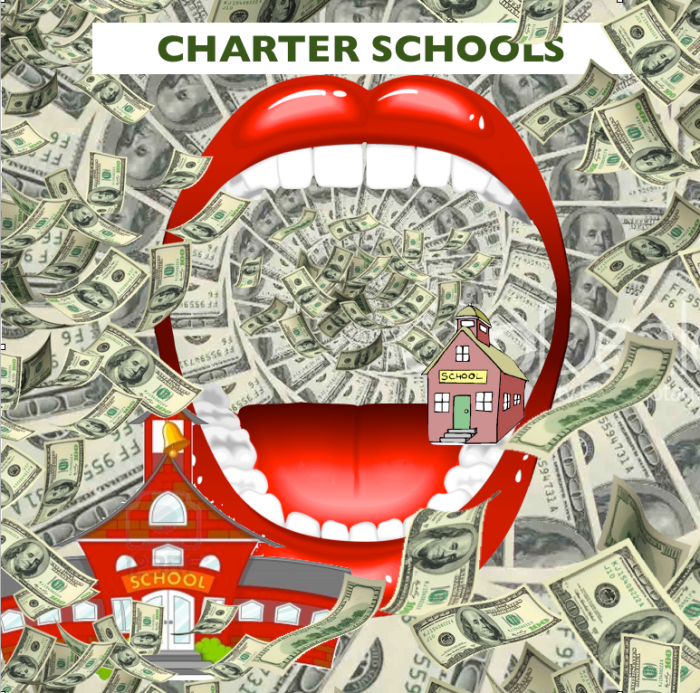
That’s why lawmakers in Harrisburg are once again looking to pass a school code bill (House Bill 530) that would let charter schools expand exponentially almost completely unchecked and without having to do any of that nasty, sticky accountability stuff you demand of your traditional public schools.

Sure there are a few provisions in there to make charters fill out more paperwork, but the benefits for privatization and profitization of your child’s education are huge!

For me, that is. For your child, not so much.

For instance, the proposed legislation would set up a charter school funding advisory commission. This august body would have many duties including the ability to authorize charter schools in your local school district.

No longer would prospective charter operators have to come before your duly-elected board members and plead and beg to set up shop and suck away hard to come by education funding. They could just appear before the commission and sidestep your local democracy completely.

Who will be on this commission? I’m glad you asked.

We’ve got eight legislators. Got to give THEM a voice. But they’re usually pretty cheap. A few bucks in the re-election campaign and we’ll be golden. We’ll also have the state secretary of education and the chairman of the state board. We’ve got to make the thing look legit, right?

But here’s the best part! We’ll have four public education representatives and FIVE representatives of the charter school industry!

Isn’t that great!? There are significantly more traditional public schools throughout the state, but they’ll have less representation on the commission! It’s stacked with charter friendly votes! The forces of privatization have a built-in majority! Ring the dinner bell, Baby! Once this bill gets passed, it’s charter school time all across the Commonwealth!

Okay. There is a downside. Commissioners can’t be outright voting members of charter boards or their families. And if they’re being paid by charters they have to sign a sworn statement admitting that fact. Also, no criminals – no one convicted of fraud, theft, malfeasance.

Sucks, I know, but we’ll find a way around it. Don’t you worry.

However, the best is yet to come. Once a charter school has been given the go-ahead to exist, the proposed bill allows it to expand without getting permission from anyone!

That’s right! No commission, no local school board, nobody.

If there are children on the waiting list to get in, we have to take them first, but then we can start enrolling kids from outside the district!

Yes! Outside the district!

Here’s what the bill actually says:

“If a charter school or regional charter school and the school district from which it is authorized have voluntarily capped enrollment or the district attempts to involuntarily cap enrollment of resident students and the charter school or regional charter school has enrolled the maximum number of resident students, the charter school or regional charter school may enroll students residing outside of the district.”

This would appear to allow charters to enroll kids outside of the district and still charge the district to pay for them!

But wait, there’s more! If charter operators want to expand in any way, they can – unless they agree not to. If operators want to add more grades, they can. If we want to consolidate one charter school with another, we can! Meanwhile all this expansion sucks away local tax dollars to pay for students that don’t even live there!

I drink your milkshake,” traditional public schools!

So while public schools are shrinking due to loss of funds to unchecked charter expansion, this proposed bill adds insult to injury. If a traditional public school has to close a building or even has a few empty classrooms, charter schools get the right to buy or rent them out before anyone else!

I see you’ve got 7 empty class rooms in your school building. Charter School X will rent those from you. Maybe next year, we can rent out the rest of the floor once we’re done slurping up all your funding!

But wait! There’s more!

We now get to my favorite part of the proposed bill. (Do I keep saying that? It’s just such a gorgeous piece of legislation. ALEC has really outdone themselves writing it!)

We get educational tax credits. That’s school vouchers, folks!

I know, I know. The state legislature tried to pass a voucher system (Senate Bill 1) in 2011, and it was soundly defeated because it was so unpopular.

Three out of Four Pennsylvanians didn’t like that it gave state tax dollars to charters, private and parochial schools without any accountability. Well, guess what folks!? There’s hardly any accountability in this here bill, too!

Here’s how it works. You donate $X to a voucher school and we just take that off of your taxes. And if that’s the same or more than you’d normally pay for, let’s say, public school taxes, then all of your money goes to voucher schools.

It’s not really new. We’ve been quietly encouraging this kind of thing for a while now. This bill just expands it.

It allows public tax dollars to be used by religious schools – a clear violation of the Separation of Church and State. But who cares? Let’s leave that up to the courts. How dare they try to violate state’s rights. And all that. Etc. Etc.

But it’s not all robbing public schools and enriching corporate charter school operators. There are a few sticking points.

For the first time, the proposed bill allows local school boards access to charter financial and personnel records. We even have to submit to full audits. And our teachers will be subject to the same pseudo-scientific evaluations as traditional public school teachers.

In addition, charter schools will have to undergo a whole new evaluation “matrix” to show that they’re doing a good job.

I know. It sounds a lot like what traditional public schools have to undergo right now. It sounds absolutely untenable.

But here’s the difference. This new evaluation system for charters carries absolutely no consequences!

Tee-Hee!

That’s right! Even if charters fail these evaluations, the state can’t do diddley squat to them! Not so with traditional public schools. If THEY fail to show progress, they can be closed down and turned into… charter schools!

Oh! It is a beautiful time to be alive!

If this bill passes, charter school operators will have it made in the shade.

Cut student services and increase corporate profits? Check!

Kick out special education and other hard to teach students? Check!

Escape almost any kind of accountability for our actions? YOU BET!

Pennsylvania lawmakers could bring this bill to the floor anytime now.

It’s up to you, lawmakers. Do you want to keep getting tons of campaign cash from our industry or do you represent those – yuck – voters?

Do the right thing. Or should I say, do the right cha-ching!

Did you see that? Did you see what I just did there?

I am a cad. I mean… card.


In all seriousness, if you live in Pennsylvania, please, contact your legislators and ask them to oppose this terrible bill. The Network for Public Education has made it very easy. Just click HERE and you can shoot off a letter to your representatives in moments.

Oppose HB 530. Fight for public education.

Big Money Fails to Oust In-Coming Pittsburgh Schools Superintendent

DSC-4973-1

Democracy 1, Oligarchy 0.

That might be the score in the latest contest between corporate education reformers and the Pittsburgh Public School Board.

Special interest groups and the media had stirred up controversy for months over one line in newly hired superintendent Anthony Hamlet’s resume.

Last night the board voted to let the 46-year-old African American start his job as planned Friday morning.

The board voted 7-2 not to cancel his contract. He will be sworn in tomorrow to start a 5-year commitment in the city.

He had been unanimously hired May 18 from the Palm Beach County district in Florida where he had distinguished himself with an excellent record of leadership and enacting authentic reforms.

Though critics cited one line in his resume as too similar to a statement in a Washington Post article, the real reasons for the dispute are ideological.

Put simply, Hamlet favors reforms that have nothing to do with teaching to the test, charter school expansion, closing schools and other market driven policies.

This put him at odds with the usual gang of corporate sycophants:

1) The Campaign for Quality Schools Pittsburgh – a PAC recently formed to Make City Schools Great Again by promoting charter schools and other failed neoliberal reforms.

2) A+ Schools, an advocacy organization that used to champion the same kinds of authentic reforms school directors are trying to enact with Dr. Hamlet’s help. However, after getting a fat check from the Gates Foundation, the group has became a cheerleader for privatization and disaster capitalism.

3) Various foundations who immediately offered to pay for a new superintendent search if the district dismissed Dr. Hamlet – a measure that probably would have meant paying him at least a year’s salary to sit at home.

Why?

In short, they want a superintendent who thinks like them who they can control. They want to undermine our elected school board and community input process. They want to further THEIR agenda – not the education of our children.

Pittsburgh school directors are to be congratulated for not giving in to the monied interests.

Even the two directors who voted to remove Hamlet did so for good reasons. Though I thoroughly disagree with them, I think Terry Kennedy and Lynda Wrenn truly have the best interests of students at heart. They have always voted that way before.

It’s easy to write a blog about a district where you don’t live, as I do. They, however, are accountable to their constituents. I’m just a doofus with a WordPress account. They had a lot of information to process and made a tough decision. Thankfully, the other seven board members didn’t see it their way.

But that’s the beauty of it. This was democracy at work! At so many other urban districts throughout the country – even in similarly troubled Philadelphia – decision making “by and for the people” has become disbarred.

Many schools like Pittsburgh’s with a shrinking tax base, large pockets of crippling poverty and a history of state disinvestment are taken over by the state. Bureaucrats and flunkies make these decisions not members of a duly elected school board held accountable by the voters.

In fact, many calling for Hamlet’s dismissal were surely cheerleading just such a move in Pittsburgh. They were hoping to show that democracy doesn’t work in the Three Rivers community and must be replaced with … THEMSELVES.

The defeat of that position is the biggest victory here.

Now Hamlet and the board will get a chance to enact authentic reforms to help the children of Pittsburgh get the best possible education.

Now Hamlet will get to strengthen the restorative justice project already under way at 20 city schools. Instead of simply assigning detention or suspension for student misbehavior, administrators are encouraged to make students set things right after doing wrong.

In Florida Hamlet made a name for himself partnering with the criminology department at Florida Atlantic University on this same project.

It’s widely acknowledged in education circles that suspensions can have lasting impacts especially on black students making them more likely to enter the school-to-prison pipeline. Finding an approach to increase discipline without adversely affecting students’ prospects is imperative. This is especially true since Pittsburgh Public Schools have been known to suspend black students at a rate four times higher than white students.

Hamlet also will get to enact measures to transform Pittsburgh’s schools into a central part of the community and not apart from it. Like many on the board, he is an advocate for community schools. That means pushing for social services to help students and the community to make the schools the center of the neighborhood.

Hamlet has received support from all over the city including from the Pittsburgh Federation of Teachers.

However, in an unexpected move, some educators came out individually in favor of Dr. Hamlet even though doing so might mean putting targets of their backs from corporate forces.

High School teacher Jon Parker even wrote a blog about the issue where he pulled no punches:

“While the [Pittsburgh] Post-Gazette is complicit in this scheme to defame and destroy Dr. Hamlet, the real enemy here, as always, is A+ Schools. They simply cannot pursue their Gatesian agenda with a superintendent who believes in community schools. They need one who believes in firing teachers. They can’t pursue their agenda if the superintendent believes in collaboration rather than stacked ranking. And they can’t pursue their agenda of closing schools and turning them into charter profit factories if the narrative in our schools shifts away from “achievement” being measured by high stakes tests. Simply put, Anthony Hamlet is not their style, and they can’t stand that Pittsburgh’s community, through real grassroots activism and real community empowerment, elected a school board which genuinely engaged its community in a selection process that produced a once-in-a-lifetime superintendent selection.”


Erin P. Breault, a district teacher with three children who graduated from Pittsburgh Public, wrote to the Post Gazette to praise Dr. Hamlet:

“First, he will be a fine superintendent who will work to foster community schools, increase student learning outcomes and graduation rates. He will be an especially welcome breath of fresh air, not beholden to corporate “reformers” agenda. Second, I am especially alarmed about growing calls for his contract to be dissolved and if it is not, that our democratically elected school board be replaced by an appointed system.

This is outrageous. These attacks on Mr. Hamlet and on the process of the search need to be viewed in context. There are powerful interests including the Pittsburgh foundations, A+ Schools and Students First who are upset that their vision of privatization of our public schools has been challenged by our school district.

They have leapt into action, using their money, and political clout to engage into what amounts to character assassination.”


Kathy M. Newman, an associate professor of English at Carnegie Mellon University, wrote to the Post Gazette to school them on the definition of plagiarism:

“Mr. Hamlet’s resume is not a copyrighted work of art or nonfiction, such as a novel or a work of history. Nor is it a work of journalism. He was not trying to “pass off” (a legal term) the work of another artist or historian or journalist as his own.

…the outrage over Mr. Hamlet’s resume doesn’t acknowledge why it is that we demand citations from students and historians, or why artists might sue those who have appropriated their work. As the scholar Steven Dutch has argued, in an article called “Sense and Nonsense about Plagiarism,” citations “allow readers to check the accuracy of facts, gauge the credibility of the ideas being presented, know whether an idea is solidly established, controversial or hypothetical, and find further information.” When Mr. Hamlet borrowed a sentence from a Washington Post editorial to express his educational philosophy he did not, to use another phrase from Mr. Dutch, diminish the “credibility of the ideas being presented.”

Finally, the furor over Mr. Hamlet’s resume has had a tone of moral outrage so hysterical that I have been concerned about the toxic mixture of sanctimony and glee expressed by many people I otherwise like and respect. Again, according to Mr. Dutch, “the institutional hysteria over plagiarism [can become] a ‘witch-hunt.’ … Charges of plagiarism are fast becoming the blood sport of choice among academic bottom-feeders.”

Ouch. But perhaps the most incendiary remarks came from Churchill resident Lorraine Turner. In the Post Gazette, she accused the paper of outright racism in its criticism of Dr. Hamlet:

“As an African-American, we are taught this particular lesson many moons ago (along with the talk about police) growing up in, “Pittsburgh, Mississippi.” That lesson is: Black people must run twice as fast and jump twice as high as their white competitors. Black people must be exceptional with every “i” dotted and every “t” crossed. The comparison of President Barack Obama and Donald Trump will highlight this lesson…

…The editorial goes on using language to highlight nearly every antiquated, racist stereotype referencing black men: Mr. Hamlet made a “perfunctory apology” (he didn’t bow his head and say, “I’se so sorry), Mr. Hamlet “sounded like a nervous student” (just call him boy), then “a bad superintendent” (black is bad), “a good superintendent” (one approved by someone white), Mr. Hamlet “prefers recalcitrance to transparency’ (recalcitrance is when one is stubbornly resistant to authority or guidance — he thinks he’s actually going to have the power of the superintendent!)…

… I hope the board quotes a line from “The Wizard of Oz,” and tells your good ol’ boy editorial staff what the Good Witch of the East told the Bad Witch of West: “Go away, you have no power here!”

In the end, the power of the monied elites evaporated against the power of good ol’ fashioned democracy.

Because the fight against corporate education reform is a fight for representative government.

And the winners of today’s battle are as always our children, our grandchildren, our posterity.

Without Black Culture There Would Be No American Culture

Screen shot 2016-06-28 at 12.10.37 AM

“We’ve been floating this country on credit for centuries, and we’re done watching and waiting while this invention called whiteness uses and abuses us, burying black people out of sight and out of mind while extracting our culture, our dollars, our entertainment like oil – black gold, ghettoizing and demeaning our creations then stealing them, gentrifying our genius and then trying us on like costumes before discarding our bodies like rinds of strange fruit.”

With these words, Jesse Williams absolutely floored the crowd at the BET Awards Sunday night.

His acceptance speech for the Humanitarian Award was jaw dropping.

Here was a black actor on “Grey’s Anatomy” just telling it like it is on national TV.

He wasn’t afraid a business dominated by white people would take offense (and some white people did). Or if he was, he wasn’t going to let it stop him.

The activist who recently produced a documentary “Stay Woke: the Black Lives Matter Movement” said, “The burden of the brutalized is not to comfort the bystander… If you have a critique for the resistance… then you better have an established record of critique of our oppression.”

No more tone policing. No white fragility. Just if you’re with us, stand up – otherwise, sit down and shut up.

It was beautiful. And it got me thinking.

There are so many obvious truths about our country’s relationship with race that hardly anyone ever gives voice to – especially a white person like me.

So I’m going to add my voice to Jesse’s. I’m just going to say it.

It’s past time we admit it, white people.

American culture would not exist without black culture.

I don’t mean to say that white people are incapable of culture or that if black people had never been kidnapped and brought to our shores as slaves that white people wouldn’t have been able to devise a unique national character.

But if that had happened, it would have been a very different character than what we have today.

It might be America, but it would not be our America. It would be some other thing. I will leave it to speculative fiction to attempt to determine what that might have been like.

However, we need not resort to fantasy to see all the incredible things black people have given us. They’re everywhere, in everything – though usually staring back at us through a white face, heard from a white voice and monetized by a white industry.

The hundreds of years of struggle from slavery through Jim Crow through the modern prison state have given black people plenty of fertile ground with which to build our national culture. Traditionally white people have served as both oppressors and appreciators of the fruits of that oppression.

The most obvious example is music.

There is very little American music not based on black traditions. Even if it is performed by white musicians, even if it is written by white musicians – almost all American music owes an overwhelming debt to black people.

Take rock n’ roll, a style usually associated with white people. The majority of rock musicians are white. The majority of rock stars are white. The majority of rock listeners are white.

But it couldn’t exist without black music – specifically blues and jazz.

Rock n’ roll was invented during the second great migration, when black people from the southern United States came into contact with large groups of whites in big cities such as New York, Chicago, Cleveland, Buffalo, etc. It was the first time many white people heard black music like blues, work songs, etc. It was also the first time many black people heard European instrumentation. The resulting cultural collision was extremely fruitful.

Rhythm and blues (sometimes called “race music”) evolved into distinct new styles – country, jazz, gospel, folk and rock. In many ways the different styles had less to do with actual differences in the music than in rebranding black music for a white audience. When a black musician became known for a particular kind of music, the fledgling music industry tried to monetize it by finding a white musician who could do something similar and thus reach a larger audience.

They figured if X number of white people will listen to this music played by a black musician, X plus thousands more will listen to it if played by a white one. And they were right.

Black musician Chuck Berry was one of the first to play what we’d recognize as rock n’ roll. He took standard jump blues and played the two-note lead line on his guitar that until then was typically performed on piano. He put guitar at the center of the sound, amplified it, electrified it and rock was born.

The genre developed organically with many black musicians taking the lead – Fats Domino, Sister Rosetta Tharp, Goree Carter, Jimmy Preston, Bo Diddley, Little Richard, Joe Hill Louis, Guitar Slim, Howlin’ Wolf and many others.

However, the first certified rock hit “Rock Around the Clock,” was recorded in 1954 by an all white band, Bill Haley and His Comets. With this recording, the die was cast. The music was invented and developed mostly by black musicians, but it wasn’t a major success until it was recorded by white musicians.

The same thing can be seen with Elvis Presley, the so-called “King of Rock n’ Roll.” He wasn’t breaking any new ground. He was just the first white person who could sing like the black blues musicians who came before him. They toiled in obscurity. He cashed in.

This isn’t to say that no black musicians succeeded playing rock n’ roll. But it was predominantly white musicians who popularized the style that their black forebears had created.

To understand this, perhaps it is best to turn to the insight of Amiri Baraka (formerly known as LeRoi Jones). In his classic book “Blues People,” he dissects the complex American relationship of race and music through the 1960s.

Baraka writes that white and black America have different value structures. As such it is a very different thing for a black American and a white American to play the same music.

When a black musician like Louis Armstrong played jazz music – another invention of black culture – he was fulfilling the ideals of his culture. By contrast, when a white musician like Bix Beiderbecke played jazz music, he was rebelling against his.

There is something jarring and revolutionary when white musicians play black music, Baraka writes. In doing so, the music becomes devoid of race. It is no longer black music. It is just music.

However, the musicians who created it are not likewise freed from the ghetto. They’re still black even if their music no longer is.

So what are black musicians left to do but create new music that they can call their own?

This may explain why so few black performers play rock music anymore. It was taken from them. They had to move on.

Even so, their fingerprints are all over everything that came after. The Beatles, Rolling Stones, Led Zeppelin, Metallica, all the way through the White Stripes and Black Keys. Ask any hardcore fan to name the best rock guitarist who ever lived, and the answer is bound to come back – Jimi Hendrix. Yet, Eddie Van Halen made an awful lot more money.

Perhaps the most incredible thing is that black musicians have continued to develop new and more creative music after every appropriation. Funk, Rap, Pop, Hip Hop, modern R&B. One can see all of it as a progression of gentrification and subsequent creation.

It makes me wonder: why do we love black culture so much but not black people?

As Williams said to end his speech this weekend, “…just because we’re magic doesn’t mean we’re not real.”

Black people have achieved amazing things in America. But white people rarely give them their due.

For instance, people generally think of rap as a black thing. But the largest audience for the genre is us, white folks.

There’s something jarring about white teenagers singing along with every n-word in the lyrics of a black rapper’s song as if these kids had the right. We don’t, people.

As Baraka might say, it’s a very different thing when we say it. But it’s more than just rebellion.

Too often white people turn to music that is characterized as black as a way to mock that culture. We demand black culture be commodified in a way that makes sense to our vision of what black people are. And when someone like Williams comes forward to call us out on it, we resent it.

Look around, white folks.

We love our culture, but we’re ignorant of our history.

We enjoy living vicariously through a marketed vision of black struggle but we don’t do anything about the actual struggle before our eyes.

Our black brothers and sisters are crying out in pain. And we’re the cause.

No, we probably didn’t light any crosses afire on anyone’s lawn, but what about our attitudes? What do we say when race comes up? Do we indulge in gut reactions of colorblindness or do we actually listen to what black people have to say? Do we do anything but shrug?

This isn’t about white hate or white guilt. It’s about accepting our responsibilities.

We owe black people much of our very idea of what it is to be an American. Isn’t it time we started paying it back with love and action?

Killed for Being a Teacher – Mexico’s Corporate Education Reform

mexico-protests

In Mexico, you can be killed for being a teacher.

Correction: you can be killed for being a teacher who opens her mouth and speaks her mind.

You can be killed, kidnapped, imprisoned – disappeared.

That’s what happened to approximately six people a week ago at a protest conducted by a teachers union in the southern state of Oaxaca.

The six (some of whom were teachers) were gunned down by police and as many as 100 more people were injured near the town of Nochixtlan, about 50 miles northwest of Oaxaca City.

Conflict between teachers and governments has become commonplace across the globe as austerity and neoliberalism have become the policies du jour. Tax cuts for the rich lead to shrinking public services. And investment in the next generation through public education becomes a thing of the past.

Even here in the United States, educators are taking to the streets to protest a system that refuses to help students – especially poor and minority students – while blaming all deficiencies on one of the only groups that actually show up to help: teachers.

Though in America educators have been ignored, unjustly fired and even arrested for such protests, the Mexican government has resorted to all out murder.

How did it come to this? Follow the trail backwards to its source.

The activists in Oaxaca were protesting because several union officials had been kidnapped by the government and unjustly imprisoned the previous weekend.

Those union officials were asking questions about the 2014 disappearance and alleged murder of 43 protesting student teachers by agents of the government.

These student teachers, in turn, were fighting incoming President Enrique Peña Nieto’s education reforms.

Specifically, Nieto threatened to fire tens of thousands of teachers by using their impoverished, neglected and under-resourced students’ test scores against them.

The government provides next to nothing to educate these kids. And just like officials in the U.S., Nieto wants to blame a situation he created on the people who volunteered to help fix it. It’s like an arsonist blaming a blaze on the fire department.

Why’s he doing it? Power. Pure power.

Poverty in Mexico is more widespread than it is even in its northern neighbor. This is because the most populace Spanish-speaking country in the world also has one of the most corrupt governments on the face of the Earth: A government in bed with the drug cartels. A government that has no interest in serving the people whom it pretends are its constituents.

Since before the Mexican Revolution in 1810, teachers have been the center of communities in impoverished neighborhoods empowering citizens to fight for their rights. These teachers learned how to fight for social justice at national teacher training schools, which Nieto proposes to shut down and allow anyone with a college degree in any subject to be a teacher.

Not only would this drastically reduce the quality of the nation’s educators, it would effectively silence the single largest political force against the President.

In short, this has nothing to do with fixing Mexico’s defunct public education system. It’s all about destroying a political foe.

The government does not have the best interests of the citizens at heart – especially the poor. The teachers do.

Though more violent than the conflict in the United States, the battle in Mexico is emblematic of the same fight teachers face here.

It remains to be seen how this southern conflict will affect us up north.

People have died – literally died – fighting against standardized testing, value added measures, school privatization and the deprofessionalization of teaching. Will this make Bill Gates, John King, Campbell Brown and other U.S. corporate education reformers more squeamish about pushing their own education agenda? After all, they are trying to sell stratagems that look almost exactly alike to Nieto’s. How long can they advocate for clearly fascist practices without acknowledging the blood on their own hands, too?

For our part, U.S. teachers, parents, students, and activists see the similarities. We see them here, in Puerto Rico, in Britain, in much of Europe, in Africa and throughout the world.

We see the violence in Mexico, and we stand with you. From sea to shinning sea, we’re calling for an end to the bloodshed.

The Network for Public Education has issued an urgent appeal to the Mexican government to stop the violence. Members of the Chicago Teachers Union have taken to the streets to protest in solidarity with their brothers and sisters south of the border.

https://www.facebook.com/plugins/video.php?href=https%3A%2F%2Fwww.facebook.com%2Ftelesurenglish%2Fvideos%2F864024527074284%2F&show_text=0&width=560


We stand with you, Mexico.

We fight with you.

We bleed with you.

We are the same.

Peace and solidarity.

PA House: Online Courses for the Poor. Teachers for the Rich.

Screen shot 2016-06-22 at 3.51.56 PM

Pennsylvania has a long history of under-resourcing its public schools.

State Rep. Jason Ortitay has a solution.

The Republican representing Washington and Allegheny Counties envisions a world where poor kids learn from computers and rich kids learn from flesh-and-blood teachers.

It’s all in his proposed legislation, H.B. 1915, passed by the state House on Monday. It now moves on to the Senate.

The legislation would assign the Department of Education the task of organizing a collection of online courses for use by students in grades 6-12. Some classes might be created by the state and others would be made by third parties with approval for state use. If anyone so desired, the courses could be utilized by anyone in public school, private school, homeschool and beyond. The online learning clearinghouse thus created would be called the “Supplemental Online Course Initiative.”

But what does this have to do with impoverished schools?

According to the bill, itself, state education officials would:

“Upon request, provide assistance to school districts which have been declared to be in financial recovery status or identified for financial watch status under Article VI-A by facilitating the school districts’ search for low-cost or no-cost online course options.”

In other words, this bill provides an alternative for schools where the local tax base isn’t enough to fund traditional classes presided over by living, breathing teachers.

In the distant past, the state used to made up some of the slack to level the playing field for students born into poverty. However, for the last five years, the legislature has forced the poor to make due with almost $1 billion less in annual state education funds. This has resulted in narrowing the curriculum, the loss of extra-curriculars, increased class size, and plummeting academic achievement.

While the majority of voters are crying out for the legislature to fix this blatant inequality and disregard for students’ civil rights, Ortitay’s proposed bill lets lawmakers off the hook. It allows legislators to provide a low quality alternative for the poor without necessitating any substantial influx of funds.

Here, Jaquan and Carlos. You can learn from this YouTube video. Billy and Betty will be in the classroom learning from a trained professional with an advanced degree in the subject.

None of this bodes well for state budget negotiations going on right now to finalize a Commonwealth spending plan by the end of June. Those expecting a proposal to heal the funding cuts most likely will be disappointed – AGAIN.

Nevertheless, the bill still needs to clear the Senate and a signature from Gov. Tom Wolf before it can become law.

In the House, the bill passed 128-66 with 8 abstentions. Though lawmakers on both sides of the aisle supported the measure, it was opposed only by Democrats.

If the clearinghouse becomes a reality, it would be implemented in two phases. In the 2017-18 school year, it would only offer courses on subjects tested by state Keystone Exams at no cost to local districts. Then in the following year, it would expand to include courses not tested on state mandated exams that can be purchased by local districts.

If the Keystone-aligned courses are free to local districts, who pays for them? Certainly these online classes aren’t being constructed, monitored and graded as a public charity.

According to the bill, the Department of Education should:

“Explore the possibility for Federal and private funding to support the clearinghouse.”

However, if the state can’t find someone else to foot the bill, the cost will be born by Pennsylvania taxpayers.

Specifically:

“There is hereby established a restricted revenue account in the General Fund to be known as the Online Course Clearinghouse Restricted Account…”

“The funds in the account are hereby appropriated to the department on a continuing basis for the purposes of paying expenses incurred by the department in carrying out its duties relating to the administration of the clearinghouse under this article.”

How much taxpayer money will be allocated to this initiative? It doesn’t say. Will this money come from an increase in education spending or will it cannibalize other education line items? Again, it doesn’t say. Apparently such decisions would be made while drafting the state budget – presumably not the one being hashed out now, but the 2017-18 spending plan.

“This initiative will give public schools, which might not otherwise be able to afford similar educational opportunities, the flexibility and ability to make use of online learning [for] the betterment of their students,” Ortitay said in a press release.

However, online courses have an infamous history throughout the Commonwealth, and, indeed, the nation.

All courses collected in the clearinghouse would be subject to approval by the state Department of Education. But cyber charter schools fall under the same jurisdiction often with disastrous results.

Internet-based classwork – like that which would be collected in the clearinghouse – makes up the curriculum at cyber charter schools. Moreover, these online schools have a proven track record of failure and fraud.

A recent nationwide study found that cyber charters provide 180 days less of math instruction than traditional public schools and 72 days less of reading instruction.

In addition, researchers found that 88 percent of cyber charter schools have weaker academic growth than similar brick and mortar schools.

They have an “overwhelming negative impact” on students, according to researchers.

And THAT kind of curriculum is what the state House voted to increase using public money!

One of the biggest problem with online courses is the low quality of what’s being offered. Here’s how a cyber charter teacher describes the reading curriculum at his school:

“Most cyber schools get their curriculum from K12, a company started by William Bennett, a former federal Secretary of Education. My school gets the majority of its high school material from a mail order company called Aventa.

When Aventa creates a course it is fairly bare bones. They choose a textbook from one of the major textbook companies, and cut it up into lessons. The lesson will contain a few paragraphs introducing the topic, they will have the students read a section of a chapter, they will ask the student to do a few problems from the book, and lastly, there will be some form of graded assessment, taken from textbook review problems. That is all.”

This is like giving out nothing but worksheets and expecting high academic performance. Here. Read the book, answer the questions at the back, and call it a day.

Another problem is high turnover for students taking online classes. Though learning exclusively through the Internet seems novel at first, few students continue taking these courses more than a year or two.

This is especially true for younger students. It’s hard to imagine many 6th graders with the tenacity to persevere without anything but the most limited human interaction and adult supervision.

Advocates claim this is healthy experimentation. Students are trying out different means to accommodate their learning styles.

However, when students invariably fail at online education and return to their traditional public school hopelessly behind their peers, taxpayers bear the cost of remediating them. And their low academic performance becomes a reflection on the public school system where it is used as an excuse to denigrate teachers and close more brick and mortar buildings.

The online educational clearinghouse is supposed to be monitored and regulated by the state Department of Education – just as it does for state cyber schools.

Unfortunately, state budget cuts in K-12 education have left the department seriously understaffed and unable to do this job effectively.
Just look at the almost weekly news reports of fraud at state cyber schools.

For instance, PA Cyber Charter founder Nicholas Trombetta allegedly stole at least $8 million in public dollars only a few years ago. Federal investigators filed 11 fraud and tax conspiracy charges against him and indicted others in the case.

Another cyber charter founder, June Brown, was also indicted for theft of $6.5 million. Brown and her executives were indicted on 62 counts of wire fraud, obstruction of justice and witness tampering. She ran the Agora Cyber Charter School, which was part of the K12 Inc. empire of virtual charters.

Why would we want to increase the opportunities for such fraud by encouraging students to take more online classes?

This bill is at best a distraction.

It’s a Band Aid for the fiscal irresponsibility of our lawmakers toward our public schools. It’s an excuse so that we’ll let them continue short changing our children for at least another year with yet another budget lacking in education funding.

This does not compute.

Summer Break – the Least Understood and Most Maligned Aspect of a Teacher’s Life

Screen shot 2016-06-20 at 4.18.07 PM

It’s inevitable.

Once the weather gets warm and school lets out, it’s no longer safe for teachers to be out in public.

You’ve got to stay indoors, get off the Internet, hide the cell phone – do whatever you can to stay away from non-educators.

Because if, like me, you happen to be out and about – let’s say standing in line at your favorite neighborhood burger joint waiting for a juicy slab of ground beef to stop sizzling on the grill – you’re bound to hear the kind of willful ignorance that sets a teacher’s nerves permanently on edge.

Imagine just two normal people – they seem nice enough – standing in line having a friendly conversation. It’s hot outside, so you might hear the usual topics discussed: the weather, the best place to buy ice cream, which public pool has the best prices – that an oh I don’t know, how easy teachers have it with their summers off.

Son of a…!

Normal folks, I know you often get the urge to talk about this. You think it’s just another topic of polite conversation. It’s nothing serious. You think it’s just like complaining about the heat or how the price of admission at the local theme park always seems to be on the rise.

But you’re wrong.

Here’s why: first, you aren’t alone in the comfort of your own home. You’re out in public. And I guarantee there’s probably a teacher somewhere within earshot. Second, you have no idea what the heck you’re talking about. You are completely talking out of your ass.

Oh, you think you know. Everyone thinks they know what it’s like to be a teacher. Everyone thinks they can do that job no matter what qualifications they have.

It’s funny. I never presume to assume I could do other people’s jobs without some kind of training or skill. I’d never say, “Police officers have it so easy. I could do that!”

I’d never say that about any public servants. Not firefighters, sanitation workers, social workers, lawyers, doctors – even politicians.

I think most people feel the same way – except when it comes to teaching. That’s the one job where everyone has an opinion and it’s based on next to nothing.

Here’s how it goes: I’ve been a student, therefore I can be a teacher.

Imagine if we applied that logic elsewhere. I’ve been sick, therefore I can be a doctor. I’ve been to court, therefore I can be my own lawyer. I can turn on a light, therefore I can run the electric company.

No one would be so ignorant. Except when it comes to teaching.

But that’s not all.

Not only are most folks comfortable opining about a topic of which they are so ignorant, but they feel themselves to be particular experts about one aspect of the job more than any others – summer break!

Those teachers sure have it easy, they say. They get their summers off! That’s one sweet deal!

Don’t get me wrong. As a public school teacher, I’m grateful for summer break. But it’s not what non-teachers think it is.

First off, summer break is not a vacation.

When you work a regular job you get a vacation day here and there. You get a week or two of paid time off. Teachers don’t get that.

During the summer teachers don’t get salaried like that. Some of us don’t even get a paycheck, and those of us that do aren’t earning money for those days off. We’re getting money that we already earned from August through June. This is money that was withheld from our pay during the fall and winter, money given to us now in the summer.

Wait a minute. Money withheld from our salaries? When someone pays you later for services rendered, don’t they owe you interest? Usually, they do. But not for teachers.

We work for the government. We get paid with tax dollars from the community at large. If the community had to give us our salaries up front – like almost every other job in existence – it would be harder on the taxpayers. So we let the community pay us later – interest free.

Like I said, summer break isn’t a vacation. It’s more like an annual couple months of being laid off.

When I say this to non-educators, though, they often smirk. “It must be pretty sweet getting so much money that you can afford to have it paid out like that.”

Let me just say this – You don’t know me. You don’t know what the heck I can and cannot afford. Teachers aren’t millionaires. We’re barely thousandaires. Many of us CAN’T afford it. We work a second job in the summer – often at little more than minimum wage.

Moreover, during the school year, teaching is not a 9-5 job. We don’t punch a clock working 8 hours with an hour lunch and then punch out.

If I’m not at least working 10 hours a day, I’m not even trying. Those 8 hours on the books barely cover my time in front of a class of students. I get a 30-40 minute lunch, various duties throughout the day and about 40 minutes to plan what I’m going to teach. That’s time to make any materials for my classes, design programs for the students, grade papers and fill out the never-ending and ever-expanding piles of paperwork.

As a language arts teacher, I routinely have my students write essays. You think they grade themselves? I’ve got to read those things, son, each and everyone. I’ve got homework to grade. I’ve got scores to input into the computer. I’ve got parents to call, students to tutor and a stream of detentions to oversee. And that’s just the minimum, not counting any extra-curriculars, clubs, PTA meetings, meet the principal nights, etc.

So the way I see it, I’m owed a little bit of down time during the summer. I need it just to recharge my batteries. During the school year, I’m going at a pace like lightning every day. If I didn’t have some time in the summer to unwind, I wouldn’t be able to keep up that pace for the majority of the year.

Heck. If I’m sick one day, when I come back to school it takes a few days to get back up to speed.

But non-teachers don’t know any of that, because students don’t know. Students just see the teacher in class and they assume that’s all we do. And that’s a forgivable assumption for students. You know why? Because they’re children! But you? You’re an adult human being. You don’t have the right to make such assumptions without any pretext at even trying to find out.

However, this is exactly what most people do. They think there’s nothing wrong with complaining about teachers, especially during the summer.

And here’s the worst part.

When you complain like that, you make my job so much harder.

You’re going to go home with that negativity, you’re going to keep voicing it, you’re going to say it in front of your own impressionable children who might not seem like it, but they listen to every word you say. Not just that, but they listen to HOW you say it. Even more than the words, they hear the disdain.

So when school is back in session, they bring that false impression of how easy their teachers have it, and that becomes disrespect, just another thing I have to overcome in order to help your child succeed.

You hear a lot in the news about foreign countries having better education systems than ours. It’s mostly B.S. propaganda, playing with statistics for political ends, but there is one area where there’s a grain of truth to it – respect.

In many foreign countries especially in Asia, teachers are held in the highest esteem. It wouldn’t even cross parents’ minds to scorn educators, and if their kids did it, the adults would be mortally ashamed!

But not in the U.S.A. We take the one profession most dedicated to helping our children have better lives and we crap all over it.

You know that’s why I’m there in the classroom – to help your child succeed. Sure I get a paycheck, but there are lots of jobs I could do to support my family, many of them paying a whole lot more while requiring less hours a week and providing actual paid vacation days.

Like most educators, I’ve got a masters degree. Every year I take continuing education courses. Heck! I’m even nationally board certified – a distinction of which only about 34% of teachers throughout the country can boast. I’ve been nominated for teachers excellence awards. I travel across the country multiple times a year at my own expense to enrich my field. I write letters, I protest, I lobby my congresspeople to support our national system of public education. I’ve devoted my life to making a difference in young people’s lives.

Isn’t that something worth a little bit of respect? Don’t you want someone like me to be there for your child in the classroom?

It’s funny. When it comes to most public services, you wouldn’t dream of denigrating a helping hand.

You’d never hear anyone say something like this:

Those damn firemen! There would be fewer fires if it weren’t for them! Have you ever seen a building burning without it being surrounded by firemen? If they’d just work a little bit harder, there’d be fewer burning buildings!

Or:

Those damn doctors! All they do is make people sick! You never see a sick person unless he’s surrounded by doctors prescribing him medicines, doing surgeries. If we had fewer doctors, fewer people would get sick! Let’s close more hospitals!

But this is how people talk about teachers. Regular folks have been convinced that far from helping children escape ignorance, teachers actually cause it. They don’t work hard enough. They don’t care enough. They have too many union protections.

I’ve never heard anyone complain that firemen would fight fires better if they didn’t have helmets and fireproof clothing. I’ve never heard anyone say police would work harder to fight crime if they didn’t have Kevlar and service pistols.

But somehow when it comes to teachers, the situation is different.

Normal people, you’ve got to understand something. We live in a world where rich folks want to take away teachers for the poor and middle class. They want your kids to learn from computer programs and YouTube while their kids get… teachers!

For your kids it’s always narrow the curriculum, more standardized tests, more unproven academic standards, more corporate profits, less parental control, fewer regulations, fewer student services.

And do you know who has volunteered to fight against all this craziness to make sure your kids actually get some kind of quality education?

THE TEACHERS!

That’s right – the same people you feel empowered to deride while standing in line waiting for your burgers and fries. The same people who you have no problem denigrating with just as much certainty as ignorance.

So please, think about that next time.

Don’t bitch and moan about your community’s teachers. How about giving them some support?

At very least add teaching to the list of impolite topics to address in public. That’s right – religion, politics AND TEACHING.

Because every time a non-educator vents their spleen about those lazy, no-good teachers, they make it that much easier for the powers that be to continue eroding your child’s educational experience.

Stop Treating Public Schools as Society’s Whipping Boy

Screen shot 2016-06-14 at 11.28.03 PM


The United States is no stranger to stupidity and ignorance.

A significant portion of the population doesn’t know basic science facts like that the Earth revolves around the sun.

We only learn history and geography by going to war or drone striking countries usually  filled with brown people.

And when it comes to basic math and English, just read the poorly spelled placards at our political conventions calling for more trickle down economics.

Heck! We’re the country that elected C-student George W. Bush President!

Twice!

And lest you think that was a fluke, Donald Trump, a xenophobic reality TV star with zero political experience, is the presumptive Republican candidate for the same office RIGHT NOW!

Yet whenever so-called intelligent people bring up these and countless other examples of American idiocy, they invariably simplify the blame.

We’re a country of more than 320 million people made up of various cultures, nationalities, ideologies, economic brackets and living in a wide range of geographic areas and circumstances. Yet we think the cause of our national ignorance somehow isn’t complex and multifaceted.

No. That would be too much for us to understand. Instead, we take the easy way out and put the blame squarely in one solitary place – public schools.

It’s always the school’s fault. That and those lazy, complacent teachers.

Some folks think the moon landing was a hoax. So apparently the schools aren’t doing their jobs.

Other people can’t tell you the month and year of the 9-11 terrorist attacks. Therefore, bad teachers.

Everything from believing you can catch AIDS from a toilet seat to thinking President Barack Obama is a secret Muslim – it all could have been rectified if the schools had just taught us better.

Nonsense.

If you need a legal warning that your McDonald’s coffee is hot, there’s not much your third grade teacher could have done to help.

If you think the solution to gun violence is strapping bullet proof backpacks to kindergarten children while arming their teachers, there’s little that could have been accomplished by further academic study.

Anti-intellectualism is in the very air we breathe in this country.

No one wants to appear smart. We want to be the jocks, not the nerds. But when we feel guilty for our ignorance who do we attack? The smart people! The teachers! The schools!

Sadly, it’s often really intelligent people doing it.

A few weeks ago, famed astrophysicist Neil DeGrasse Tyson got into a Twitter battle with rapper B. o. B. over whether the Earth is flat.

Yes, in America that is somehow still debatable.

And Dr. Tyson was understandably upset. “I don’t mind that people don’t know things,” he said in a Huffington Post interview. “But if you don’t know and you have the power of influence over others, that’s dangerous.”

Agreed, but then he became guilty of his own criticism by pointing his finger solely at the schools. “I blame the education system that can graduate someone into adulthood who cannot tell the difference between what is and is not true about this world,” he said.

Maybe this would be a more effective criticism if B. o. B. were an actual high school graduate and hadn’t, in fact, dropped out in 9th grade. Tyson has a masters in astronomy and a doctorate in astrophysics, but he couldn’t tell what is true about this world in relation to one rather famous rapper’s education. Therefore his alma maters of Princeton and Columbia must be pretty shitty schools?

Perhaps the problem isn’t that B. o. B. is ignorant, but that too many people are willing to accept him as an expert on the shape of the Earth instead of someone like Dr. Tyson. But that’s not a fault of the public school system. It’s because of our attitude toward schooling, knowledge and expertise. An attitude that Dr. Tyson perhaps unconsciously helped foster.

I don’t mean to pile on Dr. Tyson. He’s one of my heroes. I’m just disappointed that in this case he’s being so intellectually lazy.

He’s not the only one.

Unfairly blaming schools also came from columnist Andy Borowitz when describing the dangers of Trump’s candidacy.

“Stopping Trump is a short term solution,” he said. “The long term solution, and it will be more difficult, is fixing the education system that has created so many people ignorant enough to vote for Trump.”

To be fair, almost everything Borowitz says publicly is satirical, uttered with tongue buried deeply in cheek. But it still feeds into this scapegoating of public schools. The public schools didn’t create ignorance. They fight it and in some cases fail. I wonder why?

Whatever the reason, Trump, himself, isn’t decrying it. He’s celebrating it.

When he won the Nevada GOP primary, he made a point to thank all the dumb people who voted for him. “We won with poorly educated. I love the poorly educated,” Trump told a crowd to huge cheers.

Strangely he didn’t then go on to laud what a great job public schools are doing by providing him with so many brain dead supporters.

So what exactly is the problem? Isn’t it troubling that so many American’s hold stupid beliefs? And isn’t this at least partially the fault of our public schools?

The answer is yes and yes.

We live in an anti-intellectual age. And that is troublesome.

And yes, our public schools are struggling to adequately educate everyone.

But when you blame everything on public schools you (1) obscure other factors like our piss poor media, and (2) you aren’t helping improve our schools.

First of all, much of our modern ignorance is fueled by toxic mass media. Most of us aren’t in school anymore. Unless you’re younger than 21 or 18, you probably get most of your facts from the news, TV, movies, video games and/or the Internet – not textbooks or school teachers.

We used to have an independent press that could investigate stories and report the truth. Now almost all of our major news sources are owned by a handful of giant corporations.

We don’t get news anymore. We get corporate public relations. The reason most people believe this crap is because it’s reported as if it were truth.

The rise of Fox News has a lot to do with it, but that is not the only culprit. Even traditionally revered sources such as the Associated Press are guilty of corporate collusion and bad, bad reporting.

They have no problem conflating an anonymous poll of superdelegates with actual votes as if they were the same thing even if doing so unduly influences the election in favor of one candidate. They have no problem broadcasting a Playboy Playmate’s vaccination advice every day of the week while mostly ignoring what research scientists have to say on the subject.

Second, constantly ragging on public schools doesn’t help make them better.

It’s not as if doing so actually resulted in addressing the real problems we have with our school system. Instead it reinforces the idea that they can’t be saved. We should just give up on public schools.

If we actually focused on the real problems with schools instead of constant innuendo, defamation and vitriol, we might be able to enact real solutions. For instance, more than half of our public school students live below the poverty line. They go to schools that aren’t funded adequately. We’ve allowed them to be resegregated based on class so its easier to ensure rich kids get a Cadillac education and poor kids get the scraps.

Moreover, we’ve let corporate interest take precedence over the needs of children. Instead of letting the experts in the field make education policy, we’ve left that up to the businesses that profit off of it. Instead of letting teachers and professors decide what are best academic standards, we’ve let think tanks create and impose shoddy, untested and developmentally inappropriate Common Core Standards. Instead of letting students be evaluated based on data gathered in the classroom by teachers who are there day-in, day-out, we’ve insisted schools be judged based on crappy high-stakes standardized tests. Instead of giving educators respect for the difficulty of their jobs and providing them with the autonomy necessary to help kids, we’ve denigrated the profession and chipped away at union protections, pay and benefits.

These are some of the real problems with public schools. When people throw shade at our education system, they are never so specific. It’s the schools that are “failing.” It’s never that they’re under-resourced. It’s the teachers who aren’t doing their jobs. It’s never that they’re being forced to teach to the tests. In fact, the people responsible for eroding our public schools often do so with the same rallying cry – our public schools are failing so let us enact these terrible policies that will actually make them worse!

It’s time we stop the lazy practice of criticizing public schools without also educating ourselves about what’s actually wrong with them.

Dr. Tyson, I love you, but don’t just blame schools. Blame Common Core and toxic testing. Andy, it’s not our schools that produce ignorant citizens. It’s the unfair funding formulas that don’t provide poor children with new books and a broad curriculum.

Public schools in general – and public school teachers specifically – have become our easy scapegoats, our whipping boys.

It’s about time we realized that such criticisms aren’t helping. In fact, they’re being used by the same people who are destroying our schools as an excuse to destroy them further.

The so-called failure of public schools has been used to justify massive school closures especially in neighborhoods of color. It’s been used to create more privately run charter schools. It’s been used to excuse cutting school funding, and making it even less palatable to be a teacher.

Too many of us believe these are good ideas.

Americans believe a lot of stupid things, but perhaps THESE are the dumbest of them all!

The Arrogant Ignorance of Campbell Brown: Education Journalism in Decline

campbell-brown

Apparently facts don’t matter much to Campbell Brown.


Though her latest “fact” about public schools has once again been shown to be more truthiness than truth, she refuses to retract it.


During an interview published in Slate where she gave advice to the next president, she said:


“Two out of three eighth graders in this country cannot read or do math at grade level. We are not preparing our kids for what the future holds.”


It’s a scary statistic. The problem is it’s completely unsupported by evidence.


And when education experts called her out on it, she complained that SHE was being attacked.


When pressed, Brown admitted she got this figure from the National Assessment of Educational Progress (NAEP) a test given to random samples of students in fourth and eighth grades every two years.


However, Brown either misunderstands or misinterprets the scores. If one were to interpret the data in the way Brown suggests, the highest scoring countries in the world would be full of children who can’t read at grade level. Hardly anyone in the world would be literate or could add and subtract. It’s beyond absurd.


And when she was notified of her error by authorities in the field including Carol Burris, Tom Loveless and Diane Ravitch – who, by the way, served on the NAEP Governing Board for seven years – Brown responded by likening her critics to Donald Trump.


She wrote:


“That the people who disagree with my characterization would react by attacking me personally… speaks volumes. Those feigning outrage over the difference between “grade level” and “grade level proficiency” are the people who profit off the system’s failure and feel compelled to defend it at all costs. Sadly, in the age of Donald Trump and Diane Ravitch, this is what constitutes discourse.”


I especially like the bit where she attacks experts, teachers, and PhDs because they “profit off the system’s failure.” It’s pretty rich stuff coming from Brown who makes a pretty penny retelling the fairytale of “failing public schools.”


Once upon a time, Brown was a respected reported for NBC and anchorperson for CNN.


Now she’s a paid Internet troll.


I’m sorry if that sounds harsh, but it’s true.


She co-founded and edits a Website called The Seventy Four – a reference to the 74 million children across the country who are 18 or younger.


It might be more honest to call it The Four, instead, for the $4 million she receives annually from the mega-rich backers of school privatization to bankroll the endeavor.


She claims her site is “nonpartisan.” Funny. I guess that explains why she continually backs every cause and campaign championed by her donors.


Change all public schools to private charter schools? Check.


Block teachers unions from collectively bargaining? Check.


Ignore the overwhelming preponderance of stories about charter schools cheating the public and their students? Check.


When called out on her bias, she proudly proclaimed, “I have learned that not every story has two sides… Is The Seventy Four journalism or advocacy? For 74 million reasons, we are both.”


Pithy. Yet it remains unclear exactly how the nation’s school children will benefit from Bill Gates and the Walton Family having an even larger say in education policy.


Brown has sold her image and rep as a journalist so it can be used to purposefully mislead the public into thinking she is still dedicated to those endeavors. She’s not. What she’s offering these days is not News. It’s bought-and-paid-for public relations meant to destroy our nation’s public schools.


If anyone thought Brown retained even a shred of journalistic integrity left, she should have removed it when she called herself, “a soldier in Eva’s army.” This is a reference to Eva Moskowitz, the founder and CEO of a New York City charter school chain – Success Academy – where children are put under such pressure they wet themselves during testing and kids in first grade are shamed and berated for math mistakes.


As a public school teacher, myself, this makes me sad.


John Merrow, one of the elder statesmen of education journalism, recently proclaimed that we live in the “golden age of education reporting.”


I must respectfully disagree.


Yes, there is more being written about education policy and public schools than ever before.


But most of it is just paid advertisements from the standardization and privatization industry.


Look who’s funding these stories.


TV Networks such as NBC, MSNBC and Telemundo have broadcast various education segments on “Nightly News” and “Today” underwritten by Bill Gates and Eli Broad.


The Education Writers Association – which boasts more than 3,00 members – receives money from Gates and Walton. The L.A. Times receives funds from Broad for its Education Matters Digital initiative.


On-line publications also have been infiltrated. The Education Post took $12 million in start-up funds provided by Broad, Bloomberg and the Waltons. The site focuses on “K-12 academic standards, high-quality charter schools and how best to hold teachers and schools accountable for educating students,” according to the Washington Post.


Even well-respected education blogs including Chalkbeat and Education Week are funded in part by the Waltons (in the latter case, specifically for “coverage of school choice and [so-called] parent-empowerment issues.”) Education Week even tweets out paid advertisements for Teach for America as if they were news stories!


We’ve all seen “Waiting for Superman,” the infamous union bashing, charter loving propaganda film packaged as a documentary. Its popularity was helped with outreach and engagement funds by the Waltons and a host of other privatizers. It’s far from the only effort by market-driven billionaires to infiltrate popular culture with corporate education reform. They tried to sell the parent trigger law with “Won’t Back Down,” but no one was buying. Efforts continue in Marvel Studios television shows.


A plethora of teachers, academics and other grassroots bloggers have taken to the Internet to correct the record. But they are often ignored or drowned out by the white noise of the same corporate education reform narratives being told again-and-again without any firm footing in reality. In fact, after blogger and former teacher Anthony Cody won first prize from the Education Writers Association in 2014 for his criticism of Gates, the organization banned bloggers from subsequent consideration.


We bloggers are almost completely unpaid. We do it because we care about our profession. Meanwhile the so-called “news” sources are funded by corporate special interests, yet it is bloggers that are looked at as if they were somehow reprehensibly compromised and biased.


Education journalism is not going through a golden age. It’s a sham, a farce.


When we allow our news to be funded by private interests, we lose all objectivity. The stories are spun to meet the demands of the big foundations, the billionaires bankrolling them. And the real experts in the field are either not consulted or left to quixotically do whatever they can on their own time.


Education journalism isn’t about what’s best for children. It’s about how best to monetize the system to wring as many taxpayer dollars out of our schools as possible for corporate interests.


It goes something like this: reduce the quality to reduce the cost and swallow the savings as profit. But it’s sold to the public in propaganda that we call journalism.


As famed cartoonist and counter-culture figure Robert Crumb wrote in 2015:


“You don’t have journalists [in America] anymore. What they have is public relations people. Two-hundred and fifty thousand people in public relations. And a dwindling number of actual reporters and journalists.”


Nowhere is this as obvious as with Brown.


Just as Broad was initiating a plan in February to double the number of charter schools in the Los Angeles Unified School District, Brown’s site, the Seventy Four, was given control of the LA School Report, an on-line news site focusing on the second largest district in the country. Brown was expected to run interference for the takeover. She was running the propaganda arm of the privatization push.


And that’s really what’s happening with our education journalism.


I’m not saying there aren’t actual journalists out there trying to tell unbiased stories. But they are few and far between. They are beset by corporate interests. And anyone who wants to tell the truth is silenced or marginalized.


As we’ve seen, when you actually try to point out errors like Brown’s ridiculous assertions about eighth grade students, the media treats it as a he-said-she-said.


They say, “Wow! Teachers really hate Brown.” Shrug.


Meanwhile the truth is left murdered on the floor as our schools are pillaged and sacked.

The First Rule of Test Club is We Don’t Talk About Test Club

whistleblower_whistleblowing_danger_brian_stauffer_cw_single_use-100462731-primary.idge

How can you criticize standardized testing if you aren’t allowed to talk about the tests?

To show why these assessments are bad, you have to be able to mention specific questions on the exams.

But if you do that, you will be violating the test company’s copyright and thus be subject to legal action.

So there will be no discussion of your concerns, no defense of the questions in question. Instead you’ll be threatened to silence.

This is the Catch-22 for teachers, parents and children throughout the nation.

We know the federally mandated high stakes assessments public school children must take are poorly constructed, culturally and racially biased, and ultimately unfair. But if we speak up in public with any kind of specificity, we’re threatened with steep fines. And if we write about it on-line, those articles will be taken down, censored or otherwise disappeared.

This is what happened to Prof. Celia Oyler of Teachers College, Columbia University this week when she posted an anonymous classroom teacher’s critique of the 4th grade PARCC exam on her blog.

Since the article reproduced three live questions from the exam, Oyler received a threatening email from PARCC CEO Laura Slover.

Oyler acquiesced to the CEO’s demand that she remove the PARCC questions, but she did not – as Slover commanded – reveal the name of her source. Oyler is debating legal action of her own against the testing company.

Meanwhile, education bloggers across the country have engaged in civil disobedience by reprinting Oyler’s entire post along with the PARCC questions. Many of these articles have been taken down by Twitter, Facebook or other Internet enforcers.

It’s a sad day in America when free speech is treated so disdainfully.

These PARCC questions are considered private property, but in many important ways they are not. They were developed at public expense. They were funded by taxpayers for use in our public schools. As such, they should be subject to public review.

And we may review them – privately. Ostensibly anyone could ask their local school district officials to be allowed to come in to the principal’s office and look over the tests. In fact, this is one of the first steps parents go through to opt their children out of taking the exams. You can page through the tests with supervision so you don’t make any copies or remove any materials from the building.

I’m sorry. This is just not the same thing as putting these tests under public scrutiny.

I can look at them, myself, and make up my own mind. So can you. We can even meet and talk about this together in our own private homes. But the second I go to a public forum like a school board meeting and begin to discuss these assessments in any detail, I can be charged with breaking the testing company’s copyright.

And so can my child. In fact, multiple students have already been harassed on-line by test corporation Pearson for allegedly talking about their exams.

This begs several questions: Can we legally hold minors accountable to such contracts without first providing them with legal representation of their own? Moreover, can they be forced to enter into these agreements without the presence of their parents or guardians?

However, there is an even more basic question with more far-reaching implications for the entire high stakes enterprise: How can experts explain what is wrong with the tests, if they can’t talk about anything on the tests?

Oyler mentions a question from the 4th Grade PARCC exam that is written at least two years above the grade level being assessed. Students are asked to read at a level beyond their years in order to find an answer. That’s patently unfair. But it’s one thing to make that claim – it’s quite another to point to the exact question and prove it beyond a shadow of a doubt.

Unfortunately, this vital fact is being completely ignored. The testing companies have already silenced that debate. We’re not discussing the quality of the test anymore. We’re discussing free speech. It’s an important issue, but it isn’t the one we started with.

Standardized assessments are not top secret military documents. Reproducing a test question that tens of thousands of students have already seen is not analogous to Edward Snowden or Julian Assange.

Hundreds of test questions are already released by assessment corporations as examples to help with test preparation. Some of them even show up on the actual tests. Why not release them all? One couldn’t possibly go through every question and memorize the answers before taking the tests.

When the assessment industry gets to show us only a portion of the questions they use, they’re bound to display only the least objectionable ones in the bunch. We’re accepting an illusion of transparency and forking out more than $1 billion annually for the privilege.

A product created with such a wealth of taxpayer dollars should be open to public review and debate. At very least, we should demand these questions are subject to independent review. That doesn’t mean the testing companies get to hire so-called experts with ties to their industry to sign off on the questions. It means real experts should have a say. We should hear from PhD’s in the field like Oyler. We should hear from classroom teachers. We should hear from parents and even students.

This is the only way we can ensure students are being assessed fairly. We shouldn’t just trust the huge corporations manufacturing this stuff. We have to know exactly what’s on the tests.

Without such public scrutiny and outcry, test corporations have no incentive to better their products. In fact, this is exactly how New York State residents got rid of perhaps the most infamous test question ever reported – The Pineapple Question.

You can read about the whole thing here, but the basic story goes as follows. Several years ago, students who finished their 8th grade reading test couldn’t get over how absurd this question was. They talked about it to anyone who would listen. Eventually, the question was reprinted on parent Leonie Haimson’s blog, Class Size Matters. It became a national head-scratcher. People all over the country called for the question’s removal.

Without public input, the Pineapple Question might still be on the tests. Students could still be trying to answer a question almost everyone thinks is ridiculous.

People often say they want more accountability in public education. Isn’t it time we started to hold the test manufacturers accountable for their products? Isn’t it time we restored free speech to public education?

We can’t improve our schools if we’re more concerned with a private company’s copyright than we are with the quality of the product they’re providing us.

We can’t have a functioning school system if whistle blowers are silenced.

The PARCC Test: Exposed

standardized_test


The following article comes from Prof. Celia Oyler’s blog. In it, she reprinted an anonymous teacher’s critique of the 4th grade PARCC exam. Since the piece includes three live test questions from the exam, the article has been repeatedly taken down under threat that it violates copyright. I hold that this is a spurious claim and am re-posting the article in-full as an act of civil disobedience. The public has a right to know exactly what questions are on the standardized tests they’re paying to be produced.


The PARCC Test: Exposed

The author of this blog posting is a public school teacher who will remain anonymous.

I will not reveal my district or my role due to the intense legal ramifications for exercising my Constitutional First Amendment rights in a public forum. I was compelled to sign a security form that stated I would not be “Revealing or discussing passages or test items with anyone, including students and school staff, through verbal exchange, email, social media, or any other form of communication” as this would be considered a “Security Breach.” In response to this demand, I can only ask—whom are we protecting?

There are layers of not-so-subtle issues that need to be aired as a result of national and state testing policies that are dominating children’s lives in America. As any well prepared educator knows, curriculum planning and teaching requires knowing how you will assess your students and planning backwards from that knowledge. If teachers are unable to examine and discuss the summative assessment for their students, how can they plan their instruction? Yet, that very question assumes that this test is something worth planning for. The fact is that schools that try to plan their curriculum exclusively to prepare students for this test are ignoring the body of educational research that tells us how children learn, and how to create developmentally appropriate activities to engage students in the act of learning. This article will attempt to provide evidence for these claims as a snapshot of what is happening as a result of current policies.

The PARCC test is developmentally inappropriate
In order to discuss the claim that the PARCC test is “developmentally inappropriate,” examine three of the most recent PARCC 4th grade items.

A book leveling system, designed by Fountas and Pinnell, was made “more rigorous” in order to match the Common Core State Standards. These newly updated benchmarks state that 4th Graders should be reading at a Level S by the end of the year in order to be considered reading “on grade level.” [Celia’s note: I do not endorse leveling books or readers, nor do I think it appropriate that all 9 year olds should be reading a Level S book to be thought of as making good progress.]

The PARCC, which is supposedly a test of the Common Core State Standards, appears to have taken liberties with regard to grade level texts. For example, on the Spring 2016 PARCC for 4th Graders, students were expected to read an excerpt from Shark Life: True Stories about Sharks and the Sea by Peter Benchley and Karen Wojtyla. According to Scholastic, this text is at an interest level for Grades 9-12, and at a 7th Grade reading level. The Lexile measure is 1020L, which is most often found in texts that are written for middle school, and according to Scholastic’s own conversion chart would be equivalent to a 6th grade benchmark around W, X, or Y (using the same Fountas and Pinnell scale).

Even by the reform movement’s own standards, according to MetaMetrics’ reference material on Text Complexity Grade Bands and Lexile Bands, the newly CCSS aligned “Stretch” lexile level of 1020 falls in the 6-8 grade range. This begs the question, what is the purpose of standardizing text complexity bands if testing companies do not have to adhere to them? Also, what is the purpose of a standardized test that surpasses agreed-upon lexile levels?

So, right out of the gate, 4th graders are being asked to read and respond to texts that are two grade levels above the recommended benchmark. After they struggle through difficult texts with advanced vocabulary and nuanced sentence structures, they then have to answer multiple choice questions that are, by design, intended to distract students with answers that appear to be correct except for some technicality.
Finally, students must synthesize two or three of these advanced texts and compose an original essay. The ELA portion of the PARCC takes three days, and each day includes a new essay prompt based on multiple texts. These are the prompts from the 2016 Spring PARCC exam for 4th Graders along with my analysis of why these prompts do not reflect the true intention of the Common Core State Standards.

ELA 4th Grade Prompt #1

Refer to the passage from “Emergency on the Mountain” and the poem “Mountains.” Then answer question 7.
1. Think about how the structural elements in the passage from “Emergency on the Mountain” differ from the structural elements in the poem “Mountains.”
Write an essay that explains the differences in the structural elements between the passage and the poem. Be sure to include specific examples from both texts to support your response.

The above prompt probably attempts to assess the Common Core standard RL.4.5: “Explain major differences between poems, drama, and prose, and refer to the structural elements of poems (e.g., verse, rhythm, meter) and drama (e.g., casts of characters, settings, descriptions, dialogue, stage directions) when writing or speaking about a text.”

However, the Common Core State Standards for writing do not require students to write essays comparing the text structures of different genres. The Grade 4 CCSS for writing about reading demand that students write about characters, settings, and events in literature, or that they write about how authors support their points in informational texts. Nowhere in the standards are students asked to write comparative essays on the structures of writing. The reading standards ask students to “explain” structural elements, but not in writing. There is a huge developmental leap between explaining something and writing an analytical essay about it. [Celia’s note: The entire enterprise of analyzing text structures in elementary school – a 1940’s and 50’s college English approach called “New Criticism” — is ridiculous for 9 year olds anyway.]

The PARCC does not assess what it attempts to assess

ELA 4th Grade Prompt #2
Refer to the passages from “Great White Shark” and Face the Sharks. Then answer question 20.
 Using details and images in the passages from “Great White Sharks” and Face to Face with Sharks, write an essay that describes the characteristics of white sharks.

It would be a stretch to say that this question assesses CCSS W.4.9.B: “Explain how an author uses reasons and evidence to support particular points in a text.”

In fact, this prompt assesses a student’s ability to research a topic across sources and write a research-based essay that synthesizes facts from both articles. Even CCSS W.4.7, “Conduct research projects that build knowledge through investigation of different aspects of a topic,” does not demand that students compile information from different sources to create an essay. The closest the standards come to demanding this sort of work is in the reading standards; CCSS RI.4.9 says: “Integrate information from two texts on the same topic in order to write or speak about the subject knowledgeably.” Fine. One could argue that this PARCC prompt assesses CCSS RI.4.9.

However, the fact that the texts presented for students to “use” for the essay are at a middle school reading level automatically disqualifies this essay prompt from being able to assess what it attempts to assess. (It is like trying to assess children’s math computational skills by embedding them in a word problem with words that the child cannot read.)

ELA 4th Grade Prompt #3

  1. In “Sadako’s Secret,” the narrator reveals Sadako’s thoughts and feelings while telling the story. The narrator also includes dialogue and actions between Sadako and her family. Using these details, write a story about what happens next year when Sadako tries out for the junior high track team. Include not only Sadako’s actions and feelings but also her family’s reaction and feelings in your story.

Nowhere, and I mean nowhere in the Common Core State Standards is there a demand for students to read a narrative and then use the details from that text to write a new story based on a prompt. That is a new pseudo-genre called “Prose Constructed Response” by the PARCC creators, and it is 100% not aligned to the CCSS. Not to mention, why are 4th Graders being asked to write about trying out for the junior high track team? This demand defies their experiences and asks them to imagine a scenario that is well beyond their scope.

Clearly, these questions are poorly designed assessments of 4th graders CCSS learning. (We are setting aside the disagreements we have with those standards in the first place, and simply assessing the PARCC on its utility for measuring what it was intended to measure.)

Rather than debate the CCSS we instead want to expose the tragic reality of the countless public schools organizing their entire instruction around trying to raise students’ PARCC scores.

Without naming any names, I can tell you that schools are disregarding research-proven methods of literacy learning. The “wisdom” coming “down the pipeline” is that children need to be exposed to more complex texts because that is what PARCC demands of them. So children are being denied independent and guided reading time with texts of high interest and potential access and instead are handed texts that are much too hard (frustration level) all year long without ever being given the chance to grow as readers in their Zone of Proximal Development (pardon my reference to those pesky educational researchers like Vygotsky.)

So not only are students who are reading “on grade level” going to be frustrated by these so-called “complex texts,” but newcomers to the U.S. and English Language Learners and any student reading below the proficiency line will never learn the foundational skills they need, will never know the enjoyment of reading and writing from intrinsic motivation, and will, sadly, be denied the opportunity to become a critical reader and writer of media. Critical literacies are foundational for active participation in a democracy.

We can look carefully at one sample to examine the health of the entire system– such as testing a drop of water to assess the ocean. So too, we can use these three PARCC prompts to glimpse how the high stakes accountability system has deformed teaching and warped learning in many public schools across the United States.

In this sample, the system is pathetically failing a generation of children who deserve better, and when they are adults, they may not have the skills needed to engage as citizens and problem-solvers. So it is up to us, those of us who remember a better way and can imagine a way out, to make the case for stopping standardized tests like PARCC from corrupting the educational opportunities of so many of our children.