The Problem With Public Schools Isn’t Low Test Scores. It’s Strategic Disinvestment

We-Shall-Overcome-School-Closings

Imagine you’re settling in to enjoy an article on-line or in your favorite print newspaper and you come across this headline:


U.S. Schools Ranked Low Internationally!


Or


Out of X Countries, U.S. Places Far From the Top in Math!


You feel embarrassed.


Soon that embarrassment turns to anger.


Sweat starts to break out on your brow.


And then you start to grasp for a solution to the problem – something major, something to disrupt the current system and bring us back to our proper place in the lead.


TWEEEEEEEET!


That was me blowing a gym teacher’s whistle. I’ll do it again:


TWWEEEEEEEEEEEEEEEEEEEEEEEEEEET!


Hold it right there, consumer of corporate media. You’ve just been had by one of the oldest tricks in the book.


It’s the old manipulate-the-data-to-make-it-look-like-there’s-a-crisis-that-can-only-be-solved-by-drastic-measures-that-you-would-never-approve-of-normally.


We also call it disaster capitalism or the shock doctrine.


It’s been used to get people to agree to terrible solutions like preemptive wars of choice, warrantless wiretapping of civilians, torturing prisoners, defunding public health programs and scientific research – just about everything the Koch Brothers, the Waltons, the Broads, Gateses and other billionaire hegemonists have on their fire sale wish list.


In the case of the American educational system, it’s the impetus behind high stakes standardized testing, Common Core, Teach for America, and charter and voucher schools.


And they’re all justified by misinformation about student test scores.


The argument goes like this: Our Kids Are Failing!? Quick! Standardize and Privatize Their Schools!


First, education isn’t a race.


There is no best education system followed by a second best, etc. There are only countries that meet their students needs better than others.


And if you really wanted to determine if our country was meeting student needs, you wouldn’t appeal to test scores. You’d look at specific needs and assess them individually.


But you rarely see that. You rarely see an article with the headline:


U.S. Schools More Segregated Than Any In The Industrialized World!


Or


Out of X Countries, U.S. Spends Most on Rich Students and Least on Poor Ones!


Second, we need to ask ourselves if standardized test scores are really the best way to assess (1) student learning and (2) the education system as a whole.


Multiple choice tests are written by large corporations that profit more off of student failure than success. That’s not exactly an objective measure.

Students are considered passing or failing based on an arbitrary cut score that changes every year. That’s not exactly unbiased.


Moreover, standardized tests are always graded on a curve. That means no matter how well students do, some will always be considered failing. We cannot have No Child Left Behind when our assessments are designed to do just the opposite – it’s logically impossible.


But whenever the media turns to these international rankings, they ignore these facts.


They pretend it’s a horse race and we’re losing.


I kind of expect this from the corporate media. But when so-called progressive writers fall into this trap, I have to wonder if they’re just lazy or ignorant.


At best, these test scores are a second hand indication of structural inequalities in our public education system. It’s no accident that student from wealthy families generally score higher than those from poor ones. Nor is it pure misadventure that minority children also tend to score lower than their white counterparts.


These tests are economically, racially and culturally biased. They are completely unhelpful in determining root causes.


Thankfully, they’re unnecessary. It doesn’t take a standardized test to determine which students are receiving the least funding. Nor does it take a corporate intermediary to show us which schools have the largest class sizes and lowest resources.


The sad fact is that there are an awful lot of poor children attending public school. The U.S. has one of the highest child poverty rates in the industrialized world. And despite spending a lot on our middle class and wealthy students, we’re doing next to nothing to actually help our neediest children.


A large portion of U.S. public schools have been left to their own devices for decades. What’s worse, when they struggle to meet students’ needs, we don’t swoop in with help. We level blame. We fire teachers, close buildings and privatize.


There’s absolutely zero proof that changing a public school to a charter school will help, but we do it anyway. There’s not a scrap of evidence that sending poor kids to a low end private school with a tax-funded voucher will help, but we do it anyway.


Think about it: why would getting rid of duly-elected school boards help kids learn? Why would allowing schools to spend money behind close doors with zero public accountability boost children’s ability to learn?


Yet our policymakers continue to push for these measures because they have no intention of helping poor and minority public school students. They just want to enrich their friends in the school privatization industry. They just want to divert public money to testing corporations and book publishers.


THAT is the problem with America’s education system.


Not test scores.


It’s time our nation’s journalists give up this old canard.


We must be honest about why our public schools struggle. That’s the only way to find real solutions.


We must acknowledge the increasing segregation – both racially and economically. We must acknowledge the blatant funding disparities. And we must acknowledge how the majority of education policy at the federal, state and local level has done little to help alleviate these problems – in fact it has exacerbated them.


We need to stop testing and start investing in our schools. We need to stop privatizing and start participating in our neighborhood schools.


And most of all, we need to stop the lies and disinformation.

More Truth in Teacher-Written Education Blogs Than Corporate Media

Screen Shot 2017-07-08 at 1.15.14 PM


Let’s get one thing straight right from the get go: I am biased.


But so are you.


So are the parents, students, principals and school directors. So are the policymakers, the corporate donors and professional journalists.


Everyone involved in education policy is interested in one side or another of the debate. It’s just that some pretend to practice a kind of objectivity while others are open about their partiality.


It’s unavoidable. I’m a public school teacher. Not merely someone who’s taught in a public school for a few years – I’m an educator with more than 15 years experience in the classroom. And I’m still there.


I’m not a Teach for America recruit who committed myself to three years in front of children after a few weeks crash course. Where I am now was my goal in the first place. I’m not doing this to get the credentials for my real dream job, being an education policy advisor for a Congressperson or Senator. Nor do I plan to become a Superintendent, Principal or school administrator someday.


All along, my goal was to have a classroom of my own where I could help children learn.


Moreover, I’m a public school parent. My daughter goes to the same public school my wife and I both attended as children. We could have sent her to a charter or private school. But we made the conscious choice not to, and we’ve never regretted it.


Our local district serves a mostly high poverty population. More than half of the students are minorities. The facilities aren’t as up to date as you’ll find in richer neighborhoods. Class sizes are too large. But we decided that being a part of the community school was important, and much of what my child has learned there simply isn’t taught at schools where everyone is the same.


So when you read one of my blogs (even this one), it comes from a certain point of view. And I’m okay with that. You should be, too.


However, when you read an article in the Wall Street Journal, New York Times or Pittsburgh Tribune Review, there is a presumption of detachment and neutrality. But it’s bogus.


Those articles are written by human beings, too, and thus they are likewise biased.


The only difference is what exactly that bias is.


My preference is plain and on the surface. I am in favor of public schools over privatized ones. I support teachers over corporations making decisions about how to educate. I’m an advocate for children and families.


When you read an article in the mainstream media, you frankly have no idea which direction their inclinations swerve.


However, you do know that money often plays a major role in their editorial spin.


Journalism is a business. Perhaps it should be a public good. We used to look at it that way. We used to try to keep it separate from advertising. It didn’t have to make a profit.


But that’s all changed. Now it’s expected to bring in money. It’s expected to generate “value” for the corporation that owns it. However, we rarely stop to think how corrupting an influence that is.


For some people, my position as an educator discredits my knowledge of schools. Yet getting paid by huge testing corporations doesn’t discredit journalists!?


I speak here from experience, too. I used to be a professional journalist.


Before becoming a teacher, I worked full-time at various daily and weekly newspapers in Western Pennsylvania. I can tell you first hand that sometimes editors encouraged or physically rewrote articles to spin the story the way they wanted.


I remember writing a story about a local tax collector seeking re-election. I didn’t know him, personally, but I had heard several rumors about unsavory practices he had allegedly engaged in while employed in a different capacity as a public servant. So I did research and found that they were true. I had proof. I even confronted him, personally, with what I had found to give him a chance to explain.


However, when I submitted the article, my editor had a conniption. Apparently, the tax collector had called the paper threatening to cause trouble. So the article was completely rewritten to downplay what I had discovered.


None of it mattered that much. It was just a local tax collector’s race. Frankly, I can’t even remember if he won re-election. But it was demonstrative of what happens in editorial departments.


I’ve seen businesses complain about news articles and threaten to withdraw advertising. I’ve seen colorful, glossy info-packets sent to reporters seeking articles about subjects enticing them with the ease of approaching it from their point of view. I’ve had editors assign me stories that I thought were non-issues and then they tweaked my finished product so it had the implications they intended from the get-go.


If that happens at the local level, imagine what happens at the biggest corporate offices.


Now don’t get me wrong.


I’m not saying that mainstream media is nothing but lies. I’ll leave that claim for the President. But it IS biased. And as smart consumers of media, we need to be aware of it.


We need to be aware that corporate media is often going to take the side of big corporations. They’re going to be in favor of standardized testing, Common Core, charter and voucher schools. They’re going to talk up computer-based depersonalized learning. They’re going to uncritically criticize those standing in the way of corporate profits – i.e. teachers.


This doesn’t mean readers shouldn’t trust education reporting from professional journalists. There are writers out there who are trying to present both sides of the issue without editorial meddling. There are reporters who understand the big picture and are trying to expose the truth. Moreover, they have resources that bloggers often don’t – copy editors, fact checkers, knowledgeable and experienced colleagues in media, etc.


However, they are frankly working with significant limitations that teacher bloggers don’t have.


When I want to know how public schools work, I can simply appeal to my first hand experience. When a reporter want to do that, she is often stymied by rules and regulations that keep people like them out.


They are rarely permitted inside our schools to see the day-to-day classroom experience. Legal issues about which students may be photographed, filmed or interviewed, the difficulty of getting parental permissions and the possibility of embarrassment to principals and administrators often keeps the doors closed. In many districts, teachers aren’t even allowed to speak on the record to the media or doing so can make them a political target. So reporters are often in the position of being unable to directly experience the very thing they’re reporting on.


If I read a book about baseball, I might know a lot of facts about the players. But that can’t compare with someone who’s actually been to the games, been on the field, even played in the World Series!


At the same time, education blogs aren’t perfect either. For one, you have to be cognizant of who is writing them.


You’re currently reading The Gadfly on the Wall Blog. But that’s worlds different than reading the Education Gadfly. The latter site is owned and operated by the Thomas B. Fordham Institute. This organization actually runs charter schools in Ohio. They spend millions of dollars spreading propaganda on charter authorization, school choice, standardized curriculum, digital learning, standards, testing, etc.


I, on the other hand, am just a school teacher with a laptop. Education Gadfly has a paid staff. No one pays me a dime nor do I even sell advertisements.


To be fair, I operate on a free WordPress site and sometimes WordPress puts ads on my page. But I don’t see any of that money. It’s just the cost of having a free site. If I wanted to pay for it, I could get an ad-free site.


Also, once in a blue moon a Website that reposts my blog pays me a couple of bucks for the privilege. So maybe I’ve ordered a pizza or two with money from the blog, but I certainly couldn’t survive off the revenue from it. I would literally make more money working one week at WalMart than I’ve ever pulled in from three years of education bloggery.


These are the reasons why teacher-written education blogs are superior to the competition.


They aren’t beholden to corporate money or influence. They have first-hand experience of the subject.


Journalists have a hard job and they deserve our respect. But they can’t compare to the expertise of practicing educators.


If editors included our voices more, perhaps the mainstream media wouldn’t be so skewed towards corporate interests.


But that’s really the goal, in the first place.

Where Did All The Integrated Schools Go? Why Segregation is Still Bad

 Screen Shot 2017-07-05 at 2.22.58 AM

School segregation is bad.


Still.


It is shocking to me that in 2017 making this argument remains necessary.


But everywhere you look in the education debate you’ll find people clinging to their segregated charter schools, pushing for more segregated school vouchers, and lobbying to increase segregation at our traditional public schools.


You might be forgiven for thinking that the issue was resolved way back in 1954 when the US Supreme Court ruled in the landmark Brown vs. Board of Education case.


Justices decided that it was unconstitutional to have substandard schools for black and minority students while also maintaining pristine schools for white children, as was the practice in most parts of the country at the time.


They struck down the previous justification of “separate but equal” because when you have separate schools, they are rarely equal.


You might think that’s just common sense. When you have schools just for blacks and schools just for whites, the resources aren’t going to be divided fairly or evenly. One group will always get the upper hand. Better to mix the two groups so it’s harder to select against one or the other.


And this is true of almost every cultural division you can think of: race, gender, class, religion, etc. The only way to protect everyone is to make it harder to hurt one group without hurting them all.


Everyone should already know that. But it still strikes some as news.


What may be less well known is the long, racist history of resistance to this ruling. In fact, what we now call “school choice” was invented during this time as an explicit attempt to avoid desegregation. “Charter Schools” and “School Vouchers” are modern terms that could almost as easily be used to describe the multifarious discriminatory attempts to stop racial mixing by reference to “choice.”


Take vouchers – allocating tax dollars to parents so they could “choose” to send their kids to private schools that won’t accept minorities – they tried it.


Or charters – setting up schools that are privately run but publicly funded so parents can “choose” to send their kids to schools allowed to discriminate against minorities during enrollment – they tried it.


And they’re still trying it and getting away with it.


It took decades for Brown v. Board to truly be enforced nationwide, and even after it became unavoidable, the fight to undermine it never truly died.


Betsy DeVos probably doesn’t consider herself a segregationist. Barack Obama probably doesn’t consider himself an advocate of “apartheid education”. But that’s what the policies each of them support actually accomplish. Both major political parties have been complicit – and are still complicit – in keeping our public schools separated by race and class.


There’s big bucks in it. Privatization means reducing accountability and transparency for how tax dollars are spent, which means unscrupulous corporations can pocket public money with no questions asked.


But it’s not just the charter and voucher industry that increase segregation. Our traditional public schools have also become separate and unequal.


After initial progress, our traditional public schools have been allowed to slip back into segregation. In many parts of the country, they are actually more segregated today than they were at the height of the civil rights movement in the 1960s.


According to a report from the U.S. Government Accountability Office, from 2000 to 2014, school segregation has more than doubled nationwide. That’s twice the number of schools comprised almost entirely of students living in high poverty and/or students of color.


The number went from 7,009 to 15,089 schools. And that’s just the worst offenders – schools with more than three quarters of students from only one race or class. Throughout the country there are thousands more schools not as extreme but still serving mostly poor and/or minority students, and thus receiving fewer resources, more teacher layoffs, dealing with larger classes and crumbling infrastructure.


It wasn’t always like this.


Classrooms were the most diverse from the 1970s through the early 1990s. At peak integration, four out of 10 black southern students attended a white school, while less than a third of all black students attended majority black schools.


What went wrong? The Supreme Court.


The highest court in the land laid down a series of decisions, starting with Milliken vs. Bradley in 1974, that effectively put the breaks on school integration. In fact, that first case is often criticized as “one of the worst Supreme Court decisions” ever.


It dealt with Detroit’s plan to integrate students by busing them from the inner city to the suburbs. The court ruled that such a plan was unconstitutional, because black students only had the right to attend integrated schools WITHIN THEIR OWN SCHOOL DISTRICT. If few white people lived there, well oh well.


And thus, de facto segregation was born.


If black and white people didn’t live together in the same neighborhoods – and they rarely do – then they wouldn’t be forced to go to school together. Forget that banks and insurance companies often refuse or limit loans, mortgages, and insurance to people of color for properties within specific geographical areas – a practice known as red lining. There was nothing municipal or school officials from minority jurisdictions could do to force integration across these artificial borders.


Between 1991 and 1995, the Court made matters even worse in three additional rulings. Justices decided that integration was merely a temporary federal policy and once the imbalance was righted, school districts should be released from any desegregation orders.


The results can be seen in almost every traditional public school in the country. There are rich schools and poor schools. There are black schools and white schools. And our federal and state education policies take advantage of the separation making sure that privileged schools get the lions share of resources while the others have to make do with less.


It is the key issue holding back our system of public education. Almost every school where students have low test scores has a disproportionately high level of poverty and students of color. If our schools were truly integrated, there would be none labeled “failing.” There would only be students who need extra help though they would be equally distributed throughout and thus not stigmatized. Unfortunately, re-segregation has allowed an easy scapegoat, and this, in turn, has been an excuse to build more charter schools and pass more school vouchers that drastically increase that same segregation.


Some people look at this situation and claim that it means we should abandon traditional public schools. If they’re already segregated, they argue, we should just invest in the choice schools.


However, doing so would not solve any of our problems. It would only exacerbate them. The solution to smoking is not more cigarettes. It’s quitting.


School segregation is terrible. That’s true at charter, voucher and traditional public schools.


The presence of segregation is no reason to abandon public education. It just means we need to fix it.


We need to overturn these destructive and short-sighted Supreme Court decisions. We need federal and state policies that recommit us to integration. At very least, we need a moratorium on new charter and voucher programs.


We need to value all children, not just those who resemble us racially, socially and/or economically.


That’s why school segregation is so bad.


It divides our children into discrete groups. It sets up the social structure and ensures the privileged will continue to be prized and the underprivileged will continue to be devalued. It teaches children to trust those like themselves and to distrust those who are different.


School segregation is the mother of racism and prejudice. And until we, adults, have the courage to tackle it, the next generation will grow up just like us – selfish, racist and blind.


John Oliver recently reported on the same issue (Warning: vulgarity):


Charter School Lotteries – Why Most Families Don’t Even Apply

Screen Shot 2017-07-03 at 1.33.34 PM

Who gets to enroll in your school?


This question is at the heart of the charter school debate.


While traditional public schools have to accept any student who meets residency requirements, charter schools can be entirely more selective.


They don’t have to take just any student. They can pick and choose based on pretty much whatever criteria they want.


Despite the fact that charters are publicly funded and privately run, transparency requirements are so low in most states that regulators aren’t even allowed to check up on their enrollment practices.


It’s a situation rife with the potential for fraud and abuse with America’s most vulnerable students often being victimized and huge corporations raking in record profits.


Critics say that charter schools routinely accept only the easiest students to educate. They take those with the best academic records, without disciplinary problems or special education needs. This allows them to spend less money to run their schools and claim all their students are doing well because of artificially inflated test scores.
But when critics level such charges against the charter school industry, the most common reply is an appeal to charter school lotteries.


When these privatized schools get more applications than they have seats, they often resort to a lottery to determine which students get to enroll.


The infamous propaganda movie “Waiting for Superman” had a much quoted scene where poor children held onto their lottery tickets as they hoped and prayed to be saved from a “failing public school.”


Advocates claim this is what makes charters fair: Students get in by pure chance.


But it’s not true.


More often than not, whenever enrollment data is available, it shows that charter administrators are, in fact, selective.


Take BASIS School Inc., a charter chain with 18 schools in Arizona, three in Texas and one in Washington D.C. The chain’s schools in Tucson and Scottsdale are highly ranked on Newsweek’s “America’s Most Challenging High Schools” list, and on the Best High Schools list of U.S. News & World Report.


However, their enrollment figures show them to be out-and-out cherry pickers.


They typically over-enroll Asian-American students and under enroll Latinos. They also enroll a much lower proportion of special education students than the state average and – shockingly – have zero English Language Learners.


Despite corporate accolades, this is not a successful model of public education. It is prejudicial, exclusionary and entirely the goal of for-profit educational institutions everywhere.


But besides outright corruption from charter administrators, there are other factors that suppress the neediest students from even applying to charter schools.


In short, they don’t want to go to these types of schools. They can’t afford losing the services and amenities they would typically receive at traditional public schools. They can’t afford the extra out-of-pocket costs charters demand.


Frankly, many charter schools are set up for middle class or wealthier students. Even if accepted, the poor would get fewer services and be forced to pay more than they could afford.


1) They Can’t Afford Uniforms


Many charter schools require students to wear uniforms. Most traditional public schools do not. Therefore, even though your local charter school is funded by tax dollars, it can be a hefty financial burden to attend.


How much more does it cost? That depends. Each charter school has different requirements.


For instance, in the New Orleans Parents’ Guide, the cost for a single uniform is estimated at more than $70. That’s at least $350 for a week’s worth of clothes. However, many estimates I’ve seen have been much higher.


Many charters require students to wear blazers – something a traditional public school student wouldn’t be caught dead wearing. These are pretty expensive items. They can cost anywhere from $80-$250 each.


Moreover, some charters, like most in the KIPP network, require everyday items like socks and shirts to contain an embroidered school logo. That’s at least an additional $10-15 per item.


For impoverished parents who routinely shop at local thrift stores or the Salvation Army, charter school uniforms can put them out of reach.


To be fair, about 19% of traditional public schools also require uniforms. However, they are typically much less expensive. In fact, they rarely amount to more than requiring clothing to be of a wide variety of colors and/or styles.


And if parents can’t afford the extra cost, traditional districts are required to either forgo the requirement or help parents meet it. They cannot deny children an education based on their parents inability to buy uniforms. Charter schools, on the other hand, can.


2) They Need Special Education Programs


Charter schools are rarely – if ever – known for their special education programs. Traditional public schools, on the other hand, are renowned for meeting the needs of diverse students with various abilities. If your child has special needs, going to a charter school simply may not be an option.


One reason for this is the basic structure of each type of institution. Traditional public schools are usually much bigger than charter schools. As a result, they can pool their resources to better meet special students needs.


At charter schools nationally, disabled students represent only about 7-8% of all students enrolled. At traditional public schools, they average a little more than 11%, according to a Government Accountability Office analysis of Department of Education data. So traditional public schools already have the staff, infrastructure and experience to help these children. Moreover, it would be cost prohibitive for charters to add them, especially when they’re designed specifically to make a profit.


Perhaps more troubling is this: charter schools rarely identify students as having special needs. Students who would get extra help and services in a traditional public school setting, do without in charter schools. In fact, parents who feel their children’s needs aren’t being met at charters, often disenroll them and place them back in their traditional public school for the extra help.


Parents with students who have learning disabilities or extra needs simply can’t afford letting their children languish in a privatized school setting that may well ignore their child’s individual needs.


3) They Need Free/Reduced Breakfast and Lunches


Though the state and federal government pay for free or reduced breakfast or lunch programs, charter schools often don’t offer them. Traditional public schools do. It’s that simple. If you’re having trouble feeding your children, sending them to a charter school can mean letting them go hungry.


Take Arizona. Statewide, more than 47% of all students receive free or reduced-priced lunch. However, charter schools in the BASIS network have none.  This doesn’t mean none of their students qualify. Clearly some of them do. The BASIS chain has chosen not to participate.


Why? Perhaps it’s to keep away students who have greater needs.


If so, it’s working.


Even when charters don’t actively weed out hard to teach students, they can set things up to make them less likely to apply.


4) They Need Busing To-And-From School


Often students don’t live within walking distance of their school. Traditional public schools routinely provide busing. Charter schools often do not. If you can drive your child to-and-from school, this is not an issue. If you’re poor and don’t have your own means of transportation, this is an added burden.


And if you think this is only a feature of the most fly-by-night charters, think again. The BASIS network – again, which includes some of the highest rated charters in the country – does not provide busing.


Traditional public schools are often at the heart of the community. They spring up around community centers, parks, and social gathering places. Charter schools are more often located at new or repurposed sites that can be miles away from the people they serve.


When the traditional public school offers a free ride to-and-from school, it can be an insurmountable burden to go to a charter where you have to find another way to get there. Parents who are working multiple jobs and/or the night shift may find it impossible to take their kids to the local charter. But perhaps this is exactly why charters aren’t offering busing in the first place. They don’t want these children.


5) They Don’t Have Time and/or Money For Extra Charter Demands


Charter schools demand an awful lot from parents. Traditional public schools do not. While children often benefit from involved parents, that’s not always possible. It’s unfair to require parental involvement as a prerequisite of enrollment.


Many charter schools require parents to volunteer at the school for so many hours a week. They often require “suggested” donations for extra services and for parents to buy books, supplies, or to pay an additional fee for extra curricular activities that would be provided for free at traditional public schools.


The BASIS network, for instance, requests that families contribute at least $1,500 a year per child to the school to fund its teacher bonus program. Families are also required to pay a $300 security deposit, purchase books, and pay for activities that would be free if the student attended a public school.


This is simply out of reach for the most disadvantaged students. Their parents are out of work or working multiple jobs to support them. They can’t volunteer at the school when they have to serve a shift at WalMart. They can’t afford the additional costs.


So, yes, charters often select against the poorest and neediest students when deciding whom to enroll.


However, even when they conduct fair lotteries to determine enrollment, they often set things up to discourage the neediest families from even applying in the first place.


NOTE: Special thanks to Priscilla Sanstead on this article.

Bring Your Gun to School – Courtesy of the Pennsylvania Senate


AB17380

Next school year, I may be able to bring my gun to class.


The Pennsylvania state Senate voted 28-22 today to allow school employees like me to start packing heat.


Hooray!


My class sizes will be larger because of almost $1 billion in budget cuts the legislature couldn’t be bothered to heal over the last seven years. I’ll have to teach more sections because my district is bleeding money from charter school vampires that the legislature couldn’t be bothered to regulate.


But now I can be fully armed.


Priorities.


Bullets over books, I guess.


As a more than 15 year veteran of the public school system, I can’t wait to get back in the classroom wondering which of my fellow teachers, principals, custodians or rent-a-cop security guards is fully locked and loaded. I can’t wait until my elementary school daughter is finally protected by being in an adult’s daily line of fire.


This is going to make us much safer.


At my school, we fired a security guard for slamming a student’s head into the table. I’m sure having these folks armed will have no negative effects at all.


And the extra stress from added responsibilities being piled on my back will just make me more vigilant in case I need to take out my piece in class and chase away Black Bart with my Red Ryder, carbine action, two-hundred shot range model… uh… rifle.


Maybe I can get one with a compass in the stock and a thingie that really tells time, too!


Seriously, it’s hard to believe that grown adults actually voted on this ridiculous farce of a law. The only positive thing is that it still needs to be passed by the House and signed by the Governor.


Bad news: state Representatives just might be as stupid as their Senate colleagues. Good news: the Governor isn’t. There is less than a snowball’s chance in Hell that Gov. Tom Wolf is going to sign this piece of crap.


This is what happens when you have a Republican-controlled legislature and a Democratic Governor. The kids say they want nothing but candy for dinner and Dad says “No.”


Now, with a reality TV star con man in our highest national office, GOP-controlled state legislatures like mine all over the country have become emboldened to pass even worse excrement knowing full well that it has zero chance of ever becoming law. But at least they’ll prove to their gerrymandered Republican voting districts not to primary them with even further right leaning Tea Party mental defectives.


It’s a game of chicken with our most vulnerable residents held hostage in the middle.


You know, if lawmakers think that guns are such a great idea in schools, why don’t they make them legal at the state capital?


You can’t go in that building without passing through a metal detector. If you try to bring a gun in there, the best thing you can hope for is to be refused entry.


The same thing at Commonwealth courts, military bases, mental hospitals, prisons and even the security checkpoint at the airport.


And it’s pretty similar in most states. Certainly at federal institutions. You can’t take a firearm with you to visit your Congressperson – or on a tour of the White House.


Heck! Guns aren’t even welcome at Donald Trump’s political rallies, or most of his hotels, golf courses or other properties. Same at conventions held by the National Rifle Association and the Conservative Political Action Conference.


Gee. Why are so-called conservatives so darn concerned with making sure teachers are armed, but they don’t want to offer the same “protection” to themselves in government, at their businesses, rallies and places of leisure?


Why? Because it’s bullshit.


That’s why.


Most of them don’t really want guns in schools. They know it’s a terrible idea. They just want to look like they support it. Their propaganda networks spew out all this nonsense that they have to pretend to believe.


When they let protesters enter the capital building open carrying automatic weapons, THEN I won’t doubt their sincerity.


When they let Black Lives Matter activists strapping rifles across their shoulders into their rallies among the angry and confused hillbillies, THEN I’ll know how serious they are.


And when the upper crust private and parochial schools where they send their own children start arming their teachers, THEN I’ll believe them.


Until that day, I call bullshit on this whole ridiculous endeavor.

Supreme Court Paves the Way to Taxing Churches

Screen Shot 2017-06-27 at 11.39.13 AM


Finally some good news!


A U.S. Supreme Court decision yesterday pokes a hole in the separation of church and state. But that hole goes both ways.


Justices ruled 7-2 that Missouri could not withhold tax dollars to resurface a playground at a church preschool simply on the grounds that it’s a religious institution.


Therefore, one can expect any day now a ruling that the church can’t be exempted from paying taxes for the same reason.


Here’s the key issue.


Traditionally, the government doesn’t pay for the church. But now our highest court in the land has ruled that’s discriminatory!


Never mind that Missouri actually relented in this case and paid for the concrete anyway making the entire ruling moot and something that no other Supreme Court in history would have voted on because doing so would expose justices as being activists legislating from the bench.


No. Now that Republicans stole the seat of President Barack Obama’s rightful nominee, Merrick Garland, with President Donald Trump’s nominee, Neil Gorsuch (i.e. Scalia 2.0), the court is a decidedly fascist institution.


In other words, it’s no longer a body of scholarly justices dedicated to interpreting the law. It’s now a shell corporation of paid corporate lobbyists issuing justifications to support the mandates of the billionaire class.


The five wealthiest people in the country have as much money as 750 million people – each. And most of these mega-rich want to destroy our public school system so they can hoover up tax dollars into their private portfolios. (Once you’ve got that much money, it’s just a game where you’re playing against other multi-billionaires to see who can get all the money, flip over the board and proclaim themselves King.)


To do this, they need school vouchers to help destabilize the system. Chop it down, remove any pretense of accountability to taxpayers about how that money is being spent and then sweep up that sweet, sweet money.


It also has the added benefit of ensuring the next generation is dumb enough to – I don’t know – continue voting for reality TV stars as President.


But that’s just the most obvious implication.


Now that the state has been shown to be responsible to support the church, the reverse has also been proven: the church has responsibilities to support the state.


That’s right. No more tax free status for houses of worship.


Get ready to dig deep into your pockets, parishioners. Uncle Sam needs a new pair of shoes.


Who’s paying for all those needless wars of aggression? The Church Lady! That’s who!


Where are we going to get the money to keep up the counterproductive war on drugs? The collection plate!


Yep. The assembled flock is about to get fleeced!


What conservatives seem to forget is that the wall of separation between church and state wasn’t erected just to protect the state from influence by religion. It also was set up to protect religion from the state.


Once you have money flowing from one to the other, regulations are soon to follow.


Expect your cute little parochial school to put away the Bible and replace it with “The Origin of Species”.


What? Your faith compels you to believe in the Creation of Man by God and not scientific evolution of organisms through heritable traits? I guess you’ll just have to teach the controversy.


Some people in America still think that there’s value in having both public and private schools. They seem to think that it’s actually a benefit having school systems where people are taught differently. But this new ruling paves the way (pun intended) to breaking down the walls between each type of institution.


Yes, public schools will become more like religious schools. But religious schools will also become more like public schools.


The entire education system will become one big watered down whole. And – giggle – those pushing for it actually call the process “School Choice”!


Oh the plutocrats will do their best to cover it all up with culture war nonsense. You’ll hear hours of cable news blather about poor conservative bakers fighting not to make cupcakes for gay people. But behind this high profile grist for the mill will be active efforts at homogenization, government overreach and oligarchy.


There’s one way in which this is good news. Some people have always thought churches were getting off easy, that they were being allowed undue influence on politics without having to pay the entrance fee of taxation like the rest of us.


However, this was only ever true at some houses of worship. Others were dedicated to spirituality, community and charity while eschewing affairs of state altogether.


This new ruling rips away protections from those authentically beneficent congregations as it does those more politically inclined. It exposes the preacher and the partisan equally.


Moreover, anyone who doesn’t want their tax dollars supporting someone else’s religious beliefs can expect their cries to fall on deaf ears. Christians will fund Muslims and Jews will fund Christians and all will pay for the Church of Satan and whatever sect is formed to take advantage of this brave new source of tax revenue. Religion is now decidedly in the public domain and all that goes with it.


The results are bound to displease everyone – except the mega-rich.


In short, you can’t tear down the rules that were set up to protect everyone without opening us all up to ruin.


America’s religious people are about to find that out.


It’s almost poetic justice.


Get ready to reap what you sow.

Teachers Don’t Want All This Useless Data

26948475_l-too-much-data

One of the most frustrating things I’ve ever been forced to do as a teacher is to ignore my students and concentrate instead on the data.


I teach 8th grade Language Arts at a high poverty, mostly minority school in Western Pennsylvania. During my double period classes, I’m with these children for at least 80 minutes a day, five days a week.


During that time, we read together. We write together. We discuss important issues together. They take tests. They compose poems, stories and essays. They put on short skits, give presentations, draw pictures and even create iMovies.


I don’t need a spreadsheet to tell me whether these children can read, write or think. I know.


Anyone who had been in the room and had been paying attention would know.


But a week doesn’t go by without an administrator ambushing me at a staff meeting with a computer print out and a smile.


Look at this data set. See how your students are doing on this module. Look at the projected growth for this student during the first semester.


It’s enough to make you heave.


I always thought the purpose behind student data was to help the teacher teach. But it has become an end to itself.


It is the educational equivalent of navel gazing, of turning all your students into prospective students and trying to teach them from that remove – not as living, breathing beings, but as computer models.


It reminds me of this quote from Michael Lewis’ famous book Moneyball: The Art of Winning an Unfair Game:


“Intelligence about baseball statistics had become equated in the public mind with the ability to recite arcane baseball stats. What [Bill] James’s wider audience had failed to understand was that the statistics were beside the point. The point was understanding; the point was to make life on earth just a bit more intelligible; and that point, somehow, had been lost. ‘I wonder,’ James wrote, ‘if we haven’t become so numbed by all these numbers that we are no longer capable of truly assimilating any knowledge which might result from them.'”


The point is not the data. It is what the data reveals. However, some people have become so seduced by the cult of data that they’re blind to what’s right in front of their eyes.


You don’t need to give a child a standardized test to assess if he or she can read. You can just have them read. Nor does a child need to fill in multiple choice bubbles to indicate if he or she understands what’s been read. They can simply tell you. In fact, these would be better assessments. Doing otherwise, is like testing someone’s driving ability not by putting them behind the wheel but by making them play Mariocart.


The skill is no longer important. It is the assessment of the skill.


THAT’S what we use to measure success. It’s become the be-all, end-all. It’s the ultimate indicator of both student and teacher success. But it perverts authentic teaching. When the assessment is all that’s important, we lose sight of the actual skills we were supposed to be teaching in the first place.


The result is a never ending emphasis on test prep and poring over infinite pages of useless data and analytics.


As Scottish writer Andrew Lang put it, “He uses statistics as a drunken man uses lamp posts – for support rather than for illumination.”


Teachers like me have been pointing this out for years, but the only response we get from most lawmakers and administrators is to hysterically increase the sheer volume of data and use more sophisticated algorithms with which to interpret it.


Take the Pennsylvania Value Added Assessment System (PVAAS). This is the Commonwealth’s method of statistical analysis of students test scores on the Pennsylvania System of School Assessment (PSSA) and Keystone Exams, which students take in grades 3-8 and in high school, respectively.


It allows me to see:

  • Student scores on each test
  • Student scores broken down by subgroups (how many hit each 20 point marker)
  • Which subgroup is above, below or at the target for growth


But perhaps the most interesting piece of information is a prediction of where each student is expected to score next time they take the test.


How does it calculate this prediction? I have no idea.


That’s the kind of metric they don’t give to teachers. Or taxpayers, by the way. Pennsylvania has paid more than $1 billion for its standardized testing system in the last 8 years. You’d think lawmakers would have to justify that outlay of cash, especially when they’re cutting funding for just about everything else in our schools. But no. We’re supposed to just take that one on faith.


So much for empirical data.


Then we have the Classroom Diagnostic Tools (CDT). This is an optional computer-based test given three times a year in various core subjects.


If you’re lucky enough to have to give this to your students (and I am), you get a whole pile of data that’s supposed to be even more detailed than the PVAAS.


But it doesn’t really give you much more than the same information based on more data points.


I don’t gain much from looking at colorful graphs depicting where each of my students scored in various modules. Nor do I gain much by seeing this same material displayed for my entire class.


The biggest difference between the PVAAS and the CDT, though, is that it allows me to see examples of the kinds of questions individual students got wrong. So, in theory, I could print out a stack of look-a-like questions and have them practice endless skill and drills until they get them right.


And THAT’S education!


Imagine if a toddler stumbled walking down the hall, so you had her practice raising and lowering her left foot over-and-over again! I’m sure that would make her an expert walker in no time!


It’s ridiculous. This overreliance on data pretends that we’re engaged in programming robots and not teaching human beings.


Abstracted repetition is not generally the best tool to learning complex skills. If you’re teaching the times table, fine. But most concepts require us to engage students’ interests, to make something real, vital and important to them.


Otherwise, they’ll just go through the motions.


“If you torture the data long enough, it will confess,” wrote Economist Ronald Coase. That’s what we’re doing in our public schools. We’re prioritizing the data and making it say whatever we want.


The data justifies the use of data. And anyone who points out that circular logic is called a Luddite, a roadblock on the information superhighway.


Never mind that all this time I’m forced to pour over the scores and statistics is less time I have to actually teach the children.


Teachers don’t need more paperwork and schematics. We need those in power to actually listen to us. We need the respect and autonomy to be allowed to actually do our jobs.


Albert Einstein famously said, “Not everything that can be counted counts, and not everything that counts can be counted.”


Can we please put away the superfluous data and get back to teaching?

Here’s an Idea: Guarantee Every Child an Excellent Education

Little African Girl At Wooden Fence With Thumbs Up.

Let’s get one thing straight: there are plenty of things wrong with America’s school system. But they almost all stem from one major error.

We don’t guarantee every child an excellent education.

Instead, we strive to guarantee every child THE CHANCE at an excellent education. In other words, we’ll provide a bunch of different options that parents and children can choose from – public schools, charter schools, cyber schools, voucher schools, etc.

Some of these options will be great. Some will be terrible. It’s up to the consumer (i.e. parents and children) to decide which one to bet on.

In many places this results in children bouncing from school-to-school. One school is woefully deficient, they enroll in another one. One school closes suddenly, they start over again at another.

It’s terribly inefficient and does very little good for most children.

But that’s because it’s not designed with them in mind. It does not put the child first. It puts the education provider first.

It is a distinctly privatized system. As such, the most important element in this system is the corporation, business, administrator or entrepreneurial entity that provides an education.

We guarantee the businessperson a potential client. We guarantee the investor a market. We guarantee the hedge fund manager a path to increased equity. We guarantee the entrepreneur a chance to exploit the system for a profit.

What we do NOT guarantee is anything for the students. Caveat emptor – “Let the buyer beware.”

Imagine if, instead, we started from this proposition: every child in America will be provided with an excellent education.

Sound impossible? Maybe. But it’s certainly a better goal than the one we’re using.

And even if we somehow managed to do it – even if every school was excellent – that doesn’t mean every child would become a genius. You can only provide the basis for an excellent education; it is up to the individual learner – with help from parents, teachers, and other stakeholders – to take advantage of what is put before him or her.

That is not a crazy goal to have. Nor does it mean that education would necessarily become stagnated.

It doesn’t matter what kind of school students go to – it matters that each and every school that receives public funding must be excellent.

That doesn’t mean they each must be excellent in the same ways. One wouldn’t expect them to be carbon copies of each other. Students have different needs. One would expect each classroom and each teacher to be doing different things at different times.

However, there are some things that are universal. There are some principles that are just better than others. Here are four:

First, it is better for schools receiving public funding to have to spend that money openly. They shouldn’t be able to spend that money behind closed doors without any public scrutiny or accountability.

Second, it’s better that the majority of the decisions made about how the school is run are made in public by duly-elected school board members drawn from the community, itself. That is much more preferable to political appointees who are not accountable to the parents and community.

Third, it is better if a school cannot deny a student enrollment based on that student’s special needs, race, religion, creed, sexual orientation, academic record or other factors. If the school receives public funds, it should not be allowed to turn anyone away.

Finally, it is better if a school teaches material that is academically appropriate, generally accepted as mainstream core concepts of the subject and Constitutional. Schools funded with tax money should not teach religious concepts like Creationism. They should not teach history and science from a Biblical point of view. They should not teach racial, sexual and religious discrimination.

None of these four principles should really be controversial. But each of them is violated by our current education system.

Some voucher schools violate the latter proposition. The other three are often violated by charter, cyber and voucher schools.

The only type of school that does not routinely violate these propositions is traditional public schools. Yet that is also the type of school being consistently undermined by most of our current educational policies.

So if we start from the idea that every student should get an excellent education, we start with the proposition to support and renew our public schools.

In doing so, we would need a national commitment to bringing every public school up to snuff.

Many of them already are – Hint: they’re found in rich neighborhoods. The ones that struggle are almost always found in poorer neighborhoods, and that’s no accident. It’s the result of savage funding inequalities.

What we’d need to do is ensure schools serving impoverished students receive equitable funding compared with schools serving the middle class and wealthy kids. Impoverished students must by necessity receive as much funding as the privileged ones. In fact, given the deprivations and increased needs of impoverished students, they should actually receive more funding. Middle class and rich kids have academic advantages over poor kids before they even enter kindergarten. They have more books in the home, more educated parents, better nutrition, better neonatal care, and often more stable home environments. If we really committed ourselves to making sure even these kids got the best possible education, we’d need to start spending more money on them.

Next, we’d need to do something about school segregation. Our public school system is now almost as segregated – and in some places even more segregated – than it was before the landmark Brown vs. Board decision 50 years ago. The only way to guarantee everyone an excellent education is to make it increasingly difficult to hurt some students without hurting all. There is no separate but equal. When we keep students apart by race or class, we ensure inequality among them.

And perhaps most important is this: we must remove the profit principle from education. We cannot allow decisions to be made based on what is best for corporations. Academic decisions about how to teach, how to assess student learning and how to assess teaching should be made by professional classroom educators.

This means no more high stakes standardized testing. No more Common Core. No more depersonalized computer-based learning. No more value added measures used to evaluated teachers. No more union busting. No more Teach for America.

We need to start valuing teachers and teaching again. And we need to pay and treat them as one of the most valuable parts of our society.

These measures would not be easy to accomplish, but they would have an immense impact on our schools.

This would require a substantial outlay of additional funding. We could save money by discontinuing costly practices that don’t benefit children (i.e. testing, charter and voucher funding, etc.). But make no mistake, it would cost money. However, we’re one of the richest countries in the world. We spend a ridiculous amount already on the military. You’re telling me we can’t find the money to spend on our children? If we’re not willing to spend on our future, we don’t deserve to have one.

It requires only a change in focus, a reevaluation of our priorities and goals.

Education should not be market driven. It should be student driven.

We should no longer guarantee business a class of consumers.

Instead, every student in this country no matter if they are rich or poor, black or white, male or female, gay or straight, religious or not – every student should be guaranteed an excellent education.

It’s really that simple.

PA: Want to Get Rid of Keystone Exams? Then Let Us Evaluate Teachers More Unfairly

Screen Shot 2017-06-14 at 12.05.25 PM

It’s the classic Harrisburg switch.


Want something good passed by the legislature? Then let us pass something terrible – something you would never even consider unless something you cared about was on the table.


That appears to be the game being played by the Pennsylvania Senate Education Committee today as they consider SB 756.


On the one hand, the proposed bill would eliminate the state’s terrible Keystone Exams. On the other, it would force a new teacher evaluation system that is tremendously unfair.


Which one is more important?


The answer: both.


If lawmakers had any moral courage – and most don’t because they’re lawmakers after all – they would consider each of these measures one at a time on their own merits.


But if they did that, conservatives wouldn’t vote to help students by getting rid of unfair tests, and progressives wouldn’t vote to help corporations by installing unfair teacher evaluations. So they’ve apparently decided to compromise behind closed doors by putting both together in a huge omnibus bill.


Who knows what other treasures lurk in its pages!? Well if you have a limitless amount of time and energy, go ahead and read it!


THE GOOD


The bill would put an end to our costly, cruel and dishonest Keystone Exams. Not only would we no longer threaten to require these tests in Literature, Algebra and Biology as graduation requirements, but we would stop giving them altogether.


In their place to meet federal accountability regulations, the state would substitute the Scholastic Aptitude Tests (SAT), Preliminary Scholastic Aptitude Test (PSAT), armed forces exam, competency assessment or certificate for technical students, or Pennsylvania Alternative Assessment for students with special needs.


But perhaps the best part is that the bill makes explicit and generous provisions for parents to opt their children out of high school standardized tests altogether. In this case, students would NOT be required to take a substitute assessment.


Here is the exact language from the bill:


“A school entity’s governing board shall adopt a policy that provides that the parent or guardian of a student may request that the student be exempt from taking an assessment that is required for the purpose of Federal accountability as permitted under ESSA [Every Student Succeeds Act]. The policy shall provide that parents and guardians of students receive written notice of the option for a student to be exempt from taking the assessment and that the exemption shall be permitted upon the school entity’s receipt of a written request from the parent or guardian of the student. A substitute assessment or an alternative assessment, course or program may not be required of a student exempted under this section. Grounds for exemption in the school entity’s policy shall include, but not be limited to:
(1) Religious grounds.
(2) The basis of a strong moral or ethical conviction
similar to a religious belief.
(3) Philosophical grounds.
(4) Privacy concerns.
(5) Health concerns for the child, which may include stress and anxiety in preparation for the assessment.”


This is a huge improvement over our current opt out policy. At present, parents can opt out their children from the Keystone Exams but students must take an alternate assessment. This could include a project based assessment and not merely a standardized test. Also, it only allows these exemptions based on religious convictions. Parents needn’t explain these convictions in any detail, but this is the only option they are given with which to opt out.


The proposed legislation would go into effect during the 2018-19 school year, when the Keystone Exams would otherwise become a graduation requirement. Students would take the SAT or other assessment in 10th grade.


However, students in 3-8th grade would still be subjected to the Pennsylvania System of School Assessments (PSSA) tests. I assume parents could still opt out their children from these exams, but the wording is a bit murky there.


In addition, the law would require the state to establish a task force to reevaluate whether the Commonwealth should use the PSSA in the future and how to reduce the time it takes to give the assessment. If the task force concludes the PSSA is inappropriate, they must look for an alternative exam. They are required to issue a report in 6 months from passage of the bill.


This is particularly important since the PSSA has been rewritten to be closer to the Keystone Exam. It is Keystone Exam-lite. If the legislature is against the high school test, one would imagine they should be against a very similar test being given in elementary and middle school.


THE BAD


Despite all the good this proposed bill would do for our school children, it would drastically worsen the situation for our classroom teachers.


Half of a teacher’s current evaluation is based on classroom observations by district administrators. That just makes sense. The best way to tell if an educator is doing a good job is to observe what he/she is actually doing in the classroom.


This new system would reduce classroom observations to only 30% of a teacher’s annual score.


This would allow 10% to come from a “parental” score and 10% to come from “peer evaluation.” In a non-high stakes environment, input from both of these stakeholders is vital to a teacher’s success. But when you add that high stakes component, you pervert both relationships.


Having parents evaluate teachers puts them in kind of a touchy place. Teachers are required to push students to do their best. This requires them to often make calls home and ask for help from parents. If parents control a portion of a teacher’s evaluation, it incentivizes educators not to bother them with student misbehavior or failing grades. Instead teachers could be pressured to unfairly increase students grades or ignore misbehavior so as to better parental evaluations.


Moreover, peer observations can be extremely subjective when tied to teacher assessment. Administrators are discouraged from giving out distinguished evaluations to more than a handful of teachers. This incentivizes peers who are forced to compete for these few plum scores to unfairly suppress positive evaluations from their fellows.


But the worst is still to come.

The new evaluations require 50% of teachers’ evaluations to come from student growth and achievement measures. For math and English teachers, this largely means using standardized test scores to assess educators.


It’s a terrible practice that has been shown to be ineffective and downright damaging to student learning time and again. But it does help testing corporations by discouraging opt outs. Just imagine. If you have students who you think will score well on the tests but who may opt out, you are incentivized to discourage them from doing so. Otherwise, your teacher evaluation will drop.


This makes teachers the testing policemen. Learning doesn’t matter, only how well your students do on the tests. It dramatically tips the scale away from things the teacher has any control over. As such, it would cause serious harm to the quality of education students receive across the state.


CONCLUSION

We cannot support this bill in its present form. It should not go on to consideration by the full House and/or Senate. And if it somehow is passed by these Republican-controlled bodies, our Democratic Gov. Tom Wolf should not sign it.


This is unfortunate because there is much to like about it. However, you can’t save students from unfair assessments by forcing teachers to be evaluated by – drum roll please – unfair assessments.


This sets up an unsustainable and unfair relationship between students and teachers. It puts educators in the position of having to look out for their own interests and not those of their students. The interests of both should be interlinked, not separated. Teachers get into the profession to help kids learn – not to have to look out for an arbitrary score from their administrators that may require them to act against their students needs.


If legislators had any ethical fortitude, they would propose both of these measures in separate bills where they could be examined on merit. But I long ago gave up expecting such qualities from our politicians.


In my book, they almost all deserve a failing grade.

National Education Association Seems to Endorse Replacing Teachers With Computers

robots-replace-humans-840x420


When all the teachers are gone, will America’s iPads pay union dues?


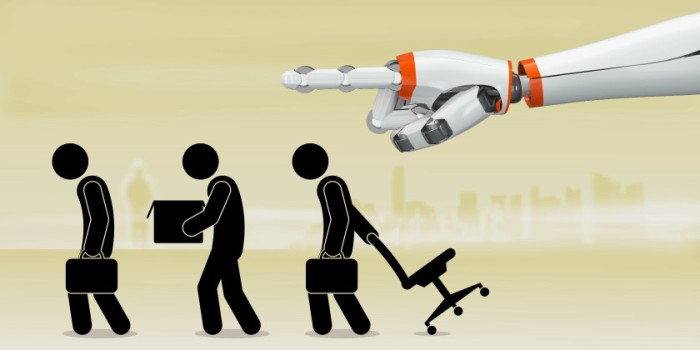
It’s a question educators across the country are beginning to ask after yet another move by our national unions that seems to undercut the profession they’re supposed to be supporting.


The National Education Association (NEA), the largest labor union in the U.S., published a shortsighted puff piece on its Website that seemingly applauds doing away with human beings working as teachers.


In their place would be computers, iPads, Web applications and a host of “devices” that at best would need human beings to serve as merely lightly trained facilitators while children are placed in front of endless screens.


The article is called, “As More Schools Look to Personalized Learning, Teaching May Be About to Change,” by Tim Walker.


Teacher-blogger Emily Talmage led the charge with a counter article on her site called “Anatomy of a Betrayal.” She outlined the NEA’s change from being critical of such initiatives to joining with the likes of Jeb Bush and various foundations, tech firms and school voucher advocates in celebrating it.


Make no mistake.


This is not merely an examination of changing teaching practices. It is a movement by tech giants to further standardize and privatize America’s public schools.


This isn’t to say that technology can’t enhance learning. But classroom teachers with any kind of experience know that simply plopping a child in front of a computer screen is a terrible way to do it. It’s the equivalent of having all your questions answered by an automated voice on the telephone versus being able to ask questions of a living, breathing person.


And they have the gall to call it “personalized learning” as if it were meeting all the needs of students one-on-one. It isn’t.


It’s one-on-one, but it isn’t meeting anyone’s needs except bankers, hedge fund managers, charter school operators and tech investors.


It’s a way to drastically reduce the cost of education for poor and minority students by removing the need for a teacher. It’s the educational equivalent of an automated cashier in the grocery store, but unlike at Giant Eagle, it doesn’t just tally your bill, it pretends to teach.


This is the definition of a McEducation. It’s the logical extension of policymakers who think that 5-week trained Teach for America recruits are equivalent to education graduates with four-five year degrees and years of classroom experience. They’re just replacing TFA recruits with Apps.


Don’t get me wrong. America’s public schools have a lot of problems. They’re segregated by both economics and race. The poor and minority schools are inadequately funded and inequitably resourced. They are forced to compete for what little money remains with charter school vampires who are allowed to spend it however they like with little to no accountability or transparency. More money disappears down the gullets of voucher schools to subsidize the rich and indoctrinate Christian fundamentalists. And to top it all off, our public schools are forced to give scientifically invalid standardized assessments that are incentivized to fail as many students as possible so the same corporations that make the tests can sell districts remediation materials. Meanwhile, a large portion of these profits earned off public schools are reinvested in lawmakers reelection campaigns so they’ll pass legislation that continues to treat our children as golden geese for business and industry.


The NEA should know that. We have more than enough enemies to fight. But instead of taking arms, our national unions have been racing toward the bottom to compromise and keep that proverbial seat at the table. They’ll fight for teacher tenure. They’ll fight right-to-work legislation. But policies that undermine the very fabric of the profession? NAH.


We saw the same thing with Common Core. Educators knew you can’t teach higher order thinking skills to children without first doing the groundwork of process. But the book publishers had new textbooks to market so the NEA backed a horse they knew was dead at the starting gate.


And now we have the tech giants – the Zuckerbergs and Gates – slobbering over the profits they can make by callously removing teachers from the equation.


I’ve seen this first hand.


My district has a one-to-one iPad initiative. For two years, each of my students has had a device in every class. It hasn’t dramatically improved learning. At best, it’s increased students’ computer literacy. At worst, it’s a toy that actually distracts from authentic learning.


They allow me, the teacher, to give all assignments digitally. But that requires the network to function perfectly, the devices to be fully charged, the assignments to be entered precisely, the students to engage with them correctly and creatively – when handing students a paper and having them hand it back is actually much more efficient.


They allow students to look up unfamiliar vocabulary quickly, but they rob students of the context skills necessary to know which definition is appropriate, and experience using prefixes, suffixes and roots.


They allow students to easily access infinite information but without the skills to critically read it. More kids read the summary on the Internet than read the book – and even then, they don’t understand it.


They allow students to make colorful Keynote presentations and iMovies, but do nothing to prepare them how to intelligently organize the materials.


And – worst of all – they convince number crunching administrators that assignments, tests and lessons can be given digitally with hours of screen time. As if that was equivalent to authentic learning.


That is the end goal.


Everyone knows it. Isaac Asimov wrote about it in 1954 with his classic science fiction story “The Fun They Had” about a future where computerized home schooling was the norm. But even in his story, kids felt like they were being cheated out of something important that their ancestors had experienced in a traditional public school setting.


Instead of heeding his warning, our unions are rushing to make that world a reality.


You don’t strengthen unions by undercutting the professionals they’re supposed to represent.


Somebody needs to tell our union leaders – preferably by replacing them.

teacher-left-behind11