Economists Don’t Know Crap About Education

3c19197


I hate to be blunt here, but economists need to shut the heck up.


Never has there been a group more concerned about the value of everything that was more incapable of determining anything’s true worth.


They boil everything down to numbers and data and never realize that the essence has evaporated away.


I’m sorry but every human interaction isn’t reducible to a monetary transaction. Every relationship isn’t an equation.


Some things are just intrinsically valuable. And that’s not some mystical statement of faith – it’s just what it means to be human.


Take education.


Economists love to pontificate on every aspect of the student experience – what’s most effective – what kinds of schools, which methods of assessment, teaching, curriculum, technology, etc. Seen through that lens, every tiny aspect of schooling becomes a cost analysis.


And, stupid us, we listen to them as if they had some monopoly on truth.


But what do you expect from a society that worships wealth? Just as money is our god, the economists are our clergy.


How else can you explain something as monumentally stupid as Bryan Caplan’s article published in the LA Times “What Students Know That Experts Don’t: School is All About Signaling, Not Skill-Building”?


In it, Caplan, a professor of economics at George Mason University, theorizes why schooling is pointless and thus education spending is a waste of money.


It would be far better in Caplan’s view to use that money to buy things like… oh… his new book “The Case Against Education: Why the Education System Is a Waste of Time and Money.”


His argument goes something like this: the only value of an education is getting a job after graduation.


Businesses only care about school because they think it signifies whether prospective employees will be good or bad at their jobs. And students don’t care about learning – they only care about appearing to have learned something to lure prospective employers. Once you’re hired, if you don’t have the skills, employers have an incentive to give you on the job training. Getting an education is just about getting a foot in the door. It’s all just a charade.


Therefore, we should cut education funding and put kids to work in high school where they can learn how to do the jobs they’ll need to survive.


No wonder economics is sometimes called “The Dismal Science.” Can you imagine having such a dim view of the world where THAT load of crap makes sense?


We’re all just worker drones and education is the human equivalent of a mating dance or brilliant plumage – but instead of attracting the opposite sex, we’re attracting a new boss.


Bleh! I think I just threw up in my mouth a little bit.


This is what comes of listening to economists on a subject they know nothing about.


I’m a public school teacher. I am engaged in the act of learning on a daily basis. And let me tell you something – it’s not about merely signifying.


I teach 7th and 8th grade language arts. My students aren’t simply working to appear literate. They’re actually attempting to express themselves in words and language. Likewise, my students aren’t just working to appear as if they can comprehend written language. They’re actually trying to read and understand what the author is saying.


But that’s only the half of it.


Education isn’t even just the accumulation of skills. Students aren’t hard drives and we’re not simply downloading information and subroutines into their impressionable brains.


Students are engaged in the activity of becoming themselves.


Education isn’t a transaction – it’s a transformation.


When my students read “The Diary of Anne Frank” or To Kill a Mockingbird, for example, they become fundamentally different people. They gain deep understandings about what it means to be human, celebrating social differences and respecting human dignity.


When my students write poetry, short fiction and essays, they aren’t merely communicating. They’re compelled to think, to have an informed opinion, to become conscious citizens and fellow people.


They get grades – sure – but what we’re doing is about so much more than A-E, advanced, proficient, basic or below basic.


When the year is over, they KNOW they can read and understand complex novels, plays, essays and poems. The maelstrom of emotions swirling round in their heads has an outlet, can be shared, examined and changed.


Caplan is selling all of that short because he sees no value in it. He argues from the lowest common denominator – no, he argues from the lowest actions of the lowest common denominator to extrapolate a world where everything is neatly quantifiable.


It’s not hard to imagine why an economist would be seduced by such a vision. He’s turned the multi-color world into black and white hues that best suit his profession.


In a way, I can’t blame him for that. For a carpenter, I’m sure most problems look like a hammer and a nail. For a surgeon, everything looks like a scalpel and sutures.


But shame on us for letting one field’s myopia dominate the conversation.


No one seems all that interested in my economic theories about how to maximize gross domestic product. And why would they? I’m not an economist.


However, it’s just as absurd to privilege the ramblings of economists on education. They are just as ignorant – perhaps more so.


It is a symptom of our sick society.


We turn everything into numbers and pretend they can capture the reality around us.


This works great for measuring angles or determining the speed of a rocket. But it is laughably unequipped to measure interior states and statements of real human value.


That’s why standardized tests are inadequate.


It’s why value added teacher evaluations are absurd. It’s why Common Core is poppycock.


Use the right tool for the right job.


If you want to measure production and consumption or the transfer of wealth, call an economist.


If you want to understand education, call a teacher.
When Will It Happen Here?


classroom


It could happen at anytime in my classroom.


The thing we’ve all been dreading.


A hasty announcement of lock down. An unexpected fire alarm. The sounds of shouting, running feet and… gunshots.


The lights could go out. The door could burst in.


There’s really very little we could do.


My room has no windows. No closets. Nowhere to hide.


These are the thoughts going through my head as my students sit at their desks during homeroom this morning.


Jayden is taking off his hoodie before the principal catches him out of dress code.


Alaina is pestering me for a pass to the library.


Darnell is surreptitiously munching on a pixie stick stashed in his book bag.


It’s all so mundane, so subdued, so quiet.


A few kids are on the computers in the back, others at their desks reading books, writing papers, or listening to music on their iPads.


But there’s very little conversation.


The class of middle schoolers is restrained, thoughtful – which is unusual for children of 12 or 13.


I sit slumped at my desk – exhausted though I haven’t even taught my first class yet.


The news from last night still plays in my head.


Seventeen people killed by an expelled student at a high school in Parkland, Florida.


Or was it two killed in Kentucky?


How long was it since the last one?


And now here we are – back in the line of fire.


I can’t help but think about my daughter somewhere across town. She’s probably just entering her third grade classroom maybe munching on the remains of a candy heart from Valentine’s Day. Just like me and my students, she’s in the cross hairs.


But what can we do about it?


I can’t hold her out of school forever. I can’t quit my job and work from home. Even if I could, there’s absolutely nothing I can do for the twenty children quietly sitting at their desks in the room with me, abiding the rules of a society too broken to protect us.


After last night, it feels like things have changed somehow.


There have been 18 school shootings so far this year. And it’s only February. Most have resulted in zero injuries.


Of those where people were hurt, the person most in danger was the shooter. But I can’t stop thinking about those cases where a hunter came to school to kill children and teachers.


As an educator, I’ve been taught how to handle just about every situation.


If one of my children acts out, or doesn’t hand in her homework, or even throws up – I know what to do.


But none of my training has prepared me to out teach a semiautomatic weapon.


I can’t differentiate past a bullet.


There is no paperwork that will invalidate the gunpowder or slow the endless rounds through whatever they come into contact.


If someone comes to school with a gun and a will to kill, I will be little more than a target.


But don’t get me wrong.


This doesn’t mean society should gift me a handgun to keep in my desk next to the chalk.


I am not a law enforcement officer or an action hero. I’m a teacher.


You don’t want me returning fire at every mindless bureaucratic hitch in the schedule. You want me assigning essays and chapter readings. You don’t want me keeping a gun out of reach of curious youngsters always at my desk and in my personal space. You want me safeguarding student assignments and – heck – my cell phone that kids keep trying to snatch and look through my camera roll.


What we need is real gun control legislation.


We need an assault weapons ban.


We need to close the gun show loophole.


We need buyback programs to get the mountains of firearms off the streets and out of the arsenals of a handful of paranoid “survivalists”.


In short, we need lawmakers willing to make laws.


We need legislators who will represent the overwhelming majority of the public and take sensible action to protect the people of this country.


What we don’t need are the trolls who hijack every conversation arguing the semantics of the term “assault rifle” or “terrorist.”


We don’t need weak politicians cautioning against “politicizing” mass shootings because the violence is too fresh.


We don’t need anyone’s thoughts and prayers.


We need action.


And we need it yesterday.


Some people are calling on teachers to take action to force our lawmakers to finally do something.


They suggest a national teachers strike on May 1st – May Day – if Congress refuses to act.


That sounds like a good idea to me.


I’m game.


But we need more than that.


We need everyone who feels the same way to join in the fight.


Parents, children, grandparents, principals, police, firefighters, soldiers and nurses – the multitudinous faces of America must come together to fight this monstrosity as one.


I may sit in that classroom.


My students and my daughter may be in danger.


But America must be the shield.


America must rise up and protect our future.


WE must take charge.


Otherwise, it is not a case of can it happen here.


It is a case of when.

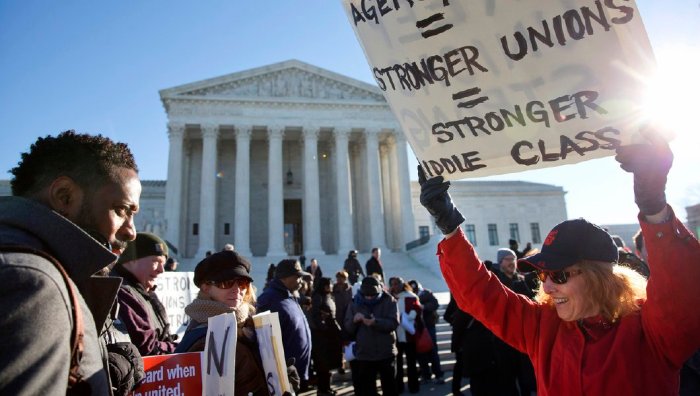
Go Ahead, SCOTUS. Rule Against Unions in Janus Case. You’ll Only Make Us Stronger

1060x600-8abcfe3a7759726bb00893d08cc17540


Bwa-hahahaha!


The corporate owned far right has been trying to destroy labor unions for decades.


But this time they may have finally overplayed their hand.


The upcoming Janus v. AFSCME Council 31 case set for a ruling by the U.S. Supreme Court on Feb 26 has been billed as the final nail in the coffin for public sector unions.


With the pitifully weak Democrats giving up President Obama’s pick for the bench in favor of Trump’s absurd choice, Neil Gorsuch, the court has a decidedly conservative bias.


So court watchers expect the latest challenge to collective bargaining rights to come out in favor of the corporations and billionaires who have spent truckloads of money to ensure the little guy has less of a say in the workplace.


BUT! They aren’t taking into account how stupid these far right shills truly are!


The case comes down to this: some people working in a union job don’t think they should have to pay union dues even though they benefit from the contract negotiated by their union. They affirm that being part of a union is political speech and thus they cannot be compelled to pay – yet somehow they should be able to keep all the benefits of being in a union, anyway.

Cartoon-JanusVAfscme-768x557

So the union gets me a raise and better healthcare, but – even though none of my dues go to pay for political campaigns (that money is donated separately and voluntarily) – just being in a union is a political act.


If the court rules in favor of this position, unions would no longer be able to compel members to pay dues.


Pay them, don’t pay them – there’s nothing the union could do.


Conservatives are betting that if dues become voluntary on a person-by-person basis, at least a few members will opt out and thus weaken union finances and ability to collectively bargain for everyone.


But what they don’t seem to understand is that a decision like this would overturn decades of established law.


It would overturn mountains of legal decisions that provide the foundation for how our government works.


In short, how many times are we compelled to pay for things we don’t necessarily believe in?


Answer: every freakin’ day!


How much of my tax dollars go to the military? What if I don’t want my taxes used to pay for a bloated war machine?


How much of my hard earned money is wasted on corporate subsidies? What if I don’t want to prop up huge multinational businesses already making record profits?


How much of my money go to privatized schools? What if I’m against charter and voucher schools and want my taxes instead to fund fully public schools with elected boards, transparency and who have to accept all students regardless of ability?


If the court rules against unions, then I guess I won’t have to pay my taxes anymore – or at very least, I will have to be given the option of where my tax dollars go.


Not just SOME of my tax dollars – every single penny on a line-by-line basis for every single tax payer in the United States!


An Illinois based engineering union wrote in detail about exactly how such a ruling would change the landscape. Operating Engineers Local 150, wrote on their blog titled, “Union Busters Set Themselves Up for Janus Backfire”:


“If not bargaining is protected free speech, then bargaining will conversely be protected free speech, giving union workers new protections that we’ve never enjoyed before.  For example:

  1. Governor Scott Walker’s now infamous Act 10, the law that destroyed public sector collective bargaining in Wisconsin, will be declared an unconstitutional, content-based restriction on speech and association.


  1. Every state in America will now be subject to bargaining with their public sector employees, even if they didn’t previously.


  1. Local municipalities will be subject to numerous taxpayer lawsuits based upon forced contributions to lobbying groups.


  1. The municipal lobbying industry, currently an extremely large source of revenue for lobbyists, will be decimated as taxpayers now have a First Amendment right to demand their tax dollars are not used for lobbying or political advocacy.


  1. Public Sector pensions will be adversely affected as participants demand that their forced pension contributions are not used for corporate speech.


  1. Municipal advertising, tax increment financing, and all other types of tax breaks (think Foxxcon in Wisconsin) will be subject to litigation based upon taxpayers’ First Amendment rights to opt-out of this type of speech. The same burdensome calculations that are currently leveled only upon unions would become widespread.”


Shaun Richman, a former organizing director for the American Federation of Teachers, agrees.


In an article for In These Times called “How A Supreme Court Decision to Gut Public Sector Unions Could Backfire,” he writes:


“The ruling could both wildly increase workers’ bargaining power and clog the lower courts with First Amendment challenges to routine uses of taxpayer money. At a minimum, it has the potential to turn every public sector workplace dispute into a constitutional controversy…”


Frankly, this is kind of exciting.


In trying to stifle workers’ free speech, conservatives may unravel the statutes that have muzzled us for years.


A decision against unions by the Supreme Court would open the way for thousands of cases throughout the court system – challenge after challenge. Certainly conservative justices would try to staunch the tide, but they simply couldn’t stop every case – especially after such a dangerous precedent has been set!


The SCOTUS would be unleashing chaos on the justice system, and I, for one, hope that every workers union takes advantage of it.


Every individual across the political spectrum should file suit against whichever political peccadillo they want. Evangelicals can file against public schools using their tax dollars to teach evolution. Libertarians could file against having a standing army. Liberals could file against oil pipelines.


And on and on and on.


Meanwhile, those workers unions that conservatives are hoping will be destroyed will be just fine.


You think workers won’t pay their union dues? Some might try, but doing so will have immense personal ramifications. At very least, it will make those individuals social pariahs. Who wants to associate with someone who thinks they should get all the benefits without paying like everyone else?


Moreover, I don’t advocate violence against anyone, but stiffing your co-workers on your union dues is a sure fire way to get slashed tires. Do you put your lunch in a communal fridge? I wouldn’t eat that after word gets out you’re a free rider. Not unless you like to share your co-worker’s saliva.


Again, I’m not advocating for any of that, but it’s just the way humans behave. We don’t like paying for any other able-bodied person whose “political” decision puts our lives and livelihoods in jeopardy.


The end result of a ruling against unions would forever put collective bargaining rights firmly under the protection of the First Amendment.


It would protect all speech – including union rights.


So I say, go ahead, SCOTUS, make our day!

White Kids Need Black History, Too

IMG_9495


It’s Black History Month.


That means your local public school is pulling out all the stops.


We’re making murals of artists from the Harlem Renaissance. We’re jamming to jazz, blues, R&B and hip hop. We’re reading excerpts from the “Autobiography of Malcolm X.” We’re writing journals about what it means to be the people we are and to come from wherever we come from.


In short, we’re having a lot of fun.


But each child responds differently to the siren call of Black History – especially when the person making the call is a white teacher, like me.


Today I asked my classes of 7th grade students – most of whom are impoverished and/or minorities – “Would you like to talk about some Black History?”


And the responses I got were all over the place.


Some of the children enthusiastically took to their feet with a robust “Yeah!”


Others nodded. Some were merely quiet as if they didn’t think I were asking a real question. And some honestly ventured “No.”


In one class, a white student got so upset at the suggestion we spend valuable class time on Black History that he fell to the floor and almost hide under the table.


I’ll admit I was somewhat shocked by that.


What was he so reticent about? I mean I know the kid. He loves black culture. We all do. What does he have against learning about black people?


He’s a big heavy metal fan. What’s heavy metal without Jimi Hendrix?


He loves standup comedy. What’s standup comedy without Richard Pryor, Eddie Murphy or – heck – even Steve Harvey?


And didn’t I see him the other day watching the preview to Marvel’s “Black Panther” with baited breath?


“What’s wrong?” I asked him on the floor.


“Mr. Singer, I really don’t want to learn about Black History.”


And it was on the tip of my tongue, but I didn’t say it – “Dude, if anyone needs to learn Black History, it’s you.”


I patted him on the back and told him he’d survive. But I let him stay on the floor.


Then we moved on.


We watched the video for the song “Glory” by Common and John Legend just to set the mood.


The kids were almost hypnotized. I’m not sure if it was the images from the movie “Selma,” the gorgeous singing and piano playing or the unexpected joy of hearing someone rapping in class.


When it was over, most of them couldn’t wait to talk about a few well-chosen people of color.


We started with the black power fist from the 1968 Olympics, talked about Tommie Smith and John Carlos, why they did what they did and even how it related to modern day protests like those initiated by Colin Kaepernick.


This got kids asking all kinds of questions. We talked about the origin of the slave trade, the science behind melanin and skin color, police brutality, the prison industrial complex, and (in one class) we even took a deep dive into the lyrics of the National Anthem to discover why some people find it to be racist.


In short, it would be difficult to find a more productive 20-30 minutes. Kids were engaged and thoughtful, many looking up further details on their iPads as the bell rang and they left the room.


All except the white child on the floor.


He had participated in the discussion – reluctantly. But he hadn’t moved from his cave.


“Can I talk to you, Mr. Singer?” he said.


I told him, “Sure.” And he went on to tell me the kinds of things his grandparents say about black people.


He told me about their virulent opposition to Kaepernick, how they though black people were just whining about nothing and that racism had been over for fifty years.


It’s a hard position to be put in by a student.


You don’t want to contradict their folks, but you can’t let untruths pass by either.


I asked him what he thought about it. He wasn’t so sure.


So I told him just to think about what we had said. I asked him to keep an open mind.


For instance, I said, if Kaepernick shouldn’t take a knee during the National Anthem, when should he protest?


“How about with a sign in the street?” he said.


To which I responded that black people have done that and been told that was just as unacceptable.


By this time another student came back into the room and walked up to us. She was a white girl who’s usually very quiet.


“Mr. Singer, thank you for talking with us about all that stuff today,” she said.


I told her she was welcome and asked her what she thought about it.


“I just wish all this stuff wasn’t happening,” she said.


I asked her to elaborate.


“I mean that black power fist thing you showed us, that was like a hundred years ago.”


“Fifty years,” I corrected and she repeated me.


“And it’s still happening,” she said. “I just don’t understand why. Why can’t we all just live in peace?”


I smiled at her and the boy who had been quietly listening.


We spoke a bit further and they walked off together in deep conversation.


There are many great reasons to talk about Black History.


For children of color, it shows them that this nation wasn’t built entirely by white people, that they too are a part of America, that they have much to be proud of and to aspire to.


But that’s not the only reason to teach it.


Black History is important for white kids, too.


It teaches them that the world isn’t just about them, that we’re stronger together, that our differences aren’t something to be ashamed of but something to be celebrated.


But especially white children need to learn about their responsibilities as white people.


They didn’t start racism. Neither did I. But it has been practiced in our names and we have benefited from it.


If we don’t want to be a part of it, we need to recognize that and take a stand against it.


I acknowledge that’s an uncomfortable truth for middle school students. And it’s something I can’t simply sit my kids down and discursively tell them.


But in generating these conversations between children of different backgrounds, ethnicities and upbringings, I think it provides the chance for them to come to their own conclusions.


It’s a dangerous place to be.


Allowing kids to think for themselves means allowing them to come to conclusions you might not agree with.


The boy from my class might come in next week further convinced of his grandparents’ prejudice. Or he might not. But I suspect he will have thought about it some.


That’s all I can do.


As a group, white people could use more of that honest reflection. As adults, we become fixed in our thinking and rarely have the bravery of giving something a second thought.


But children’s characters are still being formed.


Conversations like this one give me hope for the future.


Black History is not just about the past. It’s about where we’ll go in the future.


Moreover, it’s not just important for black people. White people need exposure to it, too.


I know I do.

Study Suggests Bringing “No Excuses” Discipline Policies from Charter to Public Schools

no_excuses_charter


The teacher begins class by taking out her Glock.


She casually walks to the front of the room and shoots a misbehaving student in the head.


All the others immediately begin working on their assignment.


It sounds like something from a horror movie. But it’s actually not all that far away from what real researchers at the Brookings Institution and Princeton University are suggesting we do.


Sarah Cohodes has written a new report called “Charter Schools and the Achievement Gap” that praises “No Excuses” discipline policies at urban charter schools and suggests they be more widely implemented at traditional public schools serving the poor and students of color.


I wish I were kidding.


Let’s return to the hyperbolic situation with which I began this article.


The noise of a gunshot brings the principal racing to the classroom.


She notices the slumped bleeding body of the shot child and walks up to the teacher ready to physically disarm and arrest her. But then she notices all the rows of neatly placed desks and the children diligently doing their work.


She glances down at a paper here and there and notices that the children are getting most of their work correct.


So she turns to the teacher and says, “Carry on, Ms. C. You seem to have everything under control here.”


That’s perhaps the most immediate concern brought by Cohodes research – it proposes to evaluate a discipline model based solely on its academic results and completely ignores other aspects of the student experience. For instance, how does the model affect students’ social and emotional development? Is it harmful to students’ curiosity, self-motivation and psychological well-being?


Pardon me, but these are important issues.


I don’t care if my fictional teacher’s shoot first discipline policy gets students to do exceptional classwork. My daughter will not be enrolled in that class – nor do I expect anyone would want their child to learn in such an environment regardless of how well it maximized test scores.


Let me be clear. This is hyperbole, but with a point.


“No Excuses” discipline policies don’t result in any gunshot wounds or deaths (to my knowledge), but they do create environments that are not conducive to the flourishing of children.


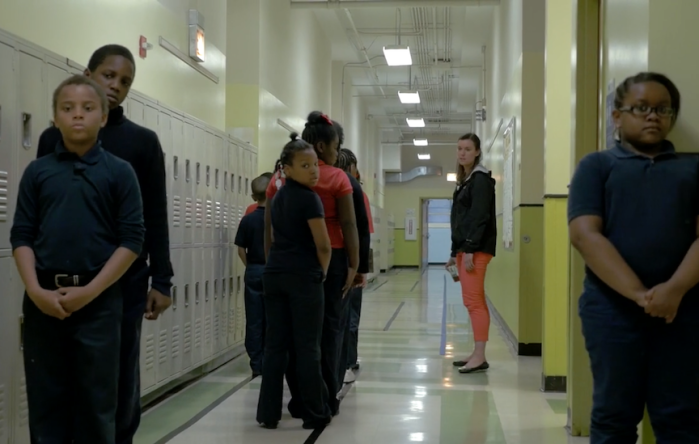
For instance, at a New Orleans charter school, students were punished for not standing straight, not sitting up straight, for putting their heads down, for closing their eyes for too long, for not tracking speakers correctly with their eyes! Between classes students had to walk single file between the wall and a line marked with orange tape. And they had strict dress codes.


This is not school. It is prison.


And it’s unsurprising that these sorts of discipline policies are found at urban charter schools like the KIPP network serving mostly poor and minority students.


Cohodes champions them because – in her view – they get results.


I say that she is missing the point.


Her view of what is important in school is far too narrow.


Moreover, it’s based on a misconception of what constitutes academic success.


Cohodes concludes “No Excuses” policies work solely because schools with such policies tend to have students who get higher test scores.


This is to make a few assumptions.


First, it assumes that the number of students weeded out by such discipline policies isn’t significant enough to wipe out the apparent increase in scores. The punishment for breaking the rules at these schools is often detention, suspension or expulsion. Every child who is enrolled at the beginning of the year isn’t there by testing time. How do we know that the school hasn’t lost so many students who couldn’t obey the rules that they wipe out any gains in testing?


Second, she is assuming standardized testing provide accurate assessments of knowledge and skills. This is far from an accepted premise. These tests have repeatedly been shown to be both economically and racially biased. Cohodes is assuming that since the students scoring better on the assessments are still poor and predominantly black, what they’re being tested on is fair.


Standardized tests are poor assessments. Multiple choice exams do not possess the flexibility to allow for creativity and depth of knowledge. They simply expect a “standard” student to think a certain way and reward dissimilar students for conforming to that standard.


“No Excuses” charter schools may be better at getting different children to act and think alike, but that is not necessarily an endorsement.


Cohodes concludes that these gains in test scores are ultimately beneficial because they will lead to success at college. However, numerous studies have shown that charter school students end up dropping out of college at higher rates than traditional public school students. They simply haven’t learned how to motivate themselves to learn without the rigid, military structures of the charter school environment. One can imagine similar outcomes for charter students (successful charter students) who immediately enter the workforce.


None of these considerations make it into Cohodes research.


She jumps from the brilliant standardized success of “No Excuses” charter schools to the need to include these policies in traditional public schools.


Cohodes worries that the charter school sector can never fully compete with traditional public schools, so we need to make traditional public schools more like charter schools.


However, I cannot imagine many parents would jump at the chance to have their children treated like prison inmates for the chance of higher test scores.


Unlike charter schools, public schools have school boards. They have to make their decisions in public and are accountable to voters who can come to the public meeting, protest and even run for a seat on the board themselves.


In short, this is a terrible idea.


It is somewhat staggering that a grown adult could look exclusively at the data and come to such a conclusion without considering what it means for flesh-and-blood students.


Not only that, but we’re talking about predominantly black and brown students. Is it somehow more acceptable because we’re talking about turning schools serving darker skinned students into Guantanamo Bay? Would it be as acceptable for rosy cheeked affluent white kids?


This is what happens when you let economists set public policy.


It is essential that we include parents, teachers, psychologist and even students in the processes. Otherwise, we’ll continue to get heartless number crunching offered as sincere solutions to our problems.

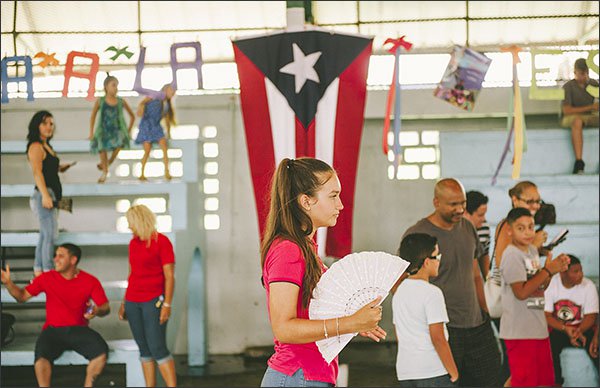
Crippled Puerto Rico Offered School Privatization as Quick Fix for Woes

10-Puerto-Rico-Read-Aloud-02-story-thumb-600x388-27787-thumb-600x388-27961


You’re Puerto Rico’s school system.


More than five months since a devastating hurricane hit the island’s shores, some 270 schools are still without power.


Roughly 25,000 students are leaving with that number expected to swell to 54,000 in four years. And that’s after an 11-year recession already sent 78,000 students  seeking refuge elsewhere.


So what do you do to stop the flow of refugees fleeing the island? What do you do to fix your storm damaged schools? What do you do to ensure all your precious children are safe and have the opportunity to learn?


If you’re Puerto Rico’s Governor Ricardo Rossello, you sell off your entire system of public education.


After an economic history of being pillaged and raped by corporate vultures from the mainland, Rossello is suggesting the U.S. Territory offer itself for another round of abuse.


He wants to close 300 more schools and change the majority of those remaining into charter and voucher schools.


That means no elected school boards.


That means no public meetings determining how these schools are run.


It means no transparency in terms of how the money is spent.


It means public funding can become private profit.


And it means fewer choices for children who will have to apply at schools all over the island and hope one accepts them. Unlike public schools, charter and voucher schools pick and choose whom to enroll.


Make no mistake. This has nothing to do with serving the needs of children. It is about selling off public property because it belongs to poor, brown people.


Something similar happened in New Orleans after Hurricane Katrina.


A district that served mostly black and poor children was swiped by private interests and turned almost exclusively into charter schools.


The results have been an abysmal academic record, the loss of black teachers, black neighborhoods, cultural heritage and in its place support for a status quo that just doesn’t care to provide the proper resources to students of color.


If the Governor and his wealthy backers have their way, Puerto Rico will be yet another ghettoized colony gobbled up by industry.


However, the people aren’t going to let this happen without a fight.


Mercedes Martinez, President of the Federacion de Maestros of Puerto Rico, an island teacher’s union, released the following statement:


“Dear comrades in the diaspora, now more than ever we need your unconditional solidarity.


Governor Roselló just announced his plan to shut down 307 schools, implement charter schools and vouchers. Disaster capitalism at its best. Added to the announcement of the privatization of PREPA. [Puerto Rico Electric Power Authority]


The way to victory is already paved, organized and militant resistance, concrete proposals to improve the public goods that we have, unity and organization. Be our voice in the states and let the world know that corporate reformers want to make PR the next New Orleans as they did after Katrina.


The hurricane has been the perfect storm and excuse for them to advance their plans. Today the so called “educational reform” will be sent to the legislature.


We will give the hardest fight of our lives, and we will triumph. Send letters and videos of support with our struggle. Teachers United, will never be defeated!


Lucha sí”


I don’t know about you, but I stand with these brave teachers, parents and their students.


I may live in Pennsylvania, my skin may be white, but I do not support the theft of Puerto Rico’s schools.


These children have just as much right as mine to a free and appropriate education. Their parents deserve the right to control their districts. They deserve transparency and self-rule.


They deserve the choice to guide their own destinies.


Teachers’ opposition to the move comes even though the Governor is proposing a $1,500 raise for all educators. Martinez says it could come to a general strike.


Their cause has hope on its side – especially in blocking the proposed school vouchers.


The Governor’s voucher proposal wouldn’t go into effect until the 2019-20 school year. However, the Puerto Rico Supreme Court struck down a similar program in 1994 when the current governor’s father, Pedro Rossello – himself a former governor – tried to push it through. The court ruled the island’s constitution forbids public money being used to fund privately run schools.


From this day forward, let us always remember what they did to New Orleans. Let us remember what they are trying to do to Puerto Rico.


Corporate school reform is not about making better schools. If it was, you would see plans like this being proposed in Beverly Hills and rich white neighborhoods across the country.


But somehow that never happens.


These schemes only show up in poor communities populated predominantly by people of color.


While the rest of our public schools are celebrating Black History Month, the children of Puerto Rico are reliving the struggle for their civil rights.


They are still the victims of colonization and brutality.


But they are not alone.


I stand with the people of Puerto Rico.


Will you stand, too?


Will you speak out for Puerto Rico?


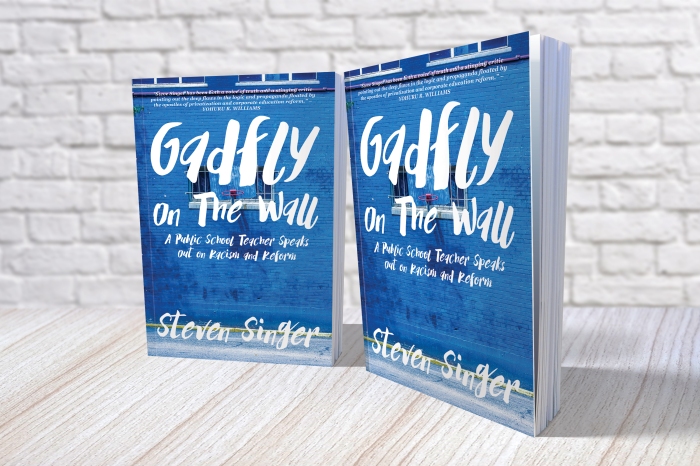
Like this post? I’ve written a book, “Gadfly on the Wall: A Public School Teacher Speaks Out on Racism and Reform,” now available from Garn Press. Ten percent of the proceeds go to the Badass Teachers Association. Check it out!

book-4

Nationwide Charter School Expansion Slowing Down

woman tired from running.jpg.838x0_q67_crop-smart


Charter schools used to be seen as the hot new concept in education.


But that fad seems to have jumped the shark.


For two decades since the first charter school law was passed in Minnesota, they’ve grown at about 6 to 7 percent nationally.


But for the last three years, that growth has dropped each year – from 7 to 5 to 2 percent.


170216-blog-chart-growth-declining


Even states that historically boasted the most growth are falling behind. Of charter powerhouses Texas, Florida, Ohio and California – only Texas has shown a significant upward trend.


170217-blog-graph-big-four


So what happened?


How did the hippest new thing to hit education since the chalk board suddenly hit such a wall? After all, it wasn’t so long ago that every celebrity from Magic Johnson to Andre Agassi to Deion Sanders to Sean “Puffy” Combs to Pitt Bull had their own charter school. Even Oprah Winfrey, the queen of multimedia, donated millions to charter networks in Louisiana, California, Pennsylvania, Colorado, Texas and her home state of Illinois.


How could something with so much high profile support be running out of gas?


The Center on Reinventing Public Education (CRPE) has a theory.


The charter school funded think tank (read: propaganda network) released a report boiling the issue down to three factors: real estate costs, a teacher shortage and political backlash.


Real estate costs? Yes, few public schools want to offer you public property to put your privately run school that will inevitably gobble up a good portion of its funding and turn a portion of that into profit for private investors.


Teacher shortage? Yes, when you pay your educators the least, don’t allow your employees to unionize, and demand high hours without remuneration, you tend to find it harder than most educational institutions to find people willing to work for you.


Political backlash? DING! DING! DING!


Of course, most people who aren’t paid by the charter school industry – as those working for CRPE are – would simply call this a charter school backlash – not political, at all.


This isn’t one political party seeking advantage over another. It’s concerned citizens from both sides of the aisle worried about the practices of the charter school industry.


The general public is starting to understand exactly what charter schools are and why they are a bad idea for children and society.


For instance:
-Charter schools are rarely controlled by elected school boards – they’re run by appointed bureaucrats.


-They are often run for profit –which means they can reduce services for students and pocket the savings.


-They cherry pick which students to enroll and how long to keep them enrolled – they only let in the easiest to teach and give the boot to any that are struggling before standardized testing time.


-And they very often close unexpectedly and/or are the site of monetary scandals where unscrupulous charter school operators take the money and run.


Moreover, it’s no accident that much of the criticism of charter schools comes from people of color. About one quarter of all charter school students are black, whereas black students make up only 15 percent of enrollment at traditional public schools.


To put that in perspective, approximately 837,000 black students were enrolled at charter schools during the 2016-17 school year. Yet civil rights organizations are concerned that this over-representation is having negative consequences on students of color.


The National Association for the Advancement of Colored People (NAACP) has issued numerous criticisms of charter schools most recently calling for a moratorium on them. So has the Movement for Black Lives and the Journey for Justice Alliance.


In addition to the concerns already mentioned, civil rights advocates are concerned with the tendency of charter schools to increase racial segregation.


Seventy percent of black charter school students have few white classmates, according to a study by the Civil Rights Project at UCLA.


But some charters are even worse. More than 1,000 of the nation’s 6,747 charter schools had student bodies made up of at least 99% minority students, according to an Associated Press analysis from three years ago. And it’s getting worse!


Certainly increasing segregation is a problem even at traditional public schools, but nothing like the numbers we’re seeing in the charter school sector.


Civil rights leaders know that “separate but equal” schools don’t work because when they’re separate, they’re rarely equal.


For instance, charter schools suspend students at a much higher rate than traditional public schools. Some charters suspend more than 70% of those enrolled, according to an analysis from the Center for Civil Rights Remedies at the University of California, Los Angeles.


Researchers found the situation is even more dire for minorities. Black students are four times more likely to be suspended than white students, and students with disabilities are twice as likely to be suspended as non-disabled students.


With all these problems dogging their heels, it’s no wonder that the charter school juggernaut is starting to lose momentum.


Instead of concentrating solely on why these schools are losing popularity, we should also ask what set them shooting off into the stratosphere in the first place.


After all, no one was really crying out for private schools run with public money.


No one, that is, except big business and greedy investors looking for a quick buck.


Since the Clinton administration, charter school investments get automatic tax credits that allow investors to double their money in as little as 7 years. Lobbying at the state and federal level by charter schools and their investors and contractors have enabled a monetary scam to enrich private industry at public expense.


Put simply, charters are not subject to the same instructional, operational, fiscal, accounting or conflict of interest rules as traditional public schools. Therefore, in most states it’s perfectly legal for a charter school operator to give his brother the instructional contract, his sister the maintenance contract and his uncle the textbook contract. He can replace the teachers with computer programs and apps, while his own privately held company rents and leases the school building at a hefty markup – all with public money.


And somehow that’s still called a “public” school.


We have to face this simple fact: Charters took off not because they were a good idea to help kids learn, but because they were an excellent way to make a lot of money off of the government. It was a way to steal money meant to help children.


What we’re seeing in terms of a backlash is just a more common realization of the motives behind charter schools echoed in the negative consequences these schools leave behind.


And in the Trump era, charter schools can’t hide behind a friendly face like Barack Obama.


The neoliberal agenda is as fervently being pushed by the right wing as the left – more so.


This slowdown may signal that people have gone beyond politics.


We don’t care what the left and the right wish to sell us. We’re not willing to buy the charter school boloney anymore. If our policymakers want to continue getting our votes, they may need to give in to what the people actually want and stop trying to lead us over the cliff and feed us to the sharks.

Rick Saccone Hopes to Become Trump’s New Bobble Head in Western Pennsylvania


IMG_9488
Rick Saccone hard at work for the taxpayers of Pennsylvania.

Rick Saccone’s signature achievement in the Pennsylvania House was to get “In God We Trust” posted in every public school.


Actually, he didn’t even get that.


He wrote a successful bill that merely allowed public schools to post that – if they wanted.


To my knowledge not a single school in the Commonwealth has taken him up on it.


His second greatest hit was to authorize a state day of fasting.


I’m not kidding. And it’s all down hill from there.


Now he’s running for U.S. Senate!


Oh. Wait. His fundraising was terrible.


Excuse me. He’s running for U.S. House – because that’s an easier win!


Whatever. So long as he can get to Washington, DC. He’s had enough of this small potatoes Pennsylvania politics – even though he’s one of the smallest potatoes in the patch.


If you know what I mean.


He’s running against Democrat Conor Lamb in a special election to be held March 13 to fill Republican Tim Murphy’s seat.


You may recall Murphy. He made his name voting for anti-abortion legislation until his alleged mistress got pregnant and then he allegedly pushed for her to abort their love child.


You know. Family values stuff.


Is Saccone up to that level of hypocrisy?


Donald Trump thinks he is.


The least popular President in U.S. history with only a year under his bulging golf shorts thinks Saccone is his kind of guy.


Trump even came to western Pennsylvania to support Saccone tweeting:

Screen Shot 2018-01-29 at 3.13.20 PM

“Will be going to Pennsylvania today in order to give my total support to RICK SACCONE, running for Congress in a Special Election (March 13). Rick is a great guy. We need more Republicans to continue our already successful agenda!”


Of course, Trump immediately had to walk back this comment because his trip to the keystone state was being paid for with public tax dollars. He had to say that it was an official White House event and not (as he indicated in the tweet) that it was a campaign event.


You know, for once I agree with Trump.


Rick Saccone IS Trump’s kind of guy.

20180118smsTrump02-1

He has lots of experience as a Yes Man. That’s really all he’s done in Harrisburg.


We used to have our own version of Trump – a Republican Governor who had no idea how to do his job – Tom Corbett.


Of course, Corbett’s reign was short lived. Like the President, his popularity plummeted and he was voted out of office like yesterday’s garbage.


But he had his loyal bobble head Saccone backing him every step of the way.


In fact, he voted for Corbett’s initiatives 95% of the time giving him the nickname of Corbett’s “Mini-me.”


Even when Corbett proposed something deeply unpopular, like cutting almost $1 billion from the state’s poorest public schools, Saccone went out there to explain why our children, our future, just weren’t worth the investment.


The Swamp recognizes Saccone as one of their own.


That’s why big moneyed interests are pouring cash on the sycophantic lawmaker. That and the fact that the district in question went for Trump in the last election by 20 points.


The National Republican Congressional Committee has spent at least $1 million on ads for broadcast and cable TV stations to boost Saccone’s candidacy.


And that’s not all.


Congressional Leadership Fund has put aside at least $1.6 million for ads, not to mention funding from outsiders like the 45Committee and Ending Spending – a group founded by the mega-donor Ricketts family.


All this money just to serve out the remainder of Murphy’s term!


Whoever wins would be up for re-election in November to secure a full two-year term.


Moreover, now that the state Supreme Court has overturned the Commonwealth’s gerrymandered districts that unfairly favor Republicans, that November race is likely to include newly drawn legislative lines.


So this GOP wonderland that boosted Trump and Mitt Romney in 2012 will likely become more competitive.


In fact, it may already be.

SacconeFlagShirt
Saccone disrespecting the flag by wearing it as a shirt.

Some polls have Saccone up over Lamb by only a 3 point lead. This may be in part because of Trump’s steadily deflating support – even among Republicans. The President’s approval rating in the district has dropped to 49 percent – not far from the national picture where 47 percent disapprove of his job performance.


This is not good news for Saccone.


The SuperPACS supporting him are trying to paint Lamb, a former federal prosecutor, as a Nancy Pelosi puppet.


But Lamb has repeatedly criticized Pelosi, telling The Pittsburgh Post-Gazette that he would not support Pelosi as the Democratic leader. There is a “need [for] new leadership on both sides,” Lamb said.


Yet Saccone has done everything in his power to suck up to Trump.


Taking his cue from the Commander in Chief, Saccone took to twitter to express his feelings:

Screen Shot 2018-01-29 at 4.27.01 PM

“I’m humbled that @realDonaldTrump for President, Inc, has officially endorsed my campaign for Congress!”


I’m not sure why he wrote “President, Inc.”


Perhaps Saccone thinks the office belongs to a private company.


Perhaps he doesn’t understand that a politician’s job is to serve the needs of his or her constituents.


Judging by his less than stellar performance in state government, this would seem to be the case.


He’s come a long way from earnestly trying to legislate past the establishment clause of the first amendment to fighting to starve our schools to running for a position as Trump’s favorite puppet.


Or not.


That depends on voters this March.


Full Disclosure: I am not a Saccone fan. Along with teachers, parents and students from across western Pennsylvania, I’ve picketed outside of his offices demanding he do his job and provide for students. He was deaf to our cries. Do you hear me now, Rick?

062411_TEACH_4

2011-06-23_11-00-52_113

Wake Up, America! You Have a School Shooting Problem!

photos-century-poc


There have been 11 school shootings so far this year.


And January isn’t even over yet.


That makes about 50 for the academic year – roughly one a week.


Some involve no injuries. Some are suicide attempts. And some, like the latest in Kentucky, involve an active shooter hunting and killing children.


While gun violence is a problem throughout the country, it is especially virulent at educational institutions.


According to an FBI study that looked at incidents from 2000-2013, nearly one quarter of all U.S. shootings took place at schools. And they’re on the rise.


Yet this latest incident barely raised an eyebrow in the collective consciousness.


Hardly anyone even attempted to offer a solution.


The reason?


Since Sandy Hook, we’ve effectively given up.


In December of 2012 a gunman walked in to Sandy Hook Elementary School in Newtown, Connecticut, and killed 20 children and six adults, and we did nothing.


We stood by after the murder of elementary kids and couldn’t get up the collective energy to do one damn thing to stop things like this from happening again.


No new regulations.


No assault weapons ban.


No gun buyback programs.


NOTHING.


In fact, the only thing we did do was actually weaken gun laws to INCREASE the likelihood of more kindergarten kids dying by shot and shell.


In this country we have created a false dichotomy – it’s either children or guns — and we’ve chosen GUNS!


We’re told to buy bullet-proof backpacks, arm school teachers, and have gun wielding police patrol the buildings, but don’t do anything about the firearms, themselves.


America has 4.4 percent of the world’s population, but almost half of the civilian-owned guns in the world.

guns_per_capita

It’s no wonder, then, that our citizens are so much more likely to die at end of a barrel.


Since Sandy Hook, there have been more than 1,500 mass shootings (including those done at locations other than schools).

Screen Shot 2018-01-26 at 7.59.15 AM

According to the Gun Violence Archive, there have been at least 1,518 mass shootings, with at least 1,715 people killed and 6,089 wounded as of October 2017.


The database defines a mass shooting as one in which at least four people (not counting the shooter) were shot regardless of whether those wounds were fatal or not. And since some shootings go unreported, it’s likely only giving us the bare minimum.


But that’s just mass death and destruction.


The overwhelming majority of gun deaths are smaller scale – police brutality, domestic violence, suicides, accidents, etc. America’s total annual firearm deaths came to more than 33,000 in 2014.


This is patently absurd.


Other countries don’t have the same level of gun violence as we do, even per capita.


There are certain facts that we refuse to accept.


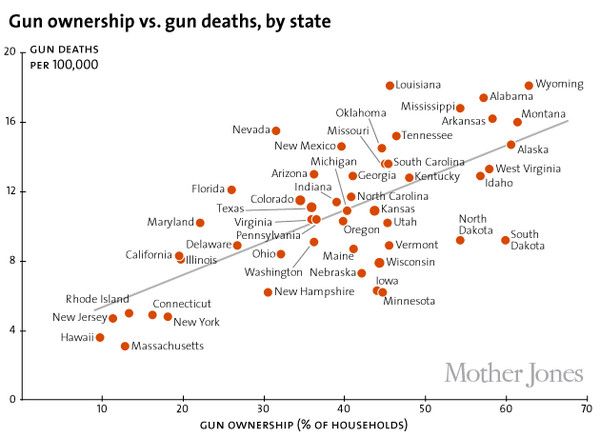
States with more guns have more gun deaths.

gun_ownership_states

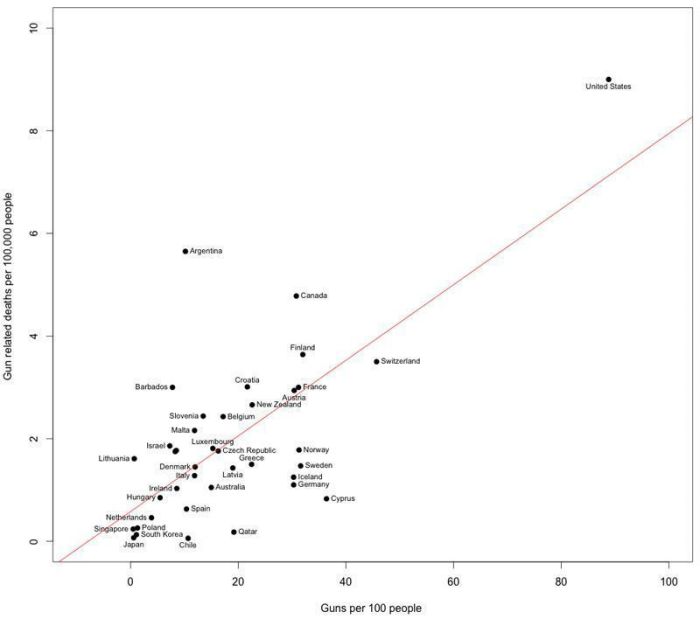
Countries with more guns likewise have more gun deaths.

guns_country

Meanwhile, states with tighter gun regulations have fewer gun-related deaths.

gun_control_vs_deaths

Countries with more rigorous gun control likewise have fewer gun related deaths.

(Don’t believe me? See Florida’s “The Geography of Gun Deaths,” and a 2016 review of 130 studies in 10 countries, published in Epidemiologic Reviews.)


Yet we’re told that gun control is useless because new laws will just be pieces of paper that criminals will ignore. However, by the same logic, why have any laws at all?


Congress should just pack it in, the courts should close up and the army should just all go home. Criminals will do what they please – there’s nothing we can do about it.


This kind of thinking is the triumph of business over sense.


The gun industry is making billions of dollars off this cycle of gun violence: mass shooting, fear of regulation, increase in sales. Repeat ad infinitum.


We may never be able to stop all gun violence, but we can take steps to make it more unlikely. We can at least make it more difficult for people to die by firearm.


And this doesn’t have to mean getting rid of all guns.


It just means sensible regulations.


According to the Pew Research Center, when you ask people about specific firearm regulations, the majority is in favor of most of them – both Republicans and Democrats.


We don’t want the mentally ill to be able to buy guns. We don’t want suspected terrorists to be able to purchase guns. We don’t want convicted criminals to be able to buy guns. We want mandatory background checks for private sales at gun shows.

guns_support

Yet our lawmakers stand by helpless whenever these tragedies occur because they are at the mercy of their donors.


The gun industry owns too many lawmakers.


Our continued gun violence problem is a symptom of our flagging democracy.


In a Republic like ours, our representatives are supposed to enact our will in the halls of power. Yet they don’t actually represent us. They represent business and the wealthy.


Until we regain control of our government, we will always be at the mercy of the dollar and the gun.


Our children will remain merely the most innocent victims of our heartless and unfair politics.


Gun violence is not an everyday occurrence at our schools. In fact, children are actually safer there than anywhere else. But everything is relative. Going to class to learn you’re ABC’s shouldn’t bring with it even a moderate chance of fiery death!


But that’s 2018 America. We live in a culture of death.


You need no further proof of that than the weekly report of which school got struck by the lightning of gun violence. Which children were mowed down by the consequences of an out of control plutocracy today?


Bang. Bang. Democracy is dead.

School Choice Week – Choosing Away Your Choice

Sleazy_Businessman


School Choice Week is one of the greatest scams in American history.


It is a well-funded, thoroughly organized attempt to trick parents into signing away their right to make educational choices about their children.


Seriously.


It goes like this:


Salesman: Would you like a choice?


Parent: Sure!


Salesman: Then just agree to never have another choice again.


That’s it in a nutshell.


Choose not to choose.


When you decide to send your child to a so-called choice school – a charter or voucher institution – you lose almost every other choice about what happens at your child’s school.


Sound impossible?


Let me count the decisions you lose by signing on the dotted line.


When you send your child to a school paid for with public money but run by a private organization, you lose:


AN ELECTED SCHOOL BOARD, so you have no say about what the school does.


OPEN DOCUMENTS, so you have no right to see budgets, spending agreements, bids, contracts, etc.


OPEN MEETINGS, so you have no public place to speak up to the people who run your school.


RIGHT TO SELF-GOVERNMENT, so you have no right to run for a leadership position on the school board. Instead you’re at the mercy of appointed flunkies.


THE RIGHT OF ENROLLMENT, so school operators get to choose whether your child gets to attend, unlike public schools which have to accept your child no matter what – so long as you live in the district.


QUALITY SERVICES, so school operators can cut services for your child and pocket the savings as profit or use it to advertise to get more paying butts in seats.


QUALITY TEACHERS, because most charter and voucher schools aren’t required to hire educators with 4-year degrees, and since they don’t pay as well as public schools and often refuse to let their teachers unionize, they attract less experienced and distinguished educators.


DIVERSE CLASSMATES, because charter and voucher schools increase segregation. Your children will be educated with more kids that look just like them. That’s healthy!


And that’s merely at MOST privatized schools. But that’s not all. At some privatized schools you can lose even more! You may also lose:


COMMON SENSE DISCIPLINE POLICIES, so your children will be held to a zero tolerance discipline policy where they may have to sit quietly, eyes forward, marching in line or else face aggressive public reprimands and harsh punishments.


AN UNBIASED SECULAR EDUCATION, so your children will be taught religion and politics as if they were fact all funded by public tax dollars! Hear that sound? That’s our Founders crying.


FREE TIME, so you’ll be required to volunteer at the school regardless of your ability to do so. Gotta’ work? Tough!


MONEY, so you’ll have to pay tuition, buy expensive uniforms, school supplies or other amenities.


And if your children are struggling academically, you may also lose:


ENROLLMENT, so your child is given the boot back to the public school because he or she is having difficulty learning, and thus costs too much to educate.


You lose all that if you decide to enroll your child in a charter or voucher school!


But that’s not all!


If you DON’T decide to send your child to a so-called choice school, you can still lose choice!


Why? Because of the rubes who were fooled into give up their choice. When they did that, they took some of your choices, too.


Because of them, you still lose:


-NECESSARY FUNDING, because your public school has to make up the money it lost to charter and voucher schools somewhere, and that means fewer resources and services for your child.


-LOWER CLASS SIZES, because your public school has to fire teachers and increase class size to make up for lost revenue.


-FAIR ASSESSMENTS, because the state and federal government require your child to take unfair high stakes tests to “prove” your public school is failing and thus justify replacing it with a charter or voucher schoolas if those have ever been proven to be better, but whatever! CA-CHING! CA-CHING!


This is what you get from School Choice Week.


It’s a uniquely American experience – selling the loss of choice — as choice.


And all the while they try to convince you that public schools are the ones that take away your alternatives.


Yet public schools are where you get all those things you lose at privatized schools.


You get elected school boards, open documents, open meetings, the right to self-government, the right of enrollment, quality services, quality teachers, diverse classmates, common sense discipline policies, an unbiased secular education, free time and money! That’s right! You actually get all that and more money in your pocket!


I’m not saying public schools are perfect. There are many ways they need to improve, but it’s difficult to do so when many of the people tasked with improving these schools are more concerned with sabotaging them to make room for privatized systems.


These are paid employees of the charter and voucher school movement who want to kill public schools – BUT THE KILLER IS ALREADY IN THE HOUSE!


Imagine if we dedicated ourselves to making our public school system better!


Imagine if we committed to giving parents and students more choices in the system and not trying to replace that system with one that gives all the benefits and choices away to corporate vultures!


So, yeah, School Choice Week is a scam.


But, hey, enjoy those yellow scarfs.


devosbetsey_011818gn7_lead