The Ongoing Resistance to Trump, Neoliberals & Anyone Else Trying to Destroy Our Schools

screen-shot-2016-12-21-at-2-12-26-pm 


“Most of the important things in the world have been accomplished by people who have kept on trying when there seemed to be no help at all.” —Dale Carnegie


“It always seems impossible until it’s done.”

-Nelson Mandela


Buck up, Education Activists.


I see that hopeless look on your faces. I see it because it’s the same look reflected back at me in the mirror every morning.


Donald Trump will be our next President, and he’s filling his cabinet with people who are determined to destroy the very offices where he’s putting them in charge.


His Education Secretary doesn’t believe in public schools. His Labor Secretary doesn’t believe in worker’s rights. His Housing chief doesn’t believe in public housing. His head of Environmental Protection doesn’t believe in protecting the environment. Heck! You pick a department and he’s found someone to lead it who doesn’t believe in doing that job!


And to top it all off, he’s got a literal white supremacist as his chief strategist.


But you know what? I’m not scared.


You know why? Because I’m still here.


Seriously.


The forces of greed and ignorance have been salivating all over the prospect of destroying public education for decades, and they haven’t been able to do it.


We’re still here. In almost every municipality, district or borough, our public schools remain open.


Sure, they’re a bit worse for wear in some neighborhoods. But despite billions of dollars being spent to crush them under foot, we survive to fight another day.


And that day is today.


Why should we despair when we behold the glass menagerie of fools Trump has assembled to populate his administration? Glass breaks.


Why despair when hearing the tired rhetoric of Nazi Germany and the Jim Crow South coming out of his mouth? We defeated both! We can do so again.


Take Betsy DeVos, Trump’s pick for Education Secretary. She’s a religious fanatic who’s dedicated her life to destroying public schools.


I’m not scared of her. We just fought off Arne Duncan and John Kingtwo of the Democrats Ivy League privateers who actually knew what they were doing! If we can stop those jackholes from giving away community schools to rich corporations, we can take this rich Republican lady who never held down a real job and only knows how to get her way by bribing people to do her bidding.


Sorry, Miss Betsy, but your school vouchers aren’t driving my family out of our neighborhood school so my kid can be taken advantage of by multinational corporations and Christian Cult madrasas. We’re wise to your B.S. “School Choice” fantasies.


Then there’s Rex Tillerson, another corporate vampire who’d like to suck our classrooms dry. The Exxon CEO and Trump’s pick for Secretary of State is a climate denying gasoline peddler who’s dimwitted enough to think he knows everything. Drawing on his zero years of experience with children, he actually said aloud that struggling students were “defective products” as if they were irregular widgets being pressed out on the assembly line and unfit for service at his service stations.


I’m not worried about that gashole. He’ll be too busy enriching himself in backroom deals with foreign leaders to pay much attention to our schools. He’s no threat.


Okay. I’ll admit Steve Bannon makes my skin crawl. Trump’s picked a literal neo-Nazi propagandist as chief strategist, an alleged wife beater who apparently thinks black people don’t necessarily deserve the right to vote. Well, my grandfathers taught me how to deal with jackbooted Eurocentric thugs. Bannon can goosestep his way back to Brietbart and take his orange-faced Reality TV star Commander in Chief with him.


Look, Trump is a monster and he’s assembling a cabinet of monstrosities to back him up. But that doesn’t make him scary. The best way to fight monsters is to turn on the light. And we have the brightest light of all – the light of knowledge, experience, and wisdom.


We’ve been doing it for the past 8 years with the Democrats, people who were supposed to be our friends and allies. You think it’ll be harder with GOP nitwits declaring themselves our enemies!?


For all the cosmetic ways the Obama Administration was better, they were almost as enthusiastic about boosting privatization and making sure every child had a standardized test that was written above their level and biased towards rich white kids. All their talk about championing civil rights didn’t stop them from closing poor black kids schools and forcing them into unaccountable charter operations that often provided fewer services, achieved dismal academic results and boosted racial segregation. All their talk about equity didn’t result in any more funding for minority children – only more Common Core, unqualified Teach for America temps and testing, testing, testing. Yet their donors in the standardized testing, publishing and privatization industry raked in obscene profits.


I’m sorry if this hurts some people’s rosy-eyed view of politics, but Obama was no friend to education. Plutocracy isn’t just a practice on the other side of the aisle. The Democrats are almost as beholden to their corporate masters, and like good servants, they do what their rich donors tell them to do.


This isn’t news to us. We’ve been on the outs before. In fact, we’ve never been on the ins.


Donald Trump? Shit! We lived through an administration that wanted to destroy us and actually knew how to do it! We can take Tiny Hands, the Bankruptcy King any day! This is a guy who couldn’t make a profit running casinos – you know, a business where the house always wins! You expect us to cower in fear that he’s going to take away our schools. Son, we’ve fought better than you!


We just need to stop, take a deep breath and re-energize ourselves.


We need a moment of rededication, time to size up our newest antagonists, and prepare for the battles ahead.


Yes, we’re surrounded on all sides. But it’s never been any different.


Yes, we don’t have any political party that supports us. So we’ll either take over the Democrats or build our own legislative network.


I don’t mean to minimize the threat. Trump represents a clear and present danger to our nation, our people and our schools. But we represent a clear and present danger to him. He hasn’t even been sworn in yet and the clock is already ticking. He’ll be lucky to last four years in the ring with us.


So in that spirit, I offer the following advice. And not just to you, my brothers and sisters at arms. I’m speaking to that broken down father, teacher and activist in myself, too.


Chin up, Bucko. We aren’t done yet. Not even close.


Together we can win this fight. We’ve been doing just that for years.


We have nothing to fear from Trump. He and the neoliberals have much to fear from us.


“Fate whispers to the warrior ‘You cannot withstand the storm.’ The warrior whispers back ‘I am the storm.’ ”

– unknown


“If you want to make a permanent change, stop focusing on the size of your problems and start focusing on the size of you!”

T. Harv Eker

What Diane Ravitch Means To Me

img_6050

Am I crazy?

That’s what many of us had been wondering before we read Diane Ravitch.

As teachers, parents and students, we noticed there was something terribly wrong with our national education policy. The Emperor has no clothes, but no one dared speak up.

Until Diane Ravitch.

We were told our public schools are failing – yet we could see they had never done better than they were doing now.

We were told we should individualize our lessons – but standardize our tests!? We were told teachers are the most important factor in a child’s education – so we need to fire more of them!? We were told the best way to save a struggling school – was to close it!? We were told every child has a right to a quality education – yet we should run our schools like businesses with winners and losers!?

It was absurd, and the first person to question it was Diane Ravitch.

In doing so, she saved many people’s sanity, she saved a generation of students and educators, gave parents clarity and direction, and she started a social movement fighting against the preposterous policies being handed down from clueless businessmen and bureaucrats.

This weekend the Network for Public Education will honor Dr. Ravitch at a dinner on Long Island for her tireless work fighting against this corporate school reform.

I wish I could be there in person to tell her what she means to me and others like me. Instead I offer this modest tribute to a person who changed my life and the lives of so many others.

I was a different person when I read “Life and Death of the American School System” back in 2010.

I had been in the classroom for about seven years, but I was just starting to feel like a real teacher.

I had just completed my National Boards Certification and felt like I wasn’t just surviving with my students anymore but could actually make intelligent decisions about how best to educate them.

And a big part of that was Dr. Ravitch’s book.

For a long time I had noticed that things weren’t as they should be in public schools.

I had put in a great deal of work to get my masters in teaching, to engage in hundreds of hours of professional development, not to mention three to four extra hours every day at the school passed dismissal time doing tutoring, leading extracurricular activities, grading and planning for the next day. I spent hundreds of dollars every month buying books, pencils, erasers, even snacks and meals for my students. Yet the school still treated me – it treated all of us – like greeters at WalMart.

We were highly educated, highly dedicated professionals but our opinions were rarely sought on policy matters. We were the experts in our fields and in our students who we saw everyday more than many of their own parents. Yet we were told where to be and when, what to teach and how long to teach it. We were told how to assess the success of our students and ourselves. And we were told how to best remediate and what else we should be doing that we never had time to do.

Was I really such a failure, I remember thinking. I work hard with my students everyday, see them make tremendous strides and still the standardized tests say it isn’t enough. What was I doing wrong?

Then I read Diane’s book and saw the whole thing from a different perspective.

It wasn’t me that was wrong. It was the system.

It wasn’t the students that were failing. It was the tests that didn’t assess fairly.

It wasn’t the schools that were deficient. It was the way they were resourced, valued and set up to fail by government and industry.

That book and its 2013 sequel, “Reign of Error,” really opened my eyes. They did for many people. Without them, I’m not sure I would still be a teacher today. I’m not sure I could have kept at it thinking that my best efforts could never be enough, that my exhaustion, my fire, my skills would never bridge the gap.

Diane Ravitch put it all in context of the social and historical struggle I had learned about, myself, in high school. I was engaged in the good fight for the civil rights of my students. Brown vs. Board wasn’t just a story in some textbook. I could see how the outmoded excuse of “separate but equal” was still being given today in my own increasingly segregated school and segregated workplace. Why was it that most of my academic students were poor and black? Why was it that the honors kids were mostly upper middle class and white? Why was it that my school situated in a poorer neighborhood was crumbling and the school a few blocks over in the richer neighborhood looked like the Taj Mahal by comparison? And why was it that teachers in my district got $10-20,000 less in their paychecks with the same experience than those in the wealthier community?

Dr. Ravitch made sense of all of that for me. And it made me very angry.

When colleagues came to me to discuss how they wished we had merit pay, I could turn to her books and see how it was a trap. When students came into my classroom after being kicked out of the local charter school, I had an explanation for why they were so academically behind their peers. And when contrarians complained about our union dues and wondered what they were getting in return for their money, I could give them an intelligent answer.

Diane Ravitch gave me the light that made sense of my whole professional world. I had been living and working in it for years, but I never really understood it before. And that gave me the courage to act.

When my state legislature cut almost $1 billion from K-12 education, armed with her books and blogs, I volunteered to lead educators in social actions against them. I sat down with legislators asking them to help. And when they refused, I knew we could protest outside their offices, make noise and the story would get to the media.

Ultimately it didn’t convince the legislature to heal all the cuts, but it helped minimize them, and when the next election cycle came around, we sent the governor packing.

I read Diane’s blog religiously and through her found so many other teachers, professors, parents, and students whose stories weren’t being told by the mainstream media. In fact, whenever so-called journalists deigned to talk about education at all, they rarely even included us in the conversation. So I started my own blog to give voice to what I was seeing.

Through Diane I found a community of likeminded people. I found other teachers on social media who were standing up for their students and communities. I found the Badass Teachers Association and joined and acted and was invited into leadership. We all loved Diane Ravitch and apparently she loved us, too. She became a member, herself, and encouraged us to keep fighting.

Then with Anthony Cody she started the Network for Public Education where even more educators from around the country joined forces. I went to the second annual conference in Chicago and got to meet her in person.

I’ll never forget it. There were hundreds of people gathered together, and she was just standing in the hall talking with a small group. I said to myself, “Oh my God! That’s Diane Ravitch! She’s right there! I could go up and talk to her!”

I looked around and everyone else standing with me had the same look like we’d all been thinking the same thing. Somehow I mustered the courage to walk up to her.

They say you should never meet your idols, but I’m infinitely thankful I didn’t listen to that advice. Diane was eminently approachable. Here I found that same voice I had read so many times, but also a generosity and a goodwill you couldn’t get from the page alone.

She knew who I was, had read my blog and asked me to send her more of my writing. I couldn’t believe it. I thought she was just being polite, but she gave me her email address. I sent her a few articles and she published them on her own site.

Since that day I’ve talked with Diane a few times and she’s always the same. Her intelligence is combined with a boundless empathy and insatiable curiosity about people and ideas. She really cares to know you, to hear your story and to help if she can.

When I had a heart attack about a month ago, she sent me an email telling me to take care of myself. She suggested I change my diet and exercise before confiding that she was having trouble doing this, herself.

Who does that? I’ve never experienced anything like it. I’ve read authors before and maybe written to them, maybe even had them write back. But I’ve never met someone like her who’s actually cared enough to relate to me as an equal, as someone who is important enough to be taken seriously.

In the media, talking heads will sometimes criticize her for changing her mind, because she did do an about face. She had once been Assistance Secretary of Education under President George H. W. Bush where she advocated for standardized testing and the corporate model in education. But when she saw what that really meant, she changed her mind.

To the media, that’s a defect, but to me, it’s a strength. It’s how we learn. We come up with a theory, we test it and if it doesn’t work, we come up with another one. Her philosophy of education is a response to the real world.

That’s what teachers do everyday. We try to reach our students one way and if that doesn’t work, we try something else.

Perhaps that’s really why so many educators have embraced her. She’s like us – a passionate, compassionate empiricist.

I can’t say enough good things about her. I can’t put into words how important Diane Ravitch is to my life. Her ideas changed me. Her ethics invigorated me. Her friendship humbles me.

I’d love to be there this weekend to say all this to her, but I really don’t need to make the trip. Diane Ravitch is always with me. She is in my heart every day.

I love you, Diane.

If I Were Secretary of Education – A Classroom Teacher’s Fantasy

thumbnail_fullsizerender

I will never be Secretary of Education.

Frankly, I’m just not qualified.

I’m only a classroom teacher. The powers that be don’t trust someone like me with that kind of responsibility. It’s okay to give me a roomful of impressionable children everyday, but there’s no confidence I can make sound policy decisions. For that we need someone with experience in management – not schools, pedagogy, children or psychology.

The presiding incumbent in this prestigious position, John King, somehow overcame that handicap. He had taught for three whole years at a charter school, but the bulk of his experience is in administration – administrating a Boston charter school with high suspension and attrition rates. He also was New York State Education Commissioner, where he single-handedly dismantled the state system of education and sparked one of the largest parental revolts in the nation in the state’s opt out movement.

The previous Secretary of Education, Arne Duncan, was much more qualified, having never taught a day in his life. Before getting Congressional approval, he was appointed to run a charter school and later was entrusted as CEO of Chicago City Schools where he likewise blundered his way to the top with policy decisions that devastated a great system of public education.

What do I have to offer compared to all that? I only have more than a decade’s worth of experience helping kids learn. I’m only one of 3% of teachers nationwide who are Nationally Board Certified. I’ve only earned a Masters degree in Education. I only help run a more than 56,000 member national education advocacy group, the Badass Teachers Association, and write a popular blog dedicated to education and civil rights.


I’ve never sunk a major metropolitan school. I’ve never been run out of a populous state chased by citizens armed with torches and pitchforks.

But let’s close our eyes and imagine that somehow through the magic of education bloggery I was whisked into office at the U.S. Department of Education.

What would a person like me do as Secretary?


1) Respect the Limits of the Job

Though George W. Bush and Barack Obama come from opposite ends of the political spectrum, these two Presidents did more to increase the powers of the Department of Education than any chief executives before them. They turned it into – as former Education Secretary Lamar Alexander puts it – a national school board with the Secretary was the national superintendent.

The department forced test and punishment policies on the states, cudgeled and bribed state officials to enact lousy Common Core Standards, and held federal grants hostage unless states accepted every corporate education reform scheme big business could think up.

Don’t get me wrong. I’m a New Deal Franklin D. Roosevelt Democrat, but even I think these two administrations blatantly abused their power and overstepped their Constitutional authority.

So the first thing I would do is take a step back and follow the law. The recently enacted Every Student Succeeds Act (ESSA) sets explicit limits on federal power over education policy returning much of it to the states. As Education Secretary, I would respect the power of the states to control public education. It is the state’s job to set policy. It is the federal government’s job to provide support, encouragement and oversight.

Therefore, the role of the Department of Education is to ensure public schools are being properly funded, civil rights are not being violated and to be a repository for national data and research. I’d dedicate myself to that – not some corporate fueled power trip that both parties condemn except when they’re practicing it.


2) Push for More Federal Funding for Public Schools

Therefore, the first thing I would do is use the full power of the office to ensure the federal government is giving its utmost to help state public schools. I would use whatever grants were available to increase federal funding to the most impoverished schools. I would fully fund Title I. I would increase the federal share of Special Education – (Under Part B of the Individuals with Disabilities Education Act (IDEA) the federal government is supposed to fund 40% of the per pupil cost of all special education students but has never met this obligation. I would seek to rectify that if possible.) I would enact a national after school tutoring initiative. I would provide funding to hire additional teachers to reduce class size.  And as far as is possible, I would forgive college students loan debt so they can begin their lives with a clean slate.

This is something that those who seek to disband the U.S. Department of Education never seem to understand. The federal government has an important role to play in our school systems. It’s not the unfounded power grab of the last few decades, but we need another robust player on the field to help the states achieve their goals and also to keep the states honest.

If we disbanded the Department of Education, as some conservatives from Reagan to Paul to Cruz to Trump suggest, what would happen to Pell Grants, for instance? What would happen to the bundles of federal money that boost our public schools? Who would make sure states are doing their jobs? Where could we go to find accurate data about how our schools are doing nationally and not just state-by-state?

If we got rid of the department, at best these jobs would fall back on other government agencies that haven’t the funding, staff or ability to accomplish them. More likely, it would result in the elimination of billions of education dollars that the states simply couldn’t (or wouldn’t) replace. Abuses against students on the grounds of civil rights, gender, special education, etc. would skyrocket with little to no recourse. And we would be in the dark about how well we were educating our nation’s children.


3) Encourage States to Enact Accountability Measures that Don’t Include Standardized Testing

Accountability has become a dirty word in many education circles because of the way the Bush and Obama administrations have perverted it to mean test and punish. It has become a boondoggle for the standardized testing industry, an excuse to close poorly funded and often urban public schools to be replaced by unaccountable charter schools. While this is a terrible misuse of federal power, states must be responsible for the education they provide their children. And contrary to popular belief, this can be accomplished without resorting to the usual corporate reform measures.

As Secretary, I would put an immediate stop to the era of test and punish at the federal level. As it stands, the ESSA allows states to determine what they will use to demonstrate their educational progress for students. This is a state decision, but I would encourage states not to use standardized testing. I would offer to help any state interested to find new ways to show accountability. For instance, districts could submit to a simple audit showing student-teacher ratios, per pupil funding, discipline data broken out by race, degree of segregation, richness of the curriculum, etc.

Let me be clear: it is up to states to make these decisions. As Secretary, I would have no power to force legislatures or departments of education to do any of this. However, I’m willing to bet that many states would be excited by these possibilities and jump at the opportunity. Helping them achieve this would be my job.


4) Stop Federal Funding to Charter Schools, Teach for America and Common Core

Speaking of encouragement, I would stop all federal help for corporate education reform policies. That means turning off the money faucet for programs that enrich corporations and big business at the expense of school children.

This means not one more federal dollar to help private companies open new charter schools. Teach for America would have to rely on its corporate donors, not the taxpayers. And the Common Core gravy train would come to a screeching halt. No more money to help states enact the standards, no more bags of cash for book publishers and test manufacturers.

If states that had enacted the Core wanted to keep it, fine. If not, fine. But they would be on their own.

(In a sad aside, opposition to Common Core is most virulent from conservatives, yet there are an awful lot of state legislatures completely in GOP control that could get rid of Common Core tomorrow but which have done – and continue to do – nothing about it. No matter who the next Education Secretary is, the fate of Common Core is in the hands of state legislatures across the country – not the President, not Congress and not the Education Secretary. There’s far too much rhetoric and not nearly enough action.)


5) Do Everything I Can to Increase Teacher Autonomy, Respect, Pay and Training

Finally, I would use my position as Education Secretary to boost the greatest resource we have to help students learn – teachers. I would speak out on the need for educators to have autonomy in the classroom so they are empowered to meet student needs. I would work to increase public perception and respect for the profession. We simply can’t afford teacher bashing, because when you disrespect educators, you reduce their power to help kids. I would boost teachers pay through matching state grants. If you want the best possible teachers, you have to pay for them. If you want to attract the best people to the field, you need to ensure they will have a reliable middle class income and not have to work a second job or use their own money to buy school supplies. I would invest federal funds in training programs so the newest crop of teachers are up to date with the latest pedagogy and techniques. I would encourage more people of color to enter the field. And I would partner with teachers unions to strengthen protections for teachers while educating the public on the meaning of due process and the reality that strong unions mean fewer bad teachers in the classroom.


Are there more things we need to do to help improve our national system of public education? Certainly.


We need to start integrating schools again and stop the constant push to segregate through charter schools and white flight. We need to ensure every student receives adequate, equitable, sustainable funding. We need to change charter school laws so that they can’t cherry pick students and are as transparent and accountable as traditional public schools. We need to stop closing struggling schools and address root causes. We need to stop state takeovers except under the most dire of circumstances and set limits on how long states can stay in control. And we need to pass strong student privacy laws – even updating the Family Education Privacy Act (FERPA) to protect our children from predatory ed-tech companies that constantly data mine students and sell millions of data points on our children to the highest bidder.

There are a whole host of things needing done. However, most of these things go beyond the powers of the Department of Education and its cabinet level Secretary. They can only be addressed by the President, Congress, state legislatures and/or the court system. The Education Department can help steer that agenda, it can be an ally to real positive change, but it can’t go it alone.

Unfortunately, no matter who wins the Presidency in November – Clinton or Trump – neither seems likely to nominate an Education Secretary who would do any of the things I’ve outlined.


For all his talk of reducing the size of the government, Trump proposes increasing the federal footprint with school choice initiatives turning the Department of Education into a wheelbarrow marked “free money” for big business and parochial schools while forcing states to accept his school policies. Meanwhile, Clinton is likely to continue the course set by Bush and Obama of embracing every corporate school reform package from which Wall Street benefits.

It’s a crazy time full of crazy candidates and crazy solutions, but of this we can be sure – no one is crazy enough to let a teacher make decisions about public education policy.

Common Core’s New New Math has the Same Problem as the Old New Math

little tired boy sitting at a desk and holding hands to head


Bad ideas are like unlucky pennies – they keep coming back again.

Take the New Math. Or maybe I should say the New New Math.

Common Core State Standards suggests we teach children a new way to do arithmetic. We should focus on multiple ways to reach an answer with an emphasis on understanding the concept behind the problem rather than just manipulating numbers.

It sounds fine in theory – until you think about it for five minutes.

When learning a new skill, it’s best to master a single, simple approach before being exposed to other more complex methods. Otherwise, you run the risk of confusion, frustration and ultimately not learning how to solve the problem.

Take directions.

If you’re lost and you ask for directions, you don’t want someone to tell you five ways to reach your destination. You want one, relatively simple way to get there – preferably with the least amount of turns and the highest number of landmarks.

Maybe later if you’re going to be traveling to this place frequently, you may want to learn alternate routes. But the first time, you’re more concerned about finding the destination (i.e. getting the answer) than understanding how the landscape would appear on a map.

This is the problem with Common Core math. It doesn’t merely ALLOW students to pursue alternate methods of solving problems. It REQUIRES them to know all the ways the problem can be solved and to be able to explain each method. Otherwise, it presumes to evaluate the student’s understanding as insufficient.

This is highly unfair to students. No wonder so many are failing.

Sadly there’s some history here that should have warned us about the perils of this approach.

Common Core isn’t the first new math approach to come along. In the 1960s we had a method actually called “The New Math.” And like Common Core, it was a dismal failure.

Like the Core, it proposed to focus more on conceptual understanding, but to do so it needlessly complicated matters at the grade school level.

It introduced set theory, forcing students to think of numbers as groups of objects rather than abstractions to be manipulated. In an advanced undergraduate mathematics course, this makes perfect sense. In first grade, it muddles the learning tremendously.

To make matters even more perplexing, it mandates students look at numbers with bases other than 10. This is incredibly confounding for elementary students who often resort to their fingers to help them understand early math.

Tom Lehrer wrote a very funny song about the new math which shows how confusing it can be. The methods used to solve the problem can be helpful but an emphasis on the conceptual underpinning at early ages perplexes more than it helps:

Popular culture is full of sly references to this old New Math. Charles Schultz wrote about it in several Peanuts comic strips in 1965. In one such strip, kindergartener Sally gets so frustrated trying to solve a New Math problem she cries, “All I want to know is, how much is two and two?” New Math even made an appearance in the 1973 movie “There’s No Time for Love, Charlie Brown,” in which the titular Brown asks “How do you do New Math problems with an old Math mind?”

Screen shot 2016-08-27 at 3.10.40 PM

In the 1992 episode of the Simpsons, “Dog of Death,” Principal Skinner is elated that an influx of school funding will allow him to purchase school improvements. In particular he wants to buy history books that reveal how the Korean War ended and “math books that don’t have that base six crap in them!”

So where did this idea for New Math come from?

In 1957, the Soviets launched Sputnik sending Americans into a panic that they were being left behind by these Communist supermen. As a result in 1958, President Dwight D. Eisenhower passed the National Defense Education Act which dramatically increased school budgets and sent academics racing for ways to reform old practices. One product of this burst of activity was the New Math.
A decade later, it was mostly gone from our public schools. Parents complained they couldn’t help their children with homework. Teachers complained they didn’t understand it and that it needlessly confused their students.

Fast forward to 1983 and President Ronald Reagan’s National Commission on Excellence in Education. The organization released a report called “A Nation at Risk” that purported to show that public schools were failing. As a result, numerous reforms were recommended such as increased standardization, privatization and competition.

It is hard to overemphasize how influential this report was in education circles. Even today after its claims have systematically and thoroughly been debunked by statisticians like those at Sandia National Laboratories, politicians, pundits and the media persist with this myth of failing public schools.

“A Nation at Risk” birthed our modern era of high stakes testing and, in 2009, Common Core.

In theory, each state would adopt the same set of academic standards thereby improving education nationally. However, they were written by the standardized testing corporations – not working educators and experts in childhood development. So they ignore key factors about how children learn – just like the New Math of old.

In short, we repeated the same mistake – or a very similar one.

Children are not computers. You can’t program their minds like you would a MacBook or iPhone. In many ways, including math instruction, Common Core ignores these facts.

And so we have the same result as the old New Math. Parents all over the country are complaining that they can’t help their children with their homework. Teachers are complaining that the Core unnecessarily confuses students.

In some ways, the Core is worse than the old New Math because of its close connection with high stakes testing. In the ‘60s if a child didn’t understand how to add, he failed math. Today, if a child does that, he fails the standardized test and if that happens to enough students, his school loses funding, his teacher may be fired and his school may be closed. As such, the pressure today’s children undergo is tremendous. They aren’t just responsible for their own learning. They’re responsible for the entire school community.

Those are unfair burdens for school children – especially when the decisions that make it easy or hard for him to learn are not made by the student but by politicians, pundits and policymakers.

But perhaps most telling is this: it doesn’t help children learn.

Isn’t that what this was all supposed to be about in the first place?

Perhaps we don’t need a new math. Perhaps we simply need policymakers willing to listen to education and childhood experts instead of business interests poised to profit off new reforms regardless of whether they actually work.

We Are All Chicago Schools – More Layoffs, Less Help for Other People’s Kids

ct-rahm-emanuel-forrest-claypool-private-schools-20160505


“Fuck those kids.”


Mayor Rahm Emanuel couldn’t have been clearer if he’d said the above.


Chicago Schools Chief Executive Forrest Claypool couldn’t have made his priorities clearer if he’d given Chicago’s parents the bird and told them to “Kiss my ass.”


The Chicago Board of Education – made up of members all of whom are appointed by the mayor – decided to layoff 1,000 teachers and staff at the city’s public schools just a month before opening day. Sure, some may keep their jobs through reassignment, but hundreds will be unemployed.


This after a recent history of closing more than 80 schools and slashing thousands of jobs. Just last February, the district laid off 62 employees, including 17 teachers. In January, it laid off 227 staff members.


This begs several questions: How many teachers and support staff can Chicago Public Schools afford to lose? What exactly is this doing to its students? How is it affecting their future prospects to be taught by a skeleton crew?


The city’s leaders don’t give a shit.


And why should they? These aren’t their kids!


Emanuel’s children attend University of Chicago’s Laboratory Schools, a private institution. Claypool’s kids go to Francis W. Parker, a private school in Lincoln Park. Even Gov. Bruce Rauner’s six kids don’t go to public school. They’re all grown.


So this doesn’t affect them. Nor does it affect any charter school kids. Not a single one of these 1,000 cuts will occur at a city charter school.


It’s just the traditional public schools, those schools where approximately 85% of students are Latino or African-American. Just those schools where 87% of the children come from low-income homes. Just those schools where 12% of kids are reported to have limited English proficiency.


Yeah. Fuck those kids.


And the worst part is that it’s not necessary. Chicago doesn’t have to continue to abandon its neediest children.


When you’re in a family, you make sacrifices for your kids. If funds are tight, you make cuts elsewhere or maybe you even take another job. Anything to make sure you’re providing your children with the best.


But Chicago’s leaders aren’t interested in doing any of that for these kids because they just don’t care.


Otherwise they could find the money. The teachers union suggests declaring a TIF surplus and reinstating a corporate head tax. The city isn’t exactly a wasteland. Wealthy developers are looking to build yet Emanuel has no intention of inconveniencing them by making them pay a fair share of taxes. Instead, the full burden falls on the city’s working families. And he calls himself a Democrat!


There’s always enough money for projects leaders care about. For instance, there was no problem finding $250,000 to pay a law firm where Claypool and his handpicked general counsel, Ron Marmer, both formerly worked. Marmer still has financial ties to the firm! So cut a check to Jenner & Block LLP? YES! Ensure kids have all the teachers they need? HECK NO!


Strangely there’s $27 million hiding in the seat cushions to open a new charter school for the University of Chicago. The Woodlawn Campus of the University of Chicago Charter School will be part of the development around the newly-planned Obama Library. It’s a fitting symbol of the President’s legacy – a brand new privatized educational facility while a few blocks away traditional public schools molder in ruin.


Meanwhile, Gov. Rauner holds the state education budget hostage. Illinois lawmakers could only agree on a 6-month state budget in June. Republicans expressed concern about the state being responsible for bailing out Chicago Schools. It’s not our problem, they seem to think. Well of course not. These aren’t your kids.


It’s the same swindle we see throughout the country. Refuse to pay for public schools – especially the schools serving poor brown kids, and then shrug. “Look at the impasse,” they shout, hoping voters are too stupid to realize it’s an impasse created by these lawmakers, themselves! It’s a textbook disaster capitalism move, approved by the American Legislative Exchange Council (ALEC) and other conservative think tanks. But Rauner can at least be forgiven for being a proud Republican. This is, after all, the behavior progressives expect from GOP lawmakers.


What about Democrats like Emanuel? This isn’t the way progressives are supposed to act. They aren’t supposed to favor privatization over public schools. They aren’t supposed to fawn on big business and promise tax cuts, tax shelters, and every other kind of tax avoidance.


Some might say it’s just Emanuel. After all, for a Democrat he sure pals around with a lot of conservatives. He and Rauner are best buddies. When Emanuel earned his fortune, he was an investment banker, and one of his best clients was Rauner. They go out to dinner and even spend vacations together. Sure they occasionally criticize each other in public, but behind closed doors the ideological differences just melt away.


What about the rest of the Democrats? Surely they don’t agree with Emanuel’s tactics. They made sure to keep him away from the Democratic National Convention – out of sight, out of mind.


But if the party is really so opposed to these policies, where is the condemnation from party leaders?


I haven’t heard a peep from the Democratic nominee for President, Hillary Clinton, about these layoffs. Have you? She’s the de facto leader of the party and she’s got nothing to say about this. What does that tell you about her priorities?


Sure she’s cozied up to the two biggest national teachers unions who liked her so much they didn’t even need to consult the rank and file before endorsing her in the primary. Ronald Reagan had the support of the Professional Air Traffic Controllers Organization (PATCO) right up until he declared their strike illegal and demanded they return to work. Will Clinton, too, turn against union teachers once she’s used them for their vote in November?


But you know what? Forget Hillary. Where’s Bill? Where’s Tim Kaine? Where’s Barack and Michelle Obama? Where’s Joe Biden? Where’s Al Franken? Where’s Cory Booker?


We have to get beyond labels like Republicans and Democrats, liberals and conservatives. Almost all of them are neoliberals. They all believe essentially the same things.


And as proof I offer the deafening silence offered against Emanuel in Chicago.


He’s hurting school children.


But no one in power gives a fuck.

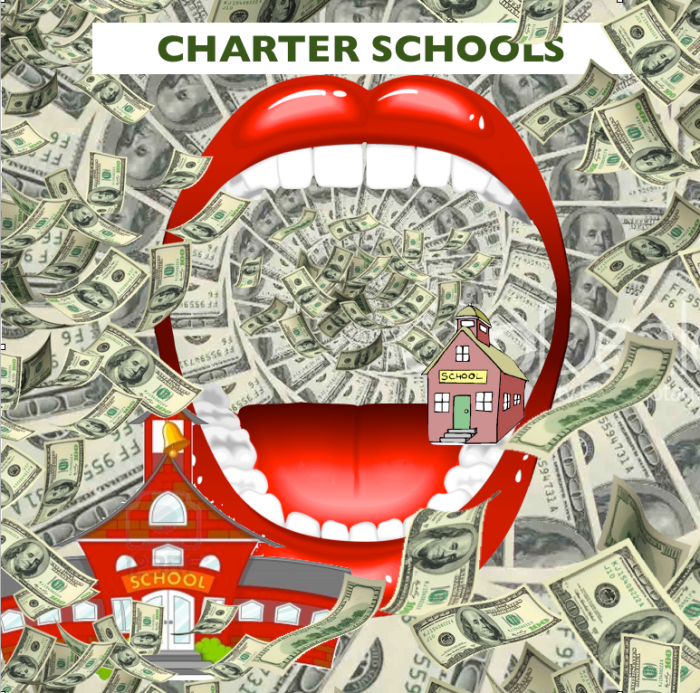
No New Charter Schools – NAACP Draws Line in the Sand

Line in sand


In the education market, charter schools are often sold as a way to help black and brown children.


But The National Association for the Advancement of Colored People (NAACP) isn’t buying it.


In fact, the organization is calling for a halt on any new charter schools across the nation.


Delegates from across the country passed a resolution at the NAACP’s national convention in Cincinnati last week calling for a moratorium on new charters schools. Approval of the new resolution will not be official until the national board meeting later this year.


This resolution isn’t a change in policy. But it strengthens the organization’s stance from 2010 and 2014 against charters.


Specifically, the resolution states:


“…the NAACP opposes the privatization of public schools and/or public subsidizing or funding of for-profit or charter schools…”


“…the NAACP calls for full funding and support of high quality free public education for all children…”


The resolution goes on to oppose tax breaks to support charter schools and calls for new legislation to increase charter school transparency. Moreover, charters should not be allowed to kick students out for disciplinary reasons.


This goes against the well-funded narrative of charter schools as vehicles to ensure civil rights.


The pro-charter story has been told by deep pocketed investors such as the Koch Brothers and the Walton Family Foundation. But the idea that a separate parallel school system would somehow benefit black and brown children goes against history and common sense.


The Supreme Court, after all, ruled separate but equal to be Unconstitutional in Brown vs. Board of Education. Yet somehow these wealthy “philanthropists” know better.


People of color know that when your children are separated from the white and rich kids, they often don’t get the same resources, funding and proper education. You want your children to be integrated not segregated. You want them to be where the rich white kids are. That way it’s harder for them to be excluded from the excellent education being provided to their lighter skinned and more economically advantaged peers.


Julian Vasquez Heilig, education chair of the California and Hawaiian NAACP chapter which proposed the new resolution, says its ironic charter schools are marketed as school choice.


The endgame, says Heilig, is to replace the current public schools with privatized charter schools. This is exactly what’s been proposed in the US territory of Puerto Rico.


It’s not about giving parents more choices. It’s about eliminating one option and replacing it with another. It’s about reducing the cost to educate poor and minority children while also reducing the quality of services provided. Meanwhile, public tax dollars earmarked to help students learn become profit for wealthy corporations running charter schools.


As the Presidential election heats up, it will be interesting to see how Hillary Clinton and Donald Trump address the issue. Already school choice policies have been wholeheartedly embraced by the Republican nominee. Not only does he favor charter schools, he also supports school vouchers and other schemes to privatize public tax money. This shouldn’t be a surprise since he ran his own private education scam – Trump University.


Clinton, on the other hand, has been more measured in her support, even criticizing some aspects of charter schools. However, her campaign has issued statements saying she supports only “high quality charter schools” – whatever those are.


Moreover, just this week at the Democratic National Convention, Clinton staffers met with hedge fund mangers from Democrats for Education Reform (DFER).


According to Molly Knefel who covered the meeting for Truthout, the mood was not positive toward ending corporate education reform strategies.


She reported that moderator Jonathan Alter worried about the argument becoming based on social justice.


“If it becomes a social justice movement, doesn’t that in some ways let, for lack of a better word or expression, Diane Ravitch’s argument win?” asked Alter. “Which is, ‘don’t blame any of us, don’t focus on schools; if we don’t solve poverty, nothing is going to get better.’ Isn’t there a danger of falling away from the focus on at least some responsibility on schools?”


Apparently Alter is falling back on the old chestnut that under-funded schools should be blamed and shut down if they can’t help the neediest children to the same degree as well-resourced schools. And any attempt to focus on underlying inequalities would somehow give teachers a free pass? I suppose Alter believes a fire company that can’t afford a fire truck should be just as effective as one with three new ones.


Meanwhile, longtime corporate education reformer Peter Cunningham was asked specifically if school integration was important. He responded tellingly:


“Maybe the fight’s not worth it. It’s a good thing; we all think integration is good. But it’s been a long fight, we’ve had middling success. At the same time, we have lots and lots of schools filled with kids of one race, one background, that are doing great. It’s a good question.”


The number of segregated schools where students “are doing great” is certainly in question. Perhaps he’s referring to well-resourced all-white private schools for the children of the rich and powerful. Or maybe he means the all-black charter schools where administrators handpick the best and brightest students and refuse to educate those most in need.


One hopes Clinton will continue to fight alongside the NAACP and other civil rights organizations like Journey for Justice and the Rev. William Barber’s Moral Mondays to defend public schools against the failed education policies of the George W. Bush and Barack Obama administrations.


Two weeks ago DFER President Shavar Jeffries criticized the finalized Democratic education platform for turning against corporate education reform. This transformation away from school privatization and standardized testing was the result of education activists Chuck Pascal of Pittsburgh, Troy LaRaviere of Chicago and Christine Kramar of Nevada who worked hard to ensure the platform – though non-binding – would at least set forth a positive vision of what our public schools should look like.


Make no mistake, the tide is turning. It is becoming increasingly difficult for charter supporters to claim their products boost minority children’s civil rights.


Too many people have seen how they actually violate them.

The Agony of Being a First Time Undecided Voter

Screen Shot 2016-07-27 at 4.20.26 PM


Is there anyone else out there like me?


I’ve never been an undecided voter before. I’ve always known early which candidate I’m supporting and why.


But this election has my head spinning. One minute I’m ready to vote for Hillary Clinton to stop Donald Trump. The next I can’t live with myself if I do that and am willing to vote for Green Party candidate Jill Stein even though she has very little chance of winning.


And so on back-and-forth, hour-to-hour. The only thing I’m certain of is that I will never EVER vote for Trump.


Is there anyone else out there like me?


This seems to be the new reality.


I’d rather have Hillary as President than Trump, but I’d rather have another option than either one.


It’s agonizing. I can’t sleep. I toss and turn.


I hop into bed thinking I’ll just vote Hillary and then wake up passed midnight feeling disgusted with myself. I say I’ll vote Stein and go back to bed only to wake up an hour later with grave doubts about letting Trump win and how he’ll destroy the fabric of the country.


Those of you who have made up your minds, be thankful. You have a certainty many of us do not share.


Almost half of registered Democrats voted for Bernie Sanders in the Primary. You need us. And now that Hillary Clinton is the nominee, we have to decide – What do we do now?


These seems to be our options:


1) Vote Donald Trump. Let the nation burn. Let him deport 11 million people and build a wall to keep others out. Embolden all our hidden racists, xenophobes, sexists, homophobes and narcissists. Watch the economy take a nosedive just like many of his businesses did into chapter 11. Watch the Russians laugh it up as the US enters a period of isolationism and cedes power to strongmen across the globe.


No. That’s just not acceptable to me.


2) Vote Hillary Clinton. Defeat Trump but champion all of the neoliberal policies you fought against in the primary. Vote for a supporter of the prison industrial complex. Vote for a war hawk. Vote for someone who may do some good but will almost certainly support the TPP, someone who will continue to giveaway our national wealth to big business while doing very little to help the middle class. Watch as our schools are privatized, de-unionized and closed.


That’s a bitter pill to swallow.


3) Vote Jill Stein. Support a candidate who embodies all the progressive values you fought for during the primary. Vote for action against climate change. Vote to forgive all student debt. Vote to destroy corporate education reform. Vote against unnecessary wars of choice. But have very little chance of any of these policies actually being enacted. And increase the chances of a Trump Presidency. After all, she probably won’t even be on the ballot in some states! How can you win if you aren’t an actual choice!?


That’s hard to accept, too.


4) Don’t Vote for President. Vote for progressives on down ticket races but leave the presidential race blank or maybe even write in Bernie’s name. Send a message that you won’t accept the two-party system. But again increase the chances of President Trump and really who is going to be paying attention to this highly symbolic gesture? What will it get you really?


No. Not acceptable.


These seem to be most of the options. I’m certainly not going to vote Libertarian or for one of the other third party candidates.


So which is the best option?


Damned if I know.


I go back and forth between Hill and Jill.


My biggest problem with Dr. Stein is that there just doesn’t seem to be a clear path to victory. No one other than George Washington has ever won a third party bid for President. Even Ralph Nader who got millions of votes ended up not winning a single district or a single electoral vote.


I’m also disturbed by talk among Green Party members, even Stein herself, saying it doesn’t matter if they win. They just want to have a good showing. They just want to increase the power of the Green Party for the next election cycle and show the establishment that they aren’t to be taken lightly.


I’m all for that, but a Trump Presidency is too high a price to pay for it.


If Jill Stein could provide a clear and believable path to victory, I would vote for her in a second. I would campaign. I would do everything I could to help her win. But as it stands this isn’t even a Hail Mary. It’s not like throwing the ball from one end of the field to the other hoping for a touchdown. It’s like throwing the ball from the parking lot, from the highway, from a neighboring state!


However, voting for Clinton is repugnant.


She represents everything I want to change about American politics. She is the establishment, the status quo.


The best argument in her favor is that she’s not Donald Trump. Voting for her lets us survive as a nation for four more years. Things will be bad but manageable.


As a public school teacher, under Clinton I can expect more support for charter schools, more standardized tests, more corporate school reform. But under Trump it will probably be worse. He is the founder of Trump University, after all. He doesn’t just support school privatization. He actually started a privatized school – if you can call it that. And he doesn’t want just charter schools – he wants vouchers.


Pragmatically, I’d rather have Clinton. But morally it feels like a betrayal of all my ideals.


And that doesn’t even take into account how terrible the Democratic National Commission conducted the primary.


The recent leak of private emails from the DNC paints a picture of favoritism. The party unequivocally worked with the media against Sanders. (And, no, it doesn’t matter so much who leaked these emails and why, if they’re authentic.)


Add to that the widespread allegations of voter suppression in the primary match-up between Clinton and Sanders. In districts that leaned Bernie, voters had to face long lines. Voters registrations were mysteriously changed or they were purged from the rolls so they couldn’t vote for him. Bernie rallies were held in over-packed stadiums while Hillary’s were in much smaller venues – yet the results in these areas somehow favored Clinton. Exit polls consistently showed Bernie winning but the actual votes somehow went to Hillary. Meanwhile the media falsely painted the picture of Clinton inevitability even calling the election for her before all the votes were in.


It is hard to prove that all this subterfuge was enough to sway the election against Bernie. Maybe it was, maybe it wasn’t. However, it is naive to think it didn’t help Hillary to some extent. Maybe quite a lot.


And after all that, I’m supposed to vote for her!? How? The party didn’t support my right to vote unless it was for the establishment choice. But now I’m supposed to actively help these same people gain more power!?


Please excuse me if I find that difficult.


So there we are. I just can’t decide. And I would venture to guess there are many more out there just like me.


To those who have decided one way or another, I’d like to offer some advice when dealing with the rest of us:


1) Don’t call us names. I’ve been called delusional, privileged, sexist, stupid, ridiculous, etc. And may I say that it doesn’t help convince any of us to be ridiculed? In fact, it actually turns us further away from your point of view. And it shows you to be somewhat hysterical. The right choice is by no means obvious.


2)Lay off the scare tactics. If you want to convince someone not to vote for Trump, by all means talk about how terrible he would be as President. If you want to convince someone to vote for Hillary, the horror stories won’t cut it. We need more than that. I’m sure Hillary Clinton has positives. Lead with those. Give us good reasons to vote for her and not just against her opponent.


3) If you want us to vote Green, tell us how Stein can win. We don’t want purely symbolic victories. We need to defeat Trump. Don’t regale us with how screwed up the system is. We already know that. Tell us how voting Green will help reverse it.


Have patience with us. Being undecided is not a comfortable position to be in.


We’re all in this together. We all want the same things. It’s just we don’t all agree how to achieve them.

Pennsylvania Legislators Want You to Foot the Bill for Unimpeded Charter School Growth With Little Accountability

Screen shot 2016-07-04 at 10.12.28 PM

Fund my charter school.

Come on, Pennsylvania.

Let me just swipe tax dollars you set aside to educate your children and put them into my personal bank account as profit.

Please!

I’ll be your best friend. Or at least I’ll be your legislator’s best friend.

Chances are, I already am.

That’s why lawmakers in Harrisburg are once again looking to pass a school code bill (House Bill 530) that would let charter schools expand exponentially almost completely unchecked and without having to do any of that nasty, sticky accountability stuff you demand of your traditional public schools.

Sure there are a few provisions in there to make charters fill out more paperwork, but the benefits for privatization and profitization of your child’s education are huge!

For me, that is. For your child, not so much.

For instance, the proposed legislation would set up a charter school funding advisory commission. This august body would have many duties including the ability to authorize charter schools in your local school district.

No longer would prospective charter operators have to come before your duly-elected board members and plead and beg to set up shop and suck away hard to come by education funding. They could just appear before the commission and sidestep your local democracy completely.

Who will be on this commission? I’m glad you asked.

We’ve got eight legislators. Got to give THEM a voice. But they’re usually pretty cheap. A few bucks in the re-election campaign and we’ll be golden. We’ll also have the state secretary of education and the chairman of the state board. We’ve got to make the thing look legit, right?

But here’s the best part! We’ll have four public education representatives and FIVE representatives of the charter school industry!

Isn’t that great!? There are significantly more traditional public schools throughout the state, but they’ll have less representation on the commission! It’s stacked with charter friendly votes! The forces of privatization have a built-in majority! Ring the dinner bell, Baby! Once this bill gets passed, it’s charter school time all across the Commonwealth!

Okay. There is a downside. Commissioners can’t be outright voting members of charter boards or their families. And if they’re being paid by charters they have to sign a sworn statement admitting that fact. Also, no criminals – no one convicted of fraud, theft, malfeasance.

Sucks, I know, but we’ll find a way around it. Don’t you worry.

However, the best is yet to come. Once a charter school has been given the go-ahead to exist, the proposed bill allows it to expand without getting permission from anyone!

That’s right! No commission, no local school board, nobody.

If there are children on the waiting list to get in, we have to take them first, but then we can start enrolling kids from outside the district!

Yes! Outside the district!

Here’s what the bill actually says:

“If a charter school or regional charter school and the school district from which it is authorized have voluntarily capped enrollment or the district attempts to involuntarily cap enrollment of resident students and the charter school or regional charter school has enrolled the maximum number of resident students, the charter school or regional charter school may enroll students residing outside of the district.”

This would appear to allow charters to enroll kids outside of the district and still charge the district to pay for them!

But wait, there’s more! If charter operators want to expand in any way, they can – unless they agree not to. If operators want to add more grades, they can. If we want to consolidate one charter school with another, we can! Meanwhile all this expansion sucks away local tax dollars to pay for students that don’t even live there!

I drink your milkshake,” traditional public schools!

So while public schools are shrinking due to loss of funds to unchecked charter expansion, this proposed bill adds insult to injury. If a traditional public school has to close a building or even has a few empty classrooms, charter schools get the right to buy or rent them out before anyone else!

I see you’ve got 7 empty class rooms in your school building. Charter School X will rent those from you. Maybe next year, we can rent out the rest of the floor once we’re done slurping up all your funding!

But wait! There’s more!

We now get to my favorite part of the proposed bill. (Do I keep saying that? It’s just such a gorgeous piece of legislation. ALEC has really outdone themselves writing it!)

We get educational tax credits. That’s school vouchers, folks!

I know, I know. The state legislature tried to pass a voucher system (Senate Bill 1) in 2011, and it was soundly defeated because it was so unpopular.

Three out of Four Pennsylvanians didn’t like that it gave state tax dollars to charters, private and parochial schools without any accountability. Well, guess what folks!? There’s hardly any accountability in this here bill, too!

Here’s how it works. You donate $X to a voucher school and we just take that off of your taxes. And if that’s the same or more than you’d normally pay for, let’s say, public school taxes, then all of your money goes to voucher schools.

It’s not really new. We’ve been quietly encouraging this kind of thing for a while now. This bill just expands it.

It allows public tax dollars to be used by religious schools – a clear violation of the Separation of Church and State. But who cares? Let’s leave that up to the courts. How dare they try to violate state’s rights. And all that. Etc. Etc.

But it’s not all robbing public schools and enriching corporate charter school operators. There are a few sticking points.

For the first time, the proposed bill allows local school boards access to charter financial and personnel records. We even have to submit to full audits. And our teachers will be subject to the same pseudo-scientific evaluations as traditional public school teachers.

In addition, charter schools will have to undergo a whole new evaluation “matrix” to show that they’re doing a good job.

I know. It sounds a lot like what traditional public schools have to undergo right now. It sounds absolutely untenable.

But here’s the difference. This new evaluation system for charters carries absolutely no consequences!

Tee-Hee!

That’s right! Even if charters fail these evaluations, the state can’t do diddley squat to them! Not so with traditional public schools. If THEY fail to show progress, they can be closed down and turned into… charter schools!

Oh! It is a beautiful time to be alive!

If this bill passes, charter school operators will have it made in the shade.

Cut student services and increase corporate profits? Check!

Kick out special education and other hard to teach students? Check!

Escape almost any kind of accountability for our actions? YOU BET!

Pennsylvania lawmakers could bring this bill to the floor anytime now.

It’s up to you, lawmakers. Do you want to keep getting tons of campaign cash from our industry or do you represent those – yuck – voters?

Do the right thing. Or should I say, do the right cha-ching!

Did you see that? Did you see what I just did there?

I am a cad. I mean… card.


In all seriousness, if you live in Pennsylvania, please, contact your legislators and ask them to oppose this terrible bill. The Network for Public Education has made it very easy. Just click HERE and you can shoot off a letter to your representatives in moments.

Oppose HB 530. Fight for public education.

Big Money Fails to Oust In-Coming Pittsburgh Schools Superintendent

DSC-4973-1

Democracy 1, Oligarchy 0.

That might be the score in the latest contest between corporate education reformers and the Pittsburgh Public School Board.

Special interest groups and the media had stirred up controversy for months over one line in newly hired superintendent Anthony Hamlet’s resume.

Last night the board voted to let the 46-year-old African American start his job as planned Friday morning.

The board voted 7-2 not to cancel his contract. He will be sworn in tomorrow to start a 5-year commitment in the city.

He had been unanimously hired May 18 from the Palm Beach County district in Florida where he had distinguished himself with an excellent record of leadership and enacting authentic reforms.

Though critics cited one line in his resume as too similar to a statement in a Washington Post article, the real reasons for the dispute are ideological.

Put simply, Hamlet favors reforms that have nothing to do with teaching to the test, charter school expansion, closing schools and other market driven policies.

This put him at odds with the usual gang of corporate sycophants:

1) The Campaign for Quality Schools Pittsburgh – a PAC recently formed to Make City Schools Great Again by promoting charter schools and other failed neoliberal reforms.

2) A+ Schools, an advocacy organization that used to champion the same kinds of authentic reforms school directors are trying to enact with Dr. Hamlet’s help. However, after getting a fat check from the Gates Foundation, the group has became a cheerleader for privatization and disaster capitalism.

3) Various foundations who immediately offered to pay for a new superintendent search if the district dismissed Dr. Hamlet – a measure that probably would have meant paying him at least a year’s salary to sit at home.

Why?

In short, they want a superintendent who thinks like them who they can control. They want to undermine our elected school board and community input process. They want to further THEIR agenda – not the education of our children.

Pittsburgh school directors are to be congratulated for not giving in to the monied interests.

Even the two directors who voted to remove Hamlet did so for good reasons. Though I thoroughly disagree with them, I think Terry Kennedy and Lynda Wrenn truly have the best interests of students at heart. They have always voted that way before.

It’s easy to write a blog about a district where you don’t live, as I do. They, however, are accountable to their constituents. I’m just a doofus with a WordPress account. They had a lot of information to process and made a tough decision. Thankfully, the other seven board members didn’t see it their way.

But that’s the beauty of it. This was democracy at work! At so many other urban districts throughout the country – even in similarly troubled Philadelphia – decision making “by and for the people” has become disbarred.

Many schools like Pittsburgh’s with a shrinking tax base, large pockets of crippling poverty and a history of state disinvestment are taken over by the state. Bureaucrats and flunkies make these decisions not members of a duly elected school board held accountable by the voters.

In fact, many calling for Hamlet’s dismissal were surely cheerleading just such a move in Pittsburgh. They were hoping to show that democracy doesn’t work in the Three Rivers community and must be replaced with … THEMSELVES.

The defeat of that position is the biggest victory here.

Now Hamlet and the board will get a chance to enact authentic reforms to help the children of Pittsburgh get the best possible education.

Now Hamlet will get to strengthen the restorative justice project already under way at 20 city schools. Instead of simply assigning detention or suspension for student misbehavior, administrators are encouraged to make students set things right after doing wrong.

In Florida Hamlet made a name for himself partnering with the criminology department at Florida Atlantic University on this same project.

It’s widely acknowledged in education circles that suspensions can have lasting impacts especially on black students making them more likely to enter the school-to-prison pipeline. Finding an approach to increase discipline without adversely affecting students’ prospects is imperative. This is especially true since Pittsburgh Public Schools have been known to suspend black students at a rate four times higher than white students.

Hamlet also will get to enact measures to transform Pittsburgh’s schools into a central part of the community and not apart from it. Like many on the board, he is an advocate for community schools. That means pushing for social services to help students and the community to make the schools the center of the neighborhood.

Hamlet has received support from all over the city including from the Pittsburgh Federation of Teachers.

However, in an unexpected move, some educators came out individually in favor of Dr. Hamlet even though doing so might mean putting targets of their backs from corporate forces.

High School teacher Jon Parker even wrote a blog about the issue where he pulled no punches:

“While the [Pittsburgh] Post-Gazette is complicit in this scheme to defame and destroy Dr. Hamlet, the real enemy here, as always, is A+ Schools. They simply cannot pursue their Gatesian agenda with a superintendent who believes in community schools. They need one who believes in firing teachers. They can’t pursue their agenda if the superintendent believes in collaboration rather than stacked ranking. And they can’t pursue their agenda of closing schools and turning them into charter profit factories if the narrative in our schools shifts away from “achievement” being measured by high stakes tests. Simply put, Anthony Hamlet is not their style, and they can’t stand that Pittsburgh’s community, through real grassroots activism and real community empowerment, elected a school board which genuinely engaged its community in a selection process that produced a once-in-a-lifetime superintendent selection.”


Erin P. Breault, a district teacher with three children who graduated from Pittsburgh Public, wrote to the Post Gazette to praise Dr. Hamlet:

“First, he will be a fine superintendent who will work to foster community schools, increase student learning outcomes and graduation rates. He will be an especially welcome breath of fresh air, not beholden to corporate “reformers” agenda. Second, I am especially alarmed about growing calls for his contract to be dissolved and if it is not, that our democratically elected school board be replaced by an appointed system.

This is outrageous. These attacks on Mr. Hamlet and on the process of the search need to be viewed in context. There are powerful interests including the Pittsburgh foundations, A+ Schools and Students First who are upset that their vision of privatization of our public schools has been challenged by our school district.

They have leapt into action, using their money, and political clout to engage into what amounts to character assassination.”


Kathy M. Newman, an associate professor of English at Carnegie Mellon University, wrote to the Post Gazette to school them on the definition of plagiarism:

“Mr. Hamlet’s resume is not a copyrighted work of art or nonfiction, such as a novel or a work of history. Nor is it a work of journalism. He was not trying to “pass off” (a legal term) the work of another artist or historian or journalist as his own.

…the outrage over Mr. Hamlet’s resume doesn’t acknowledge why it is that we demand citations from students and historians, or why artists might sue those who have appropriated their work. As the scholar Steven Dutch has argued, in an article called “Sense and Nonsense about Plagiarism,” citations “allow readers to check the accuracy of facts, gauge the credibility of the ideas being presented, know whether an idea is solidly established, controversial or hypothetical, and find further information.” When Mr. Hamlet borrowed a sentence from a Washington Post editorial to express his educational philosophy he did not, to use another phrase from Mr. Dutch, diminish the “credibility of the ideas being presented.”

Finally, the furor over Mr. Hamlet’s resume has had a tone of moral outrage so hysterical that I have been concerned about the toxic mixture of sanctimony and glee expressed by many people I otherwise like and respect. Again, according to Mr. Dutch, “the institutional hysteria over plagiarism [can become] a ‘witch-hunt.’ … Charges of plagiarism are fast becoming the blood sport of choice among academic bottom-feeders.”

Ouch. But perhaps the most incendiary remarks came from Churchill resident Lorraine Turner. In the Post Gazette, she accused the paper of outright racism in its criticism of Dr. Hamlet:

“As an African-American, we are taught this particular lesson many moons ago (along with the talk about police) growing up in, “Pittsburgh, Mississippi.” That lesson is: Black people must run twice as fast and jump twice as high as their white competitors. Black people must be exceptional with every “i” dotted and every “t” crossed. The comparison of President Barack Obama and Donald Trump will highlight this lesson…

…The editorial goes on using language to highlight nearly every antiquated, racist stereotype referencing black men: Mr. Hamlet made a “perfunctory apology” (he didn’t bow his head and say, “I’se so sorry), Mr. Hamlet “sounded like a nervous student” (just call him boy), then “a bad superintendent” (black is bad), “a good superintendent” (one approved by someone white), Mr. Hamlet “prefers recalcitrance to transparency’ (recalcitrance is when one is stubbornly resistant to authority or guidance — he thinks he’s actually going to have the power of the superintendent!)…

… I hope the board quotes a line from “The Wizard of Oz,” and tells your good ol’ boy editorial staff what the Good Witch of the East told the Bad Witch of West: “Go away, you have no power here!”

In the end, the power of the monied elites evaporated against the power of good ol’ fashioned democracy.

Because the fight against corporate education reform is a fight for representative government.

And the winners of today’s battle are as always our children, our grandchildren, our posterity.

Summer Break – the Least Understood and Most Maligned Aspect of a Teacher’s Life

Screen shot 2016-06-20 at 4.18.07 PM

It’s inevitable.

Once the weather gets warm and school lets out, it’s no longer safe for teachers to be out in public.

You’ve got to stay indoors, get off the Internet, hide the cell phone – do whatever you can to stay away from non-educators.

Because if, like me, you happen to be out and about – let’s say standing in line at your favorite neighborhood burger joint waiting for a juicy slab of ground beef to stop sizzling on the grill – you’re bound to hear the kind of willful ignorance that sets a teacher’s nerves permanently on edge.

Imagine just two normal people – they seem nice enough – standing in line having a friendly conversation. It’s hot outside, so you might hear the usual topics discussed: the weather, the best place to buy ice cream, which public pool has the best prices – that an oh I don’t know, how easy teachers have it with their summers off.

Son of a…!

Normal folks, I know you often get the urge to talk about this. You think it’s just another topic of polite conversation. It’s nothing serious. You think it’s just like complaining about the heat or how the price of admission at the local theme park always seems to be on the rise.

But you’re wrong.

Here’s why: first, you aren’t alone in the comfort of your own home. You’re out in public. And I guarantee there’s probably a teacher somewhere within earshot. Second, you have no idea what the heck you’re talking about. You are completely talking out of your ass.

Oh, you think you know. Everyone thinks they know what it’s like to be a teacher. Everyone thinks they can do that job no matter what qualifications they have.

It’s funny. I never presume to assume I could do other people’s jobs without some kind of training or skill. I’d never say, “Police officers have it so easy. I could do that!”

I’d never say that about any public servants. Not firefighters, sanitation workers, social workers, lawyers, doctors – even politicians.

I think most people feel the same way – except when it comes to teaching. That’s the one job where everyone has an opinion and it’s based on next to nothing.

Here’s how it goes: I’ve been a student, therefore I can be a teacher.

Imagine if we applied that logic elsewhere. I’ve been sick, therefore I can be a doctor. I’ve been to court, therefore I can be my own lawyer. I can turn on a light, therefore I can run the electric company.

No one would be so ignorant. Except when it comes to teaching.

But that’s not all.

Not only are most folks comfortable opining about a topic of which they are so ignorant, but they feel themselves to be particular experts about one aspect of the job more than any others – summer break!

Those teachers sure have it easy, they say. They get their summers off! That’s one sweet deal!

Don’t get me wrong. As a public school teacher, I’m grateful for summer break. But it’s not what non-teachers think it is.

First off, summer break is not a vacation.

When you work a regular job you get a vacation day here and there. You get a week or two of paid time off. Teachers don’t get that.

During the summer teachers don’t get salaried like that. Some of us don’t even get a paycheck, and those of us that do aren’t earning money for those days off. We’re getting money that we already earned from August through June. This is money that was withheld from our pay during the fall and winter, money given to us now in the summer.

Wait a minute. Money withheld from our salaries? When someone pays you later for services rendered, don’t they owe you interest? Usually, they do. But not for teachers.

We work for the government. We get paid with tax dollars from the community at large. If the community had to give us our salaries up front – like almost every other job in existence – it would be harder on the taxpayers. So we let the community pay us later – interest free.

Like I said, summer break isn’t a vacation. It’s more like an annual couple months of being laid off.

When I say this to non-educators, though, they often smirk. “It must be pretty sweet getting so much money that you can afford to have it paid out like that.”

Let me just say this – You don’t know me. You don’t know what the heck I can and cannot afford. Teachers aren’t millionaires. We’re barely thousandaires. Many of us CAN’T afford it. We work a second job in the summer – often at little more than minimum wage.

Moreover, during the school year, teaching is not a 9-5 job. We don’t punch a clock working 8 hours with an hour lunch and then punch out.

If I’m not at least working 10 hours a day, I’m not even trying. Those 8 hours on the books barely cover my time in front of a class of students. I get a 30-40 minute lunch, various duties throughout the day and about 40 minutes to plan what I’m going to teach. That’s time to make any materials for my classes, design programs for the students, grade papers and fill out the never-ending and ever-expanding piles of paperwork.

As a language arts teacher, I routinely have my students write essays. You think they grade themselves? I’ve got to read those things, son, each and everyone. I’ve got homework to grade. I’ve got scores to input into the computer. I’ve got parents to call, students to tutor and a stream of detentions to oversee. And that’s just the minimum, not counting any extra-curriculars, clubs, PTA meetings, meet the principal nights, etc.

So the way I see it, I’m owed a little bit of down time during the summer. I need it just to recharge my batteries. During the school year, I’m going at a pace like lightning every day. If I didn’t have some time in the summer to unwind, I wouldn’t be able to keep up that pace for the majority of the year.

Heck. If I’m sick one day, when I come back to school it takes a few days to get back up to speed.

But non-teachers don’t know any of that, because students don’t know. Students just see the teacher in class and they assume that’s all we do. And that’s a forgivable assumption for students. You know why? Because they’re children! But you? You’re an adult human being. You don’t have the right to make such assumptions without any pretext at even trying to find out.

However, this is exactly what most people do. They think there’s nothing wrong with complaining about teachers, especially during the summer.

And here’s the worst part.

When you complain like that, you make my job so much harder.

You’re going to go home with that negativity, you’re going to keep voicing it, you’re going to say it in front of your own impressionable children who might not seem like it, but they listen to every word you say. Not just that, but they listen to HOW you say it. Even more than the words, they hear the disdain.

So when school is back in session, they bring that false impression of how easy their teachers have it, and that becomes disrespect, just another thing I have to overcome in order to help your child succeed.

You hear a lot in the news about foreign countries having better education systems than ours. It’s mostly B.S. propaganda, playing with statistics for political ends, but there is one area where there’s a grain of truth to it – respect.

In many foreign countries especially in Asia, teachers are held in the highest esteem. It wouldn’t even cross parents’ minds to scorn educators, and if their kids did it, the adults would be mortally ashamed!

But not in the U.S.A. We take the one profession most dedicated to helping our children have better lives and we crap all over it.

You know that’s why I’m there in the classroom – to help your child succeed. Sure I get a paycheck, but there are lots of jobs I could do to support my family, many of them paying a whole lot more while requiring less hours a week and providing actual paid vacation days.

Like most educators, I’ve got a masters degree. Every year I take continuing education courses. Heck! I’m even nationally board certified – a distinction of which only about 34% of teachers throughout the country can boast. I’ve been nominated for teachers excellence awards. I travel across the country multiple times a year at my own expense to enrich my field. I write letters, I protest, I lobby my congresspeople to support our national system of public education. I’ve devoted my life to making a difference in young people’s lives.

Isn’t that something worth a little bit of respect? Don’t you want someone like me to be there for your child in the classroom?

It’s funny. When it comes to most public services, you wouldn’t dream of denigrating a helping hand.

You’d never hear anyone say something like this:

Those damn firemen! There would be fewer fires if it weren’t for them! Have you ever seen a building burning without it being surrounded by firemen? If they’d just work a little bit harder, there’d be fewer burning buildings!

Or:

Those damn doctors! All they do is make people sick! You never see a sick person unless he’s surrounded by doctors prescribing him medicines, doing surgeries. If we had fewer doctors, fewer people would get sick! Let’s close more hospitals!

But this is how people talk about teachers. Regular folks have been convinced that far from helping children escape ignorance, teachers actually cause it. They don’t work hard enough. They don’t care enough. They have too many union protections.

I’ve never heard anyone complain that firemen would fight fires better if they didn’t have helmets and fireproof clothing. I’ve never heard anyone say police would work harder to fight crime if they didn’t have Kevlar and service pistols.

But somehow when it comes to teachers, the situation is different.

Normal people, you’ve got to understand something. We live in a world where rich folks want to take away teachers for the poor and middle class. They want your kids to learn from computer programs and YouTube while their kids get… teachers!

For your kids it’s always narrow the curriculum, more standardized tests, more unproven academic standards, more corporate profits, less parental control, fewer regulations, fewer student services.

And do you know who has volunteered to fight against all this craziness to make sure your kids actually get some kind of quality education?

THE TEACHERS!

That’s right – the same people you feel empowered to deride while standing in line waiting for your burgers and fries. The same people who you have no problem denigrating with just as much certainty as ignorance.

So please, think about that next time.

Don’t bitch and moan about your community’s teachers. How about giving them some support?

At very least add teaching to the list of impolite topics to address in public. That’s right – religion, politics AND TEACHING.

Because every time a non-educator vents their spleen about those lazy, no-good teachers, they make it that much easier for the powers that be to continue eroding your child’s educational experience.