Small Class Size – A Reform We’re Just Too Cheap To Try

dreamstime_xl_38917155

Taken as a whole, the American people are an awfully cheap bunch.

We’ll spend trillions of dollars on guns and tanks to fight an overseas war, but if someone suggest we build a bridge or conduct a social program or anything that would help people actually live longer, happier lives, well, F- ‘em.

Tax cuts for the rich – WONDERFUL!

Feed the hungry – NOT ON MY DIME!

And it’s true even of our attitude toward little children.

Don’t believe me? Just look at our public schools.

Pristine Taj Mahal-like buildings for rich kids with broad curriculums and plenty of teachers to instruct privileged progeny one-on-one, and then across town on the other side of the tracks you’ll find dilapidated shacks for the poor forced to put up with narrow curriculums focused on standardized test prep and as many underprivileged children as they can fit in the room with one beleaguered teacher.

It doesn’t have to be this way.

We’re one of the richest countries in the world, yet we treat our own children – especially if they’re poor and brown – as if they were refugees from the third world.

Well, perhaps marginally better. To my knowledge no one is suggesting we send the unwashed masses back to Africa, Europe or wherever else they originally came from – at least those who can prove they were born here.

But we certainly aren’t bothering ourselves too much about taking care of them.

What would that look like? Nothing all that radical.

Imagine a classroom where students have the space to be individuals and not nameless cogs in the system.

Imagine ensuring students get consistent, individual feedback from the teacher on a minute-by-minute basis.

Imagine increasing the ability for the teacher to focus on learning and not on policing behaviors.

Imagine allowing students to concentrate on education and not various adolescent social issues?

All of these things are accomplished through reducing class size.

In education circles, small class size is the one universal constant. There is some debate about exactly how small classes should be (at least less than 20, maybe even closer to 10 or 15 students) and for which student groups it is most important, but the consensus in favor of small class size is overwhelming.

Study after study concludes that small class size increases academic performance. When compared with peers in larger classes, those in small settings end up being months ahead. They cover more material, with greater depth and achieve better comprehension in less time.

This is partly due to increased student engagement. Children are more interested in what’s being taught when they have a more personal relationship to it. In smaller classes, students are able to express themselves and participate more. Even children who don’t normally engage in such activities find themselves forced to do so. They can no longer hide behind the greater numbers of their peers. Everyone is visible, seen and heard.

As a result, students have better relationships with their peers and teachers. These better social interactions and trust often results in academic gains. This also can lead to less disruptive behaviors – even for students who typically act out in larger classroom environments. Previously troubled students end up spending less time in detention or suspension and more time in class learning.

As such, teachers are better able to see students as individuals and determine how best to differentiate instruction to meet every child’s needs.

The benefits go far beyond the classroom. Numerous studies concluded that reducing class size has long lasting effects on students throughout their lives. It increases earning potential, and citizenship while decreasing the likelihood students will need welfare assistance as adults or enter the criminal justice system. In short, cutting class size puts a stop to the school-to-prison pipeline.

It shouldn’t be surprising, then, that those students who benefit the most from this reform are the young, the poor and minorities.

Small class sizes in the elementary grades have long lasting effects even if class sizes increase in middle and high school. However, minority and impoverished students (child groups often experiencing significant overlap) benefit regardless of age. Small class sizes help combat the trauma and deprivations of living below the poverty line. Moreover, while small class size has a varying effect on different disciplines, it invariably helps increase writing instruction – even up to the college level. Schools that put a premium on writing would do best to reduce class sizes in all language arts classes, for instance.

However, students aren’t the only ones positively affected by small class size.

This also has an impact on teachers. Reducing class size increases teacher job satisfaction and retention. This is pretty important in a profession bleeding away practitioners. Fewer college students are entering education programs every year. Salaries are falling even as responsibilities and paperwork are increasing. A reform that helps counteract that while also helping students would appear to be just what the doctor ordered.

Unfortunately, administrators don’t seem to be getting the message. Instead of reducing class size for the most effective teachers, they often increase it. The main reason – test scores. Number crunching administrators think giving the best teachers more students means helping the most students. However, they aren’t taking into account the law of diminishing returns.

The biggest obstacle to reducing class size is financial.

Cutting class size often means hiring more staff. In the absence of state and federal legislators offering to fund such initiatives, district school directors invariably think it’s beyond them. They don’t want to do anything that might result in a tax increase.

However, in today’s dog-eat-dog public school environment, you either pay a little now or a lot later. Right or wrong, competition is our overarching education policy. Public schools have to fight for education dollars with charter and voucher schools. And smaller class size is the number one selling point for so-called choice schools over their traditional public school counterparts.

Sure, it’s expensive to cut class size, but it’s also expensive to continue funding the district when students leave due to smaller classes at the local charter school. Though the media over-reports the value of high test scores, parents rarely decide where to send their children on that basis. Class size is often their number one consideration. They don’t want their children to be lost in the crowd. They want their children to be valued as individuals and their education to be properly personalized.

According to “More Than Scores: An Analysis of How and Why Parents Choose Schools,” two of the top five reasons parents who choose private schools over public institutions specifically reference class size – 48.9% cite class size out right and 39.3% cite “more individual attention for my child.” And the other three reasons – better student discipline, better learning environment, and improved student safety – are all dramatically influenced by class size.

If public schools want to continue to compete, school directors may have to commit to investing in class size reduction.

Yet the trend of the last decade has been in exactly the opposite direction.

Today public schools employ 250,000 fewer people than before the recession of 2008–09. Meanwhile enrollment has increased by 800,000 students. Unsurprisingly, class sizes in many schools are at record highs.

Is this something we could really change?

Of course! It really wouldn’t be that hard.

We’ve accomplished much more difficult tasks as a nation. We beat back Hitler, became a global superpower and even put people on the moon!

After all that, we can’t find the will to hire more teachers and properly educate all of our native sons and daughters?

Yes, there are plenty of competing ideas for how to improve our schools. And most of them come from corporate think tanks and big business lobbyists more interested in enriching themselves on the public dime than helping students.
Corporate education reformers want us to pay private companies to educate the poor. They want us to invest in privatized schools and standardized test conglomerates. They want us to subsidize publishers and tech corporations with new, untried, unnecessary academic standards that require us to buy boatloads of crap that don’t help and we don’t need.

But the answer isn’t to hand over boatloads of additional monies to private industry. In large part it’s to hire an increased workforce to actually get in there and do the job of educating.

And before you cry about the cost, imagine the savings of cutting all the corporate education reform garbage! If we weren’t committed to corporate handouts as education reform, we might be able to increase the quality of our public education system and still save some money!

You see the answer to improving education for the poor isn’t corporate welfare. It starts with equitably funding schools dedicated to the poor and minorities. It starts with providing them with the money required to meet student needs. And a large part of that includes cutting class size.

There is a significant consensus behind it. Moreover, it has parental, student and teacher support.

It’s a no brainer.

All it takes is a change in priorities and the will to actually get up off our collective asses and do something to help America’s children.

Let’s cut the crap. Cut class size.

Top 10 Reasons Public Schools are the BEST Choice for Children, Parents & Communities

thumbsup


Everywhere you look today you’ll find profits prophets of doom bemoaning the quality of our public school system.


We’ve got too many failing schools, they say. The only thing to do is to invest in private and privatized institutions vouchers, charters, ANYTHING but public.


But as education professors Christopher and Sarah Lubienski wrote in their landmark book “The Public School Advantage: Why Public Schools Outperform Private Schoolsthere’s little evidence behind the hype. Public schools are far from perfect, but even given their deficiencies, they have benefits that far outweigh those of privatized schools. Indeed, market-based educational reform, wrote the Lubienskis, is “increasingly a belief system rather than a policy theory.”


Privatized schools are sometimes great at boosting standardized test scores, but when it comes to authentic indicators of student learning, they often fall well behind their traditional public school counterparts.


And when you stop to consider things like finances, accountability, self-governance, social justice and life-long learning, then public schools prove themselves to be a much better choice than any privatized system.


Clearly we’re speaking in generalities here. Every school – public or privatized – is different. But there is enough commonality to identify certain trends between each type of school to make general conclusions about each category. In short, despite any media or political propaganda to the contrary, public schools come out on top.


Here are the top 10 reasons public schools are the best choice for children, families and communities


1) Public Schools Attract the Best Teachers


When choosing a school for your children, you want them to have the best teachers possible. You want life-long, committed educators – people who entered the profession as a calling, who dedicate their lives to young people.


This is not the case at many charter or private schools. Their teachers often don’t have the same high level of education, experience, or commitment. In many states, they aren’t required to earn a 4-year degree from an accredited college, they routinely have less experience and higher turnover.


Compare that with public schools. With rare exceptions, teachers must have at least one bachelors degree in a specialized education field, and many have masters degrees or more. In addition, teacher turnover is much lower. This is partly because public school teachers usually earn a higher salary than those at privatized schools. (It’s still not comparable with professionals in other fields with similar levels of education, but it’s better than they get at privatized schools.) In addition they have higher job satisfaction because of increased union membership, which enables greater stability and helps create a safer workplace for teachers and their students.


Think about it. If you were one of the best teachers in the country, wouldn’t you want to work where you get the highest salary and benefits? Of course!


2) Public Schools Have a Greater Sense of Community


Most public schools have been around for a long time. They are the heart of the communities they serve. They do so much more than just teach children. They host continuing education courses for adults, extracurricular activities, sporting events, academic clubs, public swimming pools, open libraries, and invite the community for local events, concerts, seminars, etc.


This is rarely the case at privatized schools. Charters and private institutions are often fledgling startups. They’re located in rented office spaces, renovated store fronts and other locations chosen more for their cost benefits to investors and not for their efficacy as places of education or community outreach.


Public schools have histories that go back generations. Everyone in the community knows the teachers who work there. Parents often send their kids to the same educators who taught them when they were young. Sometimes this goes back to grandparents and even great grandparents. Older brothers can advise younger sisters what it was like to have this teacher or that principal. The kinds of relationships you get at public school just aren’t there at institutions that model themselves on big box stores like WalMart and Target.


3) Public Schools Increase Educational Choice


Privatizers often talk about charters and voucher schools as if they are the only places that offer parents and students choice. It’s simply untrue. Many public school districts offer a tremendous amount of alternatives for students living in their neighborhoods. Larger urban districts often have magnet or theme schools. But even beyond that, most schools offer a wide variety of classes and curriculum. Students can take foreign languages, vo-tech, arts and humanities, independent studies, and advanced placement or college credit courses. Students can take advantage of a plethora of services designed to personalize their academic experience to meet their individual needs with special and gifted education, even choosing which teachers are the best fit for their learning styles.

Obviously, these options increase with the degree of wealth in a community, but they prove that increasing choice doesn’t have to mean privatization. It means equitable funding.


4) Public Schools Have Greater Diversity


Students learn a lot more than reading, writing and arithmetic in school. They also learn how to deal with different kinds of people – they learn to share this world with other humans from various racial, ethnic, religious, and sexual backgrounds. The more diverse an environment they grow up in, the more well-adjusted they will be for the adult world, and the less racist, sexist and prejudiced they’ll probably become.


Public schools are often a sea of diversity. They are the best place to meet the entire spectrum of humanity. On the other hand, charter and voucher schools are routinely segregated and homogenous. Sometimes privatized schools make efforts to fight against this, but you can’t make much headway when your entire system is based on sorting out the underprivileged in favor of white, affluent children whose parents can afford tuition (private schools) or poor black but high achieving children (charter schools).


5) Public Schools Are More Fiscally Responsible


Public schools spend their money more wisely than privatized schools. They have to! Their records are an open book. All the spending decisions happen in public view. And the law requires that all expenses must relate to educating children.


Privatized schools rarely do this, and if they do, it’s by choice not necessity. They could close their books any day, make whatever decisions they like behind closed doors and layout bundles of cash for their CEOs or investors. Privatized schools are for-profit. Even when they aren’t explicitly labeled as such, they usually operate in the same way – cut student services to increase the bottom line. Their explicit goal is to make money off your child – not simply earn a middle class income like public schools. No, they want to get rich off of your dime.


Privatizers buy mansions and yachts with your money. Public school teachers pay off their mortgages. And in the rare instances where public school employees break the law and try to embezzle funds, they are much more likely to be caught because the books are right there for all to see.


6) Public Schools Are More Reliable


When you send your child to most privatized schools, you never really know if it’s going to be there tomorrow. Charter schools often close without a moments notice. Private schools declare bankruptcy.


If there’s one thing you can be reasonably sure of, it’s that your neighborhood public school will still be there. It’s been there for decades, sometimes hundreds of years. Charter and voucher schools are often fly-by-night affairs. Public schools are solid bedrock. If public schools close, it’s only after considerable public comment and a protracted political process. No one ever shows up to find the local public school chained shut. Not the same at charters or private schools.


7) Public Schools Have Greater Commitment to Students


Charter and vouchers schools don’t have to accept your child. Public schools do.


When you enroll in a privatized school, the choice is all up to administrators. Is your child a safe bet? Can they let your little one in without breaking the bank? Will he or she make the school look good with better test scores? Will he or she be easy to educate?


Public schools, on the other hand, have a commitment to educating every child who lives in the district. They even take homeless children. Only under the most extreme circumstances would they expel a young person. No matter who your offspring is, no matter how good or bad a student, public school operators have faith they can help the youngster succeed.


8) You Have Ownership of Public Schools


With privatized schools, you’re paying for a business to provide services. Public schools belong to you. In fact, you’re the boss.


Public schools are run by your friends, neighbors and co-workers. Privatized schools are most often run by appointed boards of directors who are not beholden to you but to the investors. As education blogger Peter Greene puts it, “The charter is a business, run by people who don’t ever have to let you into their board room.”


In addition, many public schools go beyond even this level of parental involvement. They more often have PTAs or PTOs. They have advisory councils where elected parents, teachers and community members can work together to advise the school board on important maters like hiring superintendents. If parents and the community want a voice, the public school system is overflowing with options. Ironically, the community rarely has any say over privatized schools and parents can only vote with their feet.


9) Public Schools Provide More Amenities


Public schools routinely offer so much more than privatized schools. At many charter and voucher schools, parents are required to buy supplies for the whole institution. Public schools accept donations and sometimes teachers ask for help, but if parents can’t (or won’t) send in pencils or tissues, the school provides it gratis. And even when the district is cheap in this regard, teachers often make up the difference from their own pockets. It’s not right that they have to do so, but they constantly step up for your children.

Moreover, public schools offer a much expanded range of services for your children than privatized schools. Special education and gifted programs are first rate at public schools while often intermittent or nonexistent at privatized schools. And the requirements put on parents at public schools are much lower – less restrictive dress codes, fewer demands on parents’ time and they take a greater responsibility for your children.

Heck, private schools rarely even pay for transportation. Public schools offer a free ride via the school bus from home and back again.


10) Public Schools Match or Outperform Privatized Schools


When it comes to academic performance, comparisons all come down to what data you think is indicative of student learning and which factors you exclude. You can find plenty of studies funded by privatizers that unsurprisingly conclude their backers business model is the best. However, when you look at peer reviewed and nonpartisan studies, the story changes.

The Lubienskis, in particular, paint an extremely compelling picture of public school superiority based on numerous complex statistical models including hierarchical linear modeling and multivariate regression. In short, the authors conclude that after accounting for the demographic differences among various school sector populations, traditional public school students outperform those at private schools over time. Students typically enter public schools with much greater degrees of poverty than those entering private schools. As such, public school students start with greater academic deficiencies. Even so, public schools are able to make up for these deficiencies over time more easily than privatized schools. And by fourth grade, public school students actually have greater academic success than their demographically similar peers at private or charter schools. The Lubienskis call it “The Public School Effect.”


With all these benefits, you’d think we’d be cheering on our public school system, not denigrating it. However, the failing schools narrative sells a lot of people on privatized alternatives. But it’s not fact. It’s marketing.


It’s time someone explicitly outlined the benefits of our public schools. We could be doing a lot more to help make them even better. But the first step is recognizing what an asset these schools already are.


Public schools, they’re what happens when we value children over profit.

A Teacher’s Dilemma: Take a Stand Against Testing or Keep Abusing Children

 AJGE5E_2026469c

What am I?


Seriously. What is it I do for a living?


When I wake up to go to work in the morning, am I preparing to be a teacher or a test proctor?


Am I engaged in the practice of nurturing young minds or am I a tool of the establishment?


Should I be held accountable to the dozens of students in my classroom, their parents and the community – or to my administrators, the bureaucrats and moneyed interests ordering us around?


I ask these questions not as a rhetorical device. I really don’t know the answers. Because the solution begins with me.


Today was not a banner day in my classroom, and I can honestly say it was not my fault.


I had to give my 7th grade students the Classroom Diagnostic Tools assessment in Reading/Lit for grades 6-high school.


If you’re not familiar with the CDT, this is an optional test offered by Data Recognition Corporation for students in Pennsylvania’s public schools. It’s a way to assess student learning to predict whether they’ll pass there annual federally mandated standardized tests (also created by Data Recognition Corp. in the Keystone State). In addition, it offers example questions of the type that students struggled to answer correctly on the diagnostic.


It’s very helpful if you want to print out a buttload of test prep, give it to students and then read the paper quietly at your desk – something I never do.


For the second straight year, I’ve been forced to give it to my students three times annually – twice before the Pennsylvania System of School Assessment (PSSA) tests and once after.


I am not a fan.


Students hate it. It does not return valuable data. And it takes precious time that I could be using to actually teach something.


When I told my kids they were going to have to take the assessment this morning, one girl said, “I hate the CDTs. It stands for I Can’t Do This.”


Another girl had a more visceral reaction. When she saw the letters “CDT” on the board, she literally began rolling around on the floor and groaning.


These are the kinds of students I have – victims of generational poverty, malnutrition, childhood trauma, violence, drug abuse and systemic racism and prejudice. Strong-arming them into another standardized test isn’t doing them any favors.


Compare their reaction this morning to yesterday’s lesson.


We had just finished a unit on plot using Dr. Seuss stories and cartoons to illustrate complex concepts like exposition, conflict, rising action, climax, resolution, theme, etc.


I made a competitive review game through a program called Kahoot, and kids were out of their seats, jumping around, squealing with delight as they demonstrated their knowledge of what they’d learned. It got so loud one of the principals came running over from the office to make sure things weren’t getting out of hand. But what he found were students so engaged by the work they could barely contain themselves.


Heck! I even gave them a test of my own creation right afterward. There were no groans. There were no protests.


They sat at their seats like grown adults, concentrated and answered the questions to the best of their abilities.


Compare that with today’s assessment.


Behaviors off the hook. Sullen looks. Demands to use the restroom, go to their lockers, visit the nurse – ANYTHING but be here in class and do this test.


Why the difference?


Because they knew what was expected on MY test, and they knew they could meet my expectations. I was there for the lesson. I made the test. I would grade it. I have a relationship with these kids and they know I will assess them fairly.


But not on this standardized CDT nonsense!


Data Recognition Corp isn’t there for the lesson. It has no rapport with students. Kids don’t know what the expectations are and don’t think they can meet them. And they have no sense that this multi-billion dollar corporation will grade them fairly for their efforts.


So they act out.


They throw wads of paper or airdrop pictures to each others’ iPads.


And here I am in front of this room of unruly children forced to have to defend the bullcrap garbage that I’m being coerced to do to them.


I want to apologize. I want to tell them this is not my idea. And after a while, I even DID that. But it’s no use.


It matters little whether the executioner does his job with reluctance or not. He’s still here to end your life. And I was still cast in the role of ending their education for the day and replacing it with “proof” that they aren’t good enough.


When the test was over, so many children showed me their scores with hurt faces.


“Mr. Singer, I really tried!” one boy said.


“This is rigged!” another said.


And what am I supposed to say to that? Should I explain how they’re right – how standardized tests have always been culturally and economically biased? Why would they care!? What kind of teacher would that make me!?


I know this is wrong, but I still do it!?


What use am I?


What purpose do I serve enforcing policies I know to be detrimental?


I went through five years of college to become a teacher – not a prison guard. But on days like today that’s what I am. I’ve devoted over a decade of my life to nourishing children, not ordering them all to march in line single file.


But here I am, a paid thug who browbeats and coerces innocents into doing things they don’t want to do for purposes that won’t benefit them and will in fact be used against them.


I wonder what the school board would say if I had the guts to stand in front of them at a public meeting and tell them.


I guess I’ll just have to keep wondering because the last time I tried to address that august body without an explicit invitation, I was told I wasn’t allowed to do so since I don’t live in the district where I teach.


But sometimes I question whether the elected representatives of my district even understand what I’m being bulldozed into doing in their name.


Do you know I am abusing your children? I am crushing their creativity, their self-respect, their curiosity. Is that really what you want of me? Is that what you hired me for?


Don’t get me wrong.


It’s not really anything new. I’ve been doing this for almost 15 years. It’s just harder every year.


I heap on justifications – you have to do the bad stuff so you can do the good stuff. You have to enforce the testing so you can do authentic teaching.


And every year the mandates get more restrictive, the teaching gets a little less and the testing a bit more.


Meanwhile, politicians pretend like they’re doing something to fix it. Gov. Tom Wolf (whom I generally like) cuts off a few days from the PSSA tests this year. But he keeps the recommendation that we take the CDTs. He keeps the entire test-and-punish framework in place. Like most Democrats, he’s willing to twiddle around the edges but has no guts to do away with what’s wrong and replace it with what’s right.


Meanwhile, parents in my state are generally clueless.


You have some strong advocates here and there. Some moms and dads who understand what’s going on. But most are either oblivious, too busy putting food on the table, in jail or dead.


I used to send home a letter to parents reminding them of their right to opt out of standardized tests. It almost got me fired.


And for my efforts, I think maybe one or two parents over five years actually took me up on it.


I go to my local union and tell them my concerns. They nod and ask for more information and then quietly forget it.


Meanwhile, the national unions are behind the testocracy 100%. They’ll wag their fingers and complain about testing, but they’re too busy making sure the teaching profession even exists tomorrow to stop for small potatoes like bad practices.


I feel so alone here.


I’m pulling my hair out and the only response I get is from the choir (Hallelujah!) and the corporate education reformers (How dare you!?).


The majority stays silent. And complicit.


I’m just not sure I can do it anymore.


I’ve thought about calling in sick whenever I have to give a standardized test. It would be a lot of days, but I could do it.


That might be safe, but it would be cowardly.


I’d just be saving myself the pain and humiliation of giving the tests. My students would still be forced to take them.


So what do I do?


I write.


I write blogs like this one.


I pound out my cares and reservations, put them in a virtual bottle and set it adrift on the seas of the Internet.


It’s a constant gamble.


Someday someone may read them who can end my career.


Or maybe someone with the power to make a difference will read them.


Maybe that’s you.


Maybe it’s all of us.


I don’t know.


I have no solutions today. Just shame and regrets.


A dilemma that I cannot solve.

Why I Teach

https___blueprint-api-production.s3.amazonaws.com_uploads_card_image_488464_d6180c5d-946d-4770-9d02-091555a03a3b

Every year it’s the same nightmare.

I’m in front of a class of middle school students who aren’t paying any attention to me.

I point to the board, stamp my foot, even scream in vain.

But the children keep acting up – throwing pencils, swearing, hurting each other’s feelings.

It’s like I’m invisible.

And then I wake up.

Every teacher probably has a similar dream the night before their first day with students.

It’s a dream of impotence and redundancy.

Kind of like the businessmen and their political puppets claim we, teachers, are every day.

But the reality is much different.

Kids come bouncing in to my room, bristling with energy, half concealed hopes and fears.

Before they come in, I’m full of doubt: Can I still do this for another year? Will I be able to keep up with the work load? Will I be able to accommodate all the extra services for every special education student in my mainstreamed classroom? Do I have enough desks, pencils, paper? Have I planned enough for the first week? Will I be able to keep students interested, entertained, disciplined, engaged, working, inspired?

But the second the kids enter the classroom – literally the exact second – all my doubts disappear.

There’s no time.

I have more than two dozen children to see to at any given moment – and their needs outweigh any of mine.

It wasn’t until about halfway through the day that I even had an instant to myself to stop, breathe and reflect.

After my first bathroom break in more than 3 hours, then grabbing my lunch and collapsing into a seat- the first time I’m off my feet with no anxious little faces looking up to me – I think back on my day and realize – I absolutely love this!

No, really.

My feet hurt, my temples throb from making a hundred tiny decisions every 40 minutes, my body feels like it’s already been through a war… But there is no place in the world I would rather be.

Look what I’ve already accomplished today!

I took about 50 anxious human beings and made them feel like it was going to be okay.

I made 50 faces smile, sigh and relax.

I worked for hours on a new syllabus last week with manga graphics and punchy repartee, and when the kids got it today, they knew this class wasn’t going to be boring. I planned some ice breaker games to get them focused on our budding community of learners. I modeled how we can interact and still respect each other.

And in return I heard: “This is the best class!” “Mr. Singer is my favorite teacher!” “I don’t like to read or write but I’m really looking forward to doing your homework!”

How can you hear such things and not come away energized and new? How can you see such things and not feel a warm glow in your heart?

One of my first assignments is to have students write a letter about themselves. It’s now day 3 and I’m sitting at my desk reading through them.

It’s heartbreak city. Dead or absent parents, lost friends and pets, moving from place-to-place, older brothers and sisters serving as caregivers, pledges to work hard this year and make some missing adult proud. I find myself tearing up and writing supportive comments: “That’s so sad.” “I hope you like it here.” “You’ve already made me proud.”

I go through my Individual Education Plans and see a catalogue of hurt and trauma. Babies, they’re just babies, and they’ve gone through more than I have in my whole life. And I’m more than three times their age!

How can I not come to school every day and give my very best?

A public school is more than a building to me. It’s a temple to humanity. It’s where we go to offer ourselves to other people.

Every action, every thought spent on these children is holy. The tiniest gesture is magnified through infinite time and space. When I help a child gain confidence in her reading, I help not just her. I help everyone she will ever come into contact with –her co-workers, her friends, family, even her own children if she someday has some.

It’s humbling. Amazing. Staggering.

Where else can you see the accumulated hurt of the world and actually make a dent in it? Where else can you reach out not just to a cause or an idea but to a living person?

I’m lucky. I am so lucky. My circumstances allowed me to do whatever I wanted with my life.

I could have become a doctor or a lawyer. I could have gone into business and made a whole mess of money. But I never wanted any of that. I wanted to make a difference. I wanted to help people.

I remember the pitying looks peers would give me in my 20s. What a waste, they seemed to say. But I’ve never regretted it.

This is what I was meant to do. It’s the only thing I ever could and still respect myself.

Some folks will tell you teaching is about numbers and data. Increase these test scores. Cut costs by this much. Boost profits, escalate the graph, maximize effectiveness.

These people are fools.

Teaching has nothing to do with any of that. It’s about the children. Being there for them. Being an active part of eternity.

Thankful eyes, delighted smiles, joyous laughter. Ameliorating hurt. Igniting a tiny candle whose light will grow to encompass sights I will never see.

That’s why I teach.

After Hurricane Harvey, Will Houston Public Schools be Charterized?

170826155218-47-hurricane-harvey-0826-super-169

It’s an all too familiar scene in America.

A natural disaster devastates a major metropolitan city.

And then the forces of profit and privatization use the chaos and uncertainty as cover to steal public services and turn them into mechanisms to increase their own bottom line.

That’s what happened to New Orleans in the wake of Hurricane Katrina in 2005. And, if Houston residents aren’t careful, it’s what could happen there in the wake of Hurricane Harvey, which struck this weekend.

Right now the immediate danger is the weather.

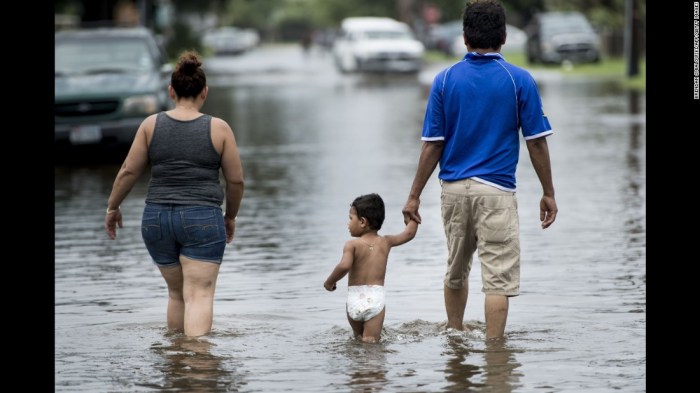
The storm has already affected about a quarter of the Texas population, or 6.8 million people in 18 counties. It’s been blamed for at least 8 deaths so far.

Thousands of people have evacuated to rooftops as rushing waters flooded streets and neighborhoods. Many roadways are only navigable by boat, and emergency services are so overtaxed that civilian volunteers have stepped up to help rescue stranded residents. By the time the weather system passes through, Houston could get as much as 50 inches of rain – the highest amount ever recorded in Texas.

U.S. Education Secretary Betsy DeVos was so overwhelmed by the news that she took to Twitter, saying, “Our prayers are with all those in the path of #HurricaneHarvey. @usedgov stands ready to assist impacted schools.”


thumbnail_Screenshot2017-08-28at8.57.04PM.jpg

To which noted liberal commentator Keith Olbermann responded, “The hurricane is going to do less damage to schools than you are, Motherfucker.”
thumbnail_Screenshot2017-08-28at8.57.15PM.jpg
And, if history is any guide, he may not be wrong.

In the aftermath of Katrina, New Orleans lost almost its entire public school system. About 90 percent of the city’s 126 schools were given to the Louisiana Recovery School District, which turned them all into charter schools.

For those uninitiated into the mysteries of corporate education reform, charter schools differ from traditional public schools because they are financed by tax dollars but privately operated. They often are controlled by appointed boards with little to no transparency, and are rife with opportunities for investors to profit through fraud and neglect – opportunities that just aren’t present at traditional districts.

So, in effect, Louisiana state officials elected by the white majority stole control from local school boards elected by the city’s black majority. More than 7,000 teachers most of whom were people of color and had been displaced by the hurricane found themselves replaced by mostly white teachers brought in from other parts of the country.

Now, more than 10 years later, the New Orleans experiment has been shown to be a failure. Scores on standardized tests have improved (kinda), but the curriculum has narrowed, teacher turnover has doubled, disadvantaged and special education students have even fewer resources while schools fight over high achieving children, students spend hours being bused to schools far from their homes, communities have been erased, and parents have less control over how their own tax dollars are spent.

This could be the future for the Houston Independent School District (HISD).

After all, Houston is where the infamous Knowledge is Power Program (KIPP) charter school network got its start.

KIPP is known for two things: draconian discipline and high attrition rates. Even those kids who do well there often don’t go on to graduate from college. Two thirds of KIPP students who passed the 8th grade still haven’t achieved a bachelor’s degree 10 years later.

Moreover, its methods aren’t reproducible elsewhere. The one time KIPP tried to take over an existing public school district and apply its approach without skimming the best and brightest off the top, it failed miserably – so much so that KIPP isn’t in the school turnaround business anymore.

Yet, the charter network, one of the largest such chains with 209 schools nationwide, has one of the best propaganda departments in the industry. They pass off inhumanity to children as “rigor” and gloss over inability to teach difficult students as “high standards.”


Will Texas lawmakers be swayed by powerful charter operators to use the current catastrophe as a business opportunity to gobble up the existing school system?

 
Perhaps. But there are some significant differences between Houston and New Orleans.

 
For instance, the students served by the New Orleans system a dozen years ago were almost all living below the poverty line. By contrast, Houston has high and low poverty areas. In fact, many neighborhoods cater to upper middle class children.

 
It’s doubtful that parents from more affluent neighborhoods would put up with losing local control and all that goes with it. Their political and economic power would probably stop any wholesale charterization of the district. That’s why KIPP schools – and in fact most charter schools – are nearly nonexistent in wealthy neighborhoods.

 
However, there are plenty of community schools serving high poverty populations suffering from systemic disinvestment and neglect that could be in danger of just such “reforms.” In fact, many of those are exactly the ones that have been worst hit by flooding and weather damage. At least 10 consistently struggling schools could find themselves targeted for the New Orleans treatment. The state and federal government could withhold relief funding on the condition these schools give up their elected school boards and embrace the kind of Wild West, laissez-faire, free market deregulation that charter schools bring.

 
The Republican controlled state legislature already has a law on the books to swipe local control from struggling districts and turn them into charters. It’s a blatant threat to takeover entire districts like HISD if certain schools within the district don’t improve standardized test scores and other measures favored by corporate education reformers.


Hurricane damage could become a pretext to empowering state lawmakers to expedite this process. Perhaps they might even ask local school boards to give up control of their struggling schools in exchange for leaving alone the more affluent white schools.

I had the pleasure of visiting Houston a year ago for the United Opt Out Education and Civil Rights Summit. There I met with parents, students, concerned community members and representatives of the local teachers union – the Houston Federation of Teachers.

They helped me understand that Texas has a unique perspective on school choice.

For instance, they aren’t generally too fond of school vouchers.

This session a Tea Party favored voucher initiative was squashed by more moderate Republicans. In fact, in Texas even religious leaders don’t like vouchers. This is surprising because the program usually allows tax dollars to be used at private or parochial schools. An organization, Pastors for Texas Children, has been particularly vocal about supporting public education over BOTH vouchers and charters.

However, this is the land of former Gov. George W. Bush, one of the biggest charter cheerleaders in the country. His party broadly supports charter schools, yet the Texas legislature has struggled to increase them.

Last year, Gov. Greg Abbott and Lieutenant Gov. Dan Patrick made a big push to increase charter schools across the state. In an unusual move, state House Speaker Joe Straus refused to bring the bill to the floor for a vote. Straus held the issue hostage because he couldn’t get support for a new school funding formula.

It should be noted that all of these players are Republicans. Democrats are a minority with the ability to impact policy almost not at all.

DeVos and the Trump administration are unquestionably supportive of voucher and charter school expansion.

It’s still too early to tell if the state and/or federal government will take a page from the Shock Doctrine playbook and use Harvey as a distraction to embolden their agenda.

One can only hope that voters have learned the lessons from Katrina and Louisiana.

Otherwise, over time a manmade disaster could once again eclipse the damage done by a natural one.


Special Thanks to Zakary Rodriguez for help navigating the Texas education scene.

Study: Closing Schools Doesn’t Increase Test Scores

*Jan 26 - 00:05*


You might be tempted to file this under ‘No Shit, Sherlock.’

But a new study found that closing schools where students achieve low test scores doesn’t end up helping them learn. Moreover, such closures disproportionately affect students of color.

What’s surprising, however, is who conducted the study – corporate education reform cheerleaders, the Center for Research on EDucation Outcomes (CREDO).

Like their 2013 study that found little evidence charter schools outperform traditional public schools, this year’s research found little evidence for another key plank in the school privatization platform.

These are the same folks who have suggested for at least a decade that THE solution to low test scores was to simply close struggling public schools, replace them with charter schools and voilà.

But now their own research says “no voilà.” Not to the charter part. Not to the school closing part. Not to any single part of their own backward agenda.

Stanford-based CREDO is funded by the Hoover Institution, the Walton Foundation and testing giant Pearson, among others. They have close ties to the KIPP charter school network and privatization propaganda organizations like the Center for Education Reform.

If THEY can’t find evidence to support these policies, no one can!

After funding one of the largest studies of school closures ever conducted, looking at data from 26 states from 2003 to 2013, they could find zero support that closing struggling schools increases student test scores.

The best they could do was find no evidence that it hurt.

But this is because they defined student achievement solely by raw standardized scores. No other measure – not student grades, not graduation rates, attendance, support networks, community involvement, not even improvement on those same assessments – nothing else was even considered.

Perhaps this is due to the plethora of studies showing that school closures negatively impact students in these ways. Closing schools crushes the entire community economically and socially. It affects students well beyond academic achievement.

The CREDO study did, however, find that where displaced students enrolled after their original school was closed made a difference.

If Sally moves to School B after School A is closed, her success is significantly affected by the quality of her new educational institution. Students who moved to schools that suffered from the same structural deficiencies and chronic underfunding as did their original alma mater, did not improve. But students who moved to schools that were overflowing with resources, smaller class sizes, etc. did better. However, the latter rarely happened. Displaced students almost always ended up at schools that were just about as neglected as their original institution.

Even in the fleeting instances where students traded up, researchers noted that the difference between School A and B had to be massive for students to experience positive results.

Does that mean school closures can be a constructive  reform strategy?

No. It only supports the obvious fact that increasing resources and providing equitable funding can help improve student achievement. It doesn’t justify killing struggling schools. It justifies saving them.

Another finding of the CREDO study was the racial component of school closings.

Schools with higher populations of blacks and Hispanics were more likely to be shuttered than institutions serving mostly white students. In addition, schools with higher poverty populations were also more likely to be closed than those serving middle class or rich children.

Yet you really don’t need an academic study to know that. All you have to do is read the news. Read about the closings in Chicago, New Orleans, Detroit – really any major metropolitan area.

The fact that CREDO admits it, only adds credence to arguments by critics like myself.

It is no accident that poor black schools get closed more than rich white ones. Poor students of color are targeted for this exact treatment.

Corporate education reform is not just bad policy; it is racist and classist as well.

Greg Richmond, President of the National Association of Charter School Authorizers, was shocked by these findings.

“We are especially troubled by the report’s observation of different school closure patterns based on race, ethnicity, and poverty,” he said in a statement. “These differences were present among both charter schools and traditional public schools and serve as a wake-up call to examine our practices to ensure all schools and students are being treated equitably.”

But his industry benefits from these practices. Just as CREDO’s backers do.

Never has our country been less prepared to deal with the real problems besieging it. But if the time ever comes when sanity returns, we cannot simply go back to familiar habits.

School closures and charter school proliferation are bad no matter who proposes it – Republicans or Democrats.

Regardless of who sits in the Oval Office, regardless of who represents us in federal, state and local government, we have to make sure they do the right things for our children.

That means learning from our mistakes. Beyond partisanship. Beyond economics.

It’s the only way to build a better world.

CREDO’s study just adds fuel to the fire surrounding the regressive education policies of the last decade.

If we’re ever in the position to hold a match, will we have the courage to strike it?

Who is Responsible for Student Achievement?

achievementseries


Billy is an average middle school student.


He sits down and takes a test.


The grade comes back.


Who is responsible for that grade?


This should be the dumbest question you can ask in the field of education.


The answer should be obvious.


Billy is responsible.


Billy did the work, he took the test, he earned the grade.


But all across this great country of ours we’re giving the wrong answer.


We’re saying teachers are responsible for that grade.


This is ridiculous. Teachers could not do the work for the student. Teachers could not take the test for the student. How can you possibly assume the teacher is responsible for the grade?


In fact, if the teacher really were responsible – if she did all the work and took the test – how could you rationally say this grade belonged to the student? No, it wouldn’t be Billy’s, it would be his teacher’s.


The truth goes something like this: You are responsible only for things within your control. The greater your degree of control, the greater your degree of responsibility.


This is not complicated.


It is simple logic. Cause and effect.


But ignoring it is perhaps the most virulent, incorrigible, fact-resistant mistake in the entire field of public education.


Lawmakers are getting it wrong. The media is getting it wrong. Superintendents, principals – even teachers are getting it wrong.


And the reason is somewhat pernicious.


We’ve been sold a lie.


We’ve been told for so long that educators are responsible for their students’ work that we’ve begun to accept it without question.


Just today at a training in my district, I was shown a spreadsheet of student test scores and told in no uncertain terms that this was something I have control over.


I DON’T.


I don’t have control over the raw scores. I don’t even have control over how much a student improves from one year to another.


The student does.


HE controls how hard he works on assignments. HE exhibits the most control over the results of his assessments.


This doesn’t mean I’m completely helpless.


I do have control over certain aspects of students’ academic experience.


I control what work is assigned, when it is assigned and to whom.


I control whether there is extra credit, what counts as homework, who gets extra help, etc.


In many cases, I even get to decide whether students have completed their work and if assessments have been completed successfully.


As long as I am exhibiting best practices, giving age-appropriate work and evaluating it fairly, I’m doing my part.


It is not then justified to assume I am solely responsible for the end result.


I raise the hurdles, but the student actually goes through the obstacle course.


The teacher is a factor, but not the largest one. That is the student, Billy.


Yet he is not alone here. Besides, me, his teacher, there is also the principal, the student’s parents, his friends and even society as a whole.


All of these and more contribute to student success.


The principal controls school policy. He determines what discipline the student receives, the clarity of school rules, etc.


Likewise, students’ friends are part of their social network. They can help with homework, form a study group, or distract from school work, denigrate work ethic, etc.


Society also plays a role. If a student is part of a community that values education and work ethic, that student will more likely put forth more effort. If the student lives in a community where school is seen as unimportant and teachers are not respected, that will have a negative impact, etc.


And the number one factor other than the student, himself, that contributes to his success is parents. They control home life, emotional support, tutoring, nutrition, etc.


All of these complex factors combine to add up to an individual student’s success. However, at the end of the day, it is the student, himself, that bears the brunt of the responsibility for what he does.


That’s why we call it HIS grade and not someone else’s.


This is the most obvious thing in the world, but it has certain consequences for education policy.


For instance, it immediately invalidates the majority of teacher evaluations given throughout the country. The reason? Most evaluations are based at least in part on student test scores.


As we’ve seen, this misrepresents the student-teacher relationship. It blames the teacher for things well beyond his or her control.


It turns students into passive objects acted on by magical super teachers who can somehow make them learn simply by – what – endless repetition of test prep materials?


Why would students put forth their best in this scenario? If they’re failing, it’s somehow not their fault. It’s their teachers!


But even worse than this misrepresentation, it completely ignores a plethora of vital factors in the education process.


Parents, for instance, are crucially important, but we’re leaving them completely out of the loop.


When parents struggle to fulfill their responsibilities, why is there little to no help? The answer: because we’ve hidden the fact that such responsibilities even exist. We’ve thrown it all on the teacher and the school.


All these out-of-school factors are obscured, yet taken together they are almost determinate. After all, this is why poor and minority students disproportionately struggle academically.


You can demand every student jump six feet straight up, but those with the best resources will meet this goal much more frequently than those without.


And who is in control of those resources? Who decides which children get the smallest class sizes, the best home environments, the most conducive social networks, etc.?


The myth of teacher accountability is what stops such resources from being sent.


We’re told all you need is a good teacher.


But this is not true.


You need much more.


The ultimate responsibility may rest with the student, but until we all realize and acknowledge our collective responsibilities to all students, success will always be out of reach for far too many of them.


Billy may take the test, but it is society that is failing to meet its responsibilities.

Surprised by Charlottesville? You Haven’t Been Paying Attention

 Charlottesville-neo-Nazis-alt-right


America is a funny place.


On the one hand, we’re one of the first modern Democracies, a product of Enlightenment thinking and unabashed pluralism and cultural diversity.


On the other, we’ve built our entire society on a cast system that is the basis of our economics, politics and cultural mores.


We’re the land of Benjamin Franklin, the Wright brothers, Duke Ellington, Toni Morrison, and Sandra Day O’Connor.


But we’re also the land of Andrew Jackson, Jefferson Davis, Charles Lindberg, Bull Connor, and David Duke.


Tolerance and love are as American as apple pie. But so are racism, sexism, prejudice and anti-Semitism.


“It is not as though the United States is the land of opportunity, or a hypocritical racist state,” says sociologist John Skrentny. “It is one or both, depending on context.”


So this week when people saw Nazis marching openly in Charlottesville, Virginia, the only thing that was really so surprising about it was how surprised so many people seem to be.


“That’s not my America!” they seem to be saying.


To which I reply, “Hell, yes, it is! Where have you been the last 241 years!?”


We base our salary scales on genitalia! You think we’re really so freaking advanced!?


The shade of your epidermis determines the likelihood of police arresting you, charging you, even killing you regardless of your having a weapon, whether you resist arrest or simply lay on the ground with your hands in the air.


Regardless of the evidence, if you’re convicted, the length and severity of the sentence are all partially determined by the amount of melanin in your skin. The cultural derivation of the name on your resume determines the likelihood of employers calling you back for an interview. In many places, your rights are legislated based on whom you love.


Our schools are segregated. Our taxes are levied most heavily on those with the least means to pay. Our prisons house more black people today than did slave plantations in the 1860s.


Yet a bunch of white dudes carrying Tiki torches shouting hate filled puns (“Jew will not replace us”? Seriously?) somehow doesn’t compute?


Come on.


This is America.


Racism and prejudice are not threats smuggled in past border security. They’ve always been here. At least since Europeans came offering trade and peace with one hand and guns and smallpox with the other.


The land of the free was stolen from the Native Americans. Our national wealth was built on the backs of slaves. Our laws and electoral system were built to empower one group at the expense of others.


Yet reformations in this process are rarely met with celebration. Instead of memorializing the end of slavery, we embrace the institution with fond remembrance.


Nor did prejudice and bigotry end when Rosa Parks refused to give up her seat, after Brown vs. Board, the Voting Rights Act, Freedom Rides, sit-ins or civil rights protests.


America has always been a place hostile to the under privileged, the second sex, religious dissenters, the brown skinned.


At most, we had become less confrontational in recent years, but we never really changed our core values, our social structures, who has power and who does not.


During my lifetime, people started to equate having a black President with the end of racism. Somehow they ignored the everyday reality for most black people.


They ignored the constant prejudice against the poor, the continued bigotry against LGBTs, the Islamophobia, the increase in hate crimes.


If there has been any change during the past eight months, it hasn’t been with the degree to which Americans are prejudiced. It’s the degree with which we’re willing to hide it.


Whereas before racists would claim to be colorblind, that their actions were completely devoid of racial bias, today they sigh and repeat the dusty slogans of Jim Crow Alabama or 1930s Berlin.


And somehow people are actually surprised about this.


It’s because too many of us have swallowed the lies about living in a post-racial society.


You thought we were beyond all that. It was a brave new world, morning in America, and we were finally treating everyone equally – unless you looked at what we were actually doing.


Mainly this is the reaction you get from white people. They rub their eyes and just can’t believe it.


You don’t see this too often from people of color, Muslims, LGBTs and some Jews. Why? Because they never had the luxury to ignore it.


That’s what we white folks have been doing since the beginning.


Whenever these issues come up, we have a knee jerk reaction to minimize it.


Things aren’t that bad. You’re just blowing it out of proportion.


But, no. I’m not.


That’s why you’re so damn shocked, son.


You haven’t been looking reality square in the face.


So when we’ve got undeniable video footage of angry white males (mostly) marching through Southern streets brandishing swastikas and assault rifles, it catches many white folks off guard.


They’re not prepared for it – because they haven’t been doing their homework.


We’ve been living in a bubble. Especially those living in major metropolitan areas.


That kind of thing never happens around here, right?


Of course it does!


Just because you live above the Mason Dixon Line doesn’t mean you’re safe.


You have a black friend, you like authentic Mexican food and you laugh while watching “Modern Family.”


But you haven’t opened your eyes to the reality outside your door.


You send your kids to private school or live in a mostly upper class white district. You have an exclusive gym membership that keeps out the riff-raff. You work in an office where that one token person of color makes you feel sophisticated and open-minded.


You’ve got to wake up.


You’ve got to educate yourself about race and class in America.


Because those people you saw in Charlottesville aren’t an anomaly.


They are an authentic part of this country, and if you don’t like it, you have to do something about it.


You can’t hide behind denial.


You have to take a stand, pick a side, and be counted.


Because one day soon, the torches will be outside your door.


You have to decide now – do you want to brandish or extinguish them?

Pennsylvania Proposes Smaller Tests, Same High Stakes

Screen Shot 2017-08-14 at 4.04.51 PM


It’s not the size of the tests, it’s how you use them.


And that’s kind of the problem with Gov. Tom Wolf’s new proposal for Pennsylvania public schools.


Wolf wants to reduce the amount of time students are taking standardized tests, but he seems to have little problem using those tests to hold schools accountable for all kinds of things that are beyond their control.


The proposal released today applies only to the Pennsylvania System of School Assessment (PSSA) tests – those taken by students in grades 3-8. Keystone Exams taken by high school students are unaffected.


It would cut one of three reading sections and one of three math sections – two total. Wolf also wants to cut some questions from one of the science sections.


Such a move is estimated to eliminate 48 minutes from the math test, 45 minutes from the reading test and 22 minutes from the science test. However, judging from my own students, these times vary considerably depending on the individual taking the tests. I’ve had 8th grade students finish a PSSA section in as little as 5 minutes or as much as two hours.


Most schools give either a section a day or two in one day. Therefore, this proposal probably translates to 1 to 2 fewer days testing in most districts.


Um. Thanks?


Look I don’t want to seem ungrateful here, but these suggested modifications are little more than fiddling around the edges of a massive problem.


Yes, it will be helpful to reduce testing times, but this does very little to address the fundamental problems with test-based accountability in the Commonwealth.


At best, this proposal will allow students to spend two more days a year learning. Assuming most districts don’t use that extra time for test prep, that IS a good thing.


But tacitly committing students throughout the state to taking these tests almost guarantees that test prep is exactly how these additional days will be used.


The problem with standardized testing isn’t just the number of raw days it takes students to complete the tests. It is how the tests deform the entire year-long curriculum. Students don’t just learn anymore. They learn what’s on the test – and anything else is purely optional.


Regardless of the size of the assessments, they are still being used to sort and judge students, teachers and schools. Shortening their length does nothing to address the fundamental unfairness of the evaluations. Rich white kids still tend to have high scores and poor minority kids still tend to have low ones.


At best, they reveal structural funding disparities between poor and wealthy districts. At worst, the cultural bias inherent in the questions favor those from dominant, privileged ethnicities while punishing those who don’t fit the standard.


That’s what “standardized test” means after all – defining normal and punishing those who don’t fit the definition. Most questions don’t assess universals like the value of 2 and 2. They evaluate cultural and social norms required to understand the questions and easily find an answer that another “normal” student would choose. (Don’t believe me? Watch “Black Jeopardy” on Saturday Night Live.)


This is true whether the test takes one day or 100 days.


We should not be using standardized testing to meet federal accountability standards. Period.


The federal Every Student Succeeds Act (ESSA) contains provisions to circumvent them. States are supposed to be given leeway about testing. They may even be able to replace them with projects or other non-standardized assessments. THAT’S what Wolf and the Pennsylvania Department of Education should be exploring – not half measures.


To be fair, the state Department of Education is attempting reform based on the ESSA. This year, the department introduced Future Ready PA, a new way of using test scores and other measures to assess school success. To its credit, The Index does place additional emphasis on academic growth, evaluation of school climate, attendance, graduation rates, etc. However, for my money it still gives far too much importance to standardized testing and test prep.


Like reducing the size of the PSSAs, it’s a positive step but won’t do much to get us to our destination.


Neither measure will have much impact on the day-to-day operations of our public schools. Districts will still be pressured to emphasize test prep, test taking strategies, approaches to answering multiple choice questions, etc. Meanwhile, critical thinking, problem solving, and creativity will still be pushed to the side.


Moreover, since schools and teachers will be assessed as successful or not based largely on these test scores, districts will be under tremendous pressure to give countless practice tests throughout the year to gauge how well students are prepared for the PSSAs. The state will still be providing and encouraging the optional Classroom Diagnostics Tools (CDT) tests be taken several times in reading and math throughout the year. Trimming off two days from the PSSA will affect that not at all.


In addition, today’s proposal only applies to the PSSA. While that assessment is important, the Keystone Exams given to high school students are even more so. According to existing state law, passing the Keystones in Algebra I, Literature and Biology are required in order to qualify for a diploma. However, that condition has yet to go live. So far the legislature has continuously pushed back the date when passing scores become graduation requirements. The Governor and Department of Education should be proposing the elimination of this prerequisite before anything else. Other than education funding and perhaps charter school accountability, it is the most important education issue before Commonwealth lawmakers today.


Don’t get me wrong. The Democratic Governor is somewhat hamstrung by the Republican-controlled legislature. Partisan politics has stopped lawmakers from accepting Wolf’s more progressive education measures.


Though Wolf has gotten Republicans to increase education funding by hundreds of millions of dollars during his term, K-12 schools still receive less than they did before the previous GOP governor’s administration. Moreover, there have been absolutely zero inflationary increases to keep up with the rising cost of doing business. Pennsylvania schools receive less funding – whether you adjust for inflation or not – than they should, and that has a real world impact on our public schools. Moreover, how that money has been allocated by the legislature still – even with our new better funding formula in place – benefits wealthy districts more than poor ones.


If you want to talk about accountability, that’s where the majority of the issue belongs.


And primarily it’s out of Wolf’s hands. One can understand why he is proposing changes where he can and trying to do whatever good is possible given the political climate.


Shortening the PSSA tests would benefit our students. It is a step in a positive direction.


However, it is far from solving our many education problems.


The biggest roadblock to authentic school reform is a legislature that refuses to do anything but the absolute minimum for our neediest students.

Pity the Corporate School Reformers

bigstock-baby-crying-in-the-crib-80871221


It’s gotta’ be tough to be a corporate school reformer these days.


Betsy DeVos is Education Secretary. Donald Trump is President. Their entire Koch Brothers-funded, ALEC-written agenda is national policy.


But their stripes are showing – big time.


The NAACP has turned against their school privatization schemes. The Journey for Justice Alliance is having none of it. The Movement for Black Lives is skeptical. Even their trusty neoliberal Democratic allies are seeking to put some distance between them.


And it’s making them look… sad.


You’d think they’d have much to celebrate. Their policies are right up there with voter disenfranchisement, the Muslim ban and building a wall.


Charter schools – YES! Voucher schools – YES! Public schools – NO.


High stakes testing is going gangbusters pushed by the federal government with little interference from the states.


Common Core is in almost every school while the most state legislatures do about it is consider giving it a name change.


And in every district serving students of color and the poor, budgets are being slashed to pieces to make room for another juicy tax cut for the rich.


They’ve taken George W. Bush’s education vision – which neoliberal Barack Obama increased – and somehow found a way to double-triple down on it!


They should be dancing in the streets. But somehow they just don’t feel like dancing.


What’s wrong, Michelle Rhee and Campbell Brown? Is that a tear I see in Peter Cunningham’s eye?


Perhaps they’ve seen the error of their ways. Maybe after all this time, they’ve finally realized all children deserve a robust, authentic education, not just the market-driven chance of – maybe – a quality education.


But no.


It’s not that.


It’s the way the Trump administration is going about it.


You see, he’s being – gulp – honest.


He’s actually saying what he means. He’s throwing back the curtain exposing all the racist, classist, capitalist motivations behind corporate education reform.


Even when he lies – which is often – he’s no good at it. His real motives are plain as the weave on his head.


Under Obama, they could do almost the same things, but at least Barack would apologize for it. He’d clothe it in the language of civil rights and make it sound all noble. He’d excuse systemic inequality as the deserved results of competition.


But Trump!? He’s championing all their favorite causes while tweeting skepticism about the very concept of civil rights, ignoring poverty as fake news and just making an all out ass of himself and everyone with whom he associates.


That’s YOU, corporate education reformers.


That’s you. And you’re being forced to own it.


I almost pity you.


What a dark world you must inhabit. To take these sinister schemes that brutalize children and actually believe in them!


Take charter schools.


Imagine sincerely believing that poor black kids deserve to go to schools that aren’t controlled by school boards but instead by unelected bureaucrats. Imagine thinking the color of your skin should determine whether you have a say in your child’s education. White folks get to elect the people running their schools, but not black folks. And you know what, it’s for their own good, say the reformers!


Imagine thinking that the amount of melanin in your skin should determine whether your schools are transparent or not – whether they’re required to have open records, open meetings, even whether they have to follow the same safety protocols and regulations as traditional public schools!


WHITE SCHOOLS – not for profit, spend the budget all on the students. BLACK SCHOOLS – CA-CHING! CA-CHING!


And when it comes to voucher schools, imagine selling a tax cut to a wealthy family as if it somehow benefited poor folks. Letting the Walton’s pocket a few thousand from their kids exclusive private school tuition doesn’t help Ma and Pa Six Pack. Nor does offering a discount to the kind of parochial schools that brainwash kids into thinking that evolution is evil, climate change is a Chinese conspiracy, and slavery was just God’s will.


It’s the difference between trying to sell a glossy fraud like KIPP’s charter school network and an obvious one like the President’s Trump University.


But now everyone sees they’re essentially the same.


No wonder these faux reformers look so down.


Imagine pushing standardized tests as if they were a technological breakthrough. They’ve been around since at least China’s Han Dynasty (206 BC – 220 AD). If that’s cutting edge, I think you’ll like my new APP. It’s called The Wheel!


In America, standardized tests have been around since the 1910s where they were a leading feature of the eugenicist movement. They were a tool to “prove” the racial imperfection of black and brown people and the superiority of whites. Imagine demanding something like that as a civil right!


I couldn’t do it with a straight face. But they did!


And it worked! For a little while.


Now their whole pyramid scheme is just too damn clear. Make the kids take unfair, biased tests that will show how few resources poor black kids get and then use that as a justification for giving them fewer resources, closing their schools and privatizing them. No one’s even tried a scam that blatant since Bernie Madoff went to prison!


What do they have to gain by all this? Money.


Standardized testing is a multi-billion dollar industry. School privatization is a multi-billion dollar industry. If you can find a way to suck up federal, state and local tax dollars meant to educate children and divert that into your private bank account, well you’ve just struck it rich!


Racism pays, folks! Prejudice pays! Because the majority doesn’t mind so much when you take advantage of the underprivileged. That’s why they’re underprivileged in the first place!


And when people like me speak out against them, the best they can do are Ad hominem attacks – you’re too white to question policy affecting black people, or your friends are black but (somehow) not black enough. Today I actually read a response to an article I wrote that came down to these insightful criticisms – Nu-uh! And How dare you! Which we can add to their response to criticisms that charter schools increase segregation – I know you are but what am I?


The folks at the Education Post, a propaganda network passing off most of this nonsense as if it were legitimate news and funded by $12 million from the Broads, the Waltons and other usual suspects, they must really be desperate.


They’ve sold their souls to the Devil and may not even get a good return on the investment.


You see, they’re betting that by the time the Trump zeppelin explodes, their policies will be irreversible.


The problem is that he’s been extremely ineffective. He’s pushing their agenda, but isn’t getting much done.


And with multiple new scandals everyday and increasing calls for impeachment, time is running out.


It’s enough to stoke pity in the hardest of hearts.


Sure these folks have sold out our children for thirty pieces of silver, but they’re still people, after all.


They deserve our empathy, kindness, pity.


Well almost.