McKeesport Area School District (MASD) put the needs of students first this week when it postponed the Varsity and Junior Varsity Boys Basketball game because too many district players were ineligible.
Student-athletes are required to earn a passing grade in at least 4 different classes, not counting gym, in order to qualify at the western Pennsylvania school district.
The game with South Allegheny School District was initially cancelled but may end up just being postponed.
Throughout the years, US courts have upheld the idea that participation in athletics is a privilege – not a right. So school districts and athletics administrators can suspend or bar athletes from competing on teams for all kinds of reasons including not meeting academic standards.
This may come as a surprise to some folks, but sports and other extracurricular activities are not the primary purpose of school curriculum. Education is.
We need the next generation to be able to read, write and do math – not just dribble a ball. We need teenagers who comprehend and value science so they aren’t ready-made patsies to whatever charlatans come along – not just musclebound and flexible. We need good citizens who can evaluate political ideologies and come to logical conclusions – not just make touchdowns. We need people who remember the mistakes of history and can evaluate the claims of media and advertisers – not just the ability to score points.
That’s why most secondary schools and colleges require student-athletes to maintain a certain grade point average to participate – although the exact academic standard often varies by school district and on individual campuses.
If high schoolers want to play in college, they have to keep their grades up, too.
The NCAA requires a minimum grade point average and successful completion of core courses in order for athletes to participate in college sports.
Moreover, coaches usually recruit players with good grades because they want players who can handle college coursework. Someone who can dominate on the court is no good if he’s constantly on the bench. They want student-athletes who care about keeping scholarships and not being placed on academic probation.
Unfortunately, there are many unscrupulous individuals who try to circumvent the rules to boost athletic victories and sports revenues.
In our own school days, we all knew student-athletes who were failing classes but either secretly kept on the team or given special tutoring or other amenities to keep them eligible.
I remember I took a speech course back in college with a famous football star who was certainly not head of the class. He could barely read the assignments.
A 2014 CNN investigation found a massive achievement gap between college athletes and their peers at public universities across the country. Many students in the basketball and football programs could read only up to an eighth-grade level.
For example, at UNC-Chapel Hill, 60% of athletes who played football or basketball from 2004 to 2012 read between fourth- and eighth-grade levels. Between 8% and 10% read below a third-grade level.
In fact, in 2012 a North Carolina grand jury indicted a UNC professor for being paid $12,000 for a class he didn’t teach. Students at the university – many of them athletes – were given grades for classes they didn’t attend. They were only required to turn in a single paper.
So it is with great pride that I report the actions of MASD today.
The district has upheld its academic integrity and given students more incentive to put as much effort into their school work as their work on the playing field.
I just hope such a philosophy is widespread across the district and doesn’t only apply to varsity boys basketball.
Like this post? You might want to consider becoming a Patreon subscriber. This helps me continue to keep the blog going and get on with this difficult and challenging work.
We’re the disciplinarians – especially of male students.
We’re consistently given more students with perceived behavioral issues, with more histories of suspensions, and we’re given less administrative support than female teachers.
Male teachers are not seen as teachers first and foremost. We’re the enforcers of school rules. And it’s driving so many of us from the field or discouraging even more from entering it in the first place.
Consider this: teaching is a female dominated field.
According to the National Center for Education statistics, 77% of public school teachers were female and 23 percent were male in 2020–21 – the most recent year for which there is data.
It’s worse at the elementary school level where only about one in ten teachers (11 percent) are male. However, things are not much better at the secondary level where less than 4 out of 10 teachers (36 percent) are male.
And these statistics have remained roughly the same for at least a decade.
Even expectations for male teachers’ own behaviors are different. While female teachers can be expected to have a variety of personas, men are expected to be strict, rule followers who will not let students get away with anything – and any deviation from this expectation can result in negative evaluations and lower administrative reviews.
When a classroom teacher sends a student to the office after numerous redirections and finds that the student is sent back almost immediately with only a warning, it can be incredibly demoralizing. As if the classroom teacher is incapable of a warning, himself!? Numerous steps have already been taken to correct the behavior before it was sent to the next step for higher order discipline of which the classroom teacher does not have the authority to conduct. When such support is lacking, the classroom teacher feels helpless and alone.
Corinne Moss-Racusin, an associate professor of psychology at Skidmore College and lead researcher, said:
“There’s no evidence that men are biologically incapable of doing this work or that men and women are naturally oriented toward different careers. It’s a detriment to society if we keep slotting people into gendered roles and stay the course on gender-segregated career paths, regardless of whether those jobs are traditionally associated with women or men. That’s a powerful way of reinforcing the traditional gender status quo.”
In closing, I must admit this was a hard article for me to write.
Like this post? You might want to consider becoming a Patreon subscriber. This helps me continue to keep the blog going and get on with this difficult and challenging work.
Players from Steel Valley School District contend that during a November playoff game at their home field, rivals South Side Area School District called them the N-word and “monkeys” as well as purposefully incapacitated their star player.
WPIAL Executive Director Amy Scheuneman said her organization is refusing to take sides and students, coaches and administrators for both districts will have to undergo racial sensitivity training.
It is absurd. Imagine making a gunman and the person he shot go through firearms training.
Talk about false equivalency!
“We don’t want to walk away saying you’re right and you’re wrong, but we need to learn from this,” Scheuneman said. “We need to all work together to make that happen.”
Calls for unity are great but justice needs to come first. It’s nearly impossible for everyone to just get along when you don’t hold wrongdoers accountable for their actions – especially when the victims are mostly black and the perpetrators are mostly white.
Though Steel Valley went on to win the game, their star senior running back and linebacker Nijhay Burt suffered a season ending ankle injury which his family alleges was caused by South Side Players on purpose.
Burt’s mother Shunta Parms says, “…The two players that tackled him, they were pushing off his ankle. They were twisting it as they got up. After they got up they cheered in his face and said ‘Yeah! We got you now!’”
WPIAL board of directors and Diversity and Inclusion Council heard testimony for more than four hours on Wednesday.
The meeting was closed to the public at the request of the South Side District from Beaver County, and WPIAL officials have refused to give specific details of what was said behind closed doors.
However, Scheuneman was adamant that the board did not find any evidence the official used racial taunts.
“…The board did not find that to be accurate,” Scheuneman said.
I would love to know what evidence there was to so unequivocally clear the referee.
Especially since she noted the other allegations came down to a matter of he said-she said.
There were “conflicting reports” about what happened and “direct testimony against” the claims of Burt and the Steel Valley School District, Scheuneman said.
“Based on what we heard, I would say that, while there may be tendencies to lean one way or another, it was inconclusive, specifically, one way, as opposed to another.”
Ma’am, isn’t it your job to lean one way or another?
You need to be impartial at first but then you listen to the evidence and decide who was at fault.
Either South Side Beaver players used hate speech against Steel Valley players or not. Either they intentionally injured Steel Valley’s star player or not.
And if they did not, that means Steel Valley players made the whole thing up.
Do you really find that possibility credible?
“There was testimony on both sides, and there were missed opportunities by adults from both schools, so we do feel that it’s important for everybody to learn from the events that happened and take something positive from it,” Scheuneman said.
And Steel Valley’s coach did not report his player’s accusations to the head referee.
Therefore, they’re both to blame!?
What the heck are you smoking!?
Steel Valley Superintendent Ed Wehrer issued a statement that shed some light on the previous incident at South Side Beaver:
“The testimony by South Side Area confirmed that a month prior to the playoff game at issue a member of their team had behaved the same way in a game against Carlynton High School, as witnessed by the Athletic Director at Carlynton. Combined with our statements, that admission established a pattern of racist behavior by our opponent, which should have reinforced the trustworthiness of our complaint.”
The only specific mention of wrongdoing on Steel Valley’s part is neglecting to alert the head referee. But the district’s actions make perfect sense in context. Why would the district go to the referees after allegations that one of them was also guilty of making racial taunts!? Isn’t it logical that Steel Valley and Burt waited to file a report against the Beaver County District!?
South Side Beaver district is 96% white. There are so few black students, 2019 Census data puts the number at 0%.
Meanwhile, Steel Valley is 72% white and 23% black with a higher percentage of children of color on the football team than in the district as a whole.
Are you telling me it’s likely that a mostly black team who is already crushing their rivals (they won 20-12) would make up being the target of racism? Are you saying Burt would make up how his leg was manhandled by the opposing team?
And then we have the issue of socioeconomics.
South Side Beaver is a wealthier district than Steel Valley.
Median household income at the South Side district is $69,905. At Steel Valley it’s $42,661.
At the South Side, 7.7% of residents live below the poverty line. At Steel Valley it’s 17.4%.
These make a difference.
More privileged students are way more likely to think they deserve to win just because of who they are. Underprivileged kids have to work for everything they have.
And officials are way more likely to ignore poorer black kids in favor of richer white ones.
Scheuneman said, “Regardless if one side was more wrong than the other, it takes both parties to mend that bridge and get through anything. So we want those schools to work together in moving forward in cultural competency.”
This is a bad idea.
It won’t do anything to stem the increasing tide of racism from whiter, wealthier districts directed at poorer blacker ones.
These sorts of trainings are not in themselves enough to stop hate speech.
It’s true that having South Side Beaver and Steel Valley go through racial sensitivity training won’t hurt anyone.
Steel Valley students won’t suffer being forced to undergo this measure.
But the fact that they HAVE TO do this will underscore the injustice of the systems they have to live under.
They were the victims, and they got the same punishment as the oppressor.
And at South Side Beaver we can HOPE the training will do some good.
But let’s be honest – this sort of thing is only effective when those attending the training are receptive to its message.
The fact that South Side got away with this will poison everything being taught.
WPIAL is supposed to be about fair play.
They got it really wrong here.
If anyone needs this training, it’s them.
Steel Valley’s Statement:
Like this post? You might want to consider becoming a Patreon subscriber. This helps me continue to keep the blog going and get on with this difficult and challenging work.
According to the American Counseling Association, this is sometimes called the “cost of caring” and can result from “hearing [people’s] trauma stories and becom[ing] witnesses to the pain, fear, and terror that trauma survivors have endured.”
The brain emits a fear response releasing cortisol and adrenaline which, in turn, increases heart rate, blood pressure, and respiration, followed by a rush of emotions.
The biological response can display itself in mental symptoms such as anger, headaches, or even physical ones like missing staff meetings, lateness to work or avoiding certain students or situations.
“Being a teacher is a stressful enough job, but teachers are now responsible for a lot more things than just providing education,” says LeAnn Keck, a manager at Trauma Smart, an organization that helps children and adults navigate trauma.
“It seems like teachers have in some ways become case workers. They get to know about their students’ lives and the needs of their families, and with that can come secondary trauma.”
This is an aspect of the job for which most teachers are unprepared.
According to a 2020 survey by the New York Life Foundation and American Federation of Teachers, only 15% of teachers felt comfortable addressing grief or trauma.
When I first entered the field two decades ago, I was taught how to design lessons, sequence curriculum, manage classes, calculate grades, etc. Never once did anyone mention that I would be standing between a hurting child and a world he is desperately trying to lash out against.
Most teachers aren’t taught how to help students who have experienced trauma. Nor are we taught how to handle the toll it takes on our own health and personal lives.
And unfortunately things are getting much worse.
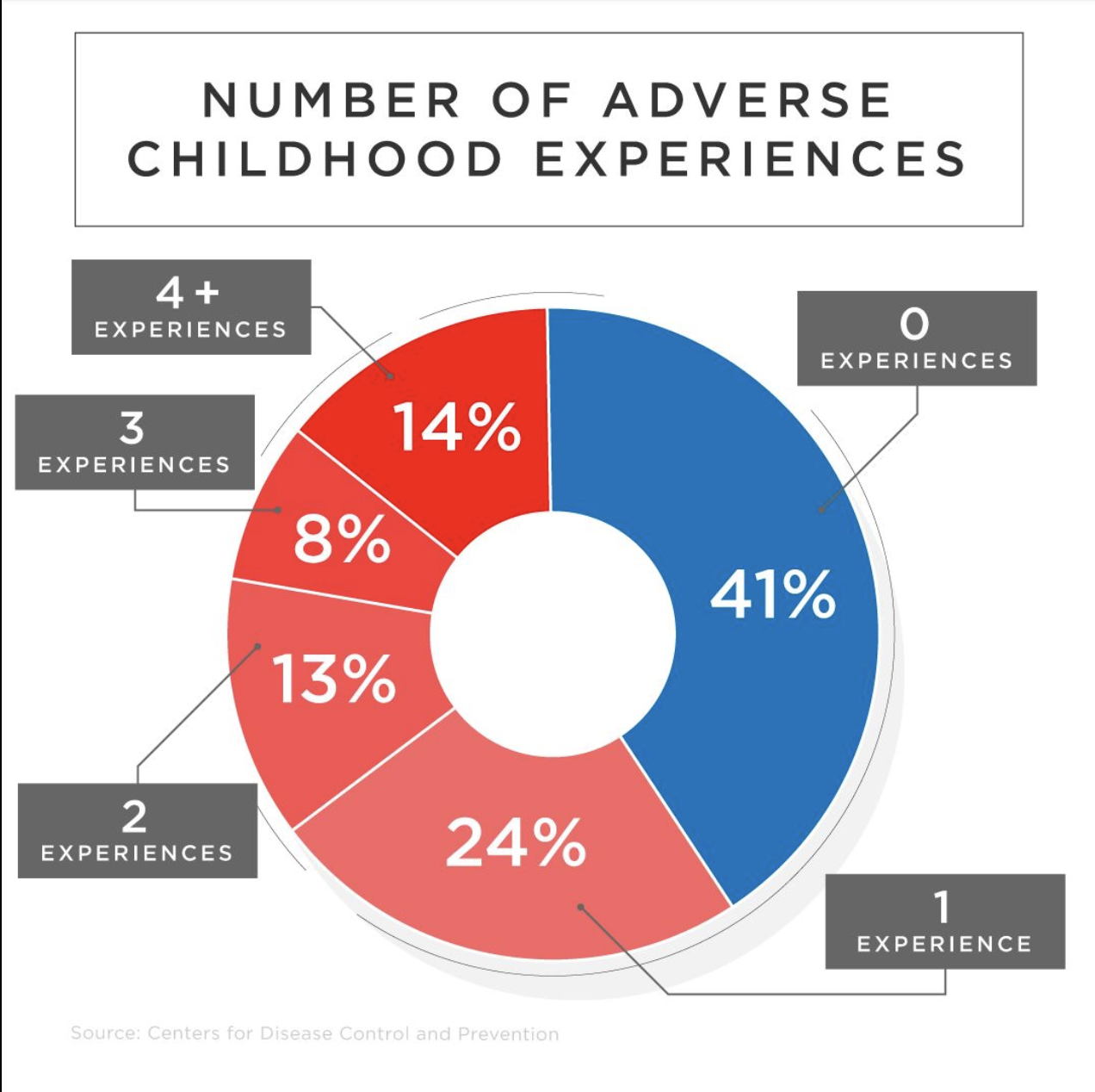
According to the Centers for Disease Control and Prevention (CDC), more than half of all U.S. children have experienced some kind of trauma. This includes abuse, neglect, violence, or challenging household circumstances. And 35 percent of kids have experienced more than one type of traumatic event.
In class, these traumas can manifest in many ways such as acting out. However, they can also be more subtle such as failure to make eye contact, repeated foot tapping, etc.
Childhood trauma was not unknown before the pandemic, but it was much less frequent.
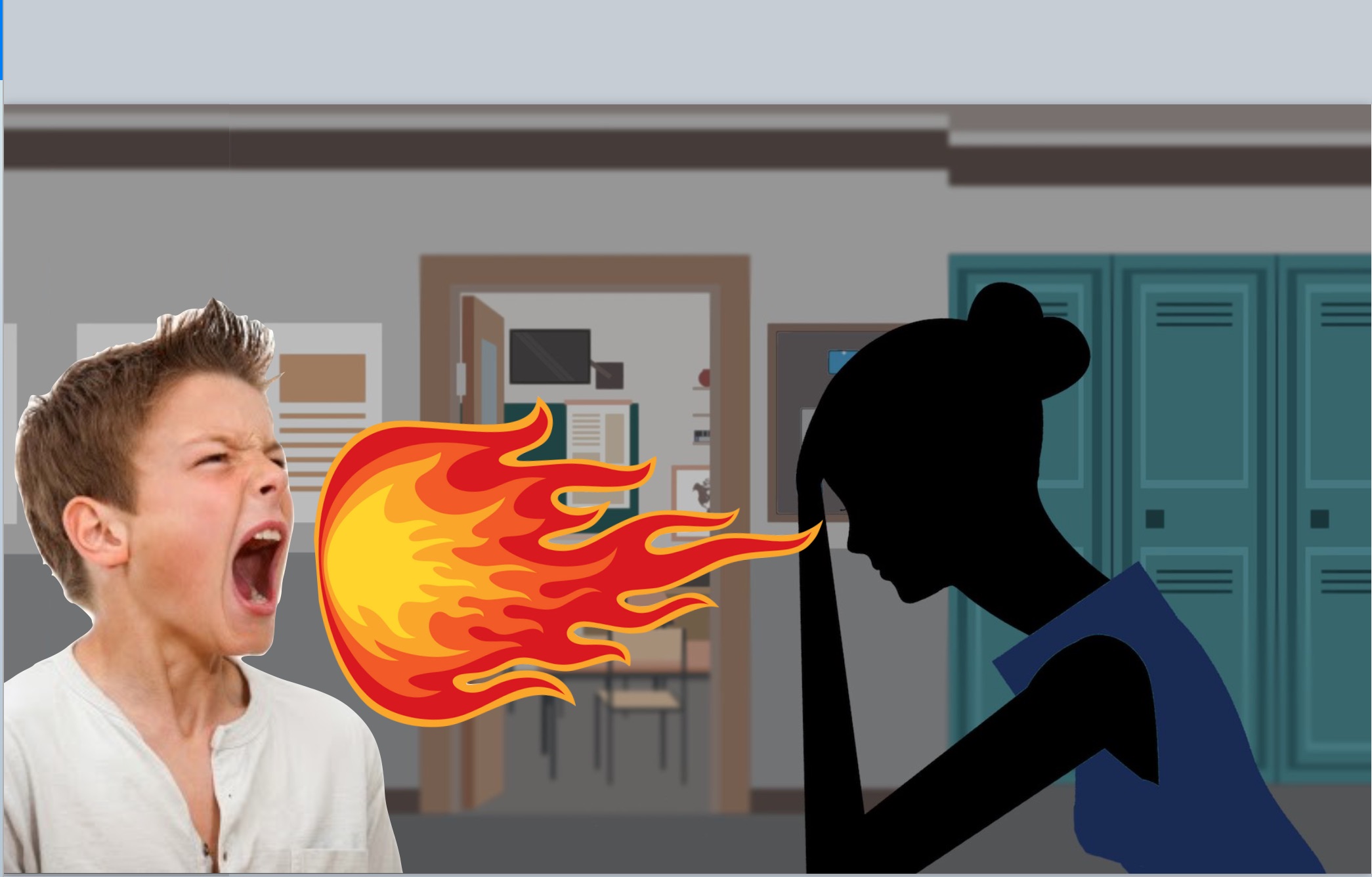
The student who exploded today is a prime example.
Clearly something may have happened to him.
A few years ago he had been an A student. He was academically gifted. But when we went to on-line classes to protect against Covid-19, he disappeared.
Only to come back like this.
As a classroom teacher with two decades of experience, I know that when a student acts this way, punishing him won’t help. He needs support coping, but that’s easier said than done.
I need help coping with HIM!
These adverse childhood experiences (ACEs) can impact kids well into adulthood with higher risks for alcoholism, liver disease, suicide, and other health problems.
And it affects their teachers, too.
Since schools have reopened, many kids don’t seem to know how to interact without teasing, goading or tormenting each other. We’re seeing children scream at each other in class over things as simple as finding a pencil. There are more frequent fights, vandalism, bullying, cyber bullying and even attacks against teachers.
Last week at my school, a student in the hall pushed another student into a teacher’s back. The first student was trying to fulfill the infamous TikTok challenge of hitting a teacher, but he wanted to avoid punishment by being able to claim it was an accident.
This increase in negative behaviors can be directly attributed to the pandemic.
According to the CDC, more than 140,000 children in the U.S. have lost a primary or secondary caregiver such as a live-in grandparent or another family member to the virus.
With fewer role models at home and less time in the classroom over the last year and a half, kids are suffering. And that’s not just anecdotal. The facts back it up.
Suicide attempts among 12- to 17-year-old girls increased by about 50 percent over winter 2019, according to the CDC.
And these numbers are probably under reported since these increases took place at the height of the pandemic when many people were hesitant to seek medical attention.
The increase in student trauma and the lack of additional supports is undoubtedly contributing to the speed at which teachers are leaving the profession.
We want to help our students but many of us feel ill-equipped to do so. And it’s negatively affecting our own health.
It is vital that people stop hurling stones and understand the increased burden placed on teachers’ shoulders. Not only that, but it’s well past time for people to get off the side lines and actually support educators.
We need time to talk with our colleagues about what we’re experiencing.
That’s not just gossiping or socializing. It’s necessary to function.
Educators need the ability to talk through what they’re experiencing and what they’re feeling with other teachers coping with secondary trauma, according to Micere Keels, an associate professor at the University of Chicago and founder of the TREP Project, a trauma-informed curriculum for urban teachers.
“Reducing professional isolation is critical,” said Keels. “It allows educators to see that others are struggling with the same issues, prevents the feeling that one’s struggles are due to incompetence, and makes one aware of alternative strategies for working with students exhibiting challenging behavior.”
However, this can’t be something teaches do on their own. This is an essential part of the job.
Part of our profession has become being put in harm’s way. We need the time to cope with that on the job with our colleagues.
In addition, this allows teachers to work together to develop coping strategies.
For instance, it’s never good to meet a student’s anger with yelling or fury of your own. Educators need to find ways to de-escalate and bring the tension down in the classroom.
Finally, it is essential that teachers are allowed the latitude to go home from their jobs.
By that, I don’t mean that teachers are held hostage, that any district forces their staff to stay in the building 24/7. I mean that many teachers find it difficult to go home and stop being teachers. We’re always on. We need time to turn off and tune out.
Educators often take mountains of work home, grade papers, call parents, etc. All on their own time.
Every district can accomplish some of it TOMORROW.
If we want to continue having teachers – I mean flesh-and-blood teachers with college degrees and hard won experience, not just technology, apps or a rotating cast of minders and babysitters – we have to take care of them.
They take care of our children.
It’s time we gave back what they need to get the job done.
It’s time we gave back the respect they deserve.
It’s time we gave them the opportunity to heal from the trauma of coping with our children.
Like this post? You might want to consider becoming a Patreon subscriber. This helps me continue to keep the blog going and get on with this difficult and challenging work.
They are simply busy work – useless paper that is often filed away in the office and never seen again.
Certain kinds of principals – and we know who you are – have checklists of every teacher in the building and simply mark off your name to designate that you turned in your lesson plans like a good doggie.
But even worse are administrators who read every word and send you pages of comments asking you to change this or that so it more closely adheres to the Common Core Academic Standards. As if parroting a bunch of shoddy benchmarks made by standardized testing companies is going to have any real effect on classroom practices.
Either way it’s an exercise in futility.
Whether administrators pour over these plans or just file them away, making teachers hand them in every week has nothing to do with improving teacher effectiveness or even making us more reflective and adventurous educators. It’s about administrators justifying their own jobs.
It’s like saying, “Look what a tough principal I am! I make my teachers hand in their lesson plans. I don’t let them get away with anything!”
Here’s a dirty little secret about education – No one gets into this profession to sit behind a desk with their feet up.
If they do, they soon realize that teaching isn’t the place for them. There is so much we have to do everyday – from grading papers, to counseling students, to calling parents, to scaffolding group work, tutoring, mentoring, modeling, lunch duty, hall duty, in-school suspension – and that’s before we even begin to talk about teaching and planning!
We don’t have time to write up a detailed plan of what we think we’ll be doing in class every single day with an equally detailed justification for everything we’ll do!
Because we know we’ll never actually use it in the classroom!
The very idea of lesson plans is antithetical to 90% of classroom practice.
Teaching isn’t something you can sit back and plan and then recreate with 100% fidelity day-in, day-out.
Today we may need to go back and reteach yesterday’s lesson. Or we may have to jump right back into a discussion we were having last week. Or we may need to switch tacks and focus on something else so students can calm down or won’t get frustrated.
The reality of the classroom determines what a good educator does inside it. And this cannot accurately be guessed at from a distance of time and/or space.
Sure, as a language arts teacher I may know I want to teach vocabulary skills, or complete sentence construction, reading comprehension or anything else. I can pick out my texts and my assignments, figure out which activities would best get across the idea, what kind of practice could be useful, etc. But HOW all that comes together is more of an art than a science.
If you have to stop and justify every action for an authority figure, you’ll only do the things you already know will work – or at least the things you feel most confident that you can explain.
Your administrator may not even be trained in your discipline. How’s a gym teacher going to evaluate language arts? How’s an elementary special education teacher going to evaluate calculus?
And it’s even worse when compounded by experience – or perhaps I should say inexperience.
Most principals only taught for a handful of years before becoming administrators. And many of them haven’t even had much time to figure out how best to BE administrators.
Yet our warped work culture puts them in charge of the actual professionals in the classroom – the classroom teachers – and encourages them to disrupt the normal flow of things in the name of what? School improvement? Or parasitical management?
Principals should be focused on two things – (1) providing the best work environment for students and teachers; and (2) advocating for teachers and students. They should make sure teachers have what they need to get their jobs done effectively. And that means listening to exactly what those needs are. If those needs aren’t being met inside the district, the principal should go outside and work to get those resources brought in.
Educators don’t need you to stand in judgement of them and then brag to your superiors about being a hard ass. They need you to get them the resources necessary – time, salary, lower class size, counselors, anything really that reduces the unnecessary from a teacher’s day so she can focus on her students.
But demanding educators hand in lesson plans is just the opposite. You’re ADDING to the unnecessary work load, not reducing it.
So lesson plans are an antiquated notion that need to go the way of mimeographs, transparencies and overhead projectors.
And if you can’t figure that out, at least get out of the way.
Like this post? You might want to consider becoming a Patreon subscriber. This helps me continue to keep the blog going and get on with this difficult and challenging work.
If we reopen schools, we invite COVID-19 into the classroom just as well as students.
So far as we know, the virus doesn’t care what your motivations are. It only infects as many people as it can leaving us to deal with the consequences.
Consider what the virus does to the human body.
According to the Center for Disease Control (CDC), exposure to the virus can result in mild symptoms to severe illness up to two weeks later. These include fever or chills, cough, shortness of breath or difficulty breathing, fatigue, muscle or body aches, loss of taste or smell, sore throat, nausea or vomiting and/or diarrhea.
People who are sick should stay home, monitor their symptoms and separate themselves from other members of the household.
You should seek immediate medical care if you experience trouble breathing, persistent pain or pressure in the chest, confusion, inability to stay awake and/or bluish lips or face.
Severe illness often requires hospitalization that attempts to relieve the most common complications. These are things like pneumonia, hypoxemic respiratory failure/ARDS, sepsis and septic shock, cardiomyopathy and arrhythmia, and acute kidney injury.
However, you also have to beware additional complications from prolonged hospitalization. These can include secondary bacterial infections, thromboembolism, gastrointestinal bleeding, and critical illness polyneuropathy/myopathy.
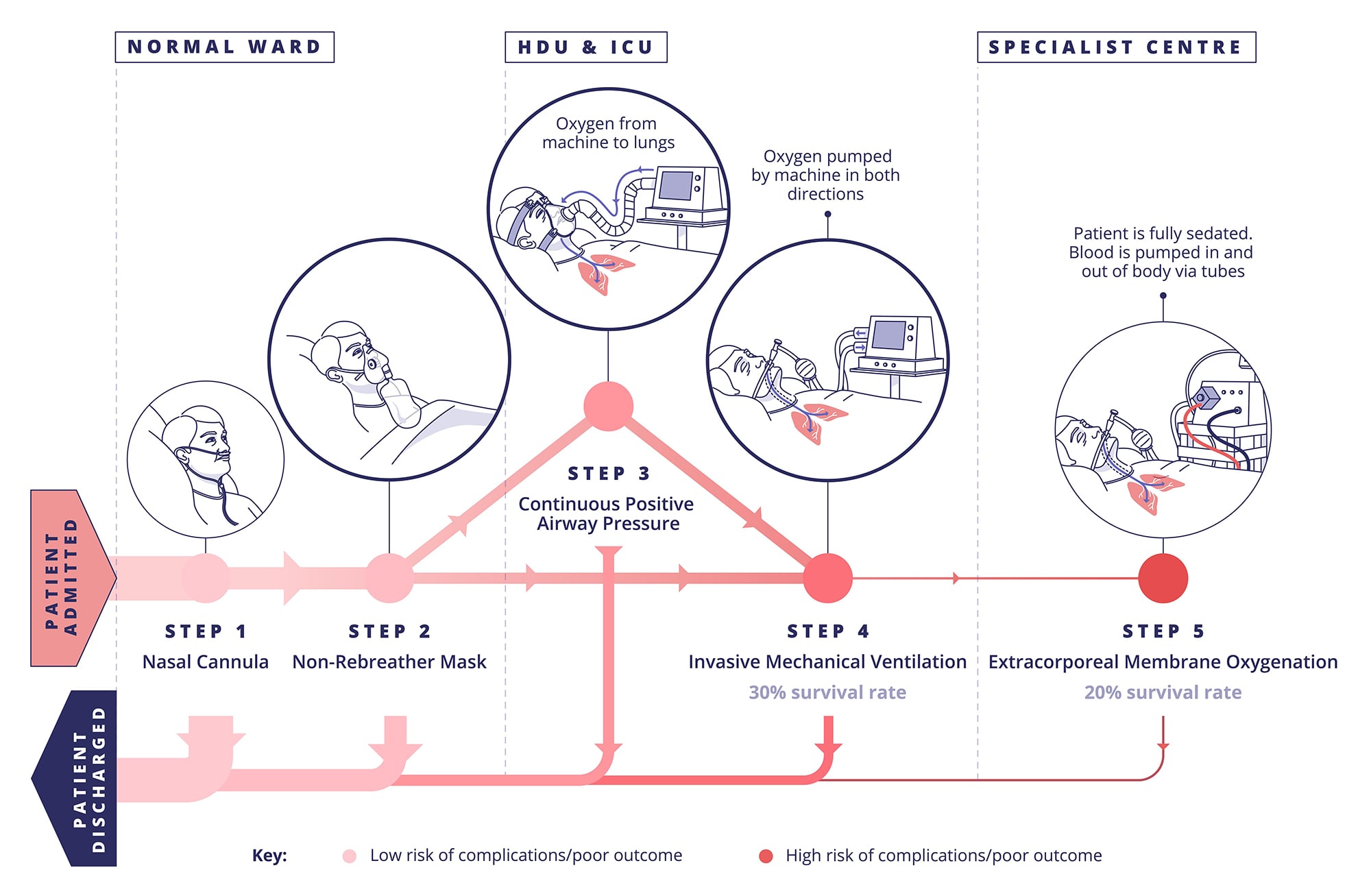
Managing blocked airways is a particular concern. This can be done in less severe cases with simple nasal cannula or oxygen rebreather masks. However, in more extreme cases, you may need continuous airway pressure provided through a machine or even invasive mechanical ventilation.
The chances of this happening to you or a loved one because your neighborhood school building was reopened and children were exposed to potentially sick classmates and staff is far from negligible.
These include inflammation of the heart, cardiovascular disease and strokes; lung inflammation including persistent shortness of breath; and neurological issues such as headaches, dizziness, trouble concentrating or recalling things and even hallucinations.
Teachers and classrooms provide necessary services way beyond simple education.
I’m talking about food, nutrition, healthcare, childcare, counseling, tutoring, socialization, self esteem, meeting special needs, protection from abuse and a whole lot more.
If we keep school buildings closed and go to distance learning as we did in March, many of these services will continue to be disrupted or completely severed.
While reopening school buildings is NOT a viable solution, there are other things we can do.
Food, nutrition and healthcare can all be met while conducting distance learning. In fact, most schools provided these services from March through June as classrooms across the country were closed.
Likewise, counseling, tutoring, socialization, and self esteem can be provided on-line. In most cases they won’t be as effective as they would be in a physical setting. However, given the precautions necessary to meet in-person – face masks, social distancing, etc. – they may be more effective screen-to-screen than they would be mask-to-mask.
Which brings me to the most difficult considerations – meeting special needs, protection from abuse, and childcare.
Special arrangements could be made for these students to come into the physical classroom on a part-time or full-time basis. This isn’t as safe as complete on-line learning, but if the numbers of students are small enough, precautions such a temperature screenings and social distancing were in place and exposure mitigated, this could be a viable option.
The same goes for protection from abuse. Some students live in unsafe home environments. It is observation by responsible adults who are mandated reporters like teachers that reduce the likelihood these children will be mistreated and provide a solution when abuse is reported. However, noticing the telltale signs of such mistreatment or even communicating with a teacher privately outside of the hearing of an adult in the home is more difficult on-line.
Special arrangements could be made for students who have already been identified as at risk. They could meet with counselors and psychologists in the school every week or so. Safety precautions would be necessary but the risk could be reduced enough to make it worth taking.
The biggest problem is probably the most widespread – childcare.
Having children at home to do their schoolwork on-line puts additional pressure on parents.
In short, the economy requires some kind of daycare for these children.
Many European countries that have best managed the Coronavirus have paid workers to stay home. This allows them to take care of their own children and reduce their own exposure to the virus.
However, our government has almost completely abrogated its responsibilities to working class people.
Parents with similar age children can create childcare networks where the same families take turns watching each others’ children. This reduces exposure to some degree.
Childcare centers also have been kept open in many communities to meet this need. However,there have been massive outbreaks at such centersacross the country that would only be worsened if we rely on them more. Any sane country would close them just as it closed schools.
Until our lawmakers get off their butts and do their jobs, we will have no good solution to this problem.
Reopening school buildings to serve as childcare centers certainly won’t solve anything except put a premium on respirators, coffins and graveyard plots.
We need to make it possible for parents to stay home with their children.
And we need to do it now.
Like this post? You might want to consider becoming a Patreon subscriber. This helps me continue to keep the blog going and get on with this difficult and challenging work.
I don’t mean that learning can’t take place there.
You could learn in a fox hole while being shelled by enemy forces. But if your content extends to something more complex than “Duck” or other survival tactics, this may not be the best place to learn it. After all, environment plays a key role in knowledge acquisition.
Moreover, different people learn things better in different circumstances. And, contrary to our current education policies that view children as stakeholders or consumers, they are in fact people.
There are some children who learn better online than in a brick and mortar classroom. But these kids are few and far between.
It really comes down to who controls the environment.
In a classroom, the teacher decides most everything about the physical space and what possibilities there will be. She places the books, hangs the posters, sets the lighting, displays student work, etc.
For instance, in my physical classroom, if I wanted to see what a student was doing, all I had to do is walk up to him and look.
I controlled what I see, and hiding things from me was difficult.
Online, if I want to see what a student is doing (let’s say on a video communications platform like ZOOM), I have little control over what I see. The student is in control of the camera. If it is pointing at the student or placed so as to hide certain behavior or even if the camera is currently on or not is not in my control. Students are empowered to hide anything they want, and there’s not much I can do about it.
I’ve had kids mysteriously turn off the camera or point it away from their faces until I ask them to switch it back on or swivel it back to themselves.
DO YOU HEAR WHAT I HEAR?
When I first started teaching online a few weeks ago, one of the most powerful tools at my disposal seemed to be the mute button.
If several kids weren’t hearing me because of side chatter, I could simply mute everyone and fill the blessed silence with instruction.
However, I soon discovered that this is deceptive.
Just because you don’t hear the students, doesn’t mean they aren’t talking. Some kids use the online chat stream to continue side chatter. Others forgo that entirely for text and Facebook messaging.
What’s worse, it’s often hard for the teacher to even know whether anything she said is actually being heard.
TOO MUCH CHOICE
One of the great strengths of online learning is that it gives students an incredible amount of choice. But that is also its greatest weakness.
I can give assignments through a file sharing site like Google Classroom and let students complete it at their own pace.
You can’t give them too much time to get something done because many will procrastinate through the deadline.
In my physical classroom, I would often give an assignment and then provide at least some time for them to start it. The idea was that even if they don’t finish it with me, they are more likely to complete something they already began.
As a result, most students don’t get these assignments done on time – if at all.
Even when they do the work, I’m bombarded by a slew of submissions around midnight or the early hours of the AM.
HOW TO ASK A QUESTION YOU DON’T KNOW YOU HAVE
Then there’s the question of… well… questions.
In my brick and mortar classroom, if a child was unsure of something, all she had to do was raise her hand and ask. Online, there are multiple ways to communicate with me – kids can send me an email, message me or verbally ask me something during a video chat.
The problem is that sometimes they don’t know they’re confused.
Online, I’m mostly limited to commenting on the final project. If a student didn’t understand the directions – and didn’t even understand that he didn’t understand the directions – I don’t know until the work is done.
I mean kids who for all intents and purposes appear to be there in ZOOM and then suddenly disappear never to return that day.
They could have a device or Internet issue. And if this happens every once in a while, it’s understandable. But what about kids who do this all the time?
I know every district is different in this regard, but my school provides every student with devices and even WiFi if necessary. Even in the physical classroom, using devices always came with a chorus of whines about them not being charged.
However, this brave new world even makes an issue out of bathroom breaks.
In the brick and mortar classroom, kids would ask to go to the restroom and then be sent one at a time. Online some kids just turn off their camera or leave it idling on an empty seat or the ceiling. It is next to impossible to tell whether these breaks are genuine or even to estimate their duration.
These platforms require students to know a dedicated Web address and sometimes a password to get in.
Yet these are children. They sometimes share these security measures with people who were not invited.
Even in my physical classroom, sometimes students not on my roster would try to get in to talk with a friend or even just sit in on my amazing lessons. I could stop them at the door and send them on their way.
Online, some sites like ZOOM give me similar power, and others like Kahoot (a game based learning platform) do not. Even when every person entering has to be approved by me, all I see is the name they’ve given their device. If an enterprising stranger wanted to rename their device to that of one of my students, I probably wouldn’t catch it until they were in.
There have been several times when someone with one of my students’ names got into a ZOOM meeting, but either refused or couldn’t turn on their camera. I had no choice but to boot them out.
On some sites like Kahoot, there is no video. I had no idea who was signing in – I just saw the name they input.
So sometimes I had two students with the same name. Or I had let’s say 8 kids in the class but 9 kids were signing on to Kahoot.
In a physical classroom, teachers can monitor students during test taking. Online, they can’t. So there’s always a question of cheating.
Every scrap of information in human history is available somewhere online. If students try hard enough, they can find the answer to any question with a deft Google search.
However, to be honest I don’t think I’ve had too much trouble with this as yet. My students either don’t care enough to cheat, cannot figure out how to do so effectively or have too much self respect.
Or maybe I just haven’t caught them.
In the physical classroom, I had several students try to pass off others work – essays or poems – as their own. But I haven’t assigned anything so ambitious through distance learning yet.
CONCLUSIONS
Perhaps that’s why it drives me nuts when policymakers and media types make statements about what an overwhelming success this has all been.
We need smaller classes, equitable funding, desegregation, social justice, wide curriculum, and an end to high stakes testing, school privatization, science denial and anti-intellectualism.
But more than anything, we need policymakers who are willing to listen to and include the people on the ground when making decisions that affect us all.
Like this post? You might want to consider becoming a Patreon subscriber. This helps me continue to keep the blog going and get on with this difficult and challenging work.
According to a 2014 study by the Sutton Trust, teachers who give struggling pupils “lavish praise” can make them even less likely to succeed.
Too much praise can “convey a message of low expectations.”
Researchers warned that if failure brings students too much sympathy, they are more likely to associate that approval with underachievement.
Yet it’s fine for educators to express anger at underachievement because it doesn’t create positive associations with performing badly. In fact, it motivates them to try harder.
However, if instead the teacher praised the students ability or achievement, that could result in a tendency to give up when confronted with future failures.
So what are teachers to do?
Frankly, researchers don’t know.
They look at discrete data sets and try to make broad conclusions.
And though I try to focus on effort, I admit to commending students on the results at times.
This year I was tasked with creating a new writing course for 8th graders called “Writing is Fundamental.”
Each day, I give students a writing task – usually focusing on the more creative side – and then I wander from desk to desk observing, answering questions and ultimately reading and commenting on their finished work in real time.
It’s exhausting.
At first, I try to be positive even when the writing isn’t that great. But then as I get to know the students and their abilities, I begin to be more critical and offer ways in which they can – and sometimes must – try to improve.
The results are mixed.
Some students – especially the lowest achievers – tend to respond to praise like a flower does to light. They soak it up and blossom.
I had one student who entered the class so embarrassed about his writing he was literally hiding under the desk and making jokes about how terrible a writer he was.
After just a week, he was working longer than any other student in the class to craft his responses and made sure to share his work with me and sometimes the entire class.
Students were not required to share their work with the class but doing so earned them participation points. So he felt obliged to do so and was extremely upset that – in his own mind – his work didn’t compare favorably with some of his classmates.
However, an amazing piece of work from a student who always does amazing work isn’t as impressive as moderately improved work from a student who has struggled constantly up to this point.
More than writing, I try to teach my students that learning is not about a destination – it’s a journey. And only they can truly decide whether the work they’ve done has value.
I offer advice on how they might revise their work, but it’s often up to them whether they want to keep refining a piece of writing or whether they have done enough for the day.
I’d be lying if I said the relationships I had with students has no baring on this. Many of them want to make me proud of them, but hopefully they get beyond this point.
In a semester course, the relationships are more transient and not as powerful. But in my year-long classes, they’re deeper and more far-reaching.
And that’s really the point that I think this body of research misunderstands.
Students learn from educators they trust. And part of gaining that trust is giving the proper kind of feedback – encouraging but honest, critical but helpful, opinionated but respectful.
Maybe if we trusted classroom teachers more to talk authoritatively about their experiences, we’d know more about the realities of education.
Coming into the classroom occasionally to observe student behavior is extremely shallow when compared to the everyday empiricism of lifelong educators.
When teachers send kids to the office, when principals issue detentions and suspensions, the faces of those students are disproportionately black or brown.
So what does that mean?
Are minority children more badly behaved than white ones?
Or is it an indication that our public schools are overrun with racist teachers and principals?
Those appear to be the only choices in Trump’s America.
There’s either something desperately wrong with children of color or the majority of white staff at public schools can’t handle them.
But the reality is far more complex, and no matter who you are, it will probably make you uncomfortable.
The problem is that there are variables the binary choice above doesn’t even begin to explain, and chief among them is child poverty.
It’s not that these kids are inherently bad. They’re just coping with the stress of an impoverished life style by claiming whatever attention they can – even negative attention.
I’m not saying poverty is the only factor. I’m not saying that white teachers and administrators don’t engage in bias and racism. But it isn’t all one or the other.
The problem is that the study is undeniably partisan and politically motivated.
Don’t get me wrong. I sympathize with its motivation. It’s just that we can’t let a single well-intentioned political action falsely impugn the nation’s teachers and public schools.
However, we can’t let this change the facts. The issue is whether poverty or race has a greater impact on racial discrepancies in student discipline. Are a greater percentage of black kids suspended mainly because of prejudice or is it more a symptom of their poverty?
But if we take the more conservative formula developed in the 1960s based on food expenses as a part of a family budget, poverty estimates shrink.
According to the Center for Children in Poverty (NCCP) which uses the more conservative definition, childhood poverty in the U.S. breaks down as follows: 10% of white kids (4.2 million), 27% of Latino children (4 million), 33% of Black students (3.6 million), 12% of Asian children (400,000) and 40% of Native American children (200,000).
And those figures are rising. There are 1.2 million more poor children in the U.S. today than there were in 2000.
However, there is real reason to assume these figures don’t capture the whole picture. After all, in just the last 30 years, food expenses (up 100%) have not risen as dramatically as other costs such as health care (up 500%), housing (up 250%) and college tuition (up 1,000%). So any real-world definition of poverty would include substantially more children than just those who qualify under these out-of-date federal guidelines.
A report by the Congressional Research Service (CRS) concludes, “If the same basic methodology developed in the early 1960s was applied today, the poverty thresholds would be over three times higher than the current thresholds.”
And the GAO study used the conservative 1960s threshold.
Consider: in the past 20 years as wages have stagnated, median household expenses increased by 25 to 30 percent. As a result, 3 out of 5 Americans today spend more than they earn – not on useless frivolities – but on essential needs.
People are working more hours for decreasing wages and benefits. A Princeton study concluded that 94 percent of the nine million new jobs created in the past decade were temporary or contract-based instead of traditional full-time positions.
These facts have real world consequences for every level of society – especially how our children behave in school.
CONSEQUENCES
It seems clear then that the scope and effects of poverty have been underestimated by the GAO report and others who wish to emphasize the effect of racism and bias.
Again this is not to say that racism and bias are misrepresented or unimportant. It’s a question of how much – not an either/or situation.
Sadly, children who act out in class usually do the same at home. We must ask then: are parents present when this happens? Do they have similar standards of misbehavior? Do they know how to correct misbehavior when it happens?
They are working two or three jobs just to make ends meet and don’t have the time to do the groundwork necessary to eliminate behavior problems before their children go to class. They don’t have the time to set up routines, expectations, rewards and punishments, etc. And even when they do attempt to do these things, they have less ability to get it right because their attention is focused on putting food on the table, providing clothing and shelter, etc.
This is not because these people are bad parents. In fact, they are good parents who are doing the best they can. But this is a symptom of a deformed society that requires a disproportionate investment of time from the poor for the essentials that is not required of those in higher income brackets.
This is not something unique to black and brown families, either. It is a feature of millions of white households as well – but the demographics of poverty cluster these impacts disproportionately on children of color.
HOME LIFE
There is also a change in the sociological makeup and values of poor and minority families.
This may be an area where black children have a disadvantage since according to census data the percentage of white children under 18 who live with both parents almost doubles that of black children. While 74.3 percent of all white children below the age of 18 live with both parents, only 38.7 percent of African-American minors do the same.
This has consequences for children of color. It adds to the prevalence of grandparents and/or other siblings or foster caregivers filling that parental role. Again, these households can be exceptionally strong and stable. But there is less support, more struggles and the increased possibility that children’s behavioral home foundations may be less robust.
Finally, there are the effects of Jim Crow and racial discrimination after the end of slavery. Black people have continually been told they had the same rights and opportunities as white people but when they went to claim these alleged boons, they were beaten back. This has had the effect of turning some of them against the very idea of many of the behaviors they see exemplified by white people.
Many of these are dress code policies. How many schools criminalize the wearing of black hair in certain ways or the simple hooded sweatshirt? Hoodies, for example, are a preferred manner of dress for many students of color and really cause no harm to academics or social interactions. But administrators and/or school boards ban them – why? It’s just another way to police black bodies and minds.
These sorts of practices are everywhere in our schools and take reflection to undo. For instance, I found myself guilty of this same thing for years in my classroom when some of my black students started compulsively brushing their hair at their desks. These were mainly boys with short hair who were trying to get a wave effect their peers considered stylish.
At first, I found this incredibly annoying – the sound of constant brushing as students were doing their work. But then I realized that these students WERE doing their work. The brushing in no way interfered with academics. It didn’t bother anyone except for me and perhaps some of the white students.
Simply allowing cultures to express themselves should not result in disciplinary action. And since I’ve permitted the behavior, I’ve had less reason to discipline my students and no negative impact on academics.
SOLUTIONS
Most analyses of this problem stop with blame.
Who’s responsible for this? And once we have an answer – and it’s usually one very simple answer – then we’ve done all we set out to do.
The solutions to the issue, if we are ever to really try to do more than just point fingers, must address a variety of ills.
First, we need to monitor and help public school staff to be less biased.
We need more teachers of color without a doubt, but this will never happen until all teachers are better paid, have stronger labor protections, autonomy and prestige. On top of that, there should be additional incentives to attract teachers of color. It’s hard for white teachers to notice their own biases unless there is someone in the building who can see them more clearly and offer advice. Just making the staff more multicultural will make white teachers more reflective of their own practices.
Of course actively pointing out prejudice is extremely difficult for co-workers to do by themselves. In addition, white teachers need cultural sensitivity training. And not just them. Since no educator comes from all cultures, everyone could use frequent reminders of how to be more inclusive, impartial and fair to students from various backgrounds.
Next, we need to broaden our idea of what discipline is. Every infraction doesn’t need a detention or suspension. We can enact interventions like restorative justice practices, conflict resolution and other positive procedures that actively teach kids how to deal with their emotions and better behave.
In short, we’re teaching kids what they should have learned at home, but like so many things in our society, it’s left to the schools to get it done. I bring this up not to shame anyone but to remind society that any expectation that schools can fix this problem by themselves is laughably naïve – but someone has to try.
This is one of the richest countries in the history of the world. Surely we can find ways to better share that wealth to the benefit of all. If parents don’t have to work multiple jobs to survive, they are more able to teach, model and discipline their own kids. And when parents are present in children’s lives, those kids don’t have as great a need for attention. It would certainly cut down on negative attention seeking behaviors.
In addition, with schools at the center of neighborhoods, we can have more adult education classes for parents. This would be not just courses on how to effectively raise children but on job skills and lifelong learning. After all, parents who value learning raise kids who do, too.
I know these are big goals. But they are the only way to make a just society for everyone.
We cannot continue to blame our school system for reproducing the society that created it. Education is aspirational and strives to better itself. But it cannot reach that goal alone.








 gadflyonthewallblog