Killed for Being a Teacher – Mexico’s Corporate Education Reform

mexico-protests

In Mexico, you can be killed for being a teacher.

Correction: you can be killed for being a teacher who opens her mouth and speaks her mind.

You can be killed, kidnapped, imprisoned – disappeared.

That’s what happened to approximately six people a week ago at a protest conducted by a teachers union in the southern state of Oaxaca.

The six (some of whom were teachers) were gunned down by police and as many as 100 more people were injured near the town of Nochixtlan, about 50 miles northwest of Oaxaca City.

Conflict between teachers and governments has become commonplace across the globe as austerity and neoliberalism have become the policies du jour. Tax cuts for the rich lead to shrinking public services. And investment in the next generation through public education becomes a thing of the past.

Even here in the United States, educators are taking to the streets to protest a system that refuses to help students – especially poor and minority students – while blaming all deficiencies on one of the only groups that actually show up to help: teachers.

Though in America educators have been ignored, unjustly fired and even arrested for such protests, the Mexican government has resorted to all out murder.

How did it come to this? Follow the trail backwards to its source.

The activists in Oaxaca were protesting because several union officials had been kidnapped by the government and unjustly imprisoned the previous weekend.

Those union officials were asking questions about the 2014 disappearance and alleged murder of 43 protesting student teachers by agents of the government.

These student teachers, in turn, were fighting incoming President Enrique Peña Nieto’s education reforms.

Specifically, Nieto threatened to fire tens of thousands of teachers by using their impoverished, neglected and under-resourced students’ test scores against them.

The government provides next to nothing to educate these kids. And just like officials in the U.S., Nieto wants to blame a situation he created on the people who volunteered to help fix it. It’s like an arsonist blaming a blaze on the fire department.

Why’s he doing it? Power. Pure power.

Poverty in Mexico is more widespread than it is even in its northern neighbor. This is because the most populace Spanish-speaking country in the world also has one of the most corrupt governments on the face of the Earth: A government in bed with the drug cartels. A government that has no interest in serving the people whom it pretends are its constituents.

Since before the Mexican Revolution in 1810, teachers have been the center of communities in impoverished neighborhoods empowering citizens to fight for their rights. These teachers learned how to fight for social justice at national teacher training schools, which Nieto proposes to shut down and allow anyone with a college degree in any subject to be a teacher.

Not only would this drastically reduce the quality of the nation’s educators, it would effectively silence the single largest political force against the President.

In short, this has nothing to do with fixing Mexico’s defunct public education system. It’s all about destroying a political foe.

The government does not have the best interests of the citizens at heart – especially the poor. The teachers do.

Though more violent than the conflict in the United States, the battle in Mexico is emblematic of the same fight teachers face here.

It remains to be seen how this southern conflict will affect us up north.

People have died – literally died – fighting against standardized testing, value added measures, school privatization and the deprofessionalization of teaching. Will this make Bill Gates, John King, Campbell Brown and other U.S. corporate education reformers more squeamish about pushing their own education agenda? After all, they are trying to sell stratagems that look almost exactly alike to Nieto’s. How long can they advocate for clearly fascist practices without acknowledging the blood on their own hands, too?

For our part, U.S. teachers, parents, students, and activists see the similarities. We see them here, in Puerto Rico, in Britain, in much of Europe, in Africa and throughout the world.

We see the violence in Mexico, and we stand with you. From sea to shinning sea, we’re calling for an end to the bloodshed.

The Network for Public Education has issued an urgent appeal to the Mexican government to stop the violence. Members of the Chicago Teachers Union have taken to the streets to protest in solidarity with their brothers and sisters south of the border.

https://www.facebook.com/plugins/video.php?href=https%3A%2F%2Fwww.facebook.com%2Ftelesurenglish%2Fvideos%2F864024527074284%2F&show_text=0&width=560


We stand with you, Mexico.

We fight with you.

We bleed with you.

We are the same.

Peace and solidarity.

Summer Break – the Least Understood and Most Maligned Aspect of a Teacher’s Life

Screen shot 2016-06-20 at 4.18.07 PM

It’s inevitable.

Once the weather gets warm and school lets out, it’s no longer safe for teachers to be out in public.

You’ve got to stay indoors, get off the Internet, hide the cell phone – do whatever you can to stay away from non-educators.

Because if, like me, you happen to be out and about – let’s say standing in line at your favorite neighborhood burger joint waiting for a juicy slab of ground beef to stop sizzling on the grill – you’re bound to hear the kind of willful ignorance that sets a teacher’s nerves permanently on edge.

Imagine just two normal people – they seem nice enough – standing in line having a friendly conversation. It’s hot outside, so you might hear the usual topics discussed: the weather, the best place to buy ice cream, which public pool has the best prices – that an oh I don’t know, how easy teachers have it with their summers off.

Son of a…!

Normal folks, I know you often get the urge to talk about this. You think it’s just another topic of polite conversation. It’s nothing serious. You think it’s just like complaining about the heat or how the price of admission at the local theme park always seems to be on the rise.

But you’re wrong.

Here’s why: first, you aren’t alone in the comfort of your own home. You’re out in public. And I guarantee there’s probably a teacher somewhere within earshot. Second, you have no idea what the heck you’re talking about. You are completely talking out of your ass.

Oh, you think you know. Everyone thinks they know what it’s like to be a teacher. Everyone thinks they can do that job no matter what qualifications they have.

It’s funny. I never presume to assume I could do other people’s jobs without some kind of training or skill. I’d never say, “Police officers have it so easy. I could do that!”

I’d never say that about any public servants. Not firefighters, sanitation workers, social workers, lawyers, doctors – even politicians.

I think most people feel the same way – except when it comes to teaching. That’s the one job where everyone has an opinion and it’s based on next to nothing.

Here’s how it goes: I’ve been a student, therefore I can be a teacher.

Imagine if we applied that logic elsewhere. I’ve been sick, therefore I can be a doctor. I’ve been to court, therefore I can be my own lawyer. I can turn on a light, therefore I can run the electric company.

No one would be so ignorant. Except when it comes to teaching.

But that’s not all.

Not only are most folks comfortable opining about a topic of which they are so ignorant, but they feel themselves to be particular experts about one aspect of the job more than any others – summer break!

Those teachers sure have it easy, they say. They get their summers off! That’s one sweet deal!

Don’t get me wrong. As a public school teacher, I’m grateful for summer break. But it’s not what non-teachers think it is.

First off, summer break is not a vacation.

When you work a regular job you get a vacation day here and there. You get a week or two of paid time off. Teachers don’t get that.

During the summer teachers don’t get salaried like that. Some of us don’t even get a paycheck, and those of us that do aren’t earning money for those days off. We’re getting money that we already earned from August through June. This is money that was withheld from our pay during the fall and winter, money given to us now in the summer.

Wait a minute. Money withheld from our salaries? When someone pays you later for services rendered, don’t they owe you interest? Usually, they do. But not for teachers.

We work for the government. We get paid with tax dollars from the community at large. If the community had to give us our salaries up front – like almost every other job in existence – it would be harder on the taxpayers. So we let the community pay us later – interest free.

Like I said, summer break isn’t a vacation. It’s more like an annual couple months of being laid off.

When I say this to non-educators, though, they often smirk. “It must be pretty sweet getting so much money that you can afford to have it paid out like that.”

Let me just say this – You don’t know me. You don’t know what the heck I can and cannot afford. Teachers aren’t millionaires. We’re barely thousandaires. Many of us CAN’T afford it. We work a second job in the summer – often at little more than minimum wage.

Moreover, during the school year, teaching is not a 9-5 job. We don’t punch a clock working 8 hours with an hour lunch and then punch out.

If I’m not at least working 10 hours a day, I’m not even trying. Those 8 hours on the books barely cover my time in front of a class of students. I get a 30-40 minute lunch, various duties throughout the day and about 40 minutes to plan what I’m going to teach. That’s time to make any materials for my classes, design programs for the students, grade papers and fill out the never-ending and ever-expanding piles of paperwork.

As a language arts teacher, I routinely have my students write essays. You think they grade themselves? I’ve got to read those things, son, each and everyone. I’ve got homework to grade. I’ve got scores to input into the computer. I’ve got parents to call, students to tutor and a stream of detentions to oversee. And that’s just the minimum, not counting any extra-curriculars, clubs, PTA meetings, meet the principal nights, etc.

So the way I see it, I’m owed a little bit of down time during the summer. I need it just to recharge my batteries. During the school year, I’m going at a pace like lightning every day. If I didn’t have some time in the summer to unwind, I wouldn’t be able to keep up that pace for the majority of the year.

Heck. If I’m sick one day, when I come back to school it takes a few days to get back up to speed.

But non-teachers don’t know any of that, because students don’t know. Students just see the teacher in class and they assume that’s all we do. And that’s a forgivable assumption for students. You know why? Because they’re children! But you? You’re an adult human being. You don’t have the right to make such assumptions without any pretext at even trying to find out.

However, this is exactly what most people do. They think there’s nothing wrong with complaining about teachers, especially during the summer.

And here’s the worst part.

When you complain like that, you make my job so much harder.

You’re going to go home with that negativity, you’re going to keep voicing it, you’re going to say it in front of your own impressionable children who might not seem like it, but they listen to every word you say. Not just that, but they listen to HOW you say it. Even more than the words, they hear the disdain.

So when school is back in session, they bring that false impression of how easy their teachers have it, and that becomes disrespect, just another thing I have to overcome in order to help your child succeed.

You hear a lot in the news about foreign countries having better education systems than ours. It’s mostly B.S. propaganda, playing with statistics for political ends, but there is one area where there’s a grain of truth to it – respect.

In many foreign countries especially in Asia, teachers are held in the highest esteem. It wouldn’t even cross parents’ minds to scorn educators, and if their kids did it, the adults would be mortally ashamed!

But not in the U.S.A. We take the one profession most dedicated to helping our children have better lives and we crap all over it.

You know that’s why I’m there in the classroom – to help your child succeed. Sure I get a paycheck, but there are lots of jobs I could do to support my family, many of them paying a whole lot more while requiring less hours a week and providing actual paid vacation days.

Like most educators, I’ve got a masters degree. Every year I take continuing education courses. Heck! I’m even nationally board certified – a distinction of which only about 34% of teachers throughout the country can boast. I’ve been nominated for teachers excellence awards. I travel across the country multiple times a year at my own expense to enrich my field. I write letters, I protest, I lobby my congresspeople to support our national system of public education. I’ve devoted my life to making a difference in young people’s lives.

Isn’t that something worth a little bit of respect? Don’t you want someone like me to be there for your child in the classroom?

It’s funny. When it comes to most public services, you wouldn’t dream of denigrating a helping hand.

You’d never hear anyone say something like this:

Those damn firemen! There would be fewer fires if it weren’t for them! Have you ever seen a building burning without it being surrounded by firemen? If they’d just work a little bit harder, there’d be fewer burning buildings!

Or:

Those damn doctors! All they do is make people sick! You never see a sick person unless he’s surrounded by doctors prescribing him medicines, doing surgeries. If we had fewer doctors, fewer people would get sick! Let’s close more hospitals!

But this is how people talk about teachers. Regular folks have been convinced that far from helping children escape ignorance, teachers actually cause it. They don’t work hard enough. They don’t care enough. They have too many union protections.

I’ve never heard anyone complain that firemen would fight fires better if they didn’t have helmets and fireproof clothing. I’ve never heard anyone say police would work harder to fight crime if they didn’t have Kevlar and service pistols.

But somehow when it comes to teachers, the situation is different.

Normal people, you’ve got to understand something. We live in a world where rich folks want to take away teachers for the poor and middle class. They want your kids to learn from computer programs and YouTube while their kids get… teachers!

For your kids it’s always narrow the curriculum, more standardized tests, more unproven academic standards, more corporate profits, less parental control, fewer regulations, fewer student services.

And do you know who has volunteered to fight against all this craziness to make sure your kids actually get some kind of quality education?

THE TEACHERS!

That’s right – the same people you feel empowered to deride while standing in line waiting for your burgers and fries. The same people who you have no problem denigrating with just as much certainty as ignorance.

So please, think about that next time.

Don’t bitch and moan about your community’s teachers. How about giving them some support?

At very least add teaching to the list of impolite topics to address in public. That’s right – religion, politics AND TEACHING.

Because every time a non-educator vents their spleen about those lazy, no-good teachers, they make it that much easier for the powers that be to continue eroding your child’s educational experience.

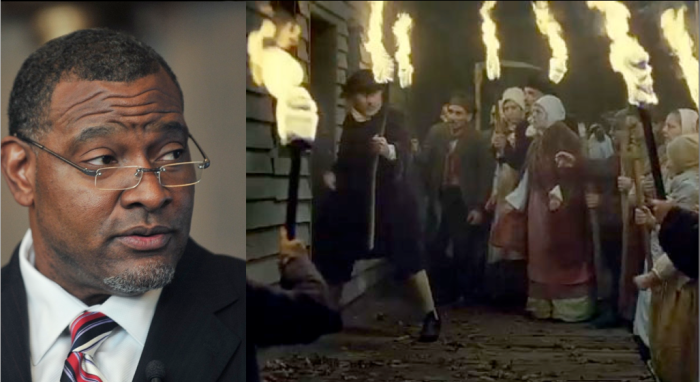
Witch Hunt Against Incoming Pittsburgh Public Schools Superintendent Escalates

Screen shot 2016-06-17 at 1.17.51 PM

To be or not to be.

That is the question for incoming Pittsburgh Public Schools Superintendent Anthony Hamlet.

He is set to takeover the district on July 1, but a well financed public smear campaign is trying to stop him before he even begins.

Big money interests oppose him. The public supports him.

Meanwhile the media helps fuel corporate attacks on the 47-year-old African American because of criticisms leveled by a Political Action Committee (PAC) formed to disband the duly-elected school board.

It’s ironic.

Corporate school reformers criticize Hamlet for allegedly plagiarizing a single statement in his resume. Meanwhile they have plagiarized their entire educational platform!

Mayoral or state takeover of the district? Check!

Close struggling schools? Check!

Open new charter schools to gobble up public tax dollars as profit? Check!

Hamlet represents a new direction away from corporate education reforms. The new school board who hired him has soundly rejected these policies of the old guard. Many of the same members are still on the board who first changed course in 2013 by tearing up a contract with Teach for America.

But the Empire strikes back with allegations of plagiarism and resume padding.

Yes, Hamlet used some of the same words from a Washington Post editorial in his resume. He wrote:

“A successful superintendent has to satisfy many constituencies, keeping high achievers in the system while devoting resources to those who need them most.”

The Post wrote:

“A successful superintendent has to satisfy many constituencies, keeping high achievers in the system even while devoting resources to those who need them most.” (Emphasis added)

These aren’t exactly the same words used by the Post. They don’t rise to the level of plagiarism, but he certainly should have attributed them or reworded the ideas.
On the other hand, his critics want to use the same policies that have failed again-and-again in Philadelphia, Newark, Little Rock, Memphis and elsewhere. They want to steal control of the district and give it to bureaucrats who will do what THEY say. They want to take money set aside to help all students and use it to enrich their friends and associates.

Sure, Hamlet used someone else’s words to describe a good idea of leadership. But his critics are using their own words to describe someone else’s terrible, failing educational platform.

Hamlet made a small forgivable error. His critics are seizing upon it to turn the tide in their favor and take away the community’s right to representative democracy.

Make no mistake. This is a witch hunt.

Critics are splitting hairs, disputing statistics and calling it fact.

Hamlet has a proven record as a principal in Palm Beach, Fl.

He says the schools he administered improved academically for various reasons. Critics point to Florida state records that show those improvements to be less dramatic.

So both sides agree those schools did well under Hamlet. What’s in dispute is the degree.

Hamlet counters that state data is inaccurate. He was there on the ground. He lists several factors not accounted for by the state that fully justify his statements.

For example, when he talks about school improvements, he counts the total number of student suspensions – if a student is suspended twice, he counts that as two suspensions. The state, however, ignores multiple suspensions. In this and other ways, Hamlet shows his data is more accurate than the state’s.

National data backs up Hamlet. Florida is infamous for being backward, regressive and untrustworthy in education circles, often spearheading some of the worst abuses of policy in recent history.

“This has been a hoopla,” said Valerie Allman, a Troy Hill parent and activist interviewed in the Pittsburgh Post Gazette. “And it’s taken the focus off what’s important: these kids. … We’re expecting him to climb this huge mountain at the same time we cut his legs out from under him.”

One of the reasons the board originally hired Hamlet is his background in “restorative justice.

Instead of simply punishing or suspending students who misbehave, the program calls for making students set things right.

At Palm Beach County Schools, Hamlet implemented this approach with help from Mara Schiff, a criminology professor from Florida Atlantic University. It’s “far tougher than sitting in detention,” Schiff said in the Post Gazette.

“You have to acknowledge what you’ve done … and take responsibility for the harm you’ve caused. It’s not a kumbaya approach.”

It’s widely acknowledged in education circles that suspensions can have lasting impacts especially on black students making them more likely to enter the school-to-prison pipeline. Finding an approach to increase discipline without adversely affecting students’ prospects is imperative. This is especially true since Pittsburgh Public Schools have been known to suspend black students at a rate four times higher than white students.

In fact, the district has already launched a restorative justice program at 20 schools.

“I have nothing but good things to say about Dr. Hamlet,” said Schiff. “He had a [restorative-justice] coordinator who was fabulous, and who Dr. Hamlet completely empowered.”

Another reason for Hamlet’s hire is his advocacy for community schools. Like many on the school board and in the district, he has pushed for social services to help students and the community to make the schools the center of the neighborhood.

“You can have the best teachers, the best curriculum, the best classrooms,” said Rev. Rodney Lyde, a Homewood pastor and president of the Pennsylvania Interfaith Impact Network. “But we need a place on-site that can comprehensively address the other impediments — like kids coming hungry, or from abusive situations.”

Despite community support, several well-financed organizations oppose Hamlet and the board’s authentic reforms.

Foremost among them is Campaign for Quality Schools Pittsburgh, a new PAC formed recently to make city schools great again – by doing the same failed crap that didn’t work before.

Also on the side of corporate education reform are the Pittsburgh Foundation and the Heinz Endowments. Representatives for both organizations have offered to pay for a new superintendent search if the district gives Hamlet his walking papers – a measure that probably would mean paying him at least a years salary without having him on the job.

This would also result in weakening the district’s ability to hire a new superintendent and increasing public mistrust of the electoral process. Such a move would pave the way for disbanding local control.

How generous of these philanthropies! I remember a time when giving meant providing the resources for organizations like public schools to fix themselves – not having the right to set public policy as a precondition for the donation. But in the age of Bill Gates and the philanthro-capitalists, this is what we’ve come to expect.

Even the editorial board of the Pittsburgh Post Gazette has drunk the Kool-aid. In a June 10 editorial, the paper published the following statement:

“The (school) board’s failure at this essential task calls its leadership into question, and will renew calls for legislation to dissolve the elected school board and move to an appointed system.”

Finally, we have A+ Schools – an advocacy organization that at one time championed the same kinds of reforms school directors are trying to enact. However, after a $1 million grant from the Gates Foundation, the group has become a cheerleader for weakening teachers unions, privatization and standardized testing.

Against these special interests stands a public school board and a community at the crossroads. Will they give in to public pressure and big money? Or will they allow Hamlet to do the job he was hired for and attempt to improve an urban district suffering from crippling poverty and state disinvestment?

This particularly tragedy has yet to find an ending.

To be or not to be?

Stop Treating Public Schools as Society’s Whipping Boy

Screen shot 2016-06-14 at 11.28.03 PM


The United States is no stranger to stupidity and ignorance.

A significant portion of the population doesn’t know basic science facts like that the Earth revolves around the sun.

We only learn history and geography by going to war or drone striking countries usually  filled with brown people.

And when it comes to basic math and English, just read the poorly spelled placards at our political conventions calling for more trickle down economics.

Heck! We’re the country that elected C-student George W. Bush President!

Twice!

And lest you think that was a fluke, Donald Trump, a xenophobic reality TV star with zero political experience, is the presumptive Republican candidate for the same office RIGHT NOW!

Yet whenever so-called intelligent people bring up these and countless other examples of American idiocy, they invariably simplify the blame.

We’re a country of more than 320 million people made up of various cultures, nationalities, ideologies, economic brackets and living in a wide range of geographic areas and circumstances. Yet we think the cause of our national ignorance somehow isn’t complex and multifaceted.

No. That would be too much for us to understand. Instead, we take the easy way out and put the blame squarely in one solitary place – public schools.

It’s always the school’s fault. That and those lazy, complacent teachers.

Some folks think the moon landing was a hoax. So apparently the schools aren’t doing their jobs.

Other people can’t tell you the month and year of the 9-11 terrorist attacks. Therefore, bad teachers.

Everything from believing you can catch AIDS from a toilet seat to thinking President Barack Obama is a secret Muslim – it all could have been rectified if the schools had just taught us better.

Nonsense.

If you need a legal warning that your McDonald’s coffee is hot, there’s not much your third grade teacher could have done to help.

If you think the solution to gun violence is strapping bullet proof backpacks to kindergarten children while arming their teachers, there’s little that could have been accomplished by further academic study.

Anti-intellectualism is in the very air we breathe in this country.

No one wants to appear smart. We want to be the jocks, not the nerds. But when we feel guilty for our ignorance who do we attack? The smart people! The teachers! The schools!

Sadly, it’s often really intelligent people doing it.

A few weeks ago, famed astrophysicist Neil DeGrasse Tyson got into a Twitter battle with rapper B. o. B. over whether the Earth is flat.

Yes, in America that is somehow still debatable.

And Dr. Tyson was understandably upset. “I don’t mind that people don’t know things,” he said in a Huffington Post interview. “But if you don’t know and you have the power of influence over others, that’s dangerous.”

Agreed, but then he became guilty of his own criticism by pointing his finger solely at the schools. “I blame the education system that can graduate someone into adulthood who cannot tell the difference between what is and is not true about this world,” he said.

Maybe this would be a more effective criticism if B. o. B. were an actual high school graduate and hadn’t, in fact, dropped out in 9th grade. Tyson has a masters in astronomy and a doctorate in astrophysics, but he couldn’t tell what is true about this world in relation to one rather famous rapper’s education. Therefore his alma maters of Princeton and Columbia must be pretty shitty schools?

Perhaps the problem isn’t that B. o. B. is ignorant, but that too many people are willing to accept him as an expert on the shape of the Earth instead of someone like Dr. Tyson. But that’s not a fault of the public school system. It’s because of our attitude toward schooling, knowledge and expertise. An attitude that Dr. Tyson perhaps unconsciously helped foster.

I don’t mean to pile on Dr. Tyson. He’s one of my heroes. I’m just disappointed that in this case he’s being so intellectually lazy.

He’s not the only one.

Unfairly blaming schools also came from columnist Andy Borowitz when describing the dangers of Trump’s candidacy.

“Stopping Trump is a short term solution,” he said. “The long term solution, and it will be more difficult, is fixing the education system that has created so many people ignorant enough to vote for Trump.”

To be fair, almost everything Borowitz says publicly is satirical, uttered with tongue buried deeply in cheek. But it still feeds into this scapegoating of public schools. The public schools didn’t create ignorance. They fight it and in some cases fail. I wonder why?

Whatever the reason, Trump, himself, isn’t decrying it. He’s celebrating it.

When he won the Nevada GOP primary, he made a point to thank all the dumb people who voted for him. “We won with poorly educated. I love the poorly educated,” Trump told a crowd to huge cheers.

Strangely he didn’t then go on to laud what a great job public schools are doing by providing him with so many brain dead supporters.

So what exactly is the problem? Isn’t it troubling that so many American’s hold stupid beliefs? And isn’t this at least partially the fault of our public schools?

The answer is yes and yes.

We live in an anti-intellectual age. And that is troublesome.

And yes, our public schools are struggling to adequately educate everyone.

But when you blame everything on public schools you (1) obscure other factors like our piss poor media, and (2) you aren’t helping improve our schools.

First of all, much of our modern ignorance is fueled by toxic mass media. Most of us aren’t in school anymore. Unless you’re younger than 21 or 18, you probably get most of your facts from the news, TV, movies, video games and/or the Internet – not textbooks or school teachers.

We used to have an independent press that could investigate stories and report the truth. Now almost all of our major news sources are owned by a handful of giant corporations.

We don’t get news anymore. We get corporate public relations. The reason most people believe this crap is because it’s reported as if it were truth.

The rise of Fox News has a lot to do with it, but that is not the only culprit. Even traditionally revered sources such as the Associated Press are guilty of corporate collusion and bad, bad reporting.

They have no problem conflating an anonymous poll of superdelegates with actual votes as if they were the same thing even if doing so unduly influences the election in favor of one candidate. They have no problem broadcasting a Playboy Playmate’s vaccination advice every day of the week while mostly ignoring what research scientists have to say on the subject.

Second, constantly ragging on public schools doesn’t help make them better.

It’s not as if doing so actually resulted in addressing the real problems we have with our school system. Instead it reinforces the idea that they can’t be saved. We should just give up on public schools.

If we actually focused on the real problems with schools instead of constant innuendo, defamation and vitriol, we might be able to enact real solutions. For instance, more than half of our public school students live below the poverty line. They go to schools that aren’t funded adequately. We’ve allowed them to be resegregated based on class so its easier to ensure rich kids get a Cadillac education and poor kids get the scraps.

Moreover, we’ve let corporate interest take precedence over the needs of children. Instead of letting the experts in the field make education policy, we’ve left that up to the businesses that profit off of it. Instead of letting teachers and professors decide what are best academic standards, we’ve let think tanks create and impose shoddy, untested and developmentally inappropriate Common Core Standards. Instead of letting students be evaluated based on data gathered in the classroom by teachers who are there day-in, day-out, we’ve insisted schools be judged based on crappy high-stakes standardized tests. Instead of giving educators respect for the difficulty of their jobs and providing them with the autonomy necessary to help kids, we’ve denigrated the profession and chipped away at union protections, pay and benefits.

These are some of the real problems with public schools. When people throw shade at our education system, they are never so specific. It’s the schools that are “failing.” It’s never that they’re under-resourced. It’s the teachers who aren’t doing their jobs. It’s never that they’re being forced to teach to the tests. In fact, the people responsible for eroding our public schools often do so with the same rallying cry – our public schools are failing so let us enact these terrible policies that will actually make them worse!

It’s time we stop the lazy practice of criticizing public schools without also educating ourselves about what’s actually wrong with them.

Dr. Tyson, I love you, but don’t just blame schools. Blame Common Core and toxic testing. Andy, it’s not our schools that produce ignorant citizens. It’s the unfair funding formulas that don’t provide poor children with new books and a broad curriculum.

Public schools in general – and public school teachers specifically – have become our easy scapegoats, our whipping boys.

It’s about time we realized that such criticisms aren’t helping. In fact, they’re being used by the same people who are destroying our schools as an excuse to destroy them further.

The so-called failure of public schools has been used to justify massive school closures especially in neighborhoods of color. It’s been used to create more privately run charter schools. It’s been used to excuse cutting school funding, and making it even less palatable to be a teacher.

Too many of us believe these are good ideas.

Americans believe a lot of stupid things, but perhaps THESE are the dumbest of them all!

The Arrogant Ignorance of Campbell Brown: Education Journalism in Decline

campbell-brown

Apparently facts don’t matter much to Campbell Brown.


Though her latest “fact” about public schools has once again been shown to be more truthiness than truth, she refuses to retract it.


During an interview published in Slate where she gave advice to the next president, she said:


“Two out of three eighth graders in this country cannot read or do math at grade level. We are not preparing our kids for what the future holds.”


It’s a scary statistic. The problem is it’s completely unsupported by evidence.


And when education experts called her out on it, she complained that SHE was being attacked.


When pressed, Brown admitted she got this figure from the National Assessment of Educational Progress (NAEP) a test given to random samples of students in fourth and eighth grades every two years.


However, Brown either misunderstands or misinterprets the scores. If one were to interpret the data in the way Brown suggests, the highest scoring countries in the world would be full of children who can’t read at grade level. Hardly anyone in the world would be literate or could add and subtract. It’s beyond absurd.


And when she was notified of her error by authorities in the field including Carol Burris, Tom Loveless and Diane Ravitch – who, by the way, served on the NAEP Governing Board for seven years – Brown responded by likening her critics to Donald Trump.


She wrote:


“That the people who disagree with my characterization would react by attacking me personally… speaks volumes. Those feigning outrage over the difference between “grade level” and “grade level proficiency” are the people who profit off the system’s failure and feel compelled to defend it at all costs. Sadly, in the age of Donald Trump and Diane Ravitch, this is what constitutes discourse.”


I especially like the bit where she attacks experts, teachers, and PhDs because they “profit off the system’s failure.” It’s pretty rich stuff coming from Brown who makes a pretty penny retelling the fairytale of “failing public schools.”


Once upon a time, Brown was a respected reported for NBC and anchorperson for CNN.


Now she’s a paid Internet troll.


I’m sorry if that sounds harsh, but it’s true.


She co-founded and edits a Website called The Seventy Four – a reference to the 74 million children across the country who are 18 or younger.


It might be more honest to call it The Four, instead, for the $4 million she receives annually from the mega-rich backers of school privatization to bankroll the endeavor.


She claims her site is “nonpartisan.” Funny. I guess that explains why she continually backs every cause and campaign championed by her donors.


Change all public schools to private charter schools? Check.


Block teachers unions from collectively bargaining? Check.


Ignore the overwhelming preponderance of stories about charter schools cheating the public and their students? Check.


When called out on her bias, she proudly proclaimed, “I have learned that not every story has two sides… Is The Seventy Four journalism or advocacy? For 74 million reasons, we are both.”


Pithy. Yet it remains unclear exactly how the nation’s school children will benefit from Bill Gates and the Walton Family having an even larger say in education policy.


Brown has sold her image and rep as a journalist so it can be used to purposefully mislead the public into thinking she is still dedicated to those endeavors. She’s not. What she’s offering these days is not News. It’s bought-and-paid-for public relations meant to destroy our nation’s public schools.


If anyone thought Brown retained even a shred of journalistic integrity left, she should have removed it when she called herself, “a soldier in Eva’s army.” This is a reference to Eva Moskowitz, the founder and CEO of a New York City charter school chain – Success Academy – where children are put under such pressure they wet themselves during testing and kids in first grade are shamed and berated for math mistakes.


As a public school teacher, myself, this makes me sad.


John Merrow, one of the elder statesmen of education journalism, recently proclaimed that we live in the “golden age of education reporting.”


I must respectfully disagree.


Yes, there is more being written about education policy and public schools than ever before.


But most of it is just paid advertisements from the standardization and privatization industry.


Look who’s funding these stories.


TV Networks such as NBC, MSNBC and Telemundo have broadcast various education segments on “Nightly News” and “Today” underwritten by Bill Gates and Eli Broad.


The Education Writers Association – which boasts more than 3,00 members – receives money from Gates and Walton. The L.A. Times receives funds from Broad for its Education Matters Digital initiative.


On-line publications also have been infiltrated. The Education Post took $12 million in start-up funds provided by Broad, Bloomberg and the Waltons. The site focuses on “K-12 academic standards, high-quality charter schools and how best to hold teachers and schools accountable for educating students,” according to the Washington Post.


Even well-respected education blogs including Chalkbeat and Education Week are funded in part by the Waltons (in the latter case, specifically for “coverage of school choice and [so-called] parent-empowerment issues.”) Education Week even tweets out paid advertisements for Teach for America as if they were news stories!


We’ve all seen “Waiting for Superman,” the infamous union bashing, charter loving propaganda film packaged as a documentary. Its popularity was helped with outreach and engagement funds by the Waltons and a host of other privatizers. It’s far from the only effort by market-driven billionaires to infiltrate popular culture with corporate education reform. They tried to sell the parent trigger law with “Won’t Back Down,” but no one was buying. Efforts continue in Marvel Studios television shows.


A plethora of teachers, academics and other grassroots bloggers have taken to the Internet to correct the record. But they are often ignored or drowned out by the white noise of the same corporate education reform narratives being told again-and-again without any firm footing in reality. In fact, after blogger and former teacher Anthony Cody won first prize from the Education Writers Association in 2014 for his criticism of Gates, the organization banned bloggers from subsequent consideration.


We bloggers are almost completely unpaid. We do it because we care about our profession. Meanwhile the so-called “news” sources are funded by corporate special interests, yet it is bloggers that are looked at as if they were somehow reprehensibly compromised and biased.


Education journalism is not going through a golden age. It’s a sham, a farce.


When we allow our news to be funded by private interests, we lose all objectivity. The stories are spun to meet the demands of the big foundations, the billionaires bankrolling them. And the real experts in the field are either not consulted or left to quixotically do whatever they can on their own time.


Education journalism isn’t about what’s best for children. It’s about how best to monetize the system to wring as many taxpayer dollars out of our schools as possible for corporate interests.


It goes something like this: reduce the quality to reduce the cost and swallow the savings as profit. But it’s sold to the public in propaganda that we call journalism.


As famed cartoonist and counter-culture figure Robert Crumb wrote in 2015:


“You don’t have journalists [in America] anymore. What they have is public relations people. Two-hundred and fifty thousand people in public relations. And a dwindling number of actual reporters and journalists.”


Nowhere is this as obvious as with Brown.


Just as Broad was initiating a plan in February to double the number of charter schools in the Los Angeles Unified School District, Brown’s site, the Seventy Four, was given control of the LA School Report, an on-line news site focusing on the second largest district in the country. Brown was expected to run interference for the takeover. She was running the propaganda arm of the privatization push.


And that’s really what’s happening with our education journalism.


I’m not saying there aren’t actual journalists out there trying to tell unbiased stories. But they are few and far between. They are beset by corporate interests. And anyone who wants to tell the truth is silenced or marginalized.


As we’ve seen, when you actually try to point out errors like Brown’s ridiculous assertions about eighth grade students, the media treats it as a he-said-she-said.


They say, “Wow! Teachers really hate Brown.” Shrug.


Meanwhile the truth is left murdered on the floor as our schools are pillaged and sacked.

Unwilling to Help Schools, PA Legislature Attacks Teachers

Screen shot 2016-05-13 at 10.48.35 PM
If you live in Pennsylvania, as I do, you must be shaking your head at the shenanigans of our state legislature.

Faced with a school funding crisis of their own making, lawmakers voted this week to make it easier to fire school teachers.

Monday the state Senate passed their version of an anti-seniority bill that was given the thumbs up by the House last summer.

Thankfully, Gov. Tom Wolf is expected to veto it.

As usual, lawmakers (or more accurately their surrogates at the American Legislative Exchange Council (ALEC) who actually wrote the bill) spent more time on branding the legislation than appealing to logic, sense or reason. The bill called HB 805 was given the euphemistic title “The Protecting Excellent Teachers Act.”

Yes, this is exactly how you protect excellent teachers – by making it easier to fire them.

Currently, if teachers are furloughed, those with least seniority go first. Under this new law, teachers would be let go based on their academic rating. Teachers can have one of four ratings: Distinguished, Proficient, Needs Improvement and Failing. Under the new legislation, teachers rated Failing would be furloughed first, followed by those under Needs Improvement, etc. Within those categories decisions would be made based on seniority.

It sounds great – if you know absolutely nothing about Pennsylvania public schools.

First off, in 2015 our rating system found 98.2% of state teachers to be in the highest two rating categories. So at best this bill is next to meaningless.

Second, like virtually all value added rating systems across the country, our rating system is pure bull crap. It’s a complicated measure of meaningless statistics, student test scores and mumbo jumbo that can be twisted one way or another depending on the whims of administrators, dumb luck and the phases of the moon.

A New York Supreme Court judge just ruled this week that the Empire state’s similar teacher rating system is “arbitrary” and “capricious.” But in Pennsylvania our legislators want to make it the axe that slices away teachers from the profession.

Third, the bill isn’t really about seniority at all. It’s about making it easier to fire teachers no matter how good they are at their jobs. Currently, state school districts are not allowed to furlough teachers based on lack of funds. This new legislation aims to remove that impediment.

It makes sense in a way. Pennsylvania lawmakers refuse to properly fund public schools so they have to make it easier to downsize. You’re welcome, taxpayers!

If this bill becomes law, school directors could fire whomever administrators want for whatever reason.

Admin: Mr. Smith, you’re fired.

Smith: Why?

Admin: Um. Financial reasons.

Smith: But I’m rated as Distinguished.

Admin: Not after we adjust the formula, mess with your class rosters and all around juke the stats to show you’re Failing.

Seniority is not perfect, but it avoids all these high jinks. It leaves no questions, nothing that can be easily altered. Either you have seniority or not. And if administrators have been doing their jobs by making sure good teachers stay and bad teachers are trained or let go, seniority correlates with good teaching. If you’ve been in the classroom for a long while, you’re probably a pretty descent teacher. Like anything else, practice makes perfect.

The public has to realize something about teaching at a public school. It is a deeply political job. You are subject to the whims of school directors, administrators, parents or anyone in the community with an axe to grind. You simply can’t do the job without some protections. How else can you fairly grade the school director’s child? How else can you exercise academic freedom to do what you think best if every decision is subject to committee?

This doesn’t mean teachers can’t be fired. They are fired every day. But administrators have to be able to make a valid case. They have to gather evidence to prove you deserve to be fired first.

It is highly ironic that Pennsylvania lawmakers are pursuing this legislation when they have done everything in their power to protect their own jobs first.

You want to talk seniority? Look to the legislature.

Incumbents are almost always re-elected. Why? Not because they do such a great job. They’ve made sure to gerrymander the state. Republicans reside in overwhelmingly Republican districts, Democrats in overwhelmingly Democratic ones.

This is no accident. A few years back, legislators redrew district borders to make sure they’d keep their jobs no matter how crappy they were at governance. It is deeply unfair and undemocratic. The majority of voters do not get a say. Instead, we cater to special interests and protect terrible legislators so they can pass crap like this bill without fear of repercussions during election season.

Do you think lawmakers would have refused to pass a state budget this year until 9 months after the deadline if they thought voters could actually hold them accountable? No way!

Do you think they’d withhold fair funding to the majority of public schools in the state if they thought the majority of voters had a say whether these knuckleheads stayed in power? Absolutely not!

And worst of all, even with Gov. Wolf’s promised veto, the crisis is far from over. When next year’s budget comes up for a vote in June and the Governor again asks for equitable funding for schools, legislators are bound to use HB 805 as a bargaining chip.

“You want some money for our kids’ schools? Then you’d better make it easier to fire teachers,” they’ll say.

Protect excellent teachers? Ha! They’re protecting terrible legislators.

We’ll never have good governance in this state again unless we find a way to redraw our gerrymandered districts. We need a voter referendum, a nonpartisan committee or – here’s a long shot – we need for extremist residents of these gerrymandered districts to revolt against the politicians hiding behind them.

Until then, we will be forever cursed with terrible lawmakers, execrable laws, under-resourced schools and a crumbling state.


Click HERE to find out how your representatives voted on HB 805.

‘Pay Our Special Education Teachers Before Vulture Capitalists’ Demand Puerto Rican Protesters

GetFileAttachment-4

Every student with special needs in the United States is guaranteed a Free and Appropriate Public Education under national law.


So why has the U.S. territory of Puerto Rico stopped paying its special education teachers?


More than 100 parents, therapists, psychologist, occupational therapists, students and teachers marched on Monday to the capital in San Juan to find out.


The rally began in front of the legislature at 9 before protesters marched to the governor’s mansion at 10:30 am. Demonstrators then met with representatives of Governor Alejandro García-Padilla.

GetFileAttachment-3

The answer may be a crippling $72 billion debt. Puerto Rico is besieged by vulture capitalists encouraging damaging rewrites to the tax code while buying and selling the territory’s debt.


The Commonwealth government has been prioritizing payments to American private equity moguls instead of services for communities such as public schools.


“Our Children Before Vulture Capitalists,” proclaims one protestor’s sign.

GetFileAttachment-6

Jinnette Morales agrees with the sentiment. Morales organized the protest.


“No credit line would back up this lack of payment,” says the mother of a child with Down Syndrome.


“These therapists have been working for months without pay and if Secretary of Education Rafael Román says that he has paid them, I want to hear him say that when we take him to court.”


GetFileAttachment-5

Though the Commonwealth Department of Education hasn’t paid these professionals in up to six months, students still have been receiving services. Special education employees have been working without pay. However, that can’t continue indefinitely.


The therapists, psychologists and teachers have had enough. They simply can’t continue without an income.


So starting this week, roughly 1,200 students are without services they are guaranteed by law.

IMG_4819

“We are talking about children’s humans rights to receive an appropriate and quality education,” says Mercedes Martinez, president of the Federación de Maestros de Puerto Rico (FMPR) – the teachers union.


“Children need these therapies to progress in their development. Therefore, we stand with the workers, parents, and students and demand action from the governor of our country.”


Protesters are demanding special education employees be paid immediately so child services can continue with as little interruption as possible.


After arriving at the governor’s mansion, activists met with the governor’s attorneys.


They were told the government will eventually pay the special education teachers, says Martinez. In the meantime, officials suggested improving billing for services. Instead of having all invoices be digitized and go through corporate channels, special education teachers can provide manual bills. This will shorten the amount of time between billing and payment.


Protesters are scheduled to meet again with government officials on Thursday to pin down an exact date when payments will begin.


Until then, many demonstrators are camping out in front of the governor’s mansion vowing not to leave until the government makes good on its fiscal responsibilities to teachers and students.

GetFileAttachment

“The government needs to pay the debt with these professionals before our country’s debt,” says Martinez.


“Our children should come first.”


This monetary crisis is imported from the mainland. Legislation is being manipulated by corporate interests profiting off the chaos. Moreover, hundreds of American bankers and entrepreneurs are using the Commonwealth as a tax haven.


As a result, tax revenues are drying up while the super rich rake in profits.


Officials warn the government may be out of money to pay its bills sometime this year. Over the next five years, it may have to close nearly 600 more schools – almost half of the remaining facilities!


Of the 135 schools closed in just the last two years, Román had originally proposed shuttering 200. The remaining 65 were only kept alive because communities occupied the buildings and refused to let the government step in.


Despite Wall Street manipulation, Puerto Rican communities aren’t letting their government sell their children short. The fight goes on.


MORE ON PUERTO RICO:

Hundreds Gather in Puerto Rico on Martin Luther King Day Demanding Arts Education


Puerto Rico Teachers Plan One-Day Strike to Protest Corporate Education Reform


In Puerto Rico, Students Go On Strike to Stop Teacher Relocations


Parents and Children Occupy Puerto Rican School Refusing to Let Corporate Vultures Raid Its Contents

Unions Can’t Just Be About What We’re Allowed to Do: Social Justice Unionism

7983807401_6b0075f742_b.sm_a

If labor unions were an animal, they’d be an old hound dog napping on the porch.

They’re slow to get up and chase away burglars but they do like to howl at night.

Most of the time you don’t even know they’re around until the dinner bell rings. Then that ancient mutt is first to bolt into the kitchen to find a place at the table.

It’s kind of sad really. That faithful old dog used to be really something in his youth.

He was fierce! He’d bark at trespassers even tearing them apart if they threatened his patch of land.

Old Uncle Sam used to yell at him and even threaten the pooch with a rolled up newspaper, but that dog didn’t care. He had a sense of right and wrong, and he didn’t mind getting into deep trouble fighting for what he thought was fair.

Today, however, the only thing that really riles him is if you threaten to take away his ratty old bone.

Let’s face it. Unions have become kind of tame. They’re housebroken and not much of a threat to those people waiting in the shadows to rob us blind.

Some people say we’d be better off without them. But I don’t agree. Even a decrepit canine can act as a deterrent, and thieves sure are frightened of dogs.

Think about all unions have given us: the weekend, child labor laws, vacation time, pensions, lunch breaks, healthcare, the 8-hour day, maternity leave, safety measures, due process, sick leave and free speech protections on the job!

They didn’t get us all that by sitting politely at the table with their hands crossed. They didn’t do all that by contributing modest sums to political campaigns. They didn’t do it by obsessively protecting collective bargaining at the expense of all else.

Unions used to take to the streets. They took over the job site. They marched with signs and placards. They exercised people power.

And the government was scared of them. The President called out the army to get them back to work. Lawmakers hired mercenaries to break strikes with clubs and guns. But eventually Congress passed laws to placate them.

Unfortunately, That was a long time ago.

For decades the pendulum has been swinging against us. Federal and state laws have become increasingly restrictive. They want to tell us when we can strike and how long. They want to tell us when and if we can collect dues. And – frankly – they want to tell us to just disperse and do whatever the bosses want – because the business class has already bought and paid for our politicians.

For decades we’ve heard to their propaganda on TV, the radio and the print media. Well-paid shills have poured their poison in our ears about the evils of the labor movement. They’ve spoken these lies so often lots of people believe them.

Workers used to fight to make sure everyone got a fair deal. Now the working man has been brainwashed to focus instead on making sure no one else gets more than him. And the bosses are laughing all the way to the bank.

Union membership is at the lowest it’s been in a century. So are wages adjusted for inflation. A family of four used to be able to get by comfortably on one salary. Now it can barely make ends meet with two.

Yes. There’s no doubt about it. We need unions today more than ever.

But for unions to survive, they must change. They have to become a reflection of the membership and not just of the leaders.

During this presidential election cycle, we’ve seen our largest national unions – the National Education Association (NEA) and American Federation of Teachers (AFT) endorsing a candidate without bothering to actively poll their members. We’ve seen them speak for us on policy decisions without asking our opinions. We’ve seen them act just like the corrupt politicians who we should be fighting against.

Yes, it is time for a change. No longer can our unions be run from the top down. They must be run from the bottom up. They shouldn’t tell us what to do. We, the membership, should be giving orders to them.

Moreover, we need to stop obsessing about collective bargaining. I’m not saying that’s unimportant. But it can’t be the only thing we do.

Our unions used to be in the midst of larger social movements. We were part of the Civil Rights movement. We were part of the push for desegragation. We were part of the fight to protect children and provide them a decent education.

We need to continue that today. And in some places we are already doing that! Look to Chicago, Detroit and Philadelphia. Teachers unions in those urban areas are fighting not just for better pay and benefits but for the communities they serve. Detroit teachers en mass are calling off sick to protest horrible conditions in the schools. Chicago teachers are marching in the streets with the community to demand indictments for police murdering their black and brown students. Philadelphia teachers are supporting students who walk out of class to protest state disinvestment and toxic testing.

THIS is what unions should be doing. We should be fighting for social justice. We should be a central part of the struggle to turn the tide against corporatization, privatization and standardization of our country’s public goods. We should be marching hand-in-hand with BlackLivesMatter activists. We should be in the front lines of the fight to save our environment and replace fossil fuels with renewable energy.

We must be part of the community and not apart from it. We must share in the struggles and goals of those we serve. We must be an example of the old truism that a rising tide raises all ships. After all, the word “union” literally means together. By definition we must all be in this together or else we’re not even really a union.

And to do this we have to stop being so concerned with what they tell us we can do.

We live in a democratic society. The government gets its power from us, from our consent. That means that if there are enough of us, we trump their corrupt laws. They only get to make those laws because we say so. And court decisions – even Supreme Court decisions – mean nothing next to the court of public opinion.

The bosses buy the politicians and tell them to legislate us into a box. It’s time to break out of that box. We can’t be afraid to take our power back. We shouldn’t be afraid of our government. Our government should be afraid of us.

How do we do it? Organize.

If you belong to a union, roll up your sleeves and get active. Run for office. Convince like-minded folks to join you. Take over your local. Spread to your national.

If you don’t belong to a union, start one at your job. Talk to your co-workers. Talk about the benefits for each of you and your neighborhoods. Fight for your rights.

I know. It’s a whole lot easier to complain. Real change, though, takes real work.

We used to know these things. Somewhere along the line we forgot.

So wake up, you yeller cur dog, and get off the porch. Take to the streets.

Because the surest way to take back our country is to take back our unions.

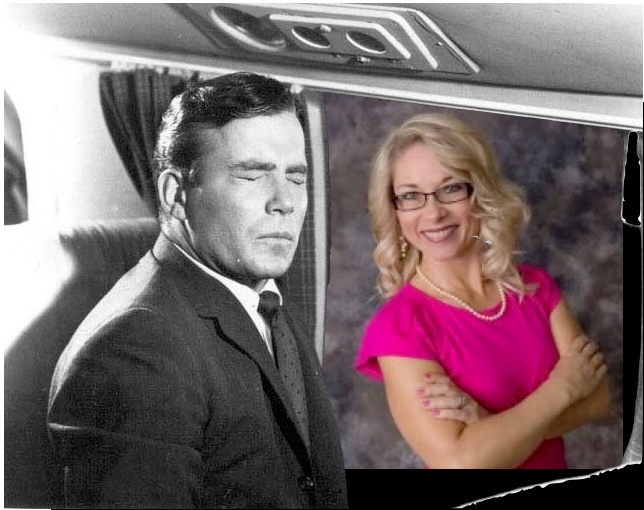
F is for Friedrichs… and Freeloader: A Supreme Court Nightmare

Screen shot 2016-01-11 at 9.50.07 PM
Say you’re on an airplane flying high over the Rockies.

The plane is going down.

You need a parachute.

Luckily, before you took off, all the passengers got together and pooled their money to buy them.

There’s enough for everyone. We’re all going to make it out of this alive.

People line up at the doors getting ready to jump.

Right in front of you is a lady with a sour look on her face.

“I can’t believe they’re making us pay for these parachutes,” she says.

“Really?” you reply. “Don’t you want one?”

“Sure I do!” she says. “I just don’t think I should be forced to pay for it.”

You give her a look. You can’t help it.

“But how else can they buy the parachutes?” you say.

She puts her hands on her hips and says, “There are some people on other airplanes that don’t have parachutes. I don’t think it’s fair that I get a parachute when they don’t have one.”

“You could just leave your parachute here on the plane and jump without it,” you offer helpfully.

She makes a face looking down at the parachute she’s been provided. “Will you look at this?” she says. “Mine’s blue.”

“So what?” you say. “So is mine.”

“I hate blue. I don’t want my money going to buy blue parachutes.”

“Um. At least you’ll have a soft landing.”

“A soft BLUE landing without my Constitutional rights.”

Just then a hole breaks open in the back of the plane sending air whooshing through the cabin. Oxygen masks fall from the ceiling. The plane shudders back and forth before the hole is plugged and cabin pressure returns.

A man with a similar sour expression comes forward to both of you. He is wearing a military police uniform and has a whistle in his mouth. He blows it.

“Did I hear right!?” he bellows. “Is this woman being forced to pay for her parachute!?”

“Yes,” you say after a moment. “She wants one.”

They both look at you like a third arm is growing out of your forehead.

“That’s beside the point,” the military man spits. “She can’t be FORCED to pay for it!”

By this time, a woman makes her way to the three of you from the front of the plane. She is wearing a beret and an armband.

“What’s the problem back here?” she asks.

“The problem is that this woman is being forced to pay for her parachute!” the MP says.

“Do you want a parachute?” beret woman asks the sour jumper.

“Of course,” the woman says.

“Then why shouldn’t you pay for it?”

“Because it’s blue,” she says.

“Are you kidding me?” beret woman asks. “Of course it’s blue. We got those on sale. The only way we could afford parachutes for everyone was if we bought in bulk and bought blue.”

“I don’t care,” the jumper says. “I shouldn’t be forced to buy a blue parachute if I don’t want one.”

“But you DO want one,” you say.

“Not a blue one,” she responds.

“Just give it back,” you say.

“No,” she replies stubbornly.

“That’s it,” the MP says drawing his gun. “Both of you, give me your parachutes.”

“What!?” you say.

“You heard me, Flyboy!” he says opening a huge rucksack. “Everyone on this plane! Put your parachutes in this bag!”

Everyone groans but does as he commands. After all, he’s holding a gun.

“Now what?” the sour jumper says once all the parachutes have been collected.

“Now I’m going to return all of these to the store,” he says.

“Huh!?” you say.

“It’s the only fair thing to do. You’ll each have to come back to the store and pay for your own ‘chutes.”

“But we’re on a plane plummeting out of the sky!” you say.

He turns to the sour jumper. “You’re welcome,” he says. “My job here is done.”

You turn to beret lady. “Isn’t there something you can do?” you ask.

“I’m afraid not,” she says. “Even if we could go back to the store, we can’t afford to buy everyone a parachute unless everyone pitches in. And even then only the blue ones are on sale.”

The military man salutes and jumps out of the plane. After he falls an appreciable depth he pulls his own rip cord. You can see his parachute balloon open. It’s bright red.

You turn to beret girl. “Who was that guy?” you ask.

Air Marshal Alito,” she says before making her way back to the front of the plane.

The nose of the cabin dips down. The sound of rushing wind is intense.

You turn to the sour jumper. “Are you satisfied now?” you say. “We’re all going to die.”

She slumps to the ground. Her head falls off. She’s hollow. She was just a mannequin.

You sit back in your seat stunned.

You put on your belt.

“I don’t want to pay for any seat belts,” comes whining from the mannequin’s head rolling on the floor.

You kick it out of the plane.

And smile.

Before you crash.

And experience a fiery death.


Meanwhile on the ground, Air Marshall Alito is shaking a man’s hand. The man is from Wall Street. He just made a small fortune betting the plane would crash. His name is Koch.

He gives Alito a suitcase full of greenbacks. He turns to another man, the owner of Friedrichs’ Mannequin Manufacturing. He gives him another similar suitcase.

These suitcases contain just a fraction of the money Koch has won betting on the demise of the airplane passengers.

He is laughing.

On the suitcases it says, “Right to Fly.”

He laughs harder.

He laughs and laughs and laughs.

EPILOGUE:

You’re still dead.


MORALS:

Should workers be permitted to benefit from collective bargaining without paying union dues? No. Pay for what you get or turn down the benefit.

Is collective bargaining essentially political? No. It’s negotiating fair treatment. Ebay isn’t political. Neither is this.

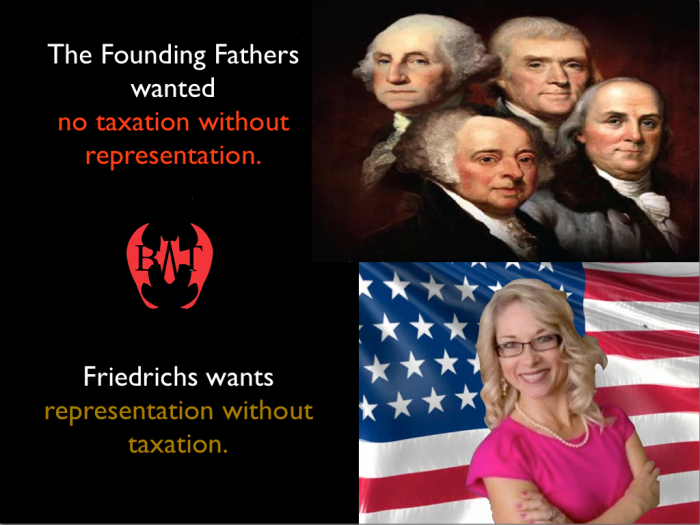
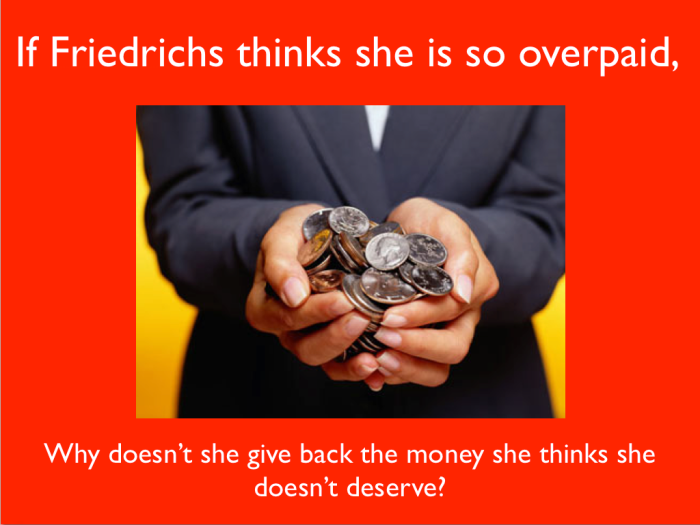
Is Friedrichs v. California Teachers Association a trumped-up case tailor-made for the five conservative Supreme Court justices to overturn existing law simply because they wanna? HELL YEAH!


Screen shot 2016-01-12 at 2.15.19 PM


Screen shot 2016-01-10 at 6.35.02 PM


Screen shot 2016-01-10 at 11.58.53 AM


Screen shot 2016-01-11 at 10.10.01 PM


NOTE: This article was featured on Diane Ravitch’s blog.


While Hillary Clinton Courts Teachers, Bernie Sanders May Have Conceded The Education Vote

hillary_clinton_bernie_sanders_ap_img

Hillary Clinton has made huge strides this week courting education voters. The Democratic Presidential candidate made a statement critical of scandal ridden charter schools. She also met with educators to answer questions in a closed door meeting.

Meanwhile Clinton’s main competition for the Democratic nomination, Bernie Sanders, remains silent on K-12 public education. He’s a favorite among teachers but he hasn’t really articulated much of an education policy at all.

Parents, educators and students are looking for a candidate with the guts to turn away from the destructive school policies of the last two presidents. Both George W. Bush and Barack Obama have increased privatization and standardized testing while reducing teacher and community autonomy. Instead of helping alleviate an epidemic of child poverty, they have blamed the problem on schools and teachers while starving them of the funding they need to succeed.

Frankly, moving away from these corporate education reform policies is a bad fit for Clinton. Her past education positions have been almost identical to that of the Obama administration. She’s been a strong advocate for charter schools and Common Core. She receives hefty support from wealthy corporate school reformers like Eli Broad, George Soros, Bill and Melinda Gates and the Walton family. After all, her first major policy achievement was her 1983 campaign to establish accountability-based school reform in Arkansas when her husband was Governor.

Her connections to this movement have not weakened. Just this week, #TeachStrong – an education reform organization – was launched with ties to Clinton. The group is organized by the Center for American Progress (CAP) – a think tank long affiliated with both Hillary and Bill. Husband and wife have hired numerous staffers from this organization and have championed policies that originated behind CAP’s closed doors. Many education observers are theorizing that the #TeachStrong initiatives which blame teachers and try to make their lives more difficult will eventually become Clinton’s education policies if she becomes President.

By contrast, Sanders would seem to be well suited to oppose these corporate-driven school reforms. He’s anti-privatization, anti-Wall Street and pro-worker. His vitriol against the banking industry and the 1% using tax loopholes to avoid paying their fair share would only be enhanced if he included corporate school reformers on his hit list. These are, after all, most of the same people he’s already going after just for different reasons. Unfortunately, he has yet to embrace public schools. Up to this week, both he and Clinton favored only pre-kindergarten and college support. Now she has started talking about K-12, but Sanders’ lips remain buttoned.

Perhaps this is because he thinks education voters have already sided with Clinton. The largest teachers unions – The National Education Association (NEA) and the American Federation of Teachers (AFT) – both endorsed Clinton in the primary. However, in each case these endorsements were highly controversial coming mainly from union leaders without much or any involvement from rank and file members.

Clinton seems to know that top-down endorsements alone won’t get her votes. She needs to win the hearts and minds of membership, and she seems to be committed to doing just that. Her education comments may not be entirely satisfactory, her connections may be highly unsavory, and her history may be deeply disturbing, but at least she’s making the effort to reach out to voters who care about the education system.

Sanders, where are you? You’re a Democratic Socialist. You say you’re committed to the public good. What is a greater public good than public schools? The education vote is by no means decided. It remains on the table for either candidate to take.

Personally, I don’t think Clinton is a good choice to come to education’s rescue. No matter what she says, I just don’t trust her. Someone who champions privatization isn’t going to save us from for-profit charter schools. Someone who is in bed with the testing industry isn’t going to reduce standardized testing. Someone who helped establish Common Core isn’t going to repeal it.

But if I’m honest, Sanders has skeletons in his closet, too. In the Senate he voted to expand charter school funding, voted for No Child Left Behind and most recently voted to keep test and punish policies in the Elementary and Secondary Education Act. However, given everything else he espouses, all these votes seem like anomalies. While Hillary looks like a seasoned professional who knows exactly what she’s doing in education circles, Bernie seems like a bumbling amateur who keeps making mistakes. It appears all he needs is a good talking to, someone to explain how our interests and his align perfectly. (Call me maybe!)

Of course, there is another possibility. Perhaps Sanders is against us as much as Clinton. Perhaps there is no major politician out there who has any interest in saving our schools.

Perhaps we really are alone.

In that case, maybe we shouldn’t wait for major politicians to come to us. Maybe we should consider supporting someone who is honestly in favor of us but does not yet have much political clout.

What say you, Dr. Jill Stein?

In the meantime I find myself waiting impatiently for Sanders to make his move. But I won’t wait forever. If he wants my vote – and the votes of hundreds of thousands of parents and teachers – he’s going to have to make his case.

Otherwise, we’ll look somewhere else.


NOTE: This article also was published on the Badass Teachers Association blog.