Would Democrats Really Do Better Than Betsy DeVos on Education?

Screen Shot 2018-03-28 at 4.32.52 PM


Everybody hates Betsy DeVos.


As Donald Trump’s Secretary of Education, she’s ignorant, unqualified and insincere.


But would the Democrats really do much better if they had control of the Executive Branch?


The Center for American Progress (CAP), a left leaning think tank, wants you to believe that they would.


The organization founded by John Podesta and deeply tied to both the Clinton and Obama administrations has come out with a list of seven policy goals if Democrats take back the House and/or Senate in the midterm elections this November.


On the face of it, many of these goals are smart and worthy ends to pursue.


But this is the Center for American Progress, after all! These are the same people who pushed charter schools down our throats, the same people who never met a standardized test they didn’t love, the same people who think Teach for America temps are just as good – if not better – than fully licensed, fully trained teachers with 4 or 5 year education degrees.


Frankly, I don’t trust a thing they say.


The last two Democratic administrations pushed almost the same education policies as the last three Republican ones. They often use different rhetoric and pretend to dislike policies that BOTH parties have championed for decades.


So when an organization with a history like CAP offers school policy proposals – even if they’re innocuous on the surface – a closer look often reveals something disturbing hiding just under the skin.


In any case, it’s worth taking a look at this new report to examine what’s helpful in these think tank proposals and in what ways they might hide dangers for students, teachers, parents and society.


THE BAD


Screen Shot 2018-03-29 at 1.45.45 PM


CAP proposes we:


  1. Provide a tutor for all students who are below grade level:


This includes both academic and emotional support. And it sounds great! Imagine what struggling students could do with more one-on-one help!


However, according to the report, CAP’s major problem with previous tutoring initiatives like those provided under the No Child Left Behind Act was that they weren’t “high-quality.” Moreover, “tutoring could grow at the local level, helped along by things like an AmeriCorps expansion.”


Oh great! “high-quality” is often used by think tanks as a euphemism for standardized testing. And AmeriCorp has helped push more Teach for America temps into positions that should be held by teaching professionals.


I would love for struggling students to have extra help, but this sounds too much like sending Teach for America to give poor and minority students test prep and skill drills for hours and hours after school.


2) Go to a 9-to-5 school day:


Child psychologists have been suggesting we start school later in the day for at least a decade to better suit growing bodies and brains. Students would be able to get more sleep and come to school more rested and ready to learn. It would also help parents if students didn’t get out of school up to two hours before most adults are home.


In addition, CAP is cognizant that this would have to be a local decision – it couldn’t be handed down at the federal level. They suggest encouraging the move with more Title I funding and other sweeteners.


However, this ignores the fact that U.S. kids already spend more time in class than their international peers. Few countries make their children suffer through an 8-hour day. In Finland, for example, where kids start later and are released earlier than U.S. children, students get a 15-minute break for every 45 minutes of class work.


This suggestion, coming as it does from test-obsessed partisans, could be just another way to try to increase the amount of work piled on students in order to raise test scores. I advise caution.


3) Pay teachers more


I’m certainly not against this one. CAP notes that teachers only take home about 60 percent of the salaries that employees with similar levels of education earn. They suggest a base salary of $50,000 – up from the current average of $38,000 for incoming educators.


“More-experienced educators with a track record of success should make at least $100,000,” the report suggests (emphasis mine). And THAT’S where I start to feel queasy. What exactly do they mean “track record of success”? Well, this is CAP, so that probably means teachers whose students score well on standardized tests.


So I’m guessing it’s a back door merit pay policy. In other words, they want to offer more money to teachers who clobber their students with the test prep club so they’ll magically score Advanced on high stakes tests. This is yet another attempt to bribe educators to narrow the curriculum, avoid collaboration and sideline students who don’t traditionally score well on these kinds of assessments – the poor and minorities.


I want a raise, believe me. I DESERVE a raise! But not if you’re going to make me sign a Faustian bargain first.


THE GOOD
 

Screen Shot 2018-03-29 at 1.46.06 PM


CAP proposes we:


4) Offer free breakfast and lunch to all students, no matter what their parents income:


We have this at both my daughter’s school and the district where I teach in western Pennsylvania. It is a tremendous success. Making it a nationwide initiative is an excellent idea.


It’s hard to argue with this, even if the main justification is that better nutrition will lead to better academic outcomes (read: test scores). Plus this removes the stigma of a free meal because all students receive it, and once initiated it would be harder to take away.


5) Provide more opportunity for students going to college to get technical workplace experience:


Students should be able to get real world experience to help them decide if certain careers are for them. I’m struggling to see a downside.


6) Hire more social workers, counselors and school psychologists:


Heck to the yeah. I see no downside there.


 7) Initiate a national infrastructure program to fix crumbling school facilities:


It’s about time! Schools in impoverished neighborhoods are falling apart. We need to bring them up to the same level as those in the upper middle class and wealthy communities. Obviously, we’ll need to audit these programs and make sure money isn’t being wasted or embezzled, but this is a worthy goal well past due.


AND THE OTHER SHOE DROPS


shoe_drop_small


And that’s it.


Not a bad list, over all.


I do have some reservations as noted above. However, many of these proposals would be really positive…


…until the other shoe drops.


Queue Lisette Partelow, CAP’s director of K-12 Strategic Initiatives and the lead author of the report. Pay careful attention to her remarks about the report in Education Week.


The think tank doesn’t expect these policies to be introduced or enacted anytime soon, she says. And even if they were, Partelow understands they would probably go under significant legislative changes before becoming law.


“We’re really excited about this as a counter balance, as an answer to the ideas we’re seeing put forward by [U.S. Secretary of Education] Betsy DeVos and the Trump administration,” Partelow says.


So THAT’S their game!


CAP is playing the long con here. They are putting forward a bunch of puppy dog and teddy bear proposals to contrast with Trump and DeVos.


These aren’t policies as much as they are advertisements for the Democratic party. It’s the equivalent of saying, “We promise we’ll do good things like THESE if you elect Democrats – despite the fact that we mainly focused on standardization and privatization when we were in power.”


Look. Maybe I’m being too cynical.


Maybe the Democrats really, really are going to do a better job this time, cross their hearts and hope to die, if we give them just one more chance.


But words aren’t nearly enough.


I like many of these policy suggestions. But I just don’t trust the Democrats.


The brand has been tainted for me by the Clinton and Obama administrations – by leadership from the same people who are making these suggestions.


In short – I’ll believe it when I see it.


Perhaps the greatest lesson organizations like CAP have taught is not to trust organizations like CAP and the faux progressives they’re selling.

6a00d8341d368753ef01b8d2bc84a9970c

For more, Read CAP’s Full report: HERE.


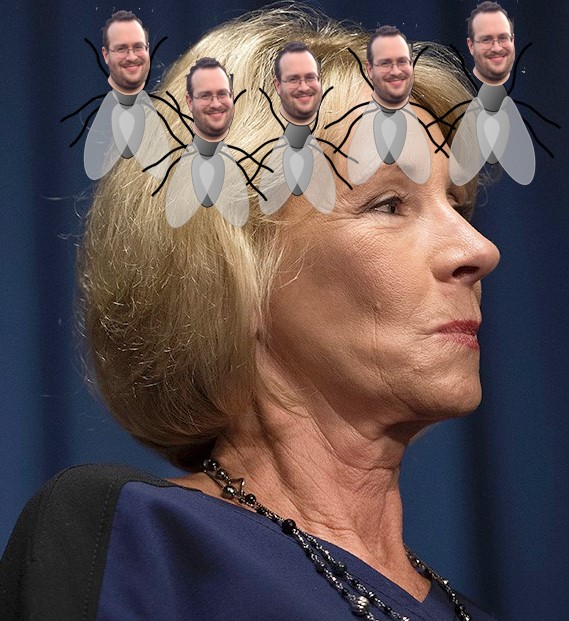
Like this post? I’ve written a book, “Gadfly on the Wall: A Public School Teacher Speaks Out on Racism and Reform,” now available from Garn Press. Ten percent of the proceeds go to the Badass Teachers Association. Check it out!
book-3

What’s the Buzz? A Crown of Gadflies! Top 10 Articles (by Me) in 2017

thumbnail_Screen shot 2017-12-26 at 3.44.17 PM


We made it, Readers.


Somehow we survived 2017 – the first year of the Trump Presidency.


What a monstrosity that has been so far!


Republicans have stolen more than $1 trillion from our pockets to give to their mega-wealthy donors in the form of tax cuts. A 3-2 GOP majority on the Federal Communications Commission (FCC) repealed Net Neutrality. And the party of Lincoln endorsed and funded a child molester for US Senate – though he thankfully lost.


We’re in new territory. Politics has always appealed to the best and worst of our natures: Good people who really want to make a difference and sniveling cowards willing to do whatever their sugar daddies tell them. But unfortunately our world has increasingly rewarded the latter and almost extinguished the former.


However, don’t lose heart. The cockroaches are all out in the open. They’ve become so emboldened by the words “President” and “Trump” voiced together that they no longer feel the need to hug a wall.


All it would take is a good boot and a series of stomps to crush them forever.


Someone get me my shoes.


In the meantime, I sit here at my kitchen table recovering from a turkey coma preparing for a nostalgic look back at everything that’s happened here at Gadfly on the Wall in the past year.


It was quite a 365 days! Most amazing was the publication of my book, “Gadfly on the Wall: A Public School Teacher Speaks Out on Racism and Reform” from Garn Press. It’s a thorough reworking and “Best Of” this blog over the last three years.


Sales have been strong and reviews are starting to come in. I am absolutely floored when I get messages from people I admire telling me they got the book and appreciate this or that. It’s been my lifelong dream to publish a book, and now I’ve done it. The New Year will involve lots of promotion – hopefully I can get decision makers to read it!


Other than that, it’s been a busy year blogging. I wrote 118 articles! That’s about one every three days!


And people have been reading them.


I’ve had more than 364,000 hits – about the same as in 2016. This puts the total views over the 1 million mark at more than 1,216,000! That’s quite a landmark for a blog that’s only been around since July, 2014. And it doesn’t count all the readers I get from articles reposted on the Badass Teachers Association Blog, Huffington Post, Commondreams.org, the LA Progressive, Alternet, BillMoyers.com or other sites.


I’ve also gotten 1,510 more people to follow me for a total of 12,845.


I’m so honored that readers still like coming to this site for news and commentary. As long as you care to enter those virtual doors, I’ll be here, hunched over my computer, pounding away at the keys.


So without further ado, let’s take a look back at the top 10 articles from this blog that got the Inter-webs humming:


10) Teacher Appreciation Week is a Pathetic Joke!

Published: May 10, 2017 Screen Shot 2017-05-10 at 3.38.28 PM


Views: 4,320


Description: At the end of every school year we get Teacher Appreciation Week. It’s nice. Educators get free donuts and cookies, a pat on the head and then the rest of the year we get all the blame for society’s problems without any additional funding, repealing terrible policies or even acknowledgement of what the real issues are in our schools. It’s a sham. Someone had to say it, so I did. Thanks for the snack, but it takes a village, folks! Get off your butts and take some responsibility!


Fun Fact: Some people, even teachers, were really upset by this article. They thought it was ungrateful. Don’t get me wrong, I am truly appreciative for any crumb the public wants to give us, teachers, but I’m not going to let it pass as if that counts as true support. Salving your conscience isn’t enough. We need true allies to get down in the mud and fight with us. Otherwise, it’s just an empty gesture.


9) White Privilege, Public Schools and Ugly Christmas Sweaters


Published: Dec 22 Screen Shot 2017-12-22 at 1.02.56 PM


Views: 4,324


Description: This one’s hot off the press! It describes a situation at one of the schools were I’ve taught over the years and how dress code policies can support white privilege. They’re the broken windows policing of academia, and we need to put much more thought into them before laying down blanket restrictions.


Fun Fact: Some readers took exception to this piece because they thought I didn’t do enough to stop a wayward administrator despite the fact that I never said what I did or didn’t do. Some even complained that it was dumb to simply acknowledge racism and racist policies and actions. I don’t know what world they’re living in. White folks voted for Donald J. Trump to be President. We’ve got a long way to go, and acknowledging everyday prejudice seems a worthy goal to me.


8) America’s Founding Fathers Were Against School Choice

Published: Feb 16 3551131_f520


Views: 4,483


Description: The entire premise of school privatization goes against the founding principles of our nation. We were born out of the Enlightenment, not the profit motive. Our founders would look on in horror at charter and voucher schools. Though they aren’t perfect, only truly public schools embody the ideals of the Revolution. True conservatives and true patriots would support that system, not strive to blow it up for personal financial gain.


Fun Fact: Some people took issue with an appeal to the founders who were not exactly perfect. It’s true. In practice many of them did not live up to their own high ideals. However, who does? It is the ideal that matters, not the clay feet of our forebears.


7) Middle School Suicides Double As Common Core Testing Intensifies


Published: July 24 Screen Shot 2017-07-24 at 10.35.30 AM


Views: 5,800


Description: Teen suicides are up – especially among middle school age children. At the same time, we’ve been testing these kids into the ground. More standardized assessments – and these are unnecessarily more difficult to pass Common Core assessments. This is exactly what happens in countries that put such emphasis on testing – they have a higher suicide rate. It’s no wonder that this is happening here, too. Policymakers want us to be more like Asian countries? Be careful what you wish for!


Fun Fact: This article infuriated the good folks at the Education Post. Peter Cunningham had his flunkies attack me on Twitter complaining that I was an angry white dude making undue correlations. Yet every other explanation for the fact of increased middle school suicides was merely a correlation, too. Proving causation is almost impossible. It is just as reasonable – even more so – to conclude that testing is having an impact on the suicide rate as to intuit the cause being increased reliance on social media. The big money folks don’t want us making the connection I made here. All the more reason to believe there is truth behind it.


6) School Choice is a Lie. It Does Not Mean More Options. It Means Less.


Published: Oct. 6 fake1


Views: 7,880


Description: School choice is a misnomer. It’s school privatization. It has very little to do with providing more options for parents or students. It’s about allowing big corporations to avoid public school regulations and profit off your child swiping your tax dollars. School choice is merely a marketing term.


Fun Fact: I must have really pissed someone off when I wrote this one because it caused Facebook to block me for a week. No matter. Readers liked this one so much they shared it for me all over. Why was I targeted? It could be personal since charter school cheerleader Campbell Brown is literally the arbiter of truth at Facebook. Or it could be the social media site’s attempt to bully me into spending money on advertising. Either way, their attempted censorship didn’t work.


5) Dear Teachers, Don’t Be Good Soldiers for the EdTech Industry


Published: Sept 3 FullSizeRender


Views: 8,358


Description: As teachers, we’re often expected to use new technology in our classrooms. However, we’re rarely involved in the decision making process. We’re rarely allowed to decide which technology to use and sometimes even how to use it. Software packages are just handed down from administration or school board. However, the EdTech Industry is not our friend. More often than not it is unscrupulous in the ways it is willing to profit off of our students through data mining, competency based learning and a variety of privacy threatening schemes. It’s up to us to be brave enough to say, “No.”


Fun Fact: I was surprised by how much the piece resonated with readers. So many other educators said they felt they were being bullied into using apps or programs that they thought were of low quality or downright harmful. Sure, there were some who called me a luddite, but the fact remains: we shouldn’t be using technology for technology’s sake. We should be doing so only to help students learn. That requires us to use our best judgment, not follow orders like good soldiers.


4) Teachers Don’t Want All This Useless Data


Published: June 23 26948475_l-too-much-data


Views: 12,459


Description: Administrators love to gift teachers with tons and tons of data. They bury us under reams of standardized test results and expect us to somehow use that nonsense to inform our teaching. It’s crazy. We already collect authentic data on our students for 180 days a year in the classroom in the course of our teaching. Yet they think these mass produced corporate evaluated snap shots are going to somehow change everything? That’s not how you help educators. It’s how you abdicate any responsibility yourself.


Fun Fact: This one really took off especially on the Huffington Post. Many readers seemed to be truly surprised that teachers felt this way. No authentic educator gives in to being data driven. We’re data informed but student driven. And if you want us to do something else, you don’t have the best interests of the kids at heart.


3) PA Legislature Plans Taking Away Teachers’ Sick Days


Published: Feb 2 thumbnail_teachers-sick-719435


Views: 17,702


Description: This was another tone deaf proclamation from the Republican majority in Harrisburg. It was pure meat for the regressive base in gerrymandered districts that if passed they knew would never be signed by our Democratic Governor Tom Wolf. It turns out the backlash was such that they didn’t even have the courage to put it to a vote.


Fun Fact: I never expected this one to be nearly as popular as it was. Usually articles about Pennsylvania get a few hundred local readers and that’s it. But this one infuriated everyone. How dare lawmakers propose this! Don’t they know how many bacteria teachers are exposed to!? Do they want us to come to school sick and spread the disease to our students!? I’d like to think that the article had something to do with this terrible piece of legislation disappearing, but I have no evidence to support it. However, I can say that it will probably be back when they think no one is looking, and it will still make me sick.


2) U.S. Public Schools Are NOT Failing. They’re Among the Best in the World


Published: Jan 29 surprised-kid-investor-050213


Views: 23,841


Description: Everyone says public schools are failing. I call bullshit. It depends on how you’re evaluating them, and – frankly – we’re not being fair to our American education system. Sure. There are plenty of ways we can improve, but there’s a lot we’re doing right, too. In fact, many of the things we get right, few other systems do around the world. We excel in our ideals. If we just had the courage of our convictions, our system would be beyond the moon! Even as it is, we have much to celebrate. And other nations would do well to emulate us in these ways.


Fun Fact: I’m quite proud of this one. It’s the only article in the Top 10 here that was included in my book. For the definitive version, you’ll have to go there. Some sections received major rewrites and clarifications. I think the published version is much better. But no matter which version you choose, I’m proud to have an answer for all those out there spreading the myth that our education system is an irredeemable mess. They want us to get rid of the good and replace it with more bad. I say we keep the good and build on it.


1) Ignorance and Arrogance – the Defining Characteristics of the Betsy DeVos Hearing


Published: Jan 18 betsydevos-png-crop-cq5dam_web_1280_1280_png


Views: 28,670


Description: Betsy DeVos’ confirmation hearing was an absolute horror show. It’s even worse when you consider she was confirmed by the Republican majority in a tie vote that was broken by Vice President Mike Pence (that still sends shivers down my spine). Here was someone who knows next to nothing about public education except that she wants to destroy it. She wouldn’t commit to protecting students rights even those under the umbrella of special education. There’s more I could say but I just threw up in my mouth a little bit. Excuse me.


Fun Fact: I’m honored that so many readers turned to my blog for commentary about this. It was a moment of shared horror that hasn’t weakened much in the subsequent months. We’re all just waiting for sanity to return but at least we can do so together. We’re all in this side-by-side and hand-in-hand. We can defeat the Betsy DeVos’ and the Donald Trump’s of the world if we stay strong. It could happen any day now.


Gadfly’s Other Year End Round Ups

This wasn’t the first year I’ve done a countdown of the year’s greatest hits. I usually write one counting down my most popular articles (like the one you just read from 2017) and one listing articles that I thought deserved a second look. Here are all my end of the year articles since I began this crazy journey in 2014:


2016

Worse Than Fake News – Ignored News. Top 5 Education Stories You May Have Missed in 2016

ignoring-wisdom


Goodbye, 2016, and Good Riddance – Top 10 Blog Post by Me From a Crappy Year

screen-shot-2016-12-27-at-3-29-49-am


 2015

Gadfly’s Choice – Top 5 Blogs (By Me) You May Have Missed from 2015


Screen shot 2016-01-02 at 11.01.09 PM


Who’s Your Favorite Gadfly? Top 10 Blog Posts (By Me) That Enlightened, Entertained and Enraged in 2015

Screen shot 2015-12-30 at 12.57.49 AM


2014

Off the Beaten Gadfly – the Best Education Blog Pieces You Never Read in 2014

Wonderfull illusion art painting


Top 10 Education Blog Posts (By Me) You Should Be Reading Right Now!

computer-people-png-300x202


Still can’t get enough Gadfly? I’ve written a book, “Gadfly on the Wall: A Public School Teacher Speaks Out on Racism and Reform,” now available from Garn Press. Ten percent of the proceeds go to the Badass Teachers Association. Check it out!

book-2

Will the U.S. Follow New Zealand’s Lead and Repeal National Academic Standards?


I-am-more-than-just-a-test-score-1024x683


Kiwis don’t like corporations telling them what to do.


Especially when it comes to educating their children.


That’s why this week, New Zealand’s Education Minister Chris Hipkins announced that schools in the pacific island nation would no longer need to use the national academic standards mandated by the government for the last decade.


“I don’t think anyone will be surprised that we are ditching a failed experiment,” he said.


“We want teachers focused on less testing and more teaching because that’s the way we’re going to improve students’ progress.”


I pause at this point for American readers to catch their breath.


Yes, a national government just reversed course on standardized, canned, one-size-fits-all academic standards for all students in its public schools.


Yes, they had spent millions of dollars to create, roll out and enforce the standards.


But now they see the results have been less than expected and they’re changing their collective minds.


Shocking, I know.


If only we still did things like that in THIS country.


But wait, there’s more.


Why exactly did New Zealand turn against its national standards?


Did parents hate them?


Yes.


Did kids hate them?


Yes.


Did teachers hate them?


Yes.


All things that could be said of our own Common Core. But was there more to it?


Yes.


In short, New Zealand’s national standards weren’t helping kids learn. In fact, they appeared to have the exact opposite effect.


New Zealand children’s performance on international tests dropped significantly since the standards were introduced in 2010.


And publication of these results showing 10-year-old’s reading achievement taking a nosedive since the standards adoption ignited an already smoldering public outcry.


New Zealand’s average score on the Progress in International Reading Literacy Study (PIRLS) had been steady for 15 years, but fell dramatically at the end of 2015. In short, New Zealand went from 23rd to 33rd out of 50 countries.


Funny.


The US has had a strikingly similar result on the same test with the same age children since the mandate to use the Common Core.


The PIRLS is an assessment given to fourth-graders in schools around the world every five years. In 2016, the average score for US students dropped from fifth in the world in 2011 to 13th. And the drop wasn’t merely perfunctory. It was “statistically significant” according to test organizers.


The biggest drop was for the lowest-performing students, what the organizers considered a sign that we’re providing much greater support for economically advantaged children than for underprivileged ones.


Why is this important?


Because Common Core was introduced across the nation in 2010-11. These fourth grade students were the first to be educated using the Core since Kindergarten, and far from creating a boost in achievement, it opened a chasm.


Reading scores went down just as they consistently have done time-and-time-again since we started using the standards.


Scores go down on state tests. National tests. International tests.


Meanwhile the test makers and their proxies keep telling us the problem is that the standards are simply more rigorous and it just will take time for our children to get up to speed. Meanwhile their publishing and software subsidiaries sell us hundreds of millions of dollars worth of new text books, new computer programs, new devices, new apps, new “specialists” and consultants offering professional developments, etc.


Choo! Choo! The gravy train is rolling. We can’t let something like international test scores derail the money train!


Keep in mind, this is the same international test and the same age group of children that caused a revolution in New Zealand.


Will our response be the same?


Probably not.


New Zealand’s authentic reform resulted from a political change. The National Party was replaced by the Labour Party, and repealing national academic standards was part of their platform.


It marked a sharp divide between the philosophies of both groups.


The National Party wanted more testing, more data, more standardization, more holding funding hostage to test scores – just like both Republicans and Democrats in the US.


However, the New Zealand Labour Party ran on significant reductions to standardized education, substantial cuts to standardized testing, repealing national standards and considerable investment in students, schools and teachers.


We in the US simply have no political equivalent.


There is no political party – right, left or centrist – that puts the needs of children, parents, teachers and working people at the center of its platform.


Both the left and right take billions of dollars in campaign contributions from the testing and privatization industries and thus support policies that serve the interest of their donors over their constituents.


There is a tremendous political opportunity here for one party to change course and support a winning strategy.


Republicans tried it in 2016 by lambasting Common Core and then quietly forgetting they could do a thing about it at the state level every day since.


Including today.


Admittedly their education policy is incoherent since they support every standardization and privatization initiative on record so long as a black President didn’t touch it. And even then their opposition melts away when they have the power to do something about it but no one’s looking because the President is too busy playing nuclear chicken with North Korea on Twitter.


Imagine if politicians promised to fix something and then had the courage to actually do it!


It worked in New Zealand.


It’s worked in many places all over the world.


Why can’t it work here?


Two Theories Why Facebook Keeps Blocking Me When I Write About School Privatization

 AdobeStock_115924725-1080x675 

Facebook blocked me.


Again.


What did I do?


Did I post Russian-sponsored propaganda?


Nyet.


Did I post Nazi or racist memes?


Nein.


Did I post fraudulent or debunked accounts of factual events?


No.


So what did I do?


I had an opinion.


I took that opinion and wrote about it. I backed it up with facts, analogies, literary references and examples from my own experience as a classroom teacher in public school.


I took all that, wrote it up in a blog called “The False Paradise of School Privatization,” and posted it on Facebook.


It was the same kind of thing I do several times a week.


Write a blog. Post it on various Facebook pages and on Twitter.


And wait to see if anyone reads it.


But this time – BOOM!


I hadn’t even posted it to a handful of pages before the cyber arm of Mike Zuckerberg’s robo-security came down on me.


The same thing happened in October when I wrote an article called “School Choice is a Lie. It Does Not Mean More Options. It Means Less.”


I had hoped that that first time was just a fluke or that by now I had since sufficiently proven myself to be a human being and not some nefarious bot.


But no such luck.


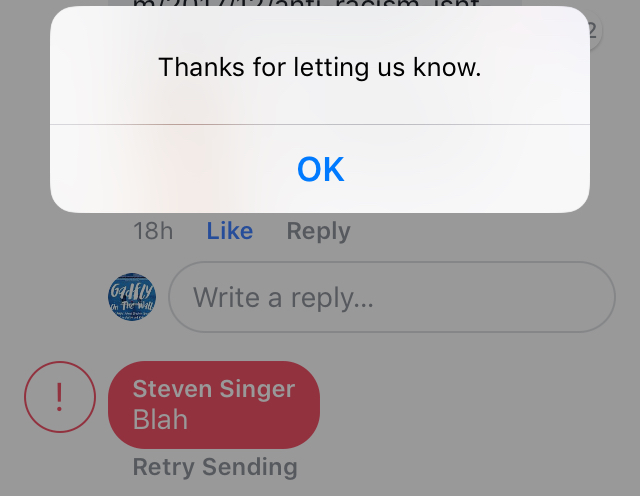
After posting my latest article a few times on Monday, I got this message:


“ACTION BLOCKED


You have been temporarily blocked from performing this action.”


And I got a choice of clicking on:


“This is a mistake”


Or


“OK”

IMG_8706

So I clicked on “This is a mistake,” and got the following:


“Thanks for letting us know.”


My only choice was to click “OK.”

IMG_8707

At some point I got a message telling me that I was blocked until Dec. 11 – a full week from my offense.


And now I have limited use of the social media platform.


I can still see posts.


I can like posts.


For some reason, I can even post and comment on my own page. But I can’t comment or post on other pages without getting the same error message.


At least I can’t do it consistently.


I’ve experimented and found that sometimes I can share posts to different pages. Sometimes I can’t.


It’s a bizarre, wonky system.


And it gets in the way of my work as an education blogger.


Facebook has more than 1.5 billion accounts. That includes more than 80% of all Americans.


Sharing my blog on the site gets me more readers than anywhere else.


Twitter is great and certainly more free. But when you push out a tweet, no one sees it unless they’re looking at their feed at that exact moment. Unless it gets retweeted – or you’re a famous unhinged former reality TV star turned President, then people seek out your own personal brand of nuclear-apocalypse-threatening madness.


So why does this keep happening to me?


I have two theories.


1) I am being purposefully censored by Facebook.


2) Facebook algorithms are targeting me because of how I post.


Let’s look at the first theory.


Could someone be actively censoring me?


Yes.


The proposal has a certain plausibility because the powers that be at Facebook undoubtedly disagree with what I have to say.


Mark Zuckerberg, Facebook’s founder, is a huge supporter of edtech, standardized testing and school privatization. He’s spent hundreds of millions of dollars trying to make public schools rely more heavily on high stakes tests, evaluating teachers on their students’ scores and pushing Personalized Education software packages on public schools. And when that doesn’t pan out, he’s even backed his own charter schools to do the same.


But that’s not all.


Since early January of this year, he’s had Campbell Brown on the job as the arbiter of truth for his on-line platform.


That’s right.


Brown, a school privatization lobbyist and former NBC and CNN personality, heads Facebook’s News Partnership Team.


The newly created position was part of Zuckerberg’s attempt to limit fake news on his social media platform while prioritizing information in the mainstream media.


What exactly is fake news? Whatever Campbell Brown says it is.


This is quite a lot of power to give one person, especially someone who has a reputation for partisanship.


Brown, after all, co-founded a charter school propaganda network called The 74, funded – unsurprisingly – by Betsy DeVos, Republican mega-donor and current Secretary of Education.


After leaving the anchor’s desk, Brown has had a second career helping corporations destroy public schools and public school teachers.


And she does. Not. Like. Me.


Let’s just say we’ve gotten into a few Twitter skirmishes.


When she became the face of a New York lawsuit attacking teacher tenure in 2014, she received a tidal wave of public backlash. So she went on the Colbert Report to complain about how those fighting for workplace protections for themselves and their students were “silencing the debate” on how best to reform public education.


I responded with a blog called “Shhh! Who’s Silencing the Debate on Real Education Reform” claiming that Brown was actually doing the very thing she claimed to be decrying in shutting out teachers’ voices and rights.


She responded by cherry picking her rudest critics and tweeting “Sorry Steve but sadly this is not what I characterize as debate,” as if I had had anything to do with these comments.

IMG_8708

As if any movement should be judged by its most extreme elements.


As if attacking someone’s job, someone’s kids and their future was fine so long as you did so with a smile and a polite comeback.


I don’t condone personal attacks, but I certainly understand them. In any case, Brown used the extreme fringes of her critics to condemn us all and conveniently refused to engage us – even those who had been unceasingly polite.


That lawsuit eventually failed, but Brown somehow landed on her feet.


Now she’s the one who gets to choose truth and falsity on Facebook.


Could she be actively working against people like me?


Yes.


Could she be directing Facebook’s programmers to select against posts that are negative to her pet projects?


Yes.


But there’s no way to know if she’s actually doing it.


Which brings me to my second theory.


Perhaps mindless Facebook algorithms are targeting me because of how I post.


I do, after all, try to post my articles on as many pages as I can.


They’re mostly pages focused on education and education policy with a few political and anti-racism sites thrown in, too.


Maybe I’m posting too quickly.


I might be triggering one of Zuckerberg’s bots to think I’m a bot, too, spamming up the works with advertising.


However, there’s a few problems with this theory.


Let’s say it’s true.


Why would that, alone, be reason to block me?


I’m not posting advertisements. I’m not asking for money. My blog doesn’t sell adds other than those WordPress puts on there, itself, so I can keep the page for free.


If an algorithm is stopping me because it thinks I’m unfairly selling something, it’s the result of some badly written code, indeed.


When programmers write code, that’s not impartial. It betrays their values. It betrays certain decisions about what’s acceptable and what isn’t.


For instance, I keep getting advertisements from Facebook asking me to pay money to the social media network so that they’ll post my articles on other people’s site for me.


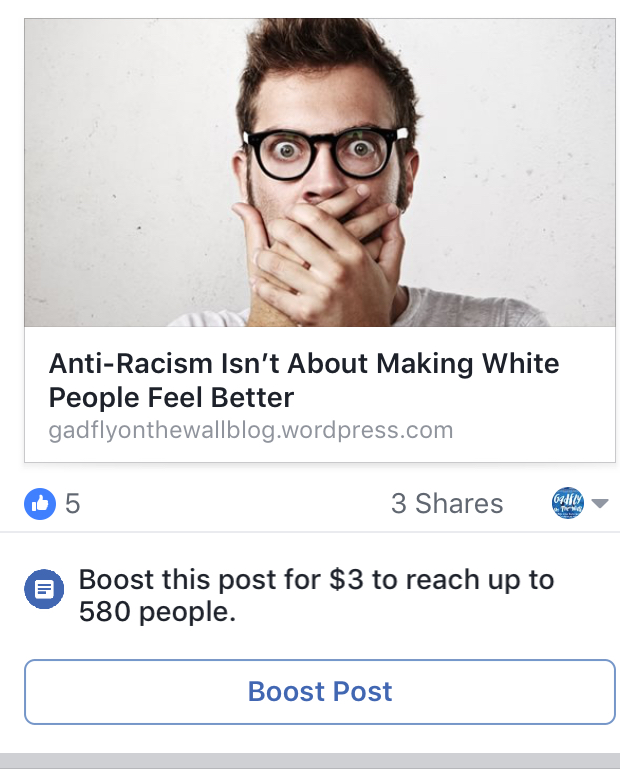
I get reminders like “Boost this post for $3 to reach up to 580 people.”

IMG_8712

Oh, really?


So I’m blocked because I posted my own writing to sites that have accepted me as a member and whose membership includes many I consider friends and colleagues. But for a fee, Facebook will post that same article to various sites filled with people I’d consider to be complete strangers.


Somehow that doesn’t “violate community standards” – the reason they said they blocked me in October.


This is very telling.


It seems to indicate that there is nothing wrong with what I’m doing, per se. It’s just that Facebook wants to encourage me to let them do it for me – so they can monetize my account.


They’re stopping me from doing this on my own, because they think I’m a sucker who should pay them for the right to communicate with others.


And that’s a very real possibility.


These blockages may not be political. They may be a simple marketing strategy.


So what can I do about it?


Well, first I need to wait a week until my account is unfrozen and I get back all the features Facebook users usually enjoy.


Then I can try to go back to the way things were posting my articles at all my favorite virtual watering holes.


Only slowly.


Much more slowly.


I figure if I only post once every five minutes or so, I can have my article at all the places that seem to like having them in about the course of an evening.


But I have a life, damn it!


I can’t spend the twilight hours posting and waiting and posting and waiting.


I guess another alternative is to rely on friends to post for me.


Spread the love.


Have others circulate my articles far and wide.


And that’s a great strategy. It’s very hard for Facebook to do anything about it.


But it requires me to impose on others. I don’t like doing it.


My readers, friends and supporters have lives, too.


They have more important things to do than post my writing all over the Internet.


So where does that leave me?


I’m not sure.


If I continue as I have, I’m bound to be blocked and thrown in Facebook Jail again.


Even if I don’t, I’m at the mercy of the wealthy elites who control the network.


And if the FCC does away with Net Neutrality, as they’re threatening to do in a matter of days, it may not even matter.


Regardless of where I post on Facebook, my blog site will probably be slow to the point of molasses and maybe even shut down entirely.


This is the brave new world of the plutocracy unrestrained.


This is American fascism triumphant.


I am only a single point of the resistance.


My voice is only as powerful as those who share it.


If Facebook, Twitter or WordPress somehow takes me down, I’ve written a book, “Gadfly on the Wall: A Public School Teacher Speaks Out on Racism and Reform,” now available from Garn Press. Ten percent of the proceeds go to the Badass Teachers Association. Check it out!

book-1

“We Want Our Money Back!” – The Rallying Cry of the 99% After GOP Tax Scam Passes Senate

resist_1

We want our money back!

Every penny!

With interest!

Do you hear us, Republican Senators?

Early this morning while most of us slept, you passed a $1.5 trillion tax giveaway to the wealthiest people in America!

And you did it 51-49 with only one Republican, Bob Corker of Tennessee, joining all Democrats against it.

This was a 500 page piece of lobbyist-written legislation hastily put together – in some cases scribbled in pen across type written pages – that no one had a chance to read before voting.

I am no fan of the corporate Democrats who have taken over what used to be a progressive party. But we can’t blame them for this one.

This scandal belongs entirely on the shoulders of Republicans.

The Dems even offered a resolution to delay the vote so that legislators had a chance to read it. All 52 Republicans voted against it!

This is what happens when the people lose control of their government.

This is what happens when the rich control lawmakers with their money.

There is no longer any doubt that we no longer live in a Republic. We no longer have any form of representative Democracy. We live in a pure plutocracy.

The rich pay the representatives and the representatives do what the rich want.

The wealthy are their real constituents. We are merely patsies told polite falsehoods to keep us in line.

You have no political power.

None.

Governments get their legitimacy from the consent of the governed.

You did not give your consent to give away more than a trillion dollars to rich douchebags who don’t need it. But Republicans gave it to them anyway.

Therefore, our government has no legitimacy.

We are an occupied people.

We are the victims of a palace coup.

The question remains if there is even a semblance of democratic principles left to allow us to regain what has been stolen.

The present plutocracy is weak. It has not had time enough to consolidate its power.

The old plan of gradually stealing control under cover of neoliberal policies has been abandoned. This is a naked power grab.

Perhaps it will be the jolt we need to snap us all awake.

Perhaps it will be enough to move the 99% to grab what little remains of the system set up by Washington, Jefferson, Madison, Hamilton and the other founders.

We must rise up and demand these crooks pay us back.

“We want our money back!” should be our rallying cry.

If there are any lawmakers left in the halls of power that want to represent us, they should take a page from the GOP handbook.

How many times did Republicans propose overturning Obamacare regardless of whether they had the votes or the power to do so?

We must do the same with this tax scam bill.

At every turn, we should propose repealing the bill and forcing the wealthy to pay back every red cent they stole! With interest!

It doesn’t matter if it won’t pass. Do it.

Clog the wheels of power with our cries. Don’t let them do a single thing more to make the lives of the majority of the population worse.

Democrats, now is your last chance to show us where you really stand.

You and I both know that if the Republicans had offered even the slightest concessions, many Dems would have voted for almost the same tax scam bill. It would have been a terrible piece of legislation that stole banks full of money from you and me. But it wouldn’t have been quite as terrible.

Frankly, that’s not enough, Democrats.

You aren’t to blame for what just happened, but you haven’t proven yourselves to be part of the solution.

If you want our continued support, you need to move to the left. HARD!

The masses have been stoked and stirred by this scandal. The political landscape has never been more primed for a landslide against the ruling class.

Democrats could take advantage of this and earn a blue wave next year.

But this will only happen if you run candidates that are willing to fight on our side in the class war that has already begun.

Bernie Sanders is great, but let’s be honest. He’s kinda elderly, and he’s a moderate.

That’s right. “Crazy” Bernie with his “kooky” socialist ideas is in the middle of any sane political spectrum. He only seems like a radical because of how far to the right the spectrum has shifted in this country.

We need real progressives who aren’t afraid to take on the establishment and fight inequality, police brutality, white supremacy, school privatization and a host of ills that – frankly – Democrats have historically championed almost as much as Republicans.

The pieces are all lined up. The board is ready to play.

We will support anyone who supports us.

We are coming for Republicans.

They will be repealed and replaced.

We will get back every penny they just stole last night. And we will grab every Richy Rich plutocrat by the heels, turn them upside down and shake until we get back every penny they took – with interest.

We will wring every last drop of Democracy we can from this government.

And if we find that there is not enough left…

History has an answer for what comes next.

Americans don’t take kindly to taxation without representation.

And that’s exactly what Republicans gave us this morning.


Like this post? I’ve written a book, “Gadfly on the Wall: A Public School Teacher Speaks Out on Racism and Reform,” now available from Garn Press. Check it out!
book-3

Public School Teachers Are Absent Too Much, Says Charter School Think Tank

school-shadows


Have you ever heard of media bias?

I don’t think many so-called journalists have.

At least their editors haven’t or perhaps they just don’t care.

Otherwise, why would self-respecting hard news purveyors publish the results of a study by charter school cheerleaders that pretends to “prove” how public school teachers are worse than charter school teachers?

That’s like publishing a study denigrating apples written by the national pear council.

 
Breaking news: Pepsi says, “Coke sucks!”

In a related story McDonalds has startling evidence against the Burger King!

THIS IS NOT NEWS!

THIS IS PROPAGANDA!

I know it’s become trendy to defend the media when our lame-ass President attacks every factually-based report that puts him in a bad light as “fake news.” But the giant media conglomerates aren’t doing themselves any favors with lazy reporting like this.

And I know what many journalists are thinking when they do it, because I used to be one:

I’ll publish the report and include dissenting opinions and that will be okay because I will have shown both sides and readers can make up their own minds.

But what’s the headline? What’s the spin? Who is David in this story and who is Goliath? When multiple stories like this appear all over the news cycle, what impression is made on your readers?

It’s the same thing with climate science. Ninety seven percent of climate scientists say global climate change is man-made and happening. Yet the news gives us one scientist and one crank climate denier and pretends like that’s fair and balanced.

And here we get one biased neoliberal think tank vs. millions of public school teachers all across the country and since you’ve given us an equal number to represent each side, you pretend THAT’S fair and balanced.

It isn’t.

But who’s paying your advertising revenue?

Who owns the media conglomerates that publish your articles?

Often the same people publishing bullshit reports like this one. That’s who.

No wonder they get so much coverage!

So here’s the deal.

The Fordham Institute wrote a report called “Teacher Absenteeism in Charter and Traditional Public Schools.” They concluded that 28.3 percent of teachers in traditional public schools miss eleven or more days of school versus 10.3 percent of teachers at charter schools.

To come up with these figures they used data from Betsy Devos’ Department of Education.

So let the hand-wringing begin!

Look how bad public school teachers are and how much more dedicated is the charter school variety! Look at how much money is being lost! Look at the damage to student academic outcomes!

Won’t someone think of the children!?

WHY WON’T SOMEONE PLEEEEAAASSSEEE THINK OF THE CHILDREN!!??

This report brought to you by the Bill and Melinda Gates Foundation, Bloomberg Philanthropies, the Eli and Edythe Broad Foundation, the College Board, Education Reform Now, the Walton Family Foundation and a host of other idle rich philanthrocapitalists who are drooling over the prospect of privatizing public schools and hoovering up public money as private profit.

Oh. If that’s not enough, Fordham actually runs a series of charter schools in Ohio.

Biased much?

So what’s wrong with the report?

First of all, it’s not news.

Neoliberal think tanks have been publishing propaganda like this for at least a decade. Play with the numbers here, look only at this data and we can paint a picture of “failing” schools, “failing” teachers and therefore justify the “need” for school privatization.

Second, look at all the important data Fordham conveniently leaves out.

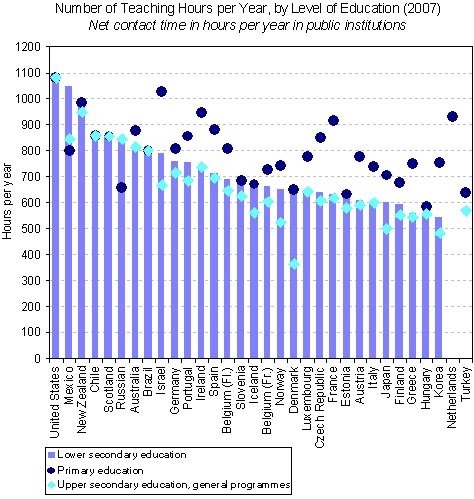
Look at the number of hours public school teachers work in the United States vs. those in other comparable countries, say those included in The Organization for Economic Cooperation and Development (OECD).

In fact, the OECD (which is not biased one way or another about American school privatization) released a mountain of statistics about how many hours teachers work in various countries.

The result: in the United States teachers on average spend more time teaching and receive less pay than those in other countries.

American teachers spend on average 1,080 hours teaching each year. Across the O.E.C.D., the average for most countries is 794 hours on primary education, 709 hours on lower secondary education, and 653 hours on upper secondary education general programs.


teachingtime
Source: OECD


Yet American teachers start at lower salaries and even after 15 years in the profession, earn less money than their international counterparts.

So – assuming Fordham’s absenteeism statistics are accurate – why do public school teachers miss so much school? They’re exhausted from the hours we demand they keep!

But what about charter school teachers? Aren’t they exhausted, too?

Some certainly are.

Working in a charter school often requires grueling hours and fewer benefits. That’s why charters have a higher turnover than public schools.

Since they’re often not unionized, charter schools usually have younger, less experienced staff who don’t stay in the profession long. In fact, they rely on a constant turnover of staff. At many of the largest charter chains such as Success Academy and the Knowledge is Power Program (KIPP), teachers average only 4 years before moving on to another career, according to the New York Times. And this is typical of most charter chains.

So why don’t charter school teachers take as many sick days as traditional public school teachers? Maybe because when they check out, they often don’t check back in.

Moreover, there is a significant difference in the student population at both kinds of school – privatized vs. public.

As their marketing departments will tell you, the students in a charter school choose to be there. The charter schools often weed out the students with behavior problems, special needs or those who are otherwise more difficult to teach. As a result, the strain on teachers may not be as severe. When you’re only serving kids who want to be there and who are easy to teach, maybe you don’t need as much downtime.

Public school teachers, on the other hand, face real dangers from burnout.

According to a study by Scholastic (that actually goes counter to its pro-privatization bias), we work 53 hours a week on average. That comes out to 7.5 hours a day in the classroom teaching. In addition, we spend 90 minutes before and/or after school mentoring, tutoring, attending staff meetings and collaborating with peers. Plus 95 additional minutes at home grading papers, preparing classroom activities and other job-related tasks.

And for teachers who oversee extracurricular clubs, that’s even more work – 11-20 additional hours a week, on average.

Add to that the additional trauma public school children have experienced over the last decade. More than half of public school students now live below the poverty line. That means increased behavior issues, increased emotional disturbances, increased special needs, increased malnutrition, increased drug use – you name it.

Public school teachers deal with that every day. And you seriously wonder that some of us need some downtime during the year to deal with it.

Moreover, let’s not forget the issue of disease.

Working in a public school is to immerse yourself in a petri dish of bacteria and viruses. My first year teaching, I got so sick I was out for weeks until I developed immunities to strains of illnesses I had never been exposed to before.

Kids are constantly asking for tissues and blowing their noses and sometimes not even washing their hands. This is why teachers often purchase the tissues and hand sanitizers that school districts can’t or won’t – we’re trying to stop the spread of infection.

When teachers get sick (and often bring these delightful little maladies home to their spouses, children and families) what do you expect them to do? Continue going to work and further spreading the sickness around to healthy children?

And speaking of illness, let’s talk stress.

Stress is a killer. Do you think pushing the responsibility for the entire school system on to teachers while cutting their autonomy has an effect on teachers individual stress levels?

I can tell you from my own personal experience I had two heart attacks last year. And in the 15 years I’ve been a teacher, my health has suffered in innumerable ways. I’m actually on medication for one malady that makes me immunosuppressed and more susceptible to other illnesses.

So, yeah, sometimes I need to take a sick day. But if you ask most teachers, they’d rather stay in the class and work through it.

Having the day off is often more trouble than it’s worth. You have to plan an entire lesson that can be conducted in your absence, you have to give the students an assignment to do and you have to grade it. Even with the day off, you have a mountain of work waiting for you when you return.

So as a practicing public school teacher, I dispute the findings of the Fordham Institute.

They don’t know what they’re talking about.

They have focused in on data to make their chosen targets, public school teachers, look bad while extolling the virtues of those who work in privatized systems.

There is a manufactured shortage of teachers across the country. We’ve got 250,000 fewer teachers in the classroom than we did before the great recession of 08-09. Yet class enrollment has increased by 800,000 students.

So if we wanted today’s students to have the same experience as those of only a decade ago, we’d need to hire at least 400,000 more teachers.

I wonder why college undergraduates aren’t racing to become education majors. I wonder why there aren’t more incentives to get more teachers in the classroom and why there isn’t a boom of more teaching jobs.

And I wonder why reports like this are talked about as if they were anything but what they are – school privatization propaganda.

There Are Very Few Bad Students, Bad Parents and Bad Teachers

parent-teacher-student


Maybe the problem with public schools is that people just aren’t trying hard enough.


There are too many bad students, bad parents, and bad teachers out there.


At least, that’s what the rich folks say.


They sit behind their mahogany desks, light a Cuban cigar with a thousand dollar bill and lament the kind of gumption that got them where they are today just isn’t present in the unwashed masses.


Never mind that they probably inherited their wealth. Never mind that the people they’re passing judgment on are most often poor and black. And never mind that struggling schools are almost always underfunded compared to those in wealthier neighborhoods and thus receive fewer resources and have larger class sizes.


Tax cuts feed the rich and starve the poor, but somehow the wealthy deserve all the breaks while OUR cries are always the fault of our own grumbling stomachs.


As a 15-year veteran teacher in the public school classroom, I can tell you I’ve seen very few people who aren’t trying.


I’ve seen plenty of struggling students but hardly any I’d simply write off as, “bad.” That’s a term I usually reserve for wilted fruit – not human beings.


I’ve seen plenty of parents or guardians striving to do the best with what they have, but few I’d honestly give up on. And I’ve seen lots of teachers endeavoring to do better every day, but hardly any that deserve that negative label.


In fact, if anything, I often see people trying their absolute hardest yet convinced that no matter what they do it won’t be enough.


“It’s not very good.”


That’s what I hear everyday.


Ask most students to share their writing and you’ll get that as preamble.


“I didn’t do a very good job.”


“This sucks.”


“It’s butt.”


“I can’t do this.”


“It’s grimy.”


“It’s trifling.”


Something to let you know that you should lower your expectations.


This piece of writing here is not worth your time as teacher, they imply. Why don’t you just ignore it? Ignore me.


But after all this time, I’ve learned a thing or two about student psychology.


I know that they’re really just afraid of being judged.


School probably always contained some level of labeling and sorting, distinguishing the excellent from the excreble. But that used to be a temporary state. You might not have done well today, but it was a step on the journey toward getting better.


However, these days when we allow students to be defined by their standardized test scores, the labels of Advanced, Proficient, Basic or Below are semi-permanent.


Students don’t often progress much one way or another. They’re stuck in place with a scarlet letter pinned to their chests, and we’re not even allowed to question what it really means or why we’re forced to assess them this way.


So I hear the cries of learned helplessness more often with each passing year.


And it’s my job to dispel it.


More than teaching new skills, I unteach the million lashes of an uncaring society first.


Then, sometimes, we get to grammar, reading comprehension, spelling and all that academic boogaloo.


“Mr. Singer, I don’t want you to read it. It’s not my best work.”


“Let me ask you something?” I say.


“What?”


“Did you write it?”


“Yeah.”


“Then I’m sure it’s excellent.”


And sometimes that’s enough. Sometimes not.


It’s all about trust, having an honest and respectful relationship. If you can’t do that, you can’t teach.


That’s why all this computer-based learning software crap will never adequately replace real live teachers. An avatar – a simulated person in a learning game package – can pretend to be enthusiastic or caring or a multitude of human emotions. But kids are very good at spotting lies, and that’s exactly what this is.


It’s a computer graphic pretending to care.


I actually do.


Which would you rather learn from?


When a student reads a piece of their own writing aloud, I always make sure to find something to praise.


Sometimes this is rather challenging. But often it’s not.


Most of my kids come to me because they’ve failed the government-mandated test, their grades didn’t set the world on fire, and/or they have special needs.


But I’ve been privileged to see and hear some of the most marvelous writing to come out of a middle school. Colorful adventures riding insects through a rainbow world, house parties with personal play-lists and famous friends, political discourses on the relative worth of the Roman Empire vs. African culture, and more real life crime dramas than every episode of every variation of Law and Order.


It’s just a matter of showing kids what makes them so special. And giving them the space to discover the exceptional in themselves and each other.


There’s a danger in my profession, though, of becoming bitter.


We’re under so much pressure to fix everything society has done to our children, and document every course of action, all while being shackled to a test-and-punish education policy handed down from lawmakers who don’t know a thing about education. We’re constantly threatened with being fired if test scores don’t improve – even for courses of study we don’t teach, even for kids we don’t have in our classes!


It can make the whole student-teacher relationship adversarial.


You didn’t turn in your homework!? Again! Why are you doing this to me!?


But it’s the wrong attitude. It’s understandable, but it’s wrong.


Every year I have a handful of students who don’t do their work. Or they do very little of it.


Sometimes it’s because they only attend school every third or fourth day. Sometimes it’s because when they are here, they’re high. Sometimes they’re too exhausted to stay awake, they can’t focus on anything for more than 30 seconds, they’re traumatized by violence, sickness or malnutrition. And sometimes they just don’t care.


But I don’t believe any of them are bad students.


Let me define that. They are bad at being students. But they aren’t bad students.


They aren’t doing what I’ve set up for them to demonstrate they’re learning.


They might do so if they altered behavior A, B or C. However, this isn’t happening.


Why?


It’s tempting to just blame the student.


They aren’t working hard enough. They lack rigor. They don’t care. They’re an active threat to this year’s teaching evaluation. They’re going to make me look bad.


But I rarely blame the student. Not in my heart.


Let me be clear. I firmly deny the pernicious postulation that teachers are ultimately responsible for their students’ learning.


I believe that the most responsible person for any individual student’s education is that student.


However, that isn’t to say the student is solely responsible. Their actions are necessary for success, but they aren’t always sufficient.


They’re just children, and most of them are dealing with things that would crush weaker people.


When I was young, I had a fairly stable household. I lived in a good neighborhood. I never suffered from food insecurity. I never experienced gun violence or drug abuse. And my parents were actively involved.


Not to mention the fact that I’m white and didn’t have to deal with all the societal bull crap that gets heaped on students of color. Security never followed my friends and I through the shopping mall. Police never hassled us because of the color of our skin. Moreover, I’m a csis male. Young boys love calling each other gay, but it never really bothered me because I wasn’t. And, as a man, I didn’t really have to worry about someone of an opposite gender twice my size trying to pressure me into sex, double standard gender roles or misogyny – you know, every day life for teenage girls.


So, no. I don’t believe in bad students. I believe in students who are struggling to fulfill their role as students. And I think it’s my job to try to help them out.


I pride myself in frequent success, but you never really know the result of your efforts because you only have these kids in your charge for about a year or two. And even then I will admit to some obvious failures.


If I know I’ve given it my best shot, that’s all I can do.


Which brings me to parents.


You often hear people criticizing parents for the difficulties their children experience.


That kid would do better if her parents cared more about her. She’d have better grades if her parents made sure she did her homework. She’d have less social anxiety if her folks just did A, B or C.


It’s one of those difficult things that’s both absolutely true and complete and total bullshit.


Yes, when you see a struggling student, it’s usually accompanied by some major disruption at home. In my experience, this is true 90% of the time.


However, there are cases where you have stable, committed parents and children who are an absolute mess. But it’s rare.


Children are a reflection of their home lives. When things aren’t going well there, it shows.


Does that mean parents are completely responsible for their children?


Yes and no.


They should do everything they can to help their young ones. And I think most do.


But who am I to sit in judgment over other human beings whose lives I really know nothing about?


Everyone is going through a struggle that no one else is privy to. Often I find my students parents aren’t able to be home as much as they’d like. They’re working two or more minimum wage jobs just to make ends meet. Or they work the night shift. Or they’re grandparents struggling to pick up the slack left by absentee moms and dads. Or they’re foster parents giving all they can to raise a bunch of abused and struggling children. Or they’re dealing with a plethora of their own problems – incarcerations, drugs, crime.


They’re trying. I know they are.


If you believe that most parents truly love their children – and I do believe that – it means they’re trying their best.


That may not be good enough. But it’s not my place to criticize them for that. Nor is it society’s.


Instead we should be offering help. We should have more social programs to help parents meet their responsibilities.


It may feel good to call parents names, but it does no good for the children.


So I don’t believe in bad parents, either. I just believe in parents who are struggling to do their jobs as parents.


And what about people like me – the teachers?


Are we any different?


To a degree – yes.


Students can’t help but be students. They have no choice in the matter. We require them to go to school and (hopefully) learn.


Parents have more choice. No one forced adults to procreate – but given our condemnation of birth control and abortion, we’ve kind of got our fingers on the scale. It’s hard to deny the siren song of sex and – without precautions or alternatives – that often means children.


But becoming a teacher? That’s no accident. It’s purposeful.


You have to go out and choose it.


And I think that’s significant, because no one freely chooses to do something they don’t want to do.


After the first five years, teachers know whether they’re any good at it or not. That’s why so many young teachers leave the profession in that time.


What you’re left with is an overwhelming majority of teachers who really want to teach. And if they’ve stayed that long, they’re probably at least halfway decent at it.


So, no, I don’t really believe in bad teachers either.


Certainly some are better than others. And when it comes to those just entering the profession, all bets are off. But in my experience, anyone who’s lasted is usually pretty okay.


All teachers can use improvement. We can benefit from more training, resources, encouragement, and help. Cutting class size would be particularly useful letting us fully engage all of or students on a more one-on-one basis. Wrap around services would be marvelous, too. More school psychologists, special education teachers, counselors, tutors, mentors, aides, after school programs, etc.


But bad teachers? No.


Most of the time, it’s a fiction, a fantasy.


The myths of the bad student, the bad parent and the bad teacher are connected.


They’re the stories we tell to level the blame. They’re the propaganda spread by the wealthy to stop us from demanding they pay their fair share.


We know something’s wrong with our public school system just as we know something’s wrong with our society.


But instead of criticizing our policies and our leaders, we criticize ourselves.


We’ve been told for so long to pick ourselves up by our own bootstraps, that when we can’t do it, we blame the boots, the straps and the hands that grab them.


We should be blaming the idiots who think you can raise someone up without offering any help.


We should be blaming the plutocrats waging class warfare and presenting us with the bill.


There may be few bad students, parents and teachers out there, but you don’t have to go far to find plenty of the privileged elite who are miserable failures at sharing the burdens of civil society.

Top 10 Reasons Public Schools are the BEST Choice for Children, Parents & Communities

thumbsup


Everywhere you look today you’ll find profits prophets of doom bemoaning the quality of our public school system.


We’ve got too many failing schools, they say. The only thing to do is to invest in private and privatized institutions vouchers, charters, ANYTHING but public.


But as education professors Christopher and Sarah Lubienski wrote in their landmark book “The Public School Advantage: Why Public Schools Outperform Private Schoolsthere’s little evidence behind the hype. Public schools are far from perfect, but even given their deficiencies, they have benefits that far outweigh those of privatized schools. Indeed, market-based educational reform, wrote the Lubienskis, is “increasingly a belief system rather than a policy theory.”


Privatized schools are sometimes great at boosting standardized test scores, but when it comes to authentic indicators of student learning, they often fall well behind their traditional public school counterparts.


And when you stop to consider things like finances, accountability, self-governance, social justice and life-long learning, then public schools prove themselves to be a much better choice than any privatized system.


Clearly we’re speaking in generalities here. Every school – public or privatized – is different. But there is enough commonality to identify certain trends between each type of school to make general conclusions about each category. In short, despite any media or political propaganda to the contrary, public schools come out on top.


Here are the top 10 reasons public schools are the best choice for children, families and communities


1) Public Schools Attract the Best Teachers


When choosing a school for your children, you want them to have the best teachers possible. You want life-long, committed educators – people who entered the profession as a calling, who dedicate their lives to young people.


This is not the case at many charter or private schools. Their teachers often don’t have the same high level of education, experience, or commitment. In many states, they aren’t required to earn a 4-year degree from an accredited college, they routinely have less experience and higher turnover.


Compare that with public schools. With rare exceptions, teachers must have at least one bachelors degree in a specialized education field, and many have masters degrees or more. In addition, teacher turnover is much lower. This is partly because public school teachers usually earn a higher salary than those at privatized schools. (It’s still not comparable with professionals in other fields with similar levels of education, but it’s better than they get at privatized schools.) In addition they have higher job satisfaction because of increased union membership, which enables greater stability and helps create a safer workplace for teachers and their students.


Think about it. If you were one of the best teachers in the country, wouldn’t you want to work where you get the highest salary and benefits? Of course!


2) Public Schools Have a Greater Sense of Community


Most public schools have been around for a long time. They are the heart of the communities they serve. They do so much more than just teach children. They host continuing education courses for adults, extracurricular activities, sporting events, academic clubs, public swimming pools, open libraries, and invite the community for local events, concerts, seminars, etc.


This is rarely the case at privatized schools. Charters and private institutions are often fledgling startups. They’re located in rented office spaces, renovated store fronts and other locations chosen more for their cost benefits to investors and not for their efficacy as places of education or community outreach.


Public schools have histories that go back generations. Everyone in the community knows the teachers who work there. Parents often send their kids to the same educators who taught them when they were young. Sometimes this goes back to grandparents and even great grandparents. Older brothers can advise younger sisters what it was like to have this teacher or that principal. The kinds of relationships you get at public school just aren’t there at institutions that model themselves on big box stores like WalMart and Target.


3) Public Schools Increase Educational Choice


Privatizers often talk about charters and voucher schools as if they are the only places that offer parents and students choice. It’s simply untrue. Many public school districts offer a tremendous amount of alternatives for students living in their neighborhoods. Larger urban districts often have magnet or theme schools. But even beyond that, most schools offer a wide variety of classes and curriculum. Students can take foreign languages, vo-tech, arts and humanities, independent studies, and advanced placement or college credit courses. Students can take advantage of a plethora of services designed to personalize their academic experience to meet their individual needs with special and gifted education, even choosing which teachers are the best fit for their learning styles.

Obviously, these options increase with the degree of wealth in a community, but they prove that increasing choice doesn’t have to mean privatization. It means equitable funding.


4) Public Schools Have Greater Diversity


Students learn a lot more than reading, writing and arithmetic in school. They also learn how to deal with different kinds of people – they learn to share this world with other humans from various racial, ethnic, religious, and sexual backgrounds. The more diverse an environment they grow up in, the more well-adjusted they will be for the adult world, and the less racist, sexist and prejudiced they’ll probably become.


Public schools are often a sea of diversity. They are the best place to meet the entire spectrum of humanity. On the other hand, charter and voucher schools are routinely segregated and homogenous. Sometimes privatized schools make efforts to fight against this, but you can’t make much headway when your entire system is based on sorting out the underprivileged in favor of white, affluent children whose parents can afford tuition (private schools) or poor black but high achieving children (charter schools).


5) Public Schools Are More Fiscally Responsible


Public schools spend their money more wisely than privatized schools. They have to! Their records are an open book. All the spending decisions happen in public view. And the law requires that all expenses must relate to educating children.


Privatized schools rarely do this, and if they do, it’s by choice not necessity. They could close their books any day, make whatever decisions they like behind closed doors and layout bundles of cash for their CEOs or investors. Privatized schools are for-profit. Even when they aren’t explicitly labeled as such, they usually operate in the same way – cut student services to increase the bottom line. Their explicit goal is to make money off your child – not simply earn a middle class income like public schools. No, they want to get rich off of your dime.


Privatizers buy mansions and yachts with your money. Public school teachers pay off their mortgages. And in the rare instances where public school employees break the law and try to embezzle funds, they are much more likely to be caught because the books are right there for all to see.


6) Public Schools Are More Reliable


When you send your child to most privatized schools, you never really know if it’s going to be there tomorrow. Charter schools often close without a moments notice. Private schools declare bankruptcy.


If there’s one thing you can be reasonably sure of, it’s that your neighborhood public school will still be there. It’s been there for decades, sometimes hundreds of years. Charter and voucher schools are often fly-by-night affairs. Public schools are solid bedrock. If public schools close, it’s only after considerable public comment and a protracted political process. No one ever shows up to find the local public school chained shut. Not the same at charters or private schools.


7) Public Schools Have Greater Commitment to Students


Charter and vouchers schools don’t have to accept your child. Public schools do.


When you enroll in a privatized school, the choice is all up to administrators. Is your child a safe bet? Can they let your little one in without breaking the bank? Will he or she make the school look good with better test scores? Will he or she be easy to educate?


Public schools, on the other hand, have a commitment to educating every child who lives in the district. They even take homeless children. Only under the most extreme circumstances would they expel a young person. No matter who your offspring is, no matter how good or bad a student, public school operators have faith they can help the youngster succeed.


8) You Have Ownership of Public Schools


With privatized schools, you’re paying for a business to provide services. Public schools belong to you. In fact, you’re the boss.


Public schools are run by your friends, neighbors and co-workers. Privatized schools are most often run by appointed boards of directors who are not beholden to you but to the investors. As education blogger Peter Greene puts it, “The charter is a business, run by people who don’t ever have to let you into their board room.”


In addition, many public schools go beyond even this level of parental involvement. They more often have PTAs or PTOs. They have advisory councils where elected parents, teachers and community members can work together to advise the school board on important maters like hiring superintendents. If parents and the community want a voice, the public school system is overflowing with options. Ironically, the community rarely has any say over privatized schools and parents can only vote with their feet.


9) Public Schools Provide More Amenities


Public schools routinely offer so much more than privatized schools. At many charter and voucher schools, parents are required to buy supplies for the whole institution. Public schools accept donations and sometimes teachers ask for help, but if parents can’t (or won’t) send in pencils or tissues, the school provides it gratis. And even when the district is cheap in this regard, teachers often make up the difference from their own pockets. It’s not right that they have to do so, but they constantly step up for your children.

Moreover, public schools offer a much expanded range of services for your children than privatized schools. Special education and gifted programs are first rate at public schools while often intermittent or nonexistent at privatized schools. And the requirements put on parents at public schools are much lower – less restrictive dress codes, fewer demands on parents’ time and they take a greater responsibility for your children.

Heck, private schools rarely even pay for transportation. Public schools offer a free ride via the school bus from home and back again.


10) Public Schools Match or Outperform Privatized Schools


When it comes to academic performance, comparisons all come down to what data you think is indicative of student learning and which factors you exclude. You can find plenty of studies funded by privatizers that unsurprisingly conclude their backers business model is the best. However, when you look at peer reviewed and nonpartisan studies, the story changes.

The Lubienskis, in particular, paint an extremely compelling picture of public school superiority based on numerous complex statistical models including hierarchical linear modeling and multivariate regression. In short, the authors conclude that after accounting for the demographic differences among various school sector populations, traditional public school students outperform those at private schools over time. Students typically enter public schools with much greater degrees of poverty than those entering private schools. As such, public school students start with greater academic deficiencies. Even so, public schools are able to make up for these deficiencies over time more easily than privatized schools. And by fourth grade, public school students actually have greater academic success than their demographically similar peers at private or charter schools. The Lubienskis call it “The Public School Effect.”


With all these benefits, you’d think we’d be cheering on our public school system, not denigrating it. However, the failing schools narrative sells a lot of people on privatized alternatives. But it’s not fact. It’s marketing.


It’s time someone explicitly outlined the benefits of our public schools. We could be doing a lot more to help make them even better. But the first step is recognizing what an asset these schools already are.


Public schools, they’re what happens when we value children over profit.

Betsy DeVos Wants Fewer Rights for Rape Survivors & More for Alleged Attackers

image

As a public school teacher, you see a lot of ugly things.

You see children with bruises under their sleeves. Kids who cringe when your voice gets too loud. Young people traumatized by sexual violence.

Even in middle school.

So when Betsy DeVos decided to take up for alleged rapists while making it harder for survivors of sexual assault to come forward, I took it kind of personally.

Last week, the Secretary of Education for the United States of America blithely announced her plan to no longer require colleges and universities that receive federal funds from prosecuting on-campus sexual assault with the same severity.

Yes. Seriously.

“The prior administration weaponized the Office for Civil Rights to work against schools and against students,” she said at George Mason University in Arlington, Virginia.

“The notion that a school must diminish due process rights to better serve ‘victims’ only creates more victims… If everything is harassment, then nothing is.”

In other words, the billionaire heiress in charge of protecting students’ civil rights thinks there is a power imbalance between rapist and victim. And she’s right. Except that she thinks the alleged rapist is on the losing end of that imbalance.

This may be the most preposterous thing she has ever said. And she’s infamous for saying preposterous things.

In matters of sexual assault, all the power lies with the accuser!?

Has Ms.DeVos ever met a survivor of sexual assault?

I have. I’m sorry to say that I’ve met some while working in our public schools.

To put it bluntly – they were my students.

Little children afraid to go home. Kids with backpacks and cartoon animals on their shirts. Barely teens who kept to themselves, arms locked across their chests. Youngsters who just wanted to stay in class as long as I was staying, who would draw and hum and soak up the least bit of human kindness.

Some of them eventually would confide in me, their teacher. Not that I asked. I would have preferred letting the guidance counselor handle it. I really wasn’t trained for it. But there’s only one thing to do when someone wants to tell you their story – you listen.

And that’s exactly what DeVos is telling us NOT to do.

Don’t listen to accusations of sexual assault unless there is a preponderance of evidence. Start from a position of skepticism and unbelief even so far as making accusers confront their attackers.

After all, it’s the only way to protect from false allegations. As if that were at all common.

Only someone devoid of empathy or intelligence could say such a thing with a straight face – much less present it as a statement of public policy.

Yet DeVos isn’t the only high ranking member of the Education Department voicing it.

Two months ago, Candace Jackson, the official responsible for enforcing campus sexual assault laws for DeVos’ department, told reporters that “90 percent” of sexual assault accusations “fall into the category of ‘we were both drunk,’ ‘we broke up, and six months later I found myself under a Title IX investigation because she just decided that our last sleeping together was not quite right.’”

Jackson, who heads the Department’s Office of Civil Rights, apologized for the statement after public backlash.

But now it’s federal policy!

Like much else from the Trump administration, it flies in the face of the facts.

False accusations do happen, but they are much less frequent than sexual violence. Only between two and ten percent of rape allegations are untrue, according to the National Sexual Violence Resource Center.

Moreover, the same report found that 63 percent of sexual assaults are never even reported to police. Survivors of this heinous crime rarely come forward because of shame, fear and embarrassment.

That’s something I saw first-hand from my students.

They weren’t bragging about an experience they’d lived through. They wanted more than anything to forget it, to ignore what had happened, to get on with their lives. But they just couldn’t. They felt so betrayed, so vulnerable, so guilty, so frightened.

 
DeVos’ new policy will do nothing to change that. If anything, it will only embolden would-be attackers to attempt more assault – a crime that already affects nearly a quarter of college women.

According to a National Institute of Justice report, 20 percent of young women will become the victim of a “completed or attempted sexual assault” while in college. And more than 6 percent of men will also be assaulted.

We shouldn’t be making it harder for people who have been brutalized to seek justice. The accused should have due process, but that’s what an investigation is. In the rare instance of false allegations, those unduly impugned should be exonerated.

Despite what she says, DeVos’ recent actions have nothing to do with that. Before passing down her decision, she met with “Men’s Rights” groups like the National Coalition for Men – organizations that I can honestly say, as a red blooded American male, certainly don’t speak for me.

This is politics, not any concern for justice. It’s no accident that DeVos serves at the pleasure of a President who was caught on a hot microphone bragging about engaging in sexual assault. It’s no accident that his base includes white supremacists. It’s no accident that his party continually stomps on women’s rights.

If we really wanted to help survivors of sexual assault, we’d take steps to make sure the crime they lived through never happens again. At very least, we could take steps to make it more rare.

Imagine if instead of abstinence only sexual education classes, our children were taught actual facts about human sexuality. Imagine if every child learned the meaning and necessity of consent. No means no. Period.

That could have a real impact on these crimes. Over time, we could create a culture of respect and understanding. That certainly seems a worthier goal for a Secretary of Education than removing support for victims of sexual assault.

As to the handful of students who turned to me for help, I really can’t tell you what happened to them afterwards. In most cases, I don’t know myself.

In each instance, I turned to the authorities to ensure my students received the help they needed.

I hope they got it.

Unlike Ms. DeVos, I put them first.

XQ Live – Desperate School Choice Rebrand After Trump Touched It

IMG_8016

What do you do when your corporate brand has become repugnant to consumers?

You REBRAND, of course! And that’s exactly what uber-rich widow, Laurene Powell Jobs, paid a boatload of celebrities to do last night all over your TV.

The program was called XQ Superschools Live, and it took over four major networks.

It’s ironic really. Using an almost 100 year old medium to push “schools of the future.” They tweeted and Facebooked all over it, but the focus was on the old boob tube.

Why? Because the audience they wanted wasn’t so much the young. They wanted the old – those deep pocketed investors who might be startled by all the flash and bombast and ask their grandkids if this was “cool.”

It was the most pathetic display of desperation I have ever seen in my life.

If there is any justice, Tom Hanks, Yo-Yo Ma, Samuel L. Jackson, Jennifer Hudson and Common will have to spend the rest of their lives to regain even a fraction of street cred.


IMG_8017


They were nothing but a series of singing and dancing sell outs. This was a modern day minstrel show. A bunch of highly paid shills pretending to represent the common folk.

I’m talking raised fists at the end of dance numbers meant to evoke all the power of authentic activists like Black Lives Matter without really having any grassroots support or message.

To be honest, my overwhelming response was pity.

Did anyone really think this was going to connect with an audience?

And speaking of that audience, if you had no idea who XQ or corporate education reform was, you probably watched the screen in bemused confusion. What the heck was this crap? It was platitudes about improving high schools broken up by song and dance numbers. It made the MTV Video Music Awards seem like a college dissertation.

Yet, to the initiated, you could see the subtle nods to privatization and charter schools, the shade thrown on traditional public schools.

Rethink high school?

Sure! Let’s do that! Let’s rethink inequitably funding it. Let’s rethink high stakes standardized testing. Let’s rethink Common Core, stealing local control, teacher autonomy and a host of the kinds of top down bull crap XQ tried obscure while selling  an issue of Tiger Beat.

So now that it’s over, what have we learned?

1) Corporate education reformers are THAT desperate to distance themselves from Donald Trump.

His wholehearted endorsement of their agenda has done them serious life threatening damage. He has exposed their racist, privileged, corporatist policies for exactly what they are. No amount of celebrities will replace that in the public consciousness.

2) Rich people cannot set education policy.

Steve Jobs widow may be a very nice lady. But she has no freaking clue about public education. Nor is she honest enough to engage actual classroom teachers in the discussion to find out.

Instead of relying on the billionaires of the world, we should tax them. Then we can afford to fully fund our schools and let the people actually in the classroom decide what’s best for the students in their care. Let parents decide. Let school boards decide. Not a privileged tech philanthrocapitalist.

3) Celebrities will do anything for money.

The things these Hollywood elite prostitutes did last night to sell snake oil would make porn stars blush. I will never look at any of these people the same. Some of them I knew were true believers because of other projects. Heck! As much as I love Common’s new album, he does rap about Corey Booker – so warning there. Viola Davis is an amazing actress but she was in the parent trigger propaganda film “Won’t Back Down.”

Being famous doesn’t mean you know a damn thing. We recognize their faces. We associate them with past roles and characters we loved. We think their political stands are authentic when they are often just a pose. We’ve got to stop respecting these people just because they’re celebrities.

What will the long-term effect of last night’s propaganda be?

I don’t know.

I seriously doubt anyone really bought that. But you know what they say – no one ever went broke betting on the stupidity of the public.

And that’s what this was – a high stakes wager on American gullibility.