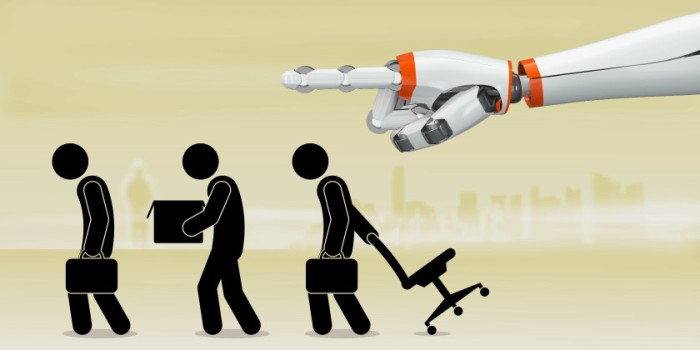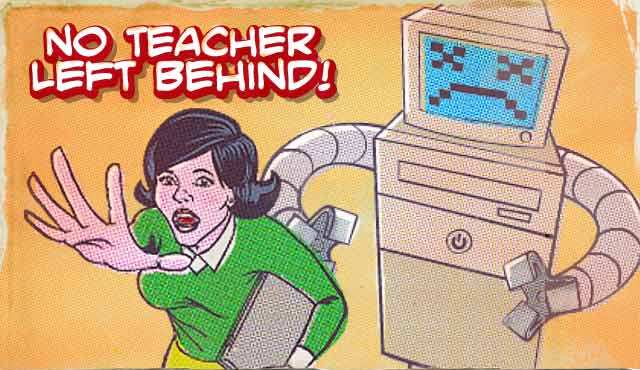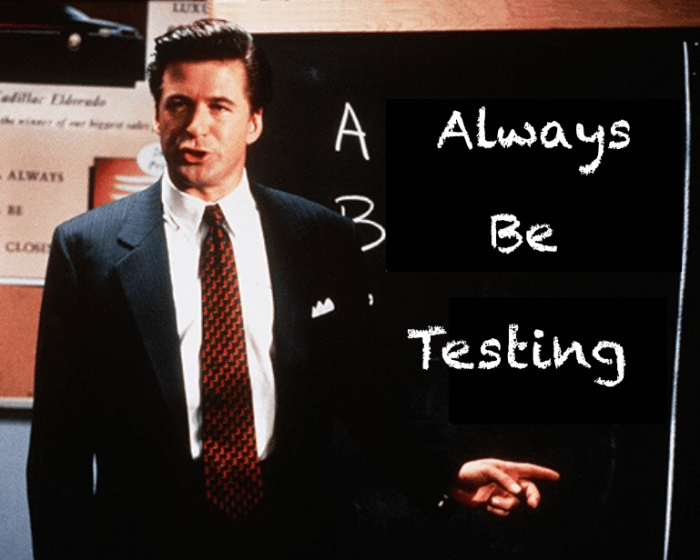
There Are Very Few Bad Students, Bad Parents and Bad Teachers

parent-teacher-student


Maybe the problem with public schools is that people just aren’t trying hard enough.


There are too many bad students, bad parents, and bad teachers out there.


At least, that’s what the rich folks say.


They sit behind their mahogany desks, light a Cuban cigar with a thousand dollar bill and lament the kind of gumption that got them where they are today just isn’t present in the unwashed masses.


Never mind that they probably inherited their wealth. Never mind that the people they’re passing judgment on are most often poor and black. And never mind that struggling schools are almost always underfunded compared to those in wealthier neighborhoods and thus receive fewer resources and have larger class sizes.


Tax cuts feed the rich and starve the poor, but somehow the wealthy deserve all the breaks while OUR cries are always the fault of our own grumbling stomachs.


As a 15-year veteran teacher in the public school classroom, I can tell you I’ve seen very few people who aren’t trying.


I’ve seen plenty of struggling students but hardly any I’d simply write off as, “bad.” That’s a term I usually reserve for wilted fruit – not human beings.


I’ve seen plenty of parents or guardians striving to do the best with what they have, but few I’d honestly give up on. And I’ve seen lots of teachers endeavoring to do better every day, but hardly any that deserve that negative label.


In fact, if anything, I often see people trying their absolute hardest yet convinced that no matter what they do it won’t be enough.


“It’s not very good.”


That’s what I hear everyday.


Ask most students to share their writing and you’ll get that as preamble.


“I didn’t do a very good job.”


“This sucks.”


“It’s butt.”


“I can’t do this.”


“It’s grimy.”


“It’s trifling.”


Something to let you know that you should lower your expectations.


This piece of writing here is not worth your time as teacher, they imply. Why don’t you just ignore it? Ignore me.


But after all this time, I’ve learned a thing or two about student psychology.


I know that they’re really just afraid of being judged.


School probably always contained some level of labeling and sorting, distinguishing the excellent from the excreble. But that used to be a temporary state. You might not have done well today, but it was a step on the journey toward getting better.


However, these days when we allow students to be defined by their standardized test scores, the labels of Advanced, Proficient, Basic or Below are semi-permanent.


Students don’t often progress much one way or another. They’re stuck in place with a scarlet letter pinned to their chests, and we’re not even allowed to question what it really means or why we’re forced to assess them this way.


So I hear the cries of learned helplessness more often with each passing year.


And it’s my job to dispel it.


More than teaching new skills, I unteach the million lashes of an uncaring society first.


Then, sometimes, we get to grammar, reading comprehension, spelling and all that academic boogaloo.


“Mr. Singer, I don’t want you to read it. It’s not my best work.”


“Let me ask you something?” I say.


“What?”


“Did you write it?”


“Yeah.”


“Then I’m sure it’s excellent.”


And sometimes that’s enough. Sometimes not.


It’s all about trust, having an honest and respectful relationship. If you can’t do that, you can’t teach.


That’s why all this computer-based learning software crap will never adequately replace real live teachers. An avatar – a simulated person in a learning game package – can pretend to be enthusiastic or caring or a multitude of human emotions. But kids are very good at spotting lies, and that’s exactly what this is.


It’s a computer graphic pretending to care.


I actually do.


Which would you rather learn from?


When a student reads a piece of their own writing aloud, I always make sure to find something to praise.


Sometimes this is rather challenging. But often it’s not.


Most of my kids come to me because they’ve failed the government-mandated test, their grades didn’t set the world on fire, and/or they have special needs.


But I’ve been privileged to see and hear some of the most marvelous writing to come out of a middle school. Colorful adventures riding insects through a rainbow world, house parties with personal play-lists and famous friends, political discourses on the relative worth of the Roman Empire vs. African culture, and more real life crime dramas than every episode of every variation of Law and Order.


It’s just a matter of showing kids what makes them so special. And giving them the space to discover the exceptional in themselves and each other.


There’s a danger in my profession, though, of becoming bitter.


We’re under so much pressure to fix everything society has done to our children, and document every course of action, all while being shackled to a test-and-punish education policy handed down from lawmakers who don’t know a thing about education. We’re constantly threatened with being fired if test scores don’t improve – even for courses of study we don’t teach, even for kids we don’t have in our classes!


It can make the whole student-teacher relationship adversarial.


You didn’t turn in your homework!? Again! Why are you doing this to me!?


But it’s the wrong attitude. It’s understandable, but it’s wrong.


Every year I have a handful of students who don’t do their work. Or they do very little of it.


Sometimes it’s because they only attend school every third or fourth day. Sometimes it’s because when they are here, they’re high. Sometimes they’re too exhausted to stay awake, they can’t focus on anything for more than 30 seconds, they’re traumatized by violence, sickness or malnutrition. And sometimes they just don’t care.


But I don’t believe any of them are bad students.


Let me define that. They are bad at being students. But they aren’t bad students.


They aren’t doing what I’ve set up for them to demonstrate they’re learning.


They might do so if they altered behavior A, B or C. However, this isn’t happening.


Why?


It’s tempting to just blame the student.


They aren’t working hard enough. They lack rigor. They don’t care. They’re an active threat to this year’s teaching evaluation. They’re going to make me look bad.


But I rarely blame the student. Not in my heart.


Let me be clear. I firmly deny the pernicious postulation that teachers are ultimately responsible for their students’ learning.


I believe that the most responsible person for any individual student’s education is that student.


However, that isn’t to say the student is solely responsible. Their actions are necessary for success, but they aren’t always sufficient.


They’re just children, and most of them are dealing with things that would crush weaker people.


When I was young, I had a fairly stable household. I lived in a good neighborhood. I never suffered from food insecurity. I never experienced gun violence or drug abuse. And my parents were actively involved.


Not to mention the fact that I’m white and didn’t have to deal with all the societal bull crap that gets heaped on students of color. Security never followed my friends and I through the shopping mall. Police never hassled us because of the color of our skin. Moreover, I’m a csis male. Young boys love calling each other gay, but it never really bothered me because I wasn’t. And, as a man, I didn’t really have to worry about someone of an opposite gender twice my size trying to pressure me into sex, double standard gender roles or misogyny – you know, every day life for teenage girls.


So, no. I don’t believe in bad students. I believe in students who are struggling to fulfill their role as students. And I think it’s my job to try to help them out.


I pride myself in frequent success, but you never really know the result of your efforts because you only have these kids in your charge for about a year or two. And even then I will admit to some obvious failures.


If I know I’ve given it my best shot, that’s all I can do.


Which brings me to parents.


You often hear people criticizing parents for the difficulties their children experience.


That kid would do better if her parents cared more about her. She’d have better grades if her parents made sure she did her homework. She’d have less social anxiety if her folks just did A, B or C.


It’s one of those difficult things that’s both absolutely true and complete and total bullshit.


Yes, when you see a struggling student, it’s usually accompanied by some major disruption at home. In my experience, this is true 90% of the time.


However, there are cases where you have stable, committed parents and children who are an absolute mess. But it’s rare.


Children are a reflection of their home lives. When things aren’t going well there, it shows.


Does that mean parents are completely responsible for their children?


Yes and no.


They should do everything they can to help their young ones. And I think most do.


But who am I to sit in judgment over other human beings whose lives I really know nothing about?


Everyone is going through a struggle that no one else is privy to. Often I find my students parents aren’t able to be home as much as they’d like. They’re working two or more minimum wage jobs just to make ends meet. Or they work the night shift. Or they’re grandparents struggling to pick up the slack left by absentee moms and dads. Or they’re foster parents giving all they can to raise a bunch of abused and struggling children. Or they’re dealing with a plethora of their own problems – incarcerations, drugs, crime.


They’re trying. I know they are.


If you believe that most parents truly love their children – and I do believe that – it means they’re trying their best.


That may not be good enough. But it’s not my place to criticize them for that. Nor is it society’s.


Instead we should be offering help. We should have more social programs to help parents meet their responsibilities.


It may feel good to call parents names, but it does no good for the children.


So I don’t believe in bad parents, either. I just believe in parents who are struggling to do their jobs as parents.


And what about people like me – the teachers?


Are we any different?


To a degree – yes.


Students can’t help but be students. They have no choice in the matter. We require them to go to school and (hopefully) learn.


Parents have more choice. No one forced adults to procreate – but given our condemnation of birth control and abortion, we’ve kind of got our fingers on the scale. It’s hard to deny the siren song of sex and – without precautions or alternatives – that often means children.


But becoming a teacher? That’s no accident. It’s purposeful.


You have to go out and choose it.


And I think that’s significant, because no one freely chooses to do something they don’t want to do.


After the first five years, teachers know whether they’re any good at it or not. That’s why so many young teachers leave the profession in that time.


What you’re left with is an overwhelming majority of teachers who really want to teach. And if they’ve stayed that long, they’re probably at least halfway decent at it.


So, no, I don’t really believe in bad teachers either.


Certainly some are better than others. And when it comes to those just entering the profession, all bets are off. But in my experience, anyone who’s lasted is usually pretty okay.


All teachers can use improvement. We can benefit from more training, resources, encouragement, and help. Cutting class size would be particularly useful letting us fully engage all of or students on a more one-on-one basis. Wrap around services would be marvelous, too. More school psychologists, special education teachers, counselors, tutors, mentors, aides, after school programs, etc.


But bad teachers? No.


Most of the time, it’s a fiction, a fantasy.


The myths of the bad student, the bad parent and the bad teacher are connected.


They’re the stories we tell to level the blame. They’re the propaganda spread by the wealthy to stop us from demanding they pay their fair share.


We know something’s wrong with our public school system just as we know something’s wrong with our society.


But instead of criticizing our policies and our leaders, we criticize ourselves.


We’ve been told for so long to pick ourselves up by our own bootstraps, that when we can’t do it, we blame the boots, the straps and the hands that grab them.


We should be blaming the idiots who think you can raise someone up without offering any help.


We should be blaming the plutocrats waging class warfare and presenting us with the bill.


There may be few bad students, parents and teachers out there, but you don’t have to go far to find plenty of the privileged elite who are miserable failures at sharing the burdens of civil society.

‘Schools of the Future’ And Other Scams to Monetize Your Child

1963-jetsons-school


Do you feel it?

The future is coming.

There it is hovering just over the horizon.

You squint your eyes trying to get a quick peak before it arrives. But that rarely works. By the time it’s here, it’s never quite in the shape you expected.

Yet we always stop and listen to the prophets and prognosticators. Those google eyed figures, wearing trench coats and sandwich boards standing proudly on milk crates and cracking open their mouths to vociferously voice their “visions.”

They smell like B.O. There are insects in their hair. And their mouths spray halitosis as much as haloes.

Under normal circumstances, we wouldn’t trust them to park our cars, to give us directions, to do just about anything. But when it comes to “The Future” somehow we swallow their swill with conviction.

Through sheer force of charisma they convince us that their predictions will come to pass and if we’re smart we’ll invest in their brand of patented polished snake oil.

So we’ll be ready.

Just once I wish people would heed the skepticisms of the doubting Cassandras. But so it goes.

This week it’s “Schools of the Future.”

Everywhere you look it seems you’ll find some slickly produced inducement to “Rethink schools.” Some admonition to completely change public schools. Some empty promise in naked technology to save us all.

They’ll tell you that our public schools haven’t changed in a century. They’re set up for the agricultural past. Or schools are great for creating assembly line workers for the industrial revolution, but times have changed. And education needs to change with them.

Never mind that schools were never designed to supply any workforce. Their goal was – and is – to help the next generation become citizens capable of free thought.

But whatever.

This sales pitch about outmoded schools sounds really nice.

It resonates.

It makes us feel good.

Yes, I KNEW there was something wrong with my public school. That explains my own failures. I mean, I went through 12 plus years of public schooling and look at me! I’m not one of the handful of billionaires who own the world. It MUST have been the school’s fault!

Forget economic inequality, money in politics or any of that progressive crap! I could be sitting on top of the world with my boot firmly planted on the neck of everyone else – if only the public school had taught me right.

PLEASE!

But this is the comforting lie many folks tell themselves and one of the major reasons corporate school reformers get away with raiding public education. Their lies flatter white people’s vanity.

So billionaire Laurene Powell Jobs’ bought a four-network propaganda hour telling us to “rethink” high school while Education Secretary Betsy DeVos’ began her “Rethink Schools” publicity tour days later.

As if the thought never occurred to anyone else.

Rethink schools? What do you think classroom teachers do? We rethink every lesson every day!

It’s standard practice. We call it reflection. Some of us even keep reflection journals where we jot down things that worked and things that didn’t.

Haven’t these privileged fools ever logged on to the blogosphere? The Internet is fit to bursting with teacher blogs overflowing with ideas about how to change things up. This very blog has been pushing authentic reform after authentic reform – but the powers that be – people like DeVos and her billionaire philanthrocapitalist peers – aren’t listening.

You want to rethink schools? How about sitting down and shutting up?

Seriously.

Let the experts have a say for once.

Classroom teachers have much more experience than you do. We’re there every single day engaged in the actual practice of teaching children. You learn something about it by doing it for at least 180 days a year, for decades. And that’s not even counting the years of college preparation before even entering the classroom, the pedagogy, debate, and hard won wisdom of generations of teachers before us.

Meanwhile, all you have is a bank account.

You’ve hardly stepped foot in a public school to do more than spit on it. Nor did you likely experience it as a student or parent of students who go there.

You know nothing. And that’s no sin in itself.

Many people are ignorant of a great many things. I, for one, am completely ignorant of how to fly an airplane. That’s why I’d never dream of busting open the cockpit and preceding to tell the captain how to land the plane!

But you are not humble enough to admit your own ignorance. You think your money gives you the ability to do anything. After all, you DESERVE all those billions. It’s not an accident of birth or circumstances. You’re just that good, that special, that much better than the rest of us.

And what kind of brilliance do we get from these pampered prophets?

Here’s DeVos remarks to faculty and students at Woods Learning Center in Casper, Wyoming, from Sept. 12:

“…I’m issuing a bold challenge this week: it’s time to rethink school.

For far too many kids, this year’s first day back to school looks and feels a lot like last year’s first day back to school. And the year before that. And the generation before that. And the generation before that!

That means your parent’s parent’s parents!

Most students are starting a new school year that is all too familiar. Desks lined up in rows. Their teacher standing in front of the room, framed by a blackboard. They dive into a curriculum written for the “average” student. They follow the same schedule, the same routine—just waiting to be saved by the bell.”

All that money and the best you can come up with are that we should rearrange the desks!?

It just goes to show that you don’t know what goes on in real public schools.

My middle school classroom doesn’t have desks. We have tables that seat four.

Yes, those seats typically begin the day with students facing the teacher and the board. But you could say the same of seats at any auditorium since Plato’s day. I don’t hear anyone talking about rethinking that!

In any case, seats are mobile. I direct my students to move their seats all around the room. Just yesterday we had them in a circle. The day before, they were in small groups. And many days my students aren’t even in their seats – they’re wandering around the room doing some sort of task or project.

None of this is that revolutionary. Most middle school teachers do the same thing. You have to. Kids that age don’t have the attention span to sit in their seats in the same position for 40 plus minutes at a time.

Seats are often more stationary at the high school level, and they’re probably even less fixed at the elementary.

You would know this if you ever talked to a public school teacher. But, no. You know best because of your net worth.

Let me tell you something. Public schools today are much different than they were in the past.

For example, the way we teach special needs children is light years away from what it was just a few decades ago. We used to send these children to specialized facilities or classrooms in the basement well away from other students. Now, they’re mainstreamed and their educations are dramatically tailored to meet each student’s individual needs.

Schools used to just be about the three R’s – reading, writing and ‘rtithmetic. Today at wealthier districts, students have a wide range of courses to choose from. They have arts, music, foreign languages, vo-tech, extra-curriculars, computer science, robotics, drama, almost anything you can think of! I wish this were true at all schools, but that’s a funding issue, not a lack of innovation.

Many schools are less segregated today than they were before Brown v. Board. The courts have let us down in supporting this Supreme Court decision, instead permitting an awful lot of regression in some districts. But even at the most resegregated schools, they are rarely100% one race or another. We should do something to increase integration, but don’t tell me we haven’t made progress.

Let’s get one thing straight.

People like DeVos and Jobs only care about “rethinking” schools because they have a product to sell.

They’re promoting a problem so they can sell us the solution. They want us to buy more charter and voucher schools, more edutech competency based education B.S., more testing, more publisher and computer boondoggles.

You want real innovative reforms in our public schools?

Here’s what you do.

First step, give the reigns to public school teachers. We’ll tell you what needs to be done.

Here’s a short list:

-Stop privatizing and start supporting public schools.

-Give us equitable funding so that poor and minority students have the funding they need to learn.

Integrate schools again – both racially and economically – no more schools for rich white kids and schools for poor black kids.

Get rid of high stakes testing use funding allocation, spending decisions, principal classroom observations and student projects for accountability purposes, not scores on a limited and biased multiple choice test.

Repeal Common Core and let teachers write their own academic standards instead of being beholden to goals written by corporations to sell their own products and tests.

-Make a national commitment to reducing class size across the board, hire more teachers, increase their autonomy and salary.

Examine very closely every use of technology in the classroom to make sure student data isn’t being stolen by corporations, devices aren’t used for test prep or babysitting, and beware Trojan horse edutech applications like so-called personalized learning and competency based education.

Those are the kinds of reforms that would actually help improve our public schools.

But you can only learn that if you have the humility to listen to the experts – classroom teachers.

And people like DeVos and Jobs have proven they don’t have an ounce of humility.

Perhaps we don’t need to rethink schools. We just need to rethink our standards of expertise.

Dear Teachers, Don’t Be Good Soldiers for the EdTech Industry

FullSizeRender

Dear fellow teachers,

Thank you for coming to this meeting on such short notice.

I know you have plenty more important matters to attend to this morning. I, myself, left a pile of ungraded papers on my desk so I could get here. Not to mention I urgently need to fix my seating charts now that I’ve finally met my students and know who can sit with whom. And I’ve got to track down phone numbers for my kids’ parents and go through a  mountain of Individual Education Plans, and… Well, I just want you to know that I get it.

There are a lot of seemingly more pressing concerns than listening to a teacher-blogger jabber about the intersection of politics and our profession.

Is that all of us? Okay, would someone please close the door?

Good. No administrators in here, right? Just classroom teachers? Excellent.

Let’s speak openly. There’s something very important we need to talk about.

There is a force out there that’s working to destroy our profession.

Yes, ANOTHER one!

We’ve got lawmakers beholden to the corporate education reform industry on the right and media pundits spewing Wall Street propaganda on the left. The last thing we need is yet another group dedicated to tearing down our public schools.

But there is. And it is us.

You heard me right.

It’s us.

There is an entire parasitic industry making billions of dollars selling us things we don’t need – standardized tests, Common Core workbook drivel, software test prep THIS, and computer test crap THAT.

We didn’t decide to use it. We didn’t buy it. But who is it who actually introduces most of this garbage in the classroom?

That’s right. US.

We do it. Often willingly.

We need to stop.

And before someone calls me a luddite, let me explain. I’m not saying technology is bad. It’s a tool like anything else. There are plenty of ways to use it to advance student learning. But the things we’re being asked to do… You know in your heart that they aren’t in the best interests of children.

I know. Some of you have no choice. You live in a state or district where teacher autonomy is a pathetic joke. There are ways to fight that, but they’re probably not in the classroom.

It’s not you who I’m talking to. I’m addressing everyone else. I’m talking to all the teachers out there who DO have some modicum of control over their own classrooms and who are told by their administrators to do things that they honestly disagree with – but they do it anyway.

We’ve got to stop doing it.

Corporations want to replace us with software packages. They want to create a world where kids sit in front of computers or iPads or some other devices for hours at a time doing endless test prep. You know it’s true because your administrator probably is telling you to proctor such rubbish in your own classroom so many hours a week. I know MINE is.

Listen, there are several reasons why we should refuse.

First, there’s simple job security. If your principal brought in a Teach for America temp and told you this lightly trained fresh from college kid was going to take over your classes, would you really sit down and instruct her how to do your job!?

I wouldn’t.

That’s the entire point behind this tech industry garbage. You are piloting a program that means your own redundancy.

You are engaged in an effort to prove that they don’t need a fully trained, experienced, 4-year degree professional to do this job. They just need a glorified WalMart greeter to watch the kids as they push buttons and stare at a screen. They just need a minimum wage drone to take up space while the children bask in the warm glow of the program, while it maps their eye movements, catalogues how long it takes them to answer, records their commercial preferences and sells all this data to other companies so they can better market products – educational and otherwise – back to these kids, their school and their parents.

This isn’t about improving educational outcomes. It’s about bringing the cost down and pocketing the savings as profit.

It’s about replacing the end-of-the-year standardized test with daily mini stealth assessments that are just as high stakes and just as effective at providing an excuse for the state or the feds to swoop in and steal control, disband the school board and give the whole shebang to the charter school operator who gives them the most generous campaign donations.

Do NOT be a good soldier here. Do not just follow orders. Doing so is weakening our entire profession. It is putting our jobs in jeopardy. And it’s about time our national teachers unions figured this out instead of conceding the point so their leaders can keep a seat at the table. Someone needs to tell them they shouldn’t be sitting inside the building. They should be with us, outside surrounding it with signs and pitchforks.

The EdTech shell game is not about improving student learning. It’s a commercial coup, not a progressive renaissance.

Think about it.

They call this trash “personalized learning.” How can it really be personalized if kids do the same exercises just at different rates? How is it personalized if it’s standardized? How is it personalized if it omits the presence of actual people in the education process?

It’s teach-by-numbers, correspondence school guano with graphics and a high speed Internet connection.

But we give in. We don’t want to rock the boat. We’re rule followers, most of us. We do what we’re told.

Most teachers were good students, and obedience is too often a defining quality of those who succeed in our education system.

I get it. You don’t want to be a fly in the ointment. You don’t want to make yourself a target.

Me, too.

How dearly I would love to be able to just comply. But I can’t simply go along with something I know in my heart to be wrong. And this is wrong on so many levels.

I sat through a meeting much like this one earlier this year where I was told exactly which programs to force on my students. All the while good teachers whom I respect went through the motions as if nothing was wrong. They talked about how to organize our classes in the system, how to assign test prep and how often, and how to access the data.

But we never discussed why.

We never discussed if doing so was a good idea. That was all taken for granted. It was a decision reserved for someone else, someone from a higher pay grade.

Yet classroom experience is rarely commensurate with salary scale especially once you cross the line into management. Nor is the experience of a handful of administrators equal to that of a plentitude of staff!

No. I’m sorry. At very least that is a discussion WE should be having.

It is the TEACHER’S job to determine what is educationally appropriate. Not the administrators. At most, the building principal should be part of that discussion in her role as lead teacher. But the resolution to go ahead or not should be made together as a staff.

And if an individual teacher thinks based on their own experience with their own students that they should go in a different direction, they should be respected enough as a professional to have the autonomy to do so.

Teachers have to abide by best practices, but test prep in any form is NOT a best practice.

It’s time we stood up en masse and made that clear.

We are our own worst enemy in this regard.

We are too submissive. Too meek.

This world requires teachers to be revolutionaries, to be radicals.

And that doesn’t end in the classroom.

We need to educate parents and the community about what’s happening. The classroom doors are too often closed to the public. The only information they get is from anemic administrators and a mass media that invariably just reports whatever propaganda the corporation puts on the press releases.

We are responsible for our students. We must protect them from the vultures out there trying to water down their educations and reduce the quality of their learning.

We are not the only ones who can take a stand. In fact, IF we are the only ones who do it, we will certainly fail.

But, along with parents, students and concerned citizens, we MUST be part of that resistance.

We MUST take a stand for our children and our profession.

Because without us, there is no hope of success.

So we can no longer afford to be good soldiers in someone else’s army.

It’s time to have the courage of our convictions.

It’s time to rise up, walk hand-in-hand to the front of the staff meeting and tell our administrators:

NO.

Because if we don’t, no one else will.

Personalized Learning Without People – An Education Scam from the 1980s Returns

Screen Shot 2017-07-14 at 1.12.10 AM


Sometimes it seems that education policy is nothing but a series of scams and frauds that becomes untenable in one generation only to pop up again 10 or 20 years later with a new name.


Take Personalized Learning, the latest digital product from the ed-tech industry to invade your local public school.


It’s cutting edge stuff.


Except that it isn’t.


It’s just the same old correspondence school nonsense of the 1980s thrown onto an iPad or a laptop.


It was crap back then, and it’s crap today.


But it sounds nice.


Personalized Learning.


I like that.


That’s exactly the kind of educational experience I want for my own daughter.


I’d like her schooling to be tailor-made for her. Teach her in a way she can best understand and that will best engage her mind and build upon her competencies.


However, that’s not what Personalized Learning means.


It’s a euphemism for Competency Based Education or Outcome Based Education.


It means plopping a child in front of a computer screen for hours on end while she takes standardized tests and standardized test look-alikes on-line.


Cartoon avatars lecture students how to answer multiple-choice questions in mind numbing detail before making them go through endless drill-and-kill practice. If kids don’t get a question right, they do it again-and-again until they do.


And somehow this is personalized?


I’ll give you a little tip. You can’t have personal learning without people.


This is personalized the same way Angry Birds and Candy Crush is personalized. Except it’s way less fun – and much higher stakes.


Imagine if all of your classes were taught at the end of an automated help line. That’s really what this is:


“If you don’t understand because you need me to define a word, press 1.


If you don’t understand because you need me to explain punctuation, press 2.


If you don’t understand because you need the question repeated…”


What if your question isn’t on the menu? You have no recourse other than to just keep pushing buttons until you hit the one that’s supposedly “correct”.


Forget for a moment how ineffective that is. Just imagine how boring it is for a growing child.


Nothing stifles a young person’s natural curiosity more than being forced to suffer through hours of tedium.


And what’s worse, we already know this.


We’ve tried this kind of garbage before with similar results.


Back in the 1980s, the Reagan administration deregulated everything it could get its hands on, especially education.


This opened the floodgates to for-profit corporations to offer mail order correspondence courses with little to no accountability but funded by the federal government.

For nearly a decade, student aide systems were systemically pillaged and looted by unscrupulous vendors offering correspondence schools as a trendy alternative for trade schools and credit recovery programs. They charged hefty tuition and fees for nothing more than sending students boilerplate instructional materials, multiple choice tests, and worthless diplomas in the mail.


The blatant fraud was documented by the Senate Permanent Subcommittee on Investigations in the hearings held by then-Chairman Sam Nunn of Georgia. This lead to eliminating correspondence schools from participation in federal aide programs.


Congress realized that sending students a book wasn’t the same as actually teaching them.


But by the late 1990s and early 2000s, things began to change. With the popularization of the Internet, the defunct business model could rebrand itself simply by offering similar materials on-line. And after significant lobbying efforts over the subsequent decades, Congress conveniently forgot its objections to almost the same kind of fraud.


However, this kind of malfeasance was at first mostly confined to credit recovery programs and on-line colleges. In K-12 this was primarily a way for students who had already failed a grade to pass the required core courses over the summer on-line. It was a way to boost graduation rates or even provide resources for students to get a G.E.D.


The poor quality of these programs has been demonstrated time and again.


But instead of limiting, fixing or eliminating them, we’re pushing them into the public school system.


This is seen as a way to save money by teaching without teachers. Sure, you still need a certified educator in the class room (for now) but you can stuff even more children into the seats when the teacher is only a proctor and not responsible for actually presenting the material.


The teacher becomes more of a policeman. It’s his job to make sure students are dutifully pressing buttons, paying attention and not falling asleep.


Moreover, this is sold as a way to boost test scores and meet the requirements of the Common Core. You can easily point to exactly which standards are being assessed on a given day and then extrapolate to how much that will increase struggling students’ scores on the federally mandated standardized test when they take it later in the year.


In fact, students’ answers on these programs are kept and recorded. They are, in effect, stealth assessments that can be used to judge and sort students into remediation classes or academic tracks.


In effect, the year-end high stakes test can be entirely forgotten. Students are given a standardized test every day. Even those whose parents opt them out of the federal assessment have no escape because the tests have become the curriculum, itself.


And all the while tech companies are raking in the cash.


Education policy is not concerned with how best to teach children. It is about how best to open the trough of tax dollars to education corporations – book publishers, test manufacturers and now tech companies.


Meanwhile, the public has almost no idea what’s going on.


Educators are sounding the alarm, but well-paid corporate shills are trying to silence them as being anti-progress.


Calling out bad educational practices conducted on a computer is not Ludditism. Certainly there are better ways to use the technology to help students learn than THIS.


Moreover, there are plenty of things from the ‘80s that deserve being revisited – new wave music, romantic comedies, even the old Rubik’s cube.


But putting crappy correspondence colleges on-line!?


No, thank you.

More Truth in Teacher-Written Education Blogs Than Corporate Media

Screen Shot 2017-07-08 at 1.15.14 PM


Let’s get one thing straight right from the get go: I am biased.


But so are you.


So are the parents, students, principals and school directors. So are the policymakers, the corporate donors and professional journalists.


Everyone involved in education policy is interested in one side or another of the debate. It’s just that some pretend to practice a kind of objectivity while others are open about their partiality.


It’s unavoidable. I’m a public school teacher. Not merely someone who’s taught in a public school for a few years – I’m an educator with more than 15 years experience in the classroom. And I’m still there.


I’m not a Teach for America recruit who committed myself to three years in front of children after a few weeks crash course. Where I am now was my goal in the first place. I’m not doing this to get the credentials for my real dream job, being an education policy advisor for a Congressperson or Senator. Nor do I plan to become a Superintendent, Principal or school administrator someday.


All along, my goal was to have a classroom of my own where I could help children learn.


Moreover, I’m a public school parent. My daughter goes to the same public school my wife and I both attended as children. We could have sent her to a charter or private school. But we made the conscious choice not to, and we’ve never regretted it.


Our local district serves a mostly high poverty population. More than half of the students are minorities. The facilities aren’t as up to date as you’ll find in richer neighborhoods. Class sizes are too large. But we decided that being a part of the community school was important, and much of what my child has learned there simply isn’t taught at schools where everyone is the same.


So when you read one of my blogs (even this one), it comes from a certain point of view. And I’m okay with that. You should be, too.


However, when you read an article in the Wall Street Journal, New York Times or Pittsburgh Tribune Review, there is a presumption of detachment and neutrality. But it’s bogus.


Those articles are written by human beings, too, and thus they are likewise biased.


The only difference is what exactly that bias is.


My preference is plain and on the surface. I am in favor of public schools over privatized ones. I support teachers over corporations making decisions about how to educate. I’m an advocate for children and families.


When you read an article in the mainstream media, you frankly have no idea which direction their inclinations swerve.


However, you do know that money often plays a major role in their editorial spin.


Journalism is a business. Perhaps it should be a public good. We used to look at it that way. We used to try to keep it separate from advertising. It didn’t have to make a profit.


But that’s all changed. Now it’s expected to bring in money. It’s expected to generate “value” for the corporation that owns it. However, we rarely stop to think how corrupting an influence that is.


For some people, my position as an educator discredits my knowledge of schools. Yet getting paid by huge testing corporations doesn’t discredit journalists!?


I speak here from experience, too. I used to be a professional journalist.


Before becoming a teacher, I worked full-time at various daily and weekly newspapers in Western Pennsylvania. I can tell you first hand that sometimes editors encouraged or physically rewrote articles to spin the story the way they wanted.


I remember writing a story about a local tax collector seeking re-election. I didn’t know him, personally, but I had heard several rumors about unsavory practices he had allegedly engaged in while employed in a different capacity as a public servant. So I did research and found that they were true. I had proof. I even confronted him, personally, with what I had found to give him a chance to explain.


However, when I submitted the article, my editor had a conniption. Apparently, the tax collector had called the paper threatening to cause trouble. So the article was completely rewritten to downplay what I had discovered.


None of it mattered that much. It was just a local tax collector’s race. Frankly, I can’t even remember if he won re-election. But it was demonstrative of what happens in editorial departments.


I’ve seen businesses complain about news articles and threaten to withdraw advertising. I’ve seen colorful, glossy info-packets sent to reporters seeking articles about subjects enticing them with the ease of approaching it from their point of view. I’ve had editors assign me stories that I thought were non-issues and then they tweaked my finished product so it had the implications they intended from the get-go.


If that happens at the local level, imagine what happens at the biggest corporate offices.


Now don’t get me wrong.


I’m not saying that mainstream media is nothing but lies. I’ll leave that claim for the President. But it IS biased. And as smart consumers of media, we need to be aware of it.


We need to be aware that corporate media is often going to take the side of big corporations. They’re going to be in favor of standardized testing, Common Core, charter and voucher schools. They’re going to talk up computer-based depersonalized learning. They’re going to uncritically criticize those standing in the way of corporate profits – i.e. teachers.


This doesn’t mean readers shouldn’t trust education reporting from professional journalists. There are writers out there who are trying to present both sides of the issue without editorial meddling. There are reporters who understand the big picture and are trying to expose the truth. Moreover, they have resources that bloggers often don’t – copy editors, fact checkers, knowledgeable and experienced colleagues in media, etc.


However, they are frankly working with significant limitations that teacher bloggers don’t have.


When I want to know how public schools work, I can simply appeal to my first hand experience. When a reporter want to do that, she is often stymied by rules and regulations that keep people like them out.


They are rarely permitted inside our schools to see the day-to-day classroom experience. Legal issues about which students may be photographed, filmed or interviewed, the difficulty of getting parental permissions and the possibility of embarrassment to principals and administrators often keeps the doors closed. In many districts, teachers aren’t even allowed to speak on the record to the media or doing so can make them a political target. So reporters are often in the position of being unable to directly experience the very thing they’re reporting on.


If I read a book about baseball, I might know a lot of facts about the players. But that can’t compare with someone who’s actually been to the games, been on the field, even played in the World Series!


At the same time, education blogs aren’t perfect either. For one, you have to be cognizant of who is writing them.


You’re currently reading The Gadfly on the Wall Blog. But that’s worlds different than reading the Education Gadfly. The latter site is owned and operated by the Thomas B. Fordham Institute. This organization actually runs charter schools in Ohio. They spend millions of dollars spreading propaganda on charter authorization, school choice, standardized curriculum, digital learning, standards, testing, etc.


I, on the other hand, am just a school teacher with a laptop. Education Gadfly has a paid staff. No one pays me a dime nor do I even sell advertisements.


To be fair, I operate on a free WordPress site and sometimes WordPress puts ads on my page. But I don’t see any of that money. It’s just the cost of having a free site. If I wanted to pay for it, I could get an ad-free site.


Also, once in a blue moon a Website that reposts my blog pays me a couple of bucks for the privilege. So maybe I’ve ordered a pizza or two with money from the blog, but I certainly couldn’t survive off the revenue from it. I would literally make more money working one week at WalMart than I’ve ever pulled in from three years of education bloggery.


These are the reasons why teacher-written education blogs are superior to the competition.


They aren’t beholden to corporate money or influence. They have first-hand experience of the subject.


Journalists have a hard job and they deserve our respect. But they can’t compare to the expertise of practicing educators.


If editors included our voices more, perhaps the mainstream media wouldn’t be so skewed towards corporate interests.


But that’s really the goal, in the first place.

Teachers Don’t Want All This Useless Data

26948475_l-too-much-data

One of the most frustrating things I’ve ever been forced to do as a teacher is to ignore my students and concentrate instead on the data.


I teach 8th grade Language Arts at a high poverty, mostly minority school in Western Pennsylvania. During my double period classes, I’m with these children for at least 80 minutes a day, five days a week.


During that time, we read together. We write together. We discuss important issues together. They take tests. They compose poems, stories and essays. They put on short skits, give presentations, draw pictures and even create iMovies.


I don’t need a spreadsheet to tell me whether these children can read, write or think. I know.


Anyone who had been in the room and had been paying attention would know.


But a week doesn’t go by without an administrator ambushing me at a staff meeting with a computer print out and a smile.


Look at this data set. See how your students are doing on this module. Look at the projected growth for this student during the first semester.


It’s enough to make you heave.


I always thought the purpose behind student data was to help the teacher teach. But it has become an end to itself.


It is the educational equivalent of navel gazing, of turning all your students into prospective students and trying to teach them from that remove – not as living, breathing beings, but as computer models.


It reminds me of this quote from Michael Lewis’ famous book Moneyball: The Art of Winning an Unfair Game:


“Intelligence about baseball statistics had become equated in the public mind with the ability to recite arcane baseball stats. What [Bill] James’s wider audience had failed to understand was that the statistics were beside the point. The point was understanding; the point was to make life on earth just a bit more intelligible; and that point, somehow, had been lost. ‘I wonder,’ James wrote, ‘if we haven’t become so numbed by all these numbers that we are no longer capable of truly assimilating any knowledge which might result from them.'”


The point is not the data. It is what the data reveals. However, some people have become so seduced by the cult of data that they’re blind to what’s right in front of their eyes.


You don’t need to give a child a standardized test to assess if he or she can read. You can just have them read. Nor does a child need to fill in multiple choice bubbles to indicate if he or she understands what’s been read. They can simply tell you. In fact, these would be better assessments. Doing otherwise, is like testing someone’s driving ability not by putting them behind the wheel but by making them play Mariocart.


The skill is no longer important. It is the assessment of the skill.


THAT’S what we use to measure success. It’s become the be-all, end-all. It’s the ultimate indicator of both student and teacher success. But it perverts authentic teaching. When the assessment is all that’s important, we lose sight of the actual skills we were supposed to be teaching in the first place.


The result is a never ending emphasis on test prep and poring over infinite pages of useless data and analytics.


As Scottish writer Andrew Lang put it, “He uses statistics as a drunken man uses lamp posts – for support rather than for illumination.”


Teachers like me have been pointing this out for years, but the only response we get from most lawmakers and administrators is to hysterically increase the sheer volume of data and use more sophisticated algorithms with which to interpret it.


Take the Pennsylvania Value Added Assessment System (PVAAS). This is the Commonwealth’s method of statistical analysis of students test scores on the Pennsylvania System of School Assessment (PSSA) and Keystone Exams, which students take in grades 3-8 and in high school, respectively.


It allows me to see:

  • Student scores on each test
  • Student scores broken down by subgroups (how many hit each 20 point marker)
  • Which subgroup is above, below or at the target for growth


But perhaps the most interesting piece of information is a prediction of where each student is expected to score next time they take the test.


How does it calculate this prediction? I have no idea.


That’s the kind of metric they don’t give to teachers. Or taxpayers, by the way. Pennsylvania has paid more than $1 billion for its standardized testing system in the last 8 years. You’d think lawmakers would have to justify that outlay of cash, especially when they’re cutting funding for just about everything else in our schools. But no. We’re supposed to just take that one on faith.


So much for empirical data.


Then we have the Classroom Diagnostic Tools (CDT). This is an optional computer-based test given three times a year in various core subjects.


If you’re lucky enough to have to give this to your students (and I am), you get a whole pile of data that’s supposed to be even more detailed than the PVAAS.


But it doesn’t really give you much more than the same information based on more data points.


I don’t gain much from looking at colorful graphs depicting where each of my students scored in various modules. Nor do I gain much by seeing this same material displayed for my entire class.


The biggest difference between the PVAAS and the CDT, though, is that it allows me to see examples of the kinds of questions individual students got wrong. So, in theory, I could print out a stack of look-a-like questions and have them practice endless skill and drills until they get them right.


And THAT’S education!


Imagine if a toddler stumbled walking down the hall, so you had her practice raising and lowering her left foot over-and-over again! I’m sure that would make her an expert walker in no time!


It’s ridiculous. This overreliance on data pretends that we’re engaged in programming robots and not teaching human beings.


Abstracted repetition is not generally the best tool to learning complex skills. If you’re teaching the times table, fine. But most concepts require us to engage students’ interests, to make something real, vital and important to them.


Otherwise, they’ll just go through the motions.


“If you torture the data long enough, it will confess,” wrote Economist Ronald Coase. That’s what we’re doing in our public schools. We’re prioritizing the data and making it say whatever we want.


The data justifies the use of data. And anyone who points out that circular logic is called a Luddite, a roadblock on the information superhighway.


Never mind that all this time I’m forced to pour over the scores and statistics is less time I have to actually teach the children.


Teachers don’t need more paperwork and schematics. We need those in power to actually listen to us. We need the respect and autonomy to be allowed to actually do our jobs.


Albert Einstein famously said, “Not everything that can be counted counts, and not everything that counts can be counted.”


Can we please put away the superfluous data and get back to teaching?

Here’s an Idea: Guarantee Every Child an Excellent Education

Little African Girl At Wooden Fence With Thumbs Up.

Let’s get one thing straight: there are plenty of things wrong with America’s school system. But they almost all stem from one major error.

We don’t guarantee every child an excellent education.

Instead, we strive to guarantee every child THE CHANCE at an excellent education. In other words, we’ll provide a bunch of different options that parents and children can choose from – public schools, charter schools, cyber schools, voucher schools, etc.

Some of these options will be great. Some will be terrible. It’s up to the consumer (i.e. parents and children) to decide which one to bet on.

In many places this results in children bouncing from school-to-school. One school is woefully deficient, they enroll in another one. One school closes suddenly, they start over again at another.

It’s terribly inefficient and does very little good for most children.

But that’s because it’s not designed with them in mind. It does not put the child first. It puts the education provider first.

It is a distinctly privatized system. As such, the most important element in this system is the corporation, business, administrator or entrepreneurial entity that provides an education.

We guarantee the businessperson a potential client. We guarantee the investor a market. We guarantee the hedge fund manager a path to increased equity. We guarantee the entrepreneur a chance to exploit the system for a profit.

What we do NOT guarantee is anything for the students. Caveat emptor – “Let the buyer beware.”

Imagine if, instead, we started from this proposition: every child in America will be provided with an excellent education.

Sound impossible? Maybe. But it’s certainly a better goal than the one we’re using.

And even if we somehow managed to do it – even if every school was excellent – that doesn’t mean every child would become a genius. You can only provide the basis for an excellent education; it is up to the individual learner – with help from parents, teachers, and other stakeholders – to take advantage of what is put before him or her.

That is not a crazy goal to have. Nor does it mean that education would necessarily become stagnated.

It doesn’t matter what kind of school students go to – it matters that each and every school that receives public funding must be excellent.

That doesn’t mean they each must be excellent in the same ways. One wouldn’t expect them to be carbon copies of each other. Students have different needs. One would expect each classroom and each teacher to be doing different things at different times.

However, there are some things that are universal. There are some principles that are just better than others. Here are four:

First, it is better for schools receiving public funding to have to spend that money openly. They shouldn’t be able to spend that money behind closed doors without any public scrutiny or accountability.

Second, it’s better that the majority of the decisions made about how the school is run are made in public by duly-elected school board members drawn from the community, itself. That is much more preferable to political appointees who are not accountable to the parents and community.

Third, it is better if a school cannot deny a student enrollment based on that student’s special needs, race, religion, creed, sexual orientation, academic record or other factors. If the school receives public funds, it should not be allowed to turn anyone away.

Finally, it is better if a school teaches material that is academically appropriate, generally accepted as mainstream core concepts of the subject and Constitutional. Schools funded with tax money should not teach religious concepts like Creationism. They should not teach history and science from a Biblical point of view. They should not teach racial, sexual and religious discrimination.

None of these four principles should really be controversial. But each of them is violated by our current education system.

Some voucher schools violate the latter proposition. The other three are often violated by charter, cyber and voucher schools.

The only type of school that does not routinely violate these propositions is traditional public schools. Yet that is also the type of school being consistently undermined by most of our current educational policies.

So if we start from the idea that every student should get an excellent education, we start with the proposition to support and renew our public schools.

In doing so, we would need a national commitment to bringing every public school up to snuff.

Many of them already are – Hint: they’re found in rich neighborhoods. The ones that struggle are almost always found in poorer neighborhoods, and that’s no accident. It’s the result of savage funding inequalities.

What we’d need to do is ensure schools serving impoverished students receive equitable funding compared with schools serving the middle class and wealthy kids. Impoverished students must by necessity receive as much funding as the privileged ones. In fact, given the deprivations and increased needs of impoverished students, they should actually receive more funding. Middle class and rich kids have academic advantages over poor kids before they even enter kindergarten. They have more books in the home, more educated parents, better nutrition, better neonatal care, and often more stable home environments. If we really committed ourselves to making sure even these kids got the best possible education, we’d need to start spending more money on them.

Next, we’d need to do something about school segregation. Our public school system is now almost as segregated – and in some places even more segregated – than it was before the landmark Brown vs. Board decision 50 years ago. The only way to guarantee everyone an excellent education is to make it increasingly difficult to hurt some students without hurting all. There is no separate but equal. When we keep students apart by race or class, we ensure inequality among them.

And perhaps most important is this: we must remove the profit principle from education. We cannot allow decisions to be made based on what is best for corporations. Academic decisions about how to teach, how to assess student learning and how to assess teaching should be made by professional classroom educators.

This means no more high stakes standardized testing. No more Common Core. No more depersonalized computer-based learning. No more value added measures used to evaluated teachers. No more union busting. No more Teach for America.

We need to start valuing teachers and teaching again. And we need to pay and treat them as one of the most valuable parts of our society.

These measures would not be easy to accomplish, but they would have an immense impact on our schools.

This would require a substantial outlay of additional funding. We could save money by discontinuing costly practices that don’t benefit children (i.e. testing, charter and voucher funding, etc.). But make no mistake, it would cost money. However, we’re one of the richest countries in the world. We spend a ridiculous amount already on the military. You’re telling me we can’t find the money to spend on our children? If we’re not willing to spend on our future, we don’t deserve to have one.

It requires only a change in focus, a reevaluation of our priorities and goals.

Education should not be market driven. It should be student driven.

We should no longer guarantee business a class of consumers.

Instead, every student in this country no matter if they are rich or poor, black or white, male or female, gay or straight, religious or not – every student should be guaranteed an excellent education.

It’s really that simple.

National Education Association Seems to Endorse Replacing Teachers With Computers

robots-replace-humans-840x420


When all the teachers are gone, will America’s iPads pay union dues?


It’s a question educators across the country are beginning to ask after yet another move by our national unions that seems to undercut the profession they’re supposed to be supporting.


The National Education Association (NEA), the largest labor union in the U.S., published a shortsighted puff piece on its Website that seemingly applauds doing away with human beings working as teachers.


In their place would be computers, iPads, Web applications and a host of “devices” that at best would need human beings to serve as merely lightly trained facilitators while children are placed in front of endless screens.


The article is called, “As More Schools Look to Personalized Learning, Teaching May Be About to Change,” by Tim Walker.


Teacher-blogger Emily Talmage led the charge with a counter article on her site called “Anatomy of a Betrayal.” She outlined the NEA’s change from being critical of such initiatives to joining with the likes of Jeb Bush and various foundations, tech firms and school voucher advocates in celebrating it.


Make no mistake.


This is not merely an examination of changing teaching practices. It is a movement by tech giants to further standardize and privatize America’s public schools.


This isn’t to say that technology can’t enhance learning. But classroom teachers with any kind of experience know that simply plopping a child in front of a computer screen is a terrible way to do it. It’s the equivalent of having all your questions answered by an automated voice on the telephone versus being able to ask questions of a living, breathing person.


And they have the gall to call it “personalized learning” as if it were meeting all the needs of students one-on-one. It isn’t.


It’s one-on-one, but it isn’t meeting anyone’s needs except bankers, hedge fund managers, charter school operators and tech investors.


It’s a way to drastically reduce the cost of education for poor and minority students by removing the need for a teacher. It’s the educational equivalent of an automated cashier in the grocery store, but unlike at Giant Eagle, it doesn’t just tally your bill, it pretends to teach.


This is the definition of a McEducation. It’s the logical extension of policymakers who think that 5-week trained Teach for America recruits are equivalent to education graduates with four-five year degrees and years of classroom experience. They’re just replacing TFA recruits with Apps.


Don’t get me wrong. America’s public schools have a lot of problems. They’re segregated by both economics and race. The poor and minority schools are inadequately funded and inequitably resourced. They are forced to compete for what little money remains with charter school vampires who are allowed to spend it however they like with little to no accountability or transparency. More money disappears down the gullets of voucher schools to subsidize the rich and indoctrinate Christian fundamentalists. And to top it all off, our public schools are forced to give scientifically invalid standardized assessments that are incentivized to fail as many students as possible so the same corporations that make the tests can sell districts remediation materials. Meanwhile, a large portion of these profits earned off public schools are reinvested in lawmakers reelection campaigns so they’ll pass legislation that continues to treat our children as golden geese for business and industry.


The NEA should know that. We have more than enough enemies to fight. But instead of taking arms, our national unions have been racing toward the bottom to compromise and keep that proverbial seat at the table. They’ll fight for teacher tenure. They’ll fight right-to-work legislation. But policies that undermine the very fabric of the profession? NAH.


We saw the same thing with Common Core. Educators knew you can’t teach higher order thinking skills to children without first doing the groundwork of process. But the book publishers had new textbooks to market so the NEA backed a horse they knew was dead at the starting gate.


And now we have the tech giants – the Zuckerbergs and Gates – slobbering over the profits they can make by callously removing teachers from the equation.


I’ve seen this first hand.


My district has a one-to-one iPad initiative. For two years, each of my students has had a device in every class. It hasn’t dramatically improved learning. At best, it’s increased students’ computer literacy. At worst, it’s a toy that actually distracts from authentic learning.


They allow me, the teacher, to give all assignments digitally. But that requires the network to function perfectly, the devices to be fully charged, the assignments to be entered precisely, the students to engage with them correctly and creatively – when handing students a paper and having them hand it back is actually much more efficient.


They allow students to look up unfamiliar vocabulary quickly, but they rob students of the context skills necessary to know which definition is appropriate, and experience using prefixes, suffixes and roots.


They allow students to easily access infinite information but without the skills to critically read it. More kids read the summary on the Internet than read the book – and even then, they don’t understand it.


They allow students to make colorful Keynote presentations and iMovies, but do nothing to prepare them how to intelligently organize the materials.


And – worst of all – they convince number crunching administrators that assignments, tests and lessons can be given digitally with hours of screen time. As if that was equivalent to authentic learning.


That is the end goal.


Everyone knows it. Isaac Asimov wrote about it in 1954 with his classic science fiction story “The Fun They Had” about a future where computerized home schooling was the norm. But even in his story, kids felt like they were being cheated out of something important that their ancestors had experienced in a traditional public school setting.


Instead of heeding his warning, our unions are rushing to make that world a reality.


You don’t strengthen unions by undercutting the professionals they’re supposed to represent.


Somebody needs to tell our union leaders – preferably by replacing them.

teacher-left-behind11

Always Be Testing – The Sales Pitch for Corporate Education Reform

Screen Shot 2017-03-15 at 10.31.13 AM

(After the “Brass Balls” speech in “Glengarry Glen Ross,” by David Mamet.)


(Rated PG-13 for language)


(Interior: a public school classroom during an after school staff meeting. Teachers are seated at student desks including Singer, Moss and Aaronow. Williamson, a middle school principal, stands in front of the room flanked by Blake, a motivational speaker brought in by the state. Singer is furiously grading papers. The other teachers are pleasantly chatting about trifles before Blake calls the gathering to attention.)


[Blake]
Let me have your attention for a moment! So you’re talking about what? You’re talking about that kid you failed, some son of a bitch who doesn’t want to pass, some snot-nosed brat you’re trying to remediate and so forth. Let’s talk about something important. Are they all here?


[Williamson]
All but one.


[Blake]
Well, I’m going anyway. Let’s talk about something important! (to Singer) Put that colored marker down!


[Singer]

But I’m grading papers…


(Blake)

I said Put that marker down! Markers are for testers only.


(Singer scoffs)


[Blake]

Do you think I’m fucking with you? I am not fucking with you. I’m here from downtown. I’m here from the Governor and the Legislature. And I’m here on a mission of mercy. Your name’s Singer?


[Singer]
Yeah. Mister Singer, actually.


[Blake]
You call yourself a teacher, you son of a bitch?


[Moss]

I don’t have to listen to this.

 
[Blake]
You certainly don’t, Madam. Cause the good news is – you’re fired. The bad news is you’ve got, all you got, just one week to regain your jobs, starting today. Starting with today’s meeting.


[Moss]

What!? The union contract doesn’t allow you to just fire us all without cause.


[Blake]

Union!? There ain’t no more union! This is a Right to Work state now, Bitch. And that means you have the right to work – for less – until I fire your sorry ass.


(Assorted grumbling)


[Blake]

Oh, have I got your attention now? Good. Cause we’re adding a little something to this month’s merit pay. As you all know, the teacher whose students get the highest test scores gets a bonus. First prize is a thousand bucks. Anyone want to see second prize? Second prize is a box of pencils. Third prize is you’re fired. You get the picture? You’re laughing now?


[Singer]

That’s ridiculous. Mrs. Moss teaches the advanced kids. All her students get high test scores.


[Blake]

What? And your kids are in the general track? They don’t get high test scores? Then step it up, Singer! You want to get a paycheck in this district, you’ve got to earn a paycheck. You got test prep manuals. The school board paid good money for them. Get those workbooks so your kids can pass the test!


[Singer]

Workbooks!? That’s not learning?


[Blake]

That’s where you’re wrong. Workbooks are the only learning that counts! Kids take the tests that show whether you’re doing your fucking jobs! You want to keep working here? You want to keep sucking at the public tit? You get those kids to pass the motherfucking tests. And those workbooks do that. They teach kids how to pass the motherfucking tests!


[Singer]

But my kids are all from poor homes. They’re malnourished. They don’t get the same medical care. There are no books in their homes. Many of them suffer from PTSD from abuse or exposure to violence….


[Blake]

And you think they deserve some kind of entitlement? A medal? Fuck them and fuck you! Let me make one thing perfectly clear – If you can’t get your students to pass shit, you ARE shit, hit the bricks, Pal, and beat it cause you are going out!


[Singer]

Are you kidding me right now? You want my students to pass these tests. The tests are unfair. They’re economically and culturally biased. The connection between the tests and learning is weak.


[Blake]
The fucking tests are weak? You’re weak. I’ve been in this business for fifteen weeks.


[Moss]
Fifteen weeks? Try thirty years.


[Blake]

Anyone who’s still a teacher after thirty years should be put to sleep. All you need is a year or two. That’s what I’m doing. Teach for America. Five weeks training, two year commitment, then move on to Washington where you can advise lawmakers on what schools need.


[Moss]

What’s your name?


[Blake]

Fuck you, that’s my name! You know why, Missy? Cause you drove a Hyundai to get to work. I drove an eighty thousand BMW. That’s my name.


[Singer]

I took the bus.


[Blake]

(To Singer) And your name is “you’re wanting.” You can’t play in a man’s game. You can’t teach them. (at a near whisper) And you go home and tell your wife your troubles.

(to everyone again) Because only one thing counts in this life! Get them to score above basic. Get them to demonstrate the minimum skills necessary!


[Singer]

What about what they think and feel?


[Blake]

No one gives a shit about what they think and feel. You hear me, you fucking faggots?


(Blake flips over a blackboard which has two sets of letters on it: ABT, and AITP.)


[Blake]

A-B-T. A- Always, B-be, T-testing. Always be testing! Always be testing!! A-I-T-P. Attention, interest, testing, passing. Attention — do I have your attention? Interest — are you interested? I know you are because it’s fuck or walk. Your kids pass or you hit the bricks! Testing – you will test those students by Christ!! And passing. A-I-T-P; get out there!! You got the students comin’ in; you think they came in to get out of the rain?


[Singer]

Actually, many of my students live in public housing down there by the railroad tracks. You know those slums? Roofs leak in half those units…


[Moss]

And for a lot of kids school is the only structure they get all day. Their parents are out working two to three jobs. They have to take care of themselves and often younger siblings.


[Singer]

And food. Don’t forget food. If it wasn’t for the free breakfast and lunch program, many of my kids wouldn’t eat…


[Blake]

Bullshit. A kid doesn’t walk into this school unless he wants to pass. That’s why they’re here! They want to learn! They’re sitting out there waiting to be told what to do. Are you gonna’ tell ‘em? Are you man enough to tell them?


[Moss]

I’m a woman. Most of us are women.


[Blake]

(to Moss) What’s the problem, Pal?


[Moss]

You think you’re such a hero, you’re so rich. Why are you coming down here and wasting your time on a bunch of bums?


(Blake sits and takes off his gold watch)


[Blake]
You see this watch? You see this watch?


[Moss]
Yeah.


[Blake]

That watch cost more than your SMART Board. (Takes off his shoe) You see this shoe? Italian. It costs more than your entire salary. (slicks back his hair) You see this haircut?


[Moss]

I get it.


[Blake]

Do you? Because I do. I made 26 million dollars last year. How much do you make? You see, Pal, that’s who I am. And you’re nothing. Nice person? I don’t give a shit. Good mother? Fuck you – go home and play with your kids!! (to everyone) You wanna work here? Test!! (to Aaronow) You think this is abuse? You think this is abuse, you cocksucker? You can’t take this — how can you take the abuse you get in a classroom?! You don’t like it — leave. I can go out there tomorrow with the materials you got, make myself a thousand dollars in merit pay! Tomorrow! In one class! Can you? Can you? Go and do likewise! A-I-T-P!! Get mad! You sons of bitches! Get mad!!


[Singer]

Oh, I’m mad. I’m mad that a shallow schmuck like you thinks he can come in here and tell us how to do our jobs. School is about so much more than test scores. You can’t reduce it all to a multiple choice assessment. These kids need a broad curriculum, not just reading and math. They need science, art, social studies, foreign language, recess – all the stuff the rich kids get at the $50,000 a year private schools. And all you want to give them are standardized tests!


[Blake]

You know what it takes to teach public school?


(He pulls something out of his briefcase. He’s holding up a hammer and a plastic model of a one-room schoolhouse. He puts the model down on Aaronow’s desk and then smashes it to pieces with the hammer.)


[Blake]
It takes school choice to teach in a public school. It takes charter and voucher schools, schools run like a business – not this mamby, pamby, commie, socialist shit!


[Moss]

Choice? Is that what you call letting private interests suck up public tax dollars without the same transparency and regulations as public schools? You mean schools not run by an elected school board, who meet in private and do almost whatever they please with our tax dollars? You mean schools that can turn away the hardest to teach children – unlike public schools that take everyone?


[Blake]
I’m talking about schools with balls!
(He puts the hammer over his crotch,– he puts it away after a pause)


[Blake]
You want a paycheck? Do like the choice schools do — Go and do likewise, folks. The money’s out there, you pick it up, it’s yours. You don’t–I have no sympathy for you. You wanna go into your classes tomorrow and test and get your kids to pass, it’s yours. If not you’re going to be shining my shoes. Bunch of losers sitting around in a bar. (in a mocking weak voice) “Oh yeah, I used to be a teacher, it’s a tough racket.” (he takes out a software package from his briefcase) This is the new Common Core aligned diagnostic system. It’s like the MAP, Study Island, iReady and iStation – only better.


[Singer]

Those programs suck.


[Blake]

This is better. With it, your students will sit behind a computer screen for several hours every day taking stealth assessments.


[Singer]

You mean mini-tests?


[Blake]

No. Not mini-tests. They’ll run through the program and get instruction on every Common Core standard and their answers will show how much they’ve learned.


[Singer]

They’re tests. Standardized tests. Every day.


[Blake]

This is the Pearson leads. And to you, it’s gold. And you don’t get it. Why? Because to give it to you is just throwing it away. (he hands the software to Williamson) It’s for testers. (sneeringly) Not teachers.


I’d wish you good luck but you wouldn’t know what to do with it if you got it. (to Moss as he puts on his watch again) And to answer your question, Pal: why am I here? I came here because the Governor and Legislature are paying me to be here. They’re paying me a lot more than you. But I don’t have to take their money. I can make that tying my shoes. They asked me for a favor. I said, the real favor, follow my advice and fire your fucking ass because a loser is a loser.


(He stares at Moss for a sec, and then picking up his briefcase, he leaves the room with Williamson)


[Singer]

What an asshole.


[Moss]

He may be an asshole but he’s got the state on his side.


[Aaronow]

This isn’t what I signed up for. This isn’t why I became a teacher.


[Moss]

What did you sign up for?


[Aaronow]

TO TEACH! Not to be some… some… glorified real estate agent!


[Singer]

It’s funny. We know how crazy all this testing, Common Core, and charter school crap is, but no one wants to hear us.


[Moss]

And now without collective bargaining, we can’t even speak up without fear of being fired.


[Aaronow]

Fear!? If we don’t push all this teaching to the test nonsense, they’re going to fire us. And if we do, they can replace us with computer programs. We’re damned if we do, damned if we don’t.


[Singer]

Not if people wake up. (Moss and Aaronow scoff) Not if the public takes a stand, if parents and teachers opt their kids out of the tests…


[Aaronow]

Didn’t you hear the man!? They’re putting the kids on computer programs to test them every day!


[Singer]

Then we fight every day. We protest every day. We get parents together and other concerned citizens and we go to the capital and we fight. Call your representative. Go to your Senator’s office. Stage a sit in. Hold a mock trial. Write a blog parodying a scene from a famous movie. Get public attention. Make some noise.


[Aaronow]

And you think people will care? You think people will know?


[Singer]

We’ll teach them. We’ll show them. That’s what we do.


[Moss]

We have no other choice.


[Aaronow]

Always be testing?


[Singer]

Always be teaching.


(Curtain)


The Original Scene from GlenGarry Glen Ross:

The Child Predator We Invite into Our Schools

th

There is a good chance a predator is in the classroom with your child right now.

He is reading her homework assignments, quizzes and emails. He is timing how long it takes her to answer questions, noting her right and wrong answers. He’s even watching her body language to determine if she’s engaged in the lesson.

He has given her a full battery of psychological assessments, and she doesn’t even notice. He knows her academic strengths and weaknesses, when she’ll give up, when she’ll preserver, how she thinks.

And he’s not a teacher, counselor or even another student. In fact, your child can’t even see him – he’s on her computer or hand-held device.

It’s called data mining, and it’s one of the major revenue sources of ed-tech companies. These are for-profit business ventures that produce education software: programs to organize student information and help them learn. They make databases and classroom management tools as well as educational video games and test prep software.

As schools have relied more heavily on technology to enhance lessons, they’ve invited big business into a space that is supposed to be private.

The Family Educational Rights and Privacy Act (FERPA) protects student privacy, but it also gives school districts the right to share students’ personal information with private companies for educational reasons.

Companies are supposed to keep test scores, disciplinary history and other official records confidential. They’re not supposed to use them for their own ends. But the law was written in 1974 before the Internet went mainstream or many of these technologies were even conceived.

It’s unclear exactly who owns this data or whether FERPA protects it.

For every child utilizing these programs, there’s a good chance their data has been put into a portfolio with their name on it. That portfolio could be sold to advertisers and other business interests so they can better market their products to young consumers. With this information, these companies are turning children into guinea pigs so they can improve the profitability of their products.

Let me be clear. It’s not that technology is essentially evil. There are many ways in which it can be used to enhance student learning when provided under the supervision of a trained educator. But the current laws offer little protection for children and parents from rampant abuse by the ed-tech industry.

In most cases no one explicitly gives permission for student data to be shared. No one knew it was even happening.

This is an area that is almost completely unregulated. Hardly anyone is investigating it. After all, why should they? It’s just harmless big business. It’s just corporations we invited to the party; we may even have paid them to be there.

Individual school districts could write privacy protections into their contracts with ed-tech corporations, but few do.

According to a nationwide study by the Center on Law and Information Policy at Fordham University, just 7 percent of the contracts between districts and ed-tech corporations barred the companies from selling student data for profit.

Few contracts require companies to delete sensitive data when they are done with it. And just a quarter of companies clearly explain why they need personal student information in the first place, according to the same study.

To make matters worse, the publicly stated privacy policies of these corporations can be extremely dense and full of provisos. You may need a lawyer specializing in this field to truly understand what they’re promising to keep private and what might fall under a loophole.

For instance, even if a company promises not to share student information for nonacademic reasons, it can farm out some of its services to third party companies that have no such compunction about student privacy. These third party vendors or even the primary ed-tech company can put cookies on your child’s computer or device that continue to gather data on her and report back on it indefinitely. Moreover, even if the ed-tech company is diligent about protecting student privacy, that policy can change without notice and without parents being notified. For instance, many of these ed-tech companies are rag tag start-ups that are just hoping to be purchased by a bigger organization. In that case the privacy policy will almost certainly alter, possibly without notice.

Data mining isn’t exclusive to education software applications. If you’ve ever passed up a product on-line and then immediately saw an advertisement for that product on a different Website – congratulations – You’ve been data mined. Many of the applications adults use every day in their virtual lives practice this to some extent – Facebook, Google, Netflix, etc. However, there’s a difference between an adult user who enters into virtual relationships with eyes wide open and a child just completing the classwork her teacher assigned in school.

But even beyond the philosophical difference is the extent to which our children are being data mined. No where is it more pervasive than in our schools.

A really efficient ed-tech firm can collect as much as 10 million unique data points on each child, every day. That’s exponentially more than Facebook, Google or Netflix collect on their users.

Moreover, the ed-tech industry hungers for even more data on our children.

The Bill & Melinda Gates Foundation funded a $1.4 million research project to provide middle-school students with biometric sensors designed to detect how kids responded on a subconscious level to each minute of each lesson. Like Common Core State Standards – Gates’ attempt to force uniform academic standards on the nation’s public schools – data mining is all about turning real children into information. Intelligence and knowledge are reduced to numbers. Biological functions, heat indexes, even eye movements are tabulated as a function of a salable commodity – your child.

In the not too distant future, ed-tech companies could sell information about which prospective job applicants or college students have the proper aptitude to be successful. In some ways, this is just an extension of the ways standardized tests like the Scholastic Aptitude Test (SAT) are used to unfairly label students worthy or not of a post-secondary education. However, those tests are taken by high school juniors and seniors. The coming data mining boom would judge children based on their performance all the way back to kindergarten or even pre-kindergarten.

As usual the American Legislative Exchange Council (ALEC) is already planning for this dystopian nightmare. The conservative lobbying organization has drafted a model bill to make this a reality.  If picked up and offered in any state legislature, the bill would set up a central database for student records and allow colleges or businesses to browse them in search of potential recruits.

In addition, these student portfolios could allow corporate vultures to prey on customers vulnerable to particular sales pitches. For instance, young adults who had struggled at math in high school would make dandy targets for high-priced payday loans.

In the meantime, hedge fund managers and other investors are pouring money into the ed-tech market. More than $650 million flowed into technology firms serving K-12 and higher education each year for the past three years. That’s nearly double the $331 million invested in these markets in 2009. The national market for education software and digital content is nearly $8 billion, according to the Software & Information Industry Association.

Yet there is little evidence these applications are truly helpful in educating children. Even the technology-loving Gates Foundation, found in a national survey that only 54 percent of teachers thought the digital tools used most frequently by their students were effective.

Let’s get something straight: the reason most of these firms exist is not education. It is spying on children. It is stealing their valuable data for corporations’ own ends.

The ed-tech market is intimately entwined with the latest fad in education policy – Competency Based Education (CBE).

This has come to mean teaching and assessment conducted online, where students’ learning is continuously monitored, measured, and analyzed.

However, the goal seems to be replacing big end of the year standardized tests with daily stealth assessments. In this way, it would be more difficult for parents to refuse testing for their children. It would hide the ways in which a standardized curriculum narrowed student learning to the very basics. It would hide how children’s every tiniest action is being used to judge and evaluate their schools and teachers. And this information of dubious validity could be used to close public schools and replace them with shoddy but more profitable charter schools.

Education historian Diane Ravitch talks about a meeting in August of 2015 with The State Commissioner of Education in New York, Mary Ellen Elia, and several board members of New York State Allies for Public Education (NYSAPE), a highly successful state opt out organization.

She says:


“At one point, Commissioner Elia said that the annual tests would eventually be phased out and replaced by embedded assessment. When asked to explain, she said that students would do their school work online, and they would be continuously assessed. The computer could tell teachers what the students were able to do, minute by minute.”

The plan has been laid bare. Our students privacy has been compromised and is being used against them. If big business has its say, our children will be forever pawns in a system that reduces them to data and profit.

That’s not what public school should be about.

It should be a place centered on learning not earning.

It should be a place that values the student and not her data.

It should be a place of creativity, imagination and wonder.

But as long as we allow ed-tech companies to run unregulated in the shadows, it will always be susceptible to these dangers.

The only one who can stop these predators in your child’s classroom is you.