The Endless Humiliation of Teachers


Comedian Rodney Dangerfield used to joke that he got no respect. 


For this punchline to work today he’d probably have to be a teacher. 


Because few other professions are less appreciated. 


A viral video making the rounds on social media shows South Dakota educators scrambling to pick up $1 bills in a hockey game sideshow.  


This was an opportunity for them to grab a few hundred dollars to buy school supplies for their classrooms.  


Can you imagine any other professional doing that?  


Lawyers giving foot rubs so their clients can get an appeal. Doctors grubbing on a bathroom floor for their patients’ pain pills. Police squeezing into a cash grab booth to fund new bullet proof vests. 


Nope. It would never happen because these careers are held in high esteem. And you can tell that based on their salaries and/or the resources provided to do their jobs.  


But teachers… We seem to have a perpetual “Kick Me” sign taped to our backs


We’re underpaid given the years of schooling necessary for employment. 


We’re given huge classes and few supplies. (In fact, we’re expected to buy pencils, books, tissues – whatever our students need.)  


We’re scapegoated for every social ill in the country but whenever it comes time to find solutions, we’re ignored completely in favor of tech billionaires many of whom dropped out of school and “earned” their fortunes based on loans from rich parents or corporate welfare.  


But somehow WE have to grovel on the floor to scrape together enough money to take care of other people’s kids. 


It makes me want to throw up.  


I can almost hear the reality show TV producers queuing up to make pitches for their next project.  


“How about this? Teachers trapped in the woods have to take each other out with paint guns and the last one gets a new set of textbooks!” 


“What’ll we call it?” 


“How about The Hungry for Education… er… Games?” 


“I’ve got a better one. We have high school biology teachers compete for a chance to pay off their student loans by answering trivia questions about marine biology…” 


“Yeah and we could call it Squid… er… Game?” 


“Try this one on for size. Teachers competing in a marathon to win a HEPA filter to reduce Covid-19 in their classrooms …” 


“Ooooh! We could call it The Running… er… Man?” 


I’d say this is post-apocalyptic humor but there’s nothing post about our pandemic world.


The disrespect for teachers has been a fact of our society for decades


The University of Pittsburgh made headlines recently for bringing back its undergraduate teaching program. For the last 30 years the school only offered masters or higher teaching degrees. But now that so few college students are entering the field, the university thought it made sense to entice them with the relatively lower cost of undergraduate classes.  


To which I thought – yeah but who is going to apply? 

Who wants a job that requires you to be a rodeo clown?

Who wants to have to mortify themselves in the Circus Maximus?

“Are you not entertained!?”


“Come one, come all – to be underappreciated, underpaid and overworked!” 


“Hurry! Hurry! HURRY to proctor standardized tests for poor students and be judged by their low socioeconomic test scores!” 


“Gather Round! Gather Round! The one! The only job that takes a genuine calling to help kids learn and makes you so miserable you’ll run away screaming!” 


Undergraduate classes won’t be enough. 


We need structural solutions to the problem:  


Money


Autonomy


Respect


And in the meantime: 


Less Paperwork


Reduced case load


Dedicated planning periods


But the problem goes deep.  


We live in a country where a significant percentage of the population is skeptical of the value of education.  


They don’t want anyone to challenge their preconceptions about race, religion, economics, politics, science, history! No wonder they hate teachers so much! 


We might inspire their kids to have an original thought!  


We might light the flame that would burn down a different path, and if there’s one thing these people hate, it’s difference.  


The worst thing in the world for some folks is raising kids that aren’t carbon copies of their example.  


So why not degrade teachers at every opportunity?  


Why not have them panhandle for cash instead of funding their classrooms? 


Why not have them hustle and scrounge to make their jobs even slightly bearable? 


Why not have them beg, borrow and steal for the slightest fraction of economic viability?  


Because the less attractive we make the job, the fewer people who’ll apply.  


As a society that suits us just fine. 


Humiliating teachers is about avoiding humiliation. 


For those who refuse to be educated. 


Like this post?  You might want to consider becoming a Patreon subscriber. This helps me continue to keep the blog going and get on with this difficult and challenging work.

Plus you get subscriber only extras!

Just CLICK HERE.

Patreon+Circle

I’ve also written a book, “Gadfly on the Wall: A Public School Teacher Speaks Out on Racism and Reform,” now available from Garn Press. Ten percent of the proceeds go to the Badass Teachers Association. Check it out!
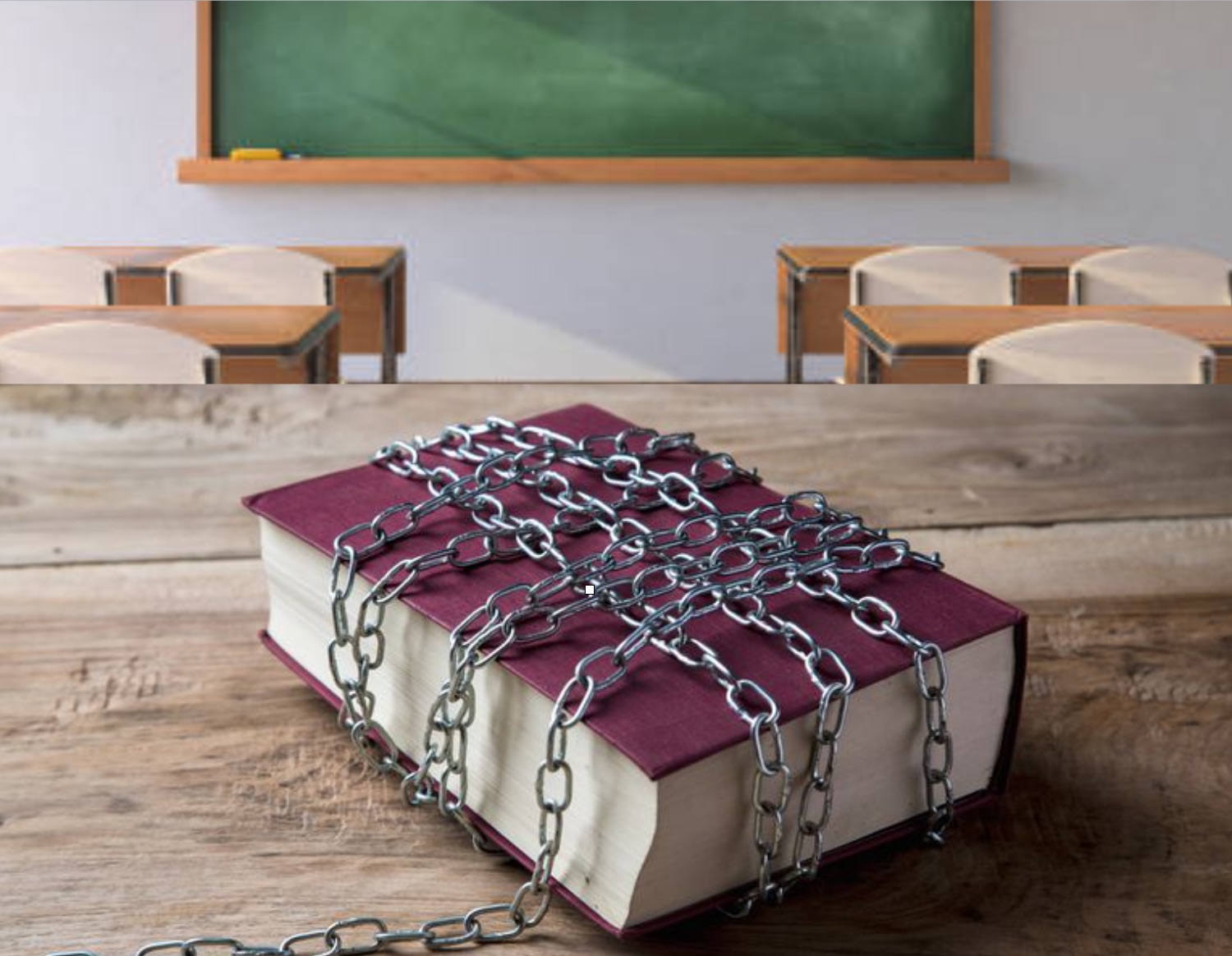
I Teach Banned Books   


If you want people to do something, forbid them from doing it.  


As a middle school language arts teacher, that’s always worked for me.   


Many of my students are reluctant readers.  


If a text is longer than a Tweet or a YouTube description, most of them would rather skip it.  


And when it comes to books, many of them wouldn’t intentionally crack one open under any circumstances.  


Unless you tell them not to.   


Unless you point out a specific book on the shelf and say it’s off limits.   


Unless you open it up right in front of them before quickly snatching it away and saying, “Oops! I forgot! We can’t read that one!”  


So most of my curriculum is made up of banned books.  


The Giver, Silent to the Bone, The Diary of Anne Frank, To Kill a Mockingbird – all forbidden in one place or another.   


Just not in my district.   


In fact, my school board has included each of these books on the approved reading list.


That doesn’t mean I have to use them.  


Language Arts teachers like me have a few different options at each grade level. And some of us actively avoid the more controversial texts to keep out of trouble.   


But not me.   


I go right for these taboo, prohibited, and oh so naughty books – for very good reasons


The Giver

  
Take “The Giver” by Lois Lowry.  


It’s almost the poster child for why we shouldn’t ban books in the first place. The story is set in a dystopian society where everyone is raised to be the same and people are discouraged from questioning things or having deep feelings.  


The book is most often challenged because parents don’t want their children to have to wrestle with its deep social criticism.  


When it first came under fire, Lowry responded thusly


”Submitting to censorship is to enter the seductive world of ‘The Giver’: the world where there are no bad words and no bad deeds. But it is also the world where choice has been taken away and reality distorted. And that is the most dangerous world of all.”  


However, not everyone is willing to let children think through these issues themselves – and what a bundle of issues Lowry presents! 


In the plot, she mentions sex, infanticide, suicide, starvation, and euthanasia.   


Nothing is graphic or developmentally inappropriate for middle schoolers, but the very idea of children thinking about S-E-X and challenging authority is enough to put it afoul of some censors.  


Which is exactly why my students love it.   


Too often teachers give students short passages taken from standardized tests where the only reason to read is to hunt for multiple choice answers. It’s dry, boring and meaningless to their everyday lives. 


That’s why they enjoy books like “The Giver” so much. This isn’t just for a grade. It’s reading something worth taking the time to consider, something that gets under their skin and makes them want to think.  


They’re at an age (12-14) when they’re starting to find their own place in society and struggling to understand adult issues like reproduction and romantic attachment. Making these topics explicit and being able to talk through them in the safety of the classroom can be liberating – and worth the effort to decode.   


That is – if you accept that children are little human beings who deserve the chance to consider these things aloud.  

Silent to the Bone

  
And speaking of adult issues, there’s the other comprehensive novel I teach in 7th grade – “Silent to the Bone” by E. L. Konigsburg.  


It’s a classic detective story where the characters try to discover why a young teen, Branwell, refuses to speak after his baby sister suffers a potentially life threatening injury.   


The plot grabs readers from the beginning and students find themselves really invested in unraveling the mystery. But to do so they come face-to-face with topics ranging from family, divorce, death, bigotry, sexuality and exploitation.   


It’s not about finding textual details to satisfy the number crunchers at Data Recognition Corp. or NCS Pearson Inc. It’s about getting textual to better understand what happened in the plot and why. 


Again the narrative is written for middle school readers but the concepts get them thinking and enthusiastic.  


As we come to the big reveal, I’ve had students turn to me with huge smiles saying they can’t believe we’re actually reading about this stuff in school.  


In an age where they usually communicate with emojis, I’m just glad that they’re reading. 


It can get uncomfortable, but by the end I definitely feel like I’ve reached them.

The Diary of Anne Frank


Speaking of uncomfortable, one of the hardest books I teach in 8th grade is “The Diary of Anne Frank.”


It’s not that the text is so difficult, but as a person of Jewish ancestry, I find it personally harrowing to relive this story every year.  


The plot centers on Anne, a historical Jewish girl in 1940s Amsterdam who with her family and others hid from the Nazis before eventually being captured and dying in a concentration camp. 


Like most teachers, I eschew the actual diary for the play version by Frances Goodrich and Albert Hackett.  


At first glance, it’s hard to imagine why this book would be banned. After all, it’s a true story of the Holocaust written by one of the people who lived it.   


However, there are an increasing number of people in this country these days who want to deny that the Holocaust even happened or claim that it was exaggerated. It’s hard to do that with a witness staring you in the face – even if that witness is just the book she left behind.  


Usually the text is challenged not on the basis of its plot so much as its sexual frankness. Not that there is much sex going on with people hiding above a factory in WWII. But the character of Anne is so real, she writes about everything including what it’s like to become a mature woman.   


For example, in Act II, scene 1, she mentions getting her period for the first time:  


“There is one great change, however. A change within myself. I read somewhere that girls of my age don’t feel quite certain of themselves. That they become quiet within and begin to think of the miracle that is taking place in their bodies. I think what is happening to me is so wonderful… not only what can be seen, but what is taking place inside. Each time it has happened I have the feeling that I have a sweet secret… and in spite of any pain, I long for that time when I shall feel that secret within me again.” 


My students often read over this passage without comment. I usually have to draw their attention to it and ask them what Anne is talking about before someone gets it.   


You might be surprised at how freeing this kind of discourse is. Menstruation is a natural part of life for nearly half the population, but it’s something we don’t often talk about.   


It’s not central to the story and Anne certainly goes into greater detail in her actual diary. However, even this little digression goes to further humanize her and make her relatable, especially to people like my students who are nearly the same age she was when she wrote it. 


She becomes so much more than a victim. She’s someone we know – inside and out.


To Kill a Mockingbird

 
The most challenged book I teach is “To Kill a Mockingbird” by Harper Lee.  


It tells the story of Atticus Finch, a white lawyer in the 1930s Alabama who defends Tom Robinson, a black man, of a crime he did not commit. The story is told from the point of view of the lawyer’s children who go from blissful naivety to uncomfortable understanding. 


In the past, people used to object most often to the book’s language since it makes liberal use of the N-word.  


It’s still an issue, and I make sure not to have myself or any of the students read these parts aloud. We only hear it on an audiobook as we follow along in the text. And even this only comes after we discuss how hurtful that word is. 


However, the language isn’t the book’s biggest sticking point today. It’s more often objected to these days on the basis of white saviorism. Critics complain that the narrative should be centered on Tom, the black man accused of the crime, and not Atticus, the defense attorney and his children.  


What makes this particularly troubling is the critics have a point. If the story is about racism, wouldn’t it be better to focus on the target of that racism?  


They suggest the book be replaced by more modern novels that center such a narrative appropriately – something like “The Hate U Give” by Angie Thomas (itself, a frequently challenged book). 


However, in the final analysis, I disagree.  


As good a book as Thomas’s is, it just isn’t as well-written or multifarious as Lee’s.  


Thomas reveals a lot about racism and the fight against it in today’s world, and her book is certainly worth reading. But it is a mistake to think that racism is only about people of color. White people are the cause of racism. White people have a responsibility to tear down the systems of white supremacy.

By the end of the book, my whole class – regardless of race – is devastated by what happens to Tom and furious at the injustice he experiences. To be honest, that might not happen to the same degree in a book that signals its message right from the beginning.  


“Mockingbird” starts quietly. It doesn’t even appear to have anything to do with racism at the beginning. We slowly get acclimated to this world, this time and place before prejudice creeps into view and surprises us. 


In my classroom, the book allows us to discuss so many intersectional issues – gender, economics, belief systems, etc. Plus it gives my students more cultural capital than other texts would. Having read “Mockingbird” allows them to understand more and talk to more people than other more modern books. 


If they haven’t already, when they go to the high school, they’ll read novels centered on blackness. Their education and discussion of this issue would be incomplete without them. But I don’t think we need to stop reading such a classic as “Mockingbird” that was, itself, part of the civil rights movement.  


In any case, the school board has not approved any similar texts at that grade level. If I put aside “Mockingbird,” it would mean not discussing the issue at all. I think that would be much worse. 


Conclusions

So this is how I teach. 


I know there are some adults out there who would rather my students not read these books.  


I know some grownups would rather my kids not think about these things and not come to their own conclusions.  


They’d rather children be seen and not heard – like furniture.  


But my students know it, too. And they’d rather be treated like actual human beings – even if that means… yuck… reading.

Now don’t get me wrong. I’d much rather decision makers put no restrictions on which books students can and cannot read. Even trash like Hitler’s “Mein Kampf” shouldn’t be forbidden. I make sure to tell my students that it’s readily available in the library but not recommended.  

Children should not be restricted to only some ideas. They will come into contact with all kinds as they grow older. They need the skill to sort through them and decide for themselves their value.  

In my experience the bigger threat isn’t prohibition, it’s indifference. 

 
As Ray Bradbury famously said, “You don’t have to burn books to destroy a culture. Just get people to stop reading them.” 


Focusing on banned books helps me keep reading real and relevant in my classroom.  


Like this post?  You might want to consider becoming a Patreon subscriber. This helps me continue to keep the blog going and get on with this difficult and challenging work.

Plus you get subscriber only extras!

Just CLICK HERE.

Patreon+Circle

I’ve also written a book, “Gadfly on the Wall: A Public School Teacher Speaks Out on Racism and Reform,” now available from Garn Press. Ten percent of the proceeds go to the Badass Teachers Association. Check it out!

Stop Normalizing the Exploitation of Teachers 


Nearly everyday I get to school only to be confronted by the call-off sheets


Pages and pages of people who aren’t coming in to work – and the substitute teachers assigned to take over their classes.


Yikes, it’s a long list today.

I see Mrs. K is still out. She was sobbing in the faculty room last week. Wonder what that was about.

Rumor has it Mr. C was rushed to the nurse to have his blood pressure taken after his face turned beet red in the middle of his last class yesterday. Not a shock that he’s missing.

And Ms. P’s out again. I can’t blame her. If one of my students attacked me, I’d have trouble coming back, too.

My eyes pour down the names of absent teachers and present substitutes only to find the one I’m dreading – my own.

I’m expected to sub for Mrs. D’s 8th period – again.

Great.


Too many kids I barely know stuffed into a tiny room. Last time there was almost a fight. Will they even listen to me this time?

I have my own classes. I shouldn’t have to do this.


But that’s exactly what’s expected of teachers these days.  


If your colleagues are absent and there aren’t enough subs, you have no choice. You have to fill in somewhere.  


Normally, I wouldn’t mind all that much. After all, I AM being paid for doing the extra work. But day-after-day, week-after-week, for months on end – it’s exhausting.  

It’s not my responsibility to make sure every room in the building is covered.  


I never applied to fix the district’s supply and demand issues. 


It makes it harder to do my own work. Beyond the increased stress of being plopped into a situation you know nothing about, subbing means losing my daily 40-minute planning period.  


Grading student work, crafting lessons, reading IEPs, doing paperwork, making copies, filling out behavior sheets, contacting parents, keeping up with Google Classroom and other technologies and multi-media – one period a day is not nearly enough time for it all.

Not to mention it’s my only chance outside of lunch that I can go to the bathroom.  


And now I don’t even get that! If I’m going to do even the most basic things to keep my head above water, I have to find the time somewhere – usually by stealing it from my own family


Even under normal circumstances I routinely have to do that just to get the job done. But now I have to sacrifice even more!  


I’ll be honest. I often end up just putting off the most nonessential things until I get around to them. 


This month, alone, I’ve only had four days I didn’t have to sub. That’s just four planning periods to get all the groundwork done – about one period a week. Not even enough time to just email parents an update on their children’s grades. So little time that yesterday when I actually had a plan, there was so much to do I nearly fell over.  


When I frantically ran to the copier and miraculously found no one using it, I breathed a sigh of relief. But it turned into a cry of pain when the thing ran out of staples and jammed almost immediately.  


I didn’t have time for this.  


I don’t have time for things to work out perfectly! 


So like most teachers after being confronted with the call-off sheet for long enough, that, itself, becomes a reason for me to call off. 

I am only human.


I figure that I might be able to do my own work today, but I’m just too beat to take on anyone else’s, too.

Some days I get home from work and I have to spend an hour or two in bed before I can even move.

And my health is suffering.  

I’ve had more trips to the emergency room, doctor’s visits, medical procedures and new prescriptions the beginning of this year than any other time I’ve been teaching.


It’s a problem of exploitation and normalization. 


Exploitation is when you treat someone unfairly for your own benefit. 


Our schools have been doing that to teachers for decades – underpaying them for the high responsibilities they have, expecting each individual to do the work of multiple people and when anything goes wrong, blaming them for it. 


The way we mishandle call-offs is a case in point. 


When so many educators are absent each day, that’s not an accident. It’s the symptom of a problem – burn out.  


We’ve relied on teachers to keep the system running for so many years, it’s about to collapse. And the pandemic has only made things worse.  


We piled on so many extra duties – online teaching, hybrid learning, ever changing safety precautions – these became the proverbial straw that broke educators’ backs.  


And now we’re screaming in pain and frustration that we can’t go on like this anymore. That’s what the call-off sheet means. It’s a message – a cry for help. But few administrators allow themselves to see it. 


They won’t even admit there is a problem.  


I can’t tell you how many times I’ve heard principals and administrators talk about the call-off sheet like it’s an act of God or a force of nature like a flood or a tornado.  


No! This wasn’t unpredictable! This didn’t just happen! It’s your fault!  


If there have been a high number of call-offs nearly every day for the past few weeks, it’s not a freak of nature when it happens again today! Administrators are responsible for anticipating that and finding a solution. 


This is not a situation where our school leaders are helpless. 


There are things they can do to alleviate this situation – reducing nonessential tasks, eliminating unnecessary paperwork, refraining from excess staff meetings, forgoing new initiatives, letting teachers work from home on professional development days – anything to give us a break and an opportunity to heal from the years of overburdening.

These are just the short term solutions – the things that don’t require money or political will


However, most administrators refuse to do any of it! They refuse to even admit there is a problem.  


They’re happy to just let teachers keep picking up the slack


That’s what I mean by normalization.  


It’s taking a bad situation and redefining it as usual, typical and expected. 


It’s like saying “This is the way things are now. This is school. This is our new baseline.”  


However, it is not sustainable! 


We cannot continue to apply the old model of public schooling to the problems we have today. It didn’t work before the pandemic and now it is frayed to the breaking point.  


When the first wave of Covid-19 washed over us and many schools went to online learning, leaders promised we’d rebuild back better when they finally reopened. 


This was the perfect chance, they said, to change, to reform the things that weren’t working and do all the positive things we’d wanted to do for years.  


Even at the time I thought it was rather optimistic to the point of naivety. Time has proven me correct.


Since schools have reopened, there has been no rebuilding back better. We’ve been forced to accept things worse.  


Teachers were already trickling away from the profession before Covid-19 was even discovered. Now they’re running away in droves.  

Standardized tests were always poor assessments of student learning. Now we’re encouraged to spend every minute teaching to those tests to overcome the bogeyman of “learning loss.”

Poor and minority students often suffered more traumas and insecurities than their wealthier and more privileged peers. Now after as much as two years of online learning, student trauma is the norm. Kids lack the basic social skills needed to communicate without fighting and they’re taking out their frustration on their teachers.

It’s a raging dumpster fire. And few people in a position to take action have the courage to do so.

Few are even brave enough to admit the dumpster is on fire.

Teachers cannot be exploited forever.

Even we have our limits.

We want to be there for students and their families, but we can’t do that if we’re sick and suffering.

We are a renewable resource but we need renewed.

If society is not willing to do that, there will be none of us left.

The call-off sheet will stretch to the horizon and there will be no one there to take our place.


Like this post?  You might want to consider becoming a Patreon subscriber. This helps me continue to keep the blog going and get on with this difficult and challenging work.

Plus you get subscriber only extras!

Just CLICK HERE.

Patreon+Circle

I’ve also written a book, “Gadfly on the Wall: A Public School Teacher Speaks Out on Racism and Reform,” now available from Garn Press. Ten percent of the proceeds go to the Badass Teachers Association. Check it out!

Teachers Absorb Student Trauma But Don’t Know How to Get Rid of the Pain


Today a middle school student said he hated me.  


He told me to go F- myself.  


He wrote all over his desk.  


He shouted insults at the other students. 


He asked to be sent home.  


He said he wished he was dead.  


He asked to see the school counselor.  


I let him. 


And this was all in one 42 minute period. 


By the time the bell rang for the next class, I was exhausted.  


I was worried about my student. I wondered how I could help


But I could barely stand up. 


I wiped at my eyes. They were unaccountably filled with tears. My hands were shaking.  


I didn’t have time for this now. I had to put on a smile and welcome in the next class. 


Perhaps there would be time to feel all this later. 


Incidents like this take a tremendous toll on educators. 


We’re highly trained adults, but people forget – we’re human, too.  


When someone unexpectedly yells at you or gets in your face, you feel it. 


This is especially true when it’s a child. 


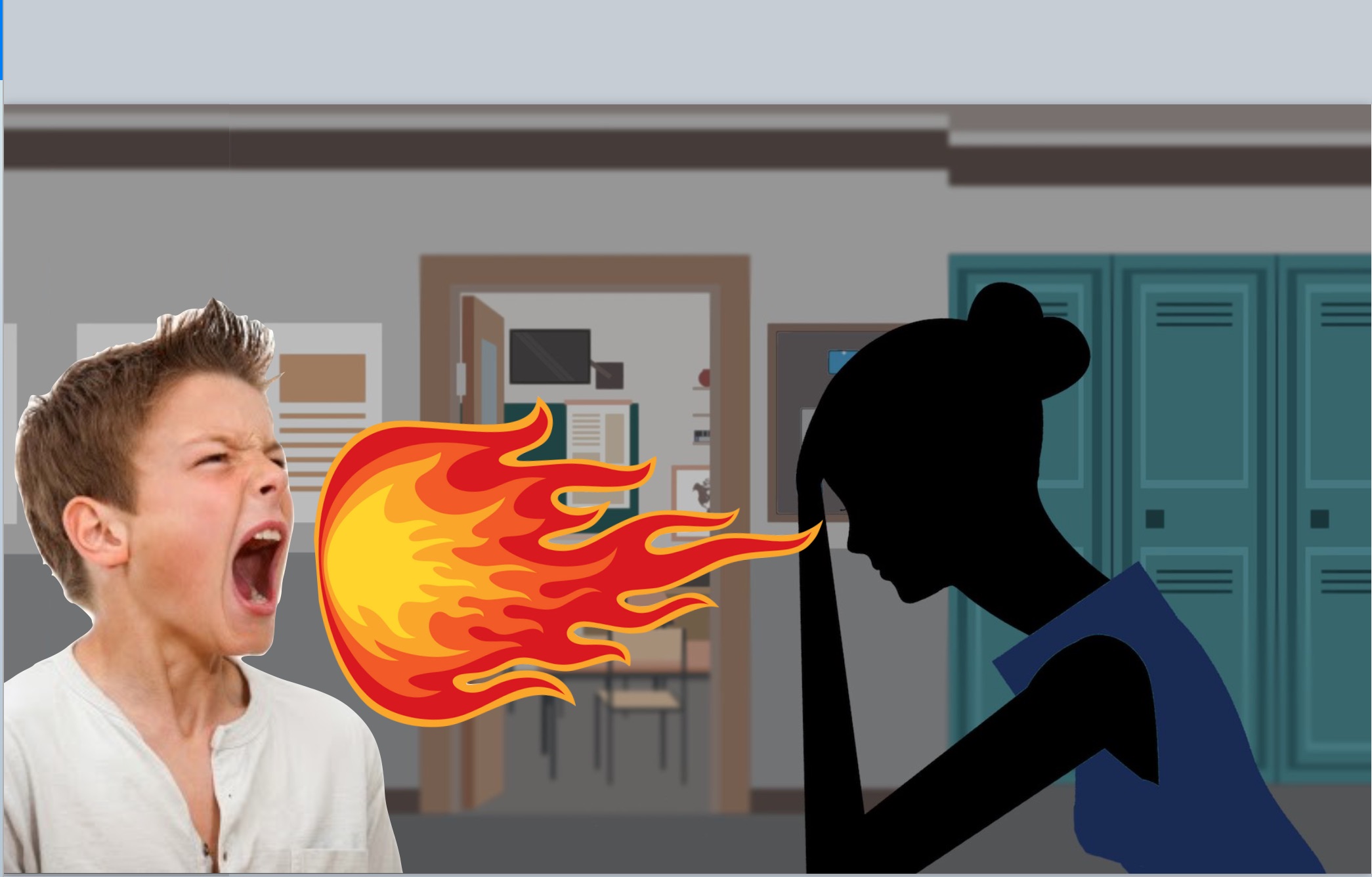
When a student is crying out in pain and that pain manifests itself as negative and violent behavior, it impacts you. 


We end up absorbing it all like a sponge.  


But what do we do with all that poison once it’s over? 


Psychologists call this experience vicarious trauma


According to the American Counseling Association, this is sometimes called the “cost of caring” and can result from “hearing [people’s] trauma stories and becom[ing] witnesses to the pain, fear, and terror that trauma survivors have endured.” 


Vicarious trauma affects teachers the same way it does students


The brain emits a fear response releasing cortisol and adrenaline which, in turn, increases heart rate, blood pressure, and respiration, followed by a rush of emotions.  


The biological response can display itself in mental symptoms such as anger, headaches, or even physical ones like missing staff meetings, lateness to work or avoiding certain students or situations. 

You want to know why classroom teachers are taking an increasing number of sick days lately? Dealing with vicarious trauma is a big part of it.


“Being a teacher is a stressful enough job, but teachers are now responsible for a lot more things than just providing education,” says LeAnn Keck, a manager at Trauma Smart, an organization that helps children and adults navigate trauma.  


“It seems like teachers have in some ways become case workers. They get to know about their students’ lives and the needs of their families, and with that can come secondary trauma.” 


This is an aspect of the job for which most teachers are unprepared.  


According to a 2020 survey by the New York Life Foundation and American Federation of Teachers, only 15% of teachers felt comfortable addressing grief or trauma.  


When I first entered the field two decades ago, I was taught how to design lessons, sequence curriculum, manage classes, calculate grades, etc. Never once did anyone mention that I would be standing between a hurting child and a world he is desperately trying to lash out against. 


Most teachers aren’t taught how to help students who have experienced trauma. Nor are we taught how to handle the toll it takes on our own health and personal lives.  


And unfortunately things are getting much worse. 


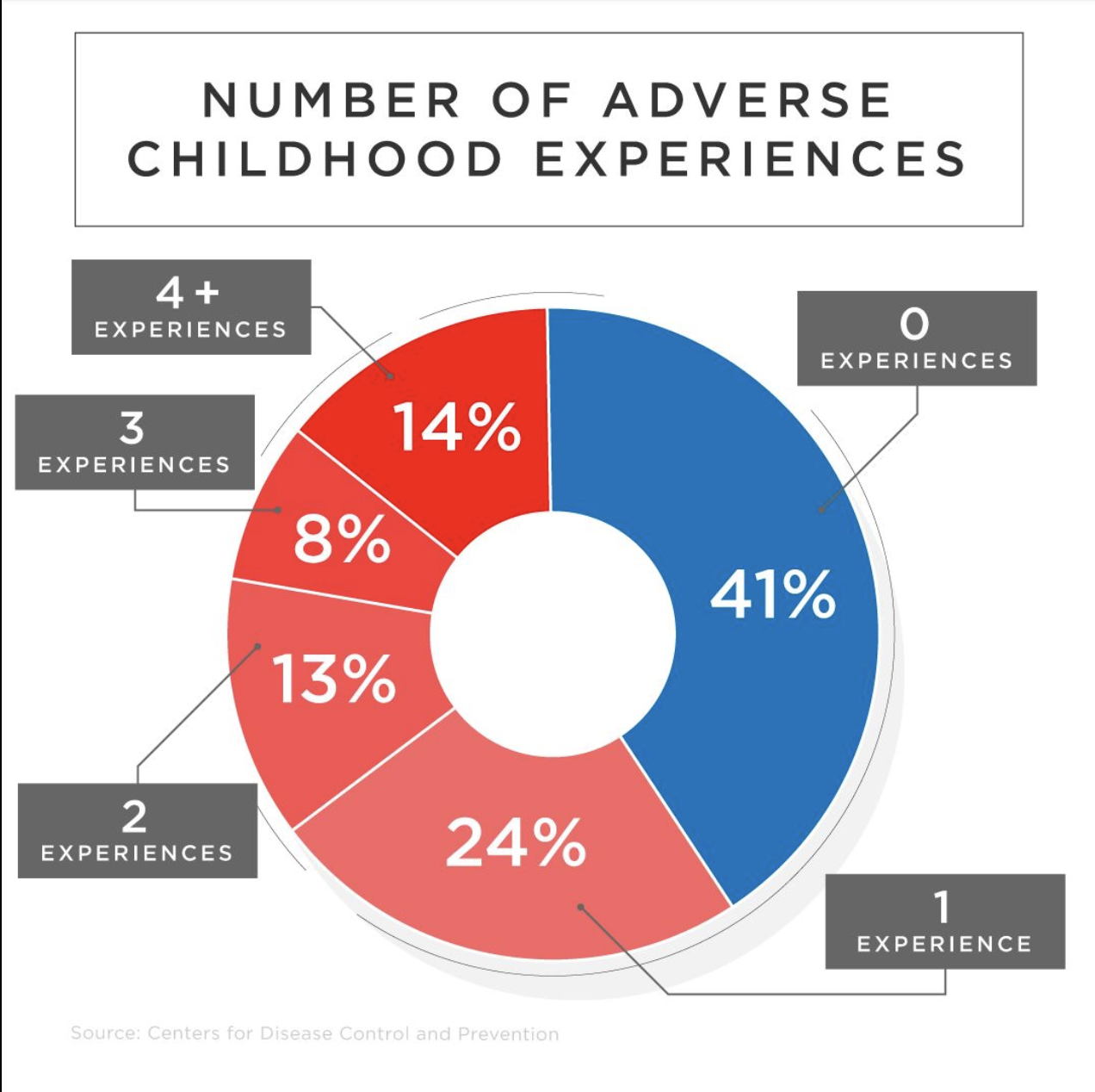
According to the Centers for Disease Control and Prevention (CDC), more than half of all U.S. children have experienced some kind of trauma. This includes abuse, neglect, violence, or challenging household circumstances. And 35 percent of kids have experienced more than one type of traumatic event. 


In class, these traumas can manifest in many ways such as acting out. However, they can also be more subtle such as failure to make eye contact, repeated foot tapping, etc. 


Childhood trauma was not unknown before the pandemic, but it was much less frequent.  


Since returning to the physical classroom after months or more of on-line learning, many students are having a difficult time readjusting. And some show signs of compounded emotional trauma. 


The student who exploded today is a prime example. 


Clearly something may have happened to him. 


A few years ago he had been an A student. He was academically gifted. But when we went to on-line classes to protect against Covid-19, he disappeared.  


Only to come back like this. 


As a classroom teacher with two decades of experience, I know that when a student acts this way, punishing him won’t help. He needs support coping, but that’s easier said than done. 


I need help coping with HIM! 


These adverse childhood experiences (ACEs) can impact kids well into adulthood with higher risks for alcoholism, liver disease, suicide, and other health problems. 


And it affects their teachers, too. 


Since schools have reopened, many kids don’t seem to know how to interact without teasing, goading or tormenting each other. We’re seeing children scream at each other in class over things as simple as finding a pencil. There are more frequent fights, vandalism, bullying, cyber bullying and even attacks against teachers.


Last week at my school, a student in the hall pushed another student into a teacher’s back. The first student was trying to fulfill the infamous TikTok challenge of hitting a teacher, but he wanted to avoid punishment by being able to claim it was an accident. 


This increase in negative behaviors can be directly attributed to the pandemic. 


More than 750,000 Americans have died from COVID.  


According to the CDC, more than 140,000 children in the U.S. have lost a primary or secondary caregiver such as a live-in grandparent or another family member to the virus.  


No wonder kids are having trouble with self-control! Their support systems are in tatters!  


With fewer role models at home and less time in the classroom over the last year and a half, kids are suffering. And that’s not just anecdotal. The facts back it up. 


The CDC reports that children between the ages of 5 and 11 visiting an emergency department because of a mental health crisis increased 24 percent from April through October of 2020 compared to the previous year. Among 12- to 17-year-olds, the number increased by 31 percent.   


Suicide attempts among 12- to 17-year-old girls increased by about 50 percent over winter 2019, according to the CDC.  


And these numbers are probably under reported since these increases took place at the height of the pandemic when many people were hesitant to seek medical attention.   


The increase in student trauma and the lack of additional supports is undoubtedly contributing to the speed at which teachers are leaving the profession. 


We want to help our students but many of us feel ill-equipped to do so. And it’s negatively affecting our own health.  


As we are constantly attacked in the media for everything from teaching an accurate history of America to failing to meet every need our students have, many educators are throwing up their hands and moving on. 


It is vital that people stop hurling stones and understand the increased burden placed on teachers’ shoulders. Not only that, but it’s well past time for people to get off the side lines and actually support educators.  


We can’t do it all alone.  


For example, one of the most important things teachers need is time.  


This is time untethered to students, time without classes to teach or papers to grade or paperwork to fill out or even duties to perform.  


We need time to talk with our colleagues about what we’re experiencing. 


That’s not just gossiping or socializing. It’s necessary to function. 


Educators need the ability to talk through what they’re experiencing and what they’re feeling with other teachers coping with secondary trauma, according to Micere Keels, an associate professor at the University of Chicago and founder of the TREP Project, a trauma-informed curriculum for urban teachers. 


“Reducing professional isolation is critical,” said Keels. “It allows educators to see that others are struggling with the same issues, prevents the feeling that one’s struggles are due to incompetence, and makes one aware of alternative strategies for working with students exhibiting challenging behavior.” 


However, this can’t be something teaches do on their own. This is an essential part of the job.  


Part of our profession has become being put in harm’s way. We need the time to cope with that on the job with our colleagues.


In addition, this allows teachers to work together to develop coping strategies.  


For instance, it’s never good to meet a student’s anger with yelling or fury of your own. Educators need to find ways to de-escalate and bring the tension down in the classroom.  


However, there’s no need to reinvent the wheel, either. Investing in high quality professional development for trauma-informed practices and enacting them school-wide would also be incredibly helpful. As would an influx of professional counselors, social workers and psychologists who are actually trained to deal with these situations.


Finally, it is essential that teachers are allowed the latitude to go home from their jobs. 


By that, I don’t mean that teachers are held hostage, that any district forces their staff to stay in the building 24/7. I mean that many teachers find it difficult to go home and stop being teachers. We’re always on. We need time to turn off and tune out. 


Educators often take mountains of work home, grade papers, call parents, etc. All on their own time. 


There needs to be a demarcating line between our professional and personal lives. And the district, administrators, school directors and parents need to respect that line. 


Teachers cannot be there for children if they do not have time for themselves and their families. 


And these are really just the tip of the iceberg.  


Teachers need higher salaries, lower class sizes, and above all – RESPECT.  


Accomplishing all of this will not be easy. But I’ll bet every district can accomplish SOME of it.  


Every district can accomplish some of it TOMORROW.  


If we want to continue having teachers – I mean flesh-and-blood teachers with college degrees and hard won experience, not just technology, apps or a rotating cast of minders and babysitters – we have to take care of them.  


They take care of our children.  


It’s time we gave back what they need to get the job done. 


It’s time we gave back the respect they deserve. 


It’s time we gave them the opportunity to heal from the trauma of coping with our children. 


Like this post?  You might want to consider becoming a Patreon subscriber. This helps me continue to keep the blog going and get on with this difficult and challenging work.

Plus you get subscriber only extras!

Just CLICK HERE.

Patreon+Circle

I’ve also written a book, “Gadfly on the Wall: A Public School Teacher Speaks Out on Racism and Reform,” now available from Garn Press. Ten percent of the proceeds go to the Badass Teachers Association. Check it out!

Reducing Students to Their Test Scores Will Only Increase Their Pandemic Wounds 


Read the following as quickly and accurately as you can:

‘I know I withought all by he middle on, ” said a between he name a buzzing, he for began open he the only reason for making.”

Very good, you’re told as your teacher clicks a stopwatch and writes on a piece of paper.

Now try this one:

“Twas brillig, and the slithy toves, Did gyre and gimble in the wabe:

All mimsy were the borogoves, And the mome raths outgrabe.”

The teacher frowns and writes for a minute straight without comment.

Okay. Give this one a shot:

“Lorem ipsum dolor sit amet, consectetur adipiscing elity, sed do eiusmod tempor incididunt ut labore et dolore magna aliqua.”

No, this isn’t a crash course in some foreign language.

It’s the DIBELS test.

Students as young as Kindergarten (and sometimes younger) are asked to read a text aloud in a given time and each mispronunciation is recorded and marked against them.

And, yes, the texts are often pure nonsense.


My first example was from a nonsense generator of Winnie the Pooh, the second was from “Jabberwocky” by Lewis Carroll and the last an example of Lorem ipsum, a placeholder text commonly used in the graphic, print, and publishing industries.

To my knowledge none are actually used on the DIBELS test but they give you an idea of what an adult version might be like if given to people our age and not just the littles.

Can you imagine being a child, feeling the pressure of a test and being presented with something that looked like those passages!?

The fear! The sense of urgency to say something before the time runs out! The feeling of inadequacy and confusion as you finished knowing you got it wrong!

And the assurance that this meant there was something wrong with YOU!

That’s reading assessment in the standardized testing age.

Decoding – or working out the actual pronunciation of words – is given primacy over actual comprehension.

Why? Because that way we can break reading down into simple, quantifiable tasks that can be used to sort and rank children.

You know. The goal of standardized testing.

It’s highly controversial among people who study reading acquisition, but extremely common in elementary and middle schools.

And extremely lucrative for the makers of the DIBELS test.

Today I was forced to leave my class of 8th grade students with a sub so an “expert”from the Allegheny Intermediate Unit could lecture me and the rest of my school’s English department in using DIBELS as a gatekeeper assessment for all students.

That way we can group the students more easily based on their reading deficiencies.

I literally had to stop teaching for THAT.

I was bopping around the classroom, reading students’ writing, helping them organize it, helping them fix their explanations and craft sophisticated essays on a short story.

But I had to STOP, so an outside contractor could explain to ME how to teach.

ME, a Nationally Board certified teacher with two decades of classroom experience.

And the rest of the department with similar experience and education. In the group was also the holder of a doctorate in education. Almost all of us at least held a masters degree.

It boggles the mind.

In this time of pandemic stress when just keeping enough teachers in the building to staff our classrooms is a challenge, administration is wasting our time with this.

Before Covid-19, I could almost imagine it.

We did a lot of stupid things back then. But now a deadly virus rages across the country. Several students and staff get sick every week.  


There is a shortage of teachers, aides, subs, bus drivers, and other staff. 


And even though most school buildings are open, most students are still suffering from the social and emotional effects of the never-ending disaster.  


Yet the people who set school policy refuse to see any of it.  


They’re like ostriches – in suits – with their heads planted firmly in the ground. 


Covid safety protocols, reducing teacher workload, providing counselors for students – none of that is even on their radar.  


All they want to do is reinstitute the policies that weren’t working well before the pandemic hit.  


The only difference is their sense of urgency.  


In fact, the only impact they even recognize of the last year and a half is the dreaded LEARNING LOSS.  


Kids weren’t in class consistently. They were in on-line classes, or hybrid classes or maybe they didn’t even show up to class at all.  


That means they don’t know as much today as they would have known had the pandemic not happened.  


So – we’re told – they’ve lost learning. 


Oh no!  


But what these decision makers don’t seem to understand is that this whole concept is kind of meaningless.  


All people learn at different rates. If you don’t know something today, that doesn’t mean you can’t learn it tomorrow.  


There’s no time table for understanding. It’s not a race. It doesn’t matter when you learn something only that you continue making progress. 


However, you’d need a classroom teacher to explain that to you. And these are more business types. Administrators and number crunchers who may have stood in front of a classroom a long time ago but escaped at the first opportunity. 


They look at a class full of students and don’t see human children. They see numbers, data.  


And they are just itching to get back to sorting and ranking students based on standardized test scores.  


After all – say it with me – LEARNING LOSS!!!! 


Unfortunately there’s a whole world of reality up here above ground that they’re ignoring. And up here continuing with their willful fantasy is doing real harm.  


When I look at my classes of students, I don’t see overwhelming academic deficiencies.  

Even their test scores don’t justify that myth.


According to the Pennsylvania System of School Assessments (PSSA), they’re pretty much where I’d expect them any other year.


But their behaviors are off the hook


They simply don’t know how to interact with each other without conflict.  


My students are desperate for attention – any kind of attention – and will do almost anything to get it.  


They’d prefer to be respected, but they don’t understand how to treat each other respectfully. So they aim for any kind of response.


To a large extent this is due to a disruption in the social and emotional development they would have received at school. But robbed of good role models and adequate consequences, they’re somewhat at sea.  


Moreover, the pandemic has had a devastating effect on their support systems at home. Parents, family members and guardians have lost jobs, become sick and some have even died.


They don’t know who to trust and who they can rely on.  


So when they get to school, we’re going to meet their needs with more standardized tests!?  


That’s one of the worst things we could do. 

Take a child who already has trust issues and force them to read nonsense sentences while we judge them with a stopwatch?


Erase their individual identities and try to see them primarily as their scores?


These are in the low group. These are in the middle group. These are in the high group.  


Instead of giving them robust pieces of literature to read, they’ll get nonfiction scraps devoid of any connection to their lives, interests or aptitudes.  


We’ll drill and kill them, make every day about teaching to the test instead of teaching to the student.  


We’ll let data drive the instruction instead driving it based on the actual living, breathing, human beings we’re supposed to be serving.  


And instead of relying on teachers – highly trained people with decades of experience in how children learn effectively – we’ll put our trust in mega corporations that make more money the less effective their materials are.  


Prepare for a test – they make money. 


Take a test – they make money. 


Fail the test and have to remediate – they make money.  


It’s a scam – an endless cycle – and administrators and policy makers keep falling for it.  


Will this help meet kids social needs?  


Absolutely not. They’ll be segregated by ability and forced to repeat confusing and mind numbing tasks as if that’s what education was.  


Will it help meet kids emotional needs?  


No way! Being forced to do the same thing over and over and continually told you’re a failure won’t teach anything except a kind of learned helplessness.  


Kids will learn “I’m bad at math” or “I’m bad at reading” rather than the joy that can be found in both activities.  


They’ll learn to give up.  


And they’ll take out the negative feelings all this generates on each other and their teachers.  


It doesn’t have to be this way.  


A new world is possible.  


The pandemic offers us a chance to stop repeating the same mistakes of the past.  


We can scrap standardized testing and focus on authentic assessments – teacher constructed assessments the are suited to the individual context, the individual students.  


We can focus on lessons that engage students and encourage them to learn intrinsically.


We can focus on what students know instead of what they don’t so they learn that they are capable, that they have the power to do the lesson.  


We could help students understand how to interact with each other and heal some of the social and emotional wounds of the past year and a half.  


But we can’t do that if we’re forced to continue with the same mistakes of the past. 

We have to recognize the reality teachers, students and parents are living through.

And we have to make decisions based on that reality, not the same old preconceptions that have never gotten us anywhere.


Like this post?  You might want to consider becoming a Patreon subscriber. This helps me continue to keep the blog going and get on with this difficult and challenging work.

Plus you get subscriber only extras!

Just CLICK HERE.

Patreon+Circle

I’ve also written a book, “Gadfly on the Wall: A Public School Teacher Speaks Out on Racism and Reform,” now available from Garn Press. Ten percent of the proceeds go to the Badass Teachers Association. Check it out!
Top Five Actions to Stop the Teacher Exodus During COVID and Beyond


As the COVID-19 pandemic drags on, schools across the United States are on the brink of collapse
 
There is a classroom teacher shortage. 
 
There is a substitute teacher shortage.  
 
There is a bus driver shortage
 
There is a special education aide shortage.  
 
The people we depend on to staff our public schools are running away in droves.  
 
It’s a clear supply and demand issue that calls for deep structural changes.  
 
However, it’s not really new. We’ve needed better compensation and treatment of school employees for decades, but our policymakers have been extremely resistant to do anything about it.   
 
Instead, they’ve given away our tax dollars to corporations through charter and voucher school initiatives. They’ve siphoned funding to pay for more standardized testing, teaching to the test, and ed tech software.  
 
But the people who actually do the work of educating our youth. We’ve left them out in the cold.  
 
Now with the smoldering pandemic and increased impacts on the health, safety and well-being of teachers and other staff, the exodus has merely intensified.  
 
Frankly, I’m not holding my breath for lawmakers to finally get off their collective asses.  
 
We need a popular, national movement demanding action from our state and federal governments. However, in the meantime, there are several things our local school districts can do to stem the tide of educators fleeing the profession.
 
These are simple, cheap and common sense methods to encourage teachers to stay in the classroom and weather the storm.  
 
However, let me be clear. None of these can solve the problem, alone. And even ALL of these will not stop the long-term flight of educators from our schools without better salaries and treatment.  


1)    Eliminate Unnecessary Tasks 


The list of tasks an average teacher is expected to accomplish every day is completely unrealistic.  
 
Think about it. Just to get through a normal day teachers need to provide instruction, discipline students, grade papers, facilitate classwork, troubleshoot technology, provide written and verbal feedback, counsel disputes, role model correct behavior, monitor the halls, lunches, breakfasts and unstructured time, meet with co-workers, follow Individual Education Plans, scaffold lessons for different learners and learning styles…  
 
The list is truly staggering. 
 
And it never stops. 
 
Researchers have estimated that on average teachers make at least 1,500 decisions a day. That’s about 4 decisions a minute. 
 
No one can keep up that pace, day-in, day-out, without strain. No one can do it without their work suffering.  
 
If we truly want to help teachers feel empowered to stay in the profession, we need to reduce the burden. And the best way to do that is to eliminate everything unnecessary from their plates. 

That means no staff meeting just to have a staff meeting. No shotgun scattered initiatives that teachers are expected to execute and we’ll see what will stick. No reams of paperwork. No professional development that wasn’t specifically requested by teachers or is demonstrably useful.

Nothing that isn’t absolutely necessary.

 
2) No Formal Lesson Plans

The number one offender is formal lesson plans.  
 
I’m not saying we should tell teachers they don’t have to plan what they’re doing in their classes. I’m not sure how an educator could realistically enter a classroom of students and just wing it.  
 
However, the process of writing and handing in formal lesson plans is absolutely unnecessary. 
 
Teachers gain nothing from writing detailed plans about what they expect to do in their classes complete with reference to Common Core Academic Standards. They gain nothing from acting as subordinates to an all knowing administrator who probably has not been trained in their curriculum nor has their classroom experience teaching it.  
 
For educators with at least 3-5 years under their belts, formal lesson plans are nothing but an invitation to micromanagement.  
 
Should administrators monitor what their teachers are doing? Absolutely. But the best way to do that is to actually observe the teacher in the classroom doing the work. And to conference with the teacher before and after the observation with the goal of understanding what they’re doing and how to best help them improve.  
 
Forcing teachers to set aside time from their already overburdened schedules to fill out lesson plans that administrators don’t have time to read and (frankly) probably don’t have the training or experience to fully comprehend is top down managerial madness.  


3)    More Planning Time 

Teachers need time to plan.  

It’s pathetic that I actually have to explain this.  

Education doesn’t just happen.

Parents need called. Papers need graded. Lessons need strategized. IEP’s need to be read, understood and put into practice.

All this can only happen within a temporal framework. If you don’t give teachers that framework – those minutes and hours – you’re just expecting they’ll do it at home, after school or some other time that will have to be stolen from their own families, robbed from their own needs and down time.

Every administrator on the planet preaches the need for self-care, but few actually offer the time to make it a reality.

Even if we could discover exactly how much time was necessary for every teacher to get everything done in a given day – that wouldn’t be enough time. Because teachers are human beings. We need time to process, to evaluate, to think and, yes, to rest.

I know sometimes I have to stop wrestling with a problem I’m having in class because I’m getting nowhere. After two decades in the classroom I’ve learned that sometimes you have to give your brain a rest and approach a problem again later from a different vantage point.

I need to read a scholarly article or even for pleasure. I need to watch YouTube videos that may be helpful to my students. I need to get up and go for a walk, perhaps even just socialize for a moment with my coworkers.

None of that is time wasted because my brain is still working. My unconscious is still trying untie the Gordian knot of my workday and when I finally sit down to revisit the issue, I often find it looser and more easily handled.

Administrators must prioritize teacher planning time.

There is no simpler way to put it.

Do not ask your teacher to sub. Do not ask them to attend meetings. Do not ask them to help you plan building wide initiatives – UNLESS you can guarantee it won’t interfere with their plans.


I know this is difficult right now with so many staff falling ill or being so plowed under that they simply can’t make it to work.

However, the more you push them to give up their plans, the more you diminish returns.

Not only will their work suffer but so will their health and willingness to continue on the job.

Some districts are finding creative ways to increase planning time such as releasing students early one day a week. We did that at my district last year and it was extremely helpful to meet all the additional duties required just to keep our building open. However, as the new school year dawned and decision makers decided to simply ignore continuing pandemic issues, this time went away.

Most teachers are in the profession because it’s a calling. They care about doing the best job they can for their students.

If you take away their ability to do that, why would they stay?


4) Better Communication/ Better COVID Safety  

Communication is a two way street.

You can’t have one person telling everyone else what to do and expect to have a good working relationship.

Administrators may get to make the final decision, but they need to listen to what their teachers tell them and take that into account before doing so.

This means setting aside the proper time to hear what your staff has to say.

Many administrators don’t want to do that because things can devolve into a series of complaints. But you know what? TOUGH.

It is your job to listen to those complaints and take them seriously.

Sometimes just allowing your staff to voice their concerns is helpful all in itself. Sometimes offering them space to speak sparks solutions to problems – and a whole room full of experienced, dedicated educators can solve any problem better than one or two managers locked away in the office.

However, not only do administrators need to listen, they need to speak.

When issues crop up, they need to make sure the staff is aware of what is happening.

This is especially true during the pandemic.

We are so sick of half truths about who has Covid, who is quarantined, what is being done to keep us safe, etc.

No child should return to the classroom after a negative COVID test without the teacher already being appraised.

No child should be placed in quarantine without the teachers knowledge.

No teacher with a prior medical condition should have to serve lunch duty while students eat unmasked.

Safety protocols should be the product of the entire staff’s input. If everyone doesn’t feel safe, no one feels safe.


5) Respect 


 This is really the bottom line.

Teachers need to feel respected.

We need to know that administrators and school board members understand our struggles and are on our side.

I don’t mean taking a day or even one week out of the year to celebrate Teacher Appreciation. I don’t mean free donuts or coupons to Sam’s Club. I don’t even mean a mug with an inspirational message.

I’m talking about every day – day-in, day-out – respect for teachers.

No union bashing.

No snide comments at school board meetings.

No gossipy whispering in the community.

Being a teacher should mean something to district leaders. And they should prove it in every thing they do.

The items I mentioned here go some ways to showing that respect.

Eliminating unnecessary tasks, not requiring formal lesson plans, respecting our planning time, better communicating and safety measures are all necessary to keeping your teachers in the classroom.

But they are not sufficient.

As a nation we need to change our attitude and treatment of teachers.

No profession exists without them. They create every other job that exists.

We need to start paying them accordingly. We need to start treating them as important as they are. We need to ensure that they have the time, tools and satisfaction necessary to be the best they can be.

No district can do that alone. No school director or administrator can do that.

But these are some ways you can start.


Like this post?  You might want to consider becoming a Patreon subscriber. This helps me continue to keep the blog going and get on with this difficult and challenging work.

Plus you get subscriber only extras!

Just CLICK HERE.

Patreon+Circle

I’ve also written a book, “Gadfly on the Wall: A Public School Teacher Speaks Out on Racism and Reform,” now available from Garn Press. Ten percent of the proceeds go to the Badass Teachers Association. Check it out!
Teachers Are Not Okay

At the staff meeting the other day, one of my fellow teachers turned to me and said he was having trouble seeing.

He rushed home and had to have his blood pressure meds adjusted.

Another co-worker was sent home because one of her students had tested positive for Covid-19 and she had gone over to his desk to help him with his assignment.

I, myself, came home on Friday and was so beat down I just collapsed into bed having to spend the next week going from one medical procedure to another to regain my health.


The teachers are not okay.

This pandemic has been particularly hard on us.

Through every twist and turn, teachers have been at the center of the storm.

When schools first closed, we were heroes for teaching on-line.

When they remained closed, we were villains for wanting to remain there – safe from infection.

Then there was a vaccine and many of us wanted to reopen our schools but only if we were prioritized to be vaccinated first. We actually had to fight for the right to be vaccinated.

When our students got sick, we sounded the alarm – only to get gas lighting from the CDC that kids don’t catch Covid and even if they do, they certainly never catch it at school.

We were asked to redo our entire curriculums on-line, then in-person for handfuls of students in funky two-day blocks, then teach BOTH on-line and in-person at the same time.

The summer was squandered with easing of precautions and not enough adults and teens getting vaccinated. Then schools reopened in August and September to debates over whether we should continue safety precautions like requiring students and staff wear masks and if we should expand them to include mandatory vaccinations for all staff and eligible students to protect kids 11 and younger who can’t take the vaccine yet.

It’s been a rough year and a half, and I can tell you from experience – TEACHERS ARE EXHAUSTED.

As of Sept. 17, 2021, at least 1,116 active and retired K-12 educators have died of COVID-19, according to Education Week. Of that number, at least 361 were active teachers still on the job.

I’m sure the real number is much higher.

According to the Associated Press, the Covid pandemic has triggered a spike in teacher retirements and resignations not to mention a shortage of tutors and special aides.

Difficulties filling teacher openings have been reported in Tennessee, New Jersey and South Dakota. In the Mount Rushmore State, one district started the school year with 120 teacher vacancies.

In Texas, districts in Houston, Waco and other neighborhoods reported teacher vacancies in the hundreds as the school year began.

Several schools nationwide have had to shut down classrooms because there just weren’t enough teachers.

The problem didn’t start with Covid.

Educators have been quietly walking away from the profession for years now due to poor compensation, lack of respect, autonomy and support.

For instance, teachers are paid 20% less than other college-educated workers with similar experience. A 2020 survey found that 67% of teachers have or had a second job to make ends meet.

This isn’t rocket science. If people refuse to work for a certain wage, you need to increase compensation.

But it’s not just pay.

According to a survey in June of 2,690 members of the National Education Association, 32% said the pandemic was likely to make them leave the profession earlier than expected. That’s almost a third of educators – one in three – who plan to abandon teaching because of the pandemic.

Another survey by the RAND Corp. said the pandemic increased teacher attrition, burnout and stress. In fact, educators were almost twice as likely as other adult workers to have frequent job-related stress and almost three times more likely to experience depression.

The CDC Foundation in May released similar results – 27% of teachers reporting depression and 37% reporting anxiety.

However, the RAND survey went even deeper pinpointing several causes of stressful working conditions. These were (1) a mismatch between actual and preferred mode of instruction, (2) lack of administrator and technical support, (3) technical issues with remote teaching, and (4) lack of implementation of COVID-19 safety measures. 

I have to admit that’s what I’m seeing in the district where I teach.

We have had several staff meetings in the four weeks since students have been back in the classroom and none of them have focused on how we are keeping students and staff safe from Covid. In fact, administration seems happy to simply ignore that a pandemic is even going on.

We’ve talked about academic standards, data driven instruction, behavior plans, lesson planning, dividing the students up based on standardized test scores but NOTHING on the spikey viral ball in the room!

We get emails and phone calls every few days from the district about how many students and staff have tested positive and if close contacts were identified. But nothing is done to stop the steady stream of illness.

And these communiques willfully hide the extent of these outbreaks. For example, here’s an announcement from Sept. 13:

“We have learned that a Middle School staff member has tested positive for COVID-19. There were no close contacts associated with that case. We also have learned that a Middle School student has tested positive. Close contacts for this case have been identified and notified. Thank you.”

This announcement failed to disclose that contacts for the student were the entire middle school girl’s volleyball team. That’s 16-17 students who were all quarantined as a result.

Teachers are tired of this.

And I don’t mean palm-on-my-head, woe-is-me tired.

I mean collapsing-in-a-heap tired.

We are getting physically ill – even when it isn’t directly attributed to Covid, it’s from the stress.

At my district, the school board even refused to mandate masks. It took action from the governor to require this simplest of safety precautions. Do you know how much these kind of senseless shenanigans drain educators who just want to make it through the day without catching a potentially fatal illness!?

There are so many teachers absent every day. We know because there aren’t enough subs, either, so those of us who do show up usually have to cover missing teachers classes between teaching our own classes and fulfilling our other duties.

Things cannot continue this way.

We need help and support.

We can’t be the only people responsible for dealing with society’s problems anymore.

You can’t just put us in a room with kids and tell us to work it all out.

You can’t refuse to listen to us but blame us when things go wrong.

No one’s going to stay for that – not even for the kids.

We are literally falling apart here.

We want to be there for our students, to give as much as we can, but many of us are running out of things to give.

The system is built on the backs of teachers.

And we are ready to collapse.


Like this post?  You might want to consider becoming a Patreon subscriber. This helps me continue to keep the blog going and get on with this difficult and challenging work.

Plus you get subscriber only extras!

Just CLICK HERE.

Patreon+Circle

I’ve also written a book, “Gadfly on the Wall: A Public School Teacher Speaks Out on Racism and Reform,” now available from Garn Press. Ten percent of the proceeds go to the Badass Teachers Association. Check it out!
School Leaders Refusing to Mandate Masks Are Responsible for the Coming Storm

I would love for this to be a normal school year.

I would relish the opportunity to teach my classes of middle school students without a mask covering my face and obscuring my voice.  


I would enjoy being able to see the expressions on their faces as I welcomed them to class and got to know them.


But I am not stupid.  

I know that doing so would not be worth the cost.

The pandemic is not over – not in Pennsylvania. Covid-19 cases are on the rise in my community and an increasing number of children have gotten sick, been hospitalized or died. 

Forgoing masks would risk more. It’s just not worth it.

Only a month ago child Covid cases numbered in the zeroes or low single-digits each day in my home of Allegheny County, according to the Pittsburgh Post Gazette. During the past two weeks there have been as many as 30 to 40 new child cases a day. 


Some of these are kids 11 and younger who are not eligible for the COVID-19 vaccine. Some are  those 12 and older who have not been vaccinated. And a few are break-through cases among vaccinated kids, said Dr. Andrew Nowalk, clinical director of infectious diseases at UPMC Children’s Hospital of Pittsburgh. 


Both the Centers for Disease Control and Prevention (CDC) and American Academy of Pediatrics (AAP) are recommending everyone in schools – students, staff, visitors, etc. – wear masks whether they’ve been vaccinated or not. 


As a school director, why would you take a chance with the children in your care? 


There are so many questions I have about this situation that all seem to boil down to variations on that one


Dr. Todd Wolynn, CEO of Kids Plus Pediatrics, an independent pediatrics practice with several locations in the region, put it this way: 


“We’re here to ask one question to school districts not doing universal masking: Why is your situation safer [without a mask mandate] than what is recommended by the AAP and the CDC?” 


Why is it safer to forgo this precaution?  


Wearing a mask is not all that hard. We all did it throughout most of the last year and a half. 


Why is it so hard to just continue doing it a little while longer? 


I asked a similar question of Bryan Macuga, Assistant Superintendent of Steel Valley School District where I work.  


He mentioned at a district wide meeting that the new health and safety plan approved by the school board makes masks optional this year. I asked him why.  


He refused to give me an answer. He simply said that’s what’s been decided and would say no more.  


Superintendent Ed Wehrer was there at the meeting wearing a mask to – as he put it – “model” that behavior. Wehrer said he was empowered by the school board to mandate masks if it became necessary. He hasn’t done so nor did he find it necessary to answer my question, either. 


I can’t imagine it.  


If these leaders really think it is better not to mandate masks, why not explain their reasoning. We may agree or disagree with them, but they can’t even show us the courtesy of a straight answer to a fair question. 


Whatever their reasoning, most Allegheny County school directors must disagree with it.  


The majority of the county’s 43 school districts – 70% – have mandated masks in their schools. It’s heartening to see so many school leaders putting children over politics this way. I just wish I lived and worked in one of their communities.  


Only 13 county districts are making masks optional and most of those are clustered on the southeastern border with more rural (and Republican) Westmoreland County. 


I don’t understand how ideology makes people risk the lives of their own kids.  


Masks and vaccines should not be political.  


They should be the purview of science and reason


Throughout the rest of the state, the situation seems even worse.  


Pennsylvania has 500 school districts. Of 474 that submitted health and safety plans by July, only 59 reported plans to mandate masks for the 2021-22 year. This number is certainly higher now as districts changed their plans based on increases in Covid cases through August. But the situation is still incredibly frustrating. 


This week Gov. Tom Wolf called on the legislature to reconvene and pass a motion to mandate masks in Commonwealth schools.  


However, Wolf is a Democrat and the legislature is controlled by Republicans so this request was soundly rejected.  


It’s unclear whether Wolf will try to do this on his own under his authority as governor especially since voters just limited his ability to do so in a referendum in May.  


Politics. Stupid politics while our children are in danger.  


Elections have consequences but so do boneheaded decisions by elected leaders.  


The choice to make masks optional needlessly puts so much in jeopardy.  


Not just healthy and safety but the ability of schools to function well.  


One of the major takeaways of the last pandemic year was how ineffective and frustrating remote schooling is. Even under the best of circumstances in-person classes are far superior.  


However, refusing to put in place safety precautions like universal masking puts in-person learning at risk.  


If Covid infections are high enough, schools must close and go back to remote instruction.  


Why would school directors risk that?  


If their main concern is academics, why not install the kinds of provisions that at least allow for the best method of instruction?  


There seems to be a cynical calculus here – various games of chicken with local government against higher state and federal authorities.  


Republicans refuse to legislate safety precautions. Democrats often are too afraid to do so.  


The result is our current fractured map of diverse reactions to the same disaster.  


In short, it may take a larger disaster to break the political gridlock.  


Certainly kids will get sick. Without a doubt they will bring the virus home to parents, friends and family.  


But will the net result be bad enough to force – and I do mean FORCE – lockdowns, quarantines and remote schooling? 


I don’t know the answer. And neither do anti-maskers, but they are recklessly betting that the consequences won’t be bad enough to force their hand.  


Honestly, in a sane society this careless attitude endangering children and families would be enough to bring condemnation and shame.  


But in our broken system it will take a true catastrophe of epic proportions. Judging from last year, mask optional districts will do whatever they can to obscure the level of damage their policies are doing and stay the course unless the explosion is so big as to be impossible to hide.

We’re talking kindergarten classes full of Covid patients, tiny tots attached to ventilators, lawsuits and funerals in equal measure.


I don’t know if it will come to that, but if it does, we know who to blame.  


Any disruptions in education, any illnesses, any long-term effects must be laid at the feet of the decision makers who could have protected us from it but refused to do so. 


They have a responsibility that is being ignored.  


I can only hope that one day they receive the justice their actions today make them so richly deserve.


The following is a list from the Pittsburgh Post Gazette of public school districts in Allegheny County and their position on universal masking for the 2021-22 school year (as of Wednesday, Aug. 25): 


MASKS REQUIRED 


Allegheny Valley (Cheswick and Springdale boroughs; Harmar and Springdale townships) 


Avonworth School District (Ben Avon, Ben Avon Heights, Emsworth, Kilbuck and Ohio Township) 


Bethel Park 


Carlynton (Carnegie, Crafton, Rosslyn Farms) 


Clairton City 


Cornell (Coraopolis, Neville Island) 


East Allegheny (East McKeesport, Wall, Wilmerding, North Versailles) 


Fox Chapel Area (Fox Chapel, Sharpsburg, Aspinwall, O’Hara, Blawnox, Indiana Township) 


Gateway (Monroeville, Pitcairn) 


Hampton 


Keystone-Oaks (Dormont, Castle Shannon, Green Tree) 


Montour (Kennedy Township, Robinson Township, Ingram, Thornburg, Pennsbury Village) 


Moon Area (Crescent, Moon) 


Mt. Lebanon 


North Allegheny — (Marshall, McCandless, Bradford Woods, Franklin Park); masks required as a result of legal action. 


Northgate — (Bellevue, Avalon) 


North Hills (Ross, West View) 


Penn Hills 


Pine-Richland 


Pittsburgh Public Schools (Pittsburgh, Mount Oliver) 


Quaker Valley (Sewickley, Leetsdale, Edgeworth, Glen Osborne, Sewickley Hills, Sewickley Heights, Bell Acres, Haysville, Glenfield, Leet, Aleppo) 


Riverview (Oakmont, Verona) 


Shaler Area (Shaler, Etna, Millvale, Reserve) 


South Fayette 


Sto-Rox (McKees Rocks, Stowe) 


Upper St. Clair 


West Allegheny (Findlay, North Fayette, Oakdale) 


West Mifflin Area (West Mifflin, Whitaker) 


Wilkinsburg 


Woodland Hills (Braddock, Braddock Hills, Chalfant, Churchill, East Pittsburgh, Edgewood, Forest Hills, North Braddock, Rankin, Swissvale, Turtle Creek, Wilkins) 


OPTIONAL 


Baldwin-Whitehall 


Brentwood 


Chartiers Valley — Optional but “strongly recommended”; (Bridgeville, Heidelberg, Collier, Scott) 


Deer Lakes (West Deer, Frazer, East Deer) 


Duquesne City 


Elizabeth Forward 


Highlands (Tarentum, Brackenridge, Fawn, Harrison) 


McKeesport Area (McKeesport, Versailles, South Versailles, Dravosburg, White Oak) 


Plum 


South Allegheny (Port Vue, Liberty, Glassport, Lincoln) 


South Park 


Steel Valley (Homestead, Munhall, West Homestead) 


West Jefferson Hills (Jefferson Hills, West Elizabeth, Pleasant Hills)   


Like this post?  You might want to consider becoming a Patreon subscriber. This helps me continue to keep the blog going and get on with this difficult and challenging work.

Plus you get subscriber only extras!

Just CLICK HERE.

Patreon+Circle

I’ve also written a book, “Gadfly on the Wall: A Public School Teacher Speaks Out on Racism and Reform,” now available from Garn Press. Ten percent of the proceeds go to the Badass Teachers Association. Check it out!
McKeesport School Board Makes Masks Optional as Covid Infections Rise Among Children

When I got to the McKeesport School Board meeting last evening, I was relieved to see a vote to follow the Centers for Disease Control (CDC), Pennsylvania and Allegheny County Health Department mandates about wearing masks in schools.

“Finally,” I thought. “The board is doing something sensible to keep our kids safe from Covid-19.”

Later I found out this motion didn’t mean what I thought it meant.

The district wasn’t mandating masks to protect kids during a global pandemic. It was vowing to follow any mandates put forth by higher authorities IF such mandates were passed.

In the meantime – in the absence of such mandates – the district passed a health and safety plan where masks would be entirely optional for students and staff.

The motion was approved 6-3, with only Mindy Sturgess, James Brown and Steve Kondrosky voting against it. Joe Lopretto, Diane Elias, Dave Donato, Tom Filotei, Ivan Hampton, and Jim Poston voted in favor.

I spoke to the board before the vote, during the public comment section, asking them to BOTH mandate masks and require eligible students and staff to be vaccinated.

Here are my comments in full:

“Thank you for allowing me to speak today.

Being a school director is a hard job. You give up time with friends and family every month to consider what’s best for the community’s children.

It’s especially hard during Covid-19. Decisions concerning public health should be made by the
President, the Governor and – honestly – scores of people before it gets to you. But during this global pandemic, the big dogs have continually passed the buck on down the line until it was on your desks.

It’s unfair.

You may all be nice people, but you aren’t experts on immunology or public safety. Nor do you have ready access to those experts.

But you are tasked with making decisions that directly impact the health and safety of district students and staff. You have an OBLIGATION to safeguard every child and adult.

So what is the best way to reopen schools this year?

Don’t ask me. I’m not an expert, either.

But I have heard from those experts.

The Centers for Disease Control (CDC) recommends all schools mandate masking and require vaccinations for all people 12 and older. The US Department of Education recommends the same. As does the American Academy of Pediatrics (AAP) and a host of other organizations in prime positions to know what is best.

You have an obligation to listen to them.

Only 63% of Pennsylvanian adults are vaccinated against Covid-19.

Less than 30% of Americans ages 12 to 15, and only 41% of Americans 16 to 17 are fully vaccinated, according to the CDC. And since they are not eligible yet, all children 11 and younger are not vaccinated.

This means our kids are in danger of catching this virus. Every elementary student and many in middle school are completely unvaccinated. And a good percentage of those older.

According to the district’s own Covid Tracker, 132 students and 89 staff were diagnosed with Covid since the pandemic began.

That’s 221 people. Far too many if you ask me – and with the more infectious delta variant, we can’t allow such numbers to continue.

Nearly 94,000 new child Covid cases were reported last week- a substantial increase, according to the AAP and the Children’s Hospital Association (CHA).

That’s not just Texas and Florida. That’s Pittsburgh, Pennsylvania, too.

According to KDKA, the number of kids hospitalized with Covid at UPMC Children’s Hospital has nearly doubled in the last week.

That’s 50 hospitalizations in the past month including 20 in the last week.

“The only way to protect these younger children under 12 is for those of us over 12 to get vaccinated and wear masks,” said Dr. John Williams, UPMC Chief of Infectious Diseases.

“The decisions that those who are leading our schools’ policies, I want them to think about masking and distancing together as possibilities for keeping people safe,” said Dr. Graham Snyder, UPMC medical Director of Infection Prevention and Hospital Epidemiology.

Don’t listen to me.

Listen to these people.

Mandate masks in McKeesport Area School District (MASD). It is not difficult. You did it last year. You can do it this year, no problem.

It is absolutely the LEAST you can do.

You should also mandate that all people 12 and older in district buildings be vaccinated and submit proof of vaccination.


If they refuse, you have remote options available.

Please put your politics and pride aside. This is not about which school district is tougher or proving a point about your independence and autonomy.

This is about keeping children safe.

Please do the right thing. Mandate masks and vaccinations at MASD.

When I was done, there was absolutely zero response.

They just went on with the meeting.

Every other person who spoke during public comments got some kind of response. For me – nothing.

I was still under the impression that the board was going to vote in favor of a mask mandate. I thought I had been too hard on them even bringing it up.

Ha!

The issue was finally addressed when the health and safety plan came up for a vote. Board member Sturgess asked Superintendent Dr. Mark Holtzman to address the issues and my comments.

It lead to the following interaction between Holtman and Sturgess before the vote:

Holtzman: “We will continue mitigation strategies, social distancing, managing the way in which children transition into the building, the way they eat lunch, things of that nature. It is recommended in the plan that masks are highly recommended for staff and students but they are optional so it’s the family’s choice, the students choice to wear a mask if they so choose, and if a mandate comes down from the Allegheny County Health Director then obviously we’d have to shift gears at that point. Masks also must be worn on transportation. That is part of a mandate that exists – children riding school transportation must wear masks. Approximately half of Allegheny County Schools at this point are providing optional opportunities for staff and students to wear masks based on the needs of the community. We have not seen the numbers rise in Allegheny County yet above the substantial level. That may change or shift the mandate so at this particular point that’s what’s recommended so we will continue to provide hand sanitizer, one way hallways, forward facing children in the cafeteria, and do everything that we can to continue to socially distance children based on how many children are in the classroom.”

Sturgess: “[Director of Allegheny County Health Department] Dr. [Debra] Bogen did highly recommend masks. If masks are not required and we are not able to maintain social distancing what does a close contact look like? Are we going to be putting a lot more of our students and teachers in isolation without having a backup plan?”

Holtzman: “The CDC’s recommendation is 3 feet right now. We’re able to provide 3 feet between children in our classrooms whether they’re full or not. So that’s helpful. Also if children and staff are vaccinated, they do not have to quarantine. Also if children choose to wear a mask, they don’t have to quarantine. So the rules have shifted and changed a little bit. Because we’ve had the best practice of probably any school district in Pennsylvania. I think we’ll be able to manage. I think we may run into a problem where it does become a big deal, but now Allegheny County Health Department has decided that they are going to manage the contact tracing, and we know how that’s going to turn out. That’s overwhelming for them. At some point they’ve given up on some things.”

“The other thing is when you ask for vaccinations, you don’t have a right to ask for vaccinations so… if you ask for a vaccination and someone is dishonest with you there’s no way to prove that. They have a right to do how they see fit. So even our staff members we don’t have a document that says who’s vaccinated, who’s not, who ignored the round that was available at the AIU, who decided to do it over the summer. So there’s also lots of examples of people vaccinated that become ill anyway. I think we have a number of different equations and a number of different views. Dr. Debra Bogen is outstanding. Allegheny County Health Department is outstanding, and we’re going to continue to talk with them every Thursday in our superintendent group. They’re going to continue to guide us…”

Sturgess: “What was her recommendation last week?”

Holtzman: “Recommending masks. I think from her explanations of it, they don’t know enough. So there’s not enough studies or details but they will admit or say it’s not impacting children the way it impacts adults…”

Sturgess: “She kind of backtracked that a little bit… Something I like about this [health and safety plan] that we did not have last year is the opportunity for that synchronous live instruction for students who choose the virtual option. I know as an educator I’m much more comfortable with having that available to our students when we didn’t have that available last year… K through high school – there’s been some arrangement for that live instruction to occur.”

Holtzman: “I think one of the challenges we face was determining how much of a negative impact is the virus having on our children vs. the fact that they may have gaps in their education for the past two years. On-line experiences have not been very robust or meaningful even when you provide live instruction in synchronous learning… What’s more detrimental, the illness? Is it truly going to reach the level of hospitalizing children regularly and those types of things? Or is this something that can be overcome for a slight couple days? …Not having kids in school for two years – for most districts not McKeesport – has been more detrimental for most children. We were very fortunate that our children who did have the virus were not hospitalized. That doesn’t mean we’re always going to be that lucky but those are some of the things we have to consider.”

So they voted to make masks optional and do absolutely nothing about vaccinations.

In my opinion, it is a big mistake.


They are ignoring the recommendations of medical professionals and immunologists choosing instead to simply pass these recommendations on to parents. It makes every child susceptible to the recklessness of one or two.

It’s the cowards way out of a tough choice – simply pass it on to someone else and make them responsible.

As to requiring vaccinations, Holtzman is obviously wrong. The district already requires students to show proof of a plethora of vaccinations before they can start kindergarten. Measles, mumps, rubella… Covid is just one more.

And there IS a record of Covid vaccinations – the vaccine card you get when you are injected. I have mine, my wife has hers, my daughter has hers.

Holtzman is again taking the cowards way out.

And the worst part is he’s proud of it.

He’s proud of how long the district has stayed open during the pandemic and left it all to chance for district students.

I wonder if this reckless attitude is why a slight majority (5 of 9 members) had to resort to a special meeting last month to renew his contract early. He resigned and a day later was offered a new contract. Many of those voting for the contract are lame ducks who would not have a chance to vote when his current contract was up.

And far from showing any guilt over the matter, the same school directors did the same thing with Assistant Superintendent Dr. Tia Wanzo at this meeting. They accepted her resignation and then immediately rehired her with a new contract. The vote was nearly the same as that for Holzman – Lopretto, Elias, Hampton, Poston and Filotei voted in favor. Kondrosky, Brown, Sturgess and Donato voted against it.

Hampton, Poston and Filotei all will be replaced in January. They either lost re-election during the May primary or decided to step down. Of those voting in favor, only Lopretto and Elias will remain on the board in the new year.

Clearly many on the board are doing whatever they please and not letting issues of morality or legality stop them.

It is a sad statement on the nature of our district.

But even worse, it is the children who may have to pay the highest toll.

Video of the complete meeting:


Like this post?  You might want to consider becoming a Patreon subscriber. This helps me continue to keep the blog going and get on with this difficult and challenging work.

Plus you get subscriber only extras!

Just CLICK HERE.

Patreon+Circle

I’ve also written a book, “Gadfly on the Wall: A Public School Teacher Speaks Out on Racism and Reform,” now available from Garn Press. Ten percent of the proceeds go to the Badass Teachers Association. Check it out!

Stop Transforming US Schools into Prisons in the Name of Security

You probably heard about the Texas mom who became Internet famous for posing as her daughter in school last week.

Casey Garcia, 30, was arrested after she was caught attending her 7th grade daughter’s classes while disguised in a hoodie, a mask and thick black glasses.

In a viral video she posted to YouTube, she said the stunt was a “social experiment” to “prove a point.”

“We need better security at our schools,” Garcia said. “I kind of feel that I proved it.”

“There have been one too many mass shootings,” she added, arguing that schools should have metal detectors and possibly ban backpacks.

However, most schools already DO have metal detectors, and the presence of these devices won’t stop a parent like Garcia from posing as a teen during a pandemic when students are often required to cover their faces behind masks.

Hopefully sometime next school year when more teens are vaccinated and mask restrictions disappear, no one will be able to take advantage of pandemic safety precautions to sneak into classes.

Don’t get me wrong, teachers should have caught Garcia last week long before the end of the day, but the El Paso parent did more to prove the necessity of smaller class sizes than additional security.

You can pay millions of dollars on new complicated and time wasting screening processes to enter the building, or you can simply have teachers responsible for fewer kids so they can actually give them all more attention. It’s less costly and would reap educational benefits along with improving safety.

The fact is, we already spend an awful lot on school security. And often those measures and the costs to enact them directly impede teachers ability to teach and students willingness to learn.

Let’s start with cost.

The United States is one of the richest countries in the world. You’d expect that we could afford to buy BOTH security AND education for our students.

However, in practice, it doesn’t work that way.

To put it bluntly – we’re cheap. Especially when it comes to children.

Correction: Especially when it comes to OTHER PEOPLE’S children.

Right wing pundits love to quote exorbitant figures of how much the US spends per student as compared with the rest of the world.

However, they neglect to mention (1) this money is spent unevenly so that we spend much more on rich kids versus poor kids, and (2) we spend that money on services in this country that most other nations do not.

One of those things is security.

It’s not that schools in Europe and other comparable nations don’t concern themselves with keeping students safe. But they typically don’t have metal detectors, armed police, and high tech security systems. While secondary entrances and exits tend to be locked, main entrances usually remain open and unmonitored throughout the day.

Nor do they have the same dangers as we do. In the US, there are more firearms – roughly 400 million – than people. Not true in other countries.

Moreover, even in other nations like Switzerland where gun ownership is high, they have comprehensive background checks that make it much more difficult for criminals or the mentally ill to get a hold of a gun.

In the US, we have a large population that is racially diverse, a history of social strife, runaway income inequality, and a crumbling social safety net. All of which, when mixed together, are a recipe for conflict.

Not so in most other countries.

Moreover, the way most European nations, for example, have addressed safety is completely opposite to the way we do it in the US.

School shootings were on the rise in Europe in the early 2000s, but instead of buying security systems to stop shooters from entering the building, most schools focused on prevention. They realized that the overwhelming majority of shooters were not interlopers from outside but were disgruntled students. So these schools invested in more psychologists, social workers and resources to help children navigate the turmoil of growing up. The result was an almost complete disappearance of shootings.

If you ask me, a similar investment in the US would have similar success. However, given the differences in our societies, I don’t expect it would solve all of our problems.

In fact, emphasis on security certainly hasn’t.

Since 2012, US schools spending on high tech security programs has increased by at least $3 billion – not counting the billions more spent on armed campus police officers — with very little research proving these measures are at all effective, according to the Washington Post.

In fact, there is evidence that these measures don’t work. A federally funded 2016 study by Johns Hopkins University, for instance, concluded there was “limited and conflicting evidence in the literature on the short- and long-term effectiveness of school safety technology.”

But in the United States, when there’s an entire industry lobbying to take advantage of a crisis, that industry will likely be seen as the solution. It might not actually work, but at least huge corporations are making a profit. That’s often enough to justify spending more and more.

Security firms tout their products as the solution just as hammers scream we need more nails. Never mind that buying them will impede our progress and bankrupt us in the process.

Which brings me to education.

Even if heightened security was 100% effective against violence, it has a negative impact on learning.

No one wants to go to a prison for school.

Prisons are not welcoming environments. Children don’t want armed guards watching their every move. They want empathetic teachers and adults to help them understand their world.

This is especially true for low income and students of color. There is already a tendency among white faculty (and others) to criminalize their behaviors. In a punitive environment, this is even more so. Children become not something precious to be protected but the inmates, themselves, whose adolescent behaviors become the excuse for treating them like suspects and criminals.

Even preparing for violent situations can have negative impacts.

Active shooter drills – especially those from the ALICE Training Institute — do more to traumatize students than make them safer. The increasingly popular ALICE program teaches kids to physically confront gunmen under any circumstances. Consultants, school psychologists, safety experts and parents say this is dangerous and irresponsible.

“There is no research/evidence . . . that teaching students to attack a shooter is either effective or safe,” Katherine C. Cowan, spokeswoman for the National Association of School Psychologists, says. “It presumes an ability to transform psychologically from a frightened kid to an attacker in the moment of crisis, the ability to successfully execute the attack on the shooter (e.g., hit the shooter with the book or rock, knock them down, etc.) again in a crisis situation, the ability to not accidentally hurt a classmate, the reality that unsuccessfully going on the attack might make that student a more likely target of the shooter.”

However, the feeling that we are doing SOMETHING that we are at least preparing for a crisis is what keeps programs like this viable.

It’s also why Home Depot and Walmart market $150 bulletproof backpacks to parents. They may not actually help in a real life emergency, but they give the illusion of safety.

That’s what most of this really is – an illusion.

The fact is that the risk of being the victim of gun violence is low.  There are more credible risks traveling to and from school, catching a potentially deadly disease or suffering a life-threatening injury playing interscholastic sports. But we rarely worry about those.

Moreover, the risk of being a victim of gun violence is the same in the US whether you’re in school or not. And it’s higher in this country than in most others. A 2016 study in the American Journal of Medicine found that, among high-income nations, 91 percent of children younger than 15 who were killed by guns lived in the United States. Schools cannot solve that problem. We need sensible gun regulations and background checks in combination with measures for universal healthcare, racial equity and a reduction in income inequality.

However, our public schools are so often left to solve the problems our policymakers refuse to tackle.

If our teachers and administrators weren’t tasked with such a heavy burden and were actually given the funding and support they needed, perhaps they could better do the job of educating students.

That is the central purpose of public schools, after all.

Not gratifying parents to make points on the internet.

Not even security or profiting huge corporations.

It’s to teach kids.

We’d do best to remember that.


Like this post?  You might want to consider becoming a Patreon subscriber. This helps me continue to keep the blog going and get on with this difficult and challenging work.

Plus you get subscriber only extras!

Just CLICK HERE.

Patreon+Circle

I’ve also written a book, “Gadfly on the Wall: A Public School Teacher Speaks Out on Racism and Reform,” now available from Garn Press. Ten percent of the proceeds go to the Badass Teachers Association. Check it out!