Where Have School Libraries Gone?

Last week I discovered that an important part of my neighborhood school is gone – the library.

My daughter and I were taking a tour of my old alma mater, McKeesport Area High School, when I noticed the huge empty space where all the books used to be.

“What happened to the library?” I asked the guidance counselor who was showing us where my daughter’s classes would be this year.

Nowhere. Turns out it’s closed – for good.

The school board eliminated its last two librarian positions in 2018 to save money. Even then these had been itinerant librarians who jumped between buildings keeping the libraries open whenever possible but not all day, every day.

Since they’ve been gone, for the past five years teachers could still take their classes to each building library, however, without someone to sort and organize the books, it wasn’t worth the trip. So at the end of last school year, the remaining books in the high school were given away to students and teachers.

This year the high school’s ex-library space is set to become a large group instruction room.

And that may be the fate for the other libraries at the district’s two elementaries and middle school sometime in the future. My daughter tells me both Francis McClure and Founders Hall (the other two district schools she attended) have libraries but her classes rarely went there. It’s probably the same at Twin Rivers, the district’s other elementary school.

What a pity!

When I walked passed the space that used to house the high school library, I saw a few random books piled up on packing pallets ready to be taken away.

I can still remember what the room used to look like 30 years ago when I went to school there – the rows and rows of sturdy wooden shelves. I remember sitting in comfy chairs at wide tables with surfaces worn smooth by years and years of use.

Library time had been so special – curling up with a book and being transported away from the here and now. How many papers had I written with help from those books? How many books had I checked out over the years? Horror stories, joke books, historical narratives, books of world records, myths, reference texts…

My daughter will never know what that’s like unless I take her somewhere outside of the district. There is a local Carnegie library, but there’s nothing like having all of that just a few steps away.

Now I know what some of you probably are thinking: This is 2023. Why do we even need libraries anymore? Can’t kids just use the Internet?

There are many problems with this. Yes, all students in the district have access to Chrome Books and Internet connections in school. But every book is not available on-line. In fact, the number and variety of books available digitally is much smaller than most public or school libraries typically have in their collections – if you’re not going to pay an additional fee.

I can read most of the classics of world literature on the Internet, but anything that isn’t in the public domain is going to require me to pony up some dough. And the same goes for most respected resources.

Want an article from a local or national newspaper or even a magazine? Most require subscriptions to access articles – especially articles from their archives. You can find some free on-line encyclopedias but the articles are limited and it can be difficult for children (and some adults) to be able to tell which are most trustworthy. Wikipedia is still one of the most cited sources, and as useful as it is, you can’t trust it as well as the kind of reference books you’d find in most libraries.

McKeesport Area School District (MASD) isn’t the only public school greatly reducing or doing away with its school libraries.

The School Library Journal and the National Center for Education Statistics (NCES) reported:

“Between the 1999–2000 and 2015–16 school years, the NCES reports that the profession lost the equivalent of more than 10,000 full-time school librarian positions nationwide. That translates to a 19 percent drop in the workforce, from 53,659 to 43,367. The most rapid declines happened from 2009–10 to 2013–14. The decline slowed from then to 2014–15; but resumed larger losses in 2015–16, the latest data available.”

We see school libraries being closed in Philadelphia, Boston, Los Angeles, Washington, DC, etc. A 2016 report in The Guardian indicates how serious the problem is worldwide:

“Libraries should be a right in schools. We must give pupils the opportunity to go to a quiet place to do extra study or to choose a book to read. It is particularly important to children from deprived areas. Opening a library door helps children open their mind. For many, books are too expensive and a library allows students to borrow them.”

The problems is often one of priorities. Districts would rather spend billions on technology than libraries. However, both are important. Schools should not have to choose. They should make more diligent decisions about which technologies are most essential instead of buying every new techno-fad with huge promises and no track record.

In the most impoverished districts, the problem isn’t just what hardware or software to purchase, but how to keep the district afloat without cutting vital services like libraries.

In 2018 when the MASD board eliminated the librarian positions, district officials said the cuts were because of “budgetary constraints” combined with the rise of charter school costs.

Every child living in the district who goes to a charter school takes away funding that would have gone to pay for all the kids attending the distict. MASD paid $2 million toward charter school tuition in 2006-07, which has risen to $14 million in 2022-23, according to Business Manager Scott Domowicz.

If this continues, Domowicz said in May that he expects the district will need to pay $16 million next year. That’s 17 percent of the new budget going toward charter schools.

What a pity that parents who remove their children from authentic public schools are making it more difficult for children in those schools to have access to a campus library!

But they’re also depriving their own children of the same amenity since charter schools are much less likely to have library facilities at all.

According to NCES, in 2020–21 only 52 percent of charter schools had a library media center. And only one-third of these charter school media centers had full-time, paid, state-certified library media center specialists, compared to two-thirds of authentic public schools. It’s actually worse than it seems because these statistics include learning resource centers that are entirely on-line without any physical books. So charter schools actually have fewer traditional libraries than quoted here.

Neighboring districts to MASD have dealt with the issue in similar ways.

Nearby Steel Valley School District (SVSD) still has a library for the middle – high school campus staffed with a full time librarian.

However, the librarian’s schedule is often taken up with teaching and/or study halls making it very difficult for teachers to take their classes to the library.

If administrators and school board members don’t prioritize keeping the library open during the school day, it’s only a matter of time before SVSD goes the way of MASD.

And if that’s not scary enough, think of the academic impact.

There is evidence that school libraries help increase standardized test scores. According to Phi Delta Kappan: Data from more than 34 statewide studies suggest that students tend to earn better standardized test scores in schools that have strong library programs.

It is no coincidence that this is all happening as literacy and facts are being challenged nationwide.

According to the American Library Association’s Office for Intellectual Freedom (OIF), which monitors textual challenges, more than 273 books were challenged or banned in 2020. However, the majority of attempts to remove books go unreported so the reality is probably much higher.

This is part of a concerted effort to make America dumb again. These are political attacks against science, history and facts. It just makes sense they would also target the repositories of these sciences, histories and facts – libraries.

One day our descendants may not even know enough to ask the title with which we began this article. Instead of “Where have school libraries gone?” they may ask, “What was a library?”

“And what was a school?”

One of the last pictures of McKeesport Area High School’s library – Pennsylvania Lt. Gov. Austin Davis (an MASD alum) talks with students during a visit to the district in February 2023.


Like this post?  You might want to consider becoming a Patreon subscriber. This helps me continue to keep the blog going and get on with this difficult and challenging work.

Plus you get subscriber only extras!

Just CLICK HERE.

Patreon+Circle

I’ve also written a book, “Gadfly on the Wall: A Public School Teacher Speaks Out on Racism and Reform,” now available from Garn Press. Ten percent of the proceeds go to the Badass Teachers Association. Check it out!

 

What my PA Public School Classroom Would Look Like under Gov. Doug Mastriano

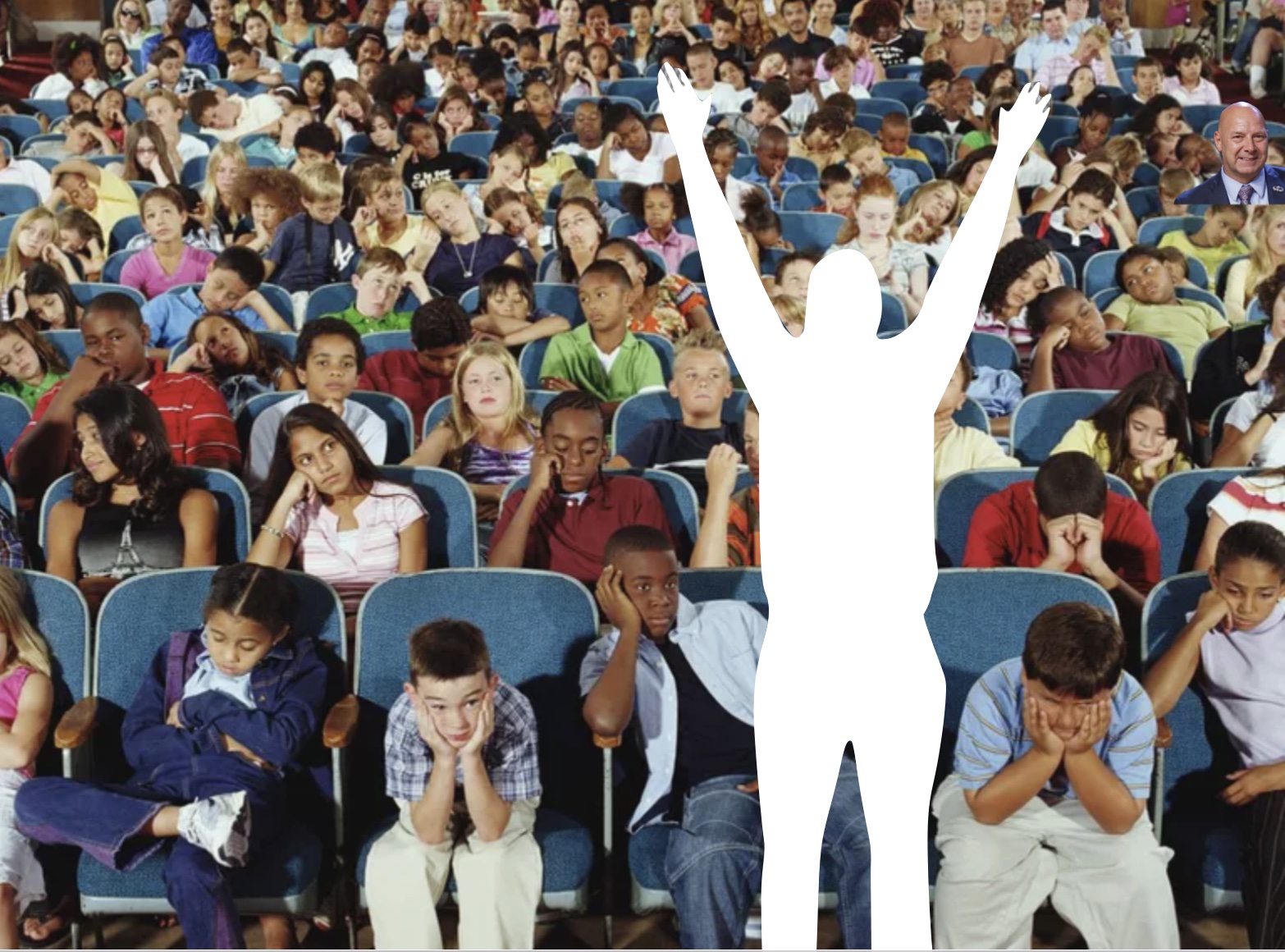
Just one teacher. And 33 kids.

That’s what my classroom would look like if Pennsylvanians vote for Doug Mastriano as our next governor.

The Republican state representative wants to slash education budgets in half – yes, IN HALF!

And that means doubling class size – at least.

Honestly, I don’t know how we’d cram all the desks in the room. I can barely fit 15 in there now.

Where would we put the books, computers and cabinets? The students, alone, would be wall-to-wall.

Just imagine that many middle school kids stuffed into the room arguing about who’s touching who and which classmate stole their pencil or book. Not to mention the children striving to get my attention to solve disputes, get help with classwork, ask permission to use the bathroom – and a thousand other issues!

I’d try my best to meet their needs but under Mastriano we just wouldn’t have the resources we used to have.

For example, there’s no way we could afford a school nurse at each building like we have today. We’d be lucky to have one nurse for all four buildings in the district – elementary schools, middle schools and the high school. If a student feels sick, there’s not much I could do except send the child to the office to try to call home and get a parent or guardian to pick the kid up early. And if the parents can’t make it, just let the kid put his or her head down?

What if the issue’s more psychological? There might be a school counselor somewhere in the district so a student can talk out an issue he or she is having – perhaps conflict resolution with a former friend, discuss peer pressure to try drugs or maybe deal with suicidal thoughts. But there’s probably a long waiting list to see this mythical counselor. Hopefully, the problem is not too urgent.

I feel especially bad for the special education students. Aides would be almost non-existent so many kids with special needs would have to struggle through issues with which we’d normally help them. All the individual Education Plans (IEPs) would have to be rewritten to take this new normal into account.

Even lunch would be disrupted. After all, there would be fewer cafeteria workers so it would be harder just to cook a hot meal and make sure it gets onto a tray in time for students to eat it.

There’s no doubt about it.

My classroom would be very different if Mastriano wins the gubernatorial election in November.

The former US Army Colonel who participated in the January 6 insurrection proposes slashing education funding from $19,000 on average, per student, to $9,000.

According to an analysis by the Pennsylvania State Education Association (PSEA), the plan would mean a 33 percent overall cut in public school revenue, or a $12.75 billion loss. It would require approximately 118,704 layoffs – 49 percent of all employees in schools around the state.

At my district of Steel Valley in Munhall on the western side of the Commonwealth, the situation probably would be much like I described.

I can’t imagine how any teacher could adequately tend to double the students, but I might not have to imagine it.

I’d probably be laid off.

More than half of Steel Valley’s staff would be out of a job – 92 of our current 172 school nurses, counselors, aides, cafeteria workers and teachers would be looking for work.

And that’s just where I’m employed.

Things would be even worse for my daughter where she attends McKeesport Area School District.

According to PSEA estimates, the nearby McKeesport district would lose 281 of 521 staff – a 54% reduction. Classes would go from an average of 17 students to an average of 46. That’s an increase of 29 students per class!

How can she learn in that kind of environment!? She isn’t in college yet. She isn’t in some University of Pittsburgh survey class that meets in an auditorium. She’s in middle school!

But it would be pretty similar at public schools, charter schools, career and technical centers and intermediate units across the state.

From one side of the Commonwealth to the other, we’d go from 239,902 staff to 121,198. Class size would go from an average of 16 students per class to 33. That’s an increase of 17 students per class or 109%.

However, the PSEA estimate is actually a best case scenario for Mastriano’s proposal.

Like so many wannabe big time policymakers, he is very light on the details of how we would educate the state’s 1.7 million students. This whole proposal was just something he blurted out during a March 2022 WRTA radio interview.

It’s his plan to completely eliminate local school property taxes. Funding would be provided directly to parents via “Education Opportunity Accounts,” and families could then decide whether they want a public, private, charter or home school option.

To go from a statewide average funding level of $19,000 a student to $9,000 a student requires a cut of $17.6 billion, or 53%.

But if the remainder isn’t being paid by property taxes, that’s a roughly $15.3 billion a year expenditure by the state that used to be paid by local property taxes. Where is he getting that money from? And if the state can afford to pay that much, why not just pay the full $19,000 per student and make none of these unnecessary cuts? Or why not just pay half and reduce property taxes by that much? Mastriano is not exactly forthcoming on any of this.

PSEA admits that to come up with its own estimates of the damage the organization filled in a few details. The union assumes the state would fully fund the $9,000-per-student voucher and leave other local non-property taxes and federal revenues untouched.

That might not happen. We could be looking at an even more draconian situation.

The biggest question the PSEA is sidestepping is the impact of allowing taxpayer dollars to fund so many different types of schooling.

Even under Mastriano’s plan, nontraditional educational providers like charter schools would suffer because like traditional public schools they would be receiving less funding from the state than they do now. And parents using their vouchers to pay for private schools for their children would still have to make up a pretty big gap between the amount of the voucher and the cost of private school tuition.

However, since traditional public schools serve the overwhelming majority of the state’s students, they would take the biggest hit financially. If more parents use their voucher to pay for private, charter or home schools, that’s less funding for our public school system. That means even greater cuts to student services and more staff layoffs.

Moreover, what if parents use the voucher for a fly-by-night educational option that doesn’t meet it’s obligations?

For example, according to reports by the Network for Public Education, about half of all charter schools close in 15 years. And 27% close in five years.

And when it comes to charter schools that took federal funding, 12% never even opened. They just gobbled up the cash with nothing to show for it.

What will happen to students whose parents lose their vouchers in schools like these? Who will pay for these kids to be educated? Or will they have to go without?

And when it comes to private schools, does Mastriano mean only secular private schools or does he include parochial schools? Will your tax dollars be used to pay for students religious education?

And what about the curriculum at these private schools or some home school programs? Many use texts published by Bob Jones University Press, Accelerated Christian Education, or A Beka.

The books are riddled with counter factual claims and political bias in every subject imaginable such as abortion, gay rights and the Endangered Species Act, which one labels a “radical social agenda.” They disparage religions other than Protestant Christianity and cultures other than those descended from White Europeans.

They teach that humans and dinosaurs lived at the same time, some dinosaurs survive into the present day (i.e. the Loch Ness monster), evolution is a myth disproved by REAL science and homosexuality is a choice.

Teaching these things in school is not just educational malpractice, it’s exactly the kind of indoctrination the right is claiming without evidence happens at public schools.

If someone wants to pay for such an education out of their own pocket, that’s one thing. But to ask taxpayers to fund such propaganda is something else entirely!

Thankfully, Pennsylvania voters don’t have to accept this. Not yet anyway.

There are still more than three months before the election. Voters can choose the Democratic gubernatorial candidate Josh Shapiro. He has promised to INCREASE education funding and not just blow up the whole system.

To see an interactive map of how Mastriano’s education cuts would affect your school district, click here.

For now this is only a bad dream. We still have time to wake up and vote accordingly.

Students should not have to submerge themselves in a sea of classmates and hope the teacher will have time to educate them.

We should cut class size, not increase it.

We should hire more teachers, not rely on a skeleton crew.

We should invest in education, not sell off our future for a fast buck today.


Like this post?  You might want to consider becoming a Patreon subscriber. This helps me continue to keep the blog going and get on with this difficult and challenging work.

Plus you get subscriber only extras!

Just CLICK HERE.

Patreon+Circle

I’ve also written a book, “Gadfly on the Wall: A Public School Teacher Speaks Out on Racism and Reform,” now available from Garn Press. Ten percent of the proceeds go to the Badass Teachers Association. Check it out!

Save Our Schools From Coronavirus Budget Cuts


Screen Shot 2020-05-02 at 4.36.09 PM


America is one dumbass country.


We don’t do the metric system.


We don’t do universal healthcare.


And during a global pandemic, we don’t demand the government pay us to stay home and stop the spread of the disease.


Instead, we demand the government let us go out and get sick.


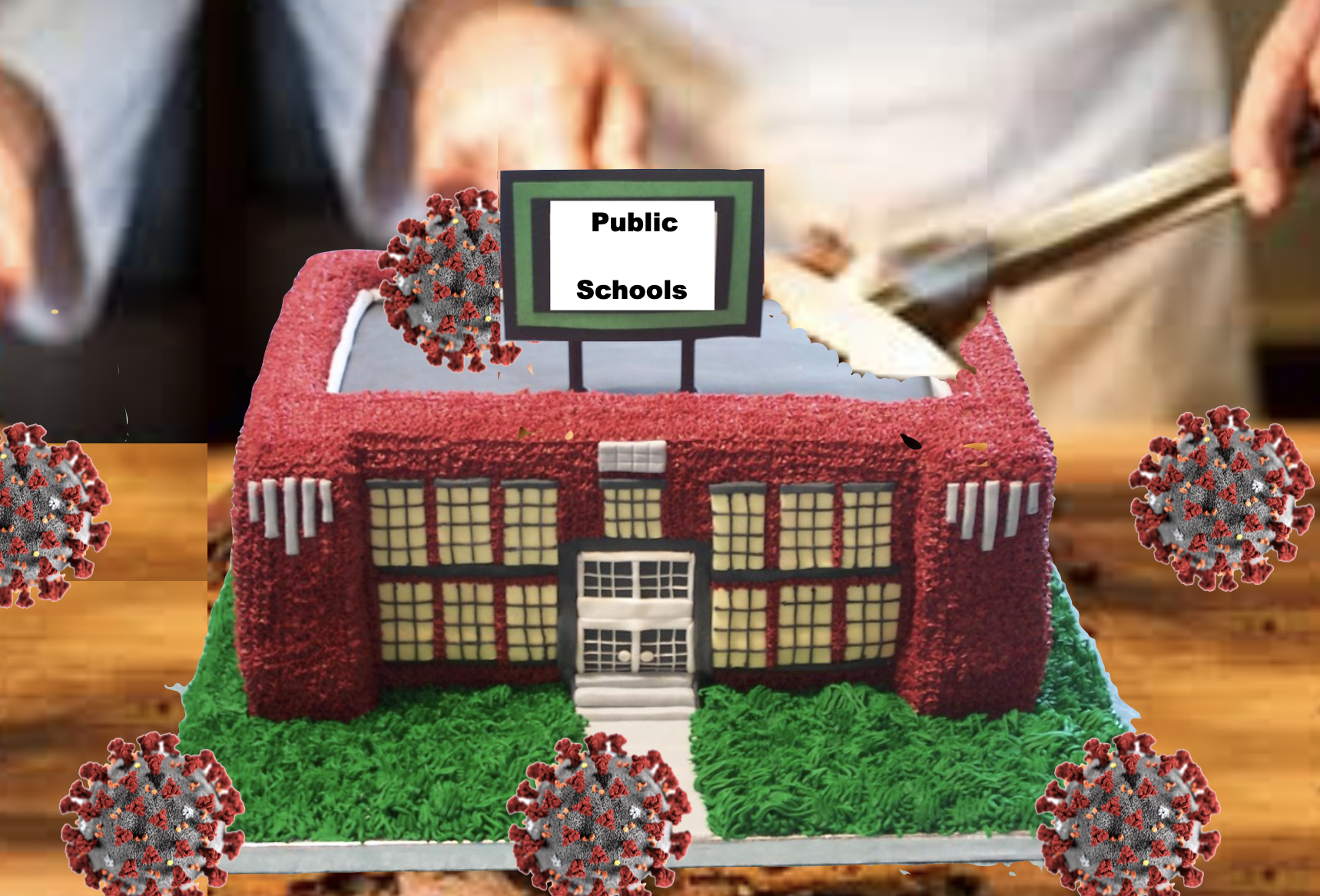
It should come as no surprise, then, that we deeply under-fund our public schools.


There’s always money for a new war or to subsidize fossil fuels or give billionaires another tax cut, but when it comes to teaching kids how to think critically about their world – time to take out the scissors and slash some budgets.


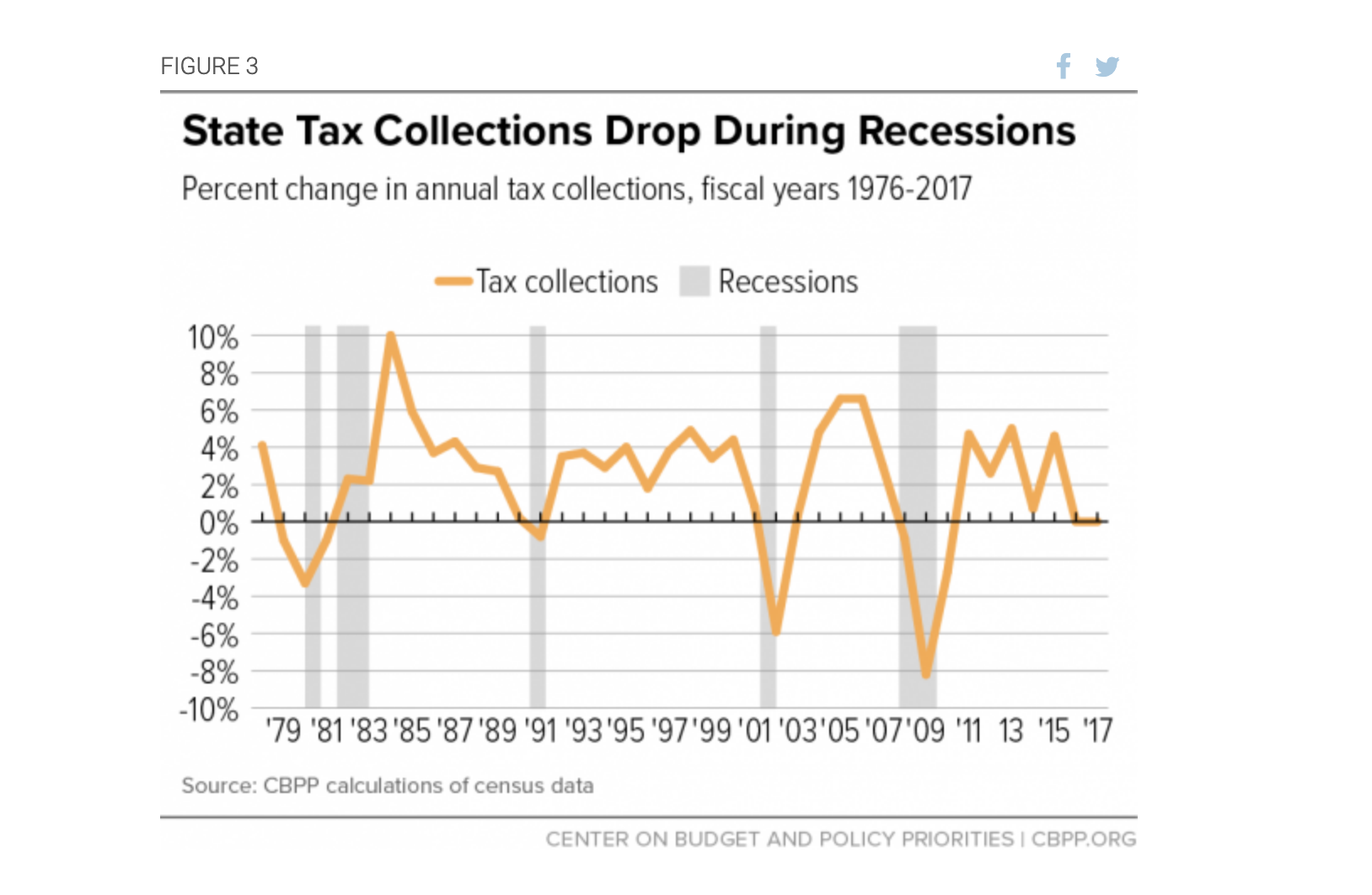
And now with the inevitable loss of taxes after shutting down the economy to save lives during the global Coronavirus outbreak, experts are expecting the deepest budget cuts to schools – well, ever.


Sixty two district superintendents from urban districts wrote to Congress in April warning of a 15-25% loss in revenues next fiscal year.


The school leaders from cities like New York City, Los Angeles, Chicago and Miami, say that a 20% loss in both state and local taxes, alone, would result in laying off about 275,000 teachers.


And this would come after students had already suffered significant academic losses during the current (2019-20) school year because of school closings and distance learning initiatives that could not possibly meet the needs of students as well as in-person learning.


Screen Shot 2020-05-02 at 10.14.42 AM


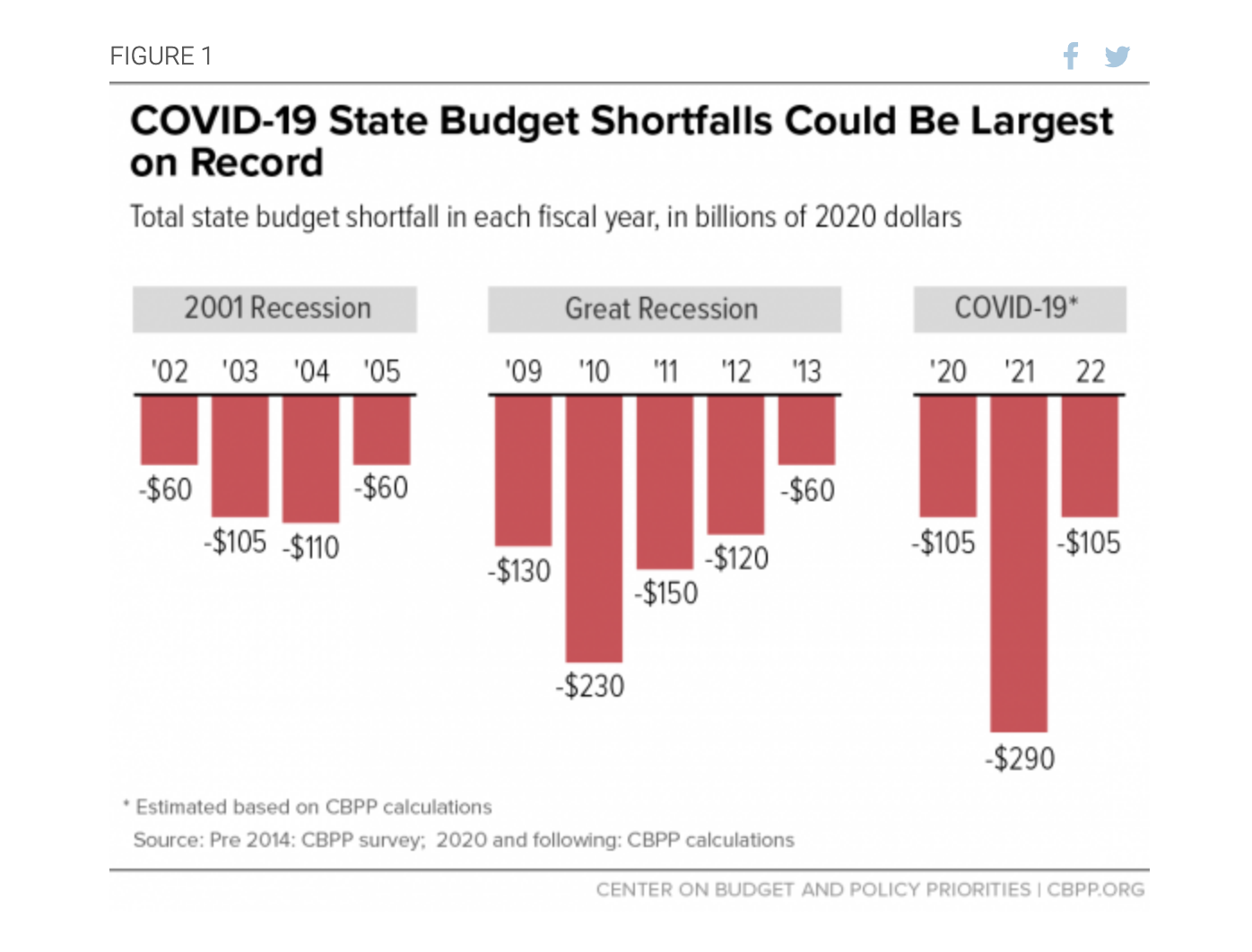
They ask legislators to enact a plan devised by the Albert Shanker Institute – a policy organization aligned with the American Federation for Teachers (AFT) – in which the federal government would give billions of dollars to districts in several phases to keep schools open. Then states would increase funding to levels before the Great Recession (2009-13), build up budget reserves and more equitably distribute capital.


How much money would be necessary?


It’s hard to say at this point.


Most districts get about 90% of their funding from state and local taxes and these haven’t been tallied yet for March, when social distancing began.


Some experts expect to have a better picture of the damage by the end of the first or second week of May.


There has been no mass evictions (though that may eventually happen), so property taxes are probably stable at this point. But it’s unclear how much shuttered storefronts and skyrocketing unemployment will affect the picture.


Screen Shot 2020-05-02 at 10.14.14 AM


The National Governors Association and non-partisan Center on Budget and Policy Priorities, though, are expecting the worst.


They estimate a possible $500 billion state shortfall mostly concentrated in the 2020-21 fiscal year.


Screen Shot 2020-05-02 at 10.12.29 AM


That’s less than three months away.


Even if you subtract fiscal aide already provided by Congress and state rainy day funds (if present), legislatures would still be at least $360 billion short.


The National Association of Teachers (NEA) is calling for an additional $175 billion just to stabilize the country’s schools.


“The seniors graduating this spring started kindergarten in the fall of 2007,” says Bruce Baker, professor at the Graduate School of Education at Rutgers University and co-author of the Shanker Institute report.


“Most of these students have spent almost their entire K-12 careers in schools with less funding than there was when they started. If this happens again, it will be because we let it happen.”


And that’s just it.


This Coronavirus crisis is a wake-up call for all of us about the elements of our society that had to fail for us to get to this point.


Everything from how we deal with climate change, to infrastructure, to healthcare, to economic inequality needs to be reconsidered if we are to survive.


Education is an essential piece of that puzzle.


We cannot continue to consume resources like there is no tomorrow – or there will be none.


We cannot continue to treat billionaires like the most vital part of our society when they are really nothing but parasites on it.


And we cannot continue to undercut our public education system and expect our next generation to be in a better position than we are today. In fact, doing so ensures that it won’t be.


Not only do we have to pay for our kids to be educated, we have to pay for ALL kids – black, white, brown, girls, boys, Christians, Jews, Muslims, immigrants, native born — all of them.


We have to integrate, educate and eliminate the school-to-prison pipeline.


And we have to stop wasting the money we do allocate on pointless profit-making endeavors for corporations that give little to nothing back to the children they are meant to be serving. That means no more privatized schools, no more high stakes standardized testing, no more shady ed tech, corporate written academic standards and union busting initiatives.


We have to ask ourselves – will we continue to support a culture of death where war and inequality are prioritized over nurturing and care? Or will we finally engage in a culture of life, where education and equity are the driving forces of society?


We can continue to be the laughing stocks of the world with our guns and superstitions, or we can get off our asses and start working toward a better world for all.


The old ways will not work in this new millennium.


It is entirely unclear whether we will heed the call from this crisis or hide our heads in the sand.


But the future of our nation and the well-being of our children are being decided right here, right now, this very minute.


Time to invest.


Email your members of Congress and tell them to keep students learning and educators working.


Like this post?  You might want to consider becoming a Patreon subscriber. This helps me continue to keep the blog going and get on with this difficult and challenging work.

Plus you get subscriber only extras!

Just CLICK HERE.

Patreon+Circle

I’ve also written a book, “Gadfly on the Wall: A Public School Teacher Speaks Out on Racism and Reform,” now available from Garn Press. Ten percent of the proceeds go to the Badass Teachers Association. Check it out!
book-2