FBI Warns EdTech Puts Student Safety at Risk

students-99506_960_720


Pandora’s box may not be a heavy wooden chest.


It might just be a laptop or an iPad.


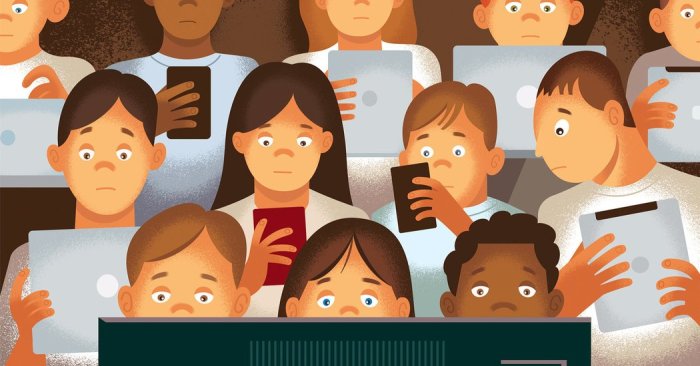
The Federal Bureau of Investigations (FBI) issued a warning late last week about the proliferation of educational technologies (EdTech) in schools and the dangers they pose to student safety and privacy.


The devices and applications singled out by US domestic intelligence services all involve software that asks for and saves student input.


This includes classroom management tools like Class Dojo and eBackpack as well as student testing and remediation applications like Classroom Diagnostic Tools and StudyIsland.


The alert cautions schools and parents that the widespread collection of student data involved in these applications could cause safety concerns if the information is compromised or exploited.


It’s just such technologies that have proliferated at a breakneck pace in districts throughout the country while legislation, cybersecurity and even awareness of the danger has lagged behind.


The Bureau is concerned about EdTech services because many are “adaptive, personalized learning experiences” or “administrative platforms for tracking academics, disciplinary issues, student information systems, and classroom management programs.”


The Bureau clarified that use of EdTech applications was not, in itself, the problem. They are a tool, and like any tool, they can be used for good or ill.


Advocates say when used correctly, these systems offer the potential for student collaboration, and for teachers to collect and compare information about students to help design better lessons. On the other hand, critics warn that the problems with most EdTech is essential to the way it operates and that it is designed more for the purposes of student data mining and profitization by corporations than with academic success for children in mind.


In either case, the dangers posed by such devices are indisputable.


The amount and kinds of data being collected about students has not been well publicized or understood. Many school boards, administrators, teachers, parents and students may be using EdTech without a full appreciation of how it often surreptitiously collects data on children.


Analysts listed several types of student particulars being stockpiled:


  • “personally identifiable information (PII);


  • biometric data;


  • academic progress;


  • behavioral, disciplinary, and medical information;


  • Web browsing history;


  • students’ geolocation;


  • IP addresses used by students; and


  • classroom activities.”


This is highly sensitive information that could be extremely harmful to students if it fell into the wrong hands.


Pedophiles could use this data to find and abduct children. Criminals could use it to blackmail them. It could even be sold to unscrupulous corporations or exploited by other children to bully and harass classmates.


These concerns are not merely academic. Data breaches have already occurred.


According to the FBI:


“…in late 2017, cyber actors exploited school information technology (IT) systems by hacking into multiple school district servers across the United States. They accessed student contact information, education plans, homework assignments, medical records, and counselor reports, and then used that information to contact, extort, and threaten students with physical violence and release of their personal information. The actors sent text messages to parents and local law enforcement, publicized students’ private information, posted student PII on social media, and stated how the release of such information could help child predators identify new targets.”


Though the Bureau did not mention them by name, it cited two specific cybersecurity failures in 2017 at two large EdTech companies where millions of student’s private information became publicly available.


The FBI seems to be referring to Edmodo and Schoolzilla. Hackers stole 77 million user accounts from Edmodo last year and sold that data to a “dark web” marketplace. Likewise, Schoolzilla stored student information on a publicly accessible server, according to a security researcher, thereby exposing the private information of approximately 1.3 million children.


It was these data breaches that prompted the Department of Education to issue a Cyber Advisory alert in October of 2017 warning that cyber criminals were targeting schools that had inadequate data security. Criminals were trying to gain access to this sensitive material about students to “shame, bully, and threaten children.”


In February, another cybercrime was reported by the Internal Revenue Service. The agency released an “urgent alert” about scammers targeting school districts with W-2 phishing schemes.


Of particular concern to the FBI are school devices connected directly to the Internet. They offer hackers an immediate link to private student information. This is true even if a school device is in the student’s home.


Tablets, laptops or monitoring devices such as cameras or microphones could be exploitable by tech savvy criminals – especially since many EdTech programs allow remote-access capabilities without the user even being aware of what is happening.


Indeed, some EdTech companies collect information on students’ feelings; become student data brokers and use voice-activated speakers in the classroom.


The FBI listed several recommendations for parents and families:


  • “Research existing student and child privacy protections of the Family Educational Rights and Privacy Act (FERPA), the Protection of Pupil Rights Amendment (PPRA), the Children’s Online Privacy Protection Act (COPPA), and state laws as they apply to EdTech services.

  • Discuss with their local districts about what and how EdTech technologies and programs are used in their schools.


  • Conduct research on parent coalition and information-sharing organizations which are available online for those looking for support and additional resources.


  • Research school-related cyber breaches which can further inform families of student data vulnerabilities.


  • Consider credit or identity theft monitoring to check for any fraudulent use of their children’s identity.


  • Conduct regular Internet searches of children’s information to help identify the exposure and spread of their information on the Internet.”


The warning concluded by asking those who have information about cybercrimes or who have been victimized by data breaches to file a complaint with the Internet Crime Complaint Center at www.ic3.gov.


For some, the FBI’s warning highlights the need for greater education funding for cybersecurity.


“While other industries are investing in greater IT security to protect against cyber threats, many schools are facing budget constraints that result in declining resources for IT security programs,” staff members from the Future of Privacy Forum wrote on their blog. “Schools across the country lack funding to provide and maintain adequate security,” they wrote.


Others see the problem as one of antiquated legislation not keeping up with changing technologies.


The FBI memo highlights a need for Congress to update federal student privacy laws, said Rachael Stickland, co-founder and co-chair of the Parent Coalition for Student Privacy.


At present, these issues are covered haphazardly from state to state, a situation Strickland finds intolerably inadequate.


The main federal law safeguarding student data privacy, The Family Educational Rights and Privacy Act, should be updated, she said. It must address exactly which ways districts should be allowed to share data with EdTech companies.


“What we need is a comprehensive approach at the federal level to address these outdated federal laws,” she said. “We really need these modernized to address not only the cybersecurity threats but also the potential misuse of this data.”


However, some critics are skeptical of the very use of EdTech in the classroom, at all.


They see the potential dangers being so massive and difficult to guard against that any remedies to fix the problem would be counterproductive.


Instead of spending millions or billions more on cybersecurity measures, we should use any additional funding for more essential budget items like teachers, tutors, nurses and counselors.


The goal is to provide a quality education – not to provide a quality education with increasingly complex technologies. If the former can be done with the latter, that’s fine. But if we have to choose between the two, we should go with proven methods instead of the latest fads.


EdTech corporations are making staggering profits off public schools while almost every other area goes lacking. In the nexus of business and industry, we may be losing sight of what’s best for students.


The question is have we already opened Pandora’s box, and if we haven’t, can we stop ourselves from doing so?


Like this post? I’ve written a book, “Gadfly on the Wall: A Public School Teacher Speaks Out on Racism and Reform,” now available from Garn Press. Ten percent of the proceeds go to the Badass Teachers Association. Check it out!

WANT A SIGNED COPY?

Click here to order one directly from me to your door!

book-3

Meet the Test Before the Test – Pennsylvania’s Classroom Diagnostic Tools (CDT)

BoredStudentIPad_iStock_monkeybusinessimages


It’s test time.


My students are dutifully pecking answers onto their iPads before a hand goes up.


“Mr. Singer, I can’t log in to the server.”


Another hand.


“It keeps kicking me out.”


Another.


“Mr. Singer, what does this question mean?”


Then every single hand in the room pops up all at once.


“What’s the matter!?” I say, trying not to let the frustration into my voice.


A lone student in the front offers to speak for the group.


“The Website just kicked us all off.”


If that sounds like the optimum environment to assess student learning, then you must work for Data Recognition Corp (DRC).


It is typical of the company’s Classroom Diagnostic Tools (CDT) test in Pennsylvania.


The assessment, which cannot be taken with pencil and paper but must instead be taken on a computer or personal device, has always been glitchy.


You type in a response and what you typed only appears after a delay.


When moving from one screen to another, you have to wait through a seemingly endless interval until the next screen loads.


And during this year’s first sessions, multiple teachers told me of students whose tests cycled through all the questions without input from the students and then gave them an unalterable grade.


This is not the best way to diagnose students’ abilities in reading, math and science.


Yet that’s what the state Department of Education strongly encourages we use it for – three to five times a year!


This is not a mandatory test.


It’s strongly suggested by administrators in Harrisburg. And that’s enough to make some local principals march wherever they’re told.


Ironically, Gov. Tom Wolf proudly proclaimed that he was reducing the amount of time students in the Keystone state would take standardized tests. But he’s only talking about the federally mandated Pennsylvania System of School Assessment (PSSA) and Keystone Exams which he’s cut by a total of almost 2 hours a year.


There are still a battery of suggested pretests on the state’s wish list – tests that are supposed to predict success on the PSSA or Keystone Exams – tests used to show whether kids are getting the skills they need.


Do you understand it now?


No.


Do you understand it Now?


No.


Do you understand it NOW!!!!!!!?


Of these, the most common is the CDT.


If schools follow the state’s instructions and give students this exam in reading, math and science 3 to 5 times a year, that’s an additional 50-90 minutes per test. That comes to 22.5 hours of additional testing!


So 22.5 hours minus 2 hours equals… NOT A REDUCATION IN TESTING!


Moreover, the CDT test is cumbersome to proctor.


I’ve given my students this test for about seven years now and it never fails to be anywhere from tricky to an outright disaster.


This week, I had a class of students on their iPads unable to log on to their accounts at DRC headquarters. In another group, five students were dropped from the server without warning and couldn’t finish.


Defective software and having to repeatedly log back in to the system are hallmarks of even the most successful CDT session.
Even if you like standardized tests and think they are the best way to assess students, the product and service provided by DRC is extremely low quality.


But keep in mind – you’re paying for it, folks! In the last 8 years alone, taxpayers forked over more than $1 billion for this service and the PSSA and Keystone tests, which DRC also produces.


It’s incredibly frustrating, a waste of classroom time and taxpayer money.


No one does their best when they’re exasperated, and this test is almost designed to make students feel that way.


Yet some local administrators are trying to use the assessment as part of a high stakes matrix to determine classroom placement.


Whether your child is registered in the remedial, general or advanced class could be determined by this shoddy excuse for an assessment. Whether your son or daughter has the advantages and esteem of the advanced class could rest on a malfunctioning data system. Whether he or she has to settle for months of mind numbing test prep instead of authentic education could be decided by defective software.


No matter how you look at it, this doesn’t help the teacher diagnose academic deficiencies and remediate them. That is, unless your idea of remediation is printing out a worksheet of test look-a-like questions based on the ones the student got wrong on the CDT.


This is bad assessment supporting bad pedagogy forced on us by bad policy.


But that’s not even the worst part.


Why are we doing this in the first place?


Have standardized tests ever been proven accurate assessments of student learning? Moreover, has it ever been proven useful to give pre-test after pre-test before we even give the ultimate high-stakes test?


Answer: No.


Most countries don’t test their students nearly as much as we do in the United States. Finland, which has students who routinely return some of the highest scores among developed nations, only makes its children take one standardized test.


One test from K-12!


In addition, countries like those in Scandinavia don’t have nearly the child poverty rate we do. Nor do they fund their schools based on local property taxes. They provide more funding and resources for needy students than rich ones – we do just the opposite.


Numerous studies have shown a strong correlation between parental income and the test scores of their children. In short, kids from wealthy families who go to schools with the best of everything generally score very well on standardized tests. Students from poor homes who go to underprivileged schools do much worse.


So all this testing does nothing to help students learn. It simply reinforces the inequality already in place. And then it’s used as a justification for that same inequality.


High stakes standardized testing is not about increasing student outcomes. It’s about boosting corporate incomes – corporations like Data Recognition Corp.


Finally, there’s another danger we haven’t even hinted at involved with the CDT.


As an on-line test, it collects an awful lot of data about the children taking it. This information is kept in a database for students entire academic career so that it can be compared with subsequent results.


This is private student data in the hands of a private company.


The chances that this information and thus students’ privacy will be violated are extremely high.


We are putting our children’s futures in the hands of a for-profit company with little to no assurance that it is safe. There is little oversight, accountability or even awareness of the issue.


Therefore, any knowledgeable parent would be entirely within his or her rights by refusing to let their child take any of these tests.


Yes, you can refuse to let your child participate in test prep the same way you can opt out of the PSSA and Keystone Exams.


You need refer to the same part of the law:


“PA School Code Chapter 4.4(d)(1)(2)(3):

(d) School entities shall adopt policies to assure that parents or guardians have the following:

(1) Access to information about the curriculum, including academic standards to be achieved, instructional materials and assessment techniques.

(2) A process for the review of instructional materials.

(3) The right to have their children excused from specific instruction that conflicts with their religious beliefs, upon receipt by the school entity of a written request from the parent or guardians.”


That includes the CDT.


Opt Out PA has provided this helpful form letter you can use and modify to meet your needs before sending it to your local principal:


“Dear Principal/Teacher(s):

Pursuant to Pennsylvania Code Title 22 Chapter 4, section 4.4 (d)(1)(2)(3) I am hereby exercising my right as a parent to have my child, [NAME], excused from PSSA test prep, including (but not limited to) CDT’s and Study Island because of religious beliefs.

Sincerely,”


So while Pennsylvania’s lawmakers dither back and forth about the political realities of standardized testing as an accountability measure and as they blithely ignore the threat posed to student privacy by on-line testing, parents can take matters into their own hands.


Your child’s teacher would like nothing better!


Imagine being able to actually teach and not have to spend days of instruction time troubleshooting a Website while corporate lackies cash our check!


Imagine students in school to actually learn something – instead of testing them into oblivion.


Imagine a student raising her hand to ask a question about the curriculum and not the software!


Like this post? I’ve written a book, “Gadfly on the Wall: A Public School Teacher Speaks Out on Racism and Reform,” now available from Garn Press. Ten percent of the proceeds go to the Badass Teachers Association. Check it out!

WANT A SIGNED COPY?

Click here to order one directly from me to your door!

cropped-book-1.jpg

STEM Education Severs the Arts from the Sciences

right-brain-left-brain


What’s the most effective way to dumb down a nation?


Focus on How without Why.


That’s really the biggest problem with the pedagogical fad of STEM education.


There’s nothing objectively wrong with teaching science, technology, engineering and math – the disciplines that make up STEM.


In many cases, doing so is essential to a well-rounded education.


But therein lies the problem – you can’t have a well-rounded education if you purposely leave out some of the most vital aspects of knowledge.


Where’s the art? Where’s the literature? Where’s the social studies, government, citizenship, drawing, painting, music – heck! Where’s the philosophical understanding of life, itself?


STEM initiatives often involve creating two tiers of school subjects. You have the serious disciplines that will earn you respect and a job. And you have the soft, mamby pamby humanities that are no good to anyone.


The problem is one of focus not content.


Corporate-minded bureaucrats who know nothing of human psychology, child development or education look solely at standardized test scores and get hysterical.


The U.S. is falling behind other nations – especially in science and math, they say. So we must do whatever we can to bring those test scores up, Up, UP!


Yet they have never bothered to see that our student test scores have never been at the top of the pack for all the decades we’ve been making international comparisons.


We started contrasting multiple choice assessment results for 13-year-olds in a dozen countries back in 1964. And ever since, America has always been right in the middle.


Yet for those five decades we’ve dominated the world in science, technology, research and innovation.


In that time we sent the first people to the moon, mapped the human genome, and invented the Internet – all while getting middling test scores.


In short, standardized assessments are a fantastically unreliable indicator of national success, just as they are poor indicators of individual learning.


We’ve never been a nation content with picking our answers from four options – A,B,C,D. We blaze new paths!


But number obsessed fools have convinced a public blinded by sports statistics that these tests mean our kids are deficient. And the only cure is to put on blinders and focus almost exclusively on those subjects most featured on the tests.


Even reading and writing are only valuable if they let us guess what a normalized reader is supposed to comprehend from a given passage and if they allow us to express ourselves in the most rudimentary and generic ways.


This is exactly what they do in countries with the highest test scores – countries that are LESS innovative than the U.S.


Asian countries from Singapore to South Korea to India are not blind to this irony. While we are trying to imitate them, they are trying to imitate the kind of broad liberal arts education in which we used to pride ourselves.


“Many painters learn by having fun,” said Jack Ma, founder of one of China’s biggest Internet companies Alibaba.


“Many works of art and literature are the products of having fun. So, our entrepreneurs need to learn how to have fun, too.”


Ma worries that his country is not as innovative as those in the West because China’s educational system focuses too much on the basics and does not foster a student’s complete intelligence, allowing him or her to experiment and enjoy the learning process.


In other words, no matter how good you are at math and science, you still need to know how to learn, think and express yourself.


To be fair, these criticisms of STEM are not new.


Even global pundits like Fareed Zakaria have made similar arguments.


The result has been a hasty addition – change STEM to STEAM by adding in the arts.


Unfortunately, this hasn’t always worked out for the best.


Most of the time, the arts component is either an after thought or merely a sweetener to get students interested in beginning the journey – a journey that is all STEM all the time.


There is still an education hierarchy with the sciences and math at the top and the humanities and social studies at the bottom.


This is extremely unfortunate and will cause long-term detrimental effects to our society.


For instance, we pride ourselves in being democratically ruled. Political power does not come from authority, it comes from the consent of the governed.


This requires a public that knows how to do more than just add and subtract. Voters need to understand the mechanisms of government so they grasp their rights. They need a knowledge of history so they don’t repeat the mistakes of the past. They need to grasp human psychology, anthropology, and sociology to understand how people work in groups and individually.


Moreover, as human beings, they need the humanities. People have thoughts and feelings. They need to know how to express those thoughts and feelings and not just by writing a five-paragraph essay. They need to be able to create works of art. They need to be able to write a story or poem. They need to be able to manipulate images. They need to understand and create music.


Without these things, it can be difficult to become fully actualized people.


That used to be the goal of education. Provide students with the tools to become the best version of themselves.


But this focus on STEM and STEAM only endeavors to make them the best cogs the workforce needs.


We have relinquished our commitment to students and replaced it with a commitment to business and industry.


The idea is that schools owe the job market workers. That could not be further from the truth. We owe our students the tools that will help them live the best lives. And employment is only one small facet of that goal.


I’m not saying we shouldn’t teach math and science. We should – we MUST. But those can’t be prioritized over and above other essential human endeavors.


We need to fund and encourage a broad liberal arts education for all students. As they get older and move on to post-secondary studies including industrial arts they will inevitably specialize in areas that they find most interesting.


But until then, it is our job to give them every opportunity to learn – not to mold them into future wage slaves or boost national pride with arbitrary and meaningless test scores.


Like this post? I’ve written a book, “Gadfly on the Wall: A Public School Teacher Speaks Out on Racism and Reform,” now available from Garn Press. Ten percent of the proceeds go to the Badass Teachers Association. Check it out!

WANT A SIGNED COPY?

Click here to order one directly from me to your door!

book-2

Five Things I Learned About Ed Tech While Playing ‘Zelda: Breath of the Wild’

the-legend-of-zelda-breath-of-the-wild-guardian-e1489251354463 

I don’t mean to brag, but I just beat “Zelda: Breath of the Wild.”


This summer I sat down with my 9-year-old daughter and together we played the most popular Nintendo Switch game for hours, days, weeks.


And at the end of all that time, I came away victorious – something I wasn’t sure I’d be able to do when I started.


There are so many buttons to learn, two joy sticks, various info screens and menus.


But when it was all over, I had cleared all four divine beasts. I got all 18 captured memories. I completed about 80 shrines. I mastered about 45 side quests. I shredded guardians, lynols and bokoblins. And, yes, I opened a major can of whoop ass on Calamity Gannon.


As the kids say, I’m jelly.


My video game skills are lit.


You can’t handle me, bro.


And so on.


But I’m not a kid. I’m a grown man.


Didn’t I have anything better to do?


Couldn’t I have found a more productive use for all that time?


Maybe. Maybe not. However, beyond the sheer fun, I did learn something from the whole experience.


As a public school teacher, I learned about my students by following in their footsteps.


That’s really why I started playing in the first place – my middle school kids this year loved that game.


I got more Zelda doodles, more Hyrule poetry, more Link fan fiction than you might at first believe.


The world of the game was really important to my children and having even a passing knowledge of that world helped me relate to them.


I even asked for a few tips after class.


One of my best students took her Switch out of her backpack and showed me a prime location to pick hot peppers so I could withstand the cold of Mount Hyrule (Don’t ask).


It was worth doing just for that – I showed my willingness to be the student and for them to be the teachers. I showed them we were all a community of learners.


At least, that’s my hope.


But now that the dog days of summer are here and my video game victory is complete, I keep thinking of the implications of my experience in Hyrule on the world of education.


Specifically, I’m thinking about education technology or Ed Tech.


I’m thinking about how we use various software packages to try to teach students and how they invariably fail at the task.


Well-meaning administrators hear about this program or that classroom management system or an assessment app and they spend beaucoup bucks on it.


We’re instructed to give up valuable instruction time so our kids can sit in front of a computer while a digital avatar attempts to do our job.


Kids listen to a cartoon person instruct them in the rudiments of grammar or literacy, play loose skills exercises and earn digital badges.


It may sound like fun to us, but they hate it.


The reason: nine times out of ten it’s little more than a standardized test given on a computer.


Sure, there are lots of bells and whistles, but the kids catch on mighty quickly. There is no student as bored as a student forced to play an educational video game.


I have real concerns with issues of student privacy and how the data being collected by these apps is used. I have real problems with how this technology facilitates dumbing down the curriculum – narrowing it to only that which can be measured on a multiple choice assessment. I take umbrage that these programs are used by some as “evidence” that human educators and brick and mortar schools are unnecessary. And I shed real tears at the massive amounts of funding being funneled to corporations that could be better spent in our own districts.


But playing this game has given me hope.


In seeing how “Zelda” succeeds with kids – because it succeeded with me – I think we can illuminate some ways ed tech goes awry.


I found five distinct lessons from the game, five areas where “Zelda” succeeds where ed tech fails.


Perhaps these could be used to improve the quality of ed tech devices to make them better at teaching students.


Or they could show why ed tech will never be as effective at teaching as flesh and blood instructors.


In any case, here is what I learned.

1) Focus on Fun


One of the biggest differences between ed tech and “Zelda” was the focus.


The games we make children play at school are designed to teach them something. That is their purpose. It is their raison d’être. The point behind the entire activity is to instruct, test and reward.


By contrast, the purpose of “Zelda” is fun.


Don’t get me wrong. “Zelda” can be very educational.


There are points where the game is actively trying to teach you how to do things usually associated with game play.


You have to learn how to make your character (Link) do what you want him to do. You have to learn how to manipulate him through the world. How to run, how to climb, how to heal, how to use weapons, how to cook and make elixirs, etc.


However, the point behind the entire game is not instructional. It’s fun – pure and simple.


If you have to learn something, it is all in service to that larger goal.


In the world of the game, learning is explicitly extrinsic. It helps you have more fun playing. Only the pursuit of winning is intrinsic or even conceptualized as being so.


In real life, this may not be the right approach to education, but it seems to be a rule of virtual experience. If it is superseded, the game becomes just another class assignment – lifeless, dead, boring.


If educational software is going to be effective in the classroom, it must find a way to bridge this divide. It must either put fun before pedagogy or trick the user into thinking it has done so.


I’m not sure this is possible or desirable. But there it is.


2) Logic and Problem Solving Work but not Curriculum


There are many aspects of “Zelda” one could consider educational.


However, when it comes to things that have importance outside of the game, the biggest would be problem solving and logic games.


A great deal of game play can be characterized under this umbrella.


The ostensible mission is to defeat the bad guy, Calamity Gannon. However, to do so you often have to solve various puzzles in order to have the strength and skills to take him down.


The most obvious of these puzzles are shrines. There are 120 special areas throughout Hyrule that Link needs to find and solve.


Each one involves a special skill and asks the gamer to decipher problems using that skill. For example, one asks you to manipulate fans so that the air flow makes windmills turn in a pattern. Another asks you to get a ball through an obstacle course.


In each case, the emphasis is on logic and critical thinking.


That has tremendous educational value. And it’s something I’ve seen done easily and well in many educational video games.


The problem is it doesn’t teach any particular curriculum. It doesn’t teach math, science, English or social studies – though it does help contribute to all of these pursuits.


Ed tech games are not nearly so coy. They often try to go right for the curriculum with disastrous results. Ed tech software, for instance, will have you find the grammatical error in a sentence or solve an equation in order to move on in the game.


That just doesn’t work. It feels false, extraneous and forced. It’s doesn’t seem like an organic part of the experience. It’s something contrived onto it from outside and reminds the gamer exactly why you’re playing – to learn.


3) Option to Seek Help


One of the most surprising things to me about playing “Zelda” on the Switch was how much of an on-line gaming community has formed around the whole experience.


If you get stuck in a particular area, you can find numerous sites on-line that will help you get passed it. You can even find gamer videos where YouTubers will show you exactly how they solved this or that problem. And they don’t all have the same solution. Some provide elegant, well-detailed advice, and others seem to stumble on it and offer you their videos as proof they could actually get the job done somehow.


It’s a lot different from when I was a kid playing video games. Back then (30 years ago) you had your friends but there were few other places to go for help. There were fan magazines and a few video game companies had tip hotlines. But other than that, you were on your own.


One of my favorite YouTubers this summer was Hyrule Dude. His videos were clear, informative and helpful. However, I didn’t always agree with his solutions. But they invariably helped me find things that would work for me.


It reminded me a bit of Khan Academy and other learning sites.


If kids really want to grasp something today, they have so many places they can go on-line. As educators, it’s hard to incorporate them into a classroom environment because there are certain things we want kids to find out for themselves.


For instance, as a language arts teacher, I want my students to do the assigned readings on their own. Yet I know some of them try to skip to the on-line summaries they can find and use that instead of reading the text. I have no problem if they access good summaries and analysis but I don’t want them to take the place of trying to comprehend the text on their own first.


I think there are ways to use this larger social media community to help support learning without spoiling the hard work kids need to put in on their own. But it’s something we need to think about more and find better ways to incorporate.


4) Open Ended


One of the most striking things about this new “Zelda” is how much choice the gamer has. In most games you have to complete the first board and then the second and so on until you win.


On the Switch, the world you’re thrust into is incredibly open ended. You can do pretty much what you want, when you want. Or at least you can try.


At first, your character is limited to one area of the world – a plateau. But once you complete a certain number of the challenges there, you get the paraglider which allows you to access most of the rest of the world.


It’s a huge area to explore – impossible to travel the entire length of it without spending hours of game play. And it’s entirely up to you where to go and what to do next.


The central mission of the game is to defeat Calamity Gannon in Hyrule Castle. However, that would be incredibly difficult early on. You’re advised to get the four Divine Beasts first. And you can do them in any order you want.


Moreover, I mentioned shrines earlier. When you complete four shrines, you can either increase your hearts (the amount you can be hurt without dying) or your stamina (how long your character can do something hard like climbing or swimming without having to rest). Technically, you don’t have to complete more than a few shrines, but doing so makes your character stronger and better able to get the Divine Beasts and defeat Gannon.


There are also side-quests (totally optional) that reward your character with money, items, etc.


I think this is the secret to the game’s success. It’s why game play is so immersive and addictive.


Ed tech software is exactly the opposite. You must do section A before section B before section C. It’s little more than a multiple choice test with only limited possible answers of which only one is correct.


In “Zelda” there are often multiple ways to achieve the same end. For instance, I would assume the programmers wanted me to fight my way through every room of Hyrule Castle to get to Calamity Gannon. However, I simply climbed over the walls and swan through the moats – a much quicker and efficient method.


If we could recreate this freedom of movement and multifarious solutions within educational software, we might really be onto something. But, frankly, it’s something that even traditional video games have difficulty being able to recreate.


5) Choice to Play or Not


And speaking of choice, there is the choice whether to play or not.


Video games are one of the things kids choose for leisure. When we force kids to play them in school, that choice is gone.


They become a task, a trial, an assignment.


Moreover, not every child enjoys video games.


We can’t mandate kids learn from games – even the best of ed tech games. At best, they should be an option. They could be one tool in the toolbox.


In summary, I think the goal of the ed tech industry is deeply flawed.


Ed tech will never adequately replace brick-and-mortar schools and flesh and blood teachers.


At best, it could provide a tool to help kids learn.


To do so, games would have to primarily be focused on fun – not learning. They would have to be organized around critical thinking and logic – not curriculum. They would need to utilize the on-line community for help but not cheating. They would need to be open ended worlds and not simply repackaged standardized testing. And finally, students would need the choice whether to play them or not.


Unfortunately, I am skeptical that the ed tech industry would even attempt to incorporate these ideas in its products.


They are market driven and not student driven. The corporate creatures behind these products don’t care how well they work. They only want to increase profitability and boost market share.


Cheaper commodities are better – especially when the consumer isn’t the student forced to play the game but the politician or administrator in charge of school policy.


Ed tech’s potential as a positive tool in a school’s toolbox has been smothered by the needs of business and industry. Until we recognize the harm corporations do in the school, we will be doomed to dehumanizing students, devaluing teachers and wasting our limited resources on already wealthy big business.


Like this post? I’ve written a book, “Gadfly on the Wall: A Public School Teacher Speaks Out on Racism and Reform,” now available from Garn Press. Ten percent of the proceeds go to the Badass Teachers Association. Check it out!

WANT A SIGNED COPY?

Click here to order one directly from me to your door!

book-1

Gamification – The Hottest New Trend to Monetize Education

Screen Shot 2018-02-26 at 3.14.37 PM


When I was a kid, Super Mario Bros. was my jam.


After school, I couldn’t wait to take on the role of plucky plumber Mario or his brother Luigi. I’d jump on a few turtle shells, bounce over a bottomless pit and smash just the right secret brick to get my flashing star power up and wipe the floor with endless levels of Koopa Troopas.


But through it all, I never really learned anything.


With the possible exception of a few Italian stereotypes, the only knowledge I gained was where the warp zones were, which blocks to hit and the muscle memory necessary to defeat the next bad guy.


However, now-a-days that’s all changed.


Someone in marketing and accounting has decided that the same techniques I used to save Princess Toadstool would make an exceptional method of pedagogy.


They call it gamification, the process of making academic lessons, courses and objectives look more like video games.


Sure, the process has applications in the business world and advertising, but its biggest market has been education.


In fact, the Gamification industry is worth $2 billion worldwide and some estimate it to jump to $22 billion by 2022.


Want to teach grammar? Welcome to the good ship Verb sailing on the seas of Nouns and Pronouns. Interjections, A-hoy!


Wish your students knew fractions? Let them blast away the wrong numbers so only the correct numerator matches with the correct denominator.


That kind of thing.


It’s incredibly popular in some circles.


Advocates claim it increases student engagement and enthusiasm, provides instant feedback and the opportunity for social interactions.


Critics say it reduces students’ attention spans, narrows the curriculum and replaces human interaction with canned interfaces.


But when something is bringing in this kind of cash for big business, it’s kind of beside the point whether it works or not.


It’s the latest form of snake oil out of the cobra factory, and your teacher may be forced to pour it into your children’s brains.


That’s just Education 2018. Under the old model, the hucksters would have to approach each teacher one-at-a-time and convince them to try the shinny new toy in the box. But when you remove teacher autonomy, that frees all the used car salesmen to go right to the one person in your district – often the technology coordinator or academic coach – who controls the purse strings and convince him or her to buy what they’re selling.


In short, I’m not a fan.


In fact, I think gamification is one of the dumbest fads to hit public schools since standardized testing.


Don’t get me wrong.


Games can have limited use in the classroom.


My students love reviewing already mastered material in teams or competing against each other individually.


But there’s a big difference between playing Jeopardy or Kahoot with soon-to-be-tested material and plopping kids on an app or software package that pretends to teach them the concept.

There’s a world of difference between a 10-minute detour and an entire curriculum structured around game theory.


The biggest problem seems to be this.


Games are not intrinsically valuable.


They are good or bad based on the amount of fun they provide the user.


Be honest. No one really cares if Link puts together the Tri-force. No one is losing any sleep over rampaging Metroids on the loose. No one is putting out an Amber Alert the next time Princess Peach is inevitably kidnapped by Bowser. The only thing that matters is if meeting these objectives and countering these fictional bad guys is fun and exciting.


However, the same is not true for the ends of education.


People care whether you can read and write. You may lose sleep over being unable to add, subtract, multiple and divide. Co-workers will be alerted if you don’t comprehend the basics of science and history.


And the higher the skill we’re aiming for, the greater the degree of importance.


Gamification divorces these two ends. It turns education from an intrinsic activity into an extrinsic one.


This is a big deal.


Students shouldn’t struggle through a reading passage so they’ll get a score or a badge. They should actually care about what they’re reading.


My students and I just finished reading Lois Lowry’s “The Giver,” and they loved it.


After the first few chapters, they weren’t reading for a grade or to please me, their teacher. They truly wanted to know what would happen next. And to fully understand that, they had to exercise and refine their reading skills.


Look at it like this.


When I was playing Super Mario Bros., I often took a few warp zones to the last board so I could beat Bowser quickly and win the game. But that means I skipped over most of the first seven boards.


This didn’t matter because the only reason to play was to win. But if those first boards had included something important to the experience, skipping them would have greatly diminished my experience.


Gamification reduces learning until its meaningless. Why would anyone want to know something unless it carried with it a video game like reward?


And that’s merely the worst part.


In practice, most of the applications and software being pushed on kids to increase enthusiasm and motivation aren’t really very much fun at all. After a few times through, there isn’t much reason to plow through exposition heavy content with little to do. This material doesn’t connect to students’ lives, it doesn’t foster authentic competition, it doesn’t stoke their sense of wonder – it’s just a boring set of hoops to jump through to satisfy the instructor.


Admittedly, it does provide instant feedback, but that doesn’t matter if students don’t care about the matter at hand.


Social interactions are possible here but rarely have I seen this opportunity explored. A good group project will get students more engaged socially than messaging back and forth about the software challenge du jour.


Education can be so much more than this.


Students are being robbed of authentic interactions, authentic instruction and authentic learning.


Not all things should be turned into a game.


Gamification is another example of trying too hard to market something to people who won’t actually be using it in the hopes that they won’t notice it doesn’t actually work that well.


The consumer isn’t the gamer – it’s the administrator who buys the program. And the people best suited to assess the program’s success – teachers and students – aren’t even part of the equation.


It’s about monetization, not education.


Mario may grab a bunch of coins on his way to save the princess, but it is the corporations who are getting rich off this sad fad.


All that glitters is not gold, just as all that is new and technological is not cutting edge.


Can we stop letting big business drive the field and let education be determined by educators?


Otherwise, it will be game over for an entire generation of kids duped into accepting crap for curriculum.

Economists Don’t Know Crap About Education

3c19197


I hate to be blunt here, but economists need to shut the heck up.


Never has there been a group more concerned about the value of everything that was more incapable of determining anything’s true worth.


They boil everything down to numbers and data and never realize that the essence has evaporated away.


I’m sorry but every human interaction isn’t reducible to a monetary transaction. Every relationship isn’t an equation.


Some things are just intrinsically valuable. And that’s not some mystical statement of faith – it’s just what it means to be human.


Take education.


Economists love to pontificate on every aspect of the student experience – what’s most effective – what kinds of schools, which methods of assessment, teaching, curriculum, technology, etc. Seen through that lens, every tiny aspect of schooling becomes a cost analysis.


And, stupid us, we listen to them as if they had some monopoly on truth.


But what do you expect from a society that worships wealth? Just as money is our god, the economists are our clergy.


How else can you explain something as monumentally stupid as Bryan Caplan’s article published in the LA Times “What Students Know That Experts Don’t: School is All About Signaling, Not Skill-Building”?


In it, Caplan, a professor of economics at George Mason University, theorizes why schooling is pointless and thus education spending is a waste of money.


It would be far better in Caplan’s view to use that money to buy things like… oh… his new book “The Case Against Education: Why the Education System Is a Waste of Time and Money.”


His argument goes something like this: the only value of an education is getting a job after graduation.


Businesses only care about school because they think it signifies whether prospective employees will be good or bad at their jobs. And students don’t care about learning – they only care about appearing to have learned something to lure prospective employers. Once you’re hired, if you don’t have the skills, employers have an incentive to give you on the job training. Getting an education is just about getting a foot in the door. It’s all just a charade.


Therefore, we should cut education funding and put kids to work in high school where they can learn how to do the jobs they’ll need to survive.


No wonder economics is sometimes called “The Dismal Science.” Can you imagine having such a dim view of the world where THAT load of crap makes sense?


We’re all just worker drones and education is the human equivalent of a mating dance or brilliant plumage – but instead of attracting the opposite sex, we’re attracting a new boss.


Bleh! I think I just threw up in my mouth a little bit.


This is what comes of listening to economists on a subject they know nothing about.


I’m a public school teacher. I am engaged in the act of learning on a daily basis. And let me tell you something – it’s not about merely signifying.


I teach 7th and 8th grade language arts. My students aren’t simply working to appear literate. They’re actually attempting to express themselves in words and language. Likewise, my students aren’t just working to appear as if they can comprehend written language. They’re actually trying to read and understand what the author is saying.


But that’s only the half of it.


Education isn’t even just the accumulation of skills. Students aren’t hard drives and we’re not simply downloading information and subroutines into their impressionable brains.


Students are engaged in the activity of becoming themselves.


Education isn’t a transaction – it’s a transformation.


When my students read “The Diary of Anne Frank” or To Kill a Mockingbird, for example, they become fundamentally different people. They gain deep understandings about what it means to be human, celebrating social differences and respecting human dignity.


When my students write poetry, short fiction and essays, they aren’t merely communicating. They’re compelled to think, to have an informed opinion, to become conscious citizens and fellow people.


They get grades – sure – but what we’re doing is about so much more than A-E, advanced, proficient, basic or below basic.


When the year is over, they KNOW they can read and understand complex novels, plays, essays and poems. The maelstrom of emotions swirling round in their heads has an outlet, can be shared, examined and changed.


Caplan is selling all of that short because he sees no value in it. He argues from the lowest common denominator – no, he argues from the lowest actions of the lowest common denominator to extrapolate a world where everything is neatly quantifiable.


It’s not hard to imagine why an economist would be seduced by such a vision. He’s turned the multi-color world into black and white hues that best suit his profession.


In a way, I can’t blame him for that. For a carpenter, I’m sure most problems look like a hammer and a nail. For a surgeon, everything looks like a scalpel and sutures.


But shame on us for letting one field’s myopia dominate the conversation.


No one seems all that interested in my economic theories about how to maximize gross domestic product. And why would they? I’m not an economist.


However, it’s just as absurd to privilege the ramblings of economists on education. They are just as ignorant – perhaps more so.


It is a symptom of our sick society.


We turn everything into numbers and pretend they can capture the reality around us.


This works great for measuring angles or determining the speed of a rocket. But it is laughably unequipped to measure interior states and statements of real human value.


That’s why standardized tests are inadequate.


It’s why value added teacher evaluations are absurd. It’s why Common Core is poppycock.


Use the right tool for the right job.


If you want to measure production and consumption or the transfer of wealth, call an economist.


If you want to understand education, call a teacher.

What’s the Buzz? A Crown of Gadflies! Top 10 Articles (by Me) in 2017

thumbnail_Screen shot 2017-12-26 at 3.44.17 PM


We made it, Readers.


Somehow we survived 2017 – the first year of the Trump Presidency.


What a monstrosity that has been so far!


Republicans have stolen more than $1 trillion from our pockets to give to their mega-wealthy donors in the form of tax cuts. A 3-2 GOP majority on the Federal Communications Commission (FCC) repealed Net Neutrality. And the party of Lincoln endorsed and funded a child molester for US Senate – though he thankfully lost.


We’re in new territory. Politics has always appealed to the best and worst of our natures: Good people who really want to make a difference and sniveling cowards willing to do whatever their sugar daddies tell them. But unfortunately our world has increasingly rewarded the latter and almost extinguished the former.


However, don’t lose heart. The cockroaches are all out in the open. They’ve become so emboldened by the words “President” and “Trump” voiced together that they no longer feel the need to hug a wall.


All it would take is a good boot and a series of stomps to crush them forever.


Someone get me my shoes.


In the meantime, I sit here at my kitchen table recovering from a turkey coma preparing for a nostalgic look back at everything that’s happened here at Gadfly on the Wall in the past year.


It was quite a 365 days! Most amazing was the publication of my book, “Gadfly on the Wall: A Public School Teacher Speaks Out on Racism and Reform” from Garn Press. It’s a thorough reworking and “Best Of” this blog over the last three years.


Sales have been strong and reviews are starting to come in. I am absolutely floored when I get messages from people I admire telling me they got the book and appreciate this or that. It’s been my lifelong dream to publish a book, and now I’ve done it. The New Year will involve lots of promotion – hopefully I can get decision makers to read it!


Other than that, it’s been a busy year blogging. I wrote 118 articles! That’s about one every three days!


And people have been reading them.


I’ve had more than 364,000 hits – about the same as in 2016. This puts the total views over the 1 million mark at more than 1,216,000! That’s quite a landmark for a blog that’s only been around since July, 2014. And it doesn’t count all the readers I get from articles reposted on the Badass Teachers Association Blog, Huffington Post, Commondreams.org, the LA Progressive, Alternet, BillMoyers.com or other sites.


I’ve also gotten 1,510 more people to follow me for a total of 12,845.


I’m so honored that readers still like coming to this site for news and commentary. As long as you care to enter those virtual doors, I’ll be here, hunched over my computer, pounding away at the keys.


So without further ado, let’s take a look back at the top 10 articles from this blog that got the Inter-webs humming:


10) Teacher Appreciation Week is a Pathetic Joke!

Published: May 10, 2017 Screen Shot 2017-05-10 at 3.38.28 PM


Views: 4,320


Description: At the end of every school year we get Teacher Appreciation Week. It’s nice. Educators get free donuts and cookies, a pat on the head and then the rest of the year we get all the blame for society’s problems without any additional funding, repealing terrible policies or even acknowledgement of what the real issues are in our schools. It’s a sham. Someone had to say it, so I did. Thanks for the snack, but it takes a village, folks! Get off your butts and take some responsibility!


Fun Fact: Some people, even teachers, were really upset by this article. They thought it was ungrateful. Don’t get me wrong, I am truly appreciative for any crumb the public wants to give us, teachers, but I’m not going to let it pass as if that counts as true support. Salving your conscience isn’t enough. We need true allies to get down in the mud and fight with us. Otherwise, it’s just an empty gesture.


9) White Privilege, Public Schools and Ugly Christmas Sweaters


Published: Dec 22 Screen Shot 2017-12-22 at 1.02.56 PM


Views: 4,324


Description: This one’s hot off the press! It describes a situation at one of the schools were I’ve taught over the years and how dress code policies can support white privilege. They’re the broken windows policing of academia, and we need to put much more thought into them before laying down blanket restrictions.


Fun Fact: Some readers took exception to this piece because they thought I didn’t do enough to stop a wayward administrator despite the fact that I never said what I did or didn’t do. Some even complained that it was dumb to simply acknowledge racism and racist policies and actions. I don’t know what world they’re living in. White folks voted for Donald J. Trump to be President. We’ve got a long way to go, and acknowledging everyday prejudice seems a worthy goal to me.


8) America’s Founding Fathers Were Against School Choice

Published: Feb 16 3551131_f520


Views: 4,483


Description: The entire premise of school privatization goes against the founding principles of our nation. We were born out of the Enlightenment, not the profit motive. Our founders would look on in horror at charter and voucher schools. Though they aren’t perfect, only truly public schools embody the ideals of the Revolution. True conservatives and true patriots would support that system, not strive to blow it up for personal financial gain.


Fun Fact: Some people took issue with an appeal to the founders who were not exactly perfect. It’s true. In practice many of them did not live up to their own high ideals. However, who does? It is the ideal that matters, not the clay feet of our forebears.


7) Middle School Suicides Double As Common Core Testing Intensifies


Published: July 24 Screen Shot 2017-07-24 at 10.35.30 AM


Views: 5,800


Description: Teen suicides are up – especially among middle school age children. At the same time, we’ve been testing these kids into the ground. More standardized assessments – and these are unnecessarily more difficult to pass Common Core assessments. This is exactly what happens in countries that put such emphasis on testing – they have a higher suicide rate. It’s no wonder that this is happening here, too. Policymakers want us to be more like Asian countries? Be careful what you wish for!


Fun Fact: This article infuriated the good folks at the Education Post. Peter Cunningham had his flunkies attack me on Twitter complaining that I was an angry white dude making undue correlations. Yet every other explanation for the fact of increased middle school suicides was merely a correlation, too. Proving causation is almost impossible. It is just as reasonable – even more so – to conclude that testing is having an impact on the suicide rate as to intuit the cause being increased reliance on social media. The big money folks don’t want us making the connection I made here. All the more reason to believe there is truth behind it.


6) School Choice is a Lie. It Does Not Mean More Options. It Means Less.


Published: Oct. 6 fake1


Views: 7,880


Description: School choice is a misnomer. It’s school privatization. It has very little to do with providing more options for parents or students. It’s about allowing big corporations to avoid public school regulations and profit off your child swiping your tax dollars. School choice is merely a marketing term.


Fun Fact: I must have really pissed someone off when I wrote this one because it caused Facebook to block me for a week. No matter. Readers liked this one so much they shared it for me all over. Why was I targeted? It could be personal since charter school cheerleader Campbell Brown is literally the arbiter of truth at Facebook. Or it could be the social media site’s attempt to bully me into spending money on advertising. Either way, their attempted censorship didn’t work.


5) Dear Teachers, Don’t Be Good Soldiers for the EdTech Industry


Published: Sept 3 FullSizeRender


Views: 8,358


Description: As teachers, we’re often expected to use new technology in our classrooms. However, we’re rarely involved in the decision making process. We’re rarely allowed to decide which technology to use and sometimes even how to use it. Software packages are just handed down from administration or school board. However, the EdTech Industry is not our friend. More often than not it is unscrupulous in the ways it is willing to profit off of our students through data mining, competency based learning and a variety of privacy threatening schemes. It’s up to us to be brave enough to say, “No.”


Fun Fact: I was surprised by how much the piece resonated with readers. So many other educators said they felt they were being bullied into using apps or programs that they thought were of low quality or downright harmful. Sure, there were some who called me a luddite, but the fact remains: we shouldn’t be using technology for technology’s sake. We should be doing so only to help students learn. That requires us to use our best judgment, not follow orders like good soldiers.


4) Teachers Don’t Want All This Useless Data


Published: June 23 26948475_l-too-much-data


Views: 12,459


Description: Administrators love to gift teachers with tons and tons of data. They bury us under reams of standardized test results and expect us to somehow use that nonsense to inform our teaching. It’s crazy. We already collect authentic data on our students for 180 days a year in the classroom in the course of our teaching. Yet they think these mass produced corporate evaluated snap shots are going to somehow change everything? That’s not how you help educators. It’s how you abdicate any responsibility yourself.


Fun Fact: This one really took off especially on the Huffington Post. Many readers seemed to be truly surprised that teachers felt this way. No authentic educator gives in to being data driven. We’re data informed but student driven. And if you want us to do something else, you don’t have the best interests of the kids at heart.


3) PA Legislature Plans Taking Away Teachers’ Sick Days


Published: Feb 2 thumbnail_teachers-sick-719435


Views: 17,702


Description: This was another tone deaf proclamation from the Republican majority in Harrisburg. It was pure meat for the regressive base in gerrymandered districts that if passed they knew would never be signed by our Democratic Governor Tom Wolf. It turns out the backlash was such that they didn’t even have the courage to put it to a vote.


Fun Fact: I never expected this one to be nearly as popular as it was. Usually articles about Pennsylvania get a few hundred local readers and that’s it. But this one infuriated everyone. How dare lawmakers propose this! Don’t they know how many bacteria teachers are exposed to!? Do they want us to come to school sick and spread the disease to our students!? I’d like to think that the article had something to do with this terrible piece of legislation disappearing, but I have no evidence to support it. However, I can say that it will probably be back when they think no one is looking, and it will still make me sick.


2) U.S. Public Schools Are NOT Failing. They’re Among the Best in the World


Published: Jan 29 surprised-kid-investor-050213


Views: 23,841


Description: Everyone says public schools are failing. I call bullshit. It depends on how you’re evaluating them, and – frankly – we’re not being fair to our American education system. Sure. There are plenty of ways we can improve, but there’s a lot we’re doing right, too. In fact, many of the things we get right, few other systems do around the world. We excel in our ideals. If we just had the courage of our convictions, our system would be beyond the moon! Even as it is, we have much to celebrate. And other nations would do well to emulate us in these ways.


Fun Fact: I’m quite proud of this one. It’s the only article in the Top 10 here that was included in my book. For the definitive version, you’ll have to go there. Some sections received major rewrites and clarifications. I think the published version is much better. But no matter which version you choose, I’m proud to have an answer for all those out there spreading the myth that our education system is an irredeemable mess. They want us to get rid of the good and replace it with more bad. I say we keep the good and build on it.


1) Ignorance and Arrogance – the Defining Characteristics of the Betsy DeVos Hearing


Published: Jan 18 betsydevos-png-crop-cq5dam_web_1280_1280_png


Views: 28,670


Description: Betsy DeVos’ confirmation hearing was an absolute horror show. It’s even worse when you consider she was confirmed by the Republican majority in a tie vote that was broken by Vice President Mike Pence (that still sends shivers down my spine). Here was someone who knows next to nothing about public education except that she wants to destroy it. She wouldn’t commit to protecting students rights even those under the umbrella of special education. There’s more I could say but I just threw up in my mouth a little bit. Excuse me.


Fun Fact: I’m honored that so many readers turned to my blog for commentary about this. It was a moment of shared horror that hasn’t weakened much in the subsequent months. We’re all just waiting for sanity to return but at least we can do so together. We’re all in this side-by-side and hand-in-hand. We can defeat the Betsy DeVos’ and the Donald Trump’s of the world if we stay strong. It could happen any day now.


Gadfly’s Other Year End Round Ups

This wasn’t the first year I’ve done a countdown of the year’s greatest hits. I usually write one counting down my most popular articles (like the one you just read from 2017) and one listing articles that I thought deserved a second look. Here are all my end of the year articles since I began this crazy journey in 2014:


2016

Worse Than Fake News – Ignored News. Top 5 Education Stories You May Have Missed in 2016

ignoring-wisdom


Goodbye, 2016, and Good Riddance – Top 10 Blog Post by Me From a Crappy Year

screen-shot-2016-12-27-at-3-29-49-am


 2015

Gadfly’s Choice – Top 5 Blogs (By Me) You May Have Missed from 2015


Screen shot 2016-01-02 at 11.01.09 PM


Who’s Your Favorite Gadfly? Top 10 Blog Posts (By Me) That Enlightened, Entertained and Enraged in 2015

Screen shot 2015-12-30 at 12.57.49 AM


2014

Off the Beaten Gadfly – the Best Education Blog Pieces You Never Read in 2014

Wonderfull illusion art painting


Top 10 Education Blog Posts (By Me) You Should Be Reading Right Now!

computer-people-png-300x202


Still can’t get enough Gadfly? I’ve written a book, “Gadfly on the Wall: A Public School Teacher Speaks Out on Racism and Reform,” now available from Garn Press. Ten percent of the proceeds go to the Badass Teachers Association. Check it out!

book-2

Teacher Seniority – the Seat Belts of the Education Profession

Lady-Seatbelt(1)

You wouldn’t travel a long distance in your car without strapping on a seatbelt.

So why do you think teachers should spend 30 plus years in the classroom without seniority?

Everywhere you look, billionaires are paying millionaires in government to pass laws to cut taxes, slash funding and find cheaper ways to run public schools for pleb kids like yours and mine. And that often means finding ways to weaken protections for teachers, fire those with the most experience and replace them with glorified WalMart greeters.

“Hello. Welcome to SchoolMart. Please plug into your iPad and begin today’s lesson.”

This is class warfare cloaked as a coupon. It’s sabotage described as savings.

And the only way they get away with it is because reasonable people buy the steaming load of manure they’re selling.

MYTH: Seniority with Tenure means a Job for Life

Tell that to the hundreds of thousands of teachers out of work.

Tell that to all the optimistic go getters who prance out of college ready to change the world as teachers and fizzle out during the first five years.

Tell it to the handful of truly terrible teachers who for reasons only they can explain stay in a job they hate through countless interventions and retrainings until the principal has no choice but to give them their walking papers.

Oh, yes. Teachers DO get fired. I’ve seen it with my own eyes numerous times. And in each case, they truly deserved it.

(Any “bad teachers” still on the job mean there’s a worse administrator somewhere neglecting to do his or her duty.)

So what does “Seniority” and “Tenure” even mean for teachers?

Basically, it means two things:

(1) If you want to fire a teacher, you have to prove he or she deserves it. That’s Tenure.

(2) When public school districts downsize, they can’t just lay off people based on their salaries. That’s Seniority.

If you think about it, both of these are good things.

It is not a good work environment for teachers or students when educators can be fired without cause at the whim of incoming administration or radical, newly-elected school board members. Teaching is one of the most political professions we have. Tenure shields educators from the winds of partisanship. It allows them to grade children fairly whose parents have connections on the school board, it allows them to speak honestly and openly about school policy, and it empowers them to act in the best interests of their students – all things that otherwise could jeopardize their jobs.

Likewise, seniority stops the budget butchers from making experience and stability a liability.

It stops number crunchers from saying:

Hey, Mrs. Wilson has been here for 25 years. She’s got a shelf full of teaching awards. Parents and students love her. But she’s at the top of the salary scale so she’s gotta’ go.

I know what you’re going to say: Aren’t there younger teachers who are also outstanding?

Yes. There are.

However, if you put all the best teachers in one group, most of them will be more experienced.

It just makes sense. You get better at something – anything – the more you do it. This could be baking pies, building houses or teaching children how to read and write.

So why don’t we keep the best teachers and get rid of those who aren’t up to their level?

Because determining who’s the best is subjective. And if you let the moneymen decide – POOF! – suddenly the teachers who make the most money will disappear and only the cheapest ones will be left.

Couldn’t you base it on something more universal like student test scores?

Yes, you could, but student test scores are a terrible way to evaluate teachers. If you wanted to get rid of the highest paid employees, all you’d have to do is give them the most struggling students. Suddenly, their students have the worst test scores, and they’re packing up their stuff in little cardboard boxes.

Almost any stat can be gamed.

The only one that is solidly unbiased? Seniority.

You’ve either been here 15 years or you haven’t. There’s not much anyone can do to change that fact.

That’s why it prevents the kind of creative accounting you see from penny pinching number crunchers.

Along with Tenure, Seniority is a safety net. Pure and simple. It helps keep the most qualified teachers in the room with kids. Period.

But look. It’s not perfect.

Neither are seat belts.

If you’re in a car crash on a bridge where it’s necessary to get out of your vehicle quickly before it plunges into the water below, it’s possible your seat belt may make it more difficult to reach safety. This is rather rare, and it doesn’t stop most people from buckling up.

I’ve known excellent teachers who were furloughed while less creative ones were kept on. It does happen.

But if we got rid of seniority, it would happen way more often.

That’s the bottom line.

Instead of finding more leeway to fire more teachers, we should be finding ways to increase school funding – especially at the most under-resourced schools – which, by the way, are the ones where lawmakers most want to eliminate seniority. We should be looking for ways to make downsizing unnecessary. We should be investing in our children and our future.

We’ll never improve the quality of the public school system by firing our way to the bottom. That’s like trying to lose weight by hacking at yourself with a straight razor. It just won’t work.

We need to commit to public schools. We need to commit to public school students. And the best way to do that is to support the teachers who devote their lives showing up every day to help them learn.

My Students Are Addicted to Screens

07BRODY-facebookJumbo

Michael sat at his desk with ear buds inserted, an iPad balanced in front of his eyes and an old fashioned paper book open on his desk.

His head was bopping and weaving. His eyes were transfixed on a YouTube video of an animated soldier blasting away bad guys. And his book was laid out in front of him, largely ignored.

This was during our class’ sustained silent reading time – a period of 15-20 minutes where my 7th grade students were supposed to read self-selected books. Eventually, they’d have to complete a project, but today all they had to do was read.

Still, many used the time the same way as Michael did – lost in cyberspace, merely pretending their eyes gloss over the page.

“And what did the teacher do?” I hear some readers say indignantly.

“If you allow this type of behavior, you’re worse than the child doing it.”

So come with me as I redirect Michael.

“Hey, buddy,” I say.

“Huh?” he responds as if awakened from a dream.

“Are you reading?”

“Uh. Yeah.”

“You’re not just watching that video and ignoring your book?”

“Nope,” he says now fully awake. And he proceeds to give me a canned summary of the text that he memorized from the Internet.

But I’m still skeptical.

“I’m going to take your iPad away just for SSR time,” I say.

BUT WHY!? I’M READING!”

“I just want you to be able to concentrate on what you’re reading.”

And as I gently pry the iPad from his curled fists, he stands up and gives me a look of pure hatred.

This is a look from a 7th grade boy who’s considering violence.

It’s the same look you’d get trying to take away a dog’s bone, or an addict’s crack pipe.

It truly depends on the child what happens next. Some will regain control, slam down into their seats and sulk. Others will whine and cause a scene. And some will lose all control and lash out.

This is what teachers deal with every day when it comes to technology in the classroom.

In point of fact, many of our children are addicted to their devices.
iPads, laptops, Smartphones – we might as well be giving them pills, joints and syringes.

According to Merriam Webster, addiction is defined as, “compulsive need for and use of a habit-forming substance… [characterized] by well-defined physiological symptoms upon withdrawal.”

For most students, their devices have become just that – a compulsion, the cause of a nearly irresistible impulse to check them, access them, use them to keep themselves entertained and plugged in.

With repeated use, it becomes habit forming, and separation from the device can lead to a kind of withdrawal.

From a neuro-psychological point of view, one wonders if repeated use is clinically damaging – especially to adolescent brains that have not yet fully formed.

From an educational point of view, one wonders if relying on such devices in class is pedagogically sound.

I’m not qualified to answer the first question (though it deserves much more study than it is receiving). But from my 15 plus years of experience in the classroom, I feel qualified to answer the second – and that answer is often a resounding “NO.”

In my kids’ everyday lives, this type of constant technology reliance doesn’t make them better students. It doesn’t give them access to more information. It makes them dependent on instant gratification and sensory overload.

Their minds are submerged in a soup of constant noise and conflicting demands for their attention. Stringing together thoughts and coming to reasoned opinions becomes increasingly difficult.

This isn’t to say that technology has no place in the classroom.

There are ways to use it that can enhance learning. However, in my experience these are NOT the ways it is being used most of the time. That takes, thought, planning, intention. Instead, many well-meaning administrators or school directors prescribe technology as an end in itself regardless of the goals of an individual lesson. They want to prove their buildings, schools or districts are cutting edge, and that only takes the constant use of technology – not surgical, intentional use.

It’s not that teachers don’t know how to apply it or don’t care. It’s that technology – especially the presence of a one-to-one device in the hands of every child at all (or most) times – creates more problems than it solves.

This is why the same people who invented these technologies strictly regulate them for their own children.

Bill Gates and Steve Jobs, two of the biggest tech titans in the business, famously limited screen time for theirs sons and daughters.

Gates, a Microsoft co-founder, refused to let his children have personal technological devices until they were developmentally ready for them.

“We don’t have cellphones at the table when we are having a meal,” he told the Mirror. “We didn’t give our kids cellphones until they were 14 and they complained other kids got them earlier.”

Today, most children get their own cellphones at age 10. And if their schools have one-to-one initiatives like mine, they have their own iPad as early as 5th grade with less but still substantial hours of usage as early as kindergarten.

Jobs, an Apple co-founder, also limited screen time for his children.

When asked if his children liked the original iPad shortly after it was launched, Jobs said, “They haven’t used it. We limit how much technology our kids use at home.”

In fact, according to Walter Isaacson, who wrote a near-definitive Jobs’ biography, technological devices were only allowed at prescribed times.

“Every evening Steve made a point of having dinner at the big long table in their kitchen, discussing books and history and a variety of things,” he said.

“No one ever pulled out an iPad or a computer. The kids did not seem addicted at all to devices.”

And this practice seems common among parents in Silicon Valley.

According to educators Joe Clement and Matt Miles, authors of “Screen Schooled: Two Veteran Teachers Expose How Technology Overuse is Making Our Kids Dumber,” those in the tech industry know the dangers of their own products on children.

A number of specialty Silicon Valley schools, say Clement and Miles, such as the Waldorf School, rely almost exclusively on low-tech tools to teach. This often means chalkboards and pencils. The emphasis is on learning interpersonal skills such as cooperation and respect – not the ins and outs of computer coding.

At Brightworks School, even the physical environment of the class is a tool to learning. Students attend class in treehouses and kids learn creativity by building things with their hands.

This is a far cry from the technological wonderland our kids are being sold by these kids’ parents.

No one really knows what effect it’s having on growing minds. However, psychologists are beginning to see alarming trends.

For instance, frequent use of social media makes an eighth-grader’s risk for depression 27% higher. Moreover, use of smart phones for at least three hours a day increases children’s risk of becoming suicidal. Some experts believe that increased use of technology has contributed to the teen suicide rate which for the first time eclipses the homicide rate.

We are jumping head first into an educational model that puts technological devices like a tablet at the center of learning.

Teachers assign lessons on the device. Students complete assignments on it. Projects are virtual as is research. Even conversations are conducted through a chat page, emails or messaging.

Why? Not necessarily because of any proven link to increased academic results. It’s because tech companies are marketing their devices to schools and students.

This is industry-driven, not pedagogically-driven.

There is an unquestioned bias that doing things with technology is somehow better simply because we’re using technology. However, an article written on a computer will not necessarily be better than one written with pen and ink. There are other factors involved.

Now Gates and company are pushing personalized learning objectives. Sometimes called competency based education, these continue to place the device in the center of what should be the student-teacher relationship.

Student learning becomes a video game and the teacher becomes a virtual avatar. Kids spend their time doing infinite standardized testing as if it were authentic education, yet it’s all on-line so it appears to be cutting edge. It isn’t.

It’s just another scam.

In my own classes, I’ve put the brakes on unquestioned technology. I only use devices, programs or applications that are (1) reliable and (2) when I know why I’m using them.

Even then, I find myself unable to even talk to students without beginning every lesson telling them to at least temporarily put their devices away so they can hear the directions.

Sure, I could give them a QR code to scan and get a written copy of the directions. I could upload a video for them to watch. But that limits direct feedback. It makes it more difficult for them to ask questions. And it makes it almost impossible for me to tell if 20-30 kids are actually doing the assignment before they turn it in for grading.

These are just kids, and like kids in any age they’ll take the path of least resistance. Often they’ll try to get through the assignment as quickly as possible so they can listen to music, or watch a video, or play a video game or chat on-line.

Lessons can be engaging or thought-provoking or spark the creative impulse. But you have to get students’ attention first.

That’s hard to do when they always have the option to crack their brains open over a virtual frying pan and watch it sizzle away.

To be fair, living in the modern world, we’re probably all somewhat addicted to technology. This blog isn’t written on papyrus and it isn’t being accessed in a hefty library volume.

I use social media – Facebook and Twitter mainly – to disperse it.

But there’s a difference between me and my students.

I’m an adult.

I know the concessions I’m making. I enter into this with eyes open. I have a lifetime of experience and knowledge with which to make such a decision.

Children don’t have that. They look to us to protect them.

We are their guardians. We’re only supposed to subject them to things that will help them learn, keep them healthy and happy.

But in our rush to be trendy and hip, we’re failing them miserably.

We’re letting business and industry take over.

It’s time to take a stand.

Our kids may be addicted, but we don’t have to be their pushers.

We need to get them clean and show them how to use this brave new tool with moderation and restraint.

‘Schools of the Future’ And Other Scams to Monetize Your Child

1963-jetsons-school


Do you feel it?

The future is coming.

There it is hovering just over the horizon.

You squint your eyes trying to get a quick peak before it arrives. But that rarely works. By the time it’s here, it’s never quite in the shape you expected.

Yet we always stop and listen to the prophets and prognosticators. Those google eyed figures, wearing trench coats and sandwich boards standing proudly on milk crates and cracking open their mouths to vociferously voice their “visions.”

They smell like B.O. There are insects in their hair. And their mouths spray halitosis as much as haloes.

Under normal circumstances, we wouldn’t trust them to park our cars, to give us directions, to do just about anything. But when it comes to “The Future” somehow we swallow their swill with conviction.

Through sheer force of charisma they convince us that their predictions will come to pass and if we’re smart we’ll invest in their brand of patented polished snake oil.

So we’ll be ready.

Just once I wish people would heed the skepticisms of the doubting Cassandras. But so it goes.

This week it’s “Schools of the Future.”

Everywhere you look it seems you’ll find some slickly produced inducement to “Rethink schools.” Some admonition to completely change public schools. Some empty promise in naked technology to save us all.

They’ll tell you that our public schools haven’t changed in a century. They’re set up for the agricultural past. Or schools are great for creating assembly line workers for the industrial revolution, but times have changed. And education needs to change with them.

Never mind that schools were never designed to supply any workforce. Their goal was – and is – to help the next generation become citizens capable of free thought.

But whatever.

This sales pitch about outmoded schools sounds really nice.

It resonates.

It makes us feel good.

Yes, I KNEW there was something wrong with my public school. That explains my own failures. I mean, I went through 12 plus years of public schooling and look at me! I’m not one of the handful of billionaires who own the world. It MUST have been the school’s fault!

Forget economic inequality, money in politics or any of that progressive crap! I could be sitting on top of the world with my boot firmly planted on the neck of everyone else – if only the public school had taught me right.

PLEASE!

But this is the comforting lie many folks tell themselves and one of the major reasons corporate school reformers get away with raiding public education. Their lies flatter white people’s vanity.

So billionaire Laurene Powell Jobs’ bought a four-network propaganda hour telling us to “rethink” high school while Education Secretary Betsy DeVos’ began her “Rethink Schools” publicity tour days later.

As if the thought never occurred to anyone else.

Rethink schools? What do you think classroom teachers do? We rethink every lesson every day!

It’s standard practice. We call it reflection. Some of us even keep reflection journals where we jot down things that worked and things that didn’t.

Haven’t these privileged fools ever logged on to the blogosphere? The Internet is fit to bursting with teacher blogs overflowing with ideas about how to change things up. This very blog has been pushing authentic reform after authentic reform – but the powers that be – people like DeVos and her billionaire philanthrocapitalist peers – aren’t listening.

You want to rethink schools? How about sitting down and shutting up?

Seriously.

Let the experts have a say for once.

Classroom teachers have much more experience than you do. We’re there every single day engaged in the actual practice of teaching children. You learn something about it by doing it for at least 180 days a year, for decades. And that’s not even counting the years of college preparation before even entering the classroom, the pedagogy, debate, and hard won wisdom of generations of teachers before us.

Meanwhile, all you have is a bank account.

You’ve hardly stepped foot in a public school to do more than spit on it. Nor did you likely experience it as a student or parent of students who go there.

You know nothing. And that’s no sin in itself.

Many people are ignorant of a great many things. I, for one, am completely ignorant of how to fly an airplane. That’s why I’d never dream of busting open the cockpit and preceding to tell the captain how to land the plane!

But you are not humble enough to admit your own ignorance. You think your money gives you the ability to do anything. After all, you DESERVE all those billions. It’s not an accident of birth or circumstances. You’re just that good, that special, that much better than the rest of us.

And what kind of brilliance do we get from these pampered prophets?

Here’s DeVos remarks to faculty and students at Woods Learning Center in Casper, Wyoming, from Sept. 12:

“…I’m issuing a bold challenge this week: it’s time to rethink school.

For far too many kids, this year’s first day back to school looks and feels a lot like last year’s first day back to school. And the year before that. And the generation before that. And the generation before that!

That means your parent’s parent’s parents!

Most students are starting a new school year that is all too familiar. Desks lined up in rows. Their teacher standing in front of the room, framed by a blackboard. They dive into a curriculum written for the “average” student. They follow the same schedule, the same routine—just waiting to be saved by the bell.”

All that money and the best you can come up with are that we should rearrange the desks!?

It just goes to show that you don’t know what goes on in real public schools.

My middle school classroom doesn’t have desks. We have tables that seat four.

Yes, those seats typically begin the day with students facing the teacher and the board. But you could say the same of seats at any auditorium since Plato’s day. I don’t hear anyone talking about rethinking that!

In any case, seats are mobile. I direct my students to move their seats all around the room. Just yesterday we had them in a circle. The day before, they were in small groups. And many days my students aren’t even in their seats – they’re wandering around the room doing some sort of task or project.

None of this is that revolutionary. Most middle school teachers do the same thing. You have to. Kids that age don’t have the attention span to sit in their seats in the same position for 40 plus minutes at a time.

Seats are often more stationary at the high school level, and they’re probably even less fixed at the elementary.

You would know this if you ever talked to a public school teacher. But, no. You know best because of your net worth.

Let me tell you something. Public schools today are much different than they were in the past.

For example, the way we teach special needs children is light years away from what it was just a few decades ago. We used to send these children to specialized facilities or classrooms in the basement well away from other students. Now, they’re mainstreamed and their educations are dramatically tailored to meet each student’s individual needs.

Schools used to just be about the three R’s – reading, writing and ‘rtithmetic. Today at wealthier districts, students have a wide range of courses to choose from. They have arts, music, foreign languages, vo-tech, extra-curriculars, computer science, robotics, drama, almost anything you can think of! I wish this were true at all schools, but that’s a funding issue, not a lack of innovation.

Many schools are less segregated today than they were before Brown v. Board. The courts have let us down in supporting this Supreme Court decision, instead permitting an awful lot of regression in some districts. But even at the most resegregated schools, they are rarely100% one race or another. We should do something to increase integration, but don’t tell me we haven’t made progress.

Let’s get one thing straight.

People like DeVos and Jobs only care about “rethinking” schools because they have a product to sell.

They’re promoting a problem so they can sell us the solution. They want us to buy more charter and voucher schools, more edutech competency based education B.S., more testing, more publisher and computer boondoggles.

You want real innovative reforms in our public schools?

Here’s what you do.

First step, give the reigns to public school teachers. We’ll tell you what needs to be done.

Here’s a short list:

-Stop privatizing and start supporting public schools.

-Give us equitable funding so that poor and minority students have the funding they need to learn.

Integrate schools again – both racially and economically – no more schools for rich white kids and schools for poor black kids.

Get rid of high stakes testing use funding allocation, spending decisions, principal classroom observations and student projects for accountability purposes, not scores on a limited and biased multiple choice test.

Repeal Common Core and let teachers write their own academic standards instead of being beholden to goals written by corporations to sell their own products and tests.

-Make a national commitment to reducing class size across the board, hire more teachers, increase their autonomy and salary.

Examine very closely every use of technology in the classroom to make sure student data isn’t being stolen by corporations, devices aren’t used for test prep or babysitting, and beware Trojan horse edutech applications like so-called personalized learning and competency based education.

Those are the kinds of reforms that would actually help improve our public schools.

But you can only learn that if you have the humility to listen to the experts – classroom teachers.

And people like DeVos and Jobs have proven they don’t have an ounce of humility.

Perhaps we don’t need to rethink schools. We just need to rethink our standards of expertise.