Corporate School Reform for Rich Kids: A Modest Proposal

Screen shot 2016-07-19 at 8.37.14 PM

America’s wealthy children are in a crisis.

Every year they score better than most of their foreign counterparts on international tests.

They’re better in math. They’re better in reading. They’re better in science. Heck! American students just won the International Math Olympiad for the second year in a row! They beat heavy hitters like Korea, China, Singapore, Taiwan, North Korea, Russia, the UK, Hong Kong, Japan and 90 other countries!

Yet our media still refuses to acknowledge their accomplishments by lumping our wealthiest students in with the middle class and poor. They say American students are failing when it’s just the poor kids. And even when you add them all together, we’re in the middle, and we’ve always been in the middle since these international tests began.

It’s just not fair that our wealthy students don’t get recognized for their accomplishments. The media takes their exceptional scores and mixes them in with those of children living in broken homes going to under-funded schools in high crime neighborhoods. Obviously those kids are struggling. It’s not fair to make the wealthy look bad by mixing their scores in with these “ghetto” kids.

But that’s not the worst part. All this negative publicity is actually starting to force lawmakers to do something about it. There is a policy movement in our country that’s been around for nearly 20 years made to combat this exact problem. It’s called corporate education reform, and the rich kids are being left out!

Just look at all the programs being aimed at improving education for poor kids. I mean, sure, more than half of public school children live in poverty these days. But why should they get all these innovations?

If things keep up this way, the rich kids will get totally left behind. In the interests of fairness, we must make some of these same reforms available for the wealthy.

For instance, why is it only the poor kids who get the benefit of being taught by Teach for America recruits? These are idealistic youngsters who have a college degree – but not a degree in teaching – who get to come into an underprivileged environment and educate the masses. What about those from privileged upbringings? Shouldn’t they get the benefit of this program, too?

Think about it! These are young adults with lots of knowledge about the world and a real desire to help kids learn! Sure they don’t have enough desire to go out there and learn how to actually teach, but that’s just liberal indoctrination. You don’t need a degree to do that. A six weeks training program is fine!

Their enthusiasm makes up for any shortcomings in pedagogy. It’s like someone who loves medical dramas volunteering to do your surgery. Or maybe someone who watched every season of Law and Order volunteering to defend you in court. The attention to detail of a Trekkie at a Star Trek convention tops the knowledge of an astrophysicist any day!

Why is it only the poor kids that get that!? Rich children are being robbed of this opportunity. It’s time we furlough all their fancy teachers with their PhDs and Masters degrees and replace them with Teach for America.

But of course that won’t be enough.

The poor kids also have a huge leg up when it comes to academic standards.

Many wealthy families send their children to private schools with the best of everything. They have a wide curriculum, extracurricular activities, arts and music – everything impoverished public schools lack. But what they don’t have are universal standards.

That’s right. In most states, only our public schools have been forced to enact Common Core State Standards. These are a set of academic standards for all school children to ensure every student will be ready for college and/or a career by graduation.

Where are these standards for our rich kids? They’re being left behind! We let their private school teachers make up their own standards! How can we trust them with that? Despite their manners and good breeding, these are just teachers we’re talking about! What do they know about education?

Common Core standards were created with hardly any input from classroom teachers or child psychologists. Instead we relied upon self-appointed experts from the standardized testing industry. They decided what should be taught so it will line up exactly with their state-mandated tests.

Just imagine! Rich kids don’t get that benefit! No one teaches them to the test! Their teachers just guess and – still they get good grades – but imagine how well they’d do if they had the same benefits of the poor kids! If impoverished children fail, these same test corporations provide the remedial material! What better way to improve?

And that’s another thing! Why are the wealthiest kids who go to exclusive private schools exempt from taking state-mandated tests? How do we know they’re getting the best education possible if they haven’t demonstrated it on a multiple choice exam? These private schools could be totally faking it! We don’t know they’re providing a world class education without the proof standardized testing affords. Rich parents need to demand their kids be tested just like the poor kids.

One way they could do that while still reaping all the benefits of private schools is by enrolling in charter schools.

Rich parents rarely take advantage of that if they can afford the prestigious preparatory academies. But why? Choice is great and even more choice is greater!

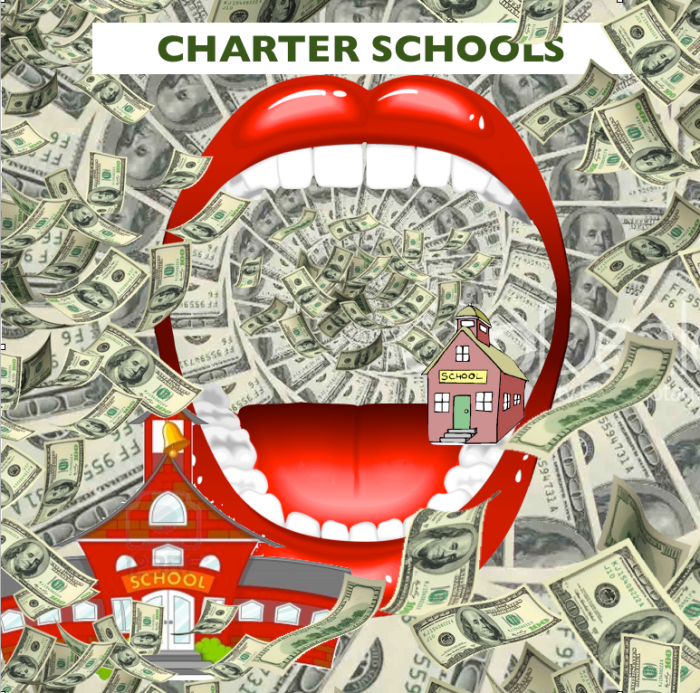
Charter schools are really just private schools paid for with taxpayer money. They’re often run by private companies or unelected boards and in many cases expected to turn a profit. This also means they don’t have to do the same things as traditional public schools though for the most part they are subject to giving state-mandated tests.

In fact, they have very loose transparency requirements. We don’t really know much of what they do. But everywhere they’re touted as a massive improvement to the public school system.

They’re so good we don’t even demand that they prove how good they are. It’s just that obvious! (Pay no attention to peer reviewed studies that show them to be no better and often much worse than traditional pubic schools. That’s just scientific method mysticism.)

So why can’t there be more charter schools just for rich kids? Administrators get to pick which kids attend these schools anyway. Why not select just the upper crust, the crème de la crème, a better class of students? In fact, in many cases they already do. They select the students who already do the best academically and boot those with sub par skills or who are in need of special education. That’s how they inflate their test scores. But they also could select for economic factors instead of just academic ones.

Now you have to be careful. There have been a couple charter schools (actually quite a lot of them) that have been found to be scamming the public. Think Trump University for K-12. These schools steal taxpayer money, cut services, increase profits, disband and sneak away in the night. But there are many… well… a few high quality ones out there. And since choice is always good, shouldn’t rich families roll the dice on these institutions just like poor families?

Yes, there’s a chance rich kids educations will be ruined at charters – a big chance – but shouldn’t the wealthy have the same opportunity to gamble on their children’s futures that the poor do?

The point is this: there are plenty of shiny corporate education reforms out there aimed almost exclusively at the poor. If these reforms are so great, shouldn’t the rich get them, too?

Otherwise, these reforms are just opportunities for private industry to get rich quick off the backs of impoverished children! That can’t be right, can it?

The fact that the rich almost never take advantage of these reforms has to be a coincidence, right? Maybe they just don’t know how great these corporate school reforms are. I just can’t understand why no one is telling them, selling it to them.

After all, many of the people who create and propose these reforms have children who go to educational institutions that don’t use them. Arne Duncan was U.S. Secretary of Education, and his kids don’t experience the very policies he imposed on impoverished youngsters. Neither do Bill Gates’ and President Barack Obama’s kids. It’s just so unfair to them.

So I’m asking, please, let the children of the rich and powerful experience these same corporate educate reforms. Every child deserves the right to be taught by an untrained instructor. Every child should have an education devised by non-experts making huge profits off the results. Every child’s success should be determined through mass marketed, standardized, A,B,C exams. Every child should get to go to a school where the administration can reduce services and maximize profit.

Only then can we finally compare test scores between rich and poor. Only then will be one America!

Only then will no rich child be left behind.

(Or we could just give the poor kids all the benefits of the rich ones and throw away this corporate education crap, but no. That’s too radical. This is only a modest proposal.)

Pennsylvania Legislators Want You to Foot the Bill for Unimpeded Charter School Growth With Little Accountability

Screen shot 2016-07-04 at 10.12.28 PM

Fund my charter school.

Come on, Pennsylvania.

Let me just swipe tax dollars you set aside to educate your children and put them into my personal bank account as profit.

Please!

I’ll be your best friend. Or at least I’ll be your legislator’s best friend.

Chances are, I already am.

That’s why lawmakers in Harrisburg are once again looking to pass a school code bill (House Bill 530) that would let charter schools expand exponentially almost completely unchecked and without having to do any of that nasty, sticky accountability stuff you demand of your traditional public schools.

Sure there are a few provisions in there to make charters fill out more paperwork, but the benefits for privatization and profitization of your child’s education are huge!

For me, that is. For your child, not so much.

For instance, the proposed legislation would set up a charter school funding advisory commission. This august body would have many duties including the ability to authorize charter schools in your local school district.

No longer would prospective charter operators have to come before your duly-elected board members and plead and beg to set up shop and suck away hard to come by education funding. They could just appear before the commission and sidestep your local democracy completely.

Who will be on this commission? I’m glad you asked.

We’ve got eight legislators. Got to give THEM a voice. But they’re usually pretty cheap. A few bucks in the re-election campaign and we’ll be golden. We’ll also have the state secretary of education and the chairman of the state board. We’ve got to make the thing look legit, right?

But here’s the best part! We’ll have four public education representatives and FIVE representatives of the charter school industry!

Isn’t that great!? There are significantly more traditional public schools throughout the state, but they’ll have less representation on the commission! It’s stacked with charter friendly votes! The forces of privatization have a built-in majority! Ring the dinner bell, Baby! Once this bill gets passed, it’s charter school time all across the Commonwealth!

Okay. There is a downside. Commissioners can’t be outright voting members of charter boards or their families. And if they’re being paid by charters they have to sign a sworn statement admitting that fact. Also, no criminals – no one convicted of fraud, theft, malfeasance.

Sucks, I know, but we’ll find a way around it. Don’t you worry.

However, the best is yet to come. Once a charter school has been given the go-ahead to exist, the proposed bill allows it to expand without getting permission from anyone!

That’s right! No commission, no local school board, nobody.

If there are children on the waiting list to get in, we have to take them first, but then we can start enrolling kids from outside the district!

Yes! Outside the district!

Here’s what the bill actually says:

“If a charter school or regional charter school and the school district from which it is authorized have voluntarily capped enrollment or the district attempts to involuntarily cap enrollment of resident students and the charter school or regional charter school has enrolled the maximum number of resident students, the charter school or regional charter school may enroll students residing outside of the district.”

This would appear to allow charters to enroll kids outside of the district and still charge the district to pay for them!

But wait, there’s more! If charter operators want to expand in any way, they can – unless they agree not to. If operators want to add more grades, they can. If we want to consolidate one charter school with another, we can! Meanwhile all this expansion sucks away local tax dollars to pay for students that don’t even live there!

I drink your milkshake,” traditional public schools!

So while public schools are shrinking due to loss of funds to unchecked charter expansion, this proposed bill adds insult to injury. If a traditional public school has to close a building or even has a few empty classrooms, charter schools get the right to buy or rent them out before anyone else!

I see you’ve got 7 empty class rooms in your school building. Charter School X will rent those from you. Maybe next year, we can rent out the rest of the floor once we’re done slurping up all your funding!

But wait! There’s more!

We now get to my favorite part of the proposed bill. (Do I keep saying that? It’s just such a gorgeous piece of legislation. ALEC has really outdone themselves writing it!)

We get educational tax credits. That’s school vouchers, folks!

I know, I know. The state legislature tried to pass a voucher system (Senate Bill 1) in 2011, and it was soundly defeated because it was so unpopular.

Three out of Four Pennsylvanians didn’t like that it gave state tax dollars to charters, private and parochial schools without any accountability. Well, guess what folks!? There’s hardly any accountability in this here bill, too!

Here’s how it works. You donate $X to a voucher school and we just take that off of your taxes. And if that’s the same or more than you’d normally pay for, let’s say, public school taxes, then all of your money goes to voucher schools.

It’s not really new. We’ve been quietly encouraging this kind of thing for a while now. This bill just expands it.

It allows public tax dollars to be used by religious schools – a clear violation of the Separation of Church and State. But who cares? Let’s leave that up to the courts. How dare they try to violate state’s rights. And all that. Etc. Etc.

But it’s not all robbing public schools and enriching corporate charter school operators. There are a few sticking points.

For the first time, the proposed bill allows local school boards access to charter financial and personnel records. We even have to submit to full audits. And our teachers will be subject to the same pseudo-scientific evaluations as traditional public school teachers.

In addition, charter schools will have to undergo a whole new evaluation “matrix” to show that they’re doing a good job.

I know. It sounds a lot like what traditional public schools have to undergo right now. It sounds absolutely untenable.

But here’s the difference. This new evaluation system for charters carries absolutely no consequences!

Tee-Hee!

That’s right! Even if charters fail these evaluations, the state can’t do diddley squat to them! Not so with traditional public schools. If THEY fail to show progress, they can be closed down and turned into… charter schools!

Oh! It is a beautiful time to be alive!

If this bill passes, charter school operators will have it made in the shade.

Cut student services and increase corporate profits? Check!

Kick out special education and other hard to teach students? Check!

Escape almost any kind of accountability for our actions? YOU BET!

Pennsylvania lawmakers could bring this bill to the floor anytime now.

It’s up to you, lawmakers. Do you want to keep getting tons of campaign cash from our industry or do you represent those – yuck – voters?

Do the right thing. Or should I say, do the right cha-ching!

Did you see that? Did you see what I just did there?

I am a cad. I mean… card.


In all seriousness, if you live in Pennsylvania, please, contact your legislators and ask them to oppose this terrible bill. The Network for Public Education has made it very easy. Just click HERE and you can shoot off a letter to your representatives in moments.

Oppose HB 530. Fight for public education.

Summer Break – the Least Understood and Most Maligned Aspect of a Teacher’s Life

Screen shot 2016-06-20 at 4.18.07 PM

It’s inevitable.

Once the weather gets warm and school lets out, it’s no longer safe for teachers to be out in public.

You’ve got to stay indoors, get off the Internet, hide the cell phone – do whatever you can to stay away from non-educators.

Because if, like me, you happen to be out and about – let’s say standing in line at your favorite neighborhood burger joint waiting for a juicy slab of ground beef to stop sizzling on the grill – you’re bound to hear the kind of willful ignorance that sets a teacher’s nerves permanently on edge.

Imagine just two normal people – they seem nice enough – standing in line having a friendly conversation. It’s hot outside, so you might hear the usual topics discussed: the weather, the best place to buy ice cream, which public pool has the best prices – that an oh I don’t know, how easy teachers have it with their summers off.

Son of a…!

Normal folks, I know you often get the urge to talk about this. You think it’s just another topic of polite conversation. It’s nothing serious. You think it’s just like complaining about the heat or how the price of admission at the local theme park always seems to be on the rise.

But you’re wrong.

Here’s why: first, you aren’t alone in the comfort of your own home. You’re out in public. And I guarantee there’s probably a teacher somewhere within earshot. Second, you have no idea what the heck you’re talking about. You are completely talking out of your ass.

Oh, you think you know. Everyone thinks they know what it’s like to be a teacher. Everyone thinks they can do that job no matter what qualifications they have.

It’s funny. I never presume to assume I could do other people’s jobs without some kind of training or skill. I’d never say, “Police officers have it so easy. I could do that!”

I’d never say that about any public servants. Not firefighters, sanitation workers, social workers, lawyers, doctors – even politicians.

I think most people feel the same way – except when it comes to teaching. That’s the one job where everyone has an opinion and it’s based on next to nothing.

Here’s how it goes: I’ve been a student, therefore I can be a teacher.

Imagine if we applied that logic elsewhere. I’ve been sick, therefore I can be a doctor. I’ve been to court, therefore I can be my own lawyer. I can turn on a light, therefore I can run the electric company.

No one would be so ignorant. Except when it comes to teaching.

But that’s not all.

Not only are most folks comfortable opining about a topic of which they are so ignorant, but they feel themselves to be particular experts about one aspect of the job more than any others – summer break!

Those teachers sure have it easy, they say. They get their summers off! That’s one sweet deal!

Don’t get me wrong. As a public school teacher, I’m grateful for summer break. But it’s not what non-teachers think it is.

First off, summer break is not a vacation.

When you work a regular job you get a vacation day here and there. You get a week or two of paid time off. Teachers don’t get that.

During the summer teachers don’t get salaried like that. Some of us don’t even get a paycheck, and those of us that do aren’t earning money for those days off. We’re getting money that we already earned from August through June. This is money that was withheld from our pay during the fall and winter, money given to us now in the summer.

Wait a minute. Money withheld from our salaries? When someone pays you later for services rendered, don’t they owe you interest? Usually, they do. But not for teachers.

We work for the government. We get paid with tax dollars from the community at large. If the community had to give us our salaries up front – like almost every other job in existence – it would be harder on the taxpayers. So we let the community pay us later – interest free.

Like I said, summer break isn’t a vacation. It’s more like an annual couple months of being laid off.

When I say this to non-educators, though, they often smirk. “It must be pretty sweet getting so much money that you can afford to have it paid out like that.”

Let me just say this – You don’t know me. You don’t know what the heck I can and cannot afford. Teachers aren’t millionaires. We’re barely thousandaires. Many of us CAN’T afford it. We work a second job in the summer – often at little more than minimum wage.

Moreover, during the school year, teaching is not a 9-5 job. We don’t punch a clock working 8 hours with an hour lunch and then punch out.

If I’m not at least working 10 hours a day, I’m not even trying. Those 8 hours on the books barely cover my time in front of a class of students. I get a 30-40 minute lunch, various duties throughout the day and about 40 minutes to plan what I’m going to teach. That’s time to make any materials for my classes, design programs for the students, grade papers and fill out the never-ending and ever-expanding piles of paperwork.

As a language arts teacher, I routinely have my students write essays. You think they grade themselves? I’ve got to read those things, son, each and everyone. I’ve got homework to grade. I’ve got scores to input into the computer. I’ve got parents to call, students to tutor and a stream of detentions to oversee. And that’s just the minimum, not counting any extra-curriculars, clubs, PTA meetings, meet the principal nights, etc.

So the way I see it, I’m owed a little bit of down time during the summer. I need it just to recharge my batteries. During the school year, I’m going at a pace like lightning every day. If I didn’t have some time in the summer to unwind, I wouldn’t be able to keep up that pace for the majority of the year.

Heck. If I’m sick one day, when I come back to school it takes a few days to get back up to speed.

But non-teachers don’t know any of that, because students don’t know. Students just see the teacher in class and they assume that’s all we do. And that’s a forgivable assumption for students. You know why? Because they’re children! But you? You’re an adult human being. You don’t have the right to make such assumptions without any pretext at even trying to find out.

However, this is exactly what most people do. They think there’s nothing wrong with complaining about teachers, especially during the summer.

And here’s the worst part.

When you complain like that, you make my job so much harder.

You’re going to go home with that negativity, you’re going to keep voicing it, you’re going to say it in front of your own impressionable children who might not seem like it, but they listen to every word you say. Not just that, but they listen to HOW you say it. Even more than the words, they hear the disdain.

So when school is back in session, they bring that false impression of how easy their teachers have it, and that becomes disrespect, just another thing I have to overcome in order to help your child succeed.

You hear a lot in the news about foreign countries having better education systems than ours. It’s mostly B.S. propaganda, playing with statistics for political ends, but there is one area where there’s a grain of truth to it – respect.

In many foreign countries especially in Asia, teachers are held in the highest esteem. It wouldn’t even cross parents’ minds to scorn educators, and if their kids did it, the adults would be mortally ashamed!

But not in the U.S.A. We take the one profession most dedicated to helping our children have better lives and we crap all over it.

You know that’s why I’m there in the classroom – to help your child succeed. Sure I get a paycheck, but there are lots of jobs I could do to support my family, many of them paying a whole lot more while requiring less hours a week and providing actual paid vacation days.

Like most educators, I’ve got a masters degree. Every year I take continuing education courses. Heck! I’m even nationally board certified – a distinction of which only about 34% of teachers throughout the country can boast. I’ve been nominated for teachers excellence awards. I travel across the country multiple times a year at my own expense to enrich my field. I write letters, I protest, I lobby my congresspeople to support our national system of public education. I’ve devoted my life to making a difference in young people’s lives.

Isn’t that something worth a little bit of respect? Don’t you want someone like me to be there for your child in the classroom?

It’s funny. When it comes to most public services, you wouldn’t dream of denigrating a helping hand.

You’d never hear anyone say something like this:

Those damn firemen! There would be fewer fires if it weren’t for them! Have you ever seen a building burning without it being surrounded by firemen? If they’d just work a little bit harder, there’d be fewer burning buildings!

Or:

Those damn doctors! All they do is make people sick! You never see a sick person unless he’s surrounded by doctors prescribing him medicines, doing surgeries. If we had fewer doctors, fewer people would get sick! Let’s close more hospitals!

But this is how people talk about teachers. Regular folks have been convinced that far from helping children escape ignorance, teachers actually cause it. They don’t work hard enough. They don’t care enough. They have too many union protections.

I’ve never heard anyone complain that firemen would fight fires better if they didn’t have helmets and fireproof clothing. I’ve never heard anyone say police would work harder to fight crime if they didn’t have Kevlar and service pistols.

But somehow when it comes to teachers, the situation is different.

Normal people, you’ve got to understand something. We live in a world where rich folks want to take away teachers for the poor and middle class. They want your kids to learn from computer programs and YouTube while their kids get… teachers!

For your kids it’s always narrow the curriculum, more standardized tests, more unproven academic standards, more corporate profits, less parental control, fewer regulations, fewer student services.

And do you know who has volunteered to fight against all this craziness to make sure your kids actually get some kind of quality education?

THE TEACHERS!

That’s right – the same people you feel empowered to deride while standing in line waiting for your burgers and fries. The same people who you have no problem denigrating with just as much certainty as ignorance.

So please, think about that next time.

Don’t bitch and moan about your community’s teachers. How about giving them some support?

At very least add teaching to the list of impolite topics to address in public. That’s right – religion, politics AND TEACHING.

Because every time a non-educator vents their spleen about those lazy, no-good teachers, they make it that much easier for the powers that be to continue eroding your child’s educational experience.

The Charter School Swindle – Selling Segregation to Blacks and Latinos

Screen Shot 2016-05-31 at 4.22.46 PM


Segregation now!


Higher suspension rates for black students!


Lower quality schools for Latinos!


These may sound like the campaign cries of George Wallace or Ross Barnett. But this isn’t the 1960s and it isn’t Alabama or Mississippi.


These are the cries of modern day charter school advocates – or they could be.


School choice boosters rarely if ever couch their support in these terms, but when touting charter schools over traditional public schools, this is exactly what they’re advocating.


According to the Civil Right Project at UCLA, “The charter school movement has been a major political success, but it has been a civil rights failure.”


It’s choice over equity.


Advocates have become so blinded by the idea of choice that they can’t see the poor quality of what’s being offered.


Because charter schools DO increase segregation. They DO suspend children of color at higher rates than traditional public schools. And they DO achieve academic outcomes for their students that are generally either comparable to traditional public schools or – in many cases – much worse.


In Brown vs. Board of Education, the U.S. Supreme Court ruled that it is Unconstitutional to have “separate but equal” schools because when they’re separate, they’re rarely equal. Having two parallel systems of education makes it too easy to provide more resources to some kids and less to others.


Who would have ever thought that some minority parents would actually choose this outcome, themselves, for their own children!?


After Bloody Sunday, Freedom Rides, bus boycotts and countless other battles, a portion of minority people today somehow want more segregation!?


It’s hard to determine the extent of this odd phenomena. Charter advocates flood money into traditional civil rights organizations that until yesterday opposed school privatization. Meanwhile they hold up any examples of minority support as if it were the whole story. However, it is undeniable that large minority populations still oppose their school systems being charterized.


It’s especially troubling for civil rights advocates because black and brown charter supporters have been sold on an idea that could accurately be labeled Jim Crow. And they don’t even seem to know it.


The reason is two-fold: (1) the success of privatization propaganda and (2) the erosion of our public school system.


Charter schools are big business. Many of them are managed by huge corporations for a profit. They are run at taxpayer expense with little to no oversight. As you might expect, this often results in multi-million dollar financial scandals and worse outcomes for students. But these facts have not fazed some of the public. Propagandists know how to sell people on things that are bad for them: Fast food, miracle cures and charter schools.


They’ve marketed corporate McSchools as if these were mostly charitable institutions founded for the sole purpose of making children’s lives better. Meanwhile, funds that might actually help kids learn are funneled to hedge fund mangers and investors: Schools don’t open yet tax money disappears. Student services are reduced below that offered at comparable neighborhood public schools. Charter students are expelled for low test scores or special needs. Yet the public still buys the glossy full-color advertisement without bothering about the small print.


One thing corporate education reformers have over advocates of traditional public schools is their willingness to talk about race. They clothe their arguments in the terms of the Civil Rights movement. They talk about having high expectations for children of color. They talk about closing the achievement gap. They talk about understanding the needs of minority children.


It’s all bullshit.


Their “high expectations” are really just an excuse for treating brown and black kids as if they weren’t human. They put these children under intense pressure, berating them for wrong answers and kicking them out if they don’t perform.


Yet the academic results produced at charter schools are often less than stellar. Sometimes they’re downright abysmal. Instead of addressing the fundamental inequalities inherent in the achievement gap – economically and culturally biased high stakes testing, shoddy and developmentally inappropriate academic standards, etc. – they reinforce that status quo. It’s like instead of fighting a prohibition against sitting in the back of the bus, they berate black folks for not enjoying the ride.


I’m sorry. But when it comes to understanding the needs of black and Latino kids, I refuse to believe children of color need a second-class education system. (Just as I refuse to believe Teach for America’s claim that all black kids really need are less experienced, less educated and less committed teacher trainees.)


Perhaps if traditional public schools actually addressed these issues head on, privatizers wouldn’t appear to be saviors. There are real problems faced by children of color in our school systems. They have real needs that most of our schools – charter, traditional, private or parochial – just are not meeting. But while charter schools pay lip service to the problems without fixing them and in fact often making them worse, public schools pretend these problems don’t exist in the first place.


No wonder some minority parents choose charter schools. At least there they get the illusion that someone cares about their needs.


In fact, privatizers couldn’t sell their substandard products if it weren’t for what we’ve allowed to happen to our traditional public schools. Segregation is made worse in charter schools, but it is also prevalent at our traditional public schools – though often to a lesser degree.


We have allowed traditional public schools to be largely segregated based on parental income. We have schools for poor kids and schools for rich kids. Thus, we have schools for black kids and schools for white kids. And guess which ones are well-funded and which go lacking?


This is what people are really talking about when they mention “failing schools.” They pretend as if the teachers are failing, the principals are failing, the democratic process, itself, is failing. In reality, it is our state and federal lawmakers who are failing. They have failed to provide equitable resources that our nation’s children need.


Schools cost money. If you don’t provide the funding necessary to properly educate children, you will get an inferior result. Meanwhile, pundits play with numbers and make false comparisons to hide this basic fact – we aren’t providing all kids with the resources they need to succeed. Rich kids have enough. Poor kids don’t. But we look at national averages, add in unfunded legal mandates and pretend that tells the whole story.


How does this happen? Segregation. In fact, we’re allowing segregation of place to determine segregation of school. Instead of counteracting an unfair status quo, we’re letting the way things are today determine how things will be tomorrow.


Fact: people of different ethnicities tend to cluster together, like with like. Part of this is because people tend to self-segregate with people around whom they feel most comfortable. However, this is also a function of social planning. Banks tend to shy away from giving loans to families of color who want to move into white neighborhoods. Moreover, white homeowners are often reluctant to sell to families of color. The result is an America made up of black neighborhoods and white neighborhoods.


In organizing our public schools we could try to overcome these differences, but instead we amplify them. In many states we insist that schools be funded based on local property taxes. So poor brown and black people who happen to live clustered together get poorly funded schools for their kids. And rich white folks who live together in their gated communities get well-funded schools for their progeny.


Is it any wonder then that some people of color buy into the charter school lie? They’re offered the choice between an obviously under-resourced public school or a glossy new charter school that actually offers them less. But they don’t see that far. They’re tired of the indifference behind traditional public school funding and opt to try something different. Unfortunately, it’s just another lie and a more pernicious one for several reasons.


First, charter schools take an already segregated population and make it worse. Second, they weaken the already stumbling traditional public schools by siphoning off their dwindling funding. And finally, they obscure the fact that it’s often the same policymakers who champion charters that are responsible for eroding public schools in the first place.


People of color would be much better served by sticking with their traditional public schools and fighting to make them better. For all their faults, traditional public schools often provide a better quality education. They have more resources and less flexibility to take away those resources. They have more well-trained and experienced staff. And since they serve a more diverse population, they offer the chance for people of similar economic backgrounds but diverse cultures to join together in common cause.


Dividing people makes them weaker politically. When people band together, they have power. They can fight more effectively for what they deserve. Perhaps this is the greatest problem with charter schools – they destroy communities and rob neighborhoods of the collective power that is their due.


In many areas of the country, communities of color know this. Ask them in New Orleans what they think of their all-charter school district. Ask them in Chicago what they think of the city’s plan to close public schools and turn them into charters. Ask them in Philadelphia or any urban district taken over by the state.


They’ll tell you straight out how privatized education is cultural sabotage. They’ll tell you how it’s the new colonialism, another element of the new Jim Crow. They’ll tell you how important it is to fight for our system of public schools.


And when privatizers and propagandists try to paint all communities of color as if they support charter schools, these folks will loudly cry foul.


They aren’t buying the snake oil. The rest of us need to step up and help those who have been swindled to see the truth. Likewise we need to recognize their truth – that the struggle for civil rights is ongoing.


Because we can’t win the fight against privatization without them. And they can’t win the fight for equality without us.


We need each other.


Public school advocates need to recognize it’s not all about testing, Common Core and privatization. We can’t be so afraid to talk about race. We need to recognize that racism is not an unnecessary distraction, it’s at the center of our struggle.


We need communities of color.


We need our black and brown brothers and sisters.


Because only together shall we all overcome this madness.

Make Tons of Money Doing a Terrible Job – Start a Cyber Charter School

Screen Shot 2016-05-05 at 3.18.27 PM

 If you’re a parent, you’d literally be better off having your child skip school altogether than sending her to a cyber charter.


LITERALLY!


But if you’re an investor, online charters are like a free money machine. Just press the button and print however much cash you want!


Ca-ching!


Nowhere else is the goal of corporate education reform as starkly clear as in the cyber charter industry. Nowhere else can such terrible academic results reap such tremendous financial gain.


Cyber charter schools are elementary and/or secondary institutions of learning where all or most lessons are given online via computer. Like brick and mortar charter schools, they are funded by taxes but are free from much of the regulations and oversight of which traditional public schools are subject. By every discernible report, the education provided by these online charters is truly execrable.


A recent nationwide study found that cyber charters provide 180 days less of math instruction than traditional public schools.


180 days!


There are only 180 days in an average school year. So cyber charters provide less math instruction than not going to school at all.


Amazing!


Ever watched an episode of Sesame Street? Then you got a better math education than an entire year at an online charter!


Dora the Explorer, Barney the purple dinosaur, Mr. Rodgers Neighborhood, the Teletubbies – all are more mathematically rigorous than cyber charters!


But what about reading?


When it comes to that essential skill, online charters come out much better. They only provide 72 days less instruction than traditional public schools.


That’s 40% of the school year!


So at a traditional public school you’d get a better education in reading if you simply took off at the end of February. You’d get more instruction if you only went slightly more than every other day!


The same study found that 88 percent of cyber charter schools have weaker academic growth than similar brick and mortar schools.


They have an “overwhelming negative impact” on students, according to researchers. Not only do they have fewer learning days in math and reading, they have a higher student-teacher ratio and much more limited opportunities for live-contact with teachers than brick and mortar schools.


For instance, student-to-teacher ratios average about 30:1 in online charters, compared to 20:1 for brick and mortar charters and 17:1 for traditional public schools.


And THIS is somehow a viable alternative to traditional public schools!?


Well caveat emptor, suckers! Thank goodness for the ignorance of the public!


But at least it’s easy to set up these failure factories.


Here’s all you have to do:


Give a child a computer with Internet access.


Buy a cheap, generic programmed package of study.


Then sit back and watch the money roll in.


From an education standpoint, the model is clearly unsound.


Here’s how a cyber charter teacher describes the reading curriculum at his school:


“Most cyber schools get their curriculum from K12, a company started by William Bennett, a former federal Secretary of Education. My school gets the majority of its high school material from a mail order company called Aventa.


When Aventa creates a course it is fairly bare bones. They choose a textbook from one of the major textbook companies, and cut it up into lessons. The lesson will contain a few paragraphs introducing the topic, they will have the students read a section of a chapter, they will ask the student to do a few problems from the book, and lastly, there will be some form of graded assessment, taken from textbook review problems. That is all.”


This is like giving out nothing but worksheets and expecting high academic performance. Here. Read the book, answer the questions at the back, and call it a day.


Even though it’s an online school, you do need a few flesh and blood “teachers” occasionally. Their job is to contact students every now and then, but – get this – in most states they don’t even have to be certified. In my home state of Pennsylvania, only 75 percent of cyber charter teachers need to be certified and even those are not subject to the same educator effectiveness accountability regulations as traditional public school teachers.


So you could have your cousin Vinnie calling students and asking how they’re doin’. It really doesn’t matter. Most times the kids won’t answer the phone anyway.


That’s about all it takes. And boy does it pay!


Nationwide there are about 200 online charter schools enrolling about 200,000 children. They raked in $426 million in 2013-14!


It’s almost like stealing, but it’s totally 100% legal!


Cyber charter operators pull in the same amount or more of tax revenues as traditional public schools – and here’s the best part – what they don’t spend on students is all bank for them and their shareholders!


Everything is set up to benefit online charter investors to the detriment of students and families. Take the very way online charters are paid.


They get money for each student enrolled. That money comes from the school district where the student lives.


However, in many states like Pennsylvania, each district spends a different amount of money per student. These expenditures reflect varying costs and available funding from the local tax base.


So cyber charters get whatever that local per-pupil expenditure is. It doesn’t matter if a district spends $8,000 on each student or $20,000. Whatever the amount, that goes to the cyber charter.


However, the cost of educating kids is drastically reduced online. Their programs are bare bones compared with what you get at a traditional public school. Most online charters don’t have tutors or teacher aides. They don’t offer band, chorus or extra-curricular activities. You don’t have to pay for any building costs, grounds, upkeep, large staff, etc. But funding formulas in most states ignore this completely. Cyber charters get to keep the difference – whatever it is. In fact, they have an incentive to keep as much as possible because they can do almost whatever they want with it. That includes putting it into operators’ pockets!


They just call it profit.


Even many online charters that claim to be non-profit do this.


For instance, take Pennsylvania’s Insight PA Cyber Charter School. On paper, it’s run by a nonprofit board of directors. However, the board gave over all day-to-day operations to a for-profit company, K12 Inc. On paper it’s one thing. In practice, it’s something else entirely.


And in some states when it comes to special education funding, it gets worse. In Pennsylvania, our funding formula is so out of whack that charters schools of all stripes including cyber charters often end up with more funding for students with special needs than traditional public schools. However, because of this loophole in the Commonwealth, Pennsylvania online charters have been increasing the number of special education students they enroll and even working to add that label to as many of their students as possible. The state Department of Education has been so underfunded it does not have the resources to oversee these changes.


Issues like these permit a bait-and-switch that sends an awful lot of tax dollars earmarked to help children into the maw of private industry.


Sure there’s a lot of turnover. Few students stay enrolled in online charters more than a year or two before realizing they’ve been had. But they are easily replaced.


And – get this – when they return to their traditional public school hopelessly behind their peers, who has to pay to remediate them? Answer: you do! That’s a problem for traditional public schools and the taxpayers that support them – not cyber charters.


With all these issues, why do online charters keep getting approved? Ask the your local state Department of Education.


Unlike brick and mortar charters, which require approval at the district level, in most states cyber charters are approved by the Department of Education. Admittedly the online charter boom has slowed somewhat after news of fraud and abuse has become an almost a weekly occurrence in the national media.


For instance, PA Cyber Charter founder Nicholas Trombetta allegedly stole at least $8 million in public dollars only a few years ago. He bought an airplane, a $900,000 condo, houses for his girlfriend and mother, and nearly $1 million in groceries and personal expenses, according to the grand jury. Trombetta allegedly set up numerous for-profit and nonprofit businesses to provide goods and services to the cyber charter. Federal investigators filed 11 fraud and tax conspiracy charges against him and indicted others in the case.


While Trombetta awaits trial, the school continues to do business awaiting a potential state audit.


Another cyber charter founder, June Brown, was also indicted for theft of $6.5 million. Brown and her executives were indicted on 62 counts of wire fraud, obstruction of justice and witness tampering. She was well known for student test scores and had a reputation for claiming large salaries and filing suits against parents who questioned her, the Philadelphia Inquirer reports.


Brown is also awaiting trial. She ran the Agora Cyber Charter School, which was part of the K12 Inc. empire of virtual charters.


With this kind of fraud and a record of academic failure, perhaps the most amazing thing about cyber charters is that taxpayers allow them to exist at all.


You hear educators say it’s all about the children. But not at online charters.


There it’s all about the Benjamins. Heck! The McKinleys! The Clevelands! The Madisons! The Chases! The Wilsons!

Co-opting the Language of Authentic Education: The Competency Based Education Cuckoo

Reed_warbler_cuckoo

Cuckoo!


Cuckoo!


Such is the incessant cry of the hour from one of the most popular souvenirs of the black forest of Germany – the cuckoo clock.


Time is demarcated by the chirp of an 18th century animatronic bird jumping forward, moving a wing or even opening its beak before making its distinctive cry.


However, in nature the cuckoo has a more sinister reputation.


It’s one of the most common brood parasites.


Instead of investing all the time and energy necessary to raise its own young, many varieties of cuckoo sneak their eggs into the nests of other birds. When the baby cuckoos hatch, they demand an increasing amount of their clueless foster parents’ care often resulting in neglect of the birds’ own children.


Parental care is co-opted. The love and affection natural to raise parent birds’ own children are diverted to another source. And the more parent birds try to help the interloper’s child, the less they can help their own.


Corporate education reformers must be bird lovers. Or at very least they must enjoy antique cuckoo clocks.


In fact, one could describe the entire standardization and privatization movement as a Homo sapien version of brood parasitism.


Profiteers co-opt authentic education practices so that they no longer help students but instead serve to enrich private corporations.


When parents, teachers and administrators unwittingly engage in corporate school reform strategies to help students learn, they end up achieving the opposite while the testing industry and charter school operators rake in obscene profits.


But some of us have seen through the scam, and we think it’s cuckoo.


We’ve seen this kind of bait and switch for years in the language used by oligarchs to control education policy. For instance, the defunct federal No Child Left Behind legislation had nothing to do with making sure no kids got left behind. It was about focusing obsessively on test and punish even if that meant leaving poor kids in the rear view.


Likewise, the Obama administration’s Race to the Top program has nothing to do with quickening the pace to academic excellence. It’s about glorifying competition among students while providing them inequitable resources. Teach for America has very little to do with teaching or America. It’s about underpreparing poor children with unqualified instructors and giving cover to privatization operatives. School Choice has nothing to do with giving parents educational alternatives. It’s about letting privatized schools choose which students they want to admit so they can go through the motions of educating them as cheaply as possible and maximize profits for shareholders.


And on and on.


The latest such scheme to hoodwink communities out of authentic learning for their children is Competency Based Education (CBE) a term used interchangeably with Proficiency Based Education (PBE). Whatever you call it, this comes out to the same thing.


Like so many failed policy initiatives that came before it offered by the same group of think tank sycophants, its name belies the truth. CBE and PBE have nothing to do with making children competent or proficient in anything except taking computer-based tests.


That’s what the whole program consists of – forcing children to sit in front of computers all day at school to take unending high stakes mini-tests. And somehow this is being sold as a reduction in testing when it’s exactly the opposite.


This new initiative is seen by many corporate school reformers as the brave new world of education policy. The public has soundly rejected standardized tests and Common Core. So this is the corporate response, a scheme they privately call stealth assessments. Students will take high stakes tests without even knowing they are doing it. They’ll be asked the same kinds of multiple-choice nonsense you’d find on state mandated standardized assessments but programmers will make it look like a game. The results will still be used to label schools “failing” regardless of how under-resourced they are or how students are suffering the effects of poverty. Mountains of data will still be collected on your children and sold to commercial interests to better market their products.


The only difference is they hope to trick you, to hide that it’s even happening at all. And like a cuckoo pushing its egg into your nest, they hope you’ll support what’s in THEIR best interests while working against what would really help your own children.


And the method used to achieve this deception is co-opting language. They’d never enact what real classroom teachers want in school, but they will take our language and use it to clothe their own sinister initiatives in doublespeak.


So we must pay attention to their words and tease out what they really mean.


For instance, they describe CBE as being “student-centered.” And it is – in that their profit-making machine is centered on students as the means of sucking up our tax dollars.


They talk about “community partnerships,” but they don’t mean inviting parents and community members into the decision making process at your local school. They mean working together with your local neighborhood privatization firm to make big bucks off your child. Apple, Microsoft, Walmart – whatever huge corporation can sell computers and iPads to facilitate testing every day.


They talk about “personalized instruction,” but there’s nothing personal in it. This just means not allowing students to progress on their computer programs until they have achieved “mastery” of terrible Common Core standards. If standardized testing is a poor form of assessment, these edu-programs are worse. They don’t measure understanding. They measure zombie cognitive processes – the most basic surface type of spit-it-back to me answers.


And if that isn’t bad enough, such an approach subtly suggests to kids that learning is only valuable extrinsically. We don’t learn for intrinsic reasons like curiosity. We lean to get badges on the program, to progress forward in the game and compulsively collect things – like any good consumer should.


Today’s children already have problems socializing. They can more easily navigate cyber relationships than real flesh-and-blood interactions. And CBE will only make this worse. Not only will children continue to spend hours of after-school time on-line, the majority of their school day will be spent seated at computer terminals, isolated from each other, eyes focused on screens. And every second they’ll be monitored by that machine – their keystrokes, even the direction their eyes are looking!


I’m not making this up! It shows engagement, tenacity, rigor – all measurable, quantifiable and useful to justify punishing your school.


They call it “one-to-one computer technology.” Yes, each child will be hooked up to one device. But how does that alone help them learn? If every child had a book, would we call it one-to-one book access? They call it “blended learning” because it mixes instruction from a living, breathing person with sit-and-stare computer time. It sounds like a recipe. I’ll blend the sugar and milk until I have a nice whipped cream. But it conceals how much time is spent on each.


Don’t get me wrong. There are effective uses of technology in schools. But this is not one of them.


Students can make Keynote presentations, record movies, design graphics, write programs, etc. But taking endless testing disguised as a video game adds nothing but boredom to their day. A few years ago, I was forced by administrators to put my own students on iStation twice a week. (I’ve since convinced them to let us be.) In any case, when we used the program, it would have been more effective had we called it nap time. At least then my kids wouldn’t have felt guilty about sleeping through it.


The corporate education reformers are trying to sneak all of this under our noses. They don’t want us to notice. And they want to make it harder to actually oppose them by stealing our words.


When public school advocates demand individualized learning for their children, the testocracy offers us this sinister CBE project. When we decry annual testing, they offer us stealth assessment instead.


We must continue to advocate for learning practices that work. We can’t let them steal our language, because if we do, they’ll steal our ability to engage in authentic learning.


And to do that, we must understand the con. We have to deny the technocrats their secrecy, deny them access to our children as sources of profit.


We must guard our nests like watchful mama birds.


The cuckoos are out there.


They are chirping in the darkness all around us.


Don’t let them in.

New PAC Descends on Pittsburgh Public Schools to Charterize and Take Over School Board

Screen Shot 2016-04-11 at 11.39.31 AM

Prepare yourself, Pittsburgh.

A new Political Action Committee (PAC) has descended on the ‘Burgh to further privatize our public schools and wrest control away from parents who are in favor of school reforms that actually work.

It’s called Campaign for Quality Schools, but make no mistake. The wealthy special interests behind it don’t care about quality schools – they care about quality profits for their investors.

PACs are political committees organized for the purpose of raising and spending money to elect and defeat candidates. Unlike federal PACS which can only give up to $5,000 to a candidate per election, state PACs in Pennsylvania have no spending limits. In that way, they are like federal Super PACs which also have no limits on donation size.

Besides giving an unfair advantage to special interest groups, PACS also have notoriously been used for nefarious ends. For instance, former Republican U.S. Rep. John Doolittle’s leadership PAC paid 15% to a firm that only employed his wife. One Leadership PAC purchased $2,139 in gifts from the Bose Corporation. Former Republican U.S. Rep. Richard Pombo used his leadership PAC to pay almost $23,000 in hotel bills and buy $320 in baseball tickets for donors.

And now we’ve got one in Pittsburgh with its sights on city schools.

The moneyed interests behind it want to swipe control of even more Pittsburgh schools away from the community and give them to for-profit companies in the shape of charter schools. Since charter school boards are appointed, not democratically elected, this means the decisions about how these newly charterized schools operate would be made behind closed doors out of public view. The community would have no way to hold them accountable. Likewise, this means operators could spend taxpayer money however they want with little to no oversight. They would have nearly unlimited power to reduce student services and pocket the savings as profit.

THAT’S what they mean by “Quality” schools.

The PAC is run by the usual suspects of Pittsburgh corporate school reformers.

In 2015, four of the nine Pittsburgh School Director seats were up for grabs and voters sided in all cases against candidates running on a standardization and privatization platform. One of these losers is Kirk Burkley. He lost against Lynda Wrenn for school board and now is listed as chairman of the political action committee.

Though Burkley well outspent Wrenn, voters made it clear they didn’t want the lawyer specializing in bankruptcy, restructuring and creditors rights anywhere near our public schools. He only got 19% of the vote. Apparently Pittsburghers want candidates who support well-resourced community schools, positive discipline policies with supports, etc. But a host of wealthy investors behind this PAC must feel otherwise. They know better than you and me.

The PAC’s treasurer is Cate Reed, our own Teach for America (TFA) recruiter. Perhaps she took it personally when the newly elected school board overturned a decision by its predecessors to contract with TFA for three-years and pay $750,000. This is one of the few times – if not the only time –this has happened across the nation. Reed is also a Broad Center residency recipient. Established by billionaire Eli Broad, the Broad Center runs an unaccredited training program for school leaders, where candidates learn Broad’s philosophy of school management. Broad has no education experience. He is a self-proclaimed expert, a businessman who made his billions in home-building, mortgage lending, and insurance (AIG).

On the Broad alumni page, Reed speaks about making sure every child has an opportunity to succeed, especially students of color in low income communities.

“The Broad Residency affords me the opportunity to be a part of the change I wish to see—and to use my skills to pursue my wildest dream of educational equity,” she says.

The problem she identifies is real. However, her solution is ludicrous. You don’t provide better opportunities for poor black children by making the leaders of their schools unaccountable to the public. You don’t help poor black kids by removing qualified teachers from their classrooms and replacing them with lightly trained Teach for America recruits. You don’t help poor black kids by giving them an endless series of culturally and economically biased standardized tests and ignoring the fact that they receive substantially less resources than their richer, whiter peers.

Leigh Halvorson, one of the managers of the Heinz Endowment, gave the PAC a boost soliciting donations. She sent an email in early March asking for money. I’ll post the entire email below, but here is Halverson’s description of the PAC:

“I am proud to be part of a group that is launching Campaign for Quality Schools-Pittsburgh, a bi-partisan Political Action Committee that is committed to supporting candidates of any political party who (1) believe that all children, regardless of their background can succeed; (2) embrace policies that hasten the growth of high-performing schools that serve all children; and (3) have the courage to challenge the status quo and tackle this problem with fierce urgency and determination.”

In other words, she’s looking for folks willing to (1) pay lip service to helping kids while actively working to hurt them, (2) will work to privatize more Pittsburgh schools and (3) are willing to run for office counter to the emphatic will of Pittsburgh voters who soundly rejected the corporate school reform agenda in the last election.

Halvorson continued:

“Our kick-off event on March 2nd at 5:30 pm, at the home of Cate Reed and Doug Anderson, will feature State Representative Jake Wheatley, from District 19 here in Pittsburgh who embodies these principles.”

Wheatley, a Democrat, has been a longtime supporter of charter schools and an enemy of public school teachers. He is one of only two Democrats to vote a bill out of the House Education Committee that was meant to eliminate due process for teachers. The bill has been languishing in the legislature, but if approved, it would allow teachers to be fired for almost any reason. It would eliminate the provision that teachers cannot be furloughed for “economic reasons.” (NOTE: it could come up for a vote any day now.)

Wheatley also teamed up with Republican House Speaker Mike Turzai to hold a roundtable discussion praising charter schools and the need to increase them in the city. He joined Turzai again in January for a school choice rally in Harrisburg.

Halvorson closed her email like this:

“If you are unable to attend, but would like to donate, please see the attached invite for instructions how you can do that.”

The invite asked for donations of between $50 and $250 per person.

Reed and Halvorson are both on the board of A+ Schools – Pittsburgh Community Alliance for Public Education. The organization serves an advisory position to help improve city schools. Though the organization includes people on both sides of the standardization and privatization movement, it has been co-opted in recent years by a $1 million grant from the Gates Foundation given between 2011 and 2013. Since the grant, the organization went from issuing an annual “Report to the Community” on the state of city schools to pushing for corporate education reform measures such as doing away with teacher seniority. Many disillusioned volunteers now consider it to be a paid proxy for Gates to make it appear his pet projects are supported by communities.

Like most urban districts, Pittsburgh Public Schools is struggling because of lack of resources. If you live in a poor neighborhood, your school gets less money from local taxes to help kids learn. Moreover, the district has lost almost $1 billion annually in state funding for the last five years. Living in poverty increases the need for wraparound social services, tutoring, nutrition and counseling that isn’t present for more affluent kids. But there’s no money to help them, and it’s hard for students to concentrate on school when they’re experiencing food insecurity and post traumatic stress. Likewise, state and federal education policies are giving an increasing portion of our shrinking funding to charter schools while forcing the traditional public schools to give new and more difficult standardized tests and enact unproven and developmentally inappropriate academic standards. If these corporate education reformers actually wanted to improve Pittsburgh schools, they’d focus on the real problems – not make wild attempts to grab more money for charter schools, deprofessionalize our kids’ teachers and grab power for themselves.

It’s unclear how many people showed up to the PACs kickoff fundraising event and how much money the PAC took in. But one thing is certain – consider yourself on notice, Pittsburgh.

After being defeated for school board and after the board rejected Teach for America, the corporate education reformers are preparing to strike back.

They are gathering people and resources to take the five school board seats up for re-election in 2017.

Will we let them steamroll over us with their big money and political connections or will we continue to fight for reforms that actually help our children?

It’s up to you, n’at.


Halverson’s email:

Dear friends,

The single most important civil rights issue facing our country is the disparity in our education system. We have far too many children who are trapped in persistently failing schools, Here in Pittsburgh alone, 23 of the 52 PPS schools are performing in the bottom 15% in the state. It is unacceptable. We know we can do better because we’ve seen it — transformative school exists that are proving that poverty is not destiny- and we need more of them, right here in Pittsburgh. I am proud to be part of a group that is launching Campaign for Quality Schools-Pittsburgh, a bi-partisan Political Action Committee that is committed to supporting candidates of any political party who (1) believe that all children, regardless of their background can succeed; (2) embrace policies that hasten the growth of high-performing schools that serve all children; and (3) have the courage to challenge the status quo and tackle this problem with fierce urgency and determination. Our kick-off event on March 2nd at 5:30pm, at the home of Cate Reed and Doug Anderson, will feature State Representative Jake Wheatley, from District 19 here in Pittsburgh who embodies these principles. I know for some of you, political contributions or political action is unfamiliar, so if you have questions or just want to talk further about why we believe groups like this can make a real impact on the future of our city and on behalf of our little people, don’t hesitate to reach out. My cell phone is 503.320.2384. I hope you can join us in supporting policymakers that put students and families first. Please see the attached invitation for more details and drop Cate or I a quick email if you can attend. If you are unable to attend, but would like to donate, please see the attached invite for instructions how you can do that. If you know people that should be invited to this event, please share their emails with us ASAP. Any questions can be directed to campaignqualityschoolspgh@gmail.com. I hope to see you on March 2nd.

Proposed Pennsylvania School Code is Massive Giveaway to Charter Schools

money_gift_box4

Accountability.

Fiscal responsibility.

Every lawmaker says these things are extremely important – unless we’re talking about charter schools. Then they pass laws handing out stacks of cash with little to no oversight.

That’s exactly what the Pennsylvania School Code will do if the legislature passes it.

Schools in the Keystone State have had a rough year.

After a nine-month battle with the Republican controlled legislature, Democratic Gov. Tom Wolf let a woefully inadequate budget passed by the legislature become law without his signature. However, he vetoed the fiscal code, which includes public school’s funding formula – how state money will be distributed to the Commonwealth’s 500 public school districts. Wolf still holds out hope that almost $1 billion in school budget cuts made by the GOP can be healed before a new funding formula locks them in.

Everything else about how our public schools are to be run is included in the school code. It was approved by the Senate but remains in committee in the House.

Back in February, both Democrats and Republicans supported some terrible provisions in the school code as a compromise to pass a state budget that would have healed much more of the spending cuts than what has now become law. Since an inferior budget was passed, there’s no reason for Democrats to continue to support a school code that basically rings the dinner bell for the most nefarious charter school practices imaginable.

If approved, charter schools across the state could open new buildings, add new grades, and expand their enrollment with almost no limitations. In Philadelphia, where the district is already under state control and more than a third of students already attend charter schools, the proposed school code would force many schools to be controlled by a new state operator – the Pennsylvania Department of Education – and convert many of them into charter schools – all still without ensuring those schools have adequate funding.

The Senate-approved school code reads like a smorgasbord of dishes to empower and shield charter schools from accountability.

Currently, charter schools are only allowed to operate after having a contract approved by the local school district where they’re located. Elected school boards get to decide if charters can operate and under what conditions. The proposed school code would change that. It would allow charter schools to amend their own contracts without the permission of the local district. So existent charters could do whatever they liked regardless of what they promised local school boards they were going to do in order to be approved in the first place.

The proposed school code would also allow for uncontrolled charter expansion. It would permit charter schools to add as many new schools and students as they please without permission of the local district. This is in effect a license for charters to expand without any oversight. They could gobble up their parent district and there’s nothing anyone could do about it.

Moreover, the proposed school code would allow charter schools to expand beyond district boundaries into neighborhoods that never approved them in the first place. It would create new Multiple Charter School Organizations (MCSOs) that can cross school district boundaries and expand across the entire state, all without any criteria for revocation or accountability.

When disagreements occur with charter schools and local school districts, the matter goes before the state Charter Appeals Board. However, the proposed school code would stack the board with members in favor of charter schools and against local districts.

As it stands, new charter schools get five years before they are subject to any accountability measures at all. Once approved, they have that time to operate any way they want before anyone comes around to make sure they’re doing a good job. The proposed school code doubles that grace period to ten years. New charters – including notoriously fraudulent cyber charters – would have a decade of free reign before undergoing a thorough review of their performance by their authorizers.

And then we come to special education. Since at least 2013, the legislature has known the way the state determines special education funding at charter schools is broken. It’s skewed so that charters get more money for special needs children than local districts. Moreover, this allotment has nothing to do with how much charters spend on their special education students or the severity of the disabilities. For example, in Philadelphia, charter schools get $23,000 for each special education student while the traditional public schools get $5,000. A bipartisan bill was drafted to fix the inequality, but it was killed by charter school lobbyists.

The proposed school code – which could have fixed the problem – just continues it for another year. It explicitly exempts charter schools from the rational and fair special education funding formula used by school districts.

And speaking of funding, the proposed school code continues the perverse practice of ensuring cyber charter schools get paid before local school districts. It was this provision that made sure even with statewide education budget cuts cyber charters didn’t suffer the same loss of funding.

As bad as all that is, it’s nothing compared to what the proposed school code does to Philadelphia City Schools.

The Senate bill implements a “State Opportunity Schools” program that only applies to Philadelphia schools. It mandates that up to 15 city schools a year would go from one majority state-controlled entity – the School Reform Commission (SRC) – to a different entirely state-controlled entity – the Pennsylvania Department of Education (PDE). Moreover, at least six traditional city public schools would have to become charter schools in three years.

It’s a boneheaded move done for no reason other than to punish poor, black students living in Philly. For instance, the proposed school code doesn’t grant any additional authority to PDE that the SRC doesn’t already have – so why make the change? What will PDE be able to do differently? If the SRC is doing a terrible job (Spoiler alert: it is) then why not give control of the district back to residents? Why not reestablish local control?

Moreover, the proposed school code provides no additional resources or funding to any Philadelphia schools. That’s been the problem with the district from the beginning. When you force schools to rely heavily on local property taxes to run, poor communities suffer. The proposed school code continues the proud Pennsylvania tradition of ignoring reality and blaming black and brown children for their parents poverty.

Much of this nonsense came from negotiations between the Democrats and Republicans to ensure a better budget for schools across the state. Republicans demanded increasing charter school handouts, fewer accountability measures and sacrificing Philadelphia Schools. And Senate Democrats agreed – even those serving Philadelphia.

However, since the GOP reneged on that budget deal, there is no reason on Heaven or Earth why the Democrats should continue to support this proposed school code. Republicans can pass this turd without them. If the GOP wants to give away mountains of taxpayer money to the charter industry, let them own it. That’s been something they have been increasingly unwilling to do.

And if this terrible school code does somehow make it through the legislature, Wolf should do the same thing with this steaming pile of feces that he originally did with the budget and recently did with the fiscal code – veto it.

Pennsylvania lawmakers need to stop serving special interest groups and start representing the taxpayers. Giving away a larger portion of our shrinking education funding makes no sense.

It is not accountable. It is not fiscally responsible. It is dereliction of duty.

Charter School Lobby Donates $50,000 to Teachers-Union-Backed PA Attorney General Candidate

Giving a bribe into a pocket


What’s the best way to avoid a charter school scandal?


In Pennsylvania, apparently you bribe the Attorney General.


That may be why Students First PAC donated $50,000 to Josh Shapiro, a Democrat running for the position.


This political action committee is not to be confused with the infamous national group founded by Michelle Rhee. Students First PAC is a state organization that typically contributes to charter school friendly candidates.


And $50K is quite a chunk of change in a State Attorney General race – the office in charge of prosecuting charter schools for breaking the law.


Charter school scandals have been an almost weekly occurrence throughout the Commonwealth. Chester Community Charter School, the state’s largest brick-and-mortar organization, is under investigation for pocketing $1.2 million “in improper lease-reimbursement payments.” As Philadelphia public schools are being closed due to a miserly state budget, “nonprofit,” charter operator Aspira Inc. was caught using public money to boost its real estate holdings instead of using those funds to educate children. Nicholas Trombetta, the founder of Pennsylvania’s largest cyber charter, an institution that operates exclusively over the internet, “was charged with fraud, for funneling $8 million of the school’s funds into his personal companies and holdings.”


It’s easy to see how having the state Attorney General on your side would benefit an industry rife with fraud and malfeasance.


Shapiro, chair of the Montgomery Country Board of Commissioners, is the odds on favorite to succeed Kathleen Kane as the state’s highest ranking law enforcement officer.


He is running for the Democratic nomination against Northhampton County District Attorney John Morganelli, and Allegheny Country Attorney General Stephen Zappala.


Despite strong corporate education reform ties, Shapiro has been endorsed by the Pennsylvania State Education Association (PSEA), the largest teachers union in the Commonwealth.


At a public debate earlier in March, challenger Morganelli called out Shapiro on the Students First PAC donation.


“Josh, you are really good at giving speeches but your resume doesn’t match your performance,” Morganelli said. “You have received $25,000 from Students First PAC, which is a charter school [organization], and you received it on March 4th 2015. That is a charter school advocate that is hurting our public schools. Josh gives a great speech here then takes $25,000 from Students First PAC, I think that’s wrong.”


Morganelli added in a prepared statement in Harrisburg, “It was later determined that Josh accepted an additional $25,000 from Students First PAC in 2012. Who knows how much more he may have received from them that has not yet surfaced.”


Shapiro has never publicly denied these allegations.


His response at the debate was that voters should judge him based on his record.
However, Shapiro’s campaign manager Joe Radosevich responded further.


“Josh’s record in support of public education is unmatched and he’s proud to stand with Pennsylvania teachers in this election,” he said. “Josh is the only candidate for Attorney General who will protect Pennsylvania teachers and stand up for the rights of each and every student to a ‘thorough and efficient’ education as guaranteed in our state constitution.”


Morganelli also took issue with PSEA for endorsing Shapiro over himself. He criticized the organization for a history of siding with candidates with whom high ranking leaders have a relationship regardless of their positions on eduction. He cited PSEA’s endorsement of Tom Corbett for Attorney General in 2008. Corbett won that election and went on 2 years later to become one of the worst Governor’s in state history whose “greatest” achievement was slashing almost $1 billion from our public schools.


PSEA’s endorsement of Shapiro is in the same line, Morganelli said.


“How can PSEA endorse a candidate who is in bed with the Charter school folks? This would be like someone being funded by both the NRA and CeaseFire [PA] – inconceivable!”


PSEA spokesman David Broderic compared Morganelli’s criticism to Republican presidential candidate Donald Trump.


“PSEA’s members decided to recommend Josh Shapiro, based on his support for our issues,” Broderic said. “That’s what happens in politics. Today’s Trump-like antics don’t do anything but devalue politics. It’s a shame he felt the need to do that.”


Shapiro is receiving tremendous flack for the donations. In private, he explained the matter further, according to a confidential source.


He said the money was actually donated by his friend Joel Greenberg, a hedge fund manager who has worked with Shapiro on county, Jewish and Israeli issues. Greenberg funneled the money through Students First PAC. He gave his own personal money to Students First PAC which, in turn, gave it to Shapiro.


Greenberg is infamous in his own right as one of the three Philadelphia investment bankers who founded Students First PAC. He is also on the board of the American Federation for Children, a national school choice group with mega wealthy far right backers including the Koch Brothers.


The explanation makes little sense. It is shameful that the PSEA hasn’t pushed Shapiro to either publicly explain his actions or give back the money. At very least, the union could retract its endorsement.


Morganelli is to be praised for bringing the matter to public attention. Unfortunately, he is plagued by his own political shortcomings.


In 2007, Morganelli joined State Rep. Daryl Metcalfe for a witch hunt against illegal immigrants.


Metcalfe, a Republican from Cranberry Township, is so far right, he makes Rick Santorum look like Bernie Sanders! He is infamous in state politics for flamboyant actions against homosexuals and immigrants.


Metcalfe wrote a report called “Invasion PA” claiming Commonwealth lives were at stake because of a perceived influx of illegal immigrants. It was laughed out of Harrisburg, but Morganelli supported it – at least at first.


“It’s not an illegal immigration issue, it’s a crime and national security issue,” said Morganelli, who claimed about 5,000 illegal aliens in Northampton County had been responsible for a disproportionate share of the crime.


Five of 10 rapes in Northampton County last year were committed by illegal immigrants, Morganelli said.


Pennsylvania taxpayers are picking up the tab for illegal aliens housed in county and state prisons, he said.


However, when the report was met with ridicule, Morganelli tried to distance himself from it.


He called it ”deficient.”


”The report was, in my view, poorly constructed,” the Pittsburgh Tribune-Review quoted Morganelli as saying. ”It was a compilation of opinions and inferences drawn from arrests that really did not support the conclusion that an ‘invasion’ is occurring in Pennsylvania.”


In addition to this catastrophic lapse in judgement, Morganelli is also a staunch advocate for the death penalty. Not exactly someone suited to state office.


Of the three Democrats running for the position, Zappala is clearly the best candidate. He has been a just Attorney General in Allegheny Country since 1998. For instance, he is in favor of treatment and prevention for drug abusers rather than incarceration.


The Republican candidates are John Rafferty, a state senator from Montgomery County, and Joe Peters, a Wyoming County resident who was a former police officer, federal prosecutor and spokesman for current Attorney General Kane.


Kane is not seeking re-election. The primary election is April 26.


The office has been plagued by scandal under Kane. She stormed into the position with immense political good will, the first Democrat and woman to be elected to the position since it became an elected office in 1980. She was a rising star likely to challenge Republican Pat Toomey for U.S. Senate. However, her star fell in August 2015. She was arrested and charged with multiple offenses, including two counts of felony perjury, and obstruction of justice. A month later the Supreme Court of Pennsylvania suspended Kane’s license to practice law, the first such occurrence for a Pennsylvania Attorney General. Since she was not removed from her position, she has continued to exercise her duties as with a suspended license by delegating legal responsibilities to her top advisers.


Pennsylvania needs an Attorney General free from controversy, and both Shaprio and Morganelli don’t fit the bill. We can’t let someone who accepts huge charter school donations take over regulating the industry.


And shame on PSEA for letting down the Commonwealth’s teachers, parents and children. Endorsements should be made based on what’s best for our schools not personal relationships.

Hillary Clinton’s Campaign Manager is a Longtime Corporate Education Reformer

Clinton Gives Speech On American Global Leadership At Washington Conference


Meet John Podesta.


He’s a Washington lobbyist working hard to support high stakes tests, Common Core and charter schools.


He’s also Hillary Clinton’s campaign manager.


That’s right – the 2016 Democratic Presidential candidate who has been endorsed by the leaders of the national teachers unions has a corporate education reformer running her campaign.


Here are a few choice quotes from a speech Podesta gave in 2012 to the Foundation for Excellence in Education, a corporate education reform think tank established by Jeb Bush.


On Competition in Education:


“I think this emphasis that President Obama and Secretary Duncan have placed on competition – not just Race to the Top but competition throughout the system of education – is quite a good one, and I think the federal resources can be used to both support the development of new models and can force state experimentation in a way that’s quite healthy.”


On Using Student Test Scores to Evaluate teachers:


“In my view, [education] requires an accountability system that ensures students achieve at the highest levels… It requires a teacher and principal workforce that are rigorously trained, highly skilled and comprehensively evaluated.”


On Teachers Unions’ Resistance to Corporate Education Reform:


“I would argue that while there are clearly still strong rejectionist voices in unions, national union leadership has come a fair distance in recognizing that teacher effectiveness matters, and that evaluation systems need to include student outcomes… The majority of teachers have less than 10 years experience, and younger teachers know what counts. They’re more reform minded… So the question I think for reformers is how do you keep the pressure on unions to change, how do you keep the pressure on to put kids first without demonizing teachers in the process?”


On School Vouchers and charter schools:


“I think vouchers are an unneeded distraction. We should concentrate on PUBLIC school choice.”


On the Bipartisanship of Corporate Education Reform:


“In my opinion, the Obama administration has made its key priorities clear. The Republicans are pretty much in the same place…”


On the new frontier for Corporate Education Reform:


“Early childhood education is ripe for investment and reform.”


It’s all there on video. I strongly recommend you put aside 42 minutes and watch Podesta cozy up to Bush and Chester E. Finn, President of the ultra-reformy Thomas B. Fordham Institute.


Podesta is probably the single most effective person at destroying public education of which you’ve never heard.


You know Arne Duncan – the worst U. S. Secretary of Education of modern times. But did you know that Arne wasn’t President Barack Obama’s first choice?


Obama almost picked Linda Darling-Hammond – his education advisor during his 2007 campaign. Hammond is a former teacher turned Stanford education professor. She is also a vocal critic of Teach for America.


However, Podesta oversaw the transition committee that helped Obama make cabinet choices. Ultimately, the responsibility rests with the President, but it was Podesta who suggested and lobbied for Duncan, the know-nothing Chicago Schools CEO for U.S. Education Secretary. In fact, Duncan’s selection is an achievement of which Podesta is given gleeful responsibility by the privatization and standardization crowd.


And now guess whose ear he is whispering into?


Podesta has a long history with the Clintons. He was Bill’s Chief of Staff for three years during which time the President pushed hard for voluntary national standards – a school policy that has become known by another name – Common Core State Standards.


Podesta also founded the reform think tank Center for American Progress, a bastion for neoliberal thought. The organization routinely hires the crème de la crème of corporate education reformers who then push for test and punish policies in the media and on Capital Hill.


Podesta has already helped push Hillary closer to the dark side.


Remember when she shocked the neoliberal establishment by suggesting that some charter schools game the system by refusing to accept the most challenging students? (Which, by the way, is 100% factual.)


This really turned off some super-wealthy donors. According to the Wall Street Journal, after hearing the comment, one of Clinton’s longtime supporters, Eli Broad, turned off the money faucet.


Broad allegedly refused requests for contributions to a Clinton-friendly super PAC until Podesta personally assured him Hillary supports charter schools.


Also running interference on this issue was Clinton’s education adviser Ann O’Leary.


She wrote an op-ed calming charter fans because Hillary does, in fact, support charter schools – if they’re equitable and accountable.


Unfortunately, O’Leary has a strong corporate education reform streak, herself.


While an aide to Clinton in the Senate in 2001, O’Leary pushed Hillary to support No Child Left Behind (NCLB).


This was the bill that changed the federal role in education from ensuring equity to enacting an endless series of high stakes tests and expanded school privatization more than ever before. By it’s own measures of success, it was a terrible failure.


But O’Leary sees it differently.


“It was a really important moment,” O’Leary says. “When you look back at what happened, this was serious, bipartisan, constructive work. We were committed to high standards and helping states get there.”


O’Leary has somewhat stepped back her support of this bill. However, she blames the problems on implementation and not on the basic idea of high stakes testing.


She takes the same tack with Common Core. Implementation is the problem, not the policy.


And THIS is the woman advising Clinton on education!


By the way, she served with Podesta on the same Obama-Biden transition team that helped create our current disastrous U.S. Department of Education, though her focus was early childhood.


If Hillary Clinton really wants to forge a new path for U. S. schools, it’s surprising she’s surrounding herself with the same people responsible for the status quo.


Funded by wealthy privatizers, advised by standardization true believers, it is difficult to accept a second Clinton Administration would be anything more than a seamless continuation of the Testocracy.


Special thanks to Jake Jacobs who brought much of this to my attention.