Top 10 Reasons Public Schools are the BEST Choice for Children, Parents & Communities

thumbsup


Everywhere you look today you’ll find profits prophets of doom bemoaning the quality of our public school system.


We’ve got too many failing schools, they say. The only thing to do is to invest in private and privatized institutions vouchers, charters, ANYTHING but public.


But as education professors Christopher and Sarah Lubienski wrote in their landmark book “The Public School Advantage: Why Public Schools Outperform Private Schoolsthere’s little evidence behind the hype. Public schools are far from perfect, but even given their deficiencies, they have benefits that far outweigh those of privatized schools. Indeed, market-based educational reform, wrote the Lubienskis, is “increasingly a belief system rather than a policy theory.”


Privatized schools are sometimes great at boosting standardized test scores, but when it comes to authentic indicators of student learning, they often fall well behind their traditional public school counterparts.


And when you stop to consider things like finances, accountability, self-governance, social justice and life-long learning, then public schools prove themselves to be a much better choice than any privatized system.


Clearly we’re speaking in generalities here. Every school – public or privatized – is different. But there is enough commonality to identify certain trends between each type of school to make general conclusions about each category. In short, despite any media or political propaganda to the contrary, public schools come out on top.


Here are the top 10 reasons public schools are the best choice for children, families and communities


1) Public Schools Attract the Best Teachers


When choosing a school for your children, you want them to have the best teachers possible. You want life-long, committed educators – people who entered the profession as a calling, who dedicate their lives to young people.


This is not the case at many charter or private schools. Their teachers often don’t have the same high level of education, experience, or commitment. In many states, they aren’t required to earn a 4-year degree from an accredited college, they routinely have less experience and higher turnover.


Compare that with public schools. With rare exceptions, teachers must have at least one bachelors degree in a specialized education field, and many have masters degrees or more. In addition, teacher turnover is much lower. This is partly because public school teachers usually earn a higher salary than those at privatized schools. (It’s still not comparable with professionals in other fields with similar levels of education, but it’s better than they get at privatized schools.) In addition they have higher job satisfaction because of increased union membership, which enables greater stability and helps create a safer workplace for teachers and their students.


Think about it. If you were one of the best teachers in the country, wouldn’t you want to work where you get the highest salary and benefits? Of course!


2) Public Schools Have a Greater Sense of Community


Most public schools have been around for a long time. They are the heart of the communities they serve. They do so much more than just teach children. They host continuing education courses for adults, extracurricular activities, sporting events, academic clubs, public swimming pools, open libraries, and invite the community for local events, concerts, seminars, etc.


This is rarely the case at privatized schools. Charters and private institutions are often fledgling startups. They’re located in rented office spaces, renovated store fronts and other locations chosen more for their cost benefits to investors and not for their efficacy as places of education or community outreach.


Public schools have histories that go back generations. Everyone in the community knows the teachers who work there. Parents often send their kids to the same educators who taught them when they were young. Sometimes this goes back to grandparents and even great grandparents. Older brothers can advise younger sisters what it was like to have this teacher or that principal. The kinds of relationships you get at public school just aren’t there at institutions that model themselves on big box stores like WalMart and Target.


3) Public Schools Increase Educational Choice


Privatizers often talk about charters and voucher schools as if they are the only places that offer parents and students choice. It’s simply untrue. Many public school districts offer a tremendous amount of alternatives for students living in their neighborhoods. Larger urban districts often have magnet or theme schools. But even beyond that, most schools offer a wide variety of classes and curriculum. Students can take foreign languages, vo-tech, arts and humanities, independent studies, and advanced placement or college credit courses. Students can take advantage of a plethora of services designed to personalize their academic experience to meet their individual needs with special and gifted education, even choosing which teachers are the best fit for their learning styles.

Obviously, these options increase with the degree of wealth in a community, but they prove that increasing choice doesn’t have to mean privatization. It means equitable funding.


4) Public Schools Have Greater Diversity


Students learn a lot more than reading, writing and arithmetic in school. They also learn how to deal with different kinds of people – they learn to share this world with other humans from various racial, ethnic, religious, and sexual backgrounds. The more diverse an environment they grow up in, the more well-adjusted they will be for the adult world, and the less racist, sexist and prejudiced they’ll probably become.


Public schools are often a sea of diversity. They are the best place to meet the entire spectrum of humanity. On the other hand, charter and voucher schools are routinely segregated and homogenous. Sometimes privatized schools make efforts to fight against this, but you can’t make much headway when your entire system is based on sorting out the underprivileged in favor of white, affluent children whose parents can afford tuition (private schools) or poor black but high achieving children (charter schools).


5) Public Schools Are More Fiscally Responsible


Public schools spend their money more wisely than privatized schools. They have to! Their records are an open book. All the spending decisions happen in public view. And the law requires that all expenses must relate to educating children.


Privatized schools rarely do this, and if they do, it’s by choice not necessity. They could close their books any day, make whatever decisions they like behind closed doors and layout bundles of cash for their CEOs or investors. Privatized schools are for-profit. Even when they aren’t explicitly labeled as such, they usually operate in the same way – cut student services to increase the bottom line. Their explicit goal is to make money off your child – not simply earn a middle class income like public schools. No, they want to get rich off of your dime.


Privatizers buy mansions and yachts with your money. Public school teachers pay off their mortgages. And in the rare instances where public school employees break the law and try to embezzle funds, they are much more likely to be caught because the books are right there for all to see.


6) Public Schools Are More Reliable


When you send your child to most privatized schools, you never really know if it’s going to be there tomorrow. Charter schools often close without a moments notice. Private schools declare bankruptcy.


If there’s one thing you can be reasonably sure of, it’s that your neighborhood public school will still be there. It’s been there for decades, sometimes hundreds of years. Charter and voucher schools are often fly-by-night affairs. Public schools are solid bedrock. If public schools close, it’s only after considerable public comment and a protracted political process. No one ever shows up to find the local public school chained shut. Not the same at charters or private schools.


7) Public Schools Have Greater Commitment to Students


Charter and vouchers schools don’t have to accept your child. Public schools do.


When you enroll in a privatized school, the choice is all up to administrators. Is your child a safe bet? Can they let your little one in without breaking the bank? Will he or she make the school look good with better test scores? Will he or she be easy to educate?


Public schools, on the other hand, have a commitment to educating every child who lives in the district. They even take homeless children. Only under the most extreme circumstances would they expel a young person. No matter who your offspring is, no matter how good or bad a student, public school operators have faith they can help the youngster succeed.


8) You Have Ownership of Public Schools


With privatized schools, you’re paying for a business to provide services. Public schools belong to you. In fact, you’re the boss.


Public schools are run by your friends, neighbors and co-workers. Privatized schools are most often run by appointed boards of directors who are not beholden to you but to the investors. As education blogger Peter Greene puts it, “The charter is a business, run by people who don’t ever have to let you into their board room.”


In addition, many public schools go beyond even this level of parental involvement. They more often have PTAs or PTOs. They have advisory councils where elected parents, teachers and community members can work together to advise the school board on important maters like hiring superintendents. If parents and the community want a voice, the public school system is overflowing with options. Ironically, the community rarely has any say over privatized schools and parents can only vote with their feet.


9) Public Schools Provide More Amenities


Public schools routinely offer so much more than privatized schools. At many charter and voucher schools, parents are required to buy supplies for the whole institution. Public schools accept donations and sometimes teachers ask for help, but if parents can’t (or won’t) send in pencils or tissues, the school provides it gratis. And even when the district is cheap in this regard, teachers often make up the difference from their own pockets. It’s not right that they have to do so, but they constantly step up for your children.

Moreover, public schools offer a much expanded range of services for your children than privatized schools. Special education and gifted programs are first rate at public schools while often intermittent or nonexistent at privatized schools. And the requirements put on parents at public schools are much lower – less restrictive dress codes, fewer demands on parents’ time and they take a greater responsibility for your children.

Heck, private schools rarely even pay for transportation. Public schools offer a free ride via the school bus from home and back again.


10) Public Schools Match or Outperform Privatized Schools


When it comes to academic performance, comparisons all come down to what data you think is indicative of student learning and which factors you exclude. You can find plenty of studies funded by privatizers that unsurprisingly conclude their backers business model is the best. However, when you look at peer reviewed and nonpartisan studies, the story changes.

The Lubienskis, in particular, paint an extremely compelling picture of public school superiority based on numerous complex statistical models including hierarchical linear modeling and multivariate regression. In short, the authors conclude that after accounting for the demographic differences among various school sector populations, traditional public school students outperform those at private schools over time. Students typically enter public schools with much greater degrees of poverty than those entering private schools. As such, public school students start with greater academic deficiencies. Even so, public schools are able to make up for these deficiencies over time more easily than privatized schools. And by fourth grade, public school students actually have greater academic success than their demographically similar peers at private or charter schools. The Lubienskis call it “The Public School Effect.”


With all these benefits, you’d think we’d be cheering on our public school system, not denigrating it. However, the failing schools narrative sells a lot of people on privatized alternatives. But it’s not fact. It’s marketing.


It’s time someone explicitly outlined the benefits of our public schools. We could be doing a lot more to help make them even better. But the first step is recognizing what an asset these schools already are.


Public schools, they’re what happens when we value children over profit.

XQ Live – Desperate School Choice Rebrand After Trump Touched It

IMG_8016

What do you do when your corporate brand has become repugnant to consumers?

You REBRAND, of course! And that’s exactly what uber-rich widow, Laurene Powell Jobs, paid a boatload of celebrities to do last night all over your TV.

The program was called XQ Superschools Live, and it took over four major networks.

It’s ironic really. Using an almost 100 year old medium to push “schools of the future.” They tweeted and Facebooked all over it, but the focus was on the old boob tube.

Why? Because the audience they wanted wasn’t so much the young. They wanted the old – those deep pocketed investors who might be startled by all the flash and bombast and ask their grandkids if this was “cool.”

It was the most pathetic display of desperation I have ever seen in my life.

If there is any justice, Tom Hanks, Yo-Yo Ma, Samuel L. Jackson, Jennifer Hudson and Common will have to spend the rest of their lives to regain even a fraction of street cred.


IMG_8017


They were nothing but a series of singing and dancing sell outs. This was a modern day minstrel show. A bunch of highly paid shills pretending to represent the common folk.

I’m talking raised fists at the end of dance numbers meant to evoke all the power of authentic activists like Black Lives Matter without really having any grassroots support or message.

To be honest, my overwhelming response was pity.

Did anyone really think this was going to connect with an audience?

And speaking of that audience, if you had no idea who XQ or corporate education reform was, you probably watched the screen in bemused confusion. What the heck was this crap? It was platitudes about improving high schools broken up by song and dance numbers. It made the MTV Video Music Awards seem like a college dissertation.

Yet, to the initiated, you could see the subtle nods to privatization and charter schools, the shade thrown on traditional public schools.

Rethink high school?

Sure! Let’s do that! Let’s rethink inequitably funding it. Let’s rethink high stakes standardized testing. Let’s rethink Common Core, stealing local control, teacher autonomy and a host of the kinds of top down bull crap XQ tried obscure while selling  an issue of Tiger Beat.

So now that it’s over, what have we learned?

1) Corporate education reformers are THAT desperate to distance themselves from Donald Trump.

His wholehearted endorsement of their agenda has done them serious life threatening damage. He has exposed their racist, privileged, corporatist policies for exactly what they are. No amount of celebrities will replace that in the public consciousness.

2) Rich people cannot set education policy.

Steve Jobs widow may be a very nice lady. But she has no freaking clue about public education. Nor is she honest enough to engage actual classroom teachers in the discussion to find out.

Instead of relying on the billionaires of the world, we should tax them. Then we can afford to fully fund our schools and let the people actually in the classroom decide what’s best for the students in their care. Let parents decide. Let school boards decide. Not a privileged tech philanthrocapitalist.

3) Celebrities will do anything for money.

The things these Hollywood elite prostitutes did last night to sell snake oil would make porn stars blush. I will never look at any of these people the same. Some of them I knew were true believers because of other projects. Heck! As much as I love Common’s new album, he does rap about Corey Booker – so warning there. Viola Davis is an amazing actress but she was in the parent trigger propaganda film “Won’t Back Down.”

Being famous doesn’t mean you know a damn thing. We recognize their faces. We associate them with past roles and characters we loved. We think their political stands are authentic when they are often just a pose. We’ve got to stop respecting these people just because they’re celebrities.

What will the long-term effect of last night’s propaganda be?

I don’t know.

I seriously doubt anyone really bought that. But you know what they say – no one ever went broke betting on the stupidity of the public.

And that’s what this was – a high stakes wager on American gullibility.

A Teacher’s Dilemma: Take a Stand Against Testing or Keep Abusing Children

 AJGE5E_2026469c

What am I?


Seriously. What is it I do for a living?


When I wake up to go to work in the morning, am I preparing to be a teacher or a test proctor?


Am I engaged in the practice of nurturing young minds or am I a tool of the establishment?


Should I be held accountable to the dozens of students in my classroom, their parents and the community – or to my administrators, the bureaucrats and moneyed interests ordering us around?


I ask these questions not as a rhetorical device. I really don’t know the answers. Because the solution begins with me.


Today was not a banner day in my classroom, and I can honestly say it was not my fault.


I had to give my 7th grade students the Classroom Diagnostic Tools assessment in Reading/Lit for grades 6-high school.


If you’re not familiar with the CDT, this is an optional test offered by Data Recognition Corporation for students in Pennsylvania’s public schools. It’s a way to assess student learning to predict whether they’ll pass there annual federally mandated standardized tests (also created by Data Recognition Corp. in the Keystone State). In addition, it offers example questions of the type that students struggled to answer correctly on the diagnostic.


It’s very helpful if you want to print out a buttload of test prep, give it to students and then read the paper quietly at your desk – something I never do.


For the second straight year, I’ve been forced to give it to my students three times annually – twice before the Pennsylvania System of School Assessment (PSSA) tests and once after.


I am not a fan.


Students hate it. It does not return valuable data. And it takes precious time that I could be using to actually teach something.


When I told my kids they were going to have to take the assessment this morning, one girl said, “I hate the CDTs. It stands for I Can’t Do This.”


Another girl had a more visceral reaction. When she saw the letters “CDT” on the board, she literally began rolling around on the floor and groaning.


These are the kinds of students I have – victims of generational poverty, malnutrition, childhood trauma, violence, drug abuse and systemic racism and prejudice. Strong-arming them into another standardized test isn’t doing them any favors.


Compare their reaction this morning to yesterday’s lesson.


We had just finished a unit on plot using Dr. Seuss stories and cartoons to illustrate complex concepts like exposition, conflict, rising action, climax, resolution, theme, etc.


I made a competitive review game through a program called Kahoot, and kids were out of their seats, jumping around, squealing with delight as they demonstrated their knowledge of what they’d learned. It got so loud one of the principals came running over from the office to make sure things weren’t getting out of hand. But what he found were students so engaged by the work they could barely contain themselves.


Heck! I even gave them a test of my own creation right afterward. There were no groans. There were no protests.


They sat at their seats like grown adults, concentrated and answered the questions to the best of their abilities.


Compare that with today’s assessment.


Behaviors off the hook. Sullen looks. Demands to use the restroom, go to their lockers, visit the nurse – ANYTHING but be here in class and do this test.


Why the difference?


Because they knew what was expected on MY test, and they knew they could meet my expectations. I was there for the lesson. I made the test. I would grade it. I have a relationship with these kids and they know I will assess them fairly.


But not on this standardized CDT nonsense!


Data Recognition Corp isn’t there for the lesson. It has no rapport with students. Kids don’t know what the expectations are and don’t think they can meet them. And they have no sense that this multi-billion dollar corporation will grade them fairly for their efforts.


So they act out.


They throw wads of paper or airdrop pictures to each others’ iPads.


And here I am in front of this room of unruly children forced to have to defend the bullcrap garbage that I’m being coerced to do to them.


I want to apologize. I want to tell them this is not my idea. And after a while, I even DID that. But it’s no use.


It matters little whether the executioner does his job with reluctance or not. He’s still here to end your life. And I was still cast in the role of ending their education for the day and replacing it with “proof” that they aren’t good enough.


When the test was over, so many children showed me their scores with hurt faces.


“Mr. Singer, I really tried!” one boy said.


“This is rigged!” another said.


And what am I supposed to say to that? Should I explain how they’re right – how standardized tests have always been culturally and economically biased? Why would they care!? What kind of teacher would that make me!?


I know this is wrong, but I still do it!?


What use am I?


What purpose do I serve enforcing policies I know to be detrimental?


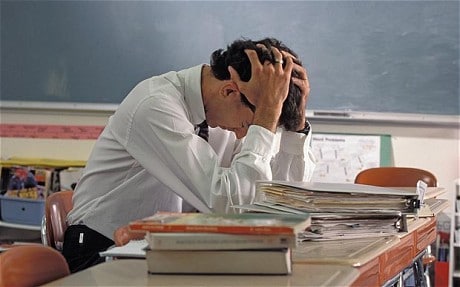
I went through five years of college to become a teacher – not a prison guard. But on days like today that’s what I am. I’ve devoted over a decade of my life to nourishing children, not ordering them all to march in line single file.


But here I am, a paid thug who browbeats and coerces innocents into doing things they don’t want to do for purposes that won’t benefit them and will in fact be used against them.


I wonder what the school board would say if I had the guts to stand in front of them at a public meeting and tell them.


I guess I’ll just have to keep wondering because the last time I tried to address that august body without an explicit invitation, I was told I wasn’t allowed to do so since I don’t live in the district where I teach.


But sometimes I question whether the elected representatives of my district even understand what I’m being bulldozed into doing in their name.


Do you know I am abusing your children? I am crushing their creativity, their self-respect, their curiosity. Is that really what you want of me? Is that what you hired me for?


Don’t get me wrong.


It’s not really anything new. I’ve been doing this for almost 15 years. It’s just harder every year.


I heap on justifications – you have to do the bad stuff so you can do the good stuff. You have to enforce the testing so you can do authentic teaching.


And every year the mandates get more restrictive, the teaching gets a little less and the testing a bit more.


Meanwhile, politicians pretend like they’re doing something to fix it. Gov. Tom Wolf (whom I generally like) cuts off a few days from the PSSA tests this year. But he keeps the recommendation that we take the CDTs. He keeps the entire test-and-punish framework in place. Like most Democrats, he’s willing to twiddle around the edges but has no guts to do away with what’s wrong and replace it with what’s right.


Meanwhile, parents in my state are generally clueless.


You have some strong advocates here and there. Some moms and dads who understand what’s going on. But most are either oblivious, too busy putting food on the table, in jail or dead.


I used to send home a letter to parents reminding them of their right to opt out of standardized tests. It almost got me fired.


And for my efforts, I think maybe one or two parents over five years actually took me up on it.


I go to my local union and tell them my concerns. They nod and ask for more information and then quietly forget it.


Meanwhile, the national unions are behind the testocracy 100%. They’ll wag their fingers and complain about testing, but they’re too busy making sure the teaching profession even exists tomorrow to stop for small potatoes like bad practices.


I feel so alone here.


I’m pulling my hair out and the only response I get is from the choir (Hallelujah!) and the corporate education reformers (How dare you!?).


The majority stays silent. And complicit.


I’m just not sure I can do it anymore.


I’ve thought about calling in sick whenever I have to give a standardized test. It would be a lot of days, but I could do it.


That might be safe, but it would be cowardly.


I’d just be saving myself the pain and humiliation of giving the tests. My students would still be forced to take them.


So what do I do?


I write.


I write blogs like this one.


I pound out my cares and reservations, put them in a virtual bottle and set it adrift on the seas of the Internet.


It’s a constant gamble.


Someday someone may read them who can end my career.


Or maybe someone with the power to make a difference will read them.


Maybe that’s you.


Maybe it’s all of us.


I don’t know.


I have no solutions today. Just shame and regrets.


A dilemma that I cannot solve.

Dear Teachers, Don’t Be Good Soldiers for the EdTech Industry

FullSizeRender

Dear fellow teachers,

Thank you for coming to this meeting on such short notice.

I know you have plenty more important matters to attend to this morning. I, myself, left a pile of ungraded papers on my desk so I could get here. Not to mention I urgently need to fix my seating charts now that I’ve finally met my students and know who can sit with whom. And I’ve got to track down phone numbers for my kids’ parents and go through a  mountain of Individual Education Plans, and… Well, I just want you to know that I get it.

There are a lot of seemingly more pressing concerns than listening to a teacher-blogger jabber about the intersection of politics and our profession.

Is that all of us? Okay, would someone please close the door?

Good. No administrators in here, right? Just classroom teachers? Excellent.

Let’s speak openly. There’s something very important we need to talk about.

There is a force out there that’s working to destroy our profession.

Yes, ANOTHER one!

We’ve got lawmakers beholden to the corporate education reform industry on the right and media pundits spewing Wall Street propaganda on the left. The last thing we need is yet another group dedicated to tearing down our public schools.

But there is. And it is us.

You heard me right.

It’s us.

There is an entire parasitic industry making billions of dollars selling us things we don’t need – standardized tests, Common Core workbook drivel, software test prep THIS, and computer test crap THAT.

We didn’t decide to use it. We didn’t buy it. But who is it who actually introduces most of this garbage in the classroom?

That’s right. US.

We do it. Often willingly.

We need to stop.

And before someone calls me a luddite, let me explain. I’m not saying technology is bad. It’s a tool like anything else. There are plenty of ways to use it to advance student learning. But the things we’re being asked to do… You know in your heart that they aren’t in the best interests of children.

I know. Some of you have no choice. You live in a state or district where teacher autonomy is a pathetic joke. There are ways to fight that, but they’re probably not in the classroom.

It’s not you who I’m talking to. I’m addressing everyone else. I’m talking to all the teachers out there who DO have some modicum of control over their own classrooms and who are told by their administrators to do things that they honestly disagree with – but they do it anyway.

We’ve got to stop doing it.

Corporations want to replace us with software packages. They want to create a world where kids sit in front of computers or iPads or some other devices for hours at a time doing endless test prep. You know it’s true because your administrator probably is telling you to proctor such rubbish in your own classroom so many hours a week. I know MINE is.

Listen, there are several reasons why we should refuse.

First, there’s simple job security. If your principal brought in a Teach for America temp and told you this lightly trained fresh from college kid was going to take over your classes, would you really sit down and instruct her how to do your job!?

I wouldn’t.

That’s the entire point behind this tech industry garbage. You are piloting a program that means your own redundancy.

You are engaged in an effort to prove that they don’t need a fully trained, experienced, 4-year degree professional to do this job. They just need a glorified WalMart greeter to watch the kids as they push buttons and stare at a screen. They just need a minimum wage drone to take up space while the children bask in the warm glow of the program, while it maps their eye movements, catalogues how long it takes them to answer, records their commercial preferences and sells all this data to other companies so they can better market products – educational and otherwise – back to these kids, their school and their parents.

This isn’t about improving educational outcomes. It’s about bringing the cost down and pocketing the savings as profit.

It’s about replacing the end-of-the-year standardized test with daily mini stealth assessments that are just as high stakes and just as effective at providing an excuse for the state or the feds to swoop in and steal control, disband the school board and give the whole shebang to the charter school operator who gives them the most generous campaign donations.

Do NOT be a good soldier here. Do not just follow orders. Doing so is weakening our entire profession. It is putting our jobs in jeopardy. And it’s about time our national teachers unions figured this out instead of conceding the point so their leaders can keep a seat at the table. Someone needs to tell them they shouldn’t be sitting inside the building. They should be with us, outside surrounding it with signs and pitchforks.

The EdTech shell game is not about improving student learning. It’s a commercial coup, not a progressive renaissance.

Think about it.

They call this trash “personalized learning.” How can it really be personalized if kids do the same exercises just at different rates? How is it personalized if it’s standardized? How is it personalized if it omits the presence of actual people in the education process?

It’s teach-by-numbers, correspondence school guano with graphics and a high speed Internet connection.

But we give in. We don’t want to rock the boat. We’re rule followers, most of us. We do what we’re told.

Most teachers were good students, and obedience is too often a defining quality of those who succeed in our education system.

I get it. You don’t want to be a fly in the ointment. You don’t want to make yourself a target.

Me, too.

How dearly I would love to be able to just comply. But I can’t simply go along with something I know in my heart to be wrong. And this is wrong on so many levels.

I sat through a meeting much like this one earlier this year where I was told exactly which programs to force on my students. All the while good teachers whom I respect went through the motions as if nothing was wrong. They talked about how to organize our classes in the system, how to assign test prep and how often, and how to access the data.

But we never discussed why.

We never discussed if doing so was a good idea. That was all taken for granted. It was a decision reserved for someone else, someone from a higher pay grade.

Yet classroom experience is rarely commensurate with salary scale especially once you cross the line into management. Nor is the experience of a handful of administrators equal to that of a plentitude of staff!

No. I’m sorry. At very least that is a discussion WE should be having.

It is the TEACHER’S job to determine what is educationally appropriate. Not the administrators. At most, the building principal should be part of that discussion in her role as lead teacher. But the resolution to go ahead or not should be made together as a staff.

And if an individual teacher thinks based on their own experience with their own students that they should go in a different direction, they should be respected enough as a professional to have the autonomy to do so.

Teachers have to abide by best practices, but test prep in any form is NOT a best practice.

It’s time we stood up en masse and made that clear.

We are our own worst enemy in this regard.

We are too submissive. Too meek.

This world requires teachers to be revolutionaries, to be radicals.

And that doesn’t end in the classroom.

We need to educate parents and the community about what’s happening. The classroom doors are too often closed to the public. The only information they get is from anemic administrators and a mass media that invariably just reports whatever propaganda the corporation puts on the press releases.

We are responsible for our students. We must protect them from the vultures out there trying to water down their educations and reduce the quality of their learning.

We are not the only ones who can take a stand. In fact, IF we are the only ones who do it, we will certainly fail.

But, along with parents, students and concerned citizens, we MUST be part of that resistance.

We MUST take a stand for our children and our profession.

Because without us, there is no hope of success.

So we can no longer afford to be good soldiers in someone else’s army.

It’s time to have the courage of our convictions.

It’s time to rise up, walk hand-in-hand to the front of the staff meeting and tell our administrators:

NO.

Because if we don’t, no one else will.

After Hurricane Harvey, Will Houston Public Schools be Charterized?

170826155218-47-hurricane-harvey-0826-super-169

It’s an all too familiar scene in America.

A natural disaster devastates a major metropolitan city.

And then the forces of profit and privatization use the chaos and uncertainty as cover to steal public services and turn them into mechanisms to increase their own bottom line.

That’s what happened to New Orleans in the wake of Hurricane Katrina in 2005. And, if Houston residents aren’t careful, it’s what could happen there in the wake of Hurricane Harvey, which struck this weekend.

Right now the immediate danger is the weather.

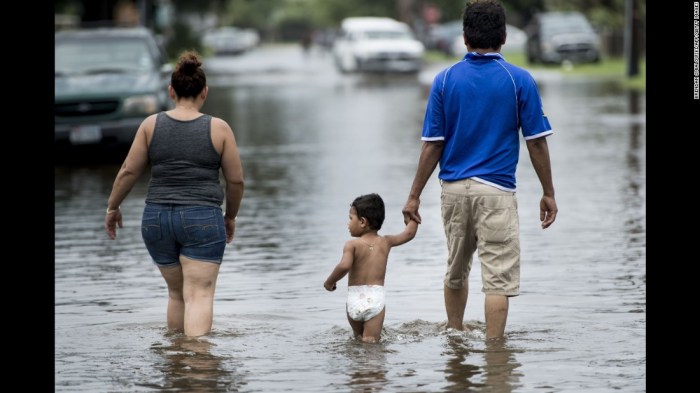
The storm has already affected about a quarter of the Texas population, or 6.8 million people in 18 counties. It’s been blamed for at least 8 deaths so far.

Thousands of people have evacuated to rooftops as rushing waters flooded streets and neighborhoods. Many roadways are only navigable by boat, and emergency services are so overtaxed that civilian volunteers have stepped up to help rescue stranded residents. By the time the weather system passes through, Houston could get as much as 50 inches of rain – the highest amount ever recorded in Texas.

U.S. Education Secretary Betsy DeVos was so overwhelmed by the news that she took to Twitter, saying, “Our prayers are with all those in the path of #HurricaneHarvey. @usedgov stands ready to assist impacted schools.”


thumbnail_Screenshot2017-08-28at8.57.04PM.jpg

To which noted liberal commentator Keith Olbermann responded, “The hurricane is going to do less damage to schools than you are, Motherfucker.”
thumbnail_Screenshot2017-08-28at8.57.15PM.jpg
And, if history is any guide, he may not be wrong.

In the aftermath of Katrina, New Orleans lost almost its entire public school system. About 90 percent of the city’s 126 schools were given to the Louisiana Recovery School District, which turned them all into charter schools.

For those uninitiated into the mysteries of corporate education reform, charter schools differ from traditional public schools because they are financed by tax dollars but privately operated. They often are controlled by appointed boards with little to no transparency, and are rife with opportunities for investors to profit through fraud and neglect – opportunities that just aren’t present at traditional districts.

So, in effect, Louisiana state officials elected by the white majority stole control from local school boards elected by the city’s black majority. More than 7,000 teachers most of whom were people of color and had been displaced by the hurricane found themselves replaced by mostly white teachers brought in from other parts of the country.

Now, more than 10 years later, the New Orleans experiment has been shown to be a failure. Scores on standardized tests have improved (kinda), but the curriculum has narrowed, teacher turnover has doubled, disadvantaged and special education students have even fewer resources while schools fight over high achieving children, students spend hours being bused to schools far from their homes, communities have been erased, and parents have less control over how their own tax dollars are spent.

This could be the future for the Houston Independent School District (HISD).

After all, Houston is where the infamous Knowledge is Power Program (KIPP) charter school network got its start.

KIPP is known for two things: draconian discipline and high attrition rates. Even those kids who do well there often don’t go on to graduate from college. Two thirds of KIPP students who passed the 8th grade still haven’t achieved a bachelor’s degree 10 years later.

Moreover, its methods aren’t reproducible elsewhere. The one time KIPP tried to take over an existing public school district and apply its approach without skimming the best and brightest off the top, it failed miserably – so much so that KIPP isn’t in the school turnaround business anymore.

Yet, the charter network, one of the largest such chains with 209 schools nationwide, has one of the best propaganda departments in the industry. They pass off inhumanity to children as “rigor” and gloss over inability to teach difficult students as “high standards.”


Will Texas lawmakers be swayed by powerful charter operators to use the current catastrophe as a business opportunity to gobble up the existing school system?

 
Perhaps. But there are some significant differences between Houston and New Orleans.

 
For instance, the students served by the New Orleans system a dozen years ago were almost all living below the poverty line. By contrast, Houston has high and low poverty areas. In fact, many neighborhoods cater to upper middle class children.

 
It’s doubtful that parents from more affluent neighborhoods would put up with losing local control and all that goes with it. Their political and economic power would probably stop any wholesale charterization of the district. That’s why KIPP schools – and in fact most charter schools – are nearly nonexistent in wealthy neighborhoods.

 
However, there are plenty of community schools serving high poverty populations suffering from systemic disinvestment and neglect that could be in danger of just such “reforms.” In fact, many of those are exactly the ones that have been worst hit by flooding and weather damage. At least 10 consistently struggling schools could find themselves targeted for the New Orleans treatment. The state and federal government could withhold relief funding on the condition these schools give up their elected school boards and embrace the kind of Wild West, laissez-faire, free market deregulation that charter schools bring.

 
The Republican controlled state legislature already has a law on the books to swipe local control from struggling districts and turn them into charters. It’s a blatant threat to takeover entire districts like HISD if certain schools within the district don’t improve standardized test scores and other measures favored by corporate education reformers.


Hurricane damage could become a pretext to empowering state lawmakers to expedite this process. Perhaps they might even ask local school boards to give up control of their struggling schools in exchange for leaving alone the more affluent white schools.

I had the pleasure of visiting Houston a year ago for the United Opt Out Education and Civil Rights Summit. There I met with parents, students, concerned community members and representatives of the local teachers union – the Houston Federation of Teachers.

They helped me understand that Texas has a unique perspective on school choice.

For instance, they aren’t generally too fond of school vouchers.

This session a Tea Party favored voucher initiative was squashed by more moderate Republicans. In fact, in Texas even religious leaders don’t like vouchers. This is surprising because the program usually allows tax dollars to be used at private or parochial schools. An organization, Pastors for Texas Children, has been particularly vocal about supporting public education over BOTH vouchers and charters.

However, this is the land of former Gov. George W. Bush, one of the biggest charter cheerleaders in the country. His party broadly supports charter schools, yet the Texas legislature has struggled to increase them.

Last year, Gov. Greg Abbott and Lieutenant Gov. Dan Patrick made a big push to increase charter schools across the state. In an unusual move, state House Speaker Joe Straus refused to bring the bill to the floor for a vote. Straus held the issue hostage because he couldn’t get support for a new school funding formula.

It should be noted that all of these players are Republicans. Democrats are a minority with the ability to impact policy almost not at all.

DeVos and the Trump administration are unquestionably supportive of voucher and charter school expansion.

It’s still too early to tell if the state and/or federal government will take a page from the Shock Doctrine playbook and use Harvey as a distraction to embolden their agenda.

One can only hope that voters have learned the lessons from Katrina and Louisiana.

Otherwise, over time a manmade disaster could once again eclipse the damage done by a natural one.


Special Thanks to Zakary Rodriguez for help navigating the Texas education scene.

Study: Closing Schools Doesn’t Increase Test Scores

*Jan 26 - 00:05*


You might be tempted to file this under ‘No Shit, Sherlock.’

But a new study found that closing schools where students achieve low test scores doesn’t end up helping them learn. Moreover, such closures disproportionately affect students of color.

What’s surprising, however, is who conducted the study – corporate education reform cheerleaders, the Center for Research on EDucation Outcomes (CREDO).

Like their 2013 study that found little evidence charter schools outperform traditional public schools, this year’s research found little evidence for another key plank in the school privatization platform.

These are the same folks who have suggested for at least a decade that THE solution to low test scores was to simply close struggling public schools, replace them with charter schools and voilà.

But now their own research says “no voilà.” Not to the charter part. Not to the school closing part. Not to any single part of their own backward agenda.

Stanford-based CREDO is funded by the Hoover Institution, the Walton Foundation and testing giant Pearson, among others. They have close ties to the KIPP charter school network and privatization propaganda organizations like the Center for Education Reform.

If THEY can’t find evidence to support these policies, no one can!

After funding one of the largest studies of school closures ever conducted, looking at data from 26 states from 2003 to 2013, they could find zero support that closing struggling schools increases student test scores.

The best they could do was find no evidence that it hurt.

But this is because they defined student achievement solely by raw standardized scores. No other measure – not student grades, not graduation rates, attendance, support networks, community involvement, not even improvement on those same assessments – nothing else was even considered.

Perhaps this is due to the plethora of studies showing that school closures negatively impact students in these ways. Closing schools crushes the entire community economically and socially. It affects students well beyond academic achievement.

The CREDO study did, however, find that where displaced students enrolled after their original school was closed made a difference.

If Sally moves to School B after School A is closed, her success is significantly affected by the quality of her new educational institution. Students who moved to schools that suffered from the same structural deficiencies and chronic underfunding as did their original alma mater, did not improve. But students who moved to schools that were overflowing with resources, smaller class sizes, etc. did better. However, the latter rarely happened. Displaced students almost always ended up at schools that were just about as neglected as their original institution.

Even in the fleeting instances where students traded up, researchers noted that the difference between School A and B had to be massive for students to experience positive results.

Does that mean school closures can be a constructive  reform strategy?

No. It only supports the obvious fact that increasing resources and providing equitable funding can help improve student achievement. It doesn’t justify killing struggling schools. It justifies saving them.

Another finding of the CREDO study was the racial component of school closings.

Schools with higher populations of blacks and Hispanics were more likely to be shuttered than institutions serving mostly white students. In addition, schools with higher poverty populations were also more likely to be closed than those serving middle class or rich children.

Yet you really don’t need an academic study to know that. All you have to do is read the news. Read about the closings in Chicago, New Orleans, Detroit – really any major metropolitan area.

The fact that CREDO admits it, only adds credence to arguments by critics like myself.

It is no accident that poor black schools get closed more than rich white ones. Poor students of color are targeted for this exact treatment.

Corporate education reform is not just bad policy; it is racist and classist as well.

Greg Richmond, President of the National Association of Charter School Authorizers, was shocked by these findings.

“We are especially troubled by the report’s observation of different school closure patterns based on race, ethnicity, and poverty,” he said in a statement. “These differences were present among both charter schools and traditional public schools and serve as a wake-up call to examine our practices to ensure all schools and students are being treated equitably.”

But his industry benefits from these practices. Just as CREDO’s backers do.

Never has our country been less prepared to deal with the real problems besieging it. But if the time ever comes when sanity returns, we cannot simply go back to familiar habits.

School closures and charter school proliferation are bad no matter who proposes it – Republicans or Democrats.

Regardless of who sits in the Oval Office, regardless of who represents us in federal, state and local government, we have to make sure they do the right things for our children.

That means learning from our mistakes. Beyond partisanship. Beyond economics.

It’s the only way to build a better world.

CREDO’s study just adds fuel to the fire surrounding the regressive education policies of the last decade.

If we’re ever in the position to hold a match, will we have the courage to strike it?

Who is Responsible for Student Achievement?

achievementseries


Billy is an average middle school student.


He sits down and takes a test.


The grade comes back.


Who is responsible for that grade?


This should be the dumbest question you can ask in the field of education.


The answer should be obvious.


Billy is responsible.


Billy did the work, he took the test, he earned the grade.


But all across this great country of ours we’re giving the wrong answer.


We’re saying teachers are responsible for that grade.


This is ridiculous. Teachers could not do the work for the student. Teachers could not take the test for the student. How can you possibly assume the teacher is responsible for the grade?


In fact, if the teacher really were responsible – if she did all the work and took the test – how could you rationally say this grade belonged to the student? No, it wouldn’t be Billy’s, it would be his teacher’s.


The truth goes something like this: You are responsible only for things within your control. The greater your degree of control, the greater your degree of responsibility.


This is not complicated.


It is simple logic. Cause and effect.


But ignoring it is perhaps the most virulent, incorrigible, fact-resistant mistake in the entire field of public education.


Lawmakers are getting it wrong. The media is getting it wrong. Superintendents, principals – even teachers are getting it wrong.


And the reason is somewhat pernicious.


We’ve been sold a lie.


We’ve been told for so long that educators are responsible for their students’ work that we’ve begun to accept it without question.


Just today at a training in my district, I was shown a spreadsheet of student test scores and told in no uncertain terms that this was something I have control over.


I DON’T.


I don’t have control over the raw scores. I don’t even have control over how much a student improves from one year to another.


The student does.


HE controls how hard he works on assignments. HE exhibits the most control over the results of his assessments.


This doesn’t mean I’m completely helpless.


I do have control over certain aspects of students’ academic experience.


I control what work is assigned, when it is assigned and to whom.


I control whether there is extra credit, what counts as homework, who gets extra help, etc.


In many cases, I even get to decide whether students have completed their work and if assessments have been completed successfully.


As long as I am exhibiting best practices, giving age-appropriate work and evaluating it fairly, I’m doing my part.


It is not then justified to assume I am solely responsible for the end result.


I raise the hurdles, but the student actually goes through the obstacle course.


The teacher is a factor, but not the largest one. That is the student, Billy.


Yet he is not alone here. Besides, me, his teacher, there is also the principal, the student’s parents, his friends and even society as a whole.


All of these and more contribute to student success.


The principal controls school policy. He determines what discipline the student receives, the clarity of school rules, etc.


Likewise, students’ friends are part of their social network. They can help with homework, form a study group, or distract from school work, denigrate work ethic, etc.


Society also plays a role. If a student is part of a community that values education and work ethic, that student will more likely put forth more effort. If the student lives in a community where school is seen as unimportant and teachers are not respected, that will have a negative impact, etc.


And the number one factor other than the student, himself, that contributes to his success is parents. They control home life, emotional support, tutoring, nutrition, etc.


All of these complex factors combine to add up to an individual student’s success. However, at the end of the day, it is the student, himself, that bears the brunt of the responsibility for what he does.


That’s why we call it HIS grade and not someone else’s.


This is the most obvious thing in the world, but it has certain consequences for education policy.


For instance, it immediately invalidates the majority of teacher evaluations given throughout the country. The reason? Most evaluations are based at least in part on student test scores.


As we’ve seen, this misrepresents the student-teacher relationship. It blames the teacher for things well beyond his or her control.


It turns students into passive objects acted on by magical super teachers who can somehow make them learn simply by – what – endless repetition of test prep materials?


Why would students put forth their best in this scenario? If they’re failing, it’s somehow not their fault. It’s their teachers!


But even worse than this misrepresentation, it completely ignores a plethora of vital factors in the education process.


Parents, for instance, are crucially important, but we’re leaving them completely out of the loop.


When parents struggle to fulfill their responsibilities, why is there little to no help? The answer: because we’ve hidden the fact that such responsibilities even exist. We’ve thrown it all on the teacher and the school.


All these out-of-school factors are obscured, yet taken together they are almost determinate. After all, this is why poor and minority students disproportionately struggle academically.


You can demand every student jump six feet straight up, but those with the best resources will meet this goal much more frequently than those without.


And who is in control of those resources? Who decides which children get the smallest class sizes, the best home environments, the most conducive social networks, etc.?


The myth of teacher accountability is what stops such resources from being sent.


We’re told all you need is a good teacher.


But this is not true.


You need much more.


The ultimate responsibility may rest with the student, but until we all realize and acknowledge our collective responsibilities to all students, success will always be out of reach for far too many of them.


Billy may take the test, but it is society that is failing to meet its responsibilities.

Surprised by Charlottesville? You Haven’t Been Paying Attention

 Charlottesville-neo-Nazis-alt-right


America is a funny place.


On the one hand, we’re one of the first modern Democracies, a product of Enlightenment thinking and unabashed pluralism and cultural diversity.


On the other, we’ve built our entire society on a cast system that is the basis of our economics, politics and cultural mores.


We’re the land of Benjamin Franklin, the Wright brothers, Duke Ellington, Toni Morrison, and Sandra Day O’Connor.


But we’re also the land of Andrew Jackson, Jefferson Davis, Charles Lindberg, Bull Connor, and David Duke.


Tolerance and love are as American as apple pie. But so are racism, sexism, prejudice and anti-Semitism.


“It is not as though the United States is the land of opportunity, or a hypocritical racist state,” says sociologist John Skrentny. “It is one or both, depending on context.”


So this week when people saw Nazis marching openly in Charlottesville, Virginia, the only thing that was really so surprising about it was how surprised so many people seem to be.


“That’s not my America!” they seem to be saying.


To which I reply, “Hell, yes, it is! Where have you been the last 241 years!?”


We base our salary scales on genitalia! You think we’re really so freaking advanced!?


The shade of your epidermis determines the likelihood of police arresting you, charging you, even killing you regardless of your having a weapon, whether you resist arrest or simply lay on the ground with your hands in the air.


Regardless of the evidence, if you’re convicted, the length and severity of the sentence are all partially determined by the amount of melanin in your skin. The cultural derivation of the name on your resume determines the likelihood of employers calling you back for an interview. In many places, your rights are legislated based on whom you love.


Our schools are segregated. Our taxes are levied most heavily on those with the least means to pay. Our prisons house more black people today than did slave plantations in the 1860s.


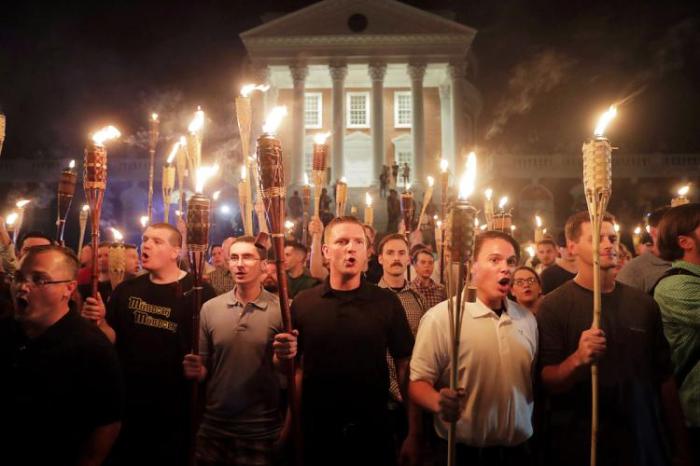
Yet a bunch of white dudes carrying Tiki torches shouting hate filled puns (“Jew will not replace us”? Seriously?) somehow doesn’t compute?


Come on.


This is America.


Racism and prejudice are not threats smuggled in past border security. They’ve always been here. At least since Europeans came offering trade and peace with one hand and guns and smallpox with the other.


The land of the free was stolen from the Native Americans. Our national wealth was built on the backs of slaves. Our laws and electoral system were built to empower one group at the expense of others.


Yet reformations in this process are rarely met with celebration. Instead of memorializing the end of slavery, we embrace the institution with fond remembrance.


Nor did prejudice and bigotry end when Rosa Parks refused to give up her seat, after Brown vs. Board, the Voting Rights Act, Freedom Rides, sit-ins or civil rights protests.


America has always been a place hostile to the under privileged, the second sex, religious dissenters, the brown skinned.


At most, we had become less confrontational in recent years, but we never really changed our core values, our social structures, who has power and who does not.


During my lifetime, people started to equate having a black President with the end of racism. Somehow they ignored the everyday reality for most black people.


They ignored the constant prejudice against the poor, the continued bigotry against LGBTs, the Islamophobia, the increase in hate crimes.


If there has been any change during the past eight months, it hasn’t been with the degree to which Americans are prejudiced. It’s the degree with which we’re willing to hide it.


Whereas before racists would claim to be colorblind, that their actions were completely devoid of racial bias, today they sigh and repeat the dusty slogans of Jim Crow Alabama or 1930s Berlin.


And somehow people are actually surprised about this.


It’s because too many of us have swallowed the lies about living in a post-racial society.


You thought we were beyond all that. It was a brave new world, morning in America, and we were finally treating everyone equally – unless you looked at what we were actually doing.


Mainly this is the reaction you get from white people. They rub their eyes and just can’t believe it.


You don’t see this too often from people of color, Muslims, LGBTs and some Jews. Why? Because they never had the luxury to ignore it.


That’s what we white folks have been doing since the beginning.


Whenever these issues come up, we have a knee jerk reaction to minimize it.


Things aren’t that bad. You’re just blowing it out of proportion.


But, no. I’m not.


That’s why you’re so damn shocked, son.


You haven’t been looking reality square in the face.


So when we’ve got undeniable video footage of angry white males (mostly) marching through Southern streets brandishing swastikas and assault rifles, it catches many white folks off guard.


They’re not prepared for it – because they haven’t been doing their homework.


We’ve been living in a bubble. Especially those living in major metropolitan areas.


That kind of thing never happens around here, right?


Of course it does!


Just because you live above the Mason Dixon Line doesn’t mean you’re safe.


You have a black friend, you like authentic Mexican food and you laugh while watching “Modern Family.”


But you haven’t opened your eyes to the reality outside your door.


You send your kids to private school or live in a mostly upper class white district. You have an exclusive gym membership that keeps out the riff-raff. You work in an office where that one token person of color makes you feel sophisticated and open-minded.


You’ve got to wake up.


You’ve got to educate yourself about race and class in America.


Because those people you saw in Charlottesville aren’t an anomaly.


They are an authentic part of this country, and if you don’t like it, you have to do something about it.


You can’t hide behind denial.


You have to take a stand, pick a side, and be counted.


Because one day soon, the torches will be outside your door.


You have to decide now – do you want to brandish or extinguish them?

Pennsylvania Proposes Smaller Tests, Same High Stakes

Screen Shot 2017-08-14 at 4.04.51 PM


It’s not the size of the tests, it’s how you use them.


And that’s kind of the problem with Gov. Tom Wolf’s new proposal for Pennsylvania public schools.


Wolf wants to reduce the amount of time students are taking standardized tests, but he seems to have little problem using those tests to hold schools accountable for all kinds of things that are beyond their control.


The proposal released today applies only to the Pennsylvania System of School Assessment (PSSA) tests – those taken by students in grades 3-8. Keystone Exams taken by high school students are unaffected.


It would cut one of three reading sections and one of three math sections – two total. Wolf also wants to cut some questions from one of the science sections.


Such a move is estimated to eliminate 48 minutes from the math test, 45 minutes from the reading test and 22 minutes from the science test. However, judging from my own students, these times vary considerably depending on the individual taking the tests. I’ve had 8th grade students finish a PSSA section in as little as 5 minutes or as much as two hours.


Most schools give either a section a day or two in one day. Therefore, this proposal probably translates to 1 to 2 fewer days testing in most districts.


Um. Thanks?


Look I don’t want to seem ungrateful here, but these suggested modifications are little more than fiddling around the edges of a massive problem.


Yes, it will be helpful to reduce testing times, but this does very little to address the fundamental problems with test-based accountability in the Commonwealth.


At best, this proposal will allow students to spend two more days a year learning. Assuming most districts don’t use that extra time for test prep, that IS a good thing.


But tacitly committing students throughout the state to taking these tests almost guarantees that test prep is exactly how these additional days will be used.


The problem with standardized testing isn’t just the number of raw days it takes students to complete the tests. It is how the tests deform the entire year-long curriculum. Students don’t just learn anymore. They learn what’s on the test – and anything else is purely optional.


Regardless of the size of the assessments, they are still being used to sort and judge students, teachers and schools. Shortening their length does nothing to address the fundamental unfairness of the evaluations. Rich white kids still tend to have high scores and poor minority kids still tend to have low ones.


At best, they reveal structural funding disparities between poor and wealthy districts. At worst, the cultural bias inherent in the questions favor those from dominant, privileged ethnicities while punishing those who don’t fit the standard.


That’s what “standardized test” means after all – defining normal and punishing those who don’t fit the definition. Most questions don’t assess universals like the value of 2 and 2. They evaluate cultural and social norms required to understand the questions and easily find an answer that another “normal” student would choose. (Don’t believe me? Watch “Black Jeopardy” on Saturday Night Live.)


This is true whether the test takes one day or 100 days.


We should not be using standardized testing to meet federal accountability standards. Period.


The federal Every Student Succeeds Act (ESSA) contains provisions to circumvent them. States are supposed to be given leeway about testing. They may even be able to replace them with projects or other non-standardized assessments. THAT’S what Wolf and the Pennsylvania Department of Education should be exploring – not half measures.


To be fair, the state Department of Education is attempting reform based on the ESSA. This year, the department introduced Future Ready PA, a new way of using test scores and other measures to assess school success. To its credit, The Index does place additional emphasis on academic growth, evaluation of school climate, attendance, graduation rates, etc. However, for my money it still gives far too much importance to standardized testing and test prep.


Like reducing the size of the PSSAs, it’s a positive step but won’t do much to get us to our destination.


Neither measure will have much impact on the day-to-day operations of our public schools. Districts will still be pressured to emphasize test prep, test taking strategies, approaches to answering multiple choice questions, etc. Meanwhile, critical thinking, problem solving, and creativity will still be pushed to the side.


Moreover, since schools and teachers will be assessed as successful or not based largely on these test scores, districts will be under tremendous pressure to give countless practice tests throughout the year to gauge how well students are prepared for the PSSAs. The state will still be providing and encouraging the optional Classroom Diagnostics Tools (CDT) tests be taken several times in reading and math throughout the year. Trimming off two days from the PSSA will affect that not at all.


In addition, today’s proposal only applies to the PSSA. While that assessment is important, the Keystone Exams given to high school students are even more so. According to existing state law, passing the Keystones in Algebra I, Literature and Biology are required in order to qualify for a diploma. However, that condition has yet to go live. So far the legislature has continuously pushed back the date when passing scores become graduation requirements. The Governor and Department of Education should be proposing the elimination of this prerequisite before anything else. Other than education funding and perhaps charter school accountability, it is the most important education issue before Commonwealth lawmakers today.


Don’t get me wrong. The Democratic Governor is somewhat hamstrung by the Republican-controlled legislature. Partisan politics has stopped lawmakers from accepting Wolf’s more progressive education measures.


Though Wolf has gotten Republicans to increase education funding by hundreds of millions of dollars during his term, K-12 schools still receive less than they did before the previous GOP governor’s administration. Moreover, there have been absolutely zero inflationary increases to keep up with the rising cost of doing business. Pennsylvania schools receive less funding – whether you adjust for inflation or not – than they should, and that has a real world impact on our public schools. Moreover, how that money has been allocated by the legislature still – even with our new better funding formula in place – benefits wealthy districts more than poor ones.


If you want to talk about accountability, that’s where the majority of the issue belongs.


And primarily it’s out of Wolf’s hands. One can understand why he is proposing changes where he can and trying to do whatever good is possible given the political climate.


Shortening the PSSA tests would benefit our students. It is a step in a positive direction.


However, it is far from solving our many education problems.


The biggest roadblock to authentic school reform is a legislature that refuses to do anything but the absolute minimum for our neediest students.

Dear White Supremacists: There Will Be No Race War

a51c6a1d-da93-4129-9050-431ae50718b9


This one goes out to all the white boys.


No.


Not ALL the white boys.


Just the ones who think being “white” and being a “boy” means the world owes them something.


Cause I’m white, too, and I know it doesn’t make me any better than anyone else.


But not you.


You think your lack of pigmentation is a special sign of your supremacy. As if being pale was synonymous for God’s chosen.


Well let me tell you something, white boy. God didn’t choose you. You did.


What you take for superiority is just a misguided attempt at self-esteem.


I’m a snowflake? YOU’RE the snowflake. Same color. Same consistency. In the first warm breeze, you’ll melt.


I’m talking to YOU, white boy. All of you.


All those melanin-starved faces wearing matching eggshell t-shirts and fat-ass khakis.


All those brave, young men holding Tiki torches and an inflated sense of self worth.


All the protesters in Charlottesville, Virginia, so fearless they can spray mace on those they disagree with, so bold they can throw punches so long as they know the police won’t hold them accountable, so courageous they can drive a car into unarmed counter-protestors, so brave that they can’t even call themselves what they are: Nazis, the Klan, white supremacists.


You hide behind “Alt Right” as if the rest of us can’t figure out who you really are.


Surprise! We see you!


We see your twisted lips, scrunched eyes and flaring nostrils. Your hood-starved heads and sweat-gelled haircuts. Your hate warped faces spouting reheated leftovers from WWII.


My grandparents fought people like you.


They dressed in army green and hopped the ocean to pound people like you into the ground.


They took your goose-stepping forebears and blasted them into bits. They buried your intellectual precursors under the ashes of their eternal Reich.


And for my grandfathers’ sacrifice, I rarely had to deal with people like you, myself. Not outright.


It’s not that people like you didn’t exist. Your attitudes and beliefs still percolated just beneath the surface of so many frustrated white boys.


The difference was that they were too smart to actually give voice to the darkness in their hearts.


It didn’t stop them from acting on it. They just wouldn’t admit why.


Segregation, red lining, broken windows policing, and a plethora of others. It was all polite, all deniable, all just the colorblind way we do things around here.


But that doesn’t really work anymore, does it?


Times are changing.


The face of America is changing. And it’s increasingly brown.


It’s got curly hair and unexpected features. It’s fed by different foods and nourished by different beliefs and customs. And it’s often called by a name that doesn’t derive from Europe.


People are starting to speak up. They’re starting to call you out.


And you don’t like it.


More than that you’re scared. Terrified.


It’s all going to end. The lie you told yourself about being special.


So you huddle together with others just like you, shivering and crying and blowing snot onto each others shoulders pretending that it’s a rally for white pride. It’s really just the world’s biggest pity party for boys too scared to be men and own up.


You’re brave when you’re in numbers, aren’t you? With numbers or with a gun.


Then you can say whatever you want. You can pretend whatever racial fantasy will protect your fragile little egos.


You’ll whine and boast and imagine you’re winning some kind of war for survival. But we know what you’re really doing.


You’re on your knees. You’re begging for a confrontation.


You’ll do anything to provoke it.


It’s your only hope.


Push them. Prod them. Insult them until they fight.


Bring them down to your level.


Prove your moral superiority by stoking a race war.


Because you can battle human bodies, but you can’t stop ideas.


You can’t triumph over equality, empathy and love.


You can’t stop the tick of time. You can just hope to reset the clock.


Well, I’ve got bad news for you.


There will be no race war.


Not now. Not ever.


Oh, there may be fighting.


You’ll try to make it happen. But it won’t be white vs. black.


It won’t be race vs. race.


It will be your minority of cowards and fools vs. the majority of the rest of us.


Do you really think people like me will fight on your side?


Do you think I’ll stand by you just because the shade of my epidermis matches yours?


Hell No!


I’ll fight with my black brothers and sisters if it comes to it.


I’ll fight on the side of equality, fairness and love.


I’ll do like my grandfathers and smash you into the ground. We all will.


But I’d rather not fight at all.


There need be no violence.


And there won’t be.


Unless you force it.


You see, you can’t make a race war happen.


All you can do is unite the rest of us against you.