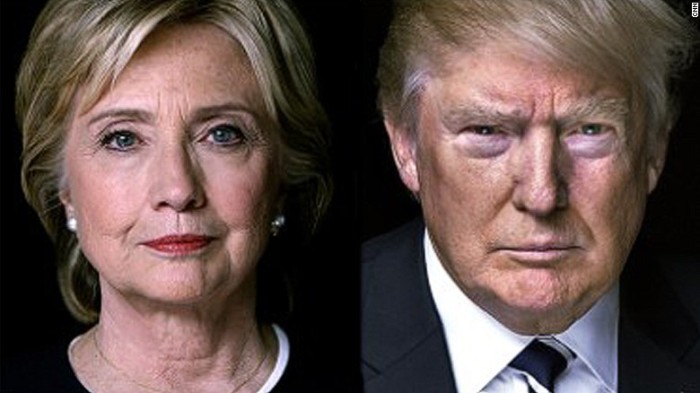
What If Clinton and Trump Debated Education Policy?

bbxdrs0-img

The second Presidential debate was a bust for the millions of Americans who care about public schools.


Instead, we got Donald Trump mansplaining away his vagina-grabbing days. We got Hillary Clinton blaming Machiavellian duplicity on a movie about Abraham Lincoln. But not a word about K-12 education.


After all these debates in the primary and only one more debate left in the general, it seems a pattern is emerging. The media just doesn’t ask the kind of questions parents, teachers and students really care about. After all, there is no defined position staked out by each political party on schools and schooling. Both sides are kind of the same. Asking about it wouldn’t support the usual narratives about so-called “conservatives” and “liberals.”


So once again I appeal to the power of education bloggery to give you what I imagine a debate on this subject might sound like from Clinton and Trump.


Hold on to your pussies. Here goes…


Me: Thank you, Secretary Clinton and Mr. Trump, for being here today to talk about education issues.


Clinton: You’re very welcome.


Trump: (sniff) Yes. I am very glad to be here. No one cares more about education than me. Okay?


Clinton: Well, hold on there, Donald. I’ve spent my entire career fighting for kids and families…


Trump: (sniff. sniff.) What about the kids and families of Benghazi?


Me: O-kay! Let’s begin. Shall we? This question is for both of you. How would you describe your education vision? Mr. Trump, you won the coin toss, so you go first.


Trump: Thank you, Steven. And let me just say I have lots of education vision. My education vision is just tremendous. I think public schools are the most important thing in our country. The taxes we pay for them are just incredibly high. No one pays more taxes for schools than we do. Not the French. Not the Chinese. Not the Russians. And as President I would make America great again by cutting taxes on schools. The business community doesn’t need this. It hurts competition and that hurts education. And there are too many taxes for you regular people out there, too. Unlike my opponent, she’s just terrible. Isn’t she, folks? I’d cut taxes while she would raise them.


Me: Your time is up, Mr. Trump.


Trump: …and I just want to say this one last thing, Steven. Hillary Clinton is a liar. And I would never lie like her. Ask Bernie Sanders about that.


Me: Thank you, Mr. Trump. Secretary Clinton? Same question.


Clinton: Thank you, Steven. I want to take this opportunity to thank you, personally, for being here. As a country, we don’t appreciate teachers enough. You are our number one resource. And a renewable resource. Right? You can clap here, People. Ha! Ha! But seriously my vision for education is a strong one. I’ve fought for children and families all my life as First lady of Arkansas, as First Lady of the United States, as a U.S. Senator and as Secretary of State. You might say that I am the most qualified candidate for President in U.S. history.


Me: Thank you. Madame Secretary. Though I wish you had answered the question.


Clinton: Oh I will answer the question. That’s why I have been endorsed by the largest teachers unions in the country…


Me: Next question. Secretary Clinton, you mention your experience. Some have criticized you for putting the needs of Wall Street ahead of working families. How would you prioritize the needs of students and parents over the corporations and edu-tech industry?


Clinton: As you said, Steven, I’ve been around a long time. I’ve seen a thing or two. Like you, I’ve raised a daughter and know how to navigate the pitfalls of our education system. And, honestly, I don’t think we have to have a conflict of interests between business and education.


Trump: Crazy Bernie says differently.


Clinton: …I see our public schools and public charter schools working together hand-in-hand to provide our children with a world class education. You know my husband and I have long supported…


Trump: You should be in jail.


Clinton: Donald, I think this is my time. Is this my time, Steven?


Me: Yes, Mr. Trump. Please stop interrupting. You’ll have a chance to respond.


Trump: Sorry, Steven. I’m just not used to a woman talking for so long. It’s exhausting.


Clinton: Anyway, I’ve always been a booster for higher academic standards. And as President I would do everything I can to make sure our students get the best education possible.


Me: Mr. Trump. Same question.


Trump: What was that question again, Steven? I kind of forgot while I was listening to that long speech she just gave. Talk. Talk. Talk. This isn’t the Bengazhi commission, Hillary, but I wish it was. Trey Gowdy…


Me: Mr. Trump. The question was “How would you prioritize the needs of students and parents over the corporations and edu-tech industry?”


Trump: Students and parents? They’re just wonderful. We need more students, but I guess that’s where parents come in. That’s why I had so many kids, and they’re all so successful. We didn’t stop with just one. We raised one, two, three… a whole bunch of them. And they’re just tremendous. So I would definitely make sure their needs were being met. Their needs are my needs and so, of course, I would make sure they were being met. You know, perhaps she should have spent more time meeting her husbands needs. Do you know what I mean?


Me: Mr. Trump, the question was about corporations servicing public schools.


Trump: (sniff.) In that case, I’d service corporations. I believe in business. I’ve been a businessman all my life. Very successful. No one knows success like Trump. And I’ve just got to say we all might have been better off in the ‘90s if she had serviced her husband more. I have to tell you.


Me: You are disgusting.


Trump: (shrugs) This debate is rigged.


Me: The next question is for you, Mr. Trump. Whenever you’ve spoken out on education issues, you’ve consistently criticized Common Core. As President, what would you do about Common Core and what role do you think is appropriate for a President in setting national education policy?


Trump: Common Core? I’m against it. It’s no secret. I think it’s been just terrible. It’s been a disaster. A national disaster. And one of the first things I’d do – well the first thing I’d do is throw you in jail…


Clinton: Donald, I…


Trump: But after that I’d get rid of Common Core. There would be no more Common Core. Our kids don’t need Fed Ed. Period. They need more choice. Parents should get to pick the schools they send their kids to. We should stand back and let the parents choose. That’s what I did for Ivanka and my other children and they turned out just fine. Don’t you think they turned out fine, folks? You all saw them on my hit TV shows ‘The Apprentice’ and ‘Celebrity Apprentice.’ Those were great shows. Award-winning TV. Must See Television. Those were good days.


Me: Secretary Clinton. Same question.


Clinton: Thank you, Steven. I appreciate the quality of your questions. It’s clear that this debate has been put together by educators and not representatives of the media. Though I thoroughly support the field of journalism as a profession and a calling.


Trump: You never had a TV show.


Clinton: As to Common Core, I just want to ask Donald something.


Trump: (pops a Tic Tac) It’s surprising you’re going to give up your time to let me talk. I have to say. This is the first time you’ve let somebody else talk…


Clinton: How do you propose to get rid of Common Core when the Every Student Succeeds Act (ESSA) gives that power back to the states?


Trump: (sniff.) E-S-S-A? Never heard of it. I’ll have to ask Mike Pence about it. But the President can do what he wants. You know the old saying, folks: it’s good to be the king.


Clinton: You talk a good game about states rights, Donald, but when you propose getting rid of Common Core, you’re proposing a federal policy that takes away states rights. Every state legislature has the power to change academic standards or retain…


Me: Secretary Clinton, that may be true, but the question was meant for you. What would YOU do about Common Core as President?


Clinton: Nothing. I would respect the law.


Trump: THAT’S a first!


Clinton: I would encourage states to adopt high academic standards and if those standards were the same as Common Core then so be it.


Me: How would you encourage them? By withholding federal grant money like the Obama administration did?


Clinton: I… I think the federal government has a strong role to play in the education of our children. But I would not violate the spirit of the ESSA, unlike Donald. He says he’s for states rights but he calls for a bigger federal power grab than anything my party has ever participated in.


Trump: (sniff.) Wrong.


Me: Okay. Next question. Since we’re talking about the federal role in education, let me ask you both what role you see for the U.S. Department of Education under your administration and whom would you nominate as Education Secretary? Secretary Clinton. You go first.


Clinton: Thank you, Steven. As I said, I believe in the Department of Education. I believe in the Secretary of Education. I believe in teachers. And if we’re going to give our students a leg up – all of our students – then we need to strengthen our public schools and public charter schools. That’s where the Department of Education comes in. Not to enforce education policy but to set the agenda. It helps the states get things done through competitive grants, research and data collection.


Me: So whom would you nominate to head the department?


Clinton: I would have to talk about that with my advisors…


Me: Give us the shortlist.


Clinton: Perhaps someone like John King.


Me: John King!?


Clinton: He’s already there and as my daddy said, if it ain’t broke do not fix it.


Me: Mr. Trump. Same question. What in your opinion is the federal role in national education policy?


Trump: Well, Steven, I don’t think there is one. You know the government that governs best governs least. I learned that from my good friend, Gary Busey. You know? Come to think of it, he’d make a pretty good Secretary of Education, but no. One of the first things I would do is completely disband the Department of Education. On day one. Gone.


Me: So what would happen to Pell Grants, for example, and all the federal money that helps buoy our public schools?


Trump: Do we need it? I was able to raise my family without any help from the federal government.


Clinton: Unless you count your nine bankruptcies, and using loopholes to avoid paying any federal income taxes for over a decade at least.


Trump: I did it all on my own. My father gave me a loan but I made it pay out for me so I could build the Trump empire.


Me: Didn’t you inherit most of your money?


Trump: I’m surprised at you, Steven. I expect something like that from her. She’s bleeding from her… whatever. But you should know better. You think Americans are stupid. And I just think they are strong enough to do it on their own. They don’t need the government to help. We don’t need the regulation, the taxation. Parents can use state money to choose and that will be good enough. Let the free market decide.


Me: Okay. Next question. Standardized testing has come under fire for assessing children’s economic situation more than what they’ve learned. Would you continue to mandate annual testing for all public schools? Mr. Trump?


Trump: I dunno. I’ll have to ask Pence on this one.


Me: You have to ask your vice president what to think on standardized testing!?


Trump: Yes. I mean no. I’m not really sure. Could you make this one multiple choice?


Me: Secretary Clinton? Same question.


Clinton: Standardized testing has been an important part of how we hold school districts accountable. While I understand the concern about over-testing, I think it is important we keep testing our children in grades 3-8 and once in high school. It helps us make sure our schools are meeting all our students’ needs and not violating their civil rights. Many of my former colleagues in the Senate expressed the same concern you mention, Steven, but changed their minds when they were approached by various civil rights organizations…


Me: Many prominent civil rights organizations such as Journey for Justice and various chapters of the NAACP still oppose testing. Why do you chose to side with the organizations who are beholden to the testing industry for their funding?


Clinton: I think… maybe we can give the situation more study and find solutions that would satisfy both the civil rights organizations and testing critics. But it is imperative that schools are held accountable…


Me: What about politicians? Shouldn’t they be held accountable for adequately funding our public schools? That’s why schools struggle. They serve poor populations and don’t have the resources to help their kids excel.


Clinton: This is something you’re obviously passionate about. I have always listened to teachers and with the NEA and AFT would strive to work together to find a solution that’s mutually beneficial to everyone.


Me: Okay. Last question. Since you brought up civil rights, Secretary Clinton, one of the biggest issues facing our schools today is segregation. Many modern schools are as segregated or more segregated by race and socio-economic status than they were before Brown vs. Board. What would you do about that?


Clinton: That is a problem. We must make sure that all our students needs are being met. We cannot let our schools revert to old bad habits. We cannot have schools for blacks and schools for whites. Black lives matter – even when they’re in school. As President, I would make sure everyone had the opportunity to go to the best schools possible. Students who don’t get what they need at school end up on the streets. They feed the school-to-prison pipeline. They end up lost, and many of them become super-predators.


Trump: (laughs)


Me: Isn’t that the term you used as First Lady to describe black youth when your husband’s mandatory sentencing policies expanded our prison population exponentially?


Clinton: Yes and I stand by that statement. We need to help minorities rise above their circumstances. We need to give them a helping hand. They deserve all the same amenities my daughter had, because all lives matter…. Oh shit.


Me: Mr. Trump? Your response?


Trump: Do I have to?


Me: Yes.


Trump: Okay then. Let me just say that segregation is a bad thing. It’s terrible. I’m not exactly sure why but that’s what I’m hearing. We need to make sure only the best students get to go to the best schools and the worst students get their own schools, schools that are right for them. That’s why we need school choice to weed out the worst kids and let them go to the schools that are right for them.


Me: Isn’t that just segregation?


Trump: N…No. That was a really stupid thing to say. Too many people are just stupid today. That’s why I’m going to make America great again. We’re going to have the best schools. You won’t even believe it. They’ll be just the best anyone has ever seen. Okay?


Me: But they’ll be separate schools for blacks and whites? Rich and poor?


Trump: I’d like to pass, Steven.


Me: Okay. That’s all the time we have for today. I’d like to thank both candidates for coming…


Trump: Steven, I just want to say one last thing.


Me: O-kay.


Trump: I… uh… I never grabbed anyone’s pussy. That was just locker room talk.


Clinton: Oh please! It’s just that kind of talk that empowers rapists…


Me: Thank you both for coming…


Trump: Your husband certainly understands this, Hillary. Men like us with such big hands, we’ve never had any complaints. You know? Here let me show you. (reaches into pants.)


Me: Cut their microphones please. Call security on, Mr. Trump. Thank you, everyone, for coming. We’ll see you at the polls in November. Just remember, you picked these two assholes. We could have had Bernie Sanders but we’re left with these two tools. This is your democracy at work. We should have let Jill Stein in here to class up the joint. Oh well. Goodnight and good luck.

The Measure of Citizenship isn’t an Exit Exam – It’s Participating in Our Democracy

screen-shot-2016-09-28-at-10-08-57-pm

Pennsylvania legislators just flunked civics – big time.

Once again, instead of offering real solutions to eradicate the ignorance of the coming generation, they clothed themselves in their own.

A bi-partisan group of 47 state lawmakers is proposing forcing all public school students to pass a test on citizenship in order to qualify for a diploma.

House Bill 1858 would require all K-12 schools receiving tax dollars — including charters schools and cybercharters — to give their students the same 100-question test that immigrants seeking U.S. citizenship will have to pass starting in 2020. Any student who doesn’t get a sufficient score will not receive a diploma or GED equivalency.

While it is admirable that legislators are concerned that high school students don’t know enough about civics, it’s unfortunate that they think the solution is another standardized test.

After all, what does being a good citizen have to do with a multiple choice exam?

Citizenship is about political independence. It’s about exercising your rights, not memorizing them. It’s about engaging in the political process, not spitting back facts about what kind of tree George Washington chopped down. It’s about using the principals of self-determination to rise up to the level of personal and community involvement, of individual sovereignty and home rule.

This involves actually teaching civics, a subject that has been cut to the quick in our schools to make room for an increasing amount of test-prep in math and reading. It used to be common for American high schools to offer three civics and government courses. Two of them – “Civics” and “Problems of Democracy” – defined the role of a citizen in relation to current events and issues. However, in most districts now these have been condensed into one “American Government” course that spends hardly any time on how students can and should participate in their government. Moreover, this course isn’t even offered until junior or senior year – far too late to make much of a difference.

Maybe instead of  putting a metaphorical gun to kids heads and demanding they care about civics, you could actually provide some resources so teachers could… I don’t know… teach it!

How about actually funding our public schools? You well-meaning dunderheads slashed school budgets by almost $1 billion a year for the last six years, and your only solution to helping kids learn has been to put more hurdles in their way without offering anything to help them achieve.

That is a losing strategy. If you want to have a winning race horse, at some point you have to feed the freakin’ horse!

If lawmakers really want kids in the Keystone state to know something about civics, why not start by making it easier for schools to broaden the curriculum to include robust civics courses?

This means REDUCING the number of standardized tests, not increasing them. Inject some money into the system so schools can hire back some of the 25,000 teachers who have been furloughed. You want kids to learn how to be citizens? Provide them with excellent teachers who actually get to experience some meaningful professional development, teachers not overburdened with meaningless paperwork to justify their jobs at every turn, teachers encouraged with rewards for seeking National Board Certification, etc. And let’s reduce class size so kids actually have the chance to be heard by their teachers and might actually learn something.

Moreover, if you really want to assess if these lessons have been learned, assess whether students are actually participating in their Democracy.

That’s the thing about citizenship. It looks like a noun, but it’s really a verb. It only has meaning if you do it.

Have high school kids registered to vote? Have they volunteered to take part in the political process, to canvass or phone bank for a candidate they believe in? Have they attended a session of the state House or Senate? (Have you provided the funding for appropriate field trips?) Have they attended a rally or protest for a cause close to their hearts?

THESE are the measures of true citizenship. And there are things you can do to make it easier for students to take part.

But no one really wants that. Come on. This is still essentially the same legislature that passed a Voter ID bill a few years back to make it harder for people to participate in our Democracy. And it would still be on the books if the state Supreme Court hadn’t struck it down as Unconstitutional.

Citizenship!? This is the same legislature that redrew state districts to be so incredibly gerrymandered that the most radical factions of both parties are unchallenged each election cycle!

You know why children don’t know more about civics? Because they’re so disgusted and demoralized by the example you’ve shown them. When politics is nothing but a show, when hardly anything ever changes or actually gets accomplished in Harrisburg, you expect kids to get excited by citizenship!? HA!

All you know how to do is pretend. That’s what this is. Just throw another standardized test on the fire of our children’s education and you can act like you’ve done something.

May I remind you we’re still dealing with the last smoldering exit exam disaster you fostered on us – the Keystone Exams?

You spent $1.1 billion on these tests since 2008, and they’re a statewide joke! You required all students to pass these assessments in Literature, Algebra and Biology, but they’re so poorly constructed and confusing that only half of our students can pass all three. So you put them on hold for two years until you could decide what to do.

And before you even fix that mess, you actually have the gall to say, “Hey! Let’s make kids take ANOTHER test!?”

I know some of you mean well, but this suggestion is a disgrace.

It’s style over substance.

This isn’t a measure to reduce ignorance. It’s a measure conceived in ignorance that’s guaranteed to proliferate it.

If Trump Drops Out, Will There Be Any Reason to Vote For Clinton?

hillary-clinton-donald-trump-getty-images-640x480

Rumor has it Donald Trump may be dropping out of the Presidential race.

We’ve heard these speculations before, but after kicking a crying baby out of one of his rallies, even his staunchest supporters are scratching their heads.

Does this guy even want to be President of the United States?

Only a few weeks ago a story was circulating that Donald Jr. was calling up potential Republican running mates asking if they wanted to run both domestic and foreign policy while his dad handled “Making America Great Again.”

From the very beginning of this unlikely Presidential run, people have questioned all kinds of things about the Trump campaign – chief among them was this: Is he serious!?

Donald Trump is the Republican standard barer – Isn’t he more of a Democrat? Isn’t he actually friends with his supposed Democratic challenger, Hillary Clinton? Didn’t he actually donate money to her first Presidential bid in 2008? Is he just a false flag for Clinton – someone so odious he’ll rally people to vote FOR HER rather than for him?

I have no idea whether this will actually come to pass. Win the nomination and then drop out? Anything is possible when you’re running a reality TV star for the highest office in the land. But it begs the question – what happens if he really does it? What happens if Trump drops out?

Certainly the Republicans will find SOMEONE to run in his stead. Maybe it will be his running mate, Mike Pence. Maybe the party elders will pick one of the usual suspects – Paul Ryan, Mitt Romney or Jeb Bush.

But in such a situation, what happens to the Democratic nominee?

Hillary Clinton is not popular on her own.

Her Presidential crusade is built on one thing: she’s not Trump.

For the most part, she isn’t running on what she’d do as commander in chief. Sure, she’s pulled out a bunch of progressive platitudes mostly cribbed from the Bernie Sanders campaign. But no one with any memory of the Clintons actually expects her to abide by them. If you don’t think the first thing she’ll do in office is approve the TPP, I’ve got a bridge to sell you in Brooklyn.

Hillary Clinton will say what she has to say to get elected. If you doubt that, please recall that when she went on one of the most popular black radio programs, they asked her what’s one thing she always keeps in her purse. She said, “Hot Sauce!” They incredulously asked if she was just saying that to get black votes, and she jokingly asked, “Is it working?”

Without Trump, why would anyone vote for Hillary Clinton?

She needs him to get elected. She needs the fire and brimstone of his campaign. She needs to be able to point to him and portray how terrible a Trump Presidency would be.

For example, take the Hitler analogies.

During the primaries, pundits cautiously feared breaking Godwin’s Law when it came to Trump. Sure, he has certain similarities with the National Socialist German Workers Party candidate of yore, but few were willing to conflate the two.

Now that Trump has miraculously earned his party’s unequivocal nomination, the gloves are off. Talking heads across the nation equate Trump and Hitler as if it were somehow axiomatic. And, yes, Trump is racist, sexist, xenophobic, etc. He feeds off these qualities in others. He uses them to propel his campaign. But he doesn’t have control of the military like the Nazis did in Germany – they hate him. He doesn’t have the groundwork of a party explicitly founded on the theory of racial purity. He hasn’t weakened the entire political system to the degree that it is willing to bow down before him and do whatever he wants.

A president, even a Trump president, can’t do whatever he likes. There are checks and balances. But the Clinton fear machine has us all convinced that the second he gets into office he’ll be launching nukes, rounding up undesirables and opening concentration camps.

Make no mistake – Trump would clearly be a terrible President. I do not dispute it. Very few people do. But the force of Clinton’s candidacy is based on Trump’s existence. Her campaign has talked up how he would bring forth a combination of the Holocaust and Armageddon. Without him in the game, the voting public loses it’s best reason to come to the polls for her.

She’s a war hawk. As President, her husband with her full support increased the prison industrial complex more than any other chief executive in history. She’s in favor of public school privatization, endless standardized testing and Common Core. She supports the same Wall Street friendly policies that helped crash the economy and evaporated jobs.

But she’s not Donald Trump.

If the Republicans put forth a milquetoast candidate, who’s to say if he’ll get much support from the base. The Trump faithful will still vote for the Donald, whether he’s officially on the ballot or not. The GOP vote would be fractured between Trump and Republican No. 2. And it’s hard to say who Independents, who make up the largest voting block in the country, will support. More likely than not, they’ll do what the usually do – stay home.

Unless…

Independents strongly favored Clinton’s Democratic challenger Bernie Sanders in the primaries. If Trump drops out, it provides an opening for a true progressive third party candidate, someone to get the Independents to the polls.

The only thing stopping some people from voting third party now is fear of Trump. They can’t accept letting him win. But if Clinton has no robust Republican challenger, it frees former Bernie supporters to back someone like Green Party candidate Jill Stein.

Stein is Bernie on steroids. She wants to boost the economy by forgiving all student debt. She wants single payer healthcare. She wants a Green New Deal – to reduce the size of the military while investing in environmentally friendly jobs at home. She’s against public school privatization, testing and Common Core. She makes Hillary Clinton look… well, like Donald Trump.

But she has a hard road ahead of her. She may not be on every state ballot. Not since George Washington has a third party candidate won the Presidency. Even Ralph Nader – who is erroneously blamed for turning the 2000 election in favor of George W. Bush – didn’t get enough votes to win a single district or electoral vote.

But in the political chaos following a Trump flame out, a chance opens up. Everything would be up for grabs.

Why vote for a neoliberal like Clinton without the fear of a neofascist like Trump? If too few people vote for a third party, Clinton wins. Nothing lost there. Meanwhile, it’s doubtful Republicans could pull off a victory without independents. But if Independents and almost half of the Democrats who voted for Bernie pull together behind Stein, there is a real chance of victory.

So keep your eyes on the flaming zeppelin that is the Trump campaign. The one person with more at stake than The Donald is Hillary Clinton.

No New Charter Schools – NAACP Draws Line in the Sand

Line in sand


In the education market, charter schools are often sold as a way to help black and brown children.


But The National Association for the Advancement of Colored People (NAACP) isn’t buying it.


In fact, the organization is calling for a halt on any new charter schools across the nation.


Delegates from across the country passed a resolution at the NAACP’s national convention in Cincinnati last week calling for a moratorium on new charters schools. Approval of the new resolution will not be official until the national board meeting later this year.


This resolution isn’t a change in policy. But it strengthens the organization’s stance from 2010 and 2014 against charters.


Specifically, the resolution states:


“…the NAACP opposes the privatization of public schools and/or public subsidizing or funding of for-profit or charter schools…”


“…the NAACP calls for full funding and support of high quality free public education for all children…”


The resolution goes on to oppose tax breaks to support charter schools and calls for new legislation to increase charter school transparency. Moreover, charters should not be allowed to kick students out for disciplinary reasons.


This goes against the well-funded narrative of charter schools as vehicles to ensure civil rights.


The pro-charter story has been told by deep pocketed investors such as the Koch Brothers and the Walton Family Foundation. But the idea that a separate parallel school system would somehow benefit black and brown children goes against history and common sense.


The Supreme Court, after all, ruled separate but equal to be Unconstitutional in Brown vs. Board of Education. Yet somehow these wealthy “philanthropists” know better.


People of color know that when your children are separated from the white and rich kids, they often don’t get the same resources, funding and proper education. You want your children to be integrated not segregated. You want them to be where the rich white kids are. That way it’s harder for them to be excluded from the excellent education being provided to their lighter skinned and more economically advantaged peers.


Julian Vasquez Heilig, education chair of the California and Hawaiian NAACP chapter which proposed the new resolution, says its ironic charter schools are marketed as school choice.


The endgame, says Heilig, is to replace the current public schools with privatized charter schools. This is exactly what’s been proposed in the US territory of Puerto Rico.


It’s not about giving parents more choices. It’s about eliminating one option and replacing it with another. It’s about reducing the cost to educate poor and minority children while also reducing the quality of services provided. Meanwhile, public tax dollars earmarked to help students learn become profit for wealthy corporations running charter schools.


As the Presidential election heats up, it will be interesting to see how Hillary Clinton and Donald Trump address the issue. Already school choice policies have been wholeheartedly embraced by the Republican nominee. Not only does he favor charter schools, he also supports school vouchers and other schemes to privatize public tax money. This shouldn’t be a surprise since he ran his own private education scam – Trump University.


Clinton, on the other hand, has been more measured in her support, even criticizing some aspects of charter schools. However, her campaign has issued statements saying she supports only “high quality charter schools” – whatever those are.


Moreover, just this week at the Democratic National Convention, Clinton staffers met with hedge fund mangers from Democrats for Education Reform (DFER).


According to Molly Knefel who covered the meeting for Truthout, the mood was not positive toward ending corporate education reform strategies.


She reported that moderator Jonathan Alter worried about the argument becoming based on social justice.


“If it becomes a social justice movement, doesn’t that in some ways let, for lack of a better word or expression, Diane Ravitch’s argument win?” asked Alter. “Which is, ‘don’t blame any of us, don’t focus on schools; if we don’t solve poverty, nothing is going to get better.’ Isn’t there a danger of falling away from the focus on at least some responsibility on schools?”


Apparently Alter is falling back on the old chestnut that under-funded schools should be blamed and shut down if they can’t help the neediest children to the same degree as well-resourced schools. And any attempt to focus on underlying inequalities would somehow give teachers a free pass? I suppose Alter believes a fire company that can’t afford a fire truck should be just as effective as one with three new ones.


Meanwhile, longtime corporate education reformer Peter Cunningham was asked specifically if school integration was important. He responded tellingly:


“Maybe the fight’s not worth it. It’s a good thing; we all think integration is good. But it’s been a long fight, we’ve had middling success. At the same time, we have lots and lots of schools filled with kids of one race, one background, that are doing great. It’s a good question.”


The number of segregated schools where students “are doing great” is certainly in question. Perhaps he’s referring to well-resourced all-white private schools for the children of the rich and powerful. Or maybe he means the all-black charter schools where administrators handpick the best and brightest students and refuse to educate those most in need.


One hopes Clinton will continue to fight alongside the NAACP and other civil rights organizations like Journey for Justice and the Rev. William Barber’s Moral Mondays to defend public schools against the failed education policies of the George W. Bush and Barack Obama administrations.


Two weeks ago DFER President Shavar Jeffries criticized the finalized Democratic education platform for turning against corporate education reform. This transformation away from school privatization and standardized testing was the result of education activists Chuck Pascal of Pittsburgh, Troy LaRaviere of Chicago and Christine Kramar of Nevada who worked hard to ensure the platform – though non-binding – would at least set forth a positive vision of what our public schools should look like.


Make no mistake, the tide is turning. It is becoming increasingly difficult for charter supporters to claim their products boost minority children’s civil rights.


Too many people have seen how they actually violate them.

The Agony of Being a First Time Undecided Voter

Screen Shot 2016-07-27 at 4.20.26 PM


Is there anyone else out there like me?


I’ve never been an undecided voter before. I’ve always known early which candidate I’m supporting and why.


But this election has my head spinning. One minute I’m ready to vote for Hillary Clinton to stop Donald Trump. The next I can’t live with myself if I do that and am willing to vote for Green Party candidate Jill Stein even though she has very little chance of winning.


And so on back-and-forth, hour-to-hour. The only thing I’m certain of is that I will never EVER vote for Trump.


Is there anyone else out there like me?


This seems to be the new reality.


I’d rather have Hillary as President than Trump, but I’d rather have another option than either one.


It’s agonizing. I can’t sleep. I toss and turn.


I hop into bed thinking I’ll just vote Hillary and then wake up passed midnight feeling disgusted with myself. I say I’ll vote Stein and go back to bed only to wake up an hour later with grave doubts about letting Trump win and how he’ll destroy the fabric of the country.


Those of you who have made up your minds, be thankful. You have a certainty many of us do not share.


Almost half of registered Democrats voted for Bernie Sanders in the Primary. You need us. And now that Hillary Clinton is the nominee, we have to decide – What do we do now?


These seems to be our options:


1) Vote Donald Trump. Let the nation burn. Let him deport 11 million people and build a wall to keep others out. Embolden all our hidden racists, xenophobes, sexists, homophobes and narcissists. Watch the economy take a nosedive just like many of his businesses did into chapter 11. Watch the Russians laugh it up as the US enters a period of isolationism and cedes power to strongmen across the globe.


No. That’s just not acceptable to me.


2) Vote Hillary Clinton. Defeat Trump but champion all of the neoliberal policies you fought against in the primary. Vote for a supporter of the prison industrial complex. Vote for a war hawk. Vote for someone who may do some good but will almost certainly support the TPP, someone who will continue to giveaway our national wealth to big business while doing very little to help the middle class. Watch as our schools are privatized, de-unionized and closed.


That’s a bitter pill to swallow.


3) Vote Jill Stein. Support a candidate who embodies all the progressive values you fought for during the primary. Vote for action against climate change. Vote to forgive all student debt. Vote to destroy corporate education reform. Vote against unnecessary wars of choice. But have very little chance of any of these policies actually being enacted. And increase the chances of a Trump Presidency. After all, she probably won’t even be on the ballot in some states! How can you win if you aren’t an actual choice!?


That’s hard to accept, too.


4) Don’t Vote for President. Vote for progressives on down ticket races but leave the presidential race blank or maybe even write in Bernie’s name. Send a message that you won’t accept the two-party system. But again increase the chances of President Trump and really who is going to be paying attention to this highly symbolic gesture? What will it get you really?


No. Not acceptable.


These seem to be most of the options. I’m certainly not going to vote Libertarian or for one of the other third party candidates.


So which is the best option?


Damned if I know.


I go back and forth between Hill and Jill.


My biggest problem with Dr. Stein is that there just doesn’t seem to be a clear path to victory. No one other than George Washington has ever won a third party bid for President. Even Ralph Nader who got millions of votes ended up not winning a single district or a single electoral vote.


I’m also disturbed by talk among Green Party members, even Stein herself, saying it doesn’t matter if they win. They just want to have a good showing. They just want to increase the power of the Green Party for the next election cycle and show the establishment that they aren’t to be taken lightly.


I’m all for that, but a Trump Presidency is too high a price to pay for it.


If Jill Stein could provide a clear and believable path to victory, I would vote for her in a second. I would campaign. I would do everything I could to help her win. But as it stands this isn’t even a Hail Mary. It’s not like throwing the ball from one end of the field to the other hoping for a touchdown. It’s like throwing the ball from the parking lot, from the highway, from a neighboring state!


However, voting for Clinton is repugnant.


She represents everything I want to change about American politics. She is the establishment, the status quo.


The best argument in her favor is that she’s not Donald Trump. Voting for her lets us survive as a nation for four more years. Things will be bad but manageable.


As a public school teacher, under Clinton I can expect more support for charter schools, more standardized tests, more corporate school reform. But under Trump it will probably be worse. He is the founder of Trump University, after all. He doesn’t just support school privatization. He actually started a privatized school – if you can call it that. And he doesn’t want just charter schools – he wants vouchers.


Pragmatically, I’d rather have Clinton. But morally it feels like a betrayal of all my ideals.


And that doesn’t even take into account how terrible the Democratic National Commission conducted the primary.


The recent leak of private emails from the DNC paints a picture of favoritism. The party unequivocally worked with the media against Sanders. (And, no, it doesn’t matter so much who leaked these emails and why, if they’re authentic.)


Add to that the widespread allegations of voter suppression in the primary match-up between Clinton and Sanders. In districts that leaned Bernie, voters had to face long lines. Voters registrations were mysteriously changed or they were purged from the rolls so they couldn’t vote for him. Bernie rallies were held in over-packed stadiums while Hillary’s were in much smaller venues – yet the results in these areas somehow favored Clinton. Exit polls consistently showed Bernie winning but the actual votes somehow went to Hillary. Meanwhile the media falsely painted the picture of Clinton inevitability even calling the election for her before all the votes were in.


It is hard to prove that all this subterfuge was enough to sway the election against Bernie. Maybe it was, maybe it wasn’t. However, it is naive to think it didn’t help Hillary to some extent. Maybe quite a lot.


And after all that, I’m supposed to vote for her!? How? The party didn’t support my right to vote unless it was for the establishment choice. But now I’m supposed to actively help these same people gain more power!?


Please excuse me if I find that difficult.


So there we are. I just can’t decide. And I would venture to guess there are many more out there just like me.


To those who have decided one way or another, I’d like to offer some advice when dealing with the rest of us:


1) Don’t call us names. I’ve been called delusional, privileged, sexist, stupid, ridiculous, etc. And may I say that it doesn’t help convince any of us to be ridiculed? In fact, it actually turns us further away from your point of view. And it shows you to be somewhat hysterical. The right choice is by no means obvious.


2)Lay off the scare tactics. If you want to convince someone not to vote for Trump, by all means talk about how terrible he would be as President. If you want to convince someone to vote for Hillary, the horror stories won’t cut it. We need more than that. I’m sure Hillary Clinton has positives. Lead with those. Give us good reasons to vote for her and not just against her opponent.


3) If you want us to vote Green, tell us how Stein can win. We don’t want purely symbolic victories. We need to defeat Trump. Don’t regale us with how screwed up the system is. We already know that. Tell us how voting Green will help reverse it.


Have patience with us. Being undecided is not a comfortable position to be in.


We’re all in this together. We all want the same things. It’s just we don’t all agree how to achieve them.

The DNC is Giving Trump the Greatest Gift of All – a Weak Opponent

Donald-Trump-Hillary-Clinton

The latest polls have Donald Trump beating Hillary Clinton by 15 points.

No, not a Fox News poll.

This is from Nate Silver, the FiveThirtyEight numbers wizard who correctly called both the 2008 and 2012 elections. He says if the race were held today, Trump would win the swing states of Florida, Pennsylvania, Ohio, North Carolina, Iowa, Nevada, and New Hampshire, thereby assuring an easy victory.

Some will say this is just an inevitable boost in the numbers coming as it does right after the Republican National Convention. But need I remind you that the convention was chaos? The speaking roster was dominated by Trump’s family and a never-ending cavalcade of D-list celebrities. It reads more like the cast of the next Celebrity Apprentice than the best and brightest of one of our nation’s two major political parties.

And don’t forget Trump’s own acceptance speech. They’re coming to get you and only I can save you! Trump 2016!

THAT’S what you’re saying gave the Republican nominee a boost!? It should have hurt not helped him!

But let’s put that aside for a moment. Clinton has never polled well against Trump.

Occasionally she has topped him in polls in the past, but rarely more than the margin of error! Usually Trump comes out on top.

No. Hillary Clinton is a terrible challenger in this match-up.

Why?

There is one common factor during this election season that goes beyond political affiliation. People want change.

It’s one of the reasons Barack Obama won. He was seen as the change candidate. Heck! It was his campaign slogan! Hope and Change!

Unfortunately, he didn’t really deliver. Instead of a revolution, he gave us fiddling around the margins. Whatever the reasons for that – Republican obstructionism, his own centrism – it only frustrated the electorate further.

The economy stinks. There are endless wars. Yet the rich get richer while the poor get poorer. People are so starving for change today they are even willing to vote for fascism to get it. Because that’s what Trump offers. It’s change alright. Not good change. Not positive change. But at least things will be different under President Trump. The status quo will alter. America will be “great again” just as Germany became great again in the 1930s by doing a lot of the same xenophobic, racist, sexist and homophobic things Trump champions.

You can see a similar thirst for revolution with the Democrats. We, too, have a change candidate but it’s not Hillary Clinton. It’s Bernie Sanders.

He offered voters a return to the New Deal of FDR. He offered the kind of Democratic Socialism that saved our country from the Great Depression, gave us the strength to win WWII and became the greatest super power the world has ever known.

How does this poll against Trump? It’s devastating. Bernie beats Trump in almost every poll. He always has.

Why does Bernie do so well while Hillary doesn’t? Clinton is not seen as a change agent. She is the status quo. She is politics as usual. She is at best like Obama – fiddling at the margins. At worst she’s a neoliberal hawk that will make things worse – though probably not as bad as Trump.

So what can we do? Democratic Primary voters chose her over Bernie.

Or did they?

The recent leak of private emails from the DNC paints a picture of favoritism. The party unequivocally worked with the media against Sanders. (And, no, it doesn’t matter so much who leaked these emails and why, if they’re authentic.)

Add to that the widespread allegations of voter suppression in the primary match-up between Clinton and Sanders. In districts that leaned Bernie, voters had to face long lines. Voters registrations were mysteriously changed or they were purged from the rolls so they couldn’t vote for him. Bernie rallies were held in over-packed stadiums while Hillary’s were in much smaller venues – yet the results in these areas somehow favored Clinton. Exit polls consistently showed Bernie winning but the actual votes somehow went to Hillary. Meanwhile the media falsely painted the picture of Clinton inevitability even calling the election for her before all the votes were in.

It is hard to prove that all this subterfuge was enough to sway the election against Bernie. Maybe it was, maybe it wasn’t. However, it is naive to think it didn’t help Hillary to some extent. Maybe quite a lot.

So what we have is a presumptive nominee who can claim no legitimacy. Sure Bernie has done the classy thing and endorsed her. But it’s easy to see why his supporters have a hard time accepting that Clinton will do even a fraction of the things Bernie would as president.

So we’re left with a very weak Democratic nominee against Trump.

And this is not voters fault. This is not because Bernie supporters are just stubborn or should just get over it.

In our capitalist system, presidential candidates are products. We are the consumers. And the Democrats have floated an inferior product. It’s not enough that Trump is worse. Because there are other choices.

No one wants to take third party candidates seriously. We ignore the Green Party and the Libertarians because we say these interlopers can’t win. And there are plenty of good reasons why that may be so. However, the existence of these other options in light of a weak challenger on both the Democratic and Republican side all but guarantee each will get significant support.

It doesn’t matter if Jill Stein and Gary Johnson have little chance of winning. They will serve as spoilers for the major parties. Who will take the most?

Well, hard-core conservatives can find much to like in Hillary Clinton. Many of them are lining up to join her ranks. However, Bernie supporters find little to recommend them on Trump’s side. He is the antipathy of everything Bernie stands for. However, Jill Stein is very inviting. If anything, she’s more progressive than he is.

As such, look for the third party option to hurt Democrats more than Republicans. In fact, had Sanders been the nominee, the Democrats could have looked forward to many independents joining the ranks. They overwhelmingly favor Sanders but not Clinton. And there are more independents than either Republicans or Democrats.

So here we are.

There is next to no chance at this point that the Democrats won’t nominate Clinton. She will almost definitely be the standard barer against Trump.

And it leaves him with a huge advantage.

If he wins, it won’t be the fault of disaffected Bernie voters. It will be because of the cynical hubris of Democratic Party leaders.

The seeds of the Trump Reich have been sown right here.

Irony Alert: The Founder of Trump University Is Selling School Choice

Donald-Trump-Donkey-Hotey

Donald Trump is in favor of school choice.

Well of course he is! After all, he made a lot of money scamming poor suckers out of their hard-earned cash with Trump University.

He knows how privatized education benefits the corporations who run the school and not the poor schmucks who want to learn.

If he gets his way, our national education motto will be caveat emptor.

He is betting the American public is so stupid they’ll give a man caught in a scandal for cheating people out of an education the power to set all education policy for our nation’s children.

And it’s all right there before the public.

In fact, the parallels between Trump University and school choice policies are apparent to anyone who looks. Here are just a few of the similarities:


1) False advertising

First of all, Trump University was never an actual university!

The New York State Education Department warned administrators when the institution was founded in 2005 that it was operating without a license. So what did the “school” do? It changed its legal name to The Trump Entrepreneur Initiative.

See? We’re not saying it’s a university anymore. I mean we still call it Trump University colloquially and in advertising brochures and so on. But on legal documents we never make that claim.

It’s a classic bait and switch scheme.

But the same could be said of many charter schools.

They don’t claim to be private schools. They claim to be public schools. However, they aren’t subjected to nearly the same transparency and accountability standards.

Public schools are run by an elected school board. Most charters are run by appointed boards.

Public school board meetings are held in public. Any taxpayer can attend, comment on the proceedings and demand access to public records such as its budget. Many charter school meetings are held behind closed doors. Taxpayers have no access or input in the decision-making process nor access to records that should by all accounts be public record.

Charter schools are public schools just like Trump University was a university.


2) Choosing Students

So who could attend Trump University?

Not just anyone. According to the “Private and confidential” playbook obtained by The Atlantic, the one essential qualification listed all in caps was “ALL PAYMENTS MUST BE RECEIVED IN FULL.” In other words, Trump’s school would accept anyone who could pay the entrance fee.

That same playbook, by the way, admonished staffers not to talk with reporters and “If a district attorney arrives on the scene, contact the appropriate media spokesperson immediately.”

Similarly, charter and voucher schools get to choose their students, too.

Advocates pretend school choice means parents get to choose where their kids go to school. Wrong! It means school administrators get to choose who they’ll accept.

At private schools that accept vouchers, the amount of taxpayer money spent at a traditional public school and given to the private school in the form of the voucher is rarely enough to pay for the full tuition. So voucher programs often make it impossible for poor kids to attend private schools. They just reduce the cost for rich kids whose parents can afford to pay the difference.

At charter schools, administrators are infamous for picking students based on the ease with which they can be taught. Sometimes they don’t accept students having academic difficulties or who are in special education programs. Other times they kick them out before state-mandated standardized tests. That way they can falsely inflate their own test scores and pretend like they’re doing a great job teaching all students when they’re not.


3) Quality of Services:

Former Trump University students are suing the reality TV star and Presidential candidate because they claim they paid tens of thousands of dollars for nothing.

You got a free 90-minute seminar that promised enrolling in the school would teach you everything you need to know about real estate investment. Then you were told to enroll in a $1,495 three-day seminar where you were told to enroll in increasingly more expensive additional seminars even up to an Elite Gold package costing $35,000.

However, very little attention was spent to actually teaching students much of anything. Each seminar was basically an advertisement for the next seminar.

Prospective students were told they would be “mentored” by “handpicked” real estate experts showing them Trump’s own real estate strategies.

But no one has yet been able to produce a single instructor handpicked by Trump. Moreover, many of these instructors didn’t even have any knowledge of real estate, They came from other academic fields.

Trump never reviewed the school’s curricula. It was developed by a third party for motivational speakers and timeshare rental companies.

Moreover, Trump never attended any of these seminars personally. Attendees were often told that he was in the building or on his way, but he never showed up. At one seminar, attendees were told they’d get to take their pictures with Trump but ended up getting pictures with his cardboard cutout!

Similarly, many of our nations charter schools provide a substandard education.

When compared with traditional public schools, no evidence has been found that they do a better job. In fact, the evidence says charter do no better and often much worse than traditional public schools.

One reason is that many charters don’t require their teachers to be of the same quality as traditional public schools. Charter often skimp by hiring uncertified teachers or Teach for America trainees who have no degree in education and have only passed a six weeks course.

Also, cyber charter schools, in particular, often use third party companies to create their entire curriculum. This is usually just taking a text book in a given subject, digitizing it and having students answer the questions that used to be in the back of the book.


The parallels are clear. Perhaps that’s why Trump feels comfortable championing choice in education.

He is, after all, an expert on how it works and how it cheats the public.

Creating one excellent education system for everyone is both cheaper and more efficient than dividing children up so they can be monetized. But such a system doesn’t allow corporations and investors to turn a profit. Let’s be real – that’s why Trump is advocating for it.

Several lawsuits have been filed about the Trump University scam and will continue haunting Trump well past the November election.

However, he still maintains it was “a terrific school that did a fantastic job”.

His son, Donald J. Trump, Jr., even gave a speech touching upon school choice at the Republican National Convention this week.

Young Trump never attended public school, but he knows his dad’s business model.

His comments came under fire largely because he repeated several passages written by conservative writer and law professor F. H. Buckley. However, the campaign defended the move saying Buckley helped write Junior’s speech.

It may not be outright plagiarism, but it shows the thinking of the Trump campaign. Rehash old ideas that have failed in the past and hope the voting public buys it.

And maybe they’ve got a point. As H. L. Menken wrote -“Nobody every went broke underestimating the intelligence of the American public.”

That’s what the Trumps are doing. And if their education policy becomes a reality at our nations schools, they’re going to do everything they can to ensure that stupidity continues for generations to come.

For them education isn’t about making America great again. It’s about providing an endless stream of suckers to be taken advantage of by the predators of big business.

PA House: Online Courses for the Poor. Teachers for the Rich.

Screen shot 2016-06-22 at 3.51.56 PM

Pennsylvania has a long history of under-resourcing its public schools.

State Rep. Jason Ortitay has a solution.

The Republican representing Washington and Allegheny Counties envisions a world where poor kids learn from computers and rich kids learn from flesh-and-blood teachers.

It’s all in his proposed legislation, H.B. 1915, passed by the state House on Monday. It now moves on to the Senate.

The legislation would assign the Department of Education the task of organizing a collection of online courses for use by students in grades 6-12. Some classes might be created by the state and others would be made by third parties with approval for state use. If anyone so desired, the courses could be utilized by anyone in public school, private school, homeschool and beyond. The online learning clearinghouse thus created would be called the “Supplemental Online Course Initiative.”

But what does this have to do with impoverished schools?

According to the bill, itself, state education officials would:

“Upon request, provide assistance to school districts which have been declared to be in financial recovery status or identified for financial watch status under Article VI-A by facilitating the school districts’ search for low-cost or no-cost online course options.”

In other words, this bill provides an alternative for schools where the local tax base isn’t enough to fund traditional classes presided over by living, breathing teachers.

In the distant past, the state used to made up some of the slack to level the playing field for students born into poverty. However, for the last five years, the legislature has forced the poor to make due with almost $1 billion less in annual state education funds. This has resulted in narrowing the curriculum, the loss of extra-curriculars, increased class size, and plummeting academic achievement.

While the majority of voters are crying out for the legislature to fix this blatant inequality and disregard for students’ civil rights, Ortitay’s proposed bill lets lawmakers off the hook. It allows legislators to provide a low quality alternative for the poor without necessitating any substantial influx of funds.

Here, Jaquan and Carlos. You can learn from this YouTube video. Billy and Betty will be in the classroom learning from a trained professional with an advanced degree in the subject.

None of this bodes well for state budget negotiations going on right now to finalize a Commonwealth spending plan by the end of June. Those expecting a proposal to heal the funding cuts most likely will be disappointed – AGAIN.

Nevertheless, the bill still needs to clear the Senate and a signature from Gov. Tom Wolf before it can become law.

In the House, the bill passed 128-66 with 8 abstentions. Though lawmakers on both sides of the aisle supported the measure, it was opposed only by Democrats.

If the clearinghouse becomes a reality, it would be implemented in two phases. In the 2017-18 school year, it would only offer courses on subjects tested by state Keystone Exams at no cost to local districts. Then in the following year, it would expand to include courses not tested on state mandated exams that can be purchased by local districts.

If the Keystone-aligned courses are free to local districts, who pays for them? Certainly these online classes aren’t being constructed, monitored and graded as a public charity.

According to the bill, the Department of Education should:

“Explore the possibility for Federal and private funding to support the clearinghouse.”

However, if the state can’t find someone else to foot the bill, the cost will be born by Pennsylvania taxpayers.

Specifically:

“There is hereby established a restricted revenue account in the General Fund to be known as the Online Course Clearinghouse Restricted Account…”

“The funds in the account are hereby appropriated to the department on a continuing basis for the purposes of paying expenses incurred by the department in carrying out its duties relating to the administration of the clearinghouse under this article.”

How much taxpayer money will be allocated to this initiative? It doesn’t say. Will this money come from an increase in education spending or will it cannibalize other education line items? Again, it doesn’t say. Apparently such decisions would be made while drafting the state budget – presumably not the one being hashed out now, but the 2017-18 spending plan.

“This initiative will give public schools, which might not otherwise be able to afford similar educational opportunities, the flexibility and ability to make use of online learning [for] the betterment of their students,” Ortitay said in a press release.

However, online courses have an infamous history throughout the Commonwealth, and, indeed, the nation.

All courses collected in the clearinghouse would be subject to approval by the state Department of Education. But cyber charter schools fall under the same jurisdiction often with disastrous results.

Internet-based classwork – like that which would be collected in the clearinghouse – makes up the curriculum at cyber charter schools. Moreover, these online schools have a proven track record of failure and fraud.

A recent nationwide study found that cyber charters provide 180 days less of math instruction than traditional public schools and 72 days less of reading instruction.

In addition, researchers found that 88 percent of cyber charter schools have weaker academic growth than similar brick and mortar schools.

They have an “overwhelming negative impact” on students, according to researchers.

And THAT kind of curriculum is what the state House voted to increase using public money!

One of the biggest problem with online courses is the low quality of what’s being offered. Here’s how a cyber charter teacher describes the reading curriculum at his school:

“Most cyber schools get their curriculum from K12, a company started by William Bennett, a former federal Secretary of Education. My school gets the majority of its high school material from a mail order company called Aventa.

When Aventa creates a course it is fairly bare bones. They choose a textbook from one of the major textbook companies, and cut it up into lessons. The lesson will contain a few paragraphs introducing the topic, they will have the students read a section of a chapter, they will ask the student to do a few problems from the book, and lastly, there will be some form of graded assessment, taken from textbook review problems. That is all.”

This is like giving out nothing but worksheets and expecting high academic performance. Here. Read the book, answer the questions at the back, and call it a day.

Another problem is high turnover for students taking online classes. Though learning exclusively through the Internet seems novel at first, few students continue taking these courses more than a year or two.

This is especially true for younger students. It’s hard to imagine many 6th graders with the tenacity to persevere without anything but the most limited human interaction and adult supervision.

Advocates claim this is healthy experimentation. Students are trying out different means to accommodate their learning styles.

However, when students invariably fail at online education and return to their traditional public school hopelessly behind their peers, taxpayers bear the cost of remediating them. And their low academic performance becomes a reflection on the public school system where it is used as an excuse to denigrate teachers and close more brick and mortar buildings.

The online educational clearinghouse is supposed to be monitored and regulated by the state Department of Education – just as it does for state cyber schools.

Unfortunately, state budget cuts in K-12 education have left the department seriously understaffed and unable to do this job effectively.
Just look at the almost weekly news reports of fraud at state cyber schools.

For instance, PA Cyber Charter founder Nicholas Trombetta allegedly stole at least $8 million in public dollars only a few years ago. Federal investigators filed 11 fraud and tax conspiracy charges against him and indicted others in the case.

Another cyber charter founder, June Brown, was also indicted for theft of $6.5 million. Brown and her executives were indicted on 62 counts of wire fraud, obstruction of justice and witness tampering. She ran the Agora Cyber Charter School, which was part of the K12 Inc. empire of virtual charters.

Why would we want to increase the opportunities for such fraud by encouraging students to take more online classes?

This bill is at best a distraction.

It’s a Band Aid for the fiscal irresponsibility of our lawmakers toward our public schools. It’s an excuse so that we’ll let them continue short changing our children for at least another year with yet another budget lacking in education funding.

This does not compute.

Disenfranchised Berners Need to Push for Election Reform NOW!

sanders-minorities2.jpg.size.custom.crop.1086x731

So we lost the Democratic primary.

Bernie Sanders is out and Hillary Clinton is in. She will almost definitely face Donald Trump in the general election for President.

If you’re like me, you’re still in shock.

She drew crowds of hundreds. He drew crowd of tens of thousands.

Exit polls consistently showed him winning, but when the votes were counted, he ended up losing.

There have been consistent reports of rampant tampering with voter registration resulting in hundreds of thousands of voters being removed from the rolls; party affiliations being changed without voter consent so they cannot cast a ballot; polling places being reduced significantly so voters have to wait for hours resulting in voters leaving before casting a ballot. And that’s not even counting the mainstream media’s portrayal of Clinton as inevitable by conflating superdelegate votes (which at this point are only non-binding polls of how these party insiders MIGHT vote in July) with actual votes that are already tallied and unchangable.

Really it shouldn’t be so shocking.

Our democracy has been a smoking shell of itself for a long time now.

In 2008 when Barack Obama beat John McCain, we saw some of these same shenanigans. We had language barriers, invented rules, long lines sometimes hours long, and, in some cases, voting machines that changed people’s votes.

By the end of election night, hours after victory was declared, Obama said to supporters in Chicago, “I want to thank every American who participated in this election. Whether you voted for the first time or waited in line for a very long time.” As the crowd roared, Obama declared: “By the way, we have to fix that.”

And now eight years later, we’ve done absolutely nothing to “fix that.”

If anything, the situation is much worse. While Obama voters met hardships, just as Al Gore supporters did in 2000, those were extra-party elections. They were examples of Republicans disenfranchising Democrats. But now we have something new – Democrats suppressing other Democrats!

From the beginning Sanders has said that his campaign was not about himself, it was about starting a real progressive movement. “Not me, us,” the slogan goes.

Now is the time to start cashing in on that idealism.

While Hillary supporters call for unity, we, Berners, must push the terms.

I don’t know if there is truly anything Clinton can do to get my vote short of stepping down. Like many Berners, the very idea of supporting someone so opposed to my views is repugnant. But if Clinton is going to have any shot, she and her supporters need to agree to finally fulfill Obama’s promise.

Let’s fix that. Let’s fix our broken and moldering election system.

It’s not like it’s any big secret how to do so.

Robert Steele, Jim Turner, Ralph Nader, Christina Tobin, Howard Zinn and a host of others have had available a series of common sense reforms for almost two decades. It’s time we push the Democrats to get behind them:

1) Open Ballot Access. Historically, third party candidates have had a harder time getting on the ballot than Democrats and Republicans. Even the popular Green Party Presidential candidate Dr. Jill Stein isn’t on the ballot in every state.

Open ballot access means that no matter what party a candidate represents, he/she has to do the same things to get on the ballot. No more can we accept only Democrats and Republicans to be on the ballot in every state. Ballot access requirements should be the same for every candidate, irrespective of party affiliation. This should also apply to initiatives and referenda, as well as primary and general elections.

2) Holiday Voting. Voter turnout in the land of the free is a disgrace. Much of that has to do with the fact that people are working too hard and too long to easily get to the polls. Election Day should be a national holiday. This way every voter should be able to vote easily and won’t have to worry about missing work and/or transportation issues. In addition, Early Voting should be universally available. No long lines. Vote at your leisure and even spend some time getting involved in the political process.

3) Paper Trail. ALL ballots must either be on paper or otherwise subject to physical re-count. It is too easy for votes to be miscalculated without any reliable recourse for reasonable challenges and/or recounts if there is no paper trail. Too many voting machines in use do not meet this standard. If voting machines are used, each vote must produce a physical paper footprint subject to recount. If there is any attempt at voter suppression, it should be easily provable and remedied.

4) Honest Open Debates. Americans demand choice in almost everything in their lives except politics. Go to the grocery store and there are 20 different kinds of frosted flakes, but go to the polls and you only have the choice of Dems or Repubs. Another way to end the current monopoly of the major parties is to mandate debates include all political parties – even third, fourth, and fifth parties.

5) Tightly-Drawn Districts. We must end the corrupt practice of gerrymandering, replacing it with compact computer drawn districts determined by independent non-partisan commissions. And we should expressly prohibited any voting district to be drawn to favor or disfavor an incumbent or political party.

6) Full Public Funding of Diverse Candidates. Get the money out of politics. Eliminate all corporate financing of campaigns, and all political action committees. No more PACS, Super PACS, Citizens United, all of it! Instead all state and national campaigns should only be publicly funded.

7) No Legislation Without Consultation. The most frustrating things for voters is when politicians pass legislation without reading it first. The next most frustrating thing is that this legislation isn’t easily available or accessible to their constituents. We can eliminate special interest dominance of the legislative process, by ending the practice of passing legislation such as the Patriot Act without its actually being read. Moreover, end all earmarks. All legislation without exception should be published on line with an easy to understand one-page summary, one week prior to its coming to a vote, to include explicit geospatial pointers for all “earmarks” each of which must be publicly announced and offered for amendment to the voters in the relevant district at least one week prior to the passage of national, state, or county legislation affecting them. Similarly, no public privileges should be granted to any corporation or other entity without full public consultation and public polling or balloting.

8) End the Electoral College, Superdelegates and every representative voting system where possible. When you go to vote for something that should be it. You’re not voting for someone else to vote for you. You’re voting for that candidate outright. Yes, our system of Republican government essentially involves people voting for us. But we don’t need to add extra levels of distance between us and our representatives. Eliminate the middleman. Eliminate the possibility of further disenfranchisement.

There are certainly other reforms we can add to this list. I do not mean it to be exhaustive. But I do think it represents a good start.

And we mustn’t wait. We need to push for it NOW!

Millions of people have just had their votes stolen from them. Clinton and the Democrats are calling out for unity.

Okay. If you want even the possibility of it, prove you’re on our side. Work with us to ensure that people like you can never again gain power in the manner that you just did.

If you want my vote, respect it.

Otherwise, I’ll just give it to someone else.

Dr. Stein, are you with me?

Hillary Clinton is Not as Bad as Donald Trump – She’s Worse

Screen shot 2016-05-15 at 8.21.59 PM

On the face of it, the title of this article is pure bull crap.

What do you mean Hillary Clinton is worse than Donald Trump!?

She’s not a reality TV star pretending to be Presidential.

She’s not a bigot, a demagogue and a fascist.

She’s not the top choice of racists and white supremacists everywhere.

And you’re right. She’s none of those things.

If I’m being honest, there are plenty of things Clinton has over Trump.

First of all, she’s immensely more qualified to be President. She has decades of experience in public service. Trump has none.

Moreover, she has been instrumental in pushing forward progressive policies. She championed healthcare reform when it was unpopular to do so. Without her work, it is doubtful we’d have the little reforms we have today. Trump, on the other hand, hasn’t lifted a finger to help the American people accomplish anything – unless you count ogling half naked women on the Miss Universe pageant or getting excited over which D-list celebrity he was going to “fire” on The Apprentice.

However, there is an area where both candidates have significant overlap.

If you remove the names and the personalities, if you ignore political affiliation and past history, Donald Trump and Hillary Clinton begin to look very similar.

Who does Trump represent? The 1%.

Who does Clinton represent? The 1%.

It’s really that clear.

In fact, in 2008 Trump famously donated to Clinton’s Presidential campaign. He is exactly the kind of person who wants someone like Clinton in the Oval Office. She would look out for his interests.

Her campaign is financed by Wall Street. Trump IS Wall Street. She was paid exorbitant fees to give private speeches to bankers and stock brokers. One would not be shocked to find Trump in the audience.

Yes, there are differences. One can’t imagine Clinton talking about women with as much arrogant deprecation as Trump. One can’t imagine her suggesting we deport millions of people, that we put all Muslim’s under surveillance, or that many Latinos are murderers and rapists.

But that is exactly what makes her worse. Trump looks like a little dictator (which he is.) Clinton does not.

She appears to be the middle ground. She appears to be the sane candidate – and in some ways she is. But in many of the most important ways that count for Americans living from paycheck-to-paycheck, she isn’t a compromise at all. She’s nearly the same thing.

Imagine two shelves holding poison in a child’s playroom. On one is a purple bottle sporting a skull and crossbones under the word “Poison.” On the other is a bright pink bottle with a smiley face under the word “Candy.” Which is worse?

You know what you’re getting with Trump. Clinton pretends to be something else.

In my opinion, this is why we desperately need Bernie Sanders in the race. He is an actual option between the corporatist campaigns of Trump and Clinton. He actually gives voters a choice.

In his decades in the House and Senate, Sanders worked tirelessly for the 99%. He voted against the Iraq War and the Patriot Act. He was an open critic of Alan Greenspan insisting the Federal Reserve Chairman was only represented “large and wealthy corporations.” He passed more amendments than any other congressperson getting through amazing amounts of legislation. He worked to overhaul the Veterans Administration and audit the Federal Reserve System.

And we’ve seen how energetically the Democratic establishment is fighting to keep Sanders off the ballot. During the primaries, they’ve tried every dirty trick in the book to suppress votes from their own party to ensure Clinton is the only choice in the general election.

It’s unprecedented. Voters like me who might have supported Clinton had she won the primaries fairly have been completely turned off by the Democrats. How can we support a candidate that we’re told we must vote for? Shouldn’t the Democrats be courting our votes, not forcing them?

This just goes to show the need for a third party. The Democrats have been largely overtaken by neoliberals – what we used to call Republicans. Likewise, the GOP has been overtaken by the worst extremists possible – fascist populists of which Trump is a clear representative.

Who is left for progressive voters? Can we really support a neoliberal like Clinton?

No. The only way for progressives to win is to keep Sanders in the race through the general election. Virtually every poll says he would trounce Trump. Many – but not all – polls likewise say Clinton would beat the Republican front runner, but is that even a contest? If both candidates represent the same constituency, it’s not really a choice.

Few things would be worse than a Trump presidency. He would immediately go after our brown-skinned brothers and sisters. He would make things much more difficult for our sisters, mothers and daughters. And he would crash the economy and engage us in disastrous wars of choice across the globe.

A Clinton presidency on the other hand would not be so obviously apocalyptic. She would continue and worsen neoliberal policies strangling our public institutions. She would continue to privatize our schools and enrich the testing and charter industries. She would continue to lock away the poor and minorities while enriching the private prison industry. She would bolster weak environmental regulations while opening back doors for oil and gas companies to rape our planet. And as the majority of people drown in debt, she would wag her finger and blame the poor for their circumstances without offering a lick of help.

In short, Trump would be a mega-nuclear explosion. Clinton would be nuclear radiation – a silent killer. That’s worse. One kills all at once. The other does so slowly by degrees.

This is not a choice any American should be forced to make.

Fight to keep Sanders in the race.