My Election Day Heart Attack: Lessons for Moving Forward

img_5937

I had a heart attack on Election Day.

This is not hyperbole.

I literally went to the polls, went to my doctor and then went to the hospital.

I didn’t know Donald Trump would win. Like most of us, I thought the nation would heave a big sigh, eat its vegetables and vote for Hillary Clinton.

But the election had been weighing on my mind (and apparently my body) for a long time.

How can we have narrowed it down to these two candidates nobody wants? How can these really be the only choices we get here in America? If either one of them wins, we all lose just in different ways.

So as I write this from my hospital bed, I’m left pondering lifestyle changes. I’ve got to start eating healthy. I need to exercise. I need to start taking care of myself.

But this kind of introspection is also what we need as a nation. After a disastrous election like the one we just had, the country is at least as sick as my ailing heart. We need to sit down with each other and decide how we’re going to move forward, how we’re going to prevent a national disaster like this from ever happening again.

Here’s what I’ve come up with so far:

1) Admit Who’s to Blame

Donald Trump was just elected President of the United States. That is unbelievable! This clown, this buffoon is now the “leader of the free world.” How did this happen?

There are many factors leading up to this, but politically the blame must be placed with the Democratic Party.

They put up a candidate – Hillary Clinton – who could not beat someone as odious as Trump. The people made it clear during the primary that they wanted a populous candidate, someone who wasn’t part of the establishment, yet the DNC ignored them. In fact, party elites did everything they could to tip the scales in Clinton’s favor.

We must always remember this lesson: when you rig the primary, you lose the general.

Bernie Sanders packed stadiums while Clinton could barely pull together rallies. He polled double digits ahead of Trump while Clinton was much less competitive. He would have beaten Trump in a landslide.

So if you want someone to blame, blame the DNC. Every party leader should immediately be fired. We must regain control of the party. If the Democrats refuse to be a real progressive institution, they will continue to lose and we will have to look elsewhere for political affiliation.

So admit the truth, it wasn’t third party voters with 3-4% of the vote, it wasn’t 45% of registered voters who didn’t show up at the polls because we gave them no one to vote for. It was the DNC. Period.

2) Understand the relationship between Race and Class

There are lots of folks out there blaming the election results on the racism of Trump voters. There are lots of folks blaming it on working class people choosing Trump over Hillary.

They’re both right.

Racism has always been a tool of the rich in this country. It’s a way of throwing a bone to poor whites so they will support the 1%.

Don’t go after us as we cheat you out of a living wage, they say. We’ll give you whole swaths of people you can lord it over.

White privilege is the grease that keeps our economy running. Without it, poor whites might look to the rich and see how much they’re being swindled.

Heck yeah Trump ran as a racist. Heck yeah he ran as a populist. But the only thing poor whites will get from him is a license to be racist.  No jobs. No better wages. No better education. Just go ahead and subjugate brown people.

We must understand this relationship. As anti-racists we must also fight for the middle class. As activists for the middle class we must also fight racism. These are two sides of the same coin, and we must address both if we are ever to achieve real positive change.

3) Acknowledge Sexism

That a nation of grown adults would pick a boorish misogynist against an educated, intelligent woman speaks wonders. Hillary Clinton was far from my first choice,  but compared to Trump she was obviously less odious.

There is no doubt that sexism played a part in this. Even white women chose Trump over Clinton. So many of Trump’s policies were anti-woman. He was an admitted serial groper. He’s on trial for child rape!

And if that’s not enough, I can’t even recall how many times I heard women tell me that a person of their gender doesn’t belong in the Oval Office.

This is something we have to overcome, and frankly I think we are. Millennials are not nearly as sexist as the rest of us. As the population ages and today’s kids become tomorrow’s adults, I think sexism will be left behind. Trump’s election is the last gasp of this antiquated prejudice. But we must recognize it for what it is.

4) Unions need to represent the rank and file

I’m a big supporter of labor unions, but in many cases they let us down in this election. Trump was no champion of the working stiff, but he got an awful lot of union votes. Why?

Many of our unions prematurely endorsed Clinton even though she has a spotty relationship with them and didn’t support many natural union initiatives like the fight for 15.

On the other hand, Sanders was the union candidate. He was the natural fit, yet union leadership like the American Federation of Teacher’s Randi Weingarten offered to attack other unions that didn’t fall in line behind Clinton. Both big teachers unions, the AFT and the National Education Association endorsed Clinton early in the primary without truly democratically polling membership. It doesn’t matter if they broke by-laws or not. If unions really represent the rank and file, these leaders should be held responsible.

In short, we should fire leaders like Weingarten and the NEA’s Lily Eskelsen Garcia immediately. Our union leaders must show a healthier respect for the rank and file or else they jeopardize the entire enterprise of workers’ rights.


These are just some of the ways we can move forward in the days and weeks ahead. It will be a rough road  but I’m sure we can come out of it together.

Just like my aging body, our nation is ill. For me, the result was a heart attack. For us, the result is President Trump.

Will we turn it around?

I’m sure going to try.

*****************

FULL DISCLOSURE: I didn’t vote for either Clinton or Trump. I happily voted for Jill Stein.


Who’s More Valuable – a Union Busting Lawyer or a Union Worker?

man-laughing-loudly-300

There he was standing in front of me in line.


New gray pinstriped suit. Silk red Armani tie. White button down shirt so bleached it hurt my eyes.


We were waiting to board our plane to take us to Houston. Me, a public school teacher. Him, a union busting lawyer.


I was on my way to an education and civil rights summit. He was going to an annual lawyers conference, one of many he attends each year.


I got all this information not from talking to the guy. He was jovial enough but he just couldn’t contain his backstory to a single audience. He was in the mood to talk to anybody and everybody as we waited for the stewardess to tell us it was okay to board.


He spent most of his time talking with two representatives of the natural gas industry who had visited my home of Pittsburgh to invest in our rich deposits of Marcellus shale – and incidentally poison our environment. He also joked with another lawyer further up in line and already tipsy.


I listened to him yuk it up about exclusive golf courses, wine country and the presidential election (he’s a Trump supporter) and felt a warm dislike spread through my chest.


I looked at my faded t-shirt and jeans and wondered how it was that this guy gets so much for what he does and I get so little. Oh I get all the intangibles, but he gets… well… the money, pride and prestige.


There he was asking the gas guys about a good steak place for lunch in Houston. I love steak. I’d like to eat a nice, juicy steak. But I can’t afford it.


I’m only able to make this trip because I took the least expensive flight (coach, by the way – guess where he was sitting) and I was sharing a hotel room with a college professor who had saved up enough discretionary funds to cover the room.


While the attorney was dining on steak, I’d be lucky to store up a muffin or two from the hotel’s complimentary breakfast.


Yet there he was telling the whole world his story unafraid that someone would take offense.


Well, I do take offense, buddy.


You make your living finding ways to make it harder for me to make mine. You spend your whole day looking for legal loopholes and documented precedents to take away protections at my job, cut my pay and make me work longer hours without overtime. You eat at expensive restaurants and wear Italian leather shoes while people like me live paycheck-to-paycheck. You are nothing but a parasite.


Yet no one else seemed to take offense at his braggadocio. Only me. The natural gas guys clapped him on the back and congratulated him on the delicious rib eye in his future.


It makes me wonder why unions are so often made to seem the villain and guys like this are seen as good ol’ boys at best and merely innocuous at worst.


I teach young children how to read and write. I open their minds to the world around them and show them how to think critically. I raise up the weak and give succor to the needy.


What value does he add to society? Seriously! How does he make the world one bit better than the way he found it?


Yes, I am a union employee and proud of it. I collectively bargain for a fair wage. I band together with my colleagues for a middle class income so I can afford to be a teacher. I demand professionalism and autonomy so I can do the job. I seek fair treatment so I’m not constantly looking over my shoulder in case a school board member would rather give my job to one of his cousins. And if you’re going to fire me, I ask for due process – proof of wrongdoing.


Somehow in the eyes of the public this makes me a monster.


But this guy gives you nothing. He provides no return on your investment except that he stifles me.


He makes it harder if not impossible for me to stay in the profession. He works so I can’t support my family. He endeavors for me to be paid the minimum wage so I won’t be able to come home and help my daughter with her homework but instead will have to move on to my second or third job. He argues that I should not be considered a professional and should not be treated like an intelligent person with an advanced degree but should be a factory widget who does as he’s told. He tries to make anxiety my normal state. And he seeks to ensure I can be fired at will with no proof, no reason, just an employers whim.


If he achieves his ends, my students will not have a productive atmosphere in which to learn. When you weaken teachers, you weaken students. We all say to put the kids first, but you can’t do that when you put teachers last.


He does all this and still has the gall to boast of it aloud in public. All while I stay silent, seethe and silently rave.


So we got on our plane, and when we landed in Texas went our separate ways.


I spent the weekend fighting for children and families. He partied with his partners. As a taxpayer, you pay a lot of money for his services. I’m a bargain, a steal. You get next to nothing from him. I open the gates for the next generation.


And somehow I’m the bad guy.

Fighting for Public Schools Means Fighting Against Systemic Racism – United Opt Out Education and Civil Rights Summit

14725673_10107838928072169_5986293484745396608_n

What do you do when you hold a civil rights summit and none of the big names show up?

That’s what happened last weekend when United Opt Out (UOO) held its Education and Civil Rights Summit in Houston, Texas.

We invited everybody.

We invited the National Association for the Advancement of Colored People (NAACP). We invited the National Council of La Raza “The People,” the League of United Latin American Citizens (LULAC), the Urban League and several others.

None came.

But instead we were host to many of these organizations individual members.
Just how many people came to the Lone Star State for the summit? Thousands? Hundreds?

More like dozens.

Not only did the major civil rights groups neglect to send their leadership, but the bulk of our nation’s education activists also stayed away.

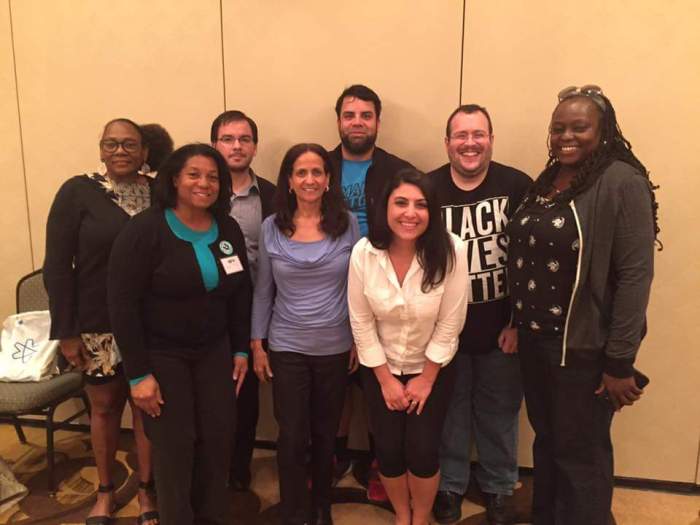
United Opt Out had just gone through a major reorganization on philosophical grounds. Only three of its long-time board members remain – Denisha Jones, Ruth Rodriguez and Ceresta Smith. They have since been joined by five new directors – Gus Morales, Zakary Rodriguez, Erika Strauss Chavarria, Deborah Anderson and Steven Singer (me).

The directors that left the group did so for various reasons, but some of them split along ideological lines. Some thought United Opt Out shouldn’t work with labor leaders or civil rights groups that weren’t perfectly aligned with all of UOO’s goals. So they left. Those who stayed are committed to working with almost anyone to push forward the cause, piece-by-piece if necessary.

As a result, this organization that had been growing by leaps and bounds, finds itself starting afresh. While last year’s conference in Philadelphia drew progressive luminaries like Chris Hedges, Jill Stein and Bill Ayers, this year’s gathering was more low key.

But it was far from somber. In fact, the board’s vision was vindicated in the most amazing way during the summit.

As Jesse “The Walking Man” Turner discussed the importance of reframing school policy to include students basic humanity, Gus looked up from his phone and announced, “The NAACP just ratified its moratorium on charter schools!”

We all stopped what we were doing and went to our phones and computers for verification. Denisha found it first and read the resolution in full.

We cheered, laughed and hugged each other.

This was exactly the kind of change we’ve been talking about! In fact, Julian Vasquez Heilig, education chair of the California and Hawaiian NAACP chapter, had originally been scheduled at the summit as a keynote speaker. When the resolution that he had been instrumental in crafting came up for a vote at the national NAACP meeting, he understandably had to cancel with us. Clearly he was needed elsewhere.

And now one of the largest civil rights organizations in the country has taken a strong stance on charter schools. Not only does the NAACP oppose charters as a solution to inequities experienced by children of color, they’ve now gone beyond mere ideology. They’re calling for action – no new charter schools.

It is a tremendous victory for parents, children and teachers everywhere. And a much needed win for civil rights and education activists. The civil rights community (including the Black Lives Matter movement) is starting to acknowledge that Brown vs. Board is right – we cannot have “separate but equal” school systems because when they’re separate, they’re rarely equal.

Let me be clear – UOO did not achieve this triumph alone. It took many people, some of whom probably have never heard of us. However, activists supporting our movement such as Julian were strongly involved.

And if we had listened to the naysayers who proposed only working with perfectly like-minded groups, this might never have happened.

As a national organization, the NAACP still supports standardized testing as necessary to hold schools accountable for teaching all students. But this was not always the case.

In October of 2014, there were 11 civil rights groups including the NAACP Legal Defense and Educational Fund (LDF) who wrote a letter to President Barack Obama asking him to reduce standardized testing.

Then in January of 2015, a full 19 Civil Rights organizations including the NAACP wrote to Congress asking lawmakers to preserve annual testing.

What changed in those three months?

All of these organizations accept huge donations from the corporate education reform industry including some of the richest people in the world like Bill Gates. While none of us were present at these decision making sessions, it seems clear that fear of losing their funding may have forced them to make hard compromises.

Should we then as education activists wipe our hands of them? Should we refuse to work with them on some issues because we disagree on others?

United Opt Out says no. We’ll work with almost anyone where we can, when we can. And the results were on display with the NAACP resolution calling for a charter school moratorium.

Perhaps now that we’ve found that common ground on school privatization, we can do the same with standardized testing. Perhaps we can help educate them about the history of this practice, how it was a product of the eugenics movement and has always been used to support white supremacy and keep people of color and the poor in their place.

If we can make that argument, think of the potential. Perhaps leadership at these big civil rights groups would be less willing to compromise if they understood that standardized testing was used to justify mass sterilizations of American citizens and it was greatly admired by the Nazis. Perhaps if they understood that our modern standardized assessments are little better and create a racial proficiency gap by their very design – maybe then threats from rich white philanthropists won’t seem as important. Perhaps if they understood that schools can best be held accountable by reference to the adequacy of the funding they receive and a detailed accounting of what they do with it, these organizations might be less inclined to rely on multiple choice testing.

In fact, this is why we were there together in Houston in the first place. We wanted to make our case to these same civil rights organizations.

They may not have sent their leaders, but their members were already here. And we spent the time working together to find ways to make our case.

It was really quite amazing.

Audrey Amerin-Breadsley, professor and author of the blog Vamboolzed, gave us an incredibly accessible and informative keynote on value-added measures (VAM), the practice of using students test scores as a way to evaluate their teachers. For instance, did you know this common practice was originally based on a model for the cattle industry? It’s junk science and has little relation to education, teachers and students. All it does is pit students and teachers against each other creating a culture of fear where educators can be unfairly fired at any time – not the best environment for learning. Yet ignorant, lazy and/or corrupt bureaucrats still champion it across the country as a solution to improving schools.

Sam Abrams, Director of the National Center for the Study of Privatization in Education (NCSPE) and an instructor at Columbia University, explained in minute detail how corporate education reform relies on bad statistics and is bad business. He explained how academics blinded by economics and unencumbered by any real-life experience of public schools came up with this scheme, which has been disproven by the facts again-and-again. Not only do the highest achieving countries such as Finland go a different route, but those that follow this market driven model find student achievement suffering. In short, our current education policies are really faith-based initiatives, a faith in the invisible hand of the market, and an ignorance of reality.

But perhaps most heartening was the series of talks given by the locals. Houston Federation of Teachers is one of the few labor unions to pass a resolution supporting parents rights to opt their children out of standardized testing. In fact, teachers and parents even run a free Opt Out Academy for children not taking the tests so that their education continues while their peers suffer through these useless assessments. We got to meet parent zero, the first parent to refuse testing in the district. We heard the community’s painstaking process of spreading the movement one family at a time. This was in effect an opt out cookbook, a how-to for anyone wishing to bring this social justice action to their own neighborhoods.

It was a weekend to give anyone hope.

We were small but we were powerful. Given a few years to rebuild, UOO could well be much stronger than we once were. Meanwhile parents across the country continue to refuse these tests for their children at an exponential rate.

There are many struggles ahead. But we have made real progress toward our goal of providing an excellent education for all children.

No longer can our governments be allowed to keep discriminating against them based on the color of their skin, their parents bank accounts and other factors. We’re standing for all students, because we don’t see them as consumers or data points. We see them as children, as human beings. And we stand together to protect and preserve that shared humanity.

What better way to spend a weekend?

What If Clinton and Trump Debated Education Policy?

bbxdrs0-img

The second Presidential debate was a bust for the millions of Americans who care about public schools.


Instead, we got Donald Trump mansplaining away his vagina-grabbing days. We got Hillary Clinton blaming Machiavellian duplicity on a movie about Abraham Lincoln. But not a word about K-12 education.


After all these debates in the primary and only one more debate left in the general, it seems a pattern is emerging. The media just doesn’t ask the kind of questions parents, teachers and students really care about. After all, there is no defined position staked out by each political party on schools and schooling. Both sides are kind of the same. Asking about it wouldn’t support the usual narratives about so-called “conservatives” and “liberals.”


So once again I appeal to the power of education bloggery to give you what I imagine a debate on this subject might sound like from Clinton and Trump.


Hold on to your pussies. Here goes…


Me: Thank you, Secretary Clinton and Mr. Trump, for being here today to talk about education issues.


Clinton: You’re very welcome.


Trump: (sniff) Yes. I am very glad to be here. No one cares more about education than me. Okay?


Clinton: Well, hold on there, Donald. I’ve spent my entire career fighting for kids and families…


Trump: (sniff. sniff.) What about the kids and families of Benghazi?


Me: O-kay! Let’s begin. Shall we? This question is for both of you. How would you describe your education vision? Mr. Trump, you won the coin toss, so you go first.


Trump: Thank you, Steven. And let me just say I have lots of education vision. My education vision is just tremendous. I think public schools are the most important thing in our country. The taxes we pay for them are just incredibly high. No one pays more taxes for schools than we do. Not the French. Not the Chinese. Not the Russians. And as President I would make America great again by cutting taxes on schools. The business community doesn’t need this. It hurts competition and that hurts education. And there are too many taxes for you regular people out there, too. Unlike my opponent, she’s just terrible. Isn’t she, folks? I’d cut taxes while she would raise them.


Me: Your time is up, Mr. Trump.


Trump: …and I just want to say this one last thing, Steven. Hillary Clinton is a liar. And I would never lie like her. Ask Bernie Sanders about that.


Me: Thank you, Mr. Trump. Secretary Clinton? Same question.


Clinton: Thank you, Steven. I want to take this opportunity to thank you, personally, for being here. As a country, we don’t appreciate teachers enough. You are our number one resource. And a renewable resource. Right? You can clap here, People. Ha! Ha! But seriously my vision for education is a strong one. I’ve fought for children and families all my life as First lady of Arkansas, as First Lady of the United States, as a U.S. Senator and as Secretary of State. You might say that I am the most qualified candidate for President in U.S. history.


Me: Thank you. Madame Secretary. Though I wish you had answered the question.


Clinton: Oh I will answer the question. That’s why I have been endorsed by the largest teachers unions in the country…


Me: Next question. Secretary Clinton, you mention your experience. Some have criticized you for putting the needs of Wall Street ahead of working families. How would you prioritize the needs of students and parents over the corporations and edu-tech industry?


Clinton: As you said, Steven, I’ve been around a long time. I’ve seen a thing or two. Like you, I’ve raised a daughter and know how to navigate the pitfalls of our education system. And, honestly, I don’t think we have to have a conflict of interests between business and education.


Trump: Crazy Bernie says differently.


Clinton: …I see our public schools and public charter schools working together hand-in-hand to provide our children with a world class education. You know my husband and I have long supported…


Trump: You should be in jail.


Clinton: Donald, I think this is my time. Is this my time, Steven?


Me: Yes, Mr. Trump. Please stop interrupting. You’ll have a chance to respond.


Trump: Sorry, Steven. I’m just not used to a woman talking for so long. It’s exhausting.


Clinton: Anyway, I’ve always been a booster for higher academic standards. And as President I would do everything I can to make sure our students get the best education possible.


Me: Mr. Trump. Same question.


Trump: What was that question again, Steven? I kind of forgot while I was listening to that long speech she just gave. Talk. Talk. Talk. This isn’t the Bengazhi commission, Hillary, but I wish it was. Trey Gowdy…


Me: Mr. Trump. The question was “How would you prioritize the needs of students and parents over the corporations and edu-tech industry?”


Trump: Students and parents? They’re just wonderful. We need more students, but I guess that’s where parents come in. That’s why I had so many kids, and they’re all so successful. We didn’t stop with just one. We raised one, two, three… a whole bunch of them. And they’re just tremendous. So I would definitely make sure their needs were being met. Their needs are my needs and so, of course, I would make sure they were being met. You know, perhaps she should have spent more time meeting her husbands needs. Do you know what I mean?


Me: Mr. Trump, the question was about corporations servicing public schools.


Trump: (sniff.) In that case, I’d service corporations. I believe in business. I’ve been a businessman all my life. Very successful. No one knows success like Trump. And I’ve just got to say we all might have been better off in the ‘90s if she had serviced her husband more. I have to tell you.


Me: You are disgusting.


Trump: (shrugs) This debate is rigged.


Me: The next question is for you, Mr. Trump. Whenever you’ve spoken out on education issues, you’ve consistently criticized Common Core. As President, what would you do about Common Core and what role do you think is appropriate for a President in setting national education policy?


Trump: Common Core? I’m against it. It’s no secret. I think it’s been just terrible. It’s been a disaster. A national disaster. And one of the first things I’d do – well the first thing I’d do is throw you in jail…


Clinton: Donald, I…


Trump: But after that I’d get rid of Common Core. There would be no more Common Core. Our kids don’t need Fed Ed. Period. They need more choice. Parents should get to pick the schools they send their kids to. We should stand back and let the parents choose. That’s what I did for Ivanka and my other children and they turned out just fine. Don’t you think they turned out fine, folks? You all saw them on my hit TV shows ‘The Apprentice’ and ‘Celebrity Apprentice.’ Those were great shows. Award-winning TV. Must See Television. Those were good days.


Me: Secretary Clinton. Same question.


Clinton: Thank you, Steven. I appreciate the quality of your questions. It’s clear that this debate has been put together by educators and not representatives of the media. Though I thoroughly support the field of journalism as a profession and a calling.


Trump: You never had a TV show.


Clinton: As to Common Core, I just want to ask Donald something.


Trump: (pops a Tic Tac) It’s surprising you’re going to give up your time to let me talk. I have to say. This is the first time you’ve let somebody else talk…


Clinton: How do you propose to get rid of Common Core when the Every Student Succeeds Act (ESSA) gives that power back to the states?


Trump: (sniff.) E-S-S-A? Never heard of it. I’ll have to ask Mike Pence about it. But the President can do what he wants. You know the old saying, folks: it’s good to be the king.


Clinton: You talk a good game about states rights, Donald, but when you propose getting rid of Common Core, you’re proposing a federal policy that takes away states rights. Every state legislature has the power to change academic standards or retain…


Me: Secretary Clinton, that may be true, but the question was meant for you. What would YOU do about Common Core as President?


Clinton: Nothing. I would respect the law.


Trump: THAT’S a first!


Clinton: I would encourage states to adopt high academic standards and if those standards were the same as Common Core then so be it.


Me: How would you encourage them? By withholding federal grant money like the Obama administration did?


Clinton: I… I think the federal government has a strong role to play in the education of our children. But I would not violate the spirit of the ESSA, unlike Donald. He says he’s for states rights but he calls for a bigger federal power grab than anything my party has ever participated in.


Trump: (sniff.) Wrong.


Me: Okay. Next question. Since we’re talking about the federal role in education, let me ask you both what role you see for the U.S. Department of Education under your administration and whom would you nominate as Education Secretary? Secretary Clinton. You go first.


Clinton: Thank you, Steven. As I said, I believe in the Department of Education. I believe in the Secretary of Education. I believe in teachers. And if we’re going to give our students a leg up – all of our students – then we need to strengthen our public schools and public charter schools. That’s where the Department of Education comes in. Not to enforce education policy but to set the agenda. It helps the states get things done through competitive grants, research and data collection.


Me: So whom would you nominate to head the department?


Clinton: I would have to talk about that with my advisors…


Me: Give us the shortlist.


Clinton: Perhaps someone like John King.


Me: John King!?


Clinton: He’s already there and as my daddy said, if it ain’t broke do not fix it.


Me: Mr. Trump. Same question. What in your opinion is the federal role in national education policy?


Trump: Well, Steven, I don’t think there is one. You know the government that governs best governs least. I learned that from my good friend, Gary Busey. You know? Come to think of it, he’d make a pretty good Secretary of Education, but no. One of the first things I would do is completely disband the Department of Education. On day one. Gone.


Me: So what would happen to Pell Grants, for example, and all the federal money that helps buoy our public schools?


Trump: Do we need it? I was able to raise my family without any help from the federal government.


Clinton: Unless you count your nine bankruptcies, and using loopholes to avoid paying any federal income taxes for over a decade at least.


Trump: I did it all on my own. My father gave me a loan but I made it pay out for me so I could build the Trump empire.


Me: Didn’t you inherit most of your money?


Trump: I’m surprised at you, Steven. I expect something like that from her. She’s bleeding from her… whatever. But you should know better. You think Americans are stupid. And I just think they are strong enough to do it on their own. They don’t need the government to help. We don’t need the regulation, the taxation. Parents can use state money to choose and that will be good enough. Let the free market decide.


Me: Okay. Next question. Standardized testing has come under fire for assessing children’s economic situation more than what they’ve learned. Would you continue to mandate annual testing for all public schools? Mr. Trump?


Trump: I dunno. I’ll have to ask Pence on this one.


Me: You have to ask your vice president what to think on standardized testing!?


Trump: Yes. I mean no. I’m not really sure. Could you make this one multiple choice?


Me: Secretary Clinton? Same question.


Clinton: Standardized testing has been an important part of how we hold school districts accountable. While I understand the concern about over-testing, I think it is important we keep testing our children in grades 3-8 and once in high school. It helps us make sure our schools are meeting all our students’ needs and not violating their civil rights. Many of my former colleagues in the Senate expressed the same concern you mention, Steven, but changed their minds when they were approached by various civil rights organizations…


Me: Many prominent civil rights organizations such as Journey for Justice and various chapters of the NAACP still oppose testing. Why do you chose to side with the organizations who are beholden to the testing industry for their funding?


Clinton: I think… maybe we can give the situation more study and find solutions that would satisfy both the civil rights organizations and testing critics. But it is imperative that schools are held accountable…


Me: What about politicians? Shouldn’t they be held accountable for adequately funding our public schools? That’s why schools struggle. They serve poor populations and don’t have the resources to help their kids excel.


Clinton: This is something you’re obviously passionate about. I have always listened to teachers and with the NEA and AFT would strive to work together to find a solution that’s mutually beneficial to everyone.


Me: Okay. Last question. Since you brought up civil rights, Secretary Clinton, one of the biggest issues facing our schools today is segregation. Many modern schools are as segregated or more segregated by race and socio-economic status than they were before Brown vs. Board. What would you do about that?


Clinton: That is a problem. We must make sure that all our students needs are being met. We cannot let our schools revert to old bad habits. We cannot have schools for blacks and schools for whites. Black lives matter – even when they’re in school. As President, I would make sure everyone had the opportunity to go to the best schools possible. Students who don’t get what they need at school end up on the streets. They feed the school-to-prison pipeline. They end up lost, and many of them become super-predators.


Trump: (laughs)


Me: Isn’t that the term you used as First Lady to describe black youth when your husband’s mandatory sentencing policies expanded our prison population exponentially?


Clinton: Yes and I stand by that statement. We need to help minorities rise above their circumstances. We need to give them a helping hand. They deserve all the same amenities my daughter had, because all lives matter…. Oh shit.


Me: Mr. Trump? Your response?


Trump: Do I have to?


Me: Yes.


Trump: Okay then. Let me just say that segregation is a bad thing. It’s terrible. I’m not exactly sure why but that’s what I’m hearing. We need to make sure only the best students get to go to the best schools and the worst students get their own schools, schools that are right for them. That’s why we need school choice to weed out the worst kids and let them go to the schools that are right for them.


Me: Isn’t that just segregation?


Trump: N…No. That was a really stupid thing to say. Too many people are just stupid today. That’s why I’m going to make America great again. We’re going to have the best schools. You won’t even believe it. They’ll be just the best anyone has ever seen. Okay?


Me: But they’ll be separate schools for blacks and whites? Rich and poor?


Trump: I’d like to pass, Steven.


Me: Okay. That’s all the time we have for today. I’d like to thank both candidates for coming…


Trump: Steven, I just want to say one last thing.


Me: O-kay.


Trump: I… uh… I never grabbed anyone’s pussy. That was just locker room talk.


Clinton: Oh please! It’s just that kind of talk that empowers rapists…


Me: Thank you both for coming…


Trump: Your husband certainly understands this, Hillary. Men like us with such big hands, we’ve never had any complaints. You know? Here let me show you. (reaches into pants.)


Me: Cut their microphones please. Call security on, Mr. Trump. Thank you, everyone, for coming. We’ll see you at the polls in November. Just remember, you picked these two assholes. We could have had Bernie Sanders but we’re left with these two tools. This is your democracy at work. We should have let Jill Stein in here to class up the joint. Oh well. Goodnight and good luck.


If I Were Secretary of Education – A Classroom Teacher’s Fantasy

thumbnail_fullsizerender

I will never be Secretary of Education.

Frankly, I’m just not qualified.

I’m only a classroom teacher. The powers that be don’t trust someone like me with that kind of responsibility. It’s okay to give me a roomful of impressionable children everyday, but there’s no confidence I can make sound policy decisions. For that we need someone with experience in management – not schools, pedagogy, children or psychology.

The presiding incumbent in this prestigious position, John King, somehow overcame that handicap. He had taught for three whole years at a charter school, but the bulk of his experience is in administration – administrating a Boston charter school with high suspension and attrition rates. He also was New York State Education Commissioner, where he single-handedly dismantled the state system of education and sparked one of the largest parental revolts in the nation in the state’s opt out movement.

The previous Secretary of Education, Arne Duncan, was much more qualified, having never taught a day in his life. Before getting Congressional approval, he was appointed to run a charter school and later was entrusted as CEO of Chicago City Schools where he likewise blundered his way to the top with policy decisions that devastated a great system of public education.

What do I have to offer compared to all that? I only have more than a decade’s worth of experience helping kids learn. I’m only one of 3% of teachers nationwide who are Nationally Board Certified. I’ve only earned a Masters degree in Education. I only help run a more than 56,000 member national education advocacy group, the Badass Teachers Association, and write a popular blog dedicated to education and civil rights.


I’ve never sunk a major metropolitan school. I’ve never been run out of a populous state chased by citizens armed with torches and pitchforks.

But let’s close our eyes and imagine that somehow through the magic of education bloggery I was whisked into office at the U.S. Department of Education.

What would a person like me do as Secretary?


1) Respect the Limits of the Job

Though George W. Bush and Barack Obama come from opposite ends of the political spectrum, these two Presidents did more to increase the powers of the Department of Education than any chief executives before them. They turned it into – as former Education Secretary Lamar Alexander puts it – a national school board with the Secretary was the national superintendent.

The department forced test and punishment policies on the states, cudgeled and bribed state officials to enact lousy Common Core Standards, and held federal grants hostage unless states accepted every corporate education reform scheme big business could think up.

Don’t get me wrong. I’m a New Deal Franklin D. Roosevelt Democrat, but even I think these two administrations blatantly abused their power and overstepped their Constitutional authority.

So the first thing I would do is take a step back and follow the law. The recently enacted Every Student Succeeds Act (ESSA) sets explicit limits on federal power over education policy returning much of it to the states. As Education Secretary, I would respect the power of the states to control public education. It is the state’s job to set policy. It is the federal government’s job to provide support, encouragement and oversight.

Therefore, the role of the Department of Education is to ensure public schools are being properly funded, civil rights are not being violated and to be a repository for national data and research. I’d dedicate myself to that – not some corporate fueled power trip that both parties condemn except when they’re practicing it.


2) Push for More Federal Funding for Public Schools

Therefore, the first thing I would do is use the full power of the office to ensure the federal government is giving its utmost to help state public schools. I would use whatever grants were available to increase federal funding to the most impoverished schools. I would fully fund Title I. I would increase the federal share of Special Education – (Under Part B of the Individuals with Disabilities Education Act (IDEA) the federal government is supposed to fund 40% of the per pupil cost of all special education students but has never met this obligation. I would seek to rectify that if possible.) I would enact a national after school tutoring initiative. I would provide funding to hire additional teachers to reduce class size.  And as far as is possible, I would forgive college students loan debt so they can begin their lives with a clean slate.

This is something that those who seek to disband the U.S. Department of Education never seem to understand. The federal government has an important role to play in our school systems. It’s not the unfounded power grab of the last few decades, but we need another robust player on the field to help the states achieve their goals and also to keep the states honest.

If we disbanded the Department of Education, as some conservatives from Reagan to Paul to Cruz to Trump suggest, what would happen to Pell Grants, for instance? What would happen to the bundles of federal money that boost our public schools? Who would make sure states are doing their jobs? Where could we go to find accurate data about how our schools are doing nationally and not just state-by-state?

If we got rid of the department, at best these jobs would fall back on other government agencies that haven’t the funding, staff or ability to accomplish them. More likely, it would result in the elimination of billions of education dollars that the states simply couldn’t (or wouldn’t) replace. Abuses against students on the grounds of civil rights, gender, special education, etc. would skyrocket with little to no recourse. And we would be in the dark about how well we were educating our nation’s children.


3) Encourage States to Enact Accountability Measures that Don’t Include Standardized Testing

Accountability has become a dirty word in many education circles because of the way the Bush and Obama administrations have perverted it to mean test and punish. It has become a boondoggle for the standardized testing industry, an excuse to close poorly funded and often urban public schools to be replaced by unaccountable charter schools. While this is a terrible misuse of federal power, states must be responsible for the education they provide their children. And contrary to popular belief, this can be accomplished without resorting to the usual corporate reform measures.

As Secretary, I would put an immediate stop to the era of test and punish at the federal level. As it stands, the ESSA allows states to determine what they will use to demonstrate their educational progress for students. This is a state decision, but I would encourage states not to use standardized testing. I would offer to help any state interested to find new ways to show accountability. For instance, districts could submit to a simple audit showing student-teacher ratios, per pupil funding, discipline data broken out by race, degree of segregation, richness of the curriculum, etc.

Let me be clear: it is up to states to make these decisions. As Secretary, I would have no power to force legislatures or departments of education to do any of this. However, I’m willing to bet that many states would be excited by these possibilities and jump at the opportunity. Helping them achieve this would be my job.


4) Stop Federal Funding to Charter Schools, Teach for America and Common Core

Speaking of encouragement, I would stop all federal help for corporate education reform policies. That means turning off the money faucet for programs that enrich corporations and big business at the expense of school children.

This means not one more federal dollar to help private companies open new charter schools. Teach for America would have to rely on its corporate donors, not the taxpayers. And the Common Core gravy train would come to a screeching halt. No more money to help states enact the standards, no more bags of cash for book publishers and test manufacturers.

If states that had enacted the Core wanted to keep it, fine. If not, fine. But they would be on their own.

(In a sad aside, opposition to Common Core is most virulent from conservatives, yet there are an awful lot of state legislatures completely in GOP control that could get rid of Common Core tomorrow but which have done – and continue to do – nothing about it. No matter who the next Education Secretary is, the fate of Common Core is in the hands of state legislatures across the country – not the President, not Congress and not the Education Secretary. There’s far too much rhetoric and not nearly enough action.)


5) Do Everything I Can to Increase Teacher Autonomy, Respect, Pay and Training

Finally, I would use my position as Education Secretary to boost the greatest resource we have to help students learn – teachers. I would speak out on the need for educators to have autonomy in the classroom so they are empowered to meet student needs. I would work to increase public perception and respect for the profession. We simply can’t afford teacher bashing, because when you disrespect educators, you reduce their power to help kids. I would boost teachers pay through matching state grants. If you want the best possible teachers, you have to pay for them. If you want to attract the best people to the field, you need to ensure they will have a reliable middle class income and not have to work a second job or use their own money to buy school supplies. I would invest federal funds in training programs so the newest crop of teachers are up to date with the latest pedagogy and techniques. I would encourage more people of color to enter the field. And I would partner with teachers unions to strengthen protections for teachers while educating the public on the meaning of due process and the reality that strong unions mean fewer bad teachers in the classroom.


Are there more things we need to do to help improve our national system of public education? Certainly.


We need to start integrating schools again and stop the constant push to segregate through charter schools and white flight. We need to ensure every student receives adequate, equitable, sustainable funding. We need to change charter school laws so that they can’t cherry pick students and are as transparent and accountable as traditional public schools. We need to stop closing struggling schools and address root causes. We need to stop state takeovers except under the most dire of circumstances and set limits on how long states can stay in control. And we need to pass strong student privacy laws – even updating the Family Education Privacy Act (FERPA) to protect our children from predatory ed-tech companies that constantly data mine students and sell millions of data points on our children to the highest bidder.

There are a whole host of things needing done. However, most of these things go beyond the powers of the Department of Education and its cabinet level Secretary. They can only be addressed by the President, Congress, state legislatures and/or the court system. The Education Department can help steer that agenda, it can be an ally to real positive change, but it can’t go it alone.

Unfortunately, no matter who wins the Presidency in November – Clinton or Trump – neither seems likely to nominate an Education Secretary who would do any of the things I’ve outlined.


For all his talk of reducing the size of the government, Trump proposes increasing the federal footprint with school choice initiatives turning the Department of Education into a wheelbarrow marked “free money” for big business and parochial schools while forcing states to accept his school policies. Meanwhile, Clinton is likely to continue the course set by Bush and Obama of embracing every corporate school reform package from which Wall Street benefits.

It’s a crazy time full of crazy candidates and crazy solutions, but of this we can be sure – no one is crazy enough to let a teacher make decisions about public education policy.

Former NFL Quarterback Supports Public Schools. That’s Right. PUBLIC Schools!

dictionary

So I’m in my classroom today, teaching, when I see something that stops me cold.

The door opens and in comes former Steelers backup quarterback Charlie Batch.

My mouth falls open. I don’t know what I was talking about. Vocabulary words or something.

The class of 8th graders falls silent, too. All eyes are on the two of us.

Batch looks me right in face with a big smile.

“Here you go,” he says and hands me a shopping bag full to bursting with school supplies and an extra-large tub of hand sanitizer.

By this time I’m probably blushing and grinning like my teeth are about to escape my face.

I hope I was able to mouth a “Thank you,” before he left, but I’m not really sure.

It all kind of happened in a daze.

He came. He gave me supplies. He left.

I guess I shouldn’t have been so taken by surprise.

Batch is a frequent face in my district. After all, he graduated from here, himself, before moving on to college and professional sports.

At the beginning of every year, Batch brings school supplies to every teacher in every building in the district. This was just the first time I was actually in the classroom when he dropped them off. Usually he sneaks in when I’m at lunch duty or in the computer lab. I find them in a neat pile on my desk with a note of thanks – to me!

It’s almost like he doesn’t want to draw attention to it. Almost like he doesn’t want to make us feel like we need to thank him.

It’s his quiet way of giving back to the community that made him.

In some ways it’s the most natural thing in the world. In others it’s truly amazing.

Lots of celebrities make charitable contributions to their communities. Many even put that money into their hometown. But how many invest in the public school system?

Most only seem to have eyes for charter schools. You know – those often cut rate, fly-by-night institutions that are privately managed and publicly funded. Schools that pop up in store fronts or in the mall with a celebrity name on the door and little else.

Rapper Pitbull has opened three of these dubious institutions. Pro-Football Hall-of-Famer Deion Sanders opened two – and closed them both last year. Tennis star Andre Agassi has founded a few and co-founded an organization that rents out properties to other charter schools at a profit. Former NBA players Jalen Rose and Kevin Johnson opened some, too, though Johnson is being investigated for misusing federal funds at his institutions. He likes the industry so much, he even married one of its chief advocates, former D.C. Schools chief Michelle Rhee.

But Charlie Batch? He hasn’t opened a single charter school.

There is no shiny building with his name on it. He hasn’t hired a corporate management team to increase his brand. He isn’t bragging in the newspaper about how he’s “Mr. Education” as Pitbull tried to rename himself.

No. He gives his money to the same public school from which he graduated. And then some!

He did start a charity called the Best of the Batch Foundation, which engages in several initiatives to help underprivileged children in the Pittsburgh region. The organization gives out free backpacks – or Batch Packs – to children in need. More than 7,500 have been distributed to date. About two thirds of my students have them. I can’t imagine what they’d do without them.

Batch also participates in Read Across America Day every March 2. The two-time Superbowl champ visits several western Pennsylvania schools to celebrate Dr. Seuss’ birthday while reading to children his favorite works by the author.

The project is sponsored by the National Education Association (NEA). That’s right. The largest teachers union in the nation. Batch isn’t throwing stones at teachers. He’s out there on the front lines helping us reach children.

In addition, every year Batch partners with the local Rotary Club to help promote literacy. He goes into the schools to read to third graders and give each one a free dictionary. Children also receive lessons how to use them and become word conscious. For some students, this is the only dictionary in their house, and it becomes a tool for all their brothers and sisters up through high school.

Batch also works with local business partners to provide 13 college scholarships to help defer the cost of higher education for needy children. Scholarships range from $1,000 to $8,000 per recipient.

Batch also knows the importance of pre-school. He works with local businesses to provide pre-kindergarten scholarships through the Educational Improvement Tax Credit (EITC) and Opportunity Scholarship Tax Credit (OSTC) programs.

And those bundles of school supplies that he hands out every year – each one contains more than $250 worth of pencils, paper, tissues, etc.

That’s not just a donation. It’s a pencil in the hand of a student who doesn’t have one. It’s notebook paper for a child whose parents are working three jobs just to make ends meet. It’s tissues and hand sanitizer so kids won’t get sick and miss class.

I can’t tell you how much it means to my students and me that Batch is there for us.

He knows what challenges we face because he’s there with us. He isn’t criticizing. He’s taking action.

If only more celebrities would value deeds more than words. If only more people would put themselves out there for our public schools.

If only more people were like Charlie Batch.


NOTE: Charlie Batch also donates school supplies to teachers at our local Propel Charter School. It’s a fact noted nowhere on the Batch Foundation Website. In fact, nowhere does he boast of all the schools he visits. In an age of philanthrocapitalists more concerned about controlling the fields where they donate, Batch is an anomaly. He is apolitical and pro-child.

Do Unions Belong in the Fight Against Corporate School Reform?

ct-chicago-teachers-rally-met-0610-20150609


In the fight for public education, the forces of standardization and privatization are running scared.


They’ve faced more pushback in the last few years – especially in the last few months – than in a decade.


The Opt Out movement increases exponentially every year. Teach for America is having trouble getting recruits. Pearson’s stock is plummeting. The NAACP and Black Lives Matter have both come out strongly against increasing charter schools.


So what’s a corporate education reformer to do?


Answer: Change the narrative.


They can’t control the facts, so instead they try to control the story being told about the facts.


It’s a classic propaganda technique. As Malcolm X put it:


“If you’re not careful, the newspapers will have you hating the people who are being oppressed, and loving the people who are doing the oppressing.”


Their story goes like this – yes, there is a battle going on over public education. But the two sides fighting aren’t who you think they are.


The fight for public schools isn’t between grassroots communities and well-funded AstroTurf organizations, they say. Despite the evidence of your eyes, the fight isn’t between charter school sycophants and standardized test companies, on the one hand, and parents, students and teachers on the other.


No. It’s actually between people who really care about children and those nasty, yucky unions.


It’s nonsense, of course. Pure spin.


They want you to believe that the corporate vultures preying on our public schools are really just misunderstood philanthropists. And those demanding a fair shake for their own children and communities are really just paid shills from a monolithic and uncaring bureaucracy.


In essence, they want you to believe two things:


1) Despite profiting off the system and zero evidence supporting the efficacy of corporate school policies, they’re motivated purely by empathy.


2) Unions are evil by definition and they pervert everything they touch.


I’m not going to bother with the first claim here. There is an inherent bias from those who wish to change the laws so they can more easily profit off of schools without actually helping students learn and in fact exist at the expense of that learning. If you can’t see through the propaganda wing of the Walmart corporation, the Broad Foundation and Big Daddy Bill Gates, you probably won’t be very receptive to anything else I have to say.


Instead I will focus on the second claim, because it is the more pernicious of the two.


Put simply, unions are not perfect, but they are not evil. In fact, they are essential to the health of public education.


Many progressives are upset with teachers unions because of the current Presidential election. Both the National Education Association (NEA) and the American Federation of Teachers (AFT) endorsed Hillary Clinton in the primary election without what many would consider adequately polling rank and file members. For better or worse, the endorsements were top-down affairs reflecting the preference of union leaders.


That’s not how unions are supposed to work. And it’s having consequences for the way both members and non-members view teachers unions.


Critics infer from this that unions don’t represent membership. They are de facto arms of the waiting Clinton administration and the neoliberal agenda.


There may be some truth to this, but it does not represent the whole picture. Not nearly.


Unions are like any other democratic organization. The larger the association, the further from the grassroots the decision making body.


In the mammoth national unions, decisions are made by representatives most removed from our schools. They probably were teachers or support staff at some point in the past, but that may be ancient history. Now they are professional leaders and therefore at a remove from the grassroots.


By contrast, in our local chapters, leaders are most often working classroom teachers. Decisions are made by those still meeting students’ needs on a day-to-day basis. As such, they retain an authenticity and expertise that may be more cloudy in the large bureaucracies.


This isn’t to say the national unions are by definition unconcerned with the needs of teachers and students. I’m sure that most of the NEA and AFT leadership who decided to endorse Clinton did it because they honestly believe doing so will help public education. And – who knows – they may be right. But what they forgot in this case was the democratic process they were tasked with preserving. As such, they may have to pay a price for their hubris when their terms are up.


In most cases, the leaders of national teachers unions are at too much of a remove to see what is best for our schools. And they usually know that. It is up to the rank and file to tell them what to do, and that’s what happens every year at representative assemblies through various caucuses made up of work-a-day members. And if leaders overstep their authority it is members’ duty to hold them accountable at election time.


So even though the national organizations are most likely to go astray, they often don’t. Usually even these giants are trying to improve the situation in our public schools.


However, it can’t be denied that the most intense and passionate activism happens a bit closer to where the rubber hits the road. It’s those local chapters that are there everyday and make the most difference. They are the heart and soul of unionism.


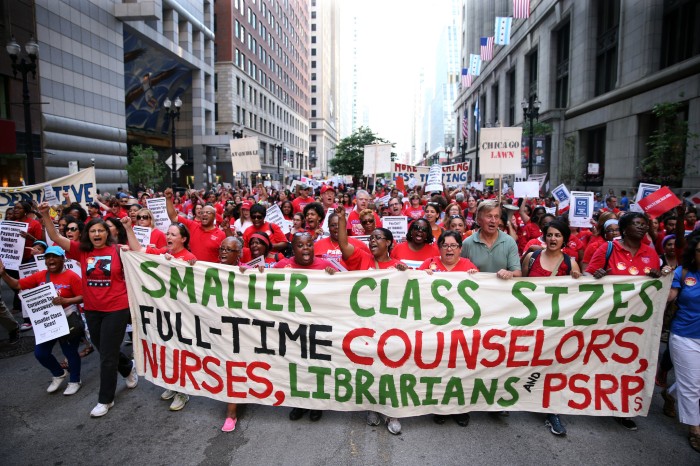
So when corporate education reformers sneeringly deprecate their opponents as mere unions, they’re glossing over an important distinction. Opposition to privatization and standardization policies doesn’t come from the leadership of the NEA and AFT. It comes from the grassroots. This is not a top down initiative. It is bottom up.


This is how it’s always been. There is no political organization directing the fight to save public education. The Democrats certainly aren’t overly concerned with reigning in charter schools. It was grassroots Democrats – some of whom are also union members – who worked to rewrite the party platform to do so. The Clinton campaign is not directing anyone to opt out of standardized testing. However, voters are demanding that Clinton be receptive to their needs – and some of them are union members.


There is no great union conspiracy to fight these policies. It’s called public opinion, and it’s changing.


That’s what scares the standardizers and privatizers. They’ve had free run of the store for almost two decades and now the public is waking up.


They’re desperately trying to paint this as a union movement when it’s not. Unions are involved, but they aren’t alone. And moreover, their involvement is not necessarily an impediment.


The needs of the community and the needs of teachers are the same.


Both want excellent public schools.


Both want the best for our students.


Both want academic policies that will help students learn – not help corporations cash in.


And both groups want good teachers in the classroom – not bad ones!


The biggest lie to have resonated with the public is this notion that teachers unions are only concerned with shielding bad teachers from justice. This is demonstrably untrue.


Unions fight to make sure teachers get due process, but they also fight to make sure bad teachers are shown the door.


In fact, in districts with strong unions, MORE bad teachers are fired – not less, according to a new study by economics Prof. Eunice Han from the University of Utah.


The study entitled The Myth of Unions’ Overprotection of Bad Teachers concludes that when unions are strong and successfully bargain for higher salaries, they have an incentive to help ensure ineffective teachers don’t receive tenure. In short, it costs too much to keep bad teachers on staff. It is in the interests of the collective bargaining unit to ensure those unfit to teach move along.


Moreover, Han also concludes that strong unions actually help reduce the dropout rate. It just makes sense. When you treat people like the professionals they are, when you give them autonomy and respect, they’re free to concentrate more energy into their jobs than fighting to keep those jobs.


But unions stand in direct opposition to the efforts of corporate vultures trying to swoop in and profit off of public education. Teachers provide a valuable service to students. If your goal is to reduce the cost of that service no matter how much that reduces its value to students, you need a weak labor force. You need the ability to reduce salary so you can claim the savings as profit.


THAT’S why corporate education reformers hate teachers and their unions. We make it nearly impossible to swipe school budgets into their own pockets.


So do unions belong in the fight against corporate education reform?


Answer: Heck yeah! In fact, they are essential to it.


We Are All Chicago Schools – More Layoffs, Less Help for Other People’s Kids

ct-rahm-emanuel-forrest-claypool-private-schools-20160505


“Fuck those kids.”


Mayor Rahm Emanuel couldn’t have been clearer if he’d said the above.


Chicago Schools Chief Executive Forrest Claypool couldn’t have made his priorities clearer if he’d given Chicago’s parents the bird and told them to “Kiss my ass.”


The Chicago Board of Education – made up of members all of whom are appointed by the mayor – decided to layoff 1,000 teachers and staff at the city’s public schools just a month before opening day. Sure, some may keep their jobs through reassignment, but hundreds will be unemployed.


This after a recent history of closing more than 80 schools and slashing thousands of jobs. Just last February, the district laid off 62 employees, including 17 teachers. In January, it laid off 227 staff members.


This begs several questions: How many teachers and support staff can Chicago Public Schools afford to lose? What exactly is this doing to its students? How is it affecting their future prospects to be taught by a skeleton crew?


The city’s leaders don’t give a shit.


And why should they? These aren’t their kids!


Emanuel’s children attend University of Chicago’s Laboratory Schools, a private institution. Claypool’s kids go to Francis W. Parker, a private school in Lincoln Park. Even Gov. Bruce Rauner’s six kids don’t go to public school. They’re all grown.


So this doesn’t affect them. Nor does it affect any charter school kids. Not a single one of these 1,000 cuts will occur at a city charter school.


It’s just the traditional public schools, those schools where approximately 85% of students are Latino or African-American. Just those schools where 87% of the children come from low-income homes. Just those schools where 12% of kids are reported to have limited English proficiency.


Yeah. Fuck those kids.


And the worst part is that it’s not necessary. Chicago doesn’t have to continue to abandon its neediest children.


When you’re in a family, you make sacrifices for your kids. If funds are tight, you make cuts elsewhere or maybe you even take another job. Anything to make sure you’re providing your children with the best.


But Chicago’s leaders aren’t interested in doing any of that for these kids because they just don’t care.


Otherwise they could find the money. The teachers union suggests declaring a TIF surplus and reinstating a corporate head tax. The city isn’t exactly a wasteland. Wealthy developers are looking to build yet Emanuel has no intention of inconveniencing them by making them pay a fair share of taxes. Instead, the full burden falls on the city’s working families. And he calls himself a Democrat!


There’s always enough money for projects leaders care about. For instance, there was no problem finding $250,000 to pay a law firm where Claypool and his handpicked general counsel, Ron Marmer, both formerly worked. Marmer still has financial ties to the firm! So cut a check to Jenner & Block LLP? YES! Ensure kids have all the teachers they need? HECK NO!


Strangely there’s $27 million hiding in the seat cushions to open a new charter school for the University of Chicago. The Woodlawn Campus of the University of Chicago Charter School will be part of the development around the newly-planned Obama Library. It’s a fitting symbol of the President’s legacy – a brand new privatized educational facility while a few blocks away traditional public schools molder in ruin.


Meanwhile, Gov. Rauner holds the state education budget hostage. Illinois lawmakers could only agree on a 6-month state budget in June. Republicans expressed concern about the state being responsible for bailing out Chicago Schools. It’s not our problem, they seem to think. Well of course not. These aren’t your kids.


It’s the same swindle we see throughout the country. Refuse to pay for public schools – especially the schools serving poor brown kids, and then shrug. “Look at the impasse,” they shout, hoping voters are too stupid to realize it’s an impasse created by these lawmakers, themselves! It’s a textbook disaster capitalism move, approved by the American Legislative Exchange Council (ALEC) and other conservative think tanks. But Rauner can at least be forgiven for being a proud Republican. This is, after all, the behavior progressives expect from GOP lawmakers.


What about Democrats like Emanuel? This isn’t the way progressives are supposed to act. They aren’t supposed to favor privatization over public schools. They aren’t supposed to fawn on big business and promise tax cuts, tax shelters, and every other kind of tax avoidance.


Some might say it’s just Emanuel. After all, for a Democrat he sure pals around with a lot of conservatives. He and Rauner are best buddies. When Emanuel earned his fortune, he was an investment banker, and one of his best clients was Rauner. They go out to dinner and even spend vacations together. Sure they occasionally criticize each other in public, but behind closed doors the ideological differences just melt away.


What about the rest of the Democrats? Surely they don’t agree with Emanuel’s tactics. They made sure to keep him away from the Democratic National Convention – out of sight, out of mind.


But if the party is really so opposed to these policies, where is the condemnation from party leaders?


I haven’t heard a peep from the Democratic nominee for President, Hillary Clinton, about these layoffs. Have you? She’s the de facto leader of the party and she’s got nothing to say about this. What does that tell you about her priorities?


Sure she’s cozied up to the two biggest national teachers unions who liked her so much they didn’t even need to consult the rank and file before endorsing her in the primary. Ronald Reagan had the support of the Professional Air Traffic Controllers Organization (PATCO) right up until he declared their strike illegal and demanded they return to work. Will Clinton, too, turn against union teachers once she’s used them for their vote in November?


But you know what? Forget Hillary. Where’s Bill? Where’s Tim Kaine? Where’s Barack and Michelle Obama? Where’s Joe Biden? Where’s Al Franken? Where’s Cory Booker?


We have to get beyond labels like Republicans and Democrats, liberals and conservatives. Almost all of them are neoliberals. They all believe essentially the same things.


And as proof I offer the deafening silence offered against Emanuel in Chicago.


He’s hurting school children.


But no one in power gives a fuck.

The Agony of Being a First Time Undecided Voter

Screen Shot 2016-07-27 at 4.20.26 PM


Is there anyone else out there like me?


I’ve never been an undecided voter before. I’ve always known early which candidate I’m supporting and why.


But this election has my head spinning. One minute I’m ready to vote for Hillary Clinton to stop Donald Trump. The next I can’t live with myself if I do that and am willing to vote for Green Party candidate Jill Stein even though she has very little chance of winning.


And so on back-and-forth, hour-to-hour. The only thing I’m certain of is that I will never EVER vote for Trump.


Is there anyone else out there like me?


This seems to be the new reality.


I’d rather have Hillary as President than Trump, but I’d rather have another option than either one.


It’s agonizing. I can’t sleep. I toss and turn.


I hop into bed thinking I’ll just vote Hillary and then wake up passed midnight feeling disgusted with myself. I say I’ll vote Stein and go back to bed only to wake up an hour later with grave doubts about letting Trump win and how he’ll destroy the fabric of the country.


Those of you who have made up your minds, be thankful. You have a certainty many of us do not share.


Almost half of registered Democrats voted for Bernie Sanders in the Primary. You need us. And now that Hillary Clinton is the nominee, we have to decide – What do we do now?


These seems to be our options:


1) Vote Donald Trump. Let the nation burn. Let him deport 11 million people and build a wall to keep others out. Embolden all our hidden racists, xenophobes, sexists, homophobes and narcissists. Watch the economy take a nosedive just like many of his businesses did into chapter 11. Watch the Russians laugh it up as the US enters a period of isolationism and cedes power to strongmen across the globe.


No. That’s just not acceptable to me.


2) Vote Hillary Clinton. Defeat Trump but champion all of the neoliberal policies you fought against in the primary. Vote for a supporter of the prison industrial complex. Vote for a war hawk. Vote for someone who may do some good but will almost certainly support the TPP, someone who will continue to giveaway our national wealth to big business while doing very little to help the middle class. Watch as our schools are privatized, de-unionized and closed.


That’s a bitter pill to swallow.


3) Vote Jill Stein. Support a candidate who embodies all the progressive values you fought for during the primary. Vote for action against climate change. Vote to forgive all student debt. Vote to destroy corporate education reform. Vote against unnecessary wars of choice. But have very little chance of any of these policies actually being enacted. And increase the chances of a Trump Presidency. After all, she probably won’t even be on the ballot in some states! How can you win if you aren’t an actual choice!?


That’s hard to accept, too.


4) Don’t Vote for President. Vote for progressives on down ticket races but leave the presidential race blank or maybe even write in Bernie’s name. Send a message that you won’t accept the two-party system. But again increase the chances of President Trump and really who is going to be paying attention to this highly symbolic gesture? What will it get you really?


No. Not acceptable.


These seem to be most of the options. I’m certainly not going to vote Libertarian or for one of the other third party candidates.


So which is the best option?


Damned if I know.


I go back and forth between Hill and Jill.


My biggest problem with Dr. Stein is that there just doesn’t seem to be a clear path to victory. No one other than George Washington has ever won a third party bid for President. Even Ralph Nader who got millions of votes ended up not winning a single district or a single electoral vote.


I’m also disturbed by talk among Green Party members, even Stein herself, saying it doesn’t matter if they win. They just want to have a good showing. They just want to increase the power of the Green Party for the next election cycle and show the establishment that they aren’t to be taken lightly.


I’m all for that, but a Trump Presidency is too high a price to pay for it.


If Jill Stein could provide a clear and believable path to victory, I would vote for her in a second. I would campaign. I would do everything I could to help her win. But as it stands this isn’t even a Hail Mary. It’s not like throwing the ball from one end of the field to the other hoping for a touchdown. It’s like throwing the ball from the parking lot, from the highway, from a neighboring state!


However, voting for Clinton is repugnant.


She represents everything I want to change about American politics. She is the establishment, the status quo.


The best argument in her favor is that she’s not Donald Trump. Voting for her lets us survive as a nation for four more years. Things will be bad but manageable.


As a public school teacher, under Clinton I can expect more support for charter schools, more standardized tests, more corporate school reform. But under Trump it will probably be worse. He is the founder of Trump University, after all. He doesn’t just support school privatization. He actually started a privatized school – if you can call it that. And he doesn’t want just charter schools – he wants vouchers.


Pragmatically, I’d rather have Clinton. But morally it feels like a betrayal of all my ideals.


And that doesn’t even take into account how terrible the Democratic National Commission conducted the primary.


The recent leak of private emails from the DNC paints a picture of favoritism. The party unequivocally worked with the media against Sanders. (And, no, it doesn’t matter so much who leaked these emails and why, if they’re authentic.)


Add to that the widespread allegations of voter suppression in the primary match-up between Clinton and Sanders. In districts that leaned Bernie, voters had to face long lines. Voters registrations were mysteriously changed or they were purged from the rolls so they couldn’t vote for him. Bernie rallies were held in over-packed stadiums while Hillary’s were in much smaller venues – yet the results in these areas somehow favored Clinton. Exit polls consistently showed Bernie winning but the actual votes somehow went to Hillary. Meanwhile the media falsely painted the picture of Clinton inevitability even calling the election for her before all the votes were in.


It is hard to prove that all this subterfuge was enough to sway the election against Bernie. Maybe it was, maybe it wasn’t. However, it is naive to think it didn’t help Hillary to some extent. Maybe quite a lot.


And after all that, I’m supposed to vote for her!? How? The party didn’t support my right to vote unless it was for the establishment choice. But now I’m supposed to actively help these same people gain more power!?


Please excuse me if I find that difficult.


So there we are. I just can’t decide. And I would venture to guess there are many more out there just like me.


To those who have decided one way or another, I’d like to offer some advice when dealing with the rest of us:


1) Don’t call us names. I’ve been called delusional, privileged, sexist, stupid, ridiculous, etc. And may I say that it doesn’t help convince any of us to be ridiculed? In fact, it actually turns us further away from your point of view. And it shows you to be somewhat hysterical. The right choice is by no means obvious.


2)Lay off the scare tactics. If you want to convince someone not to vote for Trump, by all means talk about how terrible he would be as President. If you want to convince someone to vote for Hillary, the horror stories won’t cut it. We need more than that. I’m sure Hillary Clinton has positives. Lead with those. Give us good reasons to vote for her and not just against her opponent.


3) If you want us to vote Green, tell us how Stein can win. We don’t want purely symbolic victories. We need to defeat Trump. Don’t regale us with how screwed up the system is. We already know that. Tell us how voting Green will help reverse it.


Have patience with us. Being undecided is not a comfortable position to be in.


We’re all in this together. We all want the same things. It’s just we don’t all agree how to achieve them.

Why the Rich Need Racists: Prejudice as Social Control

Screen Shot 2016-07-17 at 1.55.00 AM

HELP WANTED: RACISTS
Anywhere, USA

-Must have an irrational fear and hatred of all things African American.

-Must honestly believe black people get all the breaks, have it easier than whites.

-Must believe black people are naturally inferior to whites, lazy, prone to criminality, less intelligent, etc.

-Must believe racism ended with either (1) the civil rights movement or (2) slavery.

But must hide these beliefs under a thin veneer of civility. For instance:

-must never use the N-word (in public)

-must never beat or kill a black person (unless on the police force)

-must never light a burning cross on a black person’s lawn (and get caught)

-must never tweet or express these views publicly in a way that can be traced back to you.

Enjoyment of rap music, black culture or black sexual partners optional. Fox News viewership preferred.

Bonus pay if racism is unrecognized by the applicant.

No experience necessary. Apply within.”


If you saw an advertisement like the above posted in your local shop window, it really wouldn’t be so surprising. Would it?


Well maybe because of its bluntness. But it’s not really that different from campaign fliers for Republican Presidential candidate Donald Trump vowing to “Make America Great Again!”


Throughout its history, when exactly was America great for black and brown people who have been denied equal rights? When was it great for women or LGBTs or a host of other non-cis/non-male/non-white people?


A pledge to make America great again is just a pledge to make America white again – or at least to propel male whiteness back to the center of normativity.


(In fact, much of what I’m going to say about racism here could also be said of all kinds of prejudice. But for the interest of clarity, I’ll try to contain myself to focusing on racism, though I acknowledge the high degree of intersectionality of the phenomena.)


Yep. A lot of folks are riled up because the flower of white male privilege is wilting, and they think too many are suggesting we let it die.


What can they do? White people’s only remaining claim on supremacy is based on a fleeting numerical majority that is fast coming to an end. Soon they’ll be outnumbered.


They’re so mad about even an incremental loss of white power, they’re willing to blind themselves to obvious injustices against people of color.


For instance, black people are killed by the police at twice the rate of white people. Unarmed black people are killed at five times the rate. Yet somehow it’s black folk’s own doggone fault.


What if he has a legal weapon, but it’s not anywhere in use? HIS FAULT.


What if he has no weapon? HIS FAULT.


What if he’s just a child? HIS FAULT.


What if it’s a woman mysteriously found hanged in her prison cell with no possible motive for suicide? HER FAULT.


What if he’s screaming in pain from an injury sustained in the police encounter? HIS FAULT.


What if he’s complaining on video that police are choking him and he dies as a result of those injuries? HIS FAULT.


I mean come on, people! How does a brotha’ got to die before white folks will admit to some culpability by police?

 
And that’s just one type of example. Consider: There are more black people in prison today than were slaves before the Emancipation Proclamation. Black people get harsher prison sentences than whites for the exact same crimes. Black people are segregated into poor communities with underfunded schools. People with black-sounding names are less likely to get a job than white counterparts with the same experience.


And on-and-on-and-on.


Yet you’ll find white apologists everywhere who will see no evil, hear no evil, and speak no evil of the racial caste system under which their black brothers and sisters are forced to live. They refuse to acknowledge it, get angry when you bring it up and will actively support it at the polls.


That’s racism, people.


It’s 2016. Legal slavery ended more than 150 years ago in this country. The civil rights movement ended more than 60 years ago. Why do we still have systematic racism baked into the fabric of America?


In 1963, the African American writer James Baldwin asked the same question. He said:


“The future of the Negro in this country is precisely as bright or as dark as the future of the country. It is entirely up to the American people, and our representatives, it is entirely up to the American people whether or not they’re going to face and deal with and embrace the stranger who they’ve maligned for so long. What white people have to do is try to find out in their own hearts why it was necessary to have the n****r in the first place. I am not a n****r. I am a man. But if you think I’m a n****r, it means you need it… You, the white people, invented him, and you have to find out why. And the future of the country depends on that.”


Why do white people need racism?


Today we have an answer. The short version would be this: because it’s useful.


It serves a function in society.


When people conceptualize each other into these highly dubious and unjustifiable categories of black and white, it provides a valuable service to the status quo. In fact, we couldn’t have the status quo without it.


When historians look back at the ancient Spartan empire of 900 -192 BC, there is little confusion why their society was so highly militarized. Few historians wonder why such a small population organized themselves into a military state. They needed to control the vast network of slaves dispersed throughout their community. The conquerors were massively outnumbered by the conquered so they resorted to militarized fear to keep their social structure intact. They weren’t afraid of invaders from without. They were afraid of invaders from within.


Likewise, if humanity survives our current moment in time, historians of the future will undoubtedly be in agreement about the reasons for American racism. It’s the same reason found in ancient Sparta. We need it to keep our society together.

 
In America today, the top one percent own more than the bottom 90 percent. The richest 85 people have as much wealth as the bottom half of the country. And it’s only getting worse.


A country with such vast wealth inequality cannot survive without a scapegoat – black people. The majority of the population would not let the top one percent gorge themselves on our riches unless they had distracted us with something.


Don’t pay any attention to the Wall Street bailout. Look at those welfare queens, which is code for black people sucking away our wealth.


Don’t pay attention to the overt militarization of the police force. Look at those violent black criminals they have to deal with by pulling their service pistols and shooting them into submission.


Don’t pay attention to the inequitable distribution of education funding to your public schools. Look at how these black kids don’t pull up their pants, and if they manage to graduate, they’re given undeserved preference over more qualified white people through affirmative action.


Think about it. Why do we have a sizable black population in the first place?


Slavery. The very presence of a substantial black population is attributable to market forces. We needed a cheap workforce for our agricultural industry – especially tobacco and cotton. It was a labor intensive process and the only way to make a substantial profit at it was immoral thrift. And you can’t get much cheaper than forced, generational servitude.


Why weren’t black people treated equally after the Civil War?


We still needed that cheap workforce. The wealth of our nation depended on it. We needed legal ways to keep them subjugated. We needed to keep them on the farm or in prison so the economic engine of agriculture could continue unabated. If they all had the right to vote or could protest their conditions, that would hurt the bottom line. They’d gain freedom, but we’d lose money. Not gonna’ happen.


Why didn’t equality come after the civil rights movement?


Agricultural mechanization had decreased the need for cheap labor, but having an underclass is profitable for whoever can take advantage of them. The invisible hand of the market will preserve human subjugation for as long as it can and as long as it turns a profit.


Moreover, throughout the entire history of this country, the rich have needed something to keep white labor in check, too. Fair wages, overtime pay, child labor laws, vacation pay, workplace safety – all of these rights had to be fought for tooth and nail – usually by the most demonized of social institutions, the labor unions. We needed something to stop the rising tide of economic fairness. Giving white workers someone to kick around made them more satisfied with their own lot in life and less willing to fight for a larger share of the pie.


It went something like this: You may have to work in the factory all day, but at least you aren’t one of THEM. You might be bone tired while the bosses get rich off of your labor, but at least you can feel proud of your race.


What an amazing swindle! The rich have actually convinced many hard-working white people to feel proud of the pigmentation of their skin! No. Not their cultural heritage. Not the struggle of their moms and dads, their ties to a homeland across the sea, their religion or ethnicity. No. The color of their skins!


If intelligent aliens ever crossed light years of space and time to investigate the intellect of human beings, that one fact would have them rushing back home shaking their tentacles and multiple heads in disbelief!


Just look at how racism has been used to justify the actions of the wealthy throughout history!


Europeans discover a New World in 1492 full of riches to plunder and exploit. But how do you justify doing that when it’s already populated? How can you do that morally? After all, doesn’t our God command we love our neighbors as ourselves? Isn’t murder and theft a… gulp… sin?


Well obviously the indigenous peoples don’t count. They’re not like us. They’re not Christians. They’re heathens.


But wait a minute! The church is forcing them to adopt our religion. This justification has a sell-by date. It won’t last long enough for us to suck every drop of wealth out of the Americas.


So we came up with a new way to dehumanize people – racism. It’s not just that they’re heathens. They’re subhuman, too. FWEW! Problem solved.


Then comes 1776. The American colonies revolt and write up some high minded language about all men being equal. If we actually believed that, it would necessitate a new social order. Much easier to find new justifications for the old one.


Well we already agreed the Native Americans are naturally inferior. These African slaves we stole are likewise beneath our high ideals. The same with women. And the poor. And immigrants. And homosexuals. And whoever else we need to subjugate. They just don’t count.


When idealism and capitalism have come into conflict, the rich have invariably chosen capitalism. And when the rest of us choose racism, prejudice, sexism, xenophobia and homophobia, we’re doing them a favor. We’re backing up their interests.


Stop being such chumps, white people!


A racist is invariably a traitor to his own class. A sexist is a sycophant to the smart set. A xenophobe is a diversion to the hands buried in your pocket robbing you blind.
Your interests have much more in common with all those people you’ve been taught to hate. You could be coming together in common cause with all those black and brown people. You could be rising up and demanding your due. We could join together and demand a fair shake, an equitable piece of our gross national product.


But instead we are content to protect an ever shrinking share of our national wealth if we can just keep that ridiculous and childish pride in our lack of melanin.


During the same interview, Baldwin was asked if he thought there was any hope America would change it’s ways. He said:


“I can’t be a pessimist because I’m alive. To be a pessimist means that you have agreed that human life is an academic matter, so I’m forced to be an optimist. I’m forced to believe that we can survive whatever we must survive.”


I agree.


It’s all up to us, white people.


Racism doesn’t serve us. It subjugates us just like it does everyone else.


They throw us a bone and we jealously guard it like its a prime cut of steak.


When are we going to wake up? When are we going to put away hate and choose love?


When are we going to join our brothers and sisters in the struggle and demand what’s ours?


The rich may need racists, but we don’t.