Burning Down the House at TEDxCCSU – Speaking Truth to Power with a BOOM!

31265515_10157264415409018_6319846807568384_n


There’s a reason our society rarely hands teachers the microphone.

We’ll tell you the truth.

Oh, we’re too good mannered to be brazen about it. We’d rather encourage you for trying than criticize you for getting something wrong.

But if you ask us for truth, that’s usually what you’ll get.

Just ask any first grader.

“Is my finger painting good, Miss Pebbles?”

“Oh my, it is!”

“Really?”

“Why yes. I love what you did with that smear of yellow and blue in the corner. Where they overlap, it turns green.”

“Do you think it’s good enough to compete against the seniors in the high school?”

“Maybe you’d better practice a bit more, Dear. At least wait until you can spell your name correctly before devoting your life to art.”

That’s why I was so delighted to get an invitation to do a TED talk.

Here was my chance to tell it like it is.

Sure, some people look to TED for encouragement and life affirming inspiration.

But the way I see it, the only real affirmation is honesty.

Otherwise, it’s just a bromide, a deception, an intellectual hard candy to plop into your skull and let your cranium suck on until all the sugar is gone.

We’ve all seen these TED talks on YouTube or the Internet – some well-dressed dude or dudette standing in front of a crowd with a headset microphone and a grin offering anecdotes and words of wisdom to a theater full of eager listeners.

But after hundreds of thousands of talks in scores of countries, the format has almost become a parody of itself. At many of these events, you’re just as likely to find some Silicon Valley tech millionaire waxing philosophic about his casual Friday’s management style as you are to hear something truly novel.

No, the way I see it, the TED extravaganzas are just asking for a bundle of truth wrapped in a plain brown box – quiet, unassuming and ticking!

For me, doing one was a long time coming.

The first I heard about it was at United Opt Out’s Education and Civil Rights Summit in Houston, Texas, two years ago.

I was rooming with Jesse “The Walking Man” Turner – an education professor at Central Connecticut University and famed social justice activist. He’s been involved with everyone from Moral Monday’s to S.O.S. Save Our Schools. But he’s most well-known for walking from Hartford to Washington, DC, to protest school privatization and standardization  – a feat he did not once, but twice!

Anyway, one night as I was fading into sleep, he whispered to me from across the room, “Steve, you ever thought about doing a TED talk?”

“Huh? Whas tha, Jesse?”

“A TED talk. You ever thought about doing one?”

“Oh I don’t know. That would be pretty cool, I guess.”

“I organize an independent TED event at my school every year. We should get you on the schedule.”

And that was it.

I think. If there was any more to that conversation my conscious mind wasn’t involved in it.

But then the following year I got a call from Jesse asking if I was ready to come to Connecticut.

I wasn’t. I’d just had two mild heart attacks and wasn’t in a condition to go anywhere. I could barely gather the strength to go to school and teach my classes.

What followed was a year of recovery.

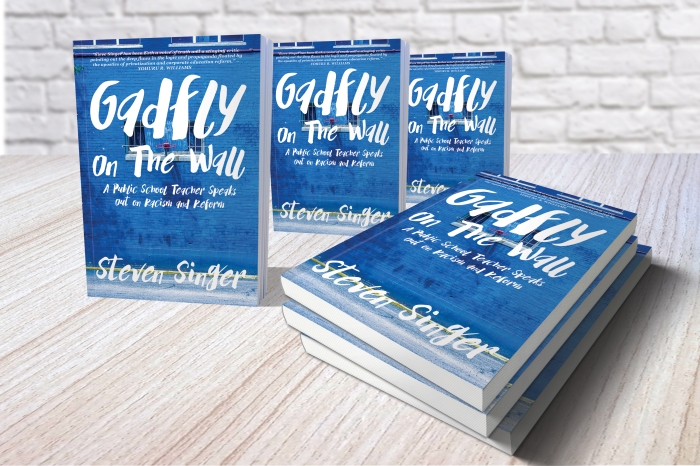
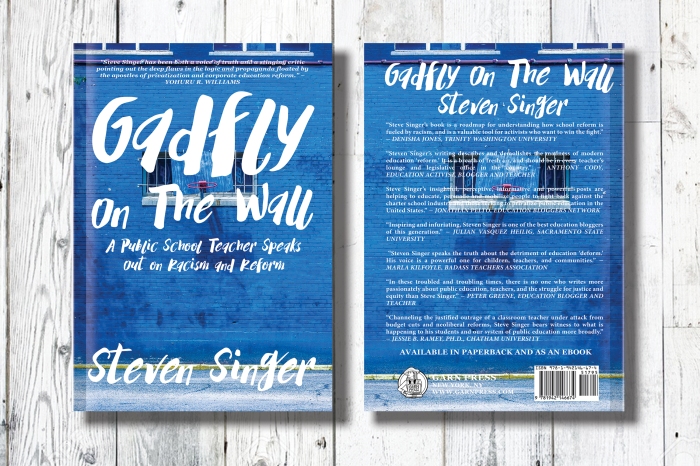
I dedicated myself to my students and my blog and made it through the year. In the summer, I put together my favorite on-line articles into a book for Garn Press – “Gadfly on the Wall: A Public School Teacher Speaks Out on Racism and Reform.”

After it was published in November, I worked to promote it, going from event-to-event, book store-to-book store lecturing, signing, and listening. I was even invited to Chatham College to address their graduating class of teaching students.

Then another surprise. I was one of three educators in western Pennsylvania nominated for a Champions of Learning Award in Teaching from the Consortium for Public Education. In the final analysis, I didn’t end up winning the award, but it was a huge honor.

And then to top it all off, Jesse called me back and asked me if I was ready to come to Hartford and give the TED talk another try.

I jumped on it.

How could I say no?

This year has been like a second chance, a new lease on life. I’ve been eating healthier, exercising, losing weight and taking nothing for granted.

But that comes with certain responsibilities.

I couldn’t go there and just mouth platitudes and self-help advice. I couldn’t just tell some touchy-feely stories from my classroom and conclude about how great it is to be a teacher.

Even though it is great – the best job in the world.

But our profession is under attack.
Public schools are being targeted for destruction. The powers that be are using segregation, targeted disinvestment and standardized testing to destabilize public schools and replace them with privatized ones.

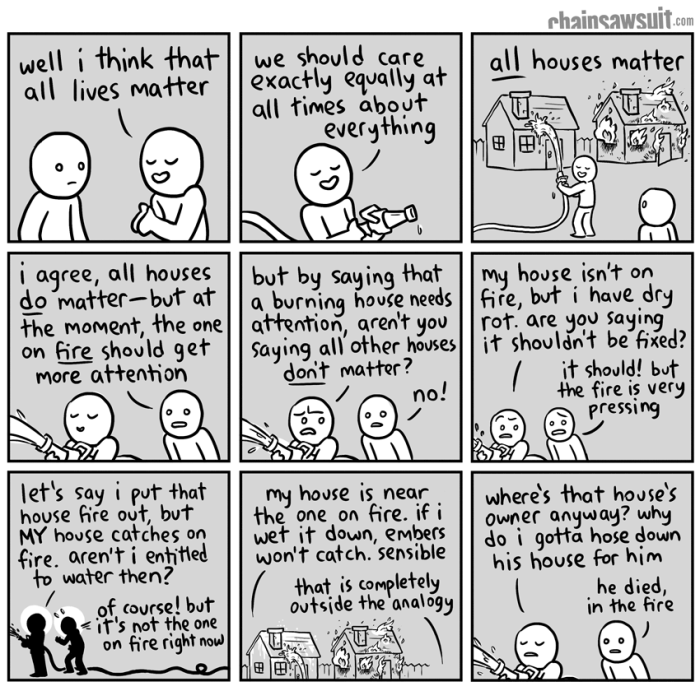
The school house is on fire! This is no time for heart-warming stories. It’s time for anger, agitation and activism!

So that’s what I decided to speak about.

Frankly, that wasn’t what I originally planned.

At first, I was going to talk about how society expects too much of teachers – how we expect educators to do it all.

But then the opportunity came to “practice” my speech in front of my entire school building.

I thought to myself, is THIS really what I want to talk about?

If I only get one shot at this – and I probably will get only one shot – do I really want to spend it on society’s unfair expectations?

That’s when I scrapped what I had and started over, this time focusing on “The Plot to Destroy Public Education.”

I must have rewritten my presentation at least five times.

Jesse said I’d have no more than 15 minutes so I practiced just about every night to make sure I was within that time.

The word may have gotten out around my school because the invitation to speak to the entire building quickly evaporated. Maybe there really was a scheduling mix up. Maybe not.

But it didn’t matter. My presentation was ready like a bomb – no hand holding, no concessions, just the truth.

The weeks flew by.

Before I knew it, it was time to fly to Connecticut. I couldn’t believe it was really happening.

When I got there, Jesse picked me up from the airport. He was a consummate host. He couldn’t have treated me better if I was royalty. He paid for my hotel, paid for most meals, drove me everywhere, kept me in good company and entertainment and even gave me a “Walking Man” mug as a token of his appreciation.

I was the only person flying in from outside of the Hartford area. Most of the other seven speakers were from there or had roots in the community.

All but two others were PhDs. The list of names, vocations and stories were impressive. Dr. Dorthy Shaw, a famed education and women’s studies professor, talked about surviving cancer. Dr. Noel Casiano, a sociologist, criminal justice expert and marriage counselor, told a heartbreaking personal story about the three people who mentored him from troubled teen to successful adult. Dr. Kurt Love, a CCSU professor focusing on social justice and education, talked about the greed underlying our economic and social problems. Dr. Barry Sponder, another CCSU professor focusing on technology in education, talked about flipped classrooms. Dr. Johnny Eric Williams, a sociology professor, talked about the myth of whiteness and how it corrupts how we speak about race.

Elsa Jones and her son Brian Nance were the only other non-PhDs. Jones is an early education consultant and the daughter of the Rev. Dr. William Augustus Jones, Jr., a famed civil rights leader who worked with Dr. Martin Luther King, Jr.

They were the ones I bonded with the most. All four of us went out for pizza after the talks.

But when I first entered the Welte Auditorium in the Central Connecticut State University campus, it was truly frightening.

The building could hold hundreds, perhaps thousands of people. Yet organizers had limited the audience to only a hundred. All the seats were up on the stage.

There was a little circular rug where we were to stand and the camera people were setting everything up.

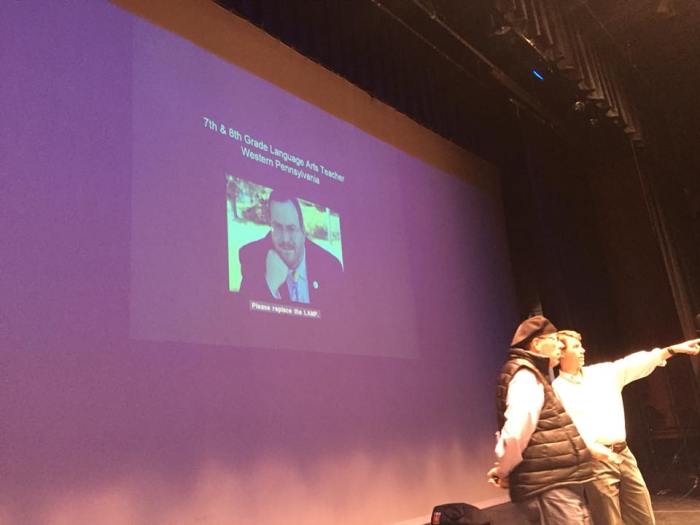
Behind us, a ceiling high blue-purple backdrop would showcase the TED logo and any slides we had prepared.
31392968_10155840677638860_1951634311957953781_n

Which brings up an interesting distinction.

This was not a corporate TED event organized by the TED conference and sanctioned by their foundation. It was a TED “X” event, which means it was independently organized.

TED licenses its name for these grassroots X-events. There are a list of rules that organizers must follow. For example, all tickets to the event must be free. Contrast that with the corporate TED events where tickets go for thousands of dollars.

I was glad I was where I was. This was going to be the real deal – a thoughtful discussion of authentic issues. And somehow I was up there with these incredible thinkers and activists.

The moment came. Drs. Shaw and Casiano had already spoken. I got up from my seat in the front row to get my lapel microphone attached.

Jesse gave me a warm introduction letting everyone in on the secret of my tie – the design was a picture of my daughter repeated to infinity.

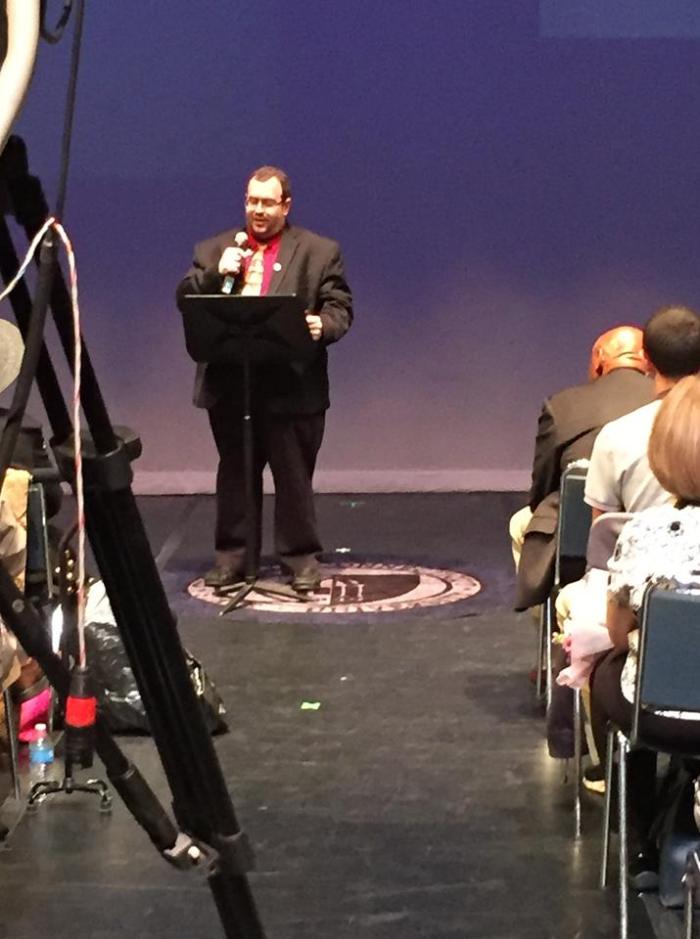
So I walked to my mark and started speaking.

It seems there was some sort of technical difficulty with the microphone. My voice didn’t appear to be coming from the speakers – or if it was, it wasn’t projecting very well. So I spoke louder.

Then Jesse came from the wings and gave me a hand mic and a music stand for my notes.

It took a moment to get used to handling the microphone, the clicker for my slides and my iPad (where I had my notes), but I got the hang of it.

And I was off and running.

I said it. I said it all.

The audience certainly didn’t seem bored. All eyes were on me. A few heads were nodding in agreement. Some faces seemed stunned.

When I ended, there was universal applause. A few folks patted me on the back when I got back to my seat and shook my hand.

And that was it.

I thoroughly enjoyed the remaining presentations but it was hard to concentrate in the post-TED elation.

Jones and Nance were probably the closest to what I was talking about and we got along like we’d known each other for years.

When I got back to the hotel, I felt elation and exhaustion in equal measure.

I had done it.

After months, years of planning, it was over.

Jesse tells me the video will be on-line in a matter of weeks. (I’ll revise this post with the video when it goes live.) Though he did mention that one point in my presentation made him a bit nervous – I had called out Bill Gates for his role in the destruction of public schools. However, Gates is a big donor to TEDs. Jesse half-jokingly said that the TED folks might take issue with that and refuse to upload my speech.

But whatever. I told the truth. If that gets me censored, so be it.

This will be something I’ll never forget.

I’m sorry this article has gone on so long, but there was much to tell. It’s not every day that someone like me gets such a stage and such a potential audience.

Hopefully, my video and my speech will be seen by many people who have never heard of this fight before. Hopefully it will open minds and stoke people to act.

And hopefully the mic issues at the opening won’t be distracting.

Thank you for following my blog and being there with me on this incredible journey.

I left nothing important unsaid. I gave it my all.

Now to see where it goes.


The video is available on YouTUBE and directly on the TED Website.


Kiss My Assessment – A High Stakes Testing Poem

1*ek7Qa4T4-jUcRA2QOZG8Xg


Double, Double, test and trouble;

Standards stern so fill in that bubble.


Little Laquan, Empty belly

Reading passages by Maichiavelli

Does he know what the author thinks

Last night did he get forty winks

Drive-by shooting in his neighborhood

Answer questions that he should

Interrogated by the cops

Took away and locked his pops

Now he sits slumped in school

Testing, testing, it’s a rule

Will he – this time – make the grade

A debt to society he has paid


For being poor and his black skin

Success and riches, let me in!

But not unless you answer right

Like wealthy kids whose hue is white

Not two plus two or three and four

Context implied when you ask for

European culture and white society

If you know it, you’re in propriety

If not, take a longer road

Hurdles to jump and words to decode


But do not label the test unfair

Rich folks will blast you with hot air

Testing makes them bundles of billions

Leaching off of us civilians

Test prep, grading and remediation

Never mind that it keeps you in your station

Need new books, here’s Common Core

So big corporations can make some more

Money off your starving schools

The funding is drying up in pools


As politicians vote to gut

So they can give bankers another tax cut

Hotels and yachts and Maltese vacations

Touring havens in other nations

To hide their money and avoid paying

Anything to keep preying

On little kids and their moms

So long as they aren’t forced to pay alms


No nurses, no librarians, no psychologists

Nothing to feed a tummy or an esophagus

No fancy buildings, no small class sizes

Nothing to match the suburban enterprises

Fewer resources, fewer tutors,

Crumbling classrooms, archaic computers

Just give them tests as charity

And pretend it means populace parity

When he fails, we’ll blame Laquan

Fire his teacher and make her move on


Close his school and open a charter

And then his services we can barter

To turn his funding into profit

Democracy melts like warm chocolate

Private boards get public voice

Deciding who to enroll and calling it choice

Spending tax money behind closed doors

Filling classrooms with Americorps

Instructors who never earned a degree

But cheap trumps any pedigree

For teachers to teach the darkest of humans

As long as they don’t form any pesky unions

Reformers they’re called, really just hypocrites

Wolves with sheep skin in their identity kits


They might refuse to come out of the closet

But don’t burn this humble prophet

Who tells you the truth about high stakes tests

About the school system and the unholy mess

We’ve made for kids so hedge funders

Can bark and rave and push for blunders

To make money off of kids misery

And a better world – not for you, not for me.

Am I obsessed and distressed by oppressive divestment?

Oh who cares? Kiss my assessment!


Double, Double, test and trouble;

Standards stern so fill in that bubble.


NOTE: I wrote this poem during and after proctoring this year’s PSSA test for my 7th grade students. Can’t imagine where the inspiration came from! I’ll just say that the opposite of standardized testing has always seemed to be poetry. I hope you enjoyed my verses.  It was either that or spit curses!


Like this post? I’ve written a book, “Gadfly on the Wall: A Public School Teacher Speaks Out on Racism and Reform,” now available from Garn Press. Ten percent of the proceeds go to the Badass Teachers Association. Check it out!

book-2

With Education Such a Low Priority in America, It’s No Wonder The Holocaust is Fading From Memory

web1_PSD052916Holocaust4-2


The Holocaust has never been more relevant than it is today.


Racism and prejudice are on the rise. Hate crimes are becoming more common. Anti-immigrant sentiment is becoming more widespread.


And anti-Semitic incidents have increased by 57 percent in the past year, according to the Anti-Defamation League.


Yet just last week, a comprehensive study of Holocaust awareness was released concluding that Americans are forgetting this vital chapter of our history.


After more than 1,350 interviews, Schoen Consulting found that 11 percent of U.S. adults and more than one-fifth of millennials either haven’t heard of the European Holocaust or aren’t sure what it is.


From 1933-1945, approximately 12 million people – 6 million of whom were Jews – were systematically put to death by Nazi forces.


However, even many of those who admitted to having some knowledge of these events were unsure about the specifics. For instance, one third of respondents – and 41% of millennials – said that only 2 million people were killed.


This is unacceptable.


But not unexpected.


Not in a country that has made education such a low priority for decades.


Only a handful of states mandate Holocaust curriculum in schools – Florida, Illinois, New Jersey, California, Michigan, Indiana, New York and Rhode Island – and each one does so to varying degrees of detail.


Other states like Pennsylvania have laws strongly encouraging the teaching of the Holocaust but not requiring it outright.


Wasn’t this why 42 states adopted Common Core – to make sure all students were learning the same things?


Well, first of all those standards were only adopted in English and Math. Social studies standards were far too controversial to make it over the partisan divide.


Moreover, Common Core has actually been an impediment to Holocaust studies, not a help.


A principal in Delaware refused to let a concentration camp survivor speak to students because he didn’t think it was rigorous enough under Common Core.


Another district tried to encourage critical thinking by asking students if the Holocaust was true or if it had been exaggerated – as if proven facts were up for debate.


Additionally, the reading standards push for texts to be taught as if they were standardized test items without proper context for a robust understanding. Combine that with an emphasis on texts that are exceedingly complex and it’s no wonder that young people’s understanding of this important part of history is fuzzy.


And I write this as an educator who taught the Holocaust in middle school for more than a decade.


The first thing I did was throw those corporate-written standards in the trash.


My 8th graders and I watched various award-winning documentaries such as “Auschwitz: If You Cried, You Died.” We read the play version of “The Diary of Anne Frank,” but supplemented it with various interviews and autobiographical articles from concentration camp survivors and even a presentation from community members who had first-hand experience of these events until their age and health made that impossible.


The whole unit culminated in a trip to the Holocaust Museum in Washington, DC.


Unfortunately, this does not appear to be the norm.


Though America students make up one third of the 1.7 million visitors to the National Holocaust Museum, 80 percent of Americans say they have never visited any Holocaust museum.


I get it. Teaching about this is hard.


It’s ugly and scary and repulsive – but it’s meant to be.


The DC National Holocaust Memorial  recommends the following guidelines for teaching about the European Holocaust:


“Be sensitive to appropriate written and audiovisual content. One of the primary concerns of educators teaching the history of the Holocaust is how to present horrific images in a sensitive and appropriate manner. Graphic material should be used judiciously and only to the extent necessary to achieve the objective of the lesson. You should remind yourself that each student and each class is different and that what seems appropriate for one may not be appropriate for all . . . Some students may be so appalled by the images of brutality and mass murder that they are discouraged from studying the subject further. Others may become fascinated in a more voyeuristic fashion, subordinating further critical analysis of the history to the superficial titillation of looking at images of starvation, disfigurement, and death . . . There is also a tendency among students to glorify power, even when it is used to kill innocent people. Many teachers indicated that their students are intrigued and, in some cases, intellectually seduced by the symbols of power that pervaded Nazi propaganda (e.g., the swastika and/or Nazi flags, regalia, slogans, rituals, and music). Rather than highlight the trappings of Nazi power, you should ask your students to evaluate how such elements are used by governments (including our own) to build, protect, and mobilize a society. Students should also be encouraged to contemplate how such elements can be abused and manipulated by governments to implement and legitimize acts of terror and even genocide.”


That’s what I tried to do.


This is the first year that I’m not explicitly teaching the Holocaust – and the only reason is because I’m not teaching 8th grade, I’m teaching 7th.


It’s not in my curriculum.


However, I know my students will get it when they advance to the next grade.


I wish that were true everywhere.


Unfortunately, a deep knowledge of history does not come from a society obsessed with standardization and privatization.


In fact, our policy of high stakes testing is an artifact of the eugenicist movement that inspired the Nazis. Our privatization movement is a holdover from the white flight reactionaries trying to circumvent the integration of Brown vs. Board.


We don’t do a comprehensive job teaching the Holocaust because we haven’t, as a society, learned its lessons.


We don’t teach the consequences of the European Holocaust because we haven’t come to terms with the consequences of our own American varieties. We haven’t acknowledged the effects of Europeans conquest and genocide of Native Americans, the slave trade, Jim Crow, Japanese internment or the prison industrial complex.


To teach the Holocaust we must take a step toward understanding where we, as a nation, have engaged in similar practices.


These are lessons vital to our survival and progress.


And that is exactly why it hasn’t been made a priority. It is exactly why we don’t have equitable education for all children in America.


Doing so would upset the status quo.


Doing so would be troublesome to the powers that be who use a racial and economic caste system to keep us all in line.


Understanding the Holocaust prevents us from reliving it.


And the people in power want to keep that door unequivocally open.


Like this post? I’ve written a book, “Gadfly on the Wall: A Public School Teacher Speaks Out on Racism and Reform,” now available from Garn Press. Ten percent of the proceeds go to the Badass Teachers Association. Check it out!

book-1

In Trump’s America, You No Longer Need to Pretend to be Against School Segregation

34f90d59-7c40-4530-84dc-bddbcc1c652d-9624969d


School segregation is kind of like war.


When asked point blank, no one wants to admit to liking it.


To paraphrase Motown singer songwriter Edwin Starr:


“Segregation. Huh, Good God.


What is it good for?


Absolutely nothing.”


However, when it comes to supporting actual integration programs or even just education policies that don’t make segregation worse, no one in politics really gives a crap.


Both Republicans and Democrats are heavily invested in ways to divide up school students along racial and economic lines – whether they be charter and voucher schools or strategic disinvestment in the public schools that serve the poor and minorities and hording resources for wealthy whites.


That’s why it’s somewhat shocking to hear the outrage over Trump judicial nominee Wendy Vitter.


Trump nominated the extremely partisan justice for a federal judgeship in Louisiana. Yet during a Senate hearing Wednesday, Vitter refused to answer a question from Sen. Richard Blumenthal (D-Conn.) about whether or not she believed the Supreme Court was right in its landmark 1954 decision, Brown v. Board of Education.


The decision overturned the excuse that we could educate white and black people in different facilities so long as they were “separate but equal.” In effect, it said that when we educate the races separately, their schools will never be equal.


And Vitter couldn’t bring herself to affirm this ruling.


“If I start commenting on ‘I agree with this case’ or don’t agree with this case,’ I think we get into a slippery slope,” she said.


“I don’t mean to be coy, but I think I get into a difficult area when I start commenting on Supreme Court decisions which are correctly decided and which I may disagree with,” Vitter said.


She added that the ruling was “binding” and that she would uphold it if confirmed as a judge.


And there we have it, people.


That’s where the bar is set during the Trump administration.


You no longer need to pretend to be against school segregation.


On the one hand, it’s more honest than most people in the political arena.


On the other, how far have we sunk when you don’t even need to feign decency in order to expect having a chance of Congress confirming you?


Let me be clear. Vitter’s nomination should not be approved.


Congress should draw a line in the sand and say that it cannot accept people who do not share bedrock American values on the bench.


If you aren’t in favor of integration, you have no place making decisions about race, class and education.


And that is the barest minimum.


That is merely decorum.


It’s like having the decency to condemn Nazis – something else Trump can’t bring himself to do.


What actually happens to Vitter will probably be determined by the degree of backlash against her.


As of Thursday afternoon, the video clip of Vitter’s comments about Brown V. Board had more than 1.7 million views, and was retweeted over 13,000 times.


A few months ago, another Trump judicial nominee, Matthew Petersen, withdrew from consideration after a video in which he couldn’t answer basic legal questions went viral.


But even if this reprehensible person who has no right sitting in judgement over anything more taxing than a checkbook gets turned away from the bench, we’ll still be far from where we need to be on school segregation.


Despite Brown vs. Board, many of our schools today are more segregated – not less – than they were in the 1960s.


And instead of putting on our big boy pants and tackling the issue, we’ve gone in the opposite direction.


On both sides of the aisle, lawmakers support charter schools. Republicans and a few Democrats support school vouchers. And just about everyone is fine with the fact that our public schools serve vastly disproportionate racial and economic populations yet rely on local tax revenues for funding and thus are inequitably resourced.


In every case, these policies make segregation worse. Yet hardly anyone in the halls of power or in the media even admits it is happening.


At most, you get a news story every anniversary of Brown v. Board about the increased segregation and a journalistic shrug. Well, we don’t know how to solve that one…


Yes, we do!


We need to integrate – not segregate.


We need to end school privatization.


We need to redraw district boundaries.


We need to audit school policies that keep the races apart within districts by building or by class.


And we need robust, equitable funding that can’t be manipulated to favor wealthy white kids.


That will take a lot more moral courage than partisan outrage against Vitter.


Oh, she deserves outrage, but because of her lack of morality, not her political party.


This can no longer be about if your political football team is in power or not.


It has to be about what’s right and wrong.


Caring about integration should be part of what it means to be an American – like freedom, justice and apple pie.


If it isn’t, we have a lot worse problems than one reprehensible would-be judge.


Like this post? I’ve written a book, “Gadfly on the Wall: A Public School Teacher Speaks Out on Racism and Reform,” now available from Garn Press. Ten percent of the proceeds go to the Badass Teachers Association. Check it out!

book-4

I Stand With Striking Teachers Because I Stand for Underprivileged Children

teacherstrike


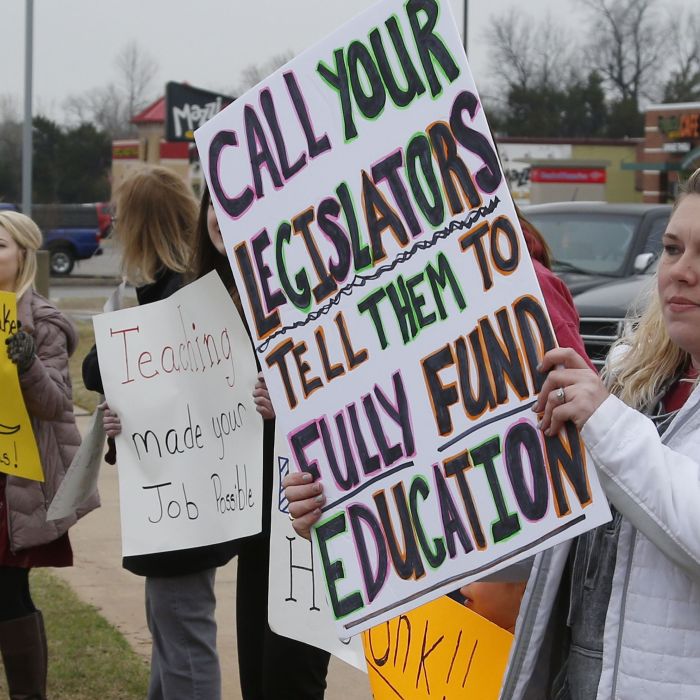
America’s teachers are taking to the streets by the thousands.


In West Virginia, Oklahoma, Kentucky and soon to be Arizona and Puerto Rico, educators are leaving the classroom and storming their state capitals.


Why?


Not because they’re greedy. Not because they don’t want to do their job. But because this country doesn’t care enough to provide them the resources they need to do it.


America doesn’t care about black and brown children.


America doesn’t care about poor white children.


America only cares about middle class and wealthy kids, preferably if their skin has a melanin deficit.


Don’t believe me?


Just look at how much these states have cut education funding. Look at how the federal government has slashed financial assistance. Look at how districts are forced to increasingly rely on local tax revenues to pay for the kind of education their children receive.


This means poor kids get poor resources. This means minority kids have to do without.


For the dark and the destitute, this means larger class sizes, out of date text books, and narrowed curriculum. It means fewer tutors, reading specialists and librarians. It means being left to your own devices to deal with the effects of generational poverty which put them behind their wealthier, lighter peers before they even enter kindergarten. It means greater emotional disturbance, greater malnutrition, higher absences, more learning disabilities, and less help to deal with any of it.


On the other hand, for the economically privileged white kids, it means just the opposite – fewer social problems, and the best of everything to deal with whatever issues they have.


It’s an unfair system, and teachers aren’t having it. We’ve been sounding the alarm for years, but it has fallen on deaf ears.


We don’t want to strike, but lawmakers are giving us no choice.


We’re saying, Enough! We’ve had it with the excuses.


Society hires us to do a job – let us do it.


Don’t refuse us the money to get it done and then blame us for the results.


That’s why there was a 9-day teachers strike in West Virginia which won educators a 5% raise in February.


That’s why 30 districts closed in Kentucky this week after a statewide sick out inspired by the legislature’s plan to cut pension benefits.


That’s why thousands of teachers in Oklahoma walked out this week demanding higher wages and better school funding.


And it’s why educators in Arizona, Puerto Rico and other states and territories may be next.


When you deny teachers the basics necessary to do their jobs, you’re refusing your responsibilities toward children.


When you deny educators a fair wage, you’re discouraging young people from entering the profession and encouraging those already there to seek work elsewhere.


And that is what we’re talking about here – a fair wage. We’re not talking about teachers getting rich off the taxpayers dole. You’re asking us to get an advanced education and do a hard job – that requires a middle class income so we can pay off our student loans and support our families.


The same goes for pensions. When teachers took their jobs, a fair pension was part of the contract. You promised that after 30-some years, educators could retire and you’d take care of them. You can’t renege on that. And if you plan to offer less for those coming in to the field, you’re going to get fewer high quality teachers willing to take the job.


When you attack unions and union benefits, you’re really attacking students. A teacher who can be fired at the whim of an administrator or school director is not as affective at her job. She has less autonomy and freedom to do what is right for her given students. And she has less reason to take a chance on the profession in the first place.


This doesn’t mean that after three years teachers should have a job for life. They don’t. It just means that if you’re going to fire a teacher for negligence, you should have to prove she’s negligent first.


This is why there’s a so-called teacher shortage in most states. As a society, we’ve become less-and-less willing to pay for teachers to do their jobs. We’ve become less-and-less willing to offer them the independence and respect necessary to get things done.


Why?


Because we’ve swallowed a pack of lies from the business community.


Many of them look at our public schools and see an opportunity for financial gain.


School funding may not be enough to give every one of the 50.7 million students in public school a first class education, but it’s more than enough to make a cabal of entrepreneurs and corporate officers rich.


That’s why they’re pushing charter schools and voucher schools and standardized tests and edtech software scams.


They want to get rid of democratic rule, get rid of teacher-based assessments and – ultimately – get rid of teachers. They want to replace us with minimum wage temps and leave the work of educating to computers that can provide test prep and standardized assessments.


But only for the poor and minorities. The affluent and middle class white kids will still get the best money can buy. It’s only those other kids they’re willing to feed to the wolves of edu-profit.


THAT is what educators are fighting.


THAT is why teachers across the nation are striking.


We’re demanding this nation does right by its public school students.


And that begins by supporting their teachers.

636581911709771782-AP-Teacher-Walkout-Taxes


Like this post? I’ve written a book, “Gadfly on the Wall: A Public School Teacher Speaks Out on Racism and Reform,” now available from Garn Press. Ten percent of the proceeds go to the Badass Teachers Association. Check it out!

book-3

Don’t Let School Lockdown Drills Become the New Normal

kidslockdown_0


I got an interesting phone call the other day from my daughter’s elementary school.


The counselor warned me that my little one’s class would conduct a lockdown drill – the first the kids had ever experienced.


With everything in the news about school shootings and the gun debate, the superintendent and principals thought they should prepare for the worst, even though they doubted anything like that would actually happen here.


The counselor just wanted me to be aware what was happening and to prepare my daughter for it so she wouldn’t be scared.


I thanked her for the call, and went in the other room to speak to my 9-year-old sweetie.


She was hunkered on the floor drawing pictures of her toys.


Mario and Luigi were chasing a purple Yoshi. Captain America was playing soccer with Wonder Woman. That kind of thing.


I opened my mouth — and my throat closed up.


I couldn’t do it. I didn’t want to do it.


What would I say? —-Hey, Honeybunches. You’re going to have a lockdown drill at school tomorrow. Your class is going to prepare in case a gunman breaks in and tries to murder you.


She was staring at me now, Mario’s hat half colored in.


So I put on my teacher’s cap and explained everything that would happen, but not why.


She was completely unfazed.


“That’s all? Can I go back to coloring now?” she asked.


I nodded.


I didn’t want to make a big deal of it, but I wondered how she’d react. This was a girl who in kindergarten had cried at the violence of a fire alarm.


So the next day came and went – no mention from her about what had happened at school.


She wasn’t traumatized. She was her usual self – frustrated at her homework, bargaining for a snack, writing an autobiography of her soccer career that would start next fall when she signs up.


I waited a week and then asked her about what had happened.


In the most matter of fact voice, she told me how her third grade class had stood away from the door, clustered in one corner of the room holding books.


“Why books?” I asked, thinking that maybe the drill had gone on too long so they had something to read.


She said they were to throw at a bad guy if he sneaked into the room.


I imagined a gunman in my daughter’s classroom trying to spray the children with bullets only to be met by a hail of tossed books – Dr. Seuss vs. Smith & Wesson.


Then I envisioned her teacher pulling out a revolver and returning fire through the swarm of terrified elementary school bodies darting back and forth.


The shock must have shown on my face.


“Don’t worry, Daddy,” she said. “No one broke in.”


As usual, children do better with this stuff than adults.


But the reason why is exceedingly troubling.


They are still forming their concept of normality.


When I went to school, we never had lockdown drills. We had monthly fire drills and the occasional severe weather drill. But we never prepared for crazed murderers and terrorists. That just wasn’t in our routine or even our conception of what a school should do.


Yet it is now routine for my daughter. It is typical for most children these days.


As a teacher in a neighboring district, I had to preside over my own first lockdown drill with my 7th graders a few weeks earlier.


We clustered in a corner on the floor – the door locked, the lights off.


My class of rambunctious teens who rarely seem able to do anything without a constant stream of words was nearly silent.


The worst part was how I felt trying to downplay what we were doing.


Nothing to see here, kids. Just an ordinary day pretending to hide in a corner so a killer would pass us by.


And now after the drill, I keep my classroom door locked at all times.


It’s a huge inconvenience having to stop what you’re doing and physically open the door anytime someone wants to come in. But it’s what we have to do to bolster our sense of security.


It’s our new normal.


And I don’t like it.


It just seems to me like another way my generation has failed our children.


We’ve always known our gun laws are insane. We knew there should be SOME sensible regulations on who can buy a gun and where and why. We knew there was no good reason to allow civilians to own automatic weapons.


But we did nothing.


Okay, a few of us spoke up now and again. It did no good. Our lawmakers just waited out our outrage and kept pocketing the money from the NRA and the gun lobby.


And now we’ve accepted that school shootings are just another part of getting an education.


It’s just something else to prepare for – like a grease fire in the cafeteria or a flooded gymnasium.


I’m sorry, but this is not normal.


I refuse to let this be just another possible disaster we feel compelled to add to our list of Might Happens.


Thankfully, protestors are still out there demanding action from our politicians. Thankfully, demonstrations and town halls are still in the works like the April 20th National School Walkout.


But our leaders still think they can wait us out. And these lockdown drills feel too much like an admission that they’re right.


What sense of urgency do we have if we’ve already incorporated shootings into the calendar?


I’ll accept that these drills are necessary. But I won’t accept them as permanent.


These are temporary measures at best.


However, that’s something that must be made explicit. Lockdown drills cannot become a tradition, common, conventional.


It shouldn’t be – “Time for the occasional lockdown drill.”


It should be – “Look what our cowardly politicians are forcing us to do because they haven’t enough spine to stand up to the NRA!”


We mustn’t lose our sense of outrage over this cultural shift. Because if we do, the necessary political change will not come.


We need sensible gun regulations – not another B.S. duck and cover exercise to engender a false sense of security and pop our civic resolve.


hero-gun-control_tcm7-223281


Like this post? I’ve written a book, “Gadfly on the Wall: A Public School Teacher Speaks Out on Racism and Reform,” now available from Garn Press. Ten percent of the proceeds go to the Badass Teachers Association. Check it out!

book-4

Would Democrats Really Do Better Than Betsy DeVos on Education?

Screen Shot 2018-03-28 at 4.32.52 PM


Everybody hates Betsy DeVos.


As Donald Trump’s Secretary of Education, she’s ignorant, unqualified and insincere.


But would the Democrats really do much better if they had control of the Executive Branch?


The Center for American Progress (CAP), a left leaning think tank, wants you to believe that they would.


The organization founded by John Podesta and deeply tied to both the Clinton and Obama administrations has come out with a list of seven policy goals if Democrats take back the House and/or Senate in the midterm elections this November.


On the face of it, many of these goals are smart and worthy ends to pursue.


But this is the Center for American Progress, after all! These are the same people who pushed charter schools down our throats, the same people who never met a standardized test they didn’t love, the same people who think Teach for America temps are just as good – if not better – than fully licensed, fully trained teachers with 4 or 5 year education degrees.


Frankly, I don’t trust a thing they say.


The last two Democratic administrations pushed almost the same education policies as the last three Republican ones. They often use different rhetoric and pretend to dislike policies that BOTH parties have championed for decades.


So when an organization with a history like CAP offers school policy proposals – even if they’re innocuous on the surface – a closer look often reveals something disturbing hiding just under the skin.


In any case, it’s worth taking a look at this new report to examine what’s helpful in these think tank proposals and in what ways they might hide dangers for students, teachers, parents and society.


THE BAD


Screen Shot 2018-03-29 at 1.45.45 PM


CAP proposes we:


  1. Provide a tutor for all students who are below grade level:


This includes both academic and emotional support. And it sounds great! Imagine what struggling students could do with more one-on-one help!


However, according to the report, CAP’s major problem with previous tutoring initiatives like those provided under the No Child Left Behind Act was that they weren’t “high-quality.” Moreover, “tutoring could grow at the local level, helped along by things like an AmeriCorps expansion.”


Oh great! “high-quality” is often used by think tanks as a euphemism for standardized testing. And AmeriCorp has helped push more Teach for America temps into positions that should be held by teaching professionals.


I would love for struggling students to have extra help, but this sounds too much like sending Teach for America to give poor and minority students test prep and skill drills for hours and hours after school.


2) Go to a 9-to-5 school day:


Child psychologists have been suggesting we start school later in the day for at least a decade to better suit growing bodies and brains. Students would be able to get more sleep and come to school more rested and ready to learn. It would also help parents if students didn’t get out of school up to two hours before most adults are home.


In addition, CAP is cognizant that this would have to be a local decision – it couldn’t be handed down at the federal level. They suggest encouraging the move with more Title I funding and other sweeteners.


However, this ignores the fact that U.S. kids already spend more time in class than their international peers. Few countries make their children suffer through an 8-hour day. In Finland, for example, where kids start later and are released earlier than U.S. children, students get a 15-minute break for every 45 minutes of class work.


This suggestion, coming as it does from test-obsessed partisans, could be just another way to try to increase the amount of work piled on students in order to raise test scores. I advise caution.


3) Pay teachers more


I’m certainly not against this one. CAP notes that teachers only take home about 60 percent of the salaries that employees with similar levels of education earn. They suggest a base salary of $50,000 – up from the current average of $38,000 for incoming educators.


“More-experienced educators with a track record of success should make at least $100,000,” the report suggests (emphasis mine). And THAT’S where I start to feel queasy. What exactly do they mean “track record of success”? Well, this is CAP, so that probably means teachers whose students score well on standardized tests.


So I’m guessing it’s a back door merit pay policy. In other words, they want to offer more money to teachers who clobber their students with the test prep club so they’ll magically score Advanced on high stakes tests. This is yet another attempt to bribe educators to narrow the curriculum, avoid collaboration and sideline students who don’t traditionally score well on these kinds of assessments – the poor and minorities.


I want a raise, believe me. I DESERVE a raise! But not if you’re going to make me sign a Faustian bargain first.


THE GOOD


Screen Shot 2018-03-29 at 1.46.06 PM


CAP proposes we:


4) Offer free breakfast and lunch to all students, no matter what their parents income:


We have this at both my daughter’s school and the district where I teach in western Pennsylvania. It is a tremendous success. Making it a nationwide initiative is an excellent idea.


It’s hard to argue with this, even if the main justification is that better nutrition will lead to better academic outcomes (read: test scores). Plus this removes the stigma of a free meal because all students receive it, and once initiated it would be harder to take away.


5) Provide more opportunity for students going to college to get technical workplace experience:


Students should be able to get real world experience to help them decide if certain careers are for them. I’m struggling to see a downside.


6) Hire more social workers, counselors and school psychologists:


Heck to the yeah. I see no downside there.


 7) Initiate a national infrastructure program to fix crumbling school facilities:


It’s about time! Schools in impoverished neighborhoods are falling apart. We need to bring them up to the same level as those in the upper middle class and wealthy communities. Obviously, we’ll need to audit these programs and make sure money isn’t being wasted or embezzled, but this is a worthy goal well past due.


AND THE OTHER SHOE DROPS


shoe_drop_small


And that’s it.


Not a bad list, over all.


I do have some reservations as noted above. However, many of these proposals would be really positive…


…until the other shoe drops.


Queue Lisette Partelow, CAP’s director of K-12 Strategic Initiatives and the lead author of the report. Pay careful attention to her remarks about the report in Education Week.


The think tank doesn’t expect these policies to be introduced or enacted anytime soon, she says. And even if they were, Partelow understands they would probably go under significant legislative changes before becoming law.


“We’re really excited about this as a counter balance, as an answer to the ideas we’re seeing put forward by [U.S. Secretary of Education] Betsy DeVos and the Trump administration,” Partelow says.


So THAT’S their game!


CAP is playing the long con here. They are putting forward a bunch of puppy dog and teddy bear proposals to contrast with Trump and DeVos.


These aren’t policies as much as they are advertisements for the Democratic party. It’s the equivalent of saying, “We promise we’ll do good things like THESE if you elect Democrats – despite the fact that we mainly focused on standardization and privatization when we were in power.”


Look. Maybe I’m being too cynical.


Maybe the Democrats really, really are going to do a better job this time, cross their hearts and hope to die, if we give them just one more chance.


But words aren’t nearly enough.


I like many of these policy suggestions. But I just don’t trust the Democrats.


The brand has been tainted for me by the Clinton and Obama administrations – by leadership from the same people who are making these suggestions.


In short – I’ll believe it when I see it.


Perhaps the greatest lesson organizations like CAP have taught is not to trust organizations like CAP and the faux progressives they’re selling.

6a00d8341d368753ef01b8d2bc84a9970c

For more, Read CAP’s Full report: HERE.


Like this post? I’ve written a book, “Gadfly on the Wall: A Public School Teacher Speaks Out on Racism and Reform,” now available from Garn Press. Ten percent of the proceeds go to the Badass Teachers Association. Check it out!

book-3

Testing Corporations Rake in Cash while Teachers Sell Plasma to Survive

Screen Shot 2018-03-26 at 3.34.02 PM


If you want to get rich in education, don’t become a teacher.


Open a charter school or take a job at a testing corporation.


Sure, charter schools are elaborate scams to make money off children while providing fewer services.


Sure, standardized tests are just corporate welfare that labels poor and minority kids failures and pretends that’s their fault.


And teachers? They’re just the people who do all the actual work of educating children. Yet there’s never enough money, never enough resources for the job they do.


According to the U.S. Bureau of Labor Statistics, the average salary of public school teachers in Pennsylvania is between $53,000 and $59,000 per year.


Compare that with the salaries of the people who make and distribute the state’s federally mandated standardized tests – employees at Data Recognition Corporation (DRC).


DRC publishes numerous assessments in various states. However, in the Keystone state, the corporation makes everything from the Pennsylvania System of School Assessments (PSSA) to the Keystone Exams in Algebra, Literature and Biology.


At its 14 locations across the country, the company has more than 750 full time employees and 5,000 seasonal ones used mainly to help grade the tests.


Screen Shot 2018-03-26 at 7.41.50 AM


According to glassdoor.com, a site that showcases job listings, here are some openings at DRC and their associated salaries:


Test Development Specialist – $68K-$86K


Quality Assurance Analyst – $77K-$83K


Technology Manager – $77K-$84K


Business Analyst – $81,856


Software Developer – $83,199


Psychometrician – $95,870


Senior Software Developer – $96,363


So teachers spend 180 days in overcrowded classrooms with fewer resources than they need – often forced to buy school supplies for their students out of pocket – to get their students ready to take the high stakes tests.


Meanwhile, the test makers sit in luxury office buildings taking home tens of thousands of dollars more just to make the tests that students take over the course of a few weeks.


And these corporate test employees DO work in luxury.


Here are some of the benefits they receive listed on DRC’s own Website:


“DRC offers a comprehensive benefits program that allows employees to make choices that best meet their current and future needs.

Key Benefits

  • Choice of medical plans
  • Choice of dental plans
  • Flexible spending accounts
  • HSA account
  • 401K savings plan
  • Profit sharing
  • Short- and long-term disability plans

Wellbeing Benefits

  • Paid vacation
  • Paid holidays
  • Personal time off
  • Workout facilities/locker rooms at select locations
  • Tuition reimbursement
  • Community service hours
  • Discount programs
  • Adoption assistance
  • Fitness classes
  • On-site massage
  • Walking paths

Convenience Benefits

  • Business casual attire

  • On-site subsidized cafeterias

  • Dry cleaning pick-up and delivery

  • Company store”


It’s funny. Some folks get all in a lather about the much less extravagant benefits given to teachers, but I’ve never heard anyone in a rage about these benefits being paid to corporate test makers.


And keep in mind, both teachers and test makers are being paid with public tax dollars. YOU are funding the test makers on-the-job massage break just as you’re funding the public school teachers trip to the doctor for anti-anxiety meds.


The Pennsylvania legislature has entered into three contracts with DRC through 6/30/21 for services related to standardized testing for a total of $741,158,039.60, according to State Sen. Andrew Dinniman (D-West Chester).


That is your money funding the test makers workout facilities and flexible spending accounts. You pay for their walking trails, fitness classes, dry cleaning services and subsidized cafeterias.


Meanwhile, public school teachers – who do the bulk of the work educating children – are left struggling to make ends meet.


According to estimates by the National Education Association (NEA), teaching salaries from Pittsburgh to Philadelphia have stagnated by 2.3% in the past 15 years.


But that’s way better than in most parts of the country.


In West Virginia, teachers across the state went on a 9-day strike to get a 5% pay raise.


Teachers in Arizona and Oklahoma are planning their own strike due to even worse neglect.


In Oklahoma, some educators have actually had to resort to selling plasma in order to survive.


KOCO News 5, in the Sooner State, reported on a fifth grade teacher at Newcastle Elementary school, Jay Thomas, who sells blood to supplement his income.


“I’ve got a permanent scar doing that. Just did it yesterday,” Thomas said.


“I’ve been doing it for a couple of years. I’ve given over 100 times. It’s twice a week.”


Though Thomas has been an Oklahoma teacher for 16 years, he makes less than $40,000 a year after taxes.


Selling plasma nets him about $65 a week.


And if you think Thomas is the anomaly, when this story was spread on Twitter, other teachers responded that they do the same, some even including pictures of themselves at the blood bank.


Screen Shot 2018-03-23 at 9.57.25 AM


This is why there is a teacher shortage in many states. This is why fewer college students are entering the field. And it is why many of those educators who have stayed in the classroom are considering strikes.


We take teachers for granted. We value the work they do but not the people who do that work.


Meanwhile, we give extravagant rewards to the corporate vultures who provide very little for children but divert funding that should be going to educate students – the standardized testing corporations and the privatized school operators.


If we really want to improve our education system in this country, the first step is to value those who work in it.


We need to turn the money hose off for unnecessary expenses like standardized testing and allowing charter and voucher operators to pocket tax money as profit.


And we need to spend more on the people in the trenches day-in-day-out making sure our children get the quality education they deserve.


We need to give teachers the resources and respect they need to succeed and end the scams of high stakes testing and school privatization.


3f7ccd898a1d7e2ad178656da70f58b7--teaching-quotes-teaching-ideas


Like this post? I’ve written a book, “Gadfly on the Wall: A Public School Teacher Speaks Out on Racism and Reform,” now available from Garn Press. Ten percent of the proceeds go to the Badass Teachers Association. Check it out!

book-3

The Alt Right Has a Friend in Common Core


Andrew-Knight-holds-a-sign-of-Pepe-the-frog-unlikely-alt-right-icon.-JOSH-EDELSONAFPGetty-Images


Let’s say you’re a modern-day hipster Nazi.


You’re bummed out.


No one wants to hang out with you because of your bald head and your red suspenders and your commitment to the ideals of a defeated and disgraced totalitarian regime.


What are you to do?


REBRAND, son!


It’s simple.


No more National Socialist German Workers Party! That sounds too pinko!


Now you’re simply a member of the Alt Right!


It’s not racist! You’re just committed to traditional attitudes and values — if those traditional attitudes and values come from 1945 Berlin!


Heck, you don’t even have to call yourself Alt Right.


You can call yourself a White Identitarian.


You aren’t over-concerned with any one side of the political spectrum or other. You just strongly identify with whiteness — and by extension increasing the political power of white people at the expense of all others.


That’s all.


It should be obvious that this isn’t merely rebranding. It’s propaganda.


In today’s fast paced information age – where every fact is merely a Google away – that can be hard to get away with – UNLESS


Unless you already have a readymade tool to protect propaganda from the kind of informed critical thought that can pop it like a bubble. Something to insolate the ignorance and keep out the enlightened analysis.


I am, of course, talking about Common Core.


What!?


How does Common Core have anything to do with white nationalism?


Common Core is just a set of academic standards for what should be taught in public schools adopted by 42 of 50 states.


Academic standards aren’t political. Are they?


Actually, they are. Quite political.


Just take a look at how the standards came to be adopted in the first place.


The Obama administration bribed and coerced the states to adopt these standards before many of them were even done being written.


Hold your horses. The Obama administration!? That doesn’t sound exactly like a friend of the Third Reich.


And it wasn’t.


It was a friend to big business.


When first created, these standards weren’t the result of a real educational need, nor were they written by classroom educators and psychologists. They were written by the standardized testing industry as a ploy to get federal, state and local governments to recommit to standardized testing through buying new tests, new text books, new software and new remediation materials.


It was a bipartisan effort supported by the likes of Obama, the Clintons and Bill Gates on the left and Jeb Bush, Betsy DeVos and Bobby Jindal on the right.


After Obama’s success pushing them down our collective throats, many Republicans vocally decried the standards – often while quietly supporting them.


That’s why after all this time very few state legislatures have repealed them despite being controlled predominantly by Republicans.


Okay, so what does this have to do with the Alt Right?


People like Steve Bannon and Donald Trump are engaged in redefining the conservative movement. Instead of circulating ideas with a merely racist and classist undertone, they want to make those subtleties more explicit.


Most aren’t about to hop out of the closet and declare themselves open Nazis or members of the Hitler fan club, but they want to make it clear exactly how wunderbar the Fuhrer’s ideals are with a wink and a smirk.


For instance, Trump’s campaign slogan: Make America Great Again.


When exactly was America great? When white people had unchallenged political and social power and minorities and people of color knew their place. That’s when.


This is obvious to some of us, but we face a real obstacle making it obvious to others.


And that obstacle is Common Core.


A generation of Americans have been brought up with these shoddy academic standards that don’t develop critical thinking but actively suppress it.


For instance, take the absurd ravings of the Core’s chief writer – and current head of the College Board – David Coleman.


Going counter to the thinking of nearly every expert on literacy, he emphasized cold or close reading over reading text in context.


In particular, he said:


“Do you know the two most popular forms of writing in the American high school today?…It is either the exposition of a personal opinion or the presentation of a personal matter. The only problem, forgive me for saying this so bluntly, the only problem with these two forms of writing is as you grow up in this world you realize people don’t really give a shit about what you feel or think… It is a rare working environment that someone says, “Johnson, I need a market analysis by Friday but before that I need a compelling account of your childhood.”


Later, he added:


“The most popular 3rd grade standard in American today…is what is the difference between a fable, a myth, a tale, and a legend? The only problem with that question is that no one knows what the difference is and no one probably cares what the difference is either.”


And finally:


“This close reading approach forces students to rely exclusively on the text instead of privileging background knowledge, and levels the playing field for all students.”


However, Coleman was dead wrong on all counts.


What you think and feel IS important. The requirements of the corporate world ARE NOT the only reasons to teach something. Being able to distinguish between similar but different concepts IS important. And context is ABSOLUTELY ESSENTIAL to understanding!


For instance, today’s spin doctor Nazis soon realized that you can’t go goose stepping down main street blindly espousing how much better it is to be white — better than, say, being black or Jewish.


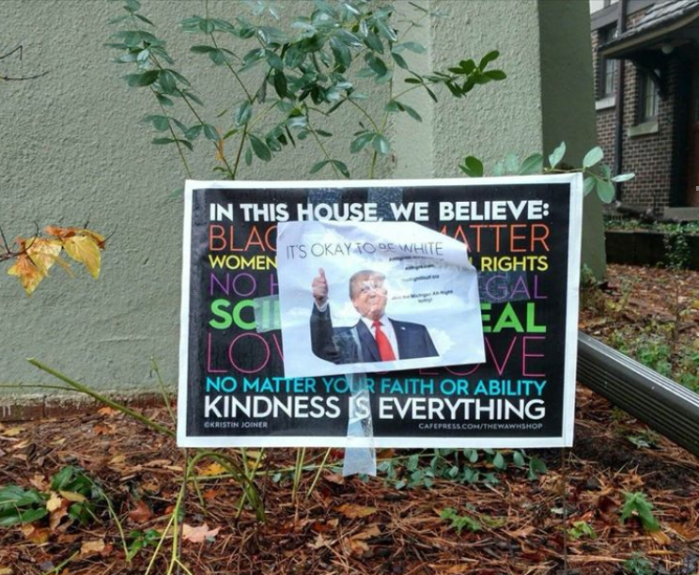
But you can hang up posters in college campuses that say the same sort of thing in a cutesy, passive aggressive way. For instance: “It’s okay to be white.”


If we look just at the text, as Coleman advises, we see a rather innocuous statement.


There’s nothing racist here. It’s just a simple statement that being white is also acceptable.


However, if we add back the context, we find an indirect racial undertone.


These posters weren’t put up willy nilly. They were hung on college campuses where white nationalists wearing MAGA hats were recruiting. They were pasted over Black Lives Matter posters, accompanying drawings of Donald Trump.


aposter1


In context, then, this statement doesn’t just mean “It’s okay to be white.” It means “It’s okay to be pro-white supremacist, to be pro-white power.”


And that brings up two other examples.


MAGA – Make America Great Again.


Take it out of context and it’s innocuous. It just means to increase the abstract greatness of the country to what it was at some unspecified time in the past.


However, if we put that statement in the context of the Trump campaign and its xenophobia, homophobia, Islamophobia, transphobia, etc. — then it’s meaning becomes clear. As noted above, it’s an ode to white power and nostalgia for greater white privilege.


And “Black Lives Matter”? Why do many of these same Identitarians take exception to that slogan and the movement behind it?


The Alt Right says BLM is reverse racist. They claim the name BLM means “ONLY black lives matter.”


Context tells us differently.


The BLM group was formed in response to the indiscriminate murder of people of color and those who committed these crimes not behind held accountable. Officer Darren Wilson not indicted for killing Michael Brown. Officer Daniel Pantaleo not indicted for killing Eric Garner. Officers Timothy Loehmann and Frank Garmback not indicted for killing Tamir Rice. And on and on.


Yet the Alt Right is allowed to mischaracterize a simple call for peace as if it identified a terrorist organization.


Why? Because context has been banished from the building.


20160707_allhousesredux


I’m not saying that Common Core has caused these problems, but it has allowed them.


I doubt this is what Coleman, who is Jewish, intended.


But whenever you water down critical thinking – even if it’s for purely practical ends – you end up hurting everyone.


The best societies praise intellect and tolerance.


For all their faults, our founders knew this. That’s why they emphasized the importance of public education.


If we had ensured everyone in the country had access to the best possible education, this modern Nazi subculture wouldn’t be able to make as much headway as it has.


This is yet another way that our obsession with unrestrained capitalism, neoliberalism and plutocracy has put us on a road that may end in fascism.

The Lone Voice of Dissent Against Standardized Testing

Businesswoman shouting through the megaphone in the open air.


Everybody wants to fight the good fight.


Until the battle begins.


Then many of us are all too ready to give in to what was intolerable just a moment before.


To paraphrase Thomas Paine:


These are the times that try men’s souls. The summer soldier and the sunshine patriot will, in times of crisis, shrink from service, but those who stand up in time of need deserve the love and thanks of every man and woman.


I see this almost every day in our schools.


Ask nearly any teacher what they think about high stakes standardized testing, and they’ll complain until they’re blue in the face.


They’ll give you gripes and grievances galore.


The tests take too long. They’re not valid assessments. They narrow the curriculum. They’re dumbing down the teaching profession and ripping away our autonomy.


To which I say – Amen, Sister!


Standardized tests more accurately measure economics than academics – poor kids generally fail and rich kids pass. They’re culturally biased, poorly put together, unscientifically graded and demonstrate a gobbsmacking conflict of interest.


Two conflicts of interest, actually.


First, the people who make the tests, grade the tests and thus have a financial interest in failing the most students possible because that means we have to buy more remediation material which they also conveniently sell.


Second, these test scores are used by the school privatization industry to unfairly label public schools failures so they can more easily sell fly-by-night charter and voucher schools.


So, yeah. Almost all of us agree standardized testing sucks.


But when there’s an administrator present, I too often find I’m the only one willing to speak that truth. My colleagues, who are pleased as punch to gripe in private, suddenly go quiet in the presence of their superiors.


What’s worse, some of them don’t just stay quiet – they offer arguments to support whatever nonsensical test-based solution our boss has in mind today.


Let’s say an administrator suggests we do something about the handful of students who opt out of standardized tests.


We could just respect the rights of parents who have handed in their written intention to opt their children out under a religious exemption – the only option in Pennsylvania. Or we could do as the administrator suggests and force kids who’ve been opted out to take a standardized look-a-like assessment.


I hear something like that, and I’m on my feet ready to fight.


But I find myself standing there alone.


“You can’t do that,” I say.


“It violates state law. In particular, Pennsylvania Code Title 22 Chapter 4, section 4.4.


(Okay, I had to look up the particulars later, but I made sure the administrator got them.)


Consider subsection (d) (4). And I quote:


If upon inspection of a State assessment parents or guardians find the assessment to be in conflict with their religious belief and wish their students to be excused from the assessment, the right of the parents or guardians will not be denied…”


Or how about subsection (d) (3):


“School entities shall adopt policies to assure that parents or guardians [have]… (3) The right to have their children excused from specific instruction that conflicts with their religious beliefs, upon receipt by the school entity of a written request from the parent or guardians.” (Emphasis mine)


In other words, parents have a right to excuse their children from the tests and/or instruction such as test look-a-likes.


If we go forward with requiring students who are opted out to take tests that are just like the ones their parents instructed us NOT to give, we will be violating parents’ rights under state law.”


That seems pretty airtight to me.


But the administrator disagrees.


And I look around at the assembled mass of workaday teachers for support.


Not a peep.


Instead I get this:


-We’re being evaluated on these standardized tests, we have to make sure kids take them seriously.


-I see where you’re coming from but we have to do something about these kids who are opting out just to get out of doing the work. They don’t have any real intellectual objection. They’re just lazy.


-We’ve got to do something about grade inflation.


Oh. Em. Gee.


Yet after the meeting, some of them cautiously walk up to me asking my opinion of what went down.


YOU DON’T WANT TO HEAR MY OPINION RIGHT NOW!


Take my word for it.


Tomorrow or the next day or the next week, they’ll be complaining again.


I’ve seen some of these people reduced to tears by administrators unfairly manipulating them based on their students’ test scores.


Yet none of them have the guts to stand up and be counted when the moment comes.


I say again – everyone wants to fight. But no one wants to do the fighting.


They want someone else to do it for them.


Does that make you angry?


It makes me furious.


But if you feel that way, you’ve got to do something about it.


You think teachers are too cowardly? What have YOU done to fight corporate education reform today?


You think too many administrators are quislings. You think the lawmakers are bought and sold. You think the public schools are under attack.


Well, get off your ass and do something.


I am tired of being the lone voice of dissent here.


All across the country there are people like me – people willing to stand up and fight.


But it’s a big country, and we’re usually spread pretty thin.


We need people willing to put their money where their mouths are – right here, in our hometowns.


Put up or shut up, America.


Do you want a school system that serves the needs of children?


You’ve got to make it happen.


I can’t do this all by myself.