Men, Too, Need No Longer Suffer in Silence the Pain of Sexual Harassment

sad-man-silhouette-on-bench


This is one of the hardest articles I’ve ever written.


I’ve started it several times. And each time I deleted it.


After all, what right do I have to talk about sexual harassment?


I wasn’t raped.


I wasn’t drugged, beaten or blackmailed.


No one physically abused me in any way that did lasting physical harm.


But I was misused.


I was harassed.


And I shouldn’t have been.


I was made a victim, and my victimizer was a woman.


That, alone, shames me to my core.


I’m a grown man.


We’re not supposed to care about things like this.


We’re supposed to be unfeeling, undisturbed, stoic cowboys with our eyes ever fixed on the horizon.


If anything, I should be the one accused, not the accuser.


Some would deny that you even CAN sexually harass a man.


They’d look at the cultural ideal of manhood as an emotionally stunted beast of burden, and say men are too callous and shallow to be susceptible to this sort of pain. After all, men are always ready for the next sexual encounter. Or we should be, because that’s what it means to be a man.


But they’re wrong.


Men have feelings, too. We hurt. We cry. And we can be scarred by unwelcome advances.


So what happened?


It was almost thirty years ago.


I was just a kid in middle or high school – 8th or 9th grade.


It was in pottery class.


I’ve always loved the arts. I used to draw every spare second. My notebooks were covered with doodles and sketches. Cartoon dinosaurs and skulls. Sometimes an alien or dragon.


And I loved working with clay, too.


For years my mother had a vase I made in that pottery class. It was fat on the bottom with a slender neck. Purple glaze on the outside with a blue interior. Mom displayed it proudly in her dinning room, sometimes with a few flowers inside, until one day it accidentally fell from a shelf and shattered.


I might have been working on that same vase when it happened. I really can’t remember.


I think it was a pinch pot.


I was standing at a table I shared with three or four other students, wrapping tubes of hand rolled clay around and around into the shape of a container, when someone came up behind me, grabbed my butt and squeezed.


I jumped in surprise, and said “Ohh!” or something.


Then I heard, “Hey, sweet cheeks!”


And laughter. All coming from the other side of the room.


I turned my head to see who it had been.


It was a girl I hardly knew though she had been in my classes since first grade.


Let’s call her Nancy.


She was a chunky but not unattractive girl from the other side of the room.


She walked back to her friends, both boys and girls, at her table, and they were all losing it over what had happened.


I blushed and turned back to my work, feeling like the clay my fingers molded.


I couldn’t even process what had happened.


Why had Nancy just walked over to me and pinched my butt?


It wasn’t even a playful pinch. It wasn’t grabbing someone with the palm of your hand and giving a squeeze. She had clawed into my flesh, secured a good hunk and pulled.


It was angry and mean.


I didn’t understand. What had I ever done to her?


I barely knew her. I hadn’t said more than ten words to her in eight years.


“You like that?” she asked from across the room.


I just kept working on my pot, looking at it as if it were the only thing left in the universe.


The others at my table were giggling, too.


I remember it like a scene in slow motion. Me rolling out and unwinding the clay. Everyone else laughing. Nancy smirking.


And then she came back and did it again!


I jumped and squealed.


But I did nothing. I said nothing.


She pinched me at least three or four more times. Maybe more.


And she said something each time.


And like it was on a script, always the laughter and guffaws.


Eventually I think I started to quietly cry.


That’s when it stopped mostly.


The others at my table were as silent as I was. When they saw my reaction, I think they got embarrassed.


We were all working with incredible concentration trying not to acknowledge what was happening.


I made sure not to turn and look behind me. But I could hear the snickers.


Where was the teacher?


The room had a strange L-shape. At the foot of the L was a kiln where she was diligently firing last week’s pottery. From where she was, she probably couldn’t see the rest of us working at our tables.


I don’t think she saw anything. She never said anything if she did.


When she returned to our side of the art room, she may have asked if I was okay. I’m not sure. I probably just shrugged it off. Maybe asked to go to the bathroom.


Why did this bother me so much?


Because I wasn’t asking for anyone to come over and touch me like that.


I just wanted to make my stupid pot. I just wanted to be left alone.


I didn’t want to be treated like anyone’s joke. I didn’t want my physicality to be the cause of anyone’s laughter.


It’s not that Nancy was a pariah or a terrible person or anything. If things had been different, I might have responded differently.


But when you’re a guy in high school, you aren’t allowed to be upset when a girl comes and pinches you.


You’re supposed to respond a certain way.


I couldn’t ask her to stop. I’m supposed to love it.


Even if it’s a joke.


Even if it’s a way to denigrate me in front of the whole class. Even if it’s a way to proclaim me the most undesirable boy in the whole room.


It felt like someone pointing at a banana peel in the trash and mockingly saying, “Yum! Yum!”


But I was the garbage.


It certainly made me feel that way.


I’m not sure why this has bothered me for so long.


Maybe it’s the feeling of powerlessness – that there was nothing I could do. Maybe it was a feeling that I should be reacting differently. I should be more assertive either telling her to leave me alone or maybe actually liking the physical contact.


I’m not sure how to explain it.


I was made to feel inferior and degraded.


Perhaps that’s why I’ve remained silent about it all these years. The only solution had seemed to be to forget about it and move on.


Yet doing so leaves a cold lump in your chest. Oh, it won’t kill you. But it’s always there. You just learn to live with it.


I suppose in writing about it, I’m trying to rid myself of that lump.


I don’t know if it will work. But I’m tired of carrying it around with me anymore.


We’re living in a remarkable moment. Women everywhere feel empowered to share their stories of abuse at the hands of men. Shouldn’t I feel empowered to share my story of abuse at the hands of a woman?


But there does seem to be a disconnect here. A disanalogy.


No matter who you are, everyone has been the victim at one point or another.


Whether you’re male or female, rich or poor, black or white – everyone has been on the losing side.


However, some people use that truth as an excuse to pretend that all groups have been equally targeted. They use it as a way to justify the marginalization and minimalization of women and people of color, for instance, groups that have been most often earmarked for abuse.


Let me be clear – I firmly reject that. I am not All Lives Mattering sexual harassment and abuse. Clearly, women have born the brunt of this burden and men have more often been the cause.


But that doesn’t mean that men are immune to being victimized or that women are incapable of being aggressors.


Perhaps that’s my point in writing this – to caution against easy expectations and easy labels.


Toxic masculinity exists because we have toxic expectations for men and boys. Our society molds them into the shape of our collective expectations.


It’s about time we expect more from men.


And it’s time we allow them the space to be hurt so that they, too, need no longer suffer in silence.
When You Mistreat Teachers, Beware the Unintended Lessons for Students

5a552b35785e6.image


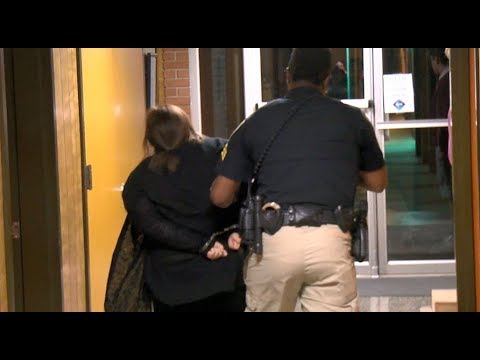
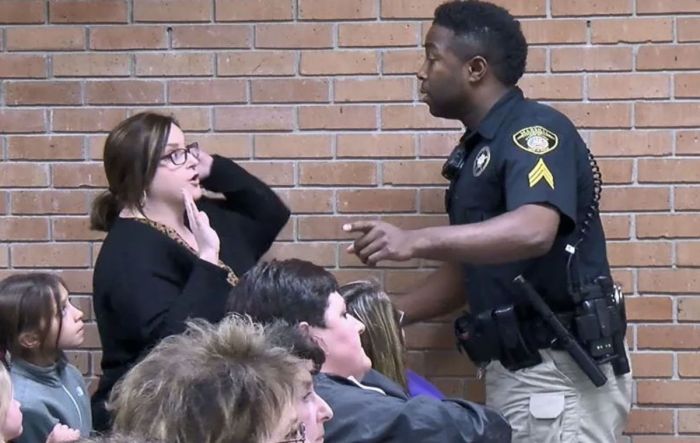
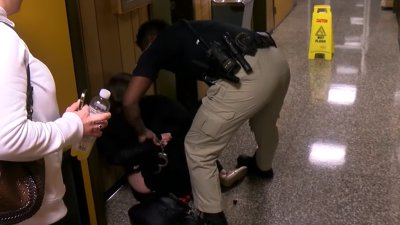
We’ve all seen the shocking video from Vermillion Parish in Louisiana this week where a teacher is tackled to the ground and arrested because she asked a question to the school board.


It’s a gross abuse of power that brings up many issues:


  • Public servants responding to the public with violence.


  • Elected representatives refusing to hear from their constituents and – in fact – taking action to silence them.


  • Leaders who are supposed to oversee children’s educations unconcerned with the lesson local kids will be taking home from the actions of adults who are supposed to set a better example.


The case is simple.


The eight-member board had been deadlocked 4-4 on whether or not to give Superintendent Jerome Puyau a raise. Then one of the members died. Instead of his wife filling in until a new election could be held, board president Anthony Fontana , who was in favor of the raise, appointed a like-minded replacement and tried to force a vote.


So Deyshia Hargrave, a district teacher and parent, asked why the superintendent should get a raise while the teachers haven’t had one in several years.


It was a reasonable question, asked at the proper time, in a respectful tone, when comments were directed specifically at her.


However, Reggie Hilts, the Abbeville city marshal who also serves as a school resource officer, told her she was being disruptive and asked her to leave – which she did. When she got out in the hall, he forced her to the ground, put her in handcuffs and pushed her out of the building.


It was completely unjustified, a horrific violation of Hargrave’s rights and goes counter to the very purpose of public school.


Local control is the great strength of our education system.


It is the idea that district wide decisions about our children’s learning should be made by duly-elected members of the community in the full light of day. Except where doing so would violate an individual’s personal rights, all school documents are public. They are voted on in public. And they are subject to question and comment by the public.


If the taxpayers – the people who foot the bill for the majority of the district costs – don’t approve of what their representatives are doing, they can take steps to replace them.


These are the very foundation of public schooling and one of the major reasons the public school system is superior to charter or voucher schools, which typically do not have them. Even when privatized systems retain the vestiges of democratic rule, they are optional and can be stripped away at the whim of the businesses and/or corporations that run them.


Vermillion Parish School Board would do well to remember this.

screen-shot-2018-01-09-at-9-38-24-am

The actions taken by City Marshall Hilts were either done at the behest of the board or certainly without any public dissent among the members.


They stomped on Hargrave’s First Amendment rights and ignored their responsibility to the community they serve.


If my description of how a public school is supposed to work sounds like a lecture, that’s intentional. These representatives could do with a lesson in how democracy works.


Our actions have consequences and those consequences only become more consequential when we become public servants. The board, the superintendent and certainly Hilts may very well have opened themselves up to legal action.


But beyond putting themselves in danger from having to pay punitive damages to Hargrave – that I hope they pay out of the superintendent’s bloated salary – they have betrayed a dangerous attitude toward the very concept of self-rule.


Whether they meant to or not, they have given the children of Vermillion Parish a lesson in government and community values.


Make no mistake. The children are watching. They get the TV news and status updates on Facebook and Twitter. They have access to YouTube. Doubtless, they have seen this video countless times. They have probably played it over and over again.


They saw their teacher brutally manhandled by a supposed law enforcement officer. And they heard the deafening silence from the school board about it.


They know now that this kind of behavior is deemed acceptable in Vermillion Parish. Beware the kind of behavior adults can expect from children who are given such a disgraceful example!


Moreover, these children are well aware of the matter in dispute.


The board is fighting to give the superintendent a $38,000 raise. Yet they refuse to give another penny to teachers – all while class sizes have jumped from 21 to 29 students, according to Hargrave.


That is not what leaders do who care about the well-being of students. It is a result of backroom deals and the good ol’ boys network.


The lesson is that hard work doesn’t matter. The only thing you should worry about is making a deal no matter whom it hurts. Just look out for numero uno.


After all, the board could give the teachers something – some token of appreciation to show that they value their continued commitment to the children of the community. But they don’t. Yet they fight tooth and nail to do so for one individual who has in no way proven himself indispensable.


It is the teachers who come in every day and give their all to help students learn. Not a superintendent who demands they jump through an increasingly complex set of irrelevant hoops.


But there’s always money for the person at the top. Never anything for the people who do the real work.


Critics complain that teachers don’t deserve a raise because they already earn more money than the majority of the people who live in the community. (An argument which – by the way – would also apply to the superintendent.)


But even beyond basic logic, it’s a bogus line of reasoning!


Doctors attend patients in poor communities. They still earn high salaries – maybe not as high as they would serving the wealthy, but they have to be able to survive, to pay back the loans they took out to go through medical school, etc. So do lawyers, accountants and specialists of all kinds. That’s just capitalism. If you want someone to provide a good or service, you have to pay them a competitive wage. Otherwise, they’ll move on to greener pastures.


The kids see you pinching pennies. They know what that means – you don’t think they’re worth the investment.


The lessons of Vermillion Parish go far beyond Louisiana.


Anytime people mistreat teachers, they’re really mistreating the children those educators serve.


An attack on teachers is an attack on students.


When Hilt wrestled a woman half his size to the ground and placed her under arrest for the crime of exercising her rights, he put the entire community in jail.


When the board directed him to act – or at very least neglected to stop him – they made themselves culpable in the crime.


It is something we have been guilty of in nearly every state of the union. We have neglected our children, abused our teachers and injured the democratic principles on which our country was founded.


Class dismissed.


hqdefault


Like this post? I’ve written a book, “Gadfly on the Wall: A Public School Teacher Speaks Out on Racism and Reform,” now available from Garn Press. Ten percent of the proceeds go to the Badass Teachers Association. Check it out!

book-3

I Am Not A Hero Teacher

Screen Shot 2017-08-01 at 10.53.52 AM


I’m sorry.


I am not a hero teacher.


I am not stronger than a locomotive.


I cannot jump tall ignorance in a single bound.


I am not faster than a tax-cutting zealot.


Up in the air – it’s a bird, it’s a plane, but it’s certainly not a teacher because we can’t fly.


I am not bullet proof.


If a gunman storms the building and shoots me, I will be wounded and may die.


Giving me a gun doesn’t help, either, because I am not a marksman.


I am just a man.


I cannot stand in front of a class of thirty and give them each my undivided attention. Not all at once.


When students ask a question, I need time to answer it.


When students hand in a paper, I need time to grade it.


During the workday, I need time to plan my lessons. I need time to call parents. I need time to read all the individual education plans, fill out all the weekly monitoring forms, finish all the administrative paperwork.


At the end of a long day, I get tired and need rest.


At the end of a long week, I need time to spend with my family.


At the end of a long year, I need time to myself – to get a summer job, to take continuing education courses, to plan for next year, to heal.


I need a middle class income – not because I’m trying to get rich, but because I’m human. I need food and shelter. I have a family for whom I need to provide. If you can’t give me that, I’ll need to move on.


Sorry, but it’s true.


I’ll tell you one thing I don’t need. I don’t need the state, federal or local government telling me how to do my job. When I plan my lessons, I need the freedom to teach children in the way that seems most effective to me – the professional in the room.


I also don’t need some bureaucrat telling me how to assess my students. I don’t need some standardized test to tell me what kids have learned, if they can read or write. I’ve spent an average of 80 minutes a day with these children for five days a week. If I can’t tell, I don’t deserve to be in the classroom.


And I don’t need my principal or superintendent setting my colleagues and me against each other. We’re not competing to see who can do a better job. We should be collaborating to make sure everyone succeeds.


What do I need? My union, for one.


I need my right to collective bargaining. I need the power to gather with my colleagues and co-workers so we can create the best possible work environment for myself and my students. I need due process, tenure, so I can’t be fired at the whim of the school board or administrators without having them prove my inequities.


I need my work to be evaluated fairly. Judge me on what I do – not on what my students do with what I’ve given them.


And when it comes to the racial proficiency gap, don’t look to me to exert some kind of supernatural teacher magic. I am not a white savior who can make school segregation, racism and prejudice disappear. I try to treat every student fairly, but my actions can’t undo a system that’s set up to privilege some and disadvantage others.


I guess what I’m trying to say is that if you’re expecting a superhero, I’m bound to disappoint.


And that DOES seem to be what many of you expect us to be.


Seven years ago, Davis Guggenheim characterized the public schools as if we were Waiting for Superman.


Things are so screwed up, he alleged back then, that we need someone with superpowers to swoop in and fix it all.


But there is no superman. There’s just Clark Kent.


That’s me – a bespectacled shlub who shows up everyday in the naive hope that he can make a difference.


According to landmark research by Dan Goldhaber and James Coleman, only about 9 percent of student achievement is attributable to teachers.


That’s right – 9 percent.


If you add in everything in the entire school environment – class size, curriculum, instructional time, availability of specialists and tutors, and resources for learning (books, computers, science labs, etc.), all that only accounts for 20 percent.


There’s another 20 percent they can’t explain. But the largest variable by far is out of school factors. This means parents, home life, health, poverty, nutrition, geographic location, stress, etc. Researchers estimate those count for 60 percent of student success.


Yet we somehow expect teachers (9%) to do it all.


I’m sorry, America. I can’t.


More than half of all public school students live in poverty. No matter how hard I try, I cannot solve that all by myself.


I try to teach children how to read though many are hungry and traumatized by their home lives.


I try to teach children how to write though many haven’t slept the night before, haven’t taken their ADD medication and – to be honest – many haven’t even shown up to school yet.


I most certainly try to get them to pass culturally biased, developmentally inappropriate standardized tests without sucking away every bit of creativity from the classroom.


But much of this is beyond my control.


I can’t help that the federal, state and local government are cutting school funding. I can’t help that my impoverished district has few school supplies, the students enter the building without them because their parents are too poor to buy them. But I can – and do – spend out of my own pocket to make sure all of my students have pencil, paper, whatever they need.


I can’t help that officials at every step of the way want me to narrow my teaching to only things that will appear on the yearly standardized test, that they want me to present it as a multiple choice look-a-like item, that they want me to teach by pointing at a Common Core standard as if that held any meaning in a child’s life. But I can make the lesson as creative as possible and offer kids a chance to engage with the material in a way that connects to their real lives, desires and interests.


I can’t help that kids don’t read like they used to and instead experience the bulk of text on the Internet, Facebook or Twitter. I can’t help that most of their real world writing experience is limited to thumbing social media updates, comments on YouTube videos or communicating through a string of colorful emojis. But I can try to offer them meaningful journal topics that make them think and offer them the chance to share their thoughts in a public forum with their peers.


There’s nothing super about any of it.


But it’s the kind of things teachers do everyday without anyone noticing. It’s the kind of thing that rarely gets noted on an evaluation, rarely earns you a Thank You card or even an apple to put on your desk.


However, when the day is done, students often are reluctant to leave. They cluster about in the hall or linger in the classroom asking questions, voicing concerns, just relieved that there’s someone there they can talk to.


And that’s reason enough for me to stay.


The odds are stacked against me. Help isn’t coming from any corner of our society. But sometimes despite all of that, I’m actually able to get things done.


Everyday it seems I help students understand something they never knew before. I’ve become accustomed to that look of wonder, the aha moment. And I helped it happen!


I get to see students grow. I get to nurture that growth. I get to be there for young ones who have nobody else.


It’s a wonderful feeling.


I know I’m making a difference.


So, yes, I’m no superman.


I have no special powers, no superhuman abilities. I can’t fix all of our social problems all by myself.


But I help to make the future.


That’s why I do what I do.


Thank you for letting me do it.

Middle School Suicides Double As Common Core Testing Intensifies

Screen Shot 2017-07-24 at 10.35.30 AM


Here’s a high stakes testing statistic you won’t hear bandied about on the news.


The suicide rate among 10- to 14-year-olds doubled between 2007 and 2014 – the same period in which states have increasingly adopted Common Core standards and new, more rigorous high stakes tests.


For the first time, suicide surpassed car crashes as a leading cause of death for middle school children.

In 2014, the last year for which data was available, 425 middle schoolers nationwide took their own lives.


To be fair, researchers, educators and psychologists say several factors are responsible for the spike, however, pressure from standardized testing is high on the list.


In fact, it is a hallmark of other nations where children perform better on these tests than our own.


In our efforts to emulate these countries, we’ve inadvertently imported their child suicide problem.


In South Korea, one of the highest performing nations on international tests, youth suicide is a national epidemic.


According to the National Youth Policy Institute in Korea, one in four students considers committing suicide. In fact, Korea has the second highest youth suicide rate among contemporary nations.


For several years, the Korean school system has topped the roughly 70 member countries of the Organization for Economic Co-operation and Development (OECD) educational league, which measures 15-year-old students’ knowledge through the PISA test, an international student assessment exam within OECD member states.


However, the system is roundly criticized for its emphasis on memorization and test prep with little real-life application. In fact, 75 percent of South Korean children attend “cram schools” where they do little else than prepare for standardized assessments.


Likewise, Chinese students suffer similar curriculum and rates of child suicide. Though Shanghai students have some of the highest scores in OECD, abuse runs rampant.


According to the China Daily, teachers at Hubei Xiaogan No 1 High School in central Hubei province actually rigged their students up to IV drips in the classroom so they could continue studying after being physically exhausted.


Brook Larmer of the New York Times reports visiting student dormitories in Maotanchang, a secluded town in Anhui province, where the windows were covered in wire mesh to prevent students from jumping to their deaths.


In the United States, education “reform” hasn’t reached these depths, but we’re getting closer every year.


Efforts to increase test scores have changed U.S. schools to closer resemble those of Asia. Curriculum is being narrowed to only the tested subjects and instruction is being limited to testing scenarios, workbooks, computer simulations, practice and diagnostic tests.


A classroom where students aren’t allowed to pursue their natural curiosities and are instead directed to boring and abstract drills is not a place of joy and discovery. A school that does not allow children to express themselves but forces constant test prep is a lifeless environment devoid of hope.


But that’s not the worst of it.


American students are increasingly being sorted and evaluated by reference to their test score rather than their classroom grade or other academic indicators. Students are no longer 6th, 7th or 8th graders. They’re Below Basics, Basics, Proficents and Advanced. The classes they’re placed in, the style of teaching, even personal rewards and punishments are determined by a single score.


In some states, like Florida, performance on federally mandated tests actually determine if students can advance to the next grade. Some children pass their classes but don’t move on purely because of test scores well within the margin or error.


The results are devastating.


Marion Brady tells a gut-wrenching story on Alternet about a 9-year-old Florida boy who tried to hang himself after failing the state’s FCAT (Florida Comprehensive Assessment Test) by one point.


His mother explains that he had to take a summer remediation course and a retest, but still failed by one point. She couldn’t bear to tell him, but he insisted that he had failed and was utterly crushed.


After a brief period where he was silent, alone in his room, she became apprehensive:


“I … ran down the hall to [his] room, banged on the door and called his name. No response. I threw the door open. There was my perfect, nine- year-old freckled son with a belt around his neck hanging from a post on his bunk bed. His eyes were blank, his lips blue, his face emotionless. I don’t know how I had the strength to hoist him up and get the belt off but I did, then collapsed on the floor and held [him] as close to my heart as possible. There were no words. He didn’t speak and for the life of me I couldn’t either. I was physically unable to form words. I shook as I held him and felt his heart racing.


“I’d saved [him]! No, not really…I saved him physically, but mentally he was gone…The next 18 months were terrible. It took him six months to make eye contact with me. He secluded himself from friends and family. He didn’t laugh for almost a year…”


The boy had to repeat the third grade but is haunted by what had happened as is his mother.


And this is by no means an isolated incident.


According to U.S. Census Bureau statistics, the suicide rate for 5- to 14- year-olds jumped by 39.5 percent from 2000 to 2013. The rate for 15- to 24-year-olds, which was already 818% higher than for younger children, also increased during the same time period by 18.9 percent.


That’s more than 5,000 children and rising each year taking their own lives.


Again, high stakes testing isn’t responsible for all of it. But the dramatic increase along with a subsequent increase in high stakes testing is not unrelated.


The Alliance for Childhood, a nonpartisan, nonprofit organization that advises on early education, compiled a report from parents, teachers, school nurses, psychologists, and child psychiatrists noting that the stress of high-stakes testing was literally making children sick.


On testing days, school nurses report that their offices are filled with students complaining of headaches and stomachaches. There have even been reports of uncontrollable sobbing.


In 2013, eight prominent New York principals were so alarmed by this increasing student behavior that they wrote a letter to parents expressing their concerns:


“We know that many children cried during or after testing, and others vomited or lost control of their bowels or bladders. Others simply gave up. One teacher reported that a student kept banging his head on the desk, and wrote, ‘This is too hard,’ and ‘I can’t do this,’ throughout his test booklet.”


And they’re not alone.


In fact, student anxiety is so common on test day that most federally mandated tests include official guidelines specifically outlining how to deal with kids vomiting on their test booklets.


School counselors note increasing student anxiety levels, sleep problems, drug use, avoidance behaviors, attendance problems, acting out, etc. that increase around testing time and during test prep lessons. This is a major contributor, they say, to the unprecedented increase in the number of young children being labeled and treated for psychiatric illnesses ranging from learning disabilities and attention disorders to anxiety and depression.


And the psychological trauma isn’t limited to the students, alone. The adults also suffer from it.


In 2015, Jeanene Worrell-Breeden, a West Harlem elementary school principal, took her own life by jumping in front of a subway train to escape a standardized testing scandal. Under intense pressure from the federal and state government to improve academic achievement, she had allegedly instructed her staff to change students’ answers on a new Common Core aligned high stakes test.


But the trauma isn’t always so dramatic. Teachers and principals often suffer in silence. And when it affects the adults in the room, imagine what it does to the children.

 

It isn’t that teachers aren’t trying to teach or that students aren’t trying to learn. It’s that the expectations and testing are developmentally inappropriate.


Middle school children’s brains are still growing. They are only physically able to learn certain concepts and skills, but we’re forcing them to deal with increasingly advanced and complex concepts at younger ages.


And when expectations and high stakes consequences come crashing down on children, they can feel there is no way out.


This is why thousands of parents have refused to allow their children to take high stakes standardized testing.


This is why there is a growing grass roots movement against these sorts of assessments and other corporate school reforms.


It’s time the media connect the dots and report these sorts of stories in context.


Don’t just shrug when reporting on child suicide rates, if you report it at all. Give the microphone to experts who can point the finger where it belongs.


And the rest of us need to make sure our representatives at the state, local and federal level know where we stand.


High stakes testing is child abuse. We should not emulate other nations’ scores especially when they come at such a cost.


The fact that we don’t engage in the worst abuses of Asian schools should be a point of pride, not jealousy.


We should cherish and nurture our children even if other nations sacrifice theirs on the altar of competition and statistics.

Bring Your Gun to School – Courtesy of the Pennsylvania Senate


AB17380

Next school year, I may be able to bring my gun to class.


The Pennsylvania state Senate voted 28-22 today to allow school employees like me to start packing heat.


Hooray!


My class sizes will be larger because of almost $1 billion in budget cuts the legislature couldn’t be bothered to heal over the last seven years. I’ll have to teach more sections because my district is bleeding money from charter school vampires that the legislature couldn’t be bothered to regulate.


But now I can be fully armed.


Priorities.


Bullets over books, I guess.


As a more than 15 year veteran of the public school system, I can’t wait to get back in the classroom wondering which of my fellow teachers, principals, custodians or rent-a-cop security guards is fully locked and loaded. I can’t wait until my elementary school daughter is finally protected by being in an adult’s daily line of fire.


This is going to make us much safer.


At my school, we fired a security guard for slamming a student’s head into the table. I’m sure having these folks armed will have no negative effects at all.


And the extra stress from added responsibilities being piled on my back will just make me more vigilant in case I need to take out my piece in class and chase away Black Bart with my Red Ryder, carbine action, two-hundred shot range model… uh… rifle.


Maybe I can get one with a compass in the stock and a thingie that really tells time, too!


Seriously, it’s hard to believe that grown adults actually voted on this ridiculous farce of a law. The only positive thing is that it still needs to be passed by the House and signed by the Governor.


Bad news: state Representatives just might be as stupid as their Senate colleagues. Good news: the Governor isn’t. There is less than a snowball’s chance in Hell that Gov. Tom Wolf is going to sign this piece of crap.


This is what happens when you have a Republican-controlled legislature and a Democratic Governor. The kids say they want nothing but candy for dinner and Dad says “No.”


Now, with a reality TV star con man in our highest national office, GOP-controlled state legislatures like mine all over the country have become emboldened to pass even worse excrement knowing full well that it has zero chance of ever becoming law. But at least they’ll prove to their gerrymandered Republican voting districts not to primary them with even further right leaning Tea Party mental defectives.


It’s a game of chicken with our most vulnerable residents held hostage in the middle.


You know, if lawmakers think that guns are such a great idea in schools, why don’t they make them legal at the state capital?


You can’t go in that building without passing through a metal detector. If you try to bring a gun in there, the best thing you can hope for is to be refused entry.


The same thing at Commonwealth courts, military bases, mental hospitals, prisons and even the security checkpoint at the airport.


And it’s pretty similar in most states. Certainly at federal institutions. You can’t take a firearm with you to visit your Congressperson – or on a tour of the White House.


Heck! Guns aren’t even welcome at Donald Trump’s political rallies, or most of his hotels, golf courses or other properties. Same at conventions held by the National Rifle Association and the Conservative Political Action Conference.


Gee. Why are so-called conservatives so darn concerned with making sure teachers are armed, but they don’t want to offer the same “protection” to themselves in government, at their businesses, rallies and places of leisure?


Why? Because it’s bullshit.


That’s why.


Most of them don’t really want guns in schools. They know it’s a terrible idea. They just want to look like they support it. Their propaganda networks spew out all this nonsense that they have to pretend to believe.


When they let protesters enter the capital building open carrying automatic weapons, THEN I won’t doubt their sincerity.


When they let Black Lives Matter activists strapping rifles across their shoulders into their rallies among the angry and confused hillbillies, THEN I’ll know how serious they are.


And when the upper crust private and parochial schools where they send their own children start arming their teachers, THEN I’ll believe them.


Until that day, I call bullshit on this whole ridiculous endeavor.

What My Black Student Taught Me, His White Teacher, About Black Lives

student_081910-thumb-640xauto-704

I can’t tell you how many times Darnell was in detention.

After a while, it didn’t feel right if he wasn’t staying at least an hour after school.

Darnell was late to class.

Darnell swore at another student.

Darnell copied someone’s paper.

Darnell did just about everything and anything that came to his mind. And it earned him time after school with me, his newly-minted 8th grade language arts teacher.

In a class full of mostly brown and black students, many living in an impoverished high crime Pittsburgh suburb, Darnell was the standout. Or at least his misbehavior was.

At first, he complained, but I had his mom on speed dial, and she fully supported my holding him accountable.

He wanted to do his homework during this time, but I made him do busy work instead. The way I looked at it as a young teacher just starting out, if I gave him time to do his school work, it would be a reward, not a punishment.

So I made him copy down dictionary definitions, clean the tables or put up the chairs.

And once he realized there was no way out, he did it all uncomplainingly.

But an hour is a long time, so after a while I let him work on his homework, too.

I had an awful lot of work to do, myself, during these times – piles of papers to grade and lessons to plan – so whatever would keep him quiet would be okay with me.

Unfortunately, Darnell didn’t work that way. He had questions. So many questions.

I had no time, but what else was I gonna’ do?

I answered him. With frustration at first while sitting at my desk.

Then I found myself walking over to him and standing at his table. Then I sat down next to him. And pretty soon we were doing the homework together.

But an hour is a long time, so sometimes he’d finish early. I offered to let him go.

He didn’t want to.

He’d stay and talk: “Did you see the football game, Mr. Singer?”

Or “Did you hear the new Beyoncé album, Mr. Singer?”

Or “How many kids do you have at home, Mr. Singer?”

One day I remember the last bell ringing and looking up to see Darnell at his desk doing homework. I looked back at my stack of papers before I realized – Darnell didn’t have detention today.

I laughed. “You can go home, Buddy,” I said.

“I know,” he replied. “Is it okay if I stay and get this done?”

I shouldn’t have been so surprised. But I was.

I nodded, and he stayed.

I won’t say Darnell ever became a perfect student. He just didn’t have the patience for detailed work. He was more of a big picture guy.

But after months of never turning in homework – years, really – he began to turn all of it in. And I mean all of it!

He wasn’t a great speller, but he started ending all of his sentences with punctuation. And he started all of his sentences with a capitalized word.

He wasn’t a great reader, but he did crack open a few books. Nothing too difficult or complex, but it was more than any teacher I talked to had ever seen him read previously.

At the end of the year, I remember pausing by his desk and praising him.

“Darnell, that’s some mighty fine work you did in here this year,” I said.

And he got this big ol’ grin on his face like he used to get before he was about to engage in some random act of mischief.

“Thanks, Mr. Singer. You’re a really good teacher.”

I smiled and said, “No, Darnell. You’re a good student.”

I remember looking him in the eye to emphasize it. This was a kid with a reputation. I’ll bet few teachers had ever commended him on his school work before.

Then the year ended, and he was gone.

He went on to 9th grade and did even better than in my class. The same in 10th, 11th and 12th.

Oh, sure. He was still a handful and got himself in trouble lots of times. But he did his work and didn’t fail his classes.

I kept an eye on him like I do all my students when they leave me. I try to keep tabs, but there’s always a new bunch just waiting for you at the beginning of the year.

You remember anytime you think about it, which isn’t much.

So it was years later when I heard the news.

Teachers were shaking their heads in the faculty room. The principal held a meeting to tell us about it in case any of our current students were upset, in case any of us had Darnell’s cousins, brothers, sisters, or friends.

He was only 18 when he was murdered.

Shot down in the streets from a passing car.

Police still don’t know whether he was the shooter’s target or if he was just at the wrong place at the wrong time.

The high school teachers, who knew Darnell best, said he had really straightened up his act. He had gotten into community college, wanted to be an engineer.

And they shook their heads. What else was there to say?

I walked back to my classroom and opened a file cabinet.

Inside was a bunch of dusty manila folders – one for each child I had ever made serve a detention.

It didn’t take long to spot Darnell’s. It was one of the thickest.

I opened it up and took out the stack of papers inside.

There were doodles of monsters and basketball players. There were lists of badly spelled vocabulary words in his adolescent handwriting. And there were these halting paragraphs about what he’d done to get detention and how he’d never do it again.

“I’m sorry I wuz late 2 class. I will ask to use bathrom before going.”

“i will not copy LaRonns paper. i will do it myself.”

I read through them all. Every one. I read them again and again until long after everyone else but the janitors had left the building.

I had spent so much time with Darnell.

I had poured my soul into that kid.

But what had it truly accomplished?

He is dead. A victim of his environment. Nothing but a number, a statistic, a footnote.

Just not to me.

By all accounts he had been trying to do good, trying to make something of himself. But it wasn’t enough. Bullets don’t discriminate between the hardworking and the lazy. They just do what they do.

In my mind I tried to see him walking home, a stack of books weighing him down, making him slow. I saw him walking past those ramshackle apartments and slums, that shady park with the broken benches, the street corners where you could buy heroin or pills or weed.

If he was white, would it have been different? If he was white and didn’t live in the “bad neighborhood,” would it have mattered?

If his mom didn’t have to work two or three jobs, would it have helped? If he had someone at home to watch him instead of a bunch of younger siblings and cousins to watch, would things be different?

I don’t know.

But I DO know that there is a list of dead children in my community – some of them my former students – and almost all of them are black.

Darnell wasn’t killed by a policeman, but I’m sure they knew his name. He used to tell me how the cops would often follow him and his friends into the grocery store. “Why they always be doin’ that?” he’d ask me. And I’d just shrug thinking about all the times he’d wait until I wasn’t looking before slapping another child on the neck.

But if Darnell had been white, would we have had different expectations of him? Would we have given him the benefit of the doubt to begin with – like we do white kids?

I wasn’t a very good teacher to Darnell. Every scrap of respect I gave him he had to earn. Why didn’t I give him that respect at the start? Why didn’t I expect the best and then change my expectations as the situation dictated? Why did I instead expect the worst and alter my expectations from there?

I never questioned if or why Darnell was seeking my attention. I just thought of his bad behavior. It was something I wanted to change, so here’s a punishment.

I never offered Darnell my help. I offered help to the class as a whole but not to Darnell individually. Not until he wore me down. Not until helping him was easier than arguing with him.

I never thought about Darnell’s needs. I thought about MY needs of Darnell. I need him to behave so I can teach. Never Darnell’s needs to behave so he can learn.

And there are so many other kids out there like him. I’ve taught so many other little Darnells.

I approach them differently now. It’s a lesson he taught me.

I may have bestowed upon him some spelling and grammar. He taught me humanity. Who is the better teacher?

He taught me to look at black children in a different way.

He taught me to come to them on their terms. To begin anew with an expectation that they will do well no matter what they’ve done in the past. He taught me to look beyond their behaviors and see them as little people. It’s a lesson I’ve never forgotten, and it informs my teaching to this day.

As I sat there with that stack of dusty folders, I realized it doesn’t end at the classroom door.

I used to think being a parent, myself, I had an interest in the future. But that’s not entirely true. Being a parent is one of the most rewarding things you can do, but it isn’t selfless. It only means you care about your child. Not all children.

And that’s where being a teacher is different. After a while, you can’t be selfish anymore. You can’t care for only some people’s futures. You are essentially invested in a future for all, for everyone.

You can try to draw a line in the sand and say “I only care about THESE kids,” but it doesn’t work. You find yourself caring about all of them, all of the children who will become our world when we crumble to dust.

That’s how it should be for everyone.

As a human being, it is my responsibility to fight to make this world a better place for people like Darnell. It’s my responsibility to make sure they all have a future.

But it goes beyond even that. I’m not just any person. I’m a white person.

All the things stacked against a kid like Darnell were stacked in my favor. I lived in a good neighborhood. Police never followed me anywhere. No matter how much I misbehaved, it was always expected I wouldn’t cause any trouble – unless I did.

So it’s my responsibility as a white person to fight my privileged place in society. It’s my responsibility to ensure that black people aren’t held back by entitlements I have not earned and handicaps they do not deserve.

As a white teacher, it is my responsibility to see the best in my children – in ALL of my children. It is my responsibility to meet them where they are and give them support and nurturing and love.

To do so I must see beyond the walls of invisible prejudice. I must see the hurdles, the traps, the maze so I can help them overcome it.

Because Darnell never got to go to college. He never got to become an engineer.

But his life mattered.

Killed for Being a Teacher – Mexico’s Corporate Education Reform

mexico-protests

In Mexico, you can be killed for being a teacher.

Correction: you can be killed for being a teacher who opens her mouth and speaks her mind.

You can be killed, kidnapped, imprisoned – disappeared.

That’s what happened to approximately six people a week ago at a protest conducted by a teachers union in the southern state of Oaxaca.

The six (some of whom were teachers) were gunned down by police and as many as 100 more people were injured near the town of Nochixtlan, about 50 miles northwest of Oaxaca City.

Conflict between teachers and governments has become commonplace across the globe as austerity and neoliberalism have become the policies du jour. Tax cuts for the rich lead to shrinking public services. And investment in the next generation through public education becomes a thing of the past.

Even here in the United States, educators are taking to the streets to protest a system that refuses to help students – especially poor and minority students – while blaming all deficiencies on one of the only groups that actually show up to help: teachers.

Though in America educators have been ignored, unjustly fired and even arrested for such protests, the Mexican government has resorted to all out murder.

How did it come to this? Follow the trail backwards to its source.

The activists in Oaxaca were protesting because several union officials had been kidnapped by the government and unjustly imprisoned the previous weekend.

Those union officials were asking questions about the 2014 disappearance and alleged murder of 43 protesting student teachers by agents of the government.

These student teachers, in turn, were fighting incoming President Enrique Peña Nieto’s education reforms.

Specifically, Nieto threatened to fire tens of thousands of teachers by using their impoverished, neglected and under-resourced students’ test scores against them.

The government provides next to nothing to educate these kids. And just like officials in the U.S., Nieto wants to blame a situation he created on the people who volunteered to help fix it. It’s like an arsonist blaming a blaze on the fire department.

Why’s he doing it? Power. Pure power.

Poverty in Mexico is more widespread than it is even in its northern neighbor. This is because the most populace Spanish-speaking country in the world also has one of the most corrupt governments on the face of the Earth: A government in bed with the drug cartels. A government that has no interest in serving the people whom it pretends are its constituents.

Since before the Mexican Revolution in 1810, teachers have been the center of communities in impoverished neighborhoods empowering citizens to fight for their rights. These teachers learned how to fight for social justice at national teacher training schools, which Nieto proposes to shut down and allow anyone with a college degree in any subject to be a teacher.

Not only would this drastically reduce the quality of the nation’s educators, it would effectively silence the single largest political force against the President.

In short, this has nothing to do with fixing Mexico’s defunct public education system. It’s all about destroying a political foe.

The government does not have the best interests of the citizens at heart – especially the poor. The teachers do.

Though more violent than the conflict in the United States, the battle in Mexico is emblematic of the same fight teachers face here.

It remains to be seen how this southern conflict will affect us up north.

People have died – literally died – fighting against standardized testing, value added measures, school privatization and the deprofessionalization of teaching. Will this make Bill Gates, John King, Campbell Brown and other U.S. corporate education reformers more squeamish about pushing their own education agenda? After all, they are trying to sell stratagems that look almost exactly alike to Nieto’s. How long can they advocate for clearly fascist practices without acknowledging the blood on their own hands, too?

For our part, U.S. teachers, parents, students, and activists see the similarities. We see them here, in Puerto Rico, in Britain, in much of Europe, in Africa and throughout the world.

We see the violence in Mexico, and we stand with you. From sea to shinning sea, we’re calling for an end to the bloodshed.

The Network for Public Education has issued an urgent appeal to the Mexican government to stop the violence. Members of the Chicago Teachers Union have taken to the streets to protest in solidarity with their brothers and sisters south of the border.

https://www.facebook.com/plugins/video.php?href=https%3A%2F%2Fwww.facebook.com%2Ftelesurenglish%2Fvideos%2F864024527074284%2F&show_text=0&width=560


We stand with you, Mexico.

We fight with you.

We bleed with you.

We are the same.

Peace and solidarity.

Who’s Your Favorite Gadfly? Top 10 Blog Posts (By Me) That Enlightened, Entertained and Enraged in 2015

Screen shot 2015-12-30 at 12.57.49 AM

“Pennsylvania educator and public school advocate Steven Singer is one of the most powerful voices in the nation when it comes to speaking out for students, parents, teachers and our public schools.”
Jonathan Pelto, founder of the Education Bloggers Network


“Steven Singer wrote these five terrific posts last year. I didn’t see them when they appeared. Probably you didn’t either. You should.”
Diane Ravitch, education historian


“Your name should be Sweet Steven Singer. You are a delight.”
Karen Lewis, President of the Chicago Teachers Union

11206058_10152940020833860_7943827034975790194_n


Hello. My name is Steven Singer, and I am a gadfly.

I make no apologies for that. It’s what I set out to do when I started this blog in July of 2014.

I told myself that people were too complacent. There was no curiosity. People were too darn sure about things – especially education policy and social issues.

They knew, for instance, that standardized testing was good for children. Why? Because Obama said so. And he’s such a nice man. It’s too bad all those mean Republicans keep making him do all this bad stuff.

They also knew racism was over. After all… Obama! Right? Black President, therefore, the hundreds of years of struggle – finished! Move along. Nothing to see here.

Yet all this “knowledge” went against everything I saw daily as a public school teacher.

Standardized tests are good for children? Tell that to more than half of public school kids now living below the poverty line who don’t have the same resources as middle class or wealthy kids yet are expected to magically ace their assessments. Tell that to the kids who get hives, get sick, or throw up on test day. Tell it to the black and brown students who for some unexplainable reason almost always score lower than their white peers.

Racism is over? Tell that to all my minority students who are afraid to walk home from school because they might get followed, jumped, beaten or killed… by the police! Tell it to their parents who can’t get a home loan and have to move from one rental property to another. Tell it to the advertising executives and marketing gurus who shower my kids with images of successful white people and only represent them as criminals, thugs, athletes or rappers.

So when I started this blog, I consciously set out to piss people off. But with a purpose. To quote the original historical gadfly, Socrates, my role is, “to sting people and whip them into a fury, all in the service of truth.” It seems well suited to a school teacher. After all, Socrates was accused of “corruption of the youth.”

It’s been quite a year. When I went to the Network for Public Education conference in Chicago last April, some folks actually seemed to know who I was. “Don’t you write that Gadfly blog?” was a common question.

When I met NEA President Lily Eskelsen Garcia and AFT President Randi Weingarten, they both said, “I read your blog.” And then they looked me up and down suspiciously as if they were thinking, “THIS is the guy who writes all that stuff!? THIS is the guy giving me such a hard time!?”

Of course, I am human, too. One can’t sting and bite every day. Sometimes the things I write are met with love and approbation. Some weeks even Lily and Randi like me. Sometimes.

Education historian Diane Ravitch has given me tremendous moral support. I can’t tell you how gratifying it is to have one of your heroes appreciate your work! Her book “The Death and Life of the Great American School System” really woke me up as a new teacher. I’m also on the steering committee of the Badass Teachers Association, an organization that has changed my life for the better. The more than 56,000 people  there are my support. I would never have had the courage to start a blog or do half of the crazy things I do without their love and encouragement.

And there are so many more people I could thank: my fellow bloggers Jonathan Pelto, Peter Greene, Russ Walsh, Nancy Flanagan, Mitchell Robinson, and Yohuru Williams. Also the good people at the LA Progressive and Commondreams.org. The incredible and tireless radio host Rick Smith.

There are just too many to name. But no list of acknowledgment would be even close to completion without mentioning my most important supporter – you, my readers. Whether you’re one of the 9,190 people who get every new post delivered by email or if you otherwise contribute to the 486,000 hits my site has received so far, THANK YOU.

So in celebration of my first full year of blogging, I present to you an end of the year tradition – a Top 10 list. Out of the 90 posts I wrote in 2015, these are the ones that got the most attention. Often they incensed people into a fury. Sometimes they melted hearts. I just hope – whether you ended up agreeing with me or not – these posts made you think.

Feel free to share with family, friends, co-workers, etc. After all, I’m an equal opportunity gadfly. I always cherish the chance to buzz around a few new heads!


10) The Democrats May Have Just Aligned Themselves With Test and Punish – We Are Doomed

sanders_warren-620x412

Published: July 17, 2015
Views: 7,122

Description: It hit me like a slap in the face that almost all Senate Democrats voted to make the reauthorization of the federal law governing K-12 public schools a direct continuation of the same failing policies of the Bush and Obama years. Heroes like Bernie Sanders and Elizabeth Warren seemed to be turning their back on teachers, parents and school children. And they were stopped in their efforts by… Republicans!

Fun Fact: This story had some legs. It inspired a bunch of education advocates like myself who are also Bernie Sanders supporters to write the candidate an open letter asking him to explain his vote. His campaign eventually responded that it was about accountability!?


9) Punching Teachers in the Face – New Low in Presidential Politics

cc-600x400

Published: Aug. 3
Views: 14,735

Description: New Jersey Governor Chris Christie thought he’d run for the Republican nomination for President. He thought threatening to metaphorically punch teachers unions in the face would get him votes. It didn’t.

Fun Fact: This new low in Presidential politics came just after Donald Trump had announced he was running. Christie’s new low now seems almost quaint after Trump’s calls to tag all Muslims and monitor their Mosques. How innocent we were back in… August.


8) This Article May Be Illegal – Lifting the Veil of Silence on Standardized Testing

whistle
Published: April 18
Views: 15,818

Description: Teachers and students may be legally restrained from telling you what’s on federally mandated standardized tests, but we’re not restrained from telling you THAT we’re restrained. Is this just protecting intellectual property or direct legal intimidation of educators and children?

Fun Fact: I have not yet been arrested for writing this piece.


7) Stories about Teachers Union Endorsements of Hillary Clinton

Did the AFT Rank and File REALLY Endorse Hillary Clinton for President? If So, Release the Raw Data

(July 12 – 4,448 hits)


The NEA May Be About to Endorse Hillary Clinton Without Input From Majority of Members

(Sept. 21 – 3,873 hits)

A Handful of NEA Leaders Have Taken Another Step Toward Endorsing Hillary Clinton Despite Member Outcry

(Oct. 2 – 739 hits)

Teachers Told They’re Endorsing Hillary Clinton by NEA Leadership, Member Opinions Unnecessary

(Oct. 4 – 7,074 hits)

Screen shot 2015-09-21 at 12.23.19 AM

Published: July 12 – Oct. 4
Views: 16,134 TOTAL

Description: You expect your union to have your back. Unfortunately it seems our teachers unions were more interested in telling us who we’d be endorsing than asking us who the organizations representing us should endorse.

Fun Fact: I broke this story pretty much nationwide. News organizations like Politico were calling me to find out the scoop.


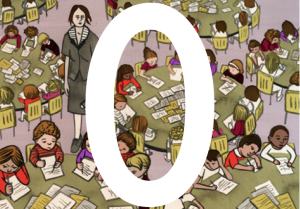
6) Why We Should Have ZERO Standardized Tests in Public Schools

Screen shot 2015-01-30 at 4.35.10 PM

Published: Jan. 30
Views: 16,443

Description: Someone had to say it. We don’t need any standardized tests. We need teacher-created tests. And that’s not nearly as crazy as some people think.

Fun Fact: This was written back when the Elementary and Secondary Education Act (ESEA) was being rewritten and naïve fools like me thought we might actually get a reduction in high stakes testing. Spoiler alert: we didn’t.


5) Atlanta Teacher RICO Conviction is Blood Sacrifice to the Testocracy

aztecshumansacrifice

Published: April 3
Views: 18,187

Description: There is something terribly wrong when we’re using laws created to stop organized crime as a means to convict  teachers cheating on standardized tests. I’m not saying cheating is right, but the mafia kills people. These were just teachers trying to keep their jobs in a system that rewards results and refuses to balance the scales, listen to research or the opinions of anyone not in the pockets of the testing and privatization industries.

Fun Fact: Watching all those seasons of “The Wire” finally came in handy.


4) Not My Daughter – One Dad’s Journey to Protect His Little Girl From Toxic Testing

FATHERS-AND-DAUGHTERS
Published: March 20
Views: 26,420

Description: How I went to my daughter’s school and demanded she not be subjected to high stakes testing in Kindergarten.

Fun Fact: They were very nice and did everything I asked. If you haven’t already, you should try it!


3) I Am Racist and (If You’re White) You Probably Are, Too

Screen shot 2015-06-02 at 1.42.34 PM

Published: June 2
Views: 28,906

Description: White folks often can’t see white privilege. This is my attempt to slap some sense into all of us. If you benefit from the system, you’re responsible to change it.

Fun Fact: Oh! The hate mail! I still get it almost every day! But I regret nothing! A black friend told me I was brave to write this. I disagreed. Anytime I want I can hide behind my complexion. She can’t.


2) I Am A Public School Teacher. Give Me All the Refugees You’ve Got

syrian_refugee_schools

Published: Nov. 19
Views: 45,196

Description: Our public schools are already places of refuge for our nation’s school children. Send me more. I’ll take them all. I’d rather they end up in my classroom than drowned by the side of a river.

Fun Fact: I got equal love and hate for this one. Some folks were afraid of terrorists. Others didn’t think we could afford it. But many told me my heart was in the right place. Lily and the folks at the NEA were especially supportive.


1) White People Need to Stop Snickering at Black Names

baby-and-parents

Published: Sept. 6
Views: 96,351

Description: Maybe we should stop laughing at black people’s names. Maybe we should try to understand why they are sometimes different.

Fun Fact: You’d have thought I threatened some people’s lives with this one! How dare I suggest people should stop mocking other people’s names! If you want to know how strong white fragility is in our country, read some of the comments! But many people thanked me for bringing up something that had bothered them for years but that they had been too polite to talk about, themselves. This is easily my most popular piece yet.


A Real Solution to the Infinitesimal Cases of Child Predators in Our Schools

110401_toomey_ap_605

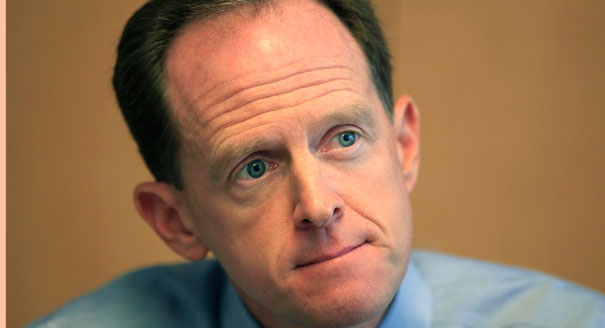
Pat Toomey is obsessed with child predators in our public schools.

When I came to Washington, D.C., this summer to visit 
the U.S. Senator from Pennsylvania, he was lobbying to get his “Passing the Trash” bill included in the Elementary and Secondary Education Act (ESEA).

His proposed legislation – now part of the Senate version of the ESEA – would ban school districts from helping known pedophiles from finding teaching jobs at different schools. Toomey is hopeful the provision will remain in the final version of the law that eventually will reach President Obama’s desk.

I met with his education aide who cheerily told me her job was to comb through the nation’s newspapers everyday and count the number of teachers accused of acting inappropriately with children. I’d mention issues like inequitable funding, standardized testing and Common Core. She’d solemnly quote back the number she’d found in her research.

There was definitely a disconnect between our priorities. After all, I’m a public school teacher. I work in our school system everyday. She and her boss only know about our schools through what they read in the newspaper. And according to the media every school in American houses child predators. They lurk behind every corner protected by administrators, superintendents and unions.

However, the facts do not back this up.

The Associated Press held a landmark investigation in 2007 to discover the extent of the problem. Reporters sought disciplinary records in all 50 states and the District of Columbia over a 5 year period. The investigation found 2,570 educators whose teaching credentials were revoked, denied, surrendered or sanctioned following allegations of sexual misconduct. About 70% of those cases involved children being victimized.

There is no glossing over it. The number is disgusting and startling. However, it is far from the national epidemic the media and Toomey are touting.

There are more than 3 million teachers in this country. This report found that 1 in 800,000 may be a child predator. That’s .00083%.

In other words, your child is more likely to be struck by lightning than be the victim of a child predator at school (1 in 134,906).

Other things more likely to happen include dying in an airplane crash (1 in 7,178), death on the job (1 in 48,000), and being murdered (1 in 18,000).

I don’t mean to be glib. One teacher betraying a young person’s trust in this way is one too many.

I’m glad Toomey is pursuing this legislation. I even support it.

However, I don’t like the slander and libel against the great majority of teachers. I don’t like how we’re all being painted with the same brush – even when it is done in the cause of making it more difficult for child predators.

I’ve been a public school teacher for almost 15 years. In that time, I have never met a single teacher who I would be uncomfortable letting babysit my 6-year-old daughter. Even when I was a student, myself, back in the 1980s and 90s, I never had a teacher who I was afraid would molest me or my classmates.

Compare this to the sex scandals in the Roman Catholic Church. A review by American Catholic bishops found about 4,400 of 110,000 priests were accused of molesting minors from 1950 through 2002. That’s .04% or 1 in 400. Sure the timescale involved is much longer than the AP study of educators, but the pool of priests is also much smaller. It would seem children are more in danger in houses of worship than houses of learning.

However, none of this helps people like Toomey pass legislation. You can’t say this doesn’t happen much, but we need to stop it. No one would vote for it. There would be no sense of urgency.

It’s just that in dramatizing the situation the Senator and his ilk are defaming the majority of teachers who would never even consider hurting a child.

The truth is not politically expedient. Child predation in schools is not a quantitative issue. It’s a qualitative one.

You don’t need large numbers of children to be hurt in this way for us to take the problem seriously. Even a small number, even a single instance, is enough to require action. No child should ever feel unsafe in school. No child should ever be victimized in these hallowed halls – especially by the very people who have devoted their lives to help them.

So I think Toomey’s right. We should pass his legislation. We should take steps to stop this kind of thing from ever happening in our schools.

And if we’re really serious, I have a solution that no one seems to be talking about: Let’s hire more teachers.

Stay with me here. Child predators almost always act alone. This sort of crime requires the perpetrator to have time undisturbed with the victim. Yet what do we have in our public schools? We’ve slashed and burned school budgets until there are fewer teachers and more students than ever. Class sizes have ballooned. It’s not uncommon for teachers to have upwards of 20, 30 even 40 children in one classroom.

This is the perfect breeding ground for child predators. They are more unsupervised than ever. They can do as they please and no one will catch them until it’s too late. Even principals and other administrators have less time to observe what goes on in the classroom because they’re unduly burdened with ridiculous amounts of paper work required to ensure every teacher gets a junk science value-added evaluation.

But if we hired more teachers, we could reduce this problem. We could even take the majority of these new teachers and put them together in the classroom. We could initiate a nationwide co-teaching initiative.

There would be challenges. You’d have to be careful to pair educators together that are compatible and can work well together. However, it would be worth it.

Few teachers would be alone with a class of students. There would almost always be another adult in the room. If another teacher was doing something fishy, it would be observed and probably reported. Moreover, the mere presence of another educator would be a huge deterrent to even trying something funny.

And this would solve our class size conundrum. You might still have larger classes, but the ratio between teacher and student would be halved. Educational outcomes would increase. Students would get more individual attention. They’d learn more. Teachers would be less stressed having someone else to shoulder the burden. And having an influx of new middle class jobs would boost our flagging economy.

This is a win-win.

Of course, it would cost some major bucks. It would require a lot of work from our nations lawmakers and policy wonks. But how could they really say ‘no’? After all, it’s being done to protect children!

From an economic standpoint, we already spend 54% of our federal budget on wars and the military. Only 6% is spent on education. It seems astoundingly unlikely that we can’t afford adding these jobs, increasing children’s educational outcomes, boosting the economy and protecting children – all in one sweep!

So, Senator Toomey, after your measure gets adopted in the final ESEA, I suggest you spearhead this new mission. After all, your bill will help, but co-teaching will almost eliminate the problem. Even if we had all children take classes exclusively on-line, it wouldn’t stop child predators from getting to them. (Heck! Predators thrive on the Web!) But co-teaching could make a real appreciative difference.

If we really want to stop students from being victimized in school, we need more teachers.


NOTE: This article was also published in the LA Progressive.


Blame the Victim – America’s Favorite Pastime

officer-ben-fields

I watched a little girl at school refuse to get out of her seat and get pounded by the police.

I watched a teenager in his car try to zoom away from a cop and get shot dead through the driver’s side window.

I watched all of these things and more from the safety of my cell phone. I wasn’t there in person, but I felt like I was.

And I am not alone.

It seems these two events were on everyone’s lips yesterday.

This is one of the fruits of self surveillance – the selfie, the dashcam, the youtube video. Events that would have been shrouded in the haze of he-said-she said are now public domain. The shadowy corners and back alleys are now just as flooded with spotlights as the most crowded theater on Broadway.

In some ways, that’s a really good thing. So many events that only a decade ago would have been hidden forever are now open to public view.

You’d think that would solve a lot of our society’s problems. No more secrets. No more lies. Just objective facts. THIS is what happened. No denying it. We’ll need context, but facts are facts. Now we can come together and decide with clarity what really happened, why it happened and who’s to blame.

However, things don’t always work out as you’d expect.

We can – in fact – agree on the facts but not necessarily on their meaning.

We all see the same images but we somehow don’t see the same things. The same light enters our eyes and forms the same images, but our brains process those images very differently.

We all see a little girl forcibly removed by an officer of the law. We all see a victim and a perpetrator. But which is which?

We all see a police officer exit his car, approach another vehicle which flees from him before he draws his gun and shoots. But who is to blame – the cop or the driver?

We come to different conclusions. And I think the reasons why depend on deep human truths about each of us.

Which side you take says something about you. It shows what kind of person you are, what you value, what assumptions you make about human nature.

When I watch that South Carolina police officer violently grab the little girl and throw her from the room, I focus on the child. Here is a 16-year-old black teen. She apparently was told to leave the room and refused to do so. She was wrong. But my heart won’t let me side against her.

Maybe she hit the officer. Maybe she was verbally abusive. It doesn’t matter. I don’t think a police officer – or any adult – should manhandle a child. If she had a gun, a knife or some weapon, that would be different. But she was just sitting peacefully in her seat. She probably deserved some sort of punishment for insubordination – but not one that would cause her physical harm. I’d be furious if someone treated my daughter that way. And so I am angry at this police officer and all the bystanders who took pains to ignore what was going on.

In a similar manner, when I watch another South Carolina officer approach 19-year-old Zachary Hammond’s car, I begin on the adult’s side. When the teen starts to drive away, I’m with the police officer. The teen is breaking the law. He should listen to the cop who is reasonably asking to question him. However, when the officer draws his gun, things get muddy for me. As the car drives away and the officer shoots into the window, I demand answers. All ambiguity disappears when I discover the teen was unarmed. He wasn’t pointing a gun at the officer. As you can clearly see, the car was not pointed at the cop. The adult was obviously in no danger.

The officer overstepped his bounds. Despite his claims of self defense, despite prosecutors siding with him, I cannot. It seems to me this 19-year-old boy out on a first date was victimized. Yes, he may have had drugs in his system. Yes, he may have possessed drugs with the intention of selling them. None of that justifies murder by a public servant who is charged with protecting and serving society. It may justify arrest, but it does not give the officer the right to be judge, jury and executioner. Imagine if death was the consequence for your own 19-year-old misdeeds! Far too high a price.

However, there are many who disagree. They side in both cases with the adult, with the police. And I see their point to an extent. Police have very difficult and dangerous jobs. They put their lives on the line to uphold laws that are sometimes ambiguous and of dubious value. But there needs to be limits to their authority.

What I find even more troubling is the dynamic between adults and children. Too often grown ups act as if they can do whatever they want to young people. They can touch, hit, belittle. And all in the name of discipline and order.

But maybe this says more about me than anything else. I care deeply about children. Not only am I a parent, I’m a public school teacher. I’ve devoted my life to helping young people get a good start in life. As such, I think violence against children is the most heinous thing anyone can do. It is despicable beyond words. Harming or killing an adult is bad. But do the same thing to a child and it is much worse.

This should be a shared value. It should be a tenet upon which our society is built. But instead too many of us blame the child or the parents. We’re presented with facts but lapse into assumptions about the child’s upbringing and the parents shortcomings. If the youngsters parents had done this or that, things would have been different. And – heck! – that may even be true! However, unlike our infinite surveillance of moments, the facts are not there. We have no record of mass parental neglect. We have just the opposite. In so many cases parents work multiple jobs to feed and clothe these children. They work night shifts. They take classes to improve themselves. So they can’t be present to the degree they’d like. But here we are passing the blame with nothing to support our assumptions but a feeling in our bellies. And we’re so deadly certain about it.

It’s sad really. We all can see the same events but remain unclear about the blame. We share the same senses and most of the same values. But our life experiences and prejudices make all the difference.

When an adult looks at these situations and sides against the child, I think it shows a terrible blindness. When some people look at the student roughed up in the classroom, they automatically side against her for a variety of reasons – race, gender, age, etc. among them. They have preconceptions about how black people act. Preconceptions about little girls. Preconceptions about poor children and their parents. And frankly it shows their moral judgment to be sick, diseased and untrustworthy.

Likewise, when some people see the teen gunned down in his car, they have preconceptions about the police and young people. Anyone on the other side of a police officer’s barrel is wrong simply by virtue of the direction in which he is pointing his gun, they might say. Police are defined as right. Suspects are defined as wrong. This is deeply troubling. It’s counterfactual. It’s untrue. Police are just humans, too. They can be wrong. They have been wrong. If we always assume they are correct in every situation, we are being morally lazy and willfully blind. We’re refusing to look at the facts and then judge accordingly. We stop at who is involved and not at what they did.

It’s so easy to blame the victim. It’s reassuring and safe. It means nothing is out of sorts with the world. Everything is just as it should be. Only this one person who was beaten by the police or shot dead – only that person is to blame. The social order remains intact and proper and good and justified.

It takes a kind of intellectual and moral honesty to look the world in the face and accept that which is uncomfortable but true. Sometimes those charged with protecting us actually do harm. Sometimes adults know less than children. Sometimes actions are racially motivated.

Because when we watch the world, the world looks back. We reveal ourselves. And sometimes we show the world exactly how ugly and depraved we can be as a nation.


NOTE: This article also was published on the Badass Teachers Association blog.