Without Black Culture There Would Be No American Culture

Screen shot 2016-06-28 at 12.10.37 AM

“We’ve been floating this country on credit for centuries, and we’re done watching and waiting while this invention called whiteness uses and abuses us, burying black people out of sight and out of mind while extracting our culture, our dollars, our entertainment like oil – black gold, ghettoizing and demeaning our creations then stealing them, gentrifying our genius and then trying us on like costumes before discarding our bodies like rinds of strange fruit.”

With these words, Jesse Williams absolutely floored the crowd at the BET Awards Sunday night.

His acceptance speech for the Humanitarian Award was jaw dropping.

Here was a black actor on “Grey’s Anatomy” just telling it like it is on national TV.

He wasn’t afraid a business dominated by white people would take offense (and some white people did). Or if he was, he wasn’t going to let it stop him.

The activist who recently produced a documentary “Stay Woke: the Black Lives Matter Movement” said, “The burden of the brutalized is not to comfort the bystander… If you have a critique for the resistance… then you better have an established record of critique of our oppression.”

No more tone policing. No white fragility. Just if you’re with us, stand up – otherwise, sit down and shut up.

It was beautiful. And it got me thinking.

There are so many obvious truths about our country’s relationship with race that hardly anyone ever gives voice to – especially a white person like me.

So I’m going to add my voice to Jesse’s. I’m just going to say it.

It’s past time we admit it, white people.

American culture would not exist without black culture.

I don’t mean to say that white people are incapable of culture or that if black people had never been kidnapped and brought to our shores as slaves that white people wouldn’t have been able to devise a unique national character.

But if that had happened, it would have been a very different character than what we have today.

It might be America, but it would not be our America. It would be some other thing. I will leave it to speculative fiction to attempt to determine what that might have been like.

However, we need not resort to fantasy to see all the incredible things black people have given us. They’re everywhere, in everything – though usually staring back at us through a white face, heard from a white voice and monetized by a white industry.

The hundreds of years of struggle from slavery through Jim Crow through the modern prison state have given black people plenty of fertile ground with which to build our national culture. Traditionally white people have served as both oppressors and appreciators of the fruits of that oppression.

The most obvious example is music.

There is very little American music not based on black traditions. Even if it is performed by white musicians, even if it is written by white musicians – almost all American music owes an overwhelming debt to black people.

Take rock n’ roll, a style usually associated with white people. The majority of rock musicians are white. The majority of rock stars are white. The majority of rock listeners are white.

But it couldn’t exist without black music – specifically blues and jazz.

Rock n’ roll was invented during the second great migration, when black people from the southern United States came into contact with large groups of whites in big cities such as New York, Chicago, Cleveland, Buffalo, etc. It was the first time many white people heard black music like blues, work songs, etc. It was also the first time many black people heard European instrumentation. The resulting cultural collision was extremely fruitful.

Rhythm and blues (sometimes called “race music”) evolved into distinct new styles – country, jazz, gospel, folk and rock. In many ways the different styles had less to do with actual differences in the music than in rebranding black music for a white audience. When a black musician became known for a particular kind of music, the fledgling music industry tried to monetize it by finding a white musician who could do something similar and thus reach a larger audience.

They figured if X number of white people will listen to this music played by a black musician, X plus thousands more will listen to it if played by a white one. And they were right.

Black musician Chuck Berry was one of the first to play what we’d recognize as rock n’ roll. He took standard jump blues and played the two-note lead line on his guitar that until then was typically performed on piano. He put guitar at the center of the sound, amplified it, electrified it and rock was born.

The genre developed organically with many black musicians taking the lead – Fats Domino, Sister Rosetta Tharp, Goree Carter, Jimmy Preston, Bo Diddley, Little Richard, Joe Hill Louis, Guitar Slim, Howlin’ Wolf and many others.

However, the first certified rock hit “Rock Around the Clock,” was recorded in 1954 by an all white band, Bill Haley and His Comets. With this recording, the die was cast. The music was invented and developed mostly by black musicians, but it wasn’t a major success until it was recorded by white musicians.

The same thing can be seen with Elvis Presley, the so-called “King of Rock n’ Roll.” He wasn’t breaking any new ground. He was just the first white person who could sing like the black blues musicians who came before him. They toiled in obscurity. He cashed in.

This isn’t to say that no black musicians succeeded playing rock n’ roll. But it was predominantly white musicians who popularized the style that their black forebears had created.

To understand this, perhaps it is best to turn to the insight of Amiri Baraka (formerly known as LeRoi Jones). In his classic book “Blues People,” he dissects the complex American relationship of race and music through the 1960s.

Baraka writes that white and black America have different value structures. As such it is a very different thing for a black American and a white American to play the same music.

When a black musician like Louis Armstrong played jazz music – another invention of black culture – he was fulfilling the ideals of his culture. By contrast, when a white musician like Bix Beiderbecke played jazz music, he was rebelling against his.

There is something jarring and revolutionary when white musicians play black music, Baraka writes. In doing so, the music becomes devoid of race. It is no longer black music. It is just music.

However, the musicians who created it are not likewise freed from the ghetto. They’re still black even if their music no longer is.

So what are black musicians left to do but create new music that they can call their own?

This may explain why so few black performers play rock music anymore. It was taken from them. They had to move on.

Even so, their fingerprints are all over everything that came after. The Beatles, Rolling Stones, Led Zeppelin, Metallica, all the way through the White Stripes and Black Keys. Ask any hardcore fan to name the best rock guitarist who ever lived, and the answer is bound to come back – Jimi Hendrix. Yet, Eddie Van Halen made an awful lot more money.

Perhaps the most incredible thing is that black musicians have continued to develop new and more creative music after every appropriation. Funk, Rap, Pop, Hip Hop, modern R&B. One can see all of it as a progression of gentrification and subsequent creation.

It makes me wonder: why do we love black culture so much but not black people?

As Williams said to end his speech this weekend, “…just because we’re magic doesn’t mean we’re not real.”

Black people have achieved amazing things in America. But white people rarely give them their due.

For instance, people generally think of rap as a black thing. But the largest audience for the genre is us, white folks.

There’s something jarring about white teenagers singing along with every n-word in the lyrics of a black rapper’s song as if these kids had the right. We don’t, people.

As Baraka might say, it’s a very different thing when we say it. But it’s more than just rebellion.

Too often white people turn to music that is characterized as black as a way to mock that culture. We demand black culture be commodified in a way that makes sense to our vision of what black people are. And when someone like Williams comes forward to call us out on it, we resent it.

Look around, white folks.

We love our culture, but we’re ignorant of our history.

We enjoy living vicariously through a marketed vision of black struggle but we don’t do anything about the actual struggle before our eyes.

Our black brothers and sisters are crying out in pain. And we’re the cause.

No, we probably didn’t light any crosses afire on anyone’s lawn, but what about our attitudes? What do we say when race comes up? Do we indulge in gut reactions of colorblindness or do we actually listen to what black people have to say? Do we do anything but shrug?

This isn’t about white hate or white guilt. It’s about accepting our responsibilities.

We owe black people much of our very idea of what it is to be an American. Isn’t it time we started paying it back with love and action?
Witch Hunt Against Incoming Pittsburgh Public Schools Superintendent Escalates

Screen shot 2016-06-17 at 1.17.51 PM

To be or not to be.

That is the question for incoming Pittsburgh Public Schools Superintendent Anthony Hamlet.

He is set to takeover the district on July 1, but a well financed public smear campaign is trying to stop him before he even begins.

Big money interests oppose him. The public supports him.

Meanwhile the media helps fuel corporate attacks on the 47-year-old African American because of criticisms leveled by a Political Action Committee (PAC) formed to disband the duly-elected school board.

It’s ironic.

Corporate school reformers criticize Hamlet for allegedly plagiarizing a single statement in his resume. Meanwhile they have plagiarized their entire educational platform!

Mayoral or state takeover of the district? Check!

Close struggling schools? Check!

Open new charter schools to gobble up public tax dollars as profit? Check!

Hamlet represents a new direction away from corporate education reforms. The new school board who hired him has soundly rejected these policies of the old guard. Many of the same members are still on the board who first changed course in 2013 by tearing up a contract with Teach for America.

But the Empire strikes back with allegations of plagiarism and resume padding.

Yes, Hamlet used some of the same words from a Washington Post editorial in his resume. He wrote:

“A successful superintendent has to satisfy many constituencies, keeping high achievers in the system while devoting resources to those who need them most.”

The Post wrote:

“A successful superintendent has to satisfy many constituencies, keeping high achievers in the system even while devoting resources to those who need them most.” (Emphasis added)

These aren’t exactly the same words used by the Post. They don’t rise to the level of plagiarism, but he certainly should have attributed them or reworded the ideas.
On the other hand, his critics want to use the same policies that have failed again-and-again in Philadelphia, Newark, Little Rock, Memphis and elsewhere. They want to steal control of the district and give it to bureaucrats who will do what THEY say. They want to take money set aside to help all students and use it to enrich their friends and associates.

Sure, Hamlet used someone else’s words to describe a good idea of leadership. But his critics are using their own words to describe someone else’s terrible, failing educational platform.

Hamlet made a small forgivable error. His critics are seizing upon it to turn the tide in their favor and take away the community’s right to representative democracy.

Make no mistake. This is a witch hunt.

Critics are splitting hairs, disputing statistics and calling it fact.

Hamlet has a proven record as a principal in Palm Beach, Fl.

He says the schools he administered improved academically for various reasons. Critics point to Florida state records that show those improvements to be less dramatic.

So both sides agree those schools did well under Hamlet. What’s in dispute is the degree.

Hamlet counters that state data is inaccurate. He was there on the ground. He lists several factors not accounted for by the state that fully justify his statements.

For example, when he talks about school improvements, he counts the total number of student suspensions – if a student is suspended twice, he counts that as two suspensions. The state, however, ignores multiple suspensions. In this and other ways, Hamlet shows his data is more accurate than the state’s.

National data backs up Hamlet. Florida is infamous for being backward, regressive and untrustworthy in education circles, often spearheading some of the worst abuses of policy in recent history.

“This has been a hoopla,” said Valerie Allman, a Troy Hill parent and activist interviewed in the Pittsburgh Post Gazette. “And it’s taken the focus off what’s important: these kids. … We’re expecting him to climb this huge mountain at the same time we cut his legs out from under him.”

One of the reasons the board originally hired Hamlet is his background in “restorative justice.

Instead of simply punishing or suspending students who misbehave, the program calls for making students set things right.

At Palm Beach County Schools, Hamlet implemented this approach with help from Mara Schiff, a criminology professor from Florida Atlantic University. It’s “far tougher than sitting in detention,” Schiff said in the Post Gazette.

“You have to acknowledge what you’ve done … and take responsibility for the harm you’ve caused. It’s not a kumbaya approach.”

It’s widely acknowledged in education circles that suspensions can have lasting impacts especially on black students making them more likely to enter the school-to-prison pipeline. Finding an approach to increase discipline without adversely affecting students’ prospects is imperative. This is especially true since Pittsburgh Public Schools have been known to suspend black students at a rate four times higher than white students.

In fact, the district has already launched a restorative justice program at 20 schools.

“I have nothing but good things to say about Dr. Hamlet,” said Schiff. “He had a [restorative-justice] coordinator who was fabulous, and who Dr. Hamlet completely empowered.”

Another reason for Hamlet’s hire is his advocacy for community schools. Like many on the school board and in the district, he has pushed for social services to help students and the community to make the schools the center of the neighborhood.

“You can have the best teachers, the best curriculum, the best classrooms,” said Rev. Rodney Lyde, a Homewood pastor and president of the Pennsylvania Interfaith Impact Network. “But we need a place on-site that can comprehensively address the other impediments — like kids coming hungry, or from abusive situations.”

Despite community support, several well-financed organizations oppose Hamlet and the board’s authentic reforms.

Foremost among them is Campaign for Quality Schools Pittsburgh, a new PAC formed recently to make city schools great again – by doing the same failed crap that didn’t work before.

Also on the side of corporate education reform are the Pittsburgh Foundation and the Heinz Endowments. Representatives for both organizations have offered to pay for a new superintendent search if the district gives Hamlet his walking papers – a measure that probably would mean paying him at least a years salary without having him on the job.

This would also result in weakening the district’s ability to hire a new superintendent and increasing public mistrust of the electoral process. Such a move would pave the way for disbanding local control.

How generous of these philanthropies! I remember a time when giving meant providing the resources for organizations like public schools to fix themselves – not having the right to set public policy as a precondition for the donation. But in the age of Bill Gates and the philanthro-capitalists, this is what we’ve come to expect.

Even the editorial board of the Pittsburgh Post Gazette has drunk the Kool-aid. In a June 10 editorial, the paper published the following statement:

“The (school) board’s failure at this essential task calls its leadership into question, and will renew calls for legislation to dissolve the elected school board and move to an appointed system.”

Finally, we have A+ Schools – an advocacy organization that at one time championed the same kinds of reforms school directors are trying to enact. However, after a $1 million grant from the Gates Foundation, the group has become a cheerleader for weakening teachers unions, privatization and standardized testing.

Against these special interests stands a public school board and a community at the crossroads. Will they give in to public pressure and big money? Or will they allow Hamlet to do the job he was hired for and attempt to improve an urban district suffering from crippling poverty and state disinvestment?

This particularly tragedy has yet to find an ending.

To be or not to be?

Hillary Clinton is Not as Bad as Donald Trump – She’s Worse

Screen shot 2016-05-15 at 8.21.59 PM

On the face of it, the title of this article is pure bull crap.

What do you mean Hillary Clinton is worse than Donald Trump!?

She’s not a reality TV star pretending to be Presidential.

She’s not a bigot, a demagogue and a fascist.

She’s not the top choice of racists and white supremacists everywhere.

And you’re right. She’s none of those things.

If I’m being honest, there are plenty of things Clinton has over Trump.

First of all, she’s immensely more qualified to be President. She has decades of experience in public service. Trump has none.

Moreover, she has been instrumental in pushing forward progressive policies. She championed healthcare reform when it was unpopular to do so. Without her work, it is doubtful we’d have the little reforms we have today. Trump, on the other hand, hasn’t lifted a finger to help the American people accomplish anything – unless you count ogling half naked women on the Miss Universe pageant or getting excited over which D-list celebrity he was going to “fire” on The Apprentice.

However, there is an area where both candidates have significant overlap.

If you remove the names and the personalities, if you ignore political affiliation and past history, Donald Trump and Hillary Clinton begin to look very similar.

Who does Trump represent? The 1%.

Who does Clinton represent? The 1%.

It’s really that clear.

In fact, in 2008 Trump famously donated to Clinton’s Presidential campaign. He is exactly the kind of person who wants someone like Clinton in the Oval Office. She would look out for his interests.

Her campaign is financed by Wall Street. Trump IS Wall Street. She was paid exorbitant fees to give private speeches to bankers and stock brokers. One would not be shocked to find Trump in the audience.

Yes, there are differences. One can’t imagine Clinton talking about women with as much arrogant deprecation as Trump. One can’t imagine her suggesting we deport millions of people, that we put all Muslim’s under surveillance, or that many Latinos are murderers and rapists.

But that is exactly what makes her worse. Trump looks like a little dictator (which he is.) Clinton does not.

She appears to be the middle ground. She appears to be the sane candidate – and in some ways she is. But in many of the most important ways that count for Americans living from paycheck-to-paycheck, she isn’t a compromise at all. She’s nearly the same thing.

Imagine two shelves holding poison in a child’s playroom. On one is a purple bottle sporting a skull and crossbones under the word “Poison.” On the other is a bright pink bottle with a smiley face under the word “Candy.” Which is worse?

You know what you’re getting with Trump. Clinton pretends to be something else.

In my opinion, this is why we desperately need Bernie Sanders in the race. He is an actual option between the corporatist campaigns of Trump and Clinton. He actually gives voters a choice.

In his decades in the House and Senate, Sanders worked tirelessly for the 99%. He voted against the Iraq War and the Patriot Act. He was an open critic of Alan Greenspan insisting the Federal Reserve Chairman was only represented “large and wealthy corporations.” He passed more amendments than any other congressperson getting through amazing amounts of legislation. He worked to overhaul the Veterans Administration and audit the Federal Reserve System.

And we’ve seen how energetically the Democratic establishment is fighting to keep Sanders off the ballot. During the primaries, they’ve tried every dirty trick in the book to suppress votes from their own party to ensure Clinton is the only choice in the general election.

It’s unprecedented. Voters like me who might have supported Clinton had she won the primaries fairly have been completely turned off by the Democrats. How can we support a candidate that we’re told we must vote for? Shouldn’t the Democrats be courting our votes, not forcing them?

This just goes to show the need for a third party. The Democrats have been largely overtaken by neoliberals – what we used to call Republicans. Likewise, the GOP has been overtaken by the worst extremists possible – fascist populists of which Trump is a clear representative.

Who is left for progressive voters? Can we really support a neoliberal like Clinton?

No. The only way for progressives to win is to keep Sanders in the race through the general election. Virtually every poll says he would trounce Trump. Many – but not all – polls likewise say Clinton would beat the Republican front runner, but is that even a contest? If both candidates represent the same constituency, it’s not really a choice.

Few things would be worse than a Trump presidency. He would immediately go after our brown-skinned brothers and sisters. He would make things much more difficult for our sisters, mothers and daughters. And he would crash the economy and engage us in disastrous wars of choice across the globe.

A Clinton presidency on the other hand would not be so obviously apocalyptic. She would continue and worsen neoliberal policies strangling our public institutions. She would continue to privatize our schools and enrich the testing and charter industries. She would continue to lock away the poor and minorities while enriching the private prison industry. She would bolster weak environmental regulations while opening back doors for oil and gas companies to rape our planet. And as the majority of people drown in debt, she would wag her finger and blame the poor for their circumstances without offering a lick of help.

In short, Trump would be a mega-nuclear explosion. Clinton would be nuclear radiation – a silent killer. That’s worse. One kills all at once. The other does so slowly by degrees.

This is not a choice any American should be forced to make.

Fight to keep Sanders in the race.

School Accountability Without Standardized Testing

IMG_5312-cropped-proto-ccsa_root___topic_hero-thumb-640xauto-2188

Q: Is it possible to ensure educational accountability without giving standardized tests?


A: Not only is it possible, it is necessary.


In fact, we will never have accountability while we continue giving standardized tests.


This is the irony of modern education policy.


High stakes testing is seen as the only tool that can ensure schools operate correctly when in reality it is the very thing that blocks true responsibility.


Pundits and policymakers cry crocodile tears as they draw up elaborate ways to punish teachers and students for low test scores. Meanwhile they ignore some of the most basic facts about how education works.


FACT: Students and teachers are not the only factors.


FACT: Students and teachers don’t decide how much funding their schools get.


FACT: Students and teachers don’t get to decide education policy.


FACT: An education system is made up of a complex interplay of several interconnected factors that include parents, the community, the economy, culture, media, and local, state and federal governments.


FACT: High stakes testing ensures that teachers and students are held accountable for the entire education system including the vast majority of factors beyond their control.


So let’s stop pretending that standardized tests hold schools accountable. They don’t. They just point the finger without offering anything to help.


True accountability would be about diagnosing problems so we can fix them, not trying to fire your way to the top. When you break your arm, the doctor doesn’t immediately suggest you chop it off. He sets the bone and puts it in a cast and sling so it can heal.


When it comes to true accountability, we need to look beyond the school at all the factors involved. We also need to look to the legislature, the taxpayers, parents, the community, the media, and all stake holders.


However, this does not mean there are no ways to assess if schools, superintendents, administrators, teachers, and students are doing a good job.


In fact, it’s not even difficult to achieve. And we don’t need a single standardized test to do it.


We need a two-pronged approach. We must assess student learning, but we also must assess the adequacy of school funding, where it’s going and where it needs to go.


These measures are most often ignored in accountability discussions. When it comes to adequate funding, we usually blame the poor for being unable to provide for their children. And since many states allocate education funding based largely on local property taxes, we have rich schools with oodles of cash and poor schools that are falling over. True accountability would ensure all students – both rich and poor – start from an equal playing field. When society neglects this, it is society that is failing, not poor children.


When it comes to how funding is spent, we either throw up our hands that there’s no way to evaluate school funding or we pretend that school directors will be transparent just because. Both are untrue.


I still believe that local control is the best way to ensure true accountability. When school directors are not elected but appointed– as they are in charter schools – there is no reason to spend wisely. In fact, the laws are set up to shield charter school boards from having to show the community how they are spending taxpayer money. And since most are set up for-profit, there is an incentive to reduce services for students while keeping the saving as profit for themselves and their shareholders.


When school boards are elected and are required to hold deliberations in public, accountability is built in. Voters decide who gets to make decisions and if those decisions made in the light of day are in the best interests of their children. Moreover, elected school directors who come from the community have an incentive to make that community in which they live the best it can be and to provide the best quality education they can.


This isn’t to say that elected school boards are perfect. They are made up of human beings and are therefore fallible. You don’t have to go far to find local school directors who try to deliberate important decisions in private without notifying the public, circumvent the bidding process, make backroom deals, etc.


But there are ways to hold them and the community accountable for providing a quality education.


California has come up with an ingenious plan.


For the second year, the Golden State has been engaged in a bold experiment. Policymakers have initiated a new K-12 finance system: the Local Control Funding Formula (LCFF) and the Local Control Accountability Plans (LCAPs) that go with it.


Basically, California public schools use multiple-indicators to determine where funding needs to go and how to hold schools accountable for spending it wisely.


It’s not perfect. It certainly has some bugs in it, and I do NOT recommend we simply extend the program nationwide as is.


For instance, the program still uses standardized testing as one of many multiple measures of success. This is better than having testing be the sole measure or even the most important one. But – as you shall see – we can do better.


The law requires each district to identify specific goals and spending priorities in eight areas. I would modify them as follows:

  1. Basic services such as equipped classrooms, qualified teachers, textbooks and materials. It is essential to know if these needs are being met so we can budget accordingly. If funding is lacking, assessing the deficiency in this way helps make the argument for an increase of cash.


  1. Implementation of District Created Standards for all students, including English Learners (ELs). California specifically denotes Common Core standards here. I think that is a mistake. Accepting wholesale a set of unproven standards made by non-educators who have never been inside a district building or in front of a classroom is a recipe for disaster. Instead, teachers in each district should develop their own standards and then test whether they are achieving their goal. Many policymakers are in love with the idea of national standards but that’s like suggesting all restaurants must have some version of the McDonalds value menu. Standards should be locally developed to meet the needs of real students not idealized ones.


  1. Parental Involvement. This simply cannot be ignored. Schools need to know if parents are invested in the district, and if not, administrators and faculty need to work to find ways to bring them in. Schools can institute family game nights, community picnics, parent-teacher nights with food and babysitting services. No school can ever achieve greatness without parents. We must find ways to increase involvement where it is lacking and encourage increased involvement where it is present at all. We must work to make parents feel welcome and make them a part of the decision-making process for school activities and functions.


  1. Student Achievement as measured by district assessments, English Learner reclassification to fluency, and other criteria. California includes Common-core aligned standardized tests in this area. I think this is a mistake and that we can find better assessments here. I’ll return to this in a moment.


  1. Student Engagement determined by rates of attendance and absenteeism, dropout rates, and graduation. We must gauge how well students are buying in to what the school has to offer. And if it is lacking, we must take steps to improve it. Schools shouldn’t just provide a prepackaged product. They should actively engage students and provide classes and services suited to their needs. Student engagement is one way to determine if schools are successfully doing that.


  1. School Climate evident in rates of suspension and expulsion, as well as other locally-identified measures. Discipline is very important but must be conducted judiciously. It must be fair and not unduly harsh. It must serve the purpose of improving academic outcomes. Moreover, we need to make sure there are no racial or cultural biases at work – even if they are unconscious. We want to create an inviting atmosphere, not a stepping stone to the prison system.


  1. Access to a Broad Curriculum evident through student enrollment across grade levels and subject areas. We know high stakes testing narrows the curriculum. We must work to actively broaden the curriculum and offer students a wide range of classes to maximize their educational experience. This includes arts, music, foreign languages and extra curricular activities. If we don’t have the funds to make that happen, what better tool to help argue for an increase than a detailed account of what’s missing and why it’s important?


  1. Other Student Outcomes as identified locally, which may include locally chosen tests and assessments. This could include participation in AP exams, college courses, etc. No accountability system would be complete without an “Other” category. Districts should be free to customize to meet the needs of students, parents and the community.


Which brings us back to testing.


We’ve got to have it. There must be some way to assess student learning. But we needn’t resort to money-making corporate products.


Teachers have been creating tests since the beginning of time. No one ever thought there was anything wrong with that until giant corporations discovered they could make huge profits selling us their standardized assessments.


We need to trust teachers again to assess as they see fit. But we can do more than that. We can have district-wide assessments systems that are not standardized – that are personalized – yet comparable across the district.


Performance or portfolio-based assessments.

Schools around the country are incorporating direct demonstrations of student learning into their assessment programs. These include projects, individual and group presentations, reports, papers and portfolios of work collected over time. These provide much more accurate reflections of student learning than snapshot tests developed far from the classroom. Moreover, if properly coordinated by departments and administrators, these assessments are comparable across the district.


The New York Performance Standards Consortium is leading the way. It consists of 28 schools, including grades 6-12, throughout the state that rely on these teacher-created assessments to the exclusion of standardized tests.


And the results have been tremendous! These public schools have higher graduation rates and better college-retention rates, while serving a population similar to that of other urban schools. We say we’re looking for innovations that work. This is it!


Just imagine a school that used such an accountability system. It would have a plethora of data about what’s working, what isn’t working and what needs to be done to correct deficiencies.


We forget that accountability systems show our values. High stakes testing pretends that the only thing that matters is the results of a standardized test. Nothing could be farther from the truth.


A system like the one I’ve described would ensure every student receives a robust education that is assessed fairly. It would invigorate children, parents and the community. And when students graduate from such a school, they would be prepared for whatever comes next.


Moreover, there’s not a single standardized test necessary in the whole system!


Our policymakers need to start thinking along these lines. These aren’t pie in the sky suggestions. Most of these ideas already have been tested and proven effective.


We need to free our minds from a reliance on the testing industry. We need to think outside the bubble and free our children from corporate servitude as education policy – a system that ensures they won’t receive a quality education – all under the guise of “accountability.”


Can real accountability exist without standardized tests?


Yes. That’s the only way it can.

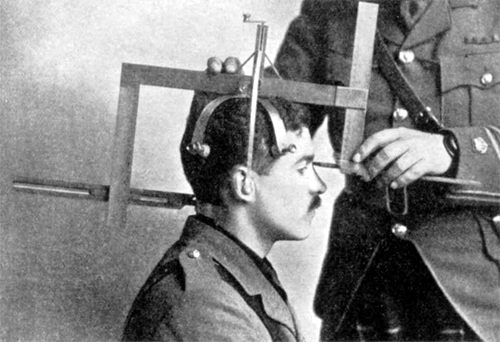
Blinded by Pseudoscience: Standardized Testing is Modern Day Eugenics


eugenics-testing.jpg


Adolph Hitler was a big fan of standardized testing.


It helped justify much of the horrors of the Nazi regime.


National Socialism is nothing but applied biology,” he said.


In other words, it’s just science, people. Some races are simply inferior to others. Black people, Jews, Gypsies, Hispanics – they just can’t hold a candle to the superior races of Northwestern Europe.


And Hitler based much of this on the “science” of Eugenics, especially the work done in America in the 1910s and ‘20s.


Eugenicists used a flawed and biased interpretation of Gregor Mendel’s laws on heredity to argue that lawlessness, intelligence, and even economic success are passed down in families due to dominant or recessive genes. Moreover, the negative traits are widespread in certain races and the positive ones in others.


Practitioners like Carl Brigham used IQ tests to PROVE white people were just the best and everyone else, well, maybe they should just stop breeding. (In fact, laws were passed in the U.S. imposing mandatory sterilization on thousands based on the conclusions of these “scientists.”)


Brigham was a U.S. Army psychologist who used WWI data to declare that whites (especially those born inside the United States) were the most intelligent of all peoples and that immigrants were genetically inferior. He went on to refine his work into an even better indicator of intelligence the he called the Scholastic Aptitude Test or S.A.T.


Perhaps you’ve heard of it.


In his seminal work, A Study of American Intelligence, Brigham concluded that American education is declining and “will proceed with an accelerating rate as the racial mixture becomes more and more extensive.”


To combat this mixture, eugenicist education reformers encouraged schools to rigidly track students into low, middle and high level classes – similar to the way many of our schools are organized today.


Lewis Terman, Professor of Education at Stanford University and originator of the Stanford-Binet intelligence test, expressed these views in his textbook, The Measurement of Intelligence (1916). He wrote:


“Among laboring men and servant girls there are thousands like them [feebleminded individuals]. They are the world’s “hewers of wood and drawers of water.” And yet, as far as intelligence is concerned, the tests have told the truth. … No amount of school instruction will ever make them intelligent voters or capable voters in the true sense of the word.


… The fact that one meets this type with such frequency among Indians, Mexicans, and negroes suggests quite forcibly that the whole question of racial differences in mental traits will have to be taken up anew and by experimental methods.


Children of this group should be segregated in special classes and be given instruction which is concrete and practical. They cannot master, but they can often be made efficient workers, able to look out for themselves. There is no possibility at present of convincing society that they should not be allowed to reproduce, although from a eugenic point of view they constitute a grave problem because of their unusually prolific breeding” (91-92).


This was the original justification for academic tracking. Terman and other educational psychologists convinced many schools to use high-stakes and culturally-biased tests to place “slow” students into special classes or separate schools while placing more advanced students of European ancestry into the college preparatory courses.


Compare that ideal to the increasingly segregated American schools of today. We have schools for the rich and schools for the poor. We have schools for black and brown kids and schools for whites.


Terman would have been in heaven!


It was the work of patriots like Brigham and Terman that the Nazis relied on heavily to justify their forced sterilization programs and ultimately the Holocaust, itself.


Does that sound extreme? It isn’t.


At the Nuremberg Trials, Nazi scientists repeatedly praised the work of American eugenicists, who uncoincidentally also created the standardized test model of education favored by corporate education reformers today.


It’s easy to follow their logic. If certain races can be scientifically proven to be inferior, it is a small step to thinking that they should be stopped from breeding or eradicated from the face of the planet altogether.


And the pseudo-scientific justification for this scheme was standardized testing. The IQ test – which has since been shown to be incredibly biased – was used to justify mass murder. And then Brigham refined that same test into our most popular current standardized assessment – the SAT. In fact, all standardized tests that students are forced to take today owe a huge debt to the SAT and other standardized assessments used by Terman and other eugenicist educators.


The resemblance between testing in the 1910s and the 2010s is obvious to those who will but look.


Similar to the IQ test, modern standardized exams like the Partnership for Assessment of Readiness for College and Careers (PARCC) repeatedly have been shown to be biased in favor of affluent and white test takers. Supporters bemoan the “racial proficiency gap,” but that’s just a nice way of wondering why the same folks Hitler thought were “inferior” don’t do well on our modern tests.


This is no accident. It’s how the assessments are designed.


The IQ test is supposed to demonstrate an innate intelligence. However, modern psychologists have become increasingly skeptical that intelligence is fixed. So standardized assessments like the SAT are supposed to somehow show BOTH what students have learned AND their innate intelligence. That’s the justification behind the high stakes. You have to pass the SAT to show you’re smart enough to do well in college.


Such outright racism would not be tolerated today, so it becomes cloaked in doublespeak. It’s good that poor black students don’t score well on standardized tests because that shows us they need extra help. And then, instead of providing any help, we close their schools or turn them over to fly-by-night charter operators.


Once again, standardized tests are used as the justification for doing something obviously racist. If anyone said, “We’re going to close and privatize all the schools serving minorities and the poor,” people would revolt. However, when you say we’re doing it because of standardized tests – because of “science” – people just shrug and say, “You can’t argue with that!”


The same goes for Common Core State Standards. States were bribed to enact them so that the reasons for attacking public schools would be uniform across the country. This provides another level of pseudo-scientific justification.


They are supposed to ensure every student who graduates high school will be “college and career ready.” However, now that Common Core has been adopted in 46 states and their tests have become aligned with the standards, we’ve seen student scores take a nosedive. Only our rich white kids apparently are ready for college.


So what will we do with those who fall below the mark? We’re sending no additional resources to help them increase their achievement. We’ll just close their schools and/or privatize. And to make sure none of them escape, we’ll make passing the Common Core tests a graduation requirement.


This does not level the playing field. This does not – as some corporate education reformers claim – ensure the sanctity of students Civil Rights. It extensively violates them!


The education model of Test and Punish is a modern eugenics movement. We’re shellacking over class divides so that those below a certain point have no possibility of ever rising to the white place. And I do mean “white.”


Standardized testing is not a ladder of social mobility. It is a means of keeping certain people in their proper place.


Some try to deny the racial component by pointing to the intersection with class. Testing impacts poor white children as it does poor black ones.


To a degree this is true, but remember our eugenic forerunners saw everything in purely racial terms. For instance, today, few people would claim Judaism is a race. It is a religion. It is essentially a belief system, not a set of shared genes even though some adherents do share genetic characteristics after centuries of segregation. But the Nazis considered them a race and, thus, systematically murdered 6 million of them.


The same goes for the poor. Brigham and his Nazi admirers thought that people were poor mainly because of their genes. They are genetically predisposed to being lazy and good for nothing, so they can’t keep a job or advance themselves. Therefore, they’re poor. Pause for a moment to consider the large numbers of people in America today who would agree with them.


Standardized testing treats the poor the same way it does minorities. In fact, it is just the lack of opportunities that come with poverty that cause the very scores that are being used to denigrate these people. Lack of proper nutrition, food insecurity, lack of prenatal care, early childcare, fewer books in the home, exposure to violence – all of these and more combine to result in lower academic outcomes.


But standardized testing puts the blame on the victim. Students score badly because they aren’t working hard enough, corporate reformers say. These kids don’t have enough “rigor.”


To make sure few people actually volunteer to help, we blame their teachers, as well. We make the education profession as unattractive as possible, indicting teachers for all societies ills knowing full well that this will result – as it has – in a nationwide teacher shortage. Then we can deprofessionalize the field and replace educators who have four-year-degrees with lightly trained Teach for America temps.


These kinds of shenanigans didn’t fool the anti-racists of the past.


The great African American scholar W. E. B. Du Bois remarked in 1940, “It was not until I was long out of school and indeed after the [First] World War that there came the hurried use of the new technique of psychological tests, which were quickly adjusted so as to put black folk absolutely beyond the possibility of civilization.”


He could be talking about No Child Left Behind.


In “Intelligence Tests and Propaganda,” scholar Horace Mann Bond issued a warning about the misuse of IQ tests:


“But so long as any group of men attempts to use these tests as funds of information for the approximation of crude and inaccurate generalizations, so long must we continue to cry “Hold!” To compare the crowded millions of New York’s East Side with the children of Morningside Heights [an upper class neighborhood at the time] indeed involves a great contradiction; and to claim that the results of the tests given to such diverse groups, drawn from such varying strata of the social complex, are in any wise accurate, is to expose a fatuous sense of unfairness and lack of appreciation of the great environmental factors of modern urban life.”


He could be talking about Race to the Top.


Karen Lewis, a present-day Chicago teacher and president of her union, says this:


“What many people do not know is that the use of standardized tests has its origins in the Eugenics movement …we have to be clear about the original purpose of standardized tests.


In a society fascinated by statistics, we are often compelled to reduce everything to a single number. Those of us who work with children know that there are so many characteristics that cannot be quantified.


Ask yourselves whether you want to be part of a legacy born of the unholy alliance between the concept of  “natural inequality” and the drudgery that has been imposed on many of our classrooms.”


Make no mistake. Corporate Education Reform is modern day eugenics. It pretends to justify increasing standardization and privatization of public schools through flawed and biased assessments. Its claims that any of this is actually supported by research are spurious. At heart, these are articles of faith – not science. Neither Common Core nor high stakes testing nor charterizing impoverished schools nor putting districts into receivership nor evaluating teachers based on student test scores – none of it has ever been shown in peer-reviewed studies to help students learn.


Corporate Education Reformers are asking all of us to have faith in a racial and economic social order that benefits those already at the top and keeps the rest of us in our place.


And for anyone who questions it, we are continually blinded by their pseudoscientific justifications.

I am a Public School Teacher. Give Me All the Refugees You’ve Got!

syrian_refugee_schools

Come into my classroom any day of the week and you’ll see refugees.

That little Iraqi boy slumped over a book written in Arabic while the rest of the class reads the same story in English. Those twin girls blinking back memories of the Bosnian War as they try to underline possessive nouns on an English worksheet. That brown-skinned boy compulsively rocking back-and-forth in his seat fighting back tears wondering when his dad is going to come home from prison.

Every day, every hour, every minute our public schools are places of refuge for children seeking asylum, fugitives, emigres, exiles, the lost, the displaced, dear hearts seeking a kind word and a caring glance.

Some may shudder or sneer at the prospect of giving shelter to people in need, but that is the reality in our public schools. In the lives of many, many children we provide the only stability, the only safety, the only love they get all day.

And, yes, I do mean love. I love my students. Each and every one of them. Sometimes they are far from lovable. Sometimes they look at me with distrust. They bristle at assignments. They jump when redirected. But those are the ones I try to love the most, because they are the ones most in need.

I told a friend once that I had a student who had escaped from Iraq. His parents had collaborated with the U.S. military and received death threats for their efforts. So he and his family fled to my hometown so far away from his humid desert heartland.

I told her how difficult it was trying to communicate with a student who spoke hardly any English. I complained about budget cuts that made it next to impossible to get an English Language Learner (ELL) instructor to help me more than once a week. And her response was, “Do you feel safe teaching this kid?”

Do I feel safe? The question had never occurred to me. Why wouldn’t I feel safe? I don’t expect ISIS to track him down across the Atlantic Ocean to my class. Nor do I expect this sweet little guy is going to do anything to me except practice his English.

In one of my first classrooms, I had a dozen refugees from Yugoslavia. They had escaped from Slobadan Milosevic’s ethnic cleansing. Yet you’d never know unless they told you. They were some of the most well-behaved, thoughtful, intelligent children I’ve had the pleasure to teach. They were always smiling, so happy to be here. They approached every assignment with a seriousness well beyond their years.

But sometimes you’d see a shadow cross their faces. Rarely you’d hear them whispering among themselves. I was so new I didn’t know any better but to come down on them. But later they told me what they had been talking about, what they had been thinking about – how Henry V’s military campaign brought back memories. They taught me that day. Every year I learn so much from my children.

My high poverty school doesn’t get a lot of refugees from overseas these days. But we’re overwhelmed with exiles from our own neighborhood. I can’t tell you how many children I’ve had in class who start off the year at one house and then move to another. I can’t tell you how many come to school bruised and beaten. I can’t tell you how many ask a moment of my time between classes, during my planning period or after school just to talk.

Last week one of my students walked up to me and said, “I’m having a nervous breakdown.”

Class had just been dismissed. I had a desk filled to the ceiling with ungraded essays. I still had to make copies for tomorrow’s parent-teacher conferences. I had gotten to none of it earlier because I had to cover another class during my planning period. But I pushed all of that aside and talked with my student for over an hour.

And I’m not alone. On those few days I get to leave close to on time, I see other teachers doing just like me conferencing and tutoring kids after school.

It was a hard conversation. I had to show him he was worth something. I had to make him feel that he was important to other people, that people cared about him. I hope I was successful. He left with a handshake and a smile.

He may not be from far away climes, but he’s a refugee, too. He’s seeking a safe place, a willing ear, a kind word.

So you’ll forgive me if I sigh impatiently when some in the media and in the government complain about the United States accepting more refugees. What a bunch of cowards!

They act as if it’s a burden. They couldn’t be farther from the truth. It’s a privilege.

When I see that iconic picture of three-year-old Syrian boy Aylan Kurdi drowned in Turkey as his family tried to escape the conflict, I find it impossible that anyone could actually refuse these people help. Just imagine! There are a host of others just like this family seeking asylum and we can give it! We have a chance to raise them up, to provide them a place to live, to shelter them from the storm. What an honor! What a privilege! What a chance to be a beacon of light on a day of dark skies!

I’m an American middle class white male. My life hasn’t been trouble free, but I know that I’ve won the lottery of circumstances. Through none of my own doing, I sit atop the social ladder. It is my responsibility to offer a helping hand in every way I can to those on the lower rungs. It is my joy to be able to do it.

It’s what I do everyday at school. When I trudge to my car in the evening dark, I’m exhausted to the marrow of my bones. But I wouldn’t have it any other way.

It’s not uncommon for a student or two to see me on the way to my car, shout out my name with glee and give me an impromptu hug. At the end of the day, I know I’ve made a difference. I love being a teacher.

So if we’re considering letting in more refugees, don’t worry about me. Send them all my way. I’ll take all you’ve got. That’s what public schools do.


NOTE: This article also was published in Everyday Feminism, the LA Progressive and on the Badass Teachers Association blog. It was also quoted extensively in an interview the National Education Association did with the author.


The School-to-Prison Pipeline: Turning Kids into Cash

Screen shot 2015-06-07 at 10.34.48 PM
For too many children, public school is just a “GO DIRECTLY TO JAIL” card.

Do not pass GO. Do not collect $200.

The institution that should be raising kids to the skies is chaining them to the ground.

It’s called the School-to-Prison Pipeline, and it disproportionately affects students of color and the poor.

School policy at the highest levels is designed to sort and rank students. Some go to the college track. Some go to the industrial track. And even more end up on the prison track.

We actually have procedures that prepare certain children for life behind bars.

Why? Because people make money from it.

Think about it. The United States represents only 4.4% of the world population but we house 22% of the world’s prisoners. We’re the number one jailor!

It’s not that our citizens are out of control. It’s not a rise in violent crime. In fact, the crime rate has decreased to 1970s levels.

But instead someone has found a way to convert prisoners into cash.

Since the 1980s, we’ve been handing over our prison system to private companies to run for a profit.

The number of inmates in privatized prisons has increased by 44% in the last decade alone, according to a 2013 Bloomberg report.

This creates a market. Without a steady stream of prisoners, these institutions would go bankrupt. And corporations such as Corrections Corporation of America and The GEO Group spend tons of cash lobbying our government to ensure just that.

It’s no accident that our national education policy meets the needs of the for-profit prison industry.

Look at the so-called education reforms of the last decade: increasing standardization, efforts to close schools serving poor and minority children, cutting school budgets and narrowing the curriculum. All of these serve to push kids out of school and into the streets where they are more likely to engage in criminal activity and enter the criminal justice system.

Federal education policy – whether it be No Child Left Behind or Race to the Top – continually doubles down on privatization and standardization. These policies consistently have failed to produce academic gains but are offered as the only possible solution in school reform initiatives.

Question: Why do we keep enacting the same failed policies?

Answer: Because they are not MEANT to succeed. They are meant to fail a certain percentage, race and economic bracket.

If we had effective education procedures that increased academic success, we wouldn’t have enough prisoners to feed our for-profit prisons. Lawmakers would loose valuable lobbying revenue.

Call it what you will – misplaced priorities, profiteering or an outright scam. But the reform-to-profit cycle is advocated, perpetrated and championed by the most prominent figures in the so-called education reform movement.

Take Bill Gates – the monetary force behind Common Core State Standards (CCSS), one of the leading policies in education.

The Bill and Melinda Gates Foundation also is an investor in The GEO Group – one of the biggest for-profit prison providers in the country. It’s most recent tax filing (2013) shows a more than $2 million investment.

Nominally a philanthropic organization, the Gates Foundation refuses to admit if it still backs the industry or by how much. Sure Gates underwriting is just a drop in the bucket, but it proves how the organization’s interest is economic and not charitable. It is one of a herd of Trojan horses stampeding over the cries of critics under a banner of largesse.

Likewise, Common Core essentially isn’t concerned with increasing the quality of children’s education. CCSS has never been proven to be effective and is – in fact – developmentally inappropriate. But it’s touted as a panacea to a host of ills when its real concern is to continue fortifying the prison machine.

We live in a country where more than half of the children attending public school live below the poverty line. They need proper nutrition, social assistance, tutoring, counseling and a host of wrap around services. But instead they get so-called “higher” academic standards and standardized tests.

It’s like a sporting goods store withholding wheelchairs to the Special Olympics and instead donating extra hurdles – all the while claiming it was trying to help participants become better hoppers!

Even worse, these standards aren’t actually better. They’re just confusing, ignorant and ill-conceived. After all, they weren’t developed by educators. They were made by ideologues who admit they were unqualified for the task.

Was this a huge mistake? No. These standards and the associated bubble tests that drive them do exactly what they were meant to do.

They increase the numbers of failing students. They push more kids out of school and into the waiting arms of the prison industry.

And when kids have difficulty sitting through the hours, days, and months of test prep that are increasingly replacing a well-rounded curriculum, they face unfair discipline practices.

We treat misbehaving kids like little criminals.

Can’t sit still in class? Can’t keep quiet? Can’t control your frustration?

Out you go! Detentions, suspensions, expulsions!

We have zero tolerance for your childish behavior – even if you are still a child.

And unsurprisingly the majority of the children who are crushed by the hammer of discipline have dark skin.

Let me be clear. I’m not saying that misbehaving children shouldn’t be disciplined. Far from it.

But we need to stop criminalizing their misbehavior.

If we can’t provide them with schools that teach in a developmentally appropriate manner – it’s not the children who are misbehaving. It’s us! The school system!

Moreover, when a child has a problem conforming to the norm, our first reaction shouldn’t be punishment. It should be understanding. The goal should be to find ways to change the negative behavior, not weed the kid out of the system.

But this means treating children as ends not means.

We have to care about their well-being. They have to be more than just piggy banks for big business.

Otherwise, it is our sick society that really deserves to be sent to jail.


NOTE: This article also appeared in the LA Progressive, ConversationED and the Badass Teachers Association blog.

The Killer in my Classroom

Screen Shot 2015-05-20 at 2.29.49 PM

Some nights sleep just won’t come.

I toss and turn, crumpling the blankets until I have to get up and read or pour myself a glass of water.

Sitting up in the pre-morning gloom, that’s when they come back to me.

A parade of faces. No names. Words are all lost in the haze of time.

But the faces remain.

Kids I’ve taught and wondered about.

What ever happened to Jason? Did Rayvin ever get into dance school? I wonder if the army took Tyler…

But there’s one face that always comes last.

A strong straight lip. Soft nose. Brooding eyes.

Terance… Terrell… TYRELL.

Yes. That’s his name.

One of my first students. One of my biggest failures.

And I don’t have to wonder what happened to him. I know with a dread of certainty.

He never got to play professional basketball like he wanted. He never even made it out of high school.

No, not dead – though I do have I gaggle of ghosts on my class roster.

He’s a murderer. Life in prison.

I was his 8th grade language arts teacher. It was my first year teaching in the district.

I had a reputation for being able to relate with hard to reach kids so they put me in the alternative education classroom.

I had a bunch of students from grades 6-8 who simply couldn’t make it in the regular school setting.

These were kids with undiagnosed learning disabilities, appalling home environments, and/or chips on their shoulders that could cut iron.

But I loved it.

I taught the Read 180 curriculum – a plan designed for students just like mine. We had three stations: silent reading, computer remediation and small group instruction.

The class was divided in three – students rotated through each group. Though I somehow monitored the whole thing, I spent most of my time meeting with kids in small group instruction.

I had an aide who helped the whole thing run smoothly, too. Lots of planning time, support and resources.

Everyday was exhausting. I could barely stay awake on the ride home. But it was worth it, because I felt like I was making a difference.

And there was Tyrell.

Few days went by without at least one of the children having to be disciplined. Sometimes it was just a simple redirection or even standing in close proximity to kids who seemed set to explode. Other times it was a brief one-on-one counseling session to find out why someone was misbehaving. And sometimes it was so bad kids had to be sent to the office. Once we even had a child escorted out of the building in handcuffs because he brought a weapon to class.

If you’d told me one of those children would end up killing someone, I wouldn’t have blinked. If you told me it would be Tyrell, I wouldn’t have believed you.

He was a gentle giant.

Almost always calm and in control. He was well above the others academically. When one of the others lost his cool, Tyrell would help talk him down.

I wondered why he was there. Turns out he was involved in a bloody fight on the way home from school the year before.

But that rarely made its way into the classroom. It was like he was already doing time – serving out his sentence with these misfits until he could be placed back with the rest of the student population.

I remember when Carlos got caught with the knife, Tyrell’s back had stiffened but he hadn’t moved.

The knife had fallen from Carlos’ pocket across the table and slid to the floor.

Tyrell watched it slide across his desk but said nothing.

“Is that a knife, Carlos?” I asked.

“No!” he said picking it up and putting it back in his pocket.

“Why do you have a knife, Carlos?” I asked.

He shrugged and refused to say anything.

Then Tyrell spoke up.

“It’s for the walk home, Mr. Singer.”

“What?” I asked.

“He needs it,” Tyrell said.

And the look in both of their eyes said it was true.

But what could I do? If he used that knife, I’d be liable.

I had to report it, and I did.

Would I still do that? Was it a mistake?

I don’t know.

But I went to the administration and told them the truth – that I BELIEVED the knife was for self-defense. That something had to be done to protect these kids on the walk home.

Nothing changed. Our district saves a ton of money by forgoing buses. Richer kids get a ride to school. Poorer kids walk.

And Carlos got charged.

Tyrell never said anything about it. But I wondered what we’d find if we searched HIM.

We have metal detectors, but they are far from 100% effective.

I remember one day Tyrell stayed after class to talk to me. Talk quickly turned from grades and assignments to what he wanted to do with his life.

Tyrell loved B-ball. Often wore a Kobe jersey to school. And always the cleanest, brightest Jordans on his feet.

He was going to play ball, he said. No doubt about it.

I tried to convince him to have a backup plan, but he just shook his head.

“What kind of options you think there is out there for a guy like me, Mr. Singer?”

I’ll never forget it. Me trying to convince him he could do anything he wanted, and he just smiling.

“Guy like me only do one of two things,” he said, “He plays some ball or he runs out on the streets.”

I asked him to explain, and he told me about his brothers – how they sold drugs, bought fancy cars, took care of the family.

I kept insisting there was another way – a better way. And finally he agreed but said that his way was easier, safer, more of a sure thing.

“Why should I work my ass off on all this?” he said pointing to his books, “I can make a stack on the street.”

Was there anything I could have said to change his mind?

I don’t know. But I tried.

And that was it, really. I never had another chance. They moved him back to regular ed. a few weeks later.

He finished the year with a different teacher in a different part of the building.

I saw him occasionally, and he’d dap me up, but that was about it.

The next year there was an opening for me in regular ed., too.

Eighth grade with the academic track population.

I had to really think about it. My colleagues thought I was crazy not jumping on it at the first opportunity.

But it was no easy decision.

What finally pushed me over the edge was the rumor that alternative ed. was being downsized.

They would no longer pay for the Read 180 curriculum. No more aides. No more resources and extra planning time.

So I put in for the move and have been there ever since.

Of course, with a much reduced alternative ed. most of the students I would have taught had moved up with me to the regular ed. classroom. Now they’re just bunched in with the regular population.

But I don’t regret it. I love these kids. I love being there for them.

And Tyrell? About a year later, I read about him in the newspaper.

Police think it was a drug related hit. Tyrell was in the backseat. He put his gun to the driver’s head and pulled the trigger.

Bam.

No more future for either of them.

Except on restless nights when Tyrell’s face keeps coming back to me.

Is there something I could have done? Do the words exist for me to have convinced him to change his path? Would he have listened if I hadn’t reported Carlos?

And most importantly – why am I the only one who seems to care?


NOTE: A slightly condensed version of this article was published on Nancy Flanagan’s blog “Teacher in a Strange Land” in Education Week. The expanded version seen here also was published on the Badass Teachers Association blog.