The Measure of Citizenship isn’t an Exit Exam – It’s Participating in Our Democracy

screen-shot-2016-09-28-at-10-08-57-pm

Pennsylvania legislators just flunked civics – big time.

Once again, instead of offering real solutions to eradicate the ignorance of the coming generation, they clothed themselves in their own.

A bi-partisan group of 47 state lawmakers is proposing forcing all public school students to pass a test on citizenship in order to qualify for a diploma.

House Bill 1858 would require all K-12 schools receiving tax dollars — including charters schools and cybercharters — to give their students the same 100-question test that immigrants seeking U.S. citizenship will have to pass starting in 2020. Any student who doesn’t get a sufficient score will not receive a diploma or GED equivalency.

While it is admirable that legislators are concerned that high school students don’t know enough about civics, it’s unfortunate that they think the solution is another standardized test.

After all, what does being a good citizen have to do with a multiple choice exam?

Citizenship is about political independence. It’s about exercising your rights, not memorizing them. It’s about engaging in the political process, not spitting back facts about what kind of tree George Washington chopped down. It’s about using the principals of self-determination to rise up to the level of personal and community involvement, of individual sovereignty and home rule.

This involves actually teaching civics, a subject that has been cut to the quick in our schools to make room for an increasing amount of test-prep in math and reading. It used to be common for American high schools to offer three civics and government courses. Two of them – “Civics” and “Problems of Democracy” – defined the role of a citizen in relation to current events and issues. However, in most districts now these have been condensed into one “American Government” course that spends hardly any time on how students can and should participate in their government. Moreover, this course isn’t even offered until junior or senior year – far too late to make much of a difference.

Maybe instead of  putting a metaphorical gun to kids heads and demanding they care about civics, you could actually provide some resources so teachers could… I don’t know… teach it!

How about actually funding our public schools? You well-meaning dunderheads slashed school budgets by almost $1 billion a year for the last six years, and your only solution to helping kids learn has been to put more hurdles in their way without offering anything to help them achieve.

That is a losing strategy. If you want to have a winning race horse, at some point you have to feed the freakin’ horse!

If lawmakers really want kids in the Keystone state to know something about civics, why not start by making it easier for schools to broaden the curriculum to include robust civics courses?

This means REDUCING the number of standardized tests, not increasing them. Inject some money into the system so schools can hire back some of the 25,000 teachers who have been furloughed. You want kids to learn how to be citizens? Provide them with excellent teachers who actually get to experience some meaningful professional development, teachers not overburdened with meaningless paperwork to justify their jobs at every turn, teachers encouraged with rewards for seeking National Board Certification, etc. And let’s reduce class size so kids actually have the chance to be heard by their teachers and might actually learn something.

Moreover, if you really want to assess if these lessons have been learned, assess whether students are actually participating in their Democracy.

That’s the thing about citizenship. It looks like a noun, but it’s really a verb. It only has meaning if you do it.

Have high school kids registered to vote? Have they volunteered to take part in the political process, to canvass or phone bank for a candidate they believe in? Have they attended a session of the state House or Senate? (Have you provided the funding for appropriate field trips?) Have they attended a rally or protest for a cause close to their hearts?

THESE are the measures of true citizenship. And there are things you can do to make it easier for students to take part.

But no one really wants that. Come on. This is still essentially the same legislature that passed a Voter ID bill a few years back to make it harder for people to participate in our Democracy. And it would still be on the books if the state Supreme Court hadn’t struck it down as Unconstitutional.

Citizenship!? This is the same legislature that redrew state districts to be so incredibly gerrymandered that the most radical factions of both parties are unchallenged each election cycle!

You know why children don’t know more about civics? Because they’re so disgusted and demoralized by the example you’ve shown them. When politics is nothing but a show, when hardly anything ever changes or actually gets accomplished in Harrisburg, you expect kids to get excited by citizenship!? HA!

All you know how to do is pretend. That’s what this is. Just throw another standardized test on the fire of our children’s education and you can act like you’ve done something.

May I remind you we’re still dealing with the last smoldering exit exam disaster you fostered on us – the Keystone Exams?

You spent $1.1 billion on these tests since 2008, and they’re a statewide joke! You required all students to pass these assessments in Literature, Algebra and Biology, but they’re so poorly constructed and confusing that only half of our students can pass all three. So you put them on hold for two years until you could decide what to do.

And before you even fix that mess, you actually have the gall to say, “Hey! Let’s make kids take ANOTHER test!?”

I know some of you mean well, but this suggestion is a disgrace.

It’s style over substance.

This isn’t a measure to reduce ignorance. It’s a measure conceived in ignorance that’s guaranteed to proliferate it.

Former NFL Quarterback Supports Public Schools. That’s Right. PUBLIC Schools!

dictionary

So I’m in my classroom today, teaching, when I see something that stops me cold.

The door opens and in comes former Steelers backup quarterback Charlie Batch.

My mouth falls open. I don’t know what I was talking about. Vocabulary words or something.

The class of 8th graders falls silent, too. All eyes are on the two of us.

Batch looks me right in face with a big smile.

“Here you go,” he says and hands me a shopping bag full to bursting with school supplies and an extra-large tub of hand sanitizer.

By this time I’m probably blushing and grinning like my teeth are about to escape my face.

I hope I was able to mouth a “Thank you,” before he left, but I’m not really sure.

It all kind of happened in a daze.

He came. He gave me supplies. He left.

I guess I shouldn’t have been so taken by surprise.

Batch is a frequent face in my district. After all, he graduated from here, himself, before moving on to college and professional sports.

At the beginning of every year, Batch brings school supplies to every teacher in every building in the district. This was just the first time I was actually in the classroom when he dropped them off. Usually he sneaks in when I’m at lunch duty or in the computer lab. I find them in a neat pile on my desk with a note of thanks – to me!

It’s almost like he doesn’t want to draw attention to it. Almost like he doesn’t want to make us feel like we need to thank him.

It’s his quiet way of giving back to the community that made him.

In some ways it’s the most natural thing in the world. In others it’s truly amazing.

Lots of celebrities make charitable contributions to their communities. Many even put that money into their hometown. But how many invest in the public school system?

Most only seem to have eyes for charter schools. You know – those often cut rate, fly-by-night institutions that are privately managed and publicly funded. Schools that pop up in store fronts or in the mall with a celebrity name on the door and little else.

Rapper Pitbull has opened three of these dubious institutions. Pro-Football Hall-of-Famer Deion Sanders opened two – and closed them both last year. Tennis star Andre Agassi has founded a few and co-founded an organization that rents out properties to other charter schools at a profit. Former NBA players Jalen Rose and Kevin Johnson opened some, too, though Johnson is being investigated for misusing federal funds at his institutions. He likes the industry so much, he even married one of its chief advocates, former D.C. Schools chief Michelle Rhee.

But Charlie Batch? He hasn’t opened a single charter school.

There is no shiny building with his name on it. He hasn’t hired a corporate management team to increase his brand. He isn’t bragging in the newspaper about how he’s “Mr. Education” as Pitbull tried to rename himself.

No. He gives his money to the same public school from which he graduated. And then some!

He did start a charity called the Best of the Batch Foundation, which engages in several initiatives to help underprivileged children in the Pittsburgh region. The organization gives out free backpacks – or Batch Packs – to children in need. More than 7,500 have been distributed to date. About two thirds of my students have them. I can’t imagine what they’d do without them.

Batch also participates in Read Across America Day every March 2. The two-time Superbowl champ visits several western Pennsylvania schools to celebrate Dr. Seuss’ birthday while reading to children his favorite works by the author.

The project is sponsored by the National Education Association (NEA). That’s right. The largest teachers union in the nation. Batch isn’t throwing stones at teachers. He’s out there on the front lines helping us reach children.

In addition, every year Batch partners with the local Rotary Club to help promote literacy. He goes into the schools to read to third graders and give each one a free dictionary. Children also receive lessons how to use them and become word conscious. For some students, this is the only dictionary in their house, and it becomes a tool for all their brothers and sisters up through high school.

Batch also works with local business partners to provide 13 college scholarships to help defer the cost of higher education for needy children. Scholarships range from $1,000 to $8,000 per recipient.

Batch also knows the importance of pre-school. He works with local businesses to provide pre-kindergarten scholarships through the Educational Improvement Tax Credit (EITC) and Opportunity Scholarship Tax Credit (OSTC) programs.

And those bundles of school supplies that he hands out every year – each one contains more than $250 worth of pencils, paper, tissues, etc.

That’s not just a donation. It’s a pencil in the hand of a student who doesn’t have one. It’s notebook paper for a child whose parents are working three jobs just to make ends meet. It’s tissues and hand sanitizer so kids won’t get sick and miss class.

I can’t tell you how much it means to my students and me that Batch is there for us.

He knows what challenges we face because he’s there with us. He isn’t criticizing. He’s taking action.

If only more celebrities would value deeds more than words. If only more people would put themselves out there for our public schools.

If only more people were like Charlie Batch.


NOTE: Charlie Batch also donates school supplies to teachers at our local Propel Charter School. It’s a fact noted nowhere on the Batch Foundation Website. In fact, nowhere does he boast of all the schools he visits. In an age of philanthrocapitalists more concerned about controlling the fields where they donate, Batch is an anomaly. He is apolitical and pro-child.

Instead of Nixing the Keystone Exams, PDE Recommends a Cornucopia of Tests

frustrated-student-300x199

The answer is in.

After a summer of intense study, the Pennsylvania Department of Education (PDE) has a solution to our exit exam problem.

Last year we almost failed half of our high school seniors state wide because they couldn’t pass all three of our poorly constructed Keystone Exams. So we decided not to count the scores for two years in order to find a way to fix the problem.

And now PDE has a recommendation for the legislature.

Drop the Keystone Exams? Base graduation on the completion of high school classwork?

NOPE.

PDE still loves standardized testing. It just wants to give kids more choice about which standardized tests they can take.

Instead of having to pass the Keystone Exams in Algebra I, Literature and Biology, state policy-makers suggest a veritable Whitman’s Sampler of test-heavy paths to graduation.

Four choices.

Four paths to a diploma.

And they all involve lots and lots of multiple choice, sharpen-your-number-two-pencil, standardized tests.

PDE suggests that students can:

1)         Achieve scores on all three Keystone Exams that when averaged out produce a passing score. So maybe you fail the Biology test but your Algebra I and Literature scores are high enough to even out to a passing score.

2)         Achieve a passing score on some other standardized test approved by the state – SAT, ACT, etc. So maybe you take the Keystone Biology exam and the SAT for English and Math.

3)         For vocational students only – get passing grades in your high school classes, and pass a standardized assessment made for vocational students or otherwise provide evidence of success in that field of study.

4)         Get passing grades in your high school courses and provide at least three pieces of evidence of postsecondary success. More on what counts as evidence later.

PDE estimates these new alternative graduation requirements will be much more effective than the old ones.

The first option of allowing an average score on all three Keystone Exams, for instance, would mean that 72% of Pennsylvania students would thus be eligible for graduation vs. 51% under the old requirement.

The remaining 28% of high schoolers could then meet the graduation requirement by following one of the other three paths.

In most cases, this means more standardized testing – you just get to choose which test to take.

Under the fourth option, students only need to pass their courses and provide three pieces of evidence that they deserve to graduate. But what counts as evidence?
Please pick three from the following menu:

1)         Earn a passing grade in a dual enrollment course. In other words, pass a class in high school that will count as a college credit – maybe an advanced foreign language or math.

2)         Pass the Armed Services Vocational Aptitude Battery (ASVAB) – the entrance exam to qualify for military service. I don’t think you have to actually enlist, but you have to take and pass the test.

3)         Get a letter from an employer guaranteeing you have full-time employment after high school.

4)         Attain a high value industry credential.

5)         Get a certificate that you successfully  completed an internship related to your career goals.

6)         Pass a standardized test such as the PA Career Academic Work Standards assessment and/or SAT.

One notable absence from these choices is a Project Based Assessment (PBA).

Previous legislation allowed students who failed the Keystones to complete PBAs in place of one or more tests. Students would research a specific topic with a trained tutor who would evaluate students’ work and provide feedback. It was designed for students unable or unwilling to pass specific Keystone Exams.

However, this was extremely expensive.

Over the past year, approximately 6,700 students throughout the state completed 15,700 PBAs. In many cases, it took them more than 30 hours to finish each assessment. This put a tremendous burden on local school districts to hire additional staff and remediate students from missed coursework. It also cost the state more money to hire additional people to score the PBAs.

According to the report, an unnamed suburban southeastern district told PDE it had to hire nine specialists at a cost of $900,000. A large unnamed urban district estimated PBAs would cost it an additional $4.1 million. PDE, itself, would need an additional $7 million to grade these assessments.

There were also concerns of whether the PBAs could be completed in a secure fashion to make sure students weren’t cheating. However, the majority of concerns were financial.

As a result, PDE recommended doing away with PBAs.

This leaves the question of what to do with students whose parents opt them out of standardized testing. Under previous legislation, these kids could take PBAs. It is unclear what they could do now to achieve the graduation requirement since so many of the options suggested by PDE involve taking some form of standardized test.

It remains to be seen if lawmakers decide to trample on parents rights in this way.

So that’s it. Four paths to graduation.

There are many ways in which these alternatives are an improvement to the old pass-the-Keystones-or-else requirement.

First, the new plan acknowledges that students don’t need to be equally strong in all academic areas. Someone going into technical school has less reason to demonstrate skill in Biology than someone entering the medical field, for instance.

Also, this provides different options to qualify for a diploma instead of different kinds of diplomas. It had been suggested that students who don’t pass all tests might get a second tier diploma, perhaps even one of several tiers of diploma. So a blue diploma might mean you did pretty good, but not as good as a gold diploma, etc. We can be thankful PDE nixed that terrible idea.

Another positive is that PDE acknowledges standardized tests are not the only possible measure of success. Moreover, some measures of that success can be fairly determined at the district level.

Personally, I wish they went further with this. The authors of the report admit that colleges and employers rarely look at standardized test scores. Report card grades are a much better predictor of future success at both the college and career level. PDE cites three different peer-reviewed academic studies that come to this conclusion, but state education officials don’t have the bravery to likewise conclude that standardized assessments are unnecessary. Instead they play around at the edges, allow choice among standardized assessments and a complicated metric relying heavily on these assessments.

Moreover, as refreshing as it is to have state government admit that we can trust our local school districts to make some decisions about their students, why can’t we go one step further and say local districts can determine who deserves a diploma, in the first place? For centuries this is exactly what our schools did. In fact, the majority of people currently holding down jobs were determined to be ready for those jobs or their college experiences by just those same local school districts. Is America so incompetent that it needs standardized test corporations to bless everyone before being allowed to graduate? Would we be a better nation if everyone had to pass a standardized test to qualify for the workforce?

In short, the report from PDE certainly represents an improvement on the current Keystone Exam graduation requirement. However, it shows a real lack of courage and conviction by state functionaries.

There is no academic reason to have a graduation requirement beyond traditional coursework. It will only suppress the graduation rate as it has in other states in which it has been enacted. If we really wanted to increase the quality of high school graduates, we’d invest in them. We’d lower class size. We’d provide a wide curriculum. We’d provide equitable funding for children at different points on the socioeconomic scale. We’d provide services and tutoring for our most disadvantaged students.

Instead, we’re still just putting up more hurdles and demanding kids pull themselves up by their own bootstraps.

Something clearly must be done.

If the legislature doesn’t make changes, the requirement to pass all three Keystone Exams will apply to current high school freshman and sophomores.

There’s never been an exit exam like this in Pennsylvania before – in fact, almost the entire workforce, business community and state leadership somehow managed to get by without one. But whatever; these children today need to prove themselves.

Kids, passing your courses isn’t enough anymore. You’ve got to pass a test. Several of them in fact.

Never mind that you have to pass tests to succeed in your courses. THOSE tests are designed by teachers. You have to pass a real test – something designed by a corporation.

As big business continues to floods our lawmakers with campaign cash, somewhere along the way our representatives decided to spend a truckload of our tax dollars on big business – to make tests. Can’t imagine why.

In 2014, the legislature decided you’d have to pass a series of 10 Keystone Exams in core subjects. Fail even one of them and you’d get nothing but a certificate of attendance. So 12-13 years of schooling and you get this:

“Hey! Remember Paulie?”
 
 
“Yeah?”
 
 
“He was here.”

However, creating 10 brand new tests costs an awful lot of money. Pennsylvania shelled out more than $200 million before lawmakers said, “Okay, that’s enough,” and stopped with just the three we have. But before even these could be made permanent prerequisites of graduation, the scores came in.

It wasn’t good. About half of all students in both traditional public schools and charter schools couldn’t pass them all.

Why?

Well, the Common Core aligned tests were of dubious quality and zero validity based on actual educational research. Also, we cut off educational supports by slashing school budgets by almost $1 billion a year. Oh, and we spent way more money on rich students than poor students earning us the dubious distinction of having the most inequitable school funding in the nation.

Not exactly a recipe for success.

So what was the state to do – move forward and withhold diplomas for half of all students? Or Toss out the tests and move on?

Instead, lawmakers came up with a unanimous compromise – more time. The legislature decided to pause the Keystone requirement for two years in order to better study what could be done.

And now PDE has it’s test heavy solution to move forward.

People of conscience need to stand up and oppose any kind of additional exit exam in Pennsylvania. Parents, teachers and students need to band together. School board directors need to pass resolutions. Thoughtful lawmakers need to put forward progressive legislation.
The resistance has already begun.

State Senator: Get Ready to Sue the PA Department of Education Over Common Core Testing

20110831_inq_rrxsrc31z-a

Pennsylvania State Sen. Andrew Dinniman is mad as Hell and he’s not going to take it anymore.

The West Chester Democrat is furious at the state Department of Education (PDE) over the Keystone Exams.

In February, the legislature unanimously passed a law to delay for two years using the Keystones as a graduation requirement for public school students. The exams will still be given to high school students in Algebra I, Biology and English, but passing them is not necessary to receive a diploma. During this time, the legislature is supposed to investigate alternate assessments above and beyond standardized testing.

However, Dinniman sent out an email to supporters this week claiming PDE is “blatantly ignoring the law and issuing directives to local school districts to use the exam if they want to for graduation.”

This goes against the delay, says Dinniman. The legislature is unsure requiring the Keystone Exam is a good idea, yet the state Senator contends the current administration is advising districts to move forward anyway.

Under the old law that was put on hold by the delay, if parents decided to opt their children out of standardized testing, students had to complete a Project Based Assessment. However, even though there is no test-based graduation requirement for current seniors, Dinniman says PDE still is forcing these children to complete Project Based Assessments.

“It appears that PDE is forcing the children of parents who opted out to take the Project Based Assessment, whose use is currently suspended by the legislature,” he says.

“There seems to be no respect by PDE for the rights of parents concerning their own children.”

Dinniman, who also serves as minority chair of the Senate Education Committee, has long been a critic of the Keystone Exams. He lead the charge to delay their implementation.

Now that PDE seems committed to the project despite concerns by legislators, he is asking for parents and other concerned citizens to contact him about suing the organization.

“If you know parents or organizations who might want to take PDE to court or file amicus briefs, let me know…  This is a matter of great importance. A number of us have been working for years against excessive testing and have serious concerns about Common Core.”

He will hold an open meeting for those concerned about the issue on Monday, Sept. 12, at 7:30 pm in his district office along One North Church Street in West Chester.

One of the issues at stake is the exorbitant costs of the Keystone and Pennsylvania System of School Assessment (PSSA) tests. With education budgets shrinking at the federal, state and local level, this money diverted to huge testing corporations could be better spent elsewhere.

Since 2008, the Commonwealth has spent $1 billion to proctor, grade and create new versions of the PSSA and the new Common Core-aligned Keystone Exams. Of that figure, $741 million went to Data Recognition Corporation.

Dinniman included in his email an explanation of the Commonwealth’s contract with Data Recognition Corp., a chart showing how much has been paid to the company, a list of materials PDE requested from the company but that has not yet been provided and an article written by education historian Diane Ravitch published in the New York Times explaining why these tests are troublesome.

In 2013, the state Conference of NAACP Branches issued a statement condemning the Keystone graduation requirement in extremely strong terms.

The organization called it a “present day form of Eugenics”, “a human rights violation”, “a clandestine social movement that strips children of their dignity and self worth” and that it would deprive impoverished and minority students  “of decent income, decent food, decent homes, and hopeful prospects as well as the security of justice.”

The statement can be read in full here.

In the halls of state government, Dinniman has been one of the most vocal critics of high stakes testing and national academic standards.

“I have been fighting against the use of these standardized tests as the sole determinants of high school graduation since they were first proposed by the previous [Corbett] administration in 2012.”

“Strong standards and effective assessments are needed in our schools, but they must come with the necessary resources and support to be implemented in a way that does not negatively impact both students and taxpayers,” he says.

Chester County, where Dinniman is from, has been a hotbed of testing criticism. Located in the southeastern most part of the state, parents, teachers and students publicly spoke out against the exams. Almost all school boards in the county passed resolutions opposing the Keystones and 58 superintendents and Intermediate Unit Directors up through the Philadelphia suburbs also expressed opposition.

If the delay had not been approved, this year’s seniors would have been required to pass all three Keystone Exams in order to graduate. Now the exams won’t be a graduation requirement until the 2018-19 school year.

The federal government still requires the exams be given for evaluative purposes, but it was the Republican dominated Tom Corbett administration that went the extra step of making the exams necessary to receive a diploma.

The delay is supposed to provide additional time to resolve consequences of implementing the exams. This means investigating and reporting on the following:

    • Alternative methods for students to demonstrate proficiency for graduation in addition to the Keystone Exams and project-based assessments.
    • Improving and expediting the evaluation of the project-based assessments.
    • Ensuring that students are not prohibited from participating in vocational-technical education or elective courses or programs as a requirement of supplemental instruction.

Moreover, the newly passed federal K-12 education legislation, the Every Student Succeeds Act (ESSA), allows the Commonwealth even more leeway to implement fairer and more affective means of assessment, Dinniman says.

“Until now, education policy has been largely dominated by regulations implemented by the State Board of Education in accordance with the federal government. Some of these regulations seemed to be enacted with little to no consideration of fiscal impacts or educational value,” Dinniman said.

“However, the state legislature has a Constitutional duty and responsibility to oversee and provide for ‘a thorough and efficient system of public education.’ Going forward, I believe the legislature will be more aggressive in reasserting its role in the process.”

Dinniman can be reached by phone at 610-692-2112 (District Office) and 717-787-5709 (Harrisburg Office).

He can be reached by email here.

He is on Facebook and Twitter.

Below is the full text of Dinniman’s Email:


(Source: optoutpa.blogspot.com)


To Supporters of Ending Common Core Exams in Pennsylvania:

Despite Act 1 of 2016, which suspended any use of the Keystone exams or the Project Based Assessments for graduation purposes during the two year period of 2016-18, the Pennsylvania Department of Education (PDE) is blatantly ignoring the law and issuing directives to local school districts to use the exam if they want to for graduation.

It certainly appears that PDE has shown their solid commitment to the Common Core testing process and the continued collection of data.  They don’t seem to care about or respect the law.  This is not government by the elected legislature but government by the bureaucracy.

You will be interested to learn the taxpayers of Pennsylvania, since 2008, spent $1.1 billion on these Common Core tests, with $741 million of that going to one testing company, Data Recognition Corporation (DRC).

Please view the supporting material at the following links:
1. An explanation of the Data Recognition Corp. (DRC) contracts.

2. A chart showing the DRC contracts, which come to $741,158,039.60, and the total paid to date of $440,512,625.69.

3. A listing of material requested from PDE but, as of this date, not provided.
4. A column from the July 23, 2016 New York Times providing background on these Common Core Exams, which in Pennsylvania are the Pennsylvania System of School Assessment (PSSA) and Keystone Exams.

Additionally, it appears that PDE is forcing the children of parents who opted out to take the Project Based Assessment, whose use is currently suspended by the legislature.  There seems to be no respect by PDE for the rights of parents concerning their own children.

So the question now is “what will we do about this situation?”  If you know parents or organizations who might want to take PDE to court or file amicus briefs, let me know.

In the meantime, I am having a meeting for those concerned about PDE’s actions in my district office, One North Church Street, West Chester, on Monday, September 12th, 2016 at 7:30 p.m.

This is a matter of great importance.  A number of us have been working for years against excessive testing and have serious concerns about Common Core.  Please invite your friends to join in the September 12th meeting.

Respectfully,

Andrew E. Dinniman

State Senator, 19th District

Pittsburgh School Director Donates Kidney to 7-Year-Old Student

Screen Shot 2016-08-06 at 12.13.07 AM


Moira Kaleida represents the best of public service.


Some people would give you the shirt off their backs.


She gave a sick child a kidney out of her body.


The Pittsburgh School Board Director isn’t related to the 7-year-old student. She is barely an acquaintance. She doesn’t even represent the ward in which he and his family live. But when she read a Facebook request asking for donors, she says it was a “no-brainer.”


“I thought if it were my kid, I’d want to know someone was out there trying,” Kaleida says.


“It really doesn’t affect my everyday life beyond the couple of weeks of recovery. But for him, it’s something that changes his life drastically.”


The child, Laith Dougherty, had already undergone two heart transplants, one when he was 3 months old and another when he was 3 years old. But in 2012, a test showed his kidneys were working at only 35 percent capacity. After a series of illnesses in the fall, they were down to 6 percent and he was on dialysis.


None of his immediate family was a match and his B blood type made finding one difficult. He was looking at a wait of between 6 months and two years before a donor could be found.


That’s when the family reached out to Facebook. Kaleida saw it, privately investigated to see if she was a match and when she was, she contacted Ghadah Makoshi, the child’s mother.


“It’s shocking to me because I had only met her once or twice,” Makoshi says. “It’s sacrifice to say, ‘I’m going to go through surgery and pain to make sure your kid survives.’ Most people wouldn’t do that.”


The surgery was done in June and the kidney began working immediately. Laith is expected to make a full recovery.


Kaleida is a woman of high ideals.


The 32-year-old mother of two doesn’t just talk the talk. She walks the walk.


Though she’s only been on the board since November, she has been on the right side of just about every issue.


She was the impetus behind the district’s newly approved transgender student policy. After principals and legal experts alerted her to the need for procedures to protect students’ rights and provide supports, she successfully lobbied her fellow school directors to take action.


“We’re moving forward on the right side of law and history,” she said at the time.


She’s also an advocate for community schools and the restorative justice discipline policies currently being enacted district-wide. She supports the idea that Pittsburgh schools should be at the center of the community providing medical care, wraparound services, before- and after-school programs, etc. to help keep children in the classroom. She favors a discipline policy not focused on punishing students but ensuring they make things right for their misbehavior.


To that end, she is a firm supporter of new Superintendent Dr. Anthony Hamlet. When Hamlet was attacked by corporate education reformers and big money interests earlier this summer, she stood by him.


She may be one of the most progressive members of a very high-minded board.


Though city schools struggle to keep afloat because of underfunding from the state and federal government plus an increasingly impoverished local tax base, the district has one of the best boards in the state.


In fact, in many similar urban districts like Philadelphia City Schools, there is no elected school board.


If a Political Action Committee (PAC) has its way, the same thing will happen here. Deep-pocketed investors are gathering funds to unseat as many Pittsburgh School Directors as possible and – if possible – push for the district to be run by government appointees, not duly elected representatives.


Kaleida’s story shows exactly why this would be a mistake.


Corporate cronies would never look out for the needs of the community the way actual residents do. People who live in the community, know the community and relate to the families and children living there are far superior to anyone making decisions based on a spreadsheet.


Kaleida is a lifelong resident and graduate of the district. When she ran for office, even the privatization-loving Pittsburgh Post Gazette couldn’t help but endorse her due to “her superior detailed knowledge of the city schools and their challenges.”


Kaleida dedicates herself to raising her children and volunteering for various organizations. She has given time to the International Cesarean Awareness Network (ICAN); NurturePA, which supports new mothers; and various neighborhood efforts. She also tries to find more funding for the district’s Pre-K initiative so it can provide services to even more children.


She represent District 6 neighborhoods including all or parts of Brookline, Beechview, Banksville, Mount Washington and Duquesne Heights.


Laith is lucky his school is represented by a woman like Kaleida. So are all the parents and children of Pittsburgh.


We need more school directors like her and her colleagues. And more than anything we need more local control of public education.

PA Charter Schools Caught Gaming the System for $2.5 Million

shell-game


Should a charter school be reimbursed for a lease to itself?


That’s the question at the center of yet another scandal about the industry.


Auditor General Eugene DePasquale found nine Pennsylvania charter schools taking $2.5 million from the state to pay themselves back for properties they already own.


“What we found in some of our audits the same people who own and operate charter schools create separate legal entities to own the buildings and lease them to their charter schools,” DePasquale says. “We keep finding it and supplying the information to the department and they do nothing with it.”


His office found this happening in nearly a third of the 40 charter school audits done since he took office in 2013.


This goes against Pennsylvania Department of Education (PDE) guidelines adopted 14 years ago, says DePasquale. A charter school is not eligible for lease reimbursement if it owns the building.


PDE spokeswoman Casey Smith agrees. Charter school CEOS “are required to sign a self-certification statement verifying that the charter school does not own the building and that the building is being used for educational purposes,” she says.


This is exactly the kind of malfeasance the U.S. Department if Education warned states to look out for as recently as 2015.


However, DePasquale found questionable lease reimbursements at Propel Schools in Allegheny County, School Lane in Bucks County, Chester Community in Delaware County, Perseus House of Erie County, Fell of Lackawanna County, Roberto Clemente of Lehigh County, Bear Creek Community of Luzerne County, Keystone Education Center of Mercer County and Evergreen Community of Monroe County.


Screen Shot 2016-08-04 at 11.04.34 PM


If this practice has been going on since the guidelines were enacted in 2002, many more charter schools also may have cashed in. DePasquale estimates charter operators could have bilked the state out of $10 million to $15 million over that time period.


It’s shocking that so many charter school operators would consider themselves entitled to state money for something that doesn’t cost them anything to provide. They are supposed to be running public schools, but they continually flaunt their ability to disobey the law at state expense. This money doesn’t do a thing to help students learn. It goes directly into charter operators’ pockets.


For education advocates, this is one of the most pervasive problems with the charter industry. Making profits is put before educating children. At traditional public schools, surplus earnings are not allowed by law. All taxpayer funding goes to provide services for the students. While staff earns a salary, no taxpayer money is ever allowed to be pocketed in excess to boost the bottom line. Extra money – if it appears – is saved to be spent the following year or later.


Charter advocates see it differently. They think competition is necessary to produce superior results, though the result is often a waste of tax dollars that could be put to better use helping our underfunded public schools.


In this case, lawyers for the charters in question say their clients have done nothing wrong.


These payments meet the letter of the law, says Alan Shuckrow, a lawyer for Propel, which took $376,922 in lease reimbursements of this kind.


“From Propel’s perspective, we’re following the law and if the law changes, we’ll comply with that law,” Shuckrow says.


It all depends on how you interpret the law, says Robert Fayfich, executive director of the Pennsylvania Coalition of Public Charter Schools.


“The auditor general takes the position if the building is owned by a charter school then it’s not reimbursable and PDE says ownership is irrelevant to reimbursement,” he says. “I’m sure charters are working based on the recommendation from their legal counsel plus direction from PDE.”


DePasquale agrees with Fayich to a point. The auditor general says the fault isn’t so much with the charter schools for applying for these reimbursements. It’s with PDE for granting them in the first place, and then taking no action to get the money back.


DePasquale and his predecessor, Jack Wagner, pointed this out numerous times, he says, yet the department has “never made an attempt to clawback any of these funds.”


This is just one of many reasons he considers the Commonwealth’s charter school law the worst in the nation and in desperate need of reform, he says.


However, reform seems unlikely in a state where lawmakers typically put their own names to legislation written by the American Legislative Exchange Council (ALEC).


Just such a “reform” bill was pushed during the adoption of the 2016-17 state budget, but it was dropped due to lack of support.


Known as House Bill 530, it would have allowed for unlimited proliferation of charter schools without input from the traditional public school districts or voters who would have to foot the bill. While it did provide a bit more oversight, the bill was an unforgivable giveaway to the industry at the expense of taxpayers.


Supporters are threatening to take the bill up again later this month.


If this is what lawmakers mean by reform, we’re in big trouble.


The problems are out in the open. Public servants like DePasquale keep pointing them out to us, but no one has the guts to stand up against a big business like this one – even if it hurts school children.


The PDE needs to stand up. Lawmakers need to stand up. Voters need to stand up.


Otherwise we in Pennsylvania will continue to sell our children short in favor of the immediate financial gain of corporate vultures disguised as educators.

No New Charter Schools – NAACP Draws Line in the Sand

Line in sand


In the education market, charter schools are often sold as a way to help black and brown children.


But The National Association for the Advancement of Colored People (NAACP) isn’t buying it.


In fact, the organization is calling for a halt on any new charter schools across the nation.


Delegates from across the country passed a resolution at the NAACP’s national convention in Cincinnati last week calling for a moratorium on new charters schools. Approval of the new resolution will not be official until the national board meeting later this year.


This resolution isn’t a change in policy. But it strengthens the organization’s stance from 2010 and 2014 against charters.


Specifically, the resolution states:


“…the NAACP opposes the privatization of public schools and/or public subsidizing or funding of for-profit or charter schools…”


“…the NAACP calls for full funding and support of high quality free public education for all children…”


The resolution goes on to oppose tax breaks to support charter schools and calls for new legislation to increase charter school transparency. Moreover, charters should not be allowed to kick students out for disciplinary reasons.


This goes against the well-funded narrative of charter schools as vehicles to ensure civil rights.


The pro-charter story has been told by deep pocketed investors such as the Koch Brothers and the Walton Family Foundation. But the idea that a separate parallel school system would somehow benefit black and brown children goes against history and common sense.


The Supreme Court, after all, ruled separate but equal to be Unconstitutional in Brown vs. Board of Education. Yet somehow these wealthy “philanthropists” know better.


People of color know that when your children are separated from the white and rich kids, they often don’t get the same resources, funding and proper education. You want your children to be integrated not segregated. You want them to be where the rich white kids are. That way it’s harder for them to be excluded from the excellent education being provided to their lighter skinned and more economically advantaged peers.


Julian Vasquez Heilig, education chair of the California and Hawaiian NAACP chapter which proposed the new resolution, says its ironic charter schools are marketed as school choice.


The endgame, says Heilig, is to replace the current public schools with privatized charter schools. This is exactly what’s been proposed in the US territory of Puerto Rico.


It’s not about giving parents more choices. It’s about eliminating one option and replacing it with another. It’s about reducing the cost to educate poor and minority children while also reducing the quality of services provided. Meanwhile, public tax dollars earmarked to help students learn become profit for wealthy corporations running charter schools.


As the Presidential election heats up, it will be interesting to see how Hillary Clinton and Donald Trump address the issue. Already school choice policies have been wholeheartedly embraced by the Republican nominee. Not only does he favor charter schools, he also supports school vouchers and other schemes to privatize public tax money. This shouldn’t be a surprise since he ran his own private education scam – Trump University.


Clinton, on the other hand, has been more measured in her support, even criticizing some aspects of charter schools. However, her campaign has issued statements saying she supports only “high quality charter schools” – whatever those are.


Moreover, just this week at the Democratic National Convention, Clinton staffers met with hedge fund mangers from Democrats for Education Reform (DFER).


According to Molly Knefel who covered the meeting for Truthout, the mood was not positive toward ending corporate education reform strategies.


She reported that moderator Jonathan Alter worried about the argument becoming based on social justice.


“If it becomes a social justice movement, doesn’t that in some ways let, for lack of a better word or expression, Diane Ravitch’s argument win?” asked Alter. “Which is, ‘don’t blame any of us, don’t focus on schools; if we don’t solve poverty, nothing is going to get better.’ Isn’t there a danger of falling away from the focus on at least some responsibility on schools?”


Apparently Alter is falling back on the old chestnut that under-funded schools should be blamed and shut down if they can’t help the neediest children to the same degree as well-resourced schools. And any attempt to focus on underlying inequalities would somehow give teachers a free pass? I suppose Alter believes a fire company that can’t afford a fire truck should be just as effective as one with three new ones.


Meanwhile, longtime corporate education reformer Peter Cunningham was asked specifically if school integration was important. He responded tellingly:


“Maybe the fight’s not worth it. It’s a good thing; we all think integration is good. But it’s been a long fight, we’ve had middling success. At the same time, we have lots and lots of schools filled with kids of one race, one background, that are doing great. It’s a good question.”


The number of segregated schools where students “are doing great” is certainly in question. Perhaps he’s referring to well-resourced all-white private schools for the children of the rich and powerful. Or maybe he means the all-black charter schools where administrators handpick the best and brightest students and refuse to educate those most in need.


One hopes Clinton will continue to fight alongside the NAACP and other civil rights organizations like Journey for Justice and the Rev. William Barber’s Moral Mondays to defend public schools against the failed education policies of the George W. Bush and Barack Obama administrations.


Two weeks ago DFER President Shavar Jeffries criticized the finalized Democratic education platform for turning against corporate education reform. This transformation away from school privatization and standardized testing was the result of education activists Chuck Pascal of Pittsburgh, Troy LaRaviere of Chicago and Christine Kramar of Nevada who worked hard to ensure the platform – though non-binding – would at least set forth a positive vision of what our public schools should look like.


Make no mistake, the tide is turning. It is becoming increasingly difficult for charter supporters to claim their products boost minority children’s civil rights.


Too many people have seen how they actually violate them.

Paying Back School Kids on the Installment Plan – PA Budget Shenanigans

allowance2

Hey, Kids!


We’re your Pennsylvania Legislature, and we’re here to help!


We just passed a new state budget that puts $200 million more in your classrooms! Isn’t that great!?


Yeah. We know. Your public schools are crumbling to dust, and your school books are falling apart, and you’re stuffed into overcrowded classrooms, and…


But here’s some more money so it’s all better now!


Um. No. It actually doesn’t heal that huge chunk of cash we slashed from public schools six years ago. We’ve been giving you back about $100-200 million a year for a while now, so with this new budget… uh… We’re actually about $150 million short. But we’re good for it!


No, that doesn’t take into account inflation. Or compounding costs. Or the billions you should have had but did without in the intervening years. Or the loans you had to take out to stay operational while we argued over all this.


Jeez. I guess that means your schools are still deep in the hole, huh?


Well, don’t you worry. Next year we’re bound to give you just a little bit more. At this rate, we should have paid you back all that money we took in about 20 years!


You’re welcome!


The 2016-17 budget was passed in two motions. A spending plan was ratified at the end of June, and a revenue package to pay for it was passed on Wednesday. That’s only 13 days beyond the state-mandated deadline for doing so. It’s a huge improvement over last year’s budget, which was 9 months late!


One of the largest sticking points was an initiative to allow charter schools to proliferate exponentially without oversight or state control. It was tabled until a later date. Legislators now go on summer break.


What’s that, sonny boy?


You wonder how Pennsylvania stacks up to other states in terms of education funding? Well according to federal education data, we’re number one!


No. Not number one as in the best. Number one as in the worst. Our state has the worst funding inequality in the nation!


You see, even though we’ve been adding more money into classrooms, it hasn’t been done equitably.


When our previous Governor, Corbett, and the Republican-controlled legislature slashed almost $1 billion annually in education funding back in 2011, we didn’t take it away from all schools equally. We took the lion’s share from the poorest schools. But when we started putting it back piece-by-piece, we didn’t give it all back to those impoverished districts.


It’s all kind of complicated, but since you asked…


We used to do something called the charter school reimbursement.


This was money set aside to help schools deal with the extra cost of having a charter school pop up in their neighborhood. Charter schools siphon off loads of funding so they can operate without actually reducing the operating expenses of traditional public schools all that much. So when a charter school opens, it usually means kids left in the traditional public school suffer.


When the Corbett cuts went through, we got rid of that charter school reimbursement all together. Now those schools – most of them in impoverished areas – have to make up that money some other way.


The funding formula? Yes, the legislature did create a new funding formula – a more fair way to distribute education monies across the Commonwealth. However, it’s got some kinks in it.


First, we didn’t want to take away any extra money rich schools were getting that they don’t need, so we made sure to grandfather that money in. I know it means less for schools that really need it, but… you know… rich people.


Second, the funding formula only adds $150 million for the poorest districts. Our current Governor, the guy who was elected after Corbett was kicked out of Harrisburg for shortchanging school children, Gov. Wolf, he wanted to include more. But the Republican controlled legislature wouldn’t allow it. They said it would send too much money to Philadelphia and Pittsburgh and you know what kind of kids go there? Right? Blac… I mean, poor ones.


You know, the only way we get away with this is because Pennsylvanians aren’t very good at math.


You see, we’ve been playing a shell game with numbers. We add fixed costs like pensions into the mix to make it look like we’re spending more than ever on public schools. But when it comes to money that actually goes to the classroom, nope!


It’s like replacing your tires and wondering why you have no money for gas.


Specifically, you kids lost $841 million for your classrooms between 2010-11 and 2011-12. That’s why you lost 30,000 teachers, guidance counselors, nurses and other school staff. That’s why you lost extra-curriculars, arts and music, foreign language, field trips and why class size exploded. Heck! Several kids died for lack of having a full-time school nurse!


By the time voters booted Corbett, he and the Republican legislature were spending $579 million less in 2014-15 as opposed to 2010-11. And now with Gov. Wolf and the threat of voters booting lawmakers who thought they were safe even in their highly gerrymandered districts, we’ve got that gap down to about $150 million.


How are we paying for this? Uh. We’re taxing the poor and using one-time funding streams.


We’ve raised a $1 per pack tax on cigarettes. We’ve got liquor privatization, internet gaming, a licensing fee for a second Philadelphia casino, and a tax amnesty program.


More than half is made up of one-time sources. That means next year we’re going to have another budget deficit to fix just like we did this year. But our fiscal conservatives will just do the same thing and put it on the credit card. That’s what it means right? Fiscal conservative?


The good news is we didn’t have to raise taxes on rich people. We’re one of the “terrible ten” states that relies on the poor to pay a larger percentage of the tax burden than the rich, and we’re darn proud of it!


Sure we could have instituting a severance tax on natural gas; closed the Delaware tax loophole; and slightly increased taxes on those who are making bank, but those are our real constituents. Those are the ones who pay us the big bucks. You expect us to inconvenience them for you poor people!?


Ha!


Consider that a lesson, kiddos. We aren’t here for you or your parents. Now take this measly bit of education funding we owe you and be happy with it. If you’re lucky, next year we might give you back the last few hundred million we took. Then you’ll only be down due to rising costs, inflation and seven years of neglect!


What My Black Student Taught Me, His White Teacher, About Black Lives

student_081910-thumb-640xauto-704

I can’t tell you how many times Darnell was in detention.

After a while, it didn’t feel right if he wasn’t staying at least an hour after school.

Darnell was late to class.

Darnell swore at another student.

Darnell copied someone’s paper.

Darnell did just about everything and anything that came to his mind. And it earned him time after school with me, his newly-minted 8th grade language arts teacher.

In a class full of mostly brown and black students, many living in an impoverished high crime Pittsburgh suburb, Darnell was the standout. Or at least his misbehavior was.

At first, he complained, but I had his mom on speed dial, and she fully supported my holding him accountable.

He wanted to do his homework during this time, but I made him do busy work instead. The way I looked at it as a young teacher just starting out, if I gave him time to do his school work, it would be a reward, not a punishment.

So I made him copy down dictionary definitions, clean the tables or put up the chairs.

And once he realized there was no way out, he did it all uncomplainingly.

But an hour is a long time, so after a while I let him work on his homework, too.

I had an awful lot of work to do, myself, during these times – piles of papers to grade and lessons to plan – so whatever would keep him quiet would be okay with me.

Unfortunately, Darnell didn’t work that way. He had questions. So many questions.

I had no time, but what else was I gonna’ do?

I answered him. With frustration at first while sitting at my desk.

Then I found myself walking over to him and standing at his table. Then I sat down next to him. And pretty soon we were doing the homework together.

But an hour is a long time, so sometimes he’d finish early. I offered to let him go.

He didn’t want to.

He’d stay and talk: “Did you see the football game, Mr. Singer?”

Or “Did you hear the new Beyoncé album, Mr. Singer?”

Or “How many kids do you have at home, Mr. Singer?”

One day I remember the last bell ringing and looking up to see Darnell at his desk doing homework. I looked back at my stack of papers before I realized – Darnell didn’t have detention today.

I laughed. “You can go home, Buddy,” I said.

“I know,” he replied. “Is it okay if I stay and get this done?”

I shouldn’t have been so surprised. But I was.

I nodded, and he stayed.

I won’t say Darnell ever became a perfect student. He just didn’t have the patience for detailed work. He was more of a big picture guy.

But after months of never turning in homework – years, really – he began to turn all of it in. And I mean all of it!

He wasn’t a great speller, but he started ending all of his sentences with punctuation. And he started all of his sentences with a capitalized word.

He wasn’t a great reader, but he did crack open a few books. Nothing too difficult or complex, but it was more than any teacher I talked to had ever seen him read previously.

At the end of the year, I remember pausing by his desk and praising him.

“Darnell, that’s some mighty fine work you did in here this year,” I said.

And he got this big ol’ grin on his face like he used to get before he was about to engage in some random act of mischief.

“Thanks, Mr. Singer. You’re a really good teacher.”

I smiled and said, “No, Darnell. You’re a good student.”

I remember looking him in the eye to emphasize it. This was a kid with a reputation. I’ll bet few teachers had ever commended him on his school work before.

Then the year ended, and he was gone.

He went on to 9th grade and did even better than in my class. The same in 10th, 11th and 12th.

Oh, sure. He was still a handful and got himself in trouble lots of times. But he did his work and didn’t fail his classes.

I kept an eye on him like I do all my students when they leave me. I try to keep tabs, but there’s always a new bunch just waiting for you at the beginning of the year.

You remember anytime you think about it, which isn’t much.

So it was years later when I heard the news.

Teachers were shaking their heads in the faculty room. The principal held a meeting to tell us about it in case any of our current students were upset, in case any of us had Darnell’s cousins, brothers, sisters, or friends.

He was only 18 when he was murdered.

Shot down in the streets from a passing car.

Police still don’t know whether he was the shooter’s target or if he was just at the wrong place at the wrong time.

The high school teachers, who knew Darnell best, said he had really straightened up his act. He had gotten into community college, wanted to be an engineer.

And they shook their heads. What else was there to say?

I walked back to my classroom and opened a file cabinet.

Inside was a bunch of dusty manila folders – one for each child I had ever made serve a detention.

It didn’t take long to spot Darnell’s. It was one of the thickest.

I opened it up and took out the stack of papers inside.

There were doodles of monsters and basketball players. There were lists of badly spelled vocabulary words in his adolescent handwriting. And there were these halting paragraphs about what he’d done to get detention and how he’d never do it again.

“I’m sorry I wuz late 2 class. I will ask to use bathrom before going.”

“i will not copy LaRonns paper. i will do it myself.”

I read through them all. Every one. I read them again and again until long after everyone else but the janitors had left the building.

I had spent so much time with Darnell.

I had poured my soul into that kid.

But what had it truly accomplished?

He is dead. A victim of his environment. Nothing but a number, a statistic, a footnote.

Just not to me.

By all accounts he had been trying to do good, trying to make something of himself. But it wasn’t enough. Bullets don’t discriminate between the hardworking and the lazy. They just do what they do.

In my mind I tried to see him walking home, a stack of books weighing him down, making him slow. I saw him walking past those ramshackle apartments and slums, that shady park with the broken benches, the street corners where you could buy heroin or pills or weed.

If he was white, would it have been different? If he was white and didn’t live in the “bad neighborhood,” would it have mattered?

If his mom didn’t have to work two or three jobs, would it have helped? If he had someone at home to watch him instead of a bunch of younger siblings and cousins to watch, would things be different?

I don’t know.

But I DO know that there is a list of dead children in my community – some of them my former students – and almost all of them are black.

Darnell wasn’t killed by a policeman, but I’m sure they knew his name. He used to tell me how the cops would often follow him and his friends into the grocery store. “Why they always be doin’ that?” he’d ask me. And I’d just shrug thinking about all the times he’d wait until I wasn’t looking before slapping another child on the neck.

But if Darnell had been white, would we have had different expectations of him? Would we have given him the benefit of the doubt to begin with – like we do white kids?

I wasn’t a very good teacher to Darnell. Every scrap of respect I gave him he had to earn. Why didn’t I give him that respect at the start? Why didn’t I expect the best and then change my expectations as the situation dictated? Why did I instead expect the worst and alter my expectations from there?

I never questioned if or why Darnell was seeking my attention. I just thought of his bad behavior. It was something I wanted to change, so here’s a punishment.

I never offered Darnell my help. I offered help to the class as a whole but not to Darnell individually. Not until he wore me down. Not until helping him was easier than arguing with him.

I never thought about Darnell’s needs. I thought about MY needs of Darnell. I need him to behave so I can teach. Never Darnell’s needs to behave so he can learn.

And there are so many other kids out there like him. I’ve taught so many other little Darnells.

I approach them differently now. It’s a lesson he taught me.

I may have bestowed upon him some spelling and grammar. He taught me humanity. Who is the better teacher?

He taught me to look at black children in a different way.

He taught me to come to them on their terms. To begin anew with an expectation that they will do well no matter what they’ve done in the past. He taught me to look beyond their behaviors and see them as little people. It’s a lesson I’ve never forgotten, and it informs my teaching to this day.

As I sat there with that stack of dusty folders, I realized it doesn’t end at the classroom door.

I used to think being a parent, myself, I had an interest in the future. But that’s not entirely true. Being a parent is one of the most rewarding things you can do, but it isn’t selfless. It only means you care about your child. Not all children.

And that’s where being a teacher is different. After a while, you can’t be selfish anymore. You can’t care for only some people’s futures. You are essentially invested in a future for all, for everyone.

You can try to draw a line in the sand and say “I only care about THESE kids,” but it doesn’t work. You find yourself caring about all of them, all of the children who will become our world when we crumble to dust.

That’s how it should be for everyone.

As a human being, it is my responsibility to fight to make this world a better place for people like Darnell. It’s my responsibility to make sure they all have a future.

But it goes beyond even that. I’m not just any person. I’m a white person.

All the things stacked against a kid like Darnell were stacked in my favor. I lived in a good neighborhood. Police never followed me anywhere. No matter how much I misbehaved, it was always expected I wouldn’t cause any trouble – unless I did.

So it’s my responsibility as a white person to fight my privileged place in society. It’s my responsibility to ensure that black people aren’t held back by entitlements I have not earned and handicaps they do not deserve.

As a white teacher, it is my responsibility to see the best in my children – in ALL of my children. It is my responsibility to meet them where they are and give them support and nurturing and love.

To do so I must see beyond the walls of invisible prejudice. I must see the hurdles, the traps, the maze so I can help them overcome it.

Because Darnell never got to go to college. He never got to become an engineer.

But his life mattered.

Pennsylvania Legislators Want You to Foot the Bill for Unimpeded Charter School Growth With Little Accountability

Screen shot 2016-07-04 at 10.12.28 PM

Fund my charter school.

Come on, Pennsylvania.

Let me just swipe tax dollars you set aside to educate your children and put them into my personal bank account as profit.

Please!

I’ll be your best friend. Or at least I’ll be your legislator’s best friend.

Chances are, I already am.

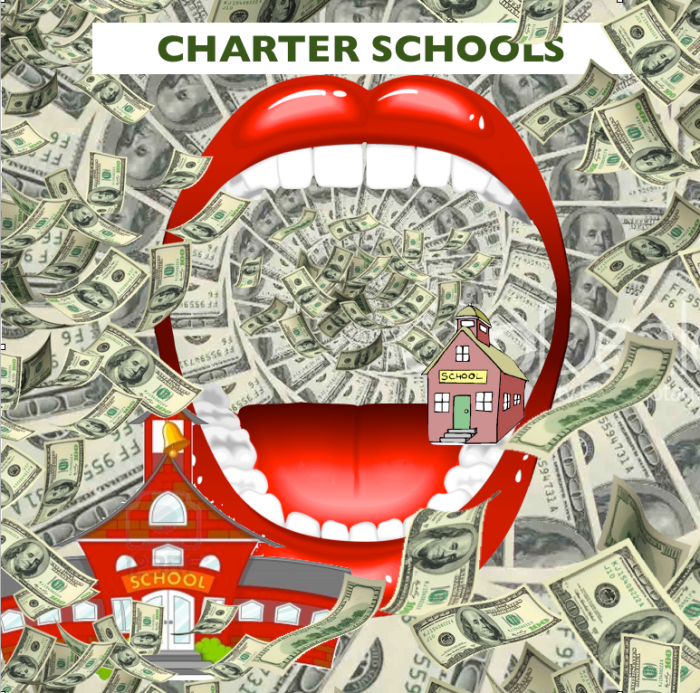
That’s why lawmakers in Harrisburg are once again looking to pass a school code bill (House Bill 530) that would let charter schools expand exponentially almost completely unchecked and without having to do any of that nasty, sticky accountability stuff you demand of your traditional public schools.

Sure there are a few provisions in there to make charters fill out more paperwork, but the benefits for privatization and profitization of your child’s education are huge!

For me, that is. For your child, not so much.

For instance, the proposed legislation would set up a charter school funding advisory commission. This august body would have many duties including the ability to authorize charter schools in your local school district.

No longer would prospective charter operators have to come before your duly-elected board members and plead and beg to set up shop and suck away hard to come by education funding. They could just appear before the commission and sidestep your local democracy completely.

Who will be on this commission? I’m glad you asked.

We’ve got eight legislators. Got to give THEM a voice. But they’re usually pretty cheap. A few bucks in the re-election campaign and we’ll be golden. We’ll also have the state secretary of education and the chairman of the state board. We’ve got to make the thing look legit, right?

But here’s the best part! We’ll have four public education representatives and FIVE representatives of the charter school industry!

Isn’t that great!? There are significantly more traditional public schools throughout the state, but they’ll have less representation on the commission! It’s stacked with charter friendly votes! The forces of privatization have a built-in majority! Ring the dinner bell, Baby! Once this bill gets passed, it’s charter school time all across the Commonwealth!

Okay. There is a downside. Commissioners can’t be outright voting members of charter boards or their families. And if they’re being paid by charters they have to sign a sworn statement admitting that fact. Also, no criminals – no one convicted of fraud, theft, malfeasance.

Sucks, I know, but we’ll find a way around it. Don’t you worry.

However, the best is yet to come. Once a charter school has been given the go-ahead to exist, the proposed bill allows it to expand without getting permission from anyone!

That’s right! No commission, no local school board, nobody.

If there are children on the waiting list to get in, we have to take them first, but then we can start enrolling kids from outside the district!

Yes! Outside the district!

Here’s what the bill actually says:

“If a charter school or regional charter school and the school district from which it is authorized have voluntarily capped enrollment or the district attempts to involuntarily cap enrollment of resident students and the charter school or regional charter school has enrolled the maximum number of resident students, the charter school or regional charter school may enroll students residing outside of the district.”

This would appear to allow charters to enroll kids outside of the district and still charge the district to pay for them!

But wait, there’s more! If charter operators want to expand in any way, they can – unless they agree not to. If operators want to add more grades, they can. If we want to consolidate one charter school with another, we can! Meanwhile all this expansion sucks away local tax dollars to pay for students that don’t even live there!

I drink your milkshake,” traditional public schools!

So while public schools are shrinking due to loss of funds to unchecked charter expansion, this proposed bill adds insult to injury. If a traditional public school has to close a building or even has a few empty classrooms, charter schools get the right to buy or rent them out before anyone else!

I see you’ve got 7 empty class rooms in your school building. Charter School X will rent those from you. Maybe next year, we can rent out the rest of the floor once we’re done slurping up all your funding!

But wait! There’s more!

We now get to my favorite part of the proposed bill. (Do I keep saying that? It’s just such a gorgeous piece of legislation. ALEC has really outdone themselves writing it!)

We get educational tax credits. That’s school vouchers, folks!

I know, I know. The state legislature tried to pass a voucher system (Senate Bill 1) in 2011, and it was soundly defeated because it was so unpopular.

Three out of Four Pennsylvanians didn’t like that it gave state tax dollars to charters, private and parochial schools without any accountability. Well, guess what folks!? There’s hardly any accountability in this here bill, too!

Here’s how it works. You donate $X to a voucher school and we just take that off of your taxes. And if that’s the same or more than you’d normally pay for, let’s say, public school taxes, then all of your money goes to voucher schools.

It’s not really new. We’ve been quietly encouraging this kind of thing for a while now. This bill just expands it.

It allows public tax dollars to be used by religious schools – a clear violation of the Separation of Church and State. But who cares? Let’s leave that up to the courts. How dare they try to violate state’s rights. And all that. Etc. Etc.

But it’s not all robbing public schools and enriching corporate charter school operators. There are a few sticking points.

For the first time, the proposed bill allows local school boards access to charter financial and personnel records. We even have to submit to full audits. And our teachers will be subject to the same pseudo-scientific evaluations as traditional public school teachers.

In addition, charter schools will have to undergo a whole new evaluation “matrix” to show that they’re doing a good job.

I know. It sounds a lot like what traditional public schools have to undergo right now. It sounds absolutely untenable.

But here’s the difference. This new evaluation system for charters carries absolutely no consequences!

Tee-Hee!

That’s right! Even if charters fail these evaluations, the state can’t do diddley squat to them! Not so with traditional public schools. If THEY fail to show progress, they can be closed down and turned into… charter schools!

Oh! It is a beautiful time to be alive!

If this bill passes, charter school operators will have it made in the shade.

Cut student services and increase corporate profits? Check!

Kick out special education and other hard to teach students? Check!

Escape almost any kind of accountability for our actions? YOU BET!

Pennsylvania lawmakers could bring this bill to the floor anytime now.

It’s up to you, lawmakers. Do you want to keep getting tons of campaign cash from our industry or do you represent those – yuck – voters?

Do the right thing. Or should I say, do the right cha-ching!

Did you see that? Did you see what I just did there?

I am a cad. I mean… card.


In all seriousness, if you live in Pennsylvania, please, contact your legislators and ask them to oppose this terrible bill. The Network for Public Education has made it very easy. Just click HERE and you can shoot off a letter to your representatives in moments.

Oppose HB 530. Fight for public education.