
Summer Break – the Least Understood and Most Maligned Aspect of a Teacher’s Life

Screen shot 2016-06-20 at 4.18.07 PM

It’s inevitable.

Once the weather gets warm and school lets out, it’s no longer safe for teachers to be out in public.

You’ve got to stay indoors, get off the Internet, hide the cell phone – do whatever you can to stay away from non-educators.

Because if, like me, you happen to be out and about – let’s say standing in line at your favorite neighborhood burger joint waiting for a juicy slab of ground beef to stop sizzling on the grill – you’re bound to hear the kind of willful ignorance that sets a teacher’s nerves permanently on edge.

Imagine just two normal people – they seem nice enough – standing in line having a friendly conversation. It’s hot outside, so you might hear the usual topics discussed: the weather, the best place to buy ice cream, which public pool has the best prices – that an oh I don’t know, how easy teachers have it with their summers off.

Son of a…!

Normal folks, I know you often get the urge to talk about this. You think it’s just another topic of polite conversation. It’s nothing serious. You think it’s just like complaining about the heat or how the price of admission at the local theme park always seems to be on the rise.

But you’re wrong.

Here’s why: first, you aren’t alone in the comfort of your own home. You’re out in public. And I guarantee there’s probably a teacher somewhere within earshot. Second, you have no idea what the heck you’re talking about. You are completely talking out of your ass.

Oh, you think you know. Everyone thinks they know what it’s like to be a teacher. Everyone thinks they can do that job no matter what qualifications they have.

It’s funny. I never presume to assume I could do other people’s jobs without some kind of training or skill. I’d never say, “Police officers have it so easy. I could do that!”

I’d never say that about any public servants. Not firefighters, sanitation workers, social workers, lawyers, doctors – even politicians.

I think most people feel the same way – except when it comes to teaching. That’s the one job where everyone has an opinion and it’s based on next to nothing.

Here’s how it goes: I’ve been a student, therefore I can be a teacher.

Imagine if we applied that logic elsewhere. I’ve been sick, therefore I can be a doctor. I’ve been to court, therefore I can be my own lawyer. I can turn on a light, therefore I can run the electric company.

No one would be so ignorant. Except when it comes to teaching.

But that’s not all.

Not only are most folks comfortable opining about a topic of which they are so ignorant, but they feel themselves to be particular experts about one aspect of the job more than any others – summer break!

Those teachers sure have it easy, they say. They get their summers off! That’s one sweet deal!

Don’t get me wrong. As a public school teacher, I’m grateful for summer break. But it’s not what non-teachers think it is.

First off, summer break is not a vacation.

When you work a regular job you get a vacation day here and there. You get a week or two of paid time off. Teachers don’t get that.

During the summer teachers don’t get salaried like that. Some of us don’t even get a paycheck, and those of us that do aren’t earning money for those days off. We’re getting money that we already earned from August through June. This is money that was withheld from our pay during the fall and winter, money given to us now in the summer.

Wait a minute. Money withheld from our salaries? When someone pays you later for services rendered, don’t they owe you interest? Usually, they do. But not for teachers.

We work for the government. We get paid with tax dollars from the community at large. If the community had to give us our salaries up front – like almost every other job in existence – it would be harder on the taxpayers. So we let the community pay us later – interest free.

Like I said, summer break isn’t a vacation. It’s more like an annual couple months of being laid off.

When I say this to non-educators, though, they often smirk. “It must be pretty sweet getting so much money that you can afford to have it paid out like that.”

Let me just say this – You don’t know me. You don’t know what the heck I can and cannot afford. Teachers aren’t millionaires. We’re barely thousandaires. Many of us CAN’T afford it. We work a second job in the summer – often at little more than minimum wage.

Moreover, during the school year, teaching is not a 9-5 job. We don’t punch a clock working 8 hours with an hour lunch and then punch out.

If I’m not at least working 10 hours a day, I’m not even trying. Those 8 hours on the books barely cover my time in front of a class of students. I get a 30-40 minute lunch, various duties throughout the day and about 40 minutes to plan what I’m going to teach. That’s time to make any materials for my classes, design programs for the students, grade papers and fill out the never-ending and ever-expanding piles of paperwork.

As a language arts teacher, I routinely have my students write essays. You think they grade themselves? I’ve got to read those things, son, each and everyone. I’ve got homework to grade. I’ve got scores to input into the computer. I’ve got parents to call, students to tutor and a stream of detentions to oversee. And that’s just the minimum, not counting any extra-curriculars, clubs, PTA meetings, meet the principal nights, etc.

So the way I see it, I’m owed a little bit of down time during the summer. I need it just to recharge my batteries. During the school year, I’m going at a pace like lightning every day. If I didn’t have some time in the summer to unwind, I wouldn’t be able to keep up that pace for the majority of the year.

Heck. If I’m sick one day, when I come back to school it takes a few days to get back up to speed.

But non-teachers don’t know any of that, because students don’t know. Students just see the teacher in class and they assume that’s all we do. And that’s a forgivable assumption for students. You know why? Because they’re children! But you? You’re an adult human being. You don’t have the right to make such assumptions without any pretext at even trying to find out.

However, this is exactly what most people do. They think there’s nothing wrong with complaining about teachers, especially during the summer.

And here’s the worst part.

When you complain like that, you make my job so much harder.

You’re going to go home with that negativity, you’re going to keep voicing it, you’re going to say it in front of your own impressionable children who might not seem like it, but they listen to every word you say. Not just that, but they listen to HOW you say it. Even more than the words, they hear the disdain.

So when school is back in session, they bring that false impression of how easy their teachers have it, and that becomes disrespect, just another thing I have to overcome in order to help your child succeed.

You hear a lot in the news about foreign countries having better education systems than ours. It’s mostly B.S. propaganda, playing with statistics for political ends, but there is one area where there’s a grain of truth to it – respect.

In many foreign countries especially in Asia, teachers are held in the highest esteem. It wouldn’t even cross parents’ minds to scorn educators, and if their kids did it, the adults would be mortally ashamed!

But not in the U.S.A. We take the one profession most dedicated to helping our children have better lives and we crap all over it.

You know that’s why I’m there in the classroom – to help your child succeed. Sure I get a paycheck, but there are lots of jobs I could do to support my family, many of them paying a whole lot more while requiring less hours a week and providing actual paid vacation days.

Like most educators, I’ve got a masters degree. Every year I take continuing education courses. Heck! I’m even nationally board certified – a distinction of which only about 34% of teachers throughout the country can boast. I’ve been nominated for teachers excellence awards. I travel across the country multiple times a year at my own expense to enrich my field. I write letters, I protest, I lobby my congresspeople to support our national system of public education. I’ve devoted my life to making a difference in young people’s lives.

Isn’t that something worth a little bit of respect? Don’t you want someone like me to be there for your child in the classroom?

It’s funny. When it comes to most public services, you wouldn’t dream of denigrating a helping hand.

You’d never hear anyone say something like this:

Those damn firemen! There would be fewer fires if it weren’t for them! Have you ever seen a building burning without it being surrounded by firemen? If they’d just work a little bit harder, there’d be fewer burning buildings!

Or:

Those damn doctors! All they do is make people sick! You never see a sick person unless he’s surrounded by doctors prescribing him medicines, doing surgeries. If we had fewer doctors, fewer people would get sick! Let’s close more hospitals!

But this is how people talk about teachers. Regular folks have been convinced that far from helping children escape ignorance, teachers actually cause it. They don’t work hard enough. They don’t care enough. They have too many union protections.

I’ve never heard anyone complain that firemen would fight fires better if they didn’t have helmets and fireproof clothing. I’ve never heard anyone say police would work harder to fight crime if they didn’t have Kevlar and service pistols.

But somehow when it comes to teachers, the situation is different.

Normal people, you’ve got to understand something. We live in a world where rich folks want to take away teachers for the poor and middle class. They want your kids to learn from computer programs and YouTube while their kids get… teachers!

For your kids it’s always narrow the curriculum, more standardized tests, more unproven academic standards, more corporate profits, less parental control, fewer regulations, fewer student services.

And do you know who has volunteered to fight against all this craziness to make sure your kids actually get some kind of quality education?

THE TEACHERS!

That’s right – the same people you feel empowered to deride while standing in line waiting for your burgers and fries. The same people who you have no problem denigrating with just as much certainty as ignorance.

So please, think about that next time.

Don’t bitch and moan about your community’s teachers. How about giving them some support?

At very least add teaching to the list of impolite topics to address in public. That’s right – religion, politics AND TEACHING.

Because every time a non-educator vents their spleen about those lazy, no-good teachers, they make it that much easier for the powers that be to continue eroding your child’s educational experience.
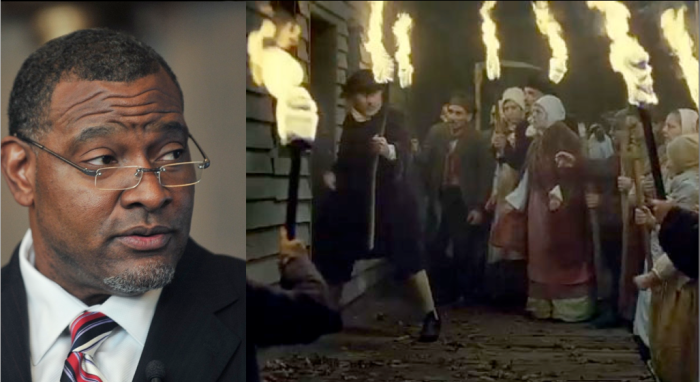
Witch Hunt Against Incoming Pittsburgh Public Schools Superintendent Escalates

Screen shot 2016-06-17 at 1.17.51 PM

To be or not to be.

That is the question for incoming Pittsburgh Public Schools Superintendent Anthony Hamlet.

He is set to takeover the district on July 1, but a well financed public smear campaign is trying to stop him before he even begins.

Big money interests oppose him. The public supports him.

Meanwhile the media helps fuel corporate attacks on the 47-year-old African American because of criticisms leveled by a Political Action Committee (PAC) formed to disband the duly-elected school board.

It’s ironic.

Corporate school reformers criticize Hamlet for allegedly plagiarizing a single statement in his resume. Meanwhile they have plagiarized their entire educational platform!

Mayoral or state takeover of the district? Check!

Close struggling schools? Check!

Open new charter schools to gobble up public tax dollars as profit? Check!

Hamlet represents a new direction away from corporate education reforms. The new school board who hired him has soundly rejected these policies of the old guard. Many of the same members are still on the board who first changed course in 2013 by tearing up a contract with Teach for America.

But the Empire strikes back with allegations of plagiarism and resume padding.

Yes, Hamlet used some of the same words from a Washington Post editorial in his resume. He wrote:

“A successful superintendent has to satisfy many constituencies, keeping high achievers in the system while devoting resources to those who need them most.”

The Post wrote:

“A successful superintendent has to satisfy many constituencies, keeping high achievers in the system even while devoting resources to those who need them most.” (Emphasis added)

These aren’t exactly the same words used by the Post. They don’t rise to the level of plagiarism, but he certainly should have attributed them or reworded the ideas.
On the other hand, his critics want to use the same policies that have failed again-and-again in Philadelphia, Newark, Little Rock, Memphis and elsewhere. They want to steal control of the district and give it to bureaucrats who will do what THEY say. They want to take money set aside to help all students and use it to enrich their friends and associates.

Sure, Hamlet used someone else’s words to describe a good idea of leadership. But his critics are using their own words to describe someone else’s terrible, failing educational platform.

Hamlet made a small forgivable error. His critics are seizing upon it to turn the tide in their favor and take away the community’s right to representative democracy.

Make no mistake. This is a witch hunt.

Critics are splitting hairs, disputing statistics and calling it fact.

Hamlet has a proven record as a principal in Palm Beach, Fl.

He says the schools he administered improved academically for various reasons. Critics point to Florida state records that show those improvements to be less dramatic.

So both sides agree those schools did well under Hamlet. What’s in dispute is the degree.

Hamlet counters that state data is inaccurate. He was there on the ground. He lists several factors not accounted for by the state that fully justify his statements.

For example, when he talks about school improvements, he counts the total number of student suspensions – if a student is suspended twice, he counts that as two suspensions. The state, however, ignores multiple suspensions. In this and other ways, Hamlet shows his data is more accurate than the state’s.

National data backs up Hamlet. Florida is infamous for being backward, regressive and untrustworthy in education circles, often spearheading some of the worst abuses of policy in recent history.

“This has been a hoopla,” said Valerie Allman, a Troy Hill parent and activist interviewed in the Pittsburgh Post Gazette. “And it’s taken the focus off what’s important: these kids. … We’re expecting him to climb this huge mountain at the same time we cut his legs out from under him.”

One of the reasons the board originally hired Hamlet is his background in “restorative justice.

Instead of simply punishing or suspending students who misbehave, the program calls for making students set things right.

At Palm Beach County Schools, Hamlet implemented this approach with help from Mara Schiff, a criminology professor from Florida Atlantic University. It’s “far tougher than sitting in detention,” Schiff said in the Post Gazette.

“You have to acknowledge what you’ve done … and take responsibility for the harm you’ve caused. It’s not a kumbaya approach.”

It’s widely acknowledged in education circles that suspensions can have lasting impacts especially on black students making them more likely to enter the school-to-prison pipeline. Finding an approach to increase discipline without adversely affecting students’ prospects is imperative. This is especially true since Pittsburgh Public Schools have been known to suspend black students at a rate four times higher than white students.

In fact, the district has already launched a restorative justice program at 20 schools.

“I have nothing but good things to say about Dr. Hamlet,” said Schiff. “He had a [restorative-justice] coordinator who was fabulous, and who Dr. Hamlet completely empowered.”

Another reason for Hamlet’s hire is his advocacy for community schools. Like many on the school board and in the district, he has pushed for social services to help students and the community to make the schools the center of the neighborhood.

“You can have the best teachers, the best curriculum, the best classrooms,” said Rev. Rodney Lyde, a Homewood pastor and president of the Pennsylvania Interfaith Impact Network. “But we need a place on-site that can comprehensively address the other impediments — like kids coming hungry, or from abusive situations.”

Despite community support, several well-financed organizations oppose Hamlet and the board’s authentic reforms.

Foremost among them is Campaign for Quality Schools Pittsburgh, a new PAC formed recently to make city schools great again – by doing the same failed crap that didn’t work before.

Also on the side of corporate education reform are the Pittsburgh Foundation and the Heinz Endowments. Representatives for both organizations have offered to pay for a new superintendent search if the district gives Hamlet his walking papers – a measure that probably would mean paying him at least a years salary without having him on the job.

This would also result in weakening the district’s ability to hire a new superintendent and increasing public mistrust of the electoral process. Such a move would pave the way for disbanding local control.

How generous of these philanthropies! I remember a time when giving meant providing the resources for organizations like public schools to fix themselves – not having the right to set public policy as a precondition for the donation. But in the age of Bill Gates and the philanthro-capitalists, this is what we’ve come to expect.

Even the editorial board of the Pittsburgh Post Gazette has drunk the Kool-aid. In a June 10 editorial, the paper published the following statement:

“The (school) board’s failure at this essential task calls its leadership into question, and will renew calls for legislation to dissolve the elected school board and move to an appointed system.”

Finally, we have A+ Schools – an advocacy organization that at one time championed the same kinds of reforms school directors are trying to enact. However, after a $1 million grant from the Gates Foundation, the group has become a cheerleader for weakening teachers unions, privatization and standardized testing.

Against these special interests stands a public school board and a community at the crossroads. Will they give in to public pressure and big money? Or will they allow Hamlet to do the job he was hired for and attempt to improve an urban district suffering from crippling poverty and state disinvestment?

This particularly tragedy has yet to find an ending.

To be or not to be?

Stop Treating Public Schools as Society’s Whipping Boy

Screen shot 2016-06-14 at 11.28.03 PM


The United States is no stranger to stupidity and ignorance.

A significant portion of the population doesn’t know basic science facts like that the Earth revolves around the sun.

We only learn history and geography by going to war or drone striking countries usually  filled with brown people.

And when it comes to basic math and English, just read the poorly spelled placards at our political conventions calling for more trickle down economics.

Heck! We’re the country that elected C-student George W. Bush President!

Twice!

And lest you think that was a fluke, Donald Trump, a xenophobic reality TV star with zero political experience, is the presumptive Republican candidate for the same office RIGHT NOW!

Yet whenever so-called intelligent people bring up these and countless other examples of American idiocy, they invariably simplify the blame.

We’re a country of more than 320 million people made up of various cultures, nationalities, ideologies, economic brackets and living in a wide range of geographic areas and circumstances. Yet we think the cause of our national ignorance somehow isn’t complex and multifaceted.

No. That would be too much for us to understand. Instead, we take the easy way out and put the blame squarely in one solitary place – public schools.

It’s always the school’s fault. That and those lazy, complacent teachers.

Some folks think the moon landing was a hoax. So apparently the schools aren’t doing their jobs.

Other people can’t tell you the month and year of the 9-11 terrorist attacks. Therefore, bad teachers.

Everything from believing you can catch AIDS from a toilet seat to thinking President Barack Obama is a secret Muslim – it all could have been rectified if the schools had just taught us better.

Nonsense.

If you need a legal warning that your McDonald’s coffee is hot, there’s not much your third grade teacher could have done to help.

If you think the solution to gun violence is strapping bullet proof backpacks to kindergarten children while arming their teachers, there’s little that could have been accomplished by further academic study.

Anti-intellectualism is in the very air we breathe in this country.

No one wants to appear smart. We want to be the jocks, not the nerds. But when we feel guilty for our ignorance who do we attack? The smart people! The teachers! The schools!

Sadly, it’s often really intelligent people doing it.

A few weeks ago, famed astrophysicist Neil DeGrasse Tyson got into a Twitter battle with rapper B. o. B. over whether the Earth is flat.

Yes, in America that is somehow still debatable.

And Dr. Tyson was understandably upset. “I don’t mind that people don’t know things,” he said in a Huffington Post interview. “But if you don’t know and you have the power of influence over others, that’s dangerous.”

Agreed, but then he became guilty of his own criticism by pointing his finger solely at the schools. “I blame the education system that can graduate someone into adulthood who cannot tell the difference between what is and is not true about this world,” he said.

Maybe this would be a more effective criticism if B. o. B. were an actual high school graduate and hadn’t, in fact, dropped out in 9th grade. Tyson has a masters in astronomy and a doctorate in astrophysics, but he couldn’t tell what is true about this world in relation to one rather famous rapper’s education. Therefore his alma maters of Princeton and Columbia must be pretty shitty schools?

Perhaps the problem isn’t that B. o. B. is ignorant, but that too many people are willing to accept him as an expert on the shape of the Earth instead of someone like Dr. Tyson. But that’s not a fault of the public school system. It’s because of our attitude toward schooling, knowledge and expertise. An attitude that Dr. Tyson perhaps unconsciously helped foster.

I don’t mean to pile on Dr. Tyson. He’s one of my heroes. I’m just disappointed that in this case he’s being so intellectually lazy.

He’s not the only one.

Unfairly blaming schools also came from columnist Andy Borowitz when describing the dangers of Trump’s candidacy.

“Stopping Trump is a short term solution,” he said. “The long term solution, and it will be more difficult, is fixing the education system that has created so many people ignorant enough to vote for Trump.”

To be fair, almost everything Borowitz says publicly is satirical, uttered with tongue buried deeply in cheek. But it still feeds into this scapegoating of public schools. The public schools didn’t create ignorance. They fight it and in some cases fail. I wonder why?

Whatever the reason, Trump, himself, isn’t decrying it. He’s celebrating it.

When he won the Nevada GOP primary, he made a point to thank all the dumb people who voted for him. “We won with poorly educated. I love the poorly educated,” Trump told a crowd to huge cheers.

Strangely he didn’t then go on to laud what a great job public schools are doing by providing him with so many brain dead supporters.

So what exactly is the problem? Isn’t it troubling that so many American’s hold stupid beliefs? And isn’t this at least partially the fault of our public schools?

The answer is yes and yes.

We live in an anti-intellectual age. And that is troublesome.

And yes, our public schools are struggling to adequately educate everyone.

But when you blame everything on public schools you (1) obscure other factors like our piss poor media, and (2) you aren’t helping improve our schools.

First of all, much of our modern ignorance is fueled by toxic mass media. Most of us aren’t in school anymore. Unless you’re younger than 21 or 18, you probably get most of your facts from the news, TV, movies, video games and/or the Internet – not textbooks or school teachers.

We used to have an independent press that could investigate stories and report the truth. Now almost all of our major news sources are owned by a handful of giant corporations.

We don’t get news anymore. We get corporate public relations. The reason most people believe this crap is because it’s reported as if it were truth.

The rise of Fox News has a lot to do with it, but that is not the only culprit. Even traditionally revered sources such as the Associated Press are guilty of corporate collusion and bad, bad reporting.

They have no problem conflating an anonymous poll of superdelegates with actual votes as if they were the same thing even if doing so unduly influences the election in favor of one candidate. They have no problem broadcasting a Playboy Playmate’s vaccination advice every day of the week while mostly ignoring what research scientists have to say on the subject.

Second, constantly ragging on public schools doesn’t help make them better.

It’s not as if doing so actually resulted in addressing the real problems we have with our school system. Instead it reinforces the idea that they can’t be saved. We should just give up on public schools.

If we actually focused on the real problems with schools instead of constant innuendo, defamation and vitriol, we might be able to enact real solutions. For instance, more than half of our public school students live below the poverty line. They go to schools that aren’t funded adequately. We’ve allowed them to be resegregated based on class so its easier to ensure rich kids get a Cadillac education and poor kids get the scraps.

Moreover, we’ve let corporate interest take precedence over the needs of children. Instead of letting the experts in the field make education policy, we’ve left that up to the businesses that profit off of it. Instead of letting teachers and professors decide what are best academic standards, we’ve let think tanks create and impose shoddy, untested and developmentally inappropriate Common Core Standards. Instead of letting students be evaluated based on data gathered in the classroom by teachers who are there day-in, day-out, we’ve insisted schools be judged based on crappy high-stakes standardized tests. Instead of giving educators respect for the difficulty of their jobs and providing them with the autonomy necessary to help kids, we’ve denigrated the profession and chipped away at union protections, pay and benefits.

These are some of the real problems with public schools. When people throw shade at our education system, they are never so specific. It’s the schools that are “failing.” It’s never that they’re under-resourced. It’s the teachers who aren’t doing their jobs. It’s never that they’re being forced to teach to the tests. In fact, the people responsible for eroding our public schools often do so with the same rallying cry – our public schools are failing so let us enact these terrible policies that will actually make them worse!

It’s time we stop the lazy practice of criticizing public schools without also educating ourselves about what’s actually wrong with them.

Dr. Tyson, I love you, but don’t just blame schools. Blame Common Core and toxic testing. Andy, it’s not our schools that produce ignorant citizens. It’s the unfair funding formulas that don’t provide poor children with new books and a broad curriculum.

Public schools in general – and public school teachers specifically – have become our easy scapegoats, our whipping boys.

It’s about time we realized that such criticisms aren’t helping. In fact, they’re being used by the same people who are destroying our schools as an excuse to destroy them further.

The so-called failure of public schools has been used to justify massive school closures especially in neighborhoods of color. It’s been used to create more privately run charter schools. It’s been used to excuse cutting school funding, and making it even less palatable to be a teacher.

Too many of us believe these are good ideas.

Americans believe a lot of stupid things, but perhaps THESE are the dumbest of them all!

The Charter School Swindle – Selling Segregation to Blacks and Latinos

Screen Shot 2016-05-31 at 4.22.46 PM


Segregation now!


Higher suspension rates for black students!


Lower quality schools for Latinos!


These may sound like the campaign cries of George Wallace or Ross Barnett. But this isn’t the 1960s and it isn’t Alabama or Mississippi.


These are the cries of modern day charter school advocates – or they could be.


School choice boosters rarely if ever couch their support in these terms, but when touting charter schools over traditional public schools, this is exactly what they’re advocating.


According to the Civil Right Project at UCLA, “The charter school movement has been a major political success, but it has been a civil rights failure.”


It’s choice over equity.


Advocates have become so blinded by the idea of choice that they can’t see the poor quality of what’s being offered.


Because charter schools DO increase segregation. They DO suspend children of color at higher rates than traditional public schools. And they DO achieve academic outcomes for their students that are generally either comparable to traditional public schools or – in many cases – much worse.


In Brown vs. Board of Education, the U.S. Supreme Court ruled that it is Unconstitutional to have “separate but equal” schools because when they’re separate, they’re rarely equal. Having two parallel systems of education makes it too easy to provide more resources to some kids and less to others.


Who would have ever thought that some minority parents would actually choose this outcome, themselves, for their own children!?


After Bloody Sunday, Freedom Rides, bus boycotts and countless other battles, a portion of minority people today somehow want more segregation!?


It’s hard to determine the extent of this odd phenomena. Charter advocates flood money into traditional civil rights organizations that until yesterday opposed school privatization. Meanwhile they hold up any examples of minority support as if it were the whole story. However, it is undeniable that large minority populations still oppose their school systems being charterized.


It’s especially troubling for civil rights advocates because black and brown charter supporters have been sold on an idea that could accurately be labeled Jim Crow. And they don’t even seem to know it.


The reason is two-fold: (1) the success of privatization propaganda and (2) the erosion of our public school system.


Charter schools are big business. Many of them are managed by huge corporations for a profit. They are run at taxpayer expense with little to no oversight. As you might expect, this often results in multi-million dollar financial scandals and worse outcomes for students. But these facts have not fazed some of the public. Propagandists know how to sell people on things that are bad for them: Fast food, miracle cures and charter schools.


They’ve marketed corporate McSchools as if these were mostly charitable institutions founded for the sole purpose of making children’s lives better. Meanwhile, funds that might actually help kids learn are funneled to hedge fund mangers and investors: Schools don’t open yet tax money disappears. Student services are reduced below that offered at comparable neighborhood public schools. Charter students are expelled for low test scores or special needs. Yet the public still buys the glossy full-color advertisement without bothering about the small print.


One thing corporate education reformers have over advocates of traditional public schools is their willingness to talk about race. They clothe their arguments in the terms of the Civil Rights movement. They talk about having high expectations for children of color. They talk about closing the achievement gap. They talk about understanding the needs of minority children.


It’s all bullshit.


Their “high expectations” are really just an excuse for treating brown and black kids as if they weren’t human. They put these children under intense pressure, berating them for wrong answers and kicking them out if they don’t perform.


Yet the academic results produced at charter schools are often less than stellar. Sometimes they’re downright abysmal. Instead of addressing the fundamental inequalities inherent in the achievement gap – economically and culturally biased high stakes testing, shoddy and developmentally inappropriate academic standards, etc. – they reinforce that status quo. It’s like instead of fighting a prohibition against sitting in the back of the bus, they berate black folks for not enjoying the ride.


I’m sorry. But when it comes to understanding the needs of black and Latino kids, I refuse to believe children of color need a second-class education system. (Just as I refuse to believe Teach for America’s claim that all black kids really need are less experienced, less educated and less committed teacher trainees.)


Perhaps if traditional public schools actually addressed these issues head on, privatizers wouldn’t appear to be saviors. There are real problems faced by children of color in our school systems. They have real needs that most of our schools – charter, traditional, private or parochial – just are not meeting. But while charter schools pay lip service to the problems without fixing them and in fact often making them worse, public schools pretend these problems don’t exist in the first place.


No wonder some minority parents choose charter schools. At least there they get the illusion that someone cares about their needs.


In fact, privatizers couldn’t sell their substandard products if it weren’t for what we’ve allowed to happen to our traditional public schools. Segregation is made worse in charter schools, but it is also prevalent at our traditional public schools – though often to a lesser degree.


We have allowed traditional public schools to be largely segregated based on parental income. We have schools for poor kids and schools for rich kids. Thus, we have schools for black kids and schools for white kids. And guess which ones are well-funded and which go lacking?


This is what people are really talking about when they mention “failing schools.” They pretend as if the teachers are failing, the principals are failing, the democratic process, itself, is failing. In reality, it is our state and federal lawmakers who are failing. They have failed to provide equitable resources that our nation’s children need.


Schools cost money. If you don’t provide the funding necessary to properly educate children, you will get an inferior result. Meanwhile, pundits play with numbers and make false comparisons to hide this basic fact – we aren’t providing all kids with the resources they need to succeed. Rich kids have enough. Poor kids don’t. But we look at national averages, add in unfunded legal mandates and pretend that tells the whole story.


How does this happen? Segregation. In fact, we’re allowing segregation of place to determine segregation of school. Instead of counteracting an unfair status quo, we’re letting the way things are today determine how things will be tomorrow.


Fact: people of different ethnicities tend to cluster together, like with like. Part of this is because people tend to self-segregate with people around whom they feel most comfortable. However, this is also a function of social planning. Banks tend to shy away from giving loans to families of color who want to move into white neighborhoods. Moreover, white homeowners are often reluctant to sell to families of color. The result is an America made up of black neighborhoods and white neighborhoods.


In organizing our public schools we could try to overcome these differences, but instead we amplify them. In many states we insist that schools be funded based on local property taxes. So poor brown and black people who happen to live clustered together get poorly funded schools for their kids. And rich white folks who live together in their gated communities get well-funded schools for their progeny.


Is it any wonder then that some people of color buy into the charter school lie? They’re offered the choice between an obviously under-resourced public school or a glossy new charter school that actually offers them less. But they don’t see that far. They’re tired of the indifference behind traditional public school funding and opt to try something different. Unfortunately, it’s just another lie and a more pernicious one for several reasons.


First, charter schools take an already segregated population and make it worse. Second, they weaken the already stumbling traditional public schools by siphoning off their dwindling funding. And finally, they obscure the fact that it’s often the same policymakers who champion charters that are responsible for eroding public schools in the first place.


People of color would be much better served by sticking with their traditional public schools and fighting to make them better. For all their faults, traditional public schools often provide a better quality education. They have more resources and less flexibility to take away those resources. They have more well-trained and experienced staff. And since they serve a more diverse population, they offer the chance for people of similar economic backgrounds but diverse cultures to join together in common cause.


Dividing people makes them weaker politically. When people band together, they have power. They can fight more effectively for what they deserve. Perhaps this is the greatest problem with charter schools – they destroy communities and rob neighborhoods of the collective power that is their due.


In many areas of the country, communities of color know this. Ask them in New Orleans what they think of their all-charter school district. Ask them in Chicago what they think of the city’s plan to close public schools and turn them into charters. Ask them in Philadelphia or any urban district taken over by the state.


They’ll tell you straight out how privatized education is cultural sabotage. They’ll tell you how it’s the new colonialism, another element of the new Jim Crow. They’ll tell you how important it is to fight for our system of public schools.


And when privatizers and propagandists try to paint all communities of color as if they support charter schools, these folks will loudly cry foul.


They aren’t buying the snake oil. The rest of us need to step up and help those who have been swindled to see the truth. Likewise we need to recognize their truth – that the struggle for civil rights is ongoing.


Because we can’t win the fight against privatization without them. And they can’t win the fight for equality without us.


We need each other.


Public school advocates need to recognize it’s not all about testing, Common Core and privatization. We can’t be so afraid to talk about race. We need to recognize that racism is not an unnecessary distraction, it’s at the center of our struggle.


We need communities of color.


We need our black and brown brothers and sisters.


Because only together shall we all overcome this madness.

The Arrogant Ignorance of Campbell Brown: Education Journalism in Decline

campbell-brown

Apparently facts don’t matter much to Campbell Brown.


Though her latest “fact” about public schools has once again been shown to be more truthiness than truth, she refuses to retract it.


During an interview published in Slate where she gave advice to the next president, she said:


“Two out of three eighth graders in this country cannot read or do math at grade level. We are not preparing our kids for what the future holds.”


It’s a scary statistic. The problem is it’s completely unsupported by evidence.


And when education experts called her out on it, she complained that SHE was being attacked.


When pressed, Brown admitted she got this figure from the National Assessment of Educational Progress (NAEP) a test given to random samples of students in fourth and eighth grades every two years.


However, Brown either misunderstands or misinterprets the scores. If one were to interpret the data in the way Brown suggests, the highest scoring countries in the world would be full of children who can’t read at grade level. Hardly anyone in the world would be literate or could add and subtract. It’s beyond absurd.


And when she was notified of her error by authorities in the field including Carol Burris, Tom Loveless and Diane Ravitch – who, by the way, served on the NAEP Governing Board for seven years – Brown responded by likening her critics to Donald Trump.


She wrote:


“That the people who disagree with my characterization would react by attacking me personally… speaks volumes. Those feigning outrage over the difference between “grade level” and “grade level proficiency” are the people who profit off the system’s failure and feel compelled to defend it at all costs. Sadly, in the age of Donald Trump and Diane Ravitch, this is what constitutes discourse.”


I especially like the bit where she attacks experts, teachers, and PhDs because they “profit off the system’s failure.” It’s pretty rich stuff coming from Brown who makes a pretty penny retelling the fairytale of “failing public schools.”


Once upon a time, Brown was a respected reported for NBC and anchorperson for CNN.


Now she’s a paid Internet troll.


I’m sorry if that sounds harsh, but it’s true.


She co-founded and edits a Website called The Seventy Four – a reference to the 74 million children across the country who are 18 or younger.


It might be more honest to call it The Four, instead, for the $4 million she receives annually from the mega-rich backers of school privatization to bankroll the endeavor.


She claims her site is “nonpartisan.” Funny. I guess that explains why she continually backs every cause and campaign championed by her donors.


Change all public schools to private charter schools? Check.


Block teachers unions from collectively bargaining? Check.


Ignore the overwhelming preponderance of stories about charter schools cheating the public and their students? Check.


When called out on her bias, she proudly proclaimed, “I have learned that not every story has two sides… Is The Seventy Four journalism or advocacy? For 74 million reasons, we are both.”


Pithy. Yet it remains unclear exactly how the nation’s school children will benefit from Bill Gates and the Walton Family having an even larger say in education policy.


Brown has sold her image and rep as a journalist so it can be used to purposefully mislead the public into thinking she is still dedicated to those endeavors. She’s not. What she’s offering these days is not News. It’s bought-and-paid-for public relations meant to destroy our nation’s public schools.


If anyone thought Brown retained even a shred of journalistic integrity left, she should have removed it when she called herself, “a soldier in Eva’s army.” This is a reference to Eva Moskowitz, the founder and CEO of a New York City charter school chain – Success Academy – where children are put under such pressure they wet themselves during testing and kids in first grade are shamed and berated for math mistakes.


As a public school teacher, myself, this makes me sad.


John Merrow, one of the elder statesmen of education journalism, recently proclaimed that we live in the “golden age of education reporting.”


I must respectfully disagree.


Yes, there is more being written about education policy and public schools than ever before.


But most of it is just paid advertisements from the standardization and privatization industry.


Look who’s funding these stories.


TV Networks such as NBC, MSNBC and Telemundo have broadcast various education segments on “Nightly News” and “Today” underwritten by Bill Gates and Eli Broad.


The Education Writers Association – which boasts more than 3,00 members – receives money from Gates and Walton. The L.A. Times receives funds from Broad for its Education Matters Digital initiative.


On-line publications also have been infiltrated. The Education Post took $12 million in start-up funds provided by Broad, Bloomberg and the Waltons. The site focuses on “K-12 academic standards, high-quality charter schools and how best to hold teachers and schools accountable for educating students,” according to the Washington Post.


Even well-respected education blogs including Chalkbeat and Education Week are funded in part by the Waltons (in the latter case, specifically for “coverage of school choice and [so-called] parent-empowerment issues.”) Education Week even tweets out paid advertisements for Teach for America as if they were news stories!


We’ve all seen “Waiting for Superman,” the infamous union bashing, charter loving propaganda film packaged as a documentary. Its popularity was helped with outreach and engagement funds by the Waltons and a host of other privatizers. It’s far from the only effort by market-driven billionaires to infiltrate popular culture with corporate education reform. They tried to sell the parent trigger law with “Won’t Back Down,” but no one was buying. Efforts continue in Marvel Studios television shows.


A plethora of teachers, academics and other grassroots bloggers have taken to the Internet to correct the record. But they are often ignored or drowned out by the white noise of the same corporate education reform narratives being told again-and-again without any firm footing in reality. In fact, after blogger and former teacher Anthony Cody won first prize from the Education Writers Association in 2014 for his criticism of Gates, the organization banned bloggers from subsequent consideration.


We bloggers are almost completely unpaid. We do it because we care about our profession. Meanwhile the so-called “news” sources are funded by corporate special interests, yet it is bloggers that are looked at as if they were somehow reprehensibly compromised and biased.


Education journalism is not going through a golden age. It’s a sham, a farce.


When we allow our news to be funded by private interests, we lose all objectivity. The stories are spun to meet the demands of the big foundations, the billionaires bankrolling them. And the real experts in the field are either not consulted or left to quixotically do whatever they can on their own time.


Education journalism isn’t about what’s best for children. It’s about how best to monetize the system to wring as many taxpayer dollars out of our schools as possible for corporate interests.


It goes something like this: reduce the quality to reduce the cost and swallow the savings as profit. But it’s sold to the public in propaganda that we call journalism.


As famed cartoonist and counter-culture figure Robert Crumb wrote in 2015:


“You don’t have journalists [in America] anymore. What they have is public relations people. Two-hundred and fifty thousand people in public relations. And a dwindling number of actual reporters and journalists.”


Nowhere is this as obvious as with Brown.


Just as Broad was initiating a plan in February to double the number of charter schools in the Los Angeles Unified School District, Brown’s site, the Seventy Four, was given control of the LA School Report, an on-line news site focusing on the second largest district in the country. Brown was expected to run interference for the takeover. She was running the propaganda arm of the privatization push.


And that’s really what’s happening with our education journalism.


I’m not saying there aren’t actual journalists out there trying to tell unbiased stories. But they are few and far between. They are beset by corporate interests. And anyone who wants to tell the truth is silenced or marginalized.


As we’ve seen, when you actually try to point out errors like Brown’s ridiculous assertions about eighth grade students, the media treats it as a he-said-she-said.


They say, “Wow! Teachers really hate Brown.” Shrug.


Meanwhile the truth is left murdered on the floor as our schools are pillaged and sacked.

White Teacher: We Need More Teachers of Color in Public Schools

BlackMaleTeacher

Black students relate to black teachers.

White students relate to white teachers.

It’s just human nature. We identify most with people like us.

It doesn’t mean kids can only be taught by teachers of their own race. That’s silly.

But it’s just as ridiculous to pretend like this doesn’t matter at all.

Fact: Roughly 48% of our nation’s public school children are children of color.

Fact: Only 18% of our nation’s teachers are persons of color.

We’re missing a tremendous opportunity!

I am a white teacher with classes made up mostly of African Americans. The suburban Western Pennsylvania district where I teach has a smattering of Hispanics, Asians and other nationalities, but most of the students are white, black or multiracial.

I love all of my kids and try to relate to them. But I’d be fooling myself if I thought my culture and complexion didn’t sometimes stand between us.

When I walk down the halls of my school, I see the African American principal fist bumping kids and talking to them in ways I never could.

It doesn’t mean he’s a better educator then I am. It just means he’s different.

When I give a fist bump, it’s funny. We he does, it’s authentic. It’s not that I haven’t tried to bridge the divide. Kids understand and appreciate the effort. But there is a divide.

For example, I saw him collar a black student the other day and ask about the child’s misbehavior in class.

“What’s up with Mrs. Johnson’s class?” he asked.

And the student looked down at the ground embarrassed that he had let the principal down. He’d let down a strong black man in a bow tie and ascot cap, someone from his own community, someone who might look like his dad, grandpap or uncle.

They have a relationship, a connection that – as a white teacher – I’ll never have. Sometimes black kids want to impress me, too, but as you’d impress an outsider, as you’d make inroads into a world outside your comfort zone.

That doesn’t threaten me.

In fact, it makes me feel good. They have the option to seek role models both within and without their usual frame of reference.

Black children in our district have a role model in our principal. These kids see him as a possibility. Yes, black people can be authority figures. Yes, our school is the kind of place that includes African Americans in the way it functions. And, yes, blackness is a part of the school community and not something apart from it.

Moreover, I can serve as a positive example of a white authority figure. In the very act of trying to understand my students and attempting to be a fair educator, I’m demonstrating one way in which different people can relate with each other. And I offer them a safe opportunity to relate to someone with a host of different experiences and backgrounds.

That’s the benefit of having racially diverse teachers in any school. It isn’t just good for the black kids. It’s good for all of them – even the white children.

One of the biggest obstacles to racial harmony is segregation. So often we don’t know each other personally. All we know is second hand. Many white people get their knowledge about black folks from the police blotter, rap lyrics, and racially tinged anecdotes.

If that’s all white folks know about black people, it’s no wonder our conceptions of them can be skewed. Even the brief personal interactions we have can become somehow emblematic of our prejudicesTHAT black person was loudly singing on the subway so all black people must be annoying. THAT black person hit me with her shopping cart, therefore all black people are absentminded or mean.

But if we get to know all kinds of different people as children in school, we become less prone to this kind of prejudice. We get to see people for who they really are instead of as mere representatives of their entire race. So for students – of any race – to experience black teachers and administrators has tremendous benefits for everyone.

I’d be lying if I said it was easy.

There are roadblocks at every step of the way.

In my district, even with our new black principal, people of color make up less than 10% of the staff. There are no other black teachers in the middle school, two black teachers in the high school and maybe as many in our two elementary schools. Yet about half of our students are African American.

People of color often don’t go into teaching. In fact, there is a nationwide teacher shortage irrespective of race. Constant attacks by lawmakers and media pundits and reductions in benefits and pay have made the profession increasingly unattractive to college students looking for a career.

This is even more so for people of color. Why would individuals from a group that is already marginalized and scapegoated want a job where they can be doubly marginalized and scapegoated?

Even when racially diverse people become teachers, they face more obstacles than the rest of us. The same expectations and prejudices outside the school walls are present in the faculty room, conference center, office and classrooms.

I’ve seen it, myself, multiple times: black teachers getting the worst schedules with the most difficult children and the least time to prepare; black teachers being questioned more frequently about their use of technology, pedagogy and rationale; black teachers snickered about behind closed doors because they aren’t perfect and white staff unwilling to give them the benefit of the doubt.

I don’t think the white folks I’ve observed doing these things are purposefully trying to be racist. But the results are the same. Schools can be as unwelcoming a place for black staff as they can be for black students.

That’s why it’s imperative that we take steps to change.

If we want to improve public schools for all our students – including our students of color – we need to encourage more adults of color to take charge. We need to have incentives at the college level to increase the number of black and brown education majors. (And white ones, too, for that matter.) When positions open up, school directors and administrators need to prioritize filling them with people of color whenever possible. Administrators need to be more cognizant of treating black educators fairly, not assuming they’re only suited to the lowest academic tracks, etc. And white staff needs to be more understanding, less hyper critical of everything black teachers do.

There are a lot of white educators out there who really care about their minority students and colleagues. I’m one of them. But I know there’s more we can do.

We can demand more cultural competence training. If I were asked to teach a class full of Syrian refugees, I’d want extra training. If one of my co-workers only spoke sign language, I’d want help to communicate with her. White teachers need to admit that we could use that, too, when teaching children of color.

That’s one of the drawbacks of having so few black colleagues. Where do we turn for help in understanding our African American students? Who is there to point out potential hazards and help us better meet our minority students’ needs?

But the biggest challenge will be the first one – admitting that we have a problem in the first place.

Admitting that when we look around at all the white faces at the staff meeting and the faculty room, there is something missing.

Admitting that our black and brown students deserve to have teachers who look like them whom they can turn to from time-to-time.

Admitting the absence of our black brothers and sisters – and welcoming them to join us.

Great Reading Must Be Felt, Not Standardized

black-history-month-featured-photo-520x345

I made my classes cry today.

That sounds terrible, but if I’m honest, I knew it would happen and meant to do it.

I teach in an urban district and most of my 8th grade students are African American and/or impoverished. We’re reading Harper Lee’s classic novel “To Kill a Mockingbird” together, and the kids were loving it.

Until today when we got to the verdict in the Tom Robinson trial.

Jaquan closed his book with wide eyes.

“What the heck happened?” he asked.

Other students in the room murmured their agreement.

“They found him guilty!? What the F!?”

“I hate this book.”

“This is so freakin’ racist.”

I let them go on for a moment.

Frankly, it was the reaction I had been expecting.

It happens every year around this time.

Until this moment, my kids were really into the book. They were enjoying the case and excited by how well the defense attorney, Atticus Finch, had proven that Tom, a black man in the 1930s South, is innocent of raping a white woman.

But even last night I knew what was coming. The next day – today – I’d have to go and break their hearts when they read what the jury actually decides. Some of them were bound to be crushed. And today they were.

For those who haven’t cracked this book open in decades, let me recap.

There is no physical evidence that the crime actually took place. Moreover, because of a crippling injury as a child, Tom is physically incapable of perpetrating the crime in the first place.

In a world where black males could be tortured and killed just for whistling at a white woman – like Emmett Till – it’s clear that Tom is the victim, not the aggressor.
It seems like a slam dunk case. Yet the all-white jury finds Tom guilty, and ultimately he is shot 17 times in prison after losing all hope and trying to escape.

It’s no wonder that when we read that cascade of Guilty’s from the jury’s mouths today, my kids couldn’t believe it.

Some of my best students closed the book or threw it away from them.

So I let them express their frustrations. Some talked about how the story hit too close to home. They have family members in jail or who have been killed in the streets by police. One girl even told us that she’s never met her own mother. The woman has been locked away since the child was an infant, and because of a missing birth certificate, my student hasn’t even been allowed to visit.

“Mr. Singer, when was this book written?” one of the girls in the back asked.

“The late 1950s,” I said.

“I thought you were going to say it just came out.”

And so we talked about what the book has to do with things happening today. We talked about Eric Garner. We talked about Michael Brown, Trayvon Martin, Sandra Bland, Tamir Rice and Freddie Gray.

At a certain point, conversation ceased.

My class of rowdy teenagers became quiet. We could hear people stomping in the hall, a movie being shown a few doors down.

There might have been a few tears.

I knew it would happen.

Last night I debated softening the blow, preparing them for what was about to take place. When we read “The Diary of Anne Frank” a month ago, I made sure they’d know from the very beginning that Anne dies. It should have been no surprise to them when Anne and her family are captured by the Nazis. It’s scary and upsetting but not entirely unexpected.

However, with “Mockingbird” I just let events unfold. And I stand by that decision.

It’s frustrating and painful, but my students need to feel that. It’s something I can’t shield them from.

It’s not that they have never felt this way before. Many of them have experienced racism and injustice in their everyday lives. But for this book to really have the desired impact, they need to FEEL what the author meant. And it needs to come from the book, itself.

A book isn’t just sheets of paper bound together with glue and cardboard. It’s a living entity that can bite. That’s the power of literature.

I can’t in good conscience shield them from that. They need to see it and experience it for themselves.

Writer Flannery O’Connor put it like this:

“I prefer to talk about the meaning in a story rather than the theme of a story. People talk about the theme of a story as if the theme were like the string that a sack of chicken feed is tied with. They think that if you can pick out the theme, the way you pick the right thread in the chicken-feed sack, you can rip the story open and feed the chickens. But this is not the way meaning works in fiction.

“When you can state the theme of a story, when you can separate it from the story itself, then you can be sure the story is not a very good one. The meaning of a story has to be embodied in it, has to be made concrete in it. A story is a way to say something that can’t be said any other way, and it takes every word in the story to say what the meaning is. You tell a story because a statement would be inadequate. When anybody asks what a story is about, the only proper thing is to tell him to read the story. The meaning of fiction is not abstract meaning but experienced meaning, and the purpose of making statements about the meaning of a story is only to help you experience that meaning more fully.”

This is what our policymakers either misunderstand or forget when they demand we assess understanding with standardized tests.

The meaning of a story is not expressable in discrete statements A, B, C, or D. We wouldn’t read them if it was.

Every person is unique. So is every reaction to literature.

You can’t identify the meaning of this story on a multiple choice test. You can’t express what it means to YOU. All you can do is anticipate the answer the test maker expects. And that’s not reading comprehension. It’s an exercise in sycophantry. It teaches good toadying skills – not good reading strategies.

Perhaps that’s why Common Core encourages us to shy away from complex texts like “Mockingbird.” We’re told to focus on short snippets of fiction and to increase our student’s diet of nonfiction. Moreover, we’re told to stay away from narratives like Anne Frank’s. Instead, we should have our children read from a greater variety of genres including instruction books, spreadsheets, recipes – just the facts – because as Common Core architect David Coleman famously said, “No one gives a shit what you think or feel.”

Frankly, we don’t do a whole lot of that in my class. We still read literature.

Today, even after the blowout, we kept reading “Mockingbird.”

My kids suffered along with Jem and Scout. They reveled in Atticus’s example. They feared where it was all going.

And when class was over, a few of them had come around.

“This is such a good book, Mr. Singer,” one girl told me on the way out.

“Is Atticus going to die?” another asked to which I smiled and shrugged.

Jaquan stayed after the bell to ask his own question.

“Do you think in a hundred years things will be any different?”

“How do you mean?”

“I mean do you think people will still do things like THIS?” he said holding up his book.

I looked at him and swallowed.

“I don’t know, Jaquan,” I said. “But things are better now than they were. We can hope.”

He nodded.

I clapped him on the back and wished him a good weekend.

You don’t get that kind of reaction from Common Core, and you can’t assess it on a standardized test.

Students can’t ask such questions to computer programs.

They need teachers with the freedom to teach and assess as they see fit.

Otherwise, it is not just Tom Robinson that suffers a miscarriage of justice.

We all do.

The First Rule of Test Club is We Don’t Talk About Test Club

whistleblower_whistleblowing_danger_brian_stauffer_cw_single_use-100462731-primary.idge

How can you criticize standardized testing if you aren’t allowed to talk about the tests?

To show why these assessments are bad, you have to be able to mention specific questions on the exams.

But if you do that, you will be violating the test company’s copyright and thus be subject to legal action.

So there will be no discussion of your concerns, no defense of the questions in question. Instead you’ll be threatened to silence.

This is the Catch-22 for teachers, parents and children throughout the nation.

We know the federally mandated high stakes assessments public school children must take are poorly constructed, culturally and racially biased, and ultimately unfair. But if we speak up in public with any kind of specificity, we’re threatened with steep fines. And if we write about it on-line, those articles will be taken down, censored or otherwise disappeared.

This is what happened to Prof. Celia Oyler of Teachers College, Columbia University this week when she posted an anonymous classroom teacher’s critique of the 4th grade PARCC exam on her blog.

Since the article reproduced three live questions from the exam, Oyler received a threatening email from PARCC CEO Laura Slover.

Oyler acquiesced to the CEO’s demand that she remove the PARCC questions, but she did not – as Slover commanded – reveal the name of her source. Oyler is debating legal action of her own against the testing company.

Meanwhile, education bloggers across the country have engaged in civil disobedience by reprinting Oyler’s entire post along with the PARCC questions. Many of these articles have been taken down by Twitter, Facebook or other Internet enforcers.

It’s a sad day in America when free speech is treated so disdainfully.

These PARCC questions are considered private property, but in many important ways they are not. They were developed at public expense. They were funded by taxpayers for use in our public schools. As such, they should be subject to public review.

And we may review them – privately. Ostensibly anyone could ask their local school district officials to be allowed to come in to the principal’s office and look over the tests. In fact, this is one of the first steps parents go through to opt their children out of taking the exams. You can page through the tests with supervision so you don’t make any copies or remove any materials from the building.

I’m sorry. This is just not the same thing as putting these tests under public scrutiny.

I can look at them, myself, and make up my own mind. So can you. We can even meet and talk about this together in our own private homes. But the second I go to a public forum like a school board meeting and begin to discuss these assessments in any detail, I can be charged with breaking the testing company’s copyright.

And so can my child. In fact, multiple students have already been harassed on-line by test corporation Pearson for allegedly talking about their exams.

This begs several questions: Can we legally hold minors accountable to such contracts without first providing them with legal representation of their own? Moreover, can they be forced to enter into these agreements without the presence of their parents or guardians?

However, there is an even more basic question with more far-reaching implications for the entire high stakes enterprise: How can experts explain what is wrong with the tests, if they can’t talk about anything on the tests?

Oyler mentions a question from the 4th Grade PARCC exam that is written at least two years above the grade level being assessed. Students are asked to read at a level beyond their years in order to find an answer. That’s patently unfair. But it’s one thing to make that claim – it’s quite another to point to the exact question and prove it beyond a shadow of a doubt.

Unfortunately, this vital fact is being completely ignored. The testing companies have already silenced that debate. We’re not discussing the quality of the test anymore. We’re discussing free speech. It’s an important issue, but it isn’t the one we started with.

Standardized assessments are not top secret military documents. Reproducing a test question that tens of thousands of students have already seen is not analogous to Edward Snowden or Julian Assange.

Hundreds of test questions are already released by assessment corporations as examples to help with test preparation. Some of them even show up on the actual tests. Why not release them all? One couldn’t possibly go through every question and memorize the answers before taking the tests.

When the assessment industry gets to show us only a portion of the questions they use, they’re bound to display only the least objectionable ones in the bunch. We’re accepting an illusion of transparency and forking out more than $1 billion annually for the privilege.

A product created with such a wealth of taxpayer dollars should be open to public review and debate. At very least, we should demand these questions are subject to independent review. That doesn’t mean the testing companies get to hire so-called experts with ties to their industry to sign off on the questions. It means real experts should have a say. We should hear from PhD’s in the field like Oyler. We should hear from classroom teachers. We should hear from parents and even students.

This is the only way we can ensure students are being assessed fairly. We shouldn’t just trust the huge corporations manufacturing this stuff. We have to know exactly what’s on the tests.

Without such public scrutiny and outcry, test corporations have no incentive to better their products. In fact, this is exactly how New York State residents got rid of perhaps the most infamous test question ever reported – The Pineapple Question.

You can read about the whole thing here, but the basic story goes as follows. Several years ago, students who finished their 8th grade reading test couldn’t get over how absurd this question was. They talked about it to anyone who would listen. Eventually, the question was reprinted on parent Leonie Haimson’s blog, Class Size Matters. It became a national head-scratcher. People all over the country called for the question’s removal.

Without public input, the Pineapple Question might still be on the tests. Students could still be trying to answer a question almost everyone thinks is ridiculous.

People often say they want more accountability in public education. Isn’t it time we started to hold the test manufacturers accountable for their products? Isn’t it time we restored free speech to public education?

We can’t improve our schools if we’re more concerned with a private company’s copyright than we are with the quality of the product they’re providing us.

We can’t have a functioning school system if whistle blowers are silenced.

The PARCC Test: Exposed

standardized_test


The following article comes from Prof. Celia Oyler’s blog. In it, she reprinted an anonymous teacher’s critique of the 4th grade PARCC exam. Since the piece includes three live test questions from the exam, the article has been repeatedly taken down under threat that it violates copyright. I hold that this is a spurious claim and am re-posting the article in-full as an act of civil disobedience. The public has a right to know exactly what questions are on the standardized tests they’re paying to be produced.


The PARCC Test: Exposed

The author of this blog posting is a public school teacher who will remain anonymous.

I will not reveal my district or my role due to the intense legal ramifications for exercising my Constitutional First Amendment rights in a public forum. I was compelled to sign a security form that stated I would not be “Revealing or discussing passages or test items with anyone, including students and school staff, through verbal exchange, email, social media, or any other form of communication” as this would be considered a “Security Breach.” In response to this demand, I can only ask—whom are we protecting?

There are layers of not-so-subtle issues that need to be aired as a result of national and state testing policies that are dominating children’s lives in America. As any well prepared educator knows, curriculum planning and teaching requires knowing how you will assess your students and planning backwards from that knowledge. If teachers are unable to examine and discuss the summative assessment for their students, how can they plan their instruction? Yet, that very question assumes that this test is something worth planning for. The fact is that schools that try to plan their curriculum exclusively to prepare students for this test are ignoring the body of educational research that tells us how children learn, and how to create developmentally appropriate activities to engage students in the act of learning. This article will attempt to provide evidence for these claims as a snapshot of what is happening as a result of current policies.

The PARCC test is developmentally inappropriate
In order to discuss the claim that the PARCC test is “developmentally inappropriate,” examine three of the most recent PARCC 4th grade items.

A book leveling system, designed by Fountas and Pinnell, was made “more rigorous” in order to match the Common Core State Standards. These newly updated benchmarks state that 4th Graders should be reading at a Level S by the end of the year in order to be considered reading “on grade level.” [Celia’s note: I do not endorse leveling books or readers, nor do I think it appropriate that all 9 year olds should be reading a Level S book to be thought of as making good progress.]

The PARCC, which is supposedly a test of the Common Core State Standards, appears to have taken liberties with regard to grade level texts. For example, on the Spring 2016 PARCC for 4th Graders, students were expected to read an excerpt from Shark Life: True Stories about Sharks and the Sea by Peter Benchley and Karen Wojtyla. According to Scholastic, this text is at an interest level for Grades 9-12, and at a 7th Grade reading level. The Lexile measure is 1020L, which is most often found in texts that are written for middle school, and according to Scholastic’s own conversion chart would be equivalent to a 6th grade benchmark around W, X, or Y (using the same Fountas and Pinnell scale).

Even by the reform movement’s own standards, according to MetaMetrics’ reference material on Text Complexity Grade Bands and Lexile Bands, the newly CCSS aligned “Stretch” lexile level of 1020 falls in the 6-8 grade range. This begs the question, what is the purpose of standardizing text complexity bands if testing companies do not have to adhere to them? Also, what is the purpose of a standardized test that surpasses agreed-upon lexile levels?

So, right out of the gate, 4th graders are being asked to read and respond to texts that are two grade levels above the recommended benchmark. After they struggle through difficult texts with advanced vocabulary and nuanced sentence structures, they then have to answer multiple choice questions that are, by design, intended to distract students with answers that appear to be correct except for some technicality.
Finally, students must synthesize two or three of these advanced texts and compose an original essay. The ELA portion of the PARCC takes three days, and each day includes a new essay prompt based on multiple texts. These are the prompts from the 2016 Spring PARCC exam for 4th Graders along with my analysis of why these prompts do not reflect the true intention of the Common Core State Standards.

ELA 4th Grade Prompt #1

Refer to the passage from “Emergency on the Mountain” and the poem “Mountains.” Then answer question 7.
1. Think about how the structural elements in the passage from “Emergency on the Mountain” differ from the structural elements in the poem “Mountains.”
Write an essay that explains the differences in the structural elements between the passage and the poem. Be sure to include specific examples from both texts to support your response.

The above prompt probably attempts to assess the Common Core standard RL.4.5: “Explain major differences between poems, drama, and prose, and refer to the structural elements of poems (e.g., verse, rhythm, meter) and drama (e.g., casts of characters, settings, descriptions, dialogue, stage directions) when writing or speaking about a text.”

However, the Common Core State Standards for writing do not require students to write essays comparing the text structures of different genres. The Grade 4 CCSS for writing about reading demand that students write about characters, settings, and events in literature, or that they write about how authors support their points in informational texts. Nowhere in the standards are students asked to write comparative essays on the structures of writing. The reading standards ask students to “explain” structural elements, but not in writing. There is a huge developmental leap between explaining something and writing an analytical essay about it. [Celia’s note: The entire enterprise of analyzing text structures in elementary school – a 1940’s and 50’s college English approach called “New Criticism” — is ridiculous for 9 year olds anyway.]

The PARCC does not assess what it attempts to assess

ELA 4th Grade Prompt #2
Refer to the passages from “Great White Shark” and Face the Sharks. Then answer question 20.
 Using details and images in the passages from “Great White Sharks” and Face to Face with Sharks, write an essay that describes the characteristics of white sharks.

It would be a stretch to say that this question assesses CCSS W.4.9.B: “Explain how an author uses reasons and evidence to support particular points in a text.”

In fact, this prompt assesses a student’s ability to research a topic across sources and write a research-based essay that synthesizes facts from both articles. Even CCSS W.4.7, “Conduct research projects that build knowledge through investigation of different aspects of a topic,” does not demand that students compile information from different sources to create an essay. The closest the standards come to demanding this sort of work is in the reading standards; CCSS RI.4.9 says: “Integrate information from two texts on the same topic in order to write or speak about the subject knowledgeably.” Fine. One could argue that this PARCC prompt assesses CCSS RI.4.9.

However, the fact that the texts presented for students to “use” for the essay are at a middle school reading level automatically disqualifies this essay prompt from being able to assess what it attempts to assess. (It is like trying to assess children’s math computational skills by embedding them in a word problem with words that the child cannot read.)

ELA 4th Grade Prompt #3

  1. In “Sadako’s Secret,” the narrator reveals Sadako’s thoughts and feelings while telling the story. The narrator also includes dialogue and actions between Sadako and her family. Using these details, write a story about what happens next year when Sadako tries out for the junior high track team. Include not only Sadako’s actions and feelings but also her family’s reaction and feelings in your story.

Nowhere, and I mean nowhere in the Common Core State Standards is there a demand for students to read a narrative and then use the details from that text to write a new story based on a prompt. That is a new pseudo-genre called “Prose Constructed Response” by the PARCC creators, and it is 100% not aligned to the CCSS. Not to mention, why are 4th Graders being asked to write about trying out for the junior high track team? This demand defies their experiences and asks them to imagine a scenario that is well beyond their scope.

Clearly, these questions are poorly designed assessments of 4th graders CCSS learning. (We are setting aside the disagreements we have with those standards in the first place, and simply assessing the PARCC on its utility for measuring what it was intended to measure.)

Rather than debate the CCSS we instead want to expose the tragic reality of the countless public schools organizing their entire instruction around trying to raise students’ PARCC scores.

Without naming any names, I can tell you that schools are disregarding research-proven methods of literacy learning. The “wisdom” coming “down the pipeline” is that children need to be exposed to more complex texts because that is what PARCC demands of them. So children are being denied independent and guided reading time with texts of high interest and potential access and instead are handed texts that are much too hard (frustration level) all year long without ever being given the chance to grow as readers in their Zone of Proximal Development (pardon my reference to those pesky educational researchers like Vygotsky.)

So not only are students who are reading “on grade level” going to be frustrated by these so-called “complex texts,” but newcomers to the U.S. and English Language Learners and any student reading below the proficiency line will never learn the foundational skills they need, will never know the enjoyment of reading and writing from intrinsic motivation, and will, sadly, be denied the opportunity to become a critical reader and writer of media. Critical literacies are foundational for active participation in a democracy.

We can look carefully at one sample to examine the health of the entire system– such as testing a drop of water to assess the ocean. So too, we can use these three PARCC prompts to glimpse how the high stakes accountability system has deformed teaching and warped learning in many public schools across the United States.

In this sample, the system is pathetically failing a generation of children who deserve better, and when they are adults, they may not have the skills needed to engage as citizens and problem-solvers. So it is up to us, those of us who remember a better way and can imagine a way out, to make the case for stopping standardized tests like PARCC from corrupting the educational opportunities of so many of our children.

Unwilling to Help Schools, PA Legislature Attacks Teachers

Screen shot 2016-05-13 at 10.48.35 PM
If you live in Pennsylvania, as I do, you must be shaking your head at the shenanigans of our state legislature.

Faced with a school funding crisis of their own making, lawmakers voted this week to make it easier to fire school teachers.

Monday the state Senate passed their version of an anti-seniority bill that was given the thumbs up by the House last summer.

Thankfully, Gov. Tom Wolf is expected to veto it.

As usual, lawmakers (or more accurately their surrogates at the American Legislative Exchange Council (ALEC) who actually wrote the bill) spent more time on branding the legislation than appealing to logic, sense or reason. The bill called HB 805 was given the euphemistic title “The Protecting Excellent Teachers Act.”

Yes, this is exactly how you protect excellent teachers – by making it easier to fire them.

Currently, if teachers are furloughed, those with least seniority go first. Under this new law, teachers would be let go based on their academic rating. Teachers can have one of four ratings: Distinguished, Proficient, Needs Improvement and Failing. Under the new legislation, teachers rated Failing would be furloughed first, followed by those under Needs Improvement, etc. Within those categories decisions would be made based on seniority.

It sounds great – if you know absolutely nothing about Pennsylvania public schools.

First off, in 2015 our rating system found 98.2% of state teachers to be in the highest two rating categories. So at best this bill is next to meaningless.

Second, like virtually all value added rating systems across the country, our rating system is pure bull crap. It’s a complicated measure of meaningless statistics, student test scores and mumbo jumbo that can be twisted one way or another depending on the whims of administrators, dumb luck and the phases of the moon.

A New York Supreme Court judge just ruled this week that the Empire state’s similar teacher rating system is “arbitrary” and “capricious.” But in Pennsylvania our legislators want to make it the axe that slices away teachers from the profession.

Third, the bill isn’t really about seniority at all. It’s about making it easier to fire teachers no matter how good they are at their jobs. Currently, state school districts are not allowed to furlough teachers based on lack of funds. This new legislation aims to remove that impediment.

It makes sense in a way. Pennsylvania lawmakers refuse to properly fund public schools so they have to make it easier to downsize. You’re welcome, taxpayers!

If this bill becomes law, school directors could fire whomever administrators want for whatever reason.

Admin: Mr. Smith, you’re fired.

Smith: Why?

Admin: Um. Financial reasons.

Smith: But I’m rated as Distinguished.

Admin: Not after we adjust the formula, mess with your class rosters and all around juke the stats to show you’re Failing.

Seniority is not perfect, but it avoids all these high jinks. It leaves no questions, nothing that can be easily altered. Either you have seniority or not. And if administrators have been doing their jobs by making sure good teachers stay and bad teachers are trained or let go, seniority correlates with good teaching. If you’ve been in the classroom for a long while, you’re probably a pretty descent teacher. Like anything else, practice makes perfect.

The public has to realize something about teaching at a public school. It is a deeply political job. You are subject to the whims of school directors, administrators, parents or anyone in the community with an axe to grind. You simply can’t do the job without some protections. How else can you fairly grade the school director’s child? How else can you exercise academic freedom to do what you think best if every decision is subject to committee?

This doesn’t mean teachers can’t be fired. They are fired every day. But administrators have to be able to make a valid case. They have to gather evidence to prove you deserve to be fired first.

It is highly ironic that Pennsylvania lawmakers are pursuing this legislation when they have done everything in their power to protect their own jobs first.

You want to talk seniority? Look to the legislature.

Incumbents are almost always re-elected. Why? Not because they do such a great job. They’ve made sure to gerrymander the state. Republicans reside in overwhelmingly Republican districts, Democrats in overwhelmingly Democratic ones.

This is no accident. A few years back, legislators redrew district borders to make sure they’d keep their jobs no matter how crappy they were at governance. It is deeply unfair and undemocratic. The majority of voters do not get a say. Instead, we cater to special interests and protect terrible legislators so they can pass crap like this bill without fear of repercussions during election season.

Do you think lawmakers would have refused to pass a state budget this year until 9 months after the deadline if they thought voters could actually hold them accountable? No way!

Do you think they’d withhold fair funding to the majority of public schools in the state if they thought the majority of voters had a say whether these knuckleheads stayed in power? Absolutely not!

And worst of all, even with Gov. Wolf’s promised veto, the crisis is far from over. When next year’s budget comes up for a vote in June and the Governor again asks for equitable funding for schools, legislators are bound to use HB 805 as a bargaining chip.

“You want some money for our kids’ schools? Then you’d better make it easier to fire teachers,” they’ll say.

Protect excellent teachers? Ha! They’re protecting terrible legislators.

We’ll never have good governance in this state again unless we find a way to redraw our gerrymandered districts. We need a voter referendum, a nonpartisan committee or – here’s a long shot – we need for extremist residents of these gerrymandered districts to revolt against the politicians hiding behind them.

Until then, we will be forever cursed with terrible lawmakers, execrable laws, under-resourced schools and a crumbling state.


Click HERE to find out how your representatives voted on HB 805.