This was a 500 page piece of lobbyist-written legislation hastily put together – in some cases scribbled in pen across type written pages – that no one had a chance to read before voting.
I am no fan of the corporate Democrats who have taken over what used to be a progressive party. But we can’t blame them for this one.
This scandal belongs entirely on the shoulders of Republicans.
The Dems even offered a resolution to delay the vote so that legislators had a chance to read it. All 52 Republicans voted against it!
This is what happens when the people lose control of their government.
This is what happens when the rich control lawmakers with their money.
The question remains if there is even a semblance of democratic principles left to allow us to regain what has been stolen.
The present plutocracy is weak. It has not had time enough to consolidate its power.
The old plan of gradually stealing control under cover of neoliberal policies has been abandoned. This is a naked power grab.
Perhaps it will be the jolt we need to snap us all awake.
Perhaps it will be enough to move the 99% to grab what little remains of the system set up by Washington, Jefferson, Madison, Hamilton and the other founders.
We must rise up and demand these crooks pay us back.
“We want our money back!” should be our rallying cry.
If there are any lawmakers left in the halls of power that want to represent us, they should take a page from the GOP handbook.
How many times did Republicans propose overturning Obamacare regardless of whether they had the votes or the power to do so?
We must do the same with this tax scam bill.
At every turn, we should propose repealing the bill and forcing the wealthy to pay back every red cent they stole! With interest!
It doesn’t matter if it won’t pass. Do it.
Clog the wheels of power with our cries. Don’t let them do a single thing more to make the lives of the majority of the population worse.
Democrats, now is your last chance to show us where you really stand.
You and I both know that if the Republicans had offered even the slightest concessions, many Dems would have voted for almost the same tax scam bill. It would have been a terrible piece of legislation that stole banks full of money from you and me. But it wouldn’t have been quite as terrible.
Frankly, that’s not enough, Democrats.
You aren’t to blame for what just happened, but you haven’t proven yourselves to be part of the solution.
If you want our continued support, you need to move to the left. HARD!
The masses have been stoked and stirred by this scandal. The political landscape has never been more primed for a landslide against the ruling class.
Democrats could take advantage of this and earn a blue wave next year.
But this will only happen if you run candidates that are willing to fight on our side in the class war that has already begun.
Bernie Sanders is great, but let’s be honest. He’s kinda elderly, and he’s a moderate.
That’s right. “Crazy” Bernie with his “kooky” socialist ideas is in the middle of any sane political spectrum. He only seems like a radical because of how far to the right the spectrum has shifted in this country.
We need real progressives who aren’t afraid to take on the establishment and fight inequality, police brutality, white supremacy, school privatization and a host of ills that – frankly – Democrats have historically championed almost as much as Republicans.
The pieces are all lined up. The board is ready to play.
We will support anyone who supports us.
We are coming for Republicans.
They will be repealed and replaced.
We will get back every penny they just stole last night. And we will grab every Richy Rich plutocrat by the heels, turn them upside down and shake until we get back every penny they took – with interest.
We will wring every last drop of Democracy we can from this government.
And if we find that there is not enough left…
History has an answer for what comes next.
Americans don’t take kindly to taxation without representation.
And that’s exactly what Republicans gave us this morning.
What kind of government would you like? Republic, Monarchy, Dictatorship, Anarchy? Some combination or original system?
It’s all up to you.
How would you structure the economy? Capitalistic, Socialistic, Communistic? Something else?
You decide.
What would a family look like in your perfect society? How would careers be prepared for and chosen? What level of technology would you choose?
All these and more must be answered when creating the ideal community for you and I to live in.
And that’s exactly what I had my 7th grade students do this week in preparation for reading Lois Lowery’s science fiction novel, “The Giver.”
In small groups, my little ones clustered together at their tables and gave social planning a go.
It was stunning the variety of societies they created.
One group had a nominal anarchy with an inherited monarchy controlling the military. Another had an oligarchy of the smartest people who got the best grades to make all the decisions while everyone else played video games.
One of my favorites though was a group who decided to let women make all the rules except who could marry whom. That was decided only by the men, but women got to decide when to have kids and how many to have.
It was fascinating to see how their little minds worked.
But it was all a preview to Lowery’s novel of a futuristic society where utopia soon descends into dystopia.
As it often does.
So it made me wonder about the most utopian thinking we find in modern life – education policy.
In each case, these world builders do the same as my middle schoolers – they build a system that would be perfect – from their own individual point of view.
Because… utopia is rooted in theory, it will not always work. In fact, more is written about the failure and impossibility of utopia than of its success, probably because the ideal has never been reached.
“Every utopia,” she says, “…faces the same problem: What do you do with the people who don’t fit in?”
One person’s paradise is another person’s Hell.
So the idea of designing one system that fits all is essentially bound to fail.
But doesn’t that support the charter and voucher school ideal? They are marketed, after all, as “school choice.” They allegedly give parents and children a choice about which schools to attend.
It is the public school system that gives you choice. You decide to live in a certain community, you get to go to that community’s schools. Period.
Certainly some communities are more accessible than others, and they are more accessible for some people than others – whether that be for economic, social, racial or religious reasons.
By contrast, public schools tailor their curriculum to meet the needs of individual students. Each teacher does something different for every child in his or her charge whether those children are in special education, regular education, Emotional Support, the English as a Second Language Program, the academic or honors track.
Decisions are not made by duly-elected representatives of the community in the light of day. They are made behind closed doors by corporate stooges.
THAT is the great innovation behind these schools. Everything else is mere window dressing.
If one of these schools found a better way to teach, public schools could pick it up and do it even better because the teachers and principals would be accountable for doing it correctly.
These so-called lab schools have never produced a single repeatable, verifiable innovation that works for all students without cherry picking the best and brightest.
Not once.
That’s because the utopia these policy wonks are interested in building isn’t for the students or parents. It’s for the investors.
It may be the ideal situation for the moneymen, but it’s often pure dystopia for the students. Charter schools are closed without notice, the money stolen under cloak of night. Voucher schools fool kids into thinking creationism is science and then are no where to be found when reputable colleges want nothing to do with their graduates.
Let me be the first to say that public school is no utopia.
They are constantly changing. Teachers are constantly innovating.
A handful of years ago, I never had students design their own utopias before reading “The Giver.” But a colleague came up with the idea, I modified it for my students and we were off.
If I teach the same course next year, I’d modify it again based on what worked and what didn’t work this year.
Perhaps the greatest utopia would be if we could all realize that no utopia is possible; no place to run, no place to hide, just take care of business here and now.
If the communications giants get to favor or block particular Websites, people-powered blogs like this one probably would become isolated and irrelevant.
Close your eyes and imagine a United States where you couldn’t access your favorite Websites without paying a fee or – as in China – maybe even at all.
Want to know why Betsy Devos’ latest plan to give your tax dollars to Roy Moore’s Christian Fundamentalist Middle School and Dating Center endangers child welfare? Sorry. That information is no longer available.
Sure, you could probably look it up in the library and find it in a book, but that requires a complete change in how we consume media.
Most of us get our news on-line. We don’t read paper newspapers or glossy photo-print magazines. Books, when we read them, are often occasional pleasures or e-texts.
Searching out such material would take a paradigm shift back to the way we used to do things 10 or 20 years ago. It wouldn’t be impossible, but it would be onerous.
Remember traveling everywhere with a pile of books weighing down your bag, or a newspaper and magazines folded under your arm? People seeking such information would really need to want it.
Additionally, writing and publishing such articles would become increasingly more difficult. Unless individuals or groups of activists bought up archaic printing presses or somehow funded mass media campaigns at Kinko’s and there were likewise an as yet undiscovered distribution engine that could disperse such periodicals across the country and the world – unless all of that, the resistance would be relegated to mostly scholarly tomes.
Whereas, with a blog, I can just write it and press “publish.”
The result isn’t as neat. It isn’t as error-proof. There’s bound to be spelling and grammar problems. It doesn’t pack nearly the authoritative punch. —But it’s so topical and subversive that it can slice through steel.
Sure this means that even the lunatic fringe gets a voice in the conversation that is American culture, but it also allows ideas to win or lose based more on merit than money.
If enough people share an article on-line, it gets read. People see it. They know it.
False information is eventually found out, disproven and neutralized. But a factually-based critique of bad policy? That can move mountains. It can change the world.
And it has!
Think of how even neoliberal policymakers have rushed to claim they’re in favor of reducing standardized testing. Longtime standardization supporters like former President Barack Obama had to distance themselves from their own policies or face the torches and pitchforks of moms and dads everywhere.
Think of how Democratic and Republican partisans clamored over each other to denounce Common Core. Heck! The movement was so successful President Donald Trump even jumped on the bandwagon and used it as a rallying cry to help install himself in office.
And think of how the reaction to Trump’s dismal and dimwitted Education Secretary, Devos, caused a stampede away from school vouchers and even to some extent charter schools. Even longtime champions of privatization like Jeb Bush and Cory Booker are afraid to offer even a tentative thumbs up for fear of the Web’s blitzkrieg of Tweets, Facebook posts, blogs and other shade.
None of this would be possible without the Internet and the blogosphere.
None of this would be possible without net neutrality.
It’s no wonder Trump and his cronies want to destroy it. The open communication and debate on the Internet is a clear and present danger to his policies.
It is dangerous to the neoliberals and conservative fascists alike.
Though the movement fighting against corporate education reform has been rightly critical of unlimited technology for technology’s sake in our classrooms, that same confederation owes a great debt to technology for its current power.
We meet on Facebook and plan actions to be conducted IRL – In Real Life. Groups like the Badass Teachers Association, the Network for Public Education and United Opt Out use the technology to spread truth and question authority.
If the life line of net neutrality is severed, so will much of our activist networks.
I know we’re all concerned about competency based education, Teach for America and toxic testing, but we have to make room for net neutrality, too.
The 99% rely on it for the free exchange of ideas and the unhindered expression of our speech.
If the Trump administration crushes that venue, it will seriously weaken our ability to resist.
So before that day comes, exercise your rights.
Raise your voice for net neutrality – before it’s too late.
While public schools certainly could do with a great deal of change to improve, this criticism is incredibly naïve.
It’s the intellectual equivalent of displaying a copy of James Joyce’s Ulysses prominently on your bookshelf without actually having read it.
It’s like demanding everything you eat be gluten free without actually having celiac disease or a wheat allergy.
It’s the conceptual analogue to learning a trendy “word of the day” and trying desperately to fit it into your every conversation regardless of need or propriety.
Let’s examine the six main components of the video explaining why the charter operators think public schools are out of date and should be replaced:
1) Public Schools are Relics of the Industrial Age
The criticism goes like this. The public school model was created in the Industrial Age and thus prepares students to be factory workers. All day long in public schools students follow orders and do exactly what they’re told. Today’s workers need different skills. They need creativity, the ability to communicate ideas and collaborate.
First, while it is true that the American public school system was created during the Industrial Revolution, the same thing can be said for the United States, itself. Beginning in 1760 and going until 1840, manufacturing began to dominate the western economy. Does that mean the U.S. Constitution should be scrapped? Clearly our form of government could do with a few renovations, but not by appeal to its temporal genesis, to when it was created.
Second, IS it true that America’s public schools expect students to do nothing but listen to orders and follow them to the letter?
Absolutely not.
In fact, this is exactly what teachers across the country DON’T want their students to do. We work very hard to make sure students have as much choice and ownership of lessons as possible.
We often begin by assessing what they know and what they’d like to know on a given subject. We try to connect it to their lives and experiences. We try to bring it alive and show them how vital and important it is.
Do we exclude creativity, communication and collaboration from our lessons?
The idea that students are somehow all sitting in rigid rows while the teacher blabs on and on is pure fantasy. It betrays a complete ignorance of what really goes on in public schools.
2) Lack of Autonomy
The criticism goes that students in public school have no choices. Every minute of the day is controlled by the teacher, principals or other adults. However, in today’s world we need workers who can manage their own time and make their own decisions about what to do and when to do it.
Once again we see a complete ignorance of what goes on in public schools.
Today’s students are not only expected to make decisions and manage their time, they could not pass their classes without doing so.
Teachers often go to great lengths to give students choices. Would you like to read this story or that one? Would you like to demonstrate your learning through a test, a paper, an art project or through a digital medium?
For instance, my students are required to read silently for 15-minutes every other day. But they get to select which books to read. Eventually, they have to complete a project using their self-selected book, but they are in charge of ensuring the book they pick meets the requirements, how much they read each day in class and outside of class, and whether they should complete a given book or pick a new one.
Even when it comes to something as mundane as homework, students have to develop time management. I give my students the homework for the entire week on Monday, and it’s due on Friday. This means they have to decide how much to do each night and make sure it gets done on time.
Today’s students have much more ownership of their learning then I did when I went to school. Those throwing stones at our public school system would know that, if they actually talked to someone in it.
3) Inauthentic Learning
Critics say most of the learning in public schools is inauthentic because it relies on memorization and/or rote learning. It relies on a generic set of knowledge that all children must know and then we measure it with standardized tests. Learning should be deeper and its subjects should be something students intrinsically care about.
In short, yes, corporate education reform should be challenged and defeated. However, as in this instance, often the same people criticizing public schools for these practices don’t want to undo them – they just want to expand them so they can be more effectively monetized by big businesses like them!
4) No Room for Student Interests
Critics say the standardized public school system requires each child to learn the same things in the same ways at the same times. However, each of us are different and have individual interests and passions. The current system has no room for self-discovery, finding out what children enjoy doing, what they’re good at and where they fit in.
Once again, there is some truth to these criticisms.
The corporate education model is guilty of exactly these things. However, teachers have been pushing to include an increasing amount of individualization in lessons.
As it is, many teachers do what they can to ensure students interests are part of the lesson. They gauge student interest before beginning a lesson and let it guide their instruction. For instance, if students want to know more about the weaponry used by the two sides in the Trojan War, that can become part of the unit. If, instead, they wonder about the role of women in both societies, that can also become part of the curriculum. Just because the higher ups demand students learn about the Trojan War doesn’t mean student interest must be ignored. In fact, it is vital that it be a component.
Moreover, creative writing, journaling and class discussion can help students grow as learners and engage in authentic self-discovery. Two weeks don’t go by in my class without a Socratic Seminar group discussion where students debate thematic and textual questions about literature that often spark dialogues on life issues. When students hear what their peers have to say about a given subject, it often results in them changing their own opinions and rethinking unquestioned beliefs and values.
In short, less corporate education reform means room for more student passion, interest and self-discovery.
But these critics don’t want less. They want more!
5) They Don’t Respect How We Learn
Critics say that each student is different in terms of how they learn best and in how much time it takes to learn. As a result, students who comprehend something at a slower rate than others are considered failures by the current system.
In the corporate model, this is true. However, most districts take great pains to give students multiple chances to learn a given concept or skill.
The fact that not all students will know the same things at the same times is built in to the curriculum. Teachers are familiar with their students and know which children need more help with which skills. Concepts are reviewed and retaught – sometimes through copious mini-lessons, sometimes with one-on-one instruction, sometimes with exercises for the whole class.
The further one gets from standardized tests and Common Core, the more individual student needs are respected and met.
But again that’s not the goal of these critics. They blame public schools for what they only wish to continue at higher intensity.
6) Too Much Lecturing
Critics say that under the current system, students are lectured to for more than 5 hours a day. However, this requires students to be unable to interact with each other for long periods of time. Students are at different levels of understanding and nothing can be done to help them until the lecture is over. Wouldn’t it be better to let students pursue their own education through computers and the internet so they could proceed at their own pace like at the Khan Academy?
And here we have the real pitch at the heart of the criticism.
People who wish to tear down public schools are not agnostic about what should replace them. They often prefer privatized and computerized alternatives – like the Big Picture charter chain model!
However, these are not entirely novel and new approaches. We’ve tried them, though on a smaller scale than the traditional public school model, and unlike that traditional system, they’re an abject failure.
The reason? It is beyond naïve to expect children to be mature enough to control every aspect of their learning. Yes, they should have choice. Yes, they should be able to explore and develop as individuals at their own pace. But if you just let children go, most will choose something more immediately gratifying than learning. Most children would rather sit around all day playing Grand Theft Auto or Call of Duty than watch even the most interesting educational video about math or science.
Adolescents need structure. They need motivation. In short, they need a teacher – a human authority figure in the same room with them who can help guide their learning and hold them accountable for their actions.
The mere presence of information on the Internet will not make children smarter just as the mere presence of a book won’t increase their knowledge. Certainly some children are self-motivated enough and may benefit from this approach, but the overwhelming majority will not and do not.
Our public schools do need a reformation, but this edtech-biased criticism only hits part of the mark.
The major problems are corporate education reform and standardization. And unfortunately edtech plans like privatization and competency based schemes only seek to increase these pedagogies.
At least their editors haven’t or perhaps they just don’t care.
Otherwise, why would self-respecting hard news purveyors publish the results of a study by charter school cheerleaders that pretends to “prove” how public school teachers are worse than charter school teachers?
That’s like publishing a study denigrating apples written by the national pear council.
Breaking news: Pepsi says, “Coke sucks!”
In a related story McDonalds has startling evidence against the Burger King!
And I know what many journalists are thinking when they do it, because I used to be one:
I’ll publish the report and include dissenting opinions and that will be okay because I will have shown both sides and readers can make up their own minds.
But what’s the headline? What’s the spin? Who is David in this story and who is Goliath? When multiple stories like this appear all over the news cycle, what impression is made on your readers?
And here we get one biased neoliberal think tank vs. millions of public school teachers all across the country and since you’ve given us an equal number to represent each side, you pretend THAT’S fair and balanced.
The Fordham Institute wrote a report called “Teacher Absenteeism in Charter and Traditional Public Schools.” They concluded that 28.3 percent of teachers in traditional public schools miss eleven or more days of school versus 10.3 percent of teachers at charter schools.
Look how bad public school teachers are and how much more dedicated is the charter school variety! Look at how much money is being lost! Look at the damage to student academic outcomes!
Won’t someone think of the children!?
WHY WON’T SOMEONE PLEEEEAAASSSEEE THINK OF THE CHILDREN!!??
Second, look at all the important data Fordham conveniently leaves out.
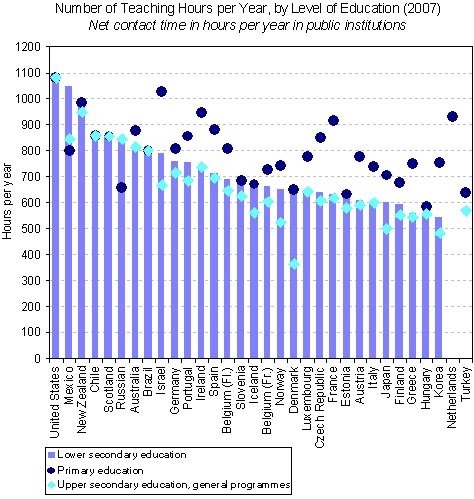
Look at the number of hours public school teachers work in the United States vs. those in other comparable countries, say those included in The Organization for Economic Cooperation and Development (OECD).
In fact, the OECD (which is not biased one way or another about American school privatization) released a mountain of statistics about how many hours teachers work in various countries.
American teachers spend on average 1,080 hours teaching each year. Across the O.E.C.D., the average for most countries is 794 hours on primary education, 709 hours on lower secondary education, and 653 hours on upper secondary education general programs.
Source: OECD
Yet American teachers start at lower salaries and even after 15 years in the profession, earn less money than their international counterparts.
So – assuming Fordham’s absenteeism statistics are accurate – why do public school teachers miss so much school? They’re exhausted from the hours we demand they keep!
But what about charter school teachers? Aren’t they exhausted, too?
Since they’re often not unionized, charter schools usually have younger, less experienced staff who don’t stay in the profession long. In fact, they rely on a constant turnover of staff. At many of the largest charter chains such as Success Academy and the Knowledge is Power Program (KIPP), teachers average only 4 years before moving on to another career, according to the New York Times. And this is typical of most charter chains.
So why don’t charter school teachers take as many sick days as traditional public school teachers? Maybe because when they check out, they often don’t check back in.
Moreover, there is a significant difference in the student population at both kinds of school – privatized vs. public.
As their marketing departments will tell you, the students in a charter school choose to be there. The charter schools often weed out the students with behavior problems, special needs or those who are otherwise more difficult to teach. As a result, the strain on teachers may not be as severe. When you’re only serving kids who want to be there and who are easy to teach, maybe you don’t need as much downtime.
According to a study by Scholastic (that actually goes counter to its pro-privatization bias), we work 53 hours a week on average. That comes out to 7.5 hours a day in the classroom teaching. In addition, we spend 90 minutes before and/or after school mentoring, tutoring, attending staff meetings and collaborating with peers. Plus 95 additional minutes at home grading papers, preparing classroom activities and other job-related tasks.
And for teachers who oversee extracurricular clubs, that’s even more work – 11-20 additional hours a week, on average.
Add to that the additional trauma public school children have experienced over the last decade. More than half of public school students now live below the poverty line. That means increased behavior issues, increased emotional disturbances, increased special needs, increased malnutrition, increased drug use – you name it.
Public school teachers deal with that every day. And you seriously wonder that some of us need some downtime during the year to deal with it.
Moreover, let’s not forget the issue of disease.
Working in a public school is to immerse yourself in a petri dish of bacteria and viruses. My first year teaching, I got so sick I was out for weeks until I developed immunities to strains of illnesses I had never been exposed to before.
So, yeah, sometimes I need to take a sick day. But if you ask most teachers, they’d rather stay in the class and work through it.
Having the day off is often more trouble than it’s worth. You have to plan an entire lesson that can be conducted in your absence, you have to give the students an assignment to do and you have to grade it. Even with the day off, you have a mountain of work waiting for you when you return.
So as a practicing public school teacher, I dispute the findings of the Fordham Institute.
They don’t know what they’re talking about.
They have focused in on data to make their chosen targets, public school teachers, look bad while extolling the virtues of those who work in privatized systems.
Is anyone else left? Am I the only one still employed here?
Somedays it feels like it.
Somedays teaching in a public school is kind of like trying to run a resort hotel – ALL BY YOURSELF.
You’ve got to teach the classes and watch the lunch periods and cover the absences and monitor the halls and buy the pencils and tissues and fill out the lesson plans and conduct the staff meetings and…
Wouldn’t it be better if there were more people here?
So why did we let this happen? Why do we continue to let this happen?
First, you have to understand that there are two very different kinds of public school experience. There is the kind provided by the rich schools where the local tax base has enough money to give kids everything they need including small class sizes and hiring enough teachers to get things done efficiently. And there’s the poor schools where the majority of our kids get educated by the most dedicated put upon teachers who give 110% everyday but somehow can’t manage to keep all those plates spinning in the air at the same time so the media swoops in, wags its finger and proclaims them a “failure.”
Bull.
It’s not teachers who are failing. It’s a system that stacks the deck against them and anxiously anticipates them being unable to meet unfair and impossible expectations.
This is a chance to open a new market and scoop up buckets of juicy profit all for themselves and their donors.
It’s called privatized education. You know – charter schools and vouchers schools. Educational institutions not run by the public, not beholden to elected officials, but instead by bureaucrats who have the freedom to act in the shadows, cut student services and pocket the savings.
Those are people they have to pay a living wage. Those are people who know a thing or two and might complain about how the corporate scheme adversely affects the children in their care.
And to do that, the powers that be need to get rid of professional teachers.
People like me – folks with national board certification and a masters degree – they need to go.
THAT’S why class sizes are so large. That’s why so few young people are picking teaching as a major in college.
It’s exactly what the super-rich want.
And it doesn’t have to be some half mad Mr. Burns who makes the decisions. In my own district, the school board just decided to save money by cutting middle school math and language arts teachers – the core educators who teach the most important subjects on the standardized tests they pretend to value so much!
So number crunching administrators had a choice – straighten their backbones and fight, or suggest cutting flesh and bone to make the budget.
They chose the easier path.
As a result, middle school classes are noticeably larger, teachers have been moved to areas where they aren’t necessarily most prepared to teach and administrators actually have the gall to hold out their clipboards, show us the state test scores and cluck their tongues.
I actually heard an administrator this week claim that my subject, language arts, counts for double points on the state achievement rubric. I responded that this information should be presented to the school board as a reason to hire another language arts teacher, reduce class sizes and increase the chances of boosting test scores!
That went over like a lead balloon.
But it demonstrates why we’ve lost so much ground.
Everyone knows larger class sizes are bad – especially in core subjects, especially for younger students, especially for struggling students. Yet no one wants to do anything to cut class sizes.
Instead we’re warned that if we don’t somehow pull ourselves up by our bootstraps, they’ll close our school and give it to a private company to run – as if there were any evidence at all that this would help.
It’s a scam, ladies and gentlemen! And anyone who looks can see it.
But when you bring this up to administrators, they usually just nod and say that there’s nothing we can do about it. All we can do is keep trying to win the game – a game that’s rigged against us.
That’s exactly the attitude that’s gotten us where we are.
We can’t just keep doing it, keep appeasing the testing and privatization industry and their patsies in the media and government.
We must fight the system, itself, not go along with it.
We need to demilitarize law enforcement. We need new training programs that emphasize de-escalation of violence – not a shoot-first-ask questions-later mentality.
And it’s hard to focus on that when racism and prejudice get in the way. We need to fix racism first. Only then can we address the root issue.
Instead we’d have schools that serve everyone – a broad mix of cultures, races and ethnicities all properly resourced and offering a broad range of curriculum and extra-curricular activities.
There’s one thing you have to understand. Racism isn’t an ideology. It’s a sickness. It’s a virus that blinds people to real truths about the world and makes them more prone to holding views that are just plain wrong.
The same with sexism, anti-Semitism, homophobia and a plethora of modern day maladies that should have gone the way of small pox and polio.
Do you want to get into college just because you’re white?
Do you want to get a job just because of the hue of your epidermis?
Do you want the sum total of your value as a human being to be dependent on the way light reflects off your skin?
I don’t.
I’m white, and I don’t want that for me or my posterity.
I want people to judge me for me – not some preconceived notion of who I am based on culturally received generalities and the amount of melanin in my outermost cells.
Fuck that shit.
I’m me. And if that’s not good enough for anyone they can just go and jump in the river.
I don’t need white supremacy. And I don’t want it.
White will no longer be considered normal. Neither will male.
It’s just another way to be – no better or worse than any other.
That doesn’t mean being ashamed of your whiteness. Hell. We can revel in it.
Imagine reconnecting with all the messy ethnicities we’ve plastered over to claim this homogenous white overclass! Imagine being Polish again, and Czech and German and Scandinavian and so many other nationalities that we barely connect with because we don’t want to draw attention to ourselves as anything other than white — That’s me. Just white. Plain white. Nothing to see here. White.
We’ve had to sacrifice a whole lot to get that status. But we don’t have to keep sacrificing. We can be who we are, too.
The Alt-Right Nazis are out there in the streets chanting, “You will not replace us.”
How about we replace ourselves.
Why don’t we redefine who we are as – who we are.
Not homogenous. Not white. But specific human beings belonging to various cultural, ethnic and religious groups and societies.
Human beings all taking part in the symphony of homo sapia, engaged in a robust love of all things people and a recognition that all people are human.
Think for a moment what that truly means.
Take a deep breath.
Let it in. Let it out.
It means letting go of this irrational fear that anti-racism is anti-white.
So, let me say it again – no. Black progress will not come at white expense. Nor will female progress or anyone’s progress.
All it would take is WordPress deleting the site or maybe the power goes out and never comes back or a zombie apocalypse or who knows…
But a book. That’s kinda’ permanent.
It has mass and takes up space.
That won’t just poof out of existence if someone unplugs the wrong server.
It would take some sort of conscious effort for a book to go away. People would have to actively work to destroy it. They’d have to pile those rectangular paper bundles in a fire pit, douse them in gasoline and light a match.
Otherwise, they’d just maybe sit in a basement somewhere in boxes, unopened and collecting dust.
Or could it really be that people might actually crack the spine and read the things?
It’s a strange sort of birth this transition from cyberspace to 3-dimensional reality.
And it’s about to transpire with selected bits of my writing.
I am flabbergasted. Shocked. Almost in denial that this is really happening.
Did I mention that I’m a public school teacher? No one is supposed to listen to us.
School policy is made without us. Decisions impacting our kids and our careers are made by people who haven’t seen the classroom in years – if ever. And when we politely raise our hands to let people know that something isn’t working, the best we can hope for is to be ignored; the worst is to be bullied into silence.
Maybe I’ve got some sort of debilitating disease and no one’s told me yet.
The book officially comes out on Nov. 28. So when I’m handed my first actual copy, I’d say it’s even money that the next thing I’ll be handed is some medical document showing I only have moments left to live.
But whatever.
I’ll die with a smile on my face.
It reminds me of a few lines from Ray Bradbury’s Fahrenheit 451:
Everyone must leave something behind when he dies, my grandfather said. A child or a book or a painting or a house or a wall built or a pair of shoes made. Or a garden planted. Something your hand touched some way so your soul has somewhere to go when you die, and when people look at that tree or that flower you planted, you’re there.
In my 40-some years, I’ve tried to do that. I’ve tried to make some lasting mark on the world. Tried to leave it a better place than I found it.
I started as a journalist.
It was great! I could shake up a whole community just by writing something, uncovering some hidden truth, asking a tough question.
But I needed to eat, too, and you can’t do that when you’re on call 24-hours a day for nearly minimum wage under the constant threat of downsizing and meddling by the publisher and advertisers.
So I got my masters degree and became a school teacher.
And it’s been great! I can alter the course of a child’s entire life by helping her learn to read, encouraging her to write and getting her to think and ask questions.
But I’m under constant threat by bureaucrats who know nothing about pedagogy and child psychology trying to force me to do things in ways I know are wrong, detrimental or prejudicial.
And it’s been great. I joined groups of likeminded individuals and we took to the streets and the legislature and lawmakers offices and parent meetings and teachers conferences and just about anywhere you could stir things up and get people to start asking the right questions.
That led directly to the blog and now the book.
So what’s in it?
In short, it’s my hand-selected favorite articles. These are the ones that either got the most readers or that have a special place in my heart or both.
And this summer I sat at my kitchen table and intensively revised almost all of them. Even if you’ve read them before, these are definitive versions. In some cases, they’re considerably different than the versions you might still find up on-line.
Who did I write it for?
You, I hope.
But, if I’m honest, the people I most had in mind reading it were my daughter and my students.
One day my little girl will grow up and she may wonder what her old man thought about X, Y and Z.
What did Daddy think about racism? What did he think a good teacher did? What were his thoughts about politics, prejudice and reform?
I can see some of my students doing the same.
Perhaps I flatter myself that they may dimly remember me – their crazy 7th or 8th grade Language Arts teacher. I wonder what Mr. Singer would have said about… whatever.
I guess this is my way of telling them.
It’s a time capsule of my present day thoughts. And a guide for how to get to a better future.
You’re cordially invited to read it.
If you’re a longtime follower of this blog, let me just say – thank you from the bottom of my heart.
I never would have had the courage to continue without you.
If you’re new to my writing, welcome aboard. I hope I’ve given you reason to keep reading.
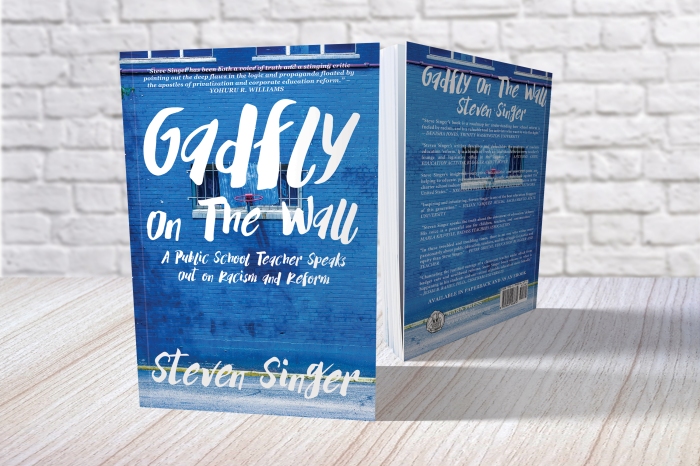
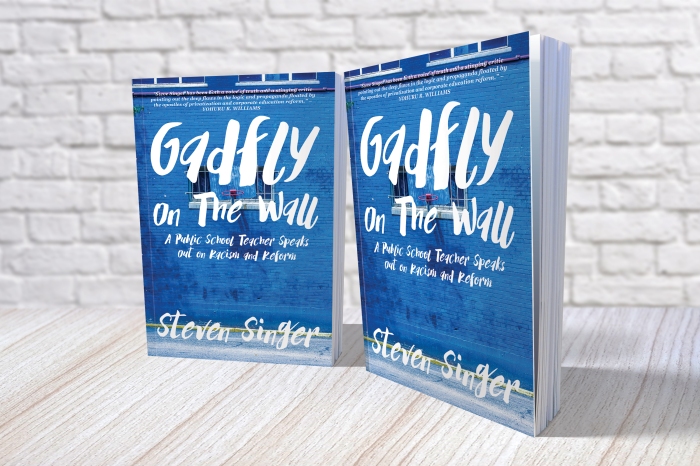
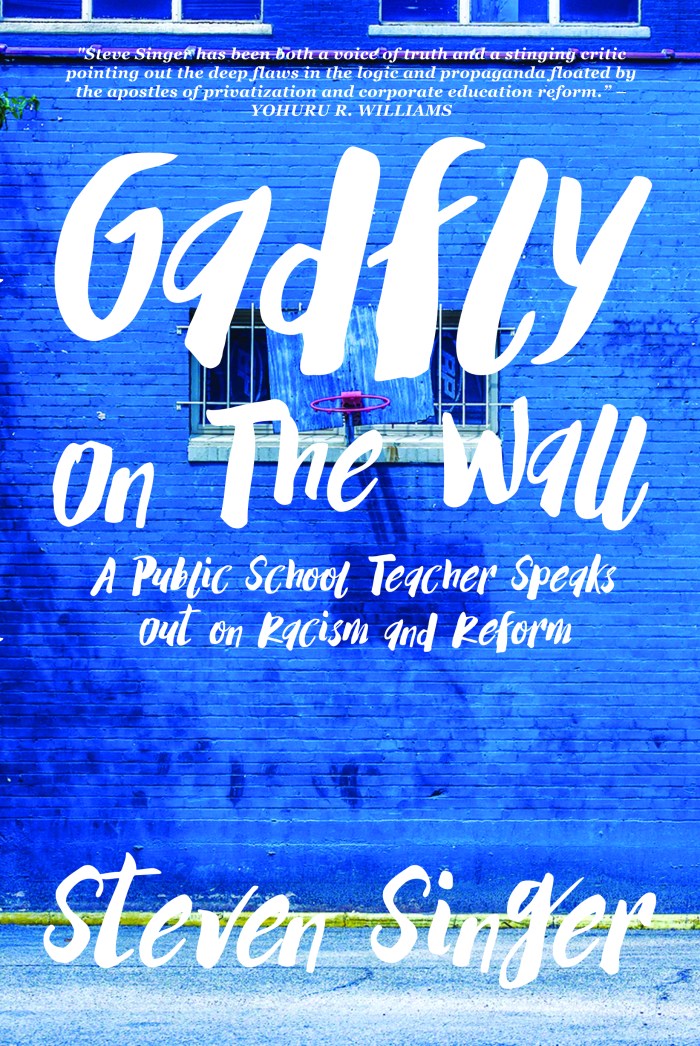
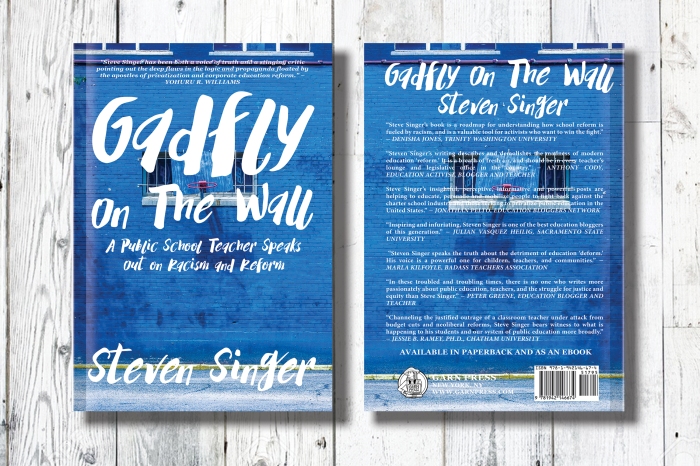
And I hope that one or two of you will be inspired to seek out a certain oblong bundle of papers wrapped in a blue and white cover proclaiming my undying, self-chosen, provocative descriptor:
Gadfly on the Wall.
(Oh! And a special shout out to Denisha Jones and Yohuru Williams for writing incredible introductions to the book! I am beyond honored!)
UPDATE:
The book is now available for purchase at Amazon.com. Just click here!
I am also donating 10% of all proceeds to the Badass Teachers Association.
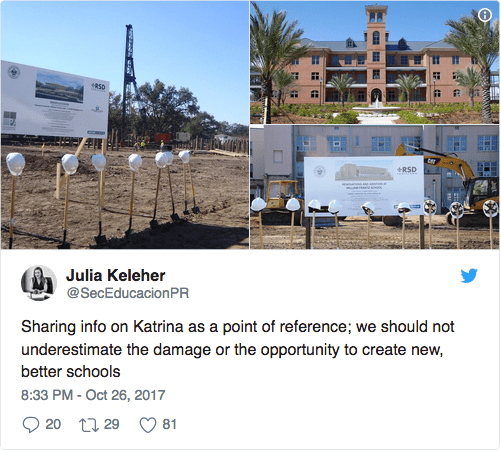
“…this [is a] transformational opportunity for us to start to think fundamentally differently about what it is to be in school, and how one goes about getting an education.”
A dozen years ago in Louisiana, that meant stealing almost the entire New Orleans public school system in the aftermath of Katrina. About 90 percent of the city’s 126 schools were given to the Louisiana Recovery School District, which turned them all into charter schools.
In effect, Louisiana state officials elected by the white majority stole control from local school boards elected by the city’s black majority. More than 7,000 teachers most of whom were people of color and had been displaced by the hurricane found themselves replaced by mostly white teachers brought in from other parts of the country.
Now, more than 10 years later, the New Orleans experiment has been shown to be a failure. Scores on standardized tests have improved (kinda), but the curriculum has narrowed, teacher turnover has doubled, disadvantaged and special education students have even fewer resources while schools fight over high achieving children, students spend hours being bused to schools far from their homes, communities have been erased, and parents have less control over how their own tax dollars are spent.
That is what Keleher and others want to repeat in Puerto Rico – wrest control away from the public and give it to big business all wrapped up in a bow.
Why?
Public schools come with expensive perks like local control, transparent budgets and regulations to ensure all the money is being spent on students. It’s much cheaper to run these districts with unelected bureaucrats, closed-door budgets and the ability to grab as much of the cash as possible and stuff it into their own pockets.
It ’s not like anyone’s going to complain. These schools aren’t for rich white kids. They’re for poor brown ones.
It’s just colonialism, 2017 style!
Jeanne Allen thinks that’s a great idea.
The founder and CEO of school privatization lobbying group, the Center For Education Reform, said that charterization is the best thing that could happen to Puerto Rican schools.
After dealing with the immediate effects of the hurricane, reformers “should be thinking about how to recreate the public education system in Puerto Rico.” And she should know. Allen was also involved in the New Orleans fiasco turning that system over to big business.
She added that charter school operators across the nation, including cyber charter school managers (whose schools often have even more wretched academic results), should be thinking about how to get involved in Puerto Rico post-Maria.
Even though many Puerto Rican schools are only operational because of the work of teachers who have cleaned them up and have opened them despite being told not to by Keleher’s administration, the Education Secretary has pledged to lay off massive amounts of teachers and permanently close more schools – even schools that are structurally sound.
“Consolidating schools makes sense,” Keleher said in October. “They can go out and protest in the streets, but that doesn’t change the fact that we can’t go back to life being the same as it was before the hurricane.”
Puerto Rican teachers aren’t letting the vultures swoop in without protest.
“Our schools have served students well and although we recognize that it can be expensive to repair some schools, what we are asking is that schools that are ready be opened,” said social worker Alba Toro just before the arrests.
According to Education Safety Commissioner César González, the protesters assaulted at least three security employees and a public relations employee while inside the building.
However, protestors dispute this version of events. Eulalia Centeno, who was part of the group that went inside the building, but left before the arrests began, said that no violent acts were committed and that the protesters only demanded to see the secretary to request the opening of public schools.
Seven weeks after the hurricane, less than half of the island’s nearly 1,200 public schools are open in any capacity. Though many schools endured severe storm and flood damage, others were repaired and cleaned to shelter hurricane victims and are ready to take in students.
“Keleher is using the crisis as an opportunity to close hundreds of public schools, lay off senior teachers and privatize public education,” says Mercedes Martinez, President of the Federacion de Maestros of Puerto Rico, an island teachers union.
Martinez was one of the teachers arrested during the protest.
When she was taken out of the building in handcuffs, her son was photographed leaning over a railing and patting his mother on the shoulder.
This is what real heroes do.
They refuse to back down despite the forces of prejudice and commerce stacked against them.
Will we let the charter school vampires suck Puerto Rico dry?
Tell it to the handful of truly terrible teachers who for reasons only they can explain stay in a job they hate through countless interventions and retrainings until the principal has no choice but to give them their walking papers.
Oh, yes. Teachers DO get fired. I’ve seen it with my own eyes numerous times. And in each case, they truly deserved it.
(Any “bad teachers” still on the job mean there’s a worse administrator somewhere neglecting to do his or her duty.)
So what does “Seniority” and “Tenure” even mean for teachers?
Basically, it means two things:
(1) If you want to fire a teacher, you have to prove he or she deserves it. That’s Tenure.
(2) When public school districts downsize, they can’t just lay off people based on their salaries. That’s Seniority.
If you think about it, both of these are good things.
It is not a good work environment for teachers or students when educators can be fired without cause at the whim of incoming administration or radical, newly-elected school board members. Teaching is one of the most political professions we have. Tenure shields educators from the winds of partisanship. It allows them to grade children fairly whose parents have connections on the school board, it allows them to speak honestly and openly about school policy, and it empowers them to act in the best interests of their students – all things that otherwise could jeopardize their jobs.
Likewise, seniority stops the budget butchers from making experience and stability a liability.
It stops number crunchers from saying:
Hey, Mrs. Wilson has been here for 25 years. She’s got a shelf full of teaching awards. Parents and students love her. But she’s at the top of the salary scale so she’s gotta’ go.
I know what you’re going to say: Aren’t there younger teachers who are also outstanding?
Yes. There are.
However, if you put all the best teachers in one group, most of them will be more experienced.
It just makes sense. You get better at something – anything – the more you do it. This could be baking pies, building houses or teaching children how to read and write.
So why don’t we keep the best teachers and get rid of those who aren’t up to their level?
Because determining who’s the best is subjective. And if you let the moneymen decide – POOF! – suddenly the teachers who make the most money will disappear and only the cheapest ones will be left.
Couldn’t you base it on something more universal like student test scores?
Yes, you could, but student test scores are a terrible way to evaluate teachers. If you wanted to get rid of the highest paid employees, all you’d have to do is give them the most struggling students. Suddenly, their students have the worst test scores, and they’re packing up their stuff in little cardboard boxes.
Almost any stat can be gamed.
The only one that is solidly unbiased? Seniority.
You’ve either been here 15 years or you haven’t. There’s not much anyone can do to change that fact.
That’s why it prevents the kind of creative accounting you see from penny pinching number crunchers.
Along with Tenure, Seniority is a safety net. Pure and simple. It helps keep the most qualified teachers in the room with kids. Period.
But look. It’s not perfect.
Neither are seat belts.
If you’re in a car crash on a bridge where it’s necessary to get out of your vehicle quickly before it plunges into the water below, it’s possible your seat belt may make it more difficult to reach safety. This is rather rare, and it doesn’t stop most people from buckling up.
I’ve known excellent teachers who were furloughed while less creative ones were kept on. It does happen.
But if we got rid of seniority, it would happen way more often.
We’ll never improve the quality of the public school system by firing our way to the bottom. That’s like trying to lose weight by hacking at yourself with a straight razor. It just won’t work.
We need to commit to public schools. We need to commit to public school students. And the best way to do that is to support the teachers who devote their lives showing up every day to help them learn.














 gadflyonthewallblog