The Pittsburgh Community is Stronger Than the Synagogue Shooter’s Hate

43579727_10156281113318860_8423220729121603584_n


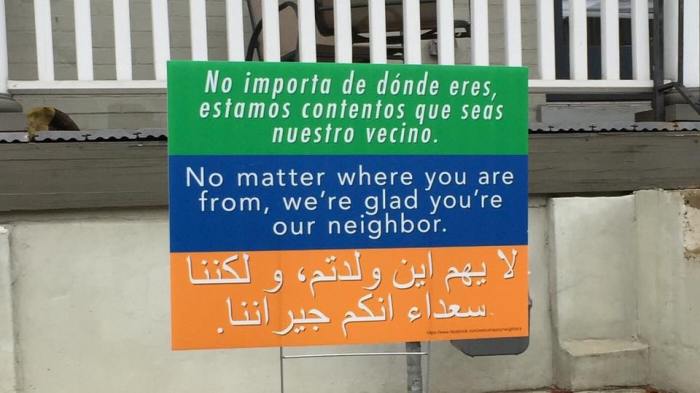
There’s a popular yard sign in the Squirrel Hill neighborhood of Pittsburgh.


In bands of green and blue and yellow, it projects the same message in Spanish, English and Arabic:


“No matter where you are from, we’re glad you’re our neighbor.”


If the community had a motto, I think that might be it.


Though known for its high concentration of Jewish residents, the Pennsylvania locale is a multicultural crossroads.


That may have made it a target today when a shooter entered the Tree of Life Synagogue.


Though the alleged culprit has been captured, details are still being uncovered. The death toll has yet to be tallied.


Unconfirmed reports state that he shouted “All Jews must die,” before opening fire.


But I don’t believe that the Jewish community was his only target.


Or more precisely – it wasn’t just the Jewish part – it was the community that had grown up around it.


I know Squirrel Hill well.


I live close by. I grew up on those streets. I’ve been to services at that synagogue. I have family who are members.


Thankfully it seems that no one related to me was there this morning. But when victims names are released, I probably will know who they are.


I know this community.


I am an extended part of it.


And that’s something of which I am proud.


Just walk along Murray Avenue and you’ll see Indian, Italian, Jewish, African, Chinese – every nationality imaginable – offering the fruits of their culture for friendly commerce.


You’ll see Hasidic Jews in dark hats and flowing tzitzit walking next to women in colorful saris next to trans and lesbians, kids with every color skin playing together in harmony.


Whenever I want a good corned beef sandwich or a quality lox and bagel, I go there. Whenever I want a spicy curry or the freshest sushi or an authentic macaroon, that’s the place. If I want to hear a string quartet or a lecture from a visiting dignitary or even if I want to swim in a public pool, membership to the Jewish Community Center is open to all.


It’s like a few blocks of cosmopolitan life tucked away in a city more known for segregation. We have many ethnic neighborhoods but few where one culture flows so easily into another.


Heck. Even the Tree of Life Synagogue, itself, doesn’t serve one congregation. It serves three who all had services going on at different parts of the building this morning.


There’s just something very special about this place.


It’s where you can go to be yourself – in fact, you’re encouraged to be who you are and not conform to any particular norm. Yet in doing so, you’re somehow demonstrating unity.


Paradoxically, being you makes you one of us.


It’s weird.


I think it may have been that sense of community that made Squirrel Hill, in general, and the Tree of Life Synagogue, in particular, a target.


The hate-filled person who attacked us today was terrified of that unity.


He was so frightened of disillusion, of losing his sense of self, that he had to end the lives of those who could do what he couldn’t.


It’s pathetic, really.


If your sense of self is only a negative, only opposition to someone else’s otherness, you really don’t have much self to lose.


If you define yourself by your hate, what are you?


Do you even really exist?


Most of us are very different.


We are complex assortments of personality – a family identity, a cultural heritage, a work persona, a spirituality, a sense of justice.


Communities like Squirrel Hill nurture this multifarious nature.


They welcome and celebrate difference.


I wish America was more like Squirrel Hill and not the other way around.


If this community’s normal was our national ideal, think of the country we would be living in!


Being different wouldn’t be an obstacle, it would be cherished.


When meeting someone with an unfamiliar name, a heritage of which you were ignorant, a sexuality or gender identity of which you had little knowledge – your response wouldn’t be fear or discomfort. It would be a thrill of excitement that you are lucky enough to broaden your understanding of the many ways there are to be human.


It would be a country where no one grew up so stunted and afraid that the only solution they could imagine would be the death of others.


That’s the America I want to live in.


Squirrel Hill is stronger than this synagogue shooters hate.


I hope our country is, too.


Like this post? I’ve written a book, “Gadfly on the Wall: A Public School Teacher Speaks Out on Racism and Reform,” now available from Garn Press. Ten percent of the proceeds go to the Badass Teachers Association. Check it out!
book-1

Dear Non-Voters, Your Country Needs You

Voting.


Four in 10 Americans who were eligible to vote in 2016 didn’t do so.


That’s some 92 million U.S. Citizens.


These people weren’t purged from the polls.


They weren’t barred from voting.


They just didn’t bother.


So, the way I see it, the responsibility for President Donald Trump rests with you.


The United States has a Reality TV Show clown in the oval office.


He is a dimwitted narcissist who panders to racists, sexists and xenophobes to stay in power.


He is an incurious liar who constantly trolls the media and the public.


He is an admirer of dictators and fascists across the globe with no qualms about enriching himself and those like him at the expense of you and me.


Everyday he provides aide and comfort to anti-American regimes from Moscow to Riyadh by diminishing our international stature, withdrawing us from treaties and contracts, leaking sensitive information and otherwise pursuing foreign interests over those of American citizens.


And that’s before we even begin to examine his colossal impact on human rights – emboldening terrorists and white supremacists while his own administration throws children in cages and forcibly separates them from their families.


This is on you, non-voters.


You did this.


A democratic republic is like any other machine – it only functions properly if all of its parts are working.


You can’t have majority rule when 40% of voters shirk their duty.


A study by the Pew Research Center found that not only were non-voters likely to be younger, less educated, less affluent, and nonwhite, but 55% of them were Democrats and Democratic-leaning independents.


Screen Shot 2018-10-26 at 3.23.58 PM


If more non-voters under the age of 30 had gotten their acts together in just a few swing states, we wouldn’t all be living through this national nightmare.


So if you think voting doesn’t make a difference, look around.


Look at your bank account for instance.


Wonder why your wages continue to stagnate while the rich pocket more and more of the economy?


Look at your neighborhood. Wonder why our schools, roads, bridges and other public services are crumbling into disrepair?


It’s because you didn’t vote.


I’m not saying everything would have been great under President Hillary Clinton. But Trump sets an awfully low bar for competency.


You think your vote doesn’t matter?


Republicans disagree with you.


They aren’t working overtime to stop people like you from voting because it makes no difference.


Robert Kennedy put it this way:


“The most significant civil rights problem is voting. Each citizen’s right to vote is fundamental to all the other rights of citizenship and the Civil Rights Act of 1957 and 1960 make it the responsibility of the Department of Justice to protect that right.”


Our courts have given up that responsibility.


Since 2013 when the Supreme Court invalidated a key part of the Voting Rights Act, millions of people have been barred from casting a ballot.


The federal government used to require nine states with a history of racial discrimination to obtain federal approval before making such changes. Now that they no longer need to do so, between 2014 and 2016 there’s been a 33% increase in voter purges in these states.


This isn’t just cleaning the polls of the names of people who’ve died. It’s actively preventing people – especially the poor and people of color – from having their voices heard.


In Arkansas, thousands of voters were erroneously flagged in 2016 under the guise of removing people who had been convicted of felonies. In Virginia, voters were wrongly deleted from the rolls in 2013 under the excuse of removing people who allegedly had moved.


And this election cycle more than one hundred thousand Georgia voters were removed because they didn’t respond to a mailer or there was a typo on their registration form.


To make matters worse, the purge was overseen by Secretary of State Brian Kemp, a Republican candidate for governor. Since most of the people being removed from the polls are people of color, the poor and other Democrats or leaning Democrat voters, the move makes it harder for Democrat Stacey Abrams to challenge him.


Kemp and his Republican buddies wouldn’t be going through all this trouble if voting made no difference.


“Too many people struggled, suffered, and died to make it possible for every American to exercise their right to vote,” said civil rights icon and U.S. Senator John Lewis.


And people have died for the opportunity that millions of people decide not to exercise.


People like James Chaney, Andrew Goodman and Michael Schwerner, who were murdered in 1964 while trying to register black voters in Mississippi. People like Viola Liuzzo, who was murdered a year later by the Ku Klux Klan during the Selma march for voting rights.


When you willingly give up an opportunity that was purchased so dear, you disrespect the memories of the dead.


President Franklin D. Roosevelt put it like this:


“Nobody will ever deprive the American people of the right to vote except themselves and the only way they could do this is by not voting.”


Our country is under attack. Our very freedoms are on the line.


Will you be a willing accomplice by standing idly by and allowing these miscreants to defecate all over the flag?


Or will you take a stand, do your duty and vote!?


“Bad politicians are sent to Washington by good people who don’t vote.”

-William E. Simon


Like this post? I’ve written a book, “Gadfly on the Wall: A Public School Teacher Speaks Out on Racism and Reform,” now available from Garn Press. Ten percent of the proceeds go to the Badass Teachers Association. Check it out!

thumbnail_IMG_8249

The NAACP Once Again Opposes High Stakes Standardized Testing!

cps_teaching_not_over_testing_sarah_ji


The nation’s oldest and largest civil rights organization has come out against high stakes standardized testing.


The National Association for the Advancement of Colored People (NAACP) distributed an issue brief yesterday at its national convention in San Antonio, Texas, titled “NAACP OPPOSES HIGH-STAKES EDUCATIONAL TESTING.”


The brief stated that the organization has concerns about using a single standardized test as a graduation requirement, as a prerequisite for advancement to the next grade or otherwise blocking students from receiving various educational opportunities. In its place, the organization favors the use of multiple measures, which may include standardized testing but should also include other assessments such as student grades and teacher evaluations.


In short, the brief concluded:


“Using a single standardized test as the sole determinant for promotion, tracking, ability grouping and graduation is not fair and does not foster equality or opportunity for students regardless of race, income, or gender.”


This is a huge policy shift from where the organization was just three years ago.


In 2015, the NAACP along with several other larger and older civil rights groups changed its position against testing to one in favor of it.


At the time, Congress was getting ready to pass a new education law, the Every Student Succeeds Act (ESSA). The civil rights organizations – many of whom had just asked Congress a year earlier to reduce standardized testing – suddenly demanded it be kept a federal accountability standard and that taking these tests was, itself, a civil right.


At the time, many education activists were shocked by the turnaround obviously coerced by the standardized testing and school privatization industry. For instance, see this email from Teach for America alum Liz King giving organizations an ultimatum to sign.


The new issue brief is more in-line with the NAACP’s history of opposition and activism against corporate education reform.


Once again we have the NAACP that advocated against standardized testing in the Debra P v. Turlington case (1981), where the Florida legislature made passing a single standardized test a graduation requirement. The NAACP supported black students who had a disproportionate failing rate on the test and claimed the Florida legislature was violating the Fourteenth Amendment. The courts eventually ruled against the plaintiffs but the issue has remained contentious to this day.


The new issue brief isn’t just a return to form. It builds on concerns that are still plaguing our schools.


Of particular note in the new issue brief is the caution that, “…when standardized tests are used by schools and school districts, that the tests be valid and reliable, measure what the student was taught and provide appropriate accommodations for disabled children.”


Many would argue that the new batch of Common Core aligned tests being used by states do not meet this requirement. They do not test what students have been taught – they test students’ ability to spit back the same kind of thinking of the person who wrote the test. Moreover, special needs students are rarely afforded the same accommodations on federally mandated standardized test day that they are allowed during every other assessment they take during the school year.


The brief continues:


“Furthermore, the NAACP is opposed to individual students being unfairly denied critical educational opportunities because of their performance on a single, standardized test.


This, itself, is a nationwide problem. Administrators are pressured to make district policies “data-driven” and thus deny students the chance to take advanced classes or go on special field trips because of performance on one multiple choice test.


The NAACP certainly could go farther in its criticism of high stakes testing.


Organizations like the Journey for Justice Alliance (JJA), a group made up of 38 organizations of Black and Brown parents and students in 23 states, have never wavered in their opposition to high stakes standardized testing. In 2015 while the NAACP and other well established groups defended testing, JJA was joined by 175 other national and local grassroots community, youth and civil rights organizations asking Congress to stop requiring standardized tests at all.


Standardized testing violates students civil rights – especially the poor and students of color.


It is nice to see the NAACP returning to the activism on which it built its justly deserved reputation.


What follows is the full text of the new NAACP issue brief:


“ISSUE BRIEF


Date: Summer, 2018


To: Concerned Parties


From: Hilary O. Shelton, Director, Washington Bureau


NAACP OPPOSES HIGH-STAKES EDUCATIONAL TESTING


THE ISSUE


Many states are relying on a single examination to determine decisions (such as graduating from high school or promoting students to the next grade), despite the fact that leading education experts nationwide recommend multiple measures of student performance for such decisions. While these “high-stakes” tests serve an important role in education settings, they are not perfect and when used improperly can create real barriers to educational opportunity and progress. Furthermore, one-time, standardized tests may have a disparate impact on students of color, many of whom have not had the benefit of high quality teaching staff (urban school districts have the greatest challenge in attracting and keeping high qualified teachers), adequate classroom resources, or instruction on the content and skills being tested by the standardized tests. Considering additional measures of student achievement, such as grades and teacher evaluations, adds not only to the fairness of a decision with major consequences for students but also increases the validity of such high stakes decisions.


Due to our concerns about the fairness of such testing, as well as the potential impact these tests have on the lives of our children, the NAACP has supported legislation in the past that would require that States follow the recommendation of the National Academy of Sciences and the National Research Council of the National Academy of Sciences. Specifically, the bills require that High Stakes decisions be based upon multiple measures of student performance and, when standardized tests are used by schools and school districts, that the tests be valid and reliable, measure what the student was taught and provide appropriate accommodations for disabled children. Furthermore, the NAACP is opposed to individual students being unfairly denied critical educational opportunities because of their performance on a single, standardized test.


The NAACP will continue to promote the initiatives that ensure equal opportunity, fairness, and accuracy in education by coupling standardized tests with other measures of academic achievement. Using a single standardized test as the sole determinant for promotion, tracking, ability grouping and graduation is not fair and does not foster equality or opportunity for students regardless of race, income, or gender.”


img_3315


Special thanks to Dr. Julian Vasquez Heilig who first released the issue brief on his education blog.


Like this post? I’ve written a book, “Gadfly on the Wall: A Public School Teacher Speaks Out on Racism and Reform,” now available from Garn Press. Ten percent of the proceeds go to the Badass Teachers Association. Check it out!
WANT A SIGNED COPY?

Click here to order one directly from me to your door!


book-2

Antwon Rose’s Life Matters

antwon_rose.0


Antwon Rose could have been my student.


I teach 7th and 8th grade language arts in a district located minutes away from where the 17-year-old was shot and killed by police.


East Pittsburgh, the neighborhood where his car was stopped and where he ran from officers before being shot three times in the back, is minutes from my house.


He went to Woodland Hills School District, minutes from my house.


Michael Rosfeld, the officer who just started working at East Pittsburgh less than two hours before he shot and killed Antwon, had been fired with cause from his previous job as a security officer at the University of Pittsburgh, where I got both my graduate and undergraduate degrees and where my wife works.


The poem Antwon wrote about not wanting to become another statistic that was read aloud at a protest was the product of an assignment I give my own classes.


5b2d0d9d2200006a03eec478


So I say again – he could have been my student.


I have had many children like him.


Most of my kids are like him.


Promising, smart, burdened by fears no teenager should have to face.


When I look at the smiling picture of Antwon released to the media, he looks like so many others I have known and loved.


How many kids have passed before me worried that they’ll be the victims of police violence?


How many kids have sat in those seats trying to concentrate on my work while anxious about the reality of the streets they have to walk just to get home?


How many kids have been afraid that if the worst happens, the rest of us will forget their humanity?


I am a white teacher. I don’t know what it’s like to live as a black person in America except by extension of what my kids and others tell me.


When my daughter goes to school or plays in the yard, I don’t have to worry the police will consider her a threat simply because of the amount of melanin in her skin.


But I do see how white people like me blame a 17-year-old kid for his own death.


If he hadn’t been in that car, he’d still be alive. If he hadn’t run from police, they wouldn’t have shot.


Maybe. Maybe not.


But being in the wrong place at the wrong time shouldn’t bring with it a death sentence. Running away shouldn’t bring with it the finality of the grave.


Yesterday Allegheny County Medical Examiner’s Office ruled the death a homicide. That’s a good start.


But plenty of questions remain.


Rosfeld is still on unpaid leave. Why hasn’t he been arrested?


Civil rights writer Shaun King reports that when Rosfeld worked at the University of Pittsburgh, he had a history of harassing black students and was only let go after he harassed one of the chancellor’s own children. If true, was that reported to East Pittsburgh before they hired him?


Why is it police can apprehend white shooters with no violence, but when a suspect is black the rules of engagement start and end with bloodshed?


Protests have rocked this city for two days and will continue today.


And I’m glad.


We need answers to those and more questions. We need justice for Antwon.


But more than anything we need to recognize that he was a human being.


He was a little boy with his whole life ahead of him.


His life matters.


I don’t say “mattered” because even though he’s gone, his life still matters.


We can’t bring him back, but we can honor who he was.


We can recognize his common humanity is the same as anyone else’s.


We can give him and his family justice.


And we must – we MUST – make sure that things like this don’t happen again.


I’ve had far too many students die at the end of a gun.


At absolute minimum, the hand holding it shouldn’t belong to someone tasked with the job to serve and protect.


Like this post? I’ve written a book, “Gadfly on the Wall: A Public School Teacher Speaks Out on Racism and Reform,” now available from Garn Press. Ten percent of the proceeds go to the Badass Teachers Association. Check it out!

WANT A SIGNED COPY?

Click here to order one directly from me to your door!

book-1

Men, Too, Need No Longer Suffer in Silence the Pain of Sexual Harassment

sad-man-silhouette-on-bench


This is one of the hardest articles I’ve ever written.


I’ve started it several times. And each time I deleted it.


After all, what right do I have to talk about sexual harassment?


I wasn’t raped.


I wasn’t drugged, beaten or blackmailed.


No one physically abused me in any way that did lasting physical harm.


But I was misused.


I was harassed.


And I shouldn’t have been.


I was made a victim, and my victimizer was a woman.


That, alone, shames me to my core.


I’m a grown man.


We’re not supposed to care about things like this.


We’re supposed to be unfeeling, undisturbed, stoic cowboys with our eyes ever fixed on the horizon.


If anything, I should be the one accused, not the accuser.


Some would deny that you even CAN sexually harass a man.


They’d look at the cultural ideal of manhood as an emotionally stunted beast of burden, and say men are too callous and shallow to be susceptible to this sort of pain. After all, men are always ready for the next sexual encounter. Or we should be, because that’s what it means to be a man.


But they’re wrong.


Men have feelings, too. We hurt. We cry. And we can be scarred by unwelcome advances.


So what happened?


It was almost thirty years ago.


I was just a kid in middle or high school – 8th or 9th grade.


It was in pottery class.


I’ve always loved the arts. I used to draw every spare second. My notebooks were covered with doodles and sketches. Cartoon dinosaurs and skulls. Sometimes an alien or dragon.


And I loved working with clay, too.


For years my mother had a vase I made in that pottery class. It was fat on the bottom with a slender neck. Purple glaze on the outside with a blue interior. Mom displayed it proudly in her dinning room, sometimes with a few flowers inside, until one day it accidentally fell from a shelf and shattered.


I might have been working on that same vase when it happened. I really can’t remember.


I think it was a pinch pot.


I was standing at a table I shared with three or four other students, wrapping tubes of hand rolled clay around and around into the shape of a container, when someone came up behind me, grabbed my butt and squeezed.


I jumped in surprise, and said “Ohh!” or something.


Then I heard, “Hey, sweet cheeks!”


And laughter. All coming from the other side of the room.


I turned my head to see who it had been.


It was a girl I hardly knew though she had been in my classes since first grade.


Let’s call her Nancy.


She was a chunky but not unattractive girl from the other side of the room.


She walked back to her friends, both boys and girls, at her table, and they were all losing it over what had happened.


I blushed and turned back to my work, feeling like the clay my fingers molded.


I couldn’t even process what had happened.


Why had Nancy just walked over to me and pinched my butt?


It wasn’t even a playful pinch. It wasn’t grabbing someone with the palm of your hand and giving a squeeze. She had clawed into my flesh, secured a good hunk and pulled.


It was angry and mean.


I didn’t understand. What had I ever done to her?


I barely knew her. I hadn’t said more than ten words to her in eight years.


“You like that?” she asked from across the room.


I just kept working on my pot, looking at it as if it were the only thing left in the universe.


The others at my table were giggling, too.


I remember it like a scene in slow motion. Me rolling out and unwinding the clay. Everyone else laughing. Nancy smirking.


And then she came back and did it again!


I jumped and squealed.


But I did nothing. I said nothing.


She pinched me at least three or four more times. Maybe more.


And she said something each time.


And like it was on a script, always the laughter and guffaws.


Eventually I think I started to quietly cry.


That’s when it stopped mostly.


The others at my table were as silent as I was. When they saw my reaction, I think they got embarrassed.


We were all working with incredible concentration trying not to acknowledge what was happening.


I made sure not to turn and look behind me. But I could hear the snickers.


Where was the teacher?


The room had a strange L-shape. At the foot of the L was a kiln where she was diligently firing last week’s pottery. From where she was, she probably couldn’t see the rest of us working at our tables.


I don’t think she saw anything. She never said anything if she did.


When she returned to our side of the art room, she may have asked if I was okay. I’m not sure. I probably just shrugged it off. Maybe asked to go to the bathroom.


Why did this bother me so much?


Because I wasn’t asking for anyone to come over and touch me like that.


I just wanted to make my stupid pot. I just wanted to be left alone.


I didn’t want to be treated like anyone’s joke. I didn’t want my physicality to be the cause of anyone’s laughter.


It’s not that Nancy was a pariah or a terrible person or anything. If things had been different, I might have responded differently.


But when you’re a guy in high school, you aren’t allowed to be upset when a girl comes and pinches you.


You’re supposed to respond a certain way.


I couldn’t ask her to stop. I’m supposed to love it.


Even if it’s a joke.


Even if it’s a way to denigrate me in front of the whole class. Even if it’s a way to proclaim me the most undesirable boy in the whole room.


It felt like someone pointing at a banana peel in the trash and mockingly saying, “Yum! Yum!”


But I was the garbage.


It certainly made me feel that way.


I’m not sure why this has bothered me for so long.


Maybe it’s the feeling of powerlessness – that there was nothing I could do. Maybe it was a feeling that I should be reacting differently. I should be more assertive either telling her to leave me alone or maybe actually liking the physical contact.


I’m not sure how to explain it.


I was made to feel inferior and degraded.


Perhaps that’s why I’ve remained silent about it all these years. The only solution had seemed to be to forget about it and move on.


Yet doing so leaves a cold lump in your chest. Oh, it won’t kill you. But it’s always there. You just learn to live with it.


I suppose in writing about it, I’m trying to rid myself of that lump.


I don’t know if it will work. But I’m tired of carrying it around with me anymore.


We’re living in a remarkable moment. Women everywhere feel empowered to share their stories of abuse at the hands of men. Shouldn’t I feel empowered to share my story of abuse at the hands of a woman?


But there does seem to be a disconnect here. A disanalogy.


No matter who you are, everyone has been the victim at one point or another.


Whether you’re male or female, rich or poor, black or white – everyone has been on the losing side.


However, some people use that truth as an excuse to pretend that all groups have been equally targeted. They use it as a way to justify the marginalization and minimalization of women and people of color, for instance, groups that have been most often earmarked for abuse.


Let me be clear – I firmly reject that. I am not All Lives Mattering sexual harassment and abuse. Clearly, women have born the brunt of this burden and men have more often been the cause.


But that doesn’t mean that men are immune to being victimized or that women are incapable of being aggressors.


Perhaps that’s my point in writing this – to caution against easy expectations and easy labels.


Toxic masculinity exists because we have toxic expectations for men and boys. Our society molds them into the shape of our collective expectations.


It’s about time we expect more from men.


And it’s time we allow them the space to be hurt so that they, too, need no longer suffer in silence.

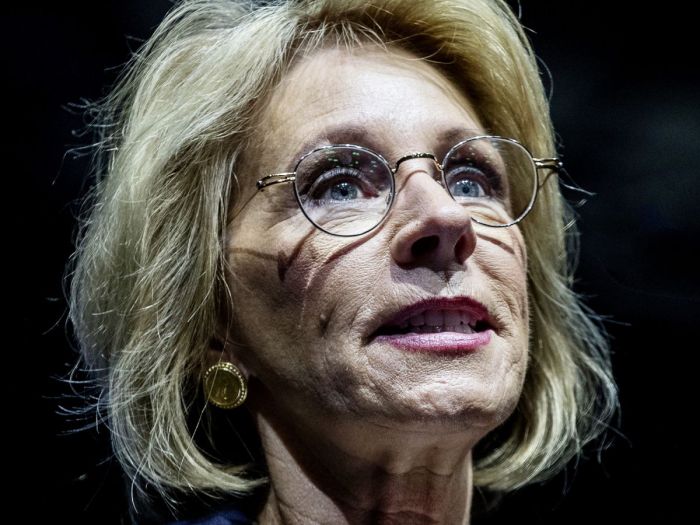
Betsy DeVos Wants Fewer Rights for Rape Survivors & More for Alleged Attackers

image

As a public school teacher, you see a lot of ugly things.

You see children with bruises under their sleeves. Kids who cringe when your voice gets too loud. Young people traumatized by sexual violence.

Even in middle school.

So when Betsy DeVos decided to take up for alleged rapists while making it harder for survivors of sexual assault to come forward, I took it kind of personally.

Last week, the Secretary of Education for the United States of America blithely announced her plan to no longer require colleges and universities that receive federal funds from prosecuting on-campus sexual assault with the same severity.

Yes. Seriously.

“The prior administration weaponized the Office for Civil Rights to work against schools and against students,” she said at George Mason University in Arlington, Virginia.

“The notion that a school must diminish due process rights to better serve ‘victims’ only creates more victims… If everything is harassment, then nothing is.”

In other words, the billionaire heiress in charge of protecting students’ civil rights thinks there is a power imbalance between rapist and victim. And she’s right. Except that she thinks the alleged rapist is on the losing end of that imbalance.

This may be the most preposterous thing she has ever said. And she’s infamous for saying preposterous things.

In matters of sexual assault, all the power lies with the accuser!?

Has Ms.DeVos ever met a survivor of sexual assault?

I have. I’m sorry to say that I’ve met some while working in our public schools.

To put it bluntly – they were my students.

Little children afraid to go home. Kids with backpacks and cartoon animals on their shirts. Barely teens who kept to themselves, arms locked across their chests. Youngsters who just wanted to stay in class as long as I was staying, who would draw and hum and soak up the least bit of human kindness.

Some of them eventually would confide in me, their teacher. Not that I asked. I would have preferred letting the guidance counselor handle it. I really wasn’t trained for it. But there’s only one thing to do when someone wants to tell you their story – you listen.

And that’s exactly what DeVos is telling us NOT to do.

Don’t listen to accusations of sexual assault unless there is a preponderance of evidence. Start from a position of skepticism and unbelief even so far as making accusers confront their attackers.

After all, it’s the only way to protect from false allegations. As if that were at all common.

Only someone devoid of empathy or intelligence could say such a thing with a straight face – much less present it as a statement of public policy.

Yet DeVos isn’t the only high ranking member of the Education Department voicing it.

Two months ago, Candace Jackson, the official responsible for enforcing campus sexual assault laws for DeVos’ department, told reporters that “90 percent” of sexual assault accusations “fall into the category of ‘we were both drunk,’ ‘we broke up, and six months later I found myself under a Title IX investigation because she just decided that our last sleeping together was not quite right.’”

Jackson, who heads the Department’s Office of Civil Rights, apologized for the statement after public backlash.

But now it’s federal policy!

Like much else from the Trump administration, it flies in the face of the facts.

False accusations do happen, but they are much less frequent than sexual violence. Only between two and ten percent of rape allegations are untrue, according to the National Sexual Violence Resource Center.

Moreover, the same report found that 63 percent of sexual assaults are never even reported to police. Survivors of this heinous crime rarely come forward because of shame, fear and embarrassment.

That’s something I saw first-hand from my students.

They weren’t bragging about an experience they’d lived through. They wanted more than anything to forget it, to ignore what had happened, to get on with their lives. But they just couldn’t. They felt so betrayed, so vulnerable, so guilty, so frightened.

 
DeVos’ new policy will do nothing to change that. If anything, it will only embolden would-be attackers to attempt more assault – a crime that already affects nearly a quarter of college women.

According to a National Institute of Justice report, 20 percent of young women will become the victim of a “completed or attempted sexual assault” while in college. And more than 6 percent of men will also be assaulted.

We shouldn’t be making it harder for people who have been brutalized to seek justice. The accused should have due process, but that’s what an investigation is. In the rare instance of false allegations, those unduly impugned should be exonerated.

Despite what she says, DeVos’ recent actions have nothing to do with that. Before passing down her decision, she met with “Men’s Rights” groups like the National Coalition for Men – organizations that I can honestly say, as a red blooded American male, certainly don’t speak for me.

This is politics, not any concern for justice. It’s no accident that DeVos serves at the pleasure of a President who was caught on a hot microphone bragging about engaging in sexual assault. It’s no accident that his base includes white supremacists. It’s no accident that his party continually stomps on women’s rights.

If we really wanted to help survivors of sexual assault, we’d take steps to make sure the crime they lived through never happens again. At very least, we could take steps to make it more rare.

Imagine if instead of abstinence only sexual education classes, our children were taught actual facts about human sexuality. Imagine if every child learned the meaning and necessity of consent. No means no. Period.

That could have a real impact on these crimes. Over time, we could create a culture of respect and understanding. That certainly seems a worthier goal for a Secretary of Education than removing support for victims of sexual assault.

As to the handful of students who turned to me for help, I really can’t tell you what happened to them afterwards. In most cases, I don’t know myself.

In each instance, I turned to the authorities to ensure my students received the help they needed.

I hope they got it.

Unlike Ms. DeVos, I put them first.

Dear White Supremacists: There Will Be No Race War

a51c6a1d-da93-4129-9050-431ae50718b9


This one goes out to all the white boys.


No.


Not ALL the white boys.


Just the ones who think being “white” and being a “boy” means the world owes them something.


Cause I’m white, too, and I know it doesn’t make me any better than anyone else.


But not you.


You think your lack of pigmentation is a special sign of your supremacy. As if being pale was synonymous for God’s chosen.


Well let me tell you something, white boy. God didn’t choose you. You did.


What you take for superiority is just a misguided attempt at self-esteem.


I’m a snowflake? YOU’RE the snowflake. Same color. Same consistency. In the first warm breeze, you’ll melt.


I’m talking to YOU, white boy. All of you.


All those melanin-starved faces wearing matching eggshell t-shirts and fat-ass khakis.


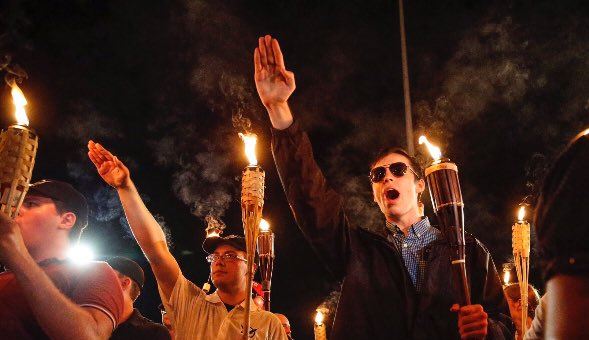
All those brave, young men holding Tiki torches and an inflated sense of self worth.


All the protesters in Charlottesville, Virginia, so fearless they can spray mace on those they disagree with, so bold they can throw punches so long as they know the police won’t hold them accountable, so courageous they can drive a car into unarmed counter-protestors, so brave that they can’t even call themselves what they are: Nazis, the Klan, white supremacists.


You hide behind “Alt Right” as if the rest of us can’t figure out who you really are.


Surprise! We see you!


We see your twisted lips, scrunched eyes and flaring nostrils. Your hood-starved heads and sweat-gelled haircuts. Your hate warped faces spouting reheated leftovers from WWII.


My grandparents fought people like you.


They dressed in army green and hopped the ocean to pound people like you into the ground.


They took your goose-stepping forebears and blasted them into bits. They buried your intellectual precursors under the ashes of their eternal Reich.


And for my grandfathers’ sacrifice, I rarely had to deal with people like you, myself. Not outright.


It’s not that people like you didn’t exist. Your attitudes and beliefs still percolated just beneath the surface of so many frustrated white boys.


The difference was that they were too smart to actually give voice to the darkness in their hearts.


It didn’t stop them from acting on it. They just wouldn’t admit why.


Segregation, red lining, broken windows policing, and a plethora of others. It was all polite, all deniable, all just the colorblind way we do things around here.


But that doesn’t really work anymore, does it?


Times are changing.


The face of America is changing. And it’s increasingly brown.


It’s got curly hair and unexpected features. It’s fed by different foods and nourished by different beliefs and customs. And it’s often called by a name that doesn’t derive from Europe.


People are starting to speak up. They’re starting to call you out.


And you don’t like it.


More than that you’re scared. Terrified.


It’s all going to end. The lie you told yourself about being special.


So you huddle together with others just like you, shivering and crying and blowing snot onto each others shoulders pretending that it’s a rally for white pride. It’s really just the world’s biggest pity party for boys too scared to be men and own up.


You’re brave when you’re in numbers, aren’t you? With numbers or with a gun.


Then you can say whatever you want. You can pretend whatever racial fantasy will protect your fragile little egos.


You’ll whine and boast and imagine you’re winning some kind of war for survival. But we know what you’re really doing.


You’re on your knees. You’re begging for a confrontation.


You’ll do anything to provoke it.


It’s your only hope.


Push them. Prod them. Insult them until they fight.


Bring them down to your level.


Prove your moral superiority by stoking a race war.


Because you can battle human bodies, but you can’t stop ideas.


You can’t triumph over equality, empathy and love.


You can’t stop the tick of time. You can just hope to reset the clock.


Well, I’ve got bad news for you.


There will be no race war.


Not now. Not ever.


Oh, there may be fighting.


You’ll try to make it happen. But it won’t be white vs. black.


It won’t be race vs. race.


It will be your minority of cowards and fools vs. the majority of the rest of us.


Do you really think people like me will fight on your side?


Do you think I’ll stand by you just because the shade of my epidermis matches yours?


Hell No!


I’ll fight with my black brothers and sisters if it comes to it.


I’ll fight on the side of equality, fairness and love.


I’ll do like my grandfathers and smash you into the ground. We all will.


But I’d rather not fight at all.


There need be no violence.


And there won’t be.


Unless you force it.


You see, you can’t make a race war happen.


All you can do is unite the rest of us against you.

Florida Looks to Hide Minority Students with Accountability Waiver

broom2


What do you do with minority students?


The state of Florida is looking to hide them under the rug.


The state is seeking a waiver from the U.S. Department of Education for certain provisions of the Every Student Succeeds Act (ESSA) – a move that has some civil rights groups alarmed.


The request goes something like this:


Federal Government: How are your English Language Learners doing?


Florida: Dunno. We lumped them in with everyone else.


Fed: Are there any big discrepancies between white students and poor, black or Latino students?


Florida: Dunno. We don’t look at that.


Fed: Do you at least allow English Language Learners to take tests in their native language?


Florida: Nope. They need to speak English or fail.


Aaaaand scene.


The waiver hasn’t even been fully drafted yet and submitted to the federal Department of Education.


However, civil rights groups such as The Leadership Conference on Civil and Human Rights, The League of United Latin American Citizens (LULAC), and several local activists are asking that the state reconsider sending it and/or the federal government categorically deny it.


These organizations are worried that such measures, if approved, would allow Florida to ignore the needs of minority students.


In fact, lumping minority students’ test scores in with the majority white population would obscure whether they were struggling at all. So would explicitly ignoring any achievement gaps between the majority and minority populations.


And forcing students to take tests in a language with which they aren’t even proficient yet is just plain cruel.


But it highlights several conflicts at the forefront of the public education debate.


First, there’s the question of who controls our schools – the state, local or federal government.


Second, there’s the question of what is the best way to ensure every child is getting a quality education.


The first question is at the heart of a disagreement between many on the political left and right. Democrats generally favor more federal intervention, while Republicans favor more state control.


Which side will end up victorious is hard to say. In situations like this, it’s even hard to say who SHOULD be victorious.


In general, local control is better than administration from a far. But it’s kind of hard to stand up for a state legislature that has no problem segregating minorities, under funding their schools and then trying to hush it all up.


It’s kind of like parenting. It’s better that children stay with their parents, but if their mom and dad are abusive jerks, perhaps all bets are off.


Secondly, we have the question of accountability. What is the best measure of whether a school is providing a quality education?


Like the No Child Left Behind legislation before it, the ESSA specifically uses standardized test scores for this purpose.


However, test scores are terrible at determining accountability. They’re economically and culturally biased. Rich kids tend to pass and poor kids tend to fail. At best, they show which students have been the most economically privileged and which have not.


But we don’t need test scores to see that. We can simply look at students’ socio-economic status. We can look at whether they’re living below the poverty line or not. We can look at their nutrition and health. We can look at whether they belong to a group that has historically been selected against in this country or not.


And once we find that out, we shouldn’t punish the school for having the audacity to teach poor and minority children. We should give them extra funding and resources to meet those students’ needs. But the current test-based accountability system doesn’t do that. Instead it cuts off funding to schools that need it most while pushing public schools to be closed and replaced with charter and voucher institutions that have a worse record of success.


In short, accountability is vital in our public schools, but the way we determine who needs help and what we consider help are drastically out of step with student needs.


These are two issues that desperately need resolution, and we’re putting them on the desk of the one Education Secretary in our nation’s history least equipped to deal with them – Betsy DeVos.


Fed vs. states? She’s for whichever pushes school privatization.


Test scores? She loves them!


Civil rights? Her administration is infamous for expressing doubts that such things even exist.


But at the same time, some on the corporate left may use her dunderheaded opposition to justify test-based accountability.


“See?” They’ll say. “We need standardized tests to protect minority children!”


Um. No. You don’t.


Likewise, some on the right might try to characterize Florida’s attempted waiver as an act of defiance against test-based accountability.


It’s not. Officials in the Sunshine State aren’t concerned with undoing the testocracy. They’re perfectly fine with high stakes testing – so long as they don’t have to do anything special to help black and brown kids.


It’s a situation where blatant self-interest can easily be hidden under a fake concern for children.


On balance, civil rights groups’ concerns are justified in relation to Florida’s drafted ESSA waiver. But they’re wrong if they think test-based accountability is in the best interests of the minorities they serve.


If you’re going to use standardized tests to hold schools accountable for providing a quality education – and that’s a Big IF – it’s unfair to obscure data about minority students and possible achievement gaps. Moreover, it’s reprehensible that you wouldn’t even bother to test them fairly by letting them take these assessments in their native languages.


However, it would be even better to dispense with test-based accountability in the first place. It would be better to see student needs directly and not as a reflection of test scores. That would more easily allow help to reach the students and not the vulture industries circling above our public schools waiting to pick them apart in the name of accountability.

Where Did All The Integrated Schools Go? Why Segregation is Still Bad

 Screen Shot 2017-07-05 at 2.22.58 AM

School segregation is bad.


Still.


It is shocking to me that in 2017 making this argument remains necessary.


But everywhere you look in the education debate you’ll find people clinging to their segregated charter schools, pushing for more segregated school vouchers, and lobbying to increase segregation at our traditional public schools.


You might be forgiven for thinking that the issue was resolved way back in 1954 when the US Supreme Court ruled in the landmark Brown vs. Board of Education case.


Justices decided that it was unconstitutional to have substandard schools for black and minority students while also maintaining pristine schools for white children, as was the practice in most parts of the country at the time.


They struck down the previous justification of “separate but equal” because when you have separate schools, they are rarely equal.


You might think that’s just common sense. When you have schools just for blacks and schools just for whites, the resources aren’t going to be divided fairly or evenly. One group will always get the upper hand. Better to mix the two groups so it’s harder to select against one or the other.


And this is true of almost every cultural division you can think of: race, gender, class, religion, etc. The only way to protect everyone is to make it harder to hurt one group without hurting them all.


Everyone should already know that. But it still strikes some as news.


What may be less well known is the long, racist history of resistance to this ruling. In fact, what we now call “school choice” was invented during this time as an explicit attempt to avoid desegregation. “Charter Schools” and “School Vouchers” are modern terms that could almost as easily be used to describe the multifarious discriminatory attempts to stop racial mixing by reference to “choice.”


Take vouchers – allocating tax dollars to parents so they could “choose” to send their kids to private schools that won’t accept minorities – they tried it.


Or charters – setting up schools that are privately run but publicly funded so parents can “choose” to send their kids to schools allowed to discriminate against minorities during enrollment – they tried it.


And they’re still trying it and getting away with it.


It took decades for Brown v. Board to truly be enforced nationwide, and even after it became unavoidable, the fight to undermine it never truly died.


Betsy DeVos probably doesn’t consider herself a segregationist. Barack Obama probably doesn’t consider himself an advocate of “apartheid education”. But that’s what the policies each of them support actually accomplish. Both major political parties have been complicit – and are still complicit – in keeping our public schools separated by race and class.


There’s big bucks in it. Privatization means reducing accountability and transparency for how tax dollars are spent, which means unscrupulous corporations can pocket public money with no questions asked.


But it’s not just the charter and voucher industry that increase segregation. Our traditional public schools have also become separate and unequal.


After initial progress, our traditional public schools have been allowed to slip back into segregation. In many parts of the country, they are actually more segregated today than they were at the height of the civil rights movement in the 1960s.


According to a report from the U.S. Government Accountability Office, from 2000 to 2014, school segregation has more than doubled nationwide. That’s twice the number of schools comprised almost entirely of students living in high poverty and/or students of color.


The number went from 7,009 to 15,089 schools. And that’s just the worst offenders – schools with more than three quarters of students from only one race or class. Throughout the country there are thousands more schools not as extreme but still serving mostly poor and/or minority students, and thus receiving fewer resources, more teacher layoffs, dealing with larger classes and crumbling infrastructure.


It wasn’t always like this.


Classrooms were the most diverse from the 1970s through the early 1990s. At peak integration, four out of 10 black southern students attended a white school, while less than a third of all black students attended majority black schools.


What went wrong? The Supreme Court.


The highest court in the land laid down a series of decisions, starting with Milliken vs. Bradley in 1974, that effectively put the breaks on school integration. In fact, that first case is often criticized as “one of the worst Supreme Court decisions” ever.


It dealt with Detroit’s plan to integrate students by busing them from the inner city to the suburbs. The court ruled that such a plan was unconstitutional, because black students only had the right to attend integrated schools WITHIN THEIR OWN SCHOOL DISTRICT. If few white people lived there, well oh well.


And thus, de facto segregation was born.


If black and white people didn’t live together in the same neighborhoods – and they rarely do – then they wouldn’t be forced to go to school together. Forget that banks and insurance companies often refuse or limit loans, mortgages, and insurance to people of color for properties within specific geographical areas – a practice known as red lining. There was nothing municipal or school officials from minority jurisdictions could do to force integration across these artificial borders.


Between 1991 and 1995, the Court made matters even worse in three additional rulings. Justices decided that integration was merely a temporary federal policy and once the imbalance was righted, school districts should be released from any desegregation orders.


The results can be seen in almost every traditional public school in the country. There are rich schools and poor schools. There are black schools and white schools. And our federal and state education policies take advantage of the separation making sure that privileged schools get the lions share of resources while the others have to make do with less.


It is the key issue holding back our system of public education. Almost every school where students have low test scores has a disproportionately high level of poverty and students of color. If our schools were truly integrated, there would be none labeled “failing.” There would only be students who need extra help though they would be equally distributed throughout and thus not stigmatized. Unfortunately, re-segregation has allowed an easy scapegoat, and this, in turn, has been an excuse to build more charter schools and pass more school vouchers that drastically increase that same segregation.


Some people look at this situation and claim that it means we should abandon traditional public schools. If they’re already segregated, they argue, we should just invest in the choice schools.


However, doing so would not solve any of our problems. It would only exacerbate them. The solution to smoking is not more cigarettes. It’s quitting.


School segregation is terrible. That’s true at charter, voucher and traditional public schools.


The presence of segregation is no reason to abandon public education. It just means we need to fix it.


We need to overturn these destructive and short-sighted Supreme Court decisions. We need federal and state policies that recommit us to integration. At very least, we need a moratorium on new charter and voucher programs.


We need to value all children, not just those who resemble us racially, socially and/or economically.


That’s why school segregation is so bad.


It divides our children into discrete groups. It sets up the social structure and ensures the privileged will continue to be prized and the underprivileged will continue to be devalued. It teaches children to trust those like themselves and to distrust those who are different.


School segregation is the mother of racism and prejudice. And until we, adults, have the courage to tackle it, the next generation will grow up just like us – selfish, racist and blind.


John Oliver recently reported on the same issue (Warning: vulgarity):


Betsy’s Choice: School Privatization Over Kids’ Civil Rights

Betsy DeVos attends education meeting at the White House in Washington


Betsy DeVos seems to be confused about her job.


As U.S. Secretary of Education, she is responsible for upholding the civil rights of all U.S. students.


She is NOT a paid lobbyist for the school privatization industry.


Yet when asked point blank by Sen. Jeff Merkley (D-Ore.) whether her department would ensure that private schools receiving federal school vouchers don’t discriminate against lesbian, gay, bisexual, transgender and queer (LGBTQ) students, she refused to give a straight answer.


She said that the these schools would be required to follow all federal antidiscrimination laws but her department would not issue any clarifications or directives about exactly how they should be doing it.


“On areas where the law is unsettled, this department is not going to be issuing decrees. That is a matter for Congress and the courts to settle,” DeVos said at a hearing before the Senate Appropriations Subcommittee on Labor, Health and Human Services, and Education yesterday.


“I think you just said where it’s unsettled, such discrimination will continue to be allowed under your program. If that’s incorrect, please correct it for the record,” Merkley replied.


DeVos did not correct him.


Instead she simply repeated, “Schools that receive federal funds will follow federal law, period.”


Merkley said she was dodging the question.

“I think that’s very important for the public to know, that today, the secretary of education, before this committee, refused to affirm that she would put forward a program that would ban discrimination based on LGBTQ status of students or would ban discrimination based on religion,” he said.


“Discrimination in any form is wrong. I don’t support discrimination in any form,” DeVos replied.


But that doesn’t mean she’ll fight against it.


She held firm to her position that it is not her job as Secretary of Education to fight for students’ civil rights. That is the responsibility of Congress and the courts.


But she’s wrong.


The Office for Civil Rights (OCR) is part of the Department of Education.


According to the department’s own Website, the “OCR’s mission is to ensure equal access to education and to promote educational excellence through vigorous enforcement of civil rights in our nation’s schools.”


There is nothing “unsettled” about that at all. What IS unsettled is how and if the U.S. Constitution allows federal funds to be spent on private schools in any manner whatsoever.


At very least, it has been argued that giving tax dollars to parochial schools violates the establishment clause of the First Amendment guaranteeing a separation of church and state. Moreover, the degree to which voucher schools that don’t explicitly teach religion would have to abide by federal laws about what they can and should do is likewise “unsettled.”


Yet DeVos has no problem advocating for the school privatization industry. In fact, it has been her lifelong calling. As a billionaire Republican mega-donor, that’s exactly what she’s done for years – shoving bundles of cash at candidates and lawmakers to support school vouchers and charter schools.


Someone needs to remind her that that is no longer her role. In her official capacity as Secretary of Education, her job is not to advocate for school choice. But it IS her job to protect students’ civil rights – regardless of the type of school those students attend.


If a school is at all public, she is responsible for ensuring those students’ rights. And receiving public funds makes a school public.


Specifically, she is responsible for ensuring no child is discriminated against on the basis of race, color and national origin, according to Title VI of the Civil Rights Act of 1964.  This includes protecting children who are being treated unfairly due to limited understanding of the English language or who are still learning to speak the language. This includes children experiencing bigotry as a result of their shared ancestry, ethnicity or religion such as Muslims, Sikhs or Jews.


It is also her job to protect children from sexual discrimination as per Title IX of the Education Amendments of 1972.  No matter her own personal conservative views, she must protect pregnant teens or teen parents. And to speak toward Merkley’s point, according to the Department’s Website, this explicitly includes, “…sex stereotypes (such as treating persons differently because they do not conform to sex-role expectations or because they are attracted to or are in relationships with persons of the same sex); and gender identity or transgender status.”


She is also required to be a champion of students with disabilities as per Section 504 of the Rehabilitation Act of 1973 and Title II of the Americans with Disabilities Act of 1990. Moreover, Title II explicitly forbids public entities – whether or not they receive federal funds – from demonstrating any partiality against students with disabilities.


And that’s just the tip of the iceberg. She has to protect against age discrimination per the Age Discrimination Act of 1975 and enforce the Boy Scouts of America Equal Access Act. She is responsible for investigating complaints about equal access to youth groups conducting meetings at public schools and/or that receive federal funding.


To quote the Website, one more time:


“These civil rights laws extend to all state education agencies, elementary and secondary school systems, colleges and universities, vocational schools, proprietary schools, state vocational rehabilitation agencies, libraries and museums that receive federal financial assistance from ED [the Education Department].”


I’m not so sure DeVos understand this – at all.


Nor do I expect her to get much help from the political ideologues she’s using to staff the department.


Take her choice for Assistant Secretary in the Office for Civil Rights, Candice Jackson.


She’s an ANTI-Civil Rights activist. She literally doesn’t believe in the office she’s running.


The 39-year-old attorney is anti-women’s rights, anti-distributive justice and possibly even anti-compulsory education and anti-Civil Rights Act of 1964!


She once filed a complaint against her prestigious college, Stanford University, for discriminating against her rights as a rich, white person by refusing to allow her access to free minority tutoring.


For all its faults, the Barack Obama administration took civil rights seriously. So much so that conservatives often criticized the Democratic organization as being overzealous in the execution of its duties.


The Obama era Education Department issued so many clarifications of the law that it received a record number of civil rights complaints. This required hundreds of additional lawyers and investigators and increasing the civil rights division by 30 percent.


Complaints went from more than six thousand in 2009 to almost ten thousand in 2015. Of these, the largest increase was in complaints of sex discrimination.


However, President Donald Trump has recommended the Department be downsized in his budget proposal.


The Reality TV star would cut the Department’s budget by 13 percent, or $9 billion, eliminating after-school and summer programming for kids and professional development for teachers.  Instead, he would invest $250 million in a school voucher incentive program and an additional $168 million for charter schools.


Also, getting a boost is personal security for DeVos, herself. She is spending an additional $1 million a month for U.S. Marshalls to guard her against protesters.


It should come as no surprise that Trump and DeVos don’t support the mission of the Department of Education. Both have expressed interest in disbanding the office altogether.


In a February magazine interview, DeVos said, “It would be fine with me to have myself worked out of a job. But I’m not sure that – I’m not sure that there will be a champion movement in Congress to do that.”


Likewise, Trump wrote in his 2015 book “Great Again: How to Fix Our Crippled America” that “if we don’t eliminate [the department] completely, we certainly need to cut its power and reach.”


That is exactly what DeVos is doing.


Under Presidents George W. Bush and Obama, it could be argued the Department was guilty of overreach. But Trump and DeVos are going in the opposite extreme.


Someone has to look out for students’ civil rights. That someone has traditionally been the Department of Education. With DeVos abdicating her responsibilities and continuing her role as a school privatization cheerleader, it is anyone’s guess who – if anyone – will step into the void.