
Charter School Lotteries – Why Most Families Don’t Even Apply

Screen Shot 2017-07-03 at 1.33.34 PM

Who gets to enroll in your school?


This question is at the heart of the charter school debate.


While traditional public schools have to accept any student who meets residency requirements, charter schools can be entirely more selective.


They don’t have to take just any student. They can pick and choose based on pretty much whatever criteria they want.


Despite the fact that charters are publicly funded and privately run, transparency requirements are so low in most states that regulators aren’t even allowed to check up on their enrollment practices.


It’s a situation rife with the potential for fraud and abuse with America’s most vulnerable students often being victimized and huge corporations raking in record profits.


Critics say that charter schools routinely accept only the easiest students to educate. They take those with the best academic records, without disciplinary problems or special education needs. This allows them to spend less money to run their schools and claim all their students are doing well because of artificially inflated test scores.
But when critics level such charges against the charter school industry, the most common reply is an appeal to charter school lotteries.


When these privatized schools get more applications than they have seats, they often resort to a lottery to determine which students get to enroll.


The infamous propaganda movie “Waiting for Superman” had a much quoted scene where poor children held onto their lottery tickets as they hoped and prayed to be saved from a “failing public school.”


Advocates claim this is what makes charters fair: Students get in by pure chance.


But it’s not true.


More often than not, whenever enrollment data is available, it shows that charter administrators are, in fact, selective.


Take BASIS School Inc., a charter chain with 18 schools in Arizona, three in Texas and one in Washington D.C. The chain’s schools in Tucson and Scottsdale are highly ranked on Newsweek’s “America’s Most Challenging High Schools” list, and on the Best High Schools list of U.S. News & World Report.


However, their enrollment figures show them to be out-and-out cherry pickers.


They typically over-enroll Asian-American students and under enroll Latinos. They also enroll a much lower proportion of special education students than the state average and – shockingly – have zero English Language Learners.


Despite corporate accolades, this is not a successful model of public education. It is prejudicial, exclusionary and entirely the goal of for-profit educational institutions everywhere.


But besides outright corruption from charter administrators, there are other factors that suppress the neediest students from even applying to charter schools.


In short, they don’t want to go to these types of schools. They can’t afford losing the services and amenities they would typically receive at traditional public schools. They can’t afford the extra out-of-pocket costs charters demand.


Frankly, many charter schools are set up for middle class or wealthier students. Even if accepted, the poor would get fewer services and be forced to pay more than they could afford.


1) They Can’t Afford Uniforms


Many charter schools require students to wear uniforms. Most traditional public schools do not. Therefore, even though your local charter school is funded by tax dollars, it can be a hefty financial burden to attend.


How much more does it cost? That depends. Each charter school has different requirements.


For instance, in the New Orleans Parents’ Guide, the cost for a single uniform is estimated at more than $70. That’s at least $350 for a week’s worth of clothes. However, many estimates I’ve seen have been much higher.


Many charters require students to wear blazers – something a traditional public school student wouldn’t be caught dead wearing. These are pretty expensive items. They can cost anywhere from $80-$250 each.


Moreover, some charters, like most in the KIPP network, require everyday items like socks and shirts to contain an embroidered school logo. That’s at least an additional $10-15 per item.


For impoverished parents who routinely shop at local thrift stores or the Salvation Army, charter school uniforms can put them out of reach.


To be fair, about 19% of traditional public schools also require uniforms. However, they are typically much less expensive. In fact, they rarely amount to more than requiring clothing to be of a wide variety of colors and/or styles.


And if parents can’t afford the extra cost, traditional districts are required to either forgo the requirement or help parents meet it. They cannot deny children an education based on their parents inability to buy uniforms. Charter schools, on the other hand, can.


2) They Need Special Education Programs


Charter schools are rarely – if ever – known for their special education programs. Traditional public schools, on the other hand, are renowned for meeting the needs of diverse students with various abilities. If your child has special needs, going to a charter school simply may not be an option.


One reason for this is the basic structure of each type of institution. Traditional public schools are usually much bigger than charter schools. As a result, they can pool their resources to better meet special students needs.


At charter schools nationally, disabled students represent only about 7-8% of all students enrolled. At traditional public schools, they average a little more than 11%, according to a Government Accountability Office analysis of Department of Education data. So traditional public schools already have the staff, infrastructure and experience to help these children. Moreover, it would be cost prohibitive for charters to add them, especially when they’re designed specifically to make a profit.


Perhaps more troubling is this: charter schools rarely identify students as having special needs. Students who would get extra help and services in a traditional public school setting, do without in charter schools. In fact, parents who feel their children’s needs aren’t being met at charters, often disenroll them and place them back in their traditional public school for the extra help.


Parents with students who have learning disabilities or extra needs simply can’t afford letting their children languish in a privatized school setting that may well ignore their child’s individual needs.


3) They Need Free/Reduced Breakfast and Lunches


Though the state and federal government pay for free or reduced breakfast or lunch programs, charter schools often don’t offer them. Traditional public schools do. It’s that simple. If you’re having trouble feeding your children, sending them to a charter school can mean letting them go hungry.


Take Arizona. Statewide, more than 47% of all students receive free or reduced-priced lunch. However, charter schools in the BASIS network have none.  This doesn’t mean none of their students qualify. Clearly some of them do. The BASIS chain has chosen not to participate.


Why? Perhaps it’s to keep away students who have greater needs.


If so, it’s working.


Even when charters don’t actively weed out hard to teach students, they can set things up to make them less likely to apply.


4) They Need Busing To-And-From School


Often students don’t live within walking distance of their school. Traditional public schools routinely provide busing. Charter schools often do not. If you can drive your child to-and-from school, this is not an issue. If you’re poor and don’t have your own means of transportation, this is an added burden.


And if you think this is only a feature of the most fly-by-night charters, think again. The BASIS network – again, which includes some of the highest rated charters in the country – does not provide busing.


Traditional public schools are often at the heart of the community. They spring up around community centers, parks, and social gathering places. Charter schools are more often located at new or repurposed sites that can be miles away from the people they serve.


When the traditional public school offers a free ride to-and-from school, it can be an insurmountable burden to go to a charter where you have to find another way to get there. Parents who are working multiple jobs and/or the night shift may find it impossible to take their kids to the local charter. But perhaps this is exactly why charters aren’t offering busing in the first place. They don’t want these children.


5) They Don’t Have Time and/or Money For Extra Charter Demands


Charter schools demand an awful lot from parents. Traditional public schools do not. While children often benefit from involved parents, that’s not always possible. It’s unfair to require parental involvement as a prerequisite of enrollment.


Many charter schools require parents to volunteer at the school for so many hours a week. They often require “suggested” donations for extra services and for parents to buy books, supplies, or to pay an additional fee for extra curricular activities that would be provided for free at traditional public schools.


The BASIS network, for instance, requests that families contribute at least $1,500 a year per child to the school to fund its teacher bonus program. Families are also required to pay a $300 security deposit, purchase books, and pay for activities that would be free if the student attended a public school.


This is simply out of reach for the most disadvantaged students. Their parents are out of work or working multiple jobs to support them. They can’t volunteer at the school when they have to serve a shift at WalMart. They can’t afford the additional costs.


So, yes, charters often select against the poorest and neediest students when deciding whom to enroll.


However, even when they conduct fair lotteries to determine enrollment, they often set things up to discourage the neediest families from even applying in the first place.


NOTE: Special thanks to Priscilla Sanstead on this article.

Here’s an Idea: Guarantee Every Child an Excellent Education

Little African Girl At Wooden Fence With Thumbs Up.

Let’s get one thing straight: there are plenty of things wrong with America’s school system. But they almost all stem from one major error.

We don’t guarantee every child an excellent education.

Instead, we strive to guarantee every child THE CHANCE at an excellent education. In other words, we’ll provide a bunch of different options that parents and children can choose from – public schools, charter schools, cyber schools, voucher schools, etc.

Some of these options will be great. Some will be terrible. It’s up to the consumer (i.e. parents and children) to decide which one to bet on.

In many places this results in children bouncing from school-to-school. One school is woefully deficient, they enroll in another one. One school closes suddenly, they start over again at another.

It’s terribly inefficient and does very little good for most children.

But that’s because it’s not designed with them in mind. It does not put the child first. It puts the education provider first.

It is a distinctly privatized system. As such, the most important element in this system is the corporation, business, administrator or entrepreneurial entity that provides an education.

We guarantee the businessperson a potential client. We guarantee the investor a market. We guarantee the hedge fund manager a path to increased equity. We guarantee the entrepreneur a chance to exploit the system for a profit.

What we do NOT guarantee is anything for the students. Caveat emptor – “Let the buyer beware.”

Imagine if, instead, we started from this proposition: every child in America will be provided with an excellent education.

Sound impossible? Maybe. But it’s certainly a better goal than the one we’re using.

And even if we somehow managed to do it – even if every school was excellent – that doesn’t mean every child would become a genius. You can only provide the basis for an excellent education; it is up to the individual learner – with help from parents, teachers, and other stakeholders – to take advantage of what is put before him or her.

That is not a crazy goal to have. Nor does it mean that education would necessarily become stagnated.

It doesn’t matter what kind of school students go to – it matters that each and every school that receives public funding must be excellent.

That doesn’t mean they each must be excellent in the same ways. One wouldn’t expect them to be carbon copies of each other. Students have different needs. One would expect each classroom and each teacher to be doing different things at different times.

However, there are some things that are universal. There are some principles that are just better than others. Here are four:

First, it is better for schools receiving public funding to have to spend that money openly. They shouldn’t be able to spend that money behind closed doors without any public scrutiny or accountability.

Second, it’s better that the majority of the decisions made about how the school is run are made in public by duly-elected school board members drawn from the community, itself. That is much more preferable to political appointees who are not accountable to the parents and community.

Third, it is better if a school cannot deny a student enrollment based on that student’s special needs, race, religion, creed, sexual orientation, academic record or other factors. If the school receives public funds, it should not be allowed to turn anyone away.

Finally, it is better if a school teaches material that is academically appropriate, generally accepted as mainstream core concepts of the subject and Constitutional. Schools funded with tax money should not teach religious concepts like Creationism. They should not teach history and science from a Biblical point of view. They should not teach racial, sexual and religious discrimination.

None of these four principles should really be controversial. But each of them is violated by our current education system.

Some voucher schools violate the latter proposition. The other three are often violated by charter, cyber and voucher schools.

The only type of school that does not routinely violate these propositions is traditional public schools. Yet that is also the type of school being consistently undermined by most of our current educational policies.

So if we start from the idea that every student should get an excellent education, we start with the proposition to support and renew our public schools.

In doing so, we would need a national commitment to bringing every public school up to snuff.

Many of them already are – Hint: they’re found in rich neighborhoods. The ones that struggle are almost always found in poorer neighborhoods, and that’s no accident. It’s the result of savage funding inequalities.

What we’d need to do is ensure schools serving impoverished students receive equitable funding compared with schools serving the middle class and wealthy kids. Impoverished students must by necessity receive as much funding as the privileged ones. In fact, given the deprivations and increased needs of impoverished students, they should actually receive more funding. Middle class and rich kids have academic advantages over poor kids before they even enter kindergarten. They have more books in the home, more educated parents, better nutrition, better neonatal care, and often more stable home environments. If we really committed ourselves to making sure even these kids got the best possible education, we’d need to start spending more money on them.

Next, we’d need to do something about school segregation. Our public school system is now almost as segregated – and in some places even more segregated – than it was before the landmark Brown vs. Board decision 50 years ago. The only way to guarantee everyone an excellent education is to make it increasingly difficult to hurt some students without hurting all. There is no separate but equal. When we keep students apart by race or class, we ensure inequality among them.

And perhaps most important is this: we must remove the profit principle from education. We cannot allow decisions to be made based on what is best for corporations. Academic decisions about how to teach, how to assess student learning and how to assess teaching should be made by professional classroom educators.

This means no more high stakes standardized testing. No more Common Core. No more depersonalized computer-based learning. No more value added measures used to evaluated teachers. No more union busting. No more Teach for America.

We need to start valuing teachers and teaching again. And we need to pay and treat them as one of the most valuable parts of our society.

These measures would not be easy to accomplish, but they would have an immense impact on our schools.

This would require a substantial outlay of additional funding. We could save money by discontinuing costly practices that don’t benefit children (i.e. testing, charter and voucher funding, etc.). But make no mistake, it would cost money. However, we’re one of the richest countries in the world. We spend a ridiculous amount already on the military. You’re telling me we can’t find the money to spend on our children? If we’re not willing to spend on our future, we don’t deserve to have one.

It requires only a change in focus, a reevaluation of our priorities and goals.

Education should not be market driven. It should be student driven.

We should no longer guarantee business a class of consumers.

Instead, every student in this country no matter if they are rich or poor, black or white, male or female, gay or straight, religious or not – every student should be guaranteed an excellent education.

It’s really that simple.

Teachers Union President Joins Anti-Union Operative to Praise Charter Schools

Screen Shot 2017-06-02 at 3.53.25 PM


Randi Weingarten must be out of her damn mind!


The president of the second largest teachers union in the country, The American Federation of Teachers, is now writing op-eds with anti-union activists!?

Just this week she authored an article in the Los Angeles Times along with Jonah Edelman.

Perhaps you remember him. He’s the corporate shill who infamously bragged on YouTube about tricking teachers unions into supporting an Illinois law that would have stripped educators of their right to strike while eliminating seniority and due process.

Yes, THAT Jonah Edelman!

And why is she joining forces with a man who has dedicated his life to destroying the lives of the more than 1.5 million people she is supposed to represent!?

To fight school vouchers while pretending charter schools are a much better alternative.

No, I’m not kidding.

In the midst of an article that correctly outlines many of the problems with school vouchers, you’ll find this telling nugget:

“We believe taxpayer money should support schools that are accountable to voters, open to all, nondenominational and transparent about students’ progress. Such schools — district and charter public schools — are part of what unites us as a country.”

So once again we get the false distinction between charter and voucher schools.

Yet they ignore that BOTH are run privately without community input.

BOTH are not accountable to taxpayers.

BOTH are allowed to cherry pick the easiest students to educate and turn away those with special needs.

Yet Weingarten and her new best friend somehow think charters are worlds better than vouchers.

Wrong! They’re BOTH terrible.

Publicly funding privately run schools is nearly the same no matter whether you call them charter, private or parochial schools!

Yet we see Democratic partisans trying desperately to distinguish their cash cow charter schools from the extremely similar golden geese of voucher schools.

It’s a trick. Republicans champion privatized education in all of its forms. Democrats pretend to be discerning by boosting only charter schools.

But there’s really very little difference between these two positions. In each case, these partisan hacks are defending privatization against any and all forms of public education.

Weingarten apparently is even willing to throw the majority of her constituents under the bus to do so!

Charter schools are a failed social experiment. The majority have become merely parasites on traditional public school districts sucking out much needed funding without putting anything of value back.

They result in larger class sizes, a narrowing of the curriculum and more layoffs for the very teachers Weingarten is supposed to represent.

In the rare occasions when charters actually provide good educational value, the law explicitly allows them to change for the worse at any time. The problem isn’t a few bad apples. It’s the concept of charter schools, themselves.

You can’t have a separate level of school competing with its community district and expect the two not to end up harming each other. You can’t allow one school to operate in the dark without hardly any transparency and expect operators not to take personal advantage of it. You can’t allow one school to choose its students without expecting to drastically segregate the community’s children.

Yet here we have Weingarten joining hands with the devil signing a Faustian bargain with the blood of every member of the American Federation of Teachers.

Yes, school vouchers are a bad idea. They violate the separation of church and state. But other than that, they’re pretty much the same as charter schools. If you agree to defend the one while attacking the other, you’re just fighting about what to name the privatized school that will eventually overtake the public ones.

Weingarten should know that.

But this isn’t the first time recently that she’s agreed to hob knob with those salivating over the destruction of her own chosen profession.

Just last month, she went on a field trip to a public school with Betsy DeVos, our Anti-Education Education Secretary.

As parent and teacher activists were physically barring DeVos from entering some public schools, Weingarten was giving her a guided tour!

Some will say that we need to educate DeVos, a Republican mega-donor with next to zero experience of public education and a history of spending billions to destroy public schools. So how did it work out?

DeVos said the school was nice but could benefit from more privatization.

Thanks anyway, Randi.

You can’t make friends with the corporate education reformers.

This was one of the major weaknesses of Democratic Presidential candidate Hillary Clinton. She tried to walk this same divide praising “high quality” charter schools while criticizing those that exploit the system.

In both cases, they’re ignoring the fact that the system was designed EXPLICITLY TO BE EXPLOITED – by charter schools.

This is one of the reasons I’ve been calling for Weingarten and Lily Eskelsen Garcia, President of the National Education Association, to step down.

They aren’t listening to their constituents.

They have both gone rogue. They are playing politics on our dime without giving proper consideration to what’s in our benefit.

Teachers don’t want their national union representatives playing patty cake with those out to destroy us. We want action in the streets! We want activists and resisters, not diplomats and politicians.

It’s time Randi and Lily stepped aside for union leaders who understand what our schools, our students and our profession really needs.

Is Love Enough to Fight Today’s White, Male Terrorists?

trump-oregon-stabbing-victims-stood-up-against-hate-and-intolerance_1

When I was growing up, I was told that love is all you need.

But now in the face of such hatred toward people of color, I’m not so sure.

Three brave people put their lives on the line to stop a knife-wielding white supremacist on a bus in Portland, Oregon, yesterday. Two of them – Ricky Best and Taliesin Myrddin Namkai-Meche – lost their lives defending two young women being menaced with anti-Muslim slurs. The other – Micah Fletcher – was viciously wounded but survived.

As Meche was bleeding out on the floor of the bus, a witness recorded his last words: “Tell everyone on this bus that I love them.”

It’s heartbreaking.

What are we to do with such knowledge? Three people filled with love and one maniac filled with hate.

Was love enough?

It saved the would-be targets this time. The attacker is behind bars. But two precious lives have been snuffed out.

Why? So one scared little man can vent his xenophobia and intolerance?

The America I grew up in seemed to have learned the lessons of the Civil Rights movement. I was born after the murders of Dr. King, Malcolm X and the Kennedys. I was born after the church bombings, bus boycotts, freedom rides and marches.

I grew up in a time when we could look back on all that and wonder what we would have done had we been faced with the same challenges. And now

Marx said, “History repeats itself, first as tragedy, second as farce.” What better term to define the age of Trump and the Alt-Right than farce?

Capitalism is dying and the one percent are so ignorant they’re only fueling the fires of their own demise. They ship jobs overseas and then wonder why no one has any money to buy their products. Meanwhile the frightened and forgotten white American men who used to sit atop the social ladder are once again looking for someone to blame. And the same convenient scapegoats present themselves.

I find myself asking what so many generations have asked before: will we survive this time?

It is not just racism and prejudice. It is not just economic uncertainty and systemic inequality. It’s climate change and nuclear proliferation. It’s a world on the brink of collapse and civilization-ending war.

And the only thing we have to fight all these enemies at the gates, the only thing we have is love.

Will it be enough?

Do we have enough love to overcome all the fear and hate?

I don’t know.

I love my daughter. That I can say with absolute certainty.

I look at her innocent enthusiastic face as she draws a crayon portrait of Ruby Bridges, the first black girl to desegregate a historic New Orleans public school in 1960. I smile and try to hope.

I love my wife.

I watch her look of triumph as she beats me again at Jeopardy. She can read the answers faster than I can voice the questions.

I love my students.

I smile as they furiously write their final 8th grade projects connecting The Outsiders, “The Diary of Anne Frank”, and To Kill a Mockingbird in one glorious essay. How much more confident they are now completing a project that would have seemed impossible 8 months before!

But do I love the stranger, too?

Will I look across the aisle at the black and brown boys and girls riding with me on the bus and have the courage to love them as much?

When a man who looks just like me stands and threatens them, will I love them enough to stand in his way? Will I suspend the love of all those I know to protect those I don’t?

Do I have enough love?

I hope so. Because in writing this article one thing has become clear to me about myself that I didn’t realize when I began.

I don’t know if love can save the world. I don’t know if it can heal the environment, stop global war, provide an equitable economy and eradicate racism.

But I still believe in spite of everything that it’s the only way to live.

We may not survive today. But we’ll love each other.

And maybe that matters the most.

Why Care About Other People’s Children

health-kids-smiling

As a vocal critic of charter and voucher schools, one of the most frequent questions I get from readers is this:

“Why should I care about other people’s children?”

One reader put it this way:

“Why should my child’s education and safety have to suffer because of difficult and violent students? …it isn’t my responsibility to pay for a miscreant’s education.”

The question says more than any answer could.

It shows quite clearly that school choice is an essentially selfish position.

That’s why some folks champion privatized education – they only care about their own children. In effect, when a parent sends their children to a charter or voucher school, they are telling the community that they don’t care what happens to any one else’s kids so long as their kids are properly cared for and educated.

It is the root cause of most of our problems in education today and has nothing to do with children. It’s all about adults – adults lacking empathy.

On the one hand, I get it. As a parent, you can’t help but love your child more than anyone else’s. You would beg, cheat and steal to make sure your child has enough to eat, is clothed and sheltered, has everything she needs to succeed in this world.

That’s a position for which few would show any embarrassment. It’s just being human.

But it shouldn’t also mean that you don’t care at all for other children.

I’d like to pose a radical thought – loving my child does not mean I’m indifferent to yours.

Children are innocent. They haven’t done anything to earn the hate or enmity of the world. They see everything with fresh eyes. Many of them haven’t even learned the prejudices and ignorance of their parents. And even where they have, it is so new it can be changed.

When you look at a babe in arms do you feel the same indifference? I don’t.

Perhaps it’s just the way we’re built. I feel an immediate nurturing instinct. I want to protect and provide for children – any children – even if they’re not mine.

If you saw a baby all alone crying on the side of the road, would you stop to help her? I would. I couldn’t help it. I can do no other.

If I saw a toddler in distress, a tween, even an unruly teenager in need, I would try to help. And I think most of us would do the same.

Doing so wouldn’t hurt my child. In fact, it would show her how a decent person acts towards others. It would teach her empathy, kindness, caring. It would demonstrate the values I try to instill in her – that we’re all in this together and we owe certain things to the other beings with which we share this world.

Why would you not want to do that?

We do not live in a world where you have to choose between your child and all others. There is a middle course. We can do for all society’s children without unduly sacrificing our own.

And if we can, why wouldn’t we?

Public school is essentially a community endeavor. It is an attempt to give everyone in your neighborhood the same start, the same opportunity, the same advantages.

It means allowing all children who live in the community the ability to attend the community school. That’s better than selecting the best and brightest and to Hell with the rest.

It means the community pooling its wealth to help all students. That’s better than dividing that pool up and pitting one group against another so that some get what they need and others don’t.

It means having an elected school board who holds public meetings, deliberates in the open and has to offer almost all documents to the light of day. That’s just better than an appointed board of directors who hold private meetings behind closed doors and who aren’t compelled to show any documentation for how they’re spending public tax money.

When you send your child to school – any school – she will have to deal with other students. She will meet children who are mean, unkind, unruly and a bad influence. But this is true at all schools – public and private, voucher or charter, secular or parochial. The biggest difference is racial and economic.

Our educational institutions today have become so segregated by class and race that even our public schools offer white middle class and wealthy students the opportunity to learn in an environment nearly devoid of children of color or children who live in poverty. This divide is drastically widened by charter, private and parochial schools.

So when people complain about the class of children they want to keep separate from their progeny, it is always imbued with a racist and classist subtext.

What they mean is: I don’t want my child to have to put up with all those black students, all those brown children, all those unwashed masses of impoverished humanity.

I proudly send my daughter to public school for the same reasons that many withhold their children from it. I want her to experience a wide variety of humanity. I want her to know people unlike her, and to realize that they aren’t as different as they might first appear. I want her to know the full range of what it means to be human. I want her to be exposed to different cultures, religions, nationalities, world views, thoughts and ideas.

And I want it not just because it’s better for my community – I want it because it’s better for her, too.

I want my daughter and I to both live in a world populated by educated citizens. I want us both to live in a society that treats people fairly, and where people of all types can come together and talk and reason and enjoy each other’s company.

Only under the most extreme circumstances would I ever subject her to charter, private or parochial schooling. And things would have to come to a pretty pass for me to home school her.

Imagine! Thinking I could offer my child all the richness of a public school experience, all the knowledge of a district’s worth of teachers, all the variety of social contact – how vain I would need to be to think I could do all that, myself!

Some people want their children to become little versions of themselves. They want to create a generation of mini-me’s who’ll carry on their way of thinking into the future.

That’s not my goal at all.

I want my daughter to share my core values, I want her to learn from my experiences, but I don’t want her to think like me at all. I want her to be a new person, special and unique.

I want her to be her.

If you stop and think about it, that’s what most of us want for our children.

It’s a common goal that can be achieved with a common mechanism.

So why should we care about other people’s children?

Because it’s better for ours. Because doing so makes us better people. Because all children are ends in themselves. Because they’re beautiful, unique sparks of light in a dark universe.

If those aren’t reasons enough, I can’t help you.

Hero of New CW Action Series to be a Charter School Principal

black-lightning-in-costume-in-first-look-of-the-cw-s-new-series


Charter schools are incredibly contentious.


They serve about 7% of American students, but siphon away funding from traditional public schools serving the majority of the population.


They are rife with scandals: Many close suddenly without warning. They often hire teachers without certifications from accredited universities. Administrators have been known to buy yachts and expensive gifts with tax dollars meant to educate children. They cherry pick the easiest students to educate and kick out the most difficult.


And that just scratches the surface!


Why would you want to purposefully set your action adventure series there!?


That’s exactly what the CW has done with its new series Black Lightning.


The network released an extended description for the show today in an announcement for its fall schedule:


“Jefferson Pierce (Cress Williams) is a man wrestling with a secret. As the father of two daughters and principal of a charter high school that also serves as a safe haven for young people in a New Orleans neighborhood overrun by gang violence, he is a hero to his community…”


To which I can’t help but wonder, “WHY!?


Why, CW!? Why put your hero at the head of a charter school?


In the original DC comic book on which this television series is based, Pierce is a principal at Garfield High School in the fictional city of Metropolis.


When the writers moved the setting to New Orleans and made the hero a charter school principal, they were making purposeful changes to the mythology.


Why?


What does it add to the series with the inclusion of this extra detail?


Yes, Jefferson Pierce is African American. It’s about time we have more black super heroes. Marvel did an amazing job with its Netflix show based on Luke Cage, a character also created by writer Tony Isabella.


But charter schools are not uniquely black. The National Association for the Advancement of Colored People (NAACP) issued a moratorium on charter school expansion just last year. The national civil rights organization has been publically critical of charter schools’ impact on children of color since 2010.


Specifically, the resolution states:


“…the NAACP opposes the privatization of public schools and/or public subsidizing or funding of for-profit or charter schools…”


“…the NAACP calls for full funding and support of high quality free public education for all children…”


The resolution goes on to oppose tax breaks to support charter schools and calls for new legislation to increase charter school transparency. Moreover, charters should not be allowed to kick students out for disciplinary reasons.


Yet THIS is where the CW decides to set its Sci Fi/Fantasy series!?


Perhaps the writers wanted to place the action in historic New Orleans, a city that has had almost nothing but charter schools since Hurricane Katrina.


But this is far from a success story.


After one of the worst natural disasters to hit the US in decades, the state fired almost all of its public school teachers, disbanded almost all local public school districts and reopened them as charter schools. New Orleans is now the only nearly all charter school city in the country.


Though supporters claim that this has resulted in increased test scores and graduation rates, the city’s schools cannot honestly be described as having turned around.


The district is still the fourth lowest performing educational institution in the country. Moreover, when compared with traditional public school districts in the state and controlling for factors like race, ethnicity, and poverty, New Orleans charter school students do much worse academically. For instance, on eighth-grade reading and math tests, charter-school students performed worse than their public-school counterparts by enormous margins—2 to 3 standard deviations.


These are the largest gaps between public and charter schools in the nation!


And that’s not all! Before becoming an all-charter district, the city had a substantial amount of teachers of color. Now they’re mostly gone.


This is where your escapist superhero fantasy is taking place?


New Orleans charter schools are notorious for strict discipline policies where students describe feeling like they’re in prison.


You want your hero to be a principal HERE!?


Teachers and parents describe feeling demoralized and ignored. They filed a federal civil rights complaint in 2014 and still pine for the community schools they experienced when they were children.


And this is where you’re shooting your action adventure series?


I can’t help but wonder why the CW would greenlight such an irresponsible drama.


Perhaps Black Lightning will fight to turn his nefarious charter school back into a traditional public institution with an elected school board, public meetings and sensible regulations.


Other than that, I cannot imagine why any sane television network would actively decide to champion school privatization.


In the original comic book, Pierce eventually was made Secretary of Education by President Lex Luthor. Perhaps the CW is drawing a parallel between their hero and our current Education Secretary Betsy DeVos.


President Donald Trump certainly brings to mind the super-villain Luthor – except that Luthor is known for being an evil genius and Trump is only known for one of those things…


But why would you want to associate your superhero with the most unpopular Education Secretary in history. DeVos only got her position after a split Senate confirmation and a tie-breaking vote by Vice President Mike Pence. She has been publicly booed at a graduation ceremony at an all black college where she spoke. Parents and protesters have physically stopped her from entering several schools.


You want us to associate your hero with THAT!?


Full disclosure, I love CW’s superhero line-up. The Flash is delightful Sci-Fi fun. Arrow is escapist vigilante justice. Supergirl is girl power drama. Legends of Tomorrow is time travel fun.


But what the heck will Black Lightning be!?


Moreover, I loved Netflix’s Luke Cage. I think it was one of the best Marvel superhero series – something that transcended the genre and seemed to be addressing authentic social issues like the Black Lives Matter movement, police brutality, etc.


I can’t imagine how Black Lightning would do any of that.


Having a political subtext can elevate a TV show and put it in the center of the cultural zeitgeist. But it has to be done with sensitivity and intelligence.


Having CW’s hero be a charter school principal is a ham-handed nod to school privatizers and equity managers. Audiences want someone who fights for the underdog – not investment bankers.


I just don’t get it, CW.

Tax Cuts Are Theft.

TAX


Ben Franklin famously said that nothing is certain in this world except death and taxes.


But in our modern age, that might have to be amended to read, “death and tax cuts.”


These days, lawmakers on both sides of the aisle can’t figure out how to govern without continually cutting taxes – and invariably the beneficiaries of such largess are the rich.


No one likes paying taxes.


You do a job, earn money and have to give a portion of it to the government.


But no one likes going to the dentist, either. Yet it’s something most adults do because we understand its necessity. We know that ignoring basic dental hygiene and avoiding regular dental check-ups will most likely result in halitosis, mouth pain and the eventual decay of our teeth.


There are similar societal problems with tax avoidance, but we’ve been tricked into willful ignorance.


The rich have paid for an army of economists, libertarians and other would-be thinkers to come up with justifications for avoiding taxation as much as possible.


It’s completely disingenuous. This is prostitution as philosophy. It’s whoring out one’s mental faculties to come up with a smoke screen behind which the wealthy can get away without paying their fair share.


The idea basically comes down to this: taxation is theft.


The government has no right to tax its citizens because it only gets rights from the consent of the governed. People can only give the government rights they already posses. Since they don’t already have the right to tax each other, they can’t give that right to the government.


It’s pure sophistry.


It imagines a mythical world without government and then tells a story about how that government got its power. But few of us have ever lived in a world without government. Neither did our parents or grandparents back through the mists of prehistory. In fact, it is hard to conceive of a time when people existed with no social structure at all from which individuals could then cede rights to a collective group.


And once government exists, each individual citizen owes it a debt. We owe it for all the public institutions from which we benefit. If we went to public school, for instance, we owe it for our education. Even if we were educated privately, we owe it for being able to live in a society where most people are educated since the great majority of those people received that education from public school.


It only takes a moment of reflection to see the complex web of benefits every person receives from society that come from some public services. Think of the inventions funded at least in part by government investment. Think of the safety we enjoy due to law enforcement and the military. Think of the roads and infrastructure that allow us to live at a high standard.


These are all provided by government, and no matter how rich or poor you are, you have benefited tremendously from being a part of it.


As such, you owe that society a certain portion of your income to help support this system.


It’s not exactly complicated. But certain economists make it complicated in a cynical shell game while their masters getaway without paying their debts.


And when they do, who has to make up the difference? You do!


It’s not taxation that’s theft. It’s tax avoidance and – often – tax cuts.


No one gets rich because they’re inherently better than others.


A person worth $500 million is not 500 million times better than a person worth $1. They are both people and equally as valuable. Nor does income equate to how hard someone works. Many billionaires spend their days lounging around the pool drinking piña coladas. Many poor people spend their days scrubbing floors and toilets. The biggest difference between the two is luck.


The wealthy most often are rich merely because they won the lottery of birth or their business ventures succeeded due to pure chance. And even in the rare instances when people made a lot of money because of their intelligence or savvy, that doesn’t justify them being so unequally rewarded by our society compared to those of us without such talents.


If you judge a person solely on his/her bank account, you misjudge the majority of the population.


Some policymakers will acknowledge these points but still insist on tax cuts based on misconceptions and/or lies about how economies work.


They’ll say the United States already has some of the highest taxes in the world. We need to cut taxes to be competitive.


However, this is not true.


In 2014, total US tax revenue equaled 26 percent of gross domestic product (GDP) – well below the 34 percent average for developed countries, according to the Organization for Economic Co-operation and Development (OECD).


Screen Shot 2017-05-12 at 10.08.40 AM


Of all OECD countries, only Korea, Chile and Mexico collected less than the United States as a percentage of GDP. In many European countries, taxes exceeded 40 percent of GDP. But those countries generally provide more extensive government services than the United States.


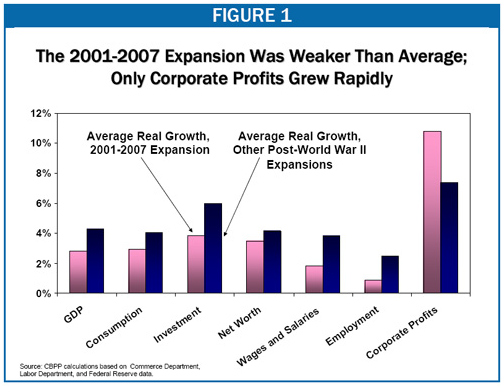
Some will argue that tax cuts are necessary to boost the economy. However, we have countless counterexamples to this popular fabrication. For instance, when President George W. Bush cut taxes from 2001 – 2007, the average annual growth rate was far below the average growth rate for any other period after World War II. In fact, only corporate profits experienced rapid growth. Over all, this expansion was among the weakest since World War II.


Screen Shot 2017-05-12 at 4.11.54 PM


In short, the US is doing a terrible job providing every citizen with the benefits of our society. We are disproportionately rewarding the rich while forcing the rest of us to pay for the services from which we all gain. Moreover, other countries provide even more bang for that buck.


Now this doesn’t mean that the government should tax us all into the ground.

Nor does it mean that the government should spend our tax dollars willy-nilly.


Taxation needs to be fair and spending needs to be regulated.


But constantly cutting rich people’s taxes is immoral. It is unfair to the majority of people making up the difference and struggling to survive when government services lag behind need.


Screen Shot 2017-05-12 at 10.34.01 AM


Our public schools are suffering under strategic disinvestment. Especially in poor neighborhoods that often disproportionately serve people of color, public schools cannot keep up with children’s needs. They aren’t providing an equitable level of service with those schools in richer, whiter neighborhoods.


Our policymakers try to solve the problem with charter schools, vouchers, standardized tests and Common Core. And the results have only been a worsening situation.


The real solution is simple – increased funding through fair increases in taxes on the wealthy.


Tax cuts are popular, but every time we let the rich get away with paying less, we have to either take more from the poor or take the knife to public services.


This affects the poor immediately in the form of reduced services, but it affects the rich, too. They have to live in a world where the majority has less – this means increased crime, increased drug abuse, increased ignorance, etc.


As a society, we must get beyond the selfish urge to look out only for what seems best for ourselves and our immediate friends and families. We must look out for our entire society. We must look out for the needs of everyone in it.


Otherwise, when we fall for these economic fallacies, we’re only stealing from ourselves.

Reaching Black Students Harder for White Teachers in the Age of Trump

Screen shot 2017-05-08 at 7.51.23 PM

“Not everything that can be faced can be changed. But nothing can be changed until it is faced.”
James Baldwin

“I have a great relationship with the blacks. I’ve always had a great relationship with the blacks.”
Donald Trump

Mariah’s eyes were wide as dinner plates.

She covered her mouth with her journal and pointed at the wipe board at the front of the room.

On it, I had written my question for the day. It’s how I usually begin class for my 8th grade students.

It read:

“Some movies and books like “To Kill a Mockingbird” describe what life was like in the South before the civil rights movement. To do so, they use the N-Word. Is it ever okay to us the N-Word? Why or why not? When might it be appropriate if at all? Why?”

I guess I’ve been teaching this for too long, because I didn’t expect Mariah’s reaction.

Not that was she alone. Several of my mostly impoverished and black students were looking around at each other in shock.

Kendra even said under her breath, “I don’t want to do this.”

We had just begun reading the novel yesterday. I thought it was time to address this issue before we were confronted with the word in the text.

In all of my classes that day, students had been interested in the query. But never had any of them reacted this way.

One student raised her hand and asked, “Which word are you talking about?”

I said, “I don’t want to say it, but it starts with an N and rhymes with trigger. Do you know what I’m getting at?”

They knew. Yet in removing doubt, I had only reinforced their outrage.

I thought maybe if they tried to write an answer first, it might help them organize their thoughts and maybe comprehend the point of the lesson. But they wouldn’t be directed back to the page.

Latrell was particularly upset. “It’s not always just words against black people,” he said. “How would you like it if we talked about words against white people?”

There were grumbles of agreement.

So there it was.

My white skin was the impediment. Here I was, a white man telling mostly black students to think about the appropriateness of the N-Word. I wasn’t trying to express an opinion of my own one way or the other. I wanted them to express their opinions.

But I had taken it for granted that asking them the question was appropriate in the first place.

I had forgotten that you can’t talk about racism with just anyone. It’s the same with sexual violence or abuse or a host of other topics that are deeply personal.

You need a relationship, the recognition of shared values and the promise of safety.

I assumed that I already had provided that for my students. In most classes that understanding seemed to be there. But for whatever reason, these students didn’t feel comfortable talking about this with me.

And I get it.

It’s the confluence of skin and history. No matter what I do, no matter what I say, I will always resemble the oppressor to some people. In the age of the Donald, it’s only gotten worse.

Building walls, casual misogyny, rushed deportations, religious intolerance – all are at the forefront of our modern social discourse now. These are matters not hidden under euphemisms or disguised as well-meaning public policy. They’re commands from on high, dictates coming from a mouth in a face that looks much like mine.

No wonder these kids didn’t want to talk about hate speech with me. I resemble the personification of hate speech.

I’ve been teaching “Mockingbird” for over a decade, but this was the first time in years that I paused not knowing what to do.

Should I force the issue and push forward? Should I give in and try to read the novel without the discussion? Should I put the book away altogether and find something else to teach?

I decided to get more information.

I asked the students to tell me how they felt. I asked them to explain what they were feeling.

Many were angry with me for even asking. They accused me of being racist. They tried to make me angry and blow up the lesson.

But I swallowed my pride and just let them talk.

After each statement, I repeated what I took them to be saying and asked if that was correct.

At first, many students didn’t even seem to be certain what they meant. When I repeated it to them, they shook their heads or said they weren’t sure.

Kendra spoke, “Mr. Singer, you tell me. Why are we talking about this? It don’t do nothing.”

I said, “Can we all agree that racism is a bad thing?”

But she deflected.

“Why’s it always got to be about black people? Other people experience racism,” she said.

And I agreed. I reminded them that we had just finished reading “The Diary of Anne Frank.” I asked why we had read it.

At first the loudest students said they didn’t know, but then Eva said it was to try to make sure nothing like the Holocaust ever happened again.

I nodded, and repeated my original question, “So can we all agree racism is bad? Raise your hand if you think racism is bad.”

They all raised their hands.

“Okay,” I said. “Then how do we stop it if we can’t talk about it?”

Kendra responded, “Mr. Singer, when we leave this class, none of this is going to matter. People are still going to be racist. Cops still gonna’ kill little black kids. People like you still gonna’ push people like me out.”

Others chimed in with similar comments.

I nodded, and said, “You’re right.”

That silenced them.

“You’re right, Kendra,” I said. “Maybe we can’t stop racism with what we say in here. Maybe no one can. But the hope is that if we talk about it, we’ll reduce it, we’ll cut it down to size. What do you think? Do you think we can take all the racism in the world and cut it down even by just a little bit?”

She didn’t say anything.

No one did. But hands were raised in the air. No one was shouting. No one seemed angry. Several students wanted to talk, and they were looking to me to organize the discussion.

So I let them talk.

All the time I had scheduled to write the journal fell through the hour glass and then some.

And when the discussion was petering out, I promised them that I would be available after class if anyone wanted to continue talking about it.

Then we picked up the book and continued reading.

I don’t know if it was the best class I’ve ever taught.

It was disturbing and uncomfortable.

I don’t see myself as anyone’s savior. But I’m there to help. I had hoped my students knew that.

But as a public school teacher, you learn not to take anything students do personally. They’re all going through a struggle you know little about.

I don’t want them to see me as an adversary. I want them to see me as a fellow traveler, as someone on their side.

But so much has changed in the last 100 days.

It’s a different world.

Racism and prejudice are no longer at the same remove. They never went away, but now they’re an unspoken presence coiled at our feet – constantly.

I have no answers. I ask questions and try to get my students to think about their own answers.

I just hope we’ll continue to have the courage to try.

I May Have Just Been Murdered By House Republicans

couple


I may be dead already.


And House Republicans may be the ones who killed me.


With the passage of a healthcare bill they, themselves, haven’t read – haven’t studied – haven’t thoughtfully considered in any way – it seems they’ve opened the door for insurance companies to deny people coverage due to pre-existing conditions.


I have one.


I’ve had two small heart attacks this year.


So I sit here stunned at the news on my computer feeling very much at a loss.


People have legitimate political differences, but this… it’s just beyond anything I’ve ever experienced personally.


There are people who count on me – my daughter, my wife, my students. I’m not so vain as to imagine that they can’t get along without me, but my loss will hurt them. I think at the very least they’ll miss me.


I’m 43-years-old. I’ve lived a good life. I just never expected to be abandoned in such a way by a society I’d always thought was more humane.


But if this legislation becomes the law of the land, what will I do?


I take six or seven pills a day to control my cholesterol, keep the stints in my heart clean, control my blood pressure, slow my heartbeat, etc. Without them, I almost certainly will have another heart attack. Yet I have no idea how I could possibly afford to take them without insurance.


And if I get sick, I won’t be able to work. I’ll bring in even less money. I won’t be able to help support my family. I’ll end up being a liability, a burden.


House Republicans have to know there are people out there like me. There have to be a lot of people in even worse shape than I am.


Are they really going to just let all of us die?


I had hoped to see my daughter grow up. She’s only 8-years-old, the most precious person in my life. No one is more full of energy, more vivacious and joyful. She loves to draw and write short stories. She pretends to be a teacher just like her father and gives her stuffed animals assignments.


I guess I’ll never get to see the person she becomes. I’ll never find out if she goes to college, if she finds love, if she has children of her own.


Can it really all come down to this?


My wife and I have been through a lot together. We met back in high school. Before I became a public school teacher, we worked together at various local newspapers. She supports me when I can’t go on. I hope I am able to give her back even a fraction of the strength she lends me.


Does this mean we’ll have to say goodbye, and so much sooner than I ever imagined?


My middle school students and I just finished reading “The Diary of Anne Frank.” When we closed the book, there were some tears shed. I passed around the tissues, and we discussed how we felt. Many of them expressed anger that some people could hold others’ lives so cheaply as the Nazis did Anne and her family. Are House Republicans guilty of a similar crime? They aren’t rounding anyone up to send to death camps, but they’re apparently content to let many of us just die.


The pundits tell me I have nothing to worry about. The bill won’t pass the Senate, they say. And even if it does, the President would be breaking every campaign promise he ever made, if he signs it.


So what else is new?


This is the world we live in now.


It’s not the country I was born into. It’s a cold place. A heartless reality.


Perhaps tomorrow I’ll gather the strength to resist, to call my Congressperson again, to protest, to organize.


But as for today…


I can’t even.


So I’ll head home, and give my family a big hug, spend whatever time I can with them.


Because if my life now depends on the compassion of Republican lawmakers, I may not have much of it left.


Let’s Hear It For Black Girls!

Natural-Hair-600x398


“Sisters are more than the sum of their relative disadvantages: they are active agents who craft meaning out of their circumstances and do so in complicated and diverse ways.”

-Melissa Harris-Perry, Sister Citizen (2011)


Let’s hear it for black girls!


They are beautiful, bold, irrepressible and – above all – so incredibly strong.


Black girls will outlast any struggle, face down any adversary, and – more often than not – triumph in the face of adversity.


I know. I’m a public school teacher, and many of my best students are black and female.


That doesn’t necessarily mean they get the best grades. Some earn A’s and some don’t. But when it comes to pure willpower and the courage to stand up for themselves, no one beats a black girl.


Those are rare qualities nowadays. Sometimes it doesn’t make these girls easy to have in class. But think about how important they are.


As a teacher, it sure makes your life easier when students do whatever they’re told. But in life, we don’t want citizens who simply follow orders. We want people who think for themselves, people who question directives and do only what they think is right.


In short, we need people who act more like black girls.


As a white male, it’s taken me some time to come to an appreciation of black womanhood. But after about 15 years teaching in public schools serving mostly poor, minority students, appreciate them I do.


Think of the challenges they face and often overcome. Not only are they subject to the same racism as black males, they also have to function under the burden of male patriarchy and the quiet sexism that pervades American society.


According to a study entitled Unlocking Opportunity for African American Girls by the NAACP and the National Women’s Law Center, African-American girls suffer from higher rates of sexual violence and intimate partner violence than white women, high rates of sexual harassment in school, and they are more vulnerable to sex trafficking than any other group.


In addition, more than one-third of black female students did not graduate on time in 2010, compared to 19 percent of white female students. However, there has been progress. Despite a lingering graduation gap, black girls have actually increased their graduation rate by 63% in the past 50 years, according to the National Coalition on Black Civic Participation. Unfortunately, this hasn’t meant they’ve built up more wealth. In 2010, single black women’s median wealth was just $100 compared to single white women’s wealth, which was $41, 500.


And it only gets worse the closer we look at it. Black women are the only group whose unemployment rate remained stagnant at 10.6%, while the overall rate for workers in the United States dropped from 7.2% to 6.1% between August 2013 and August 2014, according to a National Women’s Law Center report on jobs data. More than a quarter of black women live in poverty, according to the Center for American Progress, despite making up a larger portion of the workforce than white and Latina women.


Despite such problems, black women start businesses at six times the national average, according to the Center for American Progress. And this is even more startling when you realize they are also more likely to be denied small business loans and federal contracts.


It’s one of the reasons black girls are so special. Those who somehow survive the incredible pressures society puts them under often become super achievers. They can do almost anything.


Perhaps it’s an internalization of the advice black women often get from their mothers. They’re frequently told they have to work harder and do more just to be noticed, and they often do. In my classes, I’ve had more black girls achieve grades over the 100% mark than any other group. And that’s not easy to do. But it’s typical black girl power – they try to be more than perfect.


However, it takes a toll.


They are more likely to die of breast cancer than any other racial group, according to the Centers for Disease Control and Prevention. The reasons are complex, but include the fact that black women experience delays in diagnosis and treatment. Like many oppressed people, they often internalize that oppression – they don’t take care of themselves and the stress can be a killer.


And for those who can’t overcome the unfair pressures we place them under, the results are even worse. In school, I’ve seen precious and valuable girls thrown into a sometimes cruel and uncaring disciplinary system – a system from which it can be hard to extract yourself.


Some teachers and schools when faced with the independence and forthrightness of black girls don’t know how to handle them. In such cases, these girls are often disciplined out of all proportion to their population size in school districts. For example, in New York City, black girls made up only 28% of the student body during the 2011-2012 school year, but were 90% of all girls expelled that year from the city’s schools, according to the “Black Girls Matter” report by the African American Policy Forum. Similarly, black girls made up only 35% of the Boston public school population that same year, but accounted for 63% of all girls expelled.


In short, we’ve got a lot of work to do to dismantle a national system of racism and white privilege. But even beyond that, as a society we need to recognize and appreciate black girls. A little bit would go a long way.


We need to acknowledge the unique talents and skills of these amazing young women. And so much of it starts with a matter of conceptualization in the white adult mind.


Instead of seeing them as defiant, we need to recognize their independence. Instead of seeing them as challenging your authority, you need to see them as asserting themselves and standing up for their beliefs.


Those are all such positive qualities. How many times do adults complain that kids today don’t care enough about things – their apathy, their entitlement, their indifference. As a group, black girls are nothing like that! They are exactly the opposite! But instead of praising them for it, instead of valuing them, white adults often feel threatened and respond by trying to crush what they perceive as a rebellious and disruptive element in their classrooms or in society.


That’s why I love the Black Girl Magic movement.


It was created by CaShawn Thompson to celebrate the beauty, power and resilience of black women. It started as a simple social media hashtag – #BlackGirlMagic.


It embodies a theme I’ve already touched on – the irrepressible spirit of black women, how they are faced with an overwhelming mountain of challenges but somehow manage to overcome them and become tremendous overachievers! It’s a celebration of everything good and positive about the black female experience.


I think it’s just wonderful.


How can you not look at someone like Misty Copeland and not appreciate her success? She’s the first ever black principal at the American Ballet Theatre. She has shot to the top of one of the whitest, wealthiest and most elitist arts you can pursue.


Or how about Gabby Douglas? You can’t watch videos of the amazing Olympic gymnast, who at only 17, absolutely wowed the world with gold medals despite internet trolls hating on her hair.


And if we’re talking undue hate and criticism, no woman in recent memory has suffered as much as Michelle Obama. Whatever you think of her husband’s Presidency, you have to admit Michelle was a model of grace under pressure. How many times did haters pick apart her appearance while she just got on with the business of making school lunches healthier and being a tremendous role model for children of color and women of all races and creeds.


Or Ava DuVernay, the amazing director snubbed at the Oscars for her film “Selma.” What did she do? She made another amazing film “13th” about how the 13th Amendment ended slavery but opened the door to the prison industrial complex.


That’s Black Girl Magic. And it’s actually pretty common.


So come on, fellow white people. Let’s celebrate black girls.


Stop trying to touch their hair or compare them with Eurocentric standards of beauty. Stop, pause and actually see them. See them for who and what they are.


Black girls are amazing and make the world a better place.


Here’s to all the incredible and irreplaceable black girls in my classes and in my life!


You go, girls!