The Essential Selfishness of School Choice

img_5992

Say your friend Sheila invites you over to her house.

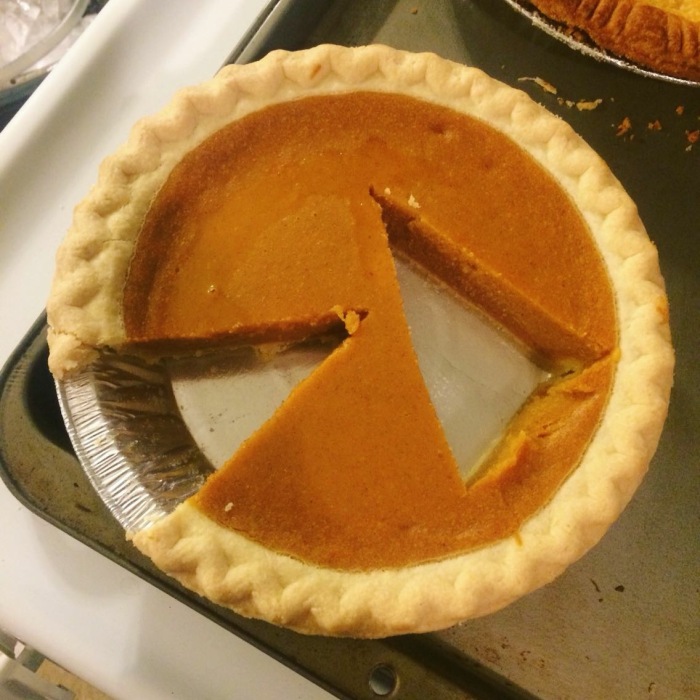
Sheila has just made a fresh pumpkin pie.

She offers you a slice.

You politely refuse, but she insists. She hands you the knife so you can take as big a piece as you like.

You start to cut and then ask, “Does it matter where I cut from?”

Sheila says, “No. Take whatever you want.”

You don’t like crust, so you cut a perfect triangle piece from the middle of the pie.

Sheila’s face reddens.

This wasn’t exactly what she meant, but what is she going to do? You took your slice, and now the rest of the pie is ruined. No one else can take a whole piece. Your choice has limited everyone else’s.

That’s what school choice does to public education.

It privileges the choice of some and limits the choices of others.

Advocates say parents should be able to choose the school their children attend.

And parents today do have many choices. About 90% send their kids to traditional public schools. Others home school, pay for private schools or opt for charter or voucher schools.

The problem comes with these last two options. In both cases, tax money meant to help all children is siphoned off for just one child. In the case of vouchers, tax money goes to pay part of the tuition at a private or parochial school. In the case of charters, we’re diverting tax money to a school that’s public in name but privately run.

That means less money for traditional public schools and more money for privately run institutions. That’s really what school choice is – a way to further privatize public schools.

Why is that bad?

3075829749_0ef3a3692c_z

First, it increases the cost and reduces the services for everyone.


Public schools pool all the funding for a given community in one place. By doing so, they can reduce the cost and maximize the services provided. One building costs less than two. The same goes for one staff, one electric bill, one infrastructure, etc.

When you start adding additional layers of parallel schools, you increase the costs even if you somehow divided the children evenly between the two systems (which hardly ever happens). You buy less with the same money. That translates to fewer services for the same kids, larger class sizes, narrowed curriculum, etc. Why? So that parents could choose School A or School B. So that privatizers get a bigger slice of the pie – right from the middle.

3075829749_0ef3a3692c_z
Second, each type of school has different goals.


Public schools are designed to educate. Corporate schools are designed to profit. Those are their very reasons for existing. It’s built into their DNA and is reflected in the way they’re administrated.

By law, public schools are not for-profit. They pay for goods and services, but at the end of the day, they aren’t beholden to shareholders or investors. They don’t need to bring in more money than they spend. All they have to do is educate children, and if they somehow end up with extra money at the end of that process, that money is bound by law to be reinvested as savings for next year.

Charter and voucher schools are not so constrained. Their reason for being is not education – it is profit. Where they can, they will cut services for children and reduce quality so that they can increase the bottom line. Even a casual glance at the news will show you a plethora of charter and voucher school scandals where privateers have stolen millions of dollars of taxpayer money instead of educating. To return to the dessert metaphor, they don’t care what their slice does to everyone else – they only care about the size of the slice.

3075829749_0ef3a3692c_z

Third, charter and voucher schools aren’t as accountable as traditional public schools.


Each type of school is supported by tax money. Therefore, each school should be held accountable for spending that money wisely. But the rules are radically different for public schools vs. choice schools.

Public schools have elected school boards made up of taxpayers from the community. Choice schools often do not. They are run by appointed boards who are only accountable to investors. Public schools are required to be transparent. Their documentation, budgets and meetings must be available to the media and community for review. This is not true of privatized choice schools.

If taxpayers are unhappy with the way a traditional public school is being run, they have multiple options for changing it. With choice schools, their only option is to withdraw their child. And in the case of taxpayers who do not have children in the system at all, they have no recourse at all. This is fiscally irresponsible and amounts to taxation without representation. This alone should be enough to make any true conservative withdraw support – however ideology has trumped logic and reason. Not only do they ruin the pie, they get to do so in secret.

3075829749_0ef3a3692c_z

Fourth, school vouchers rarely cover the entire cost of attending private schools.


They end up subsidizing costs for rich and upper middle class students while keeping away the poor. As such they create a system of cultural and racial education segregation. They create tiers of schools – the public schools being only for the poor, cheaper private schools for the middle class and expensive private schools for the rich.

This is not the best way to educate children. It is not the best way to organize a society. It entrenches social and class differences and builds in entitlements and racism for the wealthy. Surely our public schools have become more segregated even without vouchers, but that is no reason to make the situation exponentially worse. The size and placement of one’s slice shouldn’t depend on the color of your skin or the size of your bank account.

3075829749_0ef3a3692c_z

Fifth, all schools are not equally successful.


Though the media would have you believe otherwise, traditional public schools do a much better job of educating children than charter or voucher schools. Some choice schools have better outcomes, but the majority do no better and often much worse than traditional public schools. Moreover, children who continually move from school-to-school regardless of its type almost always suffer academically.

So when parents engage in these choice schemes, they often end up hurting their own children. The chances of children benefiting from charter or voucher schools is minimal. You can cut a slice from the center of the pie, but it’s likely to fall apart before you get it on a plate.

our-best-traditional-pumpkin-pie-ss

So in summary, school choice is essentially selfish. Even in cases where kids do benefit from choice, they have weakened the chances of everyone else in the public school system. They have increased the expense and lowered the services of children at both types of school. They have allowed unscrupulous profiteers to make away with taxpayer money while taxpayers and fiscal watchdogs are blindfolded. And when students return to their traditional public school after having lost years of academic progress at a substandard privatized institution, it is up to the taxpayers to pay for remediation to get these kids back up to speed.

Choice advocates talk about children being trapped in failing schools, but they never examine what it is about them that is failing.

Almost all public schools that are struggling serve impoverished students. That’s not a coincidence. It’s the cause. Schools have difficulty educating the poorest children. Impoverished children have greater needs. We should be adding tutoring, counseling and mentor programs. We should be helping their parents find jobs, providing daycare, healthcare and giving these struggling people a helping hand to get them back on their feet.

But instead we’re abandoning them. Most impoverished schools serving poor children receive less funding than those serving middle class or wealthy populations. In other western countries, it’s just the opposite. They provide more funding and resources for poor students to meet their greater needs.

School choice ignores all of this. If I may momentarily switch metaphors, instead of fixing the leak in our public school system, advocates prescribe running for the lifeboats. We could all be sailing on a strong central cruise-liner able to meet the demands of a sometimes harsh and uncaring ocean together. Instead we’re told to get into often leaky escape craft that even under the best of circumstances aren’t as strong as the system we’re abandoning.

And the reason is profits.

Have you ever noticed that the overwhelming majority of school choice proponents are rich white people?

Many of them own charter school companies or otherwise invest in the field. They aren’t advocating a policy to help children learn. They’re enriching themselves at public expense. Sure they point their fingers at union teachers making a middle class wage. Meanwhile these choice advocates rake in public money to buy yachts, condos and jewelry.

Make no mistake – school choice is essentially about selfishness. At every level it’s about securing something for yourself at the expense of others. Advocates call that competition, but it’s really just grift.

Public education is essentially the opposite. It’s about ensuring that every child gets the best education possible. Yes, it’s not perfect, and there are things we could be doing to improve it. But it is inherently an altruistic endeavor coming from the best of what it means to be an American.

We’ve all got choices in life. The question is what kind of person do you want to be? A person who takes only for his or herself? Or someone who tries to find an option that helps everyone?

pumpkin-pie

MythBuster: Do We Have a “Government-Run Education Monopoly”?

screen-shot-2016-11-22-at-11-48-57-pm


“There’s no failed policy more in need of change than our government-run education monopoly, and you know that’s exactly what it is.”

With these words, candidate Donald Trump unleashed his K-12 education policy at a campaign stop in September, two months before winning the general election.

In the speech, the former reality TV star and current President-elect vowed to spend $20 billion in federal tax dollars to encourage more charter and voucher schools nationwide.

It remains his most concrete executive policy offering to date. Yet it’s based on this characterization of public schools as a “government-run education monopoly.”

One wonders – is it true? Do we really have such a thing here in the U.S. or is it just propaganda to boost an unpopular education scheme?

The devil, it seems, is in the details.

The answer is both yes and no: Yes, public schools are government-run. No, they’re not a monopoly.

First, let’s consider “government-run.” Everything the government does from paving the roads, to delivering mail, to protecting us from invaders is “government-run.” The military is government-run. Would you rather a foreign power tell our soldiers what to do? Congress is government run. Would you rather big business come in and decide all our laws?

In that same spirit, yes, our public schools are indeed government run. But who else should run them? Russia!? The Mafia!? A media cabal?

In emphasizing the role of government in education, Trump appears to be trying to stoke the fires of anti-government sentiment. There is certainly a lot of that going around, deservedly so given the way the federal government has encroached on the states, the states have encroached on local government, etc.

However, public schools are not essentially federally-run schools, nor are they state-run schools. They are subject to federal and state mandates, but the major decisions about what happens in your neighborhood schools are made by your duly elected school board. They are not controlled by some nameless, faceless government bureaucracy. They’re controlled by you, your friends and neighbors – people you voted for and who are held accountable every few weeks at open meetings.

That, too, is government.

It’s not Big Brother. It’s Howdy Neighbor.

Let’s turn now to the “Monopoly” part.

A monopoly is the complete control of the supply or trade in a commodity or service. To put it in terms of the titular Parker Brothers board game, you have a monopoly when you own both Boardwalk and Park Place – you’re in control of what happens to all the dark blue properties. However, if you don’t have titles to BOTH, you don’t have a monopoly, and therefore can’t buy houses, hotels or charge double the normal rent.

Therefore, there is no education monopoly – no one has complete control of all the various kinds of schools. There are private schools, home schools, magnet schools, charter schools, even voucher schools. No one owns them all, no one tells them all what to do.

Yes, you could say that the overwhelming majority of them are public schools, but so what? That’s not a monopoly. There are far more personal computers out there than Macs. That doesn’t mean PCs have a monopoly on the field.

Once again, the term “monopoly” is meant to stir anti-government sentiment. We are meant to balk at the degree to which government – local government – is in control of our education system.
I’m sorry, but there is nothing objectionable about schools being controlled at the local level.

Are you upset by federal intrusions in school policy? Me, too.

Are you reeling about unfunded federal mandates? Me, too.

Are you angry about states sweeping in and stealing local control from impoverished inner city parents? Me, too.

But I’m just not one bit upset about being allowed a say in how my tax dollars are spent at my community school district. If you ask me, that how things SHOULD BE.

But Trump is proposing we change it. He’s proposing exactly the same kind of federal intrusion that drove many of us up the wall when it was done by President Barack Obama.

Obama used the Department of Education to bribe cash-strapped states into adopting Common Core. And now Trump wants to do the same thing with charters and voucher schools.

Excuse me, but it’s not the federal government’s job to dangle money in front of state legislatures with strings attached. The Department of Education is supposed to ensure all schools have adequate funding. It’s not supposed to tell us how we should be running our schools unless we’re breaking the law or violating students civil rights.

But what about parental rights? Shouldn’t parents be allowed to choose a school for their own children?

Heck no.

Hear me out. When you fall down the steps in your home alone, do you get to choose which governmental service comes to help you, or do you just call 9-1-1? When you need the police, do you get to choose officers from halfway across the state or make do with your local boys in blue? When your house catches on fire, do you shop around or call the nearest fire station?

It’s called a community for a reason. You’re a part of it, for better or for worse.

Our grandparents never thought they were so entitled they could pick and choose what governmental service should meet their needs. They joined the army, not Blackwater. They called the fire department where they volunteered. And they sent their kids to the local public school.

Yes, some public schools are better than others – which is just another way of saying that some are better funded. THAT is a problem we need to fix at the local, state and federal level. That’s something the President and Congress and our Governors and our state legislatures should actually be working on. But instead of meeting the real needs of their constituents, they’re too busy with all this choice nonsense.

Why? It’s a scam.

We’re talking Donald Trump here – founder of Trump University. He just settled out of court for $25 million for a fake business school that defrauded students out of hundreds of millions of dollars. If there’s one thing he knows, it’s a good scam.

Think about it.

Expanding charter and voucher schools, reduces accountability to taxpayers. These “choice” schools rarely are governed by elected school boards. They don’t have to abide by the same kinds of transparency standards as traditional public schools. They can spend our tax dollars in almost anyway they want behind closed doors, and there’s nothing we can do about it. In fact, there have been a rash of high profile scandals where charter and voucher operators have defrauded the public out of millions of dollars.

Who wants to expand that? Criminals!

Not me. I’m a taxpayer. I want a full account of how my money is spent, and most voters are with me.

We didn’t just vote for President a few weeks ago. Many states held referendums on whether to expand charter schools or not. In every case, voters decided against it.

But does Trump care? No way. This proposed school choice policy is yet another example of the federal government ignoring the will of the people in favor of wealthy donors hoping to further enrich themselves at public expense. It opens the door for profiteers to keep stealing our money.

And they justify it by offering a false choice:

Hey parents, they say. Want to enroll your children in a school with little to no accountability, a school you may not be able to afford unless you spend some of your own money in addition to the tuition you get from the state, a school that can turn you down for whatever reason including race, religion or nationality, a school that may very well be no better and often much worse than a traditional public school?

But they spin it, offering slick commercials and preying on the ignorant and hopeless. That weakens the traditional public schools because it means a loss in revenues. Therefore, the public schools get worse, which is a reason for more parents to try the ‘choice’ schools, etc. It’s an endless cycle where students lose but investors in for-profit schools win.

Invariably, it leads to a further social stratification of schools. The rich go to the best schools, the middle class to the middling schools and the poor to the substandard ones. You think we’ve got segregated schools now, wait until Trump’s school choice policies! It’ll benefit the Nazis of the alt-right who want more white flight, but most kids will lose.

Such a policy does not represent the best of America. This country was founded on the principles of working together. We haven’t always lived up to it, but our ideals are ones of shared sacrifice, community and brotherhood. Trump’s education policy is about selfishness and greed.

That’s your real choice. Which will it be?

Democrats Warned Not to Help Trump Enact Their Own Damn School Policies

screen-shot-2016-11-18-at-1-01-18-am

It must be hard to be a neoliberal Democrat in Donald Trump’s America.

Almost every policy decision you favor is also on the Republican President-elect’s to-do list. But if you work with him, you’ll ruin the illusion that there’s a difference between the two of you.

Take yesterday’s statement by Democrats for Education Reform (DFER) warning any Democrat not to accept Trump’s offer to be U.S. Secretary of Education.

DFER is a hedge fund managers’ pro-charter advocacy group. Despite it’s name, one would think the organization would be a natural ally for pro-school-choice Trump.

But, wait a minute.

I thought one of the first things Trump promised to do once he took the Oval Office was close the Department of Education.

Weeeeeelllllllll…. That’s so November 10th.

He’s already walking back that whooper just like he’ll soon have to admit that the Every Student Succeeds Act (ESSA) doesn’t allow him to end Common Core – another one of his campaign promises. Ending the Core is up to the states (has been for months, yet most Republican controlled legislatures just can’t bring themselves to do it for some reason).

It’s easy to see why Trump has had a Come To Jesus moment about the Department of Education. If he really wants to add $20 billion in school-choice programs, as he promised on the campaign trail, a big government office that hands out bundles of cash in return for states enacting his personal policy desires sure would come in handy!

This is where it gets really sticky.

Both Democrats and Republicans love school choice! Typically GOP politicians love all flavors of privatization – charter schools AND giving away vouchers to attend private schools with public tax dollars. Democrats usually are more finicky preferring just charter schools – though you don’t have to search long to find a neoliberal willing to embrace all things school choice. Many of them are members of DFER.

In fact, the leading voices of school privatization for the last 15 years have been Democrats. So it’s no wonder that faux progressives like Michelle Rhee and Eva Moskowitz made Trump’s short list to head the Department of Education.

Moskowitz, who has since turned down the offer, is founder of Success Academy Charter Schools, a chain of privatized institutions emphasizing endless test preparation and systematically weeding out struggling or special-needs students.

Rhee, who is still a contender, was chancellor of Washington, D.C., schools where she was given leeway to do almost whatever she wanted and boasted of high test scores. However, widespread cheating on the tests and public unrest at her tactics shot down her ascending star. She then started StudentsFirst, an organization using rich folks’ money to help elect Tea Party candidates who were in favor of both charter and voucher schools. As the organization faltered, she stepped out of the limelight.

One could think of few people more suited to Trump’s education agenda than Rhee.

But NO! Rhee – or another faux progressive – can’t do that, warns DFER President Shavier Jeffries. That goes against everything Democrats stand for – somehow.

Jeffries writes:

“It is, generally speaking, an honor for any person of any political persuasion to be asked by the President of the United States to consider a Cabinet-level appointment, but in the case of President-elect Trump, DFER encourages no Democrat to accept an appointment to serve as Secretary of Education in this new administration. In so doing, that individual would become an agent for an agenda that both contradicts progressive values and threatens grave harm to our nation’s most vulnerable kids.

“Foundational education reform principles – from raising standards and strengthening accountability, to expanding public-school choice, to furthering innovations in teacher preparation and support, and advancing resource equity – all find their roots in a progressive commitment to ensuring that all children, particularly our most vulnerable, have access to schools that enable them to fulfill their potential.”

Jeffries is worried about “raising standards?” Am I the only person here who read the ESSA? Common Core and academic standards aren’t the federal government’s business.

He’s worried about “strengthening accountability?” The ESSA already requires annual standardized testing in grades 3-8 and once in high school – same as it has since the George W. Bush administration.

“Expanding school choice?” You guys love school choice.

“Further innovations in teacher preparation and support?” That sounds like code for Teach for America and Value Added Measures – policies that Republicans love as much as you so-called Democrats.

“Advancing resource equity?” Now who are you kidding? DFER hasn’t done a thing to help poor schools get equitable resources. In fact, you’ve supported pulling the rug out from under poor schools based on those same standardized test scores you love so much.

So when it comes to policy, Jeffries and DFER are almost completely in synch with Trump. What’s the problem?

He goes on:

“This progressive commitment to equitable education policy also goes hand-in-hand with intersectional issues that affect our kids. While effective school policies are vitally important, so too are the environmental conditions affecting children and families.”

This is a shock to me. Jeffries and DFER support “no excuses” charter schools like Moskowitz’s. These are privately run schools that don’t accept a student’s poverty or abuse or health or anything to be used as an excuse not to get high scores on standardized tests. In fact, if any impoverished, underprivileged child can’t somehow pull himself up by his bootstraps, he’s often kicked out of these “no excuses” charter schools and sent back to a traditional public school.

But NOW Jeffries is complaining about “vitally important” “environmental conditions”!? You’ve got to be kidding me! That sounds like something under any other circumstances you’d call an excuse.

On any other day, DFER does nothing to help kids overcome their environmental factors. Jeffries claims we should ignore environmental factors, that focusing on them is the “soft bigotry of low expectations.” But NOW he’s suddenly seen the light!?

Sorry. I’m not buying it.

He goes on:

“A child who is homeless; a child without access to food or healthcare; a child whose parent cannot find steady work; a child whose dad is locked up for years on low-level drug offenses—each of these situations dramatically compromise the life chances of our children.”

Well, Hallelujah! Jeffries has seen the mountain top! Paying attention to the out of school factors is exactly what teachers, parents and students have been crying out for he and his neoliberal buddies to do for 15 years! Of course, doing so would invalidate the same policies he and Trump propose, but you can’t ask a neoliberal to be consistent. Baby steps.

He goes on:

“The policies and rhetoric of President-elect Trump run contrary to the most fundamental values of what it means to be a progressive committed to educating our kids and strengthening our families and communities. He proposes to eliminate accountability standards, cut Title I funding, and to gut support for vital social services that maximize our students’ ability to reach their potential. And, most pernicious, Trump gives both tacit and express endorsement to a dangerous set of racial, ethnic, religious, and gender stereotypes that assault the basic dignity of our children, causing incalculable harm not only to their sense of self, but also to their sense of belonging as accepted members of school communities and neighborhoods.

“For these reasons, no Democrat should accept appointment as Secretary of Education, unless and until President-elect Trump disavows his prior statements and commits to educating the whole child and supporting the communities and families they depend on.”

So what Jeffries really takes exception to here is Trump’s rhetoric.

Trump and DFER don’t have many policy differences. It’s just how they’re packaged.

Both Trump and Jeffries wants to give poor black and brown kids a substandard education. They both want to destroy the public school system and replace it with a privatized one. Both want to give endless standardized tests. But the real difference is that Jeffries wants to do this for the expressed purpose of protecting kids’ civil rights. Trump, apparently, wants to do it to violate them, or at least he’s indifferent to the civil rights implications.

Does that really constitute a significant difference between DFER and Trump?

No. It’s just branding.

Jeffries doesn’t want someone like Moskawitz or Rhee to be the face of Trump’s corporate education reform policies because he’s betting Trump will fail. And when that happens, he wants to be there when the next Democratic administration takes over – so he can enact the same damn policies all over again!

What If Clinton and Trump Debated Education Policy?

bbxdrs0-img

The second Presidential debate was a bust for the millions of Americans who care about public schools.


Instead, we got Donald Trump mansplaining away his vagina-grabbing days. We got Hillary Clinton blaming Machiavellian duplicity on a movie about Abraham Lincoln. But not a word about K-12 education.


After all these debates in the primary and only one more debate left in the general, it seems a pattern is emerging. The media just doesn’t ask the kind of questions parents, teachers and students really care about. After all, there is no defined position staked out by each political party on schools and schooling. Both sides are kind of the same. Asking about it wouldn’t support the usual narratives about so-called “conservatives” and “liberals.”


So once again I appeal to the power of education bloggery to give you what I imagine a debate on this subject might sound like from Clinton and Trump.


Hold on to your pussies. Here goes…


Me: Thank you, Secretary Clinton and Mr. Trump, for being here today to talk about education issues.


Clinton: You’re very welcome.


Trump: (sniff) Yes. I am very glad to be here. No one cares more about education than me. Okay?


Clinton: Well, hold on there, Donald. I’ve spent my entire career fighting for kids and families…


Trump: (sniff. sniff.) What about the kids and families of Benghazi?


Me: O-kay! Let’s begin. Shall we? This question is for both of you. How would you describe your education vision? Mr. Trump, you won the coin toss, so you go first.


Trump: Thank you, Steven. And let me just say I have lots of education vision. My education vision is just tremendous. I think public schools are the most important thing in our country. The taxes we pay for them are just incredibly high. No one pays more taxes for schools than we do. Not the French. Not the Chinese. Not the Russians. And as President I would make America great again by cutting taxes on schools. The business community doesn’t need this. It hurts competition and that hurts education. And there are too many taxes for you regular people out there, too. Unlike my opponent, she’s just terrible. Isn’t she, folks? I’d cut taxes while she would raise them.


Me: Your time is up, Mr. Trump.


Trump: …and I just want to say this one last thing, Steven. Hillary Clinton is a liar. And I would never lie like her. Ask Bernie Sanders about that.


Me: Thank you, Mr. Trump. Secretary Clinton? Same question.


Clinton: Thank you, Steven. I want to take this opportunity to thank you, personally, for being here. As a country, we don’t appreciate teachers enough. You are our number one resource. And a renewable resource. Right? You can clap here, People. Ha! Ha! But seriously my vision for education is a strong one. I’ve fought for children and families all my life as First lady of Arkansas, as First Lady of the United States, as a U.S. Senator and as Secretary of State. You might say that I am the most qualified candidate for President in U.S. history.


Me: Thank you. Madame Secretary. Though I wish you had answered the question.


Clinton: Oh I will answer the question. That’s why I have been endorsed by the largest teachers unions in the country…


Me: Next question. Secretary Clinton, you mention your experience. Some have criticized you for putting the needs of Wall Street ahead of working families. How would you prioritize the needs of students and parents over the corporations and edu-tech industry?


Clinton: As you said, Steven, I’ve been around a long time. I’ve seen a thing or two. Like you, I’ve raised a daughter and know how to navigate the pitfalls of our education system. And, honestly, I don’t think we have to have a conflict of interests between business and education.


Trump: Crazy Bernie says differently.


Clinton: …I see our public schools and public charter schools working together hand-in-hand to provide our children with a world class education. You know my husband and I have long supported…


Trump: You should be in jail.


Clinton: Donald, I think this is my time. Is this my time, Steven?


Me: Yes, Mr. Trump. Please stop interrupting. You’ll have a chance to respond.


Trump: Sorry, Steven. I’m just not used to a woman talking for so long. It’s exhausting.


Clinton: Anyway, I’ve always been a booster for higher academic standards. And as President I would do everything I can to make sure our students get the best education possible.


Me: Mr. Trump. Same question.


Trump: What was that question again, Steven? I kind of forgot while I was listening to that long speech she just gave. Talk. Talk. Talk. This isn’t the Bengazhi commission, Hillary, but I wish it was. Trey Gowdy…


Me: Mr. Trump. The question was “How would you prioritize the needs of students and parents over the corporations and edu-tech industry?”


Trump: Students and parents? They’re just wonderful. We need more students, but I guess that’s where parents come in. That’s why I had so many kids, and they’re all so successful. We didn’t stop with just one. We raised one, two, three… a whole bunch of them. And they’re just tremendous. So I would definitely make sure their needs were being met. Their needs are my needs and so, of course, I would make sure they were being met. You know, perhaps she should have spent more time meeting her husbands needs. Do you know what I mean?


Me: Mr. Trump, the question was about corporations servicing public schools.


Trump: (sniff.) In that case, I’d service corporations. I believe in business. I’ve been a businessman all my life. Very successful. No one knows success like Trump. And I’ve just got to say we all might have been better off in the ‘90s if she had serviced her husband more. I have to tell you.


Me: You are disgusting.


Trump: (shrugs) This debate is rigged.


Me: The next question is for you, Mr. Trump. Whenever you’ve spoken out on education issues, you’ve consistently criticized Common Core. As President, what would you do about Common Core and what role do you think is appropriate for a President in setting national education policy?


Trump: Common Core? I’m against it. It’s no secret. I think it’s been just terrible. It’s been a disaster. A national disaster. And one of the first things I’d do – well the first thing I’d do is throw you in jail…


Clinton: Donald, I…


Trump: But after that I’d get rid of Common Core. There would be no more Common Core. Our kids don’t need Fed Ed. Period. They need more choice. Parents should get to pick the schools they send their kids to. We should stand back and let the parents choose. That’s what I did for Ivanka and my other children and they turned out just fine. Don’t you think they turned out fine, folks? You all saw them on my hit TV shows ‘The Apprentice’ and ‘Celebrity Apprentice.’ Those were great shows. Award-winning TV. Must See Television. Those were good days.


Me: Secretary Clinton. Same question.


Clinton: Thank you, Steven. I appreciate the quality of your questions. It’s clear that this debate has been put together by educators and not representatives of the media. Though I thoroughly support the field of journalism as a profession and a calling.


Trump: You never had a TV show.


Clinton: As to Common Core, I just want to ask Donald something.


Trump: (pops a Tic Tac) It’s surprising you’re going to give up your time to let me talk. I have to say. This is the first time you’ve let somebody else talk…


Clinton: How do you propose to get rid of Common Core when the Every Student Succeeds Act (ESSA) gives that power back to the states?


Trump: (sniff.) E-S-S-A? Never heard of it. I’ll have to ask Mike Pence about it. But the President can do what he wants. You know the old saying, folks: it’s good to be the king.


Clinton: You talk a good game about states rights, Donald, but when you propose getting rid of Common Core, you’re proposing a federal policy that takes away states rights. Every state legislature has the power to change academic standards or retain…


Me: Secretary Clinton, that may be true, but the question was meant for you. What would YOU do about Common Core as President?


Clinton: Nothing. I would respect the law.


Trump: THAT’S a first!


Clinton: I would encourage states to adopt high academic standards and if those standards were the same as Common Core then so be it.


Me: How would you encourage them? By withholding federal grant money like the Obama administration did?


Clinton: I… I think the federal government has a strong role to play in the education of our children. But I would not violate the spirit of the ESSA, unlike Donald. He says he’s for states rights but he calls for a bigger federal power grab than anything my party has ever participated in.


Trump: (sniff.) Wrong.


Me: Okay. Next question. Since we’re talking about the federal role in education, let me ask you both what role you see for the U.S. Department of Education under your administration and whom would you nominate as Education Secretary? Secretary Clinton. You go first.


Clinton: Thank you, Steven. As I said, I believe in the Department of Education. I believe in the Secretary of Education. I believe in teachers. And if we’re going to give our students a leg up – all of our students – then we need to strengthen our public schools and public charter schools. That’s where the Department of Education comes in. Not to enforce education policy but to set the agenda. It helps the states get things done through competitive grants, research and data collection.


Me: So whom would you nominate to head the department?


Clinton: I would have to talk about that with my advisors…


Me: Give us the shortlist.


Clinton: Perhaps someone like John King.


Me: John King!?


Clinton: He’s already there and as my daddy said, if it ain’t broke do not fix it.


Me: Mr. Trump. Same question. What in your opinion is the federal role in national education policy?


Trump: Well, Steven, I don’t think there is one. You know the government that governs best governs least. I learned that from my good friend, Gary Busey. You know? Come to think of it, he’d make a pretty good Secretary of Education, but no. One of the first things I would do is completely disband the Department of Education. On day one. Gone.


Me: So what would happen to Pell Grants, for example, and all the federal money that helps buoy our public schools?


Trump: Do we need it? I was able to raise my family without any help from the federal government.


Clinton: Unless you count your nine bankruptcies, and using loopholes to avoid paying any federal income taxes for over a decade at least.


Trump: I did it all on my own. My father gave me a loan but I made it pay out for me so I could build the Trump empire.


Me: Didn’t you inherit most of your money?


Trump: I’m surprised at you, Steven. I expect something like that from her. She’s bleeding from her… whatever. But you should know better. You think Americans are stupid. And I just think they are strong enough to do it on their own. They don’t need the government to help. We don’t need the regulation, the taxation. Parents can use state money to choose and that will be good enough. Let the free market decide.


Me: Okay. Next question. Standardized testing has come under fire for assessing children’s economic situation more than what they’ve learned. Would you continue to mandate annual testing for all public schools? Mr. Trump?


Trump: I dunno. I’ll have to ask Pence on this one.


Me: You have to ask your vice president what to think on standardized testing!?


Trump: Yes. I mean no. I’m not really sure. Could you make this one multiple choice?


Me: Secretary Clinton? Same question.


Clinton: Standardized testing has been an important part of how we hold school districts accountable. While I understand the concern about over-testing, I think it is important we keep testing our children in grades 3-8 and once in high school. It helps us make sure our schools are meeting all our students’ needs and not violating their civil rights. Many of my former colleagues in the Senate expressed the same concern you mention, Steven, but changed their minds when they were approached by various civil rights organizations…


Me: Many prominent civil rights organizations such as Journey for Justice and various chapters of the NAACP still oppose testing. Why do you chose to side with the organizations who are beholden to the testing industry for their funding?


Clinton: I think… maybe we can give the situation more study and find solutions that would satisfy both the civil rights organizations and testing critics. But it is imperative that schools are held accountable…


Me: What about politicians? Shouldn’t they be held accountable for adequately funding our public schools? That’s why schools struggle. They serve poor populations and don’t have the resources to help their kids excel.


Clinton: This is something you’re obviously passionate about. I have always listened to teachers and with the NEA and AFT would strive to work together to find a solution that’s mutually beneficial to everyone.


Me: Okay. Last question. Since you brought up civil rights, Secretary Clinton, one of the biggest issues facing our schools today is segregation. Many modern schools are as segregated or more segregated by race and socio-economic status than they were before Brown vs. Board. What would you do about that?


Clinton: That is a problem. We must make sure that all our students needs are being met. We cannot let our schools revert to old bad habits. We cannot have schools for blacks and schools for whites. Black lives matter – even when they’re in school. As President, I would make sure everyone had the opportunity to go to the best schools possible. Students who don’t get what they need at school end up on the streets. They feed the school-to-prison pipeline. They end up lost, and many of them become super-predators.


Trump: (laughs)


Me: Isn’t that the term you used as First Lady to describe black youth when your husband’s mandatory sentencing policies expanded our prison population exponentially?


Clinton: Yes and I stand by that statement. We need to help minorities rise above their circumstances. We need to give them a helping hand. They deserve all the same amenities my daughter had, because all lives matter…. Oh shit.


Me: Mr. Trump? Your response?


Trump: Do I have to?


Me: Yes.


Trump: Okay then. Let me just say that segregation is a bad thing. It’s terrible. I’m not exactly sure why but that’s what I’m hearing. We need to make sure only the best students get to go to the best schools and the worst students get their own schools, schools that are right for them. That’s why we need school choice to weed out the worst kids and let them go to the schools that are right for them.


Me: Isn’t that just segregation?


Trump: N…No. That was a really stupid thing to say. Too many people are just stupid today. That’s why I’m going to make America great again. We’re going to have the best schools. You won’t even believe it. They’ll be just the best anyone has ever seen. Okay?


Me: But they’ll be separate schools for blacks and whites? Rich and poor?


Trump: I’d like to pass, Steven.


Me: Okay. That’s all the time we have for today. I’d like to thank both candidates for coming…


Trump: Steven, I just want to say one last thing.


Me: O-kay.


Trump: I… uh… I never grabbed anyone’s pussy. That was just locker room talk.


Clinton: Oh please! It’s just that kind of talk that empowers rapists…


Me: Thank you both for coming…


Trump: Your husband certainly understands this, Hillary. Men like us with such big hands, we’ve never had any complaints. You know? Here let me show you. (reaches into pants.)


Me: Cut their microphones please. Call security on, Mr. Trump. Thank you, everyone, for coming. We’ll see you at the polls in November. Just remember, you picked these two assholes. We could have had Bernie Sanders but we’re left with these two tools. This is your democracy at work. We should have let Jill Stein in here to class up the joint. Oh well. Goodnight and good luck.

If I Were Secretary of Education – A Classroom Teacher’s Fantasy

thumbnail_fullsizerender

I will never be Secretary of Education.

Frankly, I’m just not qualified.

I’m only a classroom teacher. The powers that be don’t trust someone like me with that kind of responsibility. It’s okay to give me a roomful of impressionable children everyday, but there’s no confidence I can make sound policy decisions. For that we need someone with experience in management – not schools, pedagogy, children or psychology.

The presiding incumbent in this prestigious position, John King, somehow overcame that handicap. He had taught for three whole years at a charter school, but the bulk of his experience is in administration – administrating a Boston charter school with high suspension and attrition rates. He also was New York State Education Commissioner, where he single-handedly dismantled the state system of education and sparked one of the largest parental revolts in the nation in the state’s opt out movement.

The previous Secretary of Education, Arne Duncan, was much more qualified, having never taught a day in his life. Before getting Congressional approval, he was appointed to run a charter school and later was entrusted as CEO of Chicago City Schools where he likewise blundered his way to the top with policy decisions that devastated a great system of public education.

What do I have to offer compared to all that? I only have more than a decade’s worth of experience helping kids learn. I’m only one of 3% of teachers nationwide who are Nationally Board Certified. I’ve only earned a Masters degree in Education. I only help run a more than 56,000 member national education advocacy group, the Badass Teachers Association, and write a popular blog dedicated to education and civil rights.


I’ve never sunk a major metropolitan school. I’ve never been run out of a populous state chased by citizens armed with torches and pitchforks.

But let’s close our eyes and imagine that somehow through the magic of education bloggery I was whisked into office at the U.S. Department of Education.

What would a person like me do as Secretary?


1) Respect the Limits of the Job

Though George W. Bush and Barack Obama come from opposite ends of the political spectrum, these two Presidents did more to increase the powers of the Department of Education than any chief executives before them. They turned it into – as former Education Secretary Lamar Alexander puts it – a national school board with the Secretary was the national superintendent.

The department forced test and punishment policies on the states, cudgeled and bribed state officials to enact lousy Common Core Standards, and held federal grants hostage unless states accepted every corporate education reform scheme big business could think up.

Don’t get me wrong. I’m a New Deal Franklin D. Roosevelt Democrat, but even I think these two administrations blatantly abused their power and overstepped their Constitutional authority.

So the first thing I would do is take a step back and follow the law. The recently enacted Every Student Succeeds Act (ESSA) sets explicit limits on federal power over education policy returning much of it to the states. As Education Secretary, I would respect the power of the states to control public education. It is the state’s job to set policy. It is the federal government’s job to provide support, encouragement and oversight.

Therefore, the role of the Department of Education is to ensure public schools are being properly funded, civil rights are not being violated and to be a repository for national data and research. I’d dedicate myself to that – not some corporate fueled power trip that both parties condemn except when they’re practicing it.


2) Push for More Federal Funding for Public Schools

Therefore, the first thing I would do is use the full power of the office to ensure the federal government is giving its utmost to help state public schools. I would use whatever grants were available to increase federal funding to the most impoverished schools. I would fully fund Title I. I would increase the federal share of Special Education – (Under Part B of the Individuals with Disabilities Education Act (IDEA) the federal government is supposed to fund 40% of the per pupil cost of all special education students but has never met this obligation. I would seek to rectify that if possible.) I would enact a national after school tutoring initiative. I would provide funding to hire additional teachers to reduce class size.  And as far as is possible, I would forgive college students loan debt so they can begin their lives with a clean slate.

This is something that those who seek to disband the U.S. Department of Education never seem to understand. The federal government has an important role to play in our school systems. It’s not the unfounded power grab of the last few decades, but we need another robust player on the field to help the states achieve their goals and also to keep the states honest.

If we disbanded the Department of Education, as some conservatives from Reagan to Paul to Cruz to Trump suggest, what would happen to Pell Grants, for instance? What would happen to the bundles of federal money that boost our public schools? Who would make sure states are doing their jobs? Where could we go to find accurate data about how our schools are doing nationally and not just state-by-state?

If we got rid of the department, at best these jobs would fall back on other government agencies that haven’t the funding, staff or ability to accomplish them. More likely, it would result in the elimination of billions of education dollars that the states simply couldn’t (or wouldn’t) replace. Abuses against students on the grounds of civil rights, gender, special education, etc. would skyrocket with little to no recourse. And we would be in the dark about how well we were educating our nation’s children.


3) Encourage States to Enact Accountability Measures that Don’t Include Standardized Testing

Accountability has become a dirty word in many education circles because of the way the Bush and Obama administrations have perverted it to mean test and punish. It has become a boondoggle for the standardized testing industry, an excuse to close poorly funded and often urban public schools to be replaced by unaccountable charter schools. While this is a terrible misuse of federal power, states must be responsible for the education they provide their children. And contrary to popular belief, this can be accomplished without resorting to the usual corporate reform measures.

As Secretary, I would put an immediate stop to the era of test and punish at the federal level. As it stands, the ESSA allows states to determine what they will use to demonstrate their educational progress for students. This is a state decision, but I would encourage states not to use standardized testing. I would offer to help any state interested to find new ways to show accountability. For instance, districts could submit to a simple audit showing student-teacher ratios, per pupil funding, discipline data broken out by race, degree of segregation, richness of the curriculum, etc.

Let me be clear: it is up to states to make these decisions. As Secretary, I would have no power to force legislatures or departments of education to do any of this. However, I’m willing to bet that many states would be excited by these possibilities and jump at the opportunity. Helping them achieve this would be my job.


4) Stop Federal Funding to Charter Schools, Teach for America and Common Core

Speaking of encouragement, I would stop all federal help for corporate education reform policies. That means turning off the money faucet for programs that enrich corporations and big business at the expense of school children.

This means not one more federal dollar to help private companies open new charter schools. Teach for America would have to rely on its corporate donors, not the taxpayers. And the Common Core gravy train would come to a screeching halt. No more money to help states enact the standards, no more bags of cash for book publishers and test manufacturers.

If states that had enacted the Core wanted to keep it, fine. If not, fine. But they would be on their own.

(In a sad aside, opposition to Common Core is most virulent from conservatives, yet there are an awful lot of state legislatures completely in GOP control that could get rid of Common Core tomorrow but which have done – and continue to do – nothing about it. No matter who the next Education Secretary is, the fate of Common Core is in the hands of state legislatures across the country – not the President, not Congress and not the Education Secretary. There’s far too much rhetoric and not nearly enough action.)


5) Do Everything I Can to Increase Teacher Autonomy, Respect, Pay and Training

Finally, I would use my position as Education Secretary to boost the greatest resource we have to help students learn – teachers. I would speak out on the need for educators to have autonomy in the classroom so they are empowered to meet student needs. I would work to increase public perception and respect for the profession. We simply can’t afford teacher bashing, because when you disrespect educators, you reduce their power to help kids. I would boost teachers pay through matching state grants. If you want the best possible teachers, you have to pay for them. If you want to attract the best people to the field, you need to ensure they will have a reliable middle class income and not have to work a second job or use their own money to buy school supplies. I would invest federal funds in training programs so the newest crop of teachers are up to date with the latest pedagogy and techniques. I would encourage more people of color to enter the field. And I would partner with teachers unions to strengthen protections for teachers while educating the public on the meaning of due process and the reality that strong unions mean fewer bad teachers in the classroom.


Are there more things we need to do to help improve our national system of public education? Certainly.


We need to start integrating schools again and stop the constant push to segregate through charter schools and white flight. We need to ensure every student receives adequate, equitable, sustainable funding. We need to change charter school laws so that they can’t cherry pick students and are as transparent and accountable as traditional public schools. We need to stop closing struggling schools and address root causes. We need to stop state takeovers except under the most dire of circumstances and set limits on how long states can stay in control. And we need to pass strong student privacy laws – even updating the Family Education Privacy Act (FERPA) to protect our children from predatory ed-tech companies that constantly data mine students and sell millions of data points on our children to the highest bidder.

There are a whole host of things needing done. However, most of these things go beyond the powers of the Department of Education and its cabinet level Secretary. They can only be addressed by the President, Congress, state legislatures and/or the court system. The Education Department can help steer that agenda, it can be an ally to real positive change, but it can’t go it alone.

Unfortunately, no matter who wins the Presidency in November – Clinton or Trump – neither seems likely to nominate an Education Secretary who would do any of the things I’ve outlined.


For all his talk of reducing the size of the government, Trump proposes increasing the federal footprint with school choice initiatives turning the Department of Education into a wheelbarrow marked “free money” for big business and parochial schools while forcing states to accept his school policies. Meanwhile, Clinton is likely to continue the course set by Bush and Obama of embracing every corporate school reform package from which Wall Street benefits.

It’s a crazy time full of crazy candidates and crazy solutions, but of this we can be sure – no one is crazy enough to let a teacher make decisions about public education policy.

What Real School Choice Would Look Like – And Why What They’re Selling Isn’t It

pathdoc_Shuttertock_decision - Edited 

I can’t hear the words “School Choice” without thinking of Inigo Montoya from the classic film “The Princess Bride.”


I hear Mandy Patinkin’s voice saying, “You keep using that word. I do not think it means what you think it means.”


Because just like the constant cries of “Inconceivable!” from Sicilian boss Vizzini (portrayed by the inimitable Wallace Shawn), policymakers seem a bit confused.


You would expect School Choice to mean that parents would get to choose the school their children attend. However, the policy being pushed by corporate education reformers has nothing to do with that.


It’s about allowing schools to choose students, not the other way around.


Want your child to attend a charter school? Great! In many cases he needs to meet the requirements of admission – good grades, well behaved, no learning disabilities – otherwise they boot him back to the traditional public school he came from.


Want your child to use a voucher to attend a private school? Fine! The voucher will pay for some of her tuition, but you’d better be able to make up the rest AND she needs to meet the criteria for admission.


If administrators don’t want to accept your child, they don’t have to, nor do they ever have to explain why, nor do you get a public forum where you can question them, nor do you have any power to vote them out.


They could decide to turn you down because your child is a minority, disabled, gay, has a belief system of which they do not approve, anything really! And they will never have to explain themselves to anyone.


To me, that’s not school choice. But that’s what they’re selling and some folks are buying it all up like an email sent to you by an inconvenienced Nigerian Prince who just needs your help with a funds transfer.


However, this isn’t to say that the idea of School Choice – REAL School Choice – is inconceivable. (Forgive me, Vizzini.)


You could devise a system of School Choice that actually involved parents being able to choose the school their children attend.


I wouldn’t suggest it. I’m opposed to all forms of School Choice for reasons I’ll make clear later. But I would certainly be more amenable to a plan that actually did what it seems to promise.


So what would real educational choice look like? What would we need to achieve this goal?


First, it would require a massive increase in school funding.


Think about it. You’re asking the government to pay for several separate, parallel systems of education. Students won’t just have School A to choose from. They’ll have School A, B and C.


So we need to construct more schools. We need to staff them. We need to provide each one with books, computers, equipment, etc. That’s going to cost an incredible amount of money.


We’re talking about at least doubling the amount of money we pay for public schools – more likely tripling or quadrupling it.


This is certainly possible. Maybe it’s even preferable. But it won’t be politically acceptable for many people. The push has been to downsize government, do things on the cheap, lower taxes, etc.


Strangely, School Choice cheerleaders often push their agenda as a way to save money. That’s because they don’t care about the quality of the choices they’re offering. They’re not providing enough money for several excellent schools that parents can pick from. They’re taking the money we already spend on one school and having multiple schools fight for it.


It’s like a dogfight for schools. They’ll rip and tear at each other, and the winner gets to take away the most funding. It’s a bad model for animals and an even worse one for schools because everyone loses. No one walks away with enough money to get the job done. You end up with several choices but none of them can really provide the best academic experience. None of them can even provide the kind of education that would come from having just one well-funded choice.


What’s worse, in most states even before you start adding parallel schools, the current funding system is broken. We simply don’t provide enough funding for the schools we already have without adding even more choices.


All public schools don’t get the same amount of money per pupil. That’s true even when you adjust for costs.


Under the current system, schools with a rich tax base provide Cadillac resources for their children. Meanwhile, schools with a poor tax base can’t provide everything that is needed so their kids have to do with less. That means fewer resources, fewer teachers, larger classes, etc.


So-called School Choice policies only make this worse. Schools that already don’t have enough funding to meet their students needs have to give larger portions of their shrinking budgets to charter schools. So instead of one school without enough funding, we have two. That doesn’t fix anything.


However, both of these problems are solvable and the solution is the same in both cases – money.


If you want real choice, you need to do two things: (1) discontinue funding schools based on local property taxes and (2) dramatically increase school funding. Both the state and federal government would have to kick in much more. Local taxes could still be collected to pay a portion for public schools – this could even be collected based on how much each community can afford – but no longer could we allow poor students to get less funding than rich kids. No matter where you lived – in the slums or in a gated community – you’d get whatever funding your school deemed necessary.


This would probably be paid for with a substantial tax increase, though you could also make cuts in other places in local, state, and federal budgets. For most people, I think this would be unacceptable, but it is certainly conceivable.


Second, you need the same rules governing these separate systems – especially when it comes to admissions.


This would be especially hard on charter school and private school administrators.


There could be no more picking and choosing which students get to attend your school. If an emotionally disturbed student with bad grades and an even worse record of behavior wants to attend your charter school, you’ve got to accept him. If a poor student whose parents don’t have the money for tuition (even with the voucher in hand) want to attend your private school, you’ve got to accept her.


This shouldn’t be such a burden. It’s what traditional public schools do now. They take everyone regardless of grades, ability, behavior or poverty.


Third, all schools would have to be transparent and democratically controlled. Their budgets and internal documents would have to be open to public record. Moreover, decisions about how to run the school could not be made behind closed doors – they would have to be made in public. And school directors would have to be subject to democratic control. Decision-makers could no longer be appointed by boards of investors, the mayor or any other bureaucrat. They’d be selected by voters. These would all be public schools, after all, and as such would be subject to rule by the public.


Think about what that means. If your child attends a school, you should get a say in what happens at that school. Even if your child doesn’t attend the school, even if you have no children, you should have a say simply because you pay taxes.


This has been the practice at traditional public schools since forever. In fact, unless the school has been taken over by the state, it’s required by law. But at charters and private schools, it’s not always the case.


It’s funny. In many ways under our current system, the public gets much more input, much more choice at traditional public schools than at so-called School Choice institutions.


Many charters and private schools would balk at this. They are not run democratically and are not beholden to the public.


That’s just the way they like it. Their business model requires it. If they had to be fully transparent and accountable to taxpayers, what would happen to those schools organized for-profit?


I would assume that they would disappear. I think very few parents and taxpayers would allow a fully transparent school to pocket a large chunk of its budget like that. I can’t imagine the public approving a decision to cut student services to boost the bottom line – but this is exactly what happens at certain charter schools every day. Only the protection of current School Choice policies that shield investors from taxpayers allows this kind of malfeasance.


But it doesn’t have to be this way.


We can have real School Choice without all the drawbacks of charters and voucher schools. We can have a system where parents get to pick their children’s schools, where the public is in control, where every child gets an excellent education.


To do so, we’d need a series of fully funded, fully transparent, democratically run schools subject to the same rules and expectations.


Hmm. But that’s not so different than the traditional public school system we have now. Perhaps doing so would give all schools the latitude to experiment that is usually given to charter schools. But for the most part, we’ve equalized our school system and simply eliminated the worst abuses of charter and voucher schools.


We’ve also radically increased the raw number of schools in the system. And we’ve allowed students to attend schools where they don’t necessarily live, but ensured they get adequate funding no matter where they attend.


The result is real Student Choice. Parents get to decide where their children attend, and – at least in theory – all choices would be excellent.


I’ve got to admit – from a certain vantage point – it doesn’t look so bad. Sure it’s going to cost a lot of money, but maybe it’s worth it.


However, finding the cash isn’t the only obstacle. For instance, how do you adequately administrate such a system?


I cannot imagine how administrators could decide how much money their school needs from year to year if the student population can change so dramatically in that time period. How would administrators know how many teachers they need and in which subjects? How would they be able to determine the number of classrooms, how many school lunches are necessary and a host of other things? Wouldn’t it be terribly disruptive to have teachers moving from school-to-school every year following student mobility?


Additionally, how do we provide transportation with students traveling hither and thither? It would be difficult just to organize buses to get kids to school. Older students could be given bus passes, but that wouldn’t be safe for elementary and middle school kids to be traveling this way unaccompanied by adults.


I’m not saying it’s impossible, but it would be very difficult. Perhaps someone could find a system that works. However, I fear this kind of institutional instability would result in some schools being woefully understaffed and underprepared while others have too much.


Moreover, such a situation would be extremely wasteful. We’d be spending much more than we need to provide children with an excellent education. We’d be duplicating services unnecessarily. Personally, I can deal with that much more than its opposite. However, flushing tax dollars down the toilet is a bad practice.


Is there a middle ground that provides parents and students choice without wasting so much money?


Yes.


Instead of providing a series of parallel education systems, supply one system that is able to deliver multiple services.


First, you’d need to fix the funding inequities mentioned above. You don’t have to double or triple what we spend, but you’d probably have to increase support somewhat. And it would have to be distributed fairly.


Then once every school has the funding necessary to give every student what he/she needs, we can work on individualizing that experience. This is exactly the opposite of current education policies from the Bush and Obama administrations.


I’m not talking about Competency Based Education, either, the latest scam to make standardization look like a student centered model. I mean no more high stakes standardized tests, no more Common Core, no more corporate education reform.


Imagine if every district allowed parents and students to choose what kind of education they got within the system. Your child wants to study music? We’ve got an excellent music program. You want your child to study a foreign language? We have plenty of award-winning programs to choose from.


Schools would be able to meet the needs of all students because they would be fully funded. No more poor schools and rich schools – just schools.


To meet this ideal, we need to forgo the fake School Choice being offered at present. We need to stop having schools fight over dwindling resources like pit bulls.


THAT would be a choice worth making.


It would be the best kind of school choice.

No New Charter Schools – NAACP Draws Line in the Sand

Line in sand


In the education market, charter schools are often sold as a way to help black and brown children.


But The National Association for the Advancement of Colored People (NAACP) isn’t buying it.


In fact, the organization is calling for a halt on any new charter schools across the nation.


Delegates from across the country passed a resolution at the NAACP’s national convention in Cincinnati last week calling for a moratorium on new charters schools. Approval of the new resolution will not be official until the national board meeting later this year.


This resolution isn’t a change in policy. But it strengthens the organization’s stance from 2010 and 2014 against charters.


Specifically, the resolution states:


“…the NAACP opposes the privatization of public schools and/or public subsidizing or funding of for-profit or charter schools…”


“…the NAACP calls for full funding and support of high quality free public education for all children…”


The resolution goes on to oppose tax breaks to support charter schools and calls for new legislation to increase charter school transparency. Moreover, charters should not be allowed to kick students out for disciplinary reasons.


This goes against the well-funded narrative of charter schools as vehicles to ensure civil rights.


The pro-charter story has been told by deep pocketed investors such as the Koch Brothers and the Walton Family Foundation. But the idea that a separate parallel school system would somehow benefit black and brown children goes against history and common sense.


The Supreme Court, after all, ruled separate but equal to be Unconstitutional in Brown vs. Board of Education. Yet somehow these wealthy “philanthropists” know better.


People of color know that when your children are separated from the white and rich kids, they often don’t get the same resources, funding and proper education. You want your children to be integrated not segregated. You want them to be where the rich white kids are. That way it’s harder for them to be excluded from the excellent education being provided to their lighter skinned and more economically advantaged peers.


Julian Vasquez Heilig, education chair of the California and Hawaiian NAACP chapter which proposed the new resolution, says its ironic charter schools are marketed as school choice.


The endgame, says Heilig, is to replace the current public schools with privatized charter schools. This is exactly what’s been proposed in the US territory of Puerto Rico.


It’s not about giving parents more choices. It’s about eliminating one option and replacing it with another. It’s about reducing the cost to educate poor and minority children while also reducing the quality of services provided. Meanwhile, public tax dollars earmarked to help students learn become profit for wealthy corporations running charter schools.


As the Presidential election heats up, it will be interesting to see how Hillary Clinton and Donald Trump address the issue. Already school choice policies have been wholeheartedly embraced by the Republican nominee. Not only does he favor charter schools, he also supports school vouchers and other schemes to privatize public tax money. This shouldn’t be a surprise since he ran his own private education scam – Trump University.


Clinton, on the other hand, has been more measured in her support, even criticizing some aspects of charter schools. However, her campaign has issued statements saying she supports only “high quality charter schools” – whatever those are.


Moreover, just this week at the Democratic National Convention, Clinton staffers met with hedge fund mangers from Democrats for Education Reform (DFER).


According to Molly Knefel who covered the meeting for Truthout, the mood was not positive toward ending corporate education reform strategies.


She reported that moderator Jonathan Alter worried about the argument becoming based on social justice.


“If it becomes a social justice movement, doesn’t that in some ways let, for lack of a better word or expression, Diane Ravitch’s argument win?” asked Alter. “Which is, ‘don’t blame any of us, don’t focus on schools; if we don’t solve poverty, nothing is going to get better.’ Isn’t there a danger of falling away from the focus on at least some responsibility on schools?”


Apparently Alter is falling back on the old chestnut that under-funded schools should be blamed and shut down if they can’t help the neediest children to the same degree as well-resourced schools. And any attempt to focus on underlying inequalities would somehow give teachers a free pass? I suppose Alter believes a fire company that can’t afford a fire truck should be just as effective as one with three new ones.


Meanwhile, longtime corporate education reformer Peter Cunningham was asked specifically if school integration was important. He responded tellingly:


“Maybe the fight’s not worth it. It’s a good thing; we all think integration is good. But it’s been a long fight, we’ve had middling success. At the same time, we have lots and lots of schools filled with kids of one race, one background, that are doing great. It’s a good question.”


The number of segregated schools where students “are doing great” is certainly in question. Perhaps he’s referring to well-resourced all-white private schools for the children of the rich and powerful. Or maybe he means the all-black charter schools where administrators handpick the best and brightest students and refuse to educate those most in need.


One hopes Clinton will continue to fight alongside the NAACP and other civil rights organizations like Journey for Justice and the Rev. William Barber’s Moral Mondays to defend public schools against the failed education policies of the George W. Bush and Barack Obama administrations.


Two weeks ago DFER President Shavar Jeffries criticized the finalized Democratic education platform for turning against corporate education reform. This transformation away from school privatization and standardized testing was the result of education activists Chuck Pascal of Pittsburgh, Troy LaRaviere of Chicago and Christine Kramar of Nevada who worked hard to ensure the platform – though non-binding – would at least set forth a positive vision of what our public schools should look like.


Make no mistake, the tide is turning. It is becoming increasingly difficult for charter supporters to claim their products boost minority children’s civil rights.


Too many people have seen how they actually violate them.

The Agony of Being a First Time Undecided Voter

Screen Shot 2016-07-27 at 4.20.26 PM


Is there anyone else out there like me?


I’ve never been an undecided voter before. I’ve always known early which candidate I’m supporting and why.


But this election has my head spinning. One minute I’m ready to vote for Hillary Clinton to stop Donald Trump. The next I can’t live with myself if I do that and am willing to vote for Green Party candidate Jill Stein even though she has very little chance of winning.


And so on back-and-forth, hour-to-hour. The only thing I’m certain of is that I will never EVER vote for Trump.


Is there anyone else out there like me?


This seems to be the new reality.


I’d rather have Hillary as President than Trump, but I’d rather have another option than either one.


It’s agonizing. I can’t sleep. I toss and turn.


I hop into bed thinking I’ll just vote Hillary and then wake up passed midnight feeling disgusted with myself. I say I’ll vote Stein and go back to bed only to wake up an hour later with grave doubts about letting Trump win and how he’ll destroy the fabric of the country.


Those of you who have made up your minds, be thankful. You have a certainty many of us do not share.


Almost half of registered Democrats voted for Bernie Sanders in the Primary. You need us. And now that Hillary Clinton is the nominee, we have to decide – What do we do now?


These seems to be our options:


1) Vote Donald Trump. Let the nation burn. Let him deport 11 million people and build a wall to keep others out. Embolden all our hidden racists, xenophobes, sexists, homophobes and narcissists. Watch the economy take a nosedive just like many of his businesses did into chapter 11. Watch the Russians laugh it up as the US enters a period of isolationism and cedes power to strongmen across the globe.


No. That’s just not acceptable to me.


2) Vote Hillary Clinton. Defeat Trump but champion all of the neoliberal policies you fought against in the primary. Vote for a supporter of the prison industrial complex. Vote for a war hawk. Vote for someone who may do some good but will almost certainly support the TPP, someone who will continue to giveaway our national wealth to big business while doing very little to help the middle class. Watch as our schools are privatized, de-unionized and closed.


That’s a bitter pill to swallow.


3) Vote Jill Stein. Support a candidate who embodies all the progressive values you fought for during the primary. Vote for action against climate change. Vote to forgive all student debt. Vote to destroy corporate education reform. Vote against unnecessary wars of choice. But have very little chance of any of these policies actually being enacted. And increase the chances of a Trump Presidency. After all, she probably won’t even be on the ballot in some states! How can you win if you aren’t an actual choice!?


That’s hard to accept, too.


4) Don’t Vote for President. Vote for progressives on down ticket races but leave the presidential race blank or maybe even write in Bernie’s name. Send a message that you won’t accept the two-party system. But again increase the chances of President Trump and really who is going to be paying attention to this highly symbolic gesture? What will it get you really?


No. Not acceptable.


These seem to be most of the options. I’m certainly not going to vote Libertarian or for one of the other third party candidates.


So which is the best option?


Damned if I know.


I go back and forth between Hill and Jill.


My biggest problem with Dr. Stein is that there just doesn’t seem to be a clear path to victory. No one other than George Washington has ever won a third party bid for President. Even Ralph Nader who got millions of votes ended up not winning a single district or a single electoral vote.


I’m also disturbed by talk among Green Party members, even Stein herself, saying it doesn’t matter if they win. They just want to have a good showing. They just want to increase the power of the Green Party for the next election cycle and show the establishment that they aren’t to be taken lightly.


I’m all for that, but a Trump Presidency is too high a price to pay for it.


If Jill Stein could provide a clear and believable path to victory, I would vote for her in a second. I would campaign. I would do everything I could to help her win. But as it stands this isn’t even a Hail Mary. It’s not like throwing the ball from one end of the field to the other hoping for a touchdown. It’s like throwing the ball from the parking lot, from the highway, from a neighboring state!


However, voting for Clinton is repugnant.


She represents everything I want to change about American politics. She is the establishment, the status quo.


The best argument in her favor is that she’s not Donald Trump. Voting for her lets us survive as a nation for four more years. Things will be bad but manageable.


As a public school teacher, under Clinton I can expect more support for charter schools, more standardized tests, more corporate school reform. But under Trump it will probably be worse. He is the founder of Trump University, after all. He doesn’t just support school privatization. He actually started a privatized school – if you can call it that. And he doesn’t want just charter schools – he wants vouchers.


Pragmatically, I’d rather have Clinton. But morally it feels like a betrayal of all my ideals.


And that doesn’t even take into account how terrible the Democratic National Commission conducted the primary.


The recent leak of private emails from the DNC paints a picture of favoritism. The party unequivocally worked with the media against Sanders. (And, no, it doesn’t matter so much who leaked these emails and why, if they’re authentic.)


Add to that the widespread allegations of voter suppression in the primary match-up between Clinton and Sanders. In districts that leaned Bernie, voters had to face long lines. Voters registrations were mysteriously changed or they were purged from the rolls so they couldn’t vote for him. Bernie rallies were held in over-packed stadiums while Hillary’s were in much smaller venues – yet the results in these areas somehow favored Clinton. Exit polls consistently showed Bernie winning but the actual votes somehow went to Hillary. Meanwhile the media falsely painted the picture of Clinton inevitability even calling the election for her before all the votes were in.


It is hard to prove that all this subterfuge was enough to sway the election against Bernie. Maybe it was, maybe it wasn’t. However, it is naive to think it didn’t help Hillary to some extent. Maybe quite a lot.


And after all that, I’m supposed to vote for her!? How? The party didn’t support my right to vote unless it was for the establishment choice. But now I’m supposed to actively help these same people gain more power!?


Please excuse me if I find that difficult.


So there we are. I just can’t decide. And I would venture to guess there are many more out there just like me.


To those who have decided one way or another, I’d like to offer some advice when dealing with the rest of us:


1) Don’t call us names. I’ve been called delusional, privileged, sexist, stupid, ridiculous, etc. And may I say that it doesn’t help convince any of us to be ridiculed? In fact, it actually turns us further away from your point of view. And it shows you to be somewhat hysterical. The right choice is by no means obvious.


2)Lay off the scare tactics. If you want to convince someone not to vote for Trump, by all means talk about how terrible he would be as President. If you want to convince someone to vote for Hillary, the horror stories won’t cut it. We need more than that. I’m sure Hillary Clinton has positives. Lead with those. Give us good reasons to vote for her and not just against her opponent.


3) If you want us to vote Green, tell us how Stein can win. We don’t want purely symbolic victories. We need to defeat Trump. Don’t regale us with how screwed up the system is. We already know that. Tell us how voting Green will help reverse it.


Have patience with us. Being undecided is not a comfortable position to be in.


We’re all in this together. We all want the same things. It’s just we don’t all agree how to achieve them.

Irony Alert: The Founder of Trump University Is Selling School Choice

Donald-Trump-Donkey-Hotey

Donald Trump is in favor of school choice.

Well of course he is! After all, he made a lot of money scamming poor suckers out of their hard-earned cash with Trump University.

He knows how privatized education benefits the corporations who run the school and not the poor schmucks who want to learn.

If he gets his way, our national education motto will be caveat emptor.

He is betting the American public is so stupid they’ll give a man caught in a scandal for cheating people out of an education the power to set all education policy for our nation’s children.

And it’s all right there before the public.

In fact, the parallels between Trump University and school choice policies are apparent to anyone who looks. Here are just a few of the similarities:


1) False advertising

First of all, Trump University was never an actual university!

The New York State Education Department warned administrators when the institution was founded in 2005 that it was operating without a license. So what did the “school” do? It changed its legal name to The Trump Entrepreneur Initiative.

See? We’re not saying it’s a university anymore. I mean we still call it Trump University colloquially and in advertising brochures and so on. But on legal documents we never make that claim.

It’s a classic bait and switch scheme.

But the same could be said of many charter schools.

They don’t claim to be private schools. They claim to be public schools. However, they aren’t subjected to nearly the same transparency and accountability standards.

Public schools are run by an elected school board. Most charters are run by appointed boards.

Public school board meetings are held in public. Any taxpayer can attend, comment on the proceedings and demand access to public records such as its budget. Many charter school meetings are held behind closed doors. Taxpayers have no access or input in the decision-making process nor access to records that should by all accounts be public record.

Charter schools are public schools just like Trump University was a university.


2) Choosing Students

So who could attend Trump University?

Not just anyone. According to the “Private and confidential” playbook obtained by The Atlantic, the one essential qualification listed all in caps was “ALL PAYMENTS MUST BE RECEIVED IN FULL.” In other words, Trump’s school would accept anyone who could pay the entrance fee.

That same playbook, by the way, admonished staffers not to talk with reporters and “If a district attorney arrives on the scene, contact the appropriate media spokesperson immediately.”

Similarly, charter and voucher schools get to choose their students, too.

Advocates pretend school choice means parents get to choose where their kids go to school. Wrong! It means school administrators get to choose who they’ll accept.

At private schools that accept vouchers, the amount of taxpayer money spent at a traditional public school and given to the private school in the form of the voucher is rarely enough to pay for the full tuition. So voucher programs often make it impossible for poor kids to attend private schools. They just reduce the cost for rich kids whose parents can afford to pay the difference.

At charter schools, administrators are infamous for picking students based on the ease with which they can be taught. Sometimes they don’t accept students having academic difficulties or who are in special education programs. Other times they kick them out before state-mandated standardized tests. That way they can falsely inflate their own test scores and pretend like they’re doing a great job teaching all students when they’re not.


3) Quality of Services:

Former Trump University students are suing the reality TV star and Presidential candidate because they claim they paid tens of thousands of dollars for nothing.

You got a free 90-minute seminar that promised enrolling in the school would teach you everything you need to know about real estate investment. Then you were told to enroll in a $1,495 three-day seminar where you were told to enroll in increasingly more expensive additional seminars even up to an Elite Gold package costing $35,000.

However, very little attention was spent to actually teaching students much of anything. Each seminar was basically an advertisement for the next seminar.

Prospective students were told they would be “mentored” by “handpicked” real estate experts showing them Trump’s own real estate strategies.

But no one has yet been able to produce a single instructor handpicked by Trump. Moreover, many of these instructors didn’t even have any knowledge of real estate, They came from other academic fields.

Trump never reviewed the school’s curricula. It was developed by a third party for motivational speakers and timeshare rental companies.

Moreover, Trump never attended any of these seminars personally. Attendees were often told that he was in the building or on his way, but he never showed up. At one seminar, attendees were told they’d get to take their pictures with Trump but ended up getting pictures with his cardboard cutout!

Similarly, many of our nations charter schools provide a substandard education.

When compared with traditional public schools, no evidence has been found that they do a better job. In fact, the evidence says charter do no better and often much worse than traditional public schools.

One reason is that many charters don’t require their teachers to be of the same quality as traditional public schools. Charter often skimp by hiring uncertified teachers or Teach for America trainees who have no degree in education and have only passed a six weeks course.

Also, cyber charter schools, in particular, often use third party companies to create their entire curriculum. This is usually just taking a text book in a given subject, digitizing it and having students answer the questions that used to be in the back of the book.


The parallels are clear. Perhaps that’s why Trump feels comfortable championing choice in education.

He is, after all, an expert on how it works and how it cheats the public.

Creating one excellent education system for everyone is both cheaper and more efficient than dividing children up so they can be monetized. But such a system doesn’t allow corporations and investors to turn a profit. Let’s be real – that’s why Trump is advocating for it.

Several lawsuits have been filed about the Trump University scam and will continue haunting Trump well past the November election.

However, he still maintains it was “a terrific school that did a fantastic job”.

His son, Donald J. Trump, Jr., even gave a speech touching upon school choice at the Republican National Convention this week.

Young Trump never attended public school, but he knows his dad’s business model.

His comments came under fire largely because he repeated several passages written by conservative writer and law professor F. H. Buckley. However, the campaign defended the move saying Buckley helped write Junior’s speech.

It may not be outright plagiarism, but it shows the thinking of the Trump campaign. Rehash old ideas that have failed in the past and hope the voting public buys it.

And maybe they’ve got a point. As H. L. Menken wrote -“Nobody every went broke underestimating the intelligence of the American public.”

That’s what the Trumps are doing. And if their education policy becomes a reality at our nations schools, they’re going to do everything they can to ensure that stupidity continues for generations to come.

For them education isn’t about making America great again. It’s about providing an endless stream of suckers to be taken advantage of by the predators of big business.

Pennsylvania Legislators Want You to Foot the Bill for Unimpeded Charter School Growth With Little Accountability

Screen shot 2016-07-04 at 10.12.28 PM

Fund my charter school.

Come on, Pennsylvania.

Let me just swipe tax dollars you set aside to educate your children and put them into my personal bank account as profit.

Please!

I’ll be your best friend. Or at least I’ll be your legislator’s best friend.

Chances are, I already am.

That’s why lawmakers in Harrisburg are once again looking to pass a school code bill (House Bill 530) that would let charter schools expand exponentially almost completely unchecked and without having to do any of that nasty, sticky accountability stuff you demand of your traditional public schools.

Sure there are a few provisions in there to make charters fill out more paperwork, but the benefits for privatization and profitization of your child’s education are huge!

For me, that is. For your child, not so much.

For instance, the proposed legislation would set up a charter school funding advisory commission. This august body would have many duties including the ability to authorize charter schools in your local school district.

No longer would prospective charter operators have to come before your duly-elected board members and plead and beg to set up shop and suck away hard to come by education funding. They could just appear before the commission and sidestep your local democracy completely.

Who will be on this commission? I’m glad you asked.

We’ve got eight legislators. Got to give THEM a voice. But they’re usually pretty cheap. A few bucks in the re-election campaign and we’ll be golden. We’ll also have the state secretary of education and the chairman of the state board. We’ve got to make the thing look legit, right?

But here’s the best part! We’ll have four public education representatives and FIVE representatives of the charter school industry!

Isn’t that great!? There are significantly more traditional public schools throughout the state, but they’ll have less representation on the commission! It’s stacked with charter friendly votes! The forces of privatization have a built-in majority! Ring the dinner bell, Baby! Once this bill gets passed, it’s charter school time all across the Commonwealth!

Okay. There is a downside. Commissioners can’t be outright voting members of charter boards or their families. And if they’re being paid by charters they have to sign a sworn statement admitting that fact. Also, no criminals – no one convicted of fraud, theft, malfeasance.

Sucks, I know, but we’ll find a way around it. Don’t you worry.

However, the best is yet to come. Once a charter school has been given the go-ahead to exist, the proposed bill allows it to expand without getting permission from anyone!

That’s right! No commission, no local school board, nobody.

If there are children on the waiting list to get in, we have to take them first, but then we can start enrolling kids from outside the district!

Yes! Outside the district!

Here’s what the bill actually says:

“If a charter school or regional charter school and the school district from which it is authorized have voluntarily capped enrollment or the district attempts to involuntarily cap enrollment of resident students and the charter school or regional charter school has enrolled the maximum number of resident students, the charter school or regional charter school may enroll students residing outside of the district.”

This would appear to allow charters to enroll kids outside of the district and still charge the district to pay for them!

But wait, there’s more! If charter operators want to expand in any way, they can – unless they agree not to. If operators want to add more grades, they can. If we want to consolidate one charter school with another, we can! Meanwhile all this expansion sucks away local tax dollars to pay for students that don’t even live there!

I drink your milkshake,” traditional public schools!

So while public schools are shrinking due to loss of funds to unchecked charter expansion, this proposed bill adds insult to injury. If a traditional public school has to close a building or even has a few empty classrooms, charter schools get the right to buy or rent them out before anyone else!

I see you’ve got 7 empty class rooms in your school building. Charter School X will rent those from you. Maybe next year, we can rent out the rest of the floor once we’re done slurping up all your funding!

But wait! There’s more!

We now get to my favorite part of the proposed bill. (Do I keep saying that? It’s just such a gorgeous piece of legislation. ALEC has really outdone themselves writing it!)

We get educational tax credits. That’s school vouchers, folks!

I know, I know. The state legislature tried to pass a voucher system (Senate Bill 1) in 2011, and it was soundly defeated because it was so unpopular.

Three out of Four Pennsylvanians didn’t like that it gave state tax dollars to charters, private and parochial schools without any accountability. Well, guess what folks!? There’s hardly any accountability in this here bill, too!

Here’s how it works. You donate $X to a voucher school and we just take that off of your taxes. And if that’s the same or more than you’d normally pay for, let’s say, public school taxes, then all of your money goes to voucher schools.

It’s not really new. We’ve been quietly encouraging this kind of thing for a while now. This bill just expands it.

It allows public tax dollars to be used by religious schools – a clear violation of the Separation of Church and State. But who cares? Let’s leave that up to the courts. How dare they try to violate state’s rights. And all that. Etc. Etc.

But it’s not all robbing public schools and enriching corporate charter school operators. There are a few sticking points.

For the first time, the proposed bill allows local school boards access to charter financial and personnel records. We even have to submit to full audits. And our teachers will be subject to the same pseudo-scientific evaluations as traditional public school teachers.

In addition, charter schools will have to undergo a whole new evaluation “matrix” to show that they’re doing a good job.

I know. It sounds a lot like what traditional public schools have to undergo right now. It sounds absolutely untenable.

But here’s the difference. This new evaluation system for charters carries absolutely no consequences!

Tee-Hee!

That’s right! Even if charters fail these evaluations, the state can’t do diddley squat to them! Not so with traditional public schools. If THEY fail to show progress, they can be closed down and turned into… charter schools!

Oh! It is a beautiful time to be alive!

If this bill passes, charter school operators will have it made in the shade.

Cut student services and increase corporate profits? Check!

Kick out special education and other hard to teach students? Check!

Escape almost any kind of accountability for our actions? YOU BET!

Pennsylvania lawmakers could bring this bill to the floor anytime now.

It’s up to you, lawmakers. Do you want to keep getting tons of campaign cash from our industry or do you represent those – yuck – voters?

Do the right thing. Or should I say, do the right cha-ching!

Did you see that? Did you see what I just did there?

I am a cad. I mean… card.


In all seriousness, if you live in Pennsylvania, please, contact your legislators and ask them to oppose this terrible bill. The Network for Public Education has made it very easy. Just click HERE and you can shoot off a letter to your representatives in moments.

Oppose HB 530. Fight for public education.