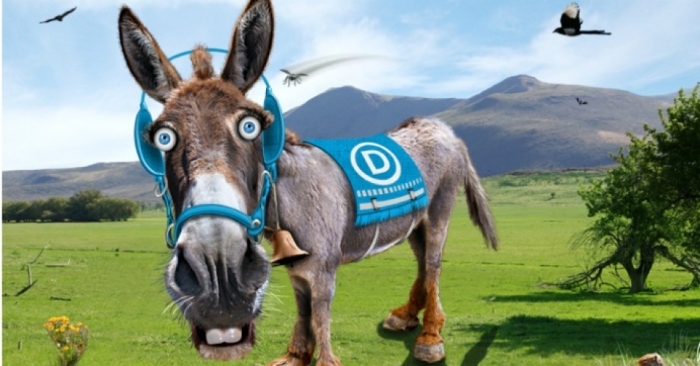
Why Are So Many Democrats Behind Backdoor School Voucher Expansion in Pennsylvania?

 democrats_neoliberalism


Democrats are supposed to be liberals, progressives.


That means upholding the Constitution and the Separation of Church and State.


So why are so many Pennsylvania Democrats sponsoring an expansion of the state’s de facto school voucher bill?


A total of 11 out of 84 sponsors of HB 250 are Democrats. The bill would expand the Educational Improvement Tax Credit (EITC) and Opportunity Scholarship Tax Credit (OSTC) programs.


The Commonwealth already diverts $200 million of business taxes to private and parochial schools. That’s money that should be going to support our struggling public school system.


The new bill would add $50 million to each program for a total of $100 million more flushed down the drain.


Pennsylvania has a budget deficit. We’ve cut almost $1 billion a year from public schools. We can’t afford to burn an additional $300 million on private and church schools.


We expect Republicans to support this regressive nonsense. Especially in gerrymandered Pennsylvania, they’ve gone further and further right to please their Tea Party base and avoid being primaried.


But the few Democrats left in the House and Senate are likewise in districts that would never vote Republican. You’d expect them to get more and more progressive. Instead, even here we see them taking steps to the right!


Democratic sponsors of the bill are almost exclusively from the state’s urban centers – Philadelphia and Pittsburgh.


They are:


Vanessa Lowery Brown (Philadelphia County)

Donna Bullock (Philadelphia County)

Dom Costa (Allegheny County)

Daniel J. Deasy (Allegheny County)

Michael J. Driscoll (Philadelphia County)

Jordan A. Harris (Philadelphia County)

William F. Keller (Philadelphia County)

William C. Kortz II (Allegheny County)

Joanna E. McClinton (Delaware & Philadelphia County)

Harry Readshaw (Allegheny County)

Mark Rozzi (Berks County)


These corporate tax giveaways are based on the premise that our public schools are failures and that students must be rescued from them. The Commonwealth has developed a list of approximately 400 “failing schools” and created a voucher-like system allowing students living near them to take public taxpayer money to go to private and religious schools. Students can also go to another public school in a different district, if they will accept them. However, few public schools take part in the program because school boards know it’s just another attempt to weaken their districts.


How does the state define a “failing school”?


Partially it’s based on standardized test scores. Districts with the bottom 15% of reading and math scores on the Pennsylvania System of School Assessments (PSSA) and Keystone tests are supposed to earn this label. However, the state has been notorious for including districts that actually are making academic progress.


Since low test scores are highly correlated with poverty, that’s the real indicator. If you live in a poor enough district, you’re probably eligible.


What about charter schools?


It’s funny you asked. Though they often have subpar test scores, they rarely are included on the state’s list of “failing schools.” They even exclude most of the state’s execrable cyber charter schools. The Center for Research on Education Outcomes (CREDO) at Stanford University found that students in every single Pennsylvania cyber charter school performed “significantly worse” in reading and math than their peers in conventional public schools. But somehow that’s generally not failing enough to earn you a voucher-like tax credit.


How can we tell that students at private and parochial schools are doing better than those in public schools?


We can’t.


The scholarship organizations have no auditing requirements and almost no reporting requirements. Moreover, private and parochial schools don’t have to take the federally-mandated standardized tests! So there’s no way to do an apples-to-apples comparison!


But here’s the best part. The EITC law prohibits state administrators from requesting any information related to academic achievement. You’re not even allowed to ask!


However, the law goes out of its way to remove regulations on how these tax dollars are spent. For instance, schools taking these tax credits can spend as much as 20% of the money to cover pure administrative costs.


Yet the public schools are still responsible for many of the costs of students living in their attendance areas but who use these de facto vouchers. For instance, there’s no limit to how far away an EITC student can go with their publicly-subsidized scholarship. But the student’s home district is legally obligated to provide transportation for up to ten miles.


Vouchers have been repeatedly defeated on every referendum held on the subject in the entire country. One of the reasons people have been up in arms against Donald Trump’s nomination of Betsy DeVos as U.S. Education Secretary has been her support of vouchers.


What do voters have to do to tell legislators that they don’t want school vouchers – no matter what you call them? What do voters have to do to show that they support our public school system – a system that despite being underfunded and weighed down with corporate education reforms remains one of the best in the world?


And when will Pennsylvania’s Democrats start acting like Democrats on the subject?

Kids Deserve a Quality Education – not the PURSUIT of a Quality Education

dannahwilson2-678x381

On Tuesday, Dannah Wilson, a 17-year-old student in Detroit came to Washington, D.C., with a message for Betsy DeVos, the current nominee for Education Secretary.

She said:

“My four siblings and I have attended 22 schools in search of satisfaction. … A satisfaction that our eyes haven’t seen. A satisfaction that our hearts can only hope for. A satisfaction that has been stolen from me for way too long because of the naive and narrow policies pushed by Betsy DeVos. That Detroit students are denied daily due to the privately institutional lies by Betsy DeVos and her duplicates.”

After three hours of confirmation hearings, DeVos was nowhere to be seen.

Running on only 3 hours of sleep and after waiting for 7 hours to speak with DeVos, Wilson spoke, instead, to people who would listen – a gathering of members of the AFL-CIO.

Her powerful statement was recorded by the members of the American Federation of Teachers (AFT) and posted to their Facebook page where it has gone viral.

As with anything involving unions, skeptics will dismiss the whole thing as a publicity stunt. That the AFT decided to add an annoying musical score to the video will only heighten that skepticism.

However, there is one thing that can’t be denied – Wilson’s sincerity. Her eyes tear up and her voice chokes as she tries to get the words out. You may discount her as a talented actress, but she rings true to me.

Moreover, speaking out in this way is decidedly against her own self interest. She attends Cornerstone Leadership and Business High School, a Detroit private school with a $5,000 annual tuition. Expanding voucher programs likely would reduce the cost of attending her school.

But no. Wilson is firmly against DeVos, who has spent $200 million or more pushing lawmakers in Michigan and throughout the nation to enact vouchers and reduce charter school regulations.

What struck me most was her story of searching for a quality school and being unable to find one.

Corporate school reformers aren’t pushing for quality schools. They’re pushing for choice.

It’s the difference between a right and a freedom.

The Declaration of Independence famously defines “Life, Liberty and the pursuit of Happiness” as “inalienable rights.” As such, it guarantees “Life” and “Liberty” outright, but as to “Happiness” we are only guaranteed “the pursuit” of it.

(Today we recognize certain limitation on both Life and Liberty, but even at its inception, the framers limited our right to Happiness as merely the freedom with which to pursue it.)

There is a similar limitation being made with regard to school choice.

Supporters want students to be able to pick between public and private schools. But that doesn’t mean they have to do anything about ensuring any of these schools actually do a good job at helping kids learn.

It’s a subtle point but one that’s often overlooked.

Parents and children want a quality education. They don’t want choice unless it will lead to that quality education.

If we only guarantee choice, we aren’t giving parents and children what they want and need. In fact, we’re ignoring them in favor of those who would benefit from mere choice – charter and private school operators.

Parents don’t want to have to search through dozens of schools to find one that will actually teach their children. Nor would transferring from school-to-school in a desperate attempt to find one of quality be beneficial to students. No, parents want whichever school their children attend to be excellent.

And once we see that, we see Wilson’s point.

There is no federal right to an education. The Individuals with Disabilities Education Act (IDEA) ensures that students with disabilities are provided a “Free Appropriate Public Education” (FAPE), but that’s as far as the federal government goes. As it stands, it only applies to certain children who qualify, and even then it is under constant legal challenge and review.

Traditionally the responsibility has fallen to the states through interpretation of the 10th and 14th amendments. Likewise, most states explicitly guarantee an education as part of their individual state constitutions. However, issues of fairness, quality and equity are constantly in doubt.

It’s hard to underestimate how backwards the US is in this regard. According to the Constitute Project, 174 countries include a right to education in their Constitutions – nearly every one included in the available global record. A child’s right to an education is included in international laws like the International Covenant on Economic, Social and Cultural Rights, and in the Convention on the Rights of the Child. The latter agreement, the most widely accepted human rights treaty in history, has been ratified by every member of the United Nations except Somalia and the United States.

Policymakers love to demean the US education system in relation to international test scores. It should be noted that almost all of the countries our students are being compared to guarantee their children’s right to be educated.

Instead, we’re trying to avoid any national responsibility. States are trying to limit their responsibility. And school choice legislation is attempting to throw it all on parents without giving them any tools except guaranteed options.

The real issue at the heart of this debate is the value of private vs public systems. Choice advocates say only privatized schools will provide the best schools, but this is demonstrably false.

Many of our public schools are excellent. You’ll find them especially in richer neighborhoods where they spend more per pupil than poorer districts with less local tax revenue to draw upon. Imagine if we committed to fairly funding them all. Imagine if we committed to bringing all of them up to that same standard.

School choice is a shell game meant to district you from this point. If the goal is providing all children with an equal, free, and adequate education, the policies of someone like Betsy DeVos take us in the wrong direction.

They will only lead us to more tears from brave children like Wilson who have to travel far from their homes to confront uncaring would-be Education Secretaries.

The Racists Roots and Racist Indoctrination of School Choice

screen-shot-2017-01-15-at-8-10-02-am

“Simple justice requires that public funds, to which all taxpayers of all races contribute, not be spent in any fashion which encourages, subsidizes, or results in racial discrimination.”
-President John F. Kennedy

“Injustice anywhere is a threat to justice everywhere.”
-Dr. Martin Luther King, Jr.

Billionaires and far right policymakers are pushing for school choice.

I say they’re pushing for it because voters always turn it down.

Every single referendum held on school choice in the United States has been defeated despite billions of dollars in spending to convince people to vote for it.

But advocates aren’t discouraged that the public isn’t on their side. They have money, and in America that translates to speech.

The Donald Trump administration is dedicated to making our public schools accept this policy whether people want it or not.

But don’t think that’s some huge change in policy. The previous administration championed a lighter version of these market-driven plans. The main difference goes like this: Democrats are for charter schools and tax credits for private and parochial schools. Republicans are for anything that calls itself a school getting your tax dollars – charter schools, private schools, religious schools – if some charlatan opens a stand on the side of the road with the word “school”in the title, they get tax dollars.

In all this rush to give away federal and state money, no political party really champions traditional public schools. Ninety percent of children attend them. In opinion polls, a majority of Americans like their local community schools. But like most things Americans want, politics goes the other way. Universal healthcare? Have Romneycare. Universal background checks on all gun sales? Nah. That sort of thing.

However, what often gets lost in the rush of politicians cashing in on this policy is its racist roots.

You read that right. School choice was invented as a mechanism of white flight. Before the federal government forced schools to desegregate, no one was all that interested in having an alternative to traditional public schools. But once whites got wind that the Supreme Court might make their kids go to school with black kids, lots of white parents started clamoring for “choice.”

It was intended as a way to get around Brown vs. Board. In 1953, a year before that landmark decision, many white southerners felt it was vitally important to continue a segregated education. They deeply desired to continue having “separate but equal” schools for the races, yet the US Supreme Court seemed ready to strike that down.

Enter Georgia’s Gov. Herman Talmadge who created what became known as the “private-school plan.” Talmadge proposed an amendment to the Georgia Constitution to empower the general assembly to privatize the state’s public education system. “We can maintain separate schools regardless of the US Supreme Court by reverting to a private system, subsidizing the child rather than the political subdivision,” Talmadge said.

The plan goes like this. If the Supreme Court mandates desegregation (as it did), the state would close the schools and issue vouchers allowing students to enroll in segregated private schools.

Fortunately, Talmadge’s plan was never implemented in Georgia. But it became the model for segregationists everywhere.

In Prince Edward County, Virginia, the plan actually came to fruition – sort of.

Two years before the 1959 federal desegregation deadline, local newspaper publisher J. Barrye Wall explained what county leaders were planning:

“We are working [on] a scheme in which we will abandon public schools, sell the buildings to our corporation, reopen as privately operated schools with tuition grants from [Virginia] and P.E. county as the basic financial program,” he wrote. “Those wishing to go to integrated schools can take their tuition grants and operate their own schools. To hell with ’em.”

Ultimately the county refused to sell the public school buildings. However, public education in Prince Edward County was nevertheless abandoned for five years, from 1959 to 1964. During that time, taxpayer dollars were funneled to the segregated white academies, which were housed in privately owned facilities such as churches and the local Moose Lodge.

The federal government struck down the program as a misuse of taxpayer funds after only a year, but even so whites benefited and blacks lost. Since there were no local taxes collected to operate public schools during those years, whites could invest in private schools for their children, while blacks in the county were left to fend for themselves. Since they were unable and unwilling to finance their own private, segregated schools, many black children were simply shut out of school for multiple years.

In other states, segregationists enacted “freedom of choice” plans that allowed white students to transfer out of desegregated schools. Any black students that tried to do the same had to clear numerous administrative hurdles. Moreover, entering formerly all-white schools would subject them to harassment from teachers and students. Anything to keep the races apart in the classroom – and usually the entire building.

Eventually, segregationists began to realize that separate black and white schools would no longer be tolerated by the courts, so they had to devise other means to eliminate these “undesirables.”

Attorney David Mays, who advised high-ranking Virginia politicians on school strategy, reasoned:

“Negroes could be let in [to white schools] and then chased out by setting high academic standards they could not maintain, by hazing if necessary, by economic pressures in some cases, etc. This should leave few Negroes in the white schools. The federal courts can easily force Negroes into our white schools, but they can’t possibly administer them and listen to the merits of thousands of bellyaches.”

Mays turned out to be somewhat prescient. Though desegregation efforts largely succeeded at first, in the last 20-30 years whites accomplished through housing and neighborhood segregation what they couldn’t legally enforce through outright school segregation. District lines were drawn to minimize the number of blacks at predominantly white schools and vice versa. Moreover, since funding was often tied to local property taxes, whites could legally ensure black schools got less resources than white schools. And with standardized tests constantly showing students at these schools as failing, policymakers could just blame the school instead of what they’d done to set the school up for failure.

Today racist policies undermine much of the structure of our public schools. We should acknowledge this and work to peel it back. We need to ensure all schools are equitably funded, that class sizes are under control, that all students get a broad curriculum and the services they need. But in the absence of a new, robust desegregation policy, our schools will always be in danger of racist programs that can easily select which students to benefit and which to ignore.

Instead of doing this hard work, we’re engaged in resurrecting the school choice policies of the deep South and universalizing them across the country. School vouchers are extremely similar to Talmadge’s private school plan. The main difference is that vouchers don’t close public schools outright, they simply allow them to be defunded and ignored. With universal school vouchers, public schools often become the de facto holding area for whichever group of children the private schools refuse to accept or who can’t afford private school tuition even with the vouchers.

Charter schools are built on the Prince Edward County model. They’re administered as private institutions yet claim to be somehow public. As a result, they’re allowed to bypass many of the rules that protect students at public schools from discrimination and fraud. In effect, they’re largely unregulated. In the modern age, that means they can be incredibly substandard for long periods of time and no one knows or intervenes. The kinds of scandals perpetrated at some charter schools are simply not possible at traditional public schools. Some charters close without notice, have facilities used as nightclubs, involve taxpayer funds used for non-school purposes such as apartments for mistresses, the purchase of yachts, etc.

In both cases, charters and voucher schools often cater to mostly one race rather than another. That increases segregation at both these facilities and traditional public schools. But voucher schools can go a step further. They can even put racism on the curriculum.

Supporting the racial order is often what’s actually being taught at private and religious schools. They are infamous for revisionist history and denying climate science. What’s less well-known is how they often try to normalize racist attitudes.

The American Christian Education (ACE) group provides fundamentalist school curriculum to thousands of religious schools throughout the country. Included in this curriculum is the A Beka Book and Bob Jones University Press textbooks.  A Beka publishers, in particular, reported that about 9,000 schools nationwide purchase their textbooks.

These books include the following gobsmackers:

“[The Ku Klux] Klan in some areas of the country tried to be a means of reform, fighting the decline in morality and using the symbol of the cross. Klan targets were bootleggers, wife-beaters, and immoral movies. In some communities it achieved a certain respectability as it worked with politicians.”
—United States History for Christian Schools, 3rd ed., Bob Jones University Press, 2001

“God used the Trail of Tears to bring many Indians to Christ.”
—America: Land That I Love, Teacher ed., A Beka Book, 1994

“A few slave holders were undeniably cruel. Examples of slaves beaten to death were not common, neither were they unknown. The majority of slave holders treated their slaves well.”
—United States History for Christian Schools, 2nd ed., Bob Jones University Press, 1991

“To help them endure the difficulties of slavery, God gave Christian slaves the ability to combine the African heritage of song with the dignity of Christian praise.  Through the Negro spiritual, the slaves developed the patience to wait on the Lord and discovered that the truest freedom is from the bondage of sin. By first giving them their spiritual freedom, God prepared the slaves for their coming physical freedom. ”
-Michael R. Lowman, George Thompson, and Kurt Grussendorf, United States History:  Heritage of Freedom, 2nd ed. (Pensacola, FL: A Beka Book, 1996), p. 219.

“Africa is a continent with many needs. It is still in need of the gospel…Only about ten percent of Africans can read and write. In some areas the mission schools have been shut down by Communists who have taken over the government.”
—Old World History and Geography in Christian Perspective, 3rd ed., A Beka Book, 2004

Gay people “have no more claims to special rights than child molesters or rapists.”
—Teacher’s Resource Guide to Current Events for Christian Schools, 1998-1999, Bob Jones University Press, 1998

Brown v. Board of Education is described as social activism by the Supreme Court: “While the end was a noble one – ending discrimination in schools – the means were troublesome… liberals were not willing to wait for a political solution.”
-Teacher’s Resource Guide to Current Events for Christian Schools, 1998 – 1999 (Greenville, SC: Bob Jones University Press, 1998), p. 34

These are claims that are uncritically being taught to children at many voucher schools. If this were happening only at private schools, it would be troubling that racists were indoctrinating their children in the same hatred and bigotry of their parents. However, that we’re actually using public money – and planning to expand the amount of public money – to increase the racism and prejudice of the next generation is beyond troubling! It’s infuriating!

School choice does not enhance civil rights. It is inimical to them. It is part of a blatant policy to make America racist again. We cannot allow the Trump administration and any neoliberal Democrats who quietly support his ends to undo all the progress we’ve made in the last 60 years.

The bottom line is this – voters don’t want school choice. It does nothing to better childrens’ educations. It is a product of segregation and racism and even in its modern guise it continues to foster segregation and racism.

If we care about civil rights, social equality and democratic rule, school choice is something that should be relegated to the dust heap of history. It’s time to move forward, not look back fondly on the Confederacy, Jim Crow and segregationism.

School Privatization Turns Business Into Predator and Students Into Prey

screen-shot-2017-01-09-at-3-37-08-pm

The mother sea turtle struggles to shore to lay her eggs.


A typical clutch includes anywhere from 50–350 eggs, which the mother hides under the sand. Her sole contribution to their future complete, she swims away.


They incubate underground for 50-60 days. Then just at dusk, the tiny sea turtle hatchlings emerge and struggle their way to the waiting sea and surf.


Well they try to get to the sea. Most of them don’t make it.


Predators are always lurking in the shadows to pluck up these movable hors d’oeuvres. Sea gulls, crabs, small fish – all are waiting to enjoy a meal of fresh baby sea turtle.


It’s estimated that only 1 in 1,000 hatchlings survive into adulthood.


Is that really the model we should be using for our public schools?


Because – make no mistake – it is exactly the kind of thing the market-driven model of education is based on.


The idea goes something like this: schools should be run like a business. Parents and students should choose between educational institutions, which would then compete for their budget allotments.


Some schools would thrive but most would fail – just like in business, athletics or other competitive pursuits. And while these fledgling schools struggle to make ends meet, predators will be waiting in the wings to benefit from their failure and perfidy.


To be fair, it’s a model that works well in many circumstances. In business, it ensures that only the best enterprises stay open. In sports, it translates to athletes striving to give there all to prove superiority over competitors.


But if we look at it through clear eyes, it’s obvious that this is really just the same as baby sea turtles struggling to get to the ocean. Many will compete. Few will win.


That’s a terrible way to run a school. Think about it.


We don’t want only our best students to get an education. Nor do we want only our best schools to provide one. We want all schools to provide the best education possible to the highest number possible. Clearly some schools will be better than others. That can’t be helped. However, we can maximize the quality of the education each provides. We can ensure that none fail.


That isn’t what the market-driven approach does. It forces schools to compete for their very existence. They have to spend a considerable amount of time and money attracting students to enroll. That’s time and money that doesn’t go to education. It goes to advertising.


Moreover, any school that attracts a surplus of students can choose which ones its wants to enroll. The choice becomes the school’s – not the parents’ or students’. In fact, administrators can turn away students for any reason – race, religion, behavior, special needs, how difficult it would be to teach him or her. This is much different from traditional public schools. There, any student who lives in the district may attend regardless of factors such as how easy or difficult he or she is to educate.


Another major change with this approach is how these schools will be run. Many of these institutions will be operated privately without the input of a duly-elected school board, without transparency for how they spend tax dollars, without even the guide rails of most regulations.


Like in the charter school sector, these schools will get almost free reign to do whatever they want. And we can see the results of this bold experiment already. The predators are lining up to make a meal of their students.


Corporate interests offer to run charter schools while cutting services and increasing profits. In fact, administrative costs at charter schools are much higher than at traditional public schools. Students lose, the market wins.


Moreover, many charter schools provide a sub-par education. To put it more bluntly, they do things that would be impossible for public schools to do. One in Philadelphia literally transformed into a nightclub after dark. Another funneled profits into the CEO’s personal bank account to be used as a slush fund to buy gifts and pay for rent at an apartment for his girlfriend. Another CEO used tax dollars to buy a yacht cheekily called “Fishin’ 4 Schools.” A study found that cyber-charters provide almost less education than not going to school at all. Even brick and mortar charter schools can close on a moments notice leaving students in the lurch.


It’s a Darwinian model made to benefit the predators, not the prey. It’s a boon for any unselfconscious businessman who doesn’t mind getting rich stealing an education from children.


By contrast, our traditional public schools are modeled after something else entirely. Instead of offering various kinds of school competing with each other, they provide one basic type that is shielded from predation.


In short, public schools are modeled after primate childcare practices – not the egg-laying habits of reptiles. Primates usually have a very limited number of offspring per pregnancy – often just one. Unlike sea turtles, they don’t just lay their eggs and leave their offspring to their own devices. Primates provide excellent care and nurture for their child making sure it is safe from those that would hurt it.


This is exactly what public schools do. They provide one basic kind of school. The public gathers twice a month with an elected school board to decide how the school should be run. Most functions of the school are open to public view as are expenditures, documents, etc. And there are regulations that stop the most extreme practices that put students at risk.


Public schools aren’t perfect. Neither are primate parents. But the model is child-centered where the goal is all about what’s best for the next generation – every member of that generation.


In short, the entire debate about school choice really has little to do with choosing this or that school. It’s about choosing a style of education – public or private, primate or reptilian, one that favors prey or predator.


Deep down, the public knows this. That’s why school vouchers have never passed a public referendum despite obscene spending from advocates. That’s why the money behind school choice is almost entirely from the same would-be predators who would benefit from opening our tax dollars and our children to such harm.


The media churns out the myth of failing schools and this has had a damaging effect on public perception of public education in general. However, when you ask people about their neighborhood school, opinion is generally high. People like their schools the way they are. Ninety percent of American students attend public school and that’s just the way we like it.


We aren’t about to take a chance on a system that instinctually reminds us of neglect. For school choice advocates, it really comes down to ideology. They hate anything public. They hate government in all its forms and wish for the freedom to do as they wish.


They wish for the freedom to be a predator – a predator of children.

Why Schools Should NOT Be Run Like Businesses

school-closures

America loves business.


We worship the free market. Nothing is more infallible – not reason, not morals, not even God.


Money is the true measure of success – the more you have, the better a person you are.


This perverted ideology has taken over much of American life. Where we once cared about our country, justice and fair play, today it has all been reduced to dollars and cents.


Every problem can be answered by business. Every endeavor should be made more business-like. Every interaction should be modeled on the corporate contract, and every individual should try to maximize the outcome in his or her favor. Doing so is not just good for you, personally, but it’s what’s best for everyone involved. And this dogma is preached by the high priests of the market who claim that as they, themselves, get wealthier, one day we too will reap the same rewards – but that day never seems to come.


These principles are articles of faith so deeply ingrained that some folks can’t see past them. They have become the driving force behind our country and much of the world. Meanwhile, most people get ever poorer, our environment gets increasingly polluted and everything is up for sale.


One of the last holdouts against this market-driven nightmare is the public school system.


We still have widespread educational institutions run democratically at public expense dedicated to providing every child with the tools and opportunities to learn.


They’re not perfect. Far from it. But they enshrine one of the last vestiges of the America of our grandparents. Democracy and justice are the system’s core values – not profit, expansion and market share.


However, our schools suffer from disinvestment. Since we’ve segregated the rich from the poor into privileged and impoverished neighborhoods, it’s easy to provide more funding and resources to wealthy children and less to poor ones. That’s the main reason why some schools struggle – they haven’t the resources of the Cadillac institutions. Whenever we look at school spending, we look at an average allotment never bothering to consider that most of that money goes to children of the wealthy and much less to poor kids. Nor do we consider that more than half of our public school students live below the poverty line. Public schools strive to overcome the barriers of poverty, but the way we fund them ensures many of them are burdened by these same factors.


To make matters worse, our federal and state governments have allowed huge corporations to profit off our schools through an industry based on constant standardized testing and then selling schools the remediation materials to pass the tests. That’s all Common Core is – a more efficient way to market text books and test prep materials regardless of their inherent value (or lack thereof) to students. The same people criticizing public schools for being untouched by a business ethic often ignore how much they have already been brutalized by free market capitalism and the profit motive.


In any case, despite all these encumbrances, these problems are all surmountable. Doing so only requires us to go in the opposite direction away from the boardroom and the Wall Street subprime bubble. We need to work intrinsically for the good of each student. We need to see them as ends in themselves and not just incidentally for how much profit they can generate.


Unfortunately, such a solution is inconceivable to those in power. It goes against everything in which they believe. Too many Americans have been converted to the cult of the market so that the only solution they can support is to double down on what’s not working – to turn public schools even further into a business.


It’s absurd. Not everything benefits from being sold for a profit. Imagine if your spouse suggested running your marriage that way. It would turn you both into prostitutes selling yourselves at ever cheaper rates while any self respect, dignity and love disappeared.


Some things just are not for sale. Would you give up your deepest held convictions because doing so might help you turn a profit? Today I’m not a Christian, I believe in Baal because he’s got a bigger market share. Today I’m skeptical about gravity because the Acme Parachute Company is offering a bonus to jump out of the tenth floor naked.


Only fools let themselves be manipulated in this way. And that’s exactly what corporations and big business are trying to do with our public schools. Make no mistake. These are our institutions – they belong to us – yet privateers see a way to gobble up tax dollars while downgrading the services provided. They want to play us all for suckers even if it means leaving the next generation of poor and middle class children in the lurch. The only thing that matters to them is making bank.


They say we should run schools like a business? What kind of business exactly?


There are many different kinds of free enterprise. A coal company runs much differently from a restaurant, for example.


Public schools are nothing like any for-profit business. Sure, historically we’ve had a small percentage of private schools, but our country has never survived on an education system that is wholly private. By definition, the model does not work for everyone. That’s what the term “private” means – belonging to one person or group and not another. Our schools traditionally serve everyone. No single business in the country does that day-in-day-out. Perhaps we could find some new paradigm that would fit public schools, but let’s not pretend we can take some business model that already exists and apply it willy nilly. At the start, this mindset is naive at best.


Second, most businesses fail.


Most public schools succeed. They have a proven track record. Why are we going to jump to a model that builds its success on the failure of competitors?


Competition means there will be winners and losers. That’s fine in sports. It’s even fine in most goods and services. There’s not so much at stake. If I go to a bad restaurant, I have a bad meal. No big deal. I just go somewhere else tomorrow. If I get a bad education, there is no do over. I’m screwed.


That’s just not acceptable. Would you bet your life on opening a new restaurant? Would you bet your child’s education? Schools might not live up to your expectations, but the system isn’t set up from the outset so that some of them will eventually crash and burn.


Third, businesses get to choose their raw materials. If you’re making pizzas, you buy the best grains, cheese, tomatoes, etc. But public schools don’t get to choose their students. They have to teach even those who are more difficult to instruct. They accept kids with special needs, kids who’ve been abused, who live in poverty, who are undernourished, etc. And that’s how it needs to be.


If we were to follow the typical business model where the goal is merely profit, we would try to find ways to weed out these difficult students and make them someone else’s problem. In fact, that’s exactly what many privately-run charter schools and vouchers schools do. If they want our tax dollars, they shouldn’t be allowed to discriminate against our children. We should be seeking to stop such nefarious practices, not universalize them.


Finally, businesses are not essentially democratic. Corporations are beholden to their shareholders and businesses are beholden to their founders. Who, exactly, fits that role if we model our school after a business?


Public schools are run by democratically elected school boards. Privately run charter and voucher schools often are run by appointees. They aren’t beholden to the public who provide the tax dollars they need to operate. They are beholden to the limited group of people who would profit from them economically.


This is a terrible model for public schools. It gives very little back to the taxpayer. It gives less value to the student.


Should we run our schools like businesses? Not if we value students and taxpayers more than the handful of investors looking to profit off our dime.

What Real School Choice Would Look Like – And Why What They’re Selling Isn’t It

pathdoc_Shuttertock_decision - Edited 

I can’t hear the words “School Choice” without thinking of Inigo Montoya from the classic film “The Princess Bride.”


I hear Mandy Patinkin’s voice saying, “You keep using that word. I do not think it means what you think it means.”


Because just like the constant cries of “Inconceivable!” from Sicilian boss Vizzini (portrayed by the inimitable Wallace Shawn), policymakers seem a bit confused.


You would expect School Choice to mean that parents would get to choose the school their children attend. However, the policy being pushed by corporate education reformers has nothing to do with that.


It’s about allowing schools to choose students, not the other way around.


Want your child to attend a charter school? Great! In many cases he needs to meet the requirements of admission – good grades, well behaved, no learning disabilities – otherwise they boot him back to the traditional public school he came from.


Want your child to use a voucher to attend a private school? Fine! The voucher will pay for some of her tuition, but you’d better be able to make up the rest AND she needs to meet the criteria for admission.


If administrators don’t want to accept your child, they don’t have to, nor do they ever have to explain why, nor do you get a public forum where you can question them, nor do you have any power to vote them out.


They could decide to turn you down because your child is a minority, disabled, gay, has a belief system of which they do not approve, anything really! And they will never have to explain themselves to anyone.


To me, that’s not school choice. But that’s what they’re selling and some folks are buying it all up like an email sent to you by an inconvenienced Nigerian Prince who just needs your help with a funds transfer.


However, this isn’t to say that the idea of School Choice – REAL School Choice – is inconceivable. (Forgive me, Vizzini.)


You could devise a system of School Choice that actually involved parents being able to choose the school their children attend.


I wouldn’t suggest it. I’m opposed to all forms of School Choice for reasons I’ll make clear later. But I would certainly be more amenable to a plan that actually did what it seems to promise.


So what would real educational choice look like? What would we need to achieve this goal?


First, it would require a massive increase in school funding.


Think about it. You’re asking the government to pay for several separate, parallel systems of education. Students won’t just have School A to choose from. They’ll have School A, B and C.


So we need to construct more schools. We need to staff them. We need to provide each one with books, computers, equipment, etc. That’s going to cost an incredible amount of money.


We’re talking about at least doubling the amount of money we pay for public schools – more likely tripling or quadrupling it.


This is certainly possible. Maybe it’s even preferable. But it won’t be politically acceptable for many people. The push has been to downsize government, do things on the cheap, lower taxes, etc.


Strangely, School Choice cheerleaders often push their agenda as a way to save money. That’s because they don’t care about the quality of the choices they’re offering. They’re not providing enough money for several excellent schools that parents can pick from. They’re taking the money we already spend on one school and having multiple schools fight for it.


It’s like a dogfight for schools. They’ll rip and tear at each other, and the winner gets to take away the most funding. It’s a bad model for animals and an even worse one for schools because everyone loses. No one walks away with enough money to get the job done. You end up with several choices but none of them can really provide the best academic experience. None of them can even provide the kind of education that would come from having just one well-funded choice.


What’s worse, in most states even before you start adding parallel schools, the current funding system is broken. We simply don’t provide enough funding for the schools we already have without adding even more choices.


All public schools don’t get the same amount of money per pupil. That’s true even when you adjust for costs.


Under the current system, schools with a rich tax base provide Cadillac resources for their children. Meanwhile, schools with a poor tax base can’t provide everything that is needed so their kids have to do with less. That means fewer resources, fewer teachers, larger classes, etc.


So-called School Choice policies only make this worse. Schools that already don’t have enough funding to meet their students needs have to give larger portions of their shrinking budgets to charter schools. So instead of one school without enough funding, we have two. That doesn’t fix anything.


However, both of these problems are solvable and the solution is the same in both cases – money.


If you want real choice, you need to do two things: (1) discontinue funding schools based on local property taxes and (2) dramatically increase school funding. Both the state and federal government would have to kick in much more. Local taxes could still be collected to pay a portion for public schools – this could even be collected based on how much each community can afford – but no longer could we allow poor students to get less funding than rich kids. No matter where you lived – in the slums or in a gated community – you’d get whatever funding your school deemed necessary.


This would probably be paid for with a substantial tax increase, though you could also make cuts in other places in local, state, and federal budgets. For most people, I think this would be unacceptable, but it is certainly conceivable.


Second, you need the same rules governing these separate systems – especially when it comes to admissions.


This would be especially hard on charter school and private school administrators.


There could be no more picking and choosing which students get to attend your school. If an emotionally disturbed student with bad grades and an even worse record of behavior wants to attend your charter school, you’ve got to accept him. If a poor student whose parents don’t have the money for tuition (even with the voucher in hand) want to attend your private school, you’ve got to accept her.


This shouldn’t be such a burden. It’s what traditional public schools do now. They take everyone regardless of grades, ability, behavior or poverty.


Third, all schools would have to be transparent and democratically controlled. Their budgets and internal documents would have to be open to public record. Moreover, decisions about how to run the school could not be made behind closed doors – they would have to be made in public. And school directors would have to be subject to democratic control. Decision-makers could no longer be appointed by boards of investors, the mayor or any other bureaucrat. They’d be selected by voters. These would all be public schools, after all, and as such would be subject to rule by the public.


Think about what that means. If your child attends a school, you should get a say in what happens at that school. Even if your child doesn’t attend the school, even if you have no children, you should have a say simply because you pay taxes.


This has been the practice at traditional public schools since forever. In fact, unless the school has been taken over by the state, it’s required by law. But at charters and private schools, it’s not always the case.


It’s funny. In many ways under our current system, the public gets much more input, much more choice at traditional public schools than at so-called School Choice institutions.


Many charters and private schools would balk at this. They are not run democratically and are not beholden to the public.


That’s just the way they like it. Their business model requires it. If they had to be fully transparent and accountable to taxpayers, what would happen to those schools organized for-profit?


I would assume that they would disappear. I think very few parents and taxpayers would allow a fully transparent school to pocket a large chunk of its budget like that. I can’t imagine the public approving a decision to cut student services to boost the bottom line – but this is exactly what happens at certain charter schools every day. Only the protection of current School Choice policies that shield investors from taxpayers allows this kind of malfeasance.


But it doesn’t have to be this way.


We can have real School Choice without all the drawbacks of charters and voucher schools. We can have a system where parents get to pick their children’s schools, where the public is in control, where every child gets an excellent education.


To do so, we’d need a series of fully funded, fully transparent, democratically run schools subject to the same rules and expectations.


Hmm. But that’s not so different than the traditional public school system we have now. Perhaps doing so would give all schools the latitude to experiment that is usually given to charter schools. But for the most part, we’ve equalized our school system and simply eliminated the worst abuses of charter and voucher schools.


We’ve also radically increased the raw number of schools in the system. And we’ve allowed students to attend schools where they don’t necessarily live, but ensured they get adequate funding no matter where they attend.


The result is real Student Choice. Parents get to decide where their children attend, and – at least in theory – all choices would be excellent.


I’ve got to admit – from a certain vantage point – it doesn’t look so bad. Sure it’s going to cost a lot of money, but maybe it’s worth it.


However, finding the cash isn’t the only obstacle. For instance, how do you adequately administrate such a system?


I cannot imagine how administrators could decide how much money their school needs from year to year if the student population can change so dramatically in that time period. How would administrators know how many teachers they need and in which subjects? How would they be able to determine the number of classrooms, how many school lunches are necessary and a host of other things? Wouldn’t it be terribly disruptive to have teachers moving from school-to-school every year following student mobility?


Additionally, how do we provide transportation with students traveling hither and thither? It would be difficult just to organize buses to get kids to school. Older students could be given bus passes, but that wouldn’t be safe for elementary and middle school kids to be traveling this way unaccompanied by adults.


I’m not saying it’s impossible, but it would be very difficult. Perhaps someone could find a system that works. However, I fear this kind of institutional instability would result in some schools being woefully understaffed and underprepared while others have too much.


Moreover, such a situation would be extremely wasteful. We’d be spending much more than we need to provide children with an excellent education. We’d be duplicating services unnecessarily. Personally, I can deal with that much more than its opposite. However, flushing tax dollars down the toilet is a bad practice.


Is there a middle ground that provides parents and students choice without wasting so much money?


Yes.


Instead of providing a series of parallel education systems, supply one system that is able to deliver multiple services.


First, you’d need to fix the funding inequities mentioned above. You don’t have to double or triple what we spend, but you’d probably have to increase support somewhat. And it would have to be distributed fairly.


Then once every school has the funding necessary to give every student what he/she needs, we can work on individualizing that experience. This is exactly the opposite of current education policies from the Bush and Obama administrations.


I’m not talking about Competency Based Education, either, the latest scam to make standardization look like a student centered model. I mean no more high stakes standardized tests, no more Common Core, no more corporate education reform.


Imagine if every district allowed parents and students to choose what kind of education they got within the system. Your child wants to study music? We’ve got an excellent music program. You want your child to study a foreign language? We have plenty of award-winning programs to choose from.


Schools would be able to meet the needs of all students because they would be fully funded. No more poor schools and rich schools – just schools.


To meet this ideal, we need to forgo the fake School Choice being offered at present. We need to stop having schools fight over dwindling resources like pit bulls.


THAT would be a choice worth making.


It would be the best kind of school choice.
Irony Alert: The Founder of Trump University Is Selling School Choice

Donald-Trump-Donkey-Hotey

Donald Trump is in favor of school choice.

Well of course he is! After all, he made a lot of money scamming poor suckers out of their hard-earned cash with Trump University.

He knows how privatized education benefits the corporations who run the school and not the poor schmucks who want to learn.

If he gets his way, our national education motto will be caveat emptor.

He is betting the American public is so stupid they’ll give a man caught in a scandal for cheating people out of an education the power to set all education policy for our nation’s children.

And it’s all right there before the public.

In fact, the parallels between Trump University and school choice policies are apparent to anyone who looks. Here are just a few of the similarities:


1) False advertising

First of all, Trump University was never an actual university!

The New York State Education Department warned administrators when the institution was founded in 2005 that it was operating without a license. So what did the “school” do? It changed its legal name to The Trump Entrepreneur Initiative.

See? We’re not saying it’s a university anymore. I mean we still call it Trump University colloquially and in advertising brochures and so on. But on legal documents we never make that claim.

It’s a classic bait and switch scheme.

But the same could be said of many charter schools.

They don’t claim to be private schools. They claim to be public schools. However, they aren’t subjected to nearly the same transparency and accountability standards.

Public schools are run by an elected school board. Most charters are run by appointed boards.

Public school board meetings are held in public. Any taxpayer can attend, comment on the proceedings and demand access to public records such as its budget. Many charter school meetings are held behind closed doors. Taxpayers have no access or input in the decision-making process nor access to records that should by all accounts be public record.

Charter schools are public schools just like Trump University was a university.


2) Choosing Students

So who could attend Trump University?

Not just anyone. According to the “Private and confidential” playbook obtained by The Atlantic, the one essential qualification listed all in caps was “ALL PAYMENTS MUST BE RECEIVED IN FULL.” In other words, Trump’s school would accept anyone who could pay the entrance fee.

That same playbook, by the way, admonished staffers not to talk with reporters and “If a district attorney arrives on the scene, contact the appropriate media spokesperson immediately.”

Similarly, charter and voucher schools get to choose their students, too.

Advocates pretend school choice means parents get to choose where their kids go to school. Wrong! It means school administrators get to choose who they’ll accept.

At private schools that accept vouchers, the amount of taxpayer money spent at a traditional public school and given to the private school in the form of the voucher is rarely enough to pay for the full tuition. So voucher programs often make it impossible for poor kids to attend private schools. They just reduce the cost for rich kids whose parents can afford to pay the difference.

At charter schools, administrators are infamous for picking students based on the ease with which they can be taught. Sometimes they don’t accept students having academic difficulties or who are in special education programs. Other times they kick them out before state-mandated standardized tests. That way they can falsely inflate their own test scores and pretend like they’re doing a great job teaching all students when they’re not.


3) Quality of Services:

Former Trump University students are suing the reality TV star and Presidential candidate because they claim they paid tens of thousands of dollars for nothing.

You got a free 90-minute seminar that promised enrolling in the school would teach you everything you need to know about real estate investment. Then you were told to enroll in a $1,495 three-day seminar where you were told to enroll in increasingly more expensive additional seminars even up to an Elite Gold package costing $35,000.

However, very little attention was spent to actually teaching students much of anything. Each seminar was basically an advertisement for the next seminar.

Prospective students were told they would be “mentored” by “handpicked” real estate experts showing them Trump’s own real estate strategies.

But no one has yet been able to produce a single instructor handpicked by Trump. Moreover, many of these instructors didn’t even have any knowledge of real estate, They came from other academic fields.

Trump never reviewed the school’s curricula. It was developed by a third party for motivational speakers and timeshare rental companies.

Moreover, Trump never attended any of these seminars personally. Attendees were often told that he was in the building or on his way, but he never showed up. At one seminar, attendees were told they’d get to take their pictures with Trump but ended up getting pictures with his cardboard cutout!

Similarly, many of our nations charter schools provide a substandard education.

When compared with traditional public schools, no evidence has been found that they do a better job. In fact, the evidence says charter do no better and often much worse than traditional public schools.

One reason is that many charters don’t require their teachers to be of the same quality as traditional public schools. Charter often skimp by hiring uncertified teachers or Teach for America trainees who have no degree in education and have only passed a six weeks course.

Also, cyber charter schools, in particular, often use third party companies to create their entire curriculum. This is usually just taking a text book in a given subject, digitizing it and having students answer the questions that used to be in the back of the book.


The parallels are clear. Perhaps that’s why Trump feels comfortable championing choice in education.

He is, after all, an expert on how it works and how it cheats the public.

Creating one excellent education system for everyone is both cheaper and more efficient than dividing children up so they can be monetized. But such a system doesn’t allow corporations and investors to turn a profit. Let’s be real – that’s why Trump is advocating for it.

Several lawsuits have been filed about the Trump University scam and will continue haunting Trump well past the November election.

However, he still maintains it was “a terrific school that did a fantastic job”.

His son, Donald J. Trump, Jr., even gave a speech touching upon school choice at the Republican National Convention this week.

Young Trump never attended public school, but he knows his dad’s business model.

His comments came under fire largely because he repeated several passages written by conservative writer and law professor F. H. Buckley. However, the campaign defended the move saying Buckley helped write Junior’s speech.

It may not be outright plagiarism, but it shows the thinking of the Trump campaign. Rehash old ideas that have failed in the past and hope the voting public buys it.

And maybe they’ve got a point. As H. L. Menken wrote -“Nobody every went broke underestimating the intelligence of the American public.”

That’s what the Trumps are doing. And if their education policy becomes a reality at our nations schools, they’re going to do everything they can to ensure that stupidity continues for generations to come.

For them education isn’t about making America great again. It’s about providing an endless stream of suckers to be taken advantage of by the predators of big business.

Top 10 Reasons School Choice is No Choice

LittleKidThumbsDown

On the surface of it, school choice sounds like a great idea.

Parents will get to shop for schools and pick the one that best suits their children.

Oh! Look, Honey! This one has an exceptional music program! That one excels in math and science! The drama program at this one is first in the state!

But that’s not at all what school choice actually is.

In reality, it’s just a scam to make private schools cheaper for rich people, further erode the public school system and allow for-profit corporations to gobble up education dollars meant to help children succeed.

Here’s why:

1) Voucher programs almost never provide students with full tuition.

Voucher programs are all the rage especially among conservatives. Legislation has been proposed throughout the country taking a portion of tax dollars that would normally go to a public school and allowing parents to put it toward tuition at a private or parochial school. However, the cost of going to these schools is much higher than going to public schools. So even with your tax dollars in hand, you don’t have the money to go to these schools. For the majority of impoverished students attending public schools, vouchers don’t help. Parents still have to find more money somewhere to make this happen. Poor folks just can’t afford it. But rich folks can so let’s reduce their bill!? They thank you for letting them buy another Ferrari with money that should have gone to give poor and middle class kids get an education.

2) Charter and voucher schools don’t have to accept everyone

When you choose to go to one of these schools, they don’t have to choose to accept you. In fact, the choice is really all up to them. Does your child make good grades? Is he or she well-behaved, in the special education program, learning disabled, etc.? If they don’t like your answers, they won’t accept you. They have all the power. It has nothing to do with providing a good education for your child. It’s all about whether your child will make them look good. By contrast, public schools take everyone and often achieve amazing results with the resources they have.

3) Charter Schools are notorious for kicking out hard to teach students

Charter schools like to tout how well they help kids learn. But they also like to brag that they accept diverse students. So they end up accepting lots of children with special needs at the beginning of the year and then giving them the boot before standardized test season. That way, these students’ low scores won’t count against the charter school’s record. They can keep bragging about their high test scores without actually having to expend all the time and energy of actually teaching difficult students. Only public schools take everyone and give everyone their all.

4) Voucher and charter schools actually give parents less choice than traditional public schools

Public schools are governed by different rules than charter and voucher schools. Most public schools are run by a school board made up of duly-elected members from the community. The school board is accountable to that community. Residents have the right to be present at votes and debates, have a right to access public documents about how tax money is being spent, etc. None of this is true at most charter or voucher schools. They are run by executive boards or committees that are not accountable to parents. If you don’t like what your public school is doing, you can organize, vote for new leadership or even take a leadership role, yourself. If you don’t like what your charter or voucher school is doing, your only choice is to withdraw your child. See ya.

5) Charter Schools do no better and often much worse than traditional public schools

Pundits and profiteers love to spout euphoric about how well charter schools teach kids. But there is zero evidence behind it. That is nothing but a marketing ploy. It’s like when you’re in a bad neighborhood and walk past a dive that claims to have the best cup of coffee in the city. Yuck. Surely, some charter schools do exceptionally well. However, most charters and almost all cyber charters do worse than their public school counterparts. Fact.

6) Charters and voucher schools increase segregation

Since the 1950s and ’60s, we used to understand there was no such thing as separate but equal education. Before then we had Cadillac schools for white kids and broken down schools for black kids. The Supreme Court ruled that unconstitutional. But today we have Cadillac schools for rich and middle class kids (most of whom are white) and broken down schools for the poor (most of whom are black or brown.) After making tremendous strides to integrate schools and provide an excellent education for everyone, our public schools have been resegregated. Charter and voucher schools only make this problem worse. They either aid in white flight or leach away minority students. This just makes it easier to give some kids a leg up while keeping others down.

7) Charter and voucher schools take away funding at traditional public schools

It costs almost the same amount of money to run a school building of a given size regardless of the number of kids in it. When students leave the public schools for charter or voucher schools, the public school loses valuable resources. It now has less revenue but the same overhead. So even if you found an excellent charter or voucher school to send your child, you would be hurting the chances of every other student in the public school of having their own excellent education. This is what happens when you make schools compete for resources. Someone ends up losing out on an education.

8) Properly funding parallel school systems would be incredibly wasteful and expensive

We could fix this problem by providing adequate funding for all levels of the school system – traditional public schools, charters, voucher schools, etc. However, this would be exorbitantly expensive. We don’t adequately fund our schools now. Adding additional layers like this would mean increasing national spending exponentially – maybe by three or four times the current level. And much of that money would go to waste. Why have three fully stocked school buildings in one community when one fully stocked building would do the job? I don’t imagine residents would relish the tax hike this would require.

9) School choice takes away attention from the real problems in our public schools – poverty and funding equity

We have real problems. More than half of public school students live below the poverty line. They are already several grade levels behind their non-impoverished peers before they even enter kindergarten. They need help – tutoring, counseling, wraparound services, nutrition, etc. The predicament is even more complicated by the way we fund our schools. Throughout the country, poor districts get less money than wealthy or middle class ones. The students who go to these schools are systematically being cheated out of resources and opportunities. And instead of helping them, we’re playing a shell game with charter and voucher schools. The problem isn’t that parents don’t have several excellent choices. If they’re poor, they often don’t have one.

10) School choice is not supported by a grass roots movement. It is supported by billionaires.

The proponents of school choice will tell you that they are only doing the will of the people. This is what parents want, they say. Baloney. While there are individuals who support school choice, the overwhelming majority of money behind this movement comes from conservative billionaires actively trying to dismantle the public education system. They want to steal the public system and replace it with a private one. They don’t care about your child. They just want to steal the hundreds of billions of tax dollars we pay to educate our children. This is not philanthropy. It is a business transaction meant to screw you and your child out of your rights.

If we really want to ensure every child in this country gets an excellent education, the answer isn’t school choice. Instead, we need to commit to supporting our public school system. We all need to be in this together. Yes, our schools should look at the needs of each child and tailor education to fit appropriately. But that shouldn’t be done in parallel school systems. It should be done under the same umbrella. That way, you can’t defund and defraud one without hurting all. It can’t just be about your child. It has to be about all children.

That’s the only choice worth making.


NOTE: This article was given a shout out on Diane Ravitch’s blog and published on the Badass Teachers Association blog.


Hillary Clinton’s Charter School Problem

hillary

Good news! Democratic Presidential candidate Hillary Clinton just admitted there are significant problems with the nation’s charter schools!

Bad news! She has no interest in solving them! In fact, she thinks charters are just great.

Here’s Clinton criticizing charter schools:

Most charter schools — I don’t want to say every one — but most charter schools, they don’t take the hardest-to-teach kids, or, if they do, they don’t keep them. And so the public schools are often in a no-win situation, because they do, thankfully, take everybody, and then they don’t get the resources or the help and support that they need to be able to take care of every child’s education.

And all over the country, teachers, parents and students rejoice. Someone actually notices our problem!

Charter school scandals seem to hit the paper with the regularity of a grandfather clock. Charters cut student services and boost overhead to produce profit. Charters rack up debt and then sell it for a profit. Charters fudge the paperwork so they get paid for students who don’t actually attend. And just as Clinton said, they push out the children who are most in need and hardest to teach.

In short, most charter schools stink. Clinton admits we have a problem. But how do we solve it?

Clinton:

I have for many years now, about 30 years, supported the idea of charter schools, but not as a substitute for the public schools, but as a supplement for the public schools. And what I have worked on through my work with the Children’s Defense Fund and my work on education in Arkansas and through my time as first lady and senator is to continue to say charter schools can have a purpose, but you know there are good charter schools and there are bad charter schools, just like there are good public schools and bad public schools.

So I want parents to be able to exercise choice within the public school system — not outside of it — but within it because I am still a firm believer that the public school system is one of the real pillars of our democracy and it is a path for opportunity. …the original idea… behind charter schools was to learn what worked and then apply them in the public schools…

So Clinton’s solution to the charter school crisis is what exactly? She seems to be saying that charter schools have major problems, but the best way to fix them is to redouble our belief in this flawed and failing system.

It sounds like a line from Peter Pan: Clap your hands, children, and Tinkerbell will live! You just have to believe! Oh! Close your eyes and believe in charter schools, and they’ll be all fixed!

It’s a non-answer, an evasion. It’s the kind of politics Hillary Clinton excels at – say something so empty and middle-of-the-road that both sides of a position can find something to like about it. Take something and focus group the hell out of it until it’s almost meaningless.

The problem is that this kind of spin doctoring doesn’t help improve our schools one bit. It’s really an endorsement of the status quo. After all, what solution has she offered here?

If you aren’t paying attention, it sounds like a commitment to fix our charter schools, but it’s actually just a commitment to gift wrap them more of your tax dollars with zero accountability.

Notice what Clinton said about choice. She supports parents having a choice between various kinds of public schools – but not parochial and private schools.

Choice!? What a bunch of baloney! By and large parents don’t want to have to shop around for a school the way you would melons at the grocery store. Weigh them in your hands, look for soft spots and hope they’ll be sweet once you cut through the rind.

Parents want all public schools to be excellent. “Let The Buyer Beware” is a poor principle on which to found our system of public education.

Mrs. Clinton, who exactly are you trying to give choice to – parents or corporations? Do you want parents to be able to choose between several mysterious options or do you want to give corporations another market in which to make a profit?

It’s almost a veiled threat. There are some people out there, she might as well as be saying, who want to give your tax dollars to private and parochial schools. Not me. Nope. I’ll only give your tax dollars to traditional pubic schools or charters.

What goes unsaid is the fact that many charters run themselves like private schools. They’re almost the same thing but on the public dime. Why do you think so many call themselves “academies”? They want to look exactly like private schools. The biggest difference is they can’t violate the separation of church and state.

So Clinton is against private schools if they’re called private schools, but if we call them charter schools, they’re just peachy! Wow! There’s such a world of difference between that view and Jeb Bush’s!

Thanks a bunch, Mrs. Clinton. That’s a mighty progressive position you’ve got there. You’re going to support public schools by allowing parents to opt out of them? This is the best the Democrats can do these days!? Yikes!

And please spare me the nonsense about the original purpose of charter schools. They were supposed to be laboratories to try out new things that would eventually get applied in the traditional public school setting!? That has never happened! Not once! No one has ever looked at the charter school model and said, ‘Gee! They’re really doing such a great job! Let’s do that here!” unless it was in terms of the Cadillac funding they often receive while public schools strive to get by on what’s left between the couch cushions.

Moreover, if having the freedom to experiment is so great, why not offer traditional public schools the same option? Why not free public schools to experiment instead of weighing them down with Common Core and toxic testing (which – if I’m not mistaken – you wholeheartedly support, Mrs. Clinton)?

If most charter schools are abusing that freedom by pushing out needy students, why not take that power away? Why not support a national moratorium on any new charters? Why not investigate every existent charter and close down the ones that aren’t effective? Why not take the money saved by such a venture and use it to invest in the traditional public school system that has proven time-and-again to be the best educational alternative for our nation’s children?

Instead of pretending to offer choices, why not make sure every public school is excellent and allow parents and students choices within those schools such as whether they want to take art, music, foreign languages, extracurricular activities, etc.?

Why? Because those would be real solutions, and if there’s one thing politicians hate, it’s solving problems.

If Clinton did that, she might offend someone. She’d lose votes. Better to try to appear to be pleasing everyone.

And thus she pleases no one.


NOTE: This article also was published in the LA Progressive and on the Badass Teachers Association blog.


Why Were So Many Education Reformers Bad Students?


Screen shot 2015-09-12 at 7.33.08 AM

Bad students often hate school.

Not exactly shocking, I know.

But perhaps more surprising is the pattern of low, sloppy or inconsistent academic achievement by so many of those adults who consider themselves education reformers, particularly corporate school reformers.

Our ideas of school are certainly formed during our years in it. Those working so diligently to destroy the public school system and reshape it to resemble the business model are so often people who didn’t fit in. They earned low grades or only excelled in subjects they really liked. Perhaps school failed them or perhaps they failed school. There’s no way to know for sure since school records are almost always kept private. But details do trickle through and display a clear pattern – a pattern that certainly gives the appearance of an ulterior motive.

Are these former bad students more interested in fixing the perceived problems they see with the system? Or are they consciously or unconsciously seeking revenge against a system that found them to be inadequate?

Take Scott Walker.

The Wisconsin Governor-cum-Presidential candidate has been one of the most virulent enemies of public education and public school teachers in the past decade.

But when he was a lowly student, he wasn’t anywhere near the head of the class. His grade school years are mostly shrouded in mystery, but his college career is ablaze in controversy.

He claims to have been a solid C-student with a 2.59 grade point average. Contemporaries say it was closer to a 2.3.

“I had some classes I was more interested in than others, I suppose,” he admits.

In any case, college wasn’t for him. He attended Marquette University for almost four full years before dropping out. He only had a year or more to go before earning a bachelors degree.

Why did he quit? Numerous contemporaries allege he was expelled for cheating in student government. Walker says he simply accepted a full-time job and had to devote his time there.

The facts are these: Walker unsuccessfully ran for student body president with a tumultuous campaign. He was found guilty of campaigning a week early thereby losing campaign privileges at one facility and a day of campaigning at another.
When the student paper endorsed his opponent, the edition mysteriously vanished from the stands. Students reported seeing Walker staff taking almost all of the papers and replacing them with campaign literature against his opponent.

An investigation was conducted but the university refuses to release it saying the results are either private or have been destroyed.

However, the university denies that Walker was ever in bad standing or that he had been expelled.

The matter could easily be cleared up if Walker released his academic records to the public, but unlike most Presidential candidates of either major political party, he refuses to do so. (All while continuing to criticize President Barrack Obama for not releasing a birth certificate that the President clearly released to the public.)

Not exactly student of the year. Nor would the preacher’s son ever win “Most Ethical” in the student superlative section of his college yearbook.

It’s easy to see why someone who had such difficulty in college would spend so much time as Governor attacking that world.

He reduced state funding to Wisconsin colleges by 13% and then mandated they freeze tuition for 4 years. He recommending replacing University of Wisconsin leadership with a private authority governed by his own appointees. He proposed the university change its fundamental commitment from “a search for truth” to the goal of workforce readiness.

That’ll show ‘em, I guess.

But he didn’t just attack post-secondary education. He went after high, middle and elementary schools, too. He signed a law mandating high stakes reading testing begin in kindergarten. That’s right – kindergarten! Teachers and principals, of course, had to be evaluated based on these scores. Oh and don’t forget the massive school budget cuts.

He also presided over the largest roll back of collective bargaining rights in state history – and who make up the biggest unions? Teachers. Other working people are just more grist for the mill of his petty power trip.

If Walker had studied harder, spent less time on extra-curricular politics and finished his degree – I wonder if he wouldn’t have such animosity towards education. Maybe then he wouldn’t spend his days congratulating himself for hobbling colleges and public schools while trampling on workers rights.

Moving from politics to punditry, few people have devoted their careers to destroying the teaching profession as much as former anchorperson Campbell Brown.

Since being quietly let go from CNN when her news program was cancelled for low ratings, Brown has become an outspoken corporate education reformer. School choice, the destruction of teacher tenure and labor unions – there are few supply side education ideas she doesn’t support. Most notably, she serves on the board of directors for the infamous Success Academy Charter Schools – a system that uses student humiliation to ensure children swallow a curriculum consisting almost entirely of standardized test prep. Moreover, her husband, Dan Senor, is on the board of StudentsFirstNY, a corporate school reform organization affiliated with Michelle Rhee.

How anyone so personally invested in the factory schools model could possibly claim she was impartial enough to serve in a journalistic capacity on this matter is beyond belief. But that’s just what Brown does. This summer she even co-founded The Seventy Four – a news site dedicated to covering education. She claims it’s all “non-partisan” and “non-profit.” Ha! Her husband is a former adviser to the Romney campaign and spokesman for the Bush administration’s Coalition Provisional Authority in Iraq! Her “news” site is like Fox News for schools – which given the supply side bias of MOST news organizations is really saying something!

Is it any surprise that when Brown was in school, herself, she wasn’t exactly honor roll material?

She describes herself as a “terrible student” in Catholic school, but immediately justifies her academic performance by saying the teachers were awful, too. Since she had such a horrible parochial school experience, it’s a wonder she reserves her rancor for the public school system where she has little first hand knowledge. A child of privilege, Brown was a private school girl.

At Virginia’s elite Madeira School, she was kicked out for sneaking off campus for a party. She eventually earned a GED, and briefly attended Louisiana State University before waitressing in Colorado and enrolling in a Catholic college in Denver. It was there that a priest who taught political philosophy finally reached her. She eventually earned a B.S. in political science.

It was a long, difficult academic road for Brown. I wonder how she would have done at Success Academy where mostly poor Black and Hispanic students must sit with hands clasped and eyes following the speaker; where reading passages must be neatly annotated with a main idea; where her teachers would be inexperienced drones forced to work 11-hour days and face high turnover.

Something tells me as a student she’d find those teachers just “awful,” too. It’s a hard thing to take responsibility for one’s own actions especially as a child. If only the teacher had taught me better, if only I had gone to the good school, if only someone had done this or that. Poor little rich girl.

Now Brown is a professional at casting blame on our public school system in favor of unproven or disastrous education models. She’s come from the back of the class to the front – where she can criticize and wag her finger.

But to do the most damage to the school system, you need to be more than a politician or a pundit – you need to be an ideologue. And you need so much cash you don’t now what to do with it all.

No one has had a greater negative impact on public education than Bill Gates and his billions in so-called philanthropic contributions. As one of the richest men in the world, he has steered the course of education policy away from research-based policies to a business-minded approach favored by corporate raiders.

Common Core State Standards would not exist without his backing and financial bribery of federal and state governments. The man of ideas who instinctively understands the world of computers extends his hubris to encase all subjects. For clearly, what is true of a network of calculating machines must be true of young minds. Gates knows best, and where he is contradicted by one peer-reviewed study, he can pay for several independent ones to back up his pet ideas.

But whatever you say of Gates, he differs dramatically from Walker and Brown. Gates is clearly brilliant. He was a National Merit Scholar who scored a 1590 out of 1600 on his SATs. One would think his academic record must be impeccable. But one would be wrong.

While he excelled in subjects he cared about, he neglected others that weren’t immediately interesting. According to a college friend:

Gates was a typical freshman in many ways, thrown off pace by the new requirements and a higher level of competition. He skipped classes, spent days on end in the computer lab working on his own projects, played poker all night, and slept in a bed without sheets when he did go
 to bed. Other students recall that he often went without sleep for 18 to 36 hours.

Even at Harvard, Gates continued his pattern of 
getting good grades in the subjects he liked and disdaining those that were of little interest. His heart didn’t seem to be in his studies. Gates joined few college activities unless his friend Steve Ballmer dragged him off to a party.

School was of little interest to him. He dropped out of Harvard before getting a degree to start his computer software company.

Some tell it as a story of an eccentric’s unstoppable rise, but few tarry long enough to remark on the privilege from which Gates emerged. He didn’t have a public school education. He attended an elite preparatory school since he was 13. Once again someone with such little experience of public school is a self-appointed expert in reforming it.

His parents also instilled in him a peculiar marker for success. In his home, the family encouraged competition. One visitor reported, “it didn’t matter whether it was hearts or pickleball or swimming to the dock … there was always a reward for winning and there was always a penalty for losing.” How interesting that this same philosophy has become Gate’s vision for all school children! Schools must compete against each other for resources and the losers get shut down. Yet what irony that his own personal success relies on ignoring his weaknesses and focusing solely on his successes! We excuse the inconsistent grades and dropping out of college. But would Gates-backed education policies do the same for other children?

Gates, the student, easily might have wilted under the education policies of Gates, the edu-preneur. How hard it is to see oneself clearly. How hard to admit one has limitations. Especially when one is brilliant in one narrow field and has too much money and free time.

And so the enemies of America’s public education system gather round. Many of them may have axes to grind. Of course this doesn’t hold in every case. New Jersey Governor Chris Christie, for example, is no friend to schools. Yet by all accounts he personally had a relatively trouble free academic experience.

However, the case holds often enough to be instructive. An awful lot of C-students think corporate education reform is needed to fix our schools. Heck! Most of these policies come from No Child Left Behind legislation proposed by the most infamous C-student in American history – President George W. Bush!

These kinds of psychological conflicts of interest should give us pause. Do we really want to support such personal crusades? Should all the power of public policy really back the revenge of indifferent students?

Corporate education reform policies don’t work. They never have worked. They’re destroying our system of public education.

Doesn’t there come a time when you have to get over your personal childhood traumas and pay attention to the facts?


NOTE: This article also was mentioned on Diane Ravitch’s blog and published in the LA Progressive and the Badass Teachers Association blog.