Dear Betsy DeVos, I Will NEVER Report My Students to ICE

4e78f0eb558f3.image 


Teachers fill a lot of roles in our public schools.


We’re mentors to kids in need.


We’re aides to students struggling with new concepts and skills.


We’re homework-givers, pencil-providers, idea-encouragers, lunch-buyers, scrape-bandagers, hand-holders, hug-givers, good listeners, counselors, caregivers and – yes – sometimes even butt-kickers.


It’s no wonder that we occasionally get mistaken for mothers and fathers.


But one thing we will never be is a snitch.


Secretary of Education Betsy DeVos recently intimated that principals and teachers could report their undocumented children to Immigration and Customs Enforcement (ICE).


She’s not going to say what we should do one way or another. She’s just saying that this is something we COULD do if we wanted.


If that results in those kids and their families being deported, well we are a nation of laws, after all.


It’s a remark that sounds so reasonable to some folks.


Luckily, I speak dog whistle.


So did the U.S. Supreme Court back in 1982 when justices ruled in Plyler v. Doe that schools cannot deny children their right to a free education based on immigration status.


When kids are afraid to learn because they or their parents or extended family may be undocumented, that has a smothering affect on the classroom.


When ICE raids a local business, we see a sudden drop in class attendance.


So if students thought their teachers or principals were scrutinizing them to determine their citizenship status, we’d be discouraging many with brown skin or extra-national credentials from ever coming back.


By suggesting that educators have a choice whether to obey established law or to become self-appointed border patrol officers, DeVos actually is prescribing how we should act.


Well, not this teacher, Betsy.


Not now. Not EVER.


No matter who you are – black, white or brown – a public school is a sanctuary. It is where kids of all different races and creeds come to escape from the ravages of poverty, violence and indifference.


Teachers are not the enforcers of our broken, bent and biased immigration policy. It is not our job to oblige xenophobia and bigotry.


It is our job to teach, to protect and inspire.


Sure, I’ve made my fair share of calls to parents, healthcare professionals and Child Protective Services.


I’ve reported abuse, addiction and mental illness.


But I did that to protect my kids. And I do think of them as my kids.


When these little people come toddling into my class, I take a kind of ownership of them.


For the time they’re here, we’re family. I take interest in their lives and they take interest in mine.


They know all about my wife and daughter, my parents and grandparents. And I know about theirs.


We don’t just learn grammar, reading and writing. We share our lives with each other.


We share a mutual trust and respect.


If I reported even a single student for a suspected immigration violation, I would lose that forever.


It’s sad how much things have changed in a little over year.


Hispanic names have become Anglicized. Angelo has becomes Angel. Julio has become Jules. Jorge is now George.


The dulcet melody of Spanish has been silenced. You’ll only hear it in muffled voices if you wander by a few lockers, but never in class.


My kids aren’t even 13 yet, but many of them have already learned to hide.


Don’t appear different. Don’t let anyone know your roots extend beyond national borders.


Be “normal.” Be homogenized, bland American.


That’s the world we’ve built and it’s the one that DeVos is encouraging with her tin pot nationalism.


Some things don’t change when you cross municipal lines – human decency is one of them.


So I won’t be reporting any of my students to ICE.


I won’t help the Gestapo separate parents and children based on citizenship status.


I won’t help set up ethnic checkpoints where armed guards get to ask “suspicious persons” for their papers.


White supremacy was bad enough before Trump was elected. I won’t help the unfortunately named Department of Homeland Security become the protector of a new white trash Fatherland.


I will defend my students. I will stand up for their safety and their rights.


That’s just what we do in public school. We look after our own.


Like this post? I’ve written a book, “Gadfly on the Wall: A Public School Teacher Speaks Out on Racism and Reform,” now available from Garn Press. Ten percent of the proceeds go to the Badass Teachers Association. Check it out!

WANT A SIGNED COPY?

Click here to order one directly from me to your door!

book-2

Pennsylvania’s Broken Testing Promise – We Don’t Assess Students Less If We Demand Constant Diagnostic Tests

Jelani Guzman

Downcast faces, dropping eyes, desperate boredom.


That’s not what I’m used to seeing from my students.


But today they were all slumped over their iPads in misery taking their Classroom Diagnostics Tools (CDT) test.


It’s at times such as these that I’m reminded of the promise made by Pennsylvania’s Governor, Tom Wolf.


He pledged that this year we’d reduce the amount of time public school students spend taking standardized assessments.


“Students, parents, teachers and others have told us that too much time in the classroom is used for test taking,” he said.


“We want to put the focus back on learning in the classroom, not teaching to a test. Standardized testing can provide a useful data point for a student’s performance, but our focus should be on teaching students for future success, not just the test in front of them.”


So at his urging we made slight cuts to our Pennsylvania System of School Assessment (PSSA) tests – the assessment for grade 3-8 students.


We removed two sections of the PSSA – one in math, one in reading – and reduced the number of science questions.


This can cut testing by as much as 48 minutes in math, 45 minutes in reading, and 22 minutes in science.


And that’s good news.


But it’s not exactly the kind of sea change the state claims, given the Department of Education’s recommendations for additional tests on top of the PSSA.


That’s right. The state wants schools to give the CDT assessment an additional 3 to 5 times a year in reading, math and science.


Unlike the PSSA, this is a voluntary assessment. Districts can decide against it, but the department’s flunkies are crisscrossing the Commonwealth advising we all give the CDT as much as possible.


So that’s between 50-90 minutes for each assessment. A district that follows the state’s guidelines would be adding as much as 270 minutes of testing every seven weeks. In a given year, that’s 1,350 minutes (or 22.5 hours) of additional testing!


Pop quiz, Governor Wolf. Cutting testing by 115 minutes while adding 1,350 minutes results in a net loss or a net gain?


The answer is an increase of 1,235 minutes (or more than 20 hours) of standardized testing.


In my classroom, that means students coming in excited to learn, but being told to put away their books, pocket their pencils and put their curiosity on standby.


The folks who work at the Department of Education instead of in the classroom with living, breathing children, will tell you that these CDT tests are a vital tool to help students learn.


They provide detailed information about which skills individual students need remediation on.


But who teaches that way?


Billy, you are having trouble with this kind of multiple-choice question, so here are 100 of them.


We don’t do that. We read. We write. We think. We communicate.


And if somewhere along the way, we struggle, we work to improve that while involved in a larger project that has intrinsic value – such as a high interest book or a report on a hero of the civil rights movement.


When learning to walk, no one concentrates on just bending your knees. Even if you have stiff joints, you work them out while trying to get from point A to point B.


Otherwise, you reduce the exercise to boring tedium.


That’s what the state is suggesting we do.


Make something essentially interesting into humdrum monotony.


Teachers don’t need these diagnostics. We are deeply invested in the act of learning every day.


I know if my students can read by observing them in that act. I know if they can write by observing them doing it. I know if they can communicate by listening to them arguing in Socratic seminar. I read their poems, essays and short stories. I watch their iMovies and Keynote projects.


I’m a teacher. I am present in the classroom.


That tells me more than any standardized diagnostic test ever will.


It’s ironic that on a Department of Education “CDT Frequently Asked Questions” sheet, the assessment is described as “minimizing testing time.”


That’s just bad math.


And my student’s know it.


The district just sent out a letter telling parents and students they could take advantage of a school voucher to go to a local parochial school at public expense.


When presented with the prospect of another day of CDT testing in my room, one of my brightest students raised his hand and asked if kids in the local Catholic school took the test.


I told him I didn’t know – though I doubt it. They COULD take the test. It is available to nonpublic schools, but do you really think they’re going to waste that much instruction time?


Heck! They don’t even take the same MANDATORY standardized testing! Why would they bother with the optional kind!?


It is the public schools that are hopelessly tangled in the industrial testing complex. That’s how the moneyed interests “prove” the public schools are deficient and need to be replaced by privatized ones.


It’s an act of sabotage – and with the CDT it’s an act of self-sabotage.


School directors and administrators need to be smarter. The only way to beat a rigged game is not to play.


And the only way to reduce testing is to TAKE FEWER TESTS!


Like this post? I’ve written a book, “Gadfly on the Wall: A Public School Teacher Speaks Out on Racism and Reform,” now available from Garn Press. Ten percent of the proceeds go to the Badass Teachers Association. Check it out!

ebook-1

The State Penalized My School Because We Tried to Integrate

Screen Shot 2018-05-11 at 3.05.22 PM


The original sin of American education is segregation.


Yet in Pennsylvania, taking steps to integrate can result in a penalty from the state legislature.


That’s what happened to my school this year.


After years of innovation and academic growth, my school added a new program to bring in struggling students from another institution – and the state rewarded us by putting us on a list of “failing” schools and forcing us into a voucher program.


I teach in a racially diverse, high poverty district in the western part of the state, just outside of Pittsburgh.


Charter schools have been leeching off us for years.


But today was the first day school vouchers sunk their teeth into us, too.


It’s called the Opportunity Scholarship Tax Credit Program (OSTCP) – a ridiculous bit of legislation that allows children in struggling public schools to use public tax dollars to pay for tuition at a private or parochial school.


I’d say they could use that money at a participating public school, too, but in Pennsylvania the public schools taking part in the program can be counted on one hand with fingers to spare.


And why does my school now qualify for this dubious distinction? Because of our standardized test scores.


Not our test scores from this year. They won’t be released until at least June – more likely August or September.


This is based on test scores from last year – 2016-17.


Moreover, it’s not district wide. It’s just the middle school and one elementary school.


In previous years, the middle school was the district powerhouse. We had the highest test scores and the most innovation. So what happened?


In short, we integrated.


From a state-wide standpoint, my district is hugely segregated.


About 60% of our students are poor and/or minorities. Yet if you go a few miles north, south, east or west, you’ll find schools serving every flavor of white privilege. Beautiful big buildings with the best of everything and a tax base to pay for it. My district, on the other hand, is made to do the best it can with what we’ve got, which isn’t much.


To make matters worse, the structure within our district, inherited from decades of unenlightened social planning, doubles down on that segregation.


Though we only have one middle school and one high school where all our students rub shoulders, we have two elementary schools – one for the middle class white kids and one for the poorer black ones.


This has dramatic academic consequences. Kids at the better-resourced white school flourish scholastically more than kids from the crumbling black school. So the racial and economic skills gap becomes entrenched by the time kids move to the middle school in 6th grade.


If only we could integrate the elementaries.


However, we can’t bus kids from one neighborhood to the other because we can’t afford it. We have a walking district. Moreover, parents would revolt at the idea of elementary kids having to trudge long distances or take a city bus to school.


The only long-term solution is to create a new, centrally located elementary center serving both populations. However, that takes money we don’t have.


So last year we tried a partial solution – move the 5th grade up to the middle school. That way, we can at least integrate our students a year earlier.


Of course, this means taking kids from the black school with terrible test scores up to the middle school. This means adding more struggling students from the school that already is on the state’s bottom 15% list and making them the middle school’s responsibility. It means a new program, new trials and challenges.


You’d think we’d get praise or at least understanding for tackling such a problem. But no.


Taking on the 5th grade tipped the middle school’s test scores over the edge.


Now we’re in the bottom 15%, too. Now we have to let our students go to a private or parochial school with public tax dollars.


Why? Because we tried to right a wrong. We tried to correct a social and academic injustice. And the result was a kick in the gut.


Thanks, Harrisburg legislators! Way to support students of color!


This is just another way that school vouchers support white supremacy. They make it harder to battle segregation.


Why would anyone integrate if doing so could mean losing funding and looking like a failure in the press?


Moreover, forget all the junk you hear from the state about growth.


This penalty is based on whether we hit testing benchmarks – what percentage of students we have earning proficient or advanced on the tests. It doesn’t matter how much they’ve improved. It doesn’t matter if they’ve gone from the lowest of the low to scratching at the ceiling of proficient.


My 8th graders last year (the year we’re being penalized for) experienced tremendous growth just like my students this year are doing. From where they came in to where they’re leaving, the difference is phenomenal!


But apparently that doesn’t count in Pennsylvania.


A poor school serving mostly underprivileged minorities needs to meet the same benchmarks as schools with Cadillac resources serving kids who have everything money can buy. There’s certainly no need for the state or federal government to do anything about equitable resources (At least, not until the result of a lawsuit is handed down where local districts are suing the state over just such strategic disinvestment).


Instead, we’ve got to offer our student the “opportunity” to go to a private school on the public dime.


And what an opportunity it is!


The chance to send your child to a cooperating private or parochial school at public expense.


The opportunity to lose your duly-elected school board. The opportunity for decisions about how your money is spent being made behind closed doors with little to no input from you. The opportunity to send your child to a school with fewer resources and fewer certified teachers. The opportunity to send your child to (an often) religious school on the public dime.


Wow! I can’t imagine why so few parents take advantage of that opportunity! My district has had a few schools on the OSTCP list before, and families overwhelmingly opt to stay put.


Let’s not forget the justification for this “opportunity” is low test scores.


Wait a minute. These cooperating private and parochial schools don’t even take the same standardized tests, if they take any at all.


In our community, there is only one cooperating private school – a catholic school located right next door.


Students enrolled there don’t take the PSSA or Keystone Exams. I believe they take the Terra Nova test. And the school must do a great job because its Website is three years out of date about the results of those tests.


What a great way to improve test scores for our students – comparing apples-to-pears or, to be honest, actually making no comparison at all.


This OSTCP law is based on an unjustified assumption that private schools are always better than public ones. The reality is that if the resources both schools receive are similar, the public school usually greatly outperforms the private or parochial one.


I’ve seen this first hand. I’ve toured our next door Catholic institution. A few years ago, we relocated our students there temporarily during an emergency drill.


It’s a quaint school. Cobblestones and a shaded green campus.


But the buildings are crumbling – especially on the inside. Watermarks on the walls and dirt collecting in the corners.


It’s also much smaller than my school. They only have less than 300 students from K-8. We have about 1,500 from K-12.


I can see why parents who graduated from that school and have a history with it might want to send their kids there to continue that legacy. But anyone else would be giving up much better facilities, a much wider curriculum, much better trained and experienced teachers and even smaller classes!


The OSTCP bill has nothing to do with providing better opportunities for children and families.


It’s a public tax giveaway to private businesses.


The private/religious schools benefit and so do the businesses who “donate” their taxes to these programs.


In 17 states you can get substantial tax credits for contributing to this scam.


Louisiana, Oklahoma, Pennsylvania, Rhode Island, and Virginia, for example, all provide tax credits worth between $65 and $95 on every $100 donated. Alabama, Arizona, Georgia, Montana, and South Carolina go even further by reimbursing 100% of the donation. You read that right. Donate $100, get $100 back.


Oh, but it gets much worse. Since these are considered donations, you can also claim them as charitable deductions and get an additional 35% off your taxes. So you donate $100 and get back $135! Yes. You actually make money off this deal!


In Pennsylvania, investors can even “triple dip” receiving a state tax credit, a reduction in their state taxable income, and a reduction in their federal taxable income. And, yes, that means they sometimes get back more in tax breaks than they provide in contributions.


Meanwhile all of these “savings” come from money stolen from local public schools like mine. Businesses and individual investors are profiting off the industrial testing complex.


In the Keystone state, we have the OSTCP and the Educational Improvement Tax Credit (EITC).


This blatant swindle is championed on both sides of the political aisle.


We already waste $200 million in business taxes to these programs in the Commonwealth, yet both Democrats and Republicans keep trying to pass another bill to increase that sum by another $50 million.


In Allegheny County, where I teach, that includes Democratic State Reps. Dom Costa, Daniel J. Deasy, William C. Kortz II (who represents part of my school district) and Harry Readshaw.


Because of this bogus philanthropy, there will always be a bottom 15% of state schools – approximately 400 “failing schools” – that are ripe for the picking from private and parochial school vultures.


I’m sorry, but this just isn’t right.


That money should be going to public schools not private or religious institutions many of which espouse fundamentalist or racist teachings.


There is a reason our founders legislated a separation of church and state. We’d do best to remember it.


We could be using our resources to help solve our problems, alleviate segregation and increase equity.


Instead our lawmakers are too interested in giveaways to business and corporations even if that means stealing the money from our children.

Facebook is Censoring Your Favorite Bloggers

finally-thumbs-down-things-you-dislike-facebook.1280x600-970x546

Have you seen me?


Probably not.


In fact, you’re probably not even seeing this right now.


Though you may have read and enjoyed my articles in the past, though you may still want to have the opportunity to see and enjoy my posts in the future, you probably aren’t seeing them anymore.


The reason? Facebook has employed a new algorithm to determine exactly what you’re allowed to see on your news feed.


Like a parent or a government censor, they are scanning your content for certain words, judging your posts based on interactions, and otherwise making choices on your behalf without your consent.


Unless someone pays them to do otherwise. Then they’ll spam you with nonsense – fake news, lies, propaganda: it doesn’t matter so long as money is changing hands.


So homegrown blogs like this one are left in the dust while corporations and lobbyists get a megaphone to shout their ideas across social media.


Look, I don’t mean to minimize what Facebook does. There’s a ton of information that comes through the network that COULD be displayed on your screen. The company uses an algorithm – a complex set of steps – to determine exactly what to show you and when. But instead of basing that solely on who you’ve friended and what you’re interested in, they’ve prioritized businesses and shut down the little guy.


Since Facebook made the change in January, my blog only gets about 40% of the hits it did in years passed. And I’m not alone. Other edu-bloggers and organizations dedicated to fighting school privatization and standardization are reporting the same problems – our voices are being silenced.


And all this is happening after a series of Facebook scandals.


After the whole Cambridge Analytica outrage where Facebook gave the data of 87 million users – without their consent – to a political analysis firm that used it to help elect Trump…


After Facebook sold more than $100,000 in advertisements to Russian bots in 2016 who used them to spread propaganda to help elect Trump…


After enabling the spread of hate speech in Myanmar which allowed the military to engage in “ethnic cleansing” of the Rohingya Muslim minority – which has forced 700,000 people from their homes and across the border into neighboring Bangladesh…


After all that, Facebook still pretends that changing its algorithm is simply a way to crack down on “fake news.”


It’s not.


They are controlling information.


They are policing free expression.


They are NOT cracking down on falsehoods and deception.


In fact, much of what they’re doing is completely devoid of ideology. It’s business – pure and simple.


They’re monetizing the platform. They’re finding new and creative ways to squeeze content providers to gain access to users’ news feeds.


This won’t stop propaganda and fabrications. It just charges a fee to propagate them.


It’s the same thing that allowed those Russian bots to spread Trump-friendly lies in 2016.


It’s pay-to-play. That’s all.


Founder and CEO Mark Zuckerberg characterized the change in January of 2018 as prioritizing content from “friends, family and groups.”


Zuckerberg admitted this means it will be harder for brands and publishers to reach an audience on the social media platform – unless they pay for the privilege. That’s significant because even though organic reach had been diminishing for some time, this is the first time the company admitted it.


Zuckerberg wrote:


“As we roll this out, you’ll see less public content like posts from businesses, brands, and media. And the public content you see more will be held to the same standard—it should encourage meaningful interactions between people.”


What are “meaningful interactions”?


Apparently, what the company calls active interactions are more important than passive ones. So commenting and sharing is more important than just liking something.


In practice that means if you comment on someone’s post, you’re more likely to see things by that person in the future. And if they respond to your comment, their post gets seen by even more people.


Reactions matter, too, as does the intensity of those reactions. If people take the time to hit “Love” for a post, it will be seen by more people than if they hit “Like.” But whatever you do, don’t give a negative reaction like “Sad” or “Angry.” That hurts a post’s chances of being seen again.


I know it’s weird. If someone shares a sad story about their mother with cancer, the appropriate response is a negative reaction. But doing so will increase the chances the post will be hidden from other viewers. Facebook wants only happy little lab rats.


Sharing a post helps it be seen, but sharing it over messenger is even better. And just sharing it is not enough. It also needs to be engaged in by others once you share it.


Video is also prioritized over text – especially live video. So pop out those cell phone cameras, Fellini, because no one wants to read your reasoned argument against school privatization. Or they may want to, but won’t be given a chance. Better to clutter up your news feed with auto-playing videos about your trip to Disneyworld. I suppose us, social justice activists, need to become more comfortable with reading our stuff on camera.


And if you do happen to write something, be careful of the words you use to describe it. The algorithm is looking for negative words and click bait. For example, if you ask readers to like your posts or comment, that increases the chances of Facebook hiding it from others. And God forbid you say something negative even about injustice or civil rights violations. The algorithm will hide that faster than you can say “Eric Garner.” So I guess try to be positive when writing about inequality?


Do you happen to know someone famous or someone who has a lot of Facebook followers? If they engage in your posts, your writing gets seen by even more folks. It’s just like high school! Being seen with the cool kids counts.


One of the best things readers can do to make sure they see your content is having them follow you or your page. But even better is to click the “Following” tab and then select “See First.” That will guarantee they see your posts and they aren’t hidden by the algorithm.


Facebook-News-Feed-update-620x570


I know. I know.


This is all kind of silly, but Facebook is a private corporation. It should be allowed to control speech however it likes. Right?


Wrong.


The social media giant collects a ton of data about its users and sells that to advertisers. As a user, you have to make that Faustian bargain in order to gain free access to the platform. However, as we’ve seen, that data can be used by political organizations for nefarious ends. Private business cannot be trusted with it.


Moreover, there is the echo chamber effect. Facebook controls what users see. As such, the company has tremendous power to shape public opinion and even our conception of reality. This used to be the province of a free and independent press, but after media conglomeratization and shrinking advertising revenues, our press has become a shadow of its former self.


In order to maintain a democratic system that is not under the sway of any one party, faction or special interest group, it is essential that social media providers like Facebook become public utilities.


It must be regulated and free from manipulation by those who would use it for their own ends.


The way things are going, this seems more unlikely than ever.


Our democracy is a fading dream. Fascism is on the rise.


But if we want even a chance of representative government, we need to reclaim social media for ourselves. We need control over what we get to see on Facebook – whether that be a school teacher’s blog or your cousin’s muffin recipe.


In the meantime, do what you can to take back your own news feed.


If you want to keep seeing this blog, follow me on Facebook and click “See First.” Hit “Love” on my content. Comment and share.


The only thing standing in our way right now is a brainless computer algorithm. We can outsmart it, if we work together.


Hope to be seeing you again real soon.

Dear Kanye, The Same Impulse That Enslaved Black Minds on the Plantation Stokes Your Admiration for Trump

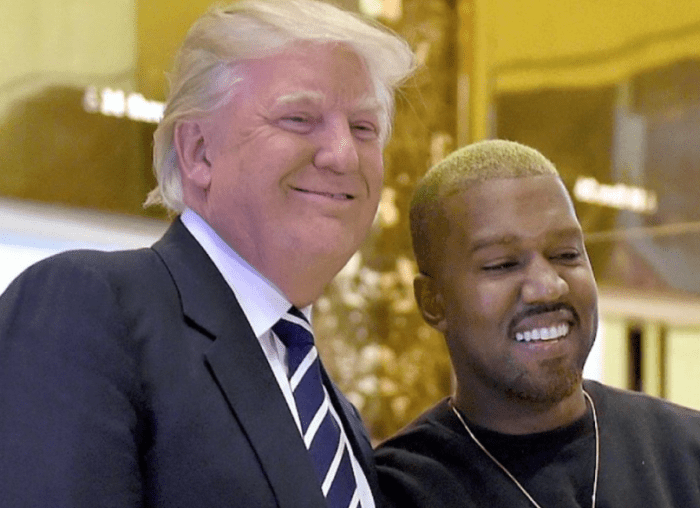
kanye-west-trump-inauguration-not-perform


Kanye West is a brilliant musician.


I start with that reminder because he’s also a jackass.


The same iconoclastic impulses that make him so fascinating to listen to on the mic make him almost impossible to take seriously anywhere else.


About a week ago, he took to Twitter to say the most controversial thing he could think of – that he still likes Donald Trump:


“You don’t have to agree with trump but the mob can’t make me not love him. We are both dragon energy. He is my brother. I love everyone. I don’t agree with everything anyone does. That’s what makes us individuals. And we have the right to independent thought.”


Say what you will, he got the mileage he wanted out of it. People’s heads exploded all over the place.


How can a black man (other than Ben Carson) support perhaps the most racist Chief Executive in the history of this country?


Trump was endorsed by David Duke (a former KKK Grand Dragon), his supporters include white nationalists (Read: Nazis) whom he refuses to criticize, he was a notorious birther refusing to accept any of the overwhelming evidence that Barack Obama was a U.S. citizen, and his real estate company avoided renting to African Americans and gave preferential treatment to white people. And that’s only the most cursory list! I could go on and on and on!


But Kanye loves him. Okay. How do you feel about James Earl Ray? When he shot and killed the Rev. Dr. Martin Luther King, Jr., did he, too, have Dragon Energy?


Perhaps Duke does – literally. Yet Yeezy ain’t tweeting him any support!


However, Kanye wasn’t done. Today on TMZ, he doubled down on his contrarianism:


When you hear about slavery for 400 years … For 400 years? That sounds like a choice.


And:


You were there for 400 years and it’s all of y’all. It’s like we’re mentally imprisoned.


Okay, Kanye.


Hold up.


Yes, slavery works by imprisoning minds as well as bodies. The same with our contemporary racial and economic cast system.


But to call slavery a choice – while true in a sense – minimizes how constrained that choice was.


Before the Emancipation Proclamation, most slaves had a choice between life in bondage or torture and death. They could try to run, try to organize and revolt or just try to survive.


What kind of choice is that?


Run and you might get caught – risk the little you have and risk the safety of anyone you care about for a dim chance at freedom.


And that was if there was anywhere to go. Without connections on the Underground Railroad or other sympathetic forces, the very idea of trying to free one’s self must have seemed next to impossible.


Sure, you could try to organize and overthrow your taskmasters – but that’s generally not how human psychology works. You convince yourself that going along is better, that if you just listen to authority, you’ll survive. It’s the same thought 6 million Jewish people had as they were being marched to the gas chambers.


I guess that’s your point. Human psychology is wrong. It’s better to fight than go along.


Then how do you explain your support for Trump?


You’re exercising your right to free thought by voicing an unpopular opinion – BECAUSE IT’S UNPOPULAR. But that’s not freedom – that’s merely thesis and antithesis. Everyone says THIS, so I say THAT.


I imagine plenty house slaves did the same thing back on the plantation. “The Master is kind and caring and he looks out for me.”


That’s really what you’re saying when you praise Trump.


One of the criticisms often leveled at rap music is how much it idolizes wealth and conspicuous consumption.


As a famous hip hop artist once said:


“ …And this rich n– racism
That’s that “Come in, please buy more
What you want, a Bentley? Fur coat? A diamond chain?
All you blacks want all the same things”
Used to only be n–s now everybody playing
Spending everything on Alexander Wang…”


That was you, Kanye, on “New Slaves” back in 2013.


The Yeezus who spouted those rhymes was criticizing exactly the kind of BS you’re spewing today.


Yeah, Trump is a symbol of having made it in America. But if he’s who you emulate, you’ve betrayed everything you used to stand for.


Fight the power – don’t befriend it!


Overthrow our classist, racist society – don’t defend it!


But who am I to criticize you? You’re a black man and I’m just a white observer. If you want to throw shade on your own people, go for it. If you want to trade in rebellion for a MAGA hat, you do it. That’s your right. Just don’t be surprised if no one thanks you for it.

It’s NOT Education Reform – It’s School Sabotage

sarah-ji_BOERallyMtg-7CROP-678x381


“Language is a weapon of politicians, but language is a weapon in much of human affairs.”

-Noam Chomsky


“Words are things. You must be careful, careful about calling people out of their names, using racial pejoratives and sexual pejoratives and all that ignorance. Don’t do that. Some day we’ll be able to measure the power of words. I think they are things. They get on the walls. They get in your wallpaper. They get in your rugs, in your upholstery, and your clothes, and finally in to you.”


Maya Angelou


Names matter.


What you call something becomes an intellectual shorthand.


Positive or negative connotations become baked in.


Hence the Colorado Democratic Party’s criticism of Democrats for Education Reform (DFER).


After impassioned debate, delegates demanded DFER remove “Democrat” from their name.


It just makes sense. DFER is a group of hedge fund managers pushing for school privatization – a policy the Colorado Democrats vocally oppose.


In fact, one of the organization’s key founders, hedge fund manager Whitney Tilson, was quoted in the film “A Right Denied,” thusly:

“The real problem, politically, was not the Republican party, it was the Democratic party. So it dawned on us, over the course of six months or a year, that it had to be an inside job. The main obstacle to education reform was moving the Democratic party, and it had to be Democrats who did it, it had to be an inside job. So that was the thesis behind the organization. And the name – and the name was critical – we get a lot of flack for the name. You know, “Why are you Democrats for education reform? That’s very exclusionary. I mean, certainly there are Republicans in favor of education reform.” And we said, “We agree.” In fact, our natural allies, in many cases, are Republicans on this crusade, but the problem is not Republicans. We don’t need to convert the Republican party to our point of view…”


So by a 2/3 vote, the Colorado Democrats passed a motion saying in part:


“We oppose making Colorado’s public schools private, or run by private corporations, or segregated again through lobbying and campaign efforts of the organization called Democrats for Education Reform and demand that they immediately stop using the Party’s name, I.e., “Democrat” in their name.”


To which I say “Hurrah!”


DFER definitely is a misnomer.


However, which is more inaccurate – the term “Democrat” or the word “Reform”?


Members of the nefarious school privatization propaganda squad are, in fact, Democrats.


They have registered as voting members of that political party.


However, they certainly aren’t progressives.


They don’t adhere to the traditional views normally associated with the party.


So the Colorado Dems motion is a positive move toward taking back what it means to be a Democrat. And in that spirit, it should be celebrated and emulated by every state and national party association.


The Democrats have always been a big tent party with lots of different ideas being accepted under that umbrella. But putting corporate profits over student needs does not belong there.


My point is that the larger verbal slight of hand isn’t with the organization’s party affiliation. It’s with the term “Reform,” itself.


DFER is not alone in calling what they advocate “Education Reform.”


My question is this – is what they’re proposing really reform at all?


And if so, what kind of reform is it? Who does it benefit? And what does it conceal?


The word “Reform” has positive associations. It’s always seen as a good.


We always want to be reforming something – turning it from bad to good. Or at very least improving it.


And when it comes to education, this is even more urgent.


No one really wants to be against education REFORM. The only reason to oppose it would be if you thought the way we teach was perfect. Then we would need no reform at all. But this is nearly impossible. Human society does not allow perfection because it is created by human beings, who are, in themselves, far from perfect.


However, the term “Education Reform” does not mean just any kind of change to improve teaching.


It has come to mean a very specific list of changes and policies.


It has come to mean standardization, privatization and profitization.


It means increasing the number, frequency and power of standardized assessments to drive curriculum and teaching – More high stakes tests, more teaching to the test, more evaluating teachers based on student test scores, more school closures based on low test scores.


It means reducing democratic local control of schools, reducing transparency of how public tax dollars are spent while increasing control by appointed boards, and increasing the autonomy of such boards at the expense of accountability to the community actually paying for their work.


It means transforming money that was put aside to educate children into potential profit for those in control. It means the freedom to reduce student services to save money that can then be pocketed by private individuals running the school.


If the goal of education is to teach students, “Education Reform” is not about reforming practices for their benefit. It is not, then, reform.


If the goal is to increase profits for private businesses and corporations, then it truly is reform. It will increase their market share and throw off any extraneous concerns about kids and the efficacy of teaching.


However, this is not the goal of education.


Education is not for the benefit of business. It is not corporate welfare.


Education is essentially about providing positive opportunities for students. It is about providing them with the best learning environment, about hiring the best teachers and empowering them with the skills, pay, protections and autonomy to do their jobs. It’s about providing adequate resources – books, computers, libraries, nurses, tutors, etc. – to learn. It’s about keeping kids safe and secure, well-nourished, and healthy.


In short, it’s about everything bogus “Education Reform” either perverts or ignores.


Calling the things advocated by groups like DFER “Education Reform” is pure propaganda.


We must stop doing that.


Even if we use the term to criticize the practice, we’re helping them do their work.


It’s just like the term “School Choice.”


Despite the name, the reality has nothing to do with providing alternatives to parents and students. It really means school privatization.


It’s about tricking parents and students into allowing businesses to swipe the money put aside to educate children while reducing services.


In short, it’s about increasing choices for charter and voucher school operators – not parents or students.


In that way, it is a more limited version of faux “Education Reform.”


So I propose we stop using these signifiers.


Henceforth, “Education Reform” shall be Education Sabotage – because that’s really what it is.


It is about deliberately obstructing goods and services that otherwise would help kids learn and repurposing them for corporate benefit.


Likewise, I propose we stop using the term “School choice.” Instead, call it what it is – School Privatization.


Anyone who uses the older terms is either misguided or an enemy of authentic education.


Perhaps this seems petty.


They’re only words, after all. What does it matter?


It matters a lot.


As Ludwig Wittgenstein wrote:


“The limits of my language mean the limits of my world.”


We cannot effectively fight the forces of segregation, standardization and privatization if we have to constantly define our terms.


We have to take back the meaning of our language, first. We have to stifle the unconscious propaganda that happens every time someone innocently uses these terms in ways that smuggle in positive connotations to corporatist ends.


To take back our schools, we must first take back our language.


To stop the sabotage, we must first stop repeating their lies.


Like this post? I’ve written a book, “Gadfly on the Wall: A Public School Teacher Speaks Out on Racism and Reform,” now available from Garn Press. Ten percent of the proceeds go to the Badass Teachers Association. Check it out!

book-2

In Trump’s America, You No Longer Need to Pretend to be Against School Segregation

34f90d59-7c40-4530-84dc-bddbcc1c652d-9624969d


School segregation is kind of like war.


When asked point blank, no one wants to admit to liking it.


To paraphrase Motown singer songwriter Edwin Starr:


“Segregation. Huh, Good God.


What is it good for?


Absolutely nothing.”


However, when it comes to supporting actual integration programs or even just education policies that don’t make segregation worse, no one in politics really gives a crap.


Both Republicans and Democrats are heavily invested in ways to divide up school students along racial and economic lines – whether they be charter and voucher schools or strategic disinvestment in the public schools that serve the poor and minorities and hording resources for wealthy whites.


That’s why it’s somewhat shocking to hear the outrage over Trump judicial nominee Wendy Vitter.


Trump nominated the extremely partisan justice for a federal judgeship in Louisiana. Yet during a Senate hearing Wednesday, Vitter refused to answer a question from Sen. Richard Blumenthal (D-Conn.) about whether or not she believed the Supreme Court was right in its landmark 1954 decision, Brown v. Board of Education.


The decision overturned the excuse that we could educate white and black people in different facilities so long as they were “separate but equal.” In effect, it said that when we educate the races separately, their schools will never be equal.


And Vitter couldn’t bring herself to affirm this ruling.


“If I start commenting on ‘I agree with this case’ or don’t agree with this case,’ I think we get into a slippery slope,” she said.


“I don’t mean to be coy, but I think I get into a difficult area when I start commenting on Supreme Court decisions which are correctly decided and which I may disagree with,” Vitter said.


She added that the ruling was “binding” and that she would uphold it if confirmed as a judge.


And there we have it, people.


That’s where the bar is set during the Trump administration.


You no longer need to pretend to be against school segregation.


On the one hand, it’s more honest than most people in the political arena.


On the other, how far have we sunk when you don’t even need to feign decency in order to expect having a chance of Congress confirming you?


Let me be clear. Vitter’s nomination should not be approved.


Congress should draw a line in the sand and say that it cannot accept people who do not share bedrock American values on the bench.


If you aren’t in favor of integration, you have no place making decisions about race, class and education.


And that is the barest minimum.


That is merely decorum.


It’s like having the decency to condemn Nazis – something else Trump can’t bring himself to do.


What actually happens to Vitter will probably be determined by the degree of backlash against her.


As of Thursday afternoon, the video clip of Vitter’s comments about Brown V. Board had more than 1.7 million views, and was retweeted over 13,000 times.


A few months ago, another Trump judicial nominee, Matthew Petersen, withdrew from consideration after a video in which he couldn’t answer basic legal questions went viral.


But even if this reprehensible person who has no right sitting in judgement over anything more taxing than a checkbook gets turned away from the bench, we’ll still be far from where we need to be on school segregation.


Despite Brown vs. Board, many of our schools today are more segregated – not less – than they were in the 1960s.


And instead of putting on our big boy pants and tackling the issue, we’ve gone in the opposite direction.


On both sides of the aisle, lawmakers support charter schools. Republicans and a few Democrats support school vouchers. And just about everyone is fine with the fact that our public schools serve vastly disproportionate racial and economic populations yet rely on local tax revenues for funding and thus are inequitably resourced.


In every case, these policies make segregation worse. Yet hardly anyone in the halls of power or in the media even admits it is happening.


At most, you get a news story every anniversary of Brown v. Board about the increased segregation and a journalistic shrug. Well, we don’t know how to solve that one…


Yes, we do!


We need to integrate – not segregate.


We need to end school privatization.


We need to redraw district boundaries.


We need to audit school policies that keep the races apart within districts by building or by class.


And we need robust, equitable funding that can’t be manipulated to favor wealthy white kids.


That will take a lot more moral courage than partisan outrage against Vitter.


Oh, she deserves outrage, but because of her lack of morality, not her political party.


This can no longer be about if your political football team is in power or not.


It has to be about what’s right and wrong.


Caring about integration should be part of what it means to be an American – like freedom, justice and apple pie.


If it isn’t, we have a lot worse problems than one reprehensible would-be judge.


Like this post? I’ve written a book, “Gadfly on the Wall: A Public School Teacher Speaks Out on Racism and Reform,” now available from Garn Press. Ten percent of the proceeds go to the Badass Teachers Association. Check it out!

book-4

Don’t Let School Lockdown Drills Become the New Normal

kidslockdown_0


I got an interesting phone call the other day from my daughter’s elementary school.


The counselor warned me that my little one’s class would conduct a lockdown drill – the first the kids had ever experienced.


With everything in the news about school shootings and the gun debate, the superintendent and principals thought they should prepare for the worst, even though they doubted anything like that would actually happen here.


The counselor just wanted me to be aware what was happening and to prepare my daughter for it so she wouldn’t be scared.


I thanked her for the call, and went in the other room to speak to my 9-year-old sweetie.


She was hunkered on the floor drawing pictures of her toys.


Mario and Luigi were chasing a purple Yoshi. Captain America was playing soccer with Wonder Woman. That kind of thing.


I opened my mouth — and my throat closed up.


I couldn’t do it. I didn’t want to do it.


What would I say? —-Hey, Honeybunches. You’re going to have a lockdown drill at school tomorrow. Your class is going to prepare in case a gunman breaks in and tries to murder you.


She was staring at me now, Mario’s hat half colored in.


So I put on my teacher’s cap and explained everything that would happen, but not why.


She was completely unfazed.


“That’s all? Can I go back to coloring now?” she asked.


I nodded.


I didn’t want to make a big deal of it, but I wondered how she’d react. This was a girl who in kindergarten had cried at the violence of a fire alarm.


So the next day came and went – no mention from her about what had happened at school.


She wasn’t traumatized. She was her usual self – frustrated at her homework, bargaining for a snack, writing an autobiography of her soccer career that would start next fall when she signs up.


I waited a week and then asked her about what had happened.


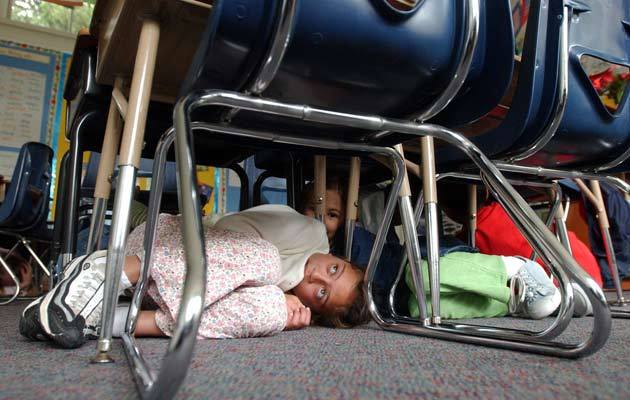
In the most matter of fact voice, she told me how her third grade class had stood away from the door, clustered in one corner of the room holding books.


“Why books?” I asked, thinking that maybe the drill had gone on too long so they had something to read.


She said they were to throw at a bad guy if he sneaked into the room.


I imagined a gunman in my daughter’s classroom trying to spray the children with bullets only to be met by a hail of tossed books – Dr. Seuss vs. Smith & Wesson.


Then I envisioned her teacher pulling out a revolver and returning fire through the swarm of terrified elementary school bodies darting back and forth.


The shock must have shown on my face.


“Don’t worry, Daddy,” she said. “No one broke in.”


As usual, children do better with this stuff than adults.


But the reason why is exceedingly troubling.


They are still forming their concept of normality.


When I went to school, we never had lockdown drills. We had monthly fire drills and the occasional severe weather drill. But we never prepared for crazed murderers and terrorists. That just wasn’t in our routine or even our conception of what a school should do.


Yet it is now routine for my daughter. It is typical for most children these days.


As a teacher in a neighboring district, I had to preside over my own first lockdown drill with my 7th graders a few weeks earlier.


We clustered in a corner on the floor – the door locked, the lights off.


My class of rambunctious teens who rarely seem able to do anything without a constant stream of words was nearly silent.


The worst part was how I felt trying to downplay what we were doing.


Nothing to see here, kids. Just an ordinary day pretending to hide in a corner so a killer would pass us by.


And now after the drill, I keep my classroom door locked at all times.


It’s a huge inconvenience having to stop what you’re doing and physically open the door anytime someone wants to come in. But it’s what we have to do to bolster our sense of security.


It’s our new normal.


And I don’t like it.


It just seems to me like another way my generation has failed our children.


We’ve always known our gun laws are insane. We knew there should be SOME sensible regulations on who can buy a gun and where and why. We knew there was no good reason to allow civilians to own automatic weapons.


But we did nothing.


Okay, a few of us spoke up now and again. It did no good. Our lawmakers just waited out our outrage and kept pocketing the money from the NRA and the gun lobby.


And now we’ve accepted that school shootings are just another part of getting an education.


It’s just something else to prepare for – like a grease fire in the cafeteria or a flooded gymnasium.


I’m sorry, but this is not normal.


I refuse to let this be just another possible disaster we feel compelled to add to our list of Might Happens.


Thankfully, protestors are still out there demanding action from our politicians. Thankfully, demonstrations and town halls are still in the works like the April 20th National School Walkout.


But our leaders still think they can wait us out. And these lockdown drills feel too much like an admission that they’re right.


What sense of urgency do we have if we’ve already incorporated shootings into the calendar?


I’ll accept that these drills are necessary. But I won’t accept them as permanent.


These are temporary measures at best.


However, that’s something that must be made explicit. Lockdown drills cannot become a tradition, common, conventional.


It shouldn’t be – “Time for the occasional lockdown drill.”


It should be – “Look what our cowardly politicians are forcing us to do because they haven’t enough spine to stand up to the NRA!”


We mustn’t lose our sense of outrage over this cultural shift. Because if we do, the necessary political change will not come.


We need sensible gun regulations – not another B.S. duck and cover exercise to engender a false sense of security and pop our civic resolve.


hero-gun-control_tcm7-223281


Like this post? I’ve written a book, “Gadfly on the Wall: A Public School Teacher Speaks Out on Racism and Reform,” now available from Garn Press. Ten percent of the proceeds go to the Badass Teachers Association. Check it out!

book-4

Every Public School Teacher Should Support Opting Out of Standardized Tests

Education-not-testing-chicago-protest


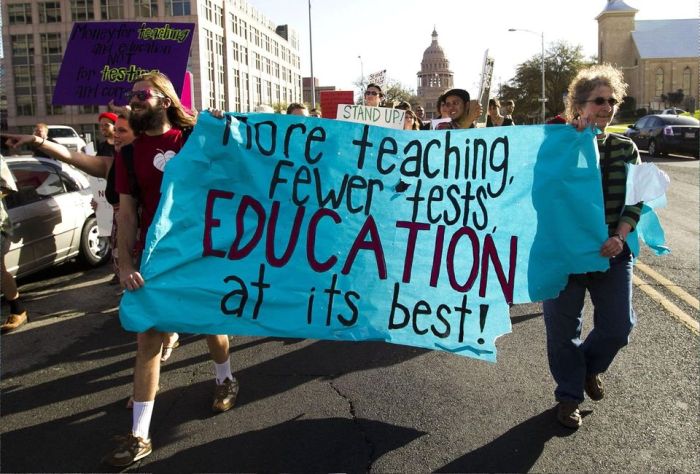
Over the last few years, educators and parents have built up a wall of opposition to high stakes testing in the Opt Out movement.


But now it seems some teachers are starting to tear it down.


Not so long ago, tens of thousands of parents refused letting their children take the tests – with full support of their teachers.


Yet today you hear some educators question their involvement or even if they’re on the right side.


It’s almost like an anthropomorphic red pitcher smashed through the bricks and offered beat down educators a drink.


koolaidman1


And far from refusing that rancid brew, some are actually gulping it down.


“OHH YEAH!”


You hear things like these:


“Opt Out’s dead. Stealth assessment schemes like Personalized Learning and Competency Based Education have replaced the federally mandated tests.”


GLUG. GLUG. GLUG.


“The tests often take up fewer days now so there’s no reason to opt out.”


GLUG. GLUG. GLUG.


“The kids who opt out aren’t doing it for the right reasons. They just want to get out of work.”


GLUG. GLUG…


Blargh! I can’t drink any more of that artificially flavored propaganda crap!


I’ve even heard of some teachers in New York State agreeing to call families who have refused testing in the past and asking them to reconsider!


What the heck!? Have we all lost our minds!?


We’re educators!


If anyone knows the problems with standardized testing, it’s us.


We know in intimate detail how these assessments are biased and unscientific.


So let me counter some of this dangerous disinformation going around.


1) You say the tests take up less time?


Marginally, yes. There are fewer test days.


But we’re still being pressured to narrow the curriculum and teach to the test just about every other day!


2) You say stealth testing has made the traditional standardized assessments irrelevant?


Okay. Competency Based Education is a real problem that threatens to make everyday test day – I’ll go with you there. In fact, schemes like Personalized Learning could transform every app into an opportunity to test kids without them even knowing it.


But that doesn’t mean the old fashioned high stakes tests have gone away!


Far from it. The federal government still requires all states to give these assessments to public school students in grades 3-8 and once in high school.


Let’s say the feds required teachers to give rich kids higher grades than poor children.


Or say the state commanded teachers to copy down sensitive information about students and give it to private corporations.


Imagine if the school board instructed teachers to put minority kids in slower classes than white kids.


If any of that happened, there would be wide scale revolt!


Yet standardized tests do all of these things!


They dishonestly give higher scores to rich kids and lower scores to poor kids.


The apps used for preparation and remediation often steal student data and sell it to third parties.


They are used to justify increased segregation within school buildings because implicit testing bias means white kids generally score higher than children of color. So the white kids get more advanced courses and the brown ones get test prep.


3) You say the Opt Out kids are just trying to get out of doing work. It’s just laziness.


First, of all, it is the parents who are opting their children out of standardized testing – not the students. Second, who are you to question their motives?


We serve the parents and children of the community. If they say they don’t want their children tested in this way, we should listen to them.


Third, why are you defending these tests? They are used by charter and voucher schools as “proof” that the public schools are failing.


These tests are used to justify unfairly evaluating YOUR work, narrowing YOUR curriculum, repealing YOUR union protections, reducing YOUR autonomy, cutting YOUR funding, and ultimately laying YOU off.


Why are you standing up for THAT?


So why are some teachers wavering in their opposition to high stakes tests?


I think it has to do with who we are.


Most teachers are rule followers at heart. When we were in school, we were the obedient students. We were the people-pleasers. We got good grades, kept our heads down and didn’t make waves.


But the qualities that often make for the highest grades don’t often translate into action. That, alone, should tell you something about the limits of assessment which are only exacerbated by standardized test scores. When it comes to complex concepts, it’s hard to assess and even harder to determine if success on assessments is a predictor of future success.


Bottom line: Every teacher should be in favor of the Opt Out movement.


And I don’t mean quietly, secretly in favor. I mean publicly, vocally in favor.


Many teachers are parents, themselves, with children in the districts where they teach. Every educator should opt out their own children from the tests.


If we can’t at least do that and lead by example, what good are we?


Next, we should force our unions to do the things that we can’t as safely do as individuals.


Call parents and ask them to opt IN!? We should be doing just the opposite, but that would put a target on our backs.


As a teacher, I can’t unilaterally call or send a letter home to my students’ parents explaining why they should opt their kids out. If I did that, I could find myself in administration’s cross hairs and face grave repercussions.


But isn’t that why we have a union? To stand up as a collective and do the necessary things we can’t do as individuals?


Imagine if every teachers union in the country routinely sent open letters to all parents asking them to opt their kids out! What an impact that would make!


Imagine if the unions put pressure on the school boards to pass resolutions against testing and in favor of opt out! What effect would that have on state legislatures and the federal government?


How could the feds continue to demand we give high stakes tests when nearly every school board across the country objected and advised parents to refuse testing for their children?


Taken individually, these aren’t really all that difficult things to do.


They require a certain degree of moral courage, to be sure. And teachers have been beaten down by a society that devalues their work and begrudges them just about everything.


But what do we have to lose?


Our backs are already against the wall.


We are being slowly erased – our numbers dwindle more every year while policymakers shrug and point to a teacher shortage that they refuse to explain by reference to the way we’re treated.


The tech moguls and the testing giants are salivating over the prospect of replacing us with apps and low-skilled, low paid babysitters to oversee students hunched over computers and tablets. (See? Told you Personalized Learning was poison.)


We shouldn’t be helping them destroy our own profession by advocating for the same tests they’re using as a tool in our destruction.


It’s high time teachers get some backbone.


We may all end up on the unemployment line, but that’s where we’re headed already.


I’d rather go kicking and screaming.


Who’s with me?

Absurd Defense of Standardized Testing in Jacobin Magazine

11


A bizarre article appeared in this Month’s issue of Jacobin – a left-leaning, even socialist magazine.


It was titled, “The Progressive Case for the SAT” and was written by Freddie DeBoer.


In it, the author attempts to explain why the Scholastic Aptitude Test (SAT) – though flawed – is a more unbiased way to select which students deserve college admissions than indicators like K-12 classroom grades.


It’s all convoluted poppycock made worse by a baroque series of far left think tank connections, intellectual bias and mental illness.


In short, DeBoer argues that our schools are unfair, so we should embrace unfair high stakes tests.


I know. That doesn’t make a lot of sense.


Let me slow it down a bit, premise by premise so you can see his point – or lack thereof.


The current education system privileges white affluent children, says DeBoer, so they have an easier time getting into college than poorer children of color.


Check so far.


Richer whiter kids often go to schools that are better funded than those that teach mostly impoverished minorities. Therefore, the privileged get smaller classes, wider curriculums, more extracurricular activities, more counselors, better nutrition, etc. – while the underprivileged… don’t.


Then DeBoer says that classroom grades are often dependent on the resources students receive. Richer whiter kids get more resources, so they often get better grades.


Still with you so far.


Therefore, he concludes, we need standardized tests like the SAT to help equalize the playing field. We need so-called “objective” assessments to counteract the “subjective” classroom grades.


But DeBoer admits standardized tests aren’t objective! They are also the result of resources – that’s why richer whiter kids tend to score better on them than poorer blacker kids!


The argument makes no logical sense.


Justifying one unfair system with another unfair system is beyond bonkers.


Plus DeBoer contends out of nowhere that classroom grades are more easily manipulated than the tests and thus the tests are more valid.


Wrong again.


Classroom grades are based on roughly 180 days of instruction a year for 12 plus years. The SAT is roughly one day. More if you retake it.


It is MORE difficult to influence 2,160 days worth of grading than 1 or 2 or 3. Not the other way round.


Moreover, classroom grades are tabulated by numerous teachers, many of whom have little or no contact with each other. Standardized test scores are tabulated by a handful of temporary summer workers who often collaborate on the scores.


Whether students get good or bad grades generally doesn’t affect a given teacher. However, low test scores are actually beneficial to testing corporations because they allow the company to make additional money by retesting and selling remediation materials to the district.


If one group is more subject to bias, it is those grading the standardized tests, not the classroom teachers.


He has a point that getting rid of standardized testing won’t by itself eliminate inequality. But doubling down on it certainly won’t either.


That’s just logic.


DeBoer seems to be ignorant of history, as well.


The SAT test didn’t just spring up out of the ground. It was written by people –  Psychologist Carl Brigham building on work by U.S. Army Psychologist Robert Yerkes to be exact.


Brigham devised the SAT in the early half of the 20th Century based on Yerkes’ and his own deeply racist eugenicist theories.


And when I say they were eugenicists, I’m not speaking in hyperbole. They truly believed that some races were just smarter, more moral and downright better than others.


“American education is declining and will proceed… with an accelerating rate as the racial mixture becomes more and more extensive,” wrote Brigham in his seminal A Study of American Intelligence.


“No citizen can afford to ignore the menace of race deterioration,” wrote Yerkes in 1922.


And this idea was the foundation of their application of standardized testing, as Yerkes  noted a year later:


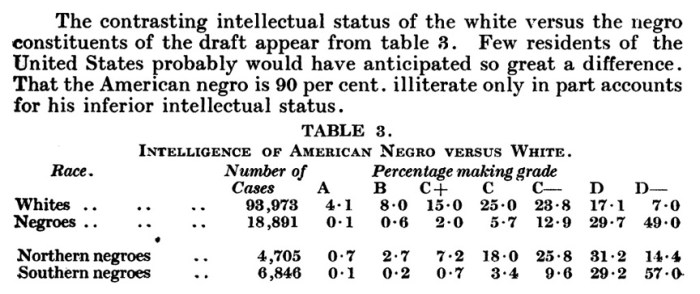
“The contrasting intellectual status of the white versus the negro constituents of the draft appear from table 3. Few residents of the United States probably would have anticipated so great a difference. That the negro is 90 per cent. [sic] illiterate only in part accounts for his inferior intellectual status.”


Yerkes eugenics Table 3


Brigham was basing his ideas on another test created by Yerkes, the Army Alpha and Beta tests.


As noted above, Yerkes  used test scores to “prove” black soldiers in WWI were inferior and thus more suited to menial service and the trenches while whites should be given better positions.


And Brigham continued this practice with his SAT test.


In both cases, the psychologists used standardized testing to back up a racist and classist status quo.


Yet it is this same SAT test that DeBoer is suggesting we keep because it reduces racial and economic bias!


Certainly the SAT has changed some since Yerkes time, but it hasn’t changed THAT much!


And that brings us to DeBoer, himself.


Who is this guy and why did an allegedly respectable publication like Jacobin print his crap theory?


DeBoer appears to be a very troubled individual.


Back in December of 2017, he published a blog post about his mental illness, almost being committed to an institution, the antipsychotic drugs he was taking and the break he would have to take from being a “public intellectual.”


I don’t mean to shame anyone who suffers from mental illness. But when someone offers such a bizarre policy suggestion, questions of stability arise.


Next, there’s DeBoer’s think tank connections.


On the same Website, DeBoer talks about “My anti anti-SAT take for the People’s Policy Project” – the same theory he expanded upon in his Jacobin article.


People’s Policy Project (3P) is a left-leaning think tank created by another frequent Jacobin contributor, lawyer and policy analyst, Matt Bruenig.


You may recall Bruenig. In 2015, he criticized schools that provide more resources to impoverished children by dubbing them “welfare schools.” He saw the inclusion of free healthcare, free meals, free pre-K, and other wraparound services as increasing the welfare state and making children and families dependent on the government for survival.


And, yes, like DeBoer, this is a guy who claims to be a far left Democrat.


This is all very troubling.


Sometimes we fall into the lazy attitude that high stakes testing, charter schools and other corporate education reforms are only championed by the right.


Certainly the left – or at least the far left – is immune to this neoliberal agenda.


You definitely wouldn’t expect to get a heaping helping of top down supply side school policy in Jacobin!


It just goes to show you how little policymakers on both sides of the aisle understand education and how ignorant they can be when we don’t force them to include the experts in the conversation.


I am, of course, talking about real, live classroom teachers.


Until we prize what they can tell us about education, we will continue to be led in circles by the ignorant.


Like this post? I’ve written a book, “Gadfly on the Wall: A Public School Teacher Speaks Out on Racism and Reform,” now available from Garn Press. Ten percent of the proceeds go to the Badass Teachers Association. Check it out!

book-3