
Let’s Hear It For Black Girls!

Natural-Hair-600x398


“Sisters are more than the sum of their relative disadvantages: they are active agents who craft meaning out of their circumstances and do so in complicated and diverse ways.”

-Melissa Harris-Perry, Sister Citizen (2011)


Let’s hear it for black girls!


They are beautiful, bold, irrepressible and – above all – so incredibly strong.


Black girls will outlast any struggle, face down any adversary, and – more often than not – triumph in the face of adversity.


I know. I’m a public school teacher, and many of my best students are black and female.


That doesn’t necessarily mean they get the best grades. Some earn A’s and some don’t. But when it comes to pure willpower and the courage to stand up for themselves, no one beats a black girl.


Those are rare qualities nowadays. Sometimes it doesn’t make these girls easy to have in class. But think about how important they are.


As a teacher, it sure makes your life easier when students do whatever they’re told. But in life, we don’t want citizens who simply follow orders. We want people who think for themselves, people who question directives and do only what they think is right.


In short, we need people who act more like black girls.


As a white male, it’s taken me some time to come to an appreciation of black womanhood. But after about 15 years teaching in public schools serving mostly poor, minority students, appreciate them I do.


Think of the challenges they face and often overcome. Not only are they subject to the same racism as black males, they also have to function under the burden of male patriarchy and the quiet sexism that pervades American society.


According to a study entitled Unlocking Opportunity for African American Girls by the NAACP and the National Women’s Law Center, African-American girls suffer from higher rates of sexual violence and intimate partner violence than white women, high rates of sexual harassment in school, and they are more vulnerable to sex trafficking than any other group.


In addition, more than one-third of black female students did not graduate on time in 2010, compared to 19 percent of white female students. However, there has been progress. Despite a lingering graduation gap, black girls have actually increased their graduation rate by 63% in the past 50 years, according to the National Coalition on Black Civic Participation. Unfortunately, this hasn’t meant they’ve built up more wealth. In 2010, single black women’s median wealth was just $100 compared to single white women’s wealth, which was $41, 500.


And it only gets worse the closer we look at it. Black women are the only group whose unemployment rate remained stagnant at 10.6%, while the overall rate for workers in the United States dropped from 7.2% to 6.1% between August 2013 and August 2014, according to a National Women’s Law Center report on jobs data. More than a quarter of black women live in poverty, according to the Center for American Progress, despite making up a larger portion of the workforce than white and Latina women.


Despite such problems, black women start businesses at six times the national average, according to the Center for American Progress. And this is even more startling when you realize they are also more likely to be denied small business loans and federal contracts.


It’s one of the reasons black girls are so special. Those who somehow survive the incredible pressures society puts them under often become super achievers. They can do almost anything.


Perhaps it’s an internalization of the advice black women often get from their mothers. They’re frequently told they have to work harder and do more just to be noticed, and they often do. In my classes, I’ve had more black girls achieve grades over the 100% mark than any other group. And that’s not easy to do. But it’s typical black girl power – they try to be more than perfect.


However, it takes a toll.


They are more likely to die of breast cancer than any other racial group, according to the Centers for Disease Control and Prevention. The reasons are complex, but include the fact that black women experience delays in diagnosis and treatment. Like many oppressed people, they often internalize that oppression – they don’t take care of themselves and the stress can be a killer.


And for those who can’t overcome the unfair pressures we place them under, the results are even worse. In school, I’ve seen precious and valuable girls thrown into a sometimes cruel and uncaring disciplinary system – a system from which it can be hard to extract yourself.


Some teachers and schools when faced with the independence and forthrightness of black girls don’t know how to handle them. In such cases, these girls are often disciplined out of all proportion to their population size in school districts. For example, in New York City, black girls made up only 28% of the student body during the 2011-2012 school year, but were 90% of all girls expelled that year from the city’s schools, according to the “Black Girls Matter” report by the African American Policy Forum. Similarly, black girls made up only 35% of the Boston public school population that same year, but accounted for 63% of all girls expelled.


In short, we’ve got a lot of work to do to dismantle a national system of racism and white privilege. But even beyond that, as a society we need to recognize and appreciate black girls. A little bit would go a long way.


We need to acknowledge the unique talents and skills of these amazing young women. And so much of it starts with a matter of conceptualization in the white adult mind.


Instead of seeing them as defiant, we need to recognize their independence. Instead of seeing them as challenging your authority, you need to see them as asserting themselves and standing up for their beliefs.


Those are all such positive qualities. How many times do adults complain that kids today don’t care enough about things – their apathy, their entitlement, their indifference. As a group, black girls are nothing like that! They are exactly the opposite! But instead of praising them for it, instead of valuing them, white adults often feel threatened and respond by trying to crush what they perceive as a rebellious and disruptive element in their classrooms or in society.


That’s why I love the Black Girl Magic movement.


It was created by CaShawn Thompson to celebrate the beauty, power and resilience of black women. It started as a simple social media hashtag – #BlackGirlMagic.


It embodies a theme I’ve already touched on – the irrepressible spirit of black women, how they are faced with an overwhelming mountain of challenges but somehow manage to overcome them and become tremendous overachievers! It’s a celebration of everything good and positive about the black female experience.


I think it’s just wonderful.


How can you not look at someone like Misty Copeland and not appreciate her success? She’s the first ever black principal at the American Ballet Theatre. She has shot to the top of one of the whitest, wealthiest and most elitist arts you can pursue.


Or how about Gabby Douglas? You can’t watch videos of the amazing Olympic gymnast, who at only 17, absolutely wowed the world with gold medals despite internet trolls hating on her hair.


And if we’re talking undue hate and criticism, no woman in recent memory has suffered as much as Michelle Obama. Whatever you think of her husband’s Presidency, you have to admit Michelle was a model of grace under pressure. How many times did haters pick apart her appearance while she just got on with the business of making school lunches healthier and being a tremendous role model for children of color and women of all races and creeds.


Or Ava DuVernay, the amazing director snubbed at the Oscars for her film “Selma.” What did she do? She made another amazing film “13th” about how the 13th Amendment ended slavery but opened the door to the prison industrial complex.


That’s Black Girl Magic. And it’s actually pretty common.


So come on, fellow white people. Let’s celebrate black girls.


Stop trying to touch their hair or compare them with Eurocentric standards of beauty. Stop, pause and actually see them. See them for who and what they are.


Black girls are amazing and make the world a better place.


Here’s to all the incredible and irreplaceable black girls in my classes and in my life!


You go, girls!
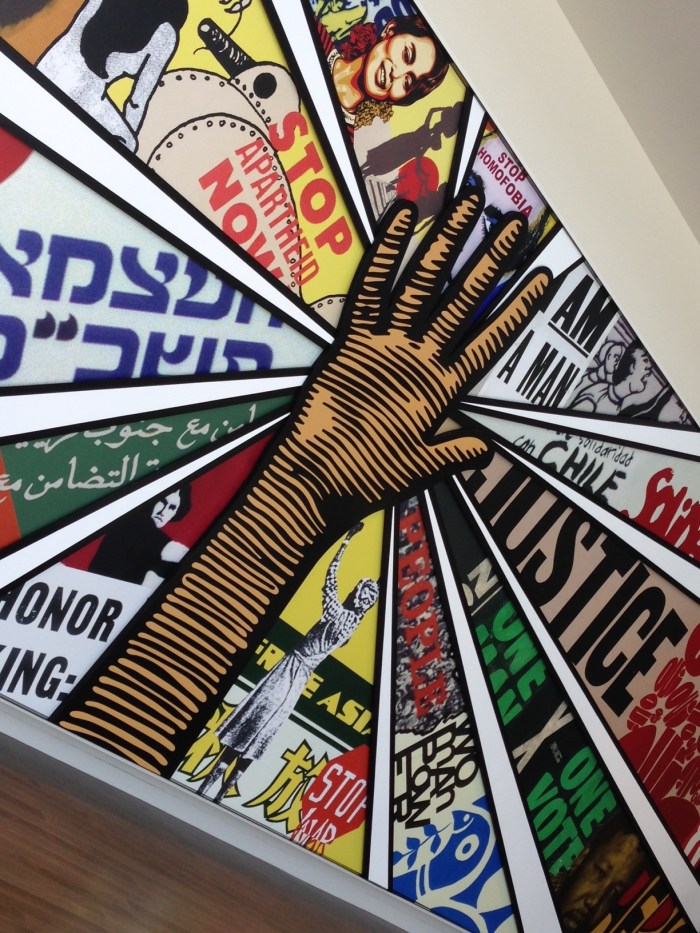
Civil Rights Aren’t Just for Minorities – They’re For Everyone

civil-right-museum-mural


“Injustice anywhere is a threat to justice everywhere.”

-Martin Luther King, Jr.


It’s still shocking to me that so many white people seem to think civil rights are just a black issue.


As if they’re something that only concerns people of color.


White people can’t be the victims of discrimination? We can’t be mistreated on the basis of gender, religion, sexuality, or age?


Of course we can! And many of us are. But we are rarely discriminated against on the basis of our race. And somehow accepting that fact seems to turn us against the very idea of civil rights.


We act as if talking about civil rights is code for black issues. Many of us refuse to even admit that black people have legitimate grievances in this area, that they’re just needlessly complaining and looking for sympathy, that they’re trying to get something for free or get one over on us.


It’s pure bullshit. Black people are authentically aggrieved. They are the victims of a systemic racism that rarely even becomes visible to white eyes. And that same system either ignores whiteness or even privileges it.


The criminal justice system, alone, is rife with examples including racial profiling, stop-and-frisk policies, police brutality and the failed War on Drugs. Add to that voter ID laws, redlining, and credit scores. Add to that the use of bigoted and prejudiced textbooks, punishing non-white students more harshly than white students, underfunding public schools, and closing them down if they’re attended mostly by students of color.


Yet that doesn’t mean white people are impervious to civil rights violations. It just means that people of color are targeted much more often and are in much greater need of help than we are.


Yet many of us refuse to admit it. We refuse even though doing so actually puts ourselves at greater risk.


Think about it. If we ignore the civil rights concerns of those most victimized, who will be there for us when we’re targeted?


Take police brutality.

According to the Guardian’s The Counted, 1,092 Americans were killed by police in 2016. If we look at it proportionately, a much higher percentage of minorities were killed than white people. Specifically, Native Americans were killed at 10.13 per million, black people at 6.66 per million, while Hispanics and Latinos were killed at 3.23 per million. By comparison, white people were only killed at 2.9 per million.


So minorities were killed at much higher rates than whites given their smaller percentages of the population. However, if we look at the raw numbers, more white people were killed than any other group. Specifically, the police killed 574 whites, 266 blacks, 183 Hispanics/Latinos and 24 Native Americans.


So, yes, the African American community is right to be angry that they’re being disproportionately targeted by police. However, more than 500 white people were killed by law enforcement, too. That’s a troubling figure all by itself. Why are American police killing so many of us? Why is law enforcement so trigger happy in the USA?


It’s a problem for everyone. Police should not be killing such high numbers of civilians. In fact, in other countries, they don’t. Police kill more people in the U.S. in days than they do in other countries in years. Yet very few police officers actually serve jail time. Several officers went to trial in 2016, but only a handful were convicted.


This is a real problem, yet many white people dismiss it as a black issue – and an illegitimate one at that. As a country, we have a real concern with the way police are trained, protocol for when deadly force is allowed and how officers are held accountable. But we’re letting this issue fall through the cracks because it’s being delegitimized as a “mere” civil rights complaint.


Things have really changed in this country.


In 1963, when the all black 16th Street Baptist Church in Birmingham, Alabama, was bombed by four members of the Ku Klux Klan, the entire society took notice. Even whites who had been unsympathetic to the civil rights struggles of African Americans up to this point were disturbed at the murder of four children and the injury of 22 others. Dr. Martin Luther King, Jr., called it “one of the most vicious and tragic crimes ever perpetrated against humanity,” and it marked a turning point in our history. The fight for civil rights became a multi-racial, multi-ethnic, American struggle to secure equality for our brother and sister African Americans.


However, just two years ago when Dylann Roof was inspired by white supremacist Websites to kill nine people at all black Charleston Church in South Carolina, the response was… meh. Though it has been categorized as a hate crime, it has done nothing to wake up the society at large to the realities of modern day American racism. At most, it’s dismissed as an isolated event.


However, it’s not. White supremacists have long targeted African American churches as objects of their hatred. In 1991 it took a series of 154 suspicious church burnings for Congress five year later to pass the Church Arson Prevention Act, making it a federal crime to damage religious property because of its “racial or ethnic character.” More recently, a black church in Massachusetts was burned down the day after President Barack Obama was inaugurated in 2009.


For some reason, these continuing hate crimes fail to rouse the public at large. Perhaps the Internet culture and the perpetuation of so-called news sources that only support partisan confirmation bias has something to do with it. But it’s harmful to all of us.


When white people ignore the legitimate claims of black people, they make it easier for everyone to be mistreated. Often white people have acted as if prejudice could never be perpetrated against them, and when it’s cropped up, we’ve defined it narrowly to fit only the immediate group targeted. That’s an LGBT issue. That’s a Jewish issue. That’s an issue for people with disabilities. We rarely see them as they are – human issues.


In the age of Trump, violations of individual rights are popping up every day: journalists receiving felony charges for covering unrest at the inauguration, a Louisiana bill that makes resisting arrest a hate crime punishable by 10 years in prison, proposed laws in 10 states to criminalize peaceful protects – and on and on.


Nor is it partisan. Here are a list of human rights violations under Obama: drone strikes outside active war zones, ongoing use of massive civilian surveillance programs, failure to close Guantanamo Bay, harsh penalties for whistle blowers and no accountability for those they expose.


We live in an age where our rights are being eroded by ignorance, indifference, and the uncritical acceptance of prepacked political narratives. The powers that be use racism and prejudice to keep us divided so we’ll never mount an effective opposition.


Today as ever we need each other. We need to be there for our brothers and sisters in humanity. That starts with white people waking up to the harsh realities of black life in America.

Goodbye, 2016, and Good Riddance – Top 10 Blog Post by Me From a Crappy Year

screen-shot-2016-12-27-at-3-29-49-am

Is it just me or did 2016 really stink?

Both personally and publicly, it was a year I’d rather not revisit. I lost family. I lost idols (RIP, David Bowie and Prince). And we lost a horrible, protracted Presidential election.

But as has become a tradition, I find myself in front of the computer compelled to compile this list of the best of my own writings.

It would be easy to just say nothing much of value happened in 2016 so let’s just move on. But that wouldn’t be true.

There were good things. I’m just stumped to remember many of them right now. Perhaps as time goes on we’ll look back fondly on a smattering of events from this year that was. Bob Dylan won the Nobel Prize for Literature. That was kinda cool. There were some decent movies and a heck of a lot of good TV shows. The Arrival, Star Trek Beyond, Deadpool… Game of Thrones, American Horror Story, two excellent series about O. J. Simpson. We got a Harry Potter sequel of sorts – and another movie! I thought “Underground Airlines” by Ben H. Winters was quite good. We got an amazing musical in Lin-Manuel Miranda’s “Hamilton.” Technically it opened in 2015, but it swept the Tonys this year. And hey! We stopped the Dakota Access Pipeline – for now.

It was certainly a productive year for blogging.

There was so much to write about.

This little education and civil rights blog went into overtime. I almost doubled traffic to the Website and got 2,145 more followers for a total of 11,335.

Gadflyonthewallblog, or if you prefer Gadfly on the Wall Blog, has been going strong since July 2014. In those two and a half years, I’ve gotten 849,000 hits – 363,000 just this year, alone. I also increased the number of posts I write a year. Last year, I only managed about 90 posts. This year it was 120 posts – a full 30 additional articles.

I hope you’ve enjoyed them. I hope you’ve found them valuable.

Sometimes readers send me a note saying that they’re going to share this post or that post with their school board or their representative in the House or Senate. I’m always very flattered to hear that something I wrote is helping someone else fight for what’s right. Of course, I do get a lot of hate mail, too. No death threats yet, but it’s getting awfully close. Readers have wished I was dead, but no one has offered to give me that little push to the other side.

I hope that no matter what your reaction, you’ll remember these are just the writings of a humble public school teacher and father. No one pays me, though sometimes I do get donations for the right to reprint something elsewhere. I write all this stuff because I have to. So few people seem to care what people like me have to say – even in my own profession. Like many others, I’ve stopped waiting to be asked.

So for your end of the year amusement, I offer this top ten list of my most popular writing from 2016. And here’s to a better 2017.


10) F is for Friedrichs… and Freeloader: A Supreme Court NightmareScreen shot 2016-01-11 at 9.50.07 PM

Published: January

Views: 5,550

Description: Some crazy lady didn’t want to pay the union for benefits that she got as a member and didn’t want to give them up. And rich folks everywhere had her back. They slobbered all over and pushed forward a bull crap case through the Supreme Court that probably would have made it much more difficult for labor unions everywhere had not Justice Antonin Scalia died deadlocking the vote. This article was my attempt to show how absolutely absurd the argument was against being forced to pay for something that benefits you.

Fun Fact: Now that Congress blocked President Obama’s Constitutional right to appoint a replacement for Scalia, and Donald Trump will probably get to pick a replacement, look for a similar case to come down the pike and win! Oh, 2016, will you ever truly leave?


9) The Charter School Swindle – Selling Segregation to Blacks and LatinosScreen Shot 2016-05-31 at 4.22.46 PM

Published: June

Views: 6,489

Description: Charter school promoters often sell these institutions to minorities as being “Separate but Equal.” Hm. Didn’t Brown v. Board outlaw that kind of practice because if schools were separate, they usually were anything but equal? This article is my attempt to explain how charter marketers are really selling minorities on segregation and trying to talk them out of their own civil rights.

Fun Fact: During the Obama years, it was common practice to sell corporate education reform as a way of increasing civil rights while it actually violated them. It will be interesting to see if that rhetoric gets left behind in the Trump years when lawmakers already seem to have little interest in them at all.


8) ‘We’re Sorry Teachers are Unfairly Blamed’ says John King – Man Responsible for Unfairly Blaming Teachers

Published: February John King AP

Views: 6,832

Description: When John King became temporary Secretary of Education, he went on an apology tour telling educators that the federal government was sorry for how terribly it had treated teachers. In particular, he was sorry the department had blamed educators for societal problems that our schools need to fix without giving them the resources necessary to actually correct them. However, King was personally guilty of many of these same practices in his old job in New York. It was typical disingenuousness from the Obama administration and the Democrats – ignore and abuse their key constituents until election time and then make positive noises in their general direction hoping we’d support them at the polls.

Fun Fact: It didn’t work.


7) Bernie Sanders is Right: We Should Federalize Public School FundingBernie_Sanders_by_Gage_Skidmore

Published: January

Views: 6,947

Description: The way we fund public schools in this country is messed up. In many states, we rely heavily on local property taxes which result in poor communities being substantially underfunded and rich ones having more than enough of everything. In most of the world, funding is done much differently – the burden is handled mostly by the federal government who then distributes it equitably from place-to-place. Bernie Sanders proved he was the real deal by suggesting we do the same thing here in the US, a suggestion that no one in either party was ready for.

Fun Fact: Even some of my readers were uncomfortable with this one. They feared that if the federal government took responsibility for funding, it would increase their ability to micromanage local school districts. This is a fair concern, but there is a way to do this without increasing federal control of education policy, just funding. In any case, funding disparity is an issue that hardly ever even gets acknowledged less than discussed. Thank you, Bernie!


6) Summer Break – the Least Understood and Most Maligned Aspect of a Teacher’s Life

Published: June Screen shot 2016-06-20 at 4.18.07 PM

Views: 7,429

Description: Just about every teacher gets crap from non-educators about summer break. Everyone thinks they know what it’s like to be a teacher and how easy we’ve got it. This post was my way of shutting up the ignorant. It explains why educators aren’t teaching in summer, what they’re actually doing and how the public benefits from giving teachers this time. Share it with someone you love.

Fun Fact: Or just shut someone up with it.


5) Hillary Clinton’s Campaign Manager is a Longtime Corporate Education Reformer

Clinton Gives Speech On American Global Leadership At Washington Conference

Published: March

Views: 9,268

Description: Hillary Clinton’s campaign manager, John Podesta, is not a nice man. I unearthed a speech he gave to corporate school reformers including Jeb Bush in 2012 where he pledges his allegiance to conservative, market-driven school policies. And THIS is the guy who was influencing Hillary’s approach just like he influenced Obama’s when he worked on that campaign. Legend has it, Podesta is responsible for giving us Arne Duncan. He suggested Duncan over Obama’s campaign education advisor Linda Darling Hammond, a critic of high stakes testing. These were truths that needed to be told and tell them I did.

Fun Fact: That this came out was a huge embarrassment to the Clinton campaign. All they could do was suppress it. Even dedicated supporters who read the article had to admit that she would probably not be very good for education – but she’d be better than Trump. It’s these kinds of Faustian bargains that derailed her campaign. How much better off we would have been had we had a real progressive to vote for than just another Democrat in Name Only!


4) What Antonin Scalia’s Death Means to the People I Loveantonin-scalia-26

Published: February

Views: 14,001

Description: Scalia was a terrible Supreme Court judge who used his position to justify hurting a lot of people. While others tried to hide their excitement at his passing, I let mine show. It might not be nice to say, but the world is a better place without him in it. I had hoped my honesty would make it harder for anyone like him to ever reach that office again. Unfortunately, weak Democrats and an incoming Republican President mean his replacement will probably be just as bad as he was.

Fun Fact: Originally my title was much more provocative – something like “Antonin Scalia was a Terrible Person and I’m Glad He is Dead.” It got over 10,000 hits in a few hours, but then I reconsidered and changed the title. People almost immediately stopped reading it.


3) Without Black Culture There Would Be No American CultureScreen shot 2016-06-28 at 12.10.37 AM

Published: June

Views: 15,519

Description: We often talk about black people as victims. Police brutality, civil rights violations, economic disparities – but this is only half of the story. There is a buried history of success that rarely gets mentioned. Think of what American culture would look like without black people. It would be something completely different. This was my attempt to tip my hat at the incredible ways black Americans have made their mark on our society especially in the field of music.

Fun Fact: Black Twitter really liked this article. It was especially gratifying to see how appreciative people were. Of course, at the same time, some folks’ white fragility couldn’t handle it, either. Some readers tried to bully me into making changes here or there for no reason other than that it made black people look too good. Sorry, folks, no one determines what I put on this blog but me.


2) The Essential Selfishness of School Choice

Published: November img_5992

Views: 40,268

Description: School choice is less an education policy than a propaganda effort. Most people don’t understand what it really is. They don’t understand how essentially selfish it is like cutting a piece of pie from the middle of the dish so no one else can get a whole slice. I tried here in the most simple, direct language I could to explain why.

Fun Fact: With the nomination of Betsy DeVos for Education Secretary and Trumps’ promise to spread school choice across the land like a Trump University franchise, the article remains popular. A lot of readers told me that it helped make sense of the issue for them for the first time. No doubt it’s been sent to policymakers across the nation. And it all started when I saw that picture of a ruined pumpkin pie on Reddit. I started to think – isn’t that a lot like school choice?


1) Top 10 Reasons School Choice is No Choice

Published: JanuaryLittleKidThumbsDown

Views: 77,139

Description: Both Democrats and Republicans love school choice. So I thought that real education advocates needed a quick list of the main reasons why it is bad policy. There’s nothing really new or amazing here. We’ve known this for decades, but this keeps getting brought up again and again like zombie legislation. The wealthy will push this forward whether we want it or not. There’s just too much money they can make if it passes. That’s why it’s good to know why what they’re peddling is so harmful to students, parents and communities. Consider it ammunition for quick come backs.

Fun Fact: I wrote this long before the Trump administration was a prospect to be taken seriously. This was long before DeVos or the Donald pledged to bring this to the national stage. It has continuously gotten a steady flow of hits since it was published. If my goal as a blogger is to be useful, I think this post more than any other written this year fits the bill. You can quibble with one or two points here, but all ten are enough to show any rational person why school choice is no choice.

Truth Bomb: Democrats Need to Embrace Progressivism or Else Move Out of the Way

screen-shot-2016-12-03-at-12-15-35-am

“Democrats: Are we the party of the donor class or the working class? This is value clarification time. It’s now or never!”

Nina Turner, former OH State Senator

Democrats, liberals and progressives of every stripe – you’re not going to want to hear this, but hear it you must.

We’ve gone around for too long thinking we’ve got all the answers, but obviously we don’t.

Hillary Clinton lost. Donald Trump won. There’s something seriously wrong with what we’ve been doing to get that kind of result.

There are some hard truths we’ve got to understand, that we’ve got to learn from. Hearing them may be painful. Many of us will fight against it. But we can’t keep fooling ourselves anymore. All that “hope” and “change” we’ve been waiting for – it has to start with us, first.
We’re stuck in a loop and we’ve got to break ourselves out of it. And the only way to get there is to break the track wide open.

It’s time to stop mourning.

Trump is President-elect.

Yeah, that sucks. Hard.

He’s going to protect us by enacting policies to hurt brown people. He’s going to make it harder to get healthcare. He’s going to trample the Constitution. He’s going to offer up our schools to private companies to do with as they please in secret using our tax dollars. He’s going to legitimize white nationalism and embolden racists, bigots, sexist, xenophobes, homophobes and every kind of hate group imaginable. He’s going to hand out tax cuts to his megarich campaign contributors and tax us with the loss of government services. He’s going to use the office as an opportunity to enrich himself and his billionaire buddies and then go on social media and tweet about how he’s fighting for working people.

I don’t like it any better than you. But it’s time to face it.

Sure, Clinton won the popular vote. Sure, there’s a recount going on in Michigan, Pennsylvania and Wisconsin. I’d love for it to overturn Trump’s victory. But I have zero confidence that it will. And I refuse to let it blind me to the urgent need for change.

The first thing we have to do is own up to one essential thing: Hillary Clinton was a bad candidate.

The people were crying out for a populist champion. We had one in Bernie Sanders. He would have destroyed Trump, but we blew it.

I’m not going to rehash it all again, but there’s no way you can honestly say the Democratic primary process was fair. Party leaders were clearly in the bag for Clinton. They ignored her negatives and what their constituency were trying to tell them.

This loss belongs squarely on the shoulders of establishment Democrats. It’s not the fault of the electorate. It was the party’s job to convince people to vote for their candidate. They didn’t do that. Instead they told people who to vote for – or more accurately who NOT to vote for. It was clearly a losing strategy. It lost us the Presidency, Congress and the Supreme Court. Own it.

Next we have to acknowledge that this problem is not new. The Democrats haven’t been what they were or what they could be for a long time.

Since at least President Bill Clinton, many Democrats have traded in their progressive principles for neoliberal ones. They have sold out their concern for social justice, labor and equity in favor of slavish devotion to the same market-driven principles that used to characterize the other side.

Bill Clinton approved NAFTA. He deregulated Wall Street paving the way for the economic implosion. He expanded the failing war on drugs, increased the use of the death penalty, used the Lincoln bedroom as a fundraising condo, ignored the genocide in Rwanda while escalating conflicts abroad in Russia and the middle east. He dramatically and unfairly increased the prison population. He pushed poor families off welfare and into permanent minimum wage jobs. And when people had clearly had enough of it and wanted a change, we gave them Al Gore a.k.a. Bill Clinton part 2.

THAT’S why an idiot like George W. Bush won in 2000. It wasn’t because of Green Party challenger Ralph Nader. It was because people were sick of the Democrats not being real progressives.

But we clearly didn’t learn that lesson, because we did the same damn thing in 2016.

President Barack Obama is just as neoliberal as Bill. He gets credit for bringing back 16 million jobs lost under Bush. But we haven’t forgotten that they’re mostly minimum wage jobs. He gets credit for reducing unemployment to only 4.7%. But we haven’t forgotten that nearly 50 million Americans aren’t included in those statistics because they haven’t been able to find a job in two years and have given up even looking for one.

Obama rolled back legal protections that used to stop the government from spying on civilians, that used to stop the military from being used as a police force against civilians, that used to stop the military from assassinating U.S. citizens, that used to protect whisteblowers, that guaranteed free speech everywhere in the country not just in designated “free speech zones.” Not only did he fail to close Guantanamo Bay, his administration opened new black sites inside the U.S. to torture citizens.

Obama continued the endless wars in the middle east. Sure, he had fewer boots on the ground, but infinite drone strikes are still a continuation of Bush’s counterproductive and unethical War on Terror.

And when it comes to our schools, Obama continued the same corporate education reform policies of Bush – even increasing them. He pushed for more standardized testing, more Common Core, more privatization, more attacks on unions, more hiring unqualified Teach for America temps instead of authentic educators.

Voters clearly wanted a change. We wanted a real progressive champion who would roll back these neoliberal policies. Instead we got Hillary Clinton a.k.a. Obama part 2.

The Democrats didn’t learn a thing from 2000. We just repeated the same damn mistake. And some of us still want to blame third party candidates like Jill Stein.

It wasn’t her fault, and it wasn’t voters faults. It was the Democratic establishment that refused to listen to their constituency.

So here’s the question: will we do it again? Will we let party insiders continue in the same neoliberal direction or will we change course?

Re-electing Nancy Pelosi to House Democratic leadership isn’t a good sign. She represents the same failed administration. But we’ve kept her in place for another term, repeating our mistakes.

Maybe we’ll make a change with U.S. Rep Keith Ellison as DNC chair. It would certainly be a good start to put a real progressive in charge of the party. What better way to challenge Trump’s anti-Muslim propaganda than by promoting the only Muslim representative in the House to the head of our movement! That’s a sure way of showing that Democrats include all peoples, creeds and religions in contrast to the Republicans insularity. But there’s no guarantee we’re going to do it, and even if we did, it would only be a start.

It’s time to clean house.

We need to take back what it means to be a Democrat. We can’t have organizations funded by hedge fund managers and the wealthy elite pretending to be in our camp while espousing all the beliefs of Republicans. We can’t have Democrats for Education Reform, a group promoting the policies of George W. Bush, the economics of Milton Friedman and prescribing laws crafted by the American Legislative Exchange council. We don’t need Cory Booker going on Meet the Press to defend Mitt Romney against income inequality and then pretending to champion working people while taking in contributions from the financial sector. The brand needs to mean something again.

The party needs to move in an authentic progressive direction. So we need to get rid of all the neoliberals. They can go become Republicans. All it would take is exchanging in their blue ties for red ones. They’re functional Republicans already.

We’ve got leaders who can take their place. We’ve got longtime progressives like Bernie and sometime progressives like Elizabeth Warren. We’ve got younger statesmen like Nina Turner, Tulsi Gabbard, Jeff Merkley, John Fetterman, and Jesus “Chuy” Garcia, to name a few. But we need new blood.

Of course none of this matters if we don’t take steps to secure the validity of our elections in the first place.

We need to reform our entire electoral process. Ancient and hackable voting machines, voter suppression laws and efforts, rampant gerrymandering and, yes, that stupid relic of the slave states, the Electoral College – all of it must go. We’ve got to ensure that people can vote, people do vote and it actually counts. And if something goes wrong, we need a way to double check. Recounts in close races should be standard and automatic.

We’ve got to fight Citizens United and other Supreme Court rulings equating money with speech. We’ve got to run people-powered campaigns like Sanders did so our politicians aren’t so beholden to corporate and wealthy interests. We’ve got to make it easier for third parties to be part of the process, to include their candidates in debates, etc.

These are some of the many challenges ahead.

Sure, we have to fight Trump. But the best way to do that is to reinvent ourselves.

If the Democrats aren’t willing to do that, many of us will go elsewhere. The party cannot continue to exists if it continually ignores its base. It’s not enough to give us a charismatic leader to latch onto – we need real progressive policies.

The next four years are going to be hard. Trump is going to make things very difficult for the people we love. But in a way that’s a blessing.

We have a real opportunity to create an authentic resistance. People will be untied in their dissatisfaction and anger at what Trump is doing to the country. They’ll be looking for somewhere to turn, for a revolutionary movement to lead them through it.

We can give them another fake insurgency as we did against Bush. Or we can learn the lessons of history.

We can move forward. We can change. We can become a party of real progressives.

Or if we need – we can start a new one from the ground up.

The Real Power Behind Trump is White Fear

screen-shot-2016-11-15-at-9-14-00-am

White people are terrified.

Shaken, panicked, scared beyond our capacity for logical thinking.

We’re so apprehensive, we elected Donald Trump, a reality show clown, to the White House.

Yeah, I know. Hillary Clinton wasn’t exactly inspiring. And the Democrats dropped the ball ignoring the populist mood of the country and the needs of middle class workers.

But 58% of white folks supported Trump. He only got 21% of nonwhite voters. In fact, Whites is the only major group he won – not black people, not Hispanics, not any other race or nationality.

Just white folks.

Trump bragged about sexually assaulting women – and yet 53% of white females voted for him.

Trump is an admitted serial monogamist who cheated on various ex-wives – and yet 65% of white Christians voted for him.

Trump promised to bring back outsourced manufacturing jobs while his own clothing line is foreign made – and yet 67% of white laborers voted for him.

That’s how panic-stricken we, Caucasians, are.

We held our hands over our eyes and ears and loudly proclaimed our loyalty to a charlatan.

Oh, we’ll pay for it. He’ll break campaign promises, disappoint us with retrograde policies and perhaps even hurt the people we love.

But in the meantime, many of us are in denial.

“Let’s give him a chance,” white folks say.

Yet Trump has already appointed a wife-beating, Jew-hating, white supremacist, Stephen Bannon, to be his chief White House strategist.

Just stop, white people. You’re embarrassing yourselves.

So why are we so damn scared?

Answer: we’ve been pricks throughout American history.

Yeah, I know. None of us were around for slavery. Many of us weren’t even on the scene for Jim Crow. But all of us have benefited from the society these institutions built up.

The 13th Amendment ended forced bondage except as a punishment for crime. And ever since then our justice system has found ways to unfairly accuse, sentence and enslave black people into the prison industrial complex. We live in the wealthiest country in the world, and much of that wealth is a direct result of laws that raise up white folks and crush black and brown people under our heels.

And we know it.

Don’t give me some story about how you never asked for it. You’ve got it. If you do nothing to fight it, you’re a member in good standing of the white supremacy board of directors.

White folks don’t talk about this stuff. We ignore and deny and whistle past the graves of millions of lynched and murdered people of color. What do you think the fascination is with zombie movies? It’s just another manifestation of white fear – fear that we’ll be overrun by the countless have-nots and devoured.

Few of us have articulated it, but we know our time is running out. The black and brown population is increasing faster than ours. We’re letting in too many dark skinned immigrants and too few light skinned ones. In three short decades, we won’t even be the numerical majority anymore.

Every year we find it increasingly more difficult to enforce this racial caste system. Our police gun down more unarmed black folks in the street. Our prisons can’t swallow them all.

Even now our majority is so slim that if just a few of us side with the dark underclass, we can elect a black President – well multiracial but who’s counting?

That infuriated a lot of us. How dare they pretend like THEY can run the country? After Obama, we were rushing to the gun store in our soiled pants afraid that the time for justice had finally come. Black folks were finally going to come for us because of the centuries of oppression.

That’s really the fear. Black people will seek justice.

At best we’ll lose our exalted positions in society. At worst, WE’LL be the ones crushed under the boot. And turnabout will be fair play.

That’s why we elected such an obviously unqualified blowhard as Donald Trump.

We want him to make America great again – and by “great” we know exactly what we mean.

It’s a sad reflection on white society.

We could admit the truth. We could take a deep breath and help our oppressed brothers and sisters take their places as equals among us.

After more than two centuries, we could throw off our denial.

But that’s not what most of us did.

History will judge us harshly for this election. We did nothing to turn back time. We’ve only engaged in a tantrum – this, the last gasp of white supremacy.

Fighting for Public Schools Means Fighting Against Systemic Racism – United Opt Out Education and Civil Rights Summit

14725673_10107838928072169_5986293484745396608_n

What do you do when you hold a civil rights summit and none of the big names show up?

That’s what happened last weekend when United Opt Out (UOO) held its Education and Civil Rights Summit in Houston, Texas.

We invited everybody.

We invited the National Association for the Advancement of Colored People (NAACP). We invited the National Council of La Raza “The People,” the League of United Latin American Citizens (LULAC), the Urban League and several others.

None came.

But instead we were host to many of these organizations individual members.
Just how many people came to the Lone Star State for the summit? Thousands? Hundreds?

More like dozens.

Not only did the major civil rights groups neglect to send their leadership, but the bulk of our nation’s education activists also stayed away.

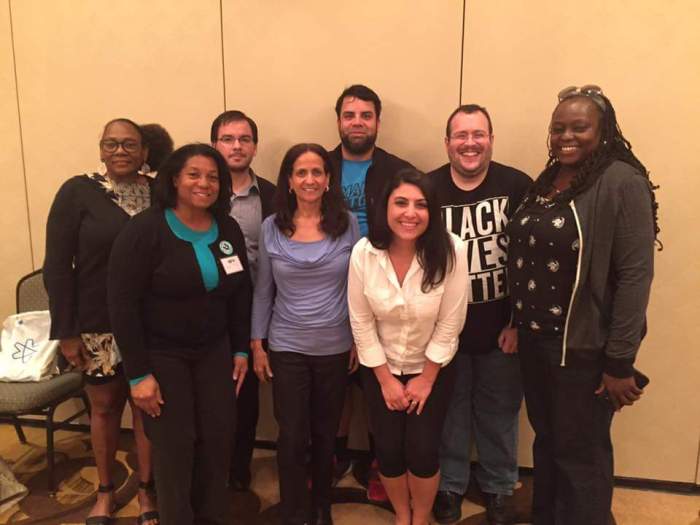
United Opt Out had just gone through a major reorganization on philosophical grounds. Only three of its long-time board members remain – Denisha Jones, Ruth Rodriguez and Ceresta Smith. They have since been joined by five new directors – Gus Morales, Zakary Rodriguez, Erika Strauss Chavarria, Deborah Anderson and Steven Singer (me).

The directors that left the group did so for various reasons, but some of them split along ideological lines. Some thought United Opt Out shouldn’t work with labor leaders or civil rights groups that weren’t perfectly aligned with all of UOO’s goals. So they left. Those who stayed are committed to working with almost anyone to push forward the cause, piece-by-piece if necessary.

As a result, this organization that had been growing by leaps and bounds, finds itself starting afresh. While last year’s conference in Philadelphia drew progressive luminaries like Chris Hedges, Jill Stein and Bill Ayers, this year’s gathering was more low key.

But it was far from somber. In fact, the board’s vision was vindicated in the most amazing way during the summit.

As Jesse “The Walking Man” Turner discussed the importance of reframing school policy to include students basic humanity, Gus looked up from his phone and announced, “The NAACP just ratified its moratorium on charter schools!”

We all stopped what we were doing and went to our phones and computers for verification. Denisha found it first and read the resolution in full.

We cheered, laughed and hugged each other.

This was exactly the kind of change we’ve been talking about! In fact, Julian Vasquez Heilig, education chair of the California and Hawaiian NAACP chapter, had originally been scheduled at the summit as a keynote speaker. When the resolution that he had been instrumental in crafting came up for a vote at the national NAACP meeting, he understandably had to cancel with us. Clearly he was needed elsewhere.

And now one of the largest civil rights organizations in the country has taken a strong stance on charter schools. Not only does the NAACP oppose charters as a solution to inequities experienced by children of color, they’ve now gone beyond mere ideology. They’re calling for action – no new charter schools.

It is a tremendous victory for parents, children and teachers everywhere. And a much needed win for civil rights and education activists. The civil rights community (including the Black Lives Matter movement) is starting to acknowledge that Brown vs. Board is right – we cannot have “separate but equal” school systems because when they’re separate, they’re rarely equal.

Let me be clear – UOO did not achieve this triumph alone. It took many people, some of whom probably have never heard of us. However, activists supporting our movement such as Julian were strongly involved.

And if we had listened to the naysayers who proposed only working with perfectly like-minded groups, this might never have happened.

As a national organization, the NAACP still supports standardized testing as necessary to hold schools accountable for teaching all students. But this was not always the case.

In October of 2014, there were 11 civil rights groups including the NAACP Legal Defense and Educational Fund (LDF) who wrote a letter to President Barack Obama asking him to reduce standardized testing.

Then in January of 2015, a full 19 Civil Rights organizations including the NAACP wrote to Congress asking lawmakers to preserve annual testing.

What changed in those three months?

All of these organizations accept huge donations from the corporate education reform industry including some of the richest people in the world like Bill Gates. While none of us were present at these decision making sessions, it seems clear that fear of losing their funding may have forced them to make hard compromises.

Should we then as education activists wipe our hands of them? Should we refuse to work with them on some issues because we disagree on others?

United Opt Out says no. We’ll work with almost anyone where we can, when we can. And the results were on display with the NAACP resolution calling for a charter school moratorium.

Perhaps now that we’ve found that common ground on school privatization, we can do the same with standardized testing. Perhaps we can help educate them about the history of this practice, how it was a product of the eugenics movement and has always been used to support white supremacy and keep people of color and the poor in their place.

If we can make that argument, think of the potential. Perhaps leadership at these big civil rights groups would be less willing to compromise if they understood that standardized testing was used to justify mass sterilizations of American citizens and it was greatly admired by the Nazis. Perhaps if they understood that our modern standardized assessments are little better and create a racial proficiency gap by their very design – maybe then threats from rich white philanthropists won’t seem as important. Perhaps if they understood that schools can best be held accountable by reference to the adequacy of the funding they receive and a detailed accounting of what they do with it, these organizations might be less inclined to rely on multiple choice testing.

In fact, this is why we were there together in Houston in the first place. We wanted to make our case to these same civil rights organizations.

They may not have sent their leaders, but their members were already here. And we spent the time working together to find ways to make our case.

It was really quite amazing.

Audrey Amerin-Breadsley, professor and author of the blog Vamboolzed, gave us an incredibly accessible and informative keynote on value-added measures (VAM), the practice of using students test scores as a way to evaluate their teachers. For instance, did you know this common practice was originally based on a model for the cattle industry? It’s junk science and has little relation to education, teachers and students. All it does is pit students and teachers against each other creating a culture of fear where educators can be unfairly fired at any time – not the best environment for learning. Yet ignorant, lazy and/or corrupt bureaucrats still champion it across the country as a solution to improving schools.

Sam Abrams, Director of the National Center for the Study of Privatization in Education (NCSPE) and an instructor at Columbia University, explained in minute detail how corporate education reform relies on bad statistics and is bad business. He explained how academics blinded by economics and unencumbered by any real-life experience of public schools came up with this scheme, which has been disproven by the facts again-and-again. Not only do the highest achieving countries such as Finland go a different route, but those that follow this market driven model find student achievement suffering. In short, our current education policies are really faith-based initiatives, a faith in the invisible hand of the market, and an ignorance of reality.

But perhaps most heartening was the series of talks given by the locals. Houston Federation of Teachers is one of the few labor unions to pass a resolution supporting parents rights to opt their children out of standardized testing. In fact, teachers and parents even run a free Opt Out Academy for children not taking the tests so that their education continues while their peers suffer through these useless assessments. We got to meet parent zero, the first parent to refuse testing in the district. We heard the community’s painstaking process of spreading the movement one family at a time. This was in effect an opt out cookbook, a how-to for anyone wishing to bring this social justice action to their own neighborhoods.

It was a weekend to give anyone hope.

We were small but we were powerful. Given a few years to rebuild, UOO could well be much stronger than we once were. Meanwhile parents across the country continue to refuse these tests for their children at an exponential rate.

There are many struggles ahead. But we have made real progress toward our goal of providing an excellent education for all children.

No longer can our governments be allowed to keep discriminating against them based on the color of their skin, their parents bank accounts and other factors. We’re standing for all students, because we don’t see them as consumers or data points. We see them as children, as human beings. And we stand together to protect and preserve that shared humanity.

What better way to spend a weekend?

I Am So Sick of White People’s Excuses (And I’m White!)

screen-shot-2016-09-24-at-2-35-19-am

What the heck is wrong with us, white people?

Systematic racism is all around, but we refuse to see it.

Oh, and I do mean REFUSE. It’s not a matter of being unable to see it. Our eyes and minds work just as well as anyone else’s. We can perceive reality. Too many of us just choose not to.

According to the Guardian, at least 793 Americans have been killed by police so far this year. That number includes 194 black people or 4.86 per million. That’s more than double the rate for white people at 1.96 per million.

This is not an opinion. This is an undeniable fact. Every number is backed up with verifiable data. And moreover, it follows the same pattern we’ve seen for a couple of years now since news organizations have taken up the slack from the federal government and started counting.

Why does that not worry more white people? It worries me. I don’t want to live in a country where police use lethal force so often against civilians, so much more than almost any other developed country on Earth. And I don’t want my black friends and neighbors to be targeted so much more.

I’m a middle school teacher. Most of my students are black. I don’t want to have to worry that they or their parents are going to be murdered just because of an excess of melanin. Street gangs are worrisome enough without having to add into the mix many of the very law enforcement officers that are supposed to keep us safe from those gangbangers.

But when you bring this up to white folks and other facts detailing the systemic racism that pervades our society, you get every excuse in the book.

They simply refuse to engage with what you’re saying. They deflect and redirect and change the subject – and they don’t even seem to realize they’re doing it.

Blue lives matter, they say. All lives matter. Every form of life seems to matter to white people – except explicitly black lives.

We seem to think it’s impossible to care about both police and African Americans. We seem to think any expression of the value of human life has to be universal without mentioning individual groups that are at a higher risk than others.

It’s wacko, clearly a way of shutting down a conversation white folks will do anything to avoid.

The easiest dodge seems to be talking about black-on-black crime. As if somehow that makes it right.

It goes something like this: You’re worried about police killing black people, what about other black people? Most African Americans are killed by other African Americans.

Of course what they omit is that the same is true for white Americans. White folks kill each other much more than any other race does. But you never see people wringing their hands about white-on-white crime, do you?

Moreover, it’s irrelevant. If I point to a single incident of a white person killing a black person, it is not therefore justified because black people kill black people more often. Would you think an African American is justified for popping a cap in your Caucasian mom’s ass because most of us, honkies, usually off other honkies? Of course not!

But so much for logic. One of the most popular evasions is to blame it all on inferior black culture.

It goes like this: Black people don’t suffer systemic racism. If there are any ways in which they are selected against in society, it’s because they’ve earned that treatment because of the way they act.

Black people come from unmarried parents. They are on Welfare and a host of other social ills. THESE are the reasons behind so-called racism, not unjust systems.

It’s pure nonsense.

How does coming from unmarried parents mean you deserve to be killed by police at a greater rate than white people? How does parental marital status affect the justice system handing out more severe and longer sentences for blacks than for whites who commit the same crimes? How does the Facebook status of your pops and your moms somehow translate into difficulty getting a job due to your black sounding name?

In short, the two have nothing to do with each other.

Yes, black people have children out of wedlock about twice as often as white people. So what? Some people aren’t meant to be married. Often it’s better for the children if the parents don’t stay married to people who mistreat each other, a marriage where there is no love. Would racism suddenly disappear if black people just kept their chins up and married each other irregardless of whether the relationship was healthy for them and their children?

Let’s get to what white people are really saying here. Whites aren’t saying marriage is a magical shield against prejudice. They’re saying: Damn! Look at these strangers! These others! These people who aren’t like you and me!

The fact that many of them don’t get married before having children just shows how morally inferior they are to us. They deserve their treatment because they don’t share our sensibilities.

This is a pretty heartless way to think. Not only do the parents, apparently, deserve to be selected against, but so do their kids who had nothing to do with whether daddy gave mommy a ring or not. Moreover, where did the culture of marriageless childbirth come from for black people? When their ancestors were kidnapped from Africa and brought to these shores as slaves, it was the white slave masters who forbade them from marrying. In many cases, that tradition doesn’t exist because we took it away. Meanwhile, about a quarter of white couples have children out of wedlock, too. What’s our excuse?

But this won’t be enough to convince most white interlocutors.

They’ll just huff and puff and spout some nonsense about welfare.

They’ll say Black people fall into immoral and violent behavior because they’ve been taught by liberals to exist on welfare and not get jobs of their own.

Again, the problem is black people, themselves, aided by bleeding heart liberals trying to give them a helping hand. Some white folks even go so far as to say this is real racism because by giving black folks such sweet benefits for not working, liberals purposefully destroyed black people’s natural inclination to productivity.

Think about it for about two seconds, and you can see how crazy it is.

Black people deserve to be killed at twice the rate of whites because they don’t have jobs? They deserve to be gunned down because they’re too lazy to work?

Or alternatively, they deserve not to get call backs when they turn in resumes with black sounding names because they’re lazy!? These people just handed in job applications. We can imagine they did that because they wanted freaking jobs! But being lazy makes them unqualified for the very jobs they tried to apply for in the first place?

Let’s look at the facts for a moment. Black people don’t accept the Supplemental Nutrition Assistance Program (SNAP) more than whites. It’s the other way around.

More than 40% of SNAP recipients are white. Only 25% are black.

But that’s raw data. When we look at it as a percentage of the population, black people are twice as likely to be on Welfare as Whites. Only 12% of the country is African American, after all.

So why bring up the raw data? Because if you’re upset about the sheer numbers of people on assistance, you’re mad at more white people than black people.

Moreover, black people actually need it more than whites. More than 27% of black people live in poverty compared to only 10% of whites. Hence the larger percentage of blacks on SNAP.

This isn’t meant to throw anyone under the bus for being on public assistance. Times are tough and well paying jobs are hard to come by. For instance, most of the people who accept SNAP benefits actually are employed, but their pay is too small to sustain them. Thanks, Walmart.

So how much does a family of four get on SNAP? It depends on how much money the household earns, but the total income must be below the federal poverty level – $23,050. For many families it comes to about $399 a month. That’s $1.10 per person, per meal.

This isn’t exactly living high off the hog. I can’t imagine anyone making bank who would throw it all away to live so luxuriously on food stamps.

However, this is exactly what a lot of white people think about blacks.

It goes against the facts, and it doesn’t explain the reality of systemic racism.

In so many ways our society is set up to give white people an advantage and black people a disadvantage. That doesn’t mean all white people have it perfectly. There are an awful lot of dirt poor white folks out there – many of their kids are in my classes, too. But while they may be disadvantaged socially, economically or many other ways, they aren’t disadvantaged racially.

That’s the whole point.

Racism still exists and talking about it doesn’t make you anti-white. It makes you pro-black and pro-justice.

Those aren’t bad things to be.

We, white people, have to stop being so fragile when racism is brought up. Though I’ve artificially concerned myself only with black people here, we need to listen to what all people of color are telling us about how they’re treated. We need to take a hard look at the facts.

Being white and admitting racism exists doesn’t make you a racist – though you probably benefit from it. It just means that if you want to stand on the right side of history, on the side of equity and justice, you may need to bring your thinking into agreement with reality.

Racism Never Ended – It Just Keeps Evolving

screen-shot-2016-09-16-at-11-55-13-pm

“One of our founding principles as a nation [is] that Black lives and Black bodies don’t matter; you see that in all our headlines today. This original sin lingers on, that’s why we got to call it sin… Slavery never ended, it just evolved. Mass incarceration is the current evolution of slavery.”
Jim Wallis  
 
 
“Even the most casual student of our country’s legal system should know that racism hasn’t existed since 1964 when we passed the Civil Rights Act. So obviously there’s no possible way for my statement to be considered racist if racism hasn’t existed for fifty years! I mean come on, racism? It’s 2015 people, racism is over.”

Antonin Scalia
 

When does brutality end – when it stops being practiced or when its effects stop being felt?

Neither condition has been met in the United States today. Black people still suffer under state-sanctioned barbarism just as the echoes of cruelty from years past continue to ring in our ears.

People of color – whether they be black, Latino, Hispanic, etc. – experience a much different reality than whites. They live under the constant threat of violence without justice. Their rights are continually being re-evaluated. They are subject to systems that wait for them to step out of line in even the most innocuous ways and then pounce.

And the white majority goes around blind to these perceptions while repeating the fairy tale that all wrongdoings were only in the past.

But it’s not in the past. Our history, written in blood, has never been allowed to dry on our forgotten chronicles of yesterday. When white eyes examine the facts, they often see a series of unrelated dots which they cannot – or will not – logically connect.

The Civil War is over, they say.

No. It’s not.

Slavery is over, they say.

No. It’s not.

Racism is over, they say.

No. It’s not.

We still are engaged in the struggle for basic human dignity. And the only way to even begin on that path is to recognize the truth staring us in the face.

Nothing has ended. It has only evolved.


THE CIVIL WAR


When did the American Civil War end?

This may seem a strange question to ask.

But when a country goes to war with itself, it may be difficult to discern when that conflict actually comes to completion.

History gives us many important dates to consider.

On April 9, 1865, commander of the Confederate armies General Robert E. Lee surrendered at Appomattox, Virginia. But there were still sizable Confederate troops left standing.

In fact, the bloodshed was far from over. President Abraham Lincoln was murdered a mere 5 days later by John Wilkes Booth, a Southern sympathizer. Andrew Johnson was sworn in as President on April 15, the next morning.

It wasn’t until April 26, that General Joseph E. Johnson surrendered nearly 90,000 Tennessee soldiers – the largest of a series of subsequent capitulations.

President Johnson declared the insurrection to be over on May 9. However, the last Confederate general didn’t surrender until June 23.

Which date shall we choose? Perhaps it doesn’t matter. The point is that the conflict clearly came to an end.

Clearly the Confederacy was defeated by the Union.

Wasn’t it?

The problem is how to tell.

The Southern states were brought back into the union. But the overwhelming reason behind their secession has not been settled.

Today partisans and talking heads will argue that slavery was but one of many reasons behind the split. But during the 1860s, there was no such confusion.

Four of the Southern states explicitly gave slavery as the impetus for the break.

But Alexander H. Stephens, the Vice President of the Confederacy, removed all doubt when he said:

“The new Constitution has put at rest forever all the agitating questions relating to our peculiar institutions–African slavery as it exists among us–the proper status of the negro in our form of civilization.

[…] The general opinion of the men of that day
[Revolutionary Period] was, that, somehow or other, in the order of Providence, the institution [slavery] would be evanescent and pass away.

[…] Our new Government is founded upon exactly the opposite ideas; its foundations are laid, its cornerstone rests, upon the great truth that the negro is not equal to the white man; that slavery, subordination to the superior race, is his natural and normal condition.”

So if the war was fought over the issue of slavery and the subjugation of black people, its end can be traced to the date at which slavery ended and black people were treated as equals with whites.

That day has not yet come.

Outright slavery came to an eventual end, but – as we shall see – it was replaced with another institution. Moreover, in the aftermath of Reconstruction, we were left with Jim Crow laws cementing white supremacy. Most newly “freed” blacks lived in squalid conditions with few rights, little pay and education. Their situation was only slightly different in fact from their state under slavery. These laws had to be struck down by the collective actions of the Civil Rights movement of the 1950s and ‘60s.

Only then were black people truly permitted to vote en mass. Only then were they permitted in the same public spaces and offered some actionable protections under the law. But social and economic change still lags behind.

Today, more than 150 years since the end of the war’s military conflicts, we’re left to ponder: have things really changed so much?

Certainly there are cosmetic differences. There are no open air slave markets, no rolling cotton plantations staffed by bare backed, lash marked, kidnapped Africans. But have black people really been put on an equal footing with whites? Do they enjoy the same freedoms and privileges? Are they truly free from bondage and oppression?

If we look with open eyes, the answer is no.


SLAVERY


Today no one is legally allowed to own another person. You can’t purchase human beings. You can’t deprive them of their liberty and rights. You can’t use them as a source of revenue for your own benefit.

At least, that’s what the law says. But it happens every day.

What is the modern prison industry if not a new form of slavery? No matter how you look at it, we lock up a higher percentage of our population than any other country in the world. The US represents 5% of the world’s population but has 25% of the world’s prisoners. And the majority of those inmates have brown skin.

Whether federal, state, or privately run, the result is a massive increase in incarceration for people of color. In fact, more black people are in prison today than were in bondage in 1865. That’s a higher percentage of the black population than South Africa locked up at the height of apartheid. Today one in three black males is likely to spend some time incarcerated. That’s not insignificant.

Technically no one owns these people, but they are deprived of their freedom. They are kept in prison and unable to leave. In lockup, they are forced to work and the profit from that cheap labor goes to the prison industry. Moreover, state and federal governments often farm out these prison services to private industry which then profits off that incarceration. In many cases, the government has a contract with these corporations to fill X number of beds or else be penalized with Y dollars. So the incentive is to provide a continual stream of persons bound to labor.

This looks a lot like slavery. It is a kind of plantation where big business is paid to keep people in chains.

However, one can anticipate the following objection: Slaves were born into their servitude. Prisoners are not. They are thrown behind bars because they freely broke the law.

This does represent a difference. But is it more than cosmetic?

People of color – especially black males – commit crimes at about the same rate as white people but are imprisoned nearly six times the rate of whites. They also get much harsher sentences than whites for the same crimes. They are often imprisoned for nonviolent drug violations. And once in the system, it’s hard to get out. To survive in prison, it is often necessary to become a criminal even if you weren’t much of one when you entered.

Even if you manage to get out, you now are a second-class citizen deprived of many of the rights and privileges of your neighbors. Spend any time in the system and you’ll increasingly be deprived of your right to vote and may find it difficult to achieve gainful employment. The chances of going back inside for someone who has already been there are huge.

That is not slavery. But it’s not far from it.

As Michelle Alexander writes in her landmark book The New Jim Crow: Mass Incarceration in the Age of Colorblindness:

“The genius of the current caste system, and what most distinguishes it from its predecessors, is that it appears voluntary. People choose to commit crimes, and that’s why they are locked up or locked out, we are told. This feature makes the politics of responsibility particularly tempting, as it appears the system can be avoided with good behavior. But herein lies the trap. All people make mistakes. All of us are sinners. All of us are criminals. All of us violate the law at some point in our lives. In fact, if the worst thing you have ever done is speed ten miles over the speed limit on the freeway, you have put yourself and others at more risk of harm than someone smoking marijuana in the privacy of his or her living room. Yet there are people in the United States serving life sentences for first-time drug offenses, something virtually unheard of anywhere else in the world.”


THE EVOLUTION OF RACISM


Even for those people of color who have never been incarcerated, there is the constant burden of living in a racist society.

It’s not so much that white individuals consciously practice bigotry and hate in their daily lives. It’s the systematic abuse that’s built into the very fabric of our governments and communities. No one has to decide to be racist. They just go along with the status quo without seeing how that status quo puts black people at risk.

And it doesn’t take much imagination to recognize how the realities of today grew from the prejudices of the past.


LYNCHING


Before the 1960s, it was common for black people – especially men – to be brutalized and murdered with little to no provocation. A look, a word, even the suspicion of violating unspoken social codes could earn a death sentence. Nor was the accused even given a chance to defend himself or explain. That generally doesn’t happen today. Southern trees no longer bare such ‘strange fruit.’

But the same cannot be said for our inner city streets, playgrounds and churches.

It doesn’t take much beyond suspicion of wrongdoing, a suspicion that only requires the sight of black skin to justify deadly force. People of color still are publicly executed with little to no provocation. Black people have been slaughtered in the last few years for the following offenses: buying Skittles and iced tea, driving with a broken tail light, being suspected of selling loose cigarettes, selling CDs in a parking lot, being scared and running the other way or even just attending a house of worship.

Instead of a white robe, a disturbing number of their executioners wear a badge and police blues. Many of these hits were conducted by the very law enforcement officers that are charged with the duty to protect and serve. And when these incidents come before a grand jury, they rarely go on to criminal court. In the eyes of the law, an unarmed black person killed by police rarely inspires any suspicion of wrongdoing on the officer’s part. To the courts, it’s not even conceivable that a crime may have been committed.

As Slate’s Chief Political Correspondent Jamelle Bouie put it:

“Our courts and juries aren’t impartial arbiters — they exist inside society, not outside of it — and they can only provide as much justice as society is willing to give.”

This phenomenon isn’t the same as the lynchings of old – but it’s awfully similar. In both cases, there is little provocation, no quarter given and no justice afterwards. In fact, the modern variety may be worse. US Police killed more black citizens in 2015 than were lynched at the height of segregation.


SEGREGATION


At first glance, one might assume segregation to be a thing of the past. There are no more separate lunch counters, separate bathrooms, separate schools, etc.

Brown vs. Board of Education made it illegal for public schools to be “separate but equal” because if they were separate, they were rarely equal.

Certainly progress was made in this regard during the 1960s, ‘70s and ‘80s. But as time has gone on, integrated schools just haven’t been a priority – even for the Obama Administration.

When you look at public schools today what you see is increasing segregation. Many districts are as segregated or worse than they were before the 1950s. So-called school choice initiatives have only made it worse with charter and voucher schools springing up that cater to one race at the expense of another. Cadillac charters open in otherwise economically diverse neighborhoods swooping in to provide white flight. Big corporations start cut-rate charters with empty promises for black kids while bleaching the student body at the neighborhood’s traditional public school.

But school choice isn’t the only problem. Economics plays a factor, too. Public schools often are funded based on local property taxes, so poor kids get much fewer resources for their schools than rich kids. And since most black students are poor, this provides a stealthy way to funnel more money and resources to the white kids than the black ones.

We don’t call it segregation because it doesn’t just affect minority children. It affects poor whites, too. Everyone agrees there’s a problem, but policymakers only propose measures that make it worse. Instead of fixing underlying inequalities, we punish under-resourced schools for the very academic problems they don’t have the resources to successfully eliminate. Instead of providing more and better equipped teachers, we hire lightly trained temps through Teach for America thereby reducing both the quality of education and the cost. Meanwhile private corporations line-up to start testing corporations, test prep publishers and for-profit charter schools at the expense of black and brown kids.

None of it would be possible without segregation. Our schools today are at least as separate and unequal as they’ve ever been. And no one in power cares.


VOTING RIGHTS


Perhaps the only progress we’ve made is in black people’s suffrage. At the time of the Civil War even in the North, blacks couldn’t cast a ballot or their vote was worth significantly less than that of white people. At least today people of color get the same say in the political arena as anyone else.

Or do they?

Since the Supreme Court gutted the Voting Rights Act, a plethora of states in both the North and the South have passed laws to make it harder for people of color to vote.

Voter ID laws have sprung up across the country requiring citizens to present photo identification at the polls. However, just any picture ID won’t do. These laws require exactly the types of identification black people are least likely to have. In addition, states pass restrictions on early voting making it difficult for black churches to help the majority of their congregations who don’t own cars to physically get to a ballot box. Likewise, polling places in black areas of town are closed forcing minorities to endure long lines to vote while people from white areas of town just waltz right in.

It’s not an outright ban on black voting. But it represents continued hurdles just as the Jim Crow laws of old required literacy tests, poll taxes and other forms of intimidation.


CONCLUSIONS


When we look closely at our society and how it treats blacks vs. whites, it becomes clear that something is terribly wrong.

There is deep inequality, deep inequity, deep assumptions about the relative worth of various peoples. In fact, our society creates and perpetuated these injustices. It’s baked into the system, taught to us in our unspoken assumptions, our prescriptions of right and wrong, propriety and norms.

If we step back and look at it from the long view, we can see exactly where this came from. It’s not new. It didn’t fall from the sky like a mysterious alien artifact.

The racism of today is merely the continuation of the racism of yesterday. We pride ourselves that we’re better than our forbears, but it’s only a slight matter of degree.

Black people still are subject to a form of slavery in our system of mass incarceration. They are lynched – often by law enforcement – with little to no consequences for their killers. They go to increasingly segregated schools. And they often endure severe obstacles in order to vote.

Therefore, the battles of the 1860s and 1960s have never fully been decided. The Civil War is not yet over. Slavery continues in a new form. And racism is entrenched in our nation, communities and people.

But if we recognize that, we’ve taken the first step to building a new and better world.

Why the Rich Need Racists: Prejudice as Social Control

Screen Shot 2016-07-17 at 1.55.00 AM

HELP WANTED: RACISTS
Anywhere, USA

-Must have an irrational fear and hatred of all things African American.

-Must honestly believe black people get all the breaks, have it easier than whites.

-Must believe black people are naturally inferior to whites, lazy, prone to criminality, less intelligent, etc.

-Must believe racism ended with either (1) the civil rights movement or (2) slavery.

But must hide these beliefs under a thin veneer of civility. For instance:

-must never use the N-word (in public)

-must never beat or kill a black person (unless on the police force)

-must never light a burning cross on a black person’s lawn (and get caught)

-must never tweet or express these views publicly in a way that can be traced back to you.

Enjoyment of rap music, black culture or black sexual partners optional. Fox News viewership preferred.

Bonus pay if racism is unrecognized by the applicant.

No experience necessary. Apply within.”


If you saw an advertisement like the above posted in your local shop window, it really wouldn’t be so surprising. Would it?


Well maybe because of its bluntness. But it’s not really that different from campaign fliers for Republican Presidential candidate Donald Trump vowing to “Make America Great Again!”


Throughout its history, when exactly was America great for black and brown people who have been denied equal rights? When was it great for women or LGBTs or a host of other non-cis/non-male/non-white people?


A pledge to make America great again is just a pledge to make America white again – or at least to propel male whiteness back to the center of normativity.


(In fact, much of what I’m going to say about racism here could also be said of all kinds of prejudice. But for the interest of clarity, I’ll try to contain myself to focusing on racism, though I acknowledge the high degree of intersectionality of the phenomena.)


Yep. A lot of folks are riled up because the flower of white male privilege is wilting, and they think too many are suggesting we let it die.


What can they do? White people’s only remaining claim on supremacy is based on a fleeting numerical majority that is fast coming to an end. Soon they’ll be outnumbered.


They’re so mad about even an incremental loss of white power, they’re willing to blind themselves to obvious injustices against people of color.


For instance, black people are killed by the police at twice the rate of white people. Unarmed black people are killed at five times the rate. Yet somehow it’s black folk’s own doggone fault.


What if he has a legal weapon, but it’s not anywhere in use? HIS FAULT.


What if he has no weapon? HIS FAULT.


What if he’s just a child? HIS FAULT.


What if it’s a woman mysteriously found hanged in her prison cell with no possible motive for suicide? HER FAULT.


What if he’s screaming in pain from an injury sustained in the police encounter? HIS FAULT.


What if he’s complaining on video that police are choking him and he dies as a result of those injuries? HIS FAULT.


I mean come on, people! How does a brotha’ got to die before white folks will admit to some culpability by police?

 
And that’s just one type of example. Consider: There are more black people in prison today than were slaves before the Emancipation Proclamation. Black people get harsher prison sentences than whites for the exact same crimes. Black people are segregated into poor communities with underfunded schools. People with black-sounding names are less likely to get a job than white counterparts with the same experience.


And on-and-on-and-on.


Yet you’ll find white apologists everywhere who will see no evil, hear no evil, and speak no evil of the racial caste system under which their black brothers and sisters are forced to live. They refuse to acknowledge it, get angry when you bring it up and will actively support it at the polls.


That’s racism, people.


It’s 2016. Legal slavery ended more than 150 years ago in this country. The civil rights movement ended more than 60 years ago. Why do we still have systematic racism baked into the fabric of America?


In 1963, the African American writer James Baldwin asked the same question. He said:


“The future of the Negro in this country is precisely as bright or as dark as the future of the country. It is entirely up to the American people, and our representatives, it is entirely up to the American people whether or not they’re going to face and deal with and embrace the stranger who they’ve maligned for so long. What white people have to do is try to find out in their own hearts why it was necessary to have the n****r in the first place. I am not a n****r. I am a man. But if you think I’m a n****r, it means you need it… You, the white people, invented him, and you have to find out why. And the future of the country depends on that.”


Why do white people need racism?


Today we have an answer. The short version would be this: because it’s useful.


It serves a function in society.


When people conceptualize each other into these highly dubious and unjustifiable categories of black and white, it provides a valuable service to the status quo. In fact, we couldn’t have the status quo without it.


When historians look back at the ancient Spartan empire of 900 -192 BC, there is little confusion why their society was so highly militarized. Few historians wonder why such a small population organized themselves into a military state. They needed to control the vast network of slaves dispersed throughout their community. The conquerors were massively outnumbered by the conquered so they resorted to militarized fear to keep their social structure intact. They weren’t afraid of invaders from without. They were afraid of invaders from within.


Likewise, if humanity survives our current moment in time, historians of the future will undoubtedly be in agreement about the reasons for American racism. It’s the same reason found in ancient Sparta. We need it to keep our society together.

 
In America today, the top one percent own more than the bottom 90 percent. The richest 85 people have as much wealth as the bottom half of the country. And it’s only getting worse.


A country with such vast wealth inequality cannot survive without a scapegoat – black people. The majority of the population would not let the top one percent gorge themselves on our riches unless they had distracted us with something.


Don’t pay any attention to the Wall Street bailout. Look at those welfare queens, which is code for black people sucking away our wealth.


Don’t pay attention to the overt militarization of the police force. Look at those violent black criminals they have to deal with by pulling their service pistols and shooting them into submission.


Don’t pay attention to the inequitable distribution of education funding to your public schools. Look at how these black kids don’t pull up their pants, and if they manage to graduate, they’re given undeserved preference over more qualified white people through affirmative action.


Think about it. Why do we have a sizable black population in the first place?


Slavery. The very presence of a substantial black population is attributable to market forces. We needed a cheap workforce for our agricultural industry – especially tobacco and cotton. It was a labor intensive process and the only way to make a substantial profit at it was immoral thrift. And you can’t get much cheaper than forced, generational servitude.


Why weren’t black people treated equally after the Civil War?


We still needed that cheap workforce. The wealth of our nation depended on it. We needed legal ways to keep them subjugated. We needed to keep them on the farm or in prison so the economic engine of agriculture could continue unabated. If they all had the right to vote or could protest their conditions, that would hurt the bottom line. They’d gain freedom, but we’d lose money. Not gonna’ happen.


Why didn’t equality come after the civil rights movement?


Agricultural mechanization had decreased the need for cheap labor, but having an underclass is profitable for whoever can take advantage of them. The invisible hand of the market will preserve human subjugation for as long as it can and as long as it turns a profit.


Moreover, throughout the entire history of this country, the rich have needed something to keep white labor in check, too. Fair wages, overtime pay, child labor laws, vacation pay, workplace safety – all of these rights had to be fought for tooth and nail – usually by the most demonized of social institutions, the labor unions. We needed something to stop the rising tide of economic fairness. Giving white workers someone to kick around made them more satisfied with their own lot in life and less willing to fight for a larger share of the pie.


It went something like this: You may have to work in the factory all day, but at least you aren’t one of THEM. You might be bone tired while the bosses get rich off of your labor, but at least you can feel proud of your race.


What an amazing swindle! The rich have actually convinced many hard-working white people to feel proud of the pigmentation of their skin! No. Not their cultural heritage. Not the struggle of their moms and dads, their ties to a homeland across the sea, their religion or ethnicity. No. The color of their skins!


If intelligent aliens ever crossed light years of space and time to investigate the intellect of human beings, that one fact would have them rushing back home shaking their tentacles and multiple heads in disbelief!


Just look at how racism has been used to justify the actions of the wealthy throughout history!


Europeans discover a New World in 1492 full of riches to plunder and exploit. But how do you justify doing that when it’s already populated? How can you do that morally? After all, doesn’t our God command we love our neighbors as ourselves? Isn’t murder and theft a… gulp… sin?


Well obviously the indigenous peoples don’t count. They’re not like us. They’re not Christians. They’re heathens.


But wait a minute! The church is forcing them to adopt our religion. This justification has a sell-by date. It won’t last long enough for us to suck every drop of wealth out of the Americas.


So we came up with a new way to dehumanize people – racism. It’s not just that they’re heathens. They’re subhuman, too. FWEW! Problem solved.


Then comes 1776. The American colonies revolt and write up some high minded language about all men being equal. If we actually believed that, it would necessitate a new social order. Much easier to find new justifications for the old one.


Well we already agreed the Native Americans are naturally inferior. These African slaves we stole are likewise beneath our high ideals. The same with women. And the poor. And immigrants. And homosexuals. And whoever else we need to subjugate. They just don’t count.


When idealism and capitalism have come into conflict, the rich have invariably chosen capitalism. And when the rest of us choose racism, prejudice, sexism, xenophobia and homophobia, we’re doing them a favor. We’re backing up their interests.


Stop being such chumps, white people!


A racist is invariably a traitor to his own class. A sexist is a sycophant to the smart set. A xenophobe is a diversion to the hands buried in your pocket robbing you blind.
Your interests have much more in common with all those people you’ve been taught to hate. You could be coming together in common cause with all those black and brown people. You could be rising up and demanding your due. We could join together and demand a fair shake, an equitable piece of our gross national product.


But instead we are content to protect an ever shrinking share of our national wealth if we can just keep that ridiculous and childish pride in our lack of melanin.


During the same interview, Baldwin was asked if he thought there was any hope America would change it’s ways. He said:


“I can’t be a pessimist because I’m alive. To be a pessimist means that you have agreed that human life is an academic matter, so I’m forced to be an optimist. I’m forced to believe that we can survive whatever we must survive.”


I agree.


It’s all up to us, white people.


Racism doesn’t serve us. It subjugates us just like it does everyone else.


They throw us a bone and we jealously guard it like its a prime cut of steak.


When are we going to wake up? When are we going to put away hate and choose love?


When are we going to join our brothers and sisters in the struggle and demand what’s ours?


The rich may need racists, but we don’t.

What My Black Student Taught Me, His White Teacher, About Black Lives

student_081910-thumb-640xauto-704

I can’t tell you how many times Darnell was in detention.

After a while, it didn’t feel right if he wasn’t staying at least an hour after school.

Darnell was late to class.

Darnell swore at another student.

Darnell copied someone’s paper.

Darnell did just about everything and anything that came to his mind. And it earned him time after school with me, his newly-minted 8th grade language arts teacher.

In a class full of mostly brown and black students, many living in an impoverished high crime Pittsburgh suburb, Darnell was the standout. Or at least his misbehavior was.

At first, he complained, but I had his mom on speed dial, and she fully supported my holding him accountable.

He wanted to do his homework during this time, but I made him do busy work instead. The way I looked at it as a young teacher just starting out, if I gave him time to do his school work, it would be a reward, not a punishment.

So I made him copy down dictionary definitions, clean the tables or put up the chairs.

And once he realized there was no way out, he did it all uncomplainingly.

But an hour is a long time, so after a while I let him work on his homework, too.

I had an awful lot of work to do, myself, during these times – piles of papers to grade and lessons to plan – so whatever would keep him quiet would be okay with me.

Unfortunately, Darnell didn’t work that way. He had questions. So many questions.

I had no time, but what else was I gonna’ do?

I answered him. With frustration at first while sitting at my desk.

Then I found myself walking over to him and standing at his table. Then I sat down next to him. And pretty soon we were doing the homework together.

But an hour is a long time, so sometimes he’d finish early. I offered to let him go.

He didn’t want to.

He’d stay and talk: “Did you see the football game, Mr. Singer?”

Or “Did you hear the new Beyoncé album, Mr. Singer?”

Or “How many kids do you have at home, Mr. Singer?”

One day I remember the last bell ringing and looking up to see Darnell at his desk doing homework. I looked back at my stack of papers before I realized – Darnell didn’t have detention today.

I laughed. “You can go home, Buddy,” I said.

“I know,” he replied. “Is it okay if I stay and get this done?”

I shouldn’t have been so surprised. But I was.

I nodded, and he stayed.

I won’t say Darnell ever became a perfect student. He just didn’t have the patience for detailed work. He was more of a big picture guy.

But after months of never turning in homework – years, really – he began to turn all of it in. And I mean all of it!

He wasn’t a great speller, but he started ending all of his sentences with punctuation. And he started all of his sentences with a capitalized word.

He wasn’t a great reader, but he did crack open a few books. Nothing too difficult or complex, but it was more than any teacher I talked to had ever seen him read previously.

At the end of the year, I remember pausing by his desk and praising him.

“Darnell, that’s some mighty fine work you did in here this year,” I said.

And he got this big ol’ grin on his face like he used to get before he was about to engage in some random act of mischief.

“Thanks, Mr. Singer. You’re a really good teacher.”

I smiled and said, “No, Darnell. You’re a good student.”

I remember looking him in the eye to emphasize it. This was a kid with a reputation. I’ll bet few teachers had ever commended him on his school work before.

Then the year ended, and he was gone.

He went on to 9th grade and did even better than in my class. The same in 10th, 11th and 12th.

Oh, sure. He was still a handful and got himself in trouble lots of times. But he did his work and didn’t fail his classes.

I kept an eye on him like I do all my students when they leave me. I try to keep tabs, but there’s always a new bunch just waiting for you at the beginning of the year.

You remember anytime you think about it, which isn’t much.

So it was years later when I heard the news.

Teachers were shaking their heads in the faculty room. The principal held a meeting to tell us about it in case any of our current students were upset, in case any of us had Darnell’s cousins, brothers, sisters, or friends.

He was only 18 when he was murdered.

Shot down in the streets from a passing car.

Police still don’t know whether he was the shooter’s target or if he was just at the wrong place at the wrong time.

The high school teachers, who knew Darnell best, said he had really straightened up his act. He had gotten into community college, wanted to be an engineer.

And they shook their heads. What else was there to say?

I walked back to my classroom and opened a file cabinet.

Inside was a bunch of dusty manila folders – one for each child I had ever made serve a detention.

It didn’t take long to spot Darnell’s. It was one of the thickest.

I opened it up and took out the stack of papers inside.

There were doodles of monsters and basketball players. There were lists of badly spelled vocabulary words in his adolescent handwriting. And there were these halting paragraphs about what he’d done to get detention and how he’d never do it again.

“I’m sorry I wuz late 2 class. I will ask to use bathrom before going.”

“i will not copy LaRonns paper. i will do it myself.”

I read through them all. Every one. I read them again and again until long after everyone else but the janitors had left the building.

I had spent so much time with Darnell.

I had poured my soul into that kid.

But what had it truly accomplished?

He is dead. A victim of his environment. Nothing but a number, a statistic, a footnote.

Just not to me.

By all accounts he had been trying to do good, trying to make something of himself. But it wasn’t enough. Bullets don’t discriminate between the hardworking and the lazy. They just do what they do.

In my mind I tried to see him walking home, a stack of books weighing him down, making him slow. I saw him walking past those ramshackle apartments and slums, that shady park with the broken benches, the street corners where you could buy heroin or pills or weed.

If he was white, would it have been different? If he was white and didn’t live in the “bad neighborhood,” would it have mattered?

If his mom didn’t have to work two or three jobs, would it have helped? If he had someone at home to watch him instead of a bunch of younger siblings and cousins to watch, would things be different?

I don’t know.

But I DO know that there is a list of dead children in my community – some of them my former students – and almost all of them are black.

Darnell wasn’t killed by a policeman, but I’m sure they knew his name. He used to tell me how the cops would often follow him and his friends into the grocery store. “Why they always be doin’ that?” he’d ask me. And I’d just shrug thinking about all the times he’d wait until I wasn’t looking before slapping another child on the neck.

But if Darnell had been white, would we have had different expectations of him? Would we have given him the benefit of the doubt to begin with – like we do white kids?

I wasn’t a very good teacher to Darnell. Every scrap of respect I gave him he had to earn. Why didn’t I give him that respect at the start? Why didn’t I expect the best and then change my expectations as the situation dictated? Why did I instead expect the worst and alter my expectations from there?

I never questioned if or why Darnell was seeking my attention. I just thought of his bad behavior. It was something I wanted to change, so here’s a punishment.

I never offered Darnell my help. I offered help to the class as a whole but not to Darnell individually. Not until he wore me down. Not until helping him was easier than arguing with him.

I never thought about Darnell’s needs. I thought about MY needs of Darnell. I need him to behave so I can teach. Never Darnell’s needs to behave so he can learn.

And there are so many other kids out there like him. I’ve taught so many other little Darnells.

I approach them differently now. It’s a lesson he taught me.

I may have bestowed upon him some spelling and grammar. He taught me humanity. Who is the better teacher?

He taught me to look at black children in a different way.

He taught me to come to them on their terms. To begin anew with an expectation that they will do well no matter what they’ve done in the past. He taught me to look beyond their behaviors and see them as little people. It’s a lesson I’ve never forgotten, and it informs my teaching to this day.

As I sat there with that stack of dusty folders, I realized it doesn’t end at the classroom door.

I used to think being a parent, myself, I had an interest in the future. But that’s not entirely true. Being a parent is one of the most rewarding things you can do, but it isn’t selfless. It only means you care about your child. Not all children.

And that’s where being a teacher is different. After a while, you can’t be selfish anymore. You can’t care for only some people’s futures. You are essentially invested in a future for all, for everyone.

You can try to draw a line in the sand and say “I only care about THESE kids,” but it doesn’t work. You find yourself caring about all of them, all of the children who will become our world when we crumble to dust.

That’s how it should be for everyone.

As a human being, it is my responsibility to fight to make this world a better place for people like Darnell. It’s my responsibility to make sure they all have a future.

But it goes beyond even that. I’m not just any person. I’m a white person.

All the things stacked against a kid like Darnell were stacked in my favor. I lived in a good neighborhood. Police never followed me anywhere. No matter how much I misbehaved, it was always expected I wouldn’t cause any trouble – unless I did.

So it’s my responsibility as a white person to fight my privileged place in society. It’s my responsibility to ensure that black people aren’t held back by entitlements I have not earned and handicaps they do not deserve.

As a white teacher, it is my responsibility to see the best in my children – in ALL of my children. It is my responsibility to meet them where they are and give them support and nurturing and love.

To do so I must see beyond the walls of invisible prejudice. I must see the hurdles, the traps, the maze so I can help them overcome it.

Because Darnell never got to go to college. He never got to become an engineer.

But his life mattered.