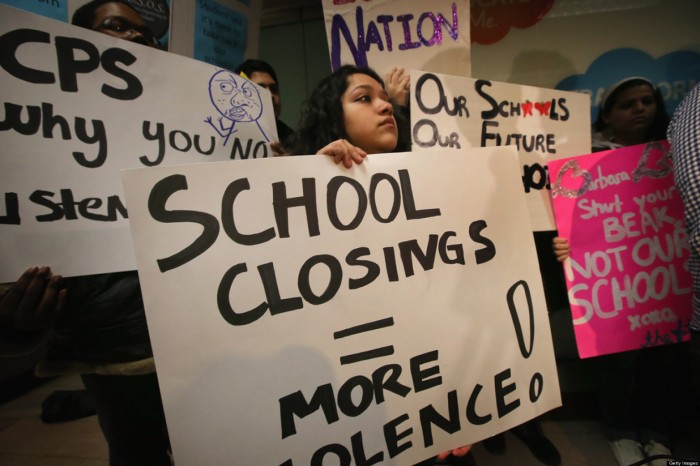
It’s funny. When you close schools serving minority students, they tend to move away.
That’s what’s happening in Chicago.
In the last seven years, Mayor Rahm Emanuel closed 49 schools serving mostly students of color. And from 2015 to 2016, alone, the city lost 12,000 black residents.
Huh.
Who would have ever thought that cutting funding to services for minorities might make them get up and leave?
But God forbid you suggest this is intentional!
These are just disparate facts. There is no conceivable causal link between making life intolerable for people and their leaving.
When has that ever happened before?
The Great Migration (1919-1950) when hundreds of thousands of blacks moved from the deep south to the shores of Lake Michigan looking for better opportunities?
Well, sure, but when else has that ever happened?
You can’t connect one dot to another.
That would just be rude.
Yet that’s just what Chris Kennedy, a candidate vying to run against Illinois Governor Bruce Rauner on the Democratic ticket, did this week.
“My belief is they’re being pushed out. This is involuntary. That we’re cutting off funding for schools, cutting off funding for police, allowing people to be forced to live in food deserts, closing hospitals, closing access to mental health facilities. What choice do people have but to move, to leave?” Kennedy said at a press conference.
“And I think that’s part of a strategic gentrification plan being implemented by the city of Chicago to push people of color out of the city. The city is becoming smaller and as it becomes smaller, it’s become whiter.”
The establishment immediately pushed back against him.
The Chicago Sun-Times couldn’t find any fault with Kennedy’s facts, but they called his interpretation “irresponsible.”
Emanuel’s office likewise issued a press release likening Kennedy’s claims with those of Republicans like Rauner and President Donald Trump, even though both of those individuals would be more likely to champion a plan to kick blacks out of Chicago than criticize it.
Kennedy’s remarks simply echo what black Chicagoans have been saying for years.
“To deny us the right to improve our schools as community institutions is a violation of our human rights. To destabilize schools in our community is a violation of our human rights. To have communities with no neighborhood schools is a violation of our human rights. . . . We are America’s mirror. Do you have the courage to accept what you see?”
Kennedy really isn’t saying anything different. He’s just echoing the concerns of the community he wants to represent.
“I don’t know what you can say when the strategic plan for Chicago Public Schools suggest that the entire community of Englewood can go an entire year without access to a high school,” Kennedy said this week.
“What are you saying to the people there? No one’s going to move there who’s got a high school kid. And anybody with a high school kid has to think about what they’re going to do. It’s just a device to empty out the community.”
The problem is not limited to Chicago. It’s emblematic of public school policy nationwide.
From 2003-2012, in New York City, 117 schools were closed. Sixty-three percent of the students affected were black.
In 2008, 23 schools were closed in Washington, DC. Ninety-nine percent of the students affected were black, Latino or Hispanic.
Since 2005, in Detroit, 130 schools have been closed. Ninety-three percent of the students affected were children of color.
And one and on.
We intentionally segregate students based on race and class, then allocate funds accordingly. Richer whiter students get all the resources they need. Poorer blacker students get crumbling schools, narrowed curriculum until their schools are shuttered and they’re forced to either move away or put up with fly by night charter schools.
Look at what happened in New Orleans.
After Hurricane Katrina in 2005, the state took over 107 of the city’s then-128 public schools, removing them from local control of the residents. The majority of these schools were turned into charters, closed or simply never reopened – a move affecting 90 percent of black students and only 1 percent of white students.
They call it school choice, but parents don’t have choice when 80 percent attend charter schools – some of which run a lottery enrollment process, she said. As a result, parents are forced to apply to multiple charter schools to ensure their children have somewhere to go to learn.
Your choice is between charter schools – 79 percent of which are rated “D” or “F” – and 15 state run public schools that are all rated “D” or “F,” she said.
“African-American students are more likely than their white counterparts to experience schools that are at risk of being closed down, phased-out, turned around or co-located,” Harper-Royal said. “To guarantee me a seat in a failing school system is not ‘choice.’ It’s racist is what it is.”
This is the reality for poor and minority students across the country.
These are all choices that result in winners and losers.
It’s time we recognized that. If we really want to champion civil rights and equity for all, we need to stop promoting racism as school policy and pretending to be surprised at the results.
In this article, I’m going to try to explain in the most simple terms I know the reality of segregation in our schools, how it got there and the various forms it takes.
I do this not because I am against public education. On the contrary, I am a public school teacher and consider myself a champion of what our system strives to be but has never yet realized. I do this because until we recognize what we are doing and what many in power are working hard to ensure we will continue doing and in fact exacerbate doing, we will never be able to rid ourselves of a racist, classist disease we are inflicting on ourselves and on our posterity.
America, the Segregated
It’s never been one monolithic program. It’s always been several co-existing parallel social structures functioning together in tandem that create the society in which we live.
I’m reminded of possibly the best description of American segregation on record, the words of the late great African American author James Baldwin who said the following on the Dick Cavett Show in 1968:
“I don’t know what most white people in this country feel. But I can only conclude what they feel from the state of their institutions. I don’t know if white Christians hate Negroes or not, but I know we have a Christian church that is white and a Christian church that is black. I know, as Malcolm X once put it, the most segregated hour in American life is high noon on Sunday.
That says a great deal for me about a Christian nation. It means I can’t afford to trust most white Christians, and I certainly cannot trust the Christian church.
“I don’t know whether the labor unions and their bosses really hate me — that doesn’t matter — but I know I’m not in their union. I don’t know whether the real estate lobby has anything against black people, but I know the real estate lobby is keeping me in the ghetto. I don’t know if the board of education hates black people, but I know the textbooks they give my children to read and the schools we have to go to.
“Now this is the evidence. You want me to make an act of faith, risking myself, my wife, my woman, my sister, my children on some idealism which you assure me exists in America, which I have never seen.”
As Baldwin states, there are many different ways to keep black people segregated. There are many different flavors of the same dish, many different strains of the same disease.
We can say we’re against it, but what we say doesn’t matter unless it is tied to action.
You can say you’re in favor of equity between black and white people all day long, but if the policies you support don’t accomplish these things, you might as well wear a white hood and burn a cross on a black person’s lawn. It would at least be more honest.
Segregated Schools
In terms of public education, which is the area I know most about and am most concerned with here, our schools are indeed set up to be segregated.
If there is one unstated axiom of our American Public School System it is this: the worst thing in the world would be black and white children learning together side-by-side.
They point to inequalities they, themselves, helped create and use them to push for a system that would create even worse inequality. They point to the segregation that they, themselves, helped install and use it as an excuse to push even more segregation.
And they do so by controlling the media and the narrative. They call themselves reformers when they’re really vandals and obstructionists looking to subvert the best in our system in order to maximize the worst.
School Segregation Today
Sure we don’t have very many all white or all black schools like we did before Brown v. Board. Instead we have schools that are just predominantly one race or another.
ALL kids are not divided by race. Just MOST of them.
White people and black people tend to live in different neighborhoods. Some of this is a choice. After a history of white oppression and racial strife, people on both sides of the divide would rather live among those with whom they identify.
Black people don’t want to deal with the possibility of further deprivations. White people fear retaliation.
However, white people generally enjoy a higher socio-economic status than black people, so there is some push back from black folks who can afford to live in whiter neighborhoods and thus enjoy the benefits of integration – bigger homes, less crowding, less crime, access to more green spaces, etc. But even when there is a desire, moving to a white neighborhood can be almost impossible.
State and federal laws, local ordinances, banking policies and persistent prejudice stand in the way.
In short, red lining still exists.
Real estate agents and landlords still divide up communities based on whom they’re willing to sell or rent to.
And this is just how white people want it.
They’re socialized to fear and despise blackness and to cherish a certain level of white privilege for themselves and their families.
And if we live apart, it follows that we learn apart.
The system is set up to make this easy. Yet it is not uncomplicated. There is more than one way to sort and separate children along racial and class lines in a school system.
There are several ways to accomplish school segregation. It comes in multiple varieties, a diversity of flavors, all of which achieve the same ends, just in different ways.
By my reckoning, there are at least three distinct paths to effectively segregate students. We shall look at each in turn:
Put the white neighborhoods in District A and the black ones in District B. It’s kind of like gerrymandering, but instead of hording political power for partisan lawmakers, you’re putting your finger on the scale to enable academic inequality.
However, sometimes you can’t do that. Sometimes you don’t have the power to determine the makeup for entire districts. Instead, you can do almost the same thing for schools within a single district.
That means the whiter districts get higher paid and more experienced teachers. It means they have broader curriculum, more extracurricular activities, a more robust library, more well-trained nursing staff, more advanced placement courses, etc.
Fewer funds mean fewer resources, fewer opportunities, more challenges to achieve at the same level that white students take for granted. A budget is often the strongest support for white supremacy in a given community or society as a whole. In fact, if you want to know how racist your community is, read its school budget. You want accountability? Start there.
The same holds even when segregation is instituted not at the district level but at the level of the school building.
It may sound ridiculous but this is exactly what happens much of the time. You have gorgeous new buildings with first class facilities in the suburban areas and run down crumbling facilities in the urban ones – even if the two are only separated geographically by a few miles.
Like any parasite, charter and voucher schools only survive in the proper environment. It usually looks like this.
Sometimes no matter how you draw the district lines or how you appropriate the buildings, you end up with a black majority and a white minority. That’s a situation white parents find simply intolerable.
White children must be kept separate and given all the best opportunities even if that means taking away the same for black children.
Once again, this creates the opportunity for a resource gap. The charter and voucher schools suck away needed funds from the public schools and then are subsidized even further by white parents.
The quality of education provided at these institutions is sometimes better – it’s often worse. But that’s beside the point. It’s not about quality. It’s about kind. It’s about keeping the white kids separate and privileged. It’s about saving them from the taint of black culture and too close of an association with black people.
Second, the situation can work in reverse. Instead of dividing the whites from the blacks, it divides the blacks from the whites.
This happens most often in districts where the divide is closer to equal – let’s say 60% one race and 40% another. Charter and voucher schools often end up gobbling up the minority students and leaving the white ones in the public school. So instead of white privatized and black public schools, you get the opposite.
And make no mistake – this is a precarious position for minority students to be in. Well meaning black parents looking to escape an underfunded public school system jump to an even more underfunded privatized system that is just waiting to prey on their children.
Unlike public schools, charter and voucher institutions are allowed to pocket some of their funding as profit. That means they can reduce services and spending on children anytime they like and to any degree. Moreover, as businesses, their motives are not student centered but economically driven. They cherry pick only the best and brightest students because they cost less to educate. They often enact zero tolerance discipline policies and run themselves more like prisons than schools. And at any time unscrupulous administrators who are under much less scrutiny than those at public schools can more easily steal student funding, close the school and run, leaving children with no where to turn but the public school they fled from in the first place and weakened by letting privatized schools gobble up the money.
The result is a public school system unnaturally bleached of color and a privatized system where minority parents are tricked into putting their children at the mercy of big business.
3) Tracking
But that’s not all. There is still another way to racially segregate children. Instead of putting them in different districts or different schools, you can just ensure they’ll be in different classes in the same school.
However, it most often results in further stratifying students socially, economically and racially.
Here’s how it works.
Often times when you have a large enough black minority in your school or district, the white majority does things to further horde resources even within an individual school building or academic department.
In such cases, the majority of the white population is miraculously given a “gifted” designation and enrolled in the advanced placement classes while the black children are left in the academic or remedial track.
It enables bleaching the advanced courses and melanin-izing the others. This means administration can justify giving more resources to white students than blacks – more field trips, more speakers, more STEAM programs, more extracurriculars, etc.
And if a white parent complains to the principal that her child has not been included in the gifted program, if her child has even a modicum of ability in the given subject, more often than not that white child is advanced forward to the preferential class.
CONCLUSIONS
Segregation is a deep problem in our public school system. But it cannot be solved by privatization.
In fact, privatization exacerbates it.
Nor is public education, itself, a panacea. Like any democratic practice, it requires participation and the economic and social mobility to be able to participate as equals.
Schools are the product of the societies that create them. An inequitable society will create inequitable schools.
Segregation has haunted us since before the foundation of our nation.
They don’t want their children to be educated among black students – maybe SOME black students, maybe the best of the best black students, but certainly not the average run of the mill brown-skinned child.
This has to stop.
There are plenty of benefits even for white students in an integrated education. It provides them a more accurate world-view and helps them become empathetic and prize difference.
It was a year that frankly I wasn’t sure I’d survive.
But I did. We did. Together.
I think if there’s any lesson from the last 365 days, it’s that: We can endure anything if we stay united.
We’ve taken down titans of industry simply by acts of belief. When women came forward with credible tales of abuse, for the first time we – as a society – actually believed them.
We’ve taken down the most morally repugnant child abusers with designs on national office simply by supporting the black vote. And no matter how much power tried to disenfranchise our brothers and sisters of color, we stood by them and made sure their voices were heard.
These are the kinds of things we need more of in the New Year.
If you take all the “minorities” in this country – minorities of gender, race, sexuality, creed, religion, etc. – if you add us all together, we actually are the majority!
When you add white people of conscience with black people, Latinos and Hispanics, LGBTs, women, Muslims, and every other historically disenfranchised group, we have the upper hand. And when you compare economic disparities of the 99% vs the 1% or poor vs rich, it’s not even close!
And I’m not talking about some time in the future. I’m talking about right now!
All we need to do is stand together and fight for each other.
So as 2018 is about to dawn, I am filled with hope for the future. A truly amazing year may be about to dawn. It’s all up to us.
In the meantime, I take my last look over my shoulder at the year that was.
As an education blogger, I write an awful lot of articles, 119 articles so far this year. In fact, this piece – which will probably be my last of the year – brings me to 120!
I’ve already published a countdown of my most popular articles. If you missed it, you can still read it here.
However, as is my custom, I like to do one final sweep of my annual output counting down honorable mentions. These are the top five articles that maybe didn’t get as many readers, but that I think deserve a second look.
I hope you enjoy my top 5 hidden gems before I place them in the Gadfly vault and begin the hard work of making 2018 a better tomorrow:
Description: Standardized testing is often championed by people who claim to be free market capitalists. Yet it struck me that there was nothing free about the market being perpetrated on public schools when it comes to high stakes tests. Schools don’t give these tests because anyone in these districts actually thinks they help students learn. We do it because we’re forced by federal and state governments. It’s a racket, and in this article I explain exactly how and why.
“When I read this post by Steven Singer, I was so excited that I thought about devoting an entire day to it. Like posting it and posting nothing else for the entire day. Or posting this piece over and over all day to make sure you read it. It is that important.
Steven’s post explains two different phenomena. First, why is standardized testing so ubiquitous? What does it have a death grip on public education?
Second, in the late 1990s, when I was often in D.C., I noticed that the big testing companies had ever-present lobbyists to represent their interests. Why? Wasn’t the adoption of tests a state and local matter? NCLB changed all that, Race to the Top made testing even more consequential, and the new ESSA keeps up the mandate to test every child every year from grades 3-8. No other country does this? Why do we?”
Description: According to landmark research by Dan Goldhaber and James Coleman, only about 9 percent of student achievement is attributable to teachers. The entire school experience only accounts for 20%. By far, the largest variable is out of school factors, which accounts for 60% of a student’s success. Yet we insist on holding teachers accountable for nearly 100% of it. We demand our teachers be superhuman, give them next to zero support, and then get indignant when they can’t do it all alone. Sorry, folks, I’m just a human being.
Fun Fact: Our expectations for teachers are ridiculous. We want them to do everything and then we blame them for acting like saviors. I think it’s vital that people acknowledge this impossible situation we put educators in and start to take more social responsibility. Your schools won’t get better until you do something about it. Stop complaining and get to work. That means voting for lawmakers who support public education. That means attending school board meetings. That means holding the decision makers responsible. Not just taking advantage of an easy scapegoat.
Description: What does a teacher think about when he or she is forced to give a standardized test? This article is my attempt to capture the no-win situation that our society forces on teachers every year. Apparently we must choose between doing things that we know are harmful to our students or taking a stand and possibly losing our jobs. You become a teacher to help children and then find that harming them is in the job description. Is this really what society wants of us?
Fun Fact: This article resonated deeply with some readers. In fact, a theater group in Ithaca, NY, Civic Ensemble, was so inspired by it that they used my article as the basis for a scene in a play made up of teacher’s real life stories about the profession. The play was called “The Class Divide.” You can watch a video of a practice performance of my scene here.
Description: A lot has been written about why charter and voucher schools are bad for parents, students and society. Less has been written about the ways that public schools do better than privatized education. This was my attempt to illuminate the ways public schools are better. They attract better teachers, have a more robust sense of community, have more educational options, have greater diversity, are more fiscally responsible – and that’s just the first five!
Fun Fact: When you list all the ways public schools are better than privatized ones, it becomes hard to imagine why they’re struggling. Public schools are clearly the best choice. The fact that they are being sabotaged by the privatization industry and their creatures in government is inescapable.
Description: When you ask racists why they oppose racial equity, the number one reason they give is the feeling that equity is a zero sum game. If black people are put on an equal footing with white people, then white people will ultimately lose out. This is patently untrue. White people will lose supremacy over other races, but they need not become subservient or lose their own rights. We can champion fairness for all without doing ourselves harm.
Fun Fact: This article kind of died on the vine, but I’m still proud of it. I think it is one of my best this year expressing my own thoughts and feelings about antiracism. I just wish more people had read it, because it sounds like this is an idea that more white people need to hear. We can only build a better world hand-in-hand.
This wasn’t the first year I’ve done a countdown of the year’s greatest hits. I usually write one counting down my most popular articles (like the one you just read from 2017) and one listing articles that I thought deserved a second look. Here are all my end of the year articles since I began this crazy journey in 2014:
What kind of government would you like? Republic, Monarchy, Dictatorship, Anarchy? Some combination or original system?
It’s all up to you.
How would you structure the economy? Capitalistic, Socialistic, Communistic? Something else?
You decide.
What would a family look like in your perfect society? How would careers be prepared for and chosen? What level of technology would you choose?
All these and more must be answered when creating the ideal community for you and I to live in.
And that’s exactly what I had my 7th grade students do this week in preparation for reading Lois Lowery’s science fiction novel, “The Giver.”
In small groups, my little ones clustered together at their tables and gave social planning a go.
It was stunning the variety of societies they created.
One group had a nominal anarchy with an inherited monarchy controlling the military. Another had an oligarchy of the smartest people who got the best grades to make all the decisions while everyone else played video games.
One of my favorites though was a group who decided to let women make all the rules except who could marry whom. That was decided only by the men, but women got to decide when to have kids and how many to have.
It was fascinating to see how their little minds worked.
But it was all a preview to Lowery’s novel of a futuristic society where utopia soon descends into dystopia.
As it often does.
So it made me wonder about the most utopian thinking we find in modern life – education policy.
In each case, these world builders do the same as my middle schoolers – they build a system that would be perfect – from their own individual point of view.
Because… utopia is rooted in theory, it will not always work. In fact, more is written about the failure and impossibility of utopia than of its success, probably because the ideal has never been reached.
“Every utopia,” she says, “…faces the same problem: What do you do with the people who don’t fit in?”
One person’s paradise is another person’s Hell.
So the idea of designing one system that fits all is essentially bound to fail.
But doesn’t that support the charter and voucher school ideal? They are marketed, after all, as “school choice.” They allegedly give parents and children a choice about which schools to attend.
It is the public school system that gives you choice. You decide to live in a certain community, you get to go to that community’s schools. Period.
Certainly some communities are more accessible than others, and they are more accessible for some people than others – whether that be for economic, social, racial or religious reasons.
By contrast, public schools tailor their curriculum to meet the needs of individual students. Each teacher does something different for every child in his or her charge whether those children are in special education, regular education, Emotional Support, the English as a Second Language Program, the academic or honors track.
Decisions are not made by duly-elected representatives of the community in the light of day. They are made behind closed doors by corporate stooges.
THAT is the great innovation behind these schools. Everything else is mere window dressing.
If one of these schools found a better way to teach, public schools could pick it up and do it even better because the teachers and principals would be accountable for doing it correctly.
These so-called lab schools have never produced a single repeatable, verifiable innovation that works for all students without cherry picking the best and brightest.
Not once.
That’s because the utopia these policy wonks are interested in building isn’t for the students or parents. It’s for the investors.
It may be the ideal situation for the moneymen, but it’s often pure dystopia for the students. Charter schools are closed without notice, the money stolen under cloak of night. Voucher schools fool kids into thinking creationism is science and then are no where to be found when reputable colleges want nothing to do with their graduates.
Let me be the first to say that public school is no utopia.
They are constantly changing. Teachers are constantly innovating.
A handful of years ago, I never had students design their own utopias before reading “The Giver.” But a colleague came up with the idea, I modified it for my students and we were off.
If I teach the same course next year, I’d modify it again based on what worked and what didn’t work this year.
Perhaps the greatest utopia would be if we could all realize that no utopia is possible; no place to run, no place to hide, just take care of business here and now.
We need to demilitarize law enforcement. We need new training programs that emphasize de-escalation of violence – not a shoot-first-ask questions-later mentality.
And it’s hard to focus on that when racism and prejudice get in the way. We need to fix racism first. Only then can we address the root issue.
Instead we’d have schools that serve everyone – a broad mix of cultures, races and ethnicities all properly resourced and offering a broad range of curriculum and extra-curricular activities.
There’s one thing you have to understand. Racism isn’t an ideology. It’s a sickness. It’s a virus that blinds people to real truths about the world and makes them more prone to holding views that are just plain wrong.
The same with sexism, anti-Semitism, homophobia and a plethora of modern day maladies that should have gone the way of small pox and polio.
Do you want to get into college just because you’re white?
Do you want to get a job just because of the hue of your epidermis?
Do you want the sum total of your value as a human being to be dependent on the way light reflects off your skin?
I don’t.
I’m white, and I don’t want that for me or my posterity.
I want people to judge me for me – not some preconceived notion of who I am based on culturally received generalities and the amount of melanin in my outermost cells.
Fuck that shit.
I’m me. And if that’s not good enough for anyone they can just go and jump in the river.
I don’t need white supremacy. And I don’t want it.
White will no longer be considered normal. Neither will male.
It’s just another way to be – no better or worse than any other.
That doesn’t mean being ashamed of your whiteness. Hell. We can revel in it.
Imagine reconnecting with all the messy ethnicities we’ve plastered over to claim this homogenous white overclass! Imagine being Polish again, and Czech and German and Scandinavian and so many other nationalities that we barely connect with because we don’t want to draw attention to ourselves as anything other than white — That’s me. Just white. Plain white. Nothing to see here. White.
We’ve had to sacrifice a whole lot to get that status. But we don’t have to keep sacrificing. We can be who we are, too.
The Alt-Right Nazis are out there in the streets chanting, “You will not replace us.”
How about we replace ourselves.
Why don’t we redefine who we are as – who we are.
Not homogenous. Not white. But specific human beings belonging to various cultural, ethnic and religious groups and societies.
Human beings all taking part in the symphony of homo sapia, engaged in a robust love of all things people and a recognition that all people are human.
Think for a moment what that truly means.
Take a deep breath.
Let it in. Let it out.
It means letting go of this irrational fear that anti-racism is anti-white.
So, let me say it again – no. Black progress will not come at white expense. Nor will female progress or anyone’s progress.
It’s time we as a nation stop, take a moment – and offer our hearty congratulations to this years most pernicious saboteurs.
And what a year it was for disrupting education!
Charter schools, voucher schools – no one has benefited more from chucking the public school model in the trash in favor of control by corporations and bureaucrats than Betsy DeVos.
That’s right – Jason Vorhees, Michael Myers, Freddy Kruger, they all went after those pesky post-graduate teenagers. But none of them had the audacity to go after kids with learning disabilities!
It’s not that DeVos is undoing any laws. She’s erasing decades of government guidance about how the laws are to be interpreted. And though she claims these 72 directives are simply “outdated unnecessary or ineffective,” she’s not replacing them with anything else. They’re just – gone.
Of the 72 guidelines, 63 affect special education and 9 affect student rehabilitation. And these aren’t simply undoing the work of the Obama administration. Some of these regulations have been in place since the 1980s.
The rescinded policies include “Satellite Centers for Independent Living,” “Nondiscrimination on the Basis of Handicap in Programs and Activities Receiving or Benefiting From Federal Financial Assistance,” and “Information on the Provision of Vocational Rehabilitation Services to Individuals With Hearing Loss (Deaf and Hard of Hearing).”
Bah! Who needs all this paperwork?
Parents and students. That’s who.
These guidelines have helped parents of disabled and special education children advocate for their young ones’ rights. Without them, it may be more difficult for parents and teachers to ensure all children are receiving a free and appropriate education.
That’s some seriously stone cold sabotage, Ms. DeVos!
She’s not purposefully making the lives of K-12, special education and college kids more difficult. Well, she is, but she’s not doing it out of spite. She’s doing it because it helps her investment portfolio.
How can she continue to promote charter and voucher schools that don’t provide the same kinds of quality services for special education and disable students as public schools do? She needs to degrade what the public schools provide, thereby making the privatized alternatives more marketable.
How can she keep making money off predatory lenders unless she loosens the rules to allow them more freedom to gorge on student debt? And how can she keep her lucrative job bending the rules in her favor unless she throws some red meat to the racists, misogynists and anti-Semites who helped elect her boss into the Oval Office?
And if kids get hurt, well those aren’t the people she’s looking out for, are they?
She’s only out for the other rich elites like herself making a mint off of our public tax dollars!
He also quietly admits that the $80 million he spent pushing for teachers to be evaluated on student test scores was a mistake. However, state, federal and local governments often still insist on enacting it despite all the evidence against it. Teachers have literally committed suicide over these unfair evaluations, but whatever. Bill learned a lesson.
When it comes to Common Core, though, Bill refuses to take his medicine – even to mouth the words.
Instead, he’s quietly backing away. No explanation. No apology. Just on to something new.
Kind of like: “That didn’t work. Let’s try something else!”
His new plan – spend $1.7 billion over five years to develop new curriculums and networks of schools, use data to drive continuous improvement, and give out grants to high needs schools to do whatever he says.
What’s so frustrating is that Gates shows glimmers of self-awareness.
“It would be great if our education stuff worked, but that we won’t know for probably a decade,” he said during a speech at Harvard in 2014.
But then when he sees it isn’t working, he just doubles down on the same crap.
While he may not be committed to any one policy, Gates is committed to the idea that he knows best. Whatever nonsense bull crap that floats through his mind deserves to be tried out on a national scale.
No asking experts. No asking teachers, parents or students. Just listen to me, Bill Gates, because I’m rich and that makes me better than you.
No, it doesn’t Bill. It makes you just like Betsy DeVos.
So there they are. Mr. and Mrs. Public School Sabotage.
Short may their reign be.
“They were careless people, Tom and Daisy – they smashed up things and creatures and then retreated back into their money or their vast carelessness or whatever it was that kept them together, and let other people clean up the mess they made.”
You squint your eyes trying to get a quick peak before it arrives. But that rarely works. By the time it’s here, it’s never quite in the shape you expected.
Yet we always stop and listen to the prophets and prognosticators. Those google eyed figures, wearing trench coats and sandwich boards standing proudly on milk crates and cracking open their mouths to vociferously voice their “visions.”
They smell like B.O. There are insects in their hair. And their mouths spray halitosis as much as haloes.
Under normal circumstances, we wouldn’t trust them to park our cars, to give us directions, to do just about anything. But when it comes to “The Future” somehow we swallow their swill with conviction.
Through sheer force of charisma they convince us that their predictions will come to pass and if we’re smart we’ll invest in their brand of patented polished snake oil.
So we’ll be ready.
Just once I wish people would heed the skepticisms of the doubting Cassandras. But so it goes.
They’ll tell you that our public schools haven’t changed in a century. They’re set up for the agricultural past. Or schools are great for creating assembly line workers for the industrial revolution, but times have changed. And education needs to change with them.
This sales pitch about outmoded schools sounds really nice.
It resonates.
It makes us feel good.
Yes, I KNEW there was something wrong with my public school. That explains my own failures. I mean, I went through 12 plus years of public schooling and look at me! I’m not one of the handful of billionaires who own the world. It MUST have been the school’s fault!
Forget economic inequality, money in politics or any of that progressive crap! I could be sitting on top of the world with my boot firmly planted on the neck of everyone else – if only the public school had taught me right.
PLEASE!
But this is the comforting lie many folks tell themselves and one of the major reasons corporate school reformers get away with raiding public education. Their lies flatter white people’s vanity.
Classroom teachers have much more experience than you do. We’re there every single day engaged in the actual practice of teaching children. You learn something about it by doing it for at least 180 days a year, for decades. And that’s not even counting the years of college preparation before even entering the classroom, the pedagogy, debate, and hard won wisdom of generations of teachers before us.
You’ve hardly stepped foot in a public school to do more than spit on it. Nor did you likely experience it as a student or parent of students who go there.
You know nothing. And that’s no sin in itself.
Many people are ignorant of a great many things. I, for one, am completely ignorant of how to fly an airplane. That’s why I’d never dream of busting open the cockpit and preceding to tell the captain how to land the plane!
But you are not humble enough to admit your own ignorance. You think your money gives you the ability to do anything. After all, you DESERVE all those billions. It’s not an accident of birth or circumstances. You’re just that good, that special, that much better than the rest of us.
And what kind of brilliance do we get from these pampered prophets?
“…I’m issuing a bold challenge this week: it’s time to rethink school.
For far too many kids, this year’s first day back to school looks and feels a lot like last year’s first day back to school. And the year before that. And the generation before that. And the generation before that!
That means your parent’s parent’s parents!
Most students are starting a new school year that is all too familiar. Desks lined up in rows. Their teacher standing in front of the room, framed by a blackboard. They dive into a curriculum written for the “average” student. They follow the same schedule, the same routine—just waiting to be saved by the bell.”
My middle school classroom doesn’t have desks. We have tables that seat four.
Yes, those seats typically begin the day with students facing the teacher and the board. But you could say the same of seats at any auditorium since Plato’s day. I don’t hear anyone talking about rethinking that!
In any case, seats are mobile. I direct my students to move their seats all around the room. Just yesterday we had them in a circle. The day before, they were in small groups. And many days my students aren’t even in their seats – they’re wandering around the room doing some sort of task or project.
None of this is that revolutionary. Most middle school teachers do the same thing. You have to. Kids that age don’t have the attention span to sit in their seats in the same position for 40 plus minutes at a time.
Seats are often more stationary at the high school level, and they’re probably even less fixed at the elementary.
You would know this if you ever talked to a public school teacher. But, no. You know best because of your net worth.
For example, the way we teach special needs children is light years away from what it was just a few decades ago. We used to send these children to specialized facilities or classrooms in the basement well away from other students. Now, they’re mainstreamed and their educations are dramatically tailored to meet each student’s individual needs.
Schools used to just be about the three R’s – reading, writing and ‘rtithmetic. Today at wealthier districts, students have a wide range of courses to choose from. They have arts, music, foreign languages, vo-tech, extra-curriculars, computer science, robotics, drama, almost anything you can think of! I wish this were true at all schools, but that’s a funding issue, not a lack of innovation.
Many schools are less segregated today than they were before Brown v. Board. The courts have let us down in supporting this Supreme Court decision, instead permitting an awful lot of regression in some districts. But even at the most resegregated schools, they are rarely100% one race or another. We should do something to increase integration, but don’t tell me we haven’t made progress.
–Repeal Common Core and let teachers write their own academic standards instead of being beholden to goals written by corporations to sell their own products and tests.
Clearly we’re speaking in generalities here. Every school – public or privatized – is different. But there is enough commonality to identify certain trends between each type of school to make general conclusions about each category. In short, despite any media or political propaganda to the contrary, public schools come out on top.
Here are the top 10 reasons public schools are the best choice for children, families and communities
1) Public Schools Attract the Best Teachers
When choosing a school for your children, you want them to have the best teachers possible. You want life-long, committed educators – people who entered the profession as a calling, who dedicate their lives to young people.
This is not the case at many charter or private schools. Their teachers often don’t have the same high level of education, experience, or commitment. In many states, they aren’t required to earn a 4-year degree from an accredited college, they routinely have less experience and higher turnover.
Think about it. If you were one of the best teachers in the country, wouldn’t you want to work where you get the highest salary and benefits? Of course!
2) Public Schools Have a Greater Sense of Community
Most public schools have been around for a long time. They are the heart of the communities they serve. They do so much more than just teach children. They host continuing education courses for adults, extracurricular activities, sporting events, academic clubs, public swimming pools, open libraries, and invite the community for local events, concerts, seminars, etc.
This is rarely the case at privatized schools. Charters and private institutions are often fledgling startups. They’re located in rented office spaces, renovated store fronts and other locations chosen more for their cost benefits to investors and not for their efficacy as places of education or community outreach.
Public schools have histories that go back generations. Everyone in the community knows the teachers who work there. Parents often send their kids to the same educators who taught them when they were young. Sometimes this goes back to grandparents and even great grandparents. Older brothers can advise younger sisters what it was like to have this teacher or that principal. The kinds of relationships you get at public school just aren’t there at institutions that model themselves on big box stores like WalMart and Target.
3) Public Schools Increase Educational Choice
Privatizers often talk about charters and voucher schools as if they are the only places that offer parents and students choice. It’s simply untrue. Many public school districts offer a tremendous amount of alternatives for students living in their neighborhoods. Larger urban districts often have magnet or theme schools. But even beyond that, most schools offer a wide variety of classes and curriculum. Students can take foreign languages, vo-tech, arts and humanities, independent studies, and advanced placement or college credit courses. Students can take advantage of a plethora of services designed to personalize their academic experience to meet their individual needs with special and gifted education, even choosing which teachers are the best fit for their learning styles.
Obviously, these options increase with the degree of wealth in a community, but they prove that increasing choice doesn’t have to mean privatization. It means equitable funding.
4) Public Schools Have Greater Diversity
Students learn a lot more than reading, writing and arithmetic in school. They also learn how to deal with different kinds of people – they learn to share this world with other humans from various racial, ethnic, religious, and sexual backgrounds. The more diverse an environment they grow up in, the more well-adjusted they will be for the adult world, and the less racist, sexist and prejudiced they’ll probably become.
Public schools are often a sea of diversity. They are the best place to meet the entire spectrum of humanity. On the other hand, charter and voucher schools are routinely segregated and homogenous. Sometimes privatized schools make efforts to fight against this, but you can’t make much headway when your entire system is based on sorting out the underprivileged in favor of white, affluent children whose parents can afford tuition (private schools) or poor black but high achieving children (charter schools).
Privatized schools rarely do this, and if they do, it’s by choice not necessity. They could close their books any day, make whatever decisions they like behind closed doors and layout bundles of cash for their CEOs or investors. Privatized schools are for-profit. Even when they aren’t explicitly labeled as such, they usually operate in the same way – cut student services to increase the bottom line. Their explicit goal is to make money off your child – not simply earn a middle class income like public schools. No, they want to get rich off of your dime.
Privatizers buy mansions and yachts with your money. Public school teachers pay off their mortgages. And in the rare instances where public school employees break the law and try to embezzle funds, they are much more likely to be caught because the books are right there for all to see.
If there’s one thing you can be reasonably sure of, it’s that your neighborhood public school will still be there. It’s been there for decades, sometimes hundreds of years. Charter and voucher schools are often fly-by-night affairs. Public schools are solid bedrock. If public schools close, it’s only after considerable public comment and a protracted political process. No one ever shows up to find the local public school chained shut. Not the same at charters or private schools.
7) Public Schools Have Greater Commitment to Students
When you enroll in a privatized school, the choice is all up to administrators. Is your child a safe bet? Can they let your little one in without breaking the bank? Will he or she make the school look good with better test scores? Will he or she be easy to educate?
Public schools, on the other hand, have a commitment to educating every child who lives in the district. They even take homeless children. Only under the most extreme circumstances would they expel a young person. No matter who your offspring is, no matter how good or bad a student, public school operators have faith they can help the youngster succeed.
8) You Have Ownership of Public Schools
With privatized schools, you’re paying for a business to provide services. Public schools belong to you. In fact, you’re the boss.
Public schools are run by your friends, neighbors and co-workers. Privatized schools are most often run by appointed boards of directors who are not beholden to you but to the investors. As education blogger Peter Greene puts it, “The charter is a business, run by people who don’t ever have to let you into their board room.”
In addition, many public schools go beyond even this level of parental involvement. They more often have PTAs or PTOs. They have advisory councils where elected parents, teachers and community members can work together to advise the school board on important maters like hiring superintendents. If parents and the community want a voice, the public school system is overflowing with options. Ironically, the community rarely has any say over privatized schools and parents can only vote with their feet.
9) Public Schools Provide More Amenities
Public schools routinely offer so much more than privatized schools. At many charter and voucher schools, parents are required to buy supplies for the whole institution. Public schools accept donations and sometimes teachers ask for help, but if parents can’t (or won’t) send in pencils or tissues, the school provides it gratis. And even when the district is cheap in this regard, teachers often make up the difference from their own pockets. It’s not right that they have to do so, but they constantly step up for your children.
Moreover, public schools offer a much expanded range of services for your children than privatized schools. Special education and gifted programs are first rate at public schools while often intermittent or nonexistent at privatized schools. And the requirements put on parents at public schools are much lower – less restrictive dress codes, fewer demands on parents’ time and they take a greater responsibility for your children.
Heck, private schools rarely even pay for transportation. Public schools offer a free ride via the school bus from home and back again.
10) Public Schools Match or Outperform Privatized Schools
When it comes to academic performance, comparisons all come down to what data you think is indicative of student learning and which factors you exclude. You can find plenty of studies funded by privatizers that unsurprisingly conclude their backers business model is the best. However, when you look at peer reviewed and nonpartisan studies, the story changes.
The Lubienskis, in particular, paint an extremely compelling picture of public school superiority based on numerous complex statistical models including hierarchical linear modeling and multivariate regression. In short, the authors conclude that after accounting for the demographic differences among various school sector populations, traditional public school students outperform those at private schools over time. Students typically enter public schools with much greater degrees of poverty than those entering private schools. As such, public school students start with greater academic deficiencies. Even so, public schools are able to make up for these deficiencies over time more easily than privatized schools. And by fourth grade, public school students actually have greater academic success than their demographically similar peers at private or charter schools. The Lubienskis call it “The Public School Effect.”
With all these benefits, you’d think we’d be cheering on our public school system, not denigrating it. However, the failing schools narrative sells a lot of people on privatized alternatives. But it’s not fact. It’s marketing.
And then the forces of profit and privatization use the chaos and uncertainty as cover to steal public services and turn them into mechanisms to increase their own bottom line.
That’s what happened to New Orleans in the wake of Hurricane Katrina in 2005. And, if Houston residents aren’t careful, it’s what could happen there in the wake of Hurricane Harvey, which struck this weekend.
Right now the immediate danger is the weather.
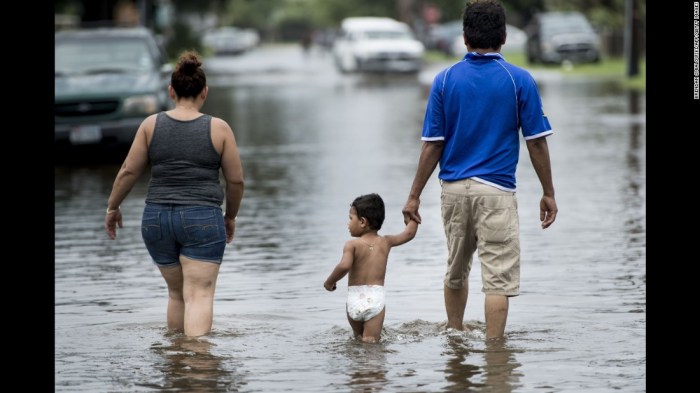
The storm has already affected about a quarter of the Texas population, or 6.8 million people in 18 counties. It’s been blamed for at least 8 deaths so far.
Thousands of people have evacuated to rooftops as rushing waters flooded streets and neighborhoods. Many roadways are only navigable by boat, and emergency services are so overtaxed that civilian volunteers have stepped up to help rescue stranded residents. By the time the weather system passes through, Houston could get as much as 50 inches of rain – the highest amount ever recorded in Texas.
U.S. Education Secretary Betsy DeVos was so overwhelmed by the news that she took to Twitter, saying, “Our prayers are with all those in the path of #HurricaneHarvey. @usedgov stands ready to assist impacted schools.”
To which noted liberal commentator Keith Olbermann responded, “The hurricane is going to do less damage to schools than you are, Motherfucker.”
And, if history is any guide, he may not be wrong.
In the aftermath of Katrina, New Orleans lost almost its entire public school system. About 90 percent of the city’s 126 schools were given to the Louisiana Recovery School District, which turned them all into charter schools.
For those uninitiated into the mysteries of corporate education reform, charter schools differ from traditional public schools because they are financed by tax dollars but privately operated. They often are controlled by appointed boards with little to no transparency, and are rife with opportunities for investors to profit through fraud and neglect – opportunities that just aren’t present at traditional districts.
So, in effect, Louisiana state officials elected by the white majority stole control from local school boards elected by the city’s black majority. More than 7,000 teachers most of whom were people of color and had been displaced by the hurricane found themselves replaced by mostly white teachers brought in from other parts of the country.
Now, more than 10 years later, the New Orleans experiment has been shown to be a failure. Scores on standardized tests have improved (kinda), but the curriculum has narrowed, teacher turnover has doubled, disadvantaged and special education students have even fewer resources while schools fight over high achieving children, students spend hours being bused to schools far from their homes, communities have been erased, and parents have less control over how their own tax dollars are spent.
This could be the future for the Houston Independent School District (HISD).
After all, Houston is where the infamous Knowledge is Power Program (KIPP) charter school network got its start.
Yet, the charter network, one of the largest such chains with 209 schools nationwide, has one of the best propaganda departments in the industry. They pass off inhumanity to children as “rigor” and gloss over inability to teach difficult students as “high standards.”
Will Texas lawmakers be swayed by powerful charter operators to use the current catastrophe as a business opportunity to gobble up the existing school system?
Perhaps. But there are some significant differences between Houston and New Orleans.
For instance, the students served by the New Orleans system a dozen years ago were almost all living below the poverty line. By contrast, Houston has high and low poverty areas. In fact, many neighborhoods cater to upper middle class children.
It’s doubtful that parents from more affluent neighborhoods would put up with losing local control and all that goes with it. Their political and economic power would probably stop any wholesale charterization of the district. That’s why KIPP schools – and in fact most charter schools – are nearly nonexistent in wealthy neighborhoods.
However, there are plenty of community schools serving high poverty populations suffering from systemic disinvestment and neglect that could be in danger of just such “reforms.” In fact, many of those are exactly the ones that have been worst hit by flooding and weather damage. At least 10 consistently struggling schools could find themselves targeted for the New Orleans treatment. The state and federal government could withhold relief funding on the condition these schools give up their elected school boards and embrace the kind of Wild West, laissez-faire, free market deregulation that charter schools bring.
The Republican controlled state legislature already has a law on the books to swipe local control from struggling districts and turn them into charters. It’s a blatant threat to takeover entire districts like HISD if certain schools within the district don’t improve standardized test scores and other measures favored by corporate education reformers.
Hurricane damage could become a pretext to empowering state lawmakers to expedite this process. Perhaps they might even ask local school boards to give up control of their struggling schools in exchange for leaving alone the more affluent white schools.
I had the pleasure of visiting Houston a year ago for the United Opt Out Education and Civil Rights Summit. There I met with parents, students, concerned community members and representatives of the local teachers union – the Houston Federation of Teachers.
They helped me understand that Texas has a unique perspective on school choice.
For instance, they aren’t generally too fond of school vouchers.
This session a Tea Party favored voucher initiative was squashed by more moderate Republicans. In fact, in Texas even religious leaders don’t like vouchers. This is surprising because the program usually allows tax dollars to be used at private or parochial schools. An organization, Pastors for Texas Children, has been particularly vocal about supporting public education over BOTH vouchers and charters.
However, this is the land of former Gov. George W. Bush, one of the biggest charter cheerleaders in the country. His party broadly supports charter schools, yet the Texas legislature has struggled to increase them.
Last year, Gov. Greg Abbott and Lieutenant Gov. Dan Patrick made a big push to increase charter schools across the state. In an unusual move, state House Speaker Joe Straus refused to bring the bill to the floor for a vote. Straus held the issue hostage because he couldn’t get support for a new school funding formula.
It should be noted that all of these players are Republicans. Democrats are a minority with the ability to impact policy almost not at all.
It’s still too early to tell if the state and/or federal government will take a page from the Shock Doctrine playbook and use Harvey as a distraction to embolden their agenda.
One can only hope that voters have learned the lessons from Katrina and Louisiana.
Otherwise, over time a manmade disaster could once again eclipse the damage done by a natural one.
Special Thanks to Zakary Rodriguez for help navigating the Texas education scene.
On the one hand, we’re one of the first modern Democracies, a product of Enlightenment thinking and unabashed pluralism and cultural diversity.
On the other, we’ve built our entire society on a cast system that is the basis of our economics, politics and cultural mores.
We’re the land of Benjamin Franklin, the Wright brothers, Duke Ellington, Toni Morrison, and Sandra Day O’Connor.
But we’re also the land of Andrew Jackson, Jefferson Davis, Charles Lindberg, Bull Connor, and David Duke.
Tolerance and love are as American as apple pie. But so are racism, sexism, prejudice and anti-Semitism.
“It is not as though the United States is the land of opportunity, or a hypocritical racist state,” says sociologist John Skrentny. “It is one or both, depending on context.”
To which I reply, “Hell, yes, it is! Where have you been the last 241 years!?”
We base our salary scales on genitalia! You think we’re really so freaking advanced!?
The shade of your epidermis determines the likelihood of police arresting you, charging you, even killing you regardless of your having a weapon, whether you resist arrest or simply lay on the ground with your hands in the air.
Regardless of the evidence, if you’re convicted, the length and severity of the sentence are all partially determined by the amount of melanin in your skin. The cultural derivation of the name on your resume determines the likelihood of employers calling you back for an interview. In many places, your rights are legislated based on whom you love.
Our schools are segregated. Our taxes are levied most heavily on those with the least means to pay. Our prisons house more black people today than did slave plantations in the 1860s.
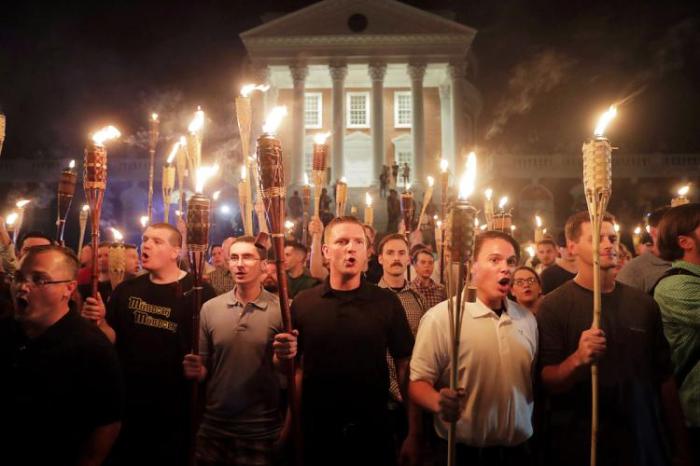
Yet a bunch of white dudes carrying Tiki torches shouting hate filled puns (“Jew will not replace us”? Seriously?) somehow doesn’t compute?
Come on.
This is America.
Racism and prejudice are not threats smuggled in past border security. They’ve always been here. At least since Europeans came offering trade and peace with one hand and guns and smallpox with the other.
The land of the free was stolen from the Native Americans. Our national wealth was built on the backs of slaves. Our laws and electoral system were built to empower one group at the expense of others.
Yet reformations in this process are rarely met with celebration. Instead of memorializing the end of slavery, we embrace the institution with fond remembrance.
Nor did prejudice and bigotry end when Rosa Parks refused to give up her seat, after Brown vs. Board, the Voting Rights Act, Freedom Rides, sit-ins or civil rights protests.
America has always been a place hostile to the under privileged, the second sex, religious dissenters, the brown skinned.
At most, we had become less confrontational in recent years, but we never really changed our core values, our social structures, who has power and who does not.
During my lifetime, people started to equate having a black President with the end of racism. Somehow they ignored the everyday reality for most black people.
They ignored the constant prejudice against the poor, the continued bigotry against LGBTs, the Islamophobia, the increase in hate crimes.
If there has been any change during the past eight months, it hasn’t been with the degree to which Americans are prejudiced. It’s the degree with which we’re willing to hide it.
Whereas before racists would claim to be colorblind, that their actions were completely devoid of racial bias, today they sigh and repeat the dusty slogans of Jim Crow Alabama or 1930s Berlin.
And somehow people are actually surprised about this.
It’s because too many of us have swallowed the lies about living in a post-racial society.
You thought we were beyond all that. It was a brave new world, morning in America, and we were finally treating everyone equally – unless you looked at what we were actually doing.
Mainly this is the reaction you get from white people. They rub their eyes and just can’t believe it.
You don’t see this too often from people of color, Muslims, LGBTs and some Jews. Why? Because they never had the luxury to ignore it.
That’s what we white folks have been doing since the beginning.
Whenever these issues come up, we have a knee jerk reaction to minimize it.
Things aren’t that bad. You’re just blowing it out of proportion.
But, no. I’m not.
That’s why you’re so damn shocked, son.
You haven’t been looking reality square in the face.
So when we’ve got undeniable video footage of angry white males (mostly) marching through Southern streets brandishing swastikas and assault rifles, it catches many white folks off guard.
They’re not prepared for it – because they haven’t been doing their homework.
We’ve been living in a bubble. Especially those living in major metropolitan areas.
That kind of thing never happens around here, right?
Of course it does!
Just because you live above the Mason Dixon Line doesn’t mean you’re safe.
You have a black friend, you like authentic Mexican food and you laugh while watching “Modern Family.”
But you haven’t opened your eyes to the reality outside your door.
You send your kids to private school or live in a mostly upper class white district. You have an exclusive gym membership that keeps out the riff-raff. You work in an office where that one token person of color makes you feel sophisticated and open-minded.
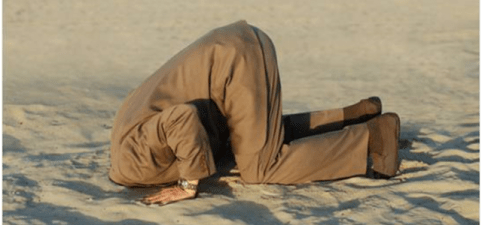
You’ve got to wake up.
You’ve got to educate yourself about race and class in America.
Because those people you saw in Charlottesville aren’t an anomaly.
They are an authentic part of this country, and if you don’t like it, you have to do something about it.
You can’t hide behind denial.
You have to take a stand, pick a side, and be counted.
Because one day soon, the torches will be outside your door.
You have to decide now – do you want to brandish or extinguish them?















 gadflyonthewallblog