The DNC is Giving Trump the Greatest Gift of All – a Weak Opponent

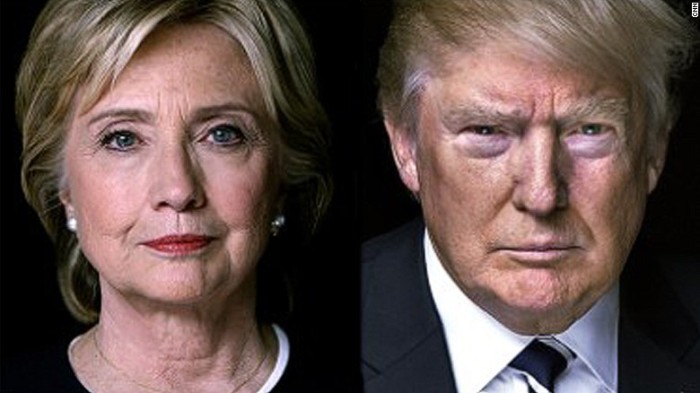
Donald-Trump-Hillary-Clinton

The latest polls have Donald Trump beating Hillary Clinton by 15 points.

No, not a Fox News poll.

This is from Nate Silver, the FiveThirtyEight numbers wizard who correctly called both the 2008 and 2012 elections. He says if the race were held today, Trump would win the swing states of Florida, Pennsylvania, Ohio, North Carolina, Iowa, Nevada, and New Hampshire, thereby assuring an easy victory.

Some will say this is just an inevitable boost in the numbers coming as it does right after the Republican National Convention. But need I remind you that the convention was chaos? The speaking roster was dominated by Trump’s family and a never-ending cavalcade of D-list celebrities. It reads more like the cast of the next Celebrity Apprentice than the best and brightest of one of our nation’s two major political parties.

And don’t forget Trump’s own acceptance speech. They’re coming to get you and only I can save you! Trump 2016!

THAT’S what you’re saying gave the Republican nominee a boost!? It should have hurt not helped him!

But let’s put that aside for a moment. Clinton has never polled well against Trump.

Occasionally she has topped him in polls in the past, but rarely more than the margin of error! Usually Trump comes out on top.

No. Hillary Clinton is a terrible challenger in this match-up.

Why?

There is one common factor during this election season that goes beyond political affiliation. People want change.

It’s one of the reasons Barack Obama won. He was seen as the change candidate. Heck! It was his campaign slogan! Hope and Change!

Unfortunately, he didn’t really deliver. Instead of a revolution, he gave us fiddling around the margins. Whatever the reasons for that – Republican obstructionism, his own centrism – it only frustrated the electorate further.

The economy stinks. There are endless wars. Yet the rich get richer while the poor get poorer. People are so starving for change today they are even willing to vote for fascism to get it. Because that’s what Trump offers. It’s change alright. Not good change. Not positive change. But at least things will be different under President Trump. The status quo will alter. America will be “great again” just as Germany became great again in the 1930s by doing a lot of the same xenophobic, racist, sexist and homophobic things Trump champions.

You can see a similar thirst for revolution with the Democrats. We, too, have a change candidate but it’s not Hillary Clinton. It’s Bernie Sanders.

He offered voters a return to the New Deal of FDR. He offered the kind of Democratic Socialism that saved our country from the Great Depression, gave us the strength to win WWII and became the greatest super power the world has ever known.

How does this poll against Trump? It’s devastating. Bernie beats Trump in almost every poll. He always has.

Why does Bernie do so well while Hillary doesn’t? Clinton is not seen as a change agent. She is the status quo. She is politics as usual. She is at best like Obama – fiddling at the margins. At worst she’s a neoliberal hawk that will make things worse – though probably not as bad as Trump.

So what can we do? Democratic Primary voters chose her over Bernie.

Or did they?

The recent leak of private emails from the DNC paints a picture of favoritism. The party unequivocally worked with the media against Sanders. (And, no, it doesn’t matter so much who leaked these emails and why, if they’re authentic.)

Add to that the widespread allegations of voter suppression in the primary match-up between Clinton and Sanders. In districts that leaned Bernie, voters had to face long lines. Voters registrations were mysteriously changed or they were purged from the rolls so they couldn’t vote for him. Bernie rallies were held in over-packed stadiums while Hillary’s were in much smaller venues – yet the results in these areas somehow favored Clinton. Exit polls consistently showed Bernie winning but the actual votes somehow went to Hillary. Meanwhile the media falsely painted the picture of Clinton inevitability even calling the election for her before all the votes were in.

It is hard to prove that all this subterfuge was enough to sway the election against Bernie. Maybe it was, maybe it wasn’t. However, it is naive to think it didn’t help Hillary to some extent. Maybe quite a lot.

So what we have is a presumptive nominee who can claim no legitimacy. Sure Bernie has done the classy thing and endorsed her. But it’s easy to see why his supporters have a hard time accepting that Clinton will do even a fraction of the things Bernie would as president.

So we’re left with a very weak Democratic nominee against Trump.

And this is not voters fault. This is not because Bernie supporters are just stubborn or should just get over it.

In our capitalist system, presidential candidates are products. We are the consumers. And the Democrats have floated an inferior product. It’s not enough that Trump is worse. Because there are other choices.

No one wants to take third party candidates seriously. We ignore the Green Party and the Libertarians because we say these interlopers can’t win. And there are plenty of good reasons why that may be so. However, the existence of these other options in light of a weak challenger on both the Democratic and Republican side all but guarantee each will get significant support.

It doesn’t matter if Jill Stein and Gary Johnson have little chance of winning. They will serve as spoilers for the major parties. Who will take the most?

Well, hard-core conservatives can find much to like in Hillary Clinton. Many of them are lining up to join her ranks. However, Bernie supporters find little to recommend them on Trump’s side. He is the antipathy of everything Bernie stands for. However, Jill Stein is very inviting. If anything, she’s more progressive than he is.

As such, look for the third party option to hurt Democrats more than Republicans. In fact, had Sanders been the nominee, the Democrats could have looked forward to many independents joining the ranks. They overwhelmingly favor Sanders but not Clinton. And there are more independents than either Republicans or Democrats.

So here we are.

There is next to no chance at this point that the Democrats won’t nominate Clinton. She will almost definitely be the standard barer against Trump.

And it leaves him with a huge advantage.

If he wins, it won’t be the fault of disaffected Bernie voters. It will be because of the cynical hubris of Democratic Party leaders.

The seeds of the Trump Reich have been sown right here.

Irony Alert: The Founder of Trump University Is Selling School Choice

Donald-Trump-Donkey-Hotey

Donald Trump is in favor of school choice.

Well of course he is! After all, he made a lot of money scamming poor suckers out of their hard-earned cash with Trump University.

He knows how privatized education benefits the corporations who run the school and not the poor schmucks who want to learn.

If he gets his way, our national education motto will be caveat emptor.

He is betting the American public is so stupid they’ll give a man caught in a scandal for cheating people out of an education the power to set all education policy for our nation’s children.

And it’s all right there before the public.

In fact, the parallels between Trump University and school choice policies are apparent to anyone who looks. Here are just a few of the similarities:


1) False advertising

First of all, Trump University was never an actual university!

The New York State Education Department warned administrators when the institution was founded in 2005 that it was operating without a license. So what did the “school” do? It changed its legal name to The Trump Entrepreneur Initiative.

See? We’re not saying it’s a university anymore. I mean we still call it Trump University colloquially and in advertising brochures and so on. But on legal documents we never make that claim.

It’s a classic bait and switch scheme.

But the same could be said of many charter schools.

They don’t claim to be private schools. They claim to be public schools. However, they aren’t subjected to nearly the same transparency and accountability standards.

Public schools are run by an elected school board. Most charters are run by appointed boards.

Public school board meetings are held in public. Any taxpayer can attend, comment on the proceedings and demand access to public records such as its budget. Many charter school meetings are held behind closed doors. Taxpayers have no access or input in the decision-making process nor access to records that should by all accounts be public record.

Charter schools are public schools just like Trump University was a university.


2) Choosing Students

So who could attend Trump University?

Not just anyone. According to the “Private and confidential” playbook obtained by The Atlantic, the one essential qualification listed all in caps was “ALL PAYMENTS MUST BE RECEIVED IN FULL.” In other words, Trump’s school would accept anyone who could pay the entrance fee.

That same playbook, by the way, admonished staffers not to talk with reporters and “If a district attorney arrives on the scene, contact the appropriate media spokesperson immediately.”

Similarly, charter and voucher schools get to choose their students, too.

Advocates pretend school choice means parents get to choose where their kids go to school. Wrong! It means school administrators get to choose who they’ll accept.

At private schools that accept vouchers, the amount of taxpayer money spent at a traditional public school and given to the private school in the form of the voucher is rarely enough to pay for the full tuition. So voucher programs often make it impossible for poor kids to attend private schools. They just reduce the cost for rich kids whose parents can afford to pay the difference.

At charter schools, administrators are infamous for picking students based on the ease with which they can be taught. Sometimes they don’t accept students having academic difficulties or who are in special education programs. Other times they kick them out before state-mandated standardized tests. That way they can falsely inflate their own test scores and pretend like they’re doing a great job teaching all students when they’re not.


3) Quality of Services:

Former Trump University students are suing the reality TV star and Presidential candidate because they claim they paid tens of thousands of dollars for nothing.

You got a free 90-minute seminar that promised enrolling in the school would teach you everything you need to know about real estate investment. Then you were told to enroll in a $1,495 three-day seminar where you were told to enroll in increasingly more expensive additional seminars even up to an Elite Gold package costing $35,000.

However, very little attention was spent to actually teaching students much of anything. Each seminar was basically an advertisement for the next seminar.

Prospective students were told they would be “mentored” by “handpicked” real estate experts showing them Trump’s own real estate strategies.

But no one has yet been able to produce a single instructor handpicked by Trump. Moreover, many of these instructors didn’t even have any knowledge of real estate, They came from other academic fields.

Trump never reviewed the school’s curricula. It was developed by a third party for motivational speakers and timeshare rental companies.

Moreover, Trump never attended any of these seminars personally. Attendees were often told that he was in the building or on his way, but he never showed up. At one seminar, attendees were told they’d get to take their pictures with Trump but ended up getting pictures with his cardboard cutout!

Similarly, many of our nations charter schools provide a substandard education.

When compared with traditional public schools, no evidence has been found that they do a better job. In fact, the evidence says charter do no better and often much worse than traditional public schools.

One reason is that many charters don’t require their teachers to be of the same quality as traditional public schools. Charter often skimp by hiring uncertified teachers or Teach for America trainees who have no degree in education and have only passed a six weeks course.

Also, cyber charter schools, in particular, often use third party companies to create their entire curriculum. This is usually just taking a text book in a given subject, digitizing it and having students answer the questions that used to be in the back of the book.


The parallels are clear. Perhaps that’s why Trump feels comfortable championing choice in education.

He is, after all, an expert on how it works and how it cheats the public.

Creating one excellent education system for everyone is both cheaper and more efficient than dividing children up so they can be monetized. But such a system doesn’t allow corporations and investors to turn a profit. Let’s be real – that’s why Trump is advocating for it.

Several lawsuits have been filed about the Trump University scam and will continue haunting Trump well past the November election.

However, he still maintains it was “a terrific school that did a fantastic job”.

His son, Donald J. Trump, Jr., even gave a speech touching upon school choice at the Republican National Convention this week.

Young Trump never attended public school, but he knows his dad’s business model.

His comments came under fire largely because he repeated several passages written by conservative writer and law professor F. H. Buckley. However, the campaign defended the move saying Buckley helped write Junior’s speech.

It may not be outright plagiarism, but it shows the thinking of the Trump campaign. Rehash old ideas that have failed in the past and hope the voting public buys it.

And maybe they’ve got a point. As H. L. Menken wrote -“Nobody every went broke underestimating the intelligence of the American public.”

That’s what the Trumps are doing. And if their education policy becomes a reality at our nations schools, they’re going to do everything they can to ensure that stupidity continues for generations to come.

For them education isn’t about making America great again. It’s about providing an endless stream of suckers to be taken advantage of by the predators of big business.

Paying Back School Kids on the Installment Plan – PA Budget Shenanigans

allowance2

Hey, Kids!


We’re your Pennsylvania Legislature, and we’re here to help!


We just passed a new state budget that puts $200 million more in your classrooms! Isn’t that great!?


Yeah. We know. Your public schools are crumbling to dust, and your school books are falling apart, and you’re stuffed into overcrowded classrooms, and…


But here’s some more money so it’s all better now!


Um. No. It actually doesn’t heal that huge chunk of cash we slashed from public schools six years ago. We’ve been giving you back about $100-200 million a year for a while now, so with this new budget… uh… We’re actually about $150 million short. But we’re good for it!


No, that doesn’t take into account inflation. Or compounding costs. Or the billions you should have had but did without in the intervening years. Or the loans you had to take out to stay operational while we argued over all this.


Jeez. I guess that means your schools are still deep in the hole, huh?


Well, don’t you worry. Next year we’re bound to give you just a little bit more. At this rate, we should have paid you back all that money we took in about 20 years!


You’re welcome!


The 2016-17 budget was passed in two motions. A spending plan was ratified at the end of June, and a revenue package to pay for it was passed on Wednesday. That’s only 13 days beyond the state-mandated deadline for doing so. It’s a huge improvement over last year’s budget, which was 9 months late!


One of the largest sticking points was an initiative to allow charter schools to proliferate exponentially without oversight or state control. It was tabled until a later date. Legislators now go on summer break.


What’s that, sonny boy?


You wonder how Pennsylvania stacks up to other states in terms of education funding? Well according to federal education data, we’re number one!


No. Not number one as in the best. Number one as in the worst. Our state has the worst funding inequality in the nation!


You see, even though we’ve been adding more money into classrooms, it hasn’t been done equitably.


When our previous Governor, Corbett, and the Republican-controlled legislature slashed almost $1 billion annually in education funding back in 2011, we didn’t take it away from all schools equally. We took the lion’s share from the poorest schools. But when we started putting it back piece-by-piece, we didn’t give it all back to those impoverished districts.


It’s all kind of complicated, but since you asked…


We used to do something called the charter school reimbursement.


This was money set aside to help schools deal with the extra cost of having a charter school pop up in their neighborhood. Charter schools siphon off loads of funding so they can operate without actually reducing the operating expenses of traditional public schools all that much. So when a charter school opens, it usually means kids left in the traditional public school suffer.


When the Corbett cuts went through, we got rid of that charter school reimbursement all together. Now those schools – most of them in impoverished areas – have to make up that money some other way.


The funding formula? Yes, the legislature did create a new funding formula – a more fair way to distribute education monies across the Commonwealth. However, it’s got some kinks in it.


First, we didn’t want to take away any extra money rich schools were getting that they don’t need, so we made sure to grandfather that money in. I know it means less for schools that really need it, but… you know… rich people.


Second, the funding formula only adds $150 million for the poorest districts. Our current Governor, the guy who was elected after Corbett was kicked out of Harrisburg for shortchanging school children, Gov. Wolf, he wanted to include more. But the Republican controlled legislature wouldn’t allow it. They said it would send too much money to Philadelphia and Pittsburgh and you know what kind of kids go there? Right? Blac… I mean, poor ones.


You know, the only way we get away with this is because Pennsylvanians aren’t very good at math.


You see, we’ve been playing a shell game with numbers. We add fixed costs like pensions into the mix to make it look like we’re spending more than ever on public schools. But when it comes to money that actually goes to the classroom, nope!


It’s like replacing your tires and wondering why you have no money for gas.


Specifically, you kids lost $841 million for your classrooms between 2010-11 and 2011-12. That’s why you lost 30,000 teachers, guidance counselors, nurses and other school staff. That’s why you lost extra-curriculars, arts and music, foreign language, field trips and why class size exploded. Heck! Several kids died for lack of having a full-time school nurse!


By the time voters booted Corbett, he and the Republican legislature were spending $579 million less in 2014-15 as opposed to 2010-11. And now with Gov. Wolf and the threat of voters booting lawmakers who thought they were safe even in their highly gerrymandered districts, we’ve got that gap down to about $150 million.


How are we paying for this? Uh. We’re taxing the poor and using one-time funding streams.


We’ve raised a $1 per pack tax on cigarettes. We’ve got liquor privatization, internet gaming, a licensing fee for a second Philadelphia casino, and a tax amnesty program.


More than half is made up of one-time sources. That means next year we’re going to have another budget deficit to fix just like we did this year. But our fiscal conservatives will just do the same thing and put it on the credit card. That’s what it means right? Fiscal conservative?


The good news is we didn’t have to raise taxes on rich people. We’re one of the “terrible ten” states that relies on the poor to pay a larger percentage of the tax burden than the rich, and we’re darn proud of it!


Sure we could have instituting a severance tax on natural gas; closed the Delaware tax loophole; and slightly increased taxes on those who are making bank, but those are our real constituents. Those are the ones who pay us the big bucks. You expect us to inconvenience them for you poor people!?


Ha!


Consider that a lesson, kiddos. We aren’t here for you or your parents. Now take this measly bit of education funding we owe you and be happy with it. If you’re lucky, next year we might give you back the last few hundred million we took. Then you’ll only be down due to rising costs, inflation and seven years of neglect!


PA House: Online Courses for the Poor. Teachers for the Rich.

Screen shot 2016-06-22 at 3.51.56 PM

Pennsylvania has a long history of under-resourcing its public schools.

State Rep. Jason Ortitay has a solution.

The Republican representing Washington and Allegheny Counties envisions a world where poor kids learn from computers and rich kids learn from flesh-and-blood teachers.

It’s all in his proposed legislation, H.B. 1915, passed by the state House on Monday. It now moves on to the Senate.

The legislation would assign the Department of Education the task of organizing a collection of online courses for use by students in grades 6-12. Some classes might be created by the state and others would be made by third parties with approval for state use. If anyone so desired, the courses could be utilized by anyone in public school, private school, homeschool and beyond. The online learning clearinghouse thus created would be called the “Supplemental Online Course Initiative.”

But what does this have to do with impoverished schools?

According to the bill, itself, state education officials would:

“Upon request, provide assistance to school districts which have been declared to be in financial recovery status or identified for financial watch status under Article VI-A by facilitating the school districts’ search for low-cost or no-cost online course options.”

In other words, this bill provides an alternative for schools where the local tax base isn’t enough to fund traditional classes presided over by living, breathing teachers.

In the distant past, the state used to made up some of the slack to level the playing field for students born into poverty. However, for the last five years, the legislature has forced the poor to make due with almost $1 billion less in annual state education funds. This has resulted in narrowing the curriculum, the loss of extra-curriculars, increased class size, and plummeting academic achievement.

While the majority of voters are crying out for the legislature to fix this blatant inequality and disregard for students’ civil rights, Ortitay’s proposed bill lets lawmakers off the hook. It allows legislators to provide a low quality alternative for the poor without necessitating any substantial influx of funds.

Here, Jaquan and Carlos. You can learn from this YouTube video. Billy and Betty will be in the classroom learning from a trained professional with an advanced degree in the subject.

None of this bodes well for state budget negotiations going on right now to finalize a Commonwealth spending plan by the end of June. Those expecting a proposal to heal the funding cuts most likely will be disappointed – AGAIN.

Nevertheless, the bill still needs to clear the Senate and a signature from Gov. Tom Wolf before it can become law.

In the House, the bill passed 128-66 with 8 abstentions. Though lawmakers on both sides of the aisle supported the measure, it was opposed only by Democrats.

If the clearinghouse becomes a reality, it would be implemented in two phases. In the 2017-18 school year, it would only offer courses on subjects tested by state Keystone Exams at no cost to local districts. Then in the following year, it would expand to include courses not tested on state mandated exams that can be purchased by local districts.

If the Keystone-aligned courses are free to local districts, who pays for them? Certainly these online classes aren’t being constructed, monitored and graded as a public charity.

According to the bill, the Department of Education should:

“Explore the possibility for Federal and private funding to support the clearinghouse.”

However, if the state can’t find someone else to foot the bill, the cost will be born by Pennsylvania taxpayers.

Specifically:

“There is hereby established a restricted revenue account in the General Fund to be known as the Online Course Clearinghouse Restricted Account…”

“The funds in the account are hereby appropriated to the department on a continuing basis for the purposes of paying expenses incurred by the department in carrying out its duties relating to the administration of the clearinghouse under this article.”

How much taxpayer money will be allocated to this initiative? It doesn’t say. Will this money come from an increase in education spending or will it cannibalize other education line items? Again, it doesn’t say. Apparently such decisions would be made while drafting the state budget – presumably not the one being hashed out now, but the 2017-18 spending plan.

“This initiative will give public schools, which might not otherwise be able to afford similar educational opportunities, the flexibility and ability to make use of online learning [for] the betterment of their students,” Ortitay said in a press release.

However, online courses have an infamous history throughout the Commonwealth, and, indeed, the nation.

All courses collected in the clearinghouse would be subject to approval by the state Department of Education. But cyber charter schools fall under the same jurisdiction often with disastrous results.

Internet-based classwork – like that which would be collected in the clearinghouse – makes up the curriculum at cyber charter schools. Moreover, these online schools have a proven track record of failure and fraud.

A recent nationwide study found that cyber charters provide 180 days less of math instruction than traditional public schools and 72 days less of reading instruction.

In addition, researchers found that 88 percent of cyber charter schools have weaker academic growth than similar brick and mortar schools.

They have an “overwhelming negative impact” on students, according to researchers.

And THAT kind of curriculum is what the state House voted to increase using public money!

One of the biggest problem with online courses is the low quality of what’s being offered. Here’s how a cyber charter teacher describes the reading curriculum at his school:

“Most cyber schools get their curriculum from K12, a company started by William Bennett, a former federal Secretary of Education. My school gets the majority of its high school material from a mail order company called Aventa.

When Aventa creates a course it is fairly bare bones. They choose a textbook from one of the major textbook companies, and cut it up into lessons. The lesson will contain a few paragraphs introducing the topic, they will have the students read a section of a chapter, they will ask the student to do a few problems from the book, and lastly, there will be some form of graded assessment, taken from textbook review problems. That is all.”

This is like giving out nothing but worksheets and expecting high academic performance. Here. Read the book, answer the questions at the back, and call it a day.

Another problem is high turnover for students taking online classes. Though learning exclusively through the Internet seems novel at first, few students continue taking these courses more than a year or two.

This is especially true for younger students. It’s hard to imagine many 6th graders with the tenacity to persevere without anything but the most limited human interaction and adult supervision.

Advocates claim this is healthy experimentation. Students are trying out different means to accommodate their learning styles.

However, when students invariably fail at online education and return to their traditional public school hopelessly behind their peers, taxpayers bear the cost of remediating them. And their low academic performance becomes a reflection on the public school system where it is used as an excuse to denigrate teachers and close more brick and mortar buildings.

The online educational clearinghouse is supposed to be monitored and regulated by the state Department of Education – just as it does for state cyber schools.

Unfortunately, state budget cuts in K-12 education have left the department seriously understaffed and unable to do this job effectively.
Just look at the almost weekly news reports of fraud at state cyber schools.

For instance, PA Cyber Charter founder Nicholas Trombetta allegedly stole at least $8 million in public dollars only a few years ago. Federal investigators filed 11 fraud and tax conspiracy charges against him and indicted others in the case.

Another cyber charter founder, June Brown, was also indicted for theft of $6.5 million. Brown and her executives were indicted on 62 counts of wire fraud, obstruction of justice and witness tampering. She ran the Agora Cyber Charter School, which was part of the K12 Inc. empire of virtual charters.

Why would we want to increase the opportunities for such fraud by encouraging students to take more online classes?

This bill is at best a distraction.

It’s a Band Aid for the fiscal irresponsibility of our lawmakers toward our public schools. It’s an excuse so that we’ll let them continue short changing our children for at least another year with yet another budget lacking in education funding.

This does not compute.

Disenfranchised Berners Need to Push for Election Reform NOW!

sanders-minorities2.jpg.size.custom.crop.1086x731

So we lost the Democratic primary.

Bernie Sanders is out and Hillary Clinton is in. She will almost definitely face Donald Trump in the general election for President.

If you’re like me, you’re still in shock.

She drew crowds of hundreds. He drew crowd of tens of thousands.

Exit polls consistently showed him winning, but when the votes were counted, he ended up losing.

There have been consistent reports of rampant tampering with voter registration resulting in hundreds of thousands of voters being removed from the rolls; party affiliations being changed without voter consent so they cannot cast a ballot; polling places being reduced significantly so voters have to wait for hours resulting in voters leaving before casting a ballot. And that’s not even counting the mainstream media’s portrayal of Clinton as inevitable by conflating superdelegate votes (which at this point are only non-binding polls of how these party insiders MIGHT vote in July) with actual votes that are already tallied and unchangable.

Really it shouldn’t be so shocking.

Our democracy has been a smoking shell of itself for a long time now.

In 2008 when Barack Obama beat John McCain, we saw some of these same shenanigans. We had language barriers, invented rules, long lines sometimes hours long, and, in some cases, voting machines that changed people’s votes.

By the end of election night, hours after victory was declared, Obama said to supporters in Chicago, “I want to thank every American who participated in this election. Whether you voted for the first time or waited in line for a very long time.” As the crowd roared, Obama declared: “By the way, we have to fix that.”

And now eight years later, we’ve done absolutely nothing to “fix that.”

If anything, the situation is much worse. While Obama voters met hardships, just as Al Gore supporters did in 2000, those were extra-party elections. They were examples of Republicans disenfranchising Democrats. But now we have something new – Democrats suppressing other Democrats!

From the beginning Sanders has said that his campaign was not about himself, it was about starting a real progressive movement. “Not me, us,” the slogan goes.

Now is the time to start cashing in on that idealism.

While Hillary supporters call for unity, we, Berners, must push the terms.

I don’t know if there is truly anything Clinton can do to get my vote short of stepping down. Like many Berners, the very idea of supporting someone so opposed to my views is repugnant. But if Clinton is going to have any shot, she and her supporters need to agree to finally fulfill Obama’s promise.

Let’s fix that. Let’s fix our broken and moldering election system.

It’s not like it’s any big secret how to do so.

Robert Steele, Jim Turner, Ralph Nader, Christina Tobin, Howard Zinn and a host of others have had available a series of common sense reforms for almost two decades. It’s time we push the Democrats to get behind them:

1) Open Ballot Access. Historically, third party candidates have had a harder time getting on the ballot than Democrats and Republicans. Even the popular Green Party Presidential candidate Dr. Jill Stein isn’t on the ballot in every state.

Open ballot access means that no matter what party a candidate represents, he/she has to do the same things to get on the ballot. No more can we accept only Democrats and Republicans to be on the ballot in every state. Ballot access requirements should be the same for every candidate, irrespective of party affiliation. This should also apply to initiatives and referenda, as well as primary and general elections.

2) Holiday Voting. Voter turnout in the land of the free is a disgrace. Much of that has to do with the fact that people are working too hard and too long to easily get to the polls. Election Day should be a national holiday. This way every voter should be able to vote easily and won’t have to worry about missing work and/or transportation issues. In addition, Early Voting should be universally available. No long lines. Vote at your leisure and even spend some time getting involved in the political process.

3) Paper Trail. ALL ballots must either be on paper or otherwise subject to physical re-count. It is too easy for votes to be miscalculated without any reliable recourse for reasonable challenges and/or recounts if there is no paper trail. Too many voting machines in use do not meet this standard. If voting machines are used, each vote must produce a physical paper footprint subject to recount. If there is any attempt at voter suppression, it should be easily provable and remedied.

4) Honest Open Debates. Americans demand choice in almost everything in their lives except politics. Go to the grocery store and there are 20 different kinds of frosted flakes, but go to the polls and you only have the choice of Dems or Repubs. Another way to end the current monopoly of the major parties is to mandate debates include all political parties – even third, fourth, and fifth parties.

5) Tightly-Drawn Districts. We must end the corrupt practice of gerrymandering, replacing it with compact computer drawn districts determined by independent non-partisan commissions. And we should expressly prohibited any voting district to be drawn to favor or disfavor an incumbent or political party.

6) Full Public Funding of Diverse Candidates. Get the money out of politics. Eliminate all corporate financing of campaigns, and all political action committees. No more PACS, Super PACS, Citizens United, all of it! Instead all state and national campaigns should only be publicly funded.

7) No Legislation Without Consultation. The most frustrating things for voters is when politicians pass legislation without reading it first. The next most frustrating thing is that this legislation isn’t easily available or accessible to their constituents. We can eliminate special interest dominance of the legislative process, by ending the practice of passing legislation such as the Patriot Act without its actually being read. Moreover, end all earmarks. All legislation without exception should be published on line with an easy to understand one-page summary, one week prior to its coming to a vote, to include explicit geospatial pointers for all “earmarks” each of which must be publicly announced and offered for amendment to the voters in the relevant district at least one week prior to the passage of national, state, or county legislation affecting them. Similarly, no public privileges should be granted to any corporation or other entity without full public consultation and public polling or balloting.

8) End the Electoral College, Superdelegates and every representative voting system where possible. When you go to vote for something that should be it. You’re not voting for someone else to vote for you. You’re voting for that candidate outright. Yes, our system of Republican government essentially involves people voting for us. But we don’t need to add extra levels of distance between us and our representatives. Eliminate the middleman. Eliminate the possibility of further disenfranchisement.

There are certainly other reforms we can add to this list. I do not mean it to be exhaustive. But I do think it represents a good start.

And we mustn’t wait. We need to push for it NOW!

Millions of people have just had their votes stolen from them. Clinton and the Democrats are calling out for unity.

Okay. If you want even the possibility of it, prove you’re on our side. Work with us to ensure that people like you can never again gain power in the manner that you just did.

If you want my vote, respect it.

Otherwise, I’ll just give it to someone else.

Dr. Stein, are you with me?

Hillary Clinton is Not as Bad as Donald Trump – She’s Worse

Screen shot 2016-05-15 at 8.21.59 PM

On the face of it, the title of this article is pure bull crap.

What do you mean Hillary Clinton is worse than Donald Trump!?

She’s not a reality TV star pretending to be Presidential.

She’s not a bigot, a demagogue and a fascist.

She’s not the top choice of racists and white supremacists everywhere.

And you’re right. She’s none of those things.

If I’m being honest, there are plenty of things Clinton has over Trump.

First of all, she’s immensely more qualified to be President. She has decades of experience in public service. Trump has none.

Moreover, she has been instrumental in pushing forward progressive policies. She championed healthcare reform when it was unpopular to do so. Without her work, it is doubtful we’d have the little reforms we have today. Trump, on the other hand, hasn’t lifted a finger to help the American people accomplish anything – unless you count ogling half naked women on the Miss Universe pageant or getting excited over which D-list celebrity he was going to “fire” on The Apprentice.

However, there is an area where both candidates have significant overlap.

If you remove the names and the personalities, if you ignore political affiliation and past history, Donald Trump and Hillary Clinton begin to look very similar.

Who does Trump represent? The 1%.

Who does Clinton represent? The 1%.

It’s really that clear.

In fact, in 2008 Trump famously donated to Clinton’s Presidential campaign. He is exactly the kind of person who wants someone like Clinton in the Oval Office. She would look out for his interests.

Her campaign is financed by Wall Street. Trump IS Wall Street. She was paid exorbitant fees to give private speeches to bankers and stock brokers. One would not be shocked to find Trump in the audience.

Yes, there are differences. One can’t imagine Clinton talking about women with as much arrogant deprecation as Trump. One can’t imagine her suggesting we deport millions of people, that we put all Muslim’s under surveillance, or that many Latinos are murderers and rapists.

But that is exactly what makes her worse. Trump looks like a little dictator (which he is.) Clinton does not.

She appears to be the middle ground. She appears to be the sane candidate – and in some ways she is. But in many of the most important ways that count for Americans living from paycheck-to-paycheck, she isn’t a compromise at all. She’s nearly the same thing.

Imagine two shelves holding poison in a child’s playroom. On one is a purple bottle sporting a skull and crossbones under the word “Poison.” On the other is a bright pink bottle with a smiley face under the word “Candy.” Which is worse?

You know what you’re getting with Trump. Clinton pretends to be something else.

In my opinion, this is why we desperately need Bernie Sanders in the race. He is an actual option between the corporatist campaigns of Trump and Clinton. He actually gives voters a choice.

In his decades in the House and Senate, Sanders worked tirelessly for the 99%. He voted against the Iraq War and the Patriot Act. He was an open critic of Alan Greenspan insisting the Federal Reserve Chairman was only represented “large and wealthy corporations.” He passed more amendments than any other congressperson getting through amazing amounts of legislation. He worked to overhaul the Veterans Administration and audit the Federal Reserve System.

And we’ve seen how energetically the Democratic establishment is fighting to keep Sanders off the ballot. During the primaries, they’ve tried every dirty trick in the book to suppress votes from their own party to ensure Clinton is the only choice in the general election.

It’s unprecedented. Voters like me who might have supported Clinton had she won the primaries fairly have been completely turned off by the Democrats. How can we support a candidate that we’re told we must vote for? Shouldn’t the Democrats be courting our votes, not forcing them?

This just goes to show the need for a third party. The Democrats have been largely overtaken by neoliberals – what we used to call Republicans. Likewise, the GOP has been overtaken by the worst extremists possible – fascist populists of which Trump is a clear representative.

Who is left for progressive voters? Can we really support a neoliberal like Clinton?

No. The only way for progressives to win is to keep Sanders in the race through the general election. Virtually every poll says he would trounce Trump. Many – but not all – polls likewise say Clinton would beat the Republican front runner, but is that even a contest? If both candidates represent the same constituency, it’s not really a choice.

Few things would be worse than a Trump presidency. He would immediately go after our brown-skinned brothers and sisters. He would make things much more difficult for our sisters, mothers and daughters. And he would crash the economy and engage us in disastrous wars of choice across the globe.

A Clinton presidency on the other hand would not be so obviously apocalyptic. She would continue and worsen neoliberal policies strangling our public institutions. She would continue to privatize our schools and enrich the testing and charter industries. She would continue to lock away the poor and minorities while enriching the private prison industry. She would bolster weak environmental regulations while opening back doors for oil and gas companies to rape our planet. And as the majority of people drown in debt, she would wag her finger and blame the poor for their circumstances without offering a lick of help.

In short, Trump would be a mega-nuclear explosion. Clinton would be nuclear radiation – a silent killer. That’s worse. One kills all at once. The other does so slowly by degrees.

This is not a choice any American should be forced to make.

Fight to keep Sanders in the race.

Unwilling to Help Schools, PA Legislature Attacks Teachers

Screen shot 2016-05-13 at 10.48.35 PM
If you live in Pennsylvania, as I do, you must be shaking your head at the shenanigans of our state legislature.

Faced with a school funding crisis of their own making, lawmakers voted this week to make it easier to fire school teachers.

Monday the state Senate passed their version of an anti-seniority bill that was given the thumbs up by the House last summer.

Thankfully, Gov. Tom Wolf is expected to veto it.

As usual, lawmakers (or more accurately their surrogates at the American Legislative Exchange Council (ALEC) who actually wrote the bill) spent more time on branding the legislation than appealing to logic, sense or reason. The bill called HB 805 was given the euphemistic title “The Protecting Excellent Teachers Act.”

Yes, this is exactly how you protect excellent teachers – by making it easier to fire them.

Currently, if teachers are furloughed, those with least seniority go first. Under this new law, teachers would be let go based on their academic rating. Teachers can have one of four ratings: Distinguished, Proficient, Needs Improvement and Failing. Under the new legislation, teachers rated Failing would be furloughed first, followed by those under Needs Improvement, etc. Within those categories decisions would be made based on seniority.

It sounds great – if you know absolutely nothing about Pennsylvania public schools.

First off, in 2015 our rating system found 98.2% of state teachers to be in the highest two rating categories. So at best this bill is next to meaningless.

Second, like virtually all value added rating systems across the country, our rating system is pure bull crap. It’s a complicated measure of meaningless statistics, student test scores and mumbo jumbo that can be twisted one way or another depending on the whims of administrators, dumb luck and the phases of the moon.

A New York Supreme Court judge just ruled this week that the Empire state’s similar teacher rating system is “arbitrary” and “capricious.” But in Pennsylvania our legislators want to make it the axe that slices away teachers from the profession.

Third, the bill isn’t really about seniority at all. It’s about making it easier to fire teachers no matter how good they are at their jobs. Currently, state school districts are not allowed to furlough teachers based on lack of funds. This new legislation aims to remove that impediment.

It makes sense in a way. Pennsylvania lawmakers refuse to properly fund public schools so they have to make it easier to downsize. You’re welcome, taxpayers!

If this bill becomes law, school directors could fire whomever administrators want for whatever reason.

Admin: Mr. Smith, you’re fired.

Smith: Why?

Admin: Um. Financial reasons.

Smith: But I’m rated as Distinguished.

Admin: Not after we adjust the formula, mess with your class rosters and all around juke the stats to show you’re Failing.

Seniority is not perfect, but it avoids all these high jinks. It leaves no questions, nothing that can be easily altered. Either you have seniority or not. And if administrators have been doing their jobs by making sure good teachers stay and bad teachers are trained or let go, seniority correlates with good teaching. If you’ve been in the classroom for a long while, you’re probably a pretty descent teacher. Like anything else, practice makes perfect.

The public has to realize something about teaching at a public school. It is a deeply political job. You are subject to the whims of school directors, administrators, parents or anyone in the community with an axe to grind. You simply can’t do the job without some protections. How else can you fairly grade the school director’s child? How else can you exercise academic freedom to do what you think best if every decision is subject to committee?

This doesn’t mean teachers can’t be fired. They are fired every day. But administrators have to be able to make a valid case. They have to gather evidence to prove you deserve to be fired first.

It is highly ironic that Pennsylvania lawmakers are pursuing this legislation when they have done everything in their power to protect their own jobs first.

You want to talk seniority? Look to the legislature.

Incumbents are almost always re-elected. Why? Not because they do such a great job. They’ve made sure to gerrymander the state. Republicans reside in overwhelmingly Republican districts, Democrats in overwhelmingly Democratic ones.

This is no accident. A few years back, legislators redrew district borders to make sure they’d keep their jobs no matter how crappy they were at governance. It is deeply unfair and undemocratic. The majority of voters do not get a say. Instead, we cater to special interests and protect terrible legislators so they can pass crap like this bill without fear of repercussions during election season.

Do you think lawmakers would have refused to pass a state budget this year until 9 months after the deadline if they thought voters could actually hold them accountable? No way!

Do you think they’d withhold fair funding to the majority of public schools in the state if they thought the majority of voters had a say whether these knuckleheads stayed in power? Absolutely not!

And worst of all, even with Gov. Wolf’s promised veto, the crisis is far from over. When next year’s budget comes up for a vote in June and the Governor again asks for equitable funding for schools, legislators are bound to use HB 805 as a bargaining chip.

“You want some money for our kids’ schools? Then you’d better make it easier to fire teachers,” they’ll say.

Protect excellent teachers? Ha! They’re protecting terrible legislators.

We’ll never have good governance in this state again unless we find a way to redraw our gerrymandered districts. We need a voter referendum, a nonpartisan committee or – here’s a long shot – we need for extremist residents of these gerrymandered districts to revolt against the politicians hiding behind them.

Until then, we will be forever cursed with terrible lawmakers, execrable laws, under-resourced schools and a crumbling state.


Click HERE to find out how your representatives voted on HB 805.

Five Ways Hillary Clinton is Running a Dirty, Underhanded, & Disingenuous Campaign

2213399733_a9a86fb14a_z

Dirty politics is nothing new.

Negative campaign adds, spreading false rumors, jamming the other party’s telephones, sabotaging opponents, stealing an opponent’s debate playbook, staging fake riots even sabotaging peace talks to help an incumbent.

Historically, we’ve seen all this and more during presidential campaigns from politicians on both sides of the aisle.

But even with that said, the Hillary Clinton campaign is finding new and more unsavory ways to wage political warfare against her challenger Bernie Sanders.

The race for the 2016 Democratic nomination has been marked by some of the most underhanded and repulsive moves we’ve seen in years.

When the dust clears, Democrats will be asked to support the winner, but given the scorched Earth policy of Clinton, it may be very difficult to put the base back together if she eventually comes out on top.

Here are five ways the Clinton campaign has sunk to new lows in its race against Sanders:

1) Voter Suppression in New York

In numerous general elections across the nation, Republicans have gleefully passed voter ID laws they admit were designed to keep down Democratic votes.

However, in this year’s primary election, we may be seeing Democrats working to stop other Democrats from voting.

Consider this: Sanders has won seven of the last nine Democratic primaries. The two won by Clinton were marked by massive “voter irregularities.” And in the overwhelming majority of cases, these problems affected Bernie supporters and not Hillary devotees.

In New York this week, 126,000 people were mysteriously dropped from the voter roles in Brooklyn, where Bernie was born and raised. They were registered in October, but on election day they were gone.

Another 60,000 Brooklyn Democrats had their registrations mysteriously changed to Republican so they couldn’t cast a ballot for their native son. What’s more, these changes were made after the April 1 deadline for voters to make these modifications, themselves. Someone else had to alter registrations in secret without voters’ knowledge.

This fraud wasn’t limited to one Sanders stronghold. According to various reports, approximately 30% or more of the Democrats throughout the Empire State who went to vote found their registrations had been changed, making those Democrats (invariably Sanders supporters) ineligible to vote. Had these people been counted, the state would probably have gone Bernie.

New York Mayor Bill de Blasio and City Comptroller Scott M. Stringer – both Hillary supporters – have each called for an investigation. But the results won’t come until after the election. By then, there will be nothing we can do about it.

Is this just a coincidence? Given the stakes at hand, could someone have specifically targeted these people?

Yes. Someone could. Read on.

2) The DNC is Taking Sides

The Democratic National Committee (DNC) is supposed to be working to help both Clinton and Sanders coordinate their campaigns. The party is supposed to be impartial. It is not supposed to favor either candidate, but it clearly does.

It is staffed by Clinton supporters like Debbie Wasserman Schultz, the party’s national chair and a former Clinton campaign manager. Moreover, the company hired by the DNC to collect campaign information for both parties, NPG Van, has its own ties to Clinton.

This is significant because NPG Van was shown in at least one instance to having exposed privileged campaign information to both sides.

Facts about who supports each candidate and where they live is kept in a database run by NGP Van. The data helps each side figure out phone banking schedules, where to effectively campaign, etc. So when the company experienced a brief “glitch,” it exposed all this information to both the Clinton and Sanders campaigns.

A Sanders staffer was fired for looking at Clinton’s data to determine the scope of the leak. However, the DNC and the Clinton campaign spun this so it looked like the Sanders campaign was stealing the information when the staffer knew perfectly well everything he was doing would be traceable back to him. The DNC even cut off the Sanders campaign from accessing its own files until Bernie took the party to court.

Let’s say the situation had been reversed. Let’s say Clinton staffers had accessed Sanders information about who supports him and where they live. What would they have done with the data? Who knows? But it would have given them the exact information necessary to pull off the voter suppression we saw in New York – which communities need to have “voter irregularities,” and which voters to disenfranchise in order to ensure a Clinton victory.

But if Clinton activists had accessed Sanders information, the DNC would have gone public about it just as the party did about the Sanders staffer, right?

Would they? Would a party that has shown such favor to one candidate, staffed in large part by supporters of that candidate, would it be entirely transparent and forthcoming about improprieties from that campaign? Maybe. Maybe not. But the fact that SOMEONE clearly had access to Sanders information and used it against his campaign in New York leaves us with many unanswered questions.

3) Voter Suppression in Arizona

Voters in Democratic districts of Arizona went to the polls to exercise their civic duty only to find lines literally miles long and wait times of several hours.

The most populous county in the state, Maricopa County, reduced polling locations from 200 during the last election to just 60 this year. That amounts to over 20,000 voters for every location.

The reason given was financial. The Republican administration was trying to save money.

But in retrospect two other explanations seem worthy of consideration. First, this may have been a dry run for the general election. The GOP may have been trying to gauge how well it was suppressing the vote in the highest democratic districts.

Or this may have been an attempt to hurt one specific candidate – Sanders – and help another – Clinton. Once again these “voter irregularities” disproportionately affected Sanders supporters more than Clinton advocates.

Hispanics and Latinos in the state leaned Sanders. They make up more than 40% of the population of Phoenix (30% state wide). Yet in these densely populated neighborhoods, there were few to no polling places open. Faced with such difficulties, many working class people didn’t have the time to wait up to 5 hours to cast a ballot – they had to get to work.

Why would Republicans help Clinton? In polls she is weaker against every GOP presidential candidate than Sanders. Moreover, even if she wins, she is much farther right than Bernie.

Add to that suspicious actions by the media. At roughly 8:30 pm, a little over an hour after polls closed, with less than one percent of precincts reporting, the Associated Press declared Hillary Clinton the winner.

In Democratic primaries delegates are awarded proportionally. It’s not winner take all. Delegates are awarded by the percent of the vote each candidate receives. If the race is really close delegates are split.

Prematurely declaring Hillary the winner while hundreds are still waiting to vote discourages Sanders supporters from staying in line and, thus, can reduce the number of delegates he receives.

The media is clearly biased in favor of Clinton, and she enjoys a cozy relationship with pundits and talking heads everywhere.

4) Hiring Social Media Trolls

On the Internet, Clinton supporters have been silencing dissent and lowering the conversation. A Super PAC headed by a longtime Clinton operative is actually spending $1 million to hire online trolls to go after Sanders’ supporters on social media.

Correct The Record (CTR) is operated by Clinton friend and new owner of Blue Nation Review David Brock. CTR just launched an initiative called “Barrier Breakers 2016” for the purpose of debating Sanders supporters on Facebook, Twitter, Reddit, and other social media platforms.

The “Barrier Breakers” also are tasked with publicly thanking Clinton’s superdelegates and fans for supporting her campaign. These paid trolls are professional communicators, coming from public relations and media backgrounds.

I may have come afoul of the group, myself. Until recently, I had been a member in good standing of the closed Facebook group Democrats Only. It was a place for fellow progressives to basically talk trash on conservatives and champion Democratic initiatives. However, in recent weeks it has become something else entirely. Posts started to appear that were nothing more than Clinton campaign press releases. For every pro-Bernie post, there were 99 pro-Clinton ones. Posts would appear calling Bernie and his supporters “assholes.” That’s how a site for Democrats talks about fellow Dems!?

And when I politely brought up these disparities, I was kicked out of the group!

This is not about convincing fellow progressives why Hillary is the best choice. It’s about silencing dissent and creating a false sense of Clinton’s inevitability.

5) Misappropriating Sexism

Clinton is clearly the most successful woman candidate in American history to date. She came close to getting the Democratic nomination for president in 2008 against Barack Obama. She has been a Senator and Secretary of State. If she is actually elected president, she will forever shatter the glass ceiling of the highest office in the land for women.

But that doesn’t mean that every criticism she receives is by definition sexist. Calling for her to release her paid speeches to Wall Street is not anti-woman. Demanding an accounting of her hawkish pro-war policies is not being a male chauvinist. Questioning her commitment to the black community given her support for the privatized prison industry is not a faux pas.

However, this is how the campaign, supporters and even the candidate, herself, talks. They call any male who oppose them a Bernie Bro – a loaded, nudge, nudge, wink, wink term implying that any male opposition to Clinton cannot be based on reason and logic but only on sexism.

On the one hand, this is politics as usual. The Clinton campaign is using the same coded language Hillary has always been so adept at – she knew the term “super predator” was a racist dog whistle.

On the other, this misappropriation hurts women everywhere. It devalues the concept of sexism. It cheapens it.

If simple opposition to a female candidate is sexism, then when real sexism rears its ugly head, we’ll be less apt to take it as seriously as we should. The fact that women make only 79 cents an hour for every dollar earned by men is sexism. The fact that women’s healthcare is under attack and so much harder to access than men’s is sexism. The fact that toy companies limit or refuse to market female characters that aren’t overtly “girly” is sexism.

Asking Clinton to explain her record is not.


When this election cycle began, I considered myself a strong Democrat.

No matter who won the primaries – Clinton or Sanders – I was pretty certain I’d support that candidate in the 2016 general election for President.

Now I’m not so sure.

Scaremongers say it may come down to deciding between Clinton or Trump. That’s not much of a choice: one candidate is a member of the 1% and the other is bought and paid for by the 1%.

What’s the difference?

If the Clinton campaign continues to disenfranchise voters, receive an unfair advantage from party leaders, silence dissent and misappropriate sexism, I may end up casting a write-in for Sanders or voting for the Green candidate Dr. Jill Stein.

Either way, I won’t be bullied into giving my vote to a candidate that’s done nothing to deserve it and has worked to make sure people like me often don’t get the chance to vote at all.

Proposed Pennsylvania School Code is Massive Giveaway to Charter Schools

money_gift_box4

Accountability.

Fiscal responsibility.

Every lawmaker says these things are extremely important – unless we’re talking about charter schools. Then they pass laws handing out stacks of cash with little to no oversight.

That’s exactly what the Pennsylvania School Code will do if the legislature passes it.

Schools in the Keystone State have had a rough year.

After a nine-month battle with the Republican controlled legislature, Democratic Gov. Tom Wolf let a woefully inadequate budget passed by the legislature become law without his signature. However, he vetoed the fiscal code, which includes public school’s funding formula – how state money will be distributed to the Commonwealth’s 500 public school districts. Wolf still holds out hope that almost $1 billion in school budget cuts made by the GOP can be healed before a new funding formula locks them in.

Everything else about how our public schools are to be run is included in the school code. It was approved by the Senate but remains in committee in the House.

Back in February, both Democrats and Republicans supported some terrible provisions in the school code as a compromise to pass a state budget that would have healed much more of the spending cuts than what has now become law. Since an inferior budget was passed, there’s no reason for Democrats to continue to support a school code that basically rings the dinner bell for the most nefarious charter school practices imaginable.

If approved, charter schools across the state could open new buildings, add new grades, and expand their enrollment with almost no limitations. In Philadelphia, where the district is already under state control and more than a third of students already attend charter schools, the proposed school code would force many schools to be controlled by a new state operator – the Pennsylvania Department of Education – and convert many of them into charter schools – all still without ensuring those schools have adequate funding.

The Senate-approved school code reads like a smorgasbord of dishes to empower and shield charter schools from accountability.

Currently, charter schools are only allowed to operate after having a contract approved by the local school district where they’re located. Elected school boards get to decide if charters can operate and under what conditions. The proposed school code would change that. It would allow charter schools to amend their own contracts without the permission of the local district. So existent charters could do whatever they liked regardless of what they promised local school boards they were going to do in order to be approved in the first place.

The proposed school code would also allow for uncontrolled charter expansion. It would permit charter schools to add as many new schools and students as they please without permission of the local district. This is in effect a license for charters to expand without any oversight. They could gobble up their parent district and there’s nothing anyone could do about it.

Moreover, the proposed school code would allow charter schools to expand beyond district boundaries into neighborhoods that never approved them in the first place. It would create new Multiple Charter School Organizations (MCSOs) that can cross school district boundaries and expand across the entire state, all without any criteria for revocation or accountability.

When disagreements occur with charter schools and local school districts, the matter goes before the state Charter Appeals Board. However, the proposed school code would stack the board with members in favor of charter schools and against local districts.

As it stands, new charter schools get five years before they are subject to any accountability measures at all. Once approved, they have that time to operate any way they want before anyone comes around to make sure they’re doing a good job. The proposed school code doubles that grace period to ten years. New charters – including notoriously fraudulent cyber charters – would have a decade of free reign before undergoing a thorough review of their performance by their authorizers.

And then we come to special education. Since at least 2013, the legislature has known the way the state determines special education funding at charter schools is broken. It’s skewed so that charters get more money for special needs children than local districts. Moreover, this allotment has nothing to do with how much charters spend on their special education students or the severity of the disabilities. For example, in Philadelphia, charter schools get $23,000 for each special education student while the traditional public schools get $5,000. A bipartisan bill was drafted to fix the inequality, but it was killed by charter school lobbyists.

The proposed school code – which could have fixed the problem – just continues it for another year. It explicitly exempts charter schools from the rational and fair special education funding formula used by school districts.

And speaking of funding, the proposed school code continues the perverse practice of ensuring cyber charter schools get paid before local school districts. It was this provision that made sure even with statewide education budget cuts cyber charters didn’t suffer the same loss of funding.

As bad as all that is, it’s nothing compared to what the proposed school code does to Philadelphia City Schools.

The Senate bill implements a “State Opportunity Schools” program that only applies to Philadelphia schools. It mandates that up to 15 city schools a year would go from one majority state-controlled entity – the School Reform Commission (SRC) – to a different entirely state-controlled entity – the Pennsylvania Department of Education (PDE). Moreover, at least six traditional city public schools would have to become charter schools in three years.

It’s a boneheaded move done for no reason other than to punish poor, black students living in Philly. For instance, the proposed school code doesn’t grant any additional authority to PDE that the SRC doesn’t already have – so why make the change? What will PDE be able to do differently? If the SRC is doing a terrible job (Spoiler alert: it is) then why not give control of the district back to residents? Why not reestablish local control?

Moreover, the proposed school code provides no additional resources or funding to any Philadelphia schools. That’s been the problem with the district from the beginning. When you force schools to rely heavily on local property taxes to run, poor communities suffer. The proposed school code continues the proud Pennsylvania tradition of ignoring reality and blaming black and brown children for their parents poverty.

Much of this nonsense came from negotiations between the Democrats and Republicans to ensure a better budget for schools across the state. Republicans demanded increasing charter school handouts, fewer accountability measures and sacrificing Philadelphia Schools. And Senate Democrats agreed – even those serving Philadelphia.

However, since the GOP reneged on that budget deal, there is no reason on Heaven or Earth why the Democrats should continue to support this proposed school code. Republicans can pass this turd without them. If the GOP wants to give away mountains of taxpayer money to the charter industry, let them own it. That’s been something they have been increasingly unwilling to do.

And if this terrible school code does somehow make it through the legislature, Wolf should do the same thing with this steaming pile of feces that he originally did with the budget and recently did with the fiscal code – veto it.

Pennsylvania lawmakers need to stop serving special interest groups and start representing the taxpayers. Giving away a larger portion of our shrinking education funding makes no sense.

It is not accountable. It is not fiscally responsible. It is dereliction of duty.

My Students Are Scared of Donald Trump


trump-800x430


“Are they gonna’ make us all leave?”


That was the question one of my 8th grade students asked today.


He sits in the front row – quiet, reserved, eyes usually pointed sullenly at his desk.


He doesn’t ask questions. Not publicly.


If he has something to say, he’ll ask me before or after class.


But there he was with his hand in the air and his eyes firmly fixed on mine.


“Tyree, are you afraid someone’s going to make you leave your country?”


He nodded and I saw several other black faces nodding throughout the room.


“Are you afraid someone’s going to send you… where… to Africa?”


“Yeah,” Tyree said for the group.


I teach Language Arts at an under-resourced school in Western Pennsylvania. I’m white and most of my students are black. Almost all of them are from poor families. Very few are Hispanic or Muslim.


We had been discussing the Holocaust in preparation to read “The Diary of Anne Frank.”


I often try to make connections with current events during this time, but today I didn’t have to do any connecting. My students did it for me.


“I don’t like Donald Trump,” Jacklyn said. “He’s racist.”


And Tyree spoke again – impatiently, nervously – “Who are you voting for, Mr. Singer?”


I paused. “I don’t think it would be appropriate for me to say,” I responded, “but I will say this…”


And I looked all of them in the face.


“Not. Donald. Trump.”


You could feel the sigh go through them like a physical thing.


They are actually scared. And something like it happened in every class today.


I mentioned Adolph Hitler and they came back with Donald Trump.


History had come alive. It was a boogeyman haunting the shadows. And the only thing that dispels shadows is light.


I had to reassure them. It wasn’t in my lesson plan. I had done no prior research for it, but this was the direction they were pulling me. I had had no intention of talking about Donald Trump, but we needed to go there.


We had a discussion comparing and contrasting the two men. They both wrote books, but “Mein Kampf” is very different than “The Art of the Deal.” Both were captivating speakers who promote violence, but Trump speaks at a third grade level. Both said hateful things against minorities, but only Hitler advocated eradicating people from the face of the Earth. Both proposed minorities be monitored by the government but Hitler focused mostly on Jews while Trump focuses mostly on Muslims.


The conversation went on.


In over a decade in the classroom, I’ve never had students so upset about politics. Sure they get angry when unarmed people of color are shot by the police. Sure they feel the pull of Baltimore and Ferguson. But never have they cared about who’s running for President. They won’t be able to vote, themselves, for five or more years.


But they wanted to talk public affairs. What was I to do? The purpose of history is to learn from it. We look to the past so we won’t repeat it. Yet that was a lesson I didn’t need to teach. They already knew it. That’s why they were bringing this up.


We talked political parties. We discussed how the Nazis were a political organization like the Democrats and the Republicans are today. We talked about how Hitler had been a house painter and Donald Trump was a reality TV star who inherited most of his money.


And we talked about racism.


Why people hate others. The definition of prejudice – how racism is one kind of prejudice but there are many others – hating people because of religion, because they’re disabled, because of their sexuality.


Jermaine said he was uncomfortable going to the bathroom in public in case someone gay walked in.


I asked if he thought a gay man would try to make a move on him while he was on the toilet. I asked if he’d ever make a move on someone while that person was on the toilet.


The class laughed.


Someone mentioned Chicago and how protesters had forced Trump to cancel his rally. Yes. An 8th grade student knew about that.


And then someone mentioned Bernie Sanders. Yes. They brought him up, too.


Some of my kids liked him because they said he wasn’t racist. Others thought he would legalize marijuana.


So I asked if anyone knew about the other candidates. And that’s where their news-savvy faded. Someone said something strange about Hillary Clinton that they heard she was against soil. I still don’t know what he meant.


Another child said he heard Tom Cruise was running. “TED Cruz,” I corrected. None had heard of John Kasich.


I explained how a primary election works. We talked about how Hitler was elected. We talked about the Reichstag vs. Congress.


“Didn’t we have concentration camps here in America?” someone asked. So we talked about Japanese internment camps and compared those to what you’d find in Europe.


At some point I lost track of all we talked about. But when the bell rang, the tension was gone.


They got up calmly and went to the door. Many of them made a point to cheerfully say goodbye or dap me up on their way. You always know middle school students love you when they do that.


Jason stopped by my desk on the way out and said, “My dad’s going to vote for Donald Trump.” He was blushing.


“He may have good reasons,” I said. “Maybe you should ask him about it.” He smiled and walked out.


Only one student was left.


“You, okay, Tyree?” I asked.


He was grinning. “You’d be a good history teacher, Mr. Singer,” he said.


I shook my head. “And you’re a good history student.”


I clapped him on the back, before writing him a pass to his next class.


My plans sat murdered on my desk.


But I had taught a much better lesson.


Nothing happens without cause.


We can understand it if we try.


Understanding is the key to prevention.


And we’re in this together.


NOTE: All student names have been changed to protect their anonymity.

.