Trump says our schools are “Flush with Cash!?” They’re Falling Apart!

img_6296

Donald Trump lies.

If you haven’t learned that yet, America, you’ve got four more cringe-inducing years to do so.

Even in his inaugural address, he couldn’t help but let loose a whooper about US public schools.

“Americans want great schools for their children, safe neighborhoods for their families and good jobs for themselves,” he said. “But for too many of our citizens, a different reality exists. … An education system flush with cash but which leaves our young and beautiful students deprived of all knowledge.”

To which nearly every poor, nonwhite public school parent, student and teacher in the country replied, “What’s that heck did he just say now!?”

Los Angeles Unified School district routinely has broken desks and chairs, missing ceiling tiles, damaged flooring, broken sprinklers, damaged lunch tables and broken toilet paper dispensers.

They’re flush with cash!?

New York City public schools removed more than 160 toxic light fixtures containing polychlorinated biphenyls, a cancer causing agent that also hinders cognitive and neurological development. Yet many schools are still waiting on a fix, especially those serving minority students.

They’re flush with cash!?

At Charles L. Spain school in Detroit, the air vents are so warped and moldy, turning on the heat brings a rancid stench. Water drips from a leaky roof into the gym, warping the floor tiles. Cockroaches literally scurry around some children’s classrooms until they are squashed by student volunteers.

They’re flush with freakin cash!?

Are you serious, Donald Trump!?

And this same picture is repeated at thousands of public schools across the nation especially in impoverished neighborhoods. Especially in communities serving a disproportionate number of black, Latino or other minority students.

In predominantly white, upper class neighborhoods, the schools often ARE “flush with cash.” Olympic size swimming pools, pristine bathrooms – heck – air conditioning! But in another America across the tracks, schools are defunded, ignored and left to rot.

A full 35 states provide less overall state funding for education today than they did in 2008, according to the Center on Budget and Policy Priorities, which focuses on reducing poverty and inequality. Most states still haven’t recovered from George W. Bush’s Great Recession and the subsequent state and local budget cuts it caused. In fact, over the same period, per pupil funding fell in 27 states and still hasn’t recovered.

And the federal government has done little to help alleviate the situation. Since 2011, spending on major K-12 programs – including Title I grants for underprivileged students and special education – has been basically flat.

The problem is further exacerbated by the incredibly backward way we allocate funding at the local level which bears the majority of the cost of education.

While most advanced countries divide their school dollars evenly between students, the United States does not. Some students get more, some get less. It all depends on local wealth.

The average per pupil expenditure for U.S. secondary students is $12,731. But that figure is deceiving. It is an average. Some kids get much more. Many get much less. It all depends on where you live. If your home is in a rich neighborhood, more money is spent on your education than if you live in a poor neighborhood.

The U.S. is one of the only countries in the world – if not probably the ONLY country – that funds schools based largely on local taxes. Other developed nations either equalize funding or provide extra money for kids in need. In the Netherlands, for example, national funding is provided to all schools based on the number of pupils enrolled. But for every guilder allocated to a middle-class Dutch child, 1.25 guilders are allocated for a lower-class child and 1.9 guilders for a minority child – exactly the opposite of the situation in the U.S.

So, no. Our schools are not “flush with cash.” Just the opposite in many cases.
But what about Trump’s other claim – the much touted narrative of failing schools?

Trump says our schools “leave… our young and beautiful students deprived of all knowledge.”

Not true.

Graduation rates are at an all-time high of 83.2 percent. Moreover, for the first time minority students are catching up with their white counterparts.

It’s only international comparisons of standardized test scores that support this popular myth of academic failure. And, frankly, even that is based on a warped and unfair reading of those results.

It depends on how you interpret the data.

Raw data shows US children far from the top of the scale. It puts us somewhere in the middle – where we’ve always been for all the decades since they’ve been making these comparisons. Our schools have not gotten worse. They have stayed the same.

However, this ignores a critical factor – poverty. We’ve known for decades that standardized tests are poor measures of academic success. Bubble tests can assess simple things but nothing complex. After all, they’re scored based on answers to multiple choice questions. In fact, the only thing they seem to measure with any degree of accuracy is the parental income of the test-taker. Kids from rich families score well, and poor kids score badly.

Virtually all of the top scoring countries taking these exams have much less child poverty than the U.S. If they had the same percentage of poor students that we do, their scores would be lower than ours. Likewise, if we had the same percentage of poor students that they do, our scores would go through the roof! We would have the best scores in the world!

Moreover, the U.S. education system does something that many international systems do not. We educate everyone! Foreign systems often weed children out by high school. They don’t let every child get 13 years of grade school (counting kindergarten). They only school their highest achievers.

So when we compare ourselves to these countries, we’re comparing ALL of our students to only SOME of theirs – their best academic pupils, to be exact. Yet we still hold our own given these handicaps!

This suggests that the majority of problems with our public schools aren’t bad teachers, or a lack of charter schools and school choice. It’s money, pure and simple.

We invest the majority of our education funding in rich white kids. The poor and minorities are left to fend for themselves.

This won’t be solved by Trump’s pick for Education Secretary, Betsy DeVos and her school choice schemes. In fact, that’s exactly what’s weakened public schools across the country by leaching away what meager funding these districts have left. Nor will it be solved by a demagogue telling fairy tales to Washington’s credulous and ignorant.

We need to make a real investment in our public schools. We need to make a commitment to funding poor black kids as fairly as we do rich white kids.

Otherwise, the only thing flushed will be children’s future.

Pittsburgh Public Schools Advised to Repeat Same Mistakes Over and Over and Over…

screen-shot-2017-01-19-at-8-18-55-am


“Insanity: doing the same thing over and over again and expecting different results.”

-Albert Einstein (attributed)


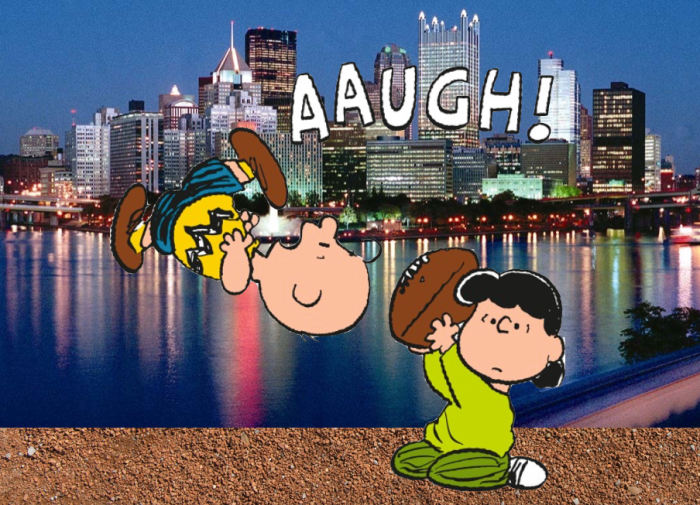
“AAAUUURGH!”

-Charlie Brown


If I crash my car right into a wall, the worst thing to do would be to get into another car and crash it right into the same wall!


But that’s what the Pittsburgh Post Gazette thinks city school administrators should do.


A new comprehensive report about Pittsburgh Public Schools concludes that standardization and Common Core have produced zero progress in the district over the last decade.


And the editorial board of the city’s largest remaining newspaper says this means administrators should stay the course – indeed, double down on test prep and uniformity.


The 175-page report by The Council of the Great City Schools affirms that the district showed little to no improvement in the last 10 years.


“In fact, analysis of student achievement trends shows little to no improvements since 2007,” the report went on. “Although some scores went up and others went down over the period, achievement gaps are about the same — if not wider — than they were when the work started.”


You would think this would be a scathing indictment of administrators during this time who focused on test prep and uniformity to the exclusion of more student-centered reforms. In particular, during the same time covered in the report, administrators paid for new curriculum designed to standardize instruction across schools and grade levels. They instituted a value-added bonus system rewarding principals who run the schools with the highest test scores. They even increased the length of the school day to drive achievement.


They did all this, and it didn’t help a bit.


Some might see that as proof of the error of past ways.


But not the Post Gazette.


In the minds of the editorial board, this is a ringing endorsement of those policies that got us nowhere.


Mark Roosevelt, superintendent from 2005 to 2010, and Linda Lane, superintendent from 2010 to 2016, are actually singled out by the paper as heroes of reform!


Wait a minute. These are the people in charge when the district apparently was stalled. If anything, these functionaries should bear the blame, not get a pat on the back. We should do anything BUT continuing their work which lead to this dismal report.


But instead, the editorial board writes, “[T]he work of Mr. Roosevelt and Ms. Lane was not in vain. They inaugurated a coherent system of reforms, made the federal benchmark known as ‘adequate yearly progress’ twice in three years, restored the district’s credibility with the foundation community, forged a closer relationship with the teachers union and generated a new sense of optimism. The course they charted is worth revisiting.”


What!?


Voters are fed up with number-worshipping flunkies who don’t see kids as anything but data points. That’s why the community has consistently replaced number crunching school directors and administrators with people who have a new vision of education – a community schools approach.


The editorial board may look down their noses at current Superintendent Dr. Anthony Hamlet who took over just this summer and the positive changes he’s been making with the new progressive school board, but he’s only doing what the public wants. And given this new report, a new direction is exactly what Pittsburgh Public Schools needs!


In the ivory tower of big media, they don’t see it this way.


In fact, the PG goes so far as to imply that Dr. Hamlet and the new board are somehow responsible for Roosevelt and Lane’s failures.


“It may be that they [Roosevelt and Lane] did not stay long enough for their efforts to take root,” writes the Post Gazette, “that the reforms became too cumbersome to manage or that they were unable to fully impose their will on a sprawling school district with many constituencies.”


Please. Dr. Hamlet’s presence has not halted Roosevelt and Lane’s march toward progress. This report demonstrates that they achieved very little. Moreover, Dr. Hamlet has only been in office since June. He hasn’t been in the district long enough to flush student test scores down the toilet – especially when for more than nine of those years he was working in Florida.


Neither can you blame the community for being fed up with corporate education reforms that apparently don’t work.


No. If this report by a consortium of the nation’s 70 largest urban school districts shows failure in ‘burgh schools, that belongs to the bosses at the top during the last 10 years. If this is a failure, it is Roosevelt’s and Lane’s, not Dr. Hamlet’s. Nor can you place it at the feet of school directors, most of whom are new to the board.


But the media mavens can be forgiven slightly for coming to such an odd conclusion, because it’s supported by the organization that wrote the report – the Council of the Great City Schools. After all, the Council suggested this push toward standardization in the first place.


In February 2006, this same Council advised Pittsburgh to “recommit to a standardized, districtwide curriculum to ensure that every classroom is focused on a common set of rigorous expectations for student learning.”


And now that same Council is saying that doing so resulted in a fat goose egg.


Great advice, Guys!


Pittsburgh residents spent $156,545 of taxpayer money to find that out.


Still, it’s not a total waste. It’s probably the most comprehensive look at the district in recent history and drew expertise from two dozen executives from eight different city school systems. It also included interviews with 170 staff and community members.


The third-party review was part of Dr. Hamlet’s transition plan and “acts as a blueprint” to transform the district, he said. It includes a detailed review of the district’s organization structure, staffing levels, instructional programs, financial operations, business services, disciplinary policies, and research and data functions.


Of particular interest is school discipline data showing that the district has an “extraordinarily high” suspension rate compared with other cities and that its disciplinary actions disproportionately affect students of color. In fact, this seems to justify moves by Dr. Hamlet to enact a restorative justice disciplinary program instead of a strict zero tolerance policy.

The report includes numerous suggestions for improvements across the board including revamping the district’s central office structure and updating the district’s outdated PreK-5 literary curriculum – initiatives that are already underway.


But when it comes to a repeated call for standardization and canned curriculum across the district, it should be ignored.


Put simply, we’ve tried that crap. It doesn’t help.


We’ve got to get beyond our love for standardized tests. We know that poor students don’t do as well on these types of assessments as middle class or wealthy students. It should be no surprise, then, that an urban district like Pittsburgh with a high percentage of impoverished students will also have low test scores.


It’s the poverty, stupid!


We need to do something to address that directly, not attack a district that’s lost almost $1 billion annually in state funding for the last five years.


Moreover, this obsession with Common Core is completely unfounded. It has never been demonstrated that aligning curriculum to the Core will increase test scores or increase learning. In fact, there is mounting research to show that these academic standards are developmentally inappropriate and actually prevent authentic learning – especially in reluctant learners.


The Council of the Great City Schools is enamored with these policies because the organization has taken millions of dollars in donations from the Gates Foundation and other organizations connected with the testing industry. Even many charitable foundations have aligned themselves with this lucrative business model where corporations cash in when students fail and then cash in again by selling them the remediation and Common Core texts they convince us we need to pass the tests.


The editorial board of the Post Gazette is likewise blinded by dollar signs and data.


Like far too many non-educators, they give far too much credence to a person’s bank account than her expertise. The same people pushing testing and new academic standards also benefit financially from them. They have created at least one PAC in the city with deep pockets looking to unseat unsympathetic board members and discredit Dr. Hamlet so that they can install their own representatives.


This is a battle with plain sense and logic. It’s also a battle for control of Pittsburgh Public Schools.

Why Schools Should NOT Be Run Like Businesses

school-closures

America loves business.


We worship the free market. Nothing is more infallible – not reason, not morals, not even God.


Money is the true measure of success – the more you have, the better a person you are.


This perverted ideology has taken over much of American life. Where we once cared about our country, justice and fair play, today it has all been reduced to dollars and cents.


Every problem can be answered by business. Every endeavor should be made more business-like. Every interaction should be modeled on the corporate contract, and every individual should try to maximize the outcome in his or her favor. Doing so is not just good for you, personally, but it’s what’s best for everyone involved. And this dogma is preached by the high priests of the market who claim that as they, themselves, get wealthier, one day we too will reap the same rewards – but that day never seems to come.


These principles are articles of faith so deeply ingrained that some folks can’t see past them. They have become the driving force behind our country and much of the world. Meanwhile, most people get ever poorer, our environment gets increasingly polluted and everything is up for sale.


One of the last holdouts against this market-driven nightmare is the public school system.


We still have widespread educational institutions run democratically at public expense dedicated to providing every child with the tools and opportunities to learn.


They’re not perfect. Far from it. But they enshrine one of the last vestiges of the America of our grandparents. Democracy and justice are the system’s core values – not profit, expansion and market share.


However, our schools suffer from disinvestment. Since we’ve segregated the rich from the poor into privileged and impoverished neighborhoods, it’s easy to provide more funding and resources to wealthy children and less to poor ones. That’s the main reason why some schools struggle – they haven’t the resources of the Cadillac institutions. Whenever we look at school spending, we look at an average allotment never bothering to consider that most of that money goes to children of the wealthy and much less to poor kids. Nor do we consider that more than half of our public school students live below the poverty line. Public schools strive to overcome the barriers of poverty, but the way we fund them ensures many of them are burdened by these same factors.


To make matters worse, our federal and state governments have allowed huge corporations to profit off our schools through an industry based on constant standardized testing and then selling schools the remediation materials to pass the tests. That’s all Common Core is – a more efficient way to market text books and test prep materials regardless of their inherent value (or lack thereof) to students. The same people criticizing public schools for being untouched by a business ethic often ignore how much they have already been brutalized by free market capitalism and the profit motive.


In any case, despite all these encumbrances, these problems are all surmountable. Doing so only requires us to go in the opposite direction away from the boardroom and the Wall Street subprime bubble. We need to work intrinsically for the good of each student. We need to see them as ends in themselves and not just incidentally for how much profit they can generate.


Unfortunately, such a solution is inconceivable to those in power. It goes against everything in which they believe. Too many Americans have been converted to the cult of the market so that the only solution they can support is to double down on what’s not working – to turn public schools even further into a business.


It’s absurd. Not everything benefits from being sold for a profit. Imagine if your spouse suggested running your marriage that way. It would turn you both into prostitutes selling yourselves at ever cheaper rates while any self respect, dignity and love disappeared.


Some things just are not for sale. Would you give up your deepest held convictions because doing so might help you turn a profit? Today I’m not a Christian, I believe in Baal because he’s got a bigger market share. Today I’m skeptical about gravity because the Acme Parachute Company is offering a bonus to jump out of the tenth floor naked.


Only fools let themselves be manipulated in this way. And that’s exactly what corporations and big business are trying to do with our public schools. Make no mistake. These are our institutions – they belong to us – yet privateers see a way to gobble up tax dollars while downgrading the services provided. They want to play us all for suckers even if it means leaving the next generation of poor and middle class children in the lurch. The only thing that matters to them is making bank.


They say we should run schools like a business? What kind of business exactly?


There are many different kinds of free enterprise. A coal company runs much differently from a restaurant, for example.


Public schools are nothing like any for-profit business. Sure, historically we’ve had a small percentage of private schools, but our country has never survived on an education system that is wholly private. By definition, the model does not work for everyone. That’s what the term “private” means – belonging to one person or group and not another. Our schools traditionally serve everyone. No single business in the country does that day-in-day-out. Perhaps we could find some new paradigm that would fit public schools, but let’s not pretend we can take some business model that already exists and apply it willy nilly. At the start, this mindset is naive at best.


Second, most businesses fail.


Most public schools succeed. They have a proven track record. Why are we going to jump to a model that builds its success on the failure of competitors?


Competition means there will be winners and losers. That’s fine in sports. It’s even fine in most goods and services. There’s not so much at stake. If I go to a bad restaurant, I have a bad meal. No big deal. I just go somewhere else tomorrow. If I get a bad education, there is no do over. I’m screwed.


That’s just not acceptable. Would you bet your life on opening a new restaurant? Would you bet your child’s education? Schools might not live up to your expectations, but the system isn’t set up from the outset so that some of them will eventually crash and burn.


Third, businesses get to choose their raw materials. If you’re making pizzas, you buy the best grains, cheese, tomatoes, etc. But public schools don’t get to choose their students. They have to teach even those who are more difficult to instruct. They accept kids with special needs, kids who’ve been abused, who live in poverty, who are undernourished, etc. And that’s how it needs to be.


If we were to follow the typical business model where the goal is merely profit, we would try to find ways to weed out these difficult students and make them someone else’s problem. In fact, that’s exactly what many privately-run charter schools and vouchers schools do. If they want our tax dollars, they shouldn’t be allowed to discriminate against our children. We should be seeking to stop such nefarious practices, not universalize them.


Finally, businesses are not essentially democratic. Corporations are beholden to their shareholders and businesses are beholden to their founders. Who, exactly, fits that role if we model our school after a business?


Public schools are run by democratically elected school boards. Privately run charter and voucher schools often are run by appointees. They aren’t beholden to the public who provide the tax dollars they need to operate. They are beholden to the limited group of people who would profit from them economically.


This is a terrible model for public schools. It gives very little back to the taxpayer. It gives less value to the student.


Should we run our schools like businesses? Not if we value students and taxpayers more than the handful of investors looking to profit off our dime.

The Ongoing Resistance to Trump, Neoliberals & Anyone Else Trying to Destroy Our Schools

screen-shot-2016-12-21-at-2-12-26-pm 


“Most of the important things in the world have been accomplished by people who have kept on trying when there seemed to be no help at all.” —Dale Carnegie


“It always seems impossible until it’s done.”

-Nelson Mandela


Buck up, Education Activists.


I see that hopeless look on your faces. I see it because it’s the same look reflected back at me in the mirror every morning.


Donald Trump will be our next President, and he’s filling his cabinet with people who are determined to destroy the very offices where he’s putting them in charge.


His Education Secretary doesn’t believe in public schools. His Labor Secretary doesn’t believe in worker’s rights. His Housing chief doesn’t believe in public housing. His head of Environmental Protection doesn’t believe in protecting the environment. Heck! You pick a department and he’s found someone to lead it who doesn’t believe in doing that job!


And to top it all off, he’s got a literal white supremacist as his chief strategist.


But you know what? I’m not scared.


You know why? Because I’m still here.


Seriously.


The forces of greed and ignorance have been salivating all over the prospect of destroying public education for decades, and they haven’t been able to do it.


We’re still here. In almost every municipality, district or borough, our public schools remain open.


Sure, they’re a bit worse for wear in some neighborhoods. But despite billions of dollars being spent to crush them under foot, we survive to fight another day.


And that day is today.


Why should we despair when we behold the glass menagerie of fools Trump has assembled to populate his administration? Glass breaks.


Why despair when hearing the tired rhetoric of Nazi Germany and the Jim Crow South coming out of his mouth? We defeated both! We can do so again.


Take Betsy DeVos, Trump’s pick for Education Secretary. She’s a religious fanatic who’s dedicated her life to destroying public schools.


I’m not scared of her. We just fought off Arne Duncan and John Kingtwo of the Democrats Ivy League privateers who actually knew what they were doing! If we can stop those jackholes from giving away community schools to rich corporations, we can take this rich Republican lady who never held down a real job and only knows how to get her way by bribing people to do her bidding.


Sorry, Miss Betsy, but your school vouchers aren’t driving my family out of our neighborhood school so my kid can be taken advantage of by multinational corporations and Christian Cult madrasas. We’re wise to your B.S. “School Choice” fantasies.


Then there’s Rex Tillerson, another corporate vampire who’d like to suck our classrooms dry. The Exxon CEO and Trump’s pick for Secretary of State is a climate denying gasoline peddler who’s dimwitted enough to think he knows everything. Drawing on his zero years of experience with children, he actually said aloud that struggling students were “defective products” as if they were irregular widgets being pressed out on the assembly line and unfit for service at his service stations.


I’m not worried about that gashole. He’ll be too busy enriching himself in backroom deals with foreign leaders to pay much attention to our schools. He’s no threat.


Okay. I’ll admit Steve Bannon makes my skin crawl. Trump’s picked a literal neo-Nazi propagandist as chief strategist, an alleged wife beater who apparently thinks black people don’t necessarily deserve the right to vote. Well, my grandfathers taught me how to deal with jackbooted Eurocentric thugs. Bannon can goosestep his way back to Brietbart and take his orange-faced Reality TV star Commander in Chief with him.


Look, Trump is a monster and he’s assembling a cabinet of monstrosities to back him up. But that doesn’t make him scary. The best way to fight monsters is to turn on the light. And we have the brightest light of all – the light of knowledge, experience, and wisdom.


We’ve been doing it for the past 8 years with the Democrats, people who were supposed to be our friends and allies. You think it’ll be harder with GOP nitwits declaring themselves our enemies!?


For all the cosmetic ways the Obama Administration was better, they were almost as enthusiastic about boosting privatization and making sure every child had a standardized test that was written above their level and biased towards rich white kids. All their talk about championing civil rights didn’t stop them from closing poor black kids schools and forcing them into unaccountable charter operations that often provided fewer services, achieved dismal academic results and boosted racial segregation. All their talk about equity didn’t result in any more funding for minority children – only more Common Core, unqualified Teach for America temps and testing, testing, testing. Yet their donors in the standardized testing, publishing and privatization industry raked in obscene profits.


I’m sorry if this hurts some people’s rosy-eyed view of politics, but Obama was no friend to education. Plutocracy isn’t just a practice on the other side of the aisle. The Democrats are almost as beholden to their corporate masters, and like good servants, they do what their rich donors tell them to do.


This isn’t news to us. We’ve been on the outs before. In fact, we’ve never been on the ins.


Donald Trump? Shit! We lived through an administration that wanted to destroy us and actually knew how to do it! We can take Tiny Hands, the Bankruptcy King any day! This is a guy who couldn’t make a profit running casinos – you know, a business where the house always wins! You expect us to cower in fear that he’s going to take away our schools. Son, we’ve fought better than you!


We just need to stop, take a deep breath and re-energize ourselves.


We need a moment of rededication, time to size up our newest antagonists, and prepare for the battles ahead.


Yes, we’re surrounded on all sides. But it’s never been any different.


Yes, we don’t have any political party that supports us. So we’ll either take over the Democrats or build our own legislative network.


I don’t mean to minimize the threat. Trump represents a clear and present danger to our nation, our people and our schools. But we represent a clear and present danger to him. He hasn’t even been sworn in yet and the clock is already ticking. He’ll be lucky to last four years in the ring with us.


So in that spirit, I offer the following advice. And not just to you, my brothers and sisters at arms. I’m speaking to that broken down father, teacher and activist in myself, too.


Chin up, Bucko. We aren’t done yet. Not even close.


Together we can win this fight. We’ve been doing just that for years.


We have nothing to fear from Trump. He and the neoliberals have much to fear from us.


“Fate whispers to the warrior ‘You cannot withstand the storm.’ The warrior whispers back ‘I am the storm.’ ”

– unknown


“If you want to make a permanent change, stop focusing on the size of your problems and start focusing on the size of you!”

T. Harv Eker

Does Eating a Free School Lunch Give Kids “an Empty Soul?”

children-eating-school-lunch

Just about everyone admits the importance of eating lunch – especially for growing kids in school.

But if you get that lunch for free, does it leave you with “a full stomach and an empty soul”?

Speaker of the U.S. House of Representatives Paul Ryan thinks so.

He famously made these remarks at the 2014 Conservative Political Action Conference:

“Take Obamacare—not literally, but figuratively here OK? We now know that this law will discourage millions of people from working. The Left thinks this is a good thing. They say, ‘hey, this is a new freedom—the freedom not to work.’ But I don’t think the problem is too many people are working — I think the problem is not enough people can find work. And if people leave the workforce, our economy will shrink—there will be less opportunity, not more. So the Left is making a big mistake here. What they’re offering people is a full stomach—and an empty soul. The American people want more than that.”

So, for Ryan, having affordable healthcare somehow has discouraged people from working. He seems to think there are millions of poor people out there who could get a job but have decided not to because their medical bills are too low.

It’s preposterous. Most poor people are working several minimum wage jobs just to get by. Very few people are sitting at home on the public dole, and those that are need help to find jobs, as he admits. They need help finding better jobs that pay higher wages. They need help getting the skills and training necessary to get those jobs. And they need for those jobs to actually exist! They don’t need condemnation or starvation to motivate them.

If Republicans like Ryan had offered a single jobs bill, perhaps such remarks would be excusable. If they had offered an alternative to Obamacare, likewise it might be excusable. In the absence of those things, his comments seem to be nothing more than a thinly veiled excuse for doing nothing to help the less fortunate.

But Ryan goes on:

“This reminds me of a story I heard from Eloise Anderson. She serves in the cabinet of my friend Governor Scott Walker. She once met a young boy from a poor family. And every day at school, he would get a free lunch from a government program. But he told Eloise he didn’t want a free lunch. He wanted his own lunch—one in a brown-paper bag just like the other kids’. He wanted one, he said, because he knew a kid with a brown-paper bag had someone who cared for him.”

There are several problems with these remarks. First of all, Anderson later admitted that it never happened. She never met a boy who said this. She got the whole thing from “The Invisible Thread,” by Laura Schroff, either from the book, itself, or a TV interview about the book.

Second, Anderson’s cherry picking this example from the book goes completely against what the author was trying to say. The book is the true story of a business executive and an 11-year-old homeless boy who partnered together with an organization called No Kid Hungry to fight child hunger. One key part of the program is connecting hungry kids with federal programs such as school lunches and food stamps. The group also opposed Ryan’s 2013 budget for its proposed reductions in the food stamp program. In short, Schroff was trying to show how important it was to provide free lunches to students – not that we should let them go hungry. Using Schroff’s book to justify cutting school lunch programs is like using Nelson Mandela’s autobiography as a justification for apartheid.

Getting a free lunch doesn’t mean no one cares for you. On the contrary, it means that everyone does, that your community has pitched in to make sure you are fed.

Many politicians and media talking heads refuse to see the realities of modern American life. Deregulation of the banking and corporate sector along with outsourcing and rampant union busting have resulted in an economy where most of the good paying jobs are gone. This puts a tremendous strain on our education system. As a result, more than half of public school students live below the poverty line. But how to meet their needs without stigmatizing kids for circumstances beyond their control?

Many communities around the country including my own, have stepped up with a solution. For the last two years, hundreds of districts throughout my state of Pennsylvania and throughout the nation have offered free lunches to all of their students regardless of family income. Rich kids, poor kids, all kids eat for free. Though students can still bring a lunch from home, having the option to eat at school removes the dichotomy of brown bags vs. cafeteria lunches. All are the same.

The program, called the Community Eligibility Provision, is available nationwide as part of the Healthy, Hunger-Free Kids Act passed in 2010. Its goal is to provide healthy lunches and breakfasts to millions of students nationwide, according to the U.S. Department of Agriculture.

Previously only low-income students or students from families receiving federal assistance received free breakfasts and lunches.

Now, only 40 percent of a single school or an entire district’s population must come from families receiving federal assistance through the Supplemental Nutrition Assistance Program (SNAP) and/or Temporary Assistance for Needy Families (TANF). They may also be homeless or come from foster homes. Once that 40 percent threshold is reached, all students receive free lunch and breakfast. Districts are compensated by the state and federal government.

Before this program, providing school lunches, even at cost, was a losing proposition. Most districts end the year with students owing them large sums for lunches. For instance, two years ago, $25,000 of debt remained with Pittsburgh schools because some students didn’t pay for their meals.

Districts could stop letting these children eat the school lunch, but no one wants to refuse a child a meal. Under the previous system, the extra cost for unpaid lunches and the cost to complete mountains of paperwork involved in collecting the money was put on the backs of local taxpayers. Under this new program, all of this disappears. Moreover, we create a community of children who are better fed and thus better ready for the demands of school.

And mark my words, this IS helping kids become better prepared for class.

As a teacher, I used to have to buy snacks and meals for my students. I had a drawer full of Ramen noodles for children who came to me hungry. Many kids suffer from food insecurity but don’t qualify for SNAP. This program solves that problem.

My own second grade daughter has never known anything else but this system. Though I can afford to pay or pack her a lunch, she prefers to eat what her friends are eating. My wife and I are often baffled that she’ll try new foods at school that she would never give a chance had we made them at home.

And the food is actually pretty good. It’s not gourmet, but it’s better than what you’d get at most fast food restaurants. I even eat it, myself, from time-to-time. I have to pay two bucks, but it’s still a bargain. I particularly like the baked chicken.

People complain about new federal guidelines that have made school lunches healthier, but what they’ve really done is made them better. Whole grain bread and buns taste pretty much the same and are better for you. Using less salt and grease is better all around.

I’ve even noticed the kids learning new things about food from the increased menu. When all this began, I remember many of the middle schoolers expressing disgust at the chicken because it was in whole pieces. They had only seen chicken in nugget form.

Now kids will walk up to the cafeteria ladies and ask to try this or that. Many times they discover something new that they like. It’s really cool to see. Even their manners have improved.

Just today little 5th graders were remarking at how soft and delicious the croissant was on the breakfast sandwich. They had never seen a bun like that before. I literally heard comments like “delicious” and “mouth-watering.”

That’s incredibly high praise for children. Sure some of them still find the food is disgusting, but they are in the minority.

Do the kids who eat these lunches have “an empty soul”?

No, that’s just Paul Ryan.

The Essential Selfishness of School Choice

img_5992

Say your friend Sheila invites you over to her house.

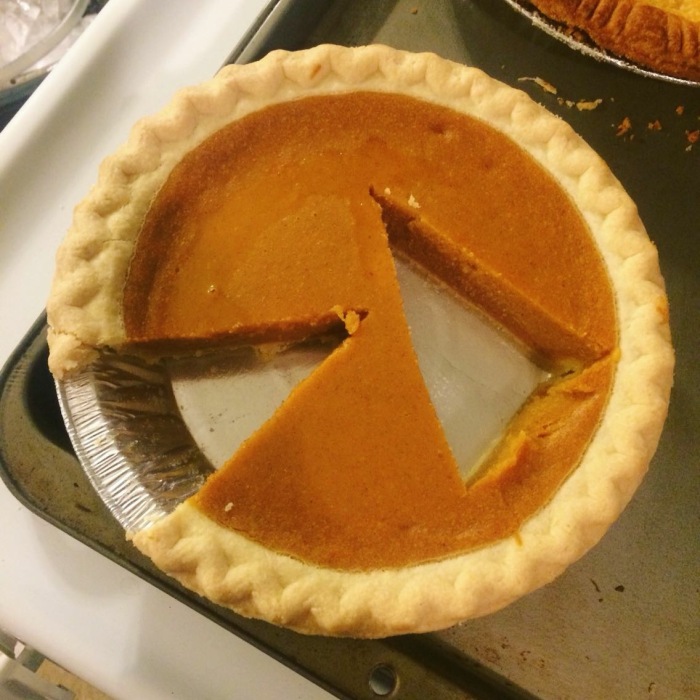
Sheila has just made a fresh pumpkin pie.

She offers you a slice.

You politely refuse, but she insists. She hands you the knife so you can take as big a piece as you like.

You start to cut and then ask, “Does it matter where I cut from?”

Sheila says, “No. Take whatever you want.”

You don’t like crust, so you cut a perfect triangle piece from the middle of the pie.

Sheila’s face reddens.

This wasn’t exactly what she meant, but what is she going to do? You took your slice, and now the rest of the pie is ruined. No one else can take a whole piece. Your choice has limited everyone else’s.

That’s what school choice does to public education.

It privileges the choice of some and limits the choices of others.

Advocates say parents should be able to choose the school their children attend.

And parents today do have many choices. About 90% send their kids to traditional public schools. Others home school, pay for private schools or opt for charter or voucher schools.

The problem comes with these last two options. In both cases, tax money meant to help all children is siphoned off for just one child. In the case of vouchers, tax money goes to pay part of the tuition at a private or parochial school. In the case of charters, we’re diverting tax money to a school that’s public in name but privately run.

That means less money for traditional public schools and more money for privately run institutions. That’s really what school choice is – a way to further privatize public schools.

Why is that bad?

3075829749_0ef3a3692c_z

First, it increases the cost and reduces the services for everyone.


Public schools pool all the funding for a given community in one place. By doing so, they can reduce the cost and maximize the services provided. One building costs less than two. The same goes for one staff, one electric bill, one infrastructure, etc.

When you start adding additional layers of parallel schools, you increase the costs even if you somehow divided the children evenly between the two systems (which hardly ever happens). You buy less with the same money. That translates to fewer services for the same kids, larger class sizes, narrowed curriculum, etc. Why? So that parents could choose School A or School B. So that privatizers get a bigger slice of the pie – right from the middle.

3075829749_0ef3a3692c_z
Second, each type of school has different goals.


Public schools are designed to educate. Corporate schools are designed to profit. Those are their very reasons for existing. It’s built into their DNA and is reflected in the way they’re administrated.

By law, public schools are not for-profit. They pay for goods and services, but at the end of the day, they aren’t beholden to shareholders or investors. They don’t need to bring in more money than they spend. All they have to do is educate children, and if they somehow end up with extra money at the end of that process, that money is bound by law to be reinvested as savings for next year.

Charter and voucher schools are not so constrained. Their reason for being is not education – it is profit. Where they can, they will cut services for children and reduce quality so that they can increase the bottom line. Even a casual glance at the news will show you a plethora of charter and voucher school scandals where privateers have stolen millions of dollars of taxpayer money instead of educating. To return to the dessert metaphor, they don’t care what their slice does to everyone else – they only care about the size of the slice.

3075829749_0ef3a3692c_z

Third, charter and voucher schools aren’t as accountable as traditional public schools.


Each type of school is supported by tax money. Therefore, each school should be held accountable for spending that money wisely. But the rules are radically different for public schools vs. choice schools.

Public schools have elected school boards made up of taxpayers from the community. Choice schools often do not. They are run by appointed boards who are only accountable to investors. Public schools are required to be transparent. Their documentation, budgets and meetings must be available to the media and community for review. This is not true of privatized choice schools.

If taxpayers are unhappy with the way a traditional public school is being run, they have multiple options for changing it. With choice schools, their only option is to withdraw their child. And in the case of taxpayers who do not have children in the system at all, they have no recourse at all. This is fiscally irresponsible and amounts to taxation without representation. This alone should be enough to make any true conservative withdraw support – however ideology has trumped logic and reason. Not only do they ruin the pie, they get to do so in secret.

3075829749_0ef3a3692c_z

Fourth, school vouchers rarely cover the entire cost of attending private schools.


They end up subsidizing costs for rich and upper middle class students while keeping away the poor. As such they create a system of cultural and racial education segregation. They create tiers of schools – the public schools being only for the poor, cheaper private schools for the middle class and expensive private schools for the rich.

This is not the best way to educate children. It is not the best way to organize a society. It entrenches social and class differences and builds in entitlements and racism for the wealthy. Surely our public schools have become more segregated even without vouchers, but that is no reason to make the situation exponentially worse. The size and placement of one’s slice shouldn’t depend on the color of your skin or the size of your bank account.

3075829749_0ef3a3692c_z

Fifth, all schools are not equally successful.


Though the media would have you believe otherwise, traditional public schools do a much better job of educating children than charter or voucher schools. Some choice schools have better outcomes, but the majority do no better and often much worse than traditional public schools. Moreover, children who continually move from school-to-school regardless of its type almost always suffer academically.

So when parents engage in these choice schemes, they often end up hurting their own children. The chances of children benefiting from charter or voucher schools is minimal. You can cut a slice from the center of the pie, but it’s likely to fall apart before you get it on a plate.

our-best-traditional-pumpkin-pie-ss

So in summary, school choice is essentially selfish. Even in cases where kids do benefit from choice, they have weakened the chances of everyone else in the public school system. They have increased the expense and lowered the services of children at both types of school. They have allowed unscrupulous profiteers to make away with taxpayer money while taxpayers and fiscal watchdogs are blindfolded. And when students return to their traditional public school after having lost years of academic progress at a substandard privatized institution, it is up to the taxpayers to pay for remediation to get these kids back up to speed.

Choice advocates talk about children being trapped in failing schools, but they never examine what it is about them that is failing.

Almost all public schools that are struggling serve impoverished students. That’s not a coincidence. It’s the cause. Schools have difficulty educating the poorest children. Impoverished children have greater needs. We should be adding tutoring, counseling and mentor programs. We should be helping their parents find jobs, providing daycare, healthcare and giving these struggling people a helping hand to get them back on their feet.

But instead we’re abandoning them. Most impoverished schools serving poor children receive less funding than those serving middle class or wealthy populations. In other western countries, it’s just the opposite. They provide more funding and resources for poor students to meet their greater needs.

School choice ignores all of this. If I may momentarily switch metaphors, instead of fixing the leak in our public school system, advocates prescribe running for the lifeboats. We could all be sailing on a strong central cruise-liner able to meet the demands of a sometimes harsh and uncaring ocean together. Instead we’re told to get into often leaky escape craft that even under the best of circumstances aren’t as strong as the system we’re abandoning.

And the reason is profits.

Have you ever noticed that the overwhelming majority of school choice proponents are rich white people?

Many of them own charter school companies or otherwise invest in the field. They aren’t advocating a policy to help children learn. They’re enriching themselves at public expense. Sure they point their fingers at union teachers making a middle class wage. Meanwhile these choice advocates rake in public money to buy yachts, condos and jewelry.

Make no mistake – school choice is essentially about selfishness. At every level it’s about securing something for yourself at the expense of others. Advocates call that competition, but it’s really just grift.

Public education is essentially the opposite. It’s about ensuring that every child gets the best education possible. Yes, it’s not perfect, and there are things we could be doing to improve it. But it is inherently an altruistic endeavor coming from the best of what it means to be an American.

We’ve all got choices in life. The question is what kind of person do you want to be? A person who takes only for his or herself? Or someone who tries to find an option that helps everyone?

pumpkin-pie

Democrats Warned Not to Help Trump Enact Their Own Damn School Policies

screen-shot-2016-11-18-at-1-01-18-am

It must be hard to be a neoliberal Democrat in Donald Trump’s America.

Almost every policy decision you favor is also on the Republican President-elect’s to-do list. But if you work with him, you’ll ruin the illusion that there’s a difference between the two of you.

Take yesterday’s statement by Democrats for Education Reform (DFER) warning any Democrat not to accept Trump’s offer to be U.S. Secretary of Education.

DFER is a hedge fund managers’ pro-charter advocacy group. Despite it’s name, one would think the organization would be a natural ally for pro-school-choice Trump.

But, wait a minute.

I thought one of the first things Trump promised to do once he took the Oval Office was close the Department of Education.

Weeeeeelllllllll…. That’s so November 10th.

He’s already walking back that whooper just like he’ll soon have to admit that the Every Student Succeeds Act (ESSA) doesn’t allow him to end Common Core – another one of his campaign promises. Ending the Core is up to the states (has been for months, yet most Republican controlled legislatures just can’t bring themselves to do it for some reason).

It’s easy to see why Trump has had a Come To Jesus moment about the Department of Education. If he really wants to add $20 billion in school-choice programs, as he promised on the campaign trail, a big government office that hands out bundles of cash in return for states enacting his personal policy desires sure would come in handy!

This is where it gets really sticky.

Both Democrats and Republicans love school choice! Typically GOP politicians love all flavors of privatization – charter schools AND giving away vouchers to attend private schools with public tax dollars. Democrats usually are more finicky preferring just charter schools – though you don’t have to search long to find a neoliberal willing to embrace all things school choice. Many of them are members of DFER.

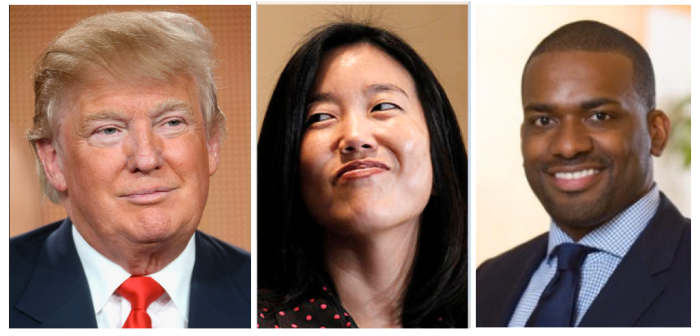
In fact, the leading voices of school privatization for the last 15 years have been Democrats. So it’s no wonder that faux progressives like Michelle Rhee and Eva Moskowitz made Trump’s short list to head the Department of Education.

Moskowitz, who has since turned down the offer, is founder of Success Academy Charter Schools, a chain of privatized institutions emphasizing endless test preparation and systematically weeding out struggling or special-needs students.

Rhee, who is still a contender, was chancellor of Washington, D.C., schools where she was given leeway to do almost whatever she wanted and boasted of high test scores. However, widespread cheating on the tests and public unrest at her tactics shot down her ascending star. She then started StudentsFirst, an organization using rich folks’ money to help elect Tea Party candidates who were in favor of both charter and voucher schools. As the organization faltered, she stepped out of the limelight.

One could think of few people more suited to Trump’s education agenda than Rhee.

But NO! Rhee – or another faux progressive – can’t do that, warns DFER President Shavier Jeffries. That goes against everything Democrats stand for – somehow.

Jeffries writes:

“It is, generally speaking, an honor for any person of any political persuasion to be asked by the President of the United States to consider a Cabinet-level appointment, but in the case of President-elect Trump, DFER encourages no Democrat to accept an appointment to serve as Secretary of Education in this new administration. In so doing, that individual would become an agent for an agenda that both contradicts progressive values and threatens grave harm to our nation’s most vulnerable kids.

“Foundational education reform principles – from raising standards and strengthening accountability, to expanding public-school choice, to furthering innovations in teacher preparation and support, and advancing resource equity – all find their roots in a progressive commitment to ensuring that all children, particularly our most vulnerable, have access to schools that enable them to fulfill their potential.”

Jeffries is worried about “raising standards?” Am I the only person here who read the ESSA? Common Core and academic standards aren’t the federal government’s business.

He’s worried about “strengthening accountability?” The ESSA already requires annual standardized testing in grades 3-8 and once in high school – same as it has since the George W. Bush administration.

“Expanding school choice?” You guys love school choice.

“Further innovations in teacher preparation and support?” That sounds like code for Teach for America and Value Added Measures – policies that Republicans love as much as you so-called Democrats.

“Advancing resource equity?” Now who are you kidding? DFER hasn’t done a thing to help poor schools get equitable resources. In fact, you’ve supported pulling the rug out from under poor schools based on those same standardized test scores you love so much.

So when it comes to policy, Jeffries and DFER are almost completely in synch with Trump. What’s the problem?

He goes on:

“This progressive commitment to equitable education policy also goes hand-in-hand with intersectional issues that affect our kids. While effective school policies are vitally important, so too are the environmental conditions affecting children and families.”

This is a shock to me. Jeffries and DFER support “no excuses” charter schools like Moskowitz’s. These are privately run schools that don’t accept a student’s poverty or abuse or health or anything to be used as an excuse not to get high scores on standardized tests. In fact, if any impoverished, underprivileged child can’t somehow pull himself up by his bootstraps, he’s often kicked out of these “no excuses” charter schools and sent back to a traditional public school.

But NOW Jeffries is complaining about “vitally important” “environmental conditions”!? You’ve got to be kidding me! That sounds like something under any other circumstances you’d call an excuse.

On any other day, DFER does nothing to help kids overcome their environmental factors. Jeffries claims we should ignore environmental factors, that focusing on them is the “soft bigotry of low expectations.” But NOW he’s suddenly seen the light!?

Sorry. I’m not buying it.

He goes on:

“A child who is homeless; a child without access to food or healthcare; a child whose parent cannot find steady work; a child whose dad is locked up for years on low-level drug offenses—each of these situations dramatically compromise the life chances of our children.”

Well, Hallelujah! Jeffries has seen the mountain top! Paying attention to the out of school factors is exactly what teachers, parents and students have been crying out for he and his neoliberal buddies to do for 15 years! Of course, doing so would invalidate the same policies he and Trump propose, but you can’t ask a neoliberal to be consistent. Baby steps.

He goes on:

“The policies and rhetoric of President-elect Trump run contrary to the most fundamental values of what it means to be a progressive committed to educating our kids and strengthening our families and communities. He proposes to eliminate accountability standards, cut Title I funding, and to gut support for vital social services that maximize our students’ ability to reach their potential. And, most pernicious, Trump gives both tacit and express endorsement to a dangerous set of racial, ethnic, religious, and gender stereotypes that assault the basic dignity of our children, causing incalculable harm not only to their sense of self, but also to their sense of belonging as accepted members of school communities and neighborhoods.

“For these reasons, no Democrat should accept appointment as Secretary of Education, unless and until President-elect Trump disavows his prior statements and commits to educating the whole child and supporting the communities and families they depend on.”

So what Jeffries really takes exception to here is Trump’s rhetoric.

Trump and DFER don’t have many policy differences. It’s just how they’re packaged.

Both Trump and Jeffries wants to give poor black and brown kids a substandard education. They both want to destroy the public school system and replace it with a privatized one. Both want to give endless standardized tests. But the real difference is that Jeffries wants to do this for the expressed purpose of protecting kids’ civil rights. Trump, apparently, wants to do it to violate them, or at least he’s indifferent to the civil rights implications.

Does that really constitute a significant difference between DFER and Trump?

No. It’s just branding.

Jeffries doesn’t want someone like Moskawitz or Rhee to be the face of Trump’s corporate education reform policies because he’s betting Trump will fail. And when that happens, he wants to be there when the next Democratic administration takes over – so he can enact the same damn policies all over again!

Standardizing Whiteness: the Essential Racism of Standardized Testing

cookie_cutter_s

“As a method of social production, as well as social reproduction, standardized testing has had serious cultural implications, not the least of which has been the eternal question of American identity. Consistent with notions of American identity, standardized testing, as an opposition to a cultural other, represents the normalization of whiteness, richness, and maleness.”
-Andrew Hartman

“In this country American means white. Everybody else has to hyphenate.”
-Toni Morrison

We talk about standardized testing as if we don’t really understand what it is.

We say we want No child left behind!

And then we pass a law named after that very sentiment that ensures some students MUST be left behind.

We say we want Every student to succeed!

And then we pass a law named after that very sentiment that ensures every student will NOT succeed.

It would be absurd if not for the millions of children being forced to endure the harsh reality behind our pretty words.

It’s not these ideals that are the problem. It’s standardized testing.

Researchers, statisticians, and academics of every stripe have called for an end to high stakes testing in education policy. Parents, students and teachers have written letters, testified before congressional committees, protested in the streets, even refused to take or give the tests. All to deaf ears.

The federal government still requires all students in 3-8th grade and once in high school to take standardized tests.

But these assessments are graded on a curve. A certain amount of students are at the bottom, a certain amount are at the top, and most are clustered in the middle. This would be true if you were testing all geniuses or all people with traumatic brain injuries.

It doesn’t matter how smart your test takers are. There will always be this bell curve distribution. That’s how the tests are designed. So to talk about raising test scores is nonsensical. You can raise scores at school A or School B, but the total set of all test takers will always be the same. And some students will always fail.

But that isn’t even the worst part.

Standardization, itself, has certain consequences. We seem to have forgotten what the term even means. It’s defined as the act of evaluating someone or something by reference to a standard.

This socket wrench is a good socket wrench because it most closely resembles some ideal socket wrench. This McDonald’s Big Mac is good because it resembles the ideal McDonald’s Big Mac.

That’s what we’re doing to people – children in fact. We’re evaluating them based on their resemblance to some ideal definition of what a child should know and what a child should be.

But children are not socket wrenches nor are they Big Macs. It is not so easy to reduce them to their component parts and say this is good and that is bad.

When you try to abstract them to that point, it is impossible to remove various essential factors of their identity – race, gender, socio-economic status, etc. Nor would it be admirable if you could, because you would have abstracted to the point where the individual is no longer visible or valued. A child raised in poverty is simply not the same as a child from a privileged upbringing. A child from a culture that values cooperation is not the same as a child from a culture that values individual achievement. And that’s often a good thing.

But when you define a standard, an ideal, you make certain choices – you privilege some attributes and denigrate others. Since the people creating the tests are almost exclusively upper middle class white people, it should come as no surprise that that is the measure by which they assess success.

Is it any wonder then that poor kids and children of color don’t score as well on these tests? Is it any wonder that upper middle class white kids score so well?

We’ve known this for almost a century. Standardized tests do a poor job of assessing intelligence or knowledge. Those things are too complex and the tests are too simple. If you’re evaluating something equally simple like basic addition and subtraction, these tests can work alright. But if you’re trying to get at something complex like critical thinking or creativity, they end up doing little more than prizing the way some people think and not others. In short, they elevate the thought processes most associated with rich white kids.

It doesn’t mean poor and/or black children are any less intelligent. It just means rich white kids have the things for which the test designers are looking. Some of this is due to economic factors like greater access to private tutoring, books in the home, parents with more time to read to their kids, coming to school healthy and more focused. However, a large portion is due to the very act of taking tests that are created to reflect white upper class values and norms.

Think about it. Almost all the questions are field tested before they become a permanent part of the exam. Students are given a question that doesn’t count to their final score, but test makers tabulate how many kids get it right or wrong. So when most white kids answer a field tested question correctly and most black kids get it wrong, it still becomes a permanent test question because there are so few blacks relative to whites. Maybe it’s a question that references sun tan lotion, something with which darker skinned people don’t have as much experience. Imagine if a question referencing the hair care practices of  black people became a test item. White people would have difficulty with it because they can’t easily relate. But the field testing process doesn’t allow that because it normalizes whiteness.

So black kids stumble while white kids have an easier time. We even have a name for it: the racial proficiency gap.

Many well-intentioned progressive voices have bemoaned this problem and wondered how to solve it. But it’s not the scores that are the problem. It’s the assessments. They are doing exactly what they were designed to do.

That’s right. You cannot have such obvious, historical problems perpetuated year-after-year, decade-after-decade, and still think they are mere unintended consequences.

This is how the system was designed to work. This is how it’s always been designed to work.

If you were going to create a racist and classist school system from scratch, what would you do? How would you go about it?

You’d need the lower classes to have SOME mediocre education so they are able to do the menial work that keeps society running. But only so much. Education as a social ladder is all well and good as propaganda. But you don’t want that ladder to lead out of the basement for more than a few.

You need something that will create a hierarchy with people of color at the bottom and poor whites only slightly better off so they can feel ennobled compared to their darker subordinates.

You need a biased sorting mechanism – something that allows you to put students into privileged and unprivileged categories but that will look to all the world like it was doing so fairly. It would have to appear like you were choosing students based on merit.

You’d need something like standardized test scores.

This is how these assessments have functioned from their very beginnings.

When Carl Brigham and Robert Yerkes, U.S. Army psychologists during WWI, designed the alpha and beta intelligence tests to determine which soldiers deserved to be officers, they were creating a pseudoscientific justification for white privilege. They used biased and unfair assessments to “prove” that rich white folks were best suited to give orders, and the rest of us belonged in the trenches.

Brigham and Yerkes were drawing upon eugenics, also called “racial hygiene” or “scientific racism.” This was a radical misreading of Gregor Mendel and Charles Darwin. Eugenicists thought positive traits such as intelligence were widespread in Northwestern European races and almost nonexistent in others. Moreover, negative traits such as laziness and criminality were common in nonwhites and almost absent in those same Northwestern Europeans.

“We should not work primarily for the exclusion of intellectual defectives but rather for the classification of men in order that they may be properly placed,” wrote Yerkes.

THIS is the basis of standardized testing.

After the war, Brigham took the same principles to create the Scholastic Aptitude Test or S.A.T. – in principle the same exam still taken by 2.1 million teenagers every year to ensure they get into their chosen college.

The test was further refined by fellow eugenicist Lewis Terman, Professor of Education at Stanford University and originator of the Stanford-Binet intelligence test. Together these three men created the foundations for the modern field of standardized testing. And make no mistake – its axiomatic principle is still that some races are genetically superior and others are inferior.

Or as Terman put it:

“A low level of intelligence is very common among Spanish-Indian and Mexican families of the Southwest and also among Negroes. Their dullness seems to be racial, or at least inherent in the family stocks from which they come… They constitute a grave problem because of their unusually prolific breeding.”

After WWII, the eugenicist brand suffered from comparison to the Nazis who had been inspired by the findings of Brigham, Yerkes and Terman among others. In the post war years, we’ve discarded the overtly racist language but kept the assessments. Yet they still function the same way – sorting out blacks and the poor while prizing the rich and white.

This information is not secret. It is not kept under lock and key in some hidden military base somewhere. It’s accessible to anyone with Internet access or a library card.
We ignore it, because otherwise it would destabilize the current power structure – the corporate education policies that drive school practices in our country. We close our eyes and pretend it isn’t happening.

But it is.

“Standardized tests are the last form of legalized discrimination in the US,” said Education and Psychology Prof. Phil Harris.

With them you can give rich and middle class whites every advantage while withholding the same from students of color. And we don’t call it racism or classism because we pretend the whites earned their privileges by their test scores.

“We are using the testocracy as a proxy for privilege,” said civil rights theorist Lanni Guinier. Test scores are the excuse for prejudicial and unjust practices that would be impossible without them.

For instance, if you really wanted to help someone who’s struggling, you might offer extra help. But low test scores are used as the reason for withholding that help. We actually use these invalid scores as a means of demeaning and firing poor black kids’ teachers – as if anything they could do could completely overcome biased assessments and poverty. In this way, we not only remove those already in place to help these kids, we ensure few people will volunteer to take their place.

And when you have a teacher shortage in these poor urban neighborhoods, you can use that to justify further deprivations. Instead of teachers with 4-year education degrees, you can hire lightly trained Teach for America temps – college grads who’ve taken no coursework in education beyond a six weeks cram session.

And if the parents of these children complain, you can open charter schools to pull a quick bait and switch. Make them feel like they have a choice when really you’re pulling the rug out from under them. You provide them with a school with none of the safeguards of a traditional public institution – no elected school board, no transparency on how tax dollars are spent, little oversight, a right to refuse any student they wish, etc. And when the school goes belly up, these kids will be pushed back to their former traditional public school that has had to make due with less funding and now can provide even fewer  services than it could before students jumped ship.

Using standardized test scores to judge not just students but whole schools, you can destabilize the entire system of public education. Charter schools and traditional public schools fight over ever-dwindling funding, one required to prove everything it does, the other able to do whatever it wants until it closes with little to no consequences for charter operators who take the money and run.

The US Supreme Court ruled in Brown vs Board that we can’t have “separate but equal” schools because when they’re separate, they’re rarely equal. But somehow that doesn’t apply to charter schools.

Somehow we’ve stopped caring about integration – one of the central victories of the Civil Rights movement! This plays right into the hands of the corporate education reformers. They have done everything they can to increase segregation because it makes it so much easier to privilege rich white kids and crush poor black ones.

They don’t want an equal mix of black and white, rich and poor in our schools. That would make it much harder to select against one class of student while boosting another.

They need to keep the races and classes as separate as possible. Charter schools help in this regard, but they would be insufficient without the help from many white families who flee from these “other” darker complected kids. It’s just another way to send more funding to white kids and less to poor black kids. They say it’s based on local property taxes. That way they can pretend it’s all fair and above board. Rich folks have a right to be able to give their kids the best, and if poor folks can’t afford to do the same, who do you expect to pick up the tab?

Oh! And let’s not forget setting “high academic standards” while all this is going on. They throw out everything that’s been working and come up with a Common Core of knowledge that all kids need to learn. Don’t include black and brown history, culture or the arts – just the stuff the business community thinks is valuable because they know so much about what’s really important in life. And have the whole thing written up by non-educators and non-psychologists and don’t bother testing it out to make sure it works.

Your rich white kids will have no problem jumping through these hoops. But your poor black and brown kids will stumble and fall – just as planned.

This is what has become of our public schools.

This is corporate education reform.

This is our racist, classist school system.

And it’s all based on standardized testing – a perfectly legal system of normalizing rich whiteness.

I Am So Sick of White People’s Excuses (And I’m White!)

screen-shot-2016-09-24-at-2-35-19-am

What the heck is wrong with us, white people?

Systematic racism is all around, but we refuse to see it.

Oh, and I do mean REFUSE. It’s not a matter of being unable to see it. Our eyes and minds work just as well as anyone else’s. We can perceive reality. Too many of us just choose not to.

According to the Guardian, at least 793 Americans have been killed by police so far this year. That number includes 194 black people or 4.86 per million. That’s more than double the rate for white people at 1.96 per million.

This is not an opinion. This is an undeniable fact. Every number is backed up with verifiable data. And moreover, it follows the same pattern we’ve seen for a couple of years now since news organizations have taken up the slack from the federal government and started counting.

Why does that not worry more white people? It worries me. I don’t want to live in a country where police use lethal force so often against civilians, so much more than almost any other developed country on Earth. And I don’t want my black friends and neighbors to be targeted so much more.

I’m a middle school teacher. Most of my students are black. I don’t want to have to worry that they or their parents are going to be murdered just because of an excess of melanin. Street gangs are worrisome enough without having to add into the mix many of the very law enforcement officers that are supposed to keep us safe from those gangbangers.

But when you bring this up to white folks and other facts detailing the systemic racism that pervades our society, you get every excuse in the book.

They simply refuse to engage with what you’re saying. They deflect and redirect and change the subject – and they don’t even seem to realize they’re doing it.

Blue lives matter, they say. All lives matter. Every form of life seems to matter to white people – except explicitly black lives.

We seem to think it’s impossible to care about both police and African Americans. We seem to think any expression of the value of human life has to be universal without mentioning individual groups that are at a higher risk than others.

It’s wacko, clearly a way of shutting down a conversation white folks will do anything to avoid.

The easiest dodge seems to be talking about black-on-black crime. As if somehow that makes it right.

It goes something like this: You’re worried about police killing black people, what about other black people? Most African Americans are killed by other African Americans.

Of course what they omit is that the same is true for white Americans. White folks kill each other much more than any other race does. But you never see people wringing their hands about white-on-white crime, do you?

Moreover, it’s irrelevant. If I point to a single incident of a white person killing a black person, it is not therefore justified because black people kill black people more often. Would you think an African American is justified for popping a cap in your Caucasian mom’s ass because most of us, honkies, usually off other honkies? Of course not!

But so much for logic. One of the most popular evasions is to blame it all on inferior black culture.

It goes like this: Black people don’t suffer systemic racism. If there are any ways in which they are selected against in society, it’s because they’ve earned that treatment because of the way they act.

Black people come from unmarried parents. They are on Welfare and a host of other social ills. THESE are the reasons behind so-called racism, not unjust systems.

It’s pure nonsense.

How does coming from unmarried parents mean you deserve to be killed by police at a greater rate than white people? How does parental marital status affect the justice system handing out more severe and longer sentences for blacks than for whites who commit the same crimes? How does the Facebook status of your pops and your moms somehow translate into difficulty getting a job due to your black sounding name?

In short, the two have nothing to do with each other.

Yes, black people have children out of wedlock about twice as often as white people. So what? Some people aren’t meant to be married. Often it’s better for the children if the parents don’t stay married to people who mistreat each other, a marriage where there is no love. Would racism suddenly disappear if black people just kept their chins up and married each other irregardless of whether the relationship was healthy for them and their children?

Let’s get to what white people are really saying here. Whites aren’t saying marriage is a magical shield against prejudice. They’re saying: Damn! Look at these strangers! These others! These people who aren’t like you and me!

The fact that many of them don’t get married before having children just shows how morally inferior they are to us. They deserve their treatment because they don’t share our sensibilities.

This is a pretty heartless way to think. Not only do the parents, apparently, deserve to be selected against, but so do their kids who had nothing to do with whether daddy gave mommy a ring or not. Moreover, where did the culture of marriageless childbirth come from for black people? When their ancestors were kidnapped from Africa and brought to these shores as slaves, it was the white slave masters who forbade them from marrying. In many cases, that tradition doesn’t exist because we took it away. Meanwhile, about a quarter of white couples have children out of wedlock, too. What’s our excuse?

But this won’t be enough to convince most white interlocutors.

They’ll just huff and puff and spout some nonsense about welfare.

They’ll say Black people fall into immoral and violent behavior because they’ve been taught by liberals to exist on welfare and not get jobs of their own.

Again, the problem is black people, themselves, aided by bleeding heart liberals trying to give them a helping hand. Some white folks even go so far as to say this is real racism because by giving black folks such sweet benefits for not working, liberals purposefully destroyed black people’s natural inclination to productivity.

Think about it for about two seconds, and you can see how crazy it is.

Black people deserve to be killed at twice the rate of whites because they don’t have jobs? They deserve to be gunned down because they’re too lazy to work?

Or alternatively, they deserve not to get call backs when they turn in resumes with black sounding names because they’re lazy!? These people just handed in job applications. We can imagine they did that because they wanted freaking jobs! But being lazy makes them unqualified for the very jobs they tried to apply for in the first place?

Let’s look at the facts for a moment. Black people don’t accept the Supplemental Nutrition Assistance Program (SNAP) more than whites. It’s the other way around.

More than 40% of SNAP recipients are white. Only 25% are black.

But that’s raw data. When we look at it as a percentage of the population, black people are twice as likely to be on Welfare as Whites. Only 12% of the country is African American, after all.

So why bring up the raw data? Because if you’re upset about the sheer numbers of people on assistance, you’re mad at more white people than black people.

Moreover, black people actually need it more than whites. More than 27% of black people live in poverty compared to only 10% of whites. Hence the larger percentage of blacks on SNAP.

This isn’t meant to throw anyone under the bus for being on public assistance. Times are tough and well paying jobs are hard to come by. For instance, most of the people who accept SNAP benefits actually are employed, but their pay is too small to sustain them. Thanks, Walmart.

So how much does a family of four get on SNAP? It depends on how much money the household earns, but the total income must be below the federal poverty level – $23,050. For many families it comes to about $399 a month. That’s $1.10 per person, per meal.

This isn’t exactly living high off the hog. I can’t imagine anyone making bank who would throw it all away to live so luxuriously on food stamps.

However, this is exactly what a lot of white people think about blacks.

It goes against the facts, and it doesn’t explain the reality of systemic racism.

In so many ways our society is set up to give white people an advantage and black people a disadvantage. That doesn’t mean all white people have it perfectly. There are an awful lot of dirt poor white folks out there – many of their kids are in my classes, too. But while they may be disadvantaged socially, economically or many other ways, they aren’t disadvantaged racially.

That’s the whole point.

Racism still exists and talking about it doesn’t make you anti-white. It makes you pro-black and pro-justice.

Those aren’t bad things to be.

We, white people, have to stop being so fragile when racism is brought up. Though I’ve artificially concerned myself only with black people here, we need to listen to what all people of color are telling us about how they’re treated. We need to take a hard look at the facts.

Being white and admitting racism exists doesn’t make you a racist – though you probably benefit from it. It just means that if you want to stand on the right side of history, on the side of equity and justice, you may need to bring your thinking into agreement with reality.

Racism Never Ended – It Just Keeps Evolving

screen-shot-2016-09-16-at-11-55-13-pm

“One of our founding principles as a nation [is] that Black lives and Black bodies don’t matter; you see that in all our headlines today. This original sin lingers on, that’s why we got to call it sin… Slavery never ended, it just evolved. Mass incarceration is the current evolution of slavery.”
Jim Wallis  
 
 
“Even the most casual student of our country’s legal system should know that racism hasn’t existed since 1964 when we passed the Civil Rights Act. So obviously there’s no possible way for my statement to be considered racist if racism hasn’t existed for fifty years! I mean come on, racism? It’s 2015 people, racism is over.”

Antonin Scalia
 

When does brutality end – when it stops being practiced or when its effects stop being felt?

Neither condition has been met in the United States today. Black people still suffer under state-sanctioned barbarism just as the echoes of cruelty from years past continue to ring in our ears.

People of color – whether they be black, Latino, Hispanic, etc. – experience a much different reality than whites. They live under the constant threat of violence without justice. Their rights are continually being re-evaluated. They are subject to systems that wait for them to step out of line in even the most innocuous ways and then pounce.

And the white majority goes around blind to these perceptions while repeating the fairy tale that all wrongdoings were only in the past.

But it’s not in the past. Our history, written in blood, has never been allowed to dry on our forgotten chronicles of yesterday. When white eyes examine the facts, they often see a series of unrelated dots which they cannot – or will not – logically connect.

The Civil War is over, they say.

No. It’s not.

Slavery is over, they say.

No. It’s not.

Racism is over, they say.

No. It’s not.

We still are engaged in the struggle for basic human dignity. And the only way to even begin on that path is to recognize the truth staring us in the face.

Nothing has ended. It has only evolved.


THE CIVIL WAR


When did the American Civil War end?

This may seem a strange question to ask.

But when a country goes to war with itself, it may be difficult to discern when that conflict actually comes to completion.

History gives us many important dates to consider.

On April 9, 1865, commander of the Confederate armies General Robert E. Lee surrendered at Appomattox, Virginia. But there were still sizable Confederate troops left standing.

In fact, the bloodshed was far from over. President Abraham Lincoln was murdered a mere 5 days later by John Wilkes Booth, a Southern sympathizer. Andrew Johnson was sworn in as President on April 15, the next morning.

It wasn’t until April 26, that General Joseph E. Johnson surrendered nearly 90,000 Tennessee soldiers – the largest of a series of subsequent capitulations.

President Johnson declared the insurrection to be over on May 9. However, the last Confederate general didn’t surrender until June 23.

Which date shall we choose? Perhaps it doesn’t matter. The point is that the conflict clearly came to an end.

Clearly the Confederacy was defeated by the Union.

Wasn’t it?

The problem is how to tell.

The Southern states were brought back into the union. But the overwhelming reason behind their secession has not been settled.

Today partisans and talking heads will argue that slavery was but one of many reasons behind the split. But during the 1860s, there was no such confusion.

Four of the Southern states explicitly gave slavery as the impetus for the break.

But Alexander H. Stephens, the Vice President of the Confederacy, removed all doubt when he said:

“The new Constitution has put at rest forever all the agitating questions relating to our peculiar institutions–African slavery as it exists among us–the proper status of the negro in our form of civilization.

[…] The general opinion of the men of that day
[Revolutionary Period] was, that, somehow or other, in the order of Providence, the institution [slavery] would be evanescent and pass away.

[…] Our new Government is founded upon exactly the opposite ideas; its foundations are laid, its cornerstone rests, upon the great truth that the negro is not equal to the white man; that slavery, subordination to the superior race, is his natural and normal condition.”

So if the war was fought over the issue of slavery and the subjugation of black people, its end can be traced to the date at which slavery ended and black people were treated as equals with whites.

That day has not yet come.

Outright slavery came to an eventual end, but – as we shall see – it was replaced with another institution. Moreover, in the aftermath of Reconstruction, we were left with Jim Crow laws cementing white supremacy. Most newly “freed” blacks lived in squalid conditions with few rights, little pay and education. Their situation was only slightly different in fact from their state under slavery. These laws had to be struck down by the collective actions of the Civil Rights movement of the 1950s and ‘60s.

Only then were black people truly permitted to vote en mass. Only then were they permitted in the same public spaces and offered some actionable protections under the law. But social and economic change still lags behind.

Today, more than 150 years since the end of the war’s military conflicts, we’re left to ponder: have things really changed so much?

Certainly there are cosmetic differences. There are no open air slave markets, no rolling cotton plantations staffed by bare backed, lash marked, kidnapped Africans. But have black people really been put on an equal footing with whites? Do they enjoy the same freedoms and privileges? Are they truly free from bondage and oppression?

If we look with open eyes, the answer is no.


SLAVERY


Today no one is legally allowed to own another person. You can’t purchase human beings. You can’t deprive them of their liberty and rights. You can’t use them as a source of revenue for your own benefit.

At least, that’s what the law says. But it happens every day.

What is the modern prison industry if not a new form of slavery? No matter how you look at it, we lock up a higher percentage of our population than any other country in the world. The US represents 5% of the world’s population but has 25% of the world’s prisoners. And the majority of those inmates have brown skin.

Whether federal, state, or privately run, the result is a massive increase in incarceration for people of color. In fact, more black people are in prison today than were in bondage in 1865. That’s a higher percentage of the black population than South Africa locked up at the height of apartheid. Today one in three black males is likely to spend some time incarcerated. That’s not insignificant.

Technically no one owns these people, but they are deprived of their freedom. They are kept in prison and unable to leave. In lockup, they are forced to work and the profit from that cheap labor goes to the prison industry. Moreover, state and federal governments often farm out these prison services to private industry which then profits off that incarceration. In many cases, the government has a contract with these corporations to fill X number of beds or else be penalized with Y dollars. So the incentive is to provide a continual stream of persons bound to labor.

This looks a lot like slavery. It is a kind of plantation where big business is paid to keep people in chains.

However, one can anticipate the following objection: Slaves were born into their servitude. Prisoners are not. They are thrown behind bars because they freely broke the law.

This does represent a difference. But is it more than cosmetic?

People of color – especially black males – commit crimes at about the same rate as white people but are imprisoned nearly six times the rate of whites. They also get much harsher sentences than whites for the same crimes. They are often imprisoned for nonviolent drug violations. And once in the system, it’s hard to get out. To survive in prison, it is often necessary to become a criminal even if you weren’t much of one when you entered.

Even if you manage to get out, you now are a second-class citizen deprived of many of the rights and privileges of your neighbors. Spend any time in the system and you’ll increasingly be deprived of your right to vote and may find it difficult to achieve gainful employment. The chances of going back inside for someone who has already been there are huge.

That is not slavery. But it’s not far from it.

As Michelle Alexander writes in her landmark book The New Jim Crow: Mass Incarceration in the Age of Colorblindness:

“The genius of the current caste system, and what most distinguishes it from its predecessors, is that it appears voluntary. People choose to commit crimes, and that’s why they are locked up or locked out, we are told. This feature makes the politics of responsibility particularly tempting, as it appears the system can be avoided with good behavior. But herein lies the trap. All people make mistakes. All of us are sinners. All of us are criminals. All of us violate the law at some point in our lives. In fact, if the worst thing you have ever done is speed ten miles over the speed limit on the freeway, you have put yourself and others at more risk of harm than someone smoking marijuana in the privacy of his or her living room. Yet there are people in the United States serving life sentences for first-time drug offenses, something virtually unheard of anywhere else in the world.”


THE EVOLUTION OF RACISM


Even for those people of color who have never been incarcerated, there is the constant burden of living in a racist society.

It’s not so much that white individuals consciously practice bigotry and hate in their daily lives. It’s the systematic abuse that’s built into the very fabric of our governments and communities. No one has to decide to be racist. They just go along with the status quo without seeing how that status quo puts black people at risk.

And it doesn’t take much imagination to recognize how the realities of today grew from the prejudices of the past.


LYNCHING


Before the 1960s, it was common for black people – especially men – to be brutalized and murdered with little to no provocation. A look, a word, even the suspicion of violating unspoken social codes could earn a death sentence. Nor was the accused even given a chance to defend himself or explain. That generally doesn’t happen today. Southern trees no longer bare such ‘strange fruit.’

But the same cannot be said for our inner city streets, playgrounds and churches.

It doesn’t take much beyond suspicion of wrongdoing, a suspicion that only requires the sight of black skin to justify deadly force. People of color still are publicly executed with little to no provocation. Black people have been slaughtered in the last few years for the following offenses: buying Skittles and iced tea, driving with a broken tail light, being suspected of selling loose cigarettes, selling CDs in a parking lot, being scared and running the other way or even just attending a house of worship.

Instead of a white robe, a disturbing number of their executioners wear a badge and police blues. Many of these hits were conducted by the very law enforcement officers that are charged with the duty to protect and serve. And when these incidents come before a grand jury, they rarely go on to criminal court. In the eyes of the law, an unarmed black person killed by police rarely inspires any suspicion of wrongdoing on the officer’s part. To the courts, it’s not even conceivable that a crime may have been committed.

As Slate’s Chief Political Correspondent Jamelle Bouie put it:

“Our courts and juries aren’t impartial arbiters — they exist inside society, not outside of it — and they can only provide as much justice as society is willing to give.”

This phenomenon isn’t the same as the lynchings of old – but it’s awfully similar. In both cases, there is little provocation, no quarter given and no justice afterwards. In fact, the modern variety may be worse. US Police killed more black citizens in 2015 than were lynched at the height of segregation.


SEGREGATION


At first glance, one might assume segregation to be a thing of the past. There are no more separate lunch counters, separate bathrooms, separate schools, etc.

Brown vs. Board of Education made it illegal for public schools to be “separate but equal” because if they were separate, they were rarely equal.

Certainly progress was made in this regard during the 1960s, ‘70s and ‘80s. But as time has gone on, integrated schools just haven’t been a priority – even for the Obama Administration.

When you look at public schools today what you see is increasing segregation. Many districts are as segregated or worse than they were before the 1950s. So-called school choice initiatives have only made it worse with charter and voucher schools springing up that cater to one race at the expense of another. Cadillac charters open in otherwise economically diverse neighborhoods swooping in to provide white flight. Big corporations start cut-rate charters with empty promises for black kids while bleaching the student body at the neighborhood’s traditional public school.

But school choice isn’t the only problem. Economics plays a factor, too. Public schools often are funded based on local property taxes, so poor kids get much fewer resources for their schools than rich kids. And since most black students are poor, this provides a stealthy way to funnel more money and resources to the white kids than the black ones.

We don’t call it segregation because it doesn’t just affect minority children. It affects poor whites, too. Everyone agrees there’s a problem, but policymakers only propose measures that make it worse. Instead of fixing underlying inequalities, we punish under-resourced schools for the very academic problems they don’t have the resources to successfully eliminate. Instead of providing more and better equipped teachers, we hire lightly trained temps through Teach for America thereby reducing both the quality of education and the cost. Meanwhile private corporations line-up to start testing corporations, test prep publishers and for-profit charter schools at the expense of black and brown kids.

None of it would be possible without segregation. Our schools today are at least as separate and unequal as they’ve ever been. And no one in power cares.


VOTING RIGHTS


Perhaps the only progress we’ve made is in black people’s suffrage. At the time of the Civil War even in the North, blacks couldn’t cast a ballot or their vote was worth significantly less than that of white people. At least today people of color get the same say in the political arena as anyone else.

Or do they?

Since the Supreme Court gutted the Voting Rights Act, a plethora of states in both the North and the South have passed laws to make it harder for people of color to vote.

Voter ID laws have sprung up across the country requiring citizens to present photo identification at the polls. However, just any picture ID won’t do. These laws require exactly the types of identification black people are least likely to have. In addition, states pass restrictions on early voting making it difficult for black churches to help the majority of their congregations who don’t own cars to physically get to a ballot box. Likewise, polling places in black areas of town are closed forcing minorities to endure long lines to vote while people from white areas of town just waltz right in.

It’s not an outright ban on black voting. But it represents continued hurdles just as the Jim Crow laws of old required literacy tests, poll taxes and other forms of intimidation.


CONCLUSIONS


When we look closely at our society and how it treats blacks vs. whites, it becomes clear that something is terribly wrong.

There is deep inequality, deep inequity, deep assumptions about the relative worth of various peoples. In fact, our society creates and perpetuated these injustices. It’s baked into the system, taught to us in our unspoken assumptions, our prescriptions of right and wrong, propriety and norms.

If we step back and look at it from the long view, we can see exactly where this came from. It’s not new. It didn’t fall from the sky like a mysterious alien artifact.

The racism of today is merely the continuation of the racism of yesterday. We pride ourselves that we’re better than our forbears, but it’s only a slight matter of degree.

Black people still are subject to a form of slavery in our system of mass incarceration. They are lynched – often by law enforcement – with little to no consequences for their killers. They go to increasingly segregated schools. And they often endure severe obstacles in order to vote.

Therefore, the battles of the 1860s and 1960s have never fully been decided. The Civil War is not yet over. Slavery continues in a new form. And racism is entrenched in our nation, communities and people.

But if we recognize that, we’ve taken the first step to building a new and better world.